Archive for the ‘Dishonor’ category

The Iran Deal: Making War More Likely?

July 16, 2015

The Iran Deal: Making War More Likely? American ThinkerStephen Bryen and Shoshana Bryen, July 16, 2015

The deal is done. Iran has sort-of promised it won’t build nuclear weapons, but even the promise has serious caveats: Iran can continue to build weapons platforms to deliver the non-existent weapons; it can cooperate with friendly countries to acquire enhancements to weapons delivery technology; and it can prevent entry to requested facilities by international inspectors for 24 days per request; it need not account for prior military activity. And Iran will be vastly richer.

Based on the world’s experience with the efficacy of multinational inspection regimes and with Iran specifically, it would be wise to assume that the Islamic Republic will move (continue?) covertly to build nuclear warheads, perhaps just leaving out the nuclear fuel. Iran will likely begin testing rockets so that they will be able to release a future nuclear weapon securely at the right moment to get the right blast effect.

The rocket is as important as the nuclear weapon it carries.

Nuclear weapons don’t go off if they plow into the ground, because as they disintegrate they can’t achieve the necessary chain reaction; they must explode above ground at a fixed altitude

Allowing Iran to openly acquire ballistic missile technology can shorten the time from weapons acquisition to weapons use, increasing the relative nervousness of the neighbors — not a recipe for stability. Israel will have to try to interdict and disrupt Iranian ballistic missile testing on an active and overt basis. Because Israeli is not a signatory to the Iran deal, it can expect to be censured by its allies and everyone else. But Israel will have no choice.

If a nuclear weapon were to be fired at Israel, in the few minutes from launch to impact Israel could, in theory, launch its own nuclear weapons from diverse platforms including land-based intermediate range ballistic missiles (IRBMs), from F-4’s and F-15’s, and from the newer Israeli submarines. Iran would face annihilation. It potentially could mean the same for Israel, although Israel’s anti-missile system may be sufficient to block the Iranian strike. A lot will depend on how good the Iranian technology is, how well tested it is, and what Israel’s countermeasures are.

The above scenario suggests this might be the time for Israel to place whatever nuclear cards it holds on the table. Israel has long been a presumed nuclear power, including by the CIA since the 1970s, and Secretary Robert Gates said so explicitly in his confirmation hearings. But Israel’s official posture remains “nuclear ambiguity” and a vague statement that Israel would not be the first to use nuclear weapons in the region, hinting that the program was designed as a deterrent. But given that Iran is likely on its way to being a nuclear power as well, and has threatened Israel specifically and directly with annihilation, Israel’s deterrence may well be enhanced by a less ambiguous posture.

While the first of the deal’s unintended consequences is that it forces Israel to officially become a nuclear power, there are others.

The deal increases the chances of direct conventional warfare between Israel and an emboldened and wealthier Iran. It may come as a consequence of Israel’s “interdict and defeat” effort in Syria; too many Iranian missiles in the hands of Hizb’allah; the deployment of Iranian troops in Syria threatening Israel; a firefight in the Golan or southern Lebanon; or conflict on the high seas. The list is a long one.

And Israel is not the only country that views Iran with alarm. Egypt and Saudi Arabia will urgently step up their search for nuclear capability. Egypt has gone down this road before and the Saudis have been leaning on Pakistan for a bomb.  Neither Egypt nor Saudi Arabia is inherently stable, and instability runs different scenarios. Saudi Arabia has IRBM delivery systems and F-15s that can be used to deliver a nuclear weapon. Egypt does not presently have the rockets, but it has a good nuclear science base that it gained in cooperation with different international partners. How viable its nuclear science pool is today is unclear; but in the 1980s Egypt was working with Iraq on the creation of plutonium fuel for weapons (at the Osirak reactor, among other locales) and was partnered with Argentina and perhaps others in building a version of the American Pershing II mobile nuclear missile. It is not unreasonable to think these programs or variants of them will in some way be revived.

The U.S. administration may think the Sunni Arab states have nowhere to turn for technology, but that would be wrong. Russia, for example, and China are more than capable under the right circumstances of cynically supporting both sides in the region — greatly enhancing the chances of war.

In the short term, the Saudis and Egyptians will need to rely on under-the-table relationships with Israel to resist pressure from Iran, which will grow apace thanks to the Washington-led deal; whether this can be concretized and turned into a workable and useful collective security pact is an important consideration. At a minimum, given the substantial barriers to overt cooperation, Egypt, Saudi Arabia, and the Gulf States will be heavily exposed and at risk for some time.

The security consequences do not only accrue to the regional countries, but to the United States and our European allies as well.

The U.S.-led deal leaves the Islamic Republic on the road to nuclear weapons capability, now or in five years or in ten — we don’t actually know because the administration gave up its demand for information on Iran’s previous military activities. The cost of this, which we already are seeing, is further diminution of American power and influence in the Middle East as neither our Arab allies nor Israel believe we can protect them. This fuels Russian as well as Iranian ambitions. Europe, which needs oil from the Middle East, can consequently be expected to back away from NATO, encouraging Russian nibbling on the margins of Europe — Estonia is already panicked. The Atlantic Alliance system andPax Americana that emerged from the ashes of WWII will collapse.

In the face of that possibility, the U.S. — whether in this administration or the next — will find that it cannot stand aside. In some manner, however halting, the United States will have to agree to do what Israel by circumstance is being forced to do, namely move militarily to truncate Iran’s nuclear program.

That being the case, it would be wise for the U.S. to pick up the leadership gauntlet earlier rather than later, and to do so in the company of as many friends and allies as it can muster.

Kerry: Iranian Access to Billions Won’t Affect World Terror

July 16, 2015

Kerry: Iranian Access to Billions Won’t Affect World Terror, Clarion Project, July 16, 2015

Iran-Kerry-Zarif-IPU.S. Secretary of State John Kerry (L) speaks to Iranian Foreign Minister Mohammad Javad Zarif (R) while (Photo: © Reuters) before the announcement of the nuclear deal in Vienna. Hossein Fereydoun (C), the brother of Iranian President Hassan Rouhani listens.

In its most recent report, the State Department wrote, “Iran has provided hundreds of millions of dollars in support of Lebanese Hezbollah in Lebanon and has trained thousands of its fighters at camps in Iran.”

In 2010 alone, State reported “Iran provides roughly $100-$200 million per year in funding to support Hezbollah.”

*********************

U.S. Secretary of State John Kerry dismissed concerns that Iran will use its newly found billions of dollars in sanctions relief to ramp up its support for international terrorism.

Speaking to the BBC after the nuclear agreement between Iran and six world powers was reached, Kerry said that the more than $100 billion that Iran is set to receive “is going to make all the difference in the world is just – it’s not true.”

Acknowledging Iran is an international player in wreaking terror across the globe, Kerry said, “What Iran has done for years with Hezbollah does not depend on money.” He similarly stated Iran’s support of the Houthi rebels against the government in Yemen has not “depended on money.”

“Sure, something may go additionally somewhere,” Kerry added. “But if President [Hasan] Rouhani and his administration do not [use the money to] take care of the people of Iran, they will have an enormous problem.”

Earlier this year, White House Press Secretary Josh Earnest admitted the U.S. would have no control over Iran’s use of monies freed by sanctions relief. However, he said it was “common sense” Iran would use the money to pump up its economy that was devastated by the international sanctions and not put the money into terrorism.

Still, Earnest said, “I’m not going to make any predictions about what they are going to do, and I’m certainly not going to be in a position to prescribe what they should do,” he said. “This is a sovereign country that will make their own decisions.”

Kerry contended it was the opinion of the U.S. intelligence community that Iranian money “that finds its way somewhere, is not the difference in what is happening in the Middle East.”

However, many contend that Kerry’s prognosis is not rooted in fact. Up until the 9/11 attack on the U.S. by Al Qaeda, the State Department reported Hezbollah was “responsible for more American deaths than any other terrorist group.”

In its most recent report, the State Department wrote, “Iran has provided hundreds of millions of dollars in support of Lebanese Hezbollah in Lebanon and has trained thousands of its fighters at camps in Iran.”

In 2010 alone, State reported “Iran provides roughly $100-$200 million per year in funding to support Hezbollah.”

Efforts by Republicans in Congress to make the current deal contingent on Iran removing its support for terrorism failed earlier this year when U.S. President Barack Obama said he would veto any such legislation.

Meanwhile, Prince Bandar bin Sultan, the former head of the Saudi Arabian intelligence services and the kingdom’s ambassador to the U.S. in Washington, said the current deal will result in Iran acquiring a nuclear weapon and “wreak havoc in the region.”

He also contended America’s traditional allies in the Arab world are now distrustful of the U.S. and looking elsewhere to make alliances. Writing in The Daily Star, a Lebanese newspaper, bin Sultan commented, “People in my region now are relying on God’s will and consolidating their local capabilities and analysis with everybody else except our oldest and most powerful ally.”

Currently, Hezbollah is backing troops loyal to beleaguered Syrian President Bashar Al-Assad who have been trying to recapture the city of Zabadani, located in a hilly region in southwestern Syria.

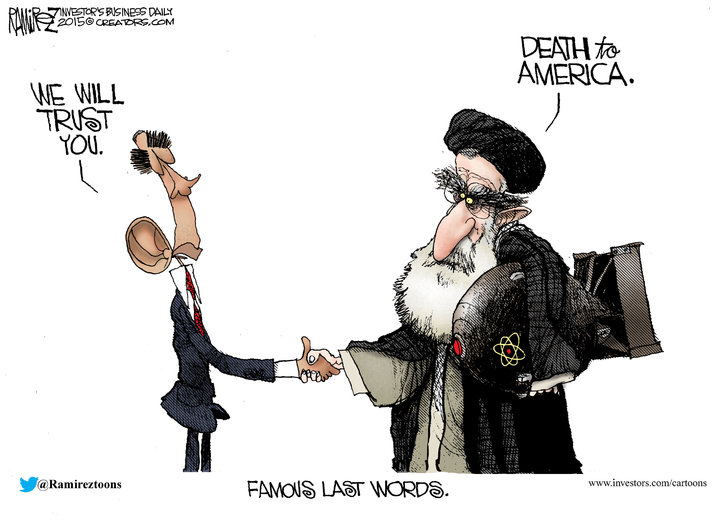
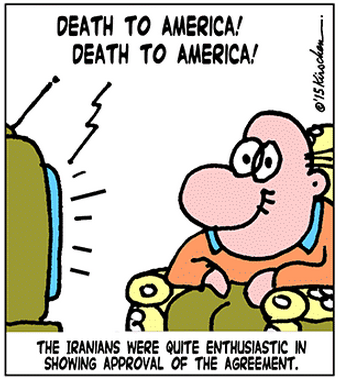
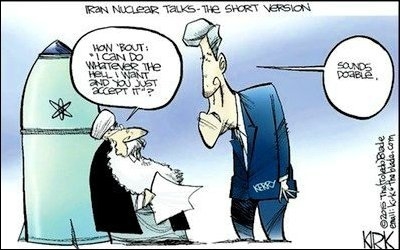
Cartoons of the day

July 16, 2015

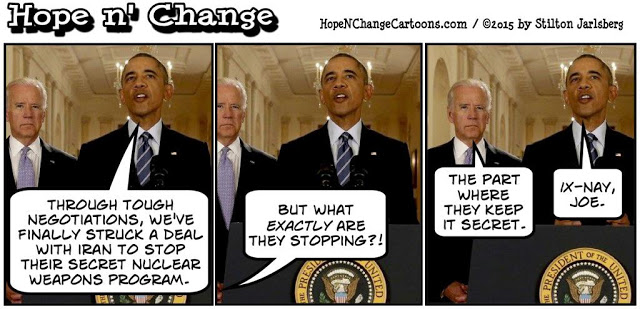
H/t Hope and Change Cartoons

Dealing from the Bottom


H/t Freedom is just another word

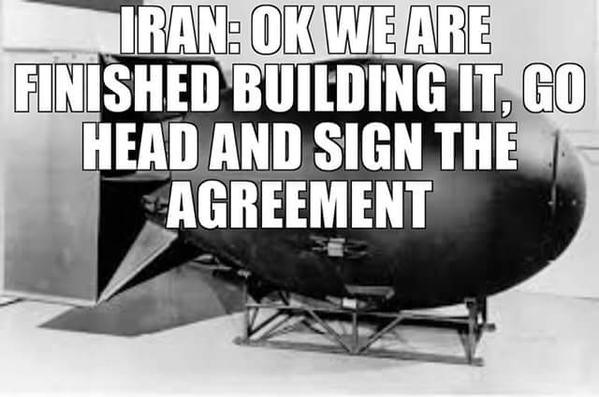
finished


H/t The Jewish Press

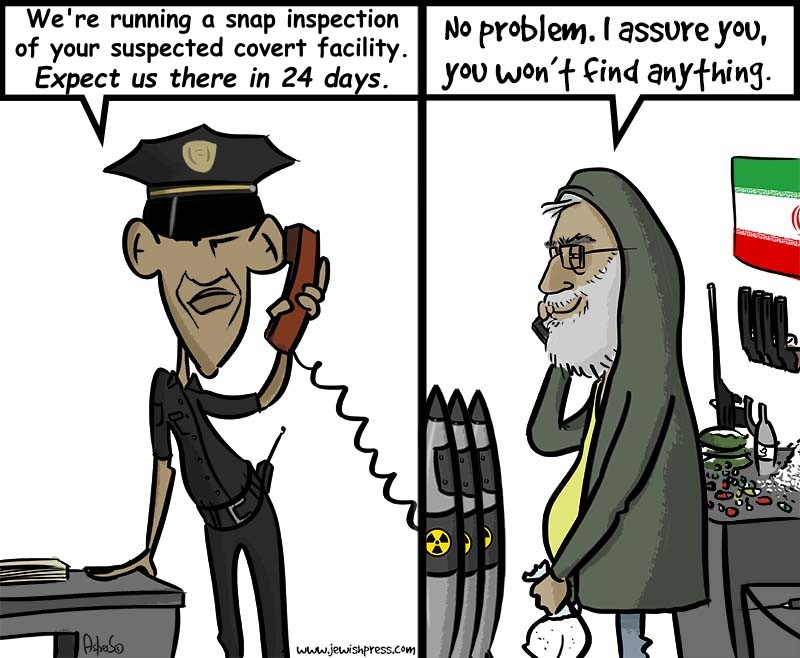
24-Day-drug-bust

Beware the Hyde-and-Jekyll Defense of the Iran Nuclear Agreement

July 16, 2015

Beware the Hyde-and-Jekyll Defense of the Iran Nuclear Agreement, Middle East Forum, Gary C. Gambill, July, 2015

1500Obama administration officials believe that a nuclear threshold détente will transform Iran into the kind of state one might trust to linger near the finish line of producing a bomb.

After two years of negotiations with Iran over the fate of its nuclear program, the Obama administration has unveiled an agreement abandoning the pursuit of a decisive reduction in the Islamic Republic’s breakout capacity – the ability to quickly and successfully produce a bomb – and lifting the economic sanctions that have hobbled its economy. The agreement not only sanctifies Teheran’s retention of sufficient enrichment infrastructure to produce a bomb in a year or less, but also drops or dilutes a range of other longstanding demands, from closing a once-secret, heavily fortified underground enrichment facility to providing inspectors with a full accounting of its bomb-making research and development.

As the Obama administration and its supporters seek to rally domestic and international support for this historic compromise, listen for what can best be described as a Hyde-and-Jekyll defense.

When discussing what will happen if the P5+1 world powers maintain their long-standing refusal to accept Iran’s retention of proliferation-prone nuclear infrastructure, the administration has often depicted the Islamic Republic as a menacing force hell-bent on continuing its march toward the brink, whatever the consequences. Secretary of State John Kerry has suggested that Iran might “rush towards a nuclear weapon” if the talks collapse. Obama has characterized the alternative as “letting them rush towards a bomb.” Outside of the administration, supporters of the pending nuclear agreement have typically offered more measured warnings that the Iranians could “take the lid off their program” and “rapidly ramp up their uranium enrichment.” Most believe that war will be likely, if not unavoidable, if there is no agreement.

However, when speaking about what will happen if the P5+1 recognizes and validates Tehran’s nuclear threshold status, the administration and its supporters have depicted the Islamic Republic as an eminently rational actor likely to abide by the letter and spirit of a prospective agreement. Obamasees the P5+1 as offering the Iranians the prospect of being “a very successful regional power” in return for accepting monitored limits on their nuclear program. “Without in any way being under an illusion about Iranian intentions … [or] the nature of that regime, they are self-interested,” according to Obama. “It is possible for them to make a strategic calculation that, at minimum, pushes much further to the right whatever potential breakout capacity they may have.”

Put simply, if we continue refusing to lift sanctions until Iran fully unclenches its nuclear fist (dramatically downsizes its enrichment infrastructure, acknowledges past weaponization work, gives inspectors wide latitude, etc.), we will get Mr. Hyde. But we will get the friendly Dr. Jekyll if we give in and accept the agreement Obama has put before us. And this is only if we give in – proponents of the agreement are quite certain that the good doctor won’t pop up if the international community stands firm (i.e. that the Iranians won’t, upon further reflection, make more concessions on the nuclear issue, or otherwise try harder to win international confidence).

983 (1)
983 (1)Obama administration officials warn that Iran could “rush” for a bomb if the international community demands a more decisive reduction in its nuclear infrastructure.

Oddly enough, the Hyde portraiture isn’t one of Iran reverting to its nuclear posture before direct talks with the Obama administration began in early 2013. Back then, the mullahs weren’t “rapidly” ramping up enrichment capacity (let alone “rushing” for a bomb), but increasing it slowly enough not to cross certain thresholds deemed likely to trigger Israeli and/or American military action (e.g., accumulating enough near-20% enriched uranium to produce through further enrichment sufficient weapons grade uranium for a bomb). The Iran they suggest will emerge from our failure to compromise is far more unhinged and oblivious to its people’s welfare than the one they sat down with two years ago. And dumber, too – an attempt by Iran to “rush” for a bomb or significantly narrow its nuclear breakout time by ramping up enrichment capacity would be supremely stupid when international resolve is at a peak.

While some proponents of the agreement are simply cherry-picking diametrically opposed characterizations of Iran to fit mismatched legs of a bad argument, many appear to genuinely believe that a nuclear threshold détente will somehow transform Iran into the kind of partner one might trust to linger near the finish line of producing a bomb, and that lack of one will put it on a path to war.

There are three overlapping strands of reasoning in this argument. All have an elegant logic with a weak empirical track record outside of Iran and little applicability to the particulars of the case at hand.

“More to lose”

The first holds that lifting sanctions will accelerate Iran’s integration into the world economy, creating disincentives to misbehave. “If in fact they’re engaged in international business, and there are foreign investors, and their economy becomes more integrated with the world economy, then in many ways it makes it harder for them to engage in behaviors that are contrary to international norms,” explained Obama in April.

Although there is much to be said for free markets and trade, economic integration hasn’t reliably inhibited the aggression of states. The European continent was more economically integrated on the eve of World War I than at any time prior and for many decades after.

In any case, lifting sanctions isn’t likely to result in Iran’s headlong integration into the world economy. This isn’t a situation where a bankrupt dictatorship opens up to the world out of desperation and falls prey to socio-economic forces beyond its control. The Iranian regime is getting a direct financial windfall out of this (access to frozen Iranian assets worth as much as $150 billion, ability to sell oil, etc.), which it can simply pocket while forgoing the kind of increased trade and foreign investment that might constrain its freedom of action later.

“More like us”

The second line of reasoning holds that drawing Iran into closer economic and socio-cultural contact with the rest of the world will cause religious extremism, xenophobia, and other unsavory attitudes among the public at large to give way to materialist and individualist concerns that will constrain government decision-making. Obama “believes the more people interact with open societies, the more they will want to be part of an open society,” says Ivo Daalder, Obama’s former NATO ambassador and head of the Chicago Council on Global Affairs.

But this presumes that the Iranian public has influence over its government’s aggressive regional and international policies. As was made clear in the deadly aftermath of the rigged 2009 elections and at many other times, the Iranian government can and does ignore public opinion.

In any case, there’s little evidence that Iranian public opinion supports the regime’s nuclear brinksmanship. While most Iranians do express support for a civilian energy program, few attach a high priority to it. Despite a steady diet of government propaganda heralding the nuclear program as the sacred right of the Iranian people, only 6% of respondents in a September 2013 Zogby poll said that continuing Iran’s enrichment program was one of their top two policy priorities. Iranian leaders threaten world peace because of ideological and strategic reasons, not public opinion.

“Empower moderates”

1501Obama has argued that the pending nuclear agreement could “strengthen the hands” of President Hassan Rouhani and other “moderates.”

Finally, Obama has argued that an agreement “could strengthen the hands of more moderate leaders in Iran.” President Hassan Rouhani and other “moderates” will gain clout in Iran’s government if there is a deal on his watch, while “hardliners” will gain influence if there isn’t one.

But this is a misreading of what causes the strength of moderates in government to fluctuate. This variable is in large part a function of how aggressively radical mullahs vet who can run in elections. So-called “moderates” are allowed to ascend the ranks of power when the system is under threat and Supreme Leader Ali Khamenei needs them to safely channel public dissent and/or soften international hostility to Iran, but they lose clout when they are no longer needed to deflect such challenges.

Might not the exorbitant financial payoff to the Iranian state of having sanctions lifted boost the legitimacy of the system and thereby weaken moderates? Alan J. Kuperman, head of the Nuclear Proliferation Prevention Project at the University of Texas at Austin, is concerned that such a windfall “would entrench the ruling mullahs, who could claim credit for Iran’s economic resurgence.”

Moreover, Kuperman adds, the Iranian regime will acquire “extra resources” to “amplify the havoc it is fostering in neighboring countries like Iraq, Syria, Lebanon and Yemen.” And once a nuclear deal is signed, fear of provoking Tehran to violate it will surely discourage the international community from punishing it for its terrorism sponsorship and bloody proxy interventions in the region.

Rouhani may get a personal boost from getting sanctions lifted on his watch, but it’s a mistake to translate that into broad advancement of “moderates.” The Iranian president may be a soft-liner on some domestic issues, but he is no less committed to realizing Iran’s nuclear ambitions than so-called hardliners.

Indeed, he is arguably more so. Many hardliners are more interested in using the nuclear program to throw a wrench into Iran’s relations with the West and keep it on a “rogue” footing than in the delicate task of preventing the international community from stopping its eventual construction of a bomb. Not surprisingly, the above-mentioned Zogby poll showed that Iranians who believe Iran should have nuclear weapons are more likely to self-identify as Rouhani supporters than those who don’t.

Conclusion

The reality is that we don’t know what will happen inside Iran in the years to come. But it’s a good bet the nature and temperament of the regime won’t change dramatically for better or worse as a result of whether or not the international community sanctifies Iran’s nuclear threshold status.

Although Obama administration officials are quick to insist that their proposed nuclear agreement with Iran is a good idea regardless of the nature and intentions of the Iranian regime, no one really believes this. If Iran is completely unchanged by its opening to the world, then the best case scenario is that we’ll be exactly where we are today when modest restrictions on its enrichment capacity expire in 10 years, only Iran will have recovered economically from the impact of sanctions, shattered the global coalition arrayed against it, and obtained the internationally sanctioned right to ramp up enrichment.

The worst-case scenario is, well, a lot worse.

‘Terrible’ Iran deal makes Israeli strike inevitable

July 15, 2015

‘Terrible’ Iran deal makes Israeli strike inevitable, BreitbartJoel B. Pollak, July 14, 2015

GettyImages-451830874-640x480

The nuclear deal reached with Iran on Tuesday is clouded by uncertainty about whether the Iranian regime will live up to its relatively weak commitments. One outcome is almost certain, however: Israel will launch a pre-emptive strike against Iran, hoping to weaken the regime and stop, or slow, its nuclear program.

Israel will attack–possibly by year’s end–because there is no other way to disrupt Iran’s advance to regional hegemony, which will become unstoppable once the deal’s provisions–especially the non-nuclear provisions–begin to take effect.

Despite what the Obama administration and its media supporters are saying, there is almost no doubt that the Iran deal, should it survive Congress, will enable Iran to become a nuclear power.

President Barack Obama himself admitted as much in April, when he defended the provisional deal signed in Lausanne by admitting it allowed Iran to reach “breakout” shortly after the ten-year (now eight-year) expiration date. The only question is whether Iran will move that date forward and risk the meager diplomatic consequences of breaking the deal.

There are Israeli analysts–a minority–who believe that Israel can live in the shadow of a nuclear-armed Iran, at least for a while. After all, Israel has developed a lethal “second-strike” capacity, in the form of nuclear missiles aboard Dolphin-class submarines programmed to target Iran. That leaves the Iranian regime to weigh the odds of surviving an Israeli counterattack versus the chances of causing the end of the world as they know it. From a fanatical religious perspective, it is a win-win scenario–but cooler, or less pious, heads may prevail.

The problem is that the Iran deal goes so much further than the nuclear issue alone. The Iranians shrewdly bargained for a host of late concessions: an end to the international arms embargo, the lifting of a ban on ballistic missile technology, and an accelerated schedule of sanctions relief that will pour over $100 billion into depleted Iranian coffers. The regime knew that Obama would not walk away–that he had committed his political career to a deal, and he was already dismissing all other alternatives, severely undermining his own leverage.

Israel just might find a way to live with a nuclear Iran, but it cannot live with a nuclear Iran and an array of turbo-charged Iranian proxies on its borders.

Iran has already renewed its support for Palestinian terror groups in Gaza, and the U.S. has quietly allowed Iranian-backed Hezbollah to regroup in Lebanon, even as it has been weakened by losses in the Syrian civil war. Flush with cash, armed with advanced new weapons, and perhaps equipped with nuclear contaminants, these groups will pose an ever-greater threat to Israel’s security–and soon.

That is why the alternative that Israeli Prime Minister Benjamin Netanyahu presented to Congress–and he did present an alternative to the present deal, though Obama pretended not to notice–included three provisions: “first, stop its aggression against its neighbors in the Middle East; second, stop supporting terrorism around the world; and third, stop threatening to annihilate my country, Israel–the one and only Jewish state.” None of those referred directly to the Iranian nuclear program. Obama ignored Netanyahu’s suggestions and forged ahead.

An Israeli strike might not stop the Iranian nuclear program. But it could stall that program, and create a renewed sense of vulnerability around the regime, which was near collapse as recently as 2009. Israel could also make Iran pay a direct cost for arming Hezbollah, Hamas, and other terror groups–a cost historically borne by the civilians of southern Lebanon or Gaza. It could project a conventional deterrent that would affect Iran here and now, as opposed to a nuclear deterrent whose effect might only be felt after an atomic exchange (i.e. not at all).

For Israel, the costs of such an attack on Iran–even a successful one–could be severe. It would be condemned and isolated internationally. It might suffer thousands of rocket attacks from Lebanon and Gaza. It may lose thousands of soldiers and civilians in a ground war.

Obviously the consequences will be less damaging–or more bearable–if the pre-emptive strike is successful. The reason Israelis are willing to take the risk at all is twofold. First, they have done it before (Iraq 1981; Syria 2007). Second, the alternative–thanks to the Iran deal–looks far worse.

The Obama administration has done all it can to prevent an Israeli pre-emptive strike, from leaking Israeli attack scenarios to denying Israel air space over Iraq. As a result, the only realistic bombing plans–whether Israel targets Iran’s nuclear and political installations directly, or detonates an electromagnetic pulse (EMP) over the country–involve a Doolittle Raid-style attack from which Israel’s pilots will not expect to return, or a landing in Saudi Arabia. The latter was once a non-starter, but–ironically–Obama’s overtures to Iran have made it possible.

The Saudis are expected to respond to the Iran deal by seeking nuclear weapons of their own. But the monarchy could also strike an alliance with Israel–perhaps even a grand bargain.

The Saudis could give Israel landing rights, logistical support, and intelligence. In return, Israel could accept Saudi Arabia’s proposal for a Palestinian state roughly along the “1967 lines”–plus Saudi control of Jerusalem’s Muslim holy sites, which would cement the royal family’s legitimacy. (Ironically, Obama, by provoking war, would enable Arab-Israeli peace.)

The clock is ticking, however. Before the Iran deal, it was thought that Israel could only carry out a pre-emptive strike in the time period before Iran actually became a nuclear power. Now, the deadlines are even shorter, and more complex.

Israel would need to attack before Russian S-300 surface-to-air missiles, already sold to Iran, can be delivered and activated. It would also need to attack while Hezbollah and Hamas are still weak, war-weary and cash-strapped–i.e. before sanctions relief delivers billions to Iran’s regional war and terror efforts.

Israel must also be wary of attacking too soon. It will not attack in the next ten days, for example, because they coincide with a religious period of mourning for historic defeats. It would also make little sense for Israel to attack while Congress is debating the Iran deal.

But Israel will attack before it loses the option. It will do so because the purpose of Israeli statehood is to enable Jews to defend themselves, and not rely on the help or mercy of others.

Obama wants to build a new legacy, but Netanyahu has inherited an old legacy–one he cannot ignore.

Cartoons of the day

July 15, 2015

H/t Joopklepzeiker

IRAN-OABMA
 
screenshot_139

H/t Middle East Forum

1498


Nuclear deal pushes Israel aside in Washington, raises Iran to leading US partner and ally

July 15, 2015

Nuclear deal pushes Israel aside in Washington, raises Iran to leading US partner and ally, DEBKAfile, July 15, 2015

Benjamin_Netanyahu-Iran_14.7.15Binyamin Netanyahu: Powers gambled on our future

Israeli Prime Minister Binyamin Netanyahu bitterly accused the “leading international powers of gambling our collective future on a deal with the foremost sponsor of international terrorism” – roundly condemning all six world powers who signed the nuclear deal with Iran in Vienna Tuesday, July 14.

President Barack Obama topped the list. Netanyahu pointed out that the president had determined on a deal with Iran at any price before he took office, which is true. Therefore, it had nothing to do with the poor relations between himself and the US President, he said in answer to critics. It was now time for Israeli leaders to set aside differences and pull together, he said. Opposition leader, the Zionist Union’s Yitzhak Herzog, agreed and said he was enlisting for the necessary effort on behalf of Israeli security. Tuesday night he received an update on the situation from the prime minister.

The special security cabinet meeting, called to discuss the ramifications of the nuclear deal, hours after it was signed, unanimously rejected it and declared “this deal does not commit Israel.”

Unfortunately, Israel was never asked for its commitment, any more than the other Middle East powers directly affected by it. The cabinet statement was therefore no more than a meaningless expression of futility, a sensation shared equally by Saudi King Salman and Egyptian President Abdel-Fatteh El-Sisi, in the face of the iron wall Obama and Secretary of State John Kerry have built for Iran in the region.

Both unceremoniously ditched Israel and its Arab neighbors in order to join hands with Iran. By this reshuffle of allies, Washington has created a new geopolitical reality in the region at the expense of its equilibrium.

The US Congress has 60 days to review the nuclear accord and reach a decision. But if Netanyahu had had any hopes of swinging the Senate around to voting down the veto President Obama promised to impose to mullify its rejection, that hope swiftly vanished in thin air. Leading presidential contender Hillary Clinton announced that if she wins the 2016 election she would abide in full by the nuclear accord Obama signed with Iran. This announcement assured Obama of a Senate majority.

The dead end reached by Netanyahu on this issue also symbolizes the end of Israeli’s special standing in Washington as “America’s leading Middle East ally.”

Iran has stepped into this position. There is little point in Israel knocking on the White House door to renew the old understanding and sympathy, as advised by former prime minister Ehud Barak and others. It does not matter who sits in the prime minister’s office in Jerusalem, as matters stand now, he/she will find themselves on the wrong side of that door.

Defense Secretary Ashton Carter will visit Israel next week. But that is only an attempt to soften the blow.

This does not mean that the Obama administration will totally abandon Israel, only that it will no longer enjoy favored status compared with other Middle East nations. By ditching the Arab world, Obama equally dumped the Palestinian issue. This has some advantages for the Netanyahu government, but is not the end of the world for the Palestinians. They, like Arab governments, have the option of seeking an understanding with Tehran, whereas that door is shut tight against Israel.

In this situation, Israel’s quiet understandings with a number of Arab leaders directed at forming a bloc to counter the US-Iran alliance, have no immediate future. When the earth shakes in a major upheaval, each individual is out to save himself and has no time to look around for allies.

In some ways, the Netanyahu government may find relief in being released from the political and strategic constraints bound up in the relationship with the Obama administration, and find the freedom to be more pragmatic and independent in its policy-making.

After all, Israel still has the strongest army and the most vibrant economy in the Middle East. Its leaders must learn to use those huge assets wisely and independently of the Obama administration.

Key Nuclear Installations Missing from Iran Deal

July 15, 2015

Key Nuclear Installations Missing from Iran Deal, Israel National News, Ari Yashar, July 15, 2015

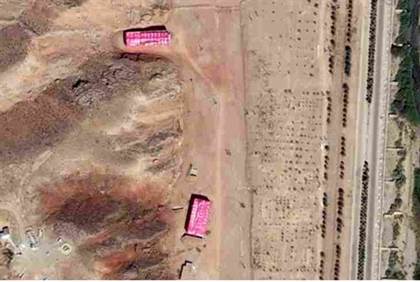
Parchin site(1)Suspicious activity at Parchin (illustration)Reuters

As experts got a chance to examine the details of the 159-page Iran nuclear deal signed Tuesday, they warned that it ignores various key aspects of the Islamic regime’s nuclear program, and that the lifting of arms sanctions may pave Iran’s path to nuclear-capable missiles.

A glaring omission is seen in the absolute lack of any reference to the highly covert Parchin military base located southeast of Tehran, which is suspected of being the center of Iran’s secret nuclear weapons program, according to the International Atomic Energy Agency (IAEA).

Iran has admitted to testing exploding bridge wire nuclear detonators at the site, and reports tied the Parchin base to Iran’s nuclear program following a mysterious explosion at the site last October.

IAEA reports in November 2011 pointed to nuclear weapons development previously conducted at the site, and a 2012 IAEA report likewise confirmed explosives containment vessels were at the site and likely used to test nuclear detonations. Satellite photos have shown Iran has been modifying the site, possibly expanding the tests and covering up their existence.

Iran has repeatedly refused IAEA requests to inspect Parchin. IAEA chief Yukiya Amano announced on Tuesday that in addition to the nuclear deal, a “road map” agreement was sealed, by which Iran will disclose military aspects of its nuclear program by October 15.After this, Amano will write an assessment of Iran’s claimed disclosures by December 15 “with a view to closing the issue.”

Amano said the agreement would include a visit to Parchin, but it remains to be seen how much time Iran will have to prepare for such a visit and possibly hide evidence of nuclear tests; Iranian officials rejected last-minute reports that inspections would be allowed at all covert sites.

IAEA roadmap: putting the cart in front of the horse

Thomas Moore, an arms control specialist and staff member of the SenateForeign Relations Committee, told Washington Free Beacon that the IAEA “road map” should have taken place before the nuclear deal, and not after it.

“The IAEA’s resolution of the possible military dimensions of Iran’s nuclear program should precede the deal, not by months but by as much time as it takes to verify the absence of Iran’s (past military work), including the full historical picture of its program. And the deal does not do that,” said Moore.

Not only does the deal not directly address military aspects of Iran’s nuclear program, critics warn it contains several loopholes that will greatly limit its effectiveness in stopping Iran’s march to a nuclear weapon.

For one, the agreement calls for Iran’s “voluntary” compliance with the terms of the deal in several places, instead of implementing mandatory steps Iran must fulfill. It also outlines a convoluted bureaucratic process to confront Iranian violations, reports Washington Free Beacon.

What’s more, a section of the deal may allow Iran to avoid revealing its past nuclear weapons testing, stating that Iran “may propose to the IAEA alternative means of resolving the IAEA’s concerns that enable the IAEA to verify the absence of undeclared nuclear materials and activities or activities inconsistent with the JCPOA (Joint Comprehensive Plan of Action) at the location in question.”

The deal also includes removing a large number of sanctions, including those targeting Parchin Chemical Industries (PCI), which operates sites at the Parchin base and is thought to be highly involved in the covert nuclear weapons program.

“Iran can get its first bombs in weeks”

Aside from Parchin, experts were alarmed to see that the nuclear deal does not directly impose limits on or even reference the Russian-made Bushehr nuclear power plant, which they warn can produce enough plutonium for a large number of atomic weapons.

Henry Sokolski, director of the Nonproliferation Policy Education Center, told Washington Free Beacon that Bushehr’s exclusion from the deal was a mistake.

“That reactor can produce enough plutonium for dozens of bombs per year,” warned Sokolski. “Iran could remove the fuel from the reactor and use a small, cheap reprocessing plant to extract plutonium, and get its first bombs in a matter of weeks.”

Regarding plutonium, after 15 years the deal stipulates that Iran will be able to “engage in producing or acquiring plutonium or uranium metals or their alloys,” and likewise conduct research and development “on plutonium or uranium (or their alloys) metallurgy, or casting, forming, or machining plutonium or uranium metal.”

At the Natanz nuclear facility, a limitation on 5,060 centrifuges in 30 cascade units will cease in ten years, and after 15 years Iran will be able to enrich uranium over 3.67% – a 20% enrichment is needed to build nuclear weapons. In eight years, Iran can start producing up to 200 partial advanced centrifuges each year, and two years later it can construct complete advanced centrifuges.

Sokolski warned that “ultimately, this is a gamble on Iran not wanting to make bombs. If they really don’t, the deal will work. If they do, the fine print won’t stop them.”

Nuclear-capable missile sanctions lifted

In addition to the details on Iran’s nuclear program, experts warn there are pitfalls in how the deal approaches – or ignores – Iran’s nuclear-capable missile program. Notably the deal avoids addressing Iran’s ICBM (intercontinental ballistic missile) program.

It also removes sanctions against Iran’s Al Ghadir missile command based in Tehran, which has been leading the development of missiles capable of delivering a nuclear warhead, and is thought to hold operational control of Iran’s missiles.

A UN conventional arms embargo on Iran will end in five years due to the deal, and sanctions against selling ballistic missiles to Iran will likewise expire in eight years. However, it is possible that China and Russia will covertly sell arms to Iran before those dates, as they have done in the past.

Fred Fleitz, who has formerly served as a CIA analyst, State Department arms control official, and House Intelligence Committee staff member, told Washington Free Beacon that these facets of the deal will allow Iran to arm itself freely.

“Language on lifting conventional arms and missile embargoes is very weak,” stated Fleitz.

“The IAEA simply has to certify that Iran isn’t currently engaged in nuclear weapons work to lift these embargoes early. The IAEA will be hard pressed to find evidence of this and will probably issue a report allowing these embargoes to be lifted early,” he concluded.

Maybe They Just . . . Forgot To?

July 15, 2015

Maybe They Just . . . Forgot To? National Review, Patrick Brennan, July 14, 2015

(Here’s a video of  Mr. Rhodes explaining that we never sought anywhere, anytime inspections:


Unfortunately, as I observed here, the November “Joint plan of action” did not contemplate investigation of Iran’s military sites,  possible military uses or development of nukes, other than by limiting uranium enrichment. — DM)


In April:

Secretary of Energy Ernest Moniz on Iran nuke inspections: “We expect to have anywhere, anytime access.” April 20 ’15 http://www.bloomberg.com/politics/articles/2015-04-20/inspectors-need-full-access-in-any-iran-nuclear-deal-moniz-says 

Ben @rhodes44 told the Israeli people today on TV that framework agreement w/ Iran has snap inspections. “Anywhere, any time”. Quite a claim

We Should Go to War With Iran, Not Give Them a Peace Deal | PJTV

July 15, 2015

We Should Go to War With Iran, Not Give Them a Peace Deal | PJTV, July 14, 2015