Archive for the ‘Diplomacy’ category

The day after the deal

August 9, 2015

The day after the deal, Israel Hayom, Prof. Eyal Zisser, August 9, 2015

(Please see also, Russia and US woo Saudis to help save Assad – albeit putting Israel and Jordan in danger from S. Syria.– DM)

[Soleimani] wanted Russia and Iran to agree on the division of the Middle East in a way that would serve their clients in the region (among them, Assad) and check their joint enemies (the Islamic State). After figuring that out, they probably moved on to the next topic: how to marginalize America in the region. As a means to both ends, Russia will continue to serve as Assad’s protector (despite his many crimes), all the while providing Iran with international backing. But above all it will send arms to Iran, to the Syrian regime, and if needed, to Hezbollah.

***********************

Over the weekend it transpired that Maj. Gen. Ghasem Soleimani, the commander of Iran’s Quds Force, had visited Moscow two weeks ago and met with President Vladimir Putin. The Quds Force, in case you forgot, is in charge of the Iranian Revolutionary Guards’ clandestine operations (including terrorism). The Quds Force is responsible for providing aid to Hezbollah and Hamas as well as to Syrian President Bashar Assad and the Houthi rebels in Yemen. In light of his direct involvement in terrorism, the international community imposed sanctions on Soleimani, including travel restrictions.

Only last week, at a hearing on Capitol Hill, U.S. Secretary of State John Kerry vowed that the U.S. will make sure the sanctions on Soleimani would stay in effect and that the Obama administration would counter Iran’s efforts to destabilize the Middle East. But no one takes Kerry seriously anymore. While Kerry continues to engage Iran’s unimportant Foreign Minister Mohammad Javad Zarif, the real wheeling and dealing is actually in Moscow.

Soleimani did not go to Moscow because he had tickets to the Bolshoi. Rather, he arrived because he wanted to discuss “the day after the nuclear deal” with Putin. Namely, he wanted Russia and Iran to agree on the division of the Middle East in a way that would serve their clients in the region (among them, Assad) and check their joint enemies (the Islamic State). After figuring that out, they probably moved on to the next topic: how to marginalize America in the region. As a means to both ends, Russia will continue to serve as Assad’s protector (despite his many crimes), all the while providing Iran with international backing. But above all it will send arms to Iran, to the Syrian regime, and if needed, to Hezbollah.

The Russians, unlike the Iranians, don’t consider Israel to be an enemy state. But as a famous Russian official once said: “When you chop wood, chips fly.” Israel has become the latest chip — the collateral damage. Soleimani’s visit is just the tip of iceberg. It shed light on the not-so-secret deals that are being negotiated in the wake of the “Vienna nuclear agreement.” Europe, as usual, is focused on profit and its corporate executives are already traveling in droves to Tehran to ink deals. There are also political deals Iran wants to secure, which are as important for Tehran. Their price, however, will be measured in blood rather than in euros or dollars.

No one in the Middle East, it seems, is keen on parsing each and every provision in the nuclear deal. Nor is there an attempt to see whether, in the grand scheme of things, it is will have been a worthwhile endeavor some 10 or 15 years from now, when its key elements expire. In this region, what counts is the way this agreement is perceived here and now — and what really matters to people is the way it is portrayed in the media. Under that criteria, Iran is the victor and America is the vanquished, because it caved to Iran. The deal, according to how the media has portrayed it, is a crushing political blow to Israel and the moderate Arab states, led by Saudi Arabia.

This knockout victory will likely produce a new Iranian-American partnership. At the very least, the two nations will mend fences. This will alienate many of Washington’s clients, who will have to look elsewhere for a more reliable ally. Egypt and the Saudis have already realized this and turned to Russia for aid and arms, figuring it would be more trustworthy than the “staff of this broken reed” (Isaiah 36:6).

Saudi Arabia is reportedly sending feelers to see if there is a deal to be had with Russia and Iran. Under the terms of the proposed deal, Saudi Arabia would withhold aid to the Syrian rebels if Iran ends its rogue presence in the state. Such a deal would secure Assad a victory over the insurgents, or a least ensure his regime survives.

The ongoing developments have caused panic, but not over the rising clout of Iran and Russia. The White House, it seems, is fretting over the possibility that Congress may vote against the Iran deal and further tarnish Obama’s image.

Russia and US woo Saudis to help save Assad – albeit putting Israel and Jordan in danger from S. Syria

August 9, 2015

Russia and US woo Saudis to help save Assad – albeit putting Israel and Jordan in danger from S. Syria, DEBKAfile, August 9, 2015

Lavrov_Kerry_and_al-Jubeir-_Doha_3.8.15Lavrov, Kerry, Al-Jubeir at Doha

[N]either Israel nor Jordan has been co-opted to this big power initiative, as though they are not concerned. However, both have a big stake in Saudi Arabia’s next decisions. If Riyadh is won over by US-Russian blandishments and goes back on its decision to boycott Assad, the Saudi-Israeli-Jordanian effort to support Syrian rebel control of southern Syria will fall apart. This will open up both countries to new perils on their  northern borders.

************************

Building on the nuclear accord signed in Vienna last month, the Obama administration has been in close communion with Moscow and Tehran on regional moves to save the Assad regime, as the key to their next regional policies, including a united front against the Islamic State.. Saudi Arabia and its Gulf partners are being assiduously wooed to join the new alignment being set up for this purpose. The live wire in getting them all together is Omani Foreign Minister Khalid bin Mohamed Al-Attiyah, the secret broker who brought Iran and the United States to the negotiating table for a nuclear accord. This was first reported in the last DEBKA Weekly.

Wednesday, Aug. 7, Obama threw out his first hint on this development: “The window has opened a crack for us to get a political resolution in Syria, partly because both Russia and Iran, I think, recognize that the trend lines are not good for Assad,” he said. “Neither of those patrons are particularly sentimental; they don’t seem concerned about the humanitarian disaster that’s been wrought by Assad and this conflict over the last several years, but they are concerned about the potential collapse of the Syrian state. And that means, I think, the prospect of more serious discussions than we’ve had in the past.”

The US president then affirmed more strongly in a CNN interview Sunday, Aug. 9:  “Is there the possibility that having begun conversations around this narrow issue [the nuclear accord with Iran] that you start getting some broader discussions about Syria, for example, and the ability of all the parties involved to try to arrive at a political transition that keeps the country intact and does not further fuel the growth of ISIL and other terrorist organizations? I think that’s possible,” Obama said. “But I don’t think it happens immediately.”

The administration and its prospective partners are united by the will to destroy ISIS – in its Syrian stronghold, for starters – but are divided on much else, DEBKA file reports. And so the process is moving forward in careful steps.

Their initial focus is on Syria, the bloody battleground which in less than five years has left at least 300,000 dead and more than 10 million people homeless.

The plan the group started out with in the last ten days was a swap as simple as it was ruthless: Saudi Arabia and the United Arab Emirates would slow their assistance to Syrian rebel groups, against whom President Bashar Assad’s army and allies would hold their fire; Iran, for its part, was to start withdrawing its support from the Yemeni Houthis insurgents.

The informal truce in Syria would be the stage for the Assad regime and rebel groups to start discussing a new government with room for opposition parties. The Islamists of the Islamic State and Al Qaeda’s Nusra Front would not be invited.

In Yemen, Tehran would cut back on the arms and intelligence which have enabled the Houthi insurgents to stand up to the combined forces of Saudi Arabia, the UAE and Egypt. The pro-Western Yemeni President Abd Rabo Mansour Hadi would be restored to his palace in Sanaa and invite the insurgent leader, Abdu Malik Al-Houthi, to discuss his partnership in a new government.

This deal was tantamount to a joint US-Russian guarantee of Bashar Assad survival in power in return for a Tehran-Riyadh compact for Hadi’s reinstatement in Sanaa.

These arrangements were debated back and forth in exchanges, some semi-secret, among the leading actors for most of July. The visit to Riyadh of the Syrian intelligence chief Maj. Gen. Ali Mamlouk was set up by Moscow as a major push forward.

The plan was for the entire enterprise to be brought out in the open and sealed in Doha, Qatar, Tuesday, Aug. 3 at a conference attended by US Secretary of State John Kerry, Russian Foreign Minister Sergey Lavrov, Saudi Foreign Minister Adel Al-Jubeir and other top Gulf diplomats.

Iranian Foreign Minister Mohammed Javad Zarif was not there. But he put a strong oar into the proceedings by calling in at Muscat, Oman the day before the conference and subsequently on Friday Aug. 7. Assad also kept his hand in by sending his foreign minister Walid Moallem to Tehran and Muscat last week.

But then, at Doha, just as the package was ready to unveil, the Saudi foreign minister pulled away and blew it up with two provisions: a) Riyadh would not countenance Bashar Assad being allowed to stay in office, and: b) Saudi Arabia would not do business with any representative of the Assad regime.

This put a large spoke in the main wheel of the initiative and also scuttled some of the secondary plans depending on it.

But by then, a lot was happening in the Yemeni and Syrian war arenas:

1. Saudi and UAE armored forces had landed in Aden and were closing in on the Yemeni capital, Sanaa. The Houthi rebels, trained and armed by Iran, were forced to retreat without negotiations on their future role in government.

2. Syrian rebel leaders, sensing the approaching betrayal, sent a secret delegation to Tehran to discuss terms for opening negotiations with Assad. They too were left at sea about the deals in play among Washington, Moscow, Tehran and Riyadh over their future.

Saturday, Aug.8, the Russians, egged on by the Americans, set about winning Riyadh into the fold, Foreign Minister Al-Jubeir was invited to pay a visit to Moscow Tuesday, Aug. 11, for talks about the Syrian conflict and the war on the Islamic State.

Refusing to accept that the new initiative had been grounded in Doha, Moscow presented the visit as continuing the ongoing dialogue on the issues raised at that encounter.

DEBKAfile’s military and intelligence sources note that neither Israel nor Jordan has been co-opted to this big power initiative, as though they are not concerned. However, both have a big stake in Saudi Arabia’s next decisions. If Riyadh is won over by US-Russian blandishments and goes back on its decision to boycott Assad, the Saudi-Israeli-Jordanian effort to support Syrian rebel control of southern Syria will fall apart. This will open up both countries to new perils on their  northern borders.

No Trust, No Verification, No Sanctions: Obama’s Humiliating Capitulation to the Mullahs

August 8, 2015

No Trust, No Verification, No Sanctions: Obama’s Humiliating Capitulation to the Mullahs, National Review, Andrew C. McCarthy, August 8, 2015

(I have been beating this drum for quite a while. So have others. The Obama administration’s position still makes no sense whatever, unless unfortunate motives are attributed to the Commander in Chief. — DM)

The sanctions regime President Obama and Secretary of State Kerry vowed to step up has already collapsed. The mullahs are already scooping up billions in unfrozen assets and new commerce, and they haven’t even gotten the big payday yet. Obama’s promises of “anytime, anywhere” inspections have melted away as Tehran denies access and the president accepts their comical offer to provide their own nuclear-site samples for examination. Senator John Barasso (R., Wyo.), a medical doctor, drew the apt analogy: It’s like letting a suspect NFL player what he says is his own urine sample and then pronouncing him PED-free.#

And now even the Potemkin verification system has become an embarrassing sham, with Iran first refusing to allow physical investigations, then declining perusal of documentation describing past nuclear work, and now rejecting interviews of relevant witnesses.

Recall that administration officials indignantly assured skeptics that there would be no agreement in the absence of Iran’s Iran’s coming clean on the “past military dimensions” of its nuclear work. As Kerry put it, “They have to do it. It will be done. If there’s going to be a deal; it will be done.”

The reason it had to be done is obvious. According to Obama, his Iran deal is built on verification, not trust — at least when the president is not trusting Ayatollah Khamenei’s phantom anti-nuke fatwa. Plainly, it would be impossible to verify whether Iran was advancing toward the weaponization of nuclear energy — whether it had shortened the “breakout time” the elongation of which, Obama claims, is the principal objective of his deal — unless one knew how far the mullahs had advanced in the first place

But now, in open mockery of an American president they know is so desperate to close this deal he will never call their bluff, the mullahs have told the International Atomic Energy Agency to pound sand — although not sand in Iran, where the IAEA is not permitted to snoop around. Tehran is steadfastly refusing to open its books, and the IAEA sheepishly admits that it cannot answer basic questions about Iran’s programs and progress.

So what does Team Obama do? Do they, as they promised, walk away from an unverifiable and thus utterly indefensible deal that lends aid and comfort to our enemies? Of course not. Now they’re out there telling Americans, “We don’t need this IAEA program to discover whether or not Iran was pursuing a nuclear weapon — they were,” as Senator Chris Murphy, a Connecticut Obamabot, told the Wall Street Journal.

Well good for you, Sherlock; Obama, Kerry, and Hillary Clinton may still be hanging on that fatwa, but you hit the bull’s-eye.

Here’s the thing, though, Senator Murphy: Yes, all of us know the Iranians, as you cheerily put it, “were” pursuing a nuclear weapon — especially all of us who oppose Obama’s Iran deal and who recognize that the jihadist regime has waged war against us since 1979, killing thousands of Americans. But you “let’s make a deal” guys told us your objective was to uncover how far along they “were” and to roll back their progress. (Actually, you used to tell us your objective was to prevent them from getting nuclear weapons, period — as in “if you like your health-care plan, you can keep your health-care plan, period.”)

If you don’t have a baseline from which to begin verification, you can’t verify the time of day, much less the progress of nuclear research, development, procurement, and experimentation. Iran is saying we don’t get the baseline without which the Obama administration guaranteed there would be no agreement.

So in the grand deal our president describes as subjecting the mullahs to historically rigorous inspection, disclosure, and verification requirements, there is no inspection, no disclosure, and no verification.

And did I mention no sanctions?

On July 29, Kerry assured lawmakers that Iranian Quds Force commander “Qassem Soleimani will never be relieved of any sanctions.” Soleimani orchestrates the regime’s terrorist operations and, according to the Pentagon, is responsible for killing at least 500 American soldiers in Iraq.

Yet, only five days before Kerry gave that testimony, Soleimani traveled to Russia for meetings with Putin’s government — notwithstanding the vaunted sanctions that, Kerry would have us believe, confine him to Iran.

Russia, of course, is a member of the U.N. Security Council, from which Obama sought and obtained endorsement of his Iran deal before seeking congressional review. Not only has Russia rendered the current sanctions a joke; it has made Obama’s implausible promise of future “snapback” sanctions against Iran even more laughable. Russia, by the way, has also agreed to build yet another nuclear reactor for the mullahs in Busheir — which Obama’s deal obligates the United States to protect against sabotage. And Putin has also just agreed to supply the terrorist regime in Tehran with $800 million worth of S-300 anti-aircraft missiles that can be used against the U.S. Air Force and have enough range to strike planes in northern Israel.

What a deal, Mr. President!

Actually, we really don’t know quite what a deal it is because key provisions remain secret. After its bold verification promises, the Obama administration was too embarrassed to reveal exactly how pathetic the agreement’s inspections provisions are. So, as I outlined in a recent column, Obama and Kerry tucked them into a secret side deal between Iran and the IAEA. It then twaddled that the details — i.e., the heart of the deal from the American perspective — are, conveniently, between Iran and the IAEA. None of our business, you see.

This message was reiterated on Capitol Hill this week by the IAEA. Understand: The IAEA could not function (to the limited extend it does function) without the United States Congress’s underwriting of 25 percent of its budget — the American taxpayer contribution dwarfs that of every other country, including Iran’s, which is tiny. Yet, the IAEA chief told lawmakers that he could not reveal the agreement between his agency and Tehran because that is “confidential” information, disclosure of which would compromise the IAEA’s “independence.” The only things the IAEA would confirm are that (a) there are verification provisions and (b) Iran is not cooperating with them.

Feel better?

Well, to further improve your mood, let’s talk the Corker bill. Remember, that’s the legislation by which the GOP-controlled Congress reversed the constitutional presumption against international agreements and virtually assured that Obama’s Iran deal — no matter how appalling it may be, no matter how much aid and comfort if provides to the enemy — will become law.

Why on earth would Beltway Republicans agree to anything so catastrophic for the national security that the Constitution’s Treaty Clause is designed to protect? Because, they proclaimed, by making this devil’s bargain, they would ensure that Congress and the American people got full disclosure of the Iran deal that Obama would otherwise shroud in secrecy.

But as I asked at the time, what possessed them to think Obama would not shroud the agreement in secrecy just because there would now be a law forbidding that?

Supporters are telling themselves that the Corker bill’s benefits [include that] the president will have to produce the agreement. . . . But this is a mirage. . . . The president is notoriously lawless, and thus Republicans can have no confidence that the agreement he produces to Congress will, in fact, be the final deal he signs off on with Iran and, significantly, submits to the U.N. Security Council for an endorsing resolution.

And so it has come to pass: Republicans forfeited their constitutional power for an unenforceable promise of transparency from an infamously duplicitous backroom dealer. Now they have no power and no idea what they’ve enabled.

The president had it backwards Wednesday when, in his repulsively demagogic speech on the Iran deal, he said that Republicans are aligned with the Iranian chanting ‘Death to America.’” It is Obama who is aiding and abetting the hardliners. Republicans have merely aided and abetted Obama.

3 U.S. Defeats: Vietnam, Iraq and Now Iran

August 8, 2015

3 U.S. Defeats: Vietnam, Iraq and Now Iran, New York Times, David Brooks, August 7, 2015

[T]he Iranians just wanted victory more than we did. They were willing to withstand the kind of punishment we were prepared to mete out.

Further, the Iranians were confident in their power, while the Obama administration emphasized the limits of America’s ability to influence other nations. It’s striking how little President Obama thought of the tools at his disposal. He effectively took the military option off the table. He didn’t believe much in economic sanctions. “Nothing we know about the Iranian government suggests that it would simply capitulate under that kind of pressure,” he argued.

The president concluded early on that Iran would simply not budge on fundamental things.

Economic and political defeats can be as bad as military ones. Sometimes when you surrender to a tyranny you lay the groundwork for a more cataclysmic conflict to come.

***********************

The purpose of war, military or economic, is to get your enemy to do something it would rather not do. Over the past several years the United States and other Western powers have engaged in an economic, clandestine and political war against Iran to force it to give up its nuclear program.

Over the course of this siege, American policy makers have been very explicit about their goals. Foremost, to prevent Iran from becoming a nuclear power. Second, as John Kerry has said, to force it to dismantle a large part of its nuclear infrastructure. Third, to take away its power to enrich uranium.

Fourth, as President Obama has said, to close the Fordo enrichment facility. Fifth, as the chief American negotiator, Wendy Sherman, recently testified, to force Iran to come clean on all past nuclear activities by the Iranian military. Sixth, to shut down Iran’s ballistic missile program. Seventh, to have “anywhere, anytime 24/7” access to any nuclear facilities Iran retains. Eighth, as Kerry put it, to not phase down sanctions until after Iran ends its nuclear bomb-making capabilities.

As a report from the Foreign Policy Initiative exhaustively details, the U.S. has not fully achieved any of these objectives. The agreement delays but does not end Iran’s nuclear program. It legitimizes Iran’s status as a nuclear state. Iran will mothball some of its centrifuges, but it will not dismantle or close any of its nuclear facilities. Nuclear research and development will continue.

Iran wins the right to enrich uranium. The agreement does not include “anywhere, anytime” inspections; some inspections would require a 24-day waiting period, giving the Iranians plenty of time to clean things up. After eight years, all restrictions on ballistic missiles are lifted. Sanctions are lifted once Iran has taken its initial actions.

Wars, military or economic, are measured by whether you achieved your stated objectives. By this standard the U.S. and its allies lost the war against Iran, but we were able to negotiate terms that gave only our partial surrender, which forces Iran to at least delay its victory. There have now been three big U.S. strategic defeats over the past several decades: Vietnam, Iraq and now Iran.

The big question is, Why did we lose? Why did the combined powers of the Western world lose to a ragtag regime with a crippled economy and without much popular support?

The first big answer is that the Iranians just wanted victory more than we did. They were willing to withstand the kind of punishment we were prepared to mete out.

Further, the Iranians were confident in their power, while the Obama administration emphasized the limits of America’s ability to influence other nations. It’s striking how little President Obama thought of the tools at his disposal. He effectively took the military option off the table. He didn’t believe much in economic sanctions. “Nothing we know about the Iranian government suggests that it would simply capitulate under that kind of pressure,” he argued.

The president concluded early on that Iran would simply not budge on fundamental things. As he argued in his highhanded and counterproductive speech Wednesday, Iran was never going to compromise its sovereignty (which is the whole point of military or economic warfare).

This administration has given us a choice between two terrible options: accept the partial-surrender agreement that was negotiated or reject it and slide immediately into what is in effect our total surrender — a collapsed sanctions regime and a booming Iranian nuclear program.

Many members of Congress will be tempted to accept the terms of our partial surrender as the least bad option in the wake of our defeat. I get that. But in voting for this deal they may be affixing their names to an arrangement that will increase the chance of more comprehensive war further down the road.

Iran is a fanatical, hegemonic, hate-filled regime. If you think its radicalism is going to be softened by a few global trade opportunities, you really haven’t been paying attention to the Middle East over the past four decades.

Iran will use its $150 billion windfall to spread terror around the region and exert its power. It will incrementally but dangerously cheat on the accord. Armed with money, ballistic weapons and an eventual nuclear breakout, it will become more aggressive. As the end of the nuclear delay comes into view, the 45th or 46th president will decide that action must be taken.

Economic and political defeats can be as bad as military ones. Sometimes when you surrender to a tyranny you lay the groundwork for a more cataclysmic conflict to come.

IAEA chief stonewalls Congress

August 7, 2015

IAEA chief stonewalls Congress, Power LinePaul Mirengoff, August 6, 2015

Yukiya Amano, director general of the International Atomic Energy Agency Alliance (IAEA) came to Capitol Hill yesterday to try to reassure members of the Senate Foreign Relations Committee about the Iran nuclear deal. Amano wanted to convince Senators that the private side deals between Iran and the IAEA aren’t problematic and shouldn’t lead Congress to reject the deal.

There was just one problem: Amano couldn’t provide any details about his agency’s confidential arrangement to examine Iran’s nuclear research to see if the mullahs are trying to develop a nuclear weapon. “There were many questions on this issue,” Amano reported. “I repeated that I am not authorized to share or discuss confidential information.”

Amano might therefore just as well have stayed home. According to Committee chairman Bob Corker, “most members left here with greater concerns about the inspection regime than they came in with.”

Corker’s Democratic counterpart, ranking Democrat Benjamin Cardin of Maryland, also expressed disappointment. “I think there are provisions in the document that relate to the integrity of the review,” he said, stating the obvious.

Amano’s justification for not disclosing this vital information doesn’t seem to wash. He protests that the credibility of his agency depends on confidentiality. Yet, Wendy Sherman, the lead U.S. negotiator of the Iran deal, says she has seen documents relating to the side agreements between Iran and the IAEA. As Senator Corker asked, “if Wendy has been able to read it, why can’t we read it?”

But it doesn’t really matter whether Amano has good reasons for not telling Congress what’s in the side agreements. As Sen. Cardin says, these agreements go to the integrity of inspections, and the integrity of inspections goes to viability of the deal (though even under the best inspections possible, the deal doesn’t prevent Iran from becoming a nuclear state in the “out years”).

It’s reasonable to suspect, moreover, that provisions pertaining to the integrity of inspections we farmed out to the IAEA because the U.S. couldn’t get Iran to accept language that (a) it considered necessary or, more likely, (b) it knew Congress would see as vital.

If Congress isn’t permitted to find out what’s in the side agreements, it should reject the deal for that reason alone.

Column One: Obama’s enemies list

August 6, 2015

Column One: Obama’s enemies list, Jerusalem Post, Caroline Glick, August 6, 2015
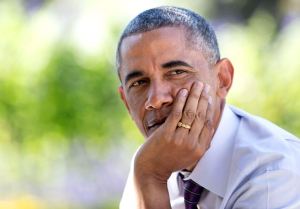
ShowImage (8)US President Barack Obama at the Rose Garden of the White House. (photo credit:OFFICIAL WHITE HOUSE PHOTO / PETE SOUZA)

[T]he real question lawmakers need to ask is whether the deal is good for America. Is Obama right or wrong that only partisan zealots and disloyal Zionists could oppose his great diplomatic achievement? To determine the answer to that question, you need to do is ask another one. Does his deal make America safer or less safe? The best way to answer that question is to consider all the ways Iran threatens America today, and ask whether the agreement has no impact on those threats, or whether it mitigates or aggravates them.

***********************

In President Barack Obama’s defense of his nuclear deal with Iran Wednesday, he said there are only two types of people who will oppose his deal – Republican partisans and Israel- firsters – that is, traitors.

At American University, Obama castigated Republican lawmakers as the moral equivalent of Iranian jihadists saying, “Those [Iranian] hard-liners chanting ‘Death to America’ who have been most opposed to the deal… are making common cause with the Republican Caucus.”

He then turned his attention to Israel.

Obama explained that whether or not you believe the deal endangers Israel boils down to whom you trust more – him or Prime Minister Benjamin Netanyahu. And, he explained, he can be trusted to protect Israel better than Netanyahu can because “[I] have been a stalwart friend of Israel throughout my career.”

The truth is that it shouldn’t much matter to US lawmakers whether Obama or Netanyahu has it right about Israel. Israel isn’t a party to the deal and isn’t bound by it. If Israel decides it needs to act on its own, it will.

The US, on the other side, will be bound by the deal if Congress fails to kill it next month.

So the real question lawmakers need to ask is whether the deal is good for America. Is Obama right or wrong that only partisan zealots and disloyal Zionists could oppose his great diplomatic achievement? To determine the answer to that question, you need to do is ask another one. Does his deal make America safer or less safe? The best way to answer that question is to consider all the ways Iran threatens America today, and ask whether the agreement has no impact on those threats, or whether it mitigates or aggravates them.

Today Iran is harming America directly in multiple ways.

The most graphic way Iran is harming America today is by holding four Americans hostage. Iran’s decision not to release them over the course of negotiations indicates that at a minimum, the deal hasn’t helped them.

It doesn’t take much consideration to recognize that the hostages in Iran are much worse off today than they were before Obama concluded the deal on July 14.

The US had much more leverage to force the Iranians to release the hostages before it signed the deal than it does now. Now, not only do the Iranians have no reason to release the hostages, they have every reason to take more hostages.

Then there is Iranian-sponsored terrorism against the US.

In 2011, the FBI foiled an Iranian plot to murder the Saudi ambassador in Washington and bomb the Saudi and Israeli embassies in the US capital.

One of the terrorists set to participate in the attack allegedly penetrated US territory through the Mexican border.

The terrorist threat to the US emanating from Iran’s terrorist infrastructure in Latin America will rise steeply as a consequence of the nuclear deal.

As The Wall Street Journal’s Mary Anastasia O’Grady wrote last month, the sanctions relief the deal provides to Iran will enable it to massively expand its already formidable operations in the US’s backyard. Over the past two decades, Iran and Hezbollah have built up major presences in Cuba, Venezuela, Nicaragua, Ecuador and Bolivia.

Iran’s presence in Latin America also constitutes a strategic threat to US national security. Today Iran can use its bases of operations in Latin America to launch an electromagnetic pulse attack on the US from a ballistic missile, a satellite or even a merchant ship.

The US military is taking active steps to survive such an attack, which would destroy the US’s power grid. Among other things, it is returning the North American Aerospace Defense Command (NORAD) to its former home in Cheyenne Mountain outside Colorado Springs.

But Obama has ignored the findings of the congressional EMP Commission and has failed to harden the US electronic grid to protect it from such attacks.

The economic and human devastation that would be caused by the destruction of the US electric grid is almost inconceivable. And now with the cash infusion that will come Iran’s way from Obama’s nuclear deal, it will be free to expand on its EMP capabilities in profound ways.

Through its naval aggression in the Strait of Hormuz Iran threatens the global economy. While the US was negotiating the nuclear deal with Iran, the Revolutionary Guards unlawfully interdicted – that is hijacked – the Marshall Islands-flagged Maersk Tigris and held its crew hostage for weeks.

Iran’s assault on the Tigris came just days after the US-flagged Maersk Kensington was surrounded and followed by Revolutionary Guards ships until it fled the strait.

A rational take-home message the Iranians can draw from the nuclear deal is that piracy pays.

Their naval aggression in the Strait of Hormuz was not met by American military force, but by American strategic collapse at Vienna.

This is doubly true when America’s listless response to Iran’s plan to use its Houthi proxy’s takeover of Yemen to control the Bab el-Mandab strait is taken into consideration. With the Bab el-Mandab, Iran will control all maritime traffic from the Persian Gulf and the Red Sea. Rather than confront this clear and present danger to the global economy, America abandoned all its redlines in the nuclear talks.

Then there is Iran’s partnership 20-year partnership with al-Qaida.

The 9/11 Commission found in its report that four of the 9/11 terrorists transited Iran before traveling to the US. As former Defense Intelligence Agency director Lt.-Gen. (ret.) Mike Flynn told Fox News in the spring, Iranian cooperation with al-Qaida remains deep and strategic.

When the US Navy SEALs killed Osama bin Laden in 2011, they seized hard drives containing more than a million documents related to al-Qaida operations. All but a few dozen remain classified.

According to Flynn and other US intelligence officials who spoke to The Weekly Standard, the documents expose Iran’s vast collaboration with al-Qaida.

The agreement Obama concluded with the mullahs gives a tailwind to Iran. Iran’s empowerment will undoubtedly be used to expand its use of al-Qaida terrorists as proxies in their joint war against the US.

Then there is Iran’s ballistic missile program.

The UN Security Council resolution passed two weeks ago cancels the UN-imposed embargoes on conventional arms and ballistic missile acquisitions by Iran. Since the nuclear deal facilities Iranian development of advanced nuclear technologies that will enable the mullahs to build nuclear weapons freely when the deal expires, the Security Council resolution means that by the time the deal expires, Iran will have the nuclear warheads and the intercontinental ballistic missiles required to carry out a nuclear attack on the US.

Obama said Wednesday that if Congress votes down his nuclear deal, “we will lose… America’s credibility as a leader of diplomacy. America’s credibility,” he explained, “is the anchor of the international system.”

Unfortunately, Obama got it backwards. It is the deal that destroys America’s credibility and so upends the international system which has rested on that credibility for the past 70 years.

The White House’s dangerous suppression of seized al-Qaida-Iran documents, like its listless response to Iran’s maritime aggression, its indifference to Iran’s massive presence in Latin America, its lackluster response to Iran’s terrorist activities in Latin America, and its belittlement of the importance of the regime’s stated goal to destroy America – not to mention its complete collapse on all its previous redlines over the course of the negotiations – are all signs of the disastrous toll the nuclear deal has already taken on America’s credibility, and indeed on US national security.

To defend a policy that empowers Iran, the administration has no choice but to serve as Iran’s agent. The deal destroys America’s credibility in fighting terrorism. By legitimizing and enriching the most prolific state sponsor of terrorism, the US has made a mockery of its claimed commitment to the fight.

The deal destroys the US’s credibility as an ally.

By serving as apologists for its worst enemy, the US has shown its allies that they cannot trust American security guarantees. How can Israel or Saudi Arabia trust America to defend them when it is endangering itself? The deal destroys 70 years of US nonproliferation efforts. By enabling Iran to become a nuclear power, the US has made a mockery of the very notion of nonproliferation and caused a nuclear arms race in the Middle East.

The damage caused by the deal is already being felt. For instance, Europe, Russia and China are already beating a path to the ayatollahs’ doorstep to sign commercial and military deals with the regime.

But if Congress defeats the deal, it can mitigate the damage. By killing the deal, Congress will demonstrate that the American people are not ready to go down in defeat. They can show that the US remains committed to its own defense and the rebuilding of its strategic credibility worldwide.

In his meeting with Jewish leaders Tuesday, Obama acknowledged that his claim – repeated yet again Wednesday – that the only alternative to the deal is war, is a lie.

Speaking to reporters after the meeting, Greg Rosenbaum, chairman of the National Democratic Jewish Council, which is allied with the White House, said that Obama rejected the notion that war will break out if Congress rejects the deal with veto-overriding majorities in both houses.

According to Rosenbaum, Obama claimed that if Congress rejects his nuclear deal, eventually the US will have to carry out air strikes against Iran’s nuclear facilities in order to prevent them from enriching uranium to weapons-grade levels.

“But,” he quoted Obama as saying, “the result of such a strike won’t be war with Iran.”

Rather, Obama said, Iran will respond to a US strike primarily by ratcheting up its terrorist attacks against Israel.

“I can assure,” Obama told the Jewish leaders, “that Israel will bear the brunt of the asymmetrical responses that Iran will have to a military strike on its nuclear facilities.”

What is notable here is that despite the fact that it will pay the heaviest price for a congressional defeat of the Iran deal, Israel is united in its opposition to the deal. This speaks volume about the gravity with which the Israeli public views the threats the agreement unleashed.

But again, Israel is not the only country that is imperiled by the nuclear deal. And Israelis are not the only ones who need to worry.

Obama wishes to convince the public that the deal’s opponents are either partisan extremists or traitors who care about Israel more than they care about America. But neither claim is true. The main reason Americans should oppose the deal is that it endangers America. And as a consequence, Americans who oppose the deal are neither partisans nor turncoats.

They are patriots.

Speaking of the Iran deal (13)

August 6, 2015

Speaking of the Iran deal (13), Power LineScott Johnson, August 6, 2015

(Did anyone tell Obama about Iran’s sanitation efforts before his August 5th address on the Iran “deal?” The linked Bloomberg View article is available here at Warsclerotic. — DM)

The U.S. intelligence community has informed Congress of evidence that Iran was sanitizing its suspected nuclear military site at Parchin, in broad daylight, days after agreeing to a nuclear deal with world powers…

******************

Omri Ceren writes to comment on the Bloomberg View story reporting that President Obama’s friends in Iran are destroying evidence at the Parchin site in broad daylight. Omni comments by email:

The Obama administration has spent the last two years assuring lawmakers and reporters that any deal with Iran would have to include the Iranians allowing IAEA inspectors robust access to the Parchin military base. The Iranians used the facility to conduct hydrodynamic experiments relevant to the detonation of nuclear warheads, and the IAEA needs to resolve the nature of the work and figure out how far they got in order to set up a reliable verification regime.

The requirement was never, ever up for debate: Sherman in 2013: the JPOA requires Iran to “address past and present practices… including Parchin” [a]; Sherman in 2014: “as part of any comprehensive agreement… we expect, indeed, Parchin to be resolved” [b]; Harf in 2015: “we would find it… very difficult to imagine a JCPA that did not require such [inspector] access at Parchin” [c]; etc.

Then two weeks ago Sen. Risch revealed in an open Foreign Relations Committee hearing that U.S. negotiators had collapsed on the demand, and that the Iranians would be allowed to collect their own samples instead of the IAEA collecting the evidence. Sen. Menendez followed up with “chain of custody means nothing if at the very beginning what you’re given is chosen and derived by the perpetrator” [d]. Kerry responded by declaring that the information was classified, but the AP ran down and confirmed the story out of Vienna [e].

Now the punchline: Bloomberg View revealed this afternoon that the Iranians have spent the last few weeks busily trying to sanitize Parchin. So the administration blessed a deal in which they trusted the Iranians to provide evidence from Parchin, and the Iranians turned around and started destroying evidence at Parchin.

The U.S. intelligence community has informed Congress of evidence that Iran was sanitizing its suspected nuclear military site at Parchin, in broad daylight, days after agreeing to a nuclear deal with world powers… Intelligence officials and lawmakers who have seen the new evidence, which is still classified, told us that satellite imagery picked up by U.S. government assets in mid- and late July showed that Iran had moved bulldozers and other heavy machinery to the Parchin site and that the U.S. intelligence community concluded with high confidence that the Iranian government was working to clean up the site ahead of planned inspections by the IAEA…

Several senior lawmakers, including Democrats, are concerned that Iran will be able to collect its own soil samples at Parchin with only limited supervision, a practice several lawmakers have compared to giving suspected drug users the benefit of the doubt to submit specimens unsupervised. Iran’s sanitization of the site further complicates that verification.

A few hours after the Bloomberg View article The Institute for Science and International Security (ISIS) published one of its Imagery Briefs with photos showing the new destruction. ISIS assessed “the renewed activity occurring after the signing of the JCPOA raises obvious concerns that Iran is conducting further sanitization efforts to defeat IAEA verification… this renewed activity may be a last ditch effort to try to ensure that no incriminating evidence will be found” [f].

In the last few weeks, some skeptics of the deal have suggested that the JCPOA’s flaws are becoming borderline-comical (or at least they would be if the deal wasn’t such a catastrophe). Revelations like this are the reason why: the White House is telling Congress that Iran can be trusted to turn over evidence from Parchin while the intelligence community is telling Congress that Iran is destroying evidence at Parchin.

[a] http://www.gpo.gov/fdsys/pkg/CHRG-113shrg87828/html/CHRG-113shrg87828.htm
[b] http://www.shearman.com/~/media/Files/Services/Iran-Sanctions/US-Resources/Joint-Plan-of-Action/4-Feb-2014–Transcript-of-Senate-Foreign-Relations-Committee-Hearing-on-the-Iran-Nuclear-Negotiations-Panel-1.pdf
[c] http://www.state.gov/r/pa/prs/dpb/2015/04/240324.htm
[d] https://youtu.be/N4TK8hOLrNA?t=9m44s
[e] http://bigstory.ap.org/article/e1ccf648e18a4788ac94861a3bc1b966/officials-iran-may-take-own-samples-alleged-nuclear-site
[f] http://isis-online.org/uploads/isis-reports/documents/Renewed_Activity_at_Parchin_August_4_2015_FINAL.pdf

Obama Puts Fear Before Facts on Iran

August 6, 2015

Obama Puts Fear Before Facts on Iran, Bloomberg View, The Editors, August 5, 2015

(Please see also, Iran Already Sanitizing Nuclear Site, Intel Warns. — DM)

The pact is not a treaty: A future president and Congress might overturn it, arguing that it was sealed without proper consideration. And history often looks with disgust at causes built on fear, especially if they go awry. Obama wouldn’t want to face the kind of scorn he heaped on George W. Bush today.

***********************

President Barack Obama took to the airwaves today, aiming to sell Congress and the American people on the wisdom of his nuclear deal with Iran. He had a case to make but chose not to make it. He decided instead to cast legitimate criticism of his pact as ignorant warmongering. 

A few examples:

“We have achieved a detailed arrangement that permanently prohibits Iran from obtaining a nuclear weapon.” Actually, the deal’s restrictions end abruptly after 15 years, with some of the constraints on uranium enrichment fading away after just 10. Late in the speech, Obama made the case that much can change in a decade and that the West could be in a stronger position then to continue to block Iran’s nuclear desires. But the temporary nature of the deal remained disguised.

“Many of the same people who argued for the war in Iraq are now making the case against the Iran nuclear deal.” Certainly the Iraq war was sold on spurious grounds and had tragic results. Certainly Republicans and Democrats alike were far too credulous in accepting the Bush administration’s rationale. But these facts have absolutely nothing to do with this agreement.

“Before the ink was even dry on this deal, before Congress even read it, a majority of Republicans declared their virulent opposition.” That’s true, but ignores that opponents had plenty of time to study the draft agreement reached last spring. The real problem is that Congress still hasn’t read the entire accord, its side agreements and the inspections plan negotiated by the International Atomic Energy Agency. Even Secretary of State John Kerry says there are aspects of the deal he has never seen.

“If there is a reason for inspecting a suspicious undeclared site anywhere in Iran, inspectors will get that access even if Iran objects. This access can be with as little as 24 hours’ notice.” The key words here are “as little as.” Iran can draw that process out for as long as 24 days if it so chooses. Foreign Minister Javad Zarif says some military sites will remain off-limits to IAEA personnel.

“If, as has also been suggested, we tried to maintain unilateral sanctions, beefen them up … we’d have to cut off countries like China from the American financial system. And since they happen to be major purchasers of our debt, such actions could trigger severe disruptions in our own economy, and, by way, raise questions internationally about the dollar’s role as the world’s reserve currency.” Rejection by Congress could cause the sanctions regime to fray. Lawmakers should weigh this. The idea that it might cripple the U.S. economy is absurd.

“I’ve had to make a lot of tough calls as president, but whether or not this deal is good for American security is not one of those calls, it’s not even close.” Maybe this deal is the best chance to delay the mullahs’ race to the bomb and keep the Middle East out of a nuclear arms race. But the case is anything but open-and-shut. It’s hard to see what the president gains from denying this.

Well, perhaps one thing: Obama may hope that denigrating those who disagree with him will rally Democrats in Congress to support a veto of any measure of disapproval. Tactics aside, it would be far better to win this fight fairly. The pact is not a treaty: A future president and Congress might overturn it, arguing that it was sealed without proper consideration. And history often looks with disgust at causes built on fear, especially if they go awry. Obama wouldn’t want to face the kind of scorn he heaped on George W. Bush today.

Iranian negotiator discusses talks with Moniz

August 6, 2015

Iranian negotiator discusses talks with Moniz, Al Monitor, Arash Karami, August 5, 2015

(A sweet deal between good friends. — DM)

REUTERS/Carlos Barria

Salehi said that he was asked to join the nuclear talks when the discussions on the Natanz enrichment facility reached a dead end. Salehi said he would only join the talks if Moniz, his American counterpart, did as well. According to Salehi, this was approved by Undersecretary Wendy Sherman and Deputy Foreign Minister Abbas Araghchi, which he described as “the communications link between America and Iran.”

*****************

One of the most popular American negotiators in Iranian social media was US Energy Secretary Ernest Moniz. The Massachusetts Institute of Technology (MIT) professor emeritus and former director of the MIT Laboratory for Energy and the Environment joined the nuclear talks between Iran and five permanent members of the UN Security Council plus Germany (P5+1) to discuss the technical aspects of the nuclear deal with the head of Iran’s Atomic Energy Organization, Ali Akbar Salehi.

In an interview with an Iranian newspaper, Salehi spoke about the negotiations and his relationship with Moniz. Just as Moniz was picked to lead the technical negotiations due to his nuclear expertise, Salehi, an MIT graduate, is one of the few individuals to have held important positions for three consecutive administrations — a sign that he has the trust of Supreme Leader Ayatollah Ali Khamenei.

Salehi first denied accusations that former hard-line nuclear negotiator Saeed Jalili was not a serious negotiator. Salehi was Iran’s foreign minister at the time and said that when he was at the meetings with the Supreme National Security Council, Jalili’s negotiating positions were in line with the country’s positions and that “he did not go rogue.”

According to Salehi, the reason for the deadlock during that time was the differences among the P5+1. Specifically, the EU3 (France, United Kingdom and Germany) saw their positions and interests separate from the E3 (US, Russia and China). He said that even when European Union Chief Catherine Ashton reached a point of agreement with Iran on one issue, one country would oppose it and throw everything off. This is why Iran agreed to bilateral talks with the United States in Oman.

Salehi said that he was asked to join the nuclear talks when the discussions on the Natanz enrichment facility reached a dead end. Salehi said he would only join the talks if Moniz, his American counterpart, did as well. According to Salehi, this was approved by Undersecretary Wendy Sherman and Deputy Foreign Minister Abbas Araghchi, which he described as “the communications link between America and Iran.”

Salehi said he and Moniz did not know each other well when they were at MIT, but when they first met during the talks, “there was a feeling that he has known me for years.” Salehi added, “A number of my classmates are now Mr. Moniz’s experts.”

According to Salehi, Moniz entering the talks was important because Salehi expressed that he had been sent with “full authority” to sign off on all technical issues in the nuclear negotiations and Moniz had told him that he had the same authority. He added, “If the negotiations did not take place with the Americans, the reality is that it would not have reached a conclusion. No [other] country was ready to sit with us and negotiate for 16 days with their foreign minister and all of its experts.”

Salehi said that one of the more difficult times negotiating with Moniz was after they reached an agreement on a particular issue. Moniz would take it to the other members of P5+1, who would then make their own requests.

It was also reported that Moniz had given Salehi a gift for the birth of his granddaughter — clothes and a toy embossed with MIT logos. Salehi said that he had also brought gifts for Moniz — Iranian honey and trail mix of Iranian nuts.


Analysis: Arabs see US-trained anti-Islamist force as only fit to ‘play paintball’

August 6, 2015

Analysis: Arabs see US-trained anti-Islamist force as only fit to ‘play paintball’, Jerusalem PostAriel Ben Solomon, August 6, 2015

ShowImage (7)AN ISIS member rides on a rocket launcher in Raqqa in Syria two months ago. (photo credit:REUTERS)

The deal with Iran and the cooperation with Iranian forces against Islamic State, include “Shi’ite militias that are no less criminal.”

*********************

The Arab world perceives the dramatic failure of the small US-trained Syrian rebel force as a further indication that it cannot be a reliable ally against the Iran led Shi’ite axis.

A US defense official, who spoke to Reuters on condition of anonymity, said on Tuesday that at least five Syrian rebels it has trained are believed to have been captured by the Nusra Front.

That followed an attack by the Nusra Front on Friday thought to have killed one member of the so-called “New Syrian Forces,” in what would be their first battlefield casualty.

The incidents underscore the extreme vulnerability of the New Syrian Forces, a still tiny group estimated to number less than 60, who only deployed to the battlefield in recent weeks.

The Pentagon is far behind on its goals to train around 5,000 fighters a year.

Kirk Sowell, principal of Uticensis Risk Services, a Middle East-focused political risk firm, who closely follows Arab media summed it up this way on Twitter: “Pentagon: Arab media are laughing at you.”

Sowell posted a broadcast by pro-opposition Orient News, which expressed astonishment as to why the US would send in a force of only 50 to 60 fighters to help destroy Islamic State.

Aymenn Jawad al-Tamimi, a fellow at the Middle East Forum who closely follows Islamist opposition groups in Syria and Iraq, told The Jerusalem Post that “for many Sunni Arabs and Syrian Sunni Arab rebels in particular, this train-and-equip program has had no credibility from the outset.”

This is because the notion of fighting Islamic State while ignoring regime forces does not make sense for them, said Tamimi.

“US policymakers’ sense of reality on the ground is seriously in question with the apparent failure to anticipate a clash with the Nusra Front, which has a notable presence in the Azaz district into which the force of 50-60 men was inserted,” he continued.

Since the US has targeted Nusra Front in air strikes it is not surprising that the group would view a US backed group as a threat, he said.

Middle East researcher Ali Bakir, who also writes for Arab publications, told the Post on Wednesday that “no one in the Arab world takes this program seriously; I mean you would need around 50 to 60 people to play paintball but definitely not to fight Islamic State.”

“There is a profound general perception in the Arab world that the Obama administration is no less responsible than Iran and Russia in the Syrian crisis,” he said.

The deal with Iran and the cooperation with Iranian forces against Islamic State, include “Shi’ite militias that are no less criminal.”

This situation is increasingly seen in the Arab world as siding with the Shi’ites at the expense of the vast majority of Muslims, he asserted.

The US administration is more concerned about not jeopardizing the Iran deal than helping the Syrian people, Bakir added.