Archive for the ‘Diplomacy’ category

Op-Ed: Obama’s Deception Set Off a New Era

July 22, 2015

Op-Ed: Obama’s Deception Set Off a New Era, Israel National News, Dr. Joe Tuzara, July 22, 2015

Not surprising, the Obama administration considers both the US and Israel to be key threats to peace in the world.

**********************

President Barack Obama’s strange self-delusion for Iran to become a more “formidable regional power” has already triggered an undeclared new era for nuclear proliferation in the Middle East.

Despite this established ignominy of an emboldened Iran strengthened by Obama’s naive policies at the expense of Israel and Sunni Arab allies, the White House suggestion that they “sought to pursue diplomacy to prevent Iran from obtaining a nuclear weapon that could set off a nuclear arms race” is based on fantasy.

Whichever way they try to spin it, Obama’s rhetoric that the deal “cut off every pathway to nuclear weapons, prevented a nuclear arms race in the Middle East” doesn’t match reality.

The deal explicitly acknowledges that Iran is gaining benefits no other state would gain under the Non-Proliferation Treaty (NPT). In terms of its nuclear development, instead of dismantling Iran’s nuclear program, that program is now protected.

Such a deal, one that allows a leading state sponsor of terror to retain the ability to develop nuclear weapons, threaten Israel, continue their hegemonic ambitions and support for terrorism is a historic nadir of the Obama presidency.

As Obama’s secret letter to Ayatollah Khamenei makes clear, securing the deal simply legitimizes Tehran, a de facto regional US ally standing on the threshold of a nuclear weapon.

It is a shame that the Obama administration’s total capitulations were made in areas that were supposed to prevent Iran from acquiring nuclear weapons. The fake Iran deal does confirm Israeli and Sunni Arab Muslims fears that they can no longer depend on the Obama administration to protect their vital national security interests.

Even worse, Obama had given up on its stated goals of preventing Iran from obtaining a nuclear weapon and his dumb promise to fight a bad deal while underwriting the expansion of Iranian hegemony unquestionably was not just only reckless but cynical.

As it turned out, “détente” with Iran is the main goal of the Obama’s pretend diplomacy. In essence, Obama’s “appeasement” is not diplomacy and his secret back-channel negotiations with the fanatical, corrupt and Machiavellian terrorist regime is treason.

The moment Obama become an advocate for the “Islamic State of Iran” that enjoys the benefits of no real verification regime and no real consequences for serial violations of UN nuclear weapons resolutions, he has lost all credibility to govern our great nation. Similarly, when Obama negotiated away Israel’s existence, he became the real enemy of Israel.

Not surprising, the Obama administration considers both the US and Israel to be key threats to peace in the world. Given that Obama has done all it can to [prevent an Israeli preemptive strike, from leaking Israeli attack scenarios to denying Israel air space over Iraq, the fact that he] coordinated with the Iranian regime –and attempted to cut off weapons shipments to Israel in the midst of its war with Iranian proxy terror group Hamas, his statements about the strength of this deal carry no weight at all.

On the other hand, Obama’s flawed perspective and deception on a grand scale significantly risks the collapse of 50 year US alliance structure in the Middle East, contravenes 70 years of US nonproliferation policy and endangers 45 years of a landmark international treaty (NPT) whose objective is to prevent the spread of nuclear weapons and weapons technology.

Quite unfortunately, the Iran deal set a dangerous precedent that allows rogue states and radical fundamentalist elements in particularly issuing veiled threats to quickly go nuclear. With Iran getting active on the borders of Egypt and Saudi Arabia, those regimes would be foolhardy not to attempt to develop a nuclear capacity –especially given that Obama has shown there are no detriments to doing so.

Equally disturbing, Obama has given all the Sunni Arab Gulf countries the pathways to build civilian nuclear energy programs with possible military dimensions.

Ironically, Obama has created a major void allowing an opening for many potential benefits, that it holds for Russia. In the last six months, Russia has struck three significant nuclear deals with long-time US Middle East allies: Egypt, Jordan and Saudi Arabia.

An unnamed sources told the Al Arabiya TV network that Saudi Arabia and Russia agreed to build 16 nuclear reactors that Russia would play a significant role in operating. France became the first country to sign feasibility studies to build two nuclear reactors in Saudi Arabia potentially worth more than $10 billion.

Now we all know that Sunni Arabs will not sit idly as the world’s largest state-sponsor of terror becomes a nuclear-threshold state. The regional powers know this. Saudi Arabia has already said it will “match the nuclear capabilities Iran is allowed to maintain,” and it is an open secret that the Saudis have a nuke on the shelf in Pakistan.

The Center for Strategic and International Studies (CSIS) also noted that “the Arab Gulf states have acquired and are acquiring some of the most advanced and effective weapons in the world.”

One of many unintended outcomes of the nuclear talks is the emergence of covert Saudi and Gulf State alliance with their former archenemy, Israel. The Saudis and the Israelis have had five “secret” meetings to discuss common defense and intelligence issues related to Obama’s policy of strengthening Iran economically while permitting the terror state to become a potential nuclear power with a breakout capacity that is unknowable.

Tehran’s shocking nuclear bravado aside, the Middle East is going to experience another historic moment with the visit of Saudi Prince Talal bin Waleed  to Israel in what could be the most significant move toward peace between the Arabs and Israelis since Egypt’s Anwar Sadat’s iconic trip to Israel.

Saudi Prince Talal denounced the growing waves of anti-Semitism in the region and praised Israel as the region’s sole democratic entity. Calling for Muslims in the Middle East “to desist from their absurd hostility toward the Jewish people,” the prince went on to announce that Saudi King Salman bin Abdulaziz Al Saud has instructed him to open a direct dialogue with Israel’s intellectuals in pursuit of amicable ties with all of Israel’s Arab neighbors.

Amid the despair in the region generated by Obama’s Iran policy, this could be the most promising breakthrough  toward peace between Arabs and Israelis.

In arrogantly thinking he alone could decide the future of the Middle East, Obama has unleashed the unintended consequences that frequently shape great events: in this instance for the betterment of all the peoples of the Middle East but ultimately to the detriment of America’s interests.

Now, the moment of decision had finally come, Israelis must accept the risks and unintended consequences of preventive war rather than wait until Iran’s nuclear bombs are built.

Either way, for as long as the highly imperfect Iranian accords have not been ratified or rejected by Congress, a preemptive strike of Iran’s nuclear facilities is not an option.

Unless, Iran’s magical collaboration with the Obama administration ends up restocking its Iranian proxies with sophisticated radars and weapons from Russia, China and the United States, or facing the imminent threat of a nuclear attack- Israel will not hesitate  to deploy the “Samson option”.

And as long as the imminent proxy wars in the Golan Heights, Sinai Peninsula, Gaza or Lebanon remain conventional, Israel’s response would remain reciprocally non-nuclear.


John Kerry is “disturbed” that Iran remains Iran

July 22, 2015

John Kerry is “disturbed” that Iran remains Iran, Power LinePaul Mirengoff, July 21, 2015

To view Khamenei’s statements on Iran’s regional policy as disturbing is like being disturbed by feeding habits of sharks. What’s disturbing here is the combination of naivety and wishful thinking that led the Obama administration to reach this agreement with Iran.

***********************

Towards the end of the nuclear negotiations with Iran, the mullahs’ negotiators talked about the possibility of cooperating strategically with the U.S. on regional matters, in the event the sides reached a deal. Even “Supreme Leader” Ali Khamenei joined in, declaring that “if the other side avoids its ambiguity in the talks, it’ll be an experience showing it’s possible to negotiate with them on other issues.”

This was an enticing prospect to dangle before Barack Obama. For him, the hope of U.S.-Iran cooperation on “other issues” has always been a major incentive for reaching a deal.

But now that the deal has been reached, the mullahs have changed their tune. Last Friday, Khamenei threw cold water on the idea of cooperating with the U.S., making it clear that Iran will continue to be our deadly adversary. Khamenei stated:

Our policy toward the arrogant U.S. government won’t change at all. We have no negotiations with America about various global and regional issues. We have no negotiations on bilateral issues.

We will always support the oppressed Palestinian nation, Yemen, Syrian government and people, Iraq, and oppressed Bahraini people, and also the honest fighters of Lebanon and Palestine.

Khamenei also reiterated Iran’s support for Hezbollah:

Americans can support the child-killing Zionist government, and call Hezbollah terrorist? How can one interact, negotiate, or come to an agreement with such a policy?

The instinct of the liberal foreign policy establishment in cases like this is to dismiss such talk as being for domestic political consumption. But John Kerry knows the Iranian regime is serious and, fearful of being made to look like an idiot when Iran makes good on Khamenei’s promises, he declined to take the liberal default position.

Instead, though raising the possibility that the statement might not reflect policy, Kerry stated: “I don’t know how to interpret it at this point in time, except to take it at face value, that that’s his policy.”

It’s encouraging to see Kerry taking what the “Supreme Leader” says at face value. Unfortunately, it’s also late in the day.

Kerry went on to state that if Khamenei’s statement really is Iran’s policy, “it’s very disturbing, it’s very troubling.”

It is, to be sure. But Kerry acts like Khamenei’s statement came out of the blue. Absurd!

As noted, Iran forbore to some extent on such pronouncements as the parties to the nuclear negotiations closed in on an agreement. But how could Kerry have believed that this obvious negotiating tactic reflected a change in Iran’s fundamental regional aims?

To view Khamenei’s statements on Iran’s regional policy as disturbing is like being disturbed by feeding habits of sharks. What’s disturbing here is the combination of naivety and wishful thinking that led the Obama administration to reach this agreement with Iran.

Speaking of the Iran deal (4)

July 21, 2015

Speaking of the Iran deal (4), Power LineScott Johnson, July 21, 2015

Omri Ceren writes to draw attention to Bill Gertz’s Free Beacon article on the ludicrous inspections regime established under the deal with Iran. Omni writes:

Last April – in the immediate days after the Lausanne framework was announced – Obama administration officials assured reporters that it was a good deal because the verification regime would include anytime/anywhere inspections [a][b][c]. Then there was a range of hearings and forums held in early June – which was the lead-up to Vienna – at which IAEA veterans, nuclear experts, and top US intelligence officials confirmed that indeed anytime/anywhere access to suspicious sites was a minimum prerequisite to verifying a deal with Iran [d][e][f][g]).

Then the Vienna talks began and it became clear that the administration would cave to Iranian intransigence on verification. White House validators started trying to convince reporters that technology could be a substitute for robust access [h][i].

Then the talks ended and it was confirmed that Iran will be allowed to block IAEA inspectors for 24 days at a time. The administration is doubling down on the technology talking point and making it mostly about “environmental sampling.” White House communications staffers have begun using the phrase as their two-word answer to any questions about the collapse on inspections. Energy Secretary Moniz repeated it over and over again on last weekend’s Sunday talk shows [j]. White House validators got the hint and have begun invoking it as well yesterday [k]. The argument is that the IAEA’s technology is so good that – even though they have almost a month to destroy evidence – the Iranians could never “sanitize” a site so well that the IAEA couldn’t detect nuclear activity.

There are a couple of reasons why that argument doesn’t hold up.

(1) Diplomatic – Even if the IAEA could detect that *some* kind of nuclear activity had occurred in a sanitized site, the Iranians will have destroyed enough evidence to prevent the agency from determining *what* kind of activity occurred. The goal of verification is not just detection but detection to a sufficient degree that a diplomatic response can be justified. No country is going to be confident enough to blow up the deal without the IAEA being certain that significant cheating had occurred, and being able to explain what it was.

(2) Scientific – It’s just not true. The IAEA’s technology is not good enough. A month isn’t enough time for the Iranians to dismantle a big site like Natanz, but that’s not where they’ll cheat. They’ll cheat in smaller facilities that can be easily dismantled and scrubbed in a couple of weeks. Olli Heinonen – who is the former Deputy Director General of the IAEA, and who worked at the agency for 27 years, and who sat atop its verification shop as head of the Department of Safeguards – explained to reporters today that the Iranians could assemble all the parts they needed for a nuclear bomb in a building that’s just 239 square yards [full article linked above]. And unlike a facility like Natanz, small buildings can in fact be sanitized in 24 days:

Much of this equipment is very easy to move… So you can take it out over the night… and then there is this dispute settlement time which is 24 days – you will use that to sanitize the place, make new floors, new tiles on the wall, paint the ceiling and take out the ventilation… This [nuclear] equipment can be taken out in one or two nights. How long will it take for you to renovate your home? It doesn’t take three weeks… Secretary Kerry has said if there is big installation, 24 days is enough… But there are certain activities where unfortunately in my view, it’s not enough.

This isn’t a theoretical debate. In 2003 the Iranians delayed access to the Kalaye Electric Company for two weeks and completely scrubbed it. They pulled the same trick with the Lashkar Abad laser uranium enrichment plant.

It’s just not true that they can’t dismantle a covert facility in 24 days, and even if it was true they could still dismantle enough to ensure that no country would be confident enough to call them out for cheating.

[a] https://youtu.be/ObV5motay7E?t=1m18s
[b] http://www.timesofisrael.com/top-obama-adviser-dismisses-idea-that-better-iran-deal-is-possible/
[c] http://www.bloomberg.com/politics/articles/2015-04-20/inspectors-need-full-access-in-any-iran-nuclear-deal-moniz-says
[d] http://www.foreign.senate.gov/imo/media/doc/062515_Albright_Testimony.pdf
[e] http://www.foreign.senate.gov/imo/media/doc/062515_Albright_Testimony.pdf
[f] http://taskforceoniran.org/transcripts/Looming_Deadline_Event.pdf
[g] http://docs.house.gov/meetings/FA/FA13/20150610/103582/HHRG-114-FA13-Wstate-FlynnM-20150610.pdf
[h] http://www.nytimes.com/2015/07/07/world/middleeast/nuclear-inspectors-await-chance-to-use-modern-tools-in-iran.html
[i] http://www.thedailybeast.com/articles/2015/07/06/the-spy-tech-that-will-keep-iran-in-line.html
[j] http://www.powerlineblog.com/archives/2015/07/speaking-of-the-iran-deal-2.php
[k] http://www.msnbc.com/msnbc/qa-hans-blix-iran-deal-remarkably-far-reaching

A Historic Catastrophe

July 21, 2015

A Historic Catastrophe, Rasmussen Reports, Thomas Sowell, July 21, 2015

[H]e has maneuvered the Republican-controlled Congress into a position where they will need a two-thirds majority in both Houses to prevent his unilaterally negotiated agreement from going into effect — just by not calling it a treaty. 

If he is that savvy at home, why is he so apparently incompetent abroad? Answering that question may indeed require us to “think the unthinkable,” that we have elected a man for whom America’s best interests are not his top priority.

********************

Distinguished scientist Freeman Dyson has called the 1433 decision of the emperor of China to discontinue his country’s exploration of the outside world the “worst political blunder in the history of civilization.”

The United States seems at this moment about to break the record for the worst political blunder of all time, with its Obama administration deal that will make a nuclear Iran virtually inevitable.

Already the years-long negotiations, with their numerous “deadlines” that have been extended again and again, have reduced the chances that Israel can destroy the Iranian nuclear facilities, which have been multiplied and placed in scattered underground sites during the years when all this was going on.

Israel is the only country even likely to try to destroy those facilities, since Iran has explicitly and repeatedly declared its intention to wipe Israel off the face of the earth.

How did we get to this point — and what, if anything, can we do now? Tragically, these are questions that few Americans seem to be asking. We are too preoccupied with our electronic devices, the antics of celebrities and politics as usual.

During the years when we confronted a nuclear-armed Soviet Union, we at least realized that we had to “think the unthinkable,” as intellectual giant Herman Kahn put it. Today it seems almost as if we don’t want to think about it at all.

Our politicians have kicked the can down the road — and it is the biggest, most annihilating explosive can of all, that will be left for our children and grandchildren to try to cope with.

Back in the days of our nuclear standoff with the Soviet Union, some of the more weak-kneed intelligentsia posed the choice as whether we wanted to be “red or dead.” Fortunately, there were others, especially President Ronald Reagan, who saw it differently. He persevered in a course that critics said would lead to nuclear war. But instead it led to the peaceful conclusion of the Cold War.

President Barack Obama has been following opposite policies, and they are likely to lead to opposite results. The choices left after Iran gets nuclear bombs — and intercontinental missiles that can deliver them far beyond Israel — may be worse than being red or dead.

Bad as life was under the communists, it can be worse under nuclear-armed fanatics, who have already demonstrated their willingness to die — and their utter barbarism toward those who fall under their power.

Americans today who say that the only alternative to the Obama administration’s pretense of controlling Iran’s continued movement toward nuclear bombs is war ignore the fact that Israel bombed Saddam Hussein’s nuclear facilities, and Iraq did not declare war. To do so would have risked annihilation.

Early on, that same situation would have faced Iran. But Obama’s years-long negotiations with Iran allowed the Iranian leaders time to multiply, disperse and fortify their nuclear facilities.

The Obama administration’s leaking of Israel’s secret agreement with Azerbaijan to allow Israeli warplanes to refuel there, during attacks on Iran’s nuclear facilities, was a painfully clear sabotage of any Israeli attempt to destroy those Iranian facilities.

But the media’s usual practice to hear no evil, see no evil and speak no evil in the Obama administration buried this news, and allowed Obama to continue to pose as Israel’s friend, just as he continued to assure Americans that, if they liked their doctor they could keep their doctor.

Some commentators have attributed Barack Obama’s many foreign policy disasters to incompetence. But he has been politically savvy enough to repeatedly outmaneuver his opponents in America. For example, the Constitution makes it necessary for the President to get a two-thirds majority in the Senate to make any treaty valid. Yet he has maneuvered the Republican-controlled Congress into a position where they will need a two-thirds majority in both Houses to prevent his unilaterally negotiated agreement from going into effect — just by not calling it a treaty.

If he is that savvy at home, why is he so apparently incompetent abroad? Answering that question may indeed require us to “think the unthinkable,” that we have elected a man for whom America’s best interests are not his top priority.


Islam, Imam Obama, Sir John of Kerry and a great deal for Iran | Part II

July 20, 2015

(The views expressed in this post are mine, and do not necessarily reflect those of Warsclerotic or its other editors. — DM)
Oh what a tangled web we weave, when first we practice to deceive.

Dealing from the Bottom

The current “deal” is based on a long-standing scam

Part I of this series, published on July 14, 2015, pointed out what should be a glaring consistency in the “Joint Comprehensive Plan of Action,” first made available on that date, and the November 24, 2013 Joint Plan of Actionneither provides for any “anytime -anywhere” inspections of Iran’s nuclear weaponization or missile sites. That consistency has been little remarked upon elsewhere.

Secretary Kerry now acknowledges that he never sought such inspections.

Leaving aside the twenty-four day lag between an IAEA request to inspect suspect facilities — which Kerry says is just fine — he claims that we now have a “unique ability” to get the U.N. Security Council to force inspections and reinstate sanctions. However, any effort to do so would almost certainly be vetoed by one or more Security Council members. The permanent members are China, France, Russia, the United Kingdom, and the United States — five of the members of P5+1 which approved the “deal.”

On July 16th, US Under Secretary of State Wendy Sherman said,

“I think this is one of those circumstances where we have all been rhetorical from time to time,” Sherman said in a conference call with Israeli diplomatic reporters. “That phrase, anytime, anywhere, is something that became popular rhetoric, but I think people understood that if the IAEA felt it had to have access, and had a justification for that access, that it would be guaranteed, and that is what happened.” [Emphasis added.]

Kerry also claimed that the massive financial boost for Iran resulting from the lifting of sanctions will not enhance Iran’s support for terrorism.

Speaking to the BBC after the nuclear agreement between Iran and six world powers was reached, Kerry said that the more than $100 billion that Iran is set to receive “is going to make all the difference in the world is just – it’s not true.”

Acknowledging Iran is an international player in wreaking terror across the globe, Kerry said, “What Iran has done for years with Hezbollah does not depend on money.” He similarly stated Iran’s support of the Houthi rebels against the government in Yemen has not “depended on money.” [Emphasis added.]

. . . .

In its most recent report, the State Department wrote, “Iran has provided hundreds of millions of dollars in support of Lebanese Hezbollah in Lebanon and has trained thousands of its fighters at camps in Iran.”

In 2010 alone, State reported “Iran provides roughly $100-$200 million per year in funding to support Hezbollah.”

Secretary Kerry is almost certainly wrong, on that as on other aspects of the “deal.”.

Here’s Megan Kelly’s wrap up.


Iran may reject the “deal.”

There are at least glimmers of hope that Iran may reject the “deal,” unanimously endorsed by the UN Security council today.

A UN Security Council resolution endorsing Iran’s nuclear deal that passed on Monday is unacceptable, the country’s Islamic Revolutionary Guards Corps commander Mohammed Ali Jafari was quoted as saying by the semi-official Tasnim News Agency.

“Some parts of the draft have clearly crossed the Islamic republic’s red lines, especially in Iran’s military capabilities. We will never accept it,” he was quoted as saying shortly before the resolution was passed in New York. [Emphasis added.]

The Iranian Parliament also has problems with the “deal.”

On Saturday, the Fars News Agency reported that the Majlis threatened to reject the agreement’s provision on ballistic missiles, which call for an international embargo on missile technology to be extended for eight years–a significant, last-minute concession by the U.S.

Iran wants unrestricted ballsitic missile development and access to conventional arms dealers abroad.

“The parliament will reject any limitations on the country’s access to conventional weapons, specially ballistic missiles,” said Tehran MP Seyed Mehdi Hashemi.

. . . .

In addition, the nuclear deal says that the Majlis will ratify the Additional Protocol (AP) to the Non-Proliferation Treaty–but it does not say when.

The AP is the key to long-term monitoring of Iranian nuclear research and development by the International Atomic Energy Agency (IAEA). Without approval of the AP, Iran may hide key information about its nuclear activity, and may accelerate advanced centrifuge research immediately when the nuclear deal expires, among other hazards. (Even then, its commitments under the AP will be somewhat voluntary.) [Emphasis added.]

. . . .

[W]hile the interim agreement of Nov. 2013 provided that Iran would ratify the AP within one year, there is no such deadline in the final Iran deal. The AP is merely to be applied “provisionally,” while the Majlis decides whether to accept it or not.

Meanwhile, if the Obama administration has its way, the U.S. Congress will have no opportunity to amend the deal–and will have to accept the lifting of international sanctions regardless of whether legislators accept or reject the agreement. [Emphasis added.]

Iranian leadership’s opposition to the “deal” appears to have come from Iran’s Supreme leader and the Iranian Parliament has the authority to reject the “deal.”

As expected, Ayatollah Ali Khamenei’s reaction to the nuclear deal was utterly different from that of President Hassan Rouhani. Right after the agreement was announced on July 14, Rouhani appeared on state television and praised the outcome. Yet when he and other officials visited Khamenei’s home a few hours later, the Supreme Leader did not say anything about the deal apart from a few lines thanking the negotiators. This reticence signaled to hardliners that they should increase their attacks on the agreement. [Emphasis added.]

America’s Supreme Leader, on the other hand, has been pushing vigorously to force the U.S. Congress to approve it, with no way to change it.


The “deal,” and Obama’s foreign policy in general, are rooted in His affinity for Islam

Obama may or may not be a Muslim. However, He thinks very highly of Islam and deems it the “religion of peace.” It would be ironic were Obama’s Iran “deal” to be rejected by Iran.

As observed in a Jerusalem Post article, with the thrust of which I agree, His affinity for Islam is at the root of His “deal.”

Obama is the first US president who genuinely conceives of Islam as not inherently opposed to American values or interests.

. . . .

It is through this Islamo-philic prism that the Obama administration’s attitude to, and execution of, its foreign policy must be evaluated – including its otherwise incomprehensible capitulation this week on Iran’s nuclear program. [Emphasis added.]

. . . .

The inspection mechanism provided for in the nascent deal make a mockery of Obama’s contention (July 14): “… this deal is not built on trust; it is built on verification,” and, “Because of this deal, inspectors will also be able to access any suspicious location… [They] will have access where necessary, when necessary.”

One can hardly imagine a more grossly misleading representation of the deal – so much so that it is difficult not to find it strongly reminiscent of the Muslim tactic of taqiya (the religiously sanctioned deception of non-Muslims). [Emphasis added.]

Indeed, immediately following the announcement of the agreement, Ben Rhodes, Obama’s deputy national security adviser, made a stunning admission to CNN’s Erin Burnett. Starkly contradicting the president’s contention of “access where necessary, when necessary,” Rhodes conceded, “We never sought in this negotiation the capacity for so-called anytime, anywhere,” which is diametrically opposed to the impression he conveyed in April this year when queried on this issue. [Emphasis added.]

In His capacity as America’s Imam in Chief, Obama has consistently claimed that the “religion of peace” has nothing to do with the Islamic State or with Islamic terrorism (of which he claims there is none) — such as the recent murder of four members of the U.S. Marines and one member of the U.S. Navy — committed in the name of Allah. The Daily Beast has posted some of the terrorist’s writings. They include these statements:

“I would imagine that any sane person would devote their time to mastering the information on the study guide and stay patient with their studies, only giving time for the other things around to keep themselves focused on passing the exam,” Abdulazeez wrote. “They would do this because they know and have been told that they will be rewarded with pleasures that they have never seen.”

This life is that test, he wrote, “designed to separate the inhabitants of Paradise from the inhabitants of Hellfire.”

. . . .

“We ask Allah to make us follow their path,” Abdulazeez wrote. “To give us a complete understanding of the message of Islam, and the strength the live by this knowledge, and to know what role we need to play to establish Islam in the world.” [Emphasis added.]

Obama apparently considers the Islamic Republic of Iran to be Islamic — and therefore peaceful — despite its widespread support for its terrorist proxies. That may explain the credence He gives to Supreme Leader Khamenei’s alleged fatwa preventing Iran from obtaining nukes. Obama and Khamenei have frequently referred to it in support of that proposition, although no text been produced. According to a Washington Post article dated November 27, 2013,

Oddly, the Iranian Web site does not provide the text of the original fatwa — and then mostly cites Western news reports as evidence that Khamenei has reiterated it on several occasions. The fatwa does not appear to be written, but in the Shiite tradition equal weight is given to oral and written opinions.

. . . .

Just about every Alfred Hitchcock thriller had what he called a “MacGuffin” — a plot device that gets the action going but is unimportant to the overall story. The Iranian fatwa thus appears to be a diplomatic MacGuffin — something that gives the Americans a reason to begin to trust the Iranians and the Iranians a reason to make a deal. No one knows how this story will end, but just as in the movies, the fatwa likely will not be critical to the outcome. [Emphasis added.]

Even if one believes the fatwa exists — and will not later be reversed — it clearly appears to have evolved over time. U.S. officials should be careful about saying the fatwa prohibits the development of nuclear weapons, as that is not especially clear anymore. The administration’s statements at this point do not quite rise to the level of  earning Pinocchios, but we will keep an eye on this issue. [Emphasis added.]

An April 6, 2015 article at the Middle East Media Research Institute provides additional information.

In March of this year Obama presented a Nowruz message to the people of Iran citing Khamenei’s alleged fatwa. Here’s a video from the White House.

Here are a few interesting excerpts:

“Our negotiations have made progress, but gaps remain,” he said. “And there are people, in both our countries and beyond, who oppose a diplomatic resolution. My message to you—the people of Iran—is that, together, we have to speak up for the future we seek. [Emphasis added.]

“As I have said many times before, I believe that our countries should be able to resolve this issue peacefully, with diplomacy,” Obama said. “Iran’s Supreme Leader Ayatollah Khamenei has issued a fatwa against the development of nuclear weapons, and President Rouhani has said that Iran would never develop a nuclear weapon. [Emphasis added.]

Isn’t that special! Why, in light of the alleged fatwa, does Iranian television broadcast simulations of nuclear attacks on Israel?

A short animated film being aired across Iran, shows the nuclear destruction of Israel and opens with the word ‘Holocaust’ appearing on the screen, underneath which a Star of David is shown, Israel’s Channel 2 reported on Tuesday.

Khamenei’s Death to America rants are considered an excellent reason to have a “deal.”

Similarly, the Reverend Jeremiah Wright was fond of saying “God Damn America.”

Obama apparently understood Khamenei’s words, but perhaps He didn’t understand Jeremiah’s words.


Conclusions

Elected on a platform of Hope and Change, Obama has brought us many changes; very few, if any, of those changes provide a basis for hope, at least until He has left office. Some will be difficult, if not impossible, even then to ameliorate. During His remaining time in office, He will continue to do His worst to eliminate any vestigial hope we may have. The “deal” with Iran is only one of the many changes for the worse that He has wrought.

Kerry: I never even discussed ‘anytime, anywhere’ inspections of Iran

July 19, 2015

Kerry: I never even discussed ‘anytime, anywhere’ inspections of Iran, Washington Free Beacon via You Tube, July 19, 2015

(Our “unique ability” to get the U.N. Security Council to force inspections and reinstate sanctions? Any such effort would almost certainly be vetoed by one or more Security Council members. — DM)


Deep meaning of the Iran deal

July 18, 2015

Deep meaning of the Iran deal, Power LineScott Johnson, July 18, 2015

This deal does the opposite of rolling back Iran’s nuclear program. It funds, protects, and perfects the nuclear program.

*****************

Omni Ceren sent out several email messages yesterday updating his readers on the Iran agreement (Joint Comprehensive Plan of Action or “JCPOA”). I would like to bring the following excerpt from one of the messages to your attention. Omri writes:

The agreement commits the international community to actively helping Iran perfect its nuclear program over the life of the deal (!) On a policy level, it means Iran’s breakout time will be constantly shrinking. On a political level, it means that the deal will be seen as accomplishing the exact opposite of what the Obama administration promised Congress: instead of rolling back Iran’s nuclear program, it will commit the U.S. and its allies to funding and boosting it.

The commitments are sprinkled across the JCPOA and obligate a range of global powers:

Russian sponsorship/cooperation on nuclear research at Fordow — The Fordow Fuel Enrichment Plant (FFEP) will be converted into a nuclear, physics, and technology centre and international collaboration will be encouraged in agreed areas of research. The Joint Commission will be informed in advance of the specific projects that will be undertaken at Fordow…The transition to stable isotope production of these cascades at FFEP will be conducted in joint partnership between the Russian Federation and Iran on the basis of arrangements to be mutually agreed upon.

European sponsorship of nuclear security, including training against sabotage— E3/EU+3 parties, and possibly other states, as appropriate, are prepared to cooperate with Iran on the implementation of nuclear security guidelines and best practices…Co-operation through training and workshops to strengthen Iran’s ability to protect against, and respond to nuclear security threats, including sabotage.

International sponsorship/cooperation of Iranian fuel fabrication, which will help Iran complete its mastery of fuel cycle, making Iran’s program harder more opaque and difficult to regulate — The Joint Commission will establish a Technical Working Group with the goal of enabling fuel to be fabricated in Iran while adhering to the agreed stockpile parameters… This Technical Working Group will also, within one year, work to develop objective technical criteria for assessing whether fabricated fuel and its intermediate products can be readily converted to UF6.

This deal does the opposite of rolling back Iran’s nuclear program. It funds, protects, and perfects the nuclear program.

Iran’s supreme leader vows to continue anti-US policies

July 18, 2015

Iran’s supreme leader vows to continue anti-US policies, Ynet News, July 18, 2015

(Please see also, Back in Tehran… Khamenei adds red lines, Rouhani tries to resign, Jaafari hints at “fait accompli” soon. The linked July 12th DEBKAfile article claims that when Rouhani asked Khamenei to back off from some of his “red lines” and threatened to resign as president if he did not, Khamenei reminded him of the unpleasant fates of other presidents who had resigned. He and two other hard liners, Defense Minister Hosseim Dehqan and Revolutionary Guards chief Mohammad Ali Jaafari, told Rouhani 

in the stiffest terms that Tehran must not on any account bow to international pressure for giving up its nuclear program or the development of ballistic missiles.

Although Iran got just about everything it wanted, and forfeited nothing of substance, it remains possible that Iran will reject the “deal” as soon as sanctions are lifted and can not “snap back.”

In addition, please see Into the fray: Iran- Reaping the storm that Barack sowed…, contending that Obama’s affinity for Islam has much to do with the “deal.”– DM)


“If any of our security officials or members of parliament approve or denounce the deal before fully scrutinizing it, they will regret it,” Revolutionary Guard commander and head of Iran’s Basij organization, Mohammad Reza Naghdi told the Fars news agency on Friday.

*****************

Ayatollah Khamenei calls on country’s legislators to examine nuclear deal carefully before deciding whether to approve it, implying the accord has yet to win definitive backing in Tehran.

Supreme Leader Ayatollah Ali Khamenei withheld his verdict on Iran’s nuclear deal on Saturday but in a fiery address vowed enduring opposition to the United States and its Middle East policies, saying Washington sought Iran’s ‘surrender’.

In an speech at a Tehran mosque punctuated by chants of “Death to America” and “Death to Israel”, Khamenei said he wanted politicians to examine the agreement to ensure national interests were preserved, as Iran would not allow the disruption of its revolutionary principles or defensive abilities.

An arch conservative with the last word on high matters of state, Khamenei repeatedly used the phrase “whether this text is approved or not”, implying the accord has yet to win definitive backing from Iran’s factionalized political establishment.

59219580100388640360noIran’s Ayatollah Khamenei (Photo: AP)

“Whether the deal is approved or disapproved, we will never stop supporting our friends in the region and the people of Palestine, Yemen, Syria, Iraq, Bahrain and Lebanon. Even after this deal our policy towards the arrogant US will not change,” he said.

Under the agreement reached on Tuesday, sanctions will be gradually removed in return for Iran accepting long-term curbs on a nuclear program that the West has suspected was aimed at creating a nuclear bomb. Iran denies it seeks a nuclear bomb.

Khamenei’s combative remarks about US policies in the Middle East may sit awkwardly with a diplomatic offensive Foreign Minister Mohammad Javad Zarif plans in coming days in the wake of the deal.

‘Insult’

Iran regards its nuclear program as an emblem of national dignity and dynamism in the face of what it sees as decades of hostility from Western countries that opposed its 1979 Islamic revolution.

Khamenei did not echo criticisms of the deal made on Friday by a top cleric, Ayatollah Mohammad Ali Movahedi Kermani, who said in an address broadcast on radio that it reflected excessive demands by world powers that were an “insult”.

But Khamenei’s remarks radiated a broad mistrust of US intentions, claiming that successive American presidents had sought Iran’s “surrender”, and declaring that if war broke out America would come off worst, nursing “a broken head”.

“The Americans say they stopped Iran from acquiring a nuclear weapon,” Khamenei said.

“They know it’s not true. We had a fatwa (religious ruling), declaring nuclear weapons to be religiously forbidden under Islamic law. It had nothing to do with the nuclear talks.”

61618310100492640360noAnti-US and anti-Israel displays at al-Quds Day commemorations in Tehran (Photo: AFP)

Later on Saturday, the Supreme Leader praised Iranian negotiators who thrashed out the accord in marathon negotiations in Vienna.

“During the nuclear talks, we saw the Americans’ dishonesty over and over, but fortunately our officials fought back and in some cases showed revolutionary reactions,” Khamenei said during meetings with senior Iranian officials and ambassadors from several Muslim states, according to his official website.

But his remarks on Saturday did not shed light on Iran’s procedures for ratifying the accord, which are not known in any detail. Zarif will brief parliament on July 21, Iranian media have said, and the agreement will also be examined by the National Security Council, the country’s highest security body.

Zarif, who plans to visit several countries in the region, told fellow Muslim countries on Friday that Iran hoped the accord could pave the way for more cooperation in the Middle East and internationally.

In a message to Islamic and Arab countries on the Eid al-Fitr holiday at the end of Ramadan, Zarif said: “By solving the artificial crisis about its nuclear program diplomatically, a new opportunity for regional and international cooperation has emerged.”

‘Real terrorists’

Khamenei maintained that the Islamic Republic’s policies in the region would continue to defy the United States, and the nuclear deal was an exceptional instance of dialogue.

“We have repeatedly said we don’t negotiate with the US on regional or international affairs; not even on bilateral issues. There are some exceptions like the nuclear program that we negotiated with the Americans to serve our interests.”

He said US policies in the region were “180 degrees” opposed to Iran’s policies.

“The Americans dub the Lebanese resistance terrorists and regard Iran as a supporter of terrorism because of its support for the Lebanese Hezbollah, while the Americans themselves are the real terrorists who have created Islamic State and support the wicked Zionists,” Khamenei said.

Several Gulf Arab states have long accused Tehran of interference, alleging financial or armed support for political movements in several countries including Bahrain, Yemen and Lebanon. Shi’ite power Iran denies interference but vows undimmed support for the Syrian and Iraqi governments, who are both fighting insurgencies by a variety of Sunni armed groups.

Prominent conservatives have largely kept silent on the deal. Ali Akbar Velayati, a senior advisor to Khamenei, did not mention the agreement in his Eid al-Fitr message.

“If any of our security officials or members of parliament approve or denounce the deal before fully scrutinizing it, they will regret it,” Revolutionary Guard commander and head of Iran’s Basij organization, Mohammad Reza Naghdi told the Fars news agency on Friday.

Into the fray: Iran- Reaping the storm that Barack sowed…

July 18, 2015

Into the fray: Iran- Reaping the storm that Barack sowed…, Jerusalem PostMARTIN SHERMAN,July 16, 2015

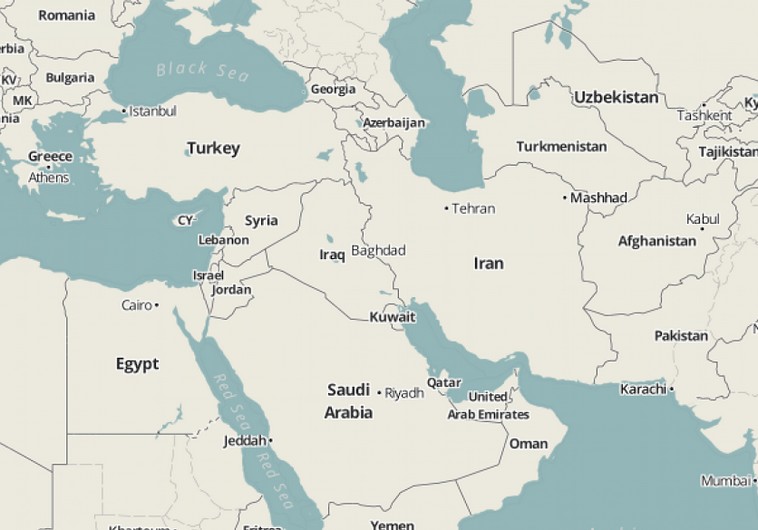
ShowImage (3)Map of Middle East. (photo credit:Courtesy)

It is through this Islamo-philic prism that the Obama administration’s attitude to, and execution of, its foreign policy must be evaluated – including its otherwise incomprehensible capitulation this week on Iran’s nuclear program.

********************

Obama is the first US president who genuinely conceives of Islam as not inherently opposed to American values or interests.

You’re absolutely right that John McCain has not talked about my Muslim faith – Barack Hussein Obama to ABC’s George Stephanopoulos, September 7, 2008

I also know that Islam has always been a part of America’s story Barack Hussein Obama, Cairo, June 4, 2009

Islam has always been part of AmericaBarack Hussein Obama, the White House, August 11, 2010

Islam has been woven into the fabric of our country since its founding Barack Hussein Obama, the White House, February 18, 2015

Barack Hussein Obama is the first US president who is explicitly and overtly unmoored, both cognitively and emotionally, from the moorings of America’s founding Judeo-Christian cultural heritage, and who genuinely conceives of Islam as not inherently opposed to American values or American interests.

A question of cultural affinity?

It is through this Islamo-philic prism that the Obama administration’s attitude to, and execution of, its foreign policy must be evaluated – including its otherwise incomprehensible capitulation this week on Iran’s nuclear program.

Almost two years ago, I wrote a column titled, “Will the West withstand the Obama presidency?” (11/28/2013). In it I warned: “For anyone who understands that the US Constitution is not a Shari’a-compliant document…

it should be alarmingly apparent that the Obama incumbency is a dramatic and disturbing point of inflection in the history of America and its Western allies… whose political practices and societal norms are rooted in Judeo-Christian foundations in a cultural rather than in any religious sense.”

There is little alternative explanation to account for the metamorphosis that has taken place in how the US has approached resolving the impasse with Tehran, as starkly laid out by two former secretaries of state, Henry Kissinger and George Shultz.

In a Wall Street Journal opinion piece, “The Iran Deal and Its Consequences” (April 7), they note that the negotiation has been turned “on its head.” As they point out: “For 20 years, three presidents of both major parties proclaimed that an Iranian nuclear weapon was contrary to American and global interests – and that they were prepared to use force to prevent it. Yet negotiations that began 12 years ago as an international effort to prevent an Iranian capability to develop a nuclear arsenal are ending with an agreement that concedes this very capability.”

Risible inspection mechanism

Even before the specifics of the risible inspection mechanism, which one Israeli minister aptly described as “worse than worthless,” Kissinger and Shultz laid out the difficulties that would render any extended inspection endeavor ineffective: “In a large country with multiple facilities and ample experience in nuclear concealment, violations will be inherently difficult to detect.”

With considerable prescience, they warn: “Devising theoretical models of inspection is one thing. Enforcing compliance, week after week, despite competing international crises and domestic distractions, is another. Any report of a violation is likely to prompt debate over its significance – or even calls for new talks with Tehran to explore the issue.

Envisaging the problems likely to arise in enforcing any agreement, they caution: “Compounding the difficulty is the unlikelihood that breakout will be a clear-cut event.

More likely it will occur… via the gradual accumulation of ambiguous evasions. When inevitable disagreements arise over the scope and intrusiveness of inspections, on what criteria are we prepared to insist and up to what point? If evidence is imperfect, who bears the burden of proof? What process will be followed to resolve the matter swiftly?”

Reminiscent of taqiya?

But even without the daunting generic difficulties described by Kissinger and Shultz, the inspection mechanism provided for in the nascent deal make a mockery of Obama’s contention (July 14): “… this deal is not built on trust; it is built on verification,” and, “Because of this deal, inspectors will also be able to access any suspicious location… [They] will have access where necessary, when necessary.”

One can hardly imagine a more grossly misleading representation of the deal – so much so that it is difficult not to find it strongly reminiscent of the Muslim tactic of taqiya (the religiously sanctioned deception of non-Muslims).

Indeed, immediately following the announcement of the agreement, Ben Rhodes, Obama’s deputy national security adviser, made a stunning admission to CNN’s Erin Burnett. Starkly contradicting the president’s contention of “access where necessary, when necessary,” Rhodes conceded, “We never sought in this negotiation the capacity for so-called anytime, anywhere,” which is diametrically opposed to the impression he conveyed in April this year when queried on this issue.

You couldn’t make this stuff up

For as it turns out, it provides the Iranians with ample warning of impending inspections on any suspected violation, and ample ability to forestall the definition of any given suspicious event as a possible violation.

Thus in the case of a suspected infringement in any undisclosed (to the international community) site, the Iranians will have at least 24 days’ notice. Moreover, inspectors will not be able to conduct surprise visits but will be required to “provide Iran the basis for such concerns and request clarification.” No kidding!!! But wait, there’s more.

If Iran’s explanations do not adequately assuage international concerns, inspectors “may request access to such locations” to make sure no illicit activity has occurred. But first they need to “provide Iran the reasons for access in writing and will make available relevant information.” You can’t make this stuff up.

But here’s the kicker: Should the Iranians and the inspectors prove unable to “reach satisfactory arrangements,” Tehran will resolve any concerns “through necessary means agreed between Iran and the IAEA.” If there is still no agreement two weeks after the initial inquiry is filed, the crisis will be resolved by vote in the so-called Joint Commission – consisting of the six world powers, a representative of EU and – wait for it – Iran.

Like warning drug dealers of a bust

Astonishingly, nearly all the decisions of the Joint Commission, tasked with overseeing/ administering the implementation of the deal, are to be made by consensus – which in effect gives Iran veto power over them. In the case of inspection access, it is sufficient for two of its eight members (say China and Russia) to abstain for Iran to block any decision it dislikes.

It is thus difficult to dispute Benjamin Netanyahu’s characterization of the deal during his address in the Knesset when he likened it to giving drug dealers notice of an impending raid: “It’s like giving a criminal organization that deals drugs a 24-day warning before inspecting its drug lab.”

But worse – the deal requires the international inspectors to expose the sources of intelligence that lead to the detection of the possible infringement – thereby virtually ensuring the termination of their effectiveness.

As Netanyahu remarked: “The agreement also requires the world powers to… show Iran the very intelligence for which they want to conduct the inspections in the first place.”

It is possible that all this could be nothing more than mind-boggling incompetence and blatant lack of foresight? Or are these glaring loopholes the reflection of intent.

Devil not in details

After all, the more you think about the unenforceable, unverifiable agreement just concocted in Vienna, the more implausible it seems. As Alan Dershowitz points out in a Jerusalem Post opinion piece this week, “The devil is not so much in the details as in the broad outlines of this deal.”

Rather than the detailed minutiae of the deal, it is its deeply flawed overall structure that makes it so difficult to comprehend – unless the motives for its conclusion are reexamined.

For unless one is imbued with the child-like naiveté to believe that the tyrannical clergy who head the totalitarian theocracy in Tehran, on seeing their defiant intransigence vindicated and having vast additional resources placed at their disposal, will suddenly change their worldview, the picture of emerging realities is decidedly bleak and bewildering.

The spectacle unfolding before us is almost incomprehensible by any rational criterion.

Virtually the entire developed world, led by the only superpower on the planet, has for all intents and purposes conceded a legitimized path to weaponized nuclear status for a fanatical fundamentalist regime, ideologically bent on the destruction of America and its allies, and a major proliferator of terrorism, committed to attaining regional hegemony at the expense of relatively pro-Western governments.

Despite dwarfing Iran in terms of military might, economic wealth, physical size and population, Tehran’s interlocutors have provided it with vast resources to enormously enhance its nefarious pursuits across the region and beyond.

The New Middle East: Conflicts on steroids

The ominous consequences are not difficult to foresee.

As Ariel Ben Solomon, the Post’s Middle East correspondent, wrote in a recent report, “Iran deal to see Middle East conflicts go on steroids,” “A stronger Iran will translate into a more robust Hezbollah in Lebanon, Houthi movement in Yemen, and Shi’ite forces in Iraq and Syria, and increasing sectarian strife fueled by Shi’ite minorities or Iranian agents throughout the Arab world.” (July 16) There is precious little reason for believing any other outcome is plausible.

In a July 15 interview, New Jersey Democrat Sen. Bob Menendez lamented another aspect of the deal, relating to easing restrictions on conventional weapons to Iran: “When you lift the arms embargo to a country that is the major sponsor of… terrorism in the world and is already destabilizing the region in Yemen, Lebanon, Syria [and] Iraq, to give them – after they are going to get $100 billion-150b. in economic relief – the opportunity to buy conventional weapons and improve their missile technology doesn’t seem to me to be in the national interest of the United States.”

The intriguing question is, of course, does this seem to President Obama to be in the national interest of the United States? And if so, why so? If so, how so?

‘No alternative’: A mindless mendacious mantra

The almost Pavlovian response of the apologists for the Iran deal is that its critics have not offered a feasible alternative. This is a claim – for want of a better word – so feeble that it barely merits a response.

As Sen. Menendez points out: “We never tested the proposition that dismantling elements of Iran’s illicit nuclear infrastructure was possible. It is pretty hard for me to believe that the world powers, sitting on one side of the table, the five permanent members of the Security Council plus Germany and the European Union looking at the Iranians… suffering under staggering sanctions… and falling oil prices couldn’t get a deal that eliminated some of that infrastructure.”

Rebutting John Kerry’s claim that such a goal was achievable only in “a world of fantasy,” Menendez retorted, “I don’t know that that is a ‘world of fantasy.’ Isn’t it possible with all the world on one side of the table, and Iran reeling with economic challenges, that you couldn’t have done better as relates to eliminating that nuclear infrastructure.”

Of course if the underlying assumption is that alternatives are only feasible if Iran deigns to accept them, then the apologists may be right. However, if the rationale were not to accommodate the ayatollahs, but to coerce them, the alternative is clear: Enhanced sanctions backed by the credible threat of military action aimed at destroying Iran’s nuclear facilities and their attendant infrastructure.

Arab arms race or Arab client states

But despite the overwhelming preponderance of power in their favor, the US and its Western allies seem to have forsworn the use of force, or even the credible specter thereof. As Kissinger and Shultz remark: “The threat of war now constrains the West more than Iran.”

This will clearly have a devastating impact on both friend and foe in the region.

It will destroy the confidence of US allies who will therefore be compelled to either acquire their own appropriate arsenals, as they can no longer rely on America for their security, or to become compliant client states of a hegemonic Iran.

For Iran it sends an equivocal message that it can violate the terms of the deal with impunity – for if what it encountered at Vienna is all the West can throw at it, what does it have to fear? There can be little doubt that what happened in Vienna this week has shredded America’s standing in the Middle East.

Some might even suspect that that was the purpose of the exercise.

Iran Deal: The Great Bamboozle Festival

July 18, 2015

Iran Deal: The Great Bamboozle Festival, Gatestone InstituteDouglas Murray, July 18, 2015

(Would Chamberlain, in the context of British military weakness but in otherwise comparable circumstances, have made a similar “deal” with Hitler and declared “peace in our time?”  — DM)

  • A generous person might say that this is unimportant — that in Iran, chanting “Death to America” is like throat-clearing.
  • Surely only an uncharitable person would wonder why Iran’s rulers are buying the technology they would need to repel any attack on their nuclear project at the same time as they are promising the Americans that they are not developing nuclear weaponry.

What exactly is it that the Obama administration thinks has changed about the leadership of Iran? Of all the questions which remain unanswered in the wake of the P5+1 deal with Iran, this one is perhaps the most unanswered of all.

There must, after all, be something that a Western leader sees when an attempt is made to “normalize” relations with a rogue regime — what Richard Nixon saw in the Chinese Communist Party that persuaded him that an unfreezing of relations was possible, or what Margaret Thatcher saw in the eyes of Mikhail Gorbachev, which persuaded her that here was a counterpart who could finally be trusted.

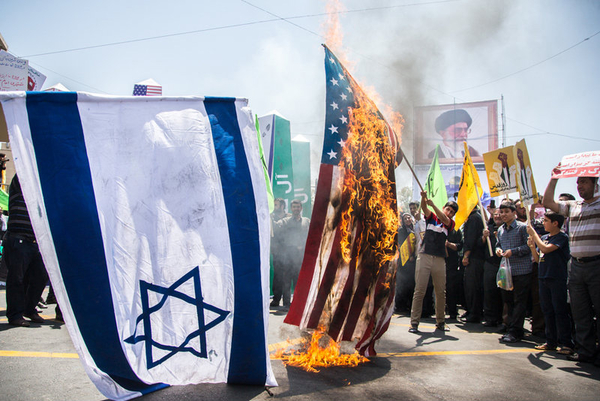
After all, the outward signs with Iran would seem to remain unpromising. Last Friday in Tehran, just as the P5+1 were wrapping up their deal with the Iranians, the streets of Iran were playing host to “Al-Quds Day.” This, in the Iranian calendar, is the day, inaugurated by the late Ayatollah Khomeini, when anti-Israel and anti-American activity come to the fore even more than usual. Encouraged by the regime, tens of thousands of Iranians march in the streets calling for the end of Israel and “Death to America”. Not only Israeli and American flags were burned — British flags were also torched, in a touching reminder that Iran is the only country that still believes Britain runs the world.

The latest in a long line of “moderate” Iranian leaders, President Hassan Rouhani, turned up at one of these parades himself to see the Israeli and American flags being burned. Did he intervene? Did he explain to the crowd that they had got the wrong memo — that America is now our friend and that they ought at least to concentrate their energies on the mass-burning of Stars of David? No, he took part as usual, and the crowds reacted as usual.

1153Participants in Tehran’s Quds Day rally burn U.S. and Israeli flags, on July 10, 2015. (Image source: ISNA)

It was the same just a few weeks ago, when the Iranian Parliament met to discuss the Vienna deal. On that occasion, after some authorized disputation, the Iranian Parliament broke up, with the representatives chanting “Death to America.”

A generous person might say that this is unimportant — that in Iran, chanting “Death to America” is like throat-clearing. This is just what we are being told — that these messages are “just for domestic consumption,” and don’t mean anything.

Putting aside what they say for a moment, what is it about Iran’s actions that have changed enough to persuade the U.S. government that the Iranian regime might be a regime in transition?

Internally there has been no let-up in the regime’s campaign of oppression against their own Iranian people: hanging people for a range of “crimes,” from being gay to being a poet found guilty of “blasphemy,” continue.

Iran has hanged more than a thousand of these internal “enemies” in the last eighteen months alone, as negotiators sat in Vienna thrashing out a deal. In the wider region, Iran remains the most voraciously ambitious, and perhaps the only successfully outgoing, regional power. In the years since the “Arab Spring” began, only Iran has been able significantly to extend its reach and grip in the region. It now has a vastly increased presence and influence in Yemen, Iraq, Syria and Lebanon. It continues to arm its terrorist proxies, including Hezbollah, which in turn continues to increase its build-up of rockets and other munitions on the northern border of Israel.

Iran has not released the four American hostages it continues to hold — Pastor Saeed Abedini, for the crime of converting to Christianity; Washington Post journalist Jason Rezian, on the patently nonsensical charges of espionage; former U.S. Marine Amir Mirza Hekmati, who went to Iran to visit his grandmother; and retired DEA and FBI agent Robert Levinson, who was abducted eight years ago and has not been heard from since early 2013. This, in spite of last-minute requests from Iran to lift a ban on conventional weapons, acceded to by the members of the P5+1, wasting yet another abandoned opportunity actually to get something in return for their total surrender.

From the outside, it would seem that very little has changed in the rhetoric of Iran and very little has changed in the regime’s behavior. That is why the mystery of what change the U.S. administration and its partners see in the eyes of the Ayatollahs is so doubly curious.

Because the nature of the deal makes it exceptionally important that there is some change. In the next decade, in exchange for the supposed “managed inspections” of limited Iranian sites, the Ayatollas are going to enjoy a trade explosion with a cash bonanza of $140 billion unfrozen assets, just to start them off. Throughout that same decade, there will be a lifting of restrictions on — among other things — the sale and purchase by Iran of conventional arms and munitions. Iran will finally be able to purchase the long-awaited anti-aircraft system that the Russians (also of course present at the table in Vienna) want to sell them. This system — among the most advanced surface-to-air missile systems — will be able to shoot down any American, Israeli or other jets that might ever come to destroy Iran’s nuclear project. And surely only an uncharitable person would wonder why Iran’s rulers are buying the technology they would need to repel any attack on their nuclear project at the same time as they are promising the Americans that they are not developing nuclear weaponry.

And it is even more important that the signs of hope located by the U.S. administration are correct, because after all, barring an internal uprising — which the Vienna deal makes more unlikely than ever (having strengthened the diplomatic and financial hand of the regime) — it is safe to say that over the next decade and beyond the Mullahs will remain in charge in Iran.

In the U.S., Germany, France and Britain, by contrast, who knows who will be in charge? In Britain, the Labour party may have romped to victory with, at its head, Jeremy Corbyn MP (currently Labour leadership contender) — a man who has openly and repeatedly praised Hamas and Hezbollah as his “friends.” That would certainly change the dynamics.

But put aside such a potentially unlikely situation and assume that Britain and America simply do politics as usual. In ten years, there will have been four U.S. governments overseeing the implementation of this deal and scrutinizing the inspections-compliance of the Iranian regime.

In the UK, there will have been at least two new governments. Who is to say that all these different governments — of whatever party or political stripe — will pay the same attention, know what to look out for, and feel as robust about totally unenforceable “snapback sanctions” and other details of the implementation of this deal as the signatories to the deal appear to expect? Is it possible that the Iranians actually know this?

Perhaps, after all, there is something in the eyes of the Ayatollahs. Maybe US Secretary of State John Kerry and President Barack Obama really have looked into the Iranian leaders’ eyes and seen a smile. But whether it is for the reason they appear to believe is, of course, quite another matter.