Archive for the ‘Assad’ category

Clearing my spindle, Syria edition

September 26, 2015

Clearing my spindle, Syria edition, Power LineScott Johnson, September 26, 2015

The withdrawal of the United States from Iraq and points elsewhere around the Middle East has created a vacuum that has been filled by forces hostile to the United States. Syria is representative. ISIS has moved into Syria from Iraq. Iran and Hezbollah have both moved into Syria to defend the Assad regime from ISIS.
Stalin

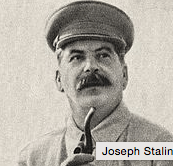
The Obama administration has taken a sort of Stalinist tack. Obama has concentrated on building socialism in one country (i.e,, the United States) rather than protecting the national interests of the United States abroad in a difficult foreign theater, especially insofar as doing so might complicate Obama’s dreams of an entente with Iran.

Last week brought a new round of Syria related stories. At the Weekly Standard, Lee Smith noted “Obama’s Syria doctrine.” Obama disclaims responsibility even for his own pathetically failed approach:

In the wake of last week’s embarrassing revelation that only four or five U.S.-trained rebels are currently engaged in fighting the Islamic State, the White House was scrambling to deflect blame. It wasn’t Obama’s fault, said White House press secretary Josh Earnest. The president never wanted to back the rebels in the first place. His hand was forced by administration figures and Republican lawmakers who wanted to aid the rebels. It’s time, said Earnest for “our critics to fess up in this regard as well. They were wrong.”

Enter Russia. Barbara Starr & Ross Levitt report for CNN: Russian fighter jets enter Syria with transponders off”

Lucas Tomlinson & Jennifer Griffin report for FOX News “Russians, Syrians and Iranians setting up military cooperation cell in Baghdad”. Tomlinson and Griffin note:

Russian, Syrian and Iranian military commanders have set up a coordination cell in Baghdad in recent days to try to begin working with Iranian-backed Shia militias fighting the Islamic State, Fox News has learned.

Western intelligence sources say the coordination cell includes low-level Russian generals. U.S. officials say it is not clear whether the Iraqi government is involved at the moment.

Describing the arrival of Russian military personnel in Baghdad, one senior U.S. official said, “They are popping up everywhere.”

The Wall Street Journal published two important stories last week. Dion Nissenbaum & Carol Lee report: “Russians expand military presence in Syria, satellite photos show.” Jay Solomon & Sam Dagher report: “Russia, Iran seen coordinating seen coordinating of Assad regime in Syria.”

And Prime Minister Netanyahu flew to Moscow with two members of the IDF General Staff to meet with Putin about Russia’s moves in Syria. “In Moscow,” the Times of Israel reported, “presence of generals sends a message of military urgency.” President Obama, however, is taking the long view. A couple of weeks ago Obama declared Russia’s Syrian adventure to be “doomed to failure.” Obama’s judgment represents a striking case of projection.
Like it or not, Putin’s is the ‘only game in town’

September 26, 2015

Like it or not, Putin’s is the ‘only game in town’ Gulf News, Mustapha Karkouti, September 26, 2015

(Nature abhors a vacuum and Obama created one in the Middle East. Please see also, A Chinese aircraft carrier docks at Tartus to support Russian-Iranian military buildup. — DM)

With a nearly total absence of any significant US-led coalition presence in Syria, apart from slow-effective air strikes, Moscow seems to be the only dominant player in that region. As the Kremlin clearly stated, Putin’s intention is to prevent a repetition of Libya’s 2011 scenario and avoid the total collapse of Bashar Al Assad’s authority, similar to what happened following Muammar Gaddafi’s overthrow after the badly-planned intervention by Nato. Putin is simply, but clearly, saying to the West: Where you failed in Libya, I’ll do better in Syria.

[W]hatever Putin’s plans are in the long run, his mission in the country is largely seen by the majority of Syrians as a sinister effort to save Al Assad and help him consolidate his authority in Syria.

**********************

It is very rare that a Russian head of state holds top strategic talks with an Israeli prime minister in the Russian capital. This happened just recently when Vladimir Putin met Benjamin Netanyahu to discuss Syria’s latest developments. The two chiefs are not known to have had close and friendly personal relations, but they displayed those sitting side by side in the Kremlin last week. The arrival in Moscow last Monday of Netanyahu accompanied by his chief of staff and head of military intelligence, is by all means unprecedented.

The visit is significant as it is a part of tripartite diplomatic activities that involve discussions with the US as well. The American Defence Secretary Ashton Carter has recently had a long and “useful” discussion with his Russian counterpart over Syria. With the current congestion of military activities in the sky above the region by the Israelis and Americans and the rapidly increasing presence of Russian forces and hardware, there is obviously a need to liaise to avoid any unpredicted conflict, i.e. shooting down one another’s planes by mistake. But both the US and Israel’s main concern goes far beyond the technicalities. They aim mostly at finding out what exactly the Kremlin’s long term purpose in Syria is and how far Moscow is capable of effectively controlling the direction of the tragic game currently being played in this sad country.

Sitting next to Netanyahu, Putin reassuringly explained what he was trying to achieve by stating that Moscow’s main goal was “to protect the Syrian state”, or more accurately, what’s left of it. The Russian president seemed fully aware of Netanyahu’s main concern of the Iran-supported potential attacks by Hezbollah and the Syrian army across the occupied Golan Heights, when he told his visitor that neither Damascus nor the Iranian-financed Lebanese militia was “in any state to open a second front”. In others words, Putin reassured Netanyahu that Moscow was fully engaged with Tehran and Damascus on that front.

Saving Al Assad

With a nearly total absence of any significant US-led coalition presence in Syria, apart from slow-effective air strikes, Moscow seems to be the only dominant player in that region. As the Kremlin clearly stated, Putin’s intention is to prevent a repetition of Libya’s 2011 scenario and avoid the total collapse of Bashar Al Assad’s authority, similar to what happened following Muammar Gaddafi’s overthrow after the badly-planned intervention by Nato. Putin is simply, but clearly, saying to the West: Where you failed in Libya, I’ll do better in Syria.

The timing of Moscow’s build-up along the Syrian coastal area couldn’t be more perfect, particularly with western policy on the country in a state of limbo. Surely, moving dozens of combat aircraft and hundreds of troops to the aid of the encircled Syrian president must have been given the green light a while ago. This is precisely how Putin sees the situation. Under the nose of the Americans and the world community, Russian personnel and Special Forces have re-emerged in large numbers at an old air base of theirs near Al Assad’s stronghold of Latakia. Russia has always had, through the former Soviet Union, significant military presence in Syria during the long years of the Cold War and beyond.

However, whatever Putin’s plans are in the long run, his mission in the country is largely seen by the majority of Syrians as a sinister effort to save Al Assad and help him consolidate his authority in Syria.

After all, Al Assad is the man largely accused of killing thousands of Syrians during the almost five-year war in the country. It has become absolutely clear that all players in the region, including US, Israel, Turkey and Iran are adjusting to the new reality as a result of the speed and scale of Russian’s deployment. It is commonly known now that Israel was made aware of Moscow’s deployment before it began, while Iran had been informed of the move as early as the first week of August. In fact, shipments from Black Sea ports to the Syrian port of Tartous began to pass through the Bosphorus as from August 20.

The Russians had moved by last Tuesday into the coastal stretch between Latakia and Tartous 28 combat jets (12 Su24 bombers, 12 Su25 ground attack aircraft and 4 Su-30 multi-role fighters), two types of drones and 20 multi-purpose helicopters. Almost the equivalent of Al Assad’s entire air power. Pentagon officials have confirmed these deployments and said Russian drones are now fully operating where offensive air attacks could be expected very soon.

Turkey on its part, is willing to dip its hands in ‘Syria’s Cake’ as a highly Turkish informed source told me few days ago, and send troops into the country, provided it gets the green light to set up its ‘no-fly zone’ along Syria’s northern borders. In fact, discussion between Ankara and several European capitals, including Berlin, over the issue has been going on for sometimes as many European leaders consider the no-fly zone option is urgently needed method to help controlling the flow of refugees into European Union countries.

However, with Iran well entrenched behind Al Assad at an annual cost of $6-$10 billion (Dh22-36.7 billion), it is also a decisive regional power of huge influence in shaping events in shrinking Syria and beyond. Additionally, there is newcomer into the killing fields of Syria as China has just officially revealed that it is sending personnel and advisers to assess the situation. And with almost total US absence in the Levant, Russia would militarily and politically remain the most significant power to shore up Al Assad’s regime as long as it is possible.


Russian troops already engaged in battle against ISIS around Homs

September 17, 2015

Russian troops already engaged in battle against ISIS around Homs, DEBKAfile, September 17, 21015

Russia_Putin267

Contrary to the impression conveyed by Moscow that Russian troops in Syria are not engaged in combat and that none of the sophisticated arms deliveries were destined to the Syrian army, new developments belie both these claims. 

DEBKAfile’s military and intelligence sources report that on Wednesday, September 16, Russian R-166-0.5 (ultra) high-frequency signals (HF/VHF) vehicles were spotted on Highway 4, which links Homs and Aleppo. These vehicles, called “mobile war rooms” by the IDF and Western armies, were accompanied by BTR-82 troop carriers transporting Russian marines. The R-166-0.5 enables communication with forces located on battlefields as far as 1,000 kilometers away using high frequency and ultra-high frequency signals.

The communication systems are resistant to electromagnetic jamming so Russian forces operating deep inside Syria can report to their commanders at the main Russian base in Latakia or receive orders, intelligence data and even video from drones or planes.

Another feature is a cylinder on the side of the vehicle containing a folded antenna that can be raised to a height of 15 meters.

The R-166-0.5 is an integral part of Russia’s battlefield operations, so it would not be deployed unless long-distance troop movements were underway. The appearance of those vehicles in the Syrian theater provides a clear signal of Moscow’s intentions.

Our sources point out that during the past few days, fighters from the Islamic State in Iraq and the Levant (ISIS) succeeded in cutting off part of the highway between Homs and Aleppo for several hours. It marked a very dangerous development for the Syrian army and regime, because a permanent cutoff of Highway 4 would tighten the siege on Aleppo and possibly pave the way for the conquest of the second-largest city in Syria.

The movements by the armored vehicles show that the Russian troops are preparing to head into battle in order to prevent such a scenario.

Moscow has denied supplying new, sophisticated weapons to the Syrian army. However, a Syrian military source revealed Thursday, Sept. 17, that the Syrian military has recently started using new types of air and ground weapons supplied by Russia, underlining growing Russian support to Damascus that is alarming the United States and Israel. “New weapons – and new types of weapons – are being delivered,” said the source which described them as “highly accurate and effective.”  The army had started using them in recent weeks having been trained in their use in Syria in recent months. “We can say they are all types of weapons – be it air or ground,” he said.

DEBKAfile’s military sources reveal that the Russian shipments for the Syrian army include MI-28 MIL assault helicopters (NATO-coded Havoc), an all-weather aircraft, which can also serve as an anti-tank weapon against the mostly US-made tanks fielded by ISIS and Al Qaeda’s Nusra Front Syrian arm.

Our military and intelligence sources point out that Moscow has given itself room to maneuver in terms of its declared goals, telling Washington and Jerusalem during the past few days that its troops will defend their own interests if there is a need to do so. Thus, Russia aims to use its forces in any way that it deems fit.

DEBKAfile’s sources in Washington report an ongoing debate within the Obama administration regarding whether to accept the proposal that was raised during the telephone conversations this week between Russian Foreign Minister Sergei Lavrov and US Secretary of State John Kerry.

Moscow proposed military-to-military talks on ways to prevent a confrontation between its troops in Syria and those of the US-led coalition, saying that the talks would provide a complete and clear understanding of Moscow’s intentions.

Unlike Kerry, who is in favor of taking the Russians up on their proposal, some circles in the administration feel that such talks would ultimately give Russia the green light for its military involvement and that Moscow is in the process of grabbing control of running all military operations in Syria, including those by other countries and groups.

Last week, Gen. Qassem Soleimani, commander of Iran’s al-Quds brigades, visited Moscow for the second time since April.  DEBKAfile’s sources in Moscow point out that this time, unlike his previous visit, Soleimani met with Russia’s National Security Adviser Nikolai Patrushev and a number of generals directly connected to the buildup in Syria, but not with President Vladimir Putin.

The developments in Syria will also take center stage when Israeli Prime Minister Benyamin Netanyahu meets with Putin in Moscow on September 21.

Putin’s offer to shield & develop Israel’s gas fields predated Russia’s military buildup in Syria

September 13, 2015

Putin’s offer to shield & develop Israel’s gas fields predated Russia’s military buildup in Syria, DEBKAfile, September 13, 2015

(Nice little gas field you have there. It would be a shame if something happened to it. — DM)


Leviathan480

More than a fortnight ago, Russian President Vladimir put a proposition to Israel for Moscow to undertake responsibility for guarding Israel’s Mediterranean gas fields, along with the offer of a Russian investment of $7-10 billion for developing Leviathan, the largest well, and building a pipeline to Turkey for exporting the gas to Europe, DEBKAfile reports. The offer was made to Prime Minister Binyamin Netanyahu in confidential phone conversations and through quiet envoys.

At the time, Putin did not share with Netanyahu his plans for an imminent buildup of marines, air force units, warships and missiles in Syria, although the plan had been worked out in detail with Tehran in late July. The Russian ruler put it this way: Leviathan abuts on the fringes of Lebanon’s economic water zone and is therefore vulnerable to potential sabotage by Iran, Syria or Hizballah, whether by commando or rocket attack.

A multibillion Russian investment in the field would make it a Russian project which neither Syria nor Hizballah would dare attack, even though it belongs to Israel.

But now the situation has assumed a different face. Russian forces are streaming to Latakia, and Moscow has declared the area from Tartous, Syria up to Cyprus closed to shipping and air traffic from Sept. 15 to Oct. 7 in view of a “military exercise including test firings of guided missiles” from Russian warships.

When he offered a shield for Israeli gas fields in late August, The Russian ruler knew that implementation would rest with Russian military forces on the spot, rather than Iranian and Syrian reluctance to harm Russian interests.

Then, on Aug. 30, Netanyahu discussed the new Russian proposition with Italian Prime Minister Matteo Renzi when they met in Florence, in the context of the former Italian Prime Minister Silvio Berlusconi’s involvement in Middle Eastern and European energy business and his close ties with Putin.

Berlusconi and Netanyahu are also good friends.

The Israeli prime minister never explicitly confirmed to Putin that he would consider the Russian transaction.

He hesitated because he sensed that a deal with Moscow for gas projects would be unacceptable to Washington and Noble Energy of Texas, which holds a 39.66 percent share in the consortium controlling Leviathan, as well as stakes in the smaller Tanin and Tamar gas wells.

Meanwhile, two Israeli ministers, Moshe Kahlon, finance, and Arye Deri, economy, consistently obstructed the final government go-ahead for gas production, tactics which also held Netanyahu back from his reply to Putin.

But when the fresh influx of Russian troops and hardware to Syria became known (first revealed by DEBKAfile on Sept.1), Netanyahu began to appreciate that, not only had Israel’s military and strategic situation with regard to Syria and the eastern Mediterranean been stood on its head, so too had foreign investment prospects for development projects in Israeli gas.

Israel’s strategic landscape had in fact changed radically in four respects:

1.  Its government can no longer accept as a working hypothesis (which never, incidentally, held up) the short term expectancy of the Assad regime. The injection of Russian military might, combined with the Iranian Revolutionary Guards forces, have given Assad a substantial lease of life.

The Israel Defense Forces must therefore revamp its posture on the Syrian front, and reassess its sponsorship of the select rebel groups which are holding the line in southern Syria against hostile Iranian or Hizballah cross-border attacks on northern Israel.

The changing attitude was suggested in views heard in the last couple of days from top Israeli security officials, who now say that leaving Assad in office might be the better option, after all.

2.  The new Russian ground, air and sea buildup taking shape in Syria provides a shield not just for the Assad regime but also Hizballah. This too calls for changes in Israel’s military posture.

3.  The Russian military presence in Syria seriously inhibits Israel’s flexibility for launching military action against Iranian or Hizballah targets when needed.

4. Three aspects of the new situation stand out prominently:

a)  The Russian air force and navy are the strongest foreign military force in the eastern Mediterranean. The US deplloys [sic] nothing comparable.

b)  Israel’s military strength is substantial but no one is looking for a military clash with the Russians, although this did occur four decades ago, when Israel was fighting for its life against Russian-backed Arab invasions.

c)  In view of the prevalence of the Russian military presence in the eastern Mediterranean, it is hard to see any foreign investor coming forward to sink billions of dollars in Israeli gas.

d)  Although Russia called Saturday, Sept. 12, for “military-to-military cooperation with the United States” to avert “unintended incidents” amid its naval “exercises” off the coast of Syria, the tone of the call was cynical. It is more than likely that Moscow may revert to the original Putin offer of a Russian defense shield for Israeli gas fields. But with such strong Russian cards in place in Syria, he may well stiffen his terms for this deal.

Russian submarine with 20 ICBMs and 200 nuclear warheads is sailing to Syria

September 7, 2015

Russian submarine with 20 ICBMs and 200 nuclear warheads is sailing to Syria, DEBKAfile, September 7, 2015

Dmitriy_Donskoy_BDmitri Donskoy TK-208 submarine heads for Syria

The world’s largest submarine, the Dmitri Donskoy (TK-208), Nato-coded Typhoon, has set sail for the Mediterranean and is destined for the Syrian coast, DEBKAfilereports exclusively from its military and intelligence sources. Aboard the sub are 20 Bulava (NATO-code SS-N-30) intercontinental ballistic missiles with an estimated up to 200 nuclear warheads. Each missile, with a reported range of 10,000km, carries 6-10 MIRV nuclear warheads.

The Russian sub set sail from its North Sea base on Sept. 4, escorted by two anti-sub warfare ships. Their arrival at destination in 10 days time will top up the new Russian military deployment in Syria.

President Vladimir Putin’s introduction of a nuclear force opposite Syrian shores builds up what first looked like an operation to fortify Assad’s regime in Damascus into a military expedition capable of an air and sea confrontation with US forces in the Middle East.

US Secretary of State John Kerry suggested as much Saturday, Sept. 5, when he expressed concern over reports of Russia’s “increasing military build-up in Syria” in a phone call to Russian Foreign Minister Sergey Lavrov. The State Department reported: “The Secretary made clear that if such reports were accurate, these actions could further escalate the conflict, lead to greater loss of innocent life, increase refugee flows and risk confrontation with the anti-ISIL coalition operation in Syria.”

Kerry was referring to potential Russian interference with US-led coalition air strikes against the Islamic State in Syria.

DEBKAfile’s sources in Washington and Moscow report that the dispatch of a nuclear sub to Syrian waters is taken as a strong message that the Kremlin will not let the US impede its military intervention in the Syrian conflict and will go to extreme lengths to keep the way open for the flow of Russian troops to the war-torn country.

This situation has gone a long way beyond Obama administration intentions when US-Russian talks were initially held for US forces posted in Turkey and Iraq, together with the Russian troops arriving in Syria, to launch a combined effort against the Islamic State. Those talks came to naught.

In its coming issue out Friday, Sept. 11, DEBKA Weekly 678 will reveal for the first time how Putin intends to array the Russian forces he is consigning to Syria, their operational planning, their military coordination with Iran and, above all, how the new Russian intervention in Syria may impact US Middle East policy and Israel.


Four parties caused Syria’s genocidal calamity. Should Israel get involved?

September 6, 2015

Four parties caused Syria’s genocidal calamity. Should Israel get involved? DEBKAfile, September 6, 2015

migrants_along_railways_5.9.15Refugees flooding into Europe

Chapter by chapter, a long list of the guilty parties must bear responsibility for the Syrian catastrophe hacking the ruined country into bleeding parts.

1.  The first culprit is undoubtedly its insensate president Bashar Assad and his close family, who have had no qualms about spilling the blood of some 300,000 men, women, children and old people – some estimate as many as half a million – and making some 11 people homeless, to keep himself in power. No one has ever counted the number of people maimed and crippled by the war, but they are conservatively estimated at one million.

These figures add up to genocide or serial mass murder, which has been allowed to go into its fifth year.

2.  Iran warrants second billing for this mass crime.

Tehran has laid out the stupendous sum of some $40 billion to keep the mass marderer Assad in power with total disregard for his methods of survival. The motives behind the ayatollahs’ military and political boost are well recorded. Worth mentioning here is that Tehran not only pressed its Lebanese proxy, the Shiite Hizballah group, into service alongside Assad’s army, but sent its its own generals to orchestrate the war, led by the Al Qods Brigades chief Qassem Soleimeni.

We can reveal here that 22 Iranian generals have died fighting for the Assad cause.

3. The third place belongs to the United States and President Barack Obama. His refusal to put American boots on the ground may have been the correct decision for the US, but it had four direct consequences:

a)  The slaughter of the Syrian people continued unchecked. Even after President Obama declared that chemical warfare was a red line, he backed down at the last minute against intervening and ordered the US fleet to draw back from the Syrian coast.

To this day, Assad continues to use chemical weapons to poison his enemies.

b)  Obama and his Secretary of State John Kerry let Iran use its military backing for Assad as a high card in the negotiations for a nuclear accord. Instead of making it a condition for a deal against the lifting of sanctions, Washington allowed Tehran to come away from the table with US non-intervention in Syria as one of its concessions for buying Iran’s assent to the Vienna deal.

Tehran, in a word, won Washington’s tacit approval for propping up the atrocious Syrian ruler.

c)  The rest of the world, including the United Nations and the European Union, followed the Obama administration’s lead and stood aside as at least 11 million Syrians became homeless refugees.

The lifeless body of a three-year old Syrian child washed up from the sea has figured in the Western media as a symbol of the tragic fate of Syria’s refugees. However, his tragedy came after the hair-raising atrocities endured by millions of those refugees for nearly five years.

Many families were forced to sell their daughters as sex slaves to buy food, their young sons to pedophile predators. The slave markets were centered on the Persian Gulf. Young Alan Kurdi died aged three. Many thousands of Syrian refugee children still live in appalling circumstances. No humanitarian organization has started an outcry or a campaign to rescue them.

d)  US refusal to intervene in the most savage humanitarian tragedy the world has seen for many decades opened the door to the belligerent branch of al Qaeda, the Islamic State of Iraq and the Levant, to march into the vacuum. The videotaped records of beheadings, the massacre of the Iraqi Yazdi people, the enslavement of its women and the burning alive of “apostates,” followed in quick succession.

The strongest nation in the world fought back with an ineffective trickle of air strikes on ISIS targets, allowing the group to go forward to conquer terrain and gain in strength.

4.  Russia bears a heavy weight of guilt – and Israel would do well to watch its cynical conduct and draw the right conclusions. Like the ayatollahs, President Vladimir Putin led the second world power to total commitment for keeping Bashar Assad in power. Among other motivations, Putin pursued this policy to settle a score with Obama for the overthrow of Libya’s Muammar Qaddafi.

With one world power on the sidelines and a second jumping in with two feet, the Syrian imbroglio was bound to have devastating historical repercussions.

Throughout the Syrian conflict, Israel refrained from interfering, with only one exception: It supported Syrian rebel groups holding a strip of southern Syria, as a buffer against Iranian, Hizballah and Syrian army encroachment on its northern borders.

More than a thousand injured Syrians were treated and their lives saved in Israeli hospitals after receiving first aid at a field hospital on the Israeli-Syria border.

The esteemed Israeli historian Prof. Shlomo Avinery said Sunday, Sept 6, that Prime Minister Binyamin Netanyahu did the right thing in steadfastly keeping Israel out of the Syrian conflict. He very much doubted that Syrian refugees would seek asylum in a country they regard as the Zionist enemy.

Israel’s opposition leader Isaac Herzog nonetheless urged the government to take in a limited number of Syrian asylum seekers from among those flooding into Europe, and not to forget that “we are Jews.”

 One wonders why he never had a word to say about US dereliction when Assad committed his atrocities across Israel’s border.

Herzog’s favorite advice to Netanyahu is to go to Washington right now, beard President Obama in the Oval Office and hammer out an agreed policy on Iran.

Netanyahu referred to the Syrian refugee crisis at the weekly cabinet meeting Sunday: “While Israel is not indifferent to the human tragedy of refugees from Syria and Africa, it is a small country that cannot throw its doors open to them,” he said.

“We have conscientiously treated thousands of wounded from the fighting in Syria, and we have helped them rebuild their lives,” the prime minister recalled. “But Israel is a very small country, with neither demographic nor geographic depth, and therefore we must control our borders.”

Regarding a visit to Washington, the prime minister has a problem: Just as President Obama has not invited any Syrian refugees to come to America, he has not issued Netanyahu with an invitation to come to DC, whether to discuss the Iranian or the Syrian questions.

John Kerry “deeply concerned” about Russian buildup in Syria

September 6, 2015

John Kerry “deeply concerned” about Russian buildup in Syria, Front Page Magazine, Daniel Greenfield, September 6, 2015

kerry_whitehousegov

Can I just say for the record that I remain deeply concerned that John Kerry is the Secretary of State instead of the headwaiter at a third rate French restaurant in Washington D.C.

*********************

Hold on to your hats. John Kerry is “deeply concerned” about something. Not just “concerned,” but deeply concerned. The gloves are really coming off now. Also possibly the pants.

Secretary of State John Kerry told his Russian counterpart on Saturday the United States was deeply concerned about reports that Moscow was moving toward a major military build-up in Syria widely seen as aimed at bolstering President Bashar al-Assad.

This is no vague concern. John Kerry wanted there to be no doubt as to his exact degree of concern.

The official, speaking on condition of anonymity, said Moscow’s exact intentions remained unclear but that Kerry called Russian Foreign Minister Sergei Lavrov to leave no doubt of the U.S. position.

Deep. Concern.

In response to Russian troop movements, Kerry called Lavrov and expressed “deep concern” and then had an anonymous flunky leak the conversation to Reuters to show how tough a line he was taking.

This is the SmartPower(TM) diplomacy that has brought twelve continents and several galaxies to their knees. This is the awesome diplomatic powerhouse that is known and respected around the world. Somewhere Lavrov is giggling like a little girl while replaying the tape of the conversation to a bunch of the FSB’s finest while Putin gets another shot of Botox between the eyes.

“The secretary made clear that if such reports were accurate, these actions could further escalate the conflict, lead to greater loss of innocent life, increase refugee flows and risk confrontation with the anti-ISIL coalition operating in Syria,” the State Department said, using an acronym for Islamic State.”

These days Lavrov probably doesn’t wait for Kerry to hang up to start laughing. And can you blame him?

But don’t worry. John Kerry doesn’t just throw around loaded words like “deep concern” on any old occasion. Okay, he does.

“The United States is deeply concerned by Nigeria’s enactment of the Same Sex Marriage Prohibition Act.”

“Well, let me just affirm very, very clearly we are deeply concerned about what is happening in Iraq.”

“We. . .remain deeply concerned about the large deployments of Russian forces in Crimea and along the eastern border with Russia.”

Can I just say for the record that I remain deeply concerned that John Kerry is the Secretary of State instead of the headwaiter at a third rate French restaurant in Washington D.C.

Egypt sends Assad secret arms aid, including missiles, with Russian funding

August 30, 2015

Egypt sends Assad secret arms aid, including missiles, with Russian funding, DEBKAfile, August 30, 2015

( Given that Egypt is heavily reliant on Saudi funding as well as the absence of any other news source beyond “Debka,” I find this article worthy of a generous helping of salt. – JW )

Egyptain_missile_in_Zabadani_25.8.15

Egyptian President Abdel-Fatteh El-Sisi has begun supplying Bashar Assad with arms, including missiles, after concluding a secret deal with Russian President Vladimir Putin and his consent to pick up the tab, DEBKAfile’s military and intelligence sources reveal. The first batch of short-range Egyptian-made surface missiles has reached the Syrian forces fiercely battling rebels for weeks for the recovery of the strategic town of Zabadani without breaking through (See picture showing missile with Egyptian factory markings.) 

It is not clear if the Egyptian missiles have also been passed to the Hizballah forces fighting with the Syrian army, considering that El-Sisi and Hizballah are at daggers drawn.

Our sources also reveal that the Egyptian arms consignments are freighted from Port Said to the Syrian port of Tartus by Ukrainian cargo vessels. These ships are today the most popular means of transport for clandestine and Black Market arms freights across the Mediterranean and Adriatic Seas.

Sums and quantities are yet to be determined, but Western intelligence sources report that Ukrainian vessels called in at Egyptian ports at least three times from July 22 to Aug. 22 and sailed off to Syria laden with weapons.

It is a deal that may affect the fate of the Assad regime from five, often conflicting, perspectives:

1. By providing Assad with an additional source of weapons, Cairo is reducing his dependence on Iran. This suits the Syrian ruler very well at this time, because he is fully aware of Tehran’s latest steps to draw Gulf rulers and Moscow into supporting a plan for ending the Syrian war, by installing a provisional government in Damascus and so easing his exit.

2. A certain parting-of-the ways has developed between Moscow and Tehran on how to terminate the Syrian conflict. By sending Assad arms, Cairo  casts its vote for Moscow’s perspective in preference to Tehran’s.

3. El-Sisi is now diametrically opposed on Syrian policy to the GCC led by Saudi Arabia and the United Arab Emirates who are patrons of the rebel movement dedicated to toppling Assad.

4. He is also on the opposite side to Israel and Turkey. Israel backs the rebels fighting in southern Syria to create a barrier against the encroachment of Hizballah and Iranian Al Qods Brigades up to its northern border and the Golan. Turkey and the US have reached terms on Syrian policy. Saturday, Aug. 30, Turkish jets carried out their first air strikes in Syria against the Islamic State, as part of its deal with the US.

5. The Russian-Egyptian understanding on the Syrian question is a signpost that clearly marks the way to deepening military and strategic relations between Moscow and Cairo.

Taking the lead on a resolution of the Syrian question, the Kremlin staged a discussion last Tuesday, Aug. 18, with three Arab visitors: Jordan’s King Abdullah, UAE Crown Prince Sheikh Mohamed bin Zayed Al Nahyan and the Egyptian president. It was led by Mikhail Bogdanov, Deputy Foreign Minister in charge of Middle East Affairs, and followed by individual tête-à-têtes between Putin and each visitor in turn.

The Russian and Egyptian leaders did their best, according to DEBKAfile’s Moscow sources, to draw the Jordanian and UA rulers over to their pro-Assad policy, or at least accept common ground for a measure of cooperation. In effect, Putin and El-Sisi were out to convince Jordan and the US to back away from the Syrian rebel cause and the Saudi line. Their future actions may indicate how far they succeeded.

Resolving the Syrian war is not the silver bullet for stopping ISIS

August 29, 2015

Resolving the Syrian war is not the silver bullet for stopping ISIS, DEBKAfile, August 29, 2015

(Please see also, Pentagon Not Targeting Islamic State Training Camps. — DM)

jISIS_mobile_defense_of_SVBIED_8.15ISIS “mobile defense SVBIED” in action in Iraq

President Obama may likewise offer King Salman all sorts of assistance for standing up to ISIS, but he will find no buyers in Riyadh for his failed policy of reliance on Saudi Arabia’s rival, Iran, for liquidating the Islamist threat looming against the oil kingdom from neighboring Iraq.  Neither is US aid much use for stemming the tide of pro-ISIS radicalism spreading among young Saudi men.

As matters stand today, therefore, the Islamic State faces no tangible threat – even if Iran does go ahead and achieve a nuclear bomb.

**************************

The war to stop the Islamic State in Iraq and the Levant (ISIS) has entered a dark tunnel. And with it the bottomless conflicts in Syria, Yemen, Libya and Iraq. The search for a ray of light moves next week from Moscow to Washington, when Saudi King Salman Bin Abdulaziz makes his first visit as monarch for talks with President Barack Obama.

The three worried Arab rulers received in the Kremlin Tuesday, Aug. 25, by President Vladimir Putin could only talk in circles: Egyptian President Abdel-Fatteh El-Sisi,is  embattled on three fronts, Sinai, his border with Libya and Cairo; Jordan’s King Abdullah II – is wedged between two wars; and UAE Crown Prince Sheikh Mohamed bin Zayed Al Nahyan, has sent his army to fight the Yemen insurgency alongside Saudi Arabia.

For them, resolving the Syrian conflict looked like the silver bullet, the key to ending all their troubles. But whichever Russian or Iranian plans and ideas they considered for a way forward, they were all forced to come back to the same impasse. Even Putin and Obama can’t get around or ignore two solid facts:

1. In the year since the US built an international coalition for fighting ISIS, the brutal Islamists have not been cut down; they have instead been empowered to seize more turf outside their Iraqi and Syrian conquests, such big oil fields in Libya, an ascending threat to Egypt and big plans for Lebanon.

2. A major letdown has followed on the high hopes reposed in Iran. The nuclear deal negotiated with the six world powers – and the elevated regional status conferred on Iran – hinged closely on US expectations that Tehran would put up effective military resources for tackling ISIS.

But the Revolutionary Guards, the popular Syrian and Iraqi forces the Guards established,and  the Afghan and Pakistani Shiite militias they imported – none have proved a match for ISIS and jihadi tactics.

In Syria, ISIS stands fast, unthreatened in the terrain, towns and oil fields they have captured, in the past year – excepting only on fringe fronts, where they have been forced back by local Kurdish rebel fighters.

Hizballah is a big part of the disappointment. It was supposed to serve as a bulwark against ISIS invading eastern Lebanon from Syria. Instead, these Lebanese Shiite fighters, allies of Assad’s army, are bogged down in a bitter battle for the strategic Syrian town of Zabadani, after failing to breach Syrian rebel defenses in forays from the south, the north or the center.

The door is therefore open for the Islamist State to march into Hizballah’s strongholds in the Lebanese Beqaa valley and head north to the port of Tripoli for a foothold on the Mediterranean.

Whether Bashar Assad stays or goes, which might have made a difference at an early stage of the Syrian insurgency, is irrelevant now that his army and allied forces are in dire straits.

In Iraq, the forces fighting ISIS are equally stumped. The jihadis are in control of a deadly string of  strategic towns, Ramadi, Faluja, the refinery city of Baiji, Mosul, and most of the western province of Anbar, including Haditha which commands a key stretch of the Euphrates River.

Here, too, the Islamist terrorist army’s lines remain intact, unbroken either by the undercover Jordanian Special Forces campaign 200 km inside Anbar, albeit backed by US and Israeli military and intelligence assistance; by the “popular mobilization committees” set up by the Iranian general Abu Mahdi al-Muhandis, deputy of the Al Qods chief Qassem Soleimani, or less still by US-trained Iraqi army units.

This week, the impasse spurred two combatants into chilling escalations:

— Iran began shipping its solid propellant missile, Zelzal-3B (meaning “earthquake”), across the border into Iraq, in the hope that this powerful projectile, with a range of 250km , would give the Revolutionary Guards their doomsday weapon for tipping the scales against ISIS.

— The Islamists, for their part, embraced a new tactic, known in the west as “SVBIED mobile defense.” Scores of armed vehicles are packed tight with hundreds of tons of explosives and loosed against military convoys on the move and static enemy positions and bases.

This tactic quickly proved itself by killing the 10th Iraqi Division’s chief, deputy and its command staff, as well as the deputy chief of Iraqi forces in Anbar.

In Moscow last week, Putin offered his three Middle East guests Russian nuclear reactors, arms, joint pacts for fighting terror and assorted ideas for the future of Bashar Assad. But he too had no practical proposals for bringing the Islamic State down.

President Obama may likewise offer King Salman all sorts of assistance for standing up to ISIS, but he will find no buyers in Riyadh for his failed policy of reliance on Saudi Arabia’s rival, Iran, for liquidating the Islamist threat looming against the oil kingdom from neighboring Iraq.  Neither is US aid much use for stemming the tide of pro-ISIS radicalism spreading among young Saudi men.

As matters stand today, therefore, the Islamic State faces no tangible threat – even if Iran does go ahead and achieve a nuclear bomb.

Six Russian MiG-31 interceptor aircraft land in Damascus to rescue Assad regime

August 19, 2015

Six Russian MiG-31 interceptor aircraft land in Damascus to rescue Assad regime, DEBKAfile, August 18, 2015

Mig-31-fighter_18.8.15Russian MiG-31 interceptors

Six Russian MiG-31 Foxhound interceptor aircraft from Moscow landed Tuesday, Aug. 18, at the Mezze Airbase situated in Damascus international airport, DEBKAfile’s military and intelligence sources disclose. They were followed shortly after by giant An-124 Condor transports, which delivered 1,000 Kornet-9M133 third-generation anti-tank guided missiles.

The Russian airlift of advanced weapons for Bashar Assad’s army will last for several days. It betokens Moscow’s intention to keep up its support for the Syrian ruler and counter – by military means if necessary – any secret Iranian diplomatic machinations for terminating the Syria war and with it the Assad regime – such as have been reported in the past week in Western and Arab capitals, especially in the Gulf.

Our sources report that the decision to send the Syrian ruler advanced aircraft and missiles could only have come from the top, i.e. President Vladimir Putin. It took direct aim at the latest moves made by the US, Turkey, Iran and Saudi Arabia for ending the Syrian war. Every formula they came up with entailed Assad’s exit, either in stages or at once.

Russian Foreign Minister Sergey Lavrov made it crystal clear to visiting Saudi Foreign Minister Adel Al-Jubair on Aug. 11 that Moscow would not stand still for any changes in Assad’s position in Damascus. The Migs and Antonovs which landed in Damascus Tuesday were meant not only as a buttress for the Syrian ruler’s regime but as a rescue operation.

The message for Washington and Ankara was that Moscow would oppose any US and Turkish plans to establish a no-fly zone over Syria, or intervene directly in the Syrian conflict.

The Russians sent exactly six MiG interceptors to match the six F-16 fighters the US deployed at the Turkish Incerlik air base on Aug. 9.

So if President Barack Obama decides to deploy more American planes at the Turkish base, he may expect Putin to reciprocate with the same number for Damascus.