Archive for the ‘Al Qaeda’ category

Russia gearing up to be first world power to insert ground forces into Syria

September 1, 2015

Russia gearing up to be first world power to insert ground forces into Syria, DEBKAfile, September 1, 2015

Russian_airborn_troops_syria_1.9.15Russian airborne troops for Syria

Despite strong denials from Moscow, Russian airborne troops are preparing to land in Syria to fight Islamic State forces. The surprise attack on Monday, Aug. 31, by ISIS forces on the Qadam district of southern Damascus, in which they took over parts of the district – and brought ISIS forces the closest that any Syrian anti-Assad group has ever been to the center of the Syrian capital – is expected to accelerate the Russian military intervention.

Moscow is certainly not ready to endanger the position of President Bashar Assad or his rule in Damascus, and views it as a red line that cannot be crossed. If Russia intervenes militarily in this way, Russia will be the first country from outside the Middle East to send ground forces into the Syrian civil war.

DEBKAfile’s military sources report that discussions by the Russo-Syrian Military Commission, which was established last month in Moscow to coordinate the intervention, accelerated during the last few days.

Our intelligence sources point out that the concerted activities of the commission are taking place amid the nearly complete paralysis of the US Central Command-Forward-Jordan (CCFJ), where operations against the rebels in southern Syria, including those holding positions across from Israel’s Golan, are coordinated. Officers from Jordan, Saudi Arabia, Qatar and Israel are attached to the CCFJ.

Most of the operations of the CCFJ have been halted due to a conflict that erupted between the Syrian rebels and the U.S. Central Command, CENTCOM. The US military is opposed to the rebels cooperating with Al-Qaeda-linked groups, such as the Al-Nusra front, while the rebels claim that this cannot be avoided fir they are to defeat the forces of Bashar Assad and Hizballah.

The paralysis of the CCFJ is spurring the Russians to try to show that their “central command” for Syria is operating without any difficulties.

In recent weeks, the Russians have taken four military steps related to Syria:

1. On Aug. 18, six of Russia’s advanced MIG-31 Foxhound interceptor aircraft landed at the Syrian Air Force’s Mezze Airbase, which is the military section of Damascus international airport. After the fighters landed, they were immediately followed by giant Russian Antonov AN-124 Condor cargo planes carrying 1,000 of Russia’s 9M133 Kornet anti-tank missiles.

The advanced jets are intended to serve as air support for the Russian units that arrive in Syria.

2. Before the Russian planes landed in Damascus, Moscow reached an agreement with Washington for the removal of NATO’s Patriot missile batteries from Turkey. The removal was carried out gradually during the month of August, thus preventing the possibility that NATO Patriot missiles could hit Russian fighters carrying out operations in Syrian airspace.

3. During the last week of August, a large number of Russian troops, mostly logistical teams whose job is to lay the groundwork for the arrival of the combat units, arrived in Syria. The troops were seen in Damascus and in Jablah district of Lattakia province, where the Russian forces are building a military base.

4. Our intelligence sources also report that Moscow has started to supply Damascus with satellite imagery of the ground situation on the different fronts.

DEBKAfile’s military and intelligence sources report that all of these preparatory steps by Moscow for the introduction of ground forces are being carried out in coordination with Washington and Tehran.

The more that the three capitals tighten their coordination in support of Assad, the sooner the Russian intervention is expected to take place.

Taliban takes another district in southern Afghanistan

August 26, 2015

Taliban takes another district in southern Afghanistan, The Long War Journal, August 26, 2015

The Taliban now control most of northern Helmand province, and will likely push its offensive towards Lashkar Gah in central Helmand, as Afghan security forces are stretched thin with an ongoing Taliban offensive in the Afghan north. This spring and summer, the Taliban have taken control of at least four of the seven districts in Kunduz province and have also seized districts in Sar-i-Pul and Badakhshan provinces.

*****************

The Taliban overran the Musa Qala district center when Afghan forces fled after several days of fighting. The fall of Musa Qala puts the Taliban in effective control of northern Helmand, and will allow it to threaten the provincial capital of Lashkar Gah.

A member of the Helmand provincial council confirmed that the Taliban seized the district center this morning. “Three Afghan security members were killed and ten others including the district governor were wounded,”ATN News reported.

Afghan defense officials have boasted that more than 60 Taliban fighters were killed, most in Coalition airstrikes, during the peak of fighting which began three days ago. “Pakistani, Arab and Chechen Taliban insurgents” are present in Musa Qala, TOLO News reported.

Afghan forces took heavy casualties during the fighting. A member of the Helmand provincial council said that45 Afghan soldiers were killed and 20 more surrendered during an assault on an outpost on Aug. 23. At least nine policemen were killed in an attack on a police station on Aug. 13.

The Taliban confirmed its forces took control of Musa Qala. In a statement released on Voice of Jihad, the Taliban’s official website, the group said “Mujahideen of Islamic Emirate have managed to overrun Musa Kala district center, HQ building, Police HQ, PRT building and all surrounding check posts in an overnight assault.” According to the Taliban, “a sizable number of arms, ammunition, APCs, vehicles and other equipment has also been seized in the operation.”

Afghan forces are “currently retreating towards Gereshk” in the neighboring district of Nahri Sarraj district, the Taliban claimed. “Mujahideen are now pursuing the convoy.”

The Taliban now control most of northern Helmand province, and will likely push its offensive towards Lashkar Gah in central Helmand, as Afghan security forces are stretched thin with an ongoing Taliban offensive in the Afghan north. This spring and summer, the Taliban have taken control of at least four of the seven districts in Kunduz province and have also seized districts in Sar-i-Pul and Badakhshan provinces.

The northern-most district of Baghran was never liberated from the Taliban during the US ‘surge’ from 2009 to 2012. Sangin district is at best contested; after two months of fighting in Sangin in the summer 2014, local Afghan officials opened peace talks with the Taliban. Kajaki district is largely under Taliban control, Afghan officials have said. In July, the Taliban released a video showing its fighters parading in Kajaki. Now Zad district fell to the Taliban at the end of July.

This year Taliban has made a push on multiple fronts to regain territory it lost during the US surge. More than 30,000 US troops were deployed to Afghanistan, primarily in the south, to retake Taliban-held areas in Helmand and Kandahar during the surge. While the Taliban suffered heavy losses and lost control of key districts, the group was not defeated militarily or politically. The Taliban regrouped in Pakistan and other provinces in Afghanistan, and began attacking Afghan security forces as US forces began their withdrawal.

The Taliban has pressed its spring offensive, called “Azm,” despite controversy over the death of its founder and emir, Mullah Omar. Afghan and Taliban officials have said that Omar died in Pakistan in 2013. The Taliban’s leadership council hid his death from the rank and file and appointed Mullah Akhtar Mohammad Mansour, who is closely tied to al Qaeda, as the new emir. After Mansour was officially named the Taliban’s new emir, one of his first acts was to publicly accept al Qaeda’s oath of allegiance. The controversy over Omar’s death does not appear to have impacted the Taliban on the battlefield.

Column One: Obama’s enemies list

August 6, 2015

Column One: Obama’s enemies list, Jerusalem Post, Caroline Glick, August 6, 2015

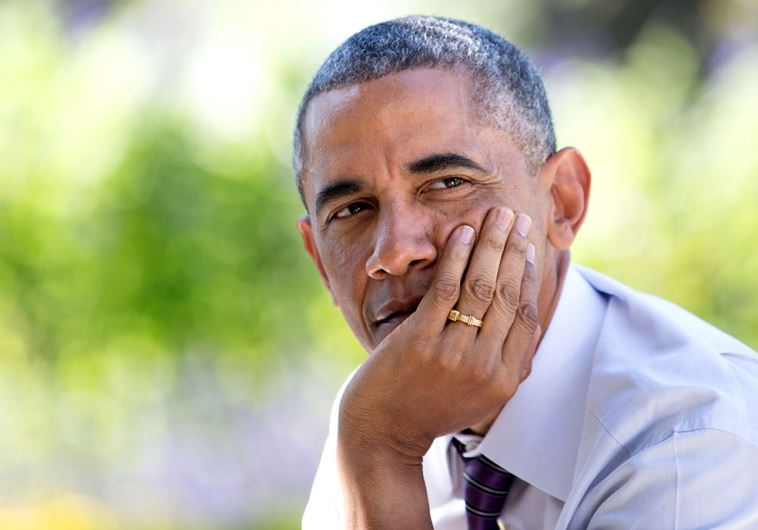
ShowImage (8)US President Barack Obama at the Rose Garden of the White House. (photo credit:OFFICIAL WHITE HOUSE PHOTO / PETE SOUZA)

[T]he real question lawmakers need to ask is whether the deal is good for America. Is Obama right or wrong that only partisan zealots and disloyal Zionists could oppose his great diplomatic achievement? To determine the answer to that question, you need to do is ask another one. Does his deal make America safer or less safe? The best way to answer that question is to consider all the ways Iran threatens America today, and ask whether the agreement has no impact on those threats, or whether it mitigates or aggravates them.

***********************

In President Barack Obama’s defense of his nuclear deal with Iran Wednesday, he said there are only two types of people who will oppose his deal – Republican partisans and Israel- firsters – that is, traitors.

At American University, Obama castigated Republican lawmakers as the moral equivalent of Iranian jihadists saying, “Those [Iranian] hard-liners chanting ‘Death to America’ who have been most opposed to the deal… are making common cause with the Republican Caucus.”

He then turned his attention to Israel.

Obama explained that whether or not you believe the deal endangers Israel boils down to whom you trust more – him or Prime Minister Benjamin Netanyahu. And, he explained, he can be trusted to protect Israel better than Netanyahu can because “[I] have been a stalwart friend of Israel throughout my career.”

The truth is that it shouldn’t much matter to US lawmakers whether Obama or Netanyahu has it right about Israel. Israel isn’t a party to the deal and isn’t bound by it. If Israel decides it needs to act on its own, it will.

The US, on the other side, will be bound by the deal if Congress fails to kill it next month.

So the real question lawmakers need to ask is whether the deal is good for America. Is Obama right or wrong that only partisan zealots and disloyal Zionists could oppose his great diplomatic achievement? To determine the answer to that question, you need to do is ask another one. Does his deal make America safer or less safe? The best way to answer that question is to consider all the ways Iran threatens America today, and ask whether the agreement has no impact on those threats, or whether it mitigates or aggravates them.

Today Iran is harming America directly in multiple ways.

The most graphic way Iran is harming America today is by holding four Americans hostage. Iran’s decision not to release them over the course of negotiations indicates that at a minimum, the deal hasn’t helped them.

It doesn’t take much consideration to recognize that the hostages in Iran are much worse off today than they were before Obama concluded the deal on July 14.

The US had much more leverage to force the Iranians to release the hostages before it signed the deal than it does now. Now, not only do the Iranians have no reason to release the hostages, they have every reason to take more hostages.

Then there is Iranian-sponsored terrorism against the US.

In 2011, the FBI foiled an Iranian plot to murder the Saudi ambassador in Washington and bomb the Saudi and Israeli embassies in the US capital.

One of the terrorists set to participate in the attack allegedly penetrated US territory through the Mexican border.

The terrorist threat to the US emanating from Iran’s terrorist infrastructure in Latin America will rise steeply as a consequence of the nuclear deal.

As The Wall Street Journal’s Mary Anastasia O’Grady wrote last month, the sanctions relief the deal provides to Iran will enable it to massively expand its already formidable operations in the US’s backyard. Over the past two decades, Iran and Hezbollah have built up major presences in Cuba, Venezuela, Nicaragua, Ecuador and Bolivia.

Iran’s presence in Latin America also constitutes a strategic threat to US national security. Today Iran can use its bases of operations in Latin America to launch an electromagnetic pulse attack on the US from a ballistic missile, a satellite or even a merchant ship.

The US military is taking active steps to survive such an attack, which would destroy the US’s power grid. Among other things, it is returning the North American Aerospace Defense Command (NORAD) to its former home in Cheyenne Mountain outside Colorado Springs.

But Obama has ignored the findings of the congressional EMP Commission and has failed to harden the US electronic grid to protect it from such attacks.

The economic and human devastation that would be caused by the destruction of the US electric grid is almost inconceivable. And now with the cash infusion that will come Iran’s way from Obama’s nuclear deal, it will be free to expand on its EMP capabilities in profound ways.

Through its naval aggression in the Strait of Hormuz Iran threatens the global economy. While the US was negotiating the nuclear deal with Iran, the Revolutionary Guards unlawfully interdicted – that is hijacked – the Marshall Islands-flagged Maersk Tigris and held its crew hostage for weeks.

Iran’s assault on the Tigris came just days after the US-flagged Maersk Kensington was surrounded and followed by Revolutionary Guards ships until it fled the strait.

A rational take-home message the Iranians can draw from the nuclear deal is that piracy pays.

Their naval aggression in the Strait of Hormuz was not met by American military force, but by American strategic collapse at Vienna.

This is doubly true when America’s listless response to Iran’s plan to use its Houthi proxy’s takeover of Yemen to control the Bab el-Mandab strait is taken into consideration. With the Bab el-Mandab, Iran will control all maritime traffic from the Persian Gulf and the Red Sea. Rather than confront this clear and present danger to the global economy, America abandoned all its redlines in the nuclear talks.

Then there is Iran’s partnership 20-year partnership with al-Qaida.

The 9/11 Commission found in its report that four of the 9/11 terrorists transited Iran before traveling to the US. As former Defense Intelligence Agency director Lt.-Gen. (ret.) Mike Flynn told Fox News in the spring, Iranian cooperation with al-Qaida remains deep and strategic.

When the US Navy SEALs killed Osama bin Laden in 2011, they seized hard drives containing more than a million documents related to al-Qaida operations. All but a few dozen remain classified.

According to Flynn and other US intelligence officials who spoke to The Weekly Standard, the documents expose Iran’s vast collaboration with al-Qaida.

The agreement Obama concluded with the mullahs gives a tailwind to Iran. Iran’s empowerment will undoubtedly be used to expand its use of al-Qaida terrorists as proxies in their joint war against the US.

Then there is Iran’s ballistic missile program.

The UN Security Council resolution passed two weeks ago cancels the UN-imposed embargoes on conventional arms and ballistic missile acquisitions by Iran. Since the nuclear deal facilities Iranian development of advanced nuclear technologies that will enable the mullahs to build nuclear weapons freely when the deal expires, the Security Council resolution means that by the time the deal expires, Iran will have the nuclear warheads and the intercontinental ballistic missiles required to carry out a nuclear attack on the US.

Obama said Wednesday that if Congress votes down his nuclear deal, “we will lose… America’s credibility as a leader of diplomacy. America’s credibility,” he explained, “is the anchor of the international system.”

Unfortunately, Obama got it backwards. It is the deal that destroys America’s credibility and so upends the international system which has rested on that credibility for the past 70 years.

The White House’s dangerous suppression of seized al-Qaida-Iran documents, like its listless response to Iran’s maritime aggression, its indifference to Iran’s massive presence in Latin America, its lackluster response to Iran’s terrorist activities in Latin America, and its belittlement of the importance of the regime’s stated goal to destroy America – not to mention its complete collapse on all its previous redlines over the course of the negotiations – are all signs of the disastrous toll the nuclear deal has already taken on America’s credibility, and indeed on US national security.

To defend a policy that empowers Iran, the administration has no choice but to serve as Iran’s agent. The deal destroys America’s credibility in fighting terrorism. By legitimizing and enriching the most prolific state sponsor of terrorism, the US has made a mockery of its claimed commitment to the fight.

The deal destroys the US’s credibility as an ally.

By serving as apologists for its worst enemy, the US has shown its allies that they cannot trust American security guarantees. How can Israel or Saudi Arabia trust America to defend them when it is endangering itself? The deal destroys 70 years of US nonproliferation efforts. By enabling Iran to become a nuclear power, the US has made a mockery of the very notion of nonproliferation and caused a nuclear arms race in the Middle East.

The damage caused by the deal is already being felt. For instance, Europe, Russia and China are already beating a path to the ayatollahs’ doorstep to sign commercial and military deals with the regime.

But if Congress defeats the deal, it can mitigate the damage. By killing the deal, Congress will demonstrate that the American people are not ready to go down in defeat. They can show that the US remains committed to its own defense and the rebuilding of its strategic credibility worldwide.

In his meeting with Jewish leaders Tuesday, Obama acknowledged that his claim – repeated yet again Wednesday – that the only alternative to the deal is war, is a lie.

Speaking to reporters after the meeting, Greg Rosenbaum, chairman of the National Democratic Jewish Council, which is allied with the White House, said that Obama rejected the notion that war will break out if Congress rejects the deal with veto-overriding majorities in both houses.

According to Rosenbaum, Obama claimed that if Congress rejects his nuclear deal, eventually the US will have to carry out air strikes against Iran’s nuclear facilities in order to prevent them from enriching uranium to weapons-grade levels.

“But,” he quoted Obama as saying, “the result of such a strike won’t be war with Iran.”

Rather, Obama said, Iran will respond to a US strike primarily by ratcheting up its terrorist attacks against Israel.

“I can assure,” Obama told the Jewish leaders, “that Israel will bear the brunt of the asymmetrical responses that Iran will have to a military strike on its nuclear facilities.”

What is notable here is that despite the fact that it will pay the heaviest price for a congressional defeat of the Iran deal, Israel is united in its opposition to the deal. This speaks volume about the gravity with which the Israeli public views the threats the agreement unleashed.

But again, Israel is not the only country that is imperiled by the nuclear deal. And Israelis are not the only ones who need to worry.

Obama wishes to convince the public that the deal’s opponents are either partisan extremists or traitors who care about Israel more than they care about America. But neither claim is true. The main reason Americans should oppose the deal is that it endangers America. And as a consequence, Americans who oppose the deal are neither partisans nor turncoats.

They are patriots.

Hizballah presses elite Radwan Force for conquering Galilee into saving stalled Zabadani battle

August 1, 2015

Hizballah presses elite Radwan Force for conquering Galilee into saving stalled Zabadani battle, DEBKAfile, August 1,2015

New_ninja_uniforms_of_Hezbollahs_elite_forcesNew “ninja” uniforms for Hizballah’s Radwan Force

Hizballah’s elite Radwan Force was originally designed to push in from Lebanon and conquer the Israeli Galilee. DEBKAfile’s exclusive military sources report that on Thursday, July 30 Hassan Nasralla saw he had no option but to press this high-value contingent into service, to extricate the combined Hizballah-Syrian armies from their month-long failure to recapture the key town of Zabadani – or even breach the defenses set up by the Al-Qaeda affiliated rebel Nusra Front.

This standoff with heavy casualties over the key town, which commands the main Damascus-Beirut highway, has become a symbolic make-or-break duel between the Iran-backed Shiite Hizballah and Al Qaeda’s Sunni Nusra Front. Nasrallah loses it at the cost of his organization’s credibility as a formidable fighting force.

Defeat would make western Damascus and eastern Lebanon more vulnerable to attack. And for Iran’s Lebanese proxy, it would leave an embarrassing question hanging in the air: If Hizballah under Iranian command combined with Syrian troops and backed by heavy artillery fire and air strikes can’t win a relatively small battle against no more than 1,200 rebel fighters across a nine-km square battleground, how much are its leaders’ boasts worth when they claim unbeatable prowess for winning major battles, including a war on Israel?

To save face in this landmark showdown, Hizballah decided to press into battle its most prestigious unit, named for Al-Hajj Radwan, the nom de guerre of Hizballah’s renowned military chief Imad Mughniye, whom Israel took out in February 2008.

Eight months ago, the Radwan Force lost its senior commanders. An Israeli air strike on Jan. 18 targeted a group of high Iranian and Hizballah officers on a visit to Quneitra on the Syrian Golan. They were surveying the terrain before relocating this elite unit to confront IDF positions on the Israeli Golan border. Iranian Gen. Ali Reza al-Tabatabai and the Hizballah district commander Jihad Mughniye (son of Imad) lost their lives in the Israeli raid and the plan was provisionally set aside.

If the Radwan Force manages to haul Hizballah out of its impasse in Zabadani, it may next be assigned to take up battle positions on the Golan.

But for now, its mission in the battle for Zabadani has three dimensions:

1.  To disarm the enemy by commando raids, a tactic to be borrowed from the rebels defending the town. On the night of July 24, the rebels preemptively struck Hizballah and Syrian army positions around the town and captured some of them. The decision to deploy Radwan appears to have come in response to that painful setback.

2.  To pull off a quick battlefield success at Zabadani, in view of intelligence reports that the Nusra Front and the Islamic State of Iraq and the Levant in northern Syria were preparing together to open a second front in Lebanon, in order to relieve the rebel force pinned down in Zabadani.

The two groups plan to cross into Lebanon and start attacking pro-Hizballah Shiite populations in the Beqaa Valley and the North. They propose to cut through the Bequaa Valley and head up to the important northern Lebanese city of Tripoli on the Mediterranean coast.

3.  Syrian President Bashar Asad is under extreme pressure for a battlefield success after admitting in a public speech last week to the loss of strategic territory to rebel forces and shrinking military manpower. He has earmarked a Zabadani victory – both as a turning-point for his flagging fortunes and for holding back the constant draining of his army by desertions and defections.

Our military sources reveal that, after Assad leaned hard on the Lebanese government and army to round up Syrian troops who went AWOL, Lebanese security forces went into action. They are picking up Syrian army deserters and putting them on buses driving in armored convoys into Syria. It doesn’t take much imagination to conjure up the fate of these unwilling returnees.

The Iran Delusion: A Primer for the Perplexed

July 8, 2015

The Iran Delusion: A Primer for the Perplexed, World AffairsMichael J. Totten, Summer 2015

Totten_Iran

US foreign policy in the Middle East is focused on two things right now: containing ISIS and preventing Iran from acquiring nuclear weapons. These are both worthy goals, but if sanctions are lifted on Iran as part of a nuclear deal, whether or not it gets the bomb, Tehran will certainly have more money and resources to funnel to Hezbollah, the Assad regime, Iraq’s Shia militias, the Houthis in Yemen, and—perhaps—to Saudi Arabia’s disaffected Shia minority. The region will become even less stable than it already is. ISIS and al-Qaeda will likely grow stronger than they already are.

**************************

The chattering class has spent months bickering about whether or not the United States should sign on to a nuclear deal with Iran, and everyone from the French and the Israelis to the Saudis has weighed in with “no” votes. Hardly anyone aside from the Saudis, however, seems to recognize that the Iranian government’s ultimate goal is regional hegemony and that its nuclear weapons program is simply a means to that end.

What do these shatter zones have in common? The Iranian government backs militias and terrorist armies in all of them. As Kaplan writes, “The instability Iran will cause will not come from its implosion, but from a strong, internally coherent nation that explodes outward from a natural geographic platform to shatter the region around it.”

That’s why Iran is a problem for American foreign policy makers in the first place; and that’s why trading sanctions relief for an international weapons inspection regime will have no effect on any of it whatsoever.

Iran has been a regional power since the time of the Persian Empire, and its Islamic leaders have played an entirely pernicious role in the Middle East since they seized power from Mohammad Shah Reza Pahlavi in 1979, stormed the US Embassy in Tehran, and held 66 American diplomats hostage for 444 days.

In 1982, they went international. When the Israelis invaded Lebanon to dislodge Yasir Arafat’s Palestine Liberation Army, Iranian Revolutionary Guard Corps commanders forged a network of terrorist and guerrilla cells among their coreligionists in Lebanon’s Shia population.

Hezbollah, the poisoned fruit of these efforts, initially had no name. It was a hidden force that struck from the shadows. It left a hell of a mark, though, for an organization of anonymous nobodies when it blew up the American Embassy in Beirut and hit French and American peacekeeping troops—who were there at the invitation of the Lebanese government—with suicide truck bombers in 1983 that killed 368 people.

When Hezbollah’s leaders finally sent out a birth announcement in their 1985 Open Letter, they weren’t the least bit shy about telling the world who they worked for. “We are,” they wrote, “the Party of God (Hizb Allah), the vanguard of which was made victorious by God in Iran . . . We obey the orders of one leader, wise and just, that of our tutor and faqih [jurist] who fulfills all the necessary conditions: Ruhollah Musawi Khomeini. God save him!”

The Israelis fought a grinding counterinsurgency against Hezbollah for 18 years in southern Lebanon before withdrawing in 2000, and they fought a devastating war in 2006 along the border that killed thousands and produced more than a million refugees in both countries. Hezbollah was better armed and equipped than the Lebanese government even then, but today its missiles can reach Tel Aviv, Jerusalem, and even the Dimona nuclear power plant all the way down in the southern part of the country. 

Until September 11, 2001, no terrorist organization in the world had killed more Americans than Hezbollah. Hamas in Gaza isn’t even qualified as a batboy in the league Hezbollah plays in.

Hezbollah is more than just an anti-Western and anti-Jewish terrorist organization. It is also a ruthless sectarian Shia militia that imposes its will at gunpoint on Lebanon’s Sunnis, Christians, and Druze. It has toppled elected governments, invaded and occupied parts of Beirut, and, according to a United Nations indictment, assassinated former Lebanese Prime Minister Rafik Hariri.

Hezbollah is, for all intents and purposes, the foreign legion of Iran’s Revolutionary Guard Corps. The parts of the country it occupies—the northern Bekaa Valley, the Israeli border region, and the suburbs south of Beirut—constitute a de facto Iranian-controlled state-within-a-state inside Lebanon. 

After the United States demolished Saddam Hussein’s Sunni-dominated regime in 2003, Iran’s rulers duplicated their Lebanon strategy in Iraq by sponsoring a smorgasbord of sectarian Shia militias and death squads that waged war against the Iraqi government, the American military, Sunni civilians, and politically moderate Shias. 

Unlike Lebanon—which is more or less evenly divided between Christians, Sunnis, and Shias—Iraq has an outright Shia majority that feels a gravitational pull toward their fellow Shias in Iran and a revulsion for the Sunni minority that backed Hussein’s brutal totalitarianism and today tolerates the even more deranged occupation by the Islamic State, also known as ISIS. 

The central government, then, is firmly aligned with Tehran. Iran’s clients don’t run a Hezbollah-style state-within-a-state in Iraq. They don’t have to. Now that Hussein is out of the way, Iraq’s Shias can dominate Baghdad with the weight of sheer demographics alone. But Iran isn’t content with merely having strong diplomatic relations with its neighbor. It still sponsors sectarian Shia militias in the center and south of the country that outperform the American-trained national army. They may one day even supplant Iraq’s national army as the Iranian Revolutionary Guard Corps has more or less supplanted the Iranian national army. Iraq’s Shia militias are already the most powerful armed force outside the Kurdish autonomous region and ISIS-held territory.

When ISIS took complete control of the city of Ramadi, the capital of Anbar Province, in May of 2015, the Iraqi soldiers tasked with protecting it dropped their weapons and ran as they had earlier in Mosul, Tikrit, and Fallujah. So Iraq’s central government tasked its Iranian-backed Shia militias with taking it back. 

On the one hand, we can hardly fault Baghdad for sending in whatever competent fighting force is available when it needs to liberate a city from a psychopathic terrorist army, but the only reason ISIS gained a foothold among Iraq’s Sunnis in the first place is because the Baghdad government spent years acting like the sectarian dictatorship that it is, by treating the Sunni minority like second-class citizens, and by trumping up bogus charges against Sunni officials in the capital. When ISIS promised to protect Iraq’s Sunnis from the Iranian-backed Shia rulers in Baghdad, the narrative seemed almost plausible. So ISIS, after being vomited out of Anbar Province in 2007, was allowed to come back.

Most of Iraq’s Sunnis fear and loathe ISIS. They previously fought ISIS under its former name, al-Qaeda in Iraq. But they fear and loathe the central government and its Shiite militias even more. They’d rather be oppressed by “their own” than by “the other” if they had to choose. But they have to choose because Iran has made Iraq its second national project after Lebanon.

It doesn’t have to be this way. At least some of the tribal Sunni militias would gladly fight ISIS as they did in the past with American backing. If they did, residents of Ramadi, Fallujah, and Mosul would view them as liberators and protectors rather than potential oppressors, but Tehran and Baghdad will have none of it.

“All attempts to send arms and ammunition must be through the central government,” Adnan al-Assadi, a member of Parliament, told CNN back in May. “That is why we refused the American proposal to arm the tribes in Anbar. We want to make sure that the weapons would not end up in the wrong hands, especially ISIS.”

That may appear reasonable on the surface, but ISIS can seize weapons from Shia militias just as easily as it can seize weapons from Sunni militias. The real reason for the government’s reluctance ought to be obvious: Iraq’s Shias do not want to arm Iraq’s Sunnis. They’d rather have ISIS controlling huge swaths of the country than a genuinely popular Sunni movement with staying power that’s implacably hostile to the Iranian-backed project in Mesopotamia.

The catastrophe in Iraq is bad enough, but the Iranian handiwork in Syria is looking even more apocalyptic nowadays. ISIS wouldn’t even exist, of course, if it weren’t for the predatory regime of Bashar al-Assad, and the close alliance that has existed between Damascus and Tehran since the 1979 revolution that brought the ayatollahs to power.

Syria’s government is dominated by the Alawites, who make up just 15 percent of the population. Their religion is a heterodox blend of Christianity, Gnosticism, and Shia Islam. They aren’t Shias. They aren’t even Muslims. Their Arab Socialist Baath Party is and has always been as secular as the Communist Party was in the Soviet Union (and it was in fact a client of the Soviet Union). A marriage between an aggressively secular Alawite regime and Iran’s clerical Islamic Republic was hardly inevitable, but it’s certainly logical. The two nations had a common enemy wedged between them in Saddam Hussein’s Iraq, and both have been threatened by the region’s Sunni Arab majority since their inception. 

Hezbollah is their first child, and the three of them together make up the core of what analyst Lee Smith calls the Resistance Bloc in his book, The Strong Horse. The Party of God, as it calls itself, wouldn’t exist without Iranian money and weapons, nor would it exist without Damascus as the logistics hub that connects them. And it would have expired decades ago if Syria hadn’t conquered and effectively annexed Lebanon at the end of the Lebanese civil war in 1990.

Every armed faction in Lebanon, including Hezbollah, signed on to the Syrian-brokered Taif Agreement, which required the disarmament of every militia in the country. But the Assads governed Lebanon with the same crooked and cynical dishonesty they perfected at home, and as the occupying power they not only allowed Hezbollah to hold onto its arsenal, but also allowed Hezbollah to import rockets and even missiles from Iran.

“For Syria,” historian William Harris wrote in The New Face of Lebanon, “Hezbollah could persist as both a check on the Lebanese regime and as a means to bother Israel when convenient.”

The Party of God is now a powerful force unto itself, but it rightly views the potential downfall of the Assad regime as the beginning of its own end. The fact that Assad might be replaced by the anti-Shia genocidaires of ISIS compelled its fighters to invade Syria without an exit strategy—with the help of Iranian commanders, of course—to either prop up their co-patron or die.

Rather than going all-in, the Iranians could have cut their losses in Syria and pressured Assad into leaving the country. ISIS would be hiding under rocks right now had that happened. Hardly any Sunnis in Syria would tolerate such a deranged revolution if they had no one to revolt against. But the Resistance Bloc will only back down if it’s forced to back down. If ISIS devours Syria and Iraq as a result, then so be it.

And while the Resistance Bloc is fighting for its survival in the Levant, it’s expanding into the Arabian Peninsula.

The Shia-dominated Houthi movement took control of Yemen’s capital, Sanaa, earlier this year following the revolution that toppled former President Ali Abdullah Saleh, and its fighters are well on their way to taking the port city of Aden, in the Sunni part of the country.

The Houthis, of course, are backed by Iran.

They’re no more likely to conquer every inch of that country than Iran’s other regional proxies are to conquer every inch of anywhere else. Shias make up slightly less than half of Yemen’s population, and their natural “territory” is restricted to the northwestern region in and around the capital. Taking and holding it all is likely impossible. No government—Sunni, Shia, or otherwise—has managed to control all of Yemen for long. 

And the Saudis are doing their damnedest to make sure it stays that way. Their fighter jets have been pounding Houthi positions throughout the country since March.

Saudi Arabia is more alarmed at Iranian expansion in the region than anyone else, and for good reason. It’s the only Arab country with a substantial Shia minority that hasn’t yet been hit by Iranian-backed revolution, upheaval, or sectarian strife, although events in Yemen could quickly change that.

In the city and province of Najran, in the southwestern corner just over the Yemeni border, Shias are the largest religious group, and they’re linked by sect, tribe, and custom to the Houthis.

Not only is the border there porous and poorly defined, but that part of Saudi Arabia once belonged to Yemen. The Saudis conquered and annexed it in 1934. Najran is almost identical architecturally to the Yemeni capital, and you can walk from Najran to Yemen is a little over an hour. 

Will the Houthis be content to let Najran remain in Saudi hands now that they have Iranian guns, money, power, and wind at their back? Maybe. But the Saudis won’t bet their sovereignty on a maybe.

Roughly 15 percent of Saudi Arabia’s citizens are Shias. They’re not a large minority, but Syria’s Alawites are no larger and they’ve been ruling the entire country since 1971. And Shias make up the absolute majority in the Eastern Province, the country’s largest, where most of the oil is concentrated. 

Support among Yemen’s Sunnis for al-Qaeda in the Arabian Peninsula—the most dangerous branch of al-Qaeda on earth—is rising for purely sectarian reasons just as it has in Syria and Iraq. Iran can’t intervene anywhere in the region right now without provoking a psychotic backlash that’s as dangerous to Tehran and its interests as it is to America’s.

If Iranian adventurism spreads to Saudi Arabia, watch out. Everywhere in the entire Middle East where Sunnis and Shias live adjacent to one another will have turned into a shatter zone.

The entire world’s oil patch will have turned into a shatter zone.

US foreign policy in the Middle East is focused on two things right now: containing ISIS and preventing Iran from acquiring nuclear weapons. These are both worthy goals, but if sanctions are lifted on Iran as part of a nuclear deal, whether or not it gets the bomb, Tehran will certainly have more money and resources to funnel to Hezbollah, the Assad regime, Iraq’s Shia militias, the Houthis in Yemen, and—perhaps—to Saudi Arabia’s disaffected Shia minority. The region will become even less stable than it already is. ISIS and al-Qaeda will likely grow stronger than they already are.

We’re kidding ourselves if we think that won’t affect us. It’s not just about the oil, although until every car in the world is powered by green energy we can’t pretend the global economy won’t crash if gasoline becomes scarce. We also have security concerns in the region. What happens in the Middle East hasn’t stayed in the Middle East now for decades. 

The head-choppers of ISIS are problematic for obvious reasons. Their leader, Abu Bakr al-Baghdadi, said, “I’ll see you in New York,” to American military personnel when they (foolishly) released him from Iraq’s Camp Bucca prison in 2004. But the Iranian-led Resistance Bloc has behaved just as atrociously since 1979 and will continue to do so with or without nuclear weapons.

US involvement in Syria and Iraq is minimal now, but even the little we are doing makes little sense. We’re against ISIS in both countries, which is entirely fine and appropriate, but in Iraq we’re using air power to cover advances by Shia militias and therefore furthering Iranian interests, and in Syria we’re working against Iranian interests by undermining Assad and Hezbollah. Meanwhile, the nuclear deal Washington is negotiating with Tehran places a grand total of zero requirements on Iran’s rulers to roll back in their necklace of shatter zones.

We don’t have to choose between ISIS and Iran’s revolutionary regime. They’re both murderous Islamist powers with global ambitions, and they’re both implacably hostile to us and our interests. Resisting both simultaneously wouldn’t make our foreign policy even a whit more complicated. It would, however, make our foreign policy much more coherent.

The Myth of Muslim Radicalization

June 18, 2015

The Myth of Muslim Radicalization, Front Page Magazine, Daniel Greenfield, June 18, 2015

Usaama RahimUsaama Rahim

Mainstreaming extremism is . . . Obama’s policy. It’s the logic behind nearly every Western diplomatic move in the Middle East from the Israel-PLO peace process to the Brotherhood’s Arab Spring. And these disasters only created more Islamic terrorism.

****************

After some of its quarter of a million Muslims headed to join ISIS, Quebec decided the answer was a $2 million anti-radicalization center headed by a specialist in cultural sensitivity. But if you’re about to be beheaded by a masked ISIS Jihadist, a specialist in cultural sensitivity isn’t going to help you much.

Western governments nevertheless keep rolling out their culturally sensitive approaches to fighting ISIS.

The key element in Obama’s strategy for fighting ISIS isn’t the F-15E Strike Eagle, it’s a Twitter account run by a Muslim Brotherhood sympathizer which claims to “Counter Violent Extremism” by presenting moderate Islamists like Al Qaeda as positive role models for the Islamic State’s social media supporters.

So far 75% of planes flown on combat missions against ISIS return without engaging the enemy, but the culturally sensitive State Department Twitter account has racked up over 5,000 tweets and zero kills.

Cultural sensitivity hasn’t exactly set Iraq on fire in fighting ISIS and deradicalization programs here start from the false premise that there is a wide gap between a moderate and extremist Islam.  Smiling news anchors daily recite new stories about a teenager from Kentucky, Boston or Manchester getting “radicalized” and joining ISIS to the bafflement of his parents, mosque and community.

And who is to blame for all this mysterious radicalization? It’s not the parents. It certainly can’t be the moderate local mosque with its stock of Jihadist CDs and DVDs being dispensed from under the table.

The attorney for the family of Usaama Rahim, the Muslim terrorist who plotted to behead Pamela Geller, claims that his radicalization came as a “complete shock” to them.

It must have come as a truly great shock to his brother Imam Ibrahim Rahim who claimed that his brother was shot in the back and that the Garland cartoon attack had been staged by the government.

It must have come as an even bigger shock to Imam Abdullah Faaruuq, the Imam linked to Usaama Rahim and his fellow terrorist conspirators, as well as the Tsarnaev brothers, who had urged Muslims to “grab onto the gun and the sword.”

The culturally insensitive truth about Islamic ‘radicalization’ is that it is incremental.

There is no peaceful Islam. Instead of two sharply divided groups, peaceful Islam and extremist Islam, there is a spectrum of acceptable terrorism.

Muslim institutions have different places on that spectrum depending on their allegiances and tactics, but the process of radicalization is rarely a sharp break from the past for any except converts to Islam.

The latest tragic victim of radicalization is Munther Omar Saleh; a Muslim man living in New York City who allegedly plotted to use a Tsarnaev-style pressure cooker bomb in a major landmark such as the Statue of Liberty or the Empire State Building. Saleh claimed to be following orders from ISIS.

Media coverage of the Saleh arrest drags out the old clichés about how unexpected this sudden radicalization was, but what appears to be his father’s social media account shows support for Hamas.

Likewise one of Usaama Rahim’s fellow mosque attendees said that Rahim and another conspirator had initially followed the “teachings of the Muslim Brotherhood” but that he had been forced to cut ties with them when they moved past the Brotherhood and became “extreme”.

Despite the media’s insistence on describing the Muslim Brotherhood as a moderate organization, it has multiple terrorist arms, including Hamas, and its views on non-Muslims run the gamut from the violent to the genocidal.

A year after Obama’s Cairo speech and his outreach to the Muslim Brotherhood, its Supreme Guide announced that the United States will soon be destroyed, urged violent terrorist attacks against the United States and “raising a jihadi generation that pursues death just as the enemies pursue life.”

Despite this, Obama continued backing the Muslim Brotherhood’s rise to power across the region.

There are distinctions between the Muslim Brotherhood and Al Qaeda, but the latter is a splinter group of the former. Al Qaeda’s current leader came out of the Muslim Brotherhood. A move from one to the other is a minor transition between two groups that have far more in common than their differences.

And since the Brotherhood controls much of the Islamic infrastructure in the United States, the idea that Munther Omar Saleh or Usaama Rahim became radicalized because they went from a Jihadist group that takes the long view in the struggle against the infidel, putting political structures into place to make a violent struggle tactically feasible, to a Jihadist group that focuses more on short term violence, is silly.

Radicalization isn’t transformational; it’s incremental.

It’s the Pakistani kid down the block deciding that instead of joining the Muslim Students Association and then CAIR to build Islamist political structures in America, he should just cut to the chase and kill a few cops to begin taking over America now.

Radicalization is the moderate Imam who stops putting on an act for PBS and the local politicians and moves to Yemen where he openly recruits terrorists to attack America instead of doing it covertly at his mosque in Virginia.

Radicalization is the teenage Muslim girl who forgets about marrying her Egyptian third cousin and bringing him and his fifty relatives to America and goes to join ISIS as a Caliphate brood mare instead.

It’s not pacifism giving way to violence. Instead it’s an impatient shift from tactical actions meant to eventually make Islam supreme in America over many generations to immediate bloody gratification. ISIS is promising the apocalypse now. No more waiting. No more lying. You can have it tomorrow.

Radicalization does not go from zero to sixty. It speeds up from sixty to seventy-five.

It builds on elements that are already there in the mosque and the household. The term “extremism” implicitly admits that what we are talking about is not a complete transformation, but the logical extension of existing Islamic beliefs.

Omar Saleh seemed cheerful enough about Hamas dropping Kassam rockets on Israeli towns and cities. Would he have supported his son setting off a bomb in the Statue of Liberty? Who knows, but his son was already starting from a family position that Muslim terrorism against non-Muslims was acceptable.

Everything else is the fine print.

When Usaama Rahim followed the way of the Muslim Brotherhood, he was with a moderate group whose spiritual guide, the genocidal Qaradawi was the godfather of cartoon outrage and had endorsed the murderous Iranian fatwa against Salman Rushdie.

The slope that leads from Qaradawi’s cartoon rage to trying to behead Pamela Geller isn’t a slippery one; it’s a vertical waterfall. And this is what radicalization really looks like. It doesn’t mean moderates turning extreme. It means extremists becoming more extreme. And there’s always room for extremists to become more extreme which turns old extremists into moderates while mainstreaming their beliefs.

In the UK, Baroness Warsi, Cameron’s biggest mistake, blamed Muslim radicalization on the government’s refusal to engage with… radicals. Or as she put it, “It is incredibly odd and incredibly worrying that over time more and more individuals, more and more organisations are considered by the government to be beyond the pale and therefore not to be engaged with.”

The reason why the government is refusing to “engage” with these organizations is that they support terrorism in one form or another. Warsi is proposing that the UK fight radicalization by mainstreaming it.

Mainstreaming extremism is also Obama’s policy. It’s the logic behind nearly every Western diplomatic move in the Middle East from the Israel-PLO peace process to the Brotherhood’s Arab Spring. And these disasters only created more Islamic terrorism.

The Muslim teenagers headed to join ISIS did not come out of a vacuum. They came from mosques and families that normalized some degree of Islamic Supremacism and viewed some Muslim terrorists as heroes and role models. It’s time for Western governments to admit that the ISIS Jihadist is more the product of his parents and his teachers than of social media Jihadis on YouTube and Twitter.

Radicalization doesn’t begin with a sheikh on social media. It begins at home. It begins in the mosque. It just ends with ISIS.

The High Cost of Office Space in Tehran

May 21, 2015

New Documents Reveal Bin Laden Wanted to Set Up Shop in Iran
By Katy Zavadski May 20, 2015, Via The Daily Beast


(Business is business, right? Makes you wonder what else Iran is hiding. – LS)

New documents taken from his compound show the group was much more tolerant of the Shiite state than its successor, ISIS. It even contemplated opening an office there.

An undated report on Al Qaeda’s external operations reveals that the group tried to establish a recruitment office in Iran but backed off because it was deemed to be too expensive.

“[W]e have thought to open an office for ourselves in Iran, to receive whoever comes to join us or someone traveling, but we have backed off this idea because it will be very expensive,” the document reads (PDF). Though undated, it is likely from 2006 or later, given a later passage’s emphasis on attacking Danish targets, presumably over Muhammad cartoons.

Another document, however, concerns itself with the group’s public image, and gives instructions for a would-be spokesman for the group.

“It is better if he comments on what Saudi Arabia channels have been circulating, incorrect news that stated al-Qa’ida has links to Iran,” it reads.

Those are just revelations from a massive document dump by the U.S. of files it obtained during the 2011 raid on Osama bin Laden’s compound in Pakistan. Dubbed “Bin Laden’s Bookshelf,” the document dump includes the sheikh’s English-language library and correspondence with close associates and family. Many of the sources point to a complicated history between Iran and Al Qaeda, which included mass imprisonment and strategic permissiveness.

Many al Qaeda members and families found themselves in Iranian custody after fleeing Afghanistan during the U.S. invasion in 2001. In one account, the Iranians are referred to as “people whose mannerisms resemble those of the Jews and hypocrites.” A detailed inventory of arrests suggests that Iran detained many high-level members of the terrorist group, including Abu Ghaith and Sayf al Adl.

“I think it’s irrefutable that Iran would turn a blind eye to al Qaeda activities” when it benefited them, Brookings Institution fellow Will McCants told The Daily Beast. Al Qaeda didn’t have as hardline an anti-Shia stance as some of its successors like ISIS because “they understand they have to make compromises.”

Despite some sharp language, McCants said al Qaeda leaders seemed to be sometimes happy with a “detente” with Tehran.

“I think it’s irrefutable that Iran would turn a blind eye to al Qaeda activities.”
The Foreign Policy Research Institute’s Clint Watts, however, told The Daily Beast that the documents show Al Qaeda members “seem to be pretty hating on Iran.”

Among those held in Iran appear to be Bin Laden’s wife and son, Umm Hamzah and Hamzah. One letter states that they are to be kept in a safe house once they leave the country, until Bin Laden decides whether to send the boy to Qatar. Another letter shows a concerns that Iran would spy on Bin Laden’s family after they leave:

Before Um Hamzah arrives here, it is necessary for her to leave everything behind, including clothes, books, everything that she had in Iran… Everything that a needle might possibly penetrate. Some chips have been lately developed for eavesdropping, so small they could easily be hidden inside a syringe. Since the Iranians are not to be trusted, it is possible to implant a chip in some of the belongings that you might have brought along with you…”

Documents revealed much more about Al Qaeda.

Tree-Huggers

A letter apparently addressed to a senior Al Qaeda urges leaders to tell fighters to not “cut down trees on a large scale […] without replacing them.” “Cutting down trees should be limited to the needs of the people and local consumption and not for export,” the August 2010 letter reads. “I am sure that you are aware that climate change is causing drought in some areas and floods in others.”

Another document, a “Letter on the implications of climate change,” calls on Muslims to participate in relief work and to prepare in advance for future natural disasters. At the same time, however, the letter takes time to critique an “Islamic” London-based NGO for providing aid to Christians and Hindus, and for employing female aid workers. It notes that the NGO said it would be unlikely to be able to help mujahideen in Pakistan.

Conspiracy Theories

“Jews were able to control world forces with these two sciences, sociology and psychology,” reads one. (Another document released from that trove instructs members to “avoid talking about the Jews and Palestine when talking to the Germans. This subject is very sensitive to in Germany, and it will bring negative results to our goal.”)

About half of the 38 English-language books Bin Laden possessed were about conspiracy theories, from freemasons to even 9/11.

Human Resources

The U.S. also released an official application form for Al Qaeda.

“Please enter the required information accurately and truthfully,” it reads. “Write clearly and legibly. Name, age, marital status. Do you wish to execute a suicide operation?”

Thirst for Poison

In an English-language document taken from bin Laden’s compound, Al Qaeda said it planned to use cyanide and ricin in terrorist attacks.

“A few grams of Cyanide (easily manufactured and sold by the kilo in third world countries) or Ricin diluted in water and injected randomly in anything ingested on super markets shelves, picnics, restaurants etc […] are just examples of what multinational Terror Franchises need to disseminate NONSTOP, UNPREDICTED, INVISIBLE SUDDEN DEATH,” a document said. It includes a terrorist wishlist including explosives, toxic agents, electronics, and more. The author is believed to be Abu Hafez, the leader of Al Qaeda’s external special ops.

How Iran Saved Obama’s “Blame America” Foreign Policy

April 29, 2015

How Iran Saved Obama’s “Blame America” Foreign Policy, Front Page Magazine, April 28, 2015

rouh-450x313

Obama’s public rejection of every ally, from Israel to Egypt to Saudi Arabia, has finally created the Post-American Middle East that his “Blame America” doctrine sought. The Post-American Middle East is a hive of terrorist groups and a region of nuclear arms races where murderous despots with vast armies dream of resurrecting the Ottoman Empire, the Persian Empire and the Abbasid Caliphate.

*********************

Obama’s Middle East policy was doomed to fail because it was based on the myth that everything wrong with the region was America’s fault.

Senator Obama had argued that Iraq would fix itself once we pulled out. Without America, the Iraqis would create a “political solution”. Instead the Shiites used the withdrawal to take over the government and Al Qaeda rebounded to dominate the Sunnis. After years of denying what was going on, he was forced back into Iraq after genocide and beheadings filled every television screen.

From the White House, he deployed the “Iraq Solution” across the Middle East by withdrawing support from American allies and backing terrorist groups like the Muslim Brotherhood. The chaos tore apart the region and turned over entire cities and countries to terrorists.

Egypt went through multiple coups. Street violence in Tunisia wrecked the country and supplied thousands of fighters to ISIS. His regime change war in Libya led to terrorist takeovers of its capital. Al Qaeda nearly took over Mali. Houthi Jihadists backed by Iran took over Yemen’s capital. The Saudis are bombing Yemen. The Egyptians are bombing Libya. The French are still fighting in Mali.

Iran and Al Qaeda have divided up Iraq, Syria and Yemen between themselves.

Withdrawing American power and influence didn’t work because we were never the problem. American soldiers weren’t causing the Sunnis and Shiites to fight each other. They were the only thing preventing it. American power and influence across the Middle East wasn’t holding back freedom and human rights, it was the only thing keeping a modicum of freedom alive in places like Egypt and Tunisia that quickly fell to Islamist rule in the Arab Spring, resulting in street violence, torture, terrorism and military coups.

The left had been fundamentally wrong about the cause of the problems in the Middle East. Obama trashed the region by following its wrongheaded doctrines.

Once the “Blame America” foreign policy has been implemented and the region went to hell, he had no idea what to do next. Intervening in Libya made sense according to the “Blame America” doctrine because Gaddafi had recently cut a deal with the United States and was obstructing the Jihadists who were implementing the local version of the Arab Spring in coordination with the Muslim Brotherhood.

But intervening in Syria didn’t. Assad wasn’t an American ally. Therefore the “Blame America” doctrine said that he should be left alone. But he was obstructing the Arab Spring. Overthrowing him would let the Muslim Brotherhood claim another country, but would alienate Iran and spoil any reconciliation.

Unable to make a final decision, Obama veered back and forth between Iran and the Muslim Brotherhood. Some days he seemed on the verge of bombing Syria and other days he was against even providing the promised weapons to the Sunni rebels. Even his supporters accused him of having no plan.

Syria’s real red line was the one that it had drawn through his foreign policy. Instead of making the Middle East better, his withdrawals had made it worse. And the beneficiaries of his foreign policy, especially the Muslim Brotherhood, were clamoring for more American military intervention.

Even Iraq’s Shiite government, backed by Iran, wanted American intervention.

Obama’s foreign policy had created a new set of untrustworthy client states which had to be kept alive by American intervention. The great joke of his foreign policy was that his new terrorist states acted just like the old dictators they were supposed to replace. They wanted American weapons and soldiers. Their own people hated them and hated America by extension. The climax of the Arab Spring came with crowds in Tahrir Square denouncing Obama and the Muslim Brotherhood for acting as his client state.

The “Blame America” foreign policy had led to even more blame of America. The new “democratic” Islamist governments that he helped bring to power to appease the Arab Street and atone for the sins of supporting the old secular-ish dictators backfired by making the Arab Street hate us more than ever.

Iran saved Obama’s foreign policy. Just as he was stumbling around Syria and weeping at being stuck back in Iraq, the agents of the Iran Lobby suggested that the whole mess could be put back together again. Iran and the US would fight on the same side against ISIS in Syria and Iraq. And this cooperation could be used to hammer out a nuclear accord that would retroactively justify Obama’s Nobel Prize.

The only problem was that everyone else in the region was completely against the idea.

The Iran Lobby threw Obama’s failed foreign policy a lifeline and he grabbed it. The bombing of Syria was off. Assad turned over some WMDs, but went on using others. The US began acting as the air force for Iran’s Shiite militias in Iraq while the Kurds and the Sunni Sheikhs of the Awakening were shut out.

When the Houthis took over Yemen, Obama shrugged. When the Saudis began bombing Yemen, they didn’t tell him because they were afraid the news would leak to Iran. And the administration covertly began pressuring them to stop, confirming that it now took its marching orders from Tehran, not Riyadh.

Obama ignored the vocal opposition, particularly from Israel’s Netanyahu, because the Iran deal was the only thing holding his foreign policy together. It made it seem as if he knew what he was doing. Take away the Iran deal and there was no longer a strategy, just a series of incoherent panicked responses.

That is why he continues to cling to the Iran deal. Without it, the Emperor’s foreign policy is naked.

The Iran deal salvaged the “Blame America” foreign policy by reorienting it away from the Muslim Brotherhood to deal with our great enemy in the region. By acceding to Iran’s nuclear program, Obama could finally fix everything by atoning for America’s biggest foreign policy sin in the region.

Despite his Muslim family background, Obama never understood the Middle East. Instead he looked at the region through a left-wing lens and saw only America’s crimes.

The Sunnis and Shiites, the Arabs, Kurds, Persians and Turkmen, weren’t fighting because of America. They were fighting over differences in religion, ethnicity and clan. The left has always thought that the way to fix the Middle East was to withdraw American influence. Instead doing that destabilized the region and created a power vacuum that Russia and Iran have been more than happy to fill.

Obama’s final foreign policy act was to fall directly into Iran and Al Qaeda’s trap.

Iran and the various Al Qaeda groups had effectively split parts of the region among themselves. By embracing Iran, Obama alienated the Sunni Middle East and shoved entire populations into Al Qaeda’s waiting embrace. He completed the polarizing process that he began with the Arab Spring by selling out the moderates to the extremists and waiting for everyone in the region to love America again.

But the Muslim Brotherhood lost out to its edgier Al Qaeda children. Egypt and the Saudis are scrambling to hold together some sort of Sunni center without the United States and against its wishes. Obama’s alignment with Iran, his rejection of Egypt’s new government and his failure to back the Saudis in Yemen has sent the message that the only legitimate alternative to Al Qaeda is Iran.

That’s not an alternative that most Sunnis can accept. Many would rather stand with Al Qaeda than Iran.

Obama’s public rejection of every ally, from Israel to Egypt to Saudi Arabia, has finally created the Post-American Middle East that his “Blame America” doctrine sought. The Post-American Middle East is a hive of terrorist groups and a region of nuclear arms races where murderous despots with vast armies dream of resurrecting the Ottoman Empire, the Persian Empire and the Abbasid Caliphate.

While genocide goes on, sex slaves are raped under the rule of a Caliph and black flags are unfurled and nuclear weapons are developed to fulfill apocalyptic Islamic prophecies, Obama smiles for the camera and waits for his second Nobel Prize.

It had been America’s fault all along. Now that Iran and Al Qaeda are in charge, everything will be okay.

Al Qaeda on winning streaks in Yemen and Iraq, exploiting stalemate in proxy wars

April 17, 2015

Al Qaeda on winning streaks in Yemen and Iraq, exploiting stalemate in proxy wars, DEBKAfile, April 17, 2015

Thursday and Friday, April 16-17, two branches of Al Qaeda took the lead in violent conflicts, catapulting key areas of the Middle East into greater peril than ever. In Yemen, Al Qaeda in the Arabian Peninsula (AQAP) and in Iraq, the Islamist State in Iraq and the Levant (ISIS), launched new offensives 3.050 kilometer apart.

DEBKAfile’s military sources report that both branches of the Islamist terror movement used the absence of professional adversarial troops on the ground – American and Saudi – to push forward in the two arenas. Washington and Riyadh alike had decided to trust local forces to carry the battle – Iran-backed Shiite militias alongside Iraqi troops against ISIS in Iraq, and the Yemeni army against Iran-backed Houthi rebels in Yemen.

This gave Al Qaeda a free passage to carry on, especially when offered the further benefit of contradictions in the Obama administration’s attitude toward its foe, Tehran: On the one hand, Iran was offered lead role in the region for the sake of a nuclear deal; on the other, it faced US opposition for its support of rebel forces in Yemen.

The conflict in Yemen is no longer a straight sectarian proxy war between Sunni-ruled Saudi Arabia and Shiite Iran (that also stretches to Iraq and Syria.), as a result of what happened Thursday, April 16.

AQAP embarked on a broad offensive in southern Yemen’s Hadhramaut region on the shore of the Gulf of Aden and captured the important seaport of Mukalla as well as the coatal towns of Shibam and Ash-Shirh. The group also overran Yemen’s Ryan air base in the absence of real resistance from the Yemen army’s 27th Brigade and 190th Air Defense Brigade – both of which are loyal to the escaped president Mansour Hadi.

This winning AQAP offensive was instructive in four ways:

1. For the first time in two decades, Al Qaeda in Arabia is operating on professional military lines. Its sweep across Yemen’s southern coastland showed the Islamists to be plentifully armed with antiair missiles and other air defense systems.
2.  AQAP’s smuggling rings run a large fleet of vessels which collaborate with Somali pirates. This fleet is now preparing to seize control of the strategic Socotra archipelago of four islands opposite Hadhramaut and only 80 kilometers from the Horn of Africa. Socotra sits in the bottleneck for shipping from the Arabian Sea and Persian Gulf to the Gulf of Aden and on to the Suez Canal.

On one of the Socotra islands, the US set up an air base and deployed special forces in 2011,  in readiness for an attack on Iran’s nuclear facilities. AQAP does not have enough strength to capture this island, but is capable of holding it siege and under barrage from sea and land.

3. The Arabian branch of Al Qaeda has for the first time gained control of a large sweep of territory in Yemen, a feat analogous to its fellow branch’s advances in Iraq since last June.
4. Hadramauth is bounded to the north and the east by the Saudi Arabian Rub’ al Khali or Empty Quarter, which is the world’s second largest desert region.  AQAP has therefore gained proximity to the oil kingdom through its desolate back door.

Our military sources note that Saudi Arabian and United Arab Emirate air forces have controlled Yemeni air space since March 26, supported by US intelligence assistance. They might have been expected to bomb AQAP units and stall their advance through Hadhramaut.

But they refrained from doing so for a simple reason: Both Riyadh and its Gulf ally are unwilling to throw their own ground forces into the war against the Shiite Houthi rebels. Still in proxy mode, they expect Al Qaeda’s Arabian jihadis to save them the trouble of putting their troops on the ground to vanquish the Shiite rebels.

The same principle guides Washington in Iraq – albeit with different players. There, the Americans rely increasingly on the pro-Iranian Iraqi Shiite militias, under the command of Iranian Revolutionary Guards officers, rather than the Iraq army, to cleanse the ground of ISIS conquests.

Two weeks after Western publications trumpeted the militias’ success in liberating the Iraqi town of Tikrit from its ISIS conquerors, it turns out that the fighting is still ongoing and the jihadis are still in control of some of the town’s districts.

Iraqi Prime Minister Haidar al-Abadi, while on a visit to Washington this week, told reporters that, after the Tikrit “victory,” his army was to launch an offensive to recapture the western province of Anbar on the Syrian border from the grip of ISIS.

The situation on the ground is a lot less promising. As Abadi and President Barack Obama discussed future plans for the war to rid Iraq of the Islamists, ISIS launched fresh offensives for its next goals, Ramadi, a town of half a million inhabitants 130 kilometers west of Baghdad, and the oil refinery town of Baiji

The jihadis have already moved in on Ramadi’s outskirts after the Iraqi army defenders started falling back.

What’s worse than no strategy?

February 11, 2015

What’s worse than no strategy? Israel Hayom, Clifford D. May, February 11, 2015

It seems like only yesterday that U.S. President Barack Obama was being criticized for having no strategy to ‎counter the jihadi threat. In fact, it was about 10 days ago. Peggy Noonan’s Feb. 1 Wall Street ‎Journal column was headlined: “America’s strategy deficit.”‎

Since then, a different perception has been taking root: Obama does indeed have a strategy — ‎a “secret strategy,” one that is alarmingly misguided. ‎

According to this theory, he believes that fighting terrorism requires accommodating the regime ‎long recognized by the U.S. government as the world’s leading sponsor of terrorism: the Islamic Republic of Iran. ‎

He may also see the Islamic republic not as a rival to the Islamic State group but as a more moderate ‎alternative — despite the fact that Iran’s Supreme Leader Ali Khamenei has repeatedly declared ‎hostility toward America the foundation of the Islamic revolution. ‎

The president appears to believe that Sunni jihadis can be countered by Shia jihadis. Last week, Islamic State demonstrated its barbarism by immolating a Jordanian pilot. That should not ‎cause us to forget that Iran’s rulers supplied militias in Iraq with improvised explosive devices used to immolate ‎American soldiers, are supporting Syrian dictator Bashar Assad who has used chemical ‎weapons to scorch the lungs of his opponents, and are continuing to illicitly develop nuclear ‎weapons capable of immolating millions.‎

Dr. Michael Doran, a senior fellow at the Hudson Institute, has not just speculated about ‎Obama’s “secret strategy.” He has painstakingly combed through the record and produced a ‎‎9,000-word report persuasively establishing that Obama, since early in his presidency, has ‎been in pursuit of a “comprehensive agreement” that would allow Iran to become what the ‎president has called “a very successful regional power.” ‎

Understand what that means: Iran would be the hegemon of the Middle East. Some states would ‎accept Tehran’s authority, striking deals and kowtowing in order to survive. Europeans would ‎accommodate Iran, based on its control of the flow of Gulf oil. Israel and Saudi Arabia, nations ‎that Iran’s rulers have threatened to wipe from the map, would be left to fend for themselves.‎

And some Sunnis would almost certainly turn to al-Qaida and Islamic State to help defend ‎them from Shia domination. Indeed, Islamic State rose in response to the extension of ‎Iranian power in Baghdad after America’s withdrawal from Iraq, coupled with ‎Obama’s decision not to support non-Islamist Syrians who had rebelled against the Assad ‎dictatorship.‎

Doran cites evidence that in the first year of Obama’s first term, there were more ‎White House meetings on Iran than any other national security concern. Detente with Iran was ‎seen as “an urgent priority,” but the president “consistently wrapped his approach to that priority ‎in exceptional layers of secrecy” because he was convinced that neither Congress nor the ‎American public would support him.‎

A year ago, Doran further reports, Benjamin Rhodes, a member of the president’s inner ‎circle, told a group of Democratic activists (unaware that he was being recorded) that a deal with ‎Iran would prove to be “probably the biggest thing President Obama will do in his second term ‎on foreign policy.” He made clear that there would be no treaty requiring the Senate’s advice and ‎consent.‎

The president believes that “the less we know about his Iran plans, the better,” Doran ‎concludes. “Yet those plans, as Rhodes stressed, are not a minor or incidental component of his ‎foreign policy. To the contrary, they are central to his administration’s strategic thinking about ‎the role of the United States in the world, and especially in the Middle East.” ‎

Those plans also explain why the president has refused to use tough sanctions, or even the threat ‎of tough sanctions, to force Supreme Leader Ali Khamenei to choose between his nuclear ‎weapons program and economic collapse. Doran writes, “For Obama, to force a confrontation ‎with Khamenei would destroy any chance of reaching an accommodation on the nuclear front ‎and put paid to his grand vision of a new Middle East order.”‎

Doran’s piece was published in the online journal Mosaic on Feb. 2. Four days later, ‎Obama released his 2015 National Security Strategy. It contained nothing about the ‎‎”secret strategy.” In fact, it contained nothing that could be called a strategy. ‎

That appraisal is widely shared. For example, David Rothkopf — who served in the Clinton ‎administration, “voted for Barack Obama twice” and now edits Foreign Policy magazine — called‎ the National Security Strategy “a brief filed by the president in defense of his record to date” and “a mishmash ‎leavened by good intentions but unintentionally spiced up by oversights, misrepresentations, and ‎a bad track record.” ‎

Last Friday, National Security Adviser Susan Rice reassured an audience at the Brookings ‎Institution that “the dangers we face … are not of the existential nature we confronted during ‎World War II or the Cold War.” But if Iran becomes nuclear-armed, other despotic regimes will ‎follow, greatly increasing the likelihood that terrorists will get their hands on nukes and, sooner ‎or later, use them.‎

Remember that American leaders of both parties similarly minimized the threat posed by al-Qaida prior to Sept. 11, 2001. Is the lesson of that day, as Rice implies, that we should ‎worry only about existential threats — confident that we can absorb lesser doses of death and ‎destruction? Or should we have learned instead to do all we can to prevent our enemies from ‎inflicting such punishment now and in the future?‎

This is a debate worth having. But it will be inhibited so long as the president insists on hiding ‎his views, leaving it to a few exceptional scholars to read between the lines. ‎