Archive for the ‘Academia’ category

Selective Outrage on Campus

November 13, 2015

Selective Outrage on Campus, The Gatestone InstituteAlan M. Dershowitz, November 12, 2015

(“Safe spaces,” in which infantile narcissists are shielded from ideas inconsistent with their own perceptions and which they therefore deem offensive are becoming an unfortunate part of the college experience. Freedom from ideas they find offensive trumps freedom of speech. Here’s a link to an article I posted at my blog yesterday titled Infants in University Land. It deals with the recent mess at my alma mater, Yale College. — DM)

Following the forced resignations of the President and Provost of the University of Missouri, demonstrations against campus administrators has spread across the country. Students — many of whom are Black, gay, transgender and Muslim — claim that they feel “unsafe” as the result of what they call “white privilege” or sometimes simply privilege. “Check your privilege” has become the put-down du jour. Students insist on being protected by campus administrators from “micro-aggressions,” meaning unintended statements inside and outside the classroom that demonstrate subtle insensitivities towards minority students. They insist on being safe from hostile or politically incorrect ideas. They demand “trigger warnings” before sensitive issues are discussed or assigned. They want to own the narrative and keep other points of view from upsetting them or making them feel unsafe.

These current manifestations of a widespread culture of victimization and grievance are only the most recent iterations of a dangerous long-term trend on campuses both in the United States and in Europe. The ultimate victims are freedom of expression, academic freedom and the free exchange of ideas. Many faculty members, administrators and students are fearful of the consequences if they express politically incorrect or dissident views that may upset some students. So they engage in self-censorship. They have seen what had happened to those who have expressed unpopular views, and it is not a pretty picture.

I know, because I repeatedly experienced this backlash when I speak on campuses. Most recently, I was invited to deliver the Milton Eisenhower lecture at Johns Hopkins University. As soon as the lecture was announced, several student groups demanded that the invitation must be rescinded. The petition objected to my mere “presence” on campus, stating that my views on certain issues “are not matters of opinion, and cannot be debated” and that they are “not issues that are open to debate of any kind.” These non-debatable issues include some of the most controversial concerns that are roiling campus today: sexual assault, academic integrity and the Israel-Palestine conflict. The protesting students simply didn’t want my view on these and other issues expressed on their campus, because my lecture would make them feel unsafe or uncomfortable.

The groups demanding censorship of my lecture included Hopkins Feminists, Black Student Union, Diverse Sexuality and General Alliance, Sexual Assault Resource Unit and Voice for Choice. I have been told that two faculty members urged these students, who had never heard of me, to organize the protests, but the cowardly faculty members would not themselves sign the petition. The petition contained blatant lies about me and my views, but that is beside the point. I responded to the lies in my lecture and invited the protesting students to engage me during the Q and A. But instead, they walked out in the middle of my presentation, while I was discussing the prospects for peace in the Middle East.

According to the Johns Hopkins News-Letter, another petition claimed that “by denying Israel’s alleged war crimes against Palestinians,” I violated the university’s “anti-harassment policy” and its “statement of ethical standards.” In other words, by expressing my reasonable views on a controversial subject, I harassed students.

Some of the posters advertising my lecture were defaced with Hitler mustaches drawn on my face. Imagine the outcry if comparably insensitive images had been drawn on the faces of invited minority lecturers.

I must add that the Johns Hopkins administration and the student group that invited me responded admirably to the protests, fully defending my right to express my views and the right of the student group to invite me. The lecture went off without any hitches and I answered all the questions — some quite critical, but all polite — for the large audience that came to hear the presentation.

The same cannot be said of several other lectures I have given on other campuses, which were disrupted by efforts to shout me down, especially by anti-Israel groups that are committed to preventing pro-Israel speakers from expressing their views.

The point is not only that some students care less about freedom of expression in general than about protecting all students from “micro-aggressions.” It is that many of these same students are perfectly willing to make other students with whom they disagree with feel unsafe and offended by their own micro- and macro-aggressions. Consider, for example, a recent protest at the City University of New York by Students for Justice in Palestine that blamed high tuition on “the Zionist Administration [of the University that] invests in Israeli companies, companies that support the Israeli occupation, hosts birthright programs and study abroad programs in occupied Palestine [meaning Israel proper] and reproduces settler-colonial ideology throughout CUNY though Zionist content of education.”

Let’s be clear what they mean by “Zionist”: they mean “Jew”. There are many Jewish administrators at City University. Some are probably Zionists. Others are probably not. Blaming Zionists for high tuition is out and out anti-Semitism. It is not micro-aggression. It is in-your-face macro-aggression against City University Jews.

Yet those who protest micro-aggressions against other minorities are silent when it comes to Jews. This is not to engage in comparative victimization, but rather to expose the double standard, the selective outrage and the overt hypocrisy of many of those who would sacrifice free speech on the altar of political correctness, whose content they seek to dictate.
The profs who love Obama’s Iran deal

August 10, 2015

The profs who love Obama’s Iran deal, Front Page MagazineCinnamon Stillwell, August 10, 2015

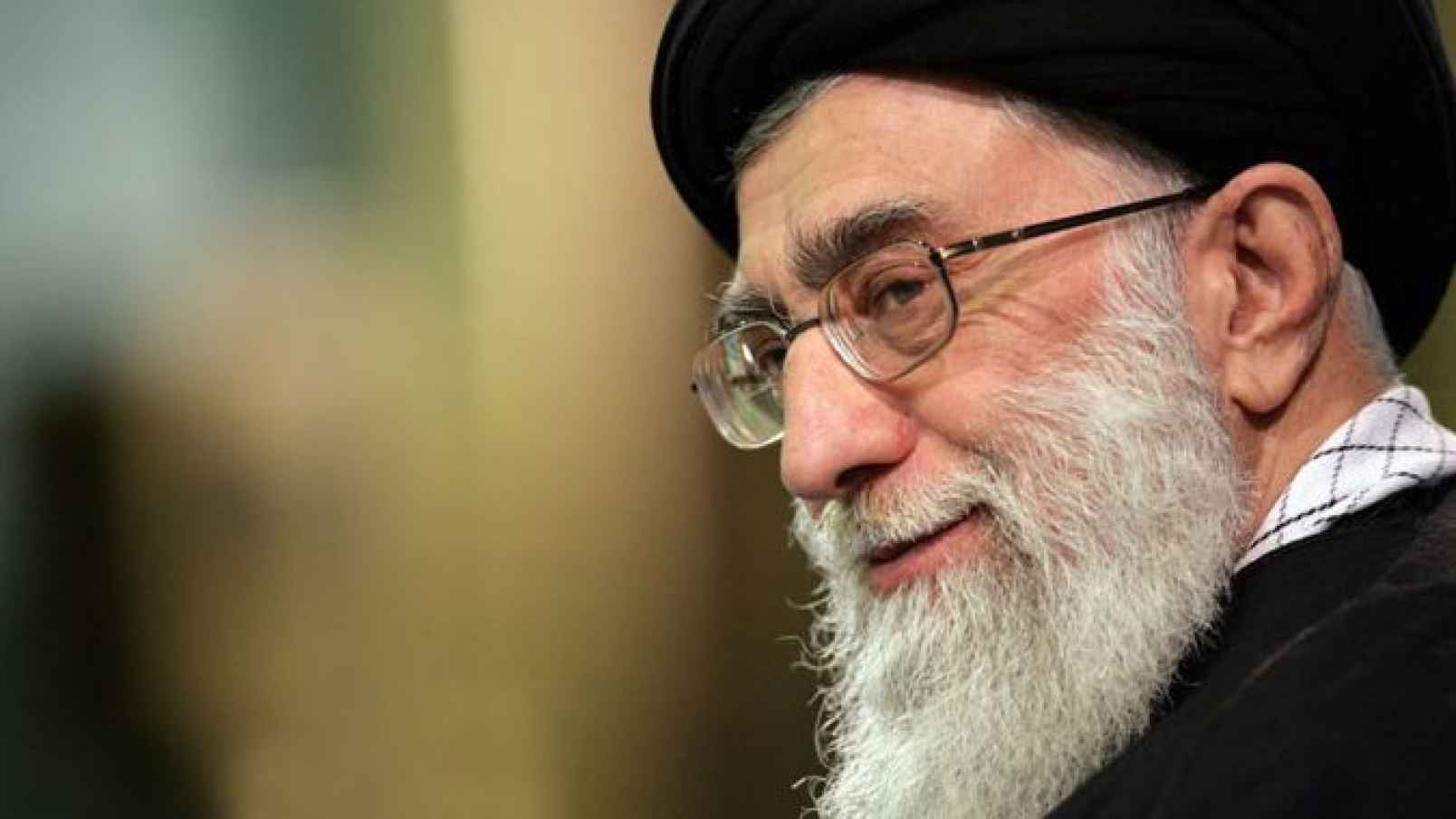
1.29.13-ayatollah-ali-khamenei

Meet the Mullahs’ academic cheerleaders.

Who supports the Obama administration’s increasingly unpopular Joint Comprehensive Plan of Action (JCPOA) aimed ostensibly at curbing Iran’s nuclear program? Many of its strongest proponents come from the field of Middle East studies, which boasts widespread animus towards the U.S. and Israel along with a cadre of apologists for the Iranian regime determined to promote ineffectual diplomacy at all costs.

University of California, Riverside creative writing professor Reza Aslan concedes that his generation of Iranian-Americans “feel[s] far removed from the political and religious turmoil of the Iranian revolution” before falling in line with the Iranian regime’s propaganda: the deal will “empower moderates in Iran, strengthen Iranian civil society and spur economic development,” and create “an Iran that is a responsible actor on the global stage, that respects the rights of its citizens and that has warm relations with the rest of the world.” “Warm relations” are the least likely outcome of the increase in funding for Iran’s terrorist proxies Hamas and Hezbollah that even President Obama admits will follow the easing of sanctions.

Flynt Leverett, an international relations professor at Pennsylvania State University, whitewashes these terrorist groups as “constituencies” and “communities” which the Iranian regime “help[s] organize in various ways to press their grievances more effectively,” effective terrorism being, for Leverett, a laudable goal.  Characterizing the regime as “a rising regional power” and “legitimate political order for most Iranians,” he urges the U.S., through the JCPOA, to “come to terms with this reality.”

Diablo Valley College Middle East studies instructor Amer Araim’s seemingly wishful thinking is equally supportive of Tehran’s line: “it is sincerely hoped that these funds will be used to help the Iranian people develop their economy and to ensure prosperity in that country.” Meanwhile, Hooshang Amirahmadi, an Iranian-American international relations professor at Rutgers University, attempts to legitimize the regime by delegitimizing the sanctions: “The money that will flow to Iran under this deal is not a gift: this is Iran’s money that has been frozen and otherwise blocked.”

Others deny the Iranian regime intends to build a nuclear bomb. University of Michigan history professor Juan Cole has “long argued that [Iran’s leader Ali] Khamenei is sincere about not wanting a nuclear weapon” because of his “oral fatwas or legal rulings” indicating that “using such weapons is contrary to Islamic law.” His unwarranted confidence in the regime leads him to conclude:

[T]hey have developed all the infrastructure and technical knowledge and equipment that would be necessary to make a nuclear weapon, but stop there, much the way Japan has.

Evidently, Cole has no problem with a tyrannical, terrorist-supporting regime that seeks regional hegemony on the threshold of becoming a nuclear power.

Likewise, William Beeman, an anthropology professor at the University of Minnesota, maintains that, “It was . . .  easy for Iran to give up a nuclear weapons program that never existed, and that it never intended to implement.” Like Cole, he uncritically accepts and recites the regime’s disinformation: “Iran’s leaders have regularly denounced nuclear weapons as un-Islamic.”

Beeman—who, in previous negotiations with the Iranian regime, urged the U.S. to be “unfailingly polite and humble” and not to set “pre-conditions” regarding its nuclear program—coldly disregards criticism of the JCPOA for excluding conditions such as the “release of [American] political prisoners” and “recognition of Israel,” calling them “utterly irrelevant.” No doubt the relatives of those prisoners and the Israeli citizens who live in the crosshairs of the regime’s continued threats of annihilation would disagree.

A number of academics have resorted to classic anti-Semitic conspiracy mongering to attack the deal’s Israeli and American opponents, calling them the “Israel Lobby.” Muqtedar Khan, director of the Islamic Studies Program at the University of Delaware, accuses “the Israeli government and all those in the U.S. who are under the influence of its American lobbies” of obstructing the deal, claiming that, “The GOP congress is now being described as the [Israeli Prime Minister Benyamin] Netanyahu congress.”

Hatem Bazian, director of the Islamophobia Research & Documentation Project at the University of California, Berkeley, takes aim at “pro-Israel neo-conservatives,” “neo-conservative warmongers,” “AIPAC,” and (in a mangled version of “Israel-firster”) “Israel’s first D.C. crowd” for “attempting to scuttle the agreement.” Asserting a moral equivalence between the dictatorial Iranian regime and the democratically-elected Israeli government, Bazian demands to know when Israel’s “pile of un-inspected or regulated nuclear weapons stockpile” will be examined before answering, “It is not going to happen anytime soon!” That Israel has never threatened any country with destruction, even after being attacked repeatedly since its rebirth, is a fact ignored by its critics.

The unhinged Facebook posts of Columbia University Iranian studies professor and Iranian native Hamid Dabashi reveal in lurid language his hatred of Israel:

It is now time the exact and identical widely intrusive scrutiny and control compromising the sovereignty of the nation-state of Iran and its nuclear program be applied to the European settler colony of Jewish apartheid state of Israel and its infinitely more dangerous nuclear program! There must be a global uproar against the thuggish vulgarity of Netanyahu and his Zionist gangsters in Israel and the U.S. Congress to force them to dismantle their nuclear program–systematically used to terrorize and murder Palestinian people and steal the rest of Palestine!

Elsewhere, Dabashi attacks adversaries of the JCPOA, including “Israel, Saudi Arabia, the U.S. Neocons, and their treacherous expat Iranian stooges masquerading as ‘Opposition,’” calling them a “terrorizing alliance,” a “gang of murderous war criminals,” and “shameless warmongers.”

Willful blindness to Iran’s brutal, terrorist-supporting regime, moral equivocation, and an irrational hatred for Israel and the West characterize the fawning support enjoyed by the mullahs from these and other professors of Middle East studies. In place of objective, rigorously researched plans for countering Iran’s aggression and advancing the safety of America and its allies, they regurgitate the crudest propaganda from Teheran. Until their field of study is thoroughly reformed, their advice—such as it is—should and must be utterly ignored.

Steven Salaita Heads to Beirut, While Malcolm Kerr Spins in His Grave

July 8, 2015

Steven Salaita Heads to Beirut, While Malcolm Kerr Spins in His Grave, Middle East Forum, Winfield Myers, July 6, 2015

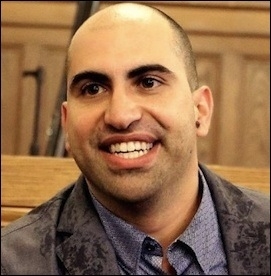
1132Former Virginia Tech professor Steven Salaita maintains that Israel’s alleged excesses have transformed anti-Semitism “into something honorable.”

In 1980 Malcolm Kerr, the distinguished Middle East studies scholar who served as AUB president, wrote a gentlemanly but devastating critique of Orientalism in which he mentions almost forty excellent scholars whose work Said ignored because noting their contributions would undermine his thesis that Western scholarship on the Middle East was uniformly reductionist and racist. Four years after writing his review, Kerr was assassinated near his AUB office by members of Islamic Jihad.

********************

How utterly appropriate: Steven Salaita will be the Edward W. Said Chair of American Studies at the American University of Beirut (AUB) for the 2015/16 academic year. A supposed expert on Native Americans whose anti-Semitic attacks on Israel cost him a job at the University of Illinois at Urbana-Champagne, Salaita will assume a chair named for the late Columbia University English professor whose 1978 book Orientalism contributed more than any other work to the systemic intellectual decadence that still characterizes Middle East studies.

Salaita is Said’s equal when it comes to producing polemical revisionist history that relies more upon postcolonial victimization studies than upon rigorous research. Although Illinois expected him to teach American Indian studies and he’ll teach American studies at AUB, all six of his books deal with modern Arab studies, Arab Americans, or Israel.

In the through-the-looking-glass historiography of Salaita and his academic allies, these disparate fields are connected by a typology of the victim that is easily transferred from antiquity to the present, so that Canaanites are Native Americans and ancient Hebrews are modern Zionists. It’s a handy way of attacking the entire history of a people or civilization without having to bother with facts, research, doubt, unanswerable questions, or the human agent at the heart of all genuine historical research.

In 1980 Malcolm Kerr, the distinguished Middle East studies scholar who served as AUB president, wrote a gentlemanly but devastating critique of Orientalism in which he mentions almost forty excellent scholars whose work Said ignored because noting their contributions would undermine his thesis that Western scholarship on the Middle East was uniformly reductionist and racist. Four years after writing his review, Kerr was assassinated near his AUB office by members of Islamic Jihad. If he could know that a chair named for Said now exists at AUB—and that next occupant will be a man as dedicated to politicized, vindictive scholarship as its namesake—he would be spinning in his grave.


