Author Archive

A Brief Look Back

July 31, 2015

‘Israel will attack Iran if you sign the deal, French MP told Fabius’

By Times of Israel staff November 10, 2013, 8:53 pm (Just 20 short months ago)


Prime Minister Benjamin Netanyahu meets with the foreign minister of France, Laurent Fabius, at the Prime Minister’s office in Jerusalem, 25 August 2013 (photo credit: Marc Israel Sellem/Pool/Flash90)

(Really?? As you know, this hasn’t happened and probably will not happen. Maybe it’s just easier to blame the USA for this mess. Meanwhile, to me, it’s a good thing that our brave young soldiers, USA and IDF, can continue to return each night to their families without being placed in harm’s way. – LS)

French member of parliament telephoned French Foreign Minister Laurent Fabius in Geneva at the weekend to warn him that Prime Minister Benjamin Netanyahu would attack Iran’s nuclear facilities if the P5+1 nations did not stiffen their terms on a deal with Iran, Israel’s Channel 2 News reported Sunday.

“I know [Netanyahu],” the French MP, Meyer Habib, reportedly told Fabius, and predicted that the Israeli prime minister would resort to the use of force if the deal was approved in its form at the time. “If you don’t toughen your positions, Netanyahu will attack Iran,” the report quoted Habib as saying. “I know this. I know him. You have to toughen your positions in order to prevent war.”

France’s Fabius is widely reported to have scuppered the finalizing of the emerging deal late Saturday, leading to the halting of the negotiations with Iran, and an agreement to reconvene on November 20.

Explaining his concerns to reporters in Geneva, Fabius said Tehran was resisting demands that it suspend work on its plutonium-producing reactor at Arak and downgrade its stockpile of higher-enriched uranium.

Habib, the deputy president of the Jewish umbrella organization in France, was elected to the National Assembly in Paris in June, to represent the district of southern Europe, which includes French nationals residing in Israel.

“I have known Meyer Habib for many years and he is a good friend to me and to Israel,” Netanyahu said in French in a video of endorsement posted on YouTube in May. Standing next to Habib, Netanyahu continued in Hebrew: “He fights a lot for Israel, for public opinion, and cares intensely about the Land of Israel and Jerusalem, and he has helped me over the years deepen Israeli-French relations.”

The TV report on Sunday said Jerusalem believed that Netanyahu’s angry public criticism of the emerging deal, and his phone conversations with world leaders — including Presidents Barack Obama, Vladimir Putin, and Francois Hollande, Chancellor Angela Merkel and Prime Minister David Cameron — had played a crucial role in stalling the deal, but that Israel was well aware that an agreement would be reached very soon. Netanyahu himself said Sunday that he was aware of the “strong desire” for a deal on the part of the P5+1 negotiators, and had asked the various leaders in his calls, “What’s the hurry?”

The report, quoting sources in Jerusalem, said Netanyahu and ministers close to him were castigating the United States for its “radical eagerness” in seeking a deal, and saying that Washington appeared fearful of confrontation with Iran. “This is no way to run a negotiation,” the sources were quoted as saying. The Americans “are giving up all of their pressure points, and the Iranians recognize the Americans’ weakness.”

At Sunday’s cabinet meeting, Netanyahu expressed outrage that under the terms of the emerging deal, “not a single centrifuge would be dismantled, not one.”

Israel believes the imminent deal will leave Iran with uranium enrichment capabilities, and thus enable it to become a nuclear breakout state at a time of its choosing.

Secretary of State John Kerry hit back at Netanyahu on Sunday, declaring, “I’m not sure that the prime minister, who I have great respect for, knows exactly what the amount or the terms are going to be because we haven’t arrived at them all yet. That’s what we’re negotiating.”

After the talks broke up in Geneva after midnight Saturday, Kerry complained about critics who were “jumping to conclusions” about the terms of the accord on the basis of “rumors or other parcels of information that somebody pretends to know.”

Netanyahu on Friday publicly pleaded with Kerry not to rush to sign what he called a “very, very bad deal.”

Retired IDF Officer Argues for Agreement

July 31, 2015

For Israel’s Sake, Don’t Reject the Iran Agreement | Commentary

By Amram Mitzna Via Special to Roll Call Posted at 10 a.m. July 30


Not a reset button. (Photo: Unknown)

(With every issue, there are at least two sides. Here’s one that hasn’t been presented here yet. As for me, all the arguing could soon be moot. Do you honestly believe this agreement will last? Do you have that much confidence that Iran will comply and/or their non-compliance will be covered up? Is it worth flushing America down the toilet over a deal that may be doomed to failure? Too many questions, and not enough answers. – LS)

Nearly every day since the nuclear agreement with Iran was finalized, more Israeli generals and security chiefs have come forward with the same message: The deal is surprisingly good for Israel’s security. And as a retired major general who oversaw many elements of the Israeli military, I feel it is my duty to join my colleagues.

No agreement is perfect, and defenders of the deal should not sugarcoat its serious implications.

But as head of IDF operations and planning, I learned well the capabilities and also the limits of military power. And I saw firsthand the enormous security benefits that can be achieved through diplomacy.

I must state loud and clear — this agreement is better than no agreement and must not be rejected. If implemented, it will block all of Iran’s pathways to a nuclear weapon, and extend the time Iran would need to build a bomb from only two months to more than a year.

The most heartening piece of the deal is that it has real teeth to enforce Iran’s compliance. It will impose the strictest inspections program in history, providing 24/7 monitoring of Iranian facilities, and giving inspectors access to literally every inch of the country. Iran, Russia and China will have no way of stopping inspectors from examining suspected nuclear sites. And due to uranium’s near-eternal half-life, Iran will not be able to conceal the damning evidence if it decides to move toward a weapon.

These parameters alone will be enough to make Iran think twice about breaking its word. But importantly, the deal also has a critical snap-back mechanism to automatically resume international sanctions if Iran cheats. Simply, if Iran violates the agreement, we will catch them, and the crippling sanctions will return as they were. The only difference is that Iran will then be over a year away from obtaining a weapon, instead of today’s breakout of two months, and it will be blamed by the entire world for cheating.

There are also concerning aspects to the agreement, particularly the billions of dollars of sanctions relief that Iran will receive, some of which could be used to strengthen Hamas, Hezbollah and other terrorist proxies around the world. Clearly, this presents a real risk and Israel must work with its allies to counter Iran’s increased influence as a result of this deal.

When considering this deal, we should not be thinking in a vacuum but also considering the alternatives. This is where opponents of the agreement, both in Israel and the United States, have fallen short.

When they rail against the sanctions relief that Iran will receive, why do the critics not mention that Iran will also receive these funds if the deal is rejected? There is no question that rejecting the deal would enrage China and Russia, leading them to resume business with Iran and allowing the sanctions to collapse anyway. Iran would then face no consequences for kicking out inspectors, and begin seeking a nuclear weapon without restrictions. Do the critics realize this or do they choose not to say?

I take very seriously Iran’s support for terrorists and its chants of “death to America” and “death to Zionists.” In an ideal world, I would prefer that Iran not receive the sanctions relief. But if it must, I strongly prefer that this evil regime not be allowed to acquire a nuclear weapon.

That is the choice that lies before us. If the critics have a serious alternative, they should say so. I see only destructive alternatives, and so simply listing this agreement’s deficiencies is not enough.

My government had a legitimate opportunity to influence the agreement over the years that it was being negotiated. That time is now passed, and the train has left the station. There is no other, better deal, and those who claim that there is, are fooling themselves.

The time has come to pull our heads out of the sand, accept the deal as fact and begin planning for the future. Israel has a key role to play, to make sure that the world holds Iran to every commitment that it has made.

If it does, and this agreement is fully implemented, I believe that Israel will be significantly safer than it is today. On the other hand, rejection of the deal would be very, very bad for all of us. And I know that many of my colleagues who have yet to speak up, agree with me.

For Israel’s sake and all the people of the Middle East, we must not miss this opportunity.

Amram Mitzna is former member of Knesset, former mayor of Haifa and Yeruham and a retired major-general in the Israel Defense Forces.

Plan B

July 30, 2015

Carter: Successful Iran Nuclear Deal Better Than Strike

Associated Press Published: 07.30.15


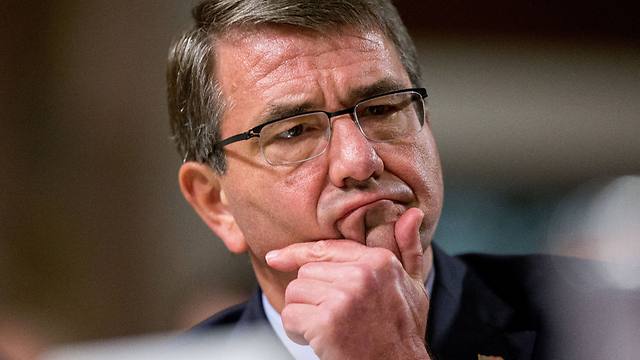
US Secretary of Defense Ashton Carter (Photo: AP)

(Don’t worry Bibi. The USA has a ‘plan B’ and our military seems agreeable to once again put our young and brave troops into harm’s way. Respectfully, sir, what’s your plan B to protect the citizens of Israel?- LS)

US defense secretary says deal might not be successfully implemented, and to that end ‘we are under instructions from the president to preserve, improve military option’.

WASHINGTON – Defense Secretary Ash Carter said Wednesday that the US armed forces stand ready to confront Iran, but told lawmakers that a successful implementation of the nuclear agreement with Tehran is preferable to a military strike.

Carter, Gen. Martin Dempsey, chairman of the Joint Chiefs of Staff, and three members of President Barack Obama’s Cabinet testified at a committee hearing as part of the White House’s aggressive campaign to convince Congress to back the Iranian nuclear deal, which calls on Iran to curb its nuclear program in exchange for billions of dollars in sanctions relief.

Carter said there is a possibility that the nuclear agreement will move forward, but will not be “successfully implemented.”

“That’s why we are under instructions from the president to preserve, and indeed we are improving – and I can’t get into that here – the military option,” Carter said. “Temporary as it is, it needs to be there because that’s our fall back.”

At the same time, Carter said that the successful implementation of the agreement would be better than taking military action because a strike would be temporary and likely would make Iran “irreconcilably resigned” to getting a nuclear weapon.

Dempsey added that implementation of the nuclear deal actually strengthens the military option because with enhanced inspections and access to sites in Iran, the US would be able to obtain more knowledge about nuclear sites “that we might strike.”

Congress, which has begun a 60-day review of the deal, is expected to vote in September. If the Republican-controlled Congress passes a resolution of disapproval for the deal, Obama has said he will veto it. The administration is hoping to secure the backing of Democrats to sustain the veto.

On Tuesday, the White House won the backing of Democratic Rep. Sander Levin, a Jewish lawmaker from Michigan. His support was critical because Iran has threatened to destroy Israel.

But underscoring the hard-fought gains and losses, New York Rep. Grace Meng, a Democratic member of the House Foreign Affairs Committee, came out against the deal on Wednesday. She said the inspections protocols in the agreement are “flawed” and that she’s concerned that Iran’s nuclear infrastructure will remain intact.

“This leads me to believe Iran would simply resume its pursuit of a nuclear weapon at the conclusion of the deal in a decade’s time,” Meng said, adding that she also fears the sanctions relief will give Iran more money to fund terrorism.

Nicholas Burns, former undersecretary of state for political affairs and ambassador to NATO, met with House Democrats at the invitation of Minority Leader Nancy Pelosi, a Democrat who is leading the effort to round up Democratic support for the deal. House Democrats also were scheduled to meet with Obama at the White House later in the day.

At a breakfast with reporters before the hearing, Treasury Secretary Jacob Lew, who also testified, said he believed the White House would gain enough support in Congress to sustain a veto if Congress votes to reject the Iran nuclear deal. There would be sufficient support – “enough for this to be sustained,” he said – if Congress rejects the agreement and Obama vetoes the resolution of disapproval.

Secretary of State John Kerry, the lead negotiator of the deal, tried to allay the concerns of Republican senators who complained that they are being asked to vote on the Iran nuclear deal without being privy to verification documents being separately negotiated by international nuclear inspectors.

“That is absolutely astounding,” said Sen. John McCain, the chairman of the Senate Armed Services Committee. Iran, he said, has a “clear record of cheating.”

Kerry said there is no side deal or secret agreements between Iran and the International Atomic Energy Agency. There are, however, technical documents that are standard practice and not released publicly.

“We are aware of what the basics of it are,” Kerry told the committee members. “It is standard procedure for 189 counties that have an agreement with the IAEA. … We don’t get that. It is not shared with the world, but we do get briefed on it.”

Netanyahu avoids committing to Locker Report recommendations

July 28, 2015

Netanyahu avoids committing to Locker Report recommendations

By Tom Dolev Jul 27, 2015 Via Jerusalem Online


Netanyahu will not commit to the Locker Report recommendations Photo Credit: Flash 90 / Channel 2 News

(While Netanyahu urges the US Congress to get tough on Iran to the point of military action, pressure is building back home to cut military spending. – LS)

For the first time since its publication, the Israeli Prime Minister addressed the controversy-sparking report that called for vast reforms in the IDF, claiming that he will study both the Locker Commission’s Report and the IDF’s report before making a decision.

Israeli Prime Minister Benjamin Netanyahu addressed the Locker Commission Report to examine Israel’s security budget for the first time today and did not commit to adopting the report recommendations. “Yohanan Locker did an excellent job, but the IDF also did an important job,” Netanyahu stated. “I will study both reports and will then reach a decision.”

“Yohanan Locker… worked for a year with excellent people in order to examine how best to deal with the IDF’s security problems from a budgetary standpoint and with regards to internal reforms,” Netanyahu stressed. “Meanwhile, the IDF under the Chief of General Staff and with the guidance of Israel’s Defense Minister did a very important job and prepared a plan of its own for a perennial outline.”

“The challenges in the region have changed,” Netanyahu added. “It is true that armies have disappeared and new armies have risen. That is why we must train them [soldiers] in force structure and development, in weaponry and fighting doctrine, in the IDF’s preparation for a new era when we know we have both budgetary needs and budgetary constraints.

Last week, Israeli Defense Minister Moshe (Bogie) Ya’alon attacked the Locker report conclusions. “The Locker Report is superficial, highly unbalanced and completely detached from the reality of the State of Israel,” he emphasized. “If the report’s conclusions are implemented, it would be gambling on the safety of the citizens of Israel. It will make it impossible for the IDF and the security system to deal with the threats facing the State of Israel and its citizens.”

Meanwhile, members of the Locker Commission came to the defense of their report and refuted the claims against it. “We have not come to butt heads with the IDF. We must address the report recommendations practically,” claimed commission member Esther Dominisini last week. “This report is a proper balance between the army’s needs, the market’s capabilities and the level of security the State of Israel will require.”

In the Locker Report, the commission recommended increasing the security budget to a record 59 billion shekels for each year in the next five years, lowering the retirement age from the IDF, converting early pensions to bonuses and shortening male soldiers’ obligatory service to two years.

In addition, the commission recommended making several financial reforms in the military that it claims would save the IDF some 10 billion shekels in the next five years. The committee also recommended reducing the number of reserve units, changing pension packages and hiring civilian companies for different projects in the IDF so that its soldiers can focus on essential issues.

Why Right-Wingers Are So Angry That Israel Hasn’t Bombed Iran Yet

July 28, 2015

Why Right-Wingers Are So Angry That Israel Hasn’t Bombed Iran Yet

By J.J. Goldberg June 12, 2015 Via Forward Dot Com


Image: Jerusalem Post

(Does the fault lie within? – LS)

Amid all the fuss over Treasury Secretary Jack Lew getting heckled at the Jerusalem Post Conference in New York on June 7, you might have missed the day’s biggest bombshell.

I refer to the nasty smackdown that morning between Post columnist Caroline Glick, the poison-pen darling of the pro-Israel far right, and two of the most storied figures in Israeli security, former Mossad director Meir Dagan and former military chief of staff Gabi Ashkenazi.

It happened during a panel discussion on the Iranian nuclear threat. Dagan, Ashkenazi and two other generals who shared the stage all argued that a negotiated agreement is preferable to military action. Then came Glick. Recalling her longtime advocacy of a military strike, she voiced “worry that some of the men on the panel with me have believed we could rely on America.” Then she tore into Dagan and Ashkenazi.

Her charge: The two had caused the current crisis in Israel’s international relations — and cleared Iran’s path to a bomb — by refusing an order in 2010 to prepare the military for an attack.

Glick’s twice-a-week column is one of the Post’s most popular features, beloved on the right for its vitriolic attacks on the likes of President Obama (“ Mainstreaming anti-Semitism ”) and Shimon Peres (“ narcissistic, sociopathic ”). She’s been sniping at Israel’s military leaders for several years, calling them Israel’s “ Achilles’ heel ” and tossing around words like “treason” because of their moderate views on Iran and the Palestinians.

This time, though, she went toe-to-toe with two of the best, and the contest turned out to be a bit lopsided.

Glick: “In 2010, according to a report that came out [in 2012] … we learned that two of the gentlemen on this panel with us were given an order to prepare the military for an imminent strike against Iran’s nuclear installations, and they refused —”

Dagan: “Because it was an illegal order.”

Glick: “What?”

Dagan: “It was an illegal order.”

Glick: “You were the director of Mossad. You were ordered by the Security Cabinet to prepare —”

Dagan: “You don’t know what happened there.”

Glick: “This is certainly a matter of interpretation.”

Dagan: “The prime minister, without the authority of the government —”

Glick: “Had you not brought in your expert legal opinion to determine whether or not the prime minister of Israel and the defense minister of Israel have a right to order Israel to take action in its national defense then we would not be where we are today,” with President Obama preparing to “conclude a nuclear agreement with Tehran that will enable them to acquire the bomb.”

The exchange quickly turned into a shouting match. Glick repeated her charge that the generals’ insubordination had spawned disaster. Dagan countered that Israel is governed by laws and “no one can ignore the legal system, even Netanyahu.” Glick, someone who claims to have learned the lessons of World War II, insisted soldiers aren’t entitled to decide if an order’s legal. As she railed, the audience applauded and cheered her on.

Their debate concerned a secret June 2010 meeting between a small group of security officials and several top government ministers, led by Prime Minister Netanyahu. According to a 2012 documentary that Glick cited as her source, Netanyahu ordered Ashkenazi to mobilize the reserves and put the military on high alert. Ashkenazi and Dagan reportedly told Netanyahu the order was illegal because mobilizing the reserves would set off a chain reaction leading to war, and only the eight-member Security Cabinet is authorized to initiate military action.

Netanyahu reportedly conceded and convened the Security Cabinet, which then asked Dagan, Ashkenazi and several others for their views on military action. The generals argued against it. The cabinet duly voted the action down, infuriating Netanyahu and then-defense minister Ehud Barak. Within a year Ashkenazi, Dagan and their ally, Shin Bet director Yuval Diskin, were all out of a job.

Glick, after citing the documentary and other coverage of the event, seemed flustered when Ashkenazi recalled that the cabinet actually rejected Netanyahu’s call-up order.

In any case, Ashkenazi said, his cadre of commanders “disappeared at the beginning of 2011. All of us. Then there were different people. And they didn’t act either. It’s an insult to say that we stopped the government from acting.”

Glick: “This is not how it played out in the media. And you didn’t deny it.”

Ashkenazi: “Are you saying that everything in the media is correct?”

Glick: “But you didn’t deny it.”

Ashkenazi: “It was speculation, so I didn’t say anything.”

Until now. That’s one of the extraordinary aspects of the June 7 exchange in New York. Many have discussed the 2010 confrontation between Netanyahu and the generals, but this appears to be the first time that Dagan and Ashkenazi have given their version.

Or part of it. As Dagan and Ashkenazi both noted, they didn’t just tell Netanyahu his order was illegal. They also gave him and the cabinet their analysis, as required by law, of how an attack could play out — and their reasons for opposing it. But they didn’t tell the New York audience what the reasons were.

I caught up with Dagan later and asked him about those reasons. He said he couldn’t repeat his confidential conversations with the prime minister. He did say, though, that among the “nonsense” stories circulating about the incident was that it all happened at that single meeting at Mossad headquarters in June 2010. “It was a series of conversations over months, beginning in 2009,” he said. That is, shortly after Netanyahu took office.

Some years back, Uzi Arad, who was Netanyahu’s national security adviser when the events occurred, told me the crux of the argument. Arad explained that a solo Israeli attack would set Iran’s nuclear project back for a while but then would spur the regime to rebuild with renewed urgency. And with greater international legitimacy, since it could now say it was attacked by a real nuclear power. The only way to prevent Iran rebuilding is an attack by an American-led coalition, which could then establish long-term, intrusive inspections.

Arad pointed to the 1981 Israeli attack on Iraq’s nuclear reactor. Often celebrated, it actually spurred Saddam Hussein to rebuild more urgently than ever, as the U.S.-led Gulf War coalition discovered on entering Iraq in 1991. The Israeli attack had backfired. Strict United Nations inspections prevented another Iraqi nuclear effort. That’s why no weapons of mass destruction were found after 2003.

And that suggests the other extraordinary aspect of the debate. Israel faces real threats. It’s blessed with the world’s best military and intelligence, which have managed to navigate the treacherous currents of the region for nearly 70 years. It’s useful for Israel’s friends to recognize that and try to understand the subtle complexities of her situation. It’s astounding that anyone claiming to represent Israel’s best interests would instead traffic in demagoguery and smearing the watchmen.

Netanyahu lost his Iran bet, but his next gamble may be disastrous

July 28, 2015

Netanyahu lost his Iran bet, but his next gamble may be disastrous

By Yossi Verter Jul. 15, 2015 Via Haaretz


Israeli Prime Minister Benjamin Netanyahu addresses a joint meeting of the United States Congress in the House chamber at the U.S. Capitol, March 3, 2015. Photo by AFP

(Israel deserves so much more that just rolling the dice and blaming Obama for the outcome. – LS)

After the deal was announced, the prime minister’s appearance was that of a desperate gambler who had lost everything. But now he wants to wreck what’s left of U.S.-Israel relations.

Prime Minister Benjamin Netanyahu looks defeated. He was ashen-faced on Tuesday next to the Dutch foreign minister at their joint press conference in Jerusalem; his appearance was that of a desperate gambler who had lost everything. The Iranian nuclear agreement, against which he had vigorously and repeatedly warned, had become a fait accompli. The deal over which he had declared political war on the president of the United States, while breaking all the rules of diplomatic relations between friendly countries, had become a reality, for better or worse.

Even before the details of the agreement were known, and without having any idea what was or wasn’t included, senior Likud officials were firing cannon shells through the electronic media. Talking points that had been sent to them in advance contained three main points: 1. The agreement is bad, terrible, and awful; 2. If not for Netanyahu, the situation would have been much worse, much earlier; 3. The opposition is to blame and ought to be ashamed for not being supportive enough/for being critical now/for not standing tensely quiet at the side of the prime minister, meaning the State of Israel.

Obviously. The opposition is to blame for the centrifuges spinning, the uranium being enriched, and the slaughter during the six consecutive years of Netanyahu’s rule.

Netanyahu deserves credit for stubbornly putting the nuclear issue on the global agenda, significantly contributing to the intensified sanctions on Iran. On the other hand, he lost his brakes when he did not hesitate to hook up with the Republican Party in its campaign against U.S. President Barack Obama. Sometimes it’s hard to know where Sheldon Adelson, the biggest Republican donor, ends and Netanyahu begins.

The prime minister himself hastened Tuesday to call on the opposition to “put petty politics aside and unite for the State of Israel’s national interests,” as if the Iranian nukes hadn’t served as an effective political weapon for him during every recent election campaign.

Netanyahu’s spokespeople said he plans to “kill himself” pursuing the last remaining option for scuttling the deal – preventing its ratification by the U.S. House of Representatives – by persuading Democratic congressmen to defect to the Republican camp and vote against their president. The destruction and devastation he avoided inflicting on the nuclear facilities scattered throughout Iran, he now wants to wreck on what’s left of U.S.-Israel relations. Here we again see his compulsive gambler syndrome: After losing his pants, he’s now putting his underwear on the roulette wheel in a move that experts on American politics say hasn’t much of a chance.

In this context, the call by Likud ministers for “internal cohesion that’s been lacking until now” sounds pathetic. Why exactly is Netanyahu demanding that Labor’s Isaac Herzog, Yesh Atid’s Yair Lapid, Meretz’s Zehava Galon and Yisrael Beiteinu’s Avigdor Lieberman join him? So they can share responsibility for the worsening of the fight between Israel and the leader of the free world?

Herzog and Lapid were competing with each other on Tuesdayto show whose patriotism was greater. Lapid drew first with an interview he gave to a foreign television network. But Herzog landed a crushing blow on him by tweeting that he had spoken with the prime minister and would soon be traveling to the United States “to advance a package of security measures to suit the new situation.”

Perhaps Herzog has been named defense minister and nobody told us. Perhaps something else is going on between him and Netanyahu, and under the pretext of the “new situation,” the chairman of Zionist Union plans to bring his party into Netanyahu’s government.

Good Things DO happen in America

July 23, 2015

Caroline Glick speaks at Stop Iran Rally in New York City #StopIranRally

VISIT SITE HERE: http://stopiranrally.org/

(This event was virtually blacked out by the media. Listen to Caroline’s message. Listen to her declaration of America’s support. Listen to our great alliance. May God bless America and Israel. – LS)

UPDATE:

Another moving speech at the rally:

Here’s a view of the rally:

What’s Wrong With This Picture?

July 19, 2015

Marine recruiters told not to wear uniforms after attack

By Jeff Schogol, Staff writer July 18, 2015 Via The Marine Corps Times


You used to get time in the brig for being out of uniform while on duty. (Source: John Bazemore/AP)

(What a dishonor! How about keeping the uniform and adding a sidearm. Hopefully, this is only a retreat and not a surrender. – LS)

The military services have taken swift action to increase security after Thursday’s shootings in Tennessee, even closing some facilities and telling Marine recruiters not to wear uniforms in public.

Defense Secretary Ash Carter approved immediate steps taken by the military branches to increase security and has told the services to get back to him by the end of next week with additional force protection measures, Pentagon spokesman Peter Cook said in a statement on Friday.

The steps were taken just a day after a gunman attacked two military facilities in Chattanooga, leaving four Marines and one sailor dead. Suspected gunman Mohammad Youssef Abdulazeez was killed in the attacks on a joint-service recruiting station and a nearby Navy Operational Support Center.

One of the steps Carter approved was Marine Corps Recruiting Command’s decision to have recruiters not wear their military uniforms for now, a defense official said. The recruiting command also closed down all offices within 40 miles of the facilities in Chattanooga and increased the force protection condition level from “Bravo” to “Charlie.”

“Charlie” is the third highest security level. It indicates an incident has occurred or officials have evidence that terrorists are planning an attack. Security measures can include thorough vehicle inspections and requiring an escort to get on base, according to a pamphlet from Joint Base McGuire-Dix-Lakehurst in New Jersey.

U.S. Army Recruiting Command has also elevated its force protection condition level to “Charlie” in coordination with the Marine Corps, the Defense official said. Navy Recruiting Command Southeast has doubled the number of hours it conducted Random Access measures and has increased efforts to work with local law enforcement to increase police patrol presence.

U.S. Northern Command raised the force protection condition level to “Bravo” in May just days after two suspected terrorists were shot before they could attack a contest in Texas that depicted the Prophet Muhammad as a cartoon.

Defense officials have said that NORTHCOM does not plan to raise the security levels on U.S. military bases, but the defense official explained that commanders have the ability to increase the force protection condition levels if they feel the need to do so.

Camel Herder Has a Lot of Horse Sense

July 17, 2015

Saudi Prince Says Iran Deal Worse Than North Korea Nuclear Agreement

By Algemeiner Staff July 17, 2015 12:05 pm


Even Prince Bandar sees the light.(Source: Wikipedia)

The nuclear deal with Iran will have worse consequences than the failed agreement with North Korea, warned Saudi Prince and former ambassador to the U.S. Bandar bin Sultan on Thursday.

President Barack Obama accepted what he knew was a bad deal because, ideologically, he felt like it was the right thing to do, according to Bandar. The U.S. president ignored the intelligence and counsel of tradition American allies in the Mideast, like Israel, which said the Iran deal would invite terrorism throughout the region, or worse, spark an all-out war.

Former President Bill Clinton never would have signed the North Korea nuclear agreement if he had had the kind of evidence Obama has now against Iran, Bandar said.

If the Iran deal collapses and the country goes for the bomb, he said, the consequences could be much worse than North Korea.

Meanwhile, the Christian Science Monitor reported that Saudi Arabia would intensify efforts to confront Iran through its proxies and allies in Yemen and Syria before the country gets windfall cash from lifted sanctions.

According to military officials cited in the report, the Saudis are weighing a ground campaign in Yemen followed by a shift in attention to Sunni-led airstrikes in Syria to provide air cover for the Free Syrian Army as it battles Iranian-backed Syrian President Bashar Assad, whose forces have been bolstered by Lebanese Hezbollah.

Meet The Architect of Appeasement

July 17, 2015

Meet Wendy Sherman, architect of appeasement disasters in nuclear negotiations with North Korea and Iran

By By Ed Lasky and Thomas Lifson October 25, 2014 Via The American Thinker


Queen of Pain.(Source: Wikipedia)

(Oh-My-Goodness! – LS)

 The Pentagon says that North Korea likely has a nuclear weapon that can be mounted on a missile. Hats off to Wendy Sherman, architect of the 1999 nuclear deal with North Korea that was supposed to prevent this sort of thing. In return for hundreds of millions of dollars of food and oil at a time a million or more people were starving to death under the North Korean regime, the United States received meaningless concessions that did little or nothing to stop North Korea’s nuclear program.  That deal was described by former Secretary of State James Baker as “appeasement.”

The only positive thing that could be said about the latest agreement is that it will probably avert a short-term crisis. But at what price? It will make the United States even more reluctant to adopt a more muscular approach toward Korea and thus could actually increase the risk of war on the Korean Peninsula. And the North Koreans may well conclude that their bad behavior will continue to be rewarded.

And so they did and so it was.

For her part, Ms. Sherman displayed a disturbing tendency to gush about Kim Jong-il, the North Korean dictator with whom she negotiated. Apparently flattery of politically powerful people was a career strategy she mastered. Foreign Policy Magazine noted in 2011:

Sherman, who served as State Department counselor and North Korea policy coordinator under former Secretary of State Madeleine Albright, traveled to Pyongyang with Albright in 2000. Here’s how the NPR obit on Kim, who died this past weekend, described her take on Kim:

Wendy Sherman, a special adviser to President Clinton on North Korea, accompanied then-Secretary of State Madeleine Albright to Pyongyang in 2001, and met Kim along with Swedish Prime Minister Goran Persson.

“We shared similar impressions of meeting him. He was smart and a quick problem-solver,” Sherman says. “He is also witty and humorous. Our overall impression was very different from the way he was known to the outside world.”

Sherman sat next to Kim at a stadium to watch a huge festival of synchronized dancing. She says she turned to Kim and told him she had the sense that in some other life, he was a “great director.”

“He clearly took such delight in putting these performances together,” she says. “And he says, yes, that he cared about this a great deal and that he owned every Academy Award movie, he had watched them all, and he also had every film of Michael Jordan’s NBA basketball games and had watched them as well.”

The New York Times obit has more juicy quotes about Kim from Sherman, comments she made in 2008:

Wendy Sherman, now the No. 3 official in the State Department, who served as counselor to Secretary of State Madeleine K. Albright and accompanied her to North Korea, said in 2008: “He was smart, engaged, knowledgeable, self-confident, sort of the master-director of all he surveyed.”

Ms. Albright met Mr. Kim in October 2000 in what turned out to be a futile effort to strike a deal with North Korea over limiting its missile program before President Bill Clinton left office.

“There was no denying the dictatorial state that he ruled,” Ms. Sherman said. “There was no denying the freedoms that didn’t exist. But at the time, there were a lot of questions in the U.S. about whether he was really in control, and we left with no doubt that he was.”

When Ms. Albright and Ms. Sherman sat down to talk through a 14-point list of concerns about North Korea’s missile program, “he didn’t know the answers to every question, but he knew a lot more than most leaders would — and he was a conceptual thinker,” Ms. Sherman added.

That was then, this is now, as the Wall Street Journal reports:

A top U.S. commander said Friday that North Korea likely has the capability to produce a nuclear warhead that could be mounted on a rocket, putting its wherewithal to build a nuclear missile within closer reach.

North Korea has struggled for years in its attempts to develop nuclear warheads and long-range missiles, as well as with the steep technical challenges of combining warhead and missile technology.

But the secretive dictatorship apparently has moved a significant step closer, according to Pentagon officials. Speaking to reporters at the Pentagon on Friday, Gen. Curtis Scaparrotti, commander of U.S. forces on the Korean peninsula, said North Korea now is capable of building a miniaturized nuclear warhead, a step needed to complete development of a nuclear-tipped missile.

Undated photo from KCNA official news agency, via Getty and the Wall Street Journal

The brutal and repressive dictatorship may now have the ability to hit the western United States with a nuclear warhead, not to mention the ability of hit Japan. That nation’s response is yet to be seen, but one can expect the Japanese “nuclear allergy” to fade even more in the face of a potential mortal threat.

Even more ominously:

Gen. Scaparrotti said North Korea may have gained know-how on warhead-miniaturization technology through its relationships with Iran and Pakistan.

Iran does not yet possess nuclear weapons.  What are the odds that North Korea, hard-pressed for foreign exchange, will sell missiles, warheads, and related technologies to Iran?

And guess who is on the job negotiating with Iran on preventing that country from obtaining nuclear weapons? None other than Wendy Sherman, now head of the US negotiating team, bringing her appeasement approach to the mullahs.

If she is as successful with Iran as she was with North Korea, we can expect the mullahs to obtain the capability of ushering in the Armageddon they see as paving the way for the return of the Twelfth Mahdi, the ultimate goal of the regime, which has taken the trouble to pave a highway leading from the Mahdi’s tomb, so he can travel with ease when he rises from the dead during the nuclear holocaust they seek, wiping out both the Little Satan (Israel) and the Great Satan (America).

What about her qualifications and experience?

Ms. Sherman brings just the sort of credentials you would expect in a Clinton and Obama appointee, currently the fourth-ranking employee in the Department of State:

  • A degree and work experience in social work;
  • The former director of EMILY’S list, the abortion-supporting political fundraising organization contributing almost exclusive to Democrats;
  • Former head of the DC office of the failed Dukakis presidential campaign;
  • The former director of the office of child welfare of Maryland
  • Founding president of the Fannie Mae foundation, a money-dispensing offshoot of the quasi-governmental agency that more than anyone else was responsible for the 2008 mortgage crisis.

The last two Democrat presidents found these qualifications so compelling they made her responsible for some of the most complex and highest stakes negotiations of the current era.

Nothing succeeds like failure in certain places in Washington.

