Author Archive

A tribute to mothers everywhere

May 13, 2018

By MICHEL NOLAN | MNolan@scng.com | San Bernardino Sun
PUBLISHED: May 13, 2018 at 5:00 am | UPDATED: May 13, 2018 at 5:01 am

Source: A tribute to mothers everywhere

{Spend some quality time with your Mom today. She won’t be around forever. – LS}

Today is for Mom.

Somehow, though, it doesn’t seem right to give her just a day. Doughnuts have a day;  popcorn has a day — there’s even a National Leave the Office Early Day.

Mom deserves more — a lot more.

Not only did she bring us into this world, she took us to doctor appointments, dance classes, soccer and softball practice. She dried our tears and made us eat our veggies.

A mother’s love heals hearts and scraped knees – makes everything better.

Mothers are resilient – they learn to “roll with the blow.”

Some mothers are dynamos. They have full-time jobs, chair a PTA committee, belong to the church choir and still have time to write their congressman.

Mothers try to please us.

They make our favorite tacos and help us with those messy exploding volcanoes for science class. My mother even helped me create a map of Russia, using gumdrops.

Mothers are incredibly strong.

I remember interviewing a mother who lost her 8-year-old twin sons in a car crash. She prayed for peace and coped with the loss, learning the healing power of miracles.

She dealt with the tragedy by creating a coping mechanism.

She prayed a lot and wrote a book, becoming an inspirational speaker on turning grief into peace.

Some moms keep on giving.

For several years I’ve interviewed a mother whose adopted 3-year-old daughter was in the county’s foster system. The young girl and her parents are a happy family, and just before her 10th birthday her mother asked her what she wanted for her special day.

The gift she wanted was to give to others. She is acutely aware of the needs of foster children. With her mother’s help, the young girl began an annual shoe drive to help less fortunate people and provide toys for children at Christmas.

Enter the nonprofit Bonnes Meres Auxiliary of the Children’s Fund.

French for “Good Mothers,” Bonnes Meres each April has a birthday party – with gifts – for all the 6,000 children in San Bernardino County’s foster care system.

Toys and other gifts are presented to the guests of honor by their social workers on each child’s birthday. For some, it is the only gift they will receive.

These kids, many of whom live in group homes or in non-relative care, are not acknowledged on their birthdays. The goal of the birthday party is to make each child feel unique and special, igniting the inner light of the child – like a birthday candle.

Some moms are Blue Stars.

Blue Star Moms honor their sons and daughters serving in harms way with Hometown Hero Banners. The banners proudly wave in communities throughout the country.

This time of year, there are plenty of cards and flowers, but the most important gift we can give our mothers is a hug and let her know we love her.

Years ago, a reader in Bloomington sent a thought for us to remember on Mother’s Day, and every day:

“Love your mother. Don’t forget to tell her how much you love her. One mother is all we have. And when she is gone, there is no one but her memory. That’s all that’s left – and a broken heart.”

I know this to be true.

And here’s a thought for the day, one of my favorite passages from Erma Bombeck’s “When God Created Mothers,” a quote I have shared before:

“The angel circled the model of a mother very slowly. ‘It’s too soft,’ she sighed. ‘But Tough!’ said God excitedly. ‘You can imagine what this mother can do or endure.’

‘Can it think?’

‘Not only can it think, it can reason and compromise,’ said the Creator.

Finally, the angel bent over and ran her finger across the cheek.

‘There’s a leak,’ she pronounced. ‘I told You that You were trying to put too much into this model.’

‘It’s not a leak,’ said the Lord. ‘It’s a tear.’

‘What’s it for?’

‘It’s for joy, sadness, disappointment, pain, loneliness and pride.’

‘You are a genius,’ said the angel.

Somberly, God said, ‘I didn’t put it there.’”


OH BOY! Iranian Regime Threatens to Release Names of Western Officials Who Took Bribes to Pass Nuke Deal

May 13, 2018

by Jim Hoft May 12, 2018 Gateway Pundit

Source: OH BOY! Iranian Regime Threatens to Release Names of Western Officials Who Took Bribes to Pass Nuke Deal

{This could be interesting. – LS}

Earlier this week President Trump withdrew from the sham Iranian nuclear deal. President Trump knew the deal with the Iranian mullahs was not working.

This was despite former Secretary of State John Kerry working against the Trump administration to salvage the weak deal with the Iranian regime.

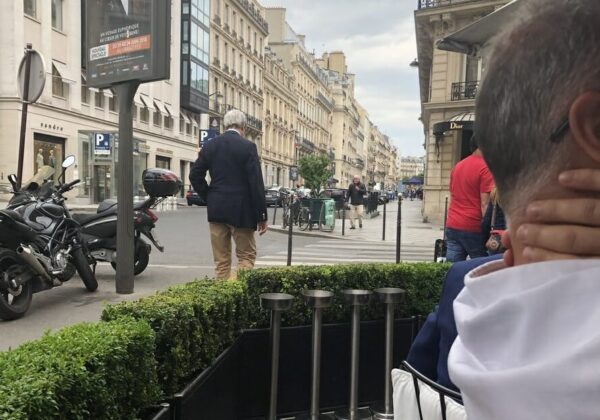
 On Saturday John Kerry was spotted at a meeting with Iranian officials in Paris, France.

Of course, the Iranian regime is very upset with President Trump’s decision.

Now this…
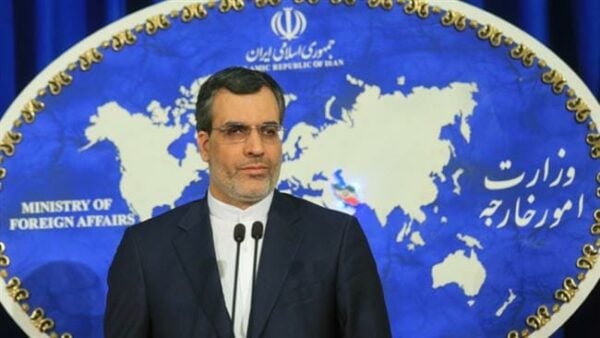
Iran’s Foreign Ministry Spokesman Hossein Jaberi Ansari warned Western officials this week that if they do not put pressure on the Trump administration the Iranian regime will leak the names of all Western officials who were bribed to pass the weak deal.

Iran’s Foreign Ministry Spokesman Hossein Jaberi Ansari (Press TV)

This could get good.

Leaked Doc Reveals White House Planning “Regime Change” In Iran

May 12, 2018

by Tyler Durden Thu, 05/10/2018 – 19:27 Zero Hedge

Source: Leaked Doc Reveals White House Planning “Regime Change” In Iran

{The question is…How would regime change impact the behavior of Iran’s military? – LS}

It appears Rudy Giuliani wasn’t lying.

Just a few days after the former NYC mayor and latest member of President Trump’sunexpectedly let it slip that “we got a president who is tough, who does not listen to the people who are naysayers, and a president who is committed to regime change [in Iran]”, the Washington Free Beacon has obtained a three-page white paper being circulated among National Security Council officials with drafted plans to spark regime change in Iran, following the US exit from the Obama-era nuclear deal and the re-imposition of tough sanctions aimed at toppling the Iranian regime. 

The plan, authored by the Security Studies Group, or SSG, a national security think-tank that has close ties to senior White House national security officials, including – who else – National Security Adviser John Bolton, seeks to reshape longstanding American foreign policy toward Iran by emphasizing an explicit policy of regime change, something the Obama administration opposed when popular protests gripped Iran in 2009, writes the Free Beacon, which obtained a leaked copy of the circulating plans.

The regime change plan seeks to fundamentally shift U.S. policy towards Iran and has found a receptive audience in the Trump administration, which has been moving in this direction since Bolton—a longtime and vocal supporter of regime change—entered the White House.

It deemphasizes U.S military intervention, instead focusing on a series of moves to embolden an Iranian population that has increasingly grown angry at the ruling regime for its heavy investments in military adventurism across the region. –Free Beacon

The ordinary people of Iran are suffering under economic stagnation, while the regime ships its wealth abroad to fight its expansionist wars and to pad the bank accounts of the Mullahs and the IRGC command,” SSG writes in the paper. “This has provoked noteworthy protests across the country in recent months” it further claims as an argument to push a “regime change” policy.

For now – at least – overthrowing the Iran government, with its extensive and close ties to the Kremlin, is not official US policy; SSG president Jim Hanson told the Free Beacon that the Trump administration does not want to engage in direct military intervention in Iran – and is instead focusing on other methods of ridding Iran of its “hardline ruling regime.” 

The Trump administration has no desire to roll tanks in an effort to directly topple the Iranian regime,” Hanson said. “But they would be much happier dealing with a post-Mullah government. That is the most likely path to a nuclear weapons-free and less dangerous Iran.”

That will likely change, however.

One source close to the White House who has previewed the plan told the Free Beacon that the nuclear deal, also known as the JCPOA, solidified the Iranian regime’s grip on power and intentionally prevented the United States from fomenting regime change

The JCPOA purposefully destroyed the carefully created global consensus against the Islamic Republic,” said the source, who would only speak to the Free Beacon on background about the sensitive issue. “Prior to that, everyone understood the dangers of playing footsie with the world’s largest state sponsor of terrorism. It’s now Trump, Bolton, and [Mike] Pompeo’s job to put this consensus back in place.”

The source tells the Beacon that Bolton is “acutely aware of the danger the Iranian regime poses to the region.”

John is someone who understands the danger of Iran viscerally, and knows that you’re never going to fundamentally change its behavior—and the threats against Israel and the Saudis especially—until that revolutionary regime is gone,” the source said, adding that “nothing’s off the table right now if Israel is attacked.

That said, Bolton is confident that an Iranian regime change will occur in the next six months.

A second source tells The Beacon that the Trump administration recognizes that the “chief impediment to the region is Iran’s tyrannical regime.”

The problem is not the Iran nuclear deal it’s the Iranian regime,” said the source. “Team Bolton has spent years creating Plans B, C, and D for dealing with that problem. President Trump hired him knowing all of that. The administration will now start aggressively moving to deal with the root cause of chaos and violence in the region in a clear-eyed way.”

Regional sources who have spoken to SSG “tell us that Iranian social media is more outraged about internal oppression, such as the recent restrictions on Telegram, than about supporting or opposing the nuclear program. Iranian regime oppression of its ethnic and religious minorities has created the conditions for an effective campaign designed to splinter the Iranian state into component parts,” the group states. –Free Beacon

“More than one third of Iran’s population is minority groups, many of whom already seek independence,” the paper explains. “U.S. support for these independence movements, both overt and covert, could force the regime to focus attention on them and limit its ability to conduct other malign activities.”

Without a regime change, the United States will continue face threats from Iranian forces stationed throughout the region, including in Iraq, Yemen, Syria, and Lebanon.

“The probability the current Iranian theocracy will stop its nuclear program willingly or even under significant pressure is low,” the plan states. “Absent a change in government within Iran, America will face a choice between accepting a nuclear-armed Iran or acting to destroy as much of this capability as possible.”

That said, President Trump made clear earlier in the week that US officials must make efforts to differentiate between the people of Iran and its ruling regime.

Any public discussion of these options, and any messaging about the Iranian regime in general, should make a bright line distinction between the theocratic regime along with its organs of oppression and the general populace,” according to the plan. “We must constantly reinforce our support for removing the iron sandal from the necks of the people to allow them the freedom they deserve.”

Trump Asked What Would Happen If Iran Tried To Make A Nuke — His Answer Is Radioactive

May 11, 2018

Benny Johnson Reporter At Large 1:09 PM 05/09/2018 Daily Caller

Source: Trump Asked What Would Happen If Iran Tried To Make A Nuke — His Answer Is Radioactive

{I’m sure Trump means a conventional response. Going radioactive is a choice the Iranians must make. – LS}

President Trump recently made the historic decision to pull America out of the controversial Iran Deal enacted by his predecessor.

The agreement was a keystone accomplishment of President Barack Obama’s foreign policy. Trump has been deeply critical of the deal, promising multiple times on the campaign trail to negotiate a better deal or get the U.S. out of the current one.

Trump called the deal  “a horrible deal that should never, ever have been made,” yesterday in a speech from the White House before signing a presidential memorandum to officially exit the U.S. from the agreement and reinstate blistering sanctions on the Iranian regime.

At a cabinet meeting Wednesday, a reporter asked Trump, “What will you do if Iran starts up their nuclear program again?”

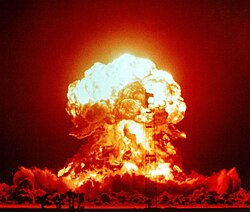
President Trump paused for a moment and said ominously, “Iran will find out.”

When pressed again by the reporter, Trump said, “I would advise Iran not to start their nuclear program. I would advise them very strongly.”

“If they do,” he continued, “there will be very severe consequence. Okay? Thank you very much.”

US Moves To Strangle Iranian Efforts To Secure Hundreds Of Millions Of Dollars To Fund Its Troubling Military Activities

May 11, 2018


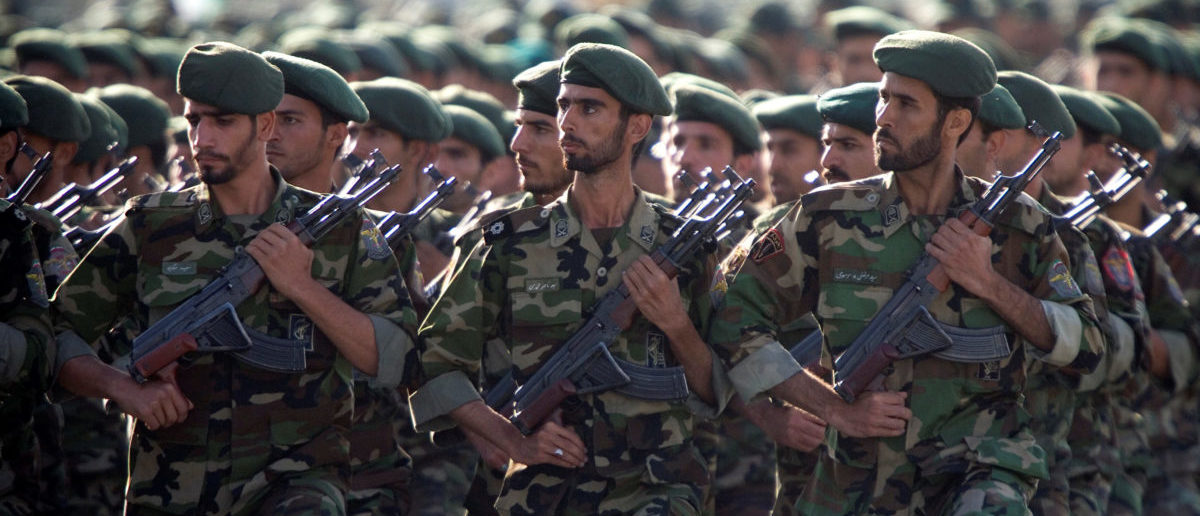
Members of Iran’s Revolutionary Guards march during a military parade to commemorate the 1980-88 Iran-Iraq war in Tehran September 22, 2007. REUTERS/Morteza Nikoubazl/File Photo

Ryan Pickrell China/Asia Pacific Reporter 3:01 PM 05/10/2018 Daily Caller

Source: US Moves To Strangle Iranian Efforts To Secure Hundreds Of Millions Of Dollars To Fund Its Troubling Military Activities

{It’s no wonder why the Iranian people are going broke. – LS}

The U.S. Department of the Treasury imposed new sanctions on Iran Thursday, just two days after President Donald Trump announced that the U.S. is withdrawing from the Iran deal.

Treasury’s Office of Foreign Assets Control blacklisted nine Iranian entities — six individuals and three firms — involved in an illegal currency-exchange network in the United Arab Emirates. Network exchangers and couriers converted and transferred hundreds of millions of U.S. dollars to the Iranian Revolutionary Guard Corps (IRGC), specifically the Quds Force (IRGC-QF), a recognized supporter of international terrorism, to “fund its malign activities and regional proxy groups,” the department said in a statement. Iran’s Central Bank is said to have been “complicit in the IRGC-QF’s scheme and actively supported this network’s currency conversion and enabled its access to funds that it held in its foreign bank accounts.”

One of the sanctioned entities Jahan Aras Kish, a front company for the IRGC-QF, retrieved oil revenues from the Central Bank of Iran and transferred the money to couriers who exchanged it for U.S. dollars by way of two other now-sanctioned companies, Rashed Exchange and Khedmati & Co. Using forged documents, network operatives were able to operate under the radar in the UAE, distributing funds to Iran’s most radical military units and regional proxies. The sanctioned persons identified by Treasury worked for either the firms or the IRGC-QF directly.

The latest move by Treasury, which was taken in cooperation with the UAE, follows the president’s announcement Tuesday that the U.S. will no longer be party to the Joint Comprehensive Plan of Action (JCPOA), more commonly known as the Iran nuclear deal.

“As I said following the President’s announcement on Tuesday, we are intent on cutting off IRGC revenue streams wherever their source and whatever their destination,” Secretary of the Treasury Steven Mnuchin said Thursday. “Today we are targeting Iranian individuals and front companies engaged in a large-scale currency exchange network that has procured and transferred millions to the IRGC-QF.”

“Countries around the world must be vigilant against Iran’s efforts to exploit their financial institutions to exchange currency and fund the nefarious actors of the IRGC-QF and the world’s largest state sponsor of terror,” the secretary added.

The IRGC-QF has been blacklisted since October 25, 2007, and the broader IRGC has been designated since October 13, 2017. Later this year, the U.S. will, as a result of the president’s decision to withdraw from the Iran deal, re-impose sanctions on the Government of Iran.


White House Examining Plan to Help Iranian People Oppose Regime

May 11, 2018

White paper pushes bid to help Iranians topple already weak hardline regime

BY: Adam Kredo May 10, 2018 3:35 pm The Free Beacon

Source: White House Examining Plan to Help Iranian People Oppose Regime

{The question is, how long will it take for the people of Iran to reach ‘critical mass’? – LS}

The Trump administration is examining a new plan to help Iranians fighting the hardline regime in Iran following America’s exit from the landmark nuclear deal and reimposition of harsh economic sanctions that could topple a regime already beset by protests and a crashing economy, according to a copy of the plan obtained by the Washington Free Beacon.

The three-page white paper being circulated among National Security Council officials in the White House offers a strategy by which the Trump administration can actively work to assist an already aggravated Iranian public topple the hardline ruling regime through a democratization strategy that focuses on driving a deeper wedge between the Iranian people and the ruling regime.

The plan, authored by the Security Studies Group, or SSG, a national security think-tank that has close ties to senior White House national security officials, including National Security Adviser John Bolton, seeks to reshape longstanding American foreign policy toward Iran by emphasizing an explicit policy of regime change, something the Obama administration opposed when popular protests gripped Iran in 2009.

The regime change plan seeks to fundamentally shift U.S. policy towards Iran and has found a receptive audience in the Trump administration, which has been moving in this direction since Bolton—a longtime and vocal supporter of regime change—entered the White House.

It deemphasizes U.S military intervention, instead focusing on a series of moves to embolden an Iranian population that has increasingly grown angry at the ruling regime for its heavy investments in military adventurism across the region.

“The ordinary people of Iran are suffering under economic stagnation, while the regime ships its wealth abroad to fight its expansionist wars and to pad the bank accounts of the Mullahs and the IRGC command,” SSG writes in the paper. “This has provoked noteworthy protests across the country in recent months.”

Jim Hanson, SSG’s president, told the Free Beacon that the Trump administration has no appetite for U.S. military intervention in Iran, but is very focused on efforts to rid Iran of its hardline ruling regime.

“The Trump administration has no desire to roll tanks in an effort to directly topple the Iranian regime,” Hanson said. “But they would be much happier dealing with a post-Mullah government. That is the most likely path to a nuclear weapons-free and less dangerous Iran.”

An NSC official declined to comment directly on the report, but confirmed the administration is consistently working to “change the Iranian regime’s behavior.”

“Our stated policy is to change the Iranian regime’s behavior of continuous destabilizing regional acts and support of terrorism,” the official said, adding that the White House reviews multiple plans and proposals from organizations. “The National Security Council is in receipt of reams of policy papers and reports, some are read with interest, others are not. Receipt of a policy paper in no way means that we are going to adopt the position of that paper.”

One source close to the White House who has previewed the plan told the Free Beacon that the nuclear deal, also known as the JCPOA, solidified the Iranian regime’s grip on power and intentionally prevented the United States from fomenting regime change

“The JCPOA purposefully destroyed the carefully created global consensus against the Islamic Republic,” said the source, who would only speak on background about the sensitive issue. “Prior to that, everyone understood the dangers of playing footsie with the world’s largest state sponsor of terrorism. It’s now Trump, Bolton, and [Mike] Pompeo’s job to put this consensus back in place.”

Bolton is said to be acutely aware of the danger the Iranian regime poses to the region, the source said.

“John is someone who understands the danger of Iran viscerally, and knows that you’re never going to fundamentally change its behavior—and the threats against Israel and the Saudis especially—until that revolutionary regime is gone,” the source said, adding that “nothing’s off the table right now if Israel is attacked.”

A second source close to the White House and familiar with the thinking on this issue told the Free Beacon the administration recognizes the chief impediment to the region is Iran’s tyrannical regime.

“The problem is not the Iran nuclear deal it’s the Iranian regime,” said the source, who would only speak on background. “Team Bolton has spent years creating Plans B, C, and D for dealing with that problem. President Trump hired him knowing all of that. The administration will now start aggressively moving to deal with the root cause of chaos and violence in the region in a clear-eyed way.”

Regional sources who have spoken to SSG “tell us that Iranian social media is more outraged about internal oppression, such as the recent restrictions on Telegram, than about supporting or opposing the nuclear program. Iranian regime oppression of its ethnic and religious minorities has created the conditions for an effective campaign designed to splinter the Iranian state into component parts,” the group states.

“More than one third of Iran’s population is minority groups, many of whom already seek independence,” the paper explains. “U.S. support for these independence movements, both overt and covert, could force the regime to focus attention on them and limit its ability to conduct other malign activities.”

American policy towards Iran has failed to explicitly support Iranian opponents of the regime who are thirsty for a change.

“U.S. policy toward Iran currently does not publicly articulate two components vital to success: That a new birth of liberty based in self-determination for the Iranian people should be official policy; and that military action should be anticipated if other measures fail,” the paper states.

In addition to preventing Iran from ever building a nuclear weapon, the Trump administration must articulate a credible military threat should Iran choose to launch full-scale attacks on Israel and U.S. forces.

“A credible hard power option exists,” according to the plan. “That option does not consist of large invasion forces or long, costly occupations.”

Without a regime change, the United States will continue face threats from Iranian forces stationed throughout the region, including in Iraq, Yemen, Syria, and Lebanon.

“The probability the current Iranian theocracy will stop its nuclear program willingly or even under significant pressure is low,” the plan states. “Absent a change in government within Iran, America will face a choice between accepting a nuclear-armed Iran or acting to destroy as much of this capability as possible.”

U.S. officials must make efforts to publicly differentiate between Iran’s ruling regime and its people, a point that was also emphasized by Trump in his statement about exiting the deal earlier this week.

“Any public discussion of these options, and any messaging about the Iranian regime in general, should make a bright line distinction between the theocratic regime along with its organs of oppression and the general populace,” according to the plan. “We must constantly reinforce our support for removing the iron sandal from the necks of the people to allow them the freedom they deserve.”

The Iran Deal’s Disastrous Legacy Has Nothing to Do with Nukes

May 10, 2018


AP Photo/Ebrahim Noroozi

Noah Rothman / May 9, 2018 Commentary Magazine

Source: The Iran Deal’s Disastrous Legacy Has Nothing to Do with Nukes

{In other words, things are a whole lot worse. – LS}

In March, State Department veteran and former adviser to Barack Obama, Frederic Hof, bid farewell to public life with a stunning admission. Amid a confession regarding his failure to prevent the expansion of the Syrian civil war into a regional crisis, Hof laid the blame for that all-consuming conflict (as well as a notable uptick in Russian aggression) at the feet of Barack Obama’s nuclear deal with Iran.

“[T]he administration sacrificed Syrian civilians and American credibility for the mistaken notion that Iran required appeasement in Syria as the price for a nuclear agreement,” Hof wrote. Today, with 500,000 dead, millions displaced, and the norm prohibiting chemical-weapons use shattered, we can confirm that the price of appeasement is as high as ever.

Indeed, the Iran nuclear deal was supposed to have a variety of positive knock-on effects entirely unrelated to the development of nuclear weapons, but they never materialized. As New York Times reporters David Sanger and David Kirkpatrick observe, Obama “regarded Iran as potentially a more natural ally” of the United States than America’s Sunni allies in Cairo, Abu Dhabi, and Riyadh. Iran is urbane, young, educated, and chafing under its theological government. The opening up of the Iranian economy in a post-deal world, so the thinking went, would facilitate—even necessitate—domestic liberalization. Purely out of self-interest, the Mullahs would soon agree to pare back their support for destabilizing activities in the region and cooperate with the West to “defeat the Islamic State.”

All these ambitious objectives went unrealized in the years that passed since the Joint Comprehensive Plan of Action’s (JCPOA) adoption. That is not to say that the JCPOA failed to induce some tectonic shifts in the region. The Obama administration’s effort to empower Iran and its Shiite proxies in the region compelled the Middle East’s Sunni states to rethink their alliances. The regularization of contacts between Washington and Tehran for the first time in nearly 40 years forced longtime foes, Israel and the Kingdom of Saudi Arabia, into a de facto pact. And just like that, the region’s all-consuming Palestinian question faded into the background. The remarkable diminution of the central issue of what we used to call the Middle East Peace Process underscores how stabilizing America’s forward posture can be, for good or for ill. It also demonstrates how American withdrawal can scramble regional dynamics with unforeseeable consequences.

Ultimately, the most welcome revelation the Iran nuclear deal has wrought is one to which only the accord’s most prideful defenders remain resistant. There can be no permanent accommodation with the regime in Tehran. The Islamic Republic can only be contained and weakened, with the eventual—if unstated—aim of nudging it toward radical democratic reform and, ultimately, dissolution.

Since Donald Trump announced his decision to withdraw from the JCPOA, the deal’s defenders and its detractors have largely argued over one another’s heads. The deal’s champions insist that everyone from IAEA inspectors to the Trump administration’s defense secretary and former secretary of state has certified that Iran is abiding by the arrangement. This is a red herring. Most of the deal’s opponents do not dispute that Iran is nominally in compliance with the terms of the deal. That’s the problem.

Iran can unilaterally deny international observers access to military sites, and it can shield an extensive trove of technical knowledge related to its nuclear program from inspectors. It can import tons of low-enriched uranium, manufacture nuclear fuel, test nuclear-capable delivery vehicles, and restart its centrifuges and develop a stockpile of fissionable material within weeks rather than a year. None of this is a violation of the terms of the JCPOA and its annexes. This experience has led even some of the deal’s defenders to confess that the regime in Tehran will never be a stabilizing and responsible force. Even Iran-deal proponents like Democratic Connecticut Senator Chris Murphy have confessed as much. “We have to continue to send signals to the Iranian people that, ultimately, what will secure the United States and our friends in Israel, in the long run, is for the Iranian people to demand that moderate, internationalist leadership ultimately prevail in the power struggles that are happening inside that country,” he said.

Bad news, Senator Murphy: This is what “moderate, internationalist leadership” in the Islamic Republic of Iran looks like. Iranian president Hassan Rouhani’s supposedly moderate credentials led Barack Obama to attempt to elevate and legitimize him through direct personal contacts, but there is nothing moderate about any element of the Iranian regime. A half a million deaths later and with no end in sight, this moderate Iranian president continues to back up the blood-soaked Assad regime. It has used the unfrozen assets and access to new markets attributable to the Iran deal to increase its defense spending by 30 percent and augment its support for rogue elements in Syria, Lebanon, Iraq, and Yemen even as consumer-goods prices skyrocket and the public takes to the streets. This is the moderate regime that holds American sailors hostage and parades them on television in violation of the Geneva Conventions. This regime persecutes and jails journalists, disenfranchises Christians, and executes homosexuals. These acts, Rouhani said in 2014, are “God’s commandments.”

If Murphy’s admission that the current Iranian regime will not be able to guarantee American security or regional peace is a cognitive breakthrough, it is one of many that the Iran deal has wrought. The Saudi awakening, the disillusionment of Obama officials like Hof, and the realignment of the Middle East follow in the wake of the Iran deal, as do bloody conflicts in Yemen, Syria, and Ukraine that resulted from great powers testing their boundaries in a new post-JCPOA environment.

When a full accounting of the Iran deal is done, it will be hard to avoid the conclusion that nuclear weapons were the least of our concerns.


VIDEO: Israeli Missile Destroys Russian-Made Missile Defense System

May 10, 2018

By David Steinberg May 10, 2018 PJ Media

Source: VIDEO: Israeli Missile Destroys Russian-Made Missile Defense System

{Ouch ! That’s got to hurt. – LS}

The Twitter account representing the Israeli Defense Forces, @IDFSpokesperson, posted a stunning video of an Israeli missile descending towards an SA22 Greyhound short range air defense system. According to Military Today, the SA22 is capable of shooting down cruise missiles and guided bombs.

This one wasn’t.

Per Military Today:

The Pantsyr-S1 (Western reporting name SA-22 Greyhound) was designed to protect strategic military and civil point targets. It was originally designed to meet requirements of Russian Air Defense Forces (PVO). This system is capable of engaging a wide variety of aerial targets, such as aircraft, helicopters, ballistic and cruise missiles, guided bombs and UAVs.

Developers claim that it is also capable of engaging stealthy aircraft, such as the F-22 and F-35.

It was first publicly revealed in 1995 and entered service in 2007-2008. The first 10 Pantsyr-S1 air defense systems were delivered to the Russian Air Force in 2010. It is claimed that by 2014 more than 200 of these air defense systems were produced. It has also been exported to Algeria, Syria (up to 40 units) and United Arab Emirates (50 units). This air defense system was recently ordered by Iraq. The Pantsyr-S1 saw action during the military conflict in Ukraine.

Here’s what the SA22 looks like when not evaporated:

SA-22 Air Defense System. (VITALY V. KUZMIN/WIKIMEDIA COMMONS)

Back in 2015, Israeli Foreign Ministry Director-General Dore Gold specifically mentioned Iran’s attempts to transfer SA22s to Hezbollah as yet another reason for the world to reject the Obama-negotiated nuclear deal with Iran:

IRAN TRYING TO MOVE YAKHONT MISSILES AND SA-22 AIR DEFENSE SYSTEMS TO HEZBOLLAH

Iran is trying to transfer state-of the-art weaponry, including the SA-22 (Pantsir-S1) air defense system and the Yakhont anti-ship cruise missile, from military storehouses in Syria to Hezbollah, Foreign Ministry director-general Dore Gold told The Jerusalem Post on Thursday from Berlin.

Gold, on his first trip to a European capital for high-level talks in his new role, said that Iran is busy trying to convert its signing of the Joint Comprehensive Plan of Action into diplomatic benefits in Europe.

[Gold] said that … the regional situation has become more complicated as a result of the Iranian nuclear deal, and … there is no evidence that Iran is moving in a more moderate direction in 2015.

[Gold] briefed his interlocutors on the continued subversive efforts of the Iranians in the Middle East. He said that such efforts have included trying to transfer arms to Hezbollah, recent attempts by the terrorist group to move explosives from Iraq into Kuwait, and efforts over the last six months to set up a new Hezbollah front against Israel on the Golan Heights.

If this type of activity has been going on for the last six months, Gold asked, “then what happens when the sanctions on Iran are lifted, and they get a cash bonus of up to $150 billion?” He answered, “Iran will then be equipped to radically increase its destabilizing activities along Israel’s borders.”

Gold said that his meetings in Berlin come at a time when “there is an underlying assumption in the West that Iran may be adopting a more moderate course of action.”


Iranian Revolutionary Guard general: ‘Resistance is the only way’

May 10, 2018

By JPOST.COM STAFF, REUTERS May 10, 2018 12:49

Source: Iranian Revolutionary Guard general: ‘Resistance is the only way’

{To this day, the Iranians are still playing the ‘proxy card’ by insisting the Syrians are the ones who attacked Israel with missiles. However, if Salami follows through on threats to attack Tel Aviv, Tehran will be fair game. So much for proxies. – LS}

Hours after Israeli strikes on Iranian military targets in Syria, which reportedly killed 23 people, Brigadier General Hossein Salami, deputy head of Iran’s Revolutionary Guard Force, said that “resistance is the only way to confront” Iran’s enemies, “not diplomacy.”

“Wherever Iran has confronted its enemies, it has advanced; we have gained our power through difficult battles,” Salami said, according to the semi-official Fars news agency.

While Salami’s immediate subject was the reports of European efforts to salvage the Iran nuclear deal following US President Donald Trump’s decision to pull out of the 2015 agreement on Tuesday, his words also seemed to refer obliquely to the Israeli operation, which struck 50 Iranian targets in Syria after 20 rockets were fired toward Israeli military positions in the Golan Heights, according to the IDF. 28 Israeli fighter jets participated in the attack and Israel also fired more than 10 tactical ground-to-ground missiles, a Russian Defense Ministry statement quoted by Interfax news agency said.

European countries are powerless to salvage the Iran nuclear deal, Salami said.

Iranian media is portraying the confrontation as an unprecedented Syrian attack on Israel.

“Tens of Israeli military centers… came under attack,” reported the English website of the semi-official Fars News Agency, quoting Syrian media. “The Israeli Iron Dome defense shield has failed to intercept the rockets.”

Other Iranian media sources, including Mashregh News, Iranian Student News Agency, and others, have presented the events in similar terms.

Responding on Twitter to a CNN report on the Israeli strikes, Syrian Member of Parliament Fares Shehabi denied that Iranians had launched the rockets against Israel.

Fares Shehabi MP @ShehabiFares

The Syrian army (not Iranians) launched 50 rockets (not 20) to several Israeli army targets in the Golan, and most rockets hit their targets.

Fares Shehabi MP @ShehabiFares

It is time we strike back at Tel Aviv and not only at the occupied Golan Heights!

The Syrian army (not Iranians) launched 50 rockets (not 20) to several Israe

Speaking to reporters Thursday morning, IDF spokesperson Brig-Gen. Ronen Manelis said that none of the 20 rockets fired from Syria had struck Israeli territory.

“Iron Dome intercepted the rockets. There are no injuries and no damage was caused to IDF positions,” Manelis said.

Manelis also clarified that Israel had targeted Iranian forces in Syria.

“The Quds Force paid a heavy price last night. We have seen a demonstration of the IDF’s intelligence and airpower capabilities.”

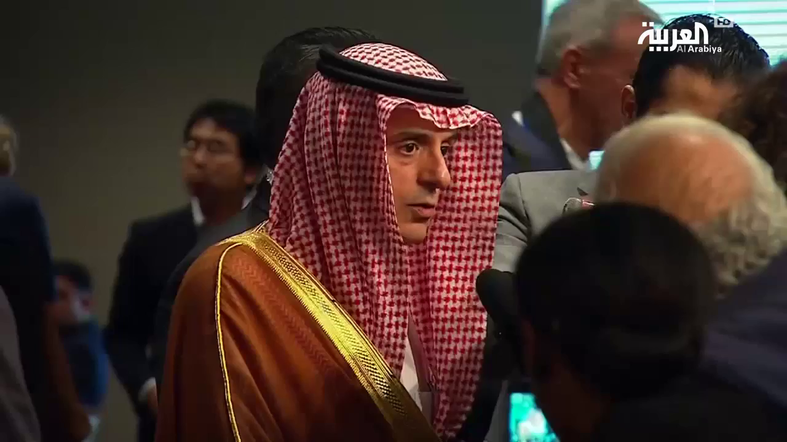
Jubeir: Saudi Arabia will seek nuclear weapon if Iran does

May 9, 2018


Foreign Minister Adel al-Jubeir made the statement during his interview with CNN. (Al Arabiya)

AFP Wednesday, 9 May 2018

Source: Jubeir: Saudi Arabia will seek nuclear weapon if Iran does

{Iran’s list of enemies grows longer. – LS}

Saudi Arabia will seek to develop its own nuclear weapons if Iran does, Foreign Minister Adel al-Jubeir told CNN on Wednesday, amid spiraling tension between the regional rivals.

Asked whether Riyadh would “build a bomb itself” if Tehran seizes on Washington’s withdrawal from the 2015 Iran deal to resume a nuclear weapons program, Jubeir said: “If Iran acquires nuclear capability we will do everything we can to do the same.”

Saudi Arabia has long said it would match any Iranian weapons development, but Jubeir’s renewed vow came after US President Donald Trump pulled the United States out of an accord designed to prevent Tehran’s alleged quest for the bomb.

And it came amid growing tension over Iran’s support for the Houthi rebels in Yemen, who have been firing rockets across the border.

Riyadh, which is part of a regional coalition that intervened in Yemen’s civil war to fight the Houthis, accuses Iran of supplying the militia with ballistic missiles.

“These missiles are Iranian manufactured and delivered to the Huthis. Such behavior is unacceptable. It violates UN Resolutions with regards to ballistic missiles. And the Iranians must be held accountable for this,” Jubeir told CNN.

“We will find the right way and at the right time to respond to this,” he warned. “We are trying to avoid at all costs direct military action with Iran, but Iran’s behavior such as this cannot continue. This amounts to a declaration of war.”