Author Archive

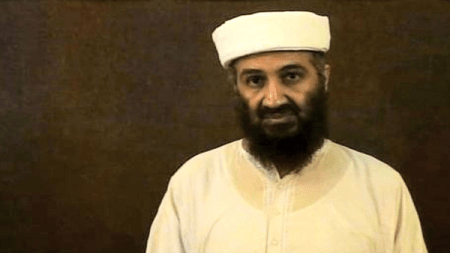
Did Obama Inc. Block Bin Laden Doc Release to Protect Iran Deal?

November 4, 2017

Did Obama Inc. Block Bin Laden Doc Release to Protect Iran Deal? The Point (FrontPage Magazine), Daniel Greenfield, November 3, 2017

(Please see also, Al-Qaeda Terrorism and Shakespeare, which deals with some of the newly released Bin Laden documents:

Particularly important is Osama’s account of relations between al-Qaeda and Iran.

They were and are complex, fluctuating relations and loose ties between Sunni Osama and Shiite Iran.  What brought them together was the common hostility to the U.S. and to Saudi Arabia.  Iran supported al-Qaeda’s war against those countries.  Iran offered al-Qaeda “everything they needed,” funds and arms, and the opportunity to train in Hezb’allah camps in Lebanon in exchange for striking U.S. interests.  Iran sheltered al-Qaeda people.  Al-Qaeda opposed Saudi Arabia because it was hosting U.S. troops during the Gulf war.  Osama sent a group, the al-Qaeda management committee, to Iran while Iran enabled al-Qaeda to move funds and fighters to south Asia and Syria.

— DM)

The release of the Bin Laden files was met with a great deal of interest. There was less interest in why it took so long to release them. But this story sheds some light on that. And raises some very troubling questions.

On the penultimate day of the Obama administration, less than 24 hours before the president would vacate the White House, Director of National Intelligence James Clapper issued a press release meant to put to rest what had been a pesky issue for his office. “Closing the Book on Bin Laden: Intelligence Community Releases Final Abbottabad Documents,” the Office of the Director of National Intelligence (ODNI) announced. “Today marks the end of a two-and-a-half-year effort to declassify several hundred documents recovered in the raid on Osama bin Laden’s Abbottabad, Pakistan, compound in May 2011.” Accompanying the press release were 49 documents captured during the raid, bringing the total number of documents made public to 571.

The actual number was 440,000.

On Wednesday, November 1, CIA director Mike Pompeo announced the release of “nearly 470,000 additional files” from the Abbottabad raid. From 571 to 470,000: The “most transparent administration in history,” you might say, has just been trumped, by nearly three orders of magnitude.

So why did Obama Inc. obstruct the release of the files? The apparent answer may be that it was trying to protect its peace moves with the Taliban and Iran.

… Obama’s National Security Council hand-picked 17 documents to be provided to the Combating Terrorism Center at West Point for analysis. (Obama’s NSC would later hold back two of those documents. One of them, laying out the deep ties between the Afghan Taliban and al Qaeda leadership, would complicate Obama administration efforts to launch negotiations with the Taliban, according to an explanation the NSC’s Doug Lute offered to West Point.)

… The new materials make clear that ODNI sought to mislead the country not only about the size of the collection but about its contents, too. The January ODNI press statement claimed that the batch of 49 documents it was then making public “mirrors the themes in previous releases,” chief among them Osama bin Laden’s “hatred, suspicion of Iran.”

… Barack Obama wanted what al Qaeda already had: a mutually beneficial partnership with Tehran. Revealing to the American people the truth about Osama bin Laden’s cozy working relationship with the Iranian government might have fatally undermined that diplomatic quest, just as the ongoing vitality of al Qaeda, amply testified to in the bin Laden documents, would have contradicted Obama’s proud claims in 2012 that al Qaeda was “on the run.” So Obama, with the eager cooperation of some in the intelligence community, bottled up the bin Laden documents and ran out the clock.

… The CIA release of the additional 470,000 documents includes a 19-page report on al Qaeda’s relationship with Iran authored by an unidentified al Qaeda operative. The author lays out some tensions between al Qaeda and Iran but makes clear those differences don’t preclude cooperation. The document reports that the Iranian regime was giving its “Saudi brothers” in al Qaeda “everything they needed.” This included safe haven in Iran, the facilitation of travel for senior al Qaeda operatives, and “money, arms,” and “training in Hezbollah camps in Lebanon, in exchange for striking American interests in Saudi Arabia and the Gulf.”

This is far from the biggest scandal to emerge from the Obama era. In some ways it’s almost routine.

And yet it reveals that Obama’s appeasement of Islamic terrorists, from the Taliban to Iran, dominated foreign policy, suppressed counterterrorism and permeated every corner of his administration. Even the Bin Laden documents had to be kept locked up to protect the narrative.

Even while Obama was using Bin Laden’s unintended death (Obama had sought to put Osama on trial to shut down the trials of terrorists in the Article III system)  to campaign for reelection, he was cozying up to Bin Laden’s allies in Iran.

And covering up the truth.

Why Robert Mueller is making K Street Republicans and Democrats sweat

November 4, 2017

Why Robert Mueller is making K Street Republicans and Democrats sweat, Washington ExaminerSarah Westwood, November 4, 2017 

A special counsel investigation into allegations of collusion between President Trump’s campaign and Russians could end up exposing illegal activity from lobbyists and consultants at some of Washington’s most powerful firms across the political spectrum.

At least three major lobbying firms have already been identified or had their work described in court documents laying out the criminal charges against two of Trump’s former campaign aides. Those former associates — Paul Manafort, who worked on Trump’s campaign between March and August 2016, and Rick Gates, Manafort’s deputy — face a 12-count indictment related to the false foreign lobbying disclosure forms they filed after years of failing to register their activities, as well as their efforts to launder the millions of dollars they earned from their undisclosed lobbying.

But Democratic powerhouses could also get caught up in special counsel Robert Mueller’s massive investigation. And Mueller’s seeming willingness to crack down on a practice that insiders describe as common and usually tolerated by the government could send shockwaves through the K Street lobbying firms that have represented foreign clients for years without proper documentation.

“This whole scandal has made K Street very nervous,” said Craig Holman, government affairs lobbyist for Public Citizen. “There’s every indication that ignoring and violating the requirements of [the Foreign Agents Registration Act] is fairly widespread.”

Under FARA, lobbyists who represent foreign leaders or entities in Washington must disclose the nature of their business relationships to the Justice Department within a certain timeframe. However, the agency’s inspector general found in a report last year that 62 percent of all FARA registrations were late and found that the number of lobbyists registering under FARA had plummeted in recent years, suggesting more lobbyists are simply choosing not to disclose their work.

“The Department of Justice has done an exceedingly lax job at enforcing FARA, and everybody knows it,” Holman said. “Only recently, because of this Russia connection scandal, has there been any effort at tracking down those who are in violation of FARA.”

Manafort’s attorney, Kevin Downing, said Monday, after Manafort and Gates made their first appearances in court, that Mueller’s team had used a “novel theory” to build its case around a series of FARA violations despite the government’s sparse history of securing convictions using that law.

The pair of former Trump associates are far from the only Washington insiders facing pressure from investigators over their conduct, however.

Tony Podesta, the brother of Hillary Clinton’s former campaign chairman and co-founder of the Podesta Group, stepped down this week from his position as chairman of the lobbying firm he built into a Washington institution. The Democrat-leaning Podesta Group had already come under scrutiny for failing to register all of its lobbying activity in Ukraine, but the indictment against Manafort and Gates alleged that two unnamed companies — one of which is believed to be the Podesta Group — falsely represented the nature of their relationships to a think tank controlled by Viktor Yanukovych, the pro-Russia Ukrainian leader at the center of the scandal.

A former Obama administration official and the powerhouse law firm for which he works may also face scrutiny from Mueller’s team over work he performed for Manafort in Ukraine.

Gregory Craig, White House counsel for former President Barack Obama from January 2009 to January 2010, led a team that performed a supposedly neutral analysis in 2012 of the controversial trial that led to the conviction and imprisonment of Yanukovych’s political rival, Yulia Tymoshenko.

Craig’s team at the major Washington law firm Skadden, Arps, Slate, Meagher & Flom concluded that Yanukovych’s government had not locked up Tymoshenko for political reasons and found “no evidence” during the review to support the idea that Yanukovych’s government had abused the justice system. The report was described, at the time, as the product of an “independent” review that the Ukrainian government under Yanukovych commissioned and funded.

But a little-noticed passage in the 31-page indictment against Manafort and Gates suggests Manafort may have secretly steered the Skadden report in a direction favorable to Yanukovych and may have wired the report’s authors millions of dollars to secure a friendly conclusion.

“Manafort and Gates also lobbied in connection with the roll out of a report concerning the Tymoshenko trial commissioned by the Government of Ukraine,” Mueller’s team wrote in the indictment. “Manafort and Gates used one of their offshore accounts to funnel $4 million to pay secretly for the report.”

Craig did not respond to multiple requests for comment.

The report his team produced at Skadden received criticism at the time for its failure to find Yanukovych responsible for misconduct in a case that many human rights advocates considered a politically motivated effort to extract revenge on a rival.

Freedom House, a nonpartisan democracy watchdog, called many of Skadden’s findings “utterly baffling” and described the report as “misguided.”

“Predictably, the Yanukovych government seized on this part of the report as proof that the proceedings had conformed to the norms of judicial fairness,” Freedom House noted in a December 2012 blog post about the Skadden report.

The State Department, then under Clinton’s leadership, criticized Skadden’s methodology shortly after it completed the review in December 2012, but stopped short of accusing the law firm of colluding with Yanukovych.

“I can’t speak to the relationship that the Ukrainian Government has with a private law firm in the United States,” then-State Department spokeswoman Victoria Nuland said when asked in 2012 whether Yanukovych had purchased an exonerating review from Skadden. Manafort’s alleged secret payment in connection with the report was not known at the time.

The Podesta Group did not respond to a request for comment on its own activity in Ukraine, which allegedly extends beyond a simple FARA violation.

The firm registered in April its contract with the think tank cited in the indictment of Manafort and Gates. Podesta personally signed a document that said the Belgium-based think tank, the European Centre for a Modern Ukraine, hired the Podesta Group independently and directed all of the firm’s advocacy efforts, according to the Podesta Group’s lobbying disclosure forms.

A representative of the European Centre for a Modern Ukraine signed her name to a statement in the documents, swearing that “none of the activities of the Centre are directly or indirectly supervised, directed, controlled, financed, or subsidized, in whole or in major part, by a government of a foreign country or foreign political party.”

But Mueller’s indictment alleges that the European Centre for a Modern Ukraine was nothing more than a vehicle for Yanukovych to purchase more lobbying power in Washington while evading detection. The indictment also claims the Podesta Group and Mercury LLC, a Republican-leaning lobbying firm, took their marching orders from Manafort and Gates, not the European Centre for a Modern Ukraine.

“To minimize public disclosure of their lobbying campaign, Manafort and Gates arranged for the Centre to be the nominal client of Company A and Company B, even though in fact the Centre was under the ultimate direction of the Government of Ukraine, Yanukovych, and the Party of Regions,” prosecutors wrote in the indictment. “For instance, Manafort and Gates selected Company A and Company B, and only thereafter did the Centre sign contracts with the lobbying firms without ever meeting either company. Company A and Company B were paid for their services not by their nominal client, the Centre, but solely through off-shore accounts associated with the Manafort and Gates entities.”

The second unnamed company, whose partnership with the Centre is thought to be described in the Manafort and Gates indictment, could bring Mueller’s scrutiny back to the Right side of the aisle. Vin Weber, a former Republican congressman from Minnesota, is a partner at Mercury and signed his name to a FARA form that the firm filed in April for its work with the center.

Mercury retroactively registered its representation of the center just 16 days after the Podesta Group registered its own, according to disclosure forms.

Weber did not respond to a request for comment. A lawyer for Mercury also did not return a request for comment.

Mercury’s FARA compliance has come under scrutiny in the past.

For example, the firm raised eyebrows earlier this year when it filed a foreign lobbying disclosure form that did not actually name a foreign client. Instead, Mercury noted it would be doing public relations work for “Romania, Bulgaria, Serbia, Macedonia & Greece,” while listing the Libertas Foundation, an American group, as its client. Libertas was incorporated just one day before Mercury filed its FARA form for the organization, BuzzFeed reported in June.

“Mercury Group should have asked at least, who’s funding Libertas?” said Holman, the FARA expert.

Holman predicted Mercury could face prosecution for its work in Ukraine.

“The fact that Mercury Group is now shown to have violated FARA twice, indicates that Mercury really is deliberately not complying with FARA,” Holman said.

Daniel Pickard, an attorney at Wiley Rein who advises clients on FARA, said the Justice Department brought just seven criminal cases related to violations of FARA between 1966 to 2015.

“On top of this, the FARA registration unit, which is composed of intelligent and hardworking professionals, has limited staff and resources but considerable responsibilities,” Pickard said of the Justice Department unit tasked with enforcing the rules surrounding foreign lobbying disclosures.

Trump, for his part, has sought to keep the focus on Democrats’ dealings with foreign powers, as the special counsel’s investigation has closed in on three of his former campaign aides.

The president and his press secretary, Sarah Sanders, have repeatedly insisted that the only “collusion” with Russia that occurred during the presidential race came at the hands of Democrats. Trump’s allies had been emboldened by the discovery last week that the Clinton campaign and the Democratic National Committee shared the cost of producing a dossier of Russia-related allegations against the Trump campaign. The former British spy who authored that dossier sourced some of his allegations to senior Russian officials, spawning the argument that Democrats had indeed teamed up with Russians to hurt Trump.

But the two indictments and one guilty plea unsealed by Mueller this week have relegated the dossier to a footnote of the Russia narrative.

Even so, White House aides are not yet worried that the special counsel’s investigation will do lasting damage to the president, a source close to the White House told the Washington Examiner.

“White House staffers are used to dealing with high-level crises because of the sheer volume has been very intense since January,” the source said. “However, if there are more dominoes that fall, such as a Jared Kushner indictment, that would really sink the morale inside the White House to the point of potential paralysis.”

Trump’s team has managed to insulate the White House from much of the Mueller drama by pointing to the unrelated nature of Manafort’s work for Yanukovych, most of which took place long before he joined the Trump campaign. Yanukovych was ousted from power in 2014, at which point he fled to Russia. And the White House has argued the campaign hand who pleaded guilty to lying about his ties to Russia, George Papadopoulos, was simply an overzealous volunteer who never wielded real influence within the campaign.

However, Mueller’s probe does pose a threat to K Street, and lobbyists from both parties will likely watch Manafort’s case with great interest to see which of their peers and practices will come under scrutiny.

Manafort made another appearance in court on Thursday.

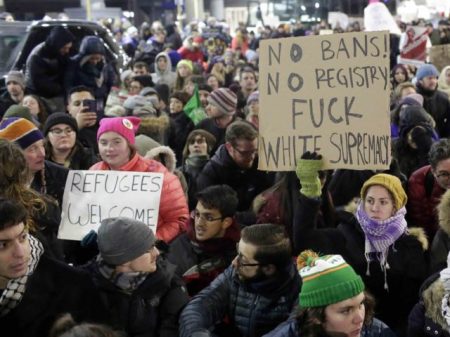
Refugee Admissions Plummet to 1,242 in First Month of FY 2018

November 4, 2017

Refugee Admissions Plummet to 1,242 in First Month of FY 2018, BreitbartMichael Patrick Leahy, November 3, 2017

Joshua Lott / AFP / Getty

The number of refugees admitted into the country during the first month of FY 2018 by the Trump administration plummeted to 1,242 – an 87 percent decline from the 9,945 admitted during the first month of FY 2017 by the Obama administration.

The percentage of refugees admitted who are Muslim declined dramatically as well, from 45 percent in October 2016 to 23 percent in October 2017, according to the State Department interactive website.

Of particular note is the precipitous drop in the number of refugees admitted from the seven countries whose citizens were temporarily banned from traveling to the United States under the first travel ban, Executive Order 13679, issued by President Trump on January 27, 2017.

In October 2017, the first month of FY 2018, only 275 refugees from these seven countries — Iran, Iraq, Libya, Somalia, Sudian, Syria, and Yemen — were admitted to the United States under the Refugee Admissions Program.

In contrast, in October 2016, the first month of FY 2017, a total of 4,581 refugees from these seven countries were admitted into the United States under the Refugee Admissions Program (1,352 from Somalia, 1,323 from Iraq, 1,297 from Syria, 414 from Iran, and none from either Libya or Yemen.)

Should refugee admissions continue at this same pace for the remaining eleven months of FY 2018, the total number of refugees admitted for the entire fiscal year would be less than 15,000, which is 30,000 below the 45,000 cap for refugees set forward in the Trump administration’s presidential determination announced in September.

While such a dramatic dropoff seems unlikely, it is not outside the range of the possible.

The Refugee Act of 1980 requires the announcement of a presidential determination for the ceiling number of new refugee arrivals in the next fiscal year before the end of the previous fiscal year, but that number simply states the top cap for potential refugee arrivals.

The funding for the number of new refugee arrivals below that cap is determined by Congress, in consultation with the administration, during the budgeting process for the fiscal year. The announcement of a ceiling number of potential refugees in the presidential determination does not mean that that the ceiling number will be reached during that fiscal year, though historically the number of refugees admitted usually approaches or reaches the ceiling number.

FY 2018 is likely to be different than any preceding year in the three-decades-plus history of the federal refugee resettlement program, as a series of more stringent vetting procedures for potential refugees developed by the Trump administration’s Department of Homeland Security are currently in the process of being implemented.

Those vetting procedures may serve as an effective bottleneck to slow the flow of refugees into the United States at a level significantly below the announced refugee ceiling of 45,000 for FY 2018.

Refugee Council USA, the “trade organization” of the refugee resettlement industry, issued a statement last week that it “is appalled by the Administration’s proposed changes to refugee processing. These changes enact another ban on refugee admissions and are driven by ideology rather than necessity.”

The Trump administration, however, is continuing with its improved refugee vetting processes.

The refugee resettlement industry — which receives almost all of its estimated $1 billion annual funding from the federal government — is already feeling the budget pinch resulting from the diminished number of new arrivals.

“Refugee advocates called attention to the low monthly numbers in an online campaign Monday,” Voice of America reported, linking to this tweet from the Refugee Council USA:

FACT: 3,750 refugees must be admitted per month to meet to meet @POTUS‘s low 45k goal. Only 1,241 were admitted in Oct. 

The harsh political reality now facing the refugee resettlement industry is that neither the Trump administration nor Congress have much inclination to meet that 45,000 annual refugee ceiling.

This is especially the case in light of the recent revelation, reported by Breitbart News, that the Refugee Council USA spent $100,000 this year to hire the Podesta Group to lobby Congress and provide pro-Amnesty Republican legislators with “talking points” that can provide them “cover” when talking about refugee resettlement issues with the media and other Republicans.

Dawa: Sowing the Seeds of Hate

November 4, 2017

Dawa: Sowing the Seeds of Hate, Gatestone InstituteJudith Bergman, November 4, 2017

“In Western countries, dawa aims both to convert non-Muslims to political Islam and to bring about more extreme views among existing Muslims. The ultimate goal of dawa is to destroy the political institutions of a free society and replace them with strict sharia.” — Ayaan Hirsi Ali in her book, The Challenge of Dawa: Political Islam as Ideology and Movement and How to Counter It.

The ultimate goal of establishing an Islamic state in the United States could hardly be much clearer. The pretense of caring for “diversity” and “inclusion” that ICNA displays on its public website cannot be characterized as anything other than an attempt at dissimulation, as is the stated goal of “establishing a place for Islam in America.”

If Western leadership is unable to fathom the danger posed by organizations such as Tablighi Jamaat, iERA and ICNA, and, according to critics, others such as CAIR and ISNA — let alone do something about it, instead of endlessly obsessing over “Islamophobia” — Qaradawi could be proven right.

While the West is preoccupied with fighting “hate speech”, “Islamophobia” and white supremacist groups, it appears more than willing to ignore the cultivation of Muslim hate speech and supremacist attitudes towards non-Muslims.

It is a cultivation that occurs especially in the process of dawa, the Muslim practice of Islamic outreach or proselytizing, the results of which seem to have been on show this week in a downtown New York terror attack. The terrorist, Sayfullo Saipov, originally from Uzbekistan, was apparently only radicalized after he moved to the United States. The mosque he attended in New Jersey had been under surveillance by the NYPD since 2005. A 2016 U.S.-commissioned report said Uzbek nationals were “most likely to radicalize while working as migrants abroad,” according to the U.S. State Department.

On the surface, dawa, or outreach — in person or online — appears to be a benign missionary activity, about converting non-Muslims. Legal in Western societies, it is allowed to proceed undisturbed by the media or government. Dawa generally attracts little attention, except when members of an outreach organization suddenly turn up in the headlines as full-fledged jihadists.

Politicians and the media in the West seem to prefer viewing Islam solely as a religion and not as a political system that, according to critics, seeks to impose its own laws and regulations, sharia, on the world.

According to the Somali-born Muslim dissident and author, Ayaan Hirsi Ali, however, in her recent bookThe Challenge of Dawa: Political Islam as Ideology and Movement and How to Counter It:

“The term ‘dawa’ refers to activities carried out by Islamists to win adherents and enlist them in a campaign to impose sharia law on all societies. Dawa is not the Islamic equivalent of religious proselytizing, although it is often disguised as such… [It] includes proselytization, but extends beyond that. In Western countries, dawa aims both to convert non-Muslims to political Islam and to bring about more extreme views among existing Muslims. The ultimate goal of dawa is to destroy the political institutions of a free society and replace them with strict sharia.”

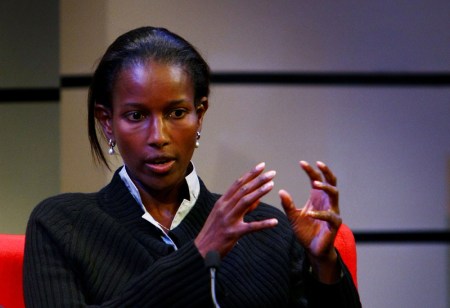
Somali-born Muslim dissident and author, Ayaan Hirsi Ali, wrote in her recent book that in the West, the ultimate goal of dawa (the Muslim practice of Islamic outreach or proselytizing) “is to destroy the political institutions of a free society and replace them with strict sharia.” (Photo by Ian Waldie/Getty Images)

Presumably, the last thing a society would want are groups that cloak political activity in religious practices, protected under the precepts of freedom of religion.

In the Philippines, recently, members of the dawa organization known as Tablighi Jamaat (“Group that Propagates the Faith”) entered the country under the guise of missionary activity — that they were going to participate in the Tablighi Jamaat’s annual gathering there. It turned out, however, that they had come to wage jihad together with Isnilon Hapilon, the late “emir” of Islamic State in Southeast Asia.

The Tablighi Jamaat has been described by the expert on Islam and journalist, Innes Bowen, in her 2014 book, Medina in Birmingham, Najaf in Trent, as “a Deobandi missionary movement and one of the largest Islamic groups in the UK… it has quietly grown into one of Britain’s most successful Islamic movements. Vast numbers of British Muslims have spent time in its ranks”[1]. However, the Tablighi Jamaat was largely unknown in the UK, until it emerged that several British Muslims charged with terror offences had all spent time[2] in the organization. Among these terrorists were Richard Reid, the “shoe-bomber,” and three of the four perpetrators of the London 7/7 terrorist attacks. The American enemy combatant, John Walker Lindh, who aided the Taliban, was associated with the Tablighi Jamaat; and the San Bernardino terrorist Syed Farook prayed in San Bernardino at the Dar al Uloom al Islamiyyah mosque, described as a “haven for Tablighi Jamaat activists.”

The movement, according another expert on Islam, Yoginder Sikand, in his 1998 study of the Tablighi Jamaat , sought “to promote a sense of paranoia and even disgust of non-Muslim society”[3]. He quoted a prominent British promoter of the Tablighi Jamaat as saying:

“a major aim of tabligh is to rescue the ummah [Muslim community] from the culture and civilization of the Jews, Christians and (other) enemies of Islam to create such hatred for their ways as human beings have for urine… and excreta…”.

The Tablighi Jamaat has been described in the Middle East Quarterly, in an article called “Tablighi Jamaat: Jihad’s Stealthy Legions“, as a wolf in sheep’s clothing:

“Tablighi Jamaat is not a monolith: one subsection believes they should pursue jihad through conscience…while a more radical wing advocates jihad through the sword … in practice, all Tablighis preach a creed that is hardly distinguishable from the radical Wahhabi-Salafi jihadist ideology that so many terrorists share”.

Nevertheless, Tablighi Jamaat remains a legal, active organization, which yields a considerable influence over Muslims in Europe, especially the UK and the United States. Already in 2003, the deputy chief of the FBI’s international terrorism section, Michael J. Heimbach, said, “We have a significant presence of Tablighi Jamaat in the United States and we have found that Al-Qaeda used them for recruiting now and in the past.” One 2011 undercover video segment from the Darul Ulum Islamic High School in Birmingham, England, associated with the Tablighi Jamaat, showed that Muslim children were taught Muslim supremacy. Eleven year olds were taught that Hindus “have no intellect” and “drink cow piss”. The teacher also said, “You are not like the non-Muslims out there… All that evil that you see in the streets… people not wearing Hijab properly, people smoking… you should hate it…” The children were also told:

“You need to free yourself from the influence of the Shaitan [Satan] and of society… The Kuffar [derogatory term for non-Muslims] have brought so many new things out there…They are controlling your minds… Are you part of those who prefer their way of life: The way of the Kuffar over the way of the Prophet?”

Both US and Dutch intelligence once seemed aware of the imminent danger of dawa organizations. In 2004, a Dutch government report identified threats to Dutch society from the practice of dawa and concluded that an “interaction or even interwovenness of Dawa and Jihad demonstrate the relationship between the various forms of radical Islam and the phenomenon of radical-Islamic terrorism.”

The study also distinguished various kinds of dawa, both overt and covert, and the threats emanating from it:

“Dawa may be aimed at trying to convince Muslim communities that non-Muslim communities are hostile towards Islam and wish to oppress or even destroy it. Dawa may also serve to convince Muslim communities that the values and standards of non-Muslims are incompatible with those of Islam and should therefore be considered as depraved. In such a form of Dawa, Muslim communities are often encouraged to emphasise (in a provocative way) the differences with other groups and sometimes also to express their contempt and hatred towards standards and values and the culture of non-Muslims”.

It would appear that Western governments have largely unlearned — at least officially — these insights into dawa as a tool for fostering feelings of Muslim supremacy and hatred of non-Muslims. Instead, they engage in endless, misguided obsessions over “Islamophobia.” Their unlearning should be a cause for concern.

Other dawa organizations also operate in the West. One is the Islamic Education and Research Academy (iERA), led by two converts, Abdur Raheem Green and Hamza Andreas Tzortis, that works globally to spread Islam. Unlike the Tablighi Jamaat, it focuses its missionary efforts on non-Muslims. Its leaders have made racist, supremacist and anti-democratic statements such as, again, calling non-Muslims, “kuffars.” Green has said that, “The purpose of the jizya [protection money, or “tax”, paid by non-Muslims to Muslims] is to make the Jew and the Christian know that they are inferior and subjugated to Islam,” and “If a Jew or Christian is found walking down the street, a Muslim should push them to the side”. He has also said that the “immediate problem” for Muslims in Britain is being surrounded by “kuffar” and that one of the only justifications for Muslims to remain in the UK is to “call the kuffar to Islam.”

Tzortis has said that apostates who “fight against the community[…] should be killed” and that, “we as Muslims reject the idea of freedom of speech, and even the idea of freedom.” He has also spoken in favor of child marriage. He admits that he used to be a member of Hizb ut-Tahrir, a radical Islamic organization, but that he left the organization for “scholastic and philosophical reasons.” In a statement on the iERA website, Tzortis and Green try to distance themselves from some (unspecified) past statements by writing, “some of the anachronous statements attributed to iERA personnel have been either clarified or publicly retracted, and were never made at university campuses.”

The iERA evidently enjoys a large platform on UK campuses. According to a report on extremist events on UK campuses in the academic year 2016/17, iERA was behind 34 out of the total 112 events that took place that year. Unlike the far-right fringe groups recently banned by British Home Secretary Amber Rudd — the mere support of such groups is punishable by up to 10 years in prison — the iERA is free to carry on its dawa activity undisturbed[4] and does so at an incredible pace. According to the organization’s Facebook page, in October 2017 alone iERA or its representatives were active doing dawa in Canada, Hong Kong, the Netherlands, and in the United States. The iERA also trained 15 dawa leaders from all over the world — from Iceland and Poland to Honduras and Finland — in a recent online dawa training program.

In the United States, the iERA works with the Muslim American Society (MAS) and Islamic Circle of North America (ICNA), according to the iERA website. ICNA, a leading Muslim organization in the US, is actively involved in dawa, and in 2015 ran “Global Dawa day,” which referred to Tzortis’s training course.

According to ICNA’s 2013 Members Handbook (for its female members), the organization considers itself an Islamic movement which is an

“organized and collective effort waged to establish Al-Islam in its complete form in all aspects of life. Its ultimate objective is to achieve the pleasure of our Creator Allah and success in the hereafter through struggle for Iqamat-ad-Deen [the establishment of Islam in its totality]. Islamic movements are active in various parts of the world to achieve the same objectives”.

The ultimate goal of establishing an Islamic state in the United States could hardly be much clearer. The pretense of caring for “diversity” and “inclusion” that ICNA displays on its public website cannot be characterized as anything other than an attempt at dissimulation, as is the stated goal of “establishing a place for Islam in America.” ICNA already has a place for Islam in America — it presumably wants to expand that place until nothing else is left.

The 2013 Members Handbook describes that ICNA’s work proceeds in “stages.” One of the stages is dawa, or “effective outreach.”

“Those who accept the truth of Islam are provided with appropriate Islamic literature and given the opportunity to become a Muslim. They are made part of the Islamic Ummah as brothers and sisters.”

The Members Handbook goes on to describe how already in the 1970s:

“ICNA established its own forums for dawah work at the local, regional, and national level. It established vital institutions at the national level for support of its dawah activities… Recognizing other movement oriented groups in this land, ICNA continues to coordinate and combine its efforts with them”.

In fact, ICNA has a separate project called the “Why Islam Dawah Project,” which

“aims to organize the dawah work in North America in a professional and effective manner. Highlights of the project are Toll-Free number for non-Muslims; Distribution of Islamic literature… Dawah through Media; Dawah in Prisons; Campus Dawah Support; Dawah Flyers Online; Dawah through Email”.

ICNA is considered by experts such as Steven Emerson, Founder and Executive Director of The Investigative Project on Terrorism, to be linked to the Muslim Brotherhood. Its spiritual leader, Yusuf al Qaradawi, has preached that the West will be conquered by Islam — not through the sword, but through dawa.

If Western leaders are unable to fathom the danger posed by organizations such as Tablighi Jamaat, iERA and ICNA, and, according to critics, others such as CAIR and ISNA — let alone do something about it, instead of endlessly obsessing over “Islamophobia” — Qaradawi could be proven right.

Judith Bergman is a columnist, lawyer and political analyst.

DOJ Sources: Sessions Has Not Recused Himself from Potential Uranium One Probe

November 4, 2017

DOJ Sources: Sessions Has Not Recused Himself from Potential Uranium One Probe, Washington Free Beacon, November 3, 2017

Attorney General Jeff Sessions / Getty Images

Department of Justice (DOJ) sources disputed reports late Friday that Attorney General Jeff Sessions has recused himself from decisions involving potential investigations into alleged corruption surrounding a deal that gave Russia control of a large portion of U.S. uranium-mining capacity.

DOJ officials told the Free Beacon that Sessions has not recused himself from deciding how the Justice Department should respond to recent reports raising questions about the Obama administration’s approval of a 2010 purchase of Uranium One, which controlled 20 percent of U.S. uranium, by Russian energy company Rosatam.

Sessions, in his role as attorney general, could recommend an internal DOJ investigation into the matter or appoint an outside special counsel to handle it.

For months, President Donald Trump has blasted Sessions for recusing himself from the probe into Russian meddling in the election and Moscow’s alleged ties to the Trump campaign. Sessions’ recusal led to the appointment of former Robert Mueller as special counsel in charge of the Russia probe.

Following Mueller’s first round of indictments in the Russia probe this week, Trump expressed frustration over his inability to get involved in Justice Department decisions and what investigations it launches.

On Friday morning he tweeted: “Everybody is asking why the Justice Department (and FBI) isn’t looking into all of the dishonesty going on with Crooked Hillary & the Dems…”

By week’s end, conservatives who support Sessions became increasingly concerned that Trump would decide to fire Sessions if the attorney general did not provide clarity about his recusal and whether he would be involved in decisions regarding former Secretary of State Hillary Clinton and any improper role she might have played in the Uranium One deal.

Sessions’ defenders point to his decision last week to lift a gag order on an FBI informant with detailed knowledge of a Russian bribery scheme linked to the Uranium One deal as evidence that is has not recused himself from the issue. The Obama-era DOJ had imposed the non-disclosure agreement and reportedly threatened the informant with litigation if he broke it.

Rick Manning, the president of Americans for Limited Government, a conservative nonprofit, on Friday issued a statement, saying that Sessions “is in the game” on Uranium One and knocking down reports claiming otherwise.

Manning, citing what he called an “unimpeachable source,” said Sessions is on the Uranium One case.

“The fact that the attorney general ended the non-disclosure agreement for the Uranium One whistleblower provides the proof that Sessions is actively involved in the Uranium One case,” he said. “Unfortunately, the attorney general cannot conduct any investigations through press releases and sound bites allowing the rest of us to receive a blow-by-blow description of every action that might be under way.”

GOP lawmakers have launched their own investigations into the matter after the Hill and Circa News reported new details of an extensive Russian bribery scheme aimed at expanding Moscow’s control of U.S. nuclear energy supplies. Three congressional committees are now looking into the bribery scheme and whether it influenced then-Secretary of State Hillary Clinton’s decision to sign off on the acquisition.

Sen. Chuck Grassley (R., Iowa), who chairs the Senate Judiciary Committee, was the first lawmaker to press the Justice Department and other federal agencies for information about the Uranium One deal, asking Sessions during an Oct. 19 hearing whether the agency was investigating the deal and the surrounding Russian bribes.

At the time, Sessions responded that it would be inappropriate to disclose whether Justice is looking into to the matter but tried to assure Grassley that his concerns would be addressed.

He also said he doubted Deputy Attorney General Rod Rosenstein would be the right person to look into the matter because he had handled the prosecution of those implicated in the Russian bribery scheme while he was serving as a U.S. attorney in Maryland before he became a top DOJ official.

Last week, Grassley appeared exasperated by the lack of clarity about whether Sessions could launch an investigation into Uranium One.

“Whoever in DOJ is capable w authority to appoint a special counsel shld do so to investigate Uranium One ‘whoever’ means if u aren’t recused,” he tweeted.

Rep. Matt Gaetz (R., Fla.) said earlier this week that Sessions met with House Judiciary Committee Republicans in late September and told them that his recusal prevented any involvement in potential investigations into Uranium One or anything that involved the 2016 campaign, the candidates, or Russia.

According to a Breitbart report, when Gaetz asked Sessions to appoint a special counsel to look into the Uranium One deal, the attorney general abruptly stood up and said he couldn’t discuss the matter because of the recusal and left the room.

That left the House Judiciary Republicans with a group of aides to Deputy Attorney General Rod Rosenstein who Gaetz said showed “no interest” in discussing a potential Uranium One Justice Department investigation.

Gaetz said Sessions’ “broad” interpretation of the recusal puts Rosenstein in charge, which he called “troubling.”

Rep. Bob Goodlatte (R., Va.), who chairs the House Judiciary Committee, as well as Reps. Ron DeSantis, (R., Fla.), Louis Gohmert, (R., Texas), and Jim Jordan, (R., Ohio), all members of the panel, also were at the late September meeting with Sessions.

Justice Department spokeswoman Sarah Isgur Flores earlier this week said she did not believe that others remembered Sessions making the statements about his recusal that Gaetz claimed but would not comment directly or not about whether Sessions was recused from the Uranium One issue.

Sessions, an early Trump supporter and frequent campaign surrogate, in early March recused himself from any Department of Justice investigations into President Trump’s campaign and any alleged ties to Russia. It is unclear, however, how far the recusal extended.

The recusal came after a storm of criticism over Sessions’ failure to disclose two instances in which he met Russian ambassador, Sergey Kislyak, during his Senate confirmation hearings.

Trump and other Republicans pushed back, pointing to numerous contacts Kislyak had with high-profile Democrats, including Minority Leader Nancy Pelosi and several Democratic senators.

The Hill newspaper and Circa News reported new details of a sweeping multimillion dollar racketeering scheme by Russian nuclear officials on U.S. soil that involved “bribery, kickbacks, money laundering and extortion.”

The report indicated that an FBI informant had information that FBI agents suggested that political pressure was exerted during the Justice Department probe of the bribery scheme and that there was specific evidence that could have scuttled approval of the Uranium One deal.

The Committee on Foreign Investment in the United States (CFIUS) approved the controversial Uranium One deal in 2010. Then-Secretary of State Hillary Clinton and then-Attorney General Eric Holder served on CFIUS at the time the agency approved the deal. She has said she knew nothing about the Russian racketeering.

Grassley and other GOP lawmakers have questioned the propriety of millions of dollars the Clinton Foundation received from “interested parties” in the uranium deal and have highlighted a $500,000 payment Bill Clinton received for a speech in Moscow before a Russian-government aligned bank. That speech took place the same month the Russians began the process of acquiring Uranium One.

New US Policy Confronts Iranian Regime, Opening up New Opportunities for Change

November 4, 2017

New US Policy Confronts Iranian Regime, Opening up New Opportunities for Change, Iran News Update, November 4, 2017

It appears that the only options left with Iranian authorities are confronting, retreating, or buying time until the end of the Trump presidency. Still, the regime must face the other factors at work against it, like the social disaffection within Iran towards the regime, and the recognition of the main opposition movements — the National Council of Resistance of Iran (NCRI) and People’s Mujahideen of Iran (PMOI) — by US and its allies in the region.

There is now an opportunity, with the current international situation, for the Iranian people and its main opposition movement (NCRI and PMOI), as well as for the people of Middle East and the whole world, for these factors that can lead to regime change and put an end to Iran’s destabilization activities in the Middle East.

***************************

INU – Saudi Arabia and Egypt, important countries in the region, concerned about the destabilizing activities of the Iranian regime in the Arab world, have strongly welcomed the October 13th announcement by US President Trump his regarding his new policy against the destabilizing behavior of Iran in the Middle East, particularly its missile activities. The new policy emphasized making the Middl#$e East a region without weapons of mass destruction.

The Iranian opposition movement and its President-elect, Maryam Rajavi, is leading a campaign to isolate the regime in Tehran. It welcomes the new White House strategy that delegitimizes the Iranian regime. Rajavi called on Trump and the international community to work toward “the ultimate solution”, regime overthrow and the establishment of freedom and democracy in Iran.

By refusing to give approval to the nuclear deal, and designating the Iranian Revolutionary Guard Corps (IRGC) on the list of terrorist organizations, the new US policy is targeting at the heart of the Iranian regime. According to the Washington Post the strategy marks an important change in US policy on the Middle East: a shift from focusing on war against ISIS and towards the end of Iran’s expansionism in the region.

The steps taken by the White House to carry out this policy include the visit by US Secretary of State to Saudi Arabia and other countries in the region, imposition of sanctions on Hezbollah for being the military wing of IRGC in Lebanon, and sanctions on companies, financial institutions and individuals related to the regime’s ballistic missiles programs.

According to F. Mahmoudi, Kurdish-Iranian political and human rights activist, in his Al Arabiya article, “Therefore, there is no reason for any objection by European countries to the new White House policy. European states are only thinking of securing their financial and economic interests with Iran, as not only the political and military power of the Iranian regime but also economic control lie in the hands of the IRGC.”

Sanctions against the Iranian regime, IRGC and Hezbollah will put European companies and banks in serious danger if they deal with this regime and its affiliates.

Additionally, the sanctions and the terrorist designation of IRGC have put Hasan Rouhani, who earlier presented himself to the West as a moderate, in a position of fully supporting the IRGC.

Supreme Leader, Ali Khamenei, reacting to the new US strategy, defended the IRGC’s presence in Iraq, Syria and Yemen and asked Europeans to stand strongly against Trump’s policy. However, it is believed that Europe will eventually choose the US instead of Iran and it will not sacrifice billion of dollars in trade benefits with the US. Additionally, Europe cannot accept the risk of Trump’s threat of leaving NATO.

It appears that the only options left with Iranian authorities are confronting, retreating, or buying time until the end of the Trump presidency. Still, the regime must face the other factors at work against it, like the social disaffection within Iran towards the regime, and the recognition of the main opposition movements — the National Council of Resistance of Iran (NCRI) and People’s Mujahideen of Iran (PMOI) — by US and its allies in the region.

There is now an opportunity, with the current international situation, for the Iranian people and its main opposition movement (NCRI and PMOI), as well as for the people of Middle East and the whole world, for these factors that can lead to regime change and put an end to Iran’s destabilization activities in the Middle East.

Al-Qaeda Terrorism and Shakespeare

November 4, 2017

Al-Qaeda Terrorism and Shakespeare, American ThinkerMichael Curtis, November 4, 2017

(Please see also, Can Bin Laden Heir Salvage Jihad in Syria? — DM)

Particularly important is Osama’s account of relations between al-Qaeda and Iran.

They were and are complex, fluctuating relations and loose ties between Sunni Osama and Shiite Iran.  What brought them together was the common hostility to the U.S. and to Saudi Arabia.  Iran supported al-Qaeda’s war against those countries.  Iran offered al-Qaeda “everything they needed,” funds and arms, and the opportunity to train in Hezb’allah camps in Lebanon in exchange for striking U.S. interests.  Iran sheltered al-Qaeda people.  Al-Qaeda opposed Saudi Arabia because it was hosting U.S. troops during the Gulf war.  Osama sent a group, the al-Qaeda management committee, to Iran while Iran enabled al-Qaeda to move funds and fighters to south Asia and Syria.

*******************************

Cole Porter would have been perplexed by the petition in October 2017 to the English Department at Cambridge University to “decolonize the curriculum,” but he had the foresight to call on people to brush up on your Shakespeare, start quoting him now.  Evidently Osama bin Laden, the epitome of decolonization, who had no use for Broadway anyway, had no quarter for Porter.  The terrorist leader who founded al-Qaeda in 1988, not one of those attired in wonder that know not what to say, implicitly told the world this in his personal diary of 228 pages with his private reflections that have just been made public.

This information is important at a time when the United States and the Western world have been preoccupied with the activities of ISIS, both the caliphate and its adherents, with attacks in New York City and around the world that have overshadowed the once more well known terrorist group al-Qaeda and its leader Osama.

On November 1, 2017, Mike Pompeo, director of the CIA, ordered the release of 470,000 documents captured in the Navy SEALs’ raid on May 2, 2011 on the compound of Osama in Abbottabad, Pakistan, close to the Pakistan Military Academy.  President Barack Obama had held that no more data taken from the compound should be released to the public .

However, Pompeo believes that it is important for reasons of national security to make most of the unclassified documents public, except those that might harm national security or are pornographic or copyrighted.  This is made more important because the U.S. forces in the raid were not able to take everything in the compound, and no doubt Pakistani officials have useful information not available to the U.S.  It is certain that American analysts can gain important insights into the plans and workings of al-Qaeda and other terrorist organizations from the revealed material.

No doubt the documents will prove a treasure trove with their astonishing array of material.  Some of them, if tantalizing, have little to do with Islamic terrorism or with U.S. security, especially those that are probably for the amusement of younger and other members of the Osama family that contained several of his wives and 23 children and his grandchildren.  In this part of the treasure trove are animated films; episodes of Tom and Jerry; film classics; a video of “Charlie Bit my Finger”; commercials from an Oregon car dealer; home videos with a barn and animals; videos such asThe Three Musketeers; National Geographic films on Peru, the Kremlin, and India; and material on conspiracy theories, the occult, the Illuminati, and even 9/11, for which adherents of al-Qaeda were responsible.

Among the 80,000 audio and image files and the 10,000 video files are statements by Osama, his 228-page personal journal, and jihadist propaganda.  Interestingly, Osama seemed to have liked watching three documentaries on himself and programs on how the West saw him.  One of them was an interview in 2005 of former CIA director James Woolsey of the Iraq war.  The collection includes videos of jihadist beheadings and a video of Abu Musab al-Zarqawi, the Iraqi al-Qaeda leader, who was killed in a 2006 U.S. air strike.

It has long been assumed that Osama was radicalized after he joined the Mujahideen in Afghanistan in 1979 fighting the forces of the Soviet Union.  But the personal diary reveals a different picture.  Osama tells of his visit to the U.K. for unstated “treatment” for ten weeks while he was in the 6th grade, aged 13.  He reports that he went every Sunday to visit Shakespeare’s 16th-century house in Stratford-upon-Avon.  He was not impressed, and he realized that British society was very different from his own and was a “morally loose society.”  It was at Stratford, not Afghanistan, that he first concluded that the West is “decadent.”  It is unlikely that he actually saw any one of Shakespeare’s plays, but even if not influenced by Hamlet, he acted as “if from this time forth, my thoughts be bloody or be nothing worth.”

Though his exact schedule is unknown, Osama experienced further decadence in Britain.  He had the misfortune to take an English language course at Oxford – at least it saved him from the “colonialism” at Cambridge – and is believed to have attended a soccer game at the home of Arsenal, the brutal Great Gunners, at Highbury in north London.

The materials reveal that American administration perceptions of Osama’s supposed unimportance in his last decade were inaccurate.  Osama and his network remained active and conspiratorial, and he was still the central factor in al-Qaeda, remaining in operations communication with his followers around the world.  His cohesive network included al-Qaeda in the Arabian Peninsula (AQAP), al-Qaeda in the Islamic Maghreb (AQIM), Al Shabaab in Somalia, and even the Taliban.

Some of his revelations are relevant to current affairs and U.S. policy.  He discusses the differences between al-Qaeda and ISIS and the factions with strategic, doctrinal, and religious differences within al-Qaeda.  The documents include the videos of Hamza, Osama’s favorite son and potential successor, with footage of his wedding, which apparently took place in Iran.  This son is slated to be the head of al-Qaeda and is a bitter enemy of the U.S.  Indeed, early in 2017, Hamza in a message called on al-Qaeda to attack Jews, Americans, Westerners, and Russians, using whatever weapons they have.  The U.S. has now placed Hamza on its Global Terrorist List.

For U.S. policymakers, it is useful to examine Osama’s thoughts on a variety of issues: the use of Libya after the death of Moammar Gaddafi; the path then and still for jihadists to enter Europe; the turmoil in the Middle East; Yemen, where Osama was plotting to kill the ruler Ali Abdullah Saleh; Bahrain; the protest by schoolchildren in Syria in 2011; the exploitation of the Arab Spring and other uprisings; and what al-Qaeda should do to make use of chaos.

Particularly important is Osama’s account of relations between al-Qaeda and Iran.

They were and are complex, fluctuating relations and loose ties between Sunni Osama and Shiite Iran.  What brought them together was the common hostility to the U.S. and to Saudi Arabia.  Iran supported al-Qaeda’s war against those countries.  Iran offered al-Qaeda “everything they needed,” funds and arms, and the opportunity to train in Hezb’allah camps in Lebanon in exchange for striking U.S. interests.  Iran sheltered al-Qaeda people.  Al-Qaeda opposed Saudi Arabia because it was hosting U.S. troops during the Gulf war.  Osama sent a group, the al-Qaeda management committee, to Iran while Iran enabled al-Qaeda to move funds and fighters to south Asia and Syria.

Lastly, Osama’s relations with Pakistan.  It is now clear that Pakistani authorities helped to hide him from the CIA for almost a decade.  This is clear from the fact that Osama used cell phones and computer hard drives, among other implements.

There is obviously a great deal of detail to analyze in the 470,000 documents.  What is important in all this for the U.S. and the Western world and Russia is reaffirmation of the need for cooperation to overcome Islamic terrorism.

How Leftists Aid the Jihadis’ Deadly Cause

November 3, 2017

How Leftists Aid the Jihadis’ Deadly Cause, FrontPage MagazineLloyd Billingsley, November 3, 2017

(Please see also, Stop the “Diversity” Visa Lottery, Gateway for Jihadists. — DM)

As Robert Spencer noted, vehicular jihad has come to Manhattan, after stops in Nice, London, Edmonton and other places. The Muslim Sayfullo Saipov killed eight and wounded a dozen innocents by running them over with a rental truck, the first fatalities in that area since other jihadists crashed hijacked airliners into the World Trade Center, claiming some 3,000 lives.

That prompted cheers from Muslims living in New Jersey, also home to Sayfullo Saipov.  The jubilant jihadist, a 29-year-old Uzbek, acted on behalf of the Islamic State, which in turn is part of something much larger. Call it the Islamschluss, a global surge that should put things in perspective.

The West and the United States are dealing with a supremacist, expansionist religion that seeks to annex the entire world by any means necessary, especially violence. As in Austria, which the Nazis took over in 1938, the Islamschluss finds willing collaborators, like the weasely Herr Zeller in The Sound of Music. In America, the collaborators bring in Muslims by any means necessary, such as the “diversity visa” of Sayfullo Saipov.

The Diversity Visa program, launched by New York Senator Chuck Schumer in 1990, makes 50,000 visas available, on a random basis, to people from countries with low rates of immigration to the United States. Sayfullo Saipov is one of the lottery winners, though what he has to do with “diversity” is a mystery. Uzbekistan is part of the Caucuses region, so he’s a genuine Caucasian, like the Tsarnaev brothers who bombed the Boston Marathon.

Saipov had no skill America needs, but the Diversity Visa program is all about bringing in people America doesn’t need. The United States abounds in truck drivers and cab drivers, and has no need for Uzbek jihadists to perform those tasks.

Likewise, the United States abounds in Information Technology specialists, but congressional Democrats such as Debbie Wasserman Schultz chose to bring in Pakistani-born Muslim Imran Awan. He wasn’t very good at his job but Awan did prove adept at ripping off massive amounts of data from Democrats on the House Intelligence and Foreign Affairs committees, and stashing it on a server controlled by Xavier Becerra, once on Hillary Clinton’s short list as a running mate.

Nobody seems to know what became of the data. Even so, the Democrats not only kept paying Imran Awan but brought in other members of his family, not exactly models of competence and propriety. So it’s clear that the Islamschluss has already annexed strategic territory in Congress and also made inroads in the military.

Those who join the United States Army pledge to defend the United States against all enemies. Major Nidal Hasan, an Army psychiatrist, openly identified himself as a “Soldier of Allah,” but nobody saw that as a reason to boot him out, even though he was communicating with jihadist Anwar al-Awlaki about killing Americans.

The authorities had his communications with the terrorist but did nothing to stop Hasan from killing 13 and wounding more than 30 at Fort Hood, Texas, on November 5, 2009. Like Sayfullo Saipov, Hasan yelled “Allahu Akbar,” as he killed. Even so, the 44th President of the United States called the mass murder “workplace violence,” not even gun violence. He declined to meet with wounded victims of Hasan’s attack, such as Sgt. Alonzo Lunsford, who took seven bullets from the “Soldier of Allah.” Hasan was sentenced to death in 2013 but still awaits execution.

The President Formerly Known as Barry Soetoro also traded jihadis Khirullah Said Wali Khairkhwa, Mullah Mohammad Fazi, Mullah Norullah Noori, Abdul Haq Wasiq, and Mohammed Nabi Omari, all Taliban commanders, for deserter Bowe Bergdahl. It was like trading Private Slovik for the German high command, but no surprise.

In the ongoing Islamschluss, the previous president shapes up as collaborator-in-chief. He went to a “predominantly Muslim” school in Indonesia and told the world the future must not belong to those who slander the prophet of Islam. So no surprise he can’t say “Islamic” and “terrorism” in the same sentence.

Likewise, the politically correct lack the guts to criticize Islamic savagery of the kind on display in New York. Their intellectual self-beheading renders them unable to distinguish fact from fiction, friends from enemies, and sensible immigration policies from what amounts to an Islamschluss.

Uzbekistan, a huge former Soviet republic, should be only a destination for Muslims, particularly Muslim refugees. As jihadist Sayfullo Saipov’s murder spree confirms, Uzbekistan is not a good source for immigrants to the United States. For the time being, a good ballpark figure for visas would be zero.

President Trump would do well to toughen vetting and extend the travel ban. The president should also end the Diversity Visa program, the collaborators’ highway for troops of the Islamschluss like Sayfullo Saipov. The time has come to take back the territory they have already annexed in government, the military and on the streets of America.

Story Laundering: Fusion GPS, Fake News, Russians and Reporters

November 3, 2017

Story Laundering: Fusion GPS, Fake News, Russians and Reporters, Front Page Magazine, Daniel Greenfield, November 3, 2017


The media is no longer a journalistic institution. It’s a political institution. It’s a component of a political infrastructure of unelected officials, bureaucracies and institutions that controls our government.

Fake news, Fusion GPS, internet censorship and all the rest are symptoms of this overriding problem.

****************************

“The average reporter we talk to is 27 years old, and their only reporting experience consists of being around political campaigns,” Ben Rhodes gloated. “That’s a sea change. They literally know nothing.”

Rhodes, the White House’s “Obama whisperer”, was explaining how he had pulled the wool over the media’s eyes on the Iran Deal to a journalist. The media responded to the story by attacking the journalist who reported it, not Rhodes for viewing them as easily manipulated useful idiots.

The media knew that it knew nothing. And it didn’t care. It just didn’t want outsiders to know it.

What ties together the debate about Russian collusion, fake news and Fusion GPS is the implosion of the media. What were the professional reporters doing while Rhodes was manipulating the 27-year-olds? They were working at places like Fusion GPS and ‘story laundering’ narratives to the kiddies.

The media markets its investigative journalism chops even as investigative journalism no longer fits into its business model. Companies like Fusion GPS and political manipulators like Ben Rhodes step into the vacuum by covertly providing them with the core product. Much of the media is really in the business of ‘story laundering’ by rewriting talking points, smears and hit pieces from organizations like Fusion GPS.

The readers get talking points served to them without ever knowing who actually produced them. The forensic examination of the Trump dossier answered some of these questions. Hillary Clinton hired Fusion GPS. Fusion GPS hired a British former intelligence officer. And he got his material from, among other sources, a Russian intelligence officer. And they passed the material to the media and the FBI.

It took a great deal of effort, including a congressional subpoena, a national scandal and the threat of impeachment, to peel back the workings of the media and expose how the dossier sausage got made. Most packaged media stories never receive this level of scrutiny. And the media is quick to indignantly defend its lack of transparency and reliance on anonymous sources in its Trump hit pieces.

But what the current controversy really reveals is the decline and fall of the media.

The media has outsourced story generation to the shadowy underworld that produced the Trump dossier. Much as NPR outsourced its coverage of the Iran Deal to Ploughshares and the Iran Lobby in exchange for $100K. This isn’t bias in the conventional sense. It’s native advertising all the way. The media ‘rents’ space to outside interests. It rewrites their stories in the house style and runs them.

Sometimes, like NPR, there’s a financial arrangement. Other times the media gets stories that it lacks the resources and the time to generate on its own. Or access. And sometimes it’s just a political alliance.

The media is trying to cash in on the institutional legacy of the corporations that bear the old names, but have no functional resemblance to what the news business used to be. Today’s media isn’t in the news business. Its outlets report the news only to the degree that they have to. And when they do, they rely on viral stories or rewriting an original report. The media’s real business is serving as a clearinghouse for narratives. These clearinghouses operate out of major urban power centers. They know next to nothing about much of the country. And they don’t care. It’s why they didn’t see Trump’s victory coming.

Trump doesn’t just outrage the media politically. He’s a threat to their business model. The media’s new business is political gatekeeping as the intermediary between political interests and the public. If you want to give Iran a blank check to develop its nukes, touch off a panic over the environment or make anthem protests into a trend, you go to the media. And then your business deal with Iran, your solar panel investments or your hijacked family foundation pushing black nationalist chic will thrive.

The existence of President Trump undermines the media’s gatekeeping powers. He is a living reminder that the media’s power is limited. That’s why he has become the media’s number one target.

The internet is the media’s other problem. Gatekeeping was easier when broadcasting was expensive and hard. The media used Trump’s victory to corral Facebook and Google, the big search and social media companies, into letting them serve as the gatekeepers of online news under the guise of fighting fake news. But the media’s fake news crusade is entirely a consequence of its own corruption.

The public turned to alternative news, both real and fake, because it doesn’t trust the media. And the Trump dossier case is more evidence that the media can’t be trusted. Everything from satire sites to Russian influence operations thrive in the alternative media space because there is no longer a consensus about truth or ethics. And it’s the media that destroyed truth and ethics in journalism.

As the media moved from biased reporting to political gatekeeping, it sharply narrowed the range of permissible opinions. Every story became an ‘ad’ for one cause or another. Fewer stories existed for their own sake. Instead each story promoted a political or cultural agenda. Even if a story was not overtly political, a political ‘advertisement’ of some kind had to be slipped in there somehow.

Most people didn’t realize that they were reading, watching and hearing a bunch of non-stop political ads disguised in a thousand different styles from reporting (“Gun Violence Strikes Again in American City) to explainers (“10 Things You Need to Know About Gun Violence”), but they found the product stifling and artificial. When everything is an ad, then nothing feels real.

The Russians were perfectly adapted to enter this space because the media had become ‘Russian’. It was a collective propaganda organ with close links to the government blasting identical content from its interchangeable outlets. As in Russia, the public instinctively distrusted the media. Different became authentic. The more different, the more authentic.

And instead of trying to regain public trust, the media decided to censor the internet.

The media wasn’t prepared for there to be a debate about the meaning of ‘fake news’. It wants the power to define what ‘news’ and ‘fake news’ are. This is not the agenda of an institution dedicated to public service, but of a cartel whose entire identity is tied up with total control over a product.

The product isn’t news. It’s narrative.

The media is a narrative cartel. Forget the five Ws of journalism, who, what, where, when and why. It isn’t interested in what happened. It wants to make certain things happen. And when you want to make things happen, you’re no longer an observer. You’re not the fifth estate. You’re one of the first two.

And so the media is in a power struggle with the White House not, as it pretends, over access, transparency or truth, but over policy. And it’s acting as a proxy in this power struggle for assorted interests, some named and some nameless, as it did with Hillary’s anti-Trump dossier.

The media is no longer a journalistic institution. It’s a political institution. It’s a component of a political infrastructure of unelected officials, bureaucracies and institutions that controls our government.

Fake news, Fusion GPS, internet censorship and all the rest are symptoms of this overriding problem.

Palestinian Authority is unable to fight terror tunnels, official says

November 3, 2017

Palestinian Authority is unable to fight terror tunnels, official says, Israel Hayom, Daniel Siryoti and Israel Hayom Staff, November 3, 2017

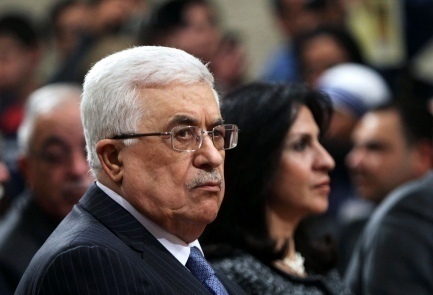
Palestinian Authority President Mahmoud Abbas | Photo: Reuters

Meanwhile, tensions between Jordan and the Palestinians were nearing a boiling point over the Fatah-Hamas reconciliation deal.

Senior Jordanian and PA officials told Israel Hayom on Thursday that the lack of communication between Amman and Ramallah is almost total, and that Jordanian officials accuse the Palestinians of jeopardizing the kingdom’s national security by allowing Hamas to integrate into the PA’s government institutions.

The officials also decried allowing Hamas to operate in the West Bank in a manner that might undermine the Jordanian regime’s stability, because the Muslim Brotherhood, of which Hamas is an offshoot, is active in the kingdom.

Jordan’s King Abdullah recently rejected a request by former Hamas leader Khaled Mashaal to reopen a Hamas consulate in Jordan, from where it would have been able to operate to realize its ambition of replacing Abbas as leader of the Palestinian Authority.

***********************************

The Palestinian Authority does not have the ability to prevent Hamas or any of the other Gaza Strip-based terrorist groups from continuing to dig terror tunnels, senior PA officials told Israel Hayom on Thursday.

One senior PA official close to Palestinian Authority President Mahmoud Abbas told Israel Hayom that the “Palestinian reconciliation and the transfer of control [in Gaza] are on the declarative level only. In actuality, Hamas is in control on the ground in Gaza, and the PA’s security apparatus currently has no ability to contend against it and against the other [armed] Palestinian factions, certainly not with regard to preventing digging new terror tunnels.”

Moreover, the official stressed, the Palestinian Authority has no desire to exercise its authority in Gaza once control of the border crossings and civil affairs are transferred to the Palestinian unity government.

“What you in Israel and the United States do not understand is that we want to give this reconciliation a chance to succeed, even if not everything goes smoothly,” he said. “Therefore we are not interested in a confrontation with Hamas, certainly not because of the tunnel issue. We will be able to restrain Hamas in Gaza just as it is restrained in the West Bank, but it is a lengthy process that will take time [to implement], and for the time being it is not in our interest or desire to prevent Hamas from continuing its security-related activity in the Gaza Strip.”

A senior Palestinian security official told Israel Hayom that the PA’s military presence in Gaza is minimal and completely uninvolved.

“For all intents and purposes, the police in Gaza merely swapped the blue Hamas uniforms for PA uniforms. Hamas still has control on the ground and is continuing its security-related activities more intensely than ever, including digging tunnels for the purpose of terror and training. We haven’t been in Gaza for more than 10 years, and now, too, we don’t actually have control on the ground. We couldn’t even arrange a safe trip for Abbas to Gaza.

“We, as a security arm of the Palestinian Authority, don’t have the option or the ability to cope with Hamas’ military wing. Hamas’ political wing struggles to rein in its military wing, so how could we? The hope is that Hamas will come to understand that if it desires a Palestinian state it needs to disarm and merge with the PA’s security apparatus, but this is a long process,” the official said.

Meanwhile, tensions between Jordan and the Palestinians were nearing a boiling point over the Fatah-Hamas reconciliation deal.

Senior Jordanian and PA officials told Israel Hayom on Thursday that the lack of communication between Amman and Ramallah is almost total, and that Jordanian officials accuse the Palestinians of jeopardizing the kingdom’s national security by allowing Hamas to integrate into the PA’s government institutions.

The officials also decried allowing Hamas to operate in the West Bank in a manner that might undermine the Jordanian regime’s stability, because the Muslim Brotherhood, of which Hamas is an offshoot, is active in the kingdom.

Jordan’s King Abdullah recently rejected a request by former Hamas leader Khaled Mashaal to reopen a Hamas consulate in Jordan, from where it would have been able to operate to realize its ambition of replacing Abbas as leader of the Palestinian Authority.