Author Archive

New US military moves in the Mid-East & Israel’s Syria air raid were coordinated

December 3, 2017

New US military moves in the Mid-East & Israel’s Syria air raid were coordinated, DEBKAfile, December 3, 2017

(Please see also, Trump’s strategic vision. — DM)

By mid-week, the Trump administration should have reached a decision that indicates whether or not it has caved in under Palestinian threats. The next few days will also show whether the new US Middle East momentum is a flash in the pan or a fresh start to be continued.

*****************************************

The US hands-off to Iran’s top general in Iraq, Ali Abdullah Saleh’s changeover of sides in the Yemen war and Trump’s’ thinking on Jerusalem – all signal a new, proactive US strategy for the region.

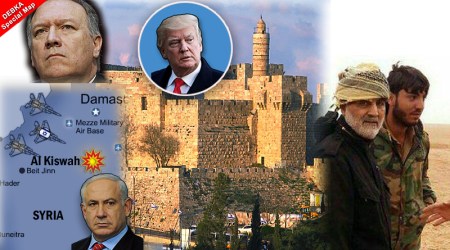
Central Intelligence Agency chief Mike Pompeo was uncharacteristically frank when he addressed high-ranking US military and security officials on Saturday, Dec. 2, at the Reagan Presidential Foundation. He revealed that he had sent a note to the Iranian Revolutionary Guards Al Qods chief, Gen. Qassem Soleimani, and explained: “I sent it because he had indicated that forces under his control might in fact threaten US interests n Iraq.”

Soleimani replied that he had refused to open the letter, commenting: “It didn’t break my heart to be honest with you.” Pompeo went on to elaborate: “What we were communicating to him in that letter was that we will hold him and Iran accountable… and we wanted to make sure that he and the leadership of Iran understood that in a way that was crystal clear.”

Since words clearly don’t mean much without deeds, the United States, after being frozen in place for months in the Middle East, suddenly sprang into action in the past 48 hours, along with its senior Middle East allies, Israel and Saudi Arabia, on four fronts: Iraq, Syria, Yemen and the Palestinians.

IRAQ:  Large-scale US forces arrived at the Kaywan base-K1 west of the oil city of Kirkuk and then split into two contingents: several hundred troops stayed on base while the second contingent headed east on Friday, Dec. 1 towards Tuz Khumatu in eastern Iraq (See attached map)  and took control of the Siddiq military airport 35km to the west. Tuz Khumatu lies 100km west of the Iraqi-Iranian border and 163km north of Baghdad. DEBKAfile’s military sources report that American troops have never been deployed so close to the Iranian border since the 2003 US invasion of Iraq. This movement was meant to strongly advise Iraqi Prime Minister Haydar al-Abadi to stop playing ball with Iran to the extent that he did in mid-October, when he allowed pro-Iranian forces to grab Kirkurk and its oilfields from the Kurds. Washington was chiefly drawing a large X on Soleimani’s plan for bringing  Northern Iraq’s oil under Iranian control.

SYRIA: Early Saturday, Dec. 2, Israeli warplanes dropped missiles on a secret meeting of pro-Iranian Shiite militia chiefs taking place at the Syrian army’s 91st Brigade HQ, outside al-Kiswah – 14km southwest of Damascus and 50km from the Golan. These militias, which have been fighting for Bashar Assad under Gen. Soleimani’s command, were being briefed by Iranian and Hizballah officers on their next offensive. This was Israel’s first attack on any of his forces.

YEMEN: On Saturday, Ali Abdullah Saleh, former president of Yemen, the mainstay of the Iranian-backed Houthi insurgency, announced he was “turning the page.” He was ready to ditch the Houthis and their backer, Iran – provided that the coalition (Saudi Arabia and the United Arab Emirates) lifted the blockade they had imposed on Yemen to cut off incoming Iranian weapons and halted its attacks. Saleh’s announcement sparked violent clashes between his followers and the Houthis.

DEBKAfile’s military sources recall that Yemen’s ex-president had long maintained ties with the CIA. His change of sides was timed to coincide with a fresh US-Saudi intelligence push to restore Saleh to the pro-Western Arab camp and topple pro-Iranian positions in Yemen and the Arabian Peninsula.

ISRAEL AND THE PALESTINIANS: The Trump administration is fed up with dodgy Palestinian tactics on peace negotiations. Egyptian President Abdel-Fatteh El-Sisi and Saudi Crown Prince Muhammad bin-Salman are likewise ready to wash their hands of the Palestinian Authority Chairman Mahmoud Abbas (Abu Mazen). US officials tried threatening to shut down the PLO office in Washington unless the Palestinians finally came to the table for peace talks and are now holding over Palestinian heads a possible decision – either to move the US embassy from Tel Aviv to Jerusalem or recognize the city as Israel’s capital.

To ward off these actions, all Abu Mazen needs to do is to pick up the phone to the White House, the royal palace in Riyadh and the presidential residence in Cairo and declare his willingness to cooperate with their initiatives to restart the peace process. But so far, Abbas is holding out, resorting instead to his outdated tactics: threatening that the entire Middle East will go up in flames and Palestinian terrorism will again raise its head if the Trump administration goes through with new decisions on Jerusalem.

By mid-week, the Trump administration should have reached a decision that indicates whether or not it has caved in under Palestinian threats. The next few days will also show whether the new US Middle East momentum is a flash in the pan or a fresh start to be continued.

Trump’s strategic vision

December 3, 2017

Trump’s strategic vision, Israel National News, Ted Belman, December 2, 2017

Former Minister of Defense for Israel, Moshe Yaalon, just wrote a major opinion piece titled United States Policy in the Middle East: The Need for a Grand Strategy, which was published by the Institute for National Security Studies. In it, he claimed:

“The first year of the Trump administration has been characterized by the lack of clear policy guidelines vis-à-vis the Middle East. The great hopes that many countries in the region hung on the change of administration and a new proactive president in the White House have slowly been eclipsed by a sense of confusion, given United States behavior that shows little consistency and no clear strategic objectives.”

Yaalon, who has been out of office now for two years doesn’t know what is going on. On the contrary, the Trump administration does have a grand strategy, grander than imagined.

Many countries in the region, including Israel, Saudi Arabia and Egypt have never been more hopeful about what they understand to be his strategic objectives and his plans for achieving them.

Remember Trump has consistently refused to telegraph his foreign policy moves while at the same time has consistently repeated that he intends to push back against Iran expansionism.

Saudi Arabia

When President Trump was campaigning, he kept saying that he wanted to defeat ISIS and its ideology. He was ridiculed for thinking he could eradicate the ideology.  It didn’t take him long to make good on his word.

His administration got to work immediately with the Sunni states, but principally with Mohamed ben Salman (MBS) of Saudi Arabia.  Al Sisi of Egypt was already on board as evidenced by a speech he made two years ago in which he said:

“I am addressing the religious scholars and clerics. We must take a long, hard look at the situation we are in. It is inconceivable that the ideology we sanctify should make our entire nation a source of concern, danger, killing, and destruction all over the world. It is inconceivable that this ideology… I am referring not to ‘religion,’ but to ‘ideology’– the body of ideas and texts that we have sanctified in the course of centuries, to the point that challenging them has become very difficult.

“It has reached the point that [this ideology] is hostile to the entire world. Is it conceivable that 1.6 billion [Muslims] would kill the world’s population of seven billion, so that they could live [on their own]  [..]. You cannot see things clearly when you are locked [in this ideology]. You must emerge from it and look from outside, in order to get closer to a truly enlightened ideology. You must oppose it with resolve. Let me say it again: We need to revolutionize our religion.”

Four months after his inauguration, Pres Trump made his historic trip to Riyadh, Saudi Arabia in which he addressed 50 Arab and Muslim leaders:
“Later today, we will make history again with the opening of a new Global Center for Combatting Extremist Ideology – located right here, in this central part of the Islamic world. This groundbreaking new center represents a clear declaration that Muslim-majority countries must take the lead in combatting radicalization”

“But above all we must be united in pursuing the one goal that transcends every other consideration. That goal is to meet history’s great test — to conquer extremism and vanquish the forces of terrorism.

“Young Muslim boys and girls should be able to grow up free from fear, safe from violence, and innocent of hatred.”

His message was clear and had already been agreed upon.

“Yesterday, we signed historic agreements with the Kingdom that will invest almost $400 billion in our two countries and create many thousands of jobs in America and Saudi Arabia.“This landmark agreement includes the announcement of a $110 billion Saudi-funded defense purchase – and we will be sure to help our Saudi friends to get a good deal from our great American defense companies. This agreement will help the Saudi military to take a greater role in security operations.”

The last sentence suggests that the fighting will be done by the Sunnis with American backing rather than the other way around.

“But this (prosperous) future can only be achieved through defeating terrorism and the ideology that drives it.”

The Arab world understands this and is all for it. With the price of oil being what it is and likely to stay low, the Saudis will be bankrupt in a 5 years as they are eating into their surplus of $750 billion at an alarming rate. By jointly agreeing to spend $400 billion to achieve prosperity, they are putting their money where their mouth is. They are committed and so is the US.

As further evidence of their commitment, MBS announced the Vision 2030.

Essentially this is an economic vision that requires Saudi Arabia to open up to the world to create an environment conducive to foreign investment. Thus, it must westernize.

“Our Vision is a strong, thriving, and stable Saudi Arabia that provides opportunity for all. Our Vision is a tolerant country with Islam as its constitution and moderation as its method. We will welcome qualified individuals from all over the world and will respect those who have come to join our journey and our success.”

They also can’t take on Iran without Israel.

Egypt is in a worse position. She needs Israel’s help in building her economy and in defeating the terrorists in Sinai and Libya.

Saudi Arabia, United Arab Emirates, Bahrain, and Egypt cut off diplomatic relations with Qatar in June 2017. The severing of relations included withdrawing ambassadors, and imposing trade and travel bans.

The crisis is an escalation of the Qatar–Saudi Arabia proxy conflict. The Saudi-led coalition cited Qatar’s support for terrorism and open alliance with the Muslim Brotherhood (MB) as the main reasons for their actions. Saudi Arabia and other countries have criticized Al Jazeeraand Qatar’s relations with Iran.
Qatar is a big supporter of the Muslim Brotherhood (MB) and Hamas, whereas Saudi Arabia, Egypt and the others have banned the MB as a terrorist organization and are coming down hard on Hamas.

In October 2017, Saudi Arabia announced plans to build a $500 Billion city to be called Neom in the north west corner of Saudi Arabia. It will reach into Jordan and Egypt.

Bloomberg reported:

“It would be a microcosm of Saudi Arabia 2.0 while its new 32-year-old leader reconfigures the rest of the economy to make it fit for the modern world in a way that past rulers have failed to do. Other massive cities in the desert have been announced with much fanfare, then have floundered short of expectations, like the $10 billion office park on the outskirts of Riyadh sitting largely unoccupied and unfinished.

“The city “constitutes an attempt to create an economic zone that is more efficient and streamlined than the overall economy that will take time to reform,” said James Dorsey, a Middle East specialist at Singapore’s Nanyang Technological University. “The question is whether one can isolate a megacity from the inefficiencies of the country’s economy.””

As you can see, it is a huge gamble, born no doubt out of the huge need to to transform Saudi Arabia.

Jordan

Jordan too is a supporter of the MB, who have their headquarters in the country. While King Abdullah has enjoyed a good reputation among Congressmen and Members of Knesset, his reputation has been greatly tarnished in the last two years, so much so that the White House and the Netanyahu government are ready to ditch him.

What may have been the straw that broke the camel’s back for them is the fact that Jordan’s king very own security agencies, which he controls with an iron-fist, have been caught red-handed stealing US and British weapons and selling them to ISIS.

Here are some recent articles which tell the tale.

Another Jordanian-made knife in the back of Israel.

Israel-Jordan peace agreement: The emperor has no clothes 

They see King Abdullah as an obstacle to peace rather than a guarantor of peace. They also believe that civil war is coming to Jordan unless they make a move to prevent it. While they may not say so publicly, some Israeli journalists do.

The US made their first move this week by announcing:

“Now, according to Stars and Stripes, Congress has added $143 million to the Pentagon budget, to upgrade the strategic Muwaffaq Salti Air Base, close to Jordan’s border with Syria and Iraq. The base has played a key role in the US military in its war with ISIS, and requires urgent upgrades, according to the Air Force, being overwhelmed as it is by the increased numbers and scope of operations.”

This is just the first step in moving the base in Qatar with its 11,000 US airmen to the base in Jordan.

General Charles Wald, USAIR, told Fox News US doesn’t need Qatar air base if Qatar won’t support our fight against terrorism .

This has been done to forestall a civil war in Jordan. The King has lost control of Jordan and the US is calling the shots. Watch for the drama to unfold.

The Arab/Israeli Conflict.

The right in Israel are very unhappy that Trump won’t move the Embassy to Jerusalem, won’t let Israel build though out Judea and Samaria, won’t let her expand the boundaries of Jerusalem and won’t let her demolish illegally build Arab structures. They are also unhappy that Trump keeps working on a plan, a process, for achieving “peace”.

But as the Economist pointed out in a recent article, Whatever the administration produces, Saudi Arabia is likely to support it.

“For Prince Muhammad, it seems, Palestinian aspirations to statehood are less important than countering Iran.”

“Prince Muhammad may calculate that a viable peace process would give him political cover to make the alliance more overt.”

And one might conclude that that is what the purpose of the process is.

Lebanon

Prime Minister Saad Harari resigned his post in Lebanon and then travelled to Saudi Arabia where he made a speech denouncing Hezbollah. On returning to Lebanon, he withdrew his resignation. But all is not lost.

BESA reports, “Hariri is believed to be demanding that Hezbollah halt its support to Houthi rebels in Yemen and withdraw from Syria, where its fighters supported the regime of President Bashar al-Assad. “ and argues that this goal may yet be achieved.

Iraq Kurdistan

The US reprimanded them for holding the referendum against its wishes and allowed Iraq to take back Kirkuk. Do not fear for the independence of Kurdistan. Their day will come. America has a strategic plan which mandates dealing with Jordan first.

The US wants to cement the alliance of Israel, Saudi Arabia and Egypt before pushing back on Iran.

Syria Kurdistan

According to the Washington Post, no friend of Pres Trump, The U.S. must prepare for Iran’s next move in Syria

“A task force of senior former U.S. diplomatic and military officials has come up with suggestions for how Trump could prevent Iran from taking over what’s left of liberated Syria and fulfill his own promise to contain Iranian influence in the region”.

“First, the United States needs to declare a clear Syria policy that removes suspicions that the United States is going to pull up stakes now that the Islamic State caliphate has fallen. The policy should make clear that a U.S. military presence will remain on the ground and in the air, to ensure that the Islamic State doesn’t reemerge and Assad doesn’t retake the entire country, and to provide security for reconstruction.

“Second, the Trump administration must increase its assistance to Sunni communities lucky enough to live outside Assad’s rule and help U.S.-supported local groups hold valuable territory in Syria’s southeast. This territory can provide local communities economic benefits now and political leverage down the line.

“Third, the United States should work with regional allies to stop Iran from moving weapons and troops into Syria. That would require interdicting shipments by sea and ensuring that U.S.-supported forces control key border towns in Syria and Iraq. Such moves could check Iranian aggression without triggering armed conflict with Tehran.”

“Accordingly, Defense Secretary Jim Mattis pledged last week that U.S. forces would remain to prevent the emergence of “ISIS 2.0” and until the political process gets off the ground, but he stopped short of saying America would keep Iran’s aggression at bay.”

As Caroline Glick rightly points out, in Portents of Quagmires in Syria, recently published:

“If Trump keeps US forces in Syrian Kurdistan, and if he refuses to help pay for Syrian reconstruction so long as Assad remains in power and Iranian and Hezbollah forces remain on the ground and if the US ends its civilian and military assistance to Lebanon, the US and its allies will be strengthened, and Russia and its allies will be weakened.

“If the Americans do not interfere as Syrian “freedom fighters” defend against Iranian or Russian “aggression,” it won’t matter what terms the Iranians give Putin for gas, or oil or nuclear deals. He will seek a way out of Syria.“

And she concludes:

“If the Americans do not save them, the situation on the ground augers quagmire, not triumph, for their axis and for their separate regimes.”

So rather than United States behavior showing “little consistency and no clear strategic objectives” as Yaalon writes, I would argue that Trump, does indeed, have a strategic vision. That vision involves the US fostering an open alliance of Saudi Arabia, Egypt, Jordan and Israel so that they can do the heavy lifting in pushing back Iran and its allies and ultimately to prevent Iran from getting the bomb.
Ezra Levant: PM May should be fired for lying about Trump tweets

December 2, 2017

Ezra Levant: PM May should be fired for lying about Trump tweets, Rebel Media via YouTube, December 2, 2017

Compare and contrast two British Prime Ministers:

Instead of Sir Winston, Formerly Great Britain is stuck with Theresa May. Where is Sir Winston when Britain, and indeed the world, need him? — DM)


Deep Meaning of the Mueller Probe

December 2, 2017

Deep Meaning of the Mueller Probe, Power LineScott Johnson, December 2, 2017

Conclusion: “Mueller’s investigation is a semblance of law-enforcement disguising the brute reality that Trump is being punished for winning the election and defying Obama policy.

************************

The reporters covering developments in the ongoing special counsel investigation conducted by Robert Mueller are so excited by the prospect of President Trump’s removal from office impeachment that they can barely keep their tongues from hanging out of their mouths. They demonstrate what it’s all about even if they don’t have a clue what’s going on.

It is a striking fact that the charge to which Michael Flynn pleaded yesterday involves lying about conversations that were not themselves illegal. Flynn was not charged with any substantive criminal offense under the Logan Act or anything else. Rather, he pleaded guilty to lying to the FBI.

Andrew McCarthy has distinguished himself among the observers commenting on the case. An experienced former federal prosecutor himself, he knows what he is talking about. He is familiar with the ground rules that are to govern such matters. He reviews them in his weekly NRO column today as he has before, finding once again that Mueller has undertaken an essentially unlimited criminal investigation in the guise of a counterintelligence probe.

None of the ground rules applicable to a special counsel criminal investigation have been followed. Mueller’s investigation partakes of the wrongs committed by special counsels in past cases — wrongs reflected in the Department of Justice Procedures that are to govern these matters, but that have been thrown out the window.

What’s going on? McCarthy draws the inferences:

See, we’re not following the normal rules, in which a prosecutor is assigned only after evidence of an actual crime has emerged. We’re in the wooly realm of counterintelligence, where anything goes. And in the event our aggressive prosecutor can’t find any crimes — which would be no surprise, since the investigation was not triggered by a crime — no matter: The special counsel is encouraged to manufacture crimes through the investigative process. Misleading assertions by non-suspects made to investigators probing non-crimes can be charged as felony false statements.

The end game of the investigation is the removal of Donald Trump from the presidency, either by impeachment (which does not require proof of a court-prosecutable crime) or by publicly discrediting Trump to such a degree that his reelection becomes politically impossible. The latter can be accomplished by projecting the appearance of a cri[min]al investigation (notwithstanding that there is no underlying crime), turning administration officials into suspects, and hopefully generating the false-statement prosecutions that help depict the administration as dishonest and icky.

One more thing:

There is no evidence that Flynn or any other Trump associate was involved in Russia’s election interference. Instead, after being elected on the promise of significant policy shifts from the Obama administration, President-elect Trump directed Flynn, his incoming national-security adviser, to make contact with foreign counterparts, including but not limited to officials from Russia. This is standard operating procedure when administrations change — that’s why they call it a transition.

Conclusion: “Mueller’s investigation is a semblance of law-enforcement disguising the brute reality that Trump is being punished for winning the election and defying Obama policy.

McCarthy’s column expands on his comments immediately following the news of Flynn’s plea yesterday. In addition to his biting analysis, McCarthy frames his column with a (non-satirical) modest proposal about how President Trump might fight fire with fire. If you want to understand what is happening the whole thing is must reading.

Syria attacks Beit Jinn opposite IDF Hermon positions – reprisal for reported Israeli airstrike on Iranian base near Damascus

December 2, 2017

Syria attacks Beit Jinn opposite IDF Hermon positions – reprisal for reported Israeli airstrike on Iranian base near Damascus, DEBKAfile, December 2, 2017

Two significant military events were reported early Saturday, Dec. 2, by Arab and Russian sources – neither of them officially confirmed. The first was an Israeli airborne missile attack on the Syrian army’s 1st Division’s ammunition dump near Al-Kiswah 14km southwest of Damascus and 50km from the Golan. The target was identified as an Iranian military base which the BBC reported on Nov. 10 to be under construction in the Syrian military compound at Al-Kiswah. DEBKAfile’s military sources refuted the BBC report.

Other sources reported that the Israeli target early Saturday was a Hizballah position near the Syrian 1st Division’s 91st Brigade base in the same area. Syrian military sources and Arab social media released videos showing Syrian air defense intercepting some of the Israeli missiles while others hit the target. Some sources claimed they were launched from Lebanese air space. A short time later, the Syrian army announced that units of its 7th armored division and the 42nd brigade of its 4th division had just launched an offensive on the Beit Jinn pocket on Mount Hermon a little more than 4km away from IDF positions on the mount. A Druze village is located inside this enclave. The Syrian military statement omitted to mention the fact that Hizballah forces are spearheading this attack.

Ahmadinejad to Khamenei: There is Little Hope for Improvement in Regine’s Status

December 2, 2017

Ahmadinejad to Khamenei: There is Little Hope for Improvement in Regine’s Status, Iran News Update, Jazeh Miller, December 2, 2017

According to Ahmadinejad, “due to heavy economic, propaganda and emotional pressures as well as political and psychological ones, many people and families are subjected to serious harms and breakdown, and a bleak outlook has been formed in the minds of all people, the youth in particular. Considering the country’s current conditions, hope for a better future has reached bottom low.”

In another part of his letter, Ahmadinejad focuses on his conflict with regime’s judiciary, saying “irregular, unjustified, and unlawful insistence on sticking to personal and political stances and involving those viewpoints in judicial process while taking advantage of judicial power in political, personal, and family relations has stripped the judiciary of any chance to address and improve its status, avoid mistakes and injustice, attempt to resolve the country’s major problems and realize people’s rights.”

*******************************************

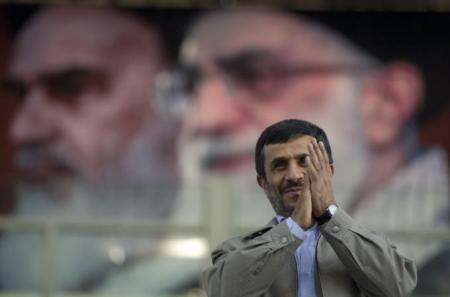
Revealing his recent letter to the regime’s Supreme Leader Ali Khamenei, Iranian regime’s former president has given new dimensions to the power struggle between regime’s rival factions while describing the country’s awkward situation.

On Monday November 27, Mahmoud Ahmadinejad revealed a letter he apparently wrote two weeks ago to Ali Khamenei.

The letter was released a few hours after regime judiciary’s spokesman ‘Mohseni Ejei’ referred to Ahmadinejad’s attacks on the judiciary, describing him as a ‘thug who talks big’.

Although Ahmadinejad’s letter gives detailed description about the country’s current conditions, but he doesn’t mention how much his government and policies are responsible for today’s situation.

“Due to authorities’ ignorance and effectiveness of enemies’ plans, such crises like unprecedented economic slowdown, liquidity, banking problems, unemployment, poverty, wide gap between the rich and poor and production fall have reached such a critical level that could at any moment hit the country and people with unpredictable and unmanageable consequences”, says Ahmadinejad.

According to Ahmadinejad, “due to heavy economic, propaganda and emotional pressures as well as political and psychological ones, many people and families are subjected to serious harms and breakdown, and a bleak outlook has been formed in the minds of all people, the youth in particular. Considering the country’s current conditions, hope for a better future has reached bottom low.”

In another part of his letter, Ahmadinejad focuses on his conflict with regime’s judiciary, saying “irregular, unjustified, and unlawful insistence on sticking to personal and political stances and involving those viewpoints in judicial process while taking advantage of judicial power in political, personal, and family relations has stripped the judiciary of any chance to address and improve its status, avoid mistakes and injustice, attempt to resolve the country’s major problems and realize people’s rights.”

Ahmadinejad says he’s against Larijani brothers and their dominance over the country’s (judicial and legislative) branches.

He then refers to judiciary’s performance as the source of public discontent in the country, saying “having 17 million judicial cases means that an overwhelming majority of Iranian families are somehow involved in lawsuits. It clearly and totally mirrors the country’s conditions and the performance of different entities, and yet by itself is a proof and a clear sign of the judiciary’s awkward situation, judicial officials’ incompetence and real problems in the branch. Public discontent towards the status of the country and judiciary is unprecedented, so much so that the majority of people are shouting against injustice and improper relations.”

Ahmadinejad’s fierce attack on the judiciary is despite the fact that the branch played a key role in oppressing the 2009 uprising during Ahmadinejad’s second term. Nonetheless, Ahmadinejad never questioned or criticized the judiciary’s record at the time, nor does he refer to it now. But only now that the branch, amid clashes between regime’s rival bands, has targeted Ahmadinejad and those around him, he has started criticizing.

Regime’s former president, who never seriously opposed limitations and violating individual and social freedoms, now writes “any kind of criticism, protest, or freedom of expression is harshly blocked for different excuses while a few groups and known families seek to exclusively take the power and major positions stemmed from people’s revolution, so they can consolidate the rule of factions and owners of wealth and power.”

Considering the escalation of conflicts between regime’s former president and judiciary over the past few weeks, the release of Ahmadinejad’s letter to Khamenei could lead to even more heated conflicts.

Charge Against Flynn is More Evidence that Mueller Has Nothing

December 2, 2017

Charge Against Flynn is More Evidence that Mueller Has Nothing, Power LineJohn Hinderaker, December 1, 2017

News media are breathlessly reporting that Gen. Michael Flynn has agreed to plead guilty to lying to the FBI. You can read the Statement of the Offense here. The false statements alleged by the government seem rather pathetic: 1) Flynn falsely told an FBI agent that he didn’t ask the Russian ambassador to “refrain from escalating the situation in response to sanctions” the U.S. had just imposed, and 2) that he didn’t recall the ambassador subsequently telling him that the Russians had moderated their response per his request; 3) Flynn falsely said that he didn’t ask the Russian ambassador to delay or defeat a pending U.N. Security Council resolution, and 4) that the ambassador never subsequently described his country’s response to that request. (Flynn tried, unsuccessfully, to convince several members of the Security Council, including Russia, not to proceed with an anti-Israel resolution. This is to his, and President Trump’s, credit.)

That’s it, after a year of huffing and puffing. Nothing about the election, nothing about the long-awaited “collusion” between the Trump campaign and Russia. I have no idea why Flynn apparently lied to an FBI agent, assuming that he did. But the communications described in the information are exactly the sorts of contacts that a national security advisor to an incoming president should be having with foreign powers.

In short, the allegations against Flynn suggest that Robert Mueller has nothing significant against President Trump or other members of his administration.

The press, of course, is gleeful. ABC‘s headline blares, “Flynn Prepared To Testify Against Trump, Trump Family, White House Staff.” Really? Testify to what?

ABC’s Brian Ross reports: Michael Flynn promised “full cooperation to the Mueller team” and is prepared to testify that as a candidate, Donald Trump “directed him to make contact with the Russians.”

But of course, there is nothing wrong with directing Flynn to make contact with the Russians. ABC says this is contrary to statements that Trump has made, but I don’t know whether that is true or not. It would require considerable research into Trump’s many statements to discern whether he has said that he never directed Flynn to contact any Russian on any subject.

In any event, what is the point? Contacting foreign governments was part of Flynn’s job, and directing Flynn to contact foreign governments was part of Trump’s job.

Andy McCarthy sees the Flynn plea the same way that I do:

Obviously, it was wrong of Flynn to give the FBI false information; he could, after all, have simply refused to speak with the agents in the first place. That said, as I argued early this year, it remains unclear why the Obama Justice Department chose to investigate Flynn. There was nothing wrong with the incoming national-security adviser’s having meetings with foreign counterparts or discussing such matters as the sanctions in those meetings. Plus, if the FBI had FISA recordings of Flynn’s conversations with Kislyak, there was no need to ask Flynn what the conversations entailed. Flynn, an early backer of Donald Trump and a fierce critic of Obama’s national-security policies, was generally despised by Obama administration officials. Hence, there has always been cynical suspicion that the decision to interview him was driven by the expectation that he would provide the FBI with an account inconsistent with the recorded conversation — i.e., that Flynn was being set up for prosecution on a process crime.

In the information filed against Flynn, what is most important is what is not there–the dog that isn’t barking:

[W]hen a prosecutor has a cooperator who was an accomplice in a major criminal scheme, the cooperator is made to plead guilty to the scheme. This is critical because it proves the existence of the scheme. In his guilty-plea allocution (the part of a plea proceeding in which the defendant admits what he did that makes him guilty), the accomplice explains the scheme and the actions taken by himself and his co-conspirators to carry it out. This goes a long way toward proving the case against all of the subjects of the investigation. That is not happening in Flynn’s situation. Instead, like Papadopoulos, he is being permitted to plead guilty to a mere process crime. A breaking report from ABC News indicates that Flynn is prepared to testify that Trump directed him to make contact with the Russians — initially to lay the groundwork for mutual efforts against ISIS in Syria. That, however, is exactly the sort of thing the incoming national-security adviser is supposed to do in a transition phase between administrations. If it were part of the basis for a “collusion” case arising out of Russia’s election meddling, then Flynn would not be pleading guilty to a process crime — he’d be pleading guilty to an espionage conspiracy.

I suppose it is still possible that Mueller could surprise us, but General Flynn was supposed to be the key witness, and he apparently has little or nothing to say that is newsworthy.

The Axis of Moderation vs. the Axis of Resistance in the Middle East

December 1, 2017

The Axis of Moderation vs. the Axis of Resistance in the Middle East, Gatestone InstituteNajat AlSaied, December 1, 2017

(Please see also, Saudis Fed Up: “Palestinians Milking Us for Decades.” — DM)

“We are just returning to the Islam we are used to… The moderate Islam”. — Saudi Crown Prince, Prince Mohammed bin Salman, at the Future Investment Initiative in Riyadh on October 26, 2017.

Saudi Arabia’s complaints against Iran’s interference and spreading extremism cannot sound credible if extremism is being practiced inside Saudi Arabia.

There urgently needs to be a unified American position to confront the Axis of Resistance. Iran continues to be the world’s leading sponsor of terrorism, empowering these armed militias and extremist groups — the basis of terrorism both in the region and across the world. It makes death threats, cooperates with a nuclearized North Korea, and all the while races toward nuclear weapons capability itself.

The dispute between the Arab states, often known as the Axis of Moderation, and the officially designated terrorist regime in Iran often known as the Axis of Resistance, is no longer just a political disagreement but a threat to the national security of Arab countries.

While the Arab states seem pro-statehood and work with other states, Iran and the Axis of resistance seems not to. Even though Iran calls itself Republic, it has a militia mentality and rarely deals with states. In general, rather than dealing with governments, it instead establishes militias, as it has in Lebanon and Yemen. Even in Iraq, where the government is considered its ally, Iran has established more than 15 militias. Qatar, by supporting Hamas and Hezbollah, as well as Syria under the Assad regime, seem to have the same mentality as Iran. If you trace the Axis of Resistance, all of them appear to have adopted the concept of supporting militias and extremist groups under the slogan of “resistance.”

The Iranian regime’s long history has now culminated in Saudi Arabia being targeted by Iranian missiles located in Yemen. They are coordinated in Lebanon by the Hezbollah militia, who train the Houthis in Yemen. It is important to understand that these violations and proxy wars carried out by the Iranian regime not only threaten the Arab Gulf states but also pose a threat to a regional and international security.

The Axis of Resistance is led by Iran, and includes Syria, Qatar, Hezbollah, Hamas, Arab Shiites loyal to Wilayat al-Faqih (“The Guardianship of the Islamic Jurist”) in Iran and Arab nationalists. Its slogans consist of fighting imperialism, empowering the (supposedly) vulnerable — mainly Muslim Shiites — and furthering “Arab nationalism,” which usually manifests itself in support for Palestinians against Israelis.

The expansionist objectives of the Axis of Resistance — in its drive to build a “Shiite Crescent” from Iran to the Mediterranean, are clear, compared to the objectives of the Axis of Moderation, which have not announced any specific aims, except to denounce Iran’s interference in the Arab countries’ affairs.

The Axis of Moderation comprises Saudi Arabia, Egypt, Jordan and the Arab Gulf countries, except for Qatar. The great mistake that the Axis of Moderation has made in confronting the Iranian regime — to try to curb its export of the its “Revolution” — has been to fall into the trap of propagating sectarianism. While Iran portrayed itself as the defender of all the Shiites in the world, Saudi Arabia, as a result, acted as the defender of all the Sunnis in the Muslim world — accordingly, sectarianism was propagated. This polarization, however, has only furthered the interests of the Iranian regime, whose chief objective seems to be to continue igniting this division in an apparent policy of divide and conquer. Instead of the members of the Axis of Moderation confronting Iran politically or militarily, they challenged it on religious and sectarian grounds, such as publishing countless books against Shiites that describe them as the enemies of Islam and labelling all Shiites as subordinate to Iran, as if all Shiites were Iran’s puppets, which not all of them are.

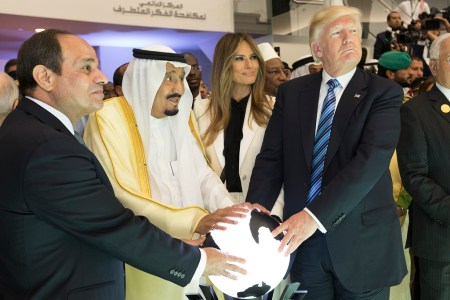
U.S. President Donald Trump and First Lady Melania Trump join King Salman bin Abdulaziz Al Saud of Saudi Arabia, and the President of Egypt, Abdel Fattah al-Sisi, in the inaugural opening of the Global Center for Combating Extremist Ideology, May 21, 2017. (Official White House Photo by Shealah Craighead)

This divisiveness has brought extremism and terrorism to the region, and has only harmed everyone.

Now the Axis of Moderation has become shrewder in its confrontation with the Iran and has employed a greater number of experts in Iranian affairs. The Axis of Moderation, especially Saudi Arabia, has realized that it cannot face down the threat of Iran without radical internal reforms. Saudi Arabia’s complaints against Iran’s interference and spreading extremism cannot sound credible if extremism is being practiced inside Saudi Arabia. These internal reforms, and liberalizing the society, are important internally: they will boost the economy by creating an attractive investment environment, especially for foreign investors. As importantly, reforms will stop any adversary from saying that Saudi Arabia is a state supporter of terrorism or a land that exports terrorists.

The most obvious changes are Saudi Arabia’s internal reforms that cover “social openness” in the form of concerts and festivals, coordinated by an entertainment body, and the country’s attempts to undermine clerical control, both by arresting extremists and establishing a committee at the Islamic University in Medina to codify the interpretation of Quranic verses that call for extremism, especially against other religions.

Saudi Arabia has also clamped down on corruption by arresting suspected businessmen, princes and former ministers. The kingdom has also raised the status of women by giving them more of their human rights, such as the recent lifting of the ban on women driving. In another important change, Saudi Arabia will also allow women to be clerics to confront all the patriarchal interpretations of verses in Quran related to women. Eventually, that could mean that lifting the ban requiring male guardians for women might also coming soon. The Saudi crown Prince, Mohammed bin Salman, has also said that he will allow women to take sports classes in school, attend sporting event for women and to permit music. His wish, he has said, is to “restore Islam.”

The most important matter of all was pointed out by the Saudi Crown Prince, at the Future Investment Initiative in Riyadh on October 26, 2017: “We are just returning to the Islam we are used to… The moderate Islam.” He also said, “We will not continue to be in the post-1979 era.”

This is essentially a confession that the approach that Saudi Arabia followed after 1979 to try to oppose the Khomeini Revolution was not helpful, and that now it is time for real reform to face both internal and external challenges.

What Saudi Arabia is doing will eventually contribute towards clarifying the aims of the Axis of Moderation, which will be to support countries whose primary objectives are development, modernity and stability. The most important goal is to stamp out terrorism by supporting a “moderate” Islam or, more specifically, supporting the approach that Saudi Arabia took before 1979. This approach was echoed by the UAE ambassador to the United States, Yousef Al Otaiba, who said that the moderate countries boycotting Qatar are heading towards secularism — in contrast to Qatar’s support for Islamist militias such as Hezbollah, and radical groups in the Axis of Resistance, such as the Muslim Brotherhood.

What has complicated the situation has been an exploitation of the conflict in the United States between the Republican Party and the Democratic Party over how to fight terrorism by countries in the Axis of Resistance such as Qatar.

The double face of Qatar is revealed in many ways. Al Jazeera in English, for instance — as mentioned the article, “Al Jazeera: Non-Arabs Should Not Be Fooled” — is totally different from Al Jazeera in Arabic.

Ahmed Mansour, for example, one of Al Jazeera’s anchors, tweeted about Hurricane “Irma” in Florida by citing a Koranic verse to say that what is happening in America is God’s curse: “Twenty million Americans fled out of fear from Hurricane Irma,” he wrote; then he cited a verse from Quran saying,

“And He shows you His signs. So which of the signs of Allah do you deny?” (40:81, Sahih International)

After his tweet in Arabic was read by American journalists, he apologized in a very sweet tweet in English.

Qatar also pretends to the US that it is supportive of its values, but in fact has close ties with all the enemies of the US. Sultan Saad Al-Muraikhi, Qatar’s permanent envoy to the Arab League, for example, has called Iran, which the US has officially designated as a terrorist state, an “honorable state”. Qatar also disagrees with designating Hamas and Hezbollah as terrorist organizations and calls them, instead, “resistance movements” against Israel.

Qatar has, moreover, used that dispute for its own ends by way of an alliance with the Democratic Party’s allies and supporters.

Many Qatari writers and Qatar’s supporters, especially the Muslim Brotherhood, have written articles against the Trump administration, as opposed to the previous administration which clearly had a soft spot for the Muslim Brotherhood. From the beginning, the administration of US President Barack Obama overruled Egypt’s President, Hosni Mubarak, by insisting that the Muslim Brotherhood attend Obamas speech in Cairo, thereby setting the stage for the fall of Mubarak; and also strongly supported the subsequent regime then Egyptian President Mohamed Morsi (who was a member of the Muslim Brotherhood). Obama also openly counted the Muslim Brotherhood-affiliated Turkish President, Recep Tayyip Erdogan, among his “best friends.”

These opinion-makers in the US, evidently nostalgic for the previous administration, and known, especially during the Iran Deal, as not exactly alignedwith the Axis of Moderation, seem to have been exploiting the rift between the Democrats and Republicans, apparently hoping for the impeachment of Donald Trump. As a Saudi academic and researcher, Ahmad Al-faraj, wrote in his article, “Qatar: The dream of isolating Trump!,” they possibly think that a Democrat President, like Obama, would again support them.

While Qatar makes itself out to be tolerant and a supporter of democratic Americans and Westerners, anyone who watches Al Jazeera in Arabic will find nothing other than pure hatred of Western values and enormous support for armed militias such as Hezbollah and terrorist groups such as Hamas.

There urgently needs, therefore, to be a unified American position to confront the Axis of Resistance. Iran continues to be the world’s leading sponsor of terrorism, empowering these armed militias and extremist groups — the basis of terrorism both in the region and across the world. It makes death threatscooperates with a nuclearized North Korea, and all the while races toward nuclear weapons capability itself. The United States would also do well to advocate a unified European position, and draw support from across the political spectrum. Unfortunately, European governments, for their own economic interests, have turned a blind eye to all the terrorism, extremism and sectarianism that Iran is fomenting. European countries should be warned that if they continue to put these economic interests ahead of global security, not only will the decision undermine the already-fragile national security of their own countries but also those of the region.

It is in the interest of the United States and world peace to support the pillars of an Axis of Moderation that would:

  • Eliminate political Islam because it exploits religion for radical political goals in both the Sunni and Shiite sects. The Shiite version of political Islam failed in Iraq and the Sunni version of the Muslim Brotherhood failed in Egypt and Tunisia. In both versions of political Islam, violence and terrorism are exacerbated.
  • Undermine Iran’s influence among armed militias in the region such as the militia Hezbollah in Lebanon, the Houthi in Yemen and the sectarian militias in Iraq. These should be classified as terrorist organizations. Hamas in the Gaza Strip has already been classified as such by the United States on October 31, 2001. Any country that supports Hamas or defends it, even in its media, should be classified as terrorist too.
  • Prevent the existence of armed militias operating as a state within a state; they are the beginning of the collapse of states and therefore a serious threat to peace and stability.
  • Consolidate the principles of secularism in internal and external dealings. Incitement to sectarian and racial hatred must be prevented as well as the use of Quranic verses to spread violence and extremism. To keep Iraq out of Iran’s control, non-sectarian neighborly relations need to be maintained.
  • Instill the principles of tolerance and respect for all religions and sects and guarantee the free practice of religions and the protection of minorities.

Moderate countries will not promote the rhetoric of a fight with Israel, as does the Axis of Resistance, led by Iran; instead, the Axis of Moderation is now committed to the principles of peace, which are based on the common interests of states to ensure the security and prosperity of all citizens.

The region and the world as a whole have suffered from the actions of the Iranian regime and its allies. There should be no justification for the existence of militias and extremist groups under the banner of resistance or similar pretexts. The international community needs to be firm in challenging states that allow or support such groups and should stress that states can only protect themselves with armies and armed forces, not with militias. A unified American and European position needs to help the Axis of Moderation to prevent countries in turmoil from becoming cantons of militias and extremist groups. That seems a more constructive way to fight terrorism and build global stability.

Najat AlSaied is a Saudi American academic and the author of “Screens of Influence: Arab Satellite Television & Social Development”. She is an Assistant Professor at Zayed University in the College of Communication and Media Sciences in Dubai-UAE.

This article was first published in Arabic at Al Hurra.

Merkel is the administrator of the West’s downfall

December 1, 2017

Merkel is the administrator of the West’s downfall, Israel National News, Giulio Meotti, November 29, 2017

Merkel never joined the Western efforts to defeat Islamic terrorism. She commands the world’s fourth largest economy and Europe’s financial giant, but her country is a military dwarf, weak and disarmed. For Merkel, sending fighting troops abroad, even to defeat ISIS, always looked unthinkable.

Merkel’s former foreign minister, Guido Westerwelle, even made the withdrawal of American nuclear weapons from Germany one of his top priorities. Merkel has also been crucial in the political ransom Turkey’s Erdogan has been able to deploy in the migrants crisis, one of the most important factors in causing chaos on the continent since the Second World War.

Merkel’s open door policy is the product of two factors: the German declining birth rates of the last 40 years, a collective demographic suicide, and the permanent sense of guilt for the Holocaust, for the right moral reasons but the wrong political goals.

Karl Lagerfeld, the creative director of Chanel and Fendi, during the French television show Salut les Terriens just criticized Merkel for allowing one million migrants to enter the country in 2015.

*******************************************

Angela Merkel and her Christian Democrats should have been the winner in the September 24 German elections. The national unemployment rate is 3.7 percent and the economic growth is 2 percent. But Merkel now faces the biggest political impasse in Germany since 1949 with difficulties in forming a new coalition.

The question is: who is Angela Merkel?

Unlike her Christian Democratic predecessors, Chancellor Merkel has no crosses hanging on the walls of her office. She is the daughter of a Protestant pastor from the period when there was an East Germany. She never talks about “values” in public. She is the perfect mirror of a skeptical and post-Christian continent where faith has been totally privatised.

Merkel has no children. Neither do most of Europe’s current leaders. To mention some, the prime ministers of Italy, Netherlands, Sweden, UK and the French President Emammuel Macron have no chlldren either.

“If the Germans don’t have children, does it matter who inherits their country?”, asked David Goldman in the Asia Times. “Why not their house pets?”.

Merkel is a cunning politician personifying a cynical mixture of wealthy multiculturalism and moral relativism. Merkel allowed the Bundestag to vote on gay marriage, despite her party’s contrary opinion. She did it only for electoral reasons – to deprive the Social Democrats of a big reason to gain votes.

Merkel never joined the Western efforts to defeat Islamic terrorism. She commands the world’s fourth largest economy and Europe’s financial giant, but her country is a military dwarf, weak and disarmed. For Merkel, sending fighting troops abroad, even to defeat ISIS, always looked unthinkable.

Merkel’s former foreign minister, Guido Westerwelle, even made the withdrawal of American nuclear weapons from Germany one of his top priorities. Merkel has also been crucial in the political ransom Turkey’s Erdogan has been able to deploy in the migrants crisis, one of the most important factors in causing chaos on the continent since the Second World War.

Merkel’s open door policy is the product of two factors: the German declining birth rates of the last 40 years, a collective demographic suicide, and the permanent sense of guilt for the Holocaust, for the right moral reasons but the wrong political goals.

Karl Lagerfeld, the creative director of Chanel and Fendi, during the French television show Salut les Terriens just criticized Merkel for allowing one million migrants to enter the country in 2015.

“One cannot — even if there are decades between them — kill millions of Jews so you can bring millions of their worst enemies in their place”, Lagerfeld said. He cited an anecdote in support of his assumptions that Jewish people and refugees are at odds. “I know someone in Germany who took a young Syrian in and after four days he said, ‘The greatest thing Germany invented was the Holocaust,’” he said. Lagerfeld also suggested that Merkel felt she needed to take in more migrants in 2015 to counteract the image she was given as “the wicked stepmother in the story of the Greek [financial] crisis”.

Merkel is the daughter of the German unity that arose after the fall of Berlin Wall, the protégé of Helmut Kohl. “The reunification of Germany was the last big goal for Germans” said Gustav Gressel, a defence expert at the European Council on Foreign Relations. “After that everyone fell into this ‘end of history’ feeling – everything is good, we’re all friends and it has to stay that way”.

The Germans feel they must atone for their past deeds and their present wealth by embracing a post-national, post-Christian and post-heroic Western model.

Greg Sheridan of The Australian was right when he called Merkel “the chief agent of Europe’s demise”. But she is more than that. My friend Henryk Broder, the German Jewish journalist, said that Germany has committed to “disappear” from history.

At the time of Western twilight, Angela Merkel is the perfect administrator working for her own downfall.

Britain’s Hate Speech Police

November 30, 2017

Britain’s Hate Speech PolicePat Condell via YouTube, November 30, 2017

(He’s back! — DM)