Archive for March 2020

US to Iran: Coronavirus won’t save you from sanctions 

March 20, 2020

Source: US to Iran: Coronavirus won’t save you from sanctions – The Jerusalem Post

“Washington’s increased pressure against Iran is a crime against humanity,” an Iranian official said. “All the world should help each other to overcome this disease,” he added.
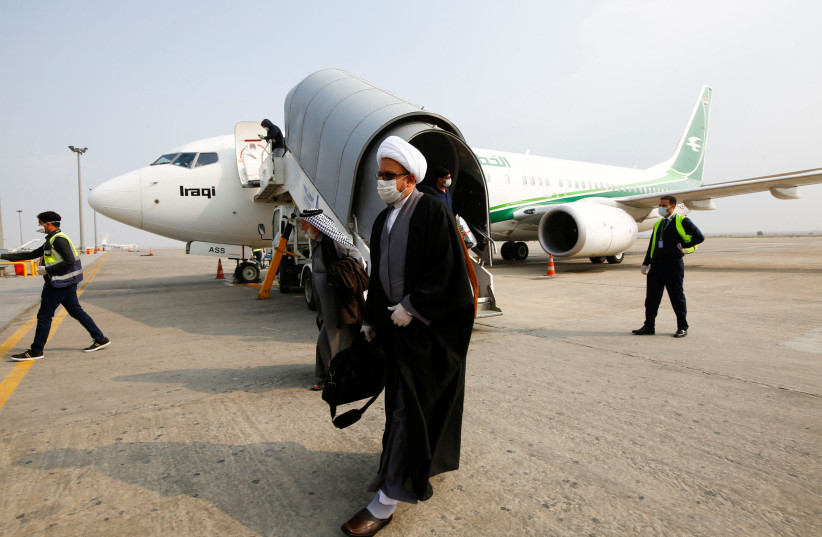
A cleric man wears a protective mask amid concerns over the coronavirus (COVID-19) spread, at Najaf airport in the holy city of Najaf upon his arrival from Iran (photo credit: REUTERS/ALAA AL-MARJANI)
A cleric man wears a protective mask amid concerns over the coronavirus (COVID-19) spread, at Najaf airport in the holy city of Najaf upon his arrival from Iran
(photo credit: REUTERS/ALAA AL-MARJANI)
WASHINGTON/DUBAI- The United States sent Iran a blunt message this week: the spread of the coronavirus will not save it from US sanctions that are choking off its oil revenues and isolating its economy.
Iran is the Middle Eastern nation worst hit by coronavirus, with its death toll climbing to 1,284 and one person dying from it every 10 minutes and 50 becoming infected every hour, the health ministry said.
The United States, which argues that its “maximum pressure” campaign to curb Iran’s nuclear, missile and regional activities does not stop the flow of humanitarian goods, imposed new sanctions this week.
The Trump administration blacklisted five companies based in the United Arab Emirates, three in mainland China, three in Hong Kong and one in South Africa for trade in Iran’s petrochemicals.
“Washington’s increased pressure against Iran is a crime against humanity,” an Iranian official told Reuters. “All the world should help each other to overcome this disease.”
Some analysts suggested the Trump administration should do more to speed the flow of humanitarian goods into Iran, though they saw little evidence to suggest this was in the offing.
“Our policy of maximum pressure on the regime continues,” Brian Hook, the US Special Representative for Iranian Affairs, told reporters. “US sanctions are not preventing aid from getting to Iran.”
On Monday, China called on the United States to give Iran sanctions relief for humanitarian reasons but US officials, foreign diplomats and analysts saw no signs of this.
“While Iran is an epicenter of this virus outbreak and facing true economic catastrophe … there will be no relief on sanctions,” said Elizabeth Rosenberg of the Center for a New American Security think tank.
Hook said Washington sent a diplomatic note to Tehran offering help with coronavirus “and it was quickly rejected.”
He also blamed Iran’s leadership for its coronavirus woes, saying that Iran “spends billions on terrorism and foreign wars” and that if it spent one tenth of this “on a better health care system, the Iranian people would have been much better off.”
In what might be a gesture to Washington, Tehran released US citizen Michael White from its custody though he must stay in Iran.
Suzanne Maloney of the Brookings Institution think tank said Iran allowing White or other detained US citizens to fly home might appeal to President Donald Trump.
“I still don’t believe this administration wants to provide a lot of leeway to the Iranian authorities but that doesn’t mean they can’t or shouldn’t be looking for every opportunity to” get medical supplies into Iran, she said.
The outbreak in Iran was likely to spread as Iranians travel for the Nowruz new year’s celebration, she added, saying this could hurt US security partners across the region.
“Iran is Italy, only on steroids,” Maloney said, alluding to the outbreak in Italy, whose coronavirus death toll on Thursday overtook that of China, where the virus emerged.
Mark Dubowitz, an Iran hawk with the Foundation for Defense of Democracies policy group, said Washington could send medical goods to Iran via private groups but should not ease sanctions.
“At the very time Iranian-backed Shi’ite militias in Iraq are killing Americans and Brits and others, this would be exactly the wrong time to be providing any kind of economic relief to the regime,” he said, referring to last week’s attack on a military camp in Iraq that killed one British and two US personnel.
“We should be sending medical supplies directly to Iranians through non-governmental organizations and bypass the regime.”
Iranians appeared to have mixed feelings about whether Washington was making its outbreak worse.
“America’s sanctions are preventing Iran from getting necessary medicine and equipment to fight against this virus. They have to lift it,” said dentist Arash Hosseini, 52, in Tehran.
But Twitter user @fnikjoo, suggested sanctions relief would just provide “Money to support more terrorists in the region and beyond.”
 

Where Is Iran’s Supreme Leader?

March 20, 2020

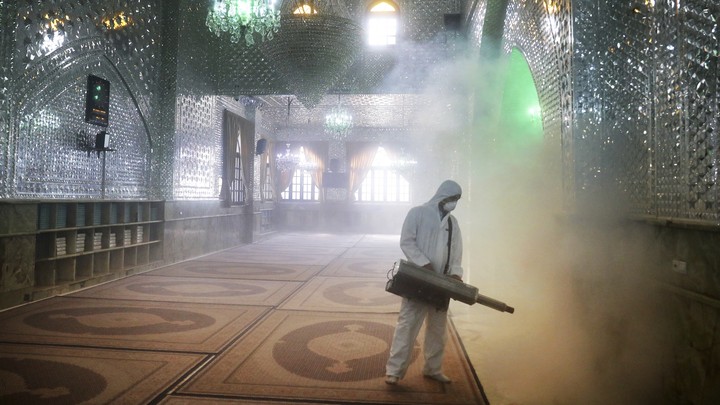
A worker in a protective suit sprays a disinfectant

https://www.theatlantic.com/ideas/archive/2020/03/what-coronavirus-means-regime-change-iran/608122/

Last week, I proposed that Iran’s coronavirus problem is much greater than commonly acknowledged, and that the true number of cases is perhaps hundreds of times greater than the official number. More signs of uncontrolled infection have emerged, and I fear I was optimistic. On Wednesday, Bahrain evacuated 165 of its citizens from Iran; 77 of them tested positive for the coronavirus. The Washington Post reported that satellite photographs showed a great furrow dug into a cemetery in Qom, reportedly to bury huge numbers of COVID-19 victims who had died already in that city. Other areas of Iran complained that they had run out of cemetery space, and that their numbers (then in the hundreds) were so great that they swamped the official national total, which even a week later is a mere 853. In Islam, bodies must be buried promptly and, in general, alone. You cannot bury two people together unless they are close family. One Iranian reported to me that the deaths were coming so fast that the survivors were requesting special dispensation to break this rule.

The economist Tyler Cowen asks, impishly, whether we should in fact be relieved, because apparently even when a society faces unrelenting misery—accelerated by the policies of its government—it doesn’t necessarily break down. Iran hasn’t turned into a criminal wasteland, with gangs in tricked-out, armored Paykans looting toilet paper and ventilators. In fact, it looks like Iranians have, like some Chinese before them, spawned informal systems of order, with roadblocks going up to prevent people from Tehran from fleeing to the countryside and bringing the disease with them. These efforts at containment have failed, but they were not forms of disorder, and most evidence suggests that when the plague abates, Iranians will have many things to mourn, but the irreversible disintegration of their society will not be among them.

The government is another matter. Many Iranians would celebrate its passing, and even its supporters have been watching for signs that the coronavirus will catalyze changes that should have come long ago, but that its authoritarian structure makes nearly impossible. The previous change of leadership came in 1989, as a result not of a modern political process but of biology: Ruhollah Khomeini, 86, died, and his deputy, Ali Khamenei, then 49, took over and has ruled ever since. He is now almost 81.

Given how many people are dying, it would be grotesque to think of COVID-19 as a lucky break for fans of regime change. But the news of ailing senior leaders keeps coming, and at some point the mullahs’ deep bench of gerontocrats will be depleted. Today, Ayatollah Hashem Bathaei-Golpaygani, a member of Khamenei’s Council of Experts, died of COVID-19 in Qom. Last week, former Foreign Minister Ali Akbar Velayati announced that he had contracted the coronavirus. He is 74 years old, still cunning, and the chief adviser to Khamenei, to whom he speaks regularly and in person. If Velayati dies of the coronavirus, he will be the most important regime figure to die since Qassem Soleimani.

Of course, the center of all speculation is the supreme leader himself. Khamenei doesn’t appear in public often, even in the best of times, and you’d have to be fairly lucky to spot him—except on a few occasions where his appearance is so customary that an absence would make everyone, both allies and enemies, wonder if the coronavirus has felled him too.

As it happens, one such occasion is this week: Persian New Year, or Nowruz. This pre-Islamic holiday marks the vernal equinox, and this year it falls smack in the middle of coronavirus season. Last year, Khamenei stood at the largest Islamic pilgrimage site in Iran, the shrine of Imam Reza in Mashhad, and delivered a long, almost Fidel Castro–like speech detailing policies and plans. This year, the Islamic Republic canceled the speech 10 days in advance, “due to health recommendations to prevent the spread of the Coronavirus.”

As a matter of public health, the decision to call off a huge public gathering is wise and sane. But rumors do not die so easily. Couldn’t Khamenei just give his speech from a studio? Is this not the ideal opportunity, the first day of spring, to discuss the process of renewal that Iran will have to undertake to recommit itself to the ideals of its revolution? For the past two weeks, speculation has been rampant. Surely, say the rumors, Khamenei has the virus—or if he doesn’t, it’s because he has entered Howard Hughes–like seclusion, behind a flaming moat of Purell. These rumors aside, the perception of distance has made Khamenei, already a distant figure without charisma or warmth, seem superannuated and out of touch. If he does not show up, looking healthy, for his camera appearance this year, many will assume that he is in a febrile delirium somewhere.

In any other year, such an absence could, all by itself, trigger speculation about a stroke or even a coup d’état. (Imagine if the U.S. president failed to show up for a State of the Union address, or even—without a word of explanation—the pardoning of Thanksgiving turkeys.) What might save Khamenei is the simple fact that the whole Iranian nation is suffering together, and it isn’t clear which institutions are healthy enough to rival his leadership, even in this diminished state. Islamic Revolutionary Guard Corps officers are dying of COVID-19, just as civilians are. And ordinary people have sheltered in place, just as Europeans and Americans are (slowly) beginning to.

If the pandemic has exposed or confirmed the incompetence and malignance of governments, at the same time it has crippled the forces for improvement. The U.S. government has failed to provide the COVID-19 tests that tell us how to prepare for the coming waves of infection. But what can we do, other than go to war against the virus with the White House we have, instead of the White House we want? In Iran, popular protests in the streets simply cannot happen as long as the manpower for those protests remains sequestered at home, and as long as morale is utterly depleted by the task of burying one’s loved ones. Regime change might have to wait. At least the pandemic will eventually end, and with its end, change is one more thing to look forward to.

Pat Condell – The Virus That Shames China

March 19, 2020


It’s called the Chinese Communist Party.

The Chinese Communist Party caused the Wuhan coronavirus pandemic. Now their propaganda is being swallowed wholesale by western media.

How WHO corruption helped the Wuhan coronavirus spread

Doctor who tried to warn the world about the Wuhan virus dies in hospital
https://www.bbc.com/news/world-asia-c…

Muslims forced to eat pork and drink alcohol in China’s ‘re-education’ camps
https://www.independent.co.uk/news/wo…

Inside China’s ‘re-education camps’ where women are raped and sterilised
https://metro.co.uk/2019/10/08/inside…

Nobody’s feelings were consulted during the making of this video. Anyone who has a problem with that can drop dead.

Everyone is free to download this video and post it to their own account if they wish, as long as it is not edited in any way (including the title) and not monetised.

You can download audio versions of all my videos at
http://patcondell.libsyn.com/

Israel fully closes border to tourists amid coronavirus outbreak 

March 18, 2020

Source: Israel fully closes border to tourists amid coronavirus outbreak | The Times of Israel

Israel completely closes down its borders to foreigners in a bid to contain the coronavirus pandemic beginning immediately, the Population and Immigration Authority says.

Until now, Israel has allowed tourists into the country if they were able to quarantine themselves for two weeks.

“Beginning today, the entrance of foreigners will not be allowed into Israel, even if they can prove they could remain in quarantine,” the authority says in a statement.

Israeli citizens and residents will still be able to enter the country, the authority says.

The agency says the decision, which was recommended by the Health Ministry, goes into effect immediately, with the announcement.


IDF, going on war footing to fight virus, expects crisis could last up to a year 

March 18, 2020

Source: IDF, going on war footing to fight virus, expects crisis could last up to a year | The Times of Israel

TV reports military drafting orders that will allow it to take far greater role in combating COVID-19, from logistical support to possibility of enforcing curfews and lockdowns

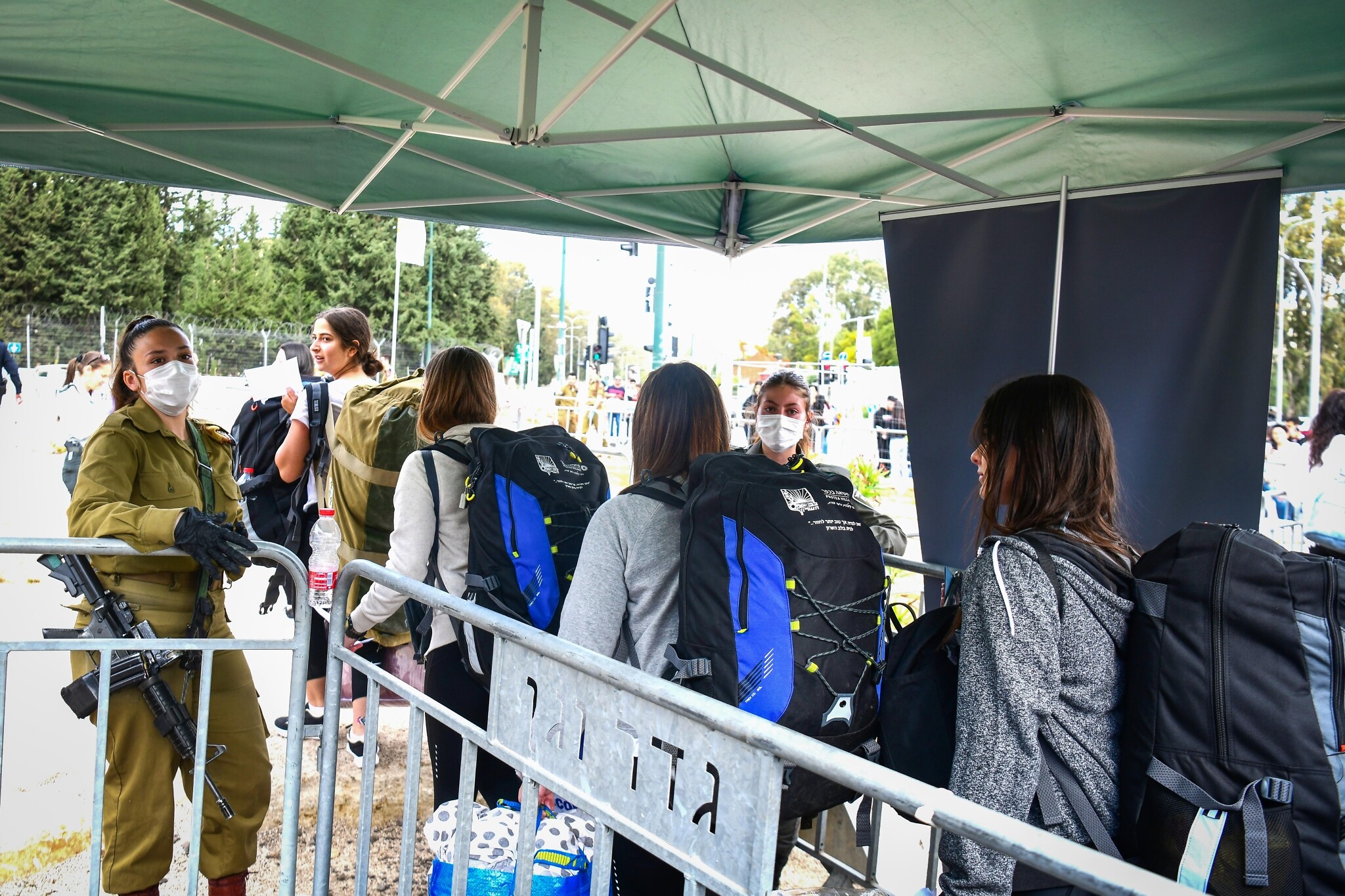
Young Israelis arrive to the IDF recruitment center at Tel Hashomer, outside of Tel Aviv on March 17, 2020.  (Flash90)
The Israel Defense Forces are going on a war footing to help Israel combat the coronavirus, believing that the crisis could last for several months and even up to one year, Channel 13 reported Tuesday.

The military is drafting new orders that would give it the powers to act to help stem the crisis and was adapting its “Summer Cage” orders prepared for the event of a wide-scale earthquake, the TV said.

This would allow the IDF to initially begin by assisting Israel’s medical system, possibly setting up hospitals and taking in patients. It could also put its logistical capabilities, including vehicles, drivers and other facilities at the government’s disposal.

It was also preparing plans, should the situation deteriorate, to enforce curfews and lockdowns on the civilian population, although the TV noted that such a possibility was still “a long way off.”

The report said that the IDF believes the crisis will last for several months, and even possibly up to a year, an assessment that was alluded to by Tuesday evening by Prime Minister Benjamin Netanyahu and  Health Ministry Director-General Moshe Bar Siman-Tov.

“This is a huge crisis. We are only at the start of the campaign; the crux is yet before us,”  Netanyahu told a press conference.

“I know the mission will take time, these kinds of events are not short,” Bar Siman-Tov said without giving a specific time-frame. “Maybe we will be surprised and it will be short, but we are preparing for it not to be.”

The IDF has already recalled most of its troops and told many of them to expect to remain on base for at least a month without leave amid efforts to contain the spread of the coronavirus.

Access to certain installations and bases would also be restricted.

As of Saturday, the IDF has principally focused on maintaining its operational capabilities in the face of the COVID-19 coronavirus, but the military was also preparing to step in and assist civilian authorities respond to the disease in the general public.

“Israel’s emergency stores are full and equipped for a variety of scenarios,” Defense Minister Naftali Bennett said Saturday.

Netanyahu was on Tuesday forced to reprimand Israelis for failing to grasp the gravity of the growing coronavirus crisis, urging them to stay home wherever possible.

“This isn’t child’s play, it’s not summer vacation, it’s a matter of life and death,” Netanyahu said at an evening press conference after media outlets reported extensively over the past two days on now jobless Israelis making use of their freed up time to enjoy the beach and public parks.

Israelis eat take away meals in the trunk of their car of Jerusalem on March 17, 2020. The government orders all bars, restaurants and malls to close in an effort to contain the spread of virus.
(Olivier Fitoussi/Flash90)

Charging that “too many” were failing to grasp the gravity of the situation, he urged Israelis to show “discipline and responsibility” in following social distancing instructions, avoiding public spaces and, whenever possible, staying home.

Fully five weeks after the first confirmed COVID-19 infection in Israel, no Israelis have yet died of the coronavirus — but both Netanyahu and Bar Siman-Tov said this would soon change.

“We assess that scenarios like in Italy and Spain can happen here too,” Bar Siman-Tov said. “In the coming days… the rate of new cases will rise — to 100 a day or more. We may come to a situation of hundreds more [cases] each day,” he said.

In the end, he said, “people will die — possibly even in the next few days.”

“To our sorrow, in our scenarios, many thousands [of Israelis] could die.” Thus the goal of Israel’s measures was to keep that number down by minimizing contagion, said Bar Siman-Tov.

The comments came as the Health Ministry announced on Tuesday evening that the number of confirmed infections in the country had reached 377, up from 304 in the morning — and as the global death toll passed 7,800.

Israelis wearing face mask for fear of the coronavirus are seen in public transport in Jerusalem on March 17, 2020.
(Yossi Zamir/Flash90)

“If we follow all the instructions, we will flatten the curve,” Bar Siman-Tov added. “There will still be those who die, and more who get sick, but we’ll manage to reach everyone,” he said.

He also called on Israelis not to visit their elderly parents or grandparents, who are at greater risk from the virus, and said those who feel unwell must stay home.

He, too urged, Israelis to take the ministry’s social distancing instructions seriously. “This isn’t a vacation given to you by the coronavirus. Our ability to reduce the numbers of sick depends on your behavior. We’d rather you followed our instructions. If necessary, we’ll enforce them,” he warned.

Netanyahu spoke of three new steps the government was taking to stem the spread of the contagion, including improving its ability to track those who might have been exposed to the virus using controversial “digital tracking” measures approved by the cabinet early Tuesday morning.

He said Israel would also significantly ramp up testing for the coronavirus to 3,000 tests per day, and ultimately a possible 5,000 tests a day — a figure that would make Israel number one in the world in tests per capita, he said.

Workers preparing new wards following the spread of the coronavirus at Tel Hashomer hospital on March 17, 2020. (Flash90)

And, he added, Israel’s hospitals had ordered an additional 1,000 respirators as they braced for an influx of patients.

The press conference came just hours after the Health Ministry announced sweeping new restrictions on movement meant to curb the spread of the coronavirus.

The public was instructed not to go out to parks, playgrounds, the beach, pools, libraries, museums or other public places, the ministry said. Exceptions were permissible for taking out children and pets — in accordance with instructions for maintaining hygiene and limiting social contact. Among other measures: suspension of elective surgeries, cancellation of non-urgent dental treatments, and the stipulation that home deliveries be left outside customers’ doors, to avoid meetings between customers and delivery drivers.

Channel 12 news called the new instructions a government bid for a “voluntary lockdown.”

“These aren’t simple instructions. We are asking you to minimize as much as possible leaving your home,” Bar Siman-Tov said Tuesday afternoon.

But, he said, “Anywhere you visit might have a sick person present who could infect you. You yourself may be sick and not know it, and infect other people.”


WHO: Iran Coronavirus Deaths up to Five Times Higher than Official Count

March 18, 2020

Source: WHO: Iran Coronavirus Deaths up to Five Times Higher than Official Count

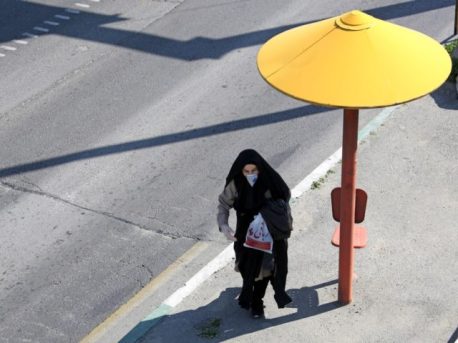
An Iranian pedestrian walks while wearing a protective mask in Tehran on March 10, 2020 amid the spread of coronavirus in the country. - Iran today reported 54 new deaths from the novel coronavirus in the past 24 hours, the highest single-day toll since the start of the country's outbreak. …
ATTA KENARE/AFP via Getty
6:22

Dr. Rick Brennan, Director of Emergency Operations for the World Health Organization’s Emergencies Program, said on Monday the number of coronavirus deaths in Iran could be up to five times higher than the official numbers released by the Iranian health ministry.

Iran officially counts 853 deaths and 15,000 infections, but Brennan feared the true totals could be much higher due to limited testing.

“We’ve said the weakest link in their chain is the data. They are rapidly increasing their ability to test and so the numbers will go up,” said Brennan, who visited Iran last week. He estimated that only one in five coronavirus cases has been properly identified in Iran.

Brennan was also deeply concerned about Syria, whose long civil war – with Iranian participation – destroyed many medical facilities and left others hopelessly over-stressed, while a million displaced Syrians live among the ruins or huddle in crowded refugee camps. Syria has not officially reported any coronavirus cases yet.

“We are very concerned. All of the surrounding countries have documented cases,” he said.

A source inside Iran’s Coronavirus Combat Task Force told Radio Farda on Monday that hospital data indicates the true number of deaths in Iran is already well over 2,000 and probably over three times the official count of 853. The source spoke anonymously due to fears for his safety.

“It is absolutely true that the political system considers coronavirus death numbers a matter of national security, the Revolutionary Guard for instance, and insists on hiding the facts like many other things the public has never been privy to know. The Health Ministry’s approach, however, if not completely but at least to a large extent, is based on medical protocols and procedures, not political considerations,” the Iranian source explained.

Radio Farda’s own review of data from Iranian provincial authorities and local media confirmed at least 1,300 deaths and 3,200 people hospitalized across 30 of Iran’s 31 provinces.

According to Radio Farda, many Iranians blame Supreme Leader Ayatollah Ali Khamenei and his “hardliners” for the epidemic because they deliberately concealed the early outbreak in the city of Qom in order to keep turnout higher for the February 21 parliamentary elections. Khamenei actually said the early reports of an epidemic in Qom were merely “enemy” propaganda intended to scare voters away from the ballot boxes.

The Iranian opposition group PMOI/MEK claimed over the weekend there have been over 4,900 coronavirus fatalities, accusing the regime of deliberately concealing most of them because it fears a public backlash that would fill the streets with protesters. According to PMOI/MEK, hundreds have died even in the smaller Iranian cities, one of which was forced to begin storing corpses in refrigerated containers normally used to hold fruits and vegetables.

The opposition group was able to get a few Iranian officials to go on the record with complaints about government incompetence and fears of political instability:

“The objective of various officials in remarks about a bio-terrorism attack is to refer all the problems resulting from the COVID-19 management crisis to foreign enemies… However, it is more likely that an enemy by the name of mismanagement is far more probable than a biologic attack by our enemies,” said Amir Khojasteh, deputy chair of a committee in the regime’s Malis (parliament).

“We wasted a lot of time … there was no strategic plan to use the experience of other countries and maybe some measures were carried out with drastic delays… Currently we are witnessing an exponential growth in the number of coronavirus cases in Tehran, and Tehran Province has far more cases in comparison to other provinces… and our medical staff could be completely exhausted in the future,” said Alireza Zali, a senior official in Tehran’s anti-coronavirus headquarters.

“We must admit that we lost a golden opportunity and must compensate… the number of coronavirus cases is rising exponentially… the virus is has become a pandemic… the medical staff in Mashhad is exhausted… the word pandemic is horrific. This situation may escalate and get out of our control,” said the mayor of Mashhad, the country’s second largest city located in northeast Iran.

There is also escalating concern among regime officials over protests erupting in Iran.

“Beyond foreign threats, domestic issues such as protests revolutions, coup de ’tat, famine and epidemics can disrupt a country’s security and stability, and even lead to a complete crumble… the coronavirus crisis in Iran linking to previous developments, including the November 2019 incidents, will lead to further protests,” an analysis in the state-run Mizan daily reads. The country’s military and Revolutionary Guards (IRGC) can “take over the country’s security and impose necessary restrictions to decrease the amount of concern over the spread of a virus…” This further indicates the regime’s main concern of security threats disrupting the stability of its already fragile apparatus.

An Iranian living in Isfahan reportedly told PMOI/MEK that Iran’s government might have spread the coronavirus “intentionally” to “divert attention from their mess and crimes” and implement martial law to control political unrest ahead of the Iranian New Year celebrations in March.

Another PMOI/MEK report on Monday suggested heavy “political infighting among the mullahs” during the epidemic and updated the total number of largely unreported dead to over 5,500.

Some of this infighting was said to be caused by religious and political resistance to effective quarantine measures, including hardliners who refuse to reallocate funding away from Iran’s Islamic Revolutionary Guard Corps (IRGC) and its foreign terrorist operations. The report charged the central government with thwarting efforts by provincial governors to impose quarantines because President Hassan Rouhani is jealous of his power and reluctant to take extreme measures that would reveal the true severity of the outbreak, making the public even angrier at how his administration handled the early coronavirus response.


Iran warns virus could kill ‘millions’ in Islamic Republic

March 18, 2020

Source: Iran warns virus could kill ‘millions’ in Islamic Republic

yesterday
A cleric and a woman pray behind a closed door of Masoume shrine in the city of Qom, some 80 miles (125 kilometers) south of the capital Tehran, Iran, Monday, March 16, 2020. On Monday, Iran closed the Masoume shrine, a major pilgrimage site in the city of Qom, the epicenter of the country’s new coronavirus outbreak. Authorities were already restricting access and barring pilgrims from kissing or touching the shrine, but it had remained open. (AP Photo)

TEHRAN, Iran (AP) — Iran issued its most dire warning yet Tuesday about the new coronavirus ravaging the country, suggesting “millions” could die in the Islamic Republic if people keep traveling and ignore health guidance.

A state TV journalist who also is a medical doctor gave the warning only hours after hard-line Shiite faithful on Monday night pushed their way into the courtyards of two major shrines that were finally closed due to the virus. Supreme Leader Ayatollah Ali Khamenei issued a religious ruling prohibiting “unnecessary” travel.

Roughly 9 out of 10 of the over 18,000 confirmed cases of the virus in the Middle East come from Iran, where authorities denied for days the risk the outbreak posed. Officials have implemented new checks for people trying to leave major cities ahead of Nowruz, the Persian New Year, on Friday, but have hesitated to quarantine the areas.

The death toll in Iran saw another 13% increase Tuesday. Health Ministry spokesman Kianoush Jahanpour said the virus had killed 135 more people to raise the total to 988 amid over 16,000 cases.

Jordan announced a state of emergency, banning gatherings of more than 10 people, and Israel issued its own strict guidelines.

Most infected people experience only mild or moderate symptoms, such as fever and cough, and recover within weeks. But the virus is highly contagious and can be spread by people with no visible symptoms. For some, especially older adults and people with existing health problems, it can cause more severe illness, including pneumonia.

In announcing the new warning, the Iranian state TV journalist, Dr. Afruz Eslami, cited a study by Tehran’s prestigious Sharif University of Technology, which offered three scenarios: If people cooperate fully now, Iran will see 120,000 infections and 12,000 deaths before the outbreak is over; if they offer medium cooperation, there will be 300,000 cases and 110,000 deaths.

But if people fail to follow any guidance, it could collapse Iran’s already-strained medical system, Eslami said. If the “medical facilities are not sufficient, there will be 4 million cases, and 3.5 million people will die,” she said.

Eslami did not elaborate on what metrics the study used, but even reporting it on Iran’s tightly controlled state media represented a major change for a country whose officials had for days denied the severity of the crisis.

Underlining that urgency was the fatwa issued by Khamenei, which prohibited “unnecessary” travel. It comes as the public ignored repeated warnings and pleas from security forces. Such a decree is rare by Khamenei, who has final say on all state matters.

Some Iranian media later said Khamenei hadn’t issued a fatwa, though semiofficial news agencies believed to be close to the paramilitary Revolutionary Guard said the order had been made.

Late Monday night, angry crowds stormed the courtyards of the Imam Reza shrine in Mashhad and the Fatima Masumeh shrine in Qom. Many people visit the shrine in Qom 24 hours a day, seven days a week, touching and kissing the shrine.That has worried health officials, who for weeks wanted Iran’s Shiite clergy to close them.

State TV had announced the closures earlier in the day, sparking the demonstrations.

“We are here to say that Tehran is damn wrong to do that!” one Shiite cleric shouted at the shrine in Mashhad, according to online video. Others joined him in chanting: “The health minister is damn wrong to do that, the president is damn wrong to do that!”

Police later dispersed the crowds and made arrests. Religious authorities and a prominent Qom seminary called the demonstration an “insult” to the shrine.

Iran’s shrines draw Shiite pilgrims from all over, likely contributing to the virus’ regional spread. Saudi Arabia has closed off Islam’s holiest sites and on Tuesday said it would halt communal Friday prayers in the kingdom.

President Hassan Rouhani said that despite the closures, “our soul is closer to the saints more than at any time.”

State TV reported teams were deployed to screen travelers leaving major cities in 13 provinces, including the capital, Tehran. But Iran has 31 provinces and authorities haven’t tried to lock down the country the way its allies Iraq and Lebanon have done.

The teams check travelers and send those with fevers to quarantine centers. Iran has been urging people to stay home, but many ignore the call.

In apparent efforts to try to curb the spread, Iran has released 85,000 prisoners on temporary leave, judiciary spokesman Gholamhossein Esmaili said. That number included half of all “security-related” prisoners, he said without elaborating. Western nations have urged Iran to release dual nationals and others, alleging they are used as bargaining chips in negotiations.

Among those released is Mohammad Hossein Karroubi, the son of opposition leader Mehdi Karroubi, who was in jail for nearly two months.

Also temporarily freed was Nazanin Zaghari-Ratcliffe, an Iranian-British dual national long held on internationally criticized charges. Zaghari-Ratcliffe, who works for the charitable Thomson Reuters Foundation, was arrested in 2016 on charges of trying to topple the government while traveling with her toddler daughter.

In Jordan, King Abdullah II by royal decree declared a national emergency over the virus outbreak, which allows the suspension of laws and grants greater powers to the state to restrict public gatherings and make arrests.

Troops were deployed outside of Jordan’s major cities to block travel, newspapers were ordered to stop publishing, gatherings of more than 10 people were banned and a quarantine zone was established at Dead Sea hotels. It also halted all private sector work and public transportation as well.

Egypt, which has 196 confirmed cases of the virus and six deaths, announced the immediate shutdown of all movie theaters across the Arab world’s most populous country.

It also locked down the Red Sea province that includes the resort town of Hurghada. Authorities barred workers in all tourist sites, hotels, bazaars and restaurants from leaving the province and imposed a 14-day quarantine, according to a document from the governor’s office obtained by The Associated Press.

In Oman, the sultanate announced anyone coming from abroad would be subject to quarantine.

Israel’s Defense Ministry plans to use near-empty hotels, as recovery centers for patients with COVID-19, the illness caused by the virus. Israel also urged citizens to stay home, closing parks, museums, libraries, beaches and other public areas.

In Syria, all sports clubs, movie theaters, concerts, theaters, as well as halls used for weddings or funerals were ordered closed in Damascus, and all restaurants and other shops around the country were ordered shut. Syria says it has no cases of the virus.

Pakistan’s number of coronavirus cases rose to 237, although no deaths have been reported. Government critics blame improper border screenings for thousands of pilgrims returning from Iran this month.

Prime Minister Imran Khan warned that the disease will spread but said the public “should not fret as most of the people easily recover.”

Gambrell reported from Dubai, United Arab Emirates. Associated Press writers Mehdi Fattahi in Tehran, Iran, Aron Heller in Jerusalem, Omar Akour in Amman, Jordan, Bassem Mroue in Beirut and Samy Magdy in Cairo contributed.

___

The Associated Press receives support for health and science coverage from the Howard Hughes Medical Institute’s Department of Science Education. The AP is solely responsible for all content.

Health Ministry deepens lockdown, issues strict new rules nationwide – DEBKAfile

March 18, 2020

Source: Health Ministry deepens lockdown, issues strict new rules nationwide – DEBKAfile

On Tuesday, March 17, the health ministry issued new rules that bring Israel closer to a nationwide lockdown, as 20 new coronavirus cases ramped up the total to 324, 5 in serious condition. Plans are ready to exercise full lockdowns at specific locales with high concentrations of the disease. The first two in line are Avnei Hen (Kaiser) in Modi’in and Kiryat Yaarim outside Jerusalem.

The IDF Home Defense Command is getting dozens of hotels set up as recovery centers for the intake of mild covid-19 cases. The Magen David Medical Aid Service has opened a mass testing station at the Ganei Yehushua Park in Tel Aviv, and plans to take thousands of tests per day across the country mostly at “drive through” centers from drivers who stay in their vehicles.

President Reuven Rivlin appealed to the public to comply with the regulationsm which he said, still fell short of a total shutdown.
The new health ministry instructions are as follows:-

  1. Stay home except when necessary to buy food and medicines, receive medical treatment or meet any other essential needs.
  2. Stay out of parks, playgrounds, beaches, pools, libraries, museums, nature reserves and all other public places, except for small family outings with children and walking a pet.
  3. No club activities are permitted – even in small numbers – including sports and fitness sessions, whether public or private. Groups of 5 may organize sporting activity provided the participants stay well apart.
  4. Social ties will be maintained by remote communication. No visits, even by relatives, unless they are members of the same household.
  5. Groups at risk are the elderly, people with chronic ailments of any age, especially those affecting the respiratory system, such as asthma, as well as autoimmune illnesses, heart and blood disorders, diabetes and cancer. Members of these groups should refrain from leaving home or receiving visitors except for providers of essential services. Close relatives will be asked to take care of necessary supplies.
  6. When medical treatment is required, there are four recommendations:
  7. Try and obtain treatment without leaving home or attending a clinic. Keep track of the directives published by the relevant sick fund on internet of public or the media.
  8. Set up a direct line of communication with your sick fund and keep abreast, either directly or with the help of a family member, of the directives designed to help people needing medical help.
  9. If you run a high temperature or breathing difficulty, self-quarantine at home and break off contact with relatives. Take your temperature twice a day. If your condition deteriorates and causes concern, contact your doctor or the contact center established bv your sick fund.
  10. You will stay in quarantine for 48 hours after your temperature returns to normal. The rest of the family will be quarantined only if you test positive for coronavirus.


Coronavirus is a Zionist plot, say Turkish politicians, media, public 

March 18, 2020

Source: Coronavirus is a Zionist plot, say Turkish politicians, media, public – The Jerusalem Post

“This virus serves Zionism’s goals of decreasing the number of people and preventing it from increasing,” the head of Turkey’s Refah party said.

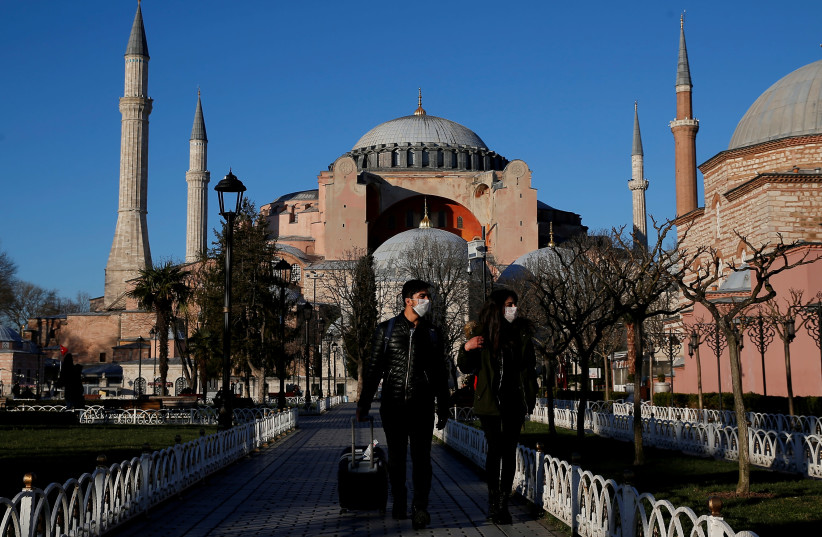
Tourists wearing protective face masks, due to coronavirus disease (COVID-19) concerns, stroll at Sultanahmet square in Istanbul, Turkey, March 17, 2020. (photo credit: REUTERS/KEMAL ASLAN)
Tourists wearing protective face masks, due to coronavirus disease (COVID-19) concerns, stroll at Sultanahmet square in Istanbul, Turkey, March 17, 2020.
(photo credit: REUTERS/KEMAL ASLAN)
The coronavirus is a Zionist plot spread by Jews to decrease the world population, some members of Turkey‘s press and public have said, according to the Middle East Media Research Institute (MEMRI).

MEMRI, which specializes in translating Middle Eastern media into English, has uncovered a number of incidences of Turks blaming the coronavirus epidemic on Jews and Zionism.

In a video posted to Twitter on March 13 by IMChaber24, a minibus driver and his passengers can be heard engaging in antisemitic conspiracy theories. The driver claims that all outbreaks, from AIDS to Ebola were created by pharmaceutical companies, before asking: “And to whom do the companies belong?”

A passenger suggests “the rich,” but the driver immediately counters with “the Jews.”

A fellow passenger then opines: “[The Jews] will do anything to end the lineage of the Turks,” to which another adds: “Not only Turks, sister, they will do anything to bring the world to its knees.”

The driver then has the last word on the matter, saying: “Anyway the Jews are a cursed race.”

This attitude can also be found among Turkey’s political class. On March 6, Fatih Erbakan, head of Refah Party and the son of former prime minister Necmettin Erbakan, was reported to have said in a speech: “Though we do not have certain evidence, this virus serves Zionism’s goals of decreasing the number of people and preventing it from increasing, and important research expresses this. Erbakan said: ‘Zionism is a five-thousand-year-old bacteria that has caused the suffering of people.'”Erbakan is widely believed to have been current Turkish President Recep Tayyip Erdoğan’s political mentor.

The media too are not exempt from such opinions. On March 10, Abdurrahman Dilipak, a columnist for daily Yeni Akit suggested that a possible Israeli vaccine for coronavirus was part of the plan: “Look how some people today have rolled up their sleeves to bring the Nazi dream to life. This is a fascist plan,” he wrote.

“Once they have finished their work with the gays and lesbians, of whom they appear to take ownership, their plan for their ‘removal’ is ready on the table, and this is an ordinary and easy task for them. It’s as if for them a woman is just a bionic robot doing its incubation duty on a human farm. But of course, they think that the population of the world must first be greatly decreased. The most cowardly example of this is the subversion and sterilization of the family! This is what they want to do. Maybe tomorrow they will present the vaccine for corona as a medicine, and they will add something sterilizing to it. And you know how the virus can spread on money, so that’s good for Bitcoin.”

Meanwhile, in a video posted to YouTube on March 13, a Turkish medical doctor has claimed that 60 percent of Turkey’s population is already infected with coronavirus, and that the government is refusing to provide test kits so that the true figure won’t be uncovered.

Turks have continued gathering at mosques to pray, believing the houses of worship to be immune from the virus.

“A virus cannot spread in Allah’s house,” one woman told Turkish journalist Seyhan Avşar on March 16.

She continued: “Also, the Quran has healing verses, we recite them continually. As our president said: ‘Cleanliness comes from faith.’… Also, if the virus is going to spread in the place where I came to read the Quran, then let it spread.”

An older man said: “No one dies before their time. I would come to the mosque even if I knew I would die [because of it].”

Their comments were made on the same day as Turkey’s Ministry of Religious Affairs announced that prayers would not be held in mosques to limit the spread of the virus.


Coronavirus hits terrorists hardest from ISIS to Iran – analysis 

March 18, 2020

Source: Coronavirus hits terrorists hardest from ISIS to Iran – analysis – The Jerusalem Post

After sanctions and military threats, the coronavirus may be the first factor that can slow Iran’s march toward a nuclear weapon.

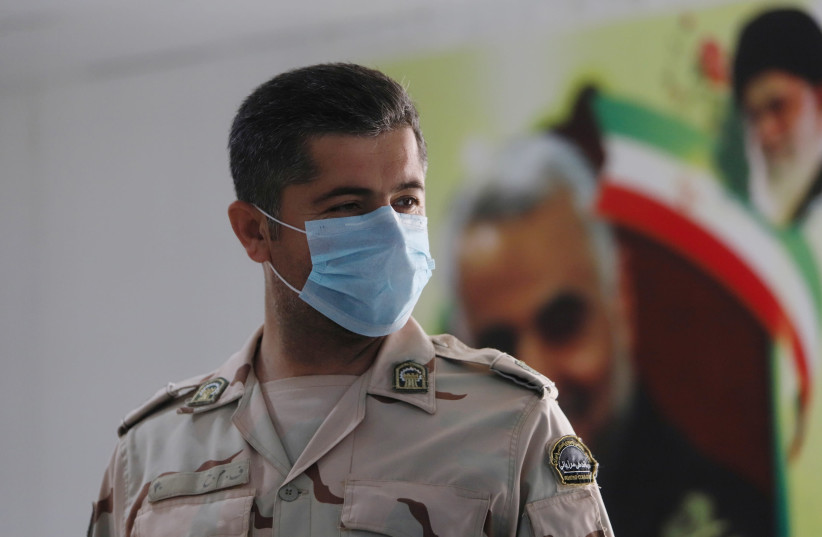
A member of Iranian Border Guards wears a protective face mask, following an outbreak of the new coronavirus, inside the Shalamcha Border Crossing, after Iraq shut a border crossing to travellers between Iraq and Iran, Iraq March 8, 2020 (photo credit: REUTERS/ESSAM AL-SUDANI)
A member of Iranian Border Guards wears a protective face mask, following an outbreak of the new coronavirus, inside the Shalamcha Border Crossing, after Iraq shut a border crossing to travellers between Iraq and Iran, Iraq March 8, 2020
(photo credit: REUTERS/ESSAM AL-SUDANI)
Amid all the chaos caused by the coronavirus tidal wave, it may also rid the world of many of its worst terrorists or at least freeze their activity.
There are no statistics for how it is impacting ISIS supporters and will be none as the group would never report negative data and has no connections to international groups like the WHO or the civilized world.
But ISIS’s stunning recent order to its followers to stay away from Europe means not only that it is afraid of future infection if its agents go there, but that its network of followers there is likely already being hit.
This would make lots of sense since ISIS members tend to be disconnected from the Western world and could have gone longer ignoring the dangers of infection than average people.
Furthermore, ISIS members would be wary of accepting medical assistance from the authorities in their host countries as their faces may already be on the wanted list.
Iran is the paradigm case of a regime sponsoring terrorism which is known to be getting hit harder than any other countries besides China and Italy.
The Islamic Republic is notoriously dishonest about numbers which can hurt its public relations.
So when on Tuesday its official count of dead reached close to 1,000 and over 14,000 persons infected, the real numbers are likely to be far higher.
Most significantly, top Iranian leaders, including an ayatollah, ministers and senior Islamic Revolutionary Guard Corps officials have been killed and infected by the coronavirus.
In that vein, much of Iran’s top leadership, including Supreme leader Ayatollah Ali Khamenei (who incidentally has not been seen during the crisis), are in the more endangered “elderly” category.
Some commentators have speculated that even after the coronavirus wave passes, Tehran may change some of its policies and colors because some of its key elderly old guard members may be dead.
Can Iran continue to enrich uranium at the same rate as scientists undoubtedly get infected and quarantines waylay others?
After sanctions and military threats, the coronavirus may be the first factor which can slow the regime’s march toward a nuclear weapon.
Israeli officials have also said that both the spread of the virus in parts of Syria, and Tehran generally being distracted by the internal crisis, have at least temporarily halted efforts to export its war machine against Israel into Syrian territory.
Iran is also having a much harder time fighting the coronavirus because years of sanctions caught the country at its weakest and most undersupplied point economically and medically.
Of course, the flip side of a country where there are many backwards attitudes toward science and medicine (one reason for the spread was Qom religious leaders urging followers to visit to receive blessings right as Qom became greatly infected) is that the regime may be more ready to suffer.
Israeli intelligence officials have noted that even if much larger numbers of people die in Iran, China or another country with strong regime control, the governments may be more impervious to public discontent.
Outbreaks of coronavirus have started to surface in Somalia where large portions of the country are under control of the al-Qaeda-linked al-Shabab armed group.
Once again, this terror group’s’ control and quantity of forces to maintain its reign of terror may be hit harder than other areas because of the lack of assistance and connections with the WHO and other Western countries who could help.
The same will likely be true for al-Qaeda in general in any country where it is trying to control territory and mixed in with the wider population.
The only wings of al-Qaeda which may fair better than Western societies could be wings where they were not infected during the initial stage and their extreme isolation from wider circles renders them more impervious to infection.
Coronavirus has not yet had a major impact on Gaza, but Hamas’s fear of it getting out of control has largely halted attempts to provoke Israel.
There was one recent small attack from Gaza and a minor Israeli response.
Top Hezbollah officials have reportedly been infected with the coronavirus during a visit by their Iranian sponsors. Hezbollah leader Hassan Nasrallah may be among them.
Like Hamas, Hezbollah is working to fight the virus and maintain order within Lebanon, leaving little time to fight Israel.
Terror groups worldwide without a state apparatus to fall back on will probably be hit hardest, potentially giving the world some time period of reprieve.
States and quasi-state entities like Iran, Hezbollah and Hamas will likely weather the storm, but their hostilities against Israel are likely to be halted, and the Islamic Republic may even see longer-term policy shifts if the virus takes down more higher-ups of the regime.