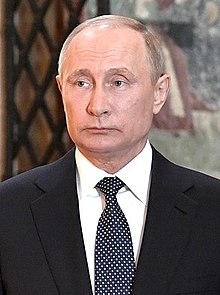
“We are continuing our conversations in order to reach a political solution in Syria.”
BY MAARIV ONLINE NOVEMBER 20, 2018 Jerusalem Post
Source Link: PUTIN TO ISRAEL, U.S.: LOOSEN SANCTIONS IN EXCHANGE FOR IRAN LEAVING SYRIA
{Two observations…one, Iran is clearly Russia’s pawn and, two, the sanctions must really be biting. – LS}
Russia offered Israel and the United States a deal involving Iran’s withdrawal of its forces from Syria in exchange for a reduction in American sanctions, Prime Minister Benjamin Netanyahu told a closed session of the Knesset’s Foreign and Security Committee Monday, Channel 10 News reported. The offer was made by Russian President Putin, according to an MK who was present at the meeting.
Netanyahu met Putin in Paris last week during the ceremonies marking the centenial of the armistice that ended the first World War, but it is unclear if Putin made the offer then. After the meeting, Netanyahu said that “the conversation with Putin was good, productive and very important. There is no point in going into further details.”
MKs said that Netanyahu said at the meeting that the Russians and Americans are in discussions on containing the Iranian influence in Syria, and held their last meeting on the issue on November 8 in Vienna.
According to the report, at the beginning of the month Netayahu met with the American envoy to Syria, Jim Jeffery, and discussed the matter with him. Netanyahu was asked by the Knesset members if Israel expressed its stance on the proposal, and he answered that at this stage there is no official Israeli position.
“We are continuing our conversations in order to reach a political solution in Syria,” a senior US State Department official told Channel 10. “We will not go into detail on the content of those diplomatic conversations.”
Source: IAF to supplement F-35 stealth jets with upgraded F-15 IA
The F-15 IA performance, considered to be superior to the older F-15 aircraft—which has been in IAF use since 1998—is what swayed the decision.
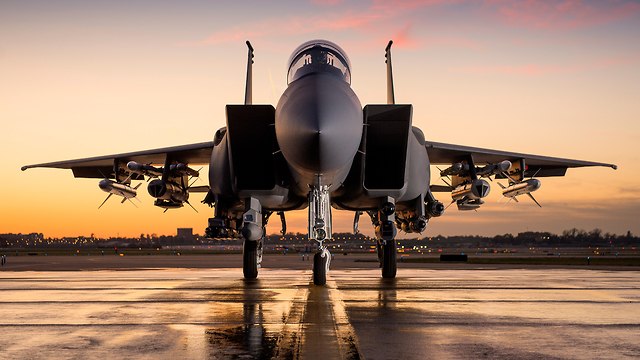
Indeed, the new F-15 can fly longer distances, has higher survivability, more advanced avionic systems, and a much better ordnance-carrying capacity. The jet can carry up to 13 tons of explosives—a capability unmatched by any other attack aircraft.
In the field of air-to-air warfare, the F-15 IA plane is capable of carrying 11 missiles, in addition to 28 heavy, smart bombs for ground targets.
In addition, the aircraft has the capability to carry all the weapons at the IAF’s disposal, including unique Israeli-made missiles, laser and electro-optical systems, and more.
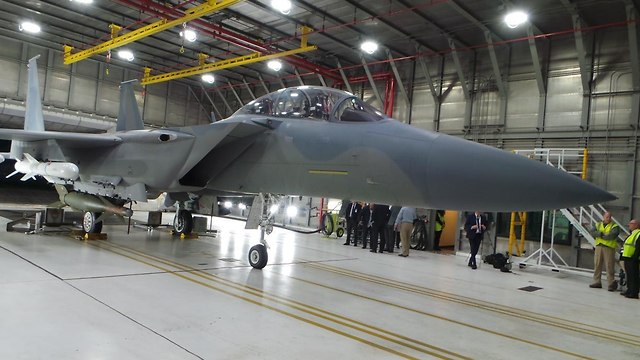
The plane was built by Boeing for the air forces of Qatar and Saudi Arabia, and initially the United States Air Force (USAF), through which the IAF purchased the planes, pressed Israel not to request to purchase the jets.
This is because the Americans had an interest in continuing the development of the stealth F-35 line, which have been acquired by the US military’s air and naval forces.
In the past year the USAF has begun to take an interest in the new F-15 IA plane, which gave Israel the green light to enter negotiations for its purchase. It seems as though the Americans have agreed to supply Israel with the new plane on condition that it will continue purchasing the F-35 stealth attack aircrafts.
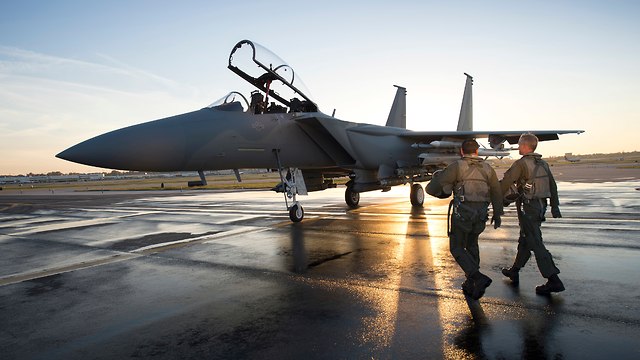
The IAF emphasized that the new F-15 will not completely replace the F-35 stealth fighter, but is intended to reinforce the systems currently in place to enhance the range of capabilities to an optimal position vis-à-vis its missions—from Iran to Gaza.
According to a document presented by the IDF to outgoing Defense Minister Avigdor Lieberman recently, the IAF intends to complete the purchase of the third stealth squadron at a lower rate—with up to three planes a year. Once the third squadron is complete, approximately in 10 years time, the IAF will have at least 75 F-35 stealth aircraft at its disposal.
The document submitted to Lieberman is one of the last to be approved by the outgoing defense minister. All the IDF’s purchases in the US in the coming decade, totaling $38 billion, have been submitted for governmental approval.
Source: EU open to Iran sanctions after foiled France, Denmark plots – Middle East – Jerusalem Post
Though still at an early stage, the EU’s readiness to penalize Iranians would be the first such move in years.
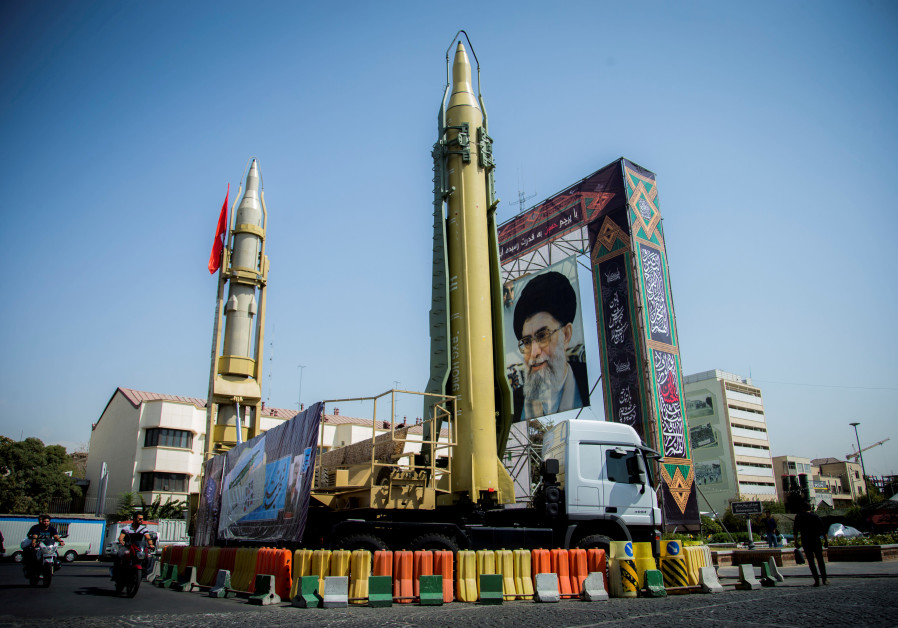
Denmark and France briefed their EU counterparts at a meeting in Brussels on the alleged plots and ministers agreed to consider targeted sanctions on Iranians in response, although no details or names were discussed, five diplomats told Reuters.
Though still at an early stage, the EU’s readiness to penalize Iranians would be the first such move in years after months of internal division over how to punish Iranians accused of destabilizing activities in Europe and the Middle East.
Until now, the EU has been straining to uphold the 2015 nuclear accord between Iran and world powers that US President Donald Trump pulled out of in May. It has been less willing to consider sanctions, instead seeking talks with Tehran.
Iran has warned it could ditch the nuclear deal if EU powers do not protect its trade and financial benefits.
France has already imposed sanctions on two Iranians and Iran’s intelligence service over what it says was a failed plot to carry out a bomb attack at a rally near Paris organized by an exiled Iranian opposition group. One option is to establish those asset freezes at an EU-wide level, diplomats said.
Denmark, which in October said it suspected an Iranian government intelligence service had tried to carry out an assassination plot on its soil, is also open to EU-wide sanctions, the diplomats told Reuters.
In October, France said there was no doubt that Iran’s intelligence ministry was behind the June plot to attack the demonstration by Iranian exiles near Paris.
It froze assets belonging to Tehran’s intelligence services and two Iranian nationals – a Vienna-based diplomat now under arrest in Belgium for the plot and the deputy minister and director general of intelligence, Saeid Hashemi Moghadam.
Neither appear to have held any assets in France. Paris also discreetly expelled an Iranian diplomat, diplomatic sources told Reuters last month.
Iran has denied any involvement in either alleged plot.
Under the 2015 deal, Iran restricted its disputed nuclear program, widely seen in the West as a disguised effort to develop the means to make atomic bombs, in exchange for an end to international sanctions against it.
MISSILE SANCTIONS DIDN’T FLY
In March, Britain, France and Germany proposed to sanction Iran over its development of ballistic missiles and its role in Syria’s war, but the initiative failed to gather sufficient support across the EU to take effect.
Italy was one EU country unwilling to countenance new measures as it sought to preserve business ties with Iran.
In an effort to balance Iran policy, the ministers at their meeting on Monday also tried to press ahead in setting up a special mechanism to trade with Iran that could be under EU, not national, law.
The Special Purpose Vehicle (SPV) is a kind of clearing house that could be used to help match Iranian oil and gas exports against purchases of EU goods in an effective barter arrangement circumventing U.S. sanctions, which are based on global use of the dollar for oil sales.
Despite technical difficulties and delays, the EU believes this formula could shield individual member states from being hit by U.S. sanctions that have been reimposed on trade with Iran after Washington’s pullout from the nuclear deal.
“There is a willingness for the financial vehicle … to be set up quickly,” French Foreign Minister Jean-Yves Le Drian told reporters.
However, no country has come forward as a potential host. Their reluctance arises from fears that SPV reliance on local banks to smooth trade with Iran may incur US penalties, severing the lenders’ access to US markets, diplomats said.
Luxembourg is seen as a good candidate to manage the Iran SPV given its experience in creating a similar mechanism during the 2009-12 euro zone financial crisis.
Source: Iranian-backed Houthi forces in Yemen fire missile at Saudi coalition – Middle East – Jerusalem Post
The missile used solid-propellant and was termed as Badr P-1, an upgrade from the Badr-1.
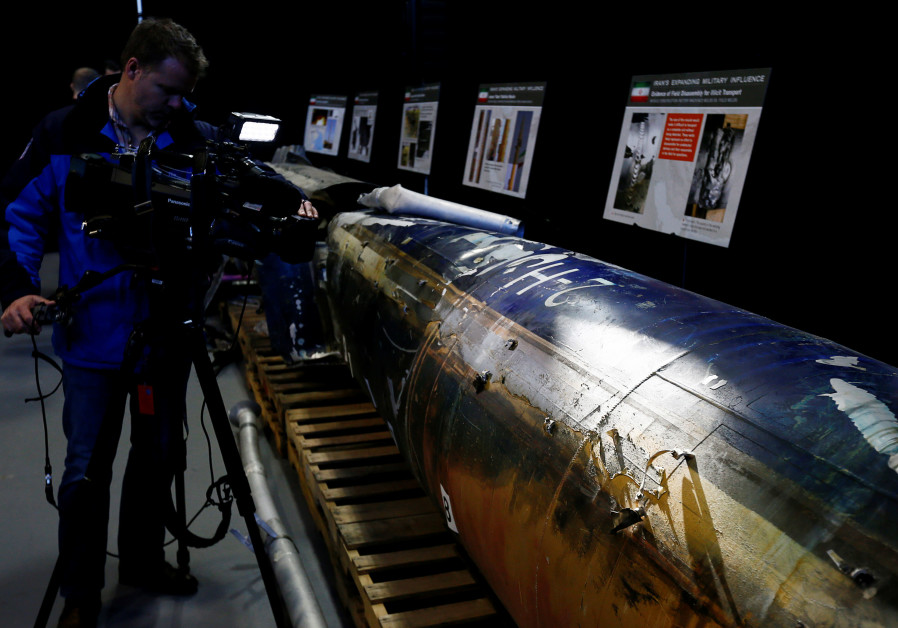
Iranian media reported on Monday that the Iranian-backed Houthi rebels in Yemen fired a precision missile at Saudi-led coalition headquarters. It is not the first time the Yemeni-produced Badr P-1 ballistic missile has been used, but it represents another attempt by Iranian media to boast about the accuracy of their ballistic missile program, which is part of the wider network of Iranian-backed precision-missile weapons programs and technology transfer, including Hezbollah.
In late October, Houthi rebels in Yemen unveiled what they called a “domestically designed and manufactured smart missile intended to precisely hit specific targets.” It had all the trappings of a highly sophisticated weapon. They claimed it would minimize collateral damage and “increase lethality against designated targets.” It was designed to counter the Riyadh regime and the “atrocities of aerial bombardment” carried out by the Saudi-led coalition, which has been fighting the Houthis since 2015.
The missile used solid-propellant and was termed as Badr P-1, an upgrade from the Badr-1. It was said to have a pinpoint accuracy of “up to three meters.” The UN and other countries have alleged that Iran has transferred missile technology and parts to the Houthis. In early November, the Houthis claimed to have fired a Badr P-1 at a Saudi military base. Now another missile has been fired at Saudi forces in the Midi desert.
“The missile hit the target with high precision and led to the deaths and injuries of a number of military allied forces with the Saudi coalition,” said Fars News on Monday. It claimed that the missile’s success was part of a larger program, which may include “other missiles.” How the Iranian-based Fars knows there are “other missiles” is unclear.
The missile firing was mentioned on social media as well. The missile appears to be around six meters long, making it similar to a Fajr-5 artillery rocket. In February 2017, Iran unveiled a guided version called the Fajr-5C. Iran has an extensive missile program and has been increasing the precision of its ballistic missiles in the past year, by striking at Kurdish opposition forces in Iraq in September and against ISIS in Syria in October.
The Houthi decision to go public with the missile – hosting a kind of reception for it with non-alcoholic beverages and a TV screen claiming to show its attributes as if it was a sales presentation at an arms show – shows they are trying to illustrate their abilities. The fact that Iranian media got fed the video shows a clear notion of where the support comes from. On the one hand, the Houthis put forward a narrative of starving Yemen being attacked by Saudi Arabia, while they developed precision munitions. This would appear to show that while there is massive suffering in Yemen and millions at risk of starvation, the actual conflict between the Houthis and the Saudi coalition is not so clear cut. The missile program they exhibit also has links to the wider Iranian attempt to support missile programs among Hezbollah and Hamas, either through financial support or direct technology transfers.
Two citizens from Argentina were arrested on Thursday because they had suspected links to Lebanon’s Hezbollah, according to Al Jazeera.
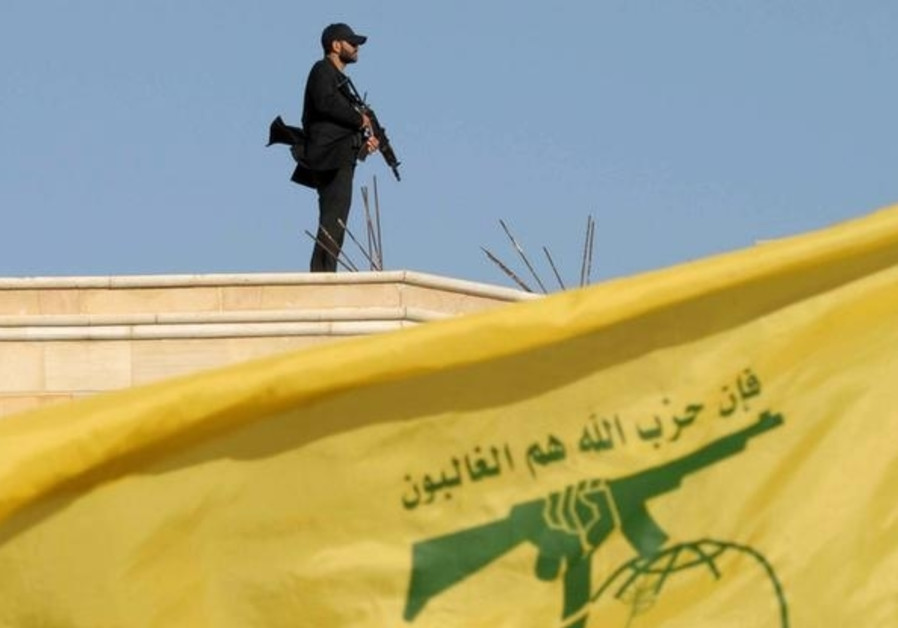
The Mossad allegedly provided intelligence to Argentina which helped successfully thwart a Hezbollah plot to attack Jewish community centers in Buenos Aires, according to Channel 2.
Two citizens from Argentina were arrested on Thursday because they had suspected links to Lebanon’s Hezbollah, according to Al Jazeera.
The two men, 23 and 25, were arrested in Buenos Aires after police found they had a cache of weapons including a rifle, shotgun and a number of other weapons, a report stated.
Police said they found an image of a Hezbollah flag, credentials in Arabic and proof that the two had traveled abroad.
On Tuesday, the US State Department designated as a terrorist Jawad Nasrallah, the son of Hezbollah leader Hassan Nasrallah. The department also accused him of carrying out attacks against Israel in the West Bank.
In 1992, Iran bombed the Israeli embassy in Buenos Aires, killing 29 people and injuring 242. Two years later, Hezbollah bombed the AMIA Jewish community center in the city, an attack that killed 85 people and injured hundreds.
Reuters contributed to this report.
Source: Saudi king urges action against Iran, backs Yemen peace efforts – Israel Hayom
King Salman blames Iran for creating chaos in the Persian Gulf, urges the international community to curb Islamic republic’s nuclear and ballistic missile programs • World must stop “Iranian activities that threaten security and stability,” monarch says.
|
King Salman of Saudi Arabia
| Photo: AP
|
Saudi Arabia’s King Salman urged the international community on Monday to halt Iran’s nuclear and ballistic missile programs and reiterated the kingdom’s support for U.N. efforts to end the war in Yemen.
The king’s annual remarks to the Shura Council, a top governmental advisory body, were his first public comments since the murder of journalist Jamal Khashoggi at the Saudi consulate in Istanbul on Oct. 2, which caused a global outcry.
King Salman, who made no mention of the Khashoggi affair, condemned the actions of Iran, its rival for influence in the region, including in the conflicts in Syria, Iraq and Yemen.
“The Iranian regime has always intervened in the internal affairs of other countries, sponsored terrorism, created chaos and devastation in many countries in the region,” the 82-year-old monarch said.
“The international community has to work to put an end to the Iranian nuclear program and stop its activities that threaten security and stability.”
The king said Riyadh supported U.N. efforts to end the conflict in Yemen, where a Saudi-backed coalition has been battling Iran-aligned Houthi rebels for nearly four years to restore the internationally-recognized government.
“Our standing by Yemen was not an option but a duty to support the Yemeni people in confronting the aggression of Iranian-backed militias,” he said.
The Houthis said on Monday they were halting drone and missile attacks on Saudi Arabia, the United Arab Emirates and their Yemeni allies, and indicated readiness for a broader ceasefire if the Saudi-led coalition “wants peace”.
Riyadh has come under growing international criticism for its conduct of the Yemen war, which has brought the country to the brink of famine and killed many civilians in air strikes.
The reputation of Saudi Arabia, the world’s top oil exporter, has been further battered by Khashoggi’s murder.
The king had largely stepped back from active political life and handed extensive authority to his son and heir apparent, Crown Prince Mohammed, but is now trying to defuse the crisis caused by the murder and shore up the crown prince.
Prince Mohammed, the kingdom’s de-facto ruler, will participate in the G20 summit in Argentina at the end of the month as part of a foreign trip, Al Arabiya television quoted the country’s energy minister as saying on Monday.
In his speech, King Salman said Riyadh would continue working with OPEC and non-OPEC oil producers to maintain stability in global energy markets.
Last week, after offering numerous contradictory explanations for Khashoggi’s disappearance, Riyadh said he had been killed and his body dismembered when “negotiations” to convince him to return to Saudi Arabia failed. The public prosecutor said it would seek the death penalty for five suspects in the case.
Turkish President Tayyip Erdogan has said the order for the killing of Khashoggi came from the highest level of the Saudi leadership but probably not from King Salman, putting the spotlight instead on the 33-year-old crown prince.
U.S. President Donald Trump has suggested ultimate responsibility lies with the prince as de-facto ruler. His administration has imposed economic and travel restrictions on a few individuals for alleged involvement, including a top aide to Prince Mohammed..
On Monday, the king signaled that the crown prince remains empowered to pursue ambitious economic reforms, praising a “comprehensive developmental transformation” underway. He directed his son, sitting in the hall, “to focus on … preparing the new generation for future jobs.”
King Salman also praised the Saudi judiciary and prosecution service for “performing the duties they were entrusted with”, without elaborating.
In addition to the Khashoggi case, the public prosecutor has participated in an anti-corruption campaign ordered by Prince Mohammed last year in which scores of princes, ministers and businessmen were arrested and the state said it recovered $100 billion in stolen assets.
Source: Beirut asks for Russia’s air defense net to cover Lebanon as well as Syria – DEBKAfile

Exclusive: Lebanese President Michel Aoun has asked Moscow to bring Lebanese air space under the protection of the Russian air defense system being deployed in Syria, DEBKAfile’s military and intelligence sources reveal.
President Vladimir Putin has not yet replied to the request which Aoun posted through back channels. But neither has he so far turned him down. For now, it is under discussion at the highest levels of the Russian defense ministry, which tend to recommend approval.
According to our sources, the framing of Beirut’s request went through several drafts with the help of President Aoun’s friend and ally, Hizballah’s leader Hassan Nasrallah, until he approved it – meaning, until Tehran approved it. If Putin decides to grant the Lebanese request for Russian air defense cover, Israel would face a further Russian restraint on its air force’s operations in the eastern Mediterranean, over and above the powerful Russian air defense system which is in the last stages of deployment in Syria.
This system is composed of S-300, S-400 and Pantsir-S1E air defense missiles, boosted by layers of medium- and short-range anti-air batteries and an advanced electronic warfare network. This sophisticated edifice was designed by Moscow to provide the ultimate answer to any aerial threats the US and Israeli warplanes were capable of posing from Syria’s skies.
Putin’s accession to the Lebanese request would provide Hizballah, Iran’s proxy, for the first time with an umbrella by a world power against a potential Israeli air attack.
Prime Minister Binyamin Netanyahu’s assurance to the Knesset Foreign Affairs and Security Committee on Sunday, Nov. 18 that Israel’s air force faces no restrictions in its operations over Syria, is far from realistic in the light of Russia’s counter-measures. As for his assertion that the air force slowed those operations because Iran had reduced its arms deliveries to that country, DEBKAfile’s military and intelligence fill in this picture.
Iran has in fact completed its current round of war materiel shipments to Hizballah and was able to do so during the pause in Israel air strikes. The most alarming item reaching the Lebanese terrorists were components for upgrading Hizballah’s surface rockets with precision guidance GPS. This upgrading has been going forward in dozens of small workshops distributed across Lebanon and parts of Syria. If Putin agrees to extend Russian air defense cover to Lebanon, those workshops will be that much harder for Israeli bombers to destroy – thrusting another major Russian spoke in Israel’s security wheel.
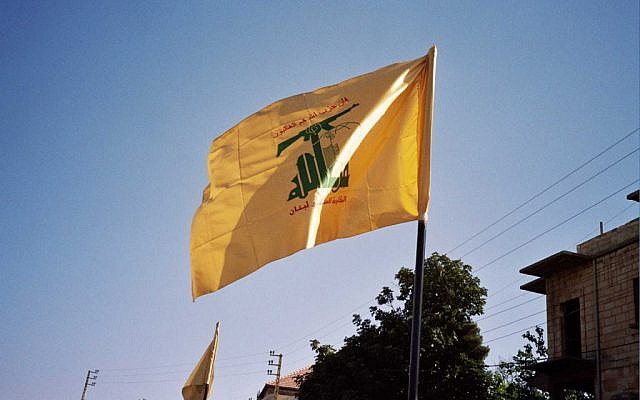
Israel’s intelligence service reportedly passed information which led to arrest of suspects in Buenos Aires; 3 men said to confirm they planned to attack Jewish targets
By Times Of Israel STAFF November 19,2918
Source Link: Mossad said to thwart Hezbollah terror plot against Jewish targets in Argentina
{Brought to you by the world sponsor of terrorism, the Islamic Republic of Iran. – LS}
A terror plot against Jewish targets was thwarted when the Mossad intelligence service passed information to Argentinian security officials which led to the arrest of suspected members of the Hezbollah terrorist group, Hadashot TV reported Monday.
According to the report, police arrested two brothers and their cousin at a hideout in Buenos Aires which was found to contain an arsenal of weapons and explosives. The suspects were said to have admitted they planned to attack Jewish targets in the country.
The two men, aged 23 and 25, were arrested at a Buenos Aires residence, and were also found to be in possession of a “small arsenal” including a rifle, a shotgun and a number of handguns.
A Hezbollah suicide bomber carried out the 1994 attack on the AMIA Jewish center in Buenos Aires. The attack, orchestrated by Iran, killed 85.
Earlier this year the Argentine government targeted a Hezbollah fundraising network in the northern Triple Frontier with Brazil and Paraguay.
Israeli officials have repeatedly stated that the Mossad not only is responsible for preventing attacks against Israeli targets, but also provides intelligence to Israel’s allies around the world.
In October, Israeli officials said the Mossad provided its Danish counterpart with information concerning an alleged plot by Tehran to assassinate three Iranian opposition figures living in the Scandinavian country.

US President Donald Trump on Sunday defended his administration’s decision to stop hundreds of millions of dollars in military aid to Pakistan, saying the country does not do “a damn thing” for the US and its government had helped Al-Qaeda leader Osama bin Laden hide near its city.
By ROBERT SPENCER — NOVEMBER 19, 2018 Freedom Outpost
Source Link: Trump Ends $1.3 Billion Payments To Pakistan: I Ended It Because They Don’t Do Anything For Us
{It’s refreshing to see some real leadership in this country for a change. – LS}
Bravo. This is long overdue. For years I’ve called for a reconfiguration of our global alliances in light of the realities of the global jihad. The alliance with Pakistan was always a sham, and should have been ended long ago. “…we give Pakistan $1.3 billion a year. … (Laden) lived in Pakistan, we’re supporting Pakistan, we’re giving them $1.3 billion a year – which we don’t give them anymore, by the way, I ended it because they don’t do anything for us, they don’t do a damn thing for us,” he said.”
“Pakistan doesn’t ‘care’ about US: Trump,” by Shafqat Ali, Nation.pk, November 19, 2018:
Islamabad/WASHINGTON – US President Donald Trump on Sunday defended his administration’s decision to stop hundreds of millions of dollars in military aid to Pakistan, saying the country does not do “a damn thing” for the US and its government had helped Al-Qaeda leader Osama bin Laden hide near its city.
Referring to Laden and his former compound in Abbottabad, Trump in an interview to Fox News said “You know, living – think of this – living in Pakistan, beautifully in Pakistan in what I guess they considered a nice mansion, I don’t know, I’ve seen nicer.”
The compound was demolished shortly after US Naval Special Warfare Development Group forces, in a daring helicopter raid, killed Laden there in 2011.
“But living in Pakistan right next to the military academy, everybody in Pakistan knew he was there,” Trump added. “And we give Pakistan $1.3 billion a year. … (Laden) lived in Pakistan, we’re supporting Pakistan, we’re giving them $1.3 billion a year – which we don’t give them anymore, by the way, I ended it because they don’t do anything for us, they don’t do a damn thing for us,” he said.
The ties between the two countries strained after Trump, while announcing his Afghanistan and South Asia policy in August last year, hit out at Pakistan for providing safe havens to “agents of chaos” that kill Americans in Afghanistan and warned Islamabad that it has “much to lose” by harbouring terrorists.
In September, the Trump administration cancelled $300 million in military aid to Islamabad for not doing enough against terror groups active on its soil.
Trump also said that he has plans to visit Iraq and Afghanistan to meet American troops stationed there. “Well, I think you will see that happen. There are things that are being planned. We don’t want to talk about it because of – obviously because of security reasons and everything else,” he said.
Trump has been criticised by his political opponents for not visiting either Afghanistan or Iraq in the first two years of his presidency….




 anneinpt
 artaxes
 danmillerinpanama
 davidking1530
 Peter Hofman
 Joseph Wouk
 Peter
Peter Louisiana Steve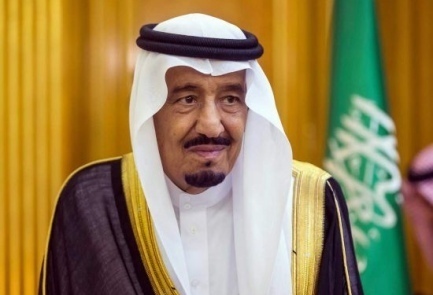
 WarSclerotic
Recent Comments