Archive for September 2018

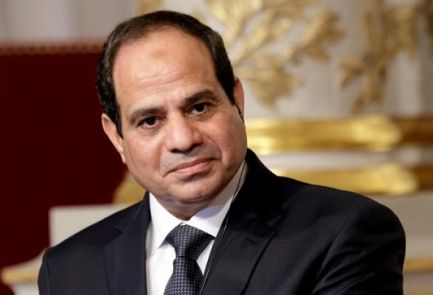
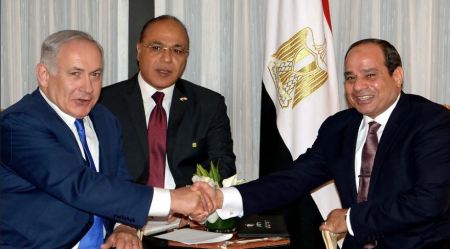
Israeli official: PM Netanyahu to meet Egypt’s el-Sissi in New York 

September 25, 2018

Source: Israeli official: PM Netanyahu to meet Egypt’s el-Sissi in New York – Israel Hayom


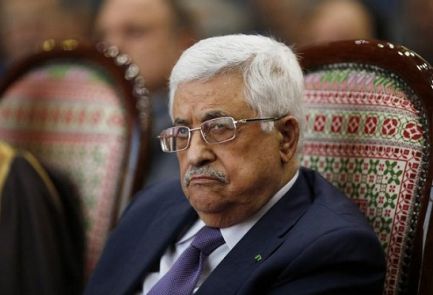
Report: PA leader aims to undercut US peace plan at UN

September 25, 2018

Source: Report: PA leader aims to undercut US peace plan at UN ‎ – Israel Hayom


Trump eagerly awaiting meeting with Netanyahu, U.S. envoy says 

September 25, 2018

Source: Trump eagerly awaiting meeting with Netanyahu, U.S. envoy says – Israel Hayom


Trump’s support for Israel matters 

September 25, 2018

Source: Trump’s support for Israel matters – Israel Hayom

Dr. Haim Shine

It has been many years since a president as sympathetic to Israel as Donald Trump has inhabited the White House. Trump is not held hostage by political correctness and is able to tell the difference between good and evil. Unlike his predecessor, Barack Obama, Trump does not adhere to the belief that Israel is the source of the Middle East conflict.

The U.S. Embassy’s relocation to Jerusalem, the support for Israel at the United Nations and the firm stance against the Iranian threat are just a sampling of the support and concern the Trump administration has shown for the State of Israel. This support and assistance will be even more necessary at a time when Russia and Iran are entrenching themselves in Syria, right on our northern border.

Trump’s support for Israel is not about getting the Jewish vote. Most secular, Reform and Conservative Jews in the U.S. are loyal Democrats. In the 2016 election, they supported Democratic candidate Hillary Clinton, who was expected to continue the policies of Obama, a man hostile to Israel for its supposed victimization of the Palestinians. You can no longer accuse these Jews of dual loyalty: They have relinquished their allegiance to Israel. In contrast, Orthodox Jews did vote for Trump, clearly understanding that his election was in the interests of the Jewish state.

One can safely assume Trump is very disappointed by the hostile treatment he has received from many U.S. Jews over his pro-Israel actions. The Jewish Left in the U.S. as well as in Israel is unable to recognize the good in someone who thinks differently from them. The petty politics of left-wing liberal Jews are serving to unravel historic Jewish solidarity.

Sukkot is a holiday centered on brotherhood and unity. Jews, rich and poor alike, leave their regular homes for a temporary hut, the sukkah, bringing together the four species, which represent diverse entities of human existence. During Simchat Torah, Israeli Jews celebrate the Second Hakafot in a show of solidarity with Diaspora Jews, who celebrate the holiday for two days.

These holidays serve to intensify collective Jewish memory from that long journey through the Sinai Desert in ancient times to the present.

Seventy years ago, a new layer of Jewish existence was added with the establishment of the Jewish nation-state. Throughout the Diaspora, Jews felt exhilaration, pride, a sense of history and a reconnection to our homeland after thousands of years of exile. These wonderful feelings increased after the 1967 Six-Day War, which brought us back our capital and biblical heartlands. For a while, the tumultuous arguments between the religious and the secular, Zionists and anti-Zionists, Israelis and Diaspora Jews were forgotten.

But now it seems the sense of solidarity between Israel and the large Jewish Diaspora in the United States is tearing at the seams and perhaps on the path to disappearing altogether.

At a time when we celebrate brotherhood, it is important that American Jews understand that the good of Israel should be a priority for them too. If Trump is good for Israel, he is good for American Jews. It is important that this insight be clearly expressed.

PM warns against Russian delivery of S-300 system to ‘irresponsible’ Syria 

September 25, 2018

Source: PM warns against Russian delivery of S-300 system to ‘irresponsible’ Syria – Israel Hayom


A tactical incident turned strategic crisis 

September 25, 2018

Source: A tactical incident turned strategic crisis – Israel Hayom

Yoav Limor

A week after Syrian air defenses accidentally downed ‎a Russian reconnaissance plane over Latakia, this ‎tactical incident has evolved into a serious ‎strategic problem. ‎

Russia’s insistence that Israel was to blame for the ‎incident and the harsh messages coming out of the ‎Kremlin leave little doubt, even among the most ‎optimistic pundits, that reality in Syria is about ‎to change. ‎

Russian interests in deciding to give Syria advanced ‎S-300 missile defense systems are complex. They are ‎driven by the need to appease public opinion over ‎the deaths of 15 servicemen in the incident, as well ‎as by Moscow’s aspirations to cement its regional ‎and global hegemony.‎

This move should also clarify to anyone who assumed ‎that Russia, which stepped into the Syrian civil war ‎in 2015 to help its ally, President Bashar Assad, was ‎somehow “on Israel’s side” that this was no more ‎that wishful thinking.‎

Russia is not on Israel’s side. It never was. Russia ‎is on Russia’s side, and if a choice has to be made, it will ‎first and foremost side with its ally Syria, the rehabilitation of which would benefit the Kremlin’s ‎regional interests in the future. ‎

Russia’s exploitation of the incident to serve its interests becomes even ‎clearer given that the facts of the case are ‎indisputable. ‎

The Israeli Air Force conducted a professional and ‎thorough investigation into the circumstances that ‎led to the Russian plane’s downing and the ‎conclusive findings were presented by IAF ‎Commander Maj. Gen. Amikam Norkin in full to top ‎Russian defense officials, who initially seemed to ‎have accepted them.‎

The alleged “new” details presented later by the ‎Russian Defense Ministry – and Moscow’s blatant ‎disregard of Syria’s responsibility for ‎the incident – were merely meant to justify the ‎Kremlin’s next moves. ‎

It remains to be seen whether Russia will execute ‎its plans, which also include restricting Syria’s ‎air and maritime space, and to what extent, but ‎these moves and their aggressive undertone should worry Israel. ‎

Russia was never a fan of the IAF’s operations in ‎Syria, but it was willing to look the other way ‎until now. Given recent developments, Moscow is ‎determined to show who really controls the ‎situation, even if that means directly compromising ‎Israel’s security.‎

The potential danger of delivering S-300 systems ‎to Syria is a familiar one. Still, it will take a ‎long time for Syrian forces to master the systems and, ‎according to foreign media reports, the IAF has been ‎training overseas on how to counter them, so ‎while they may partially tie Israel’s hands, they ‎will not come as a surprise to Israeli pilots.‎

The bigger concern should be the implied Russian ‎intention to use frequency jamming technology to ‎obstruct incoming offensives. ‎

The IAF relies on advanced technologies and GPS-‎based weapon guidance systems to strike targets in Syria, ‎and it is unclear how these systems will weather ‎such jamming. This threat must be taken seriously ‎not only because it may place Israel and Russia on a ‎direct collision course, but because it could ‎potentially place the lives of Israeli pilots at ‎risk and undermine Israeli operations against ‎serious threats in Syria.‎

Russia’s statements have prompted the United States ‎to weigh in on the matter as well, albeit a week ‎too late.

But it is doubtful that U.S. National ‎Security Adviser John Bolton’s warning that delivering ‎S-300 defense systems to Syria will significantly ‎escalate regional tensions will change Russian ‎policy. ‎

Bolton’s statement did, however, make it clear that ‎Israel is not alone in this fight, as he stressed ‎that American troops will not leave Syria as long as ‎Iran operates in the war-torn country.‎

Still, this situation remains mostly Israel’s problem. While it is unclear how the incident will affect the IAF’s operations in ‎Syria, it is safe to assume that the coming weeks will ‎see fewer – and more anxious – Israeli strikes. ‎

The Israeli government will undoubtedly spare ‎no effort to repair relations with Moscow, but there ‎is no telling how long that will take.‎

The downing of the Russian reconnaissance plane will ‎continue to cloud Israel’s operations in the ‎northern sector for the foreseeable future. There is ‎no doubt that Iran will now try to stir up more ‎trouble between Israel and Russia, and countering ‎that will require tightening of the coordination ‎between the Russian and Israeli leaders and ‎militaries.

This will also require a great deal of ‎luck so that Israel will not find itself in ‎Russia’s crosshairs again. ‎

Netanyahu expected to deliver ‘new information’ at UN confab

September 25, 2018

Hmmmm…

https://www.ynetnews.com/articles/0,7340,L-5356434,00.html

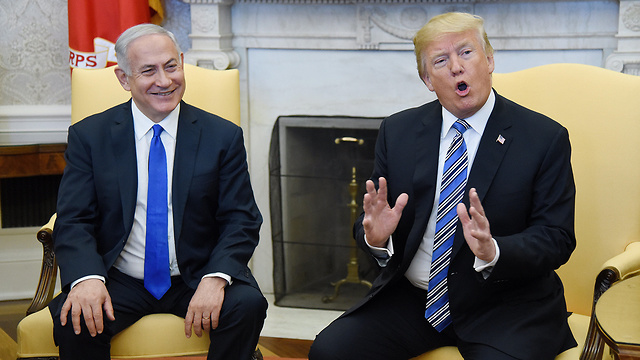
President Trump and PM Netanyahu (Photo: MCT)

Close associate of PM says his speech on Thursday to the United Nations General Assembly, on the sidelines of which he will meet with President Trump, will leave a ‘strong impression on the entire world’; so far, some 30 states have requested meetings with the PM while in New York.

Prime Minister Benjamin Netanyahu will deliver “new information” in his speech this week to the United Nations General Assembly, according to a close associate of the Israeli leader.

Netanyahu will depart for New York on Tuesday to participate in the UN confab on the sidelines of which he is expected to meet with US President Donald Trump to discuss efforts to renew peace talks with the Palestinians.

The two leaders will also discuss Washington’s punitive measures taken against Iran for its terror activities and for seeking to entrench its military in Syria.

Netanyahu’s speech, which will be delivered on Thursday, will be “great, extremely interesting, with new information that will be revealed and leave a strong impression on the entire world,” said a close associate of the prime minister.

Officials familiar with the planned speech say that the new information will concern Israel’s arch-foe, Iran.

Ahead of the General Assembly meeting, the Prime Minister’s Office has received requests from 30 countries for their leaders to meet with Netanyahu in New York. However, the majority of the requests will be rejected due to limited time and a packed schedule.

The meeting between Trump and Netanyahu comes amid tensions between Russia and Israel over the downing of a Russian plane by the Syrian army whose air defenses were trying to repel and IAF strike.

The IAF’s Suter electronic warfare system

September 25, 2018

When I was reading this recent post from Joseph:

Russia declares electronic war on Israel ranging over Syria, E. Mediterranean – DEBKAfile

I was intrigued by this bit:

They could meet Moscow’s challenge for an electronic duel. In previous encounters, Israel came of best. In 1982, the Israeli Air Force destroyed a Russian air defense network installed by Russia in the Lebanese Beqaa Valley; and more recently, in 2007, Israeli planes, before destroying the Iranian-North Korean plutonium reactor in Deir Ez-Zour, activated its “Suter” system to “blind” the Syrian/Russian radar protecting the site.

I hadn’t heard of the Suter system before. So I did some googling and came across the articles at links below, very interesting stuff.

How a Syrian nuclear facility was destroyed by the Israeli Air Force 7 years ago today

https://theaviationist.com/tag/suter/

The Israeli ‘E-tack’ on Syria – Part I

https://www.airforce-technology.com/features/feature1625/

The Israeli ‘E-tack’ on Syria – Part II

https://www.airforce-technology.com/features/feature1669/

At UN, unrepentant Trump set to rattle foes, friends alike

September 25, 2018

Source: At UN, unrepentant Trump set to rattle foes, friends alike | The Times of Israel

President to stress dedication to primacy of US interests, while competing with Western allies for advantage on trade, and shining spotlight on Iran

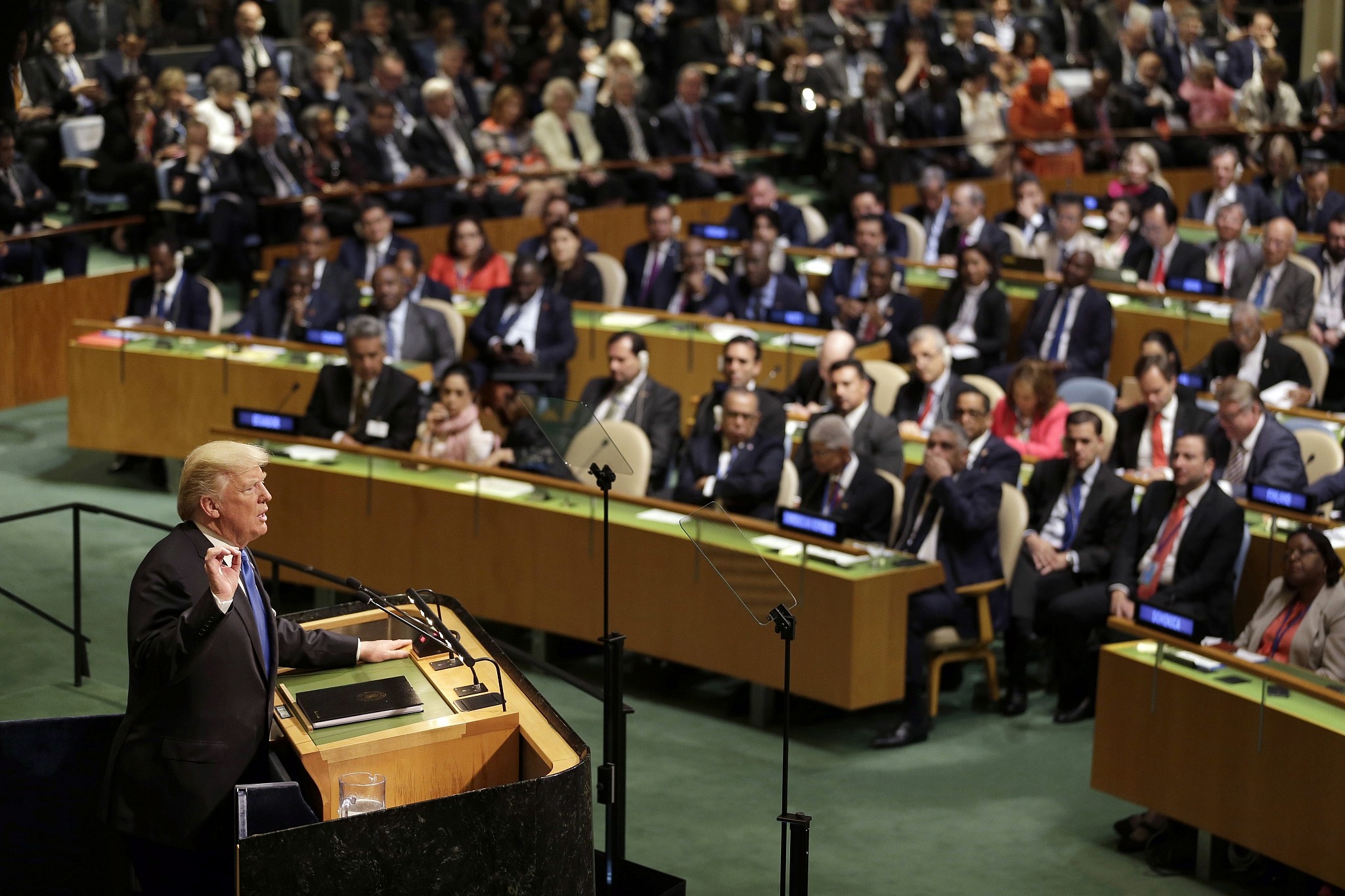
In this Sept. 19, 2017, file photo, President Donald Trump speaks during the United Nations General Assembly at UN headquarters (AP/Seth Wenig, File)

In this Sept. 19, 2017, file photo, President Donald Trump speaks during the United Nations General Assembly at UN headquarters (AP/Seth Wenig, File)

BRIDGEWATER, New Jersey (AP) — President Donald Trump is poised to redouble his commitment to “America First” on the most global of stages this week.

In the sequel to his stormy UN debut, Trump will stress his dedication to the primacy of US interests while competing with Western allies for an advantage on trade and shining a spotlight on the threat that he says Iran poses to the Middle East and beyond.

One year after Trump stood at the rostrum of the UN General Assembly and derided North Korea’s Kim Jong Un as “Rocket Man,” the push to denuclearize the Korean Peninsula is a work in progress, although fears of war have given way to hopes for rapprochement.

Scores of world leaders, even those representing America’s closest friends, remain wary of Trump. In the 12 months since his last visit to the UN, the president has jolted the global status quo by pulling out of the Iran nuclear deal, starting trade conflicts with China and the West and embracing Russia’s Vladimir Putin even as the investigation into the US president’s ties to Moscow moves closer to the Oval Office.

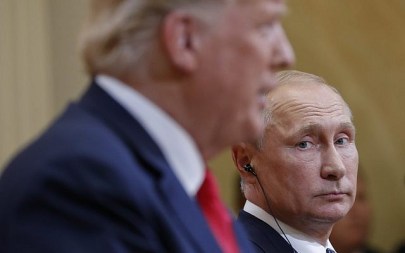
Russian President Vladimir Putin looks over toward US President Donald Trump, as Trump speaks during their joint news conference at the Presidential Palace in Helsinki, Finland, Monday, July 16, 2018. (AP Photo/Pablo Martinez Monsivais)

Long critical of the United Nations, Trump delivered a warning shot ahead of his arrival by declaring that the world body had “not lived up to” its potential.

“It’s always been surprising to me that more things aren’t resolved,” Trump said in a weekend video message, “because you have all of these countries getting together in one location but it doesn’t seem to get there. I think it will.”

If there is a throughline to the still-evolving Trump doctrine on foreign policy, it is that the president will not subordinate American interests on the world stage, whether for economic, military or political gain.

Nikki Haley, the US ambassador to the United Nations, told reporters in a preview of Trump’s visit, that the president’s focus “will be very much on the United States,” its role and the relations it wants to build.

“He is looking forward to talking about foreign policy successes the United States has had over the past year and where we’re going to go from here,” she said. “He wants to talk about protecting US sovereignty,” while building relationships with nations that “share those values.”

In his four-day visit to New York, Trump will deliver major speeches and meet with representatives of a world order that he has so often upended in the past year. Like a year ago, North Korea’s nuclear threat will hover over the gathering, though its shadow may appear somewhat less ominous.

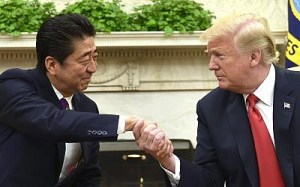
The nuclear threat was sure to be on the agenda at Trump’s first meeting, a dinner with Japanese Prime Minister Shinzo Abe in Manhattan on Sunday night. Abe stands first among world leaders in cultivating a close relationship with the president through displays of flattery that he has used to advance his efforts to influence the unpredictable American leader.

US President Donald Trump shakes hands with Japanese Prime Minister Shinzo Abe in the Oval Office of the White House in Washington, June 7, 2018. (AP Photo/Susan Walsh)

On Monday afternoon, Trump planned to sit down with South Korean President Moon Jae-in, who comes bearing a personal message to Trump from North Korea’s Kim after their inter-Korean talks last week. Trump and Moon were expected to sign a new version of the US-South Korean trade agreement, one of Trump’s first successes in his effort to renegotiate trade deals on more favorable terms for the US.

Even so, some US officials worry that South Korea’s eagerness to restore relations with the North could reduce sanctions pressure on Kim’s government, hampering efforts to negotiate a nuclear accord.

“We have our eyes wide open,” Secretary of State Mike Pompeo told NBC’s “Meet the Press” on Sunday. “There is a long ways to go to get Chairman Kim to live up to the commitment that he made to President Trump and, indeed, to the demands of the world in the UN Security Council resolutions to get him to fully denuclearize.”

Trump’s address to the General Assembly comes Tuesday, and on Wednesday he will for the first time chair the Security Council, with the stated topic of non-proliferation of nuclear, chemical and biological weapons. The subject initially was to have been Iran, but that could have allowed Iranian President Hassan Rouhani to attend, creating a potentially awkward situation for the US leader.

Aides say the president will also use the session to discuss North Korea and other proliferation issues. While Trump is not seeking a meeting with Rouhani, he is open to talking with the Iranian leader if Rouhani requests one, administration officials said.

In meetings with European leaders as well as during the Security Council session, Trump plans to try to make the case that global companies are cutting ties with Iran ahead of the reimposition in five weeks of tough sanctions against Tehran. The penalties are a result of Trump’s decision to withdraw the US from the 2015 Iran nuclear deal.

Trump at the time cited Iran’s role as a malign force in the region, particularly its support of terrorist groups, but also its involvement in Syria. US officials say their priority for the region now is removing Iranian forces from Syria.

Trump is also expected to deliver a fresh warning to Syria’s Bashar al-Assad that the use of chemical weapons against civilians in the major rebel stronghold of Idlib would have serious repercussions. Britain and France are actively planning a military response should Assad use chemical weapons again, according to US officials.

“I think he’s got a couple major possibilities really to help illuminate for the American people what America’s place in the world,” national security adviser John Bolton told Fox News Channel’s ‘Sunday Morning Futures,” previewing Trump’s UN appearance.

Bolton, like Pompeo, is part of a far more hawkish national security team than the one that surrounded Trump a year ago.

Meetings on the sidelines of the General Assembly often come in rapid succession, a wearying test for even the most experienced foreign policy team. Trump has a robust schedule during his stay in New York, including meetings with Egyptian President Abdel-Fattah el-Sissi, French President Emmanuel Macron, Israeli Prime Minister Benjamin Netanyahu and British Prime Minister Theresa May.

But while some world leaders are still reeling from Trump’s deference to Putin in their summer Helsinki summit, there will not be an encore in New York: The Russian president is not expected to attend the proceedings.


As Iran mourns parade dead, US pushes back on ‘ludicrous’ accusations

September 25, 2018

Source: As Iran mourns parade dead, US pushes back on ‘ludicrous’ accusations | The Times of Israel

Pentagon chief says Iran’s leaders know ‘they shouldn’t take us on like that’ after officials in Tehran vow revenge over Ahvaz attack

US Secretary of Defense Jim Mattis speaks to reporters at the Pentagon September 24, 2018 in Washington, DC.  (AFP / Thomas WATKINS)

US Secretary of Defense Jim Mattis speaks to reporters at the Pentagon September 24, 2018 in Washington, DC. (AFP / Thomas WATKINS)

US Defense Secretary James Mattis on Monday wrote off Iranian threats to avenge a deadly attack on an Iranian military parade and called allegations of US involvement “ludicrous.”

“We’ve been very clear that they shouldn’t take us on like that. And I am hopeful that cooler, wiser heads will prevail,” Mattis told reporters at the Pentagon when asked about the Iranian threats, Reuters reported.

“Clearly they do not know what happened, and it is ludicrous to say we had anything to do with it,” he added.

Iranian officials have blamed a number of different targets, including Israel, the US, and regional-arch enemy Saudi Arabia, while two groups — the Islamic State and an anti-government Arab group — claimed responsibility.

But in the hours following the attack, state media and government officials seemed to come to the consensus that Arab separatists in the region were responsible.
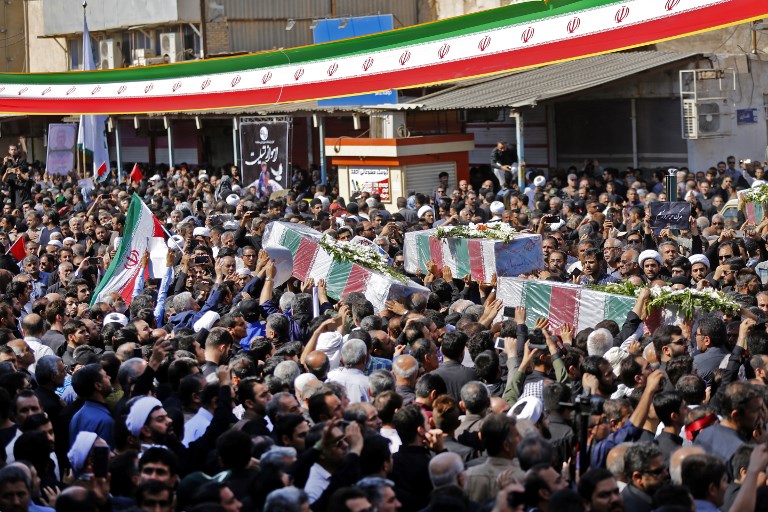
Thousands of people gather in the south-western Iranian city of Ahvaz for the funeral of those killed during an attack on a military parade in the city, about 560 kilometres (350 miles) south of Tehran, on September 24, 2018. (AFP PHOTO / ATTA KENARE)

Iran’s semi-official Tasnim news agency reported Monday that authorities have arrested 22 people over their alleged connection with the attack in Ahvaz, an Arab-majority region in southwestern Iran.

Earlier Monday, the deputy head of Iran’s Revolutionary Guard Corps warned Israel and the US that they can expect a “devastating” response from Iran, repeating accusations of their involvement in Saturday’s attack.

“You have seen our revenge before … You will see that our response will be crushing and devastating and you will regret what you have done,” Hossein Salami said in a speech shown on state television, Reuters reported.

Threatening what he called the “triangle” of Saudi Arabia, Israel and the United States, Salami said: “You are responsible for these actions; you will face the repercussions… We warn all of those behind the story, we will take revenge.”

Salami was speaking during a live broadcast ahead of the funerals of some of those killed Saturday when gunmen disguised as soldiers attacked an annual military parade marking the anniversary of the start of its 1980-1988 war with Saddam Hussein’s Iraq.

Thousands gathered at the Sarallah Mosque at the city’s Taleghani junction, carrying caskets in the sweltering heat. Of the 25 people killed at Saturday’s parade, 12 were from Ahvaz and the rest from elsewhere in Khuzestan province.

As crowds flowed down Ahvaz’s streets, cries of “Death to America” and “Death to Israel” rose from the mourners. While a traditional chant in the years since Iran’s 1979 Islamic Revolution, they have taken on a new meaning since the attack.

Supreme Leader Ayatollah Ali Khamenei said the attack showed Iran has “a lot of enemies,” according to remarks posted on his website, in which he linked the attackers to the US, Saudi Arabia and the United Arab Emirates.

The attack saw gunfire sprayed into a crowd of marching soldiers from the IRGC, bystanders, and government officials watching from a nearby riser.

A news agency affiliated with the Islamic State terrorist group released a video Sunday which purported to show the perpetrators of the shooting attack.

The footage, released by the Amaaq news agency, shows three men in a vehicle, apparently on their way to carry out the attack.

Still form a video released by the Islamic State affiliated Amak news agencyy purporting to show the perpetrators of a shooting attack in a military parade in the Iranian city of Ahwaz which left 29 people dead (Twitter)

“We are Muslims, they are heretics,” one of the men can be heard saying in the video. “We will kill them with a guerilla attack, inshallah.”

In a further claim, Yaghub Hur Totsari, a spokesman for the Arab Struggle Movement to Liberate Ahvaz, told Reuters the Ahvaz National Resistance umbrella organization of Arab anti-government armed movements was behind the attack, but did not specify which particular group carried it out.

Ahvaz lies in Khuzestan, a province bordering Iraq that has a large ethnic Arab community and has seen separatist violence in the past that Iran has blamed on its regional rivals. The separatists, however, previously only conducted pipeline bombings at night or hit-and-run attacks.

The separatists accuse Iran’s Persian-dominated government of discriminating against its ethnic Arab minority. Iran has blamed its Mideast arch-rival, the Sunni kingdom of Saudi Arabia, for funding their activity. State media in Saudi Arabia did not immediately acknowledge the attack.

Khamenei earlier accused US-backed Gulf states of being behind the attack, saying in a statement that “this crime is a continuation of the plots of the regional states that are puppets of the United States.”

“Their goal is to create insecurity in our dear country,” he added.
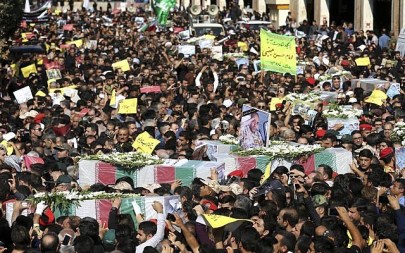
People attend a mass funeral for those who died in Saturday’s attack on a military parade in the southwestern city of Ahvaz, that killed 25 people, in Ahvaz, Iran, Monday, Sept. 24, 2018 (AP Photo/Ebrahim Noroozi)

Iran’s Foreign Minister Mohammad Javad Zarif also immediately blamed the attack on regional countries and their “US masters,” calling the gunmen “terrorists recruited, trained, armed, and paid” by foreign powers. The claim further raises tensions in the Mideast as Tehran’s nuclear deal with world powers is in jeopardy after President Donald Trump withdrew the US from the accord.

“Iran will respond swiftly and decisively in defense of Iranian lives,” Zarif wrote on Twitter.

Iranian President Hassan Rouhani, meanwhile, ordered the country’s security forces to identify those behind the attack, according to the semi-official ISNA news agency, and warned of an aggressive response.

“The response of the Islamic Republic of Iran to the smallest threat will be crushing,” Rouhani said on his official website. “Those who give intelligence and propaganda support to these terrorists must answer for it.”

Khuzestan deputy governor Ali-Hossein Hosseinzadeh told the semi-official ISNA news agency that “eight to nine” troops were among those killed, as well as a journalist.

The Revolutionary Guard is a paramilitary force answerable only to Supreme Leader Ayatollah Ali Khamenei. The Guard also has vast holdings in Iran’s economy.

Agencies contributed to this report.