Archive for September 2018

Russia: Syrias peaceful population is safe

September 6, 2018

Source: Russia: Syrias peaceful population is safe

After confirming reports it has struck in Idlib, Russia says it refrains from attacking residential areas; however, according to Syrian reports, 13 civilians are killed, with 6 of them being children; Turkish President Erdogan warns attack on Idlib would result in ‘massacre.’
The Russian defense ministry confirmed Wednesday that its fighter jets bombed the Idlib province on Tuesday, after  the Syrian Observatory for Human Rights had said Tuesday Moscow had resumed air strikes on Syria’s last rebel-held stronghold after a 22-day break.

The defense ministry stressed that the strikes targeted merely rebel Jihadists and that Russia had refrained from attacking residential areas.
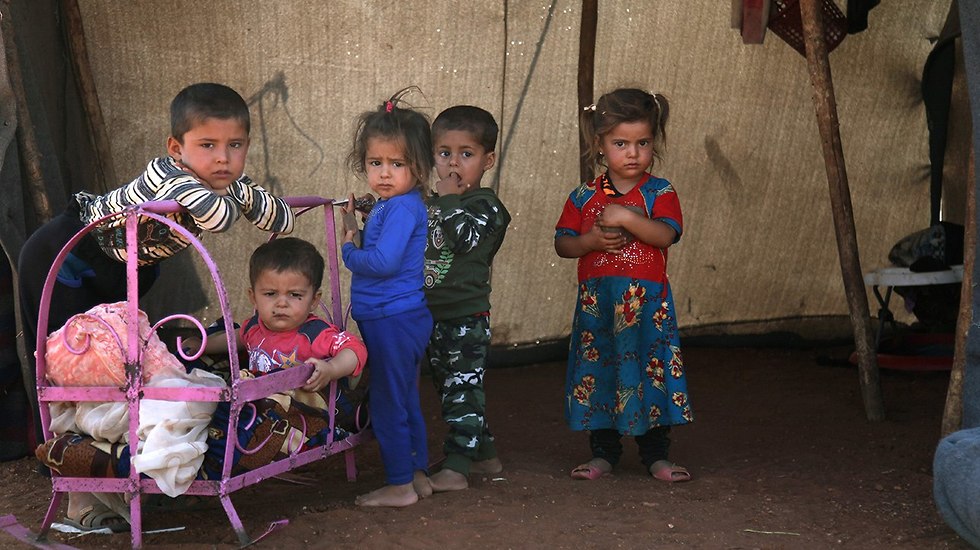
Refugee children in Idlib

Refugee children in Idlib

However, according to a Syrian report, 13 civilians were killed in the strikes, with six of them being children.

The Russian foreign ministry said on Wednesday that it was Russia’s duty to fight terrorists in Syria’s Idlib until their “complete and final liquidation”, and called on other countries to support that effort, not obstruct it.

In a statement, the ministry said its actions in Idlib province were in line with multilateral agreements aimed at stamping out violent militant groups.

“Russia considers it its duty to closely follow these agreements and will continue to destroy terrorists until their final and complete liquidation,” the ministry said in the statement.

Russia claims that four of its aircraft equipped with high precision-guided arms, struck Tahrir al-Sham (al-Qaeda-affiliated organization) targets.

The Syrian regime is also bombarding the rebel-held province.
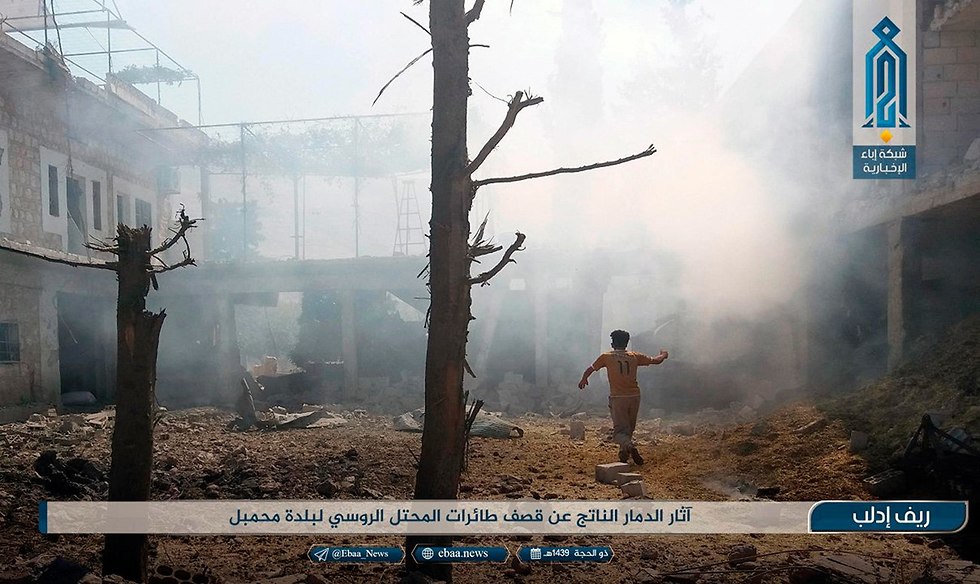
Air strikes on Idlib (Photo: AP)

Air strikes on Idlib (Photo: AP)

In recent weeks, President Basahr Assad’s forces are approaching Idlib, planning an attack that could end the seven-year civil war.

Meanwhile, Russia is currently conducting a vast military exercise in the Mediterranean Sea, which is expected to reach its highest point of intensity on Wednesday at 6 am until Thursday at 1 pm and is scheduled to end on Saturday.

The world is concerned a humanitarian disaster might occur. However, the Kremlin says that the drill aims to prepare for scenarios in which Russia may be forced to face with the US-led coalition operating in Syria.

Russian Deputy Foreign Minister Sergei Rybakov said that so far all of Russia’s military actions in Syria were executed with high precision to avoid harming civilians as much as possible.

“We, as we have said many times before, act precisely, selectively, trying to minimize possible risks to the peaceful population,” Ryabkov as explained.
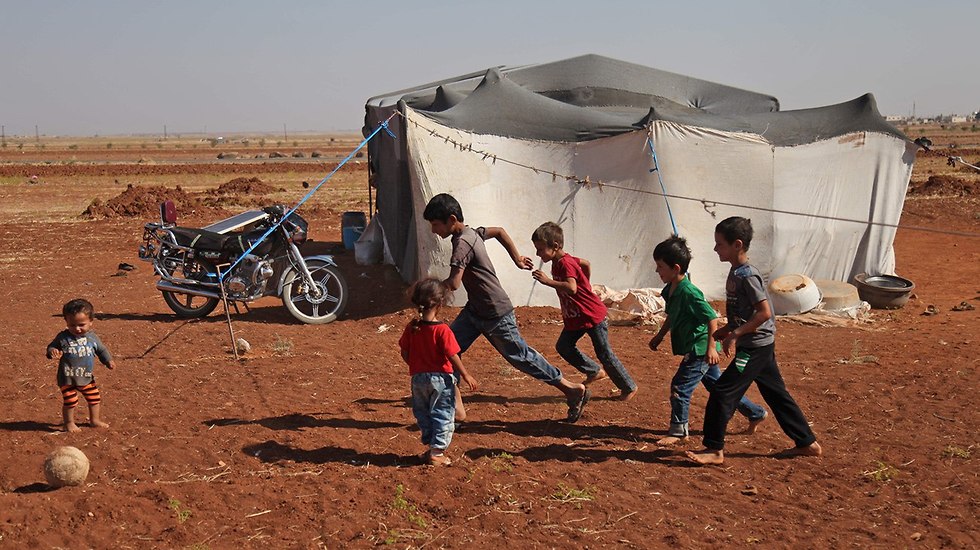
Refugee children in Idlib  (Photo: AFP)

Refugee children in Idlib (Photo: AFP)

Turkish President Tayyip Erdogan warned Wednesday that an attack on Syria’s Idlib—which borders with Turkey— would be a massacre and voiced concern that hundreds of refugees would flee to Turkey.

“The situation in Idlib is crucial for Turkey. A ruthless process has been going on there. … God forbid, if this area is hailed by missiles there would be a serious massacre,” Erdogan opined.

Turkey, that support some of Syria’s rebel groups, held several talks with Russian and American officials in an attempt to prevent Assad’s planned phased offensive to reclaim Idlib.
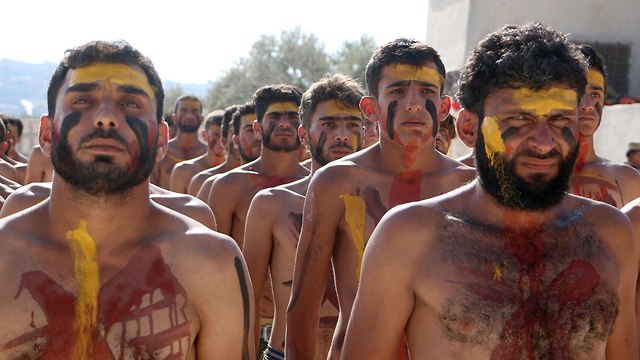
Rebels preparing for attack on Idlib (Photo: AFP)

Rebels preparing for attack on Idlib (Photo: AFP)

“Three and a half million people live there. In case of a disaster, God forbid, they will flee to Turkey,” Erdogan went on to say.

Turkey, Russia and Iran’s leaders will attend a three-way summit in Tehran on Sept. 7, which will address the civil war in Syria which is nearing to its end.
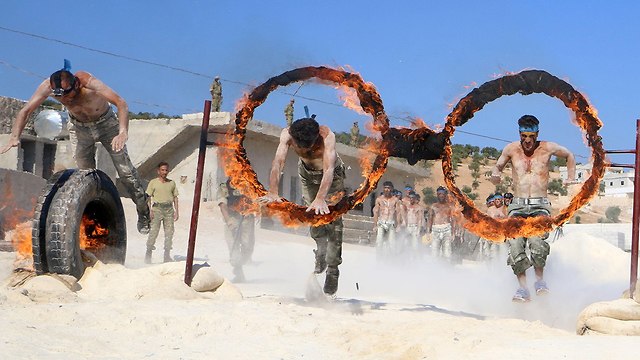
 (Photo: AFP)

(Photo: AFP)

The UN Security Council is expected to convene Friday to discuss Idlib’s situation, while taking into account the possibility Assad will use chemical weapons to reclaim the rebel-held province, causing a humanitarian disaster.Kremlin spokesman Dmitry Peskov said Russia would continue to fight against groups it sees as terrorists in Syria and that Idlib was a “nest of terrorism”.
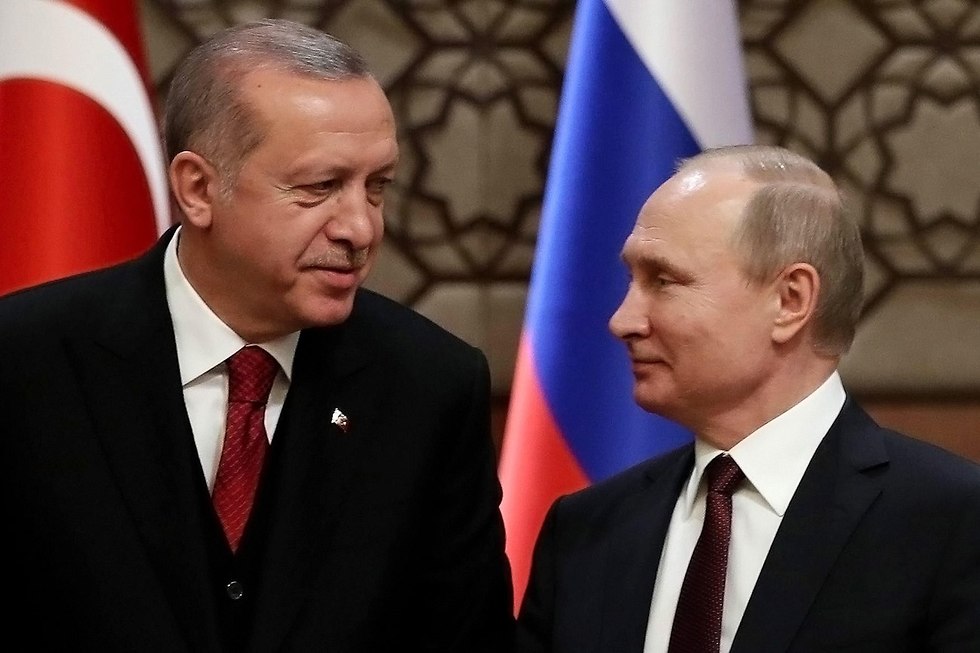
Turkey's Erdogan (L) and Russia's Putin  (Photo: AFP)

Turkey’s Erdogan (L) and Russia’s Putin (Photo: AFP)

UN envoy to Syria, Staffan de Mistura expressed fears of a “perfect storm” that could have a devastating impact on nearly 3 million people— nearly half of whom arrived from elsewhere in Syria—in the region largely controlled by al-Qaida-linked fighters.

US President Donald Trump on Monday warned Syrian President Bashar Assad and his allies Iran and Russia not to “recklessly attack” Syria’s rebel-held Idlib province, warning that hundreds of thousands of people could be killed.

“The Russians and Iranians would be making a grave humanitarian mistake to take part in this potential human tragedy. Hundreds of thousands of people could be killed. Don’t let that happen!” Trump wrote in a tweet.

The UN and other human rights organizations have warned that a military operation in Syria might cause one of the biggest humanitarian catastrophes Syria had known during its seven-year civil war.

Tahrir al-Sham’s jihadists currently control more than half of Idlib. The rest of the province’s territory is mainly dominated by rebels supported by Turkey.

Assad’s regime took the reins over the small southeast part of the province.

The Syrian army bombarded Idlib today, while the rebels blew up another bridge in an attempt to thwart the upcoming attack.
 

The secrecy is unveiled: a race to destroy Iranian facilities in Syria

September 6, 2018

Source: The secrecy is unveiled: a race to destroy Iranian facilities in Syria

Analysis: According to the IDF, the Iranian entrenchment in Syria was expected to attract thousands of soldiers loyal to the Revolutionary Guards; the revealing of more than 200 Israeli attacks on Iranian targets in Syria exposes an entire intelligence front active at any given moment. Tehran doesn’t halt, and Israel is determined to attack even at the price of war.

The IDF revealed on Tuesday that as of the beginning of 2017, more than 200 Iranian or pro-Iranian targets were attacked across Syria.

An entire system of pilots, officers, analysts, and officials has been working around the clock to execute the strikes.The attacks included the dropping of 800 bombs and missiles by the Israeli Air Force—an amount that adds up to half used in a “real” war. Some were launched to long ranges. In almost all such operations that are meant to take place under the radar, all participants know very quickly or even in real time whose fist gave the punch, hundreds of kilometers from Israel.

And so, one of the purposes of these inter-war attacks is to send a message of power through the Middle Eastern arena, alongside establishing Israeli deterrence, postponing the next war and preventing Israel’s enemies from arming themselves with advanced weapons.

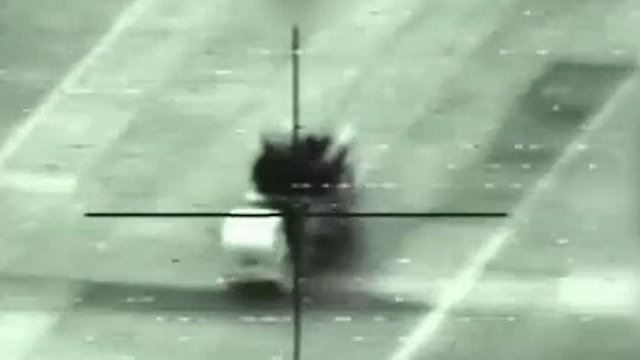
IAF attack on Syrian base (Photo: IDF Spokesperson's Unit)

IAF attack on Syrian base (Photo: IDF Spokesperson’s Unit)

Behind heavy secrecy, that was lifted yesterday, the IDF has been trying to eradicate Iranian presence in Syria even at the cost of an incident that could trigger a war on the northern border. This agenda is led by Chief of Staff Lt. Gen. Gadi Eisenkot who was the commander of the northern border in years when Hezbollah was growing stronger.

According to the IDF, the Iranian plan to establish its presence in Syria was discovered two years ago by intelligence officials. Back then, the Russian blitz on the rebels was strengthening Assad, and in Tehran leaders were already looking forward to what is to come after the war.

The Islamic Revolutionary Guards concocted a multi-year plan to establish military naval and air bases in Syria. These bases were supposed to include, according the IDF, thousands of soldiers and local Shiite militias serving as an army to fight against the “Zionist enemy.”

The “Yamanite model” of this plan, which is already enabling the launching of missiles to Riyadh, is proving successful for the Iranians. They have an old-fashioned army, but also advanced technologies and intelligence capabilities, alongside drones and an ambitious missile program.

The IDF’s recommendation for government officials was clear—to eradicate any Iranian move in the Syrian arena, without claiming responsibility. Secrecy had been maintained until February of this year. Then, circumstances led to the surfacing of this covert confrontation, when an Iranian drone penetrated Israel and was shot down above Bik’at HaYarden by an Apache helicopter.

The IDF then openly attacked the T-4 base in the Tadmor region in Syria from which the drone was launched. Shortly after an Israeli F-16 was shot down over the Galilee by Syrian antiaircraft missiles.

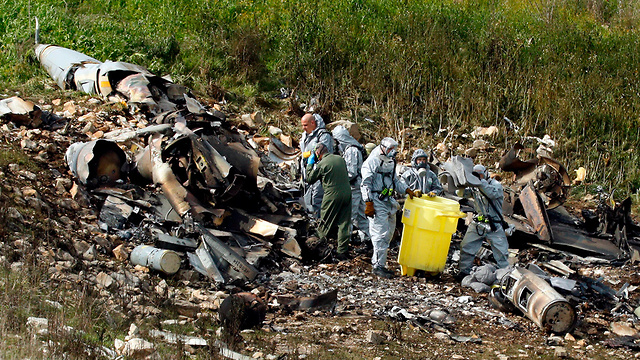
The F-16 crash site  (Photo: AFP)

The F-16 crash site (Photo: AFP)

The confrontation between Israel and Iran became public, violent, and dangerous, reaching its highest point of intensity three months later during Operation House of Cards when more than 50 Iranian targets were destroyed in Syria.

Israel’s “excuse” for this vast operation—its largest operation executed in Syria since 1974—was the launching of 32 rockets at the northern Golan Heights, most of which falling in Syrian territory and several being intercepted by the Iron Dome system.

Following the Israeli blow, the Quds Forces led by Major General Qasem Soleimani convened for a situation assessment.

However, it was a brief lull, and ever since then Tehran has been galloping through Syrian territory while attempting to dodge Israeli intelligence.

Evading tactics included smuggling weapons through civil flights, entrenchment on Syria and Iraq’s border and acquiring Syrian knowledge about precision-guided missiles.

In addition, it was reported Tuesday night that fighter jets had bombed targets around Wadi al-Uyun in the Hama area in Syria. Syrian media attributed the bombardment to Israel.

Amir Hatami, Iranian Defence Minister, during a visit to Damascus

Amir Hatami, Iranian Defence Minister, during a visit to Damascus

The IDF has a reason to be pleased regardless of its efforts against Iran. US forces have been pushing Iranians out of the 55 kilometer strip along the Syrian-Iraqi border around the Euphrates river. They are also more vigorously active against Iranian moves in the region.

However, Russia is competing with Tehran over reconstruction contracts for war-torn Syria, and have thus pushed Iranian forces to at least 80 kilometers from the Israeli border.

According to the IDF, it is “executing these operations a few times a week, also throughout Cyber tools. The Iranians understand that they have poor infrastructures and an intelligence gap. Our response to their entrenchment in Syria has come a year to a year and a half earlier than they had planned”.

“Still”, the IDF report read, “Iraq is more important to Iran then Syria, since 64 percent of the Iraqi population is Shiite, and they are thus organizing more militias there.”


Satellite images show damage at Syria site from raid attributed to Israel

September 6, 2018

Source: Satellite images show damage at Syria site from raid attributed to Israel | The Times of Israel

Explosions destroy two large hangars and reveal tunnel entrances leading underground, says imaging service

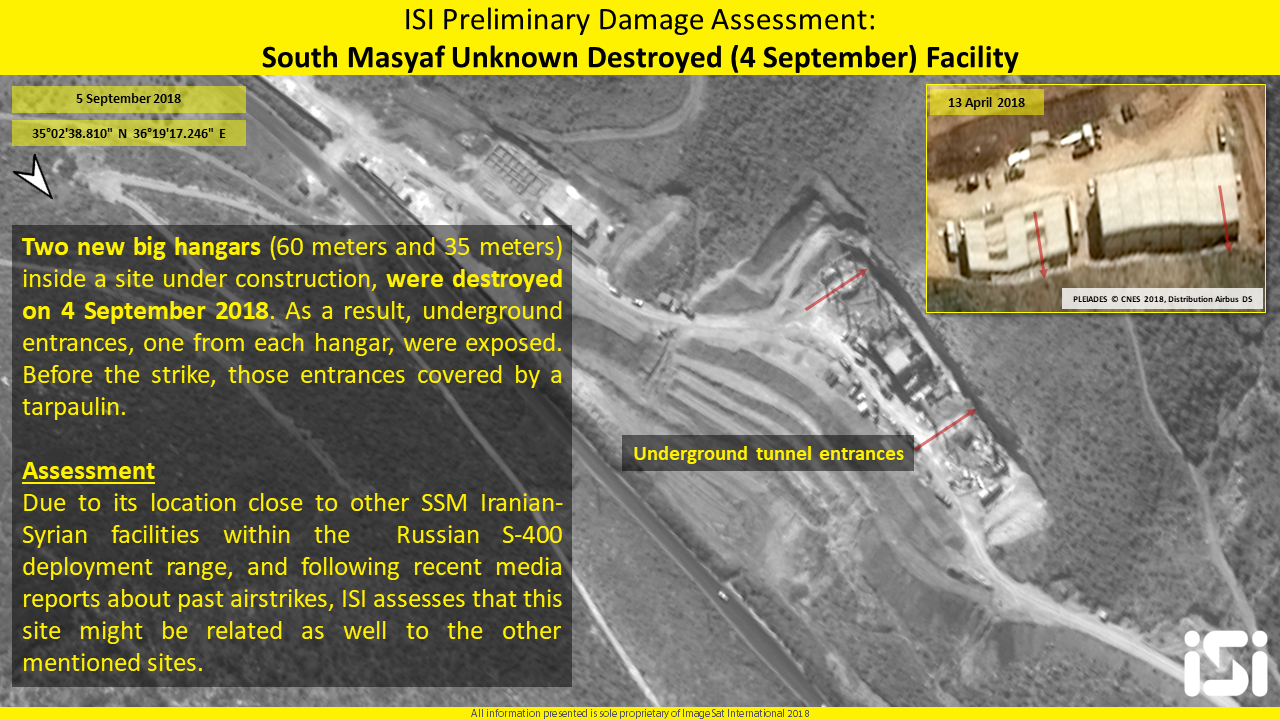
Satellite image showing the result of a an airstrike on a military facility in Syria, September 4, 2018. (ImageSat International)

Satellite image showing the result of a an airstrike on a military facility in Syria, September 4, 2018. (ImageSat International)

An Israeli satellite company published images Wednesday it said showed the damage at a military site in Syria from an airstrike a day before that was attributed to Israel.

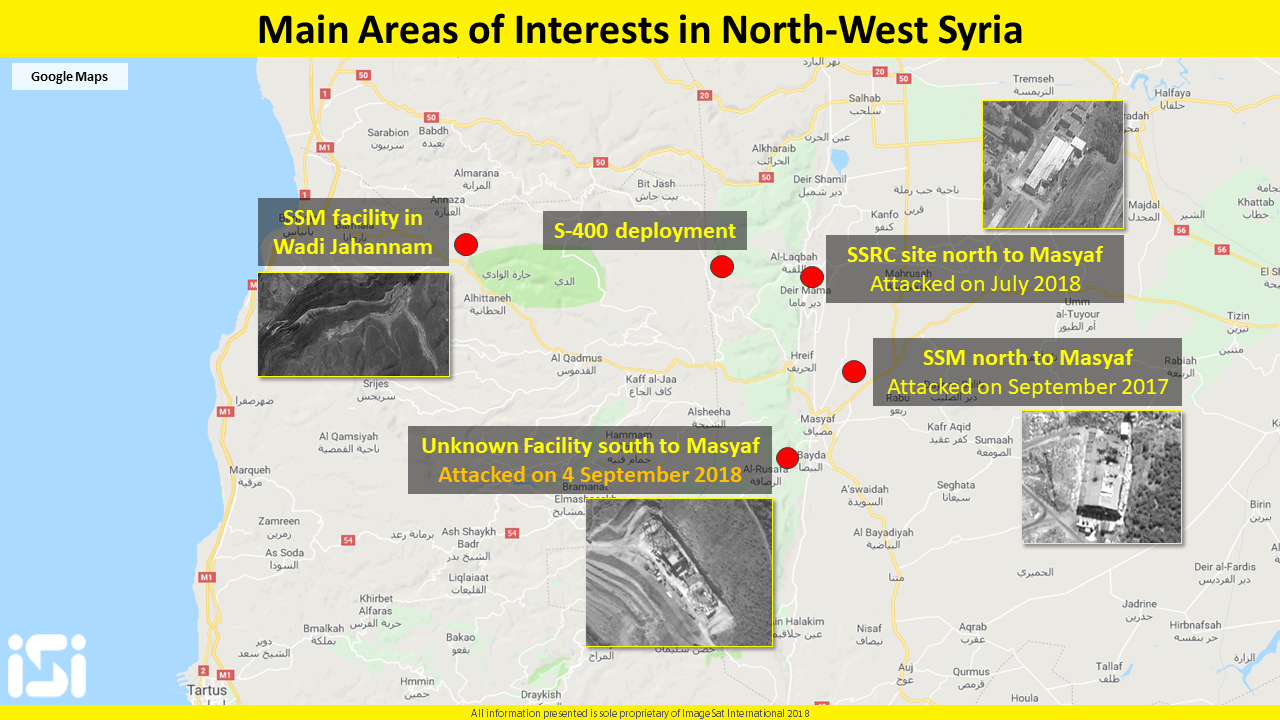
The rare daytime strike reportedly targeted Iranian assets between the town of Masyaf and Wadi al-Uyun.

Photos taken from space showed two large hangars, 60 and 35 meters in length, destroyed in the attack, said ImageSat International (ISI).

The raids also revealed entrances to underground tunnels, one leading from each hangar, which were previously covered by tarpaulins, ISI said.

“Due to its location close to other surface-to-surface missile Iranian-Syrian facilities within the Russian S-400 [air-defense system] deployment range, and following recent media reports about past airstrikes, ISI assesses that this site might be related as well to the other mentioned sites,” the company said.

Map provided by ImageSat International (ISI) showing the location of recent airstrikes in Syria. (ImageSat International)

The Syrian military claimed air defenses successfully intercepted several missiles launched by Israeli warplanes, though Damascus often inflates the number of missiles it intercepts.

Israel does not regularly comment on alleged strikes in Syria, though the reported attack came hours after the IDF confirmed it had carried out over 200 strikes in the country over the past 18 months.

The IDF on Tuesday acknowledged that it had conducted airstrikes against over 200 Iranian and Hezbollah targets in Syria since 2017, shedding light on its largely quiet activities across the border to prevent Tehran from establishing a permanent military presence in the war-torn country.

For years, Israel has been concerned that Iran was using opportunities presented by the Syrian civil war to entrench itself militarily in the country in order to further threaten the Jewish state — alongside the threat already posed by Iran’s proxy, Hezbollah, in Lebanon.

Israel has vowed to prevent such a military presence, but officially remains mum on most of the military’s efforts to do so.

Also Wednesday,  Prime Minister Benjamin Netanyahu said Israel is working to thwart the production of precision missiles that can be used against the country “both near and far.”

“Israel is determined to prevent Iran and its proxies from establishing a military presence in Syria,” Netanyahu told ministers at the start of the weekly cabinet meeting.

“We are taking strong action against these attempts and against the attempts to produce precision weaponry in all sectors, near and far. We will continue to take such action on behalf of the security of Israel,” he said.

The 202 targets hit in the Israeli airstrikes since 2017 were mostly shipments of advanced weaponry, as well as military bases and infrastructure, which the IDF officials said drove Iranian forces to abandon some posts.

In addition, Jerusalem has tried to get the Islamic Republic out of Syrian through diplomatic means by appealing to the two main power-brokers in the region: Russia and the United States.

While Russia does not seem to have accepted Israel’s demand for Iran to be completely removed from Syria, it has agreed to force the Islamic Republic’s forces and proxies to leave the areas closest to the border with Israel.

According to some reports, pro-Iranian forces would be required to stay 40 kilometers (25 miles) away from the border; others indicate that range would be set at 80 kilometers (50 miles).


Iran says it will go beyond previous enrichment if nuclear deal fails

September 6, 2018

Source: Iran says it will go beyond previous enrichment if nuclear deal fails | The Times of Israel

Spokesperson for atomic agency says Tehran’s program ‘considerably more advanced’ than when 2015 accord was signed

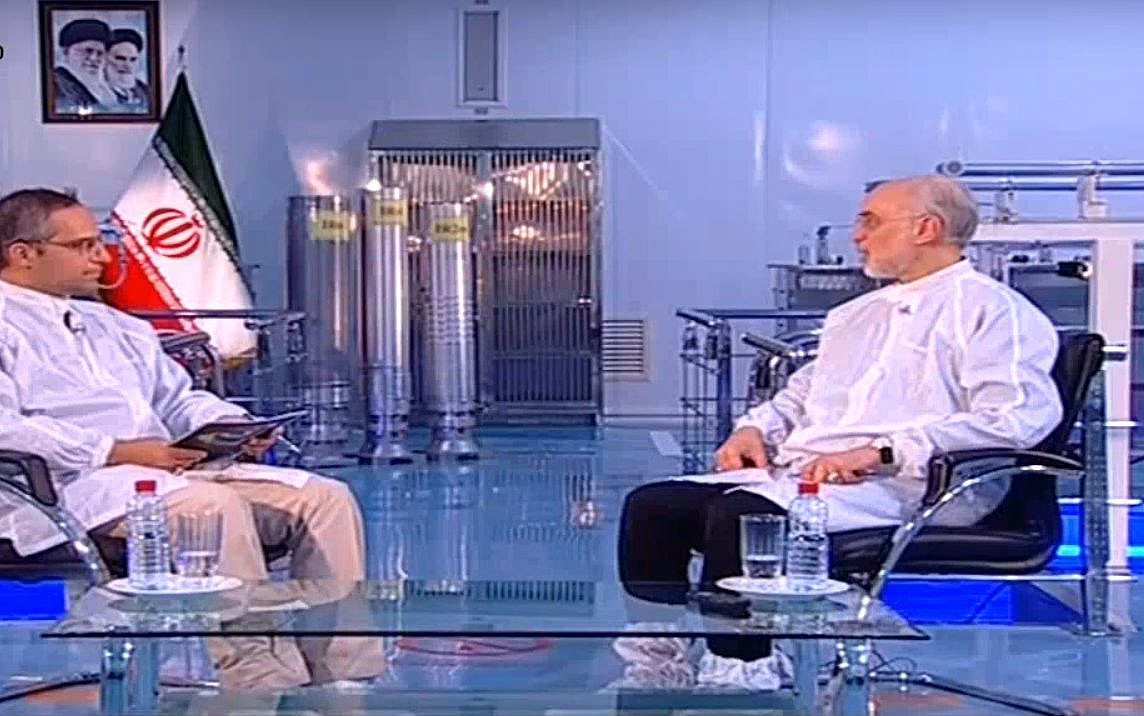
Screen capture from video showing Ali Akbar Salehi, the head of Iran’s nuclear agency, right, and three Iranian produced uranium enrichment centrifuges in the center background. (YouTube)

Iran will begin uranium enrichment beyond previous levels if the remaining parties fail to uphold the 2015 nuclear deal, its Atomic Energy Organization told local media on Wednesday.

“We will not return to previous levels if our counterparts leave the JCPOA (nuclear deal), but will instead reach even more advanced levels,” the organization’s spokesman Behrouz Kamalvandi said, quoted by state broadcaster IRIB.

“We are at a considerably more advanced status than when we signed the deal. The country is moving ahead in nuclear activities at a favorable pace,” he added.

Iran has repeatedly said it will resume high-level uranium enrichment if the 2015 agreement — which limits its nuclear program in return for sanctions relief — falls apart.

Following the withdrawal of the United States in May, the other parties — Britain, France, Germany, China, Russia and the EU — have vowed to provide Iran with enough economic benefits to keep the agreement alive.

But Tehran is increasingly skeptical that those countries can counter the effects of renewed US sanctions, which have already battered Iran’s economy.

Last week, supreme leader Ayatollah Ali Khamenei said Iran should be ready to “set aside” the agreement if it is no longer in the country’s national interests.

The International Atomic Energy Agency has repeatedly stated that Iran is sticking to its commitments.

The administration of US President Donald Trump says the deal did not prevent Iran from eventually working towards a nuclear weapon — which Tehran has denied it is seeking.

Times of Israel staff contributed to this report.


Iran worried about its survival, says Trump, leaving door open for talks

September 6, 2018

Source: Iran worried about its survival, says Trump, leaving door open for talks | The Times of Israel

US President says Tehran is in ‘turmoil’ and meeting with Rouhani at UN General Assembly is ‘possible’

US President Donald Trump speaks to the press before a meeting with Republican Congressional leaders at the White House in Washington, DC, on September 5, 2018. (NICHOLAS KAMM/AFP)

US President Donald Trump speaks to the press before a meeting with Republican Congressional leaders at the White House in Washington, DC, on September 5, 2018. (NICHOLAS KAMM/AFP)

US President Donald Trump left the door open Wednesday to meeting with his Iranian counterpart Hassan Rouhani on the sidelines of the UN General Assembly, while saying the Islamic Republic is worried about its very survival.

“It’s possible, anything is possible,” Trump told reporters in the Oval Office when asked about the possibility of a face-to-face with Rouhani during the gathering later this month.

“We’ll see what happens with Iran. Whether they want to talk or not, that’s up to them, not up to me,” said the US leader, who decided in May to pull out of the 2015 nuclear deal between world powers and Iran.

“Iran is a much different place than when I took over the presidency,” Trump added, describing the country as “in turmoil.”

“When I took office it was just a question of how long until they took over the entire Middle East. Now they are just worrying about their own survival as a country.”

Trump is due to lead September 26 meeting of heads of state of the UN Security Council, with the goal of ramping up pressure on Tehran over its alleged violations of council resolutions.

The US is seeking to renegotiate a stricter nuclear deal with Iran after Washington in May withdrew from a 2015 international agreement saying it failed to do enough to prevent Tehran from acquiring nuclear weapons and stop its ballistic missile program.

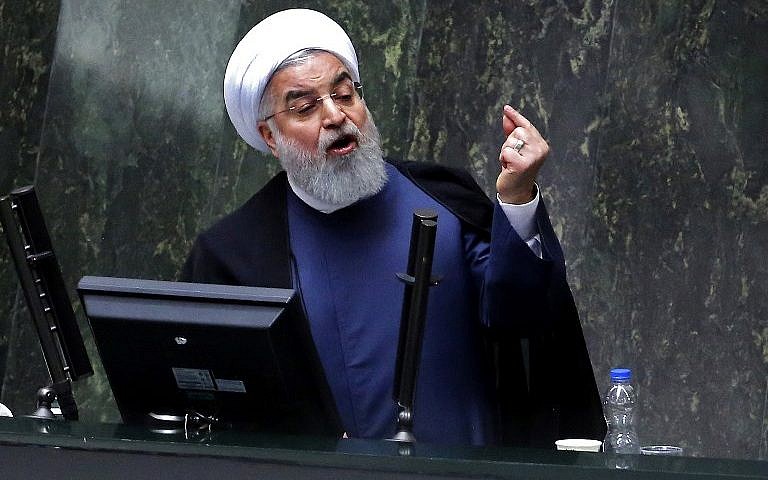
Iran’s President Hassan Rouhani speaks at the Iranian Parliament in the capital Tehran on August 28, 2018. (AFP Photo/Atta Kenare)

With the United States now holding the presidency of the Security Council, UN Ambassador Nikki Haley on Tuesday said the aim was to put further pressure on Tehran.

But Iran’s foreign minister, Mohammad Javad Zarif, on Wednesday hit out at the US plan.

“There’s only one UNSC resolution on Iran…@realDonaldTrump is violating it & bullying others to do same,” Zarif wrote on Twitter.

Washington has sought to build up international pressure on Iran after reimposing tough, unilateral sanctions on August 7 and setting a November 5 deadline for halting Iran’s oil exports.

Iran’s economy has been battered as countries wrap up trade ties in fear of violating the US sanctions which Washington said would be strictly imposed.

Foreign Ministry says it will seek an ‘improved’ Iran deal in 2019 

September 5, 2018

Source: Foreign Ministry says it will seek an ‘improved’ Iran deal in 2019 | The Times of Israel

Annual ‘objectives’ plan also reportedly shows diplomatic service plans to improve relations with US Democrats, engage with other partners in Israeli-Palestinian negotiations

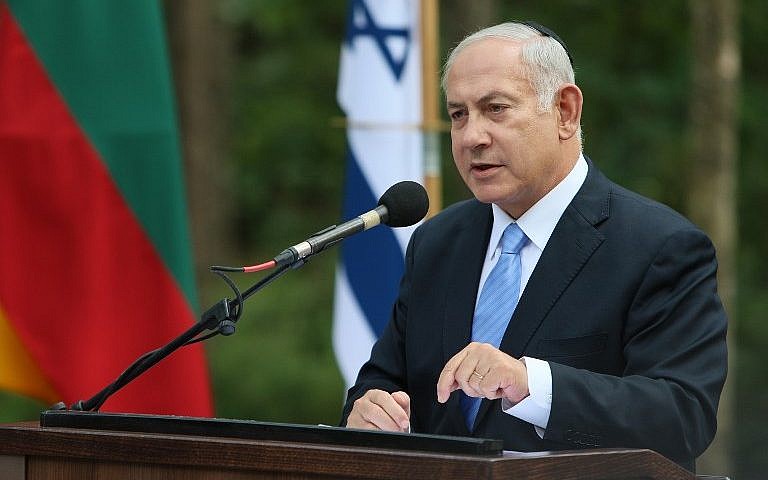
Prime Minister Benjamin Netanyahu speaks during a remembrance ceremony at the Paneriai Holocaust Memorial near Vilnius, Lithuania, on August 24, 2018. (AFP Photo/Petras Malukas)

Prime Minister Benjamin Netanyahu speaks during a remembrance ceremony at the Paneriai Holocaust Memorial near Vilnius, Lithuania, on August 24, 2018. (AFP Photo/Petras Malukas)

In the wake of the US withdrawal from the nuclear deal with Iran, a document from Israel’s Foreign Ministry reportedly says efforts for 2019 should focus “on pressuring for an improved agreement that will address the flaws in the old deal.”

According to Haaretz, which reported on the document, this wording in the ministry’s 2019 objectives document marks a change from the 2018 ministry plan, which focused instead on “establishing red lines” and “preventing Iran from making effective progress in its nuclear program, first and foremost with regard to the nuclear agreement.”

Prime Minister Benjamin Netanyahu, who long railed against the 2015 nuclear deal, gave a dramatic presentation a little over a week before US President Donald Trump’s May 8 decision to withdraw from the pact, in which he unveiled documents Israel spirited out of Tehran that he said proved Iran had lied about its nuclear program.

As in previous years, one of the goals of the Foreign Ministry is to work to end the presence of Iran and its proxies in Syria, the report said. However, this year a further aim of “diversifying those we rely on, including establishing and strengthening ties with Russia” has been added to the list of objectives.

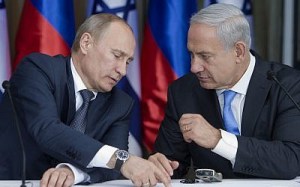
Russian President Vladimir Putin speaks with Prime Minister Benjamin Netanyahu as they prepare to deliver joint statements after a meeting and a lunch in the Israeli leader’s Jerusalem residence, Monday, June 25, 2012. (AP Photo/Jim Hollander, Pool)

For years, Israel has been concerned that Iran is using opportunities presented by the Syrian civil war to entrench itself militarily in the country in order to further threaten the Jewish state — alongside the threat already posed by Iran’s proxy, Hezbollah, in Lebanon.

Israel has vowed to prevent such a military presence, but officially remains mum on most of the military’s efforts to do so. Israel reportedly carried out airstrikes against Iranian military targets in the Syrian provinces of Hama and Tartus on Tuesday, killing three people and wounding 23.

According to Haaretz, the ministry also seeks to “use the US recognition of Jerusalem as Israel’s capital to campaign for other countries to do the same.”

Jerusalem’s status is perhaps the thorniest issue in the decades-long Israeli-Palestinian conflict. Israel considers the entire city its capital, while the Palestinians see its eastern neighborhoods as the capital of their future state. So far only Guatemala and Paraguay have joined the US in moving their embassies to Jerusalem from the coastal city of Tel Aviv.

The document also spells out a specific need to improve ties with the US’s Democratic Party ahead of the November 2018 mid-term elections.

The party has had an increasingly strained relationship with Netanyahu and his government, as Israel has been seen to align itself with US President Donald Trump and the Republican Party, and against the Iran deal. Netanyahu serves as foreign minister as well as prime minister.

The document also seems to demonstrate a policy shift from working only with the Americans to try to bring about a solution to the Israeli-Palestinian conflict, to now engaging with other partners in the Middle East and international community. On top of that, the ministry aims to continue building partnerships with “the Visegrad Group [Hungary, Slovakia, Czech Republic and Poland], the ‘Hellenic triangle’ and the Baltic states,” the report said.

It also noted that, in contrast to the 2018 goals, the ministry will work to avert a humanitarian crisis in the Gaza Strip with the aim of creating long-term stability in the region.

A Palestinian checks a truck loaded with humanitarian aid from the US as it arrives in the Palestinian town of Rafah through the Kerem Shalom crossing between Israel and the southern Gaza Strip on August 6, 2014.

The document also reportedly uses the phrase “delegitimization” in a section of the report dedicated to the fight against anti-Semitism. According to the report, this represents a shift, as the phrase is most commonly used by the Strategic Affairs Ministry, which is responsible for the fight against the Boycott, Divestment and Sanctions (BDS) movement.

According to the newspaper, the document also addresses increasing tensions between Israel and the Diaspora community, in particular with liberal Jewish individuals and groups.

“Strengthen the ties with the various streams and establish a dialogue with key liberal elements inside and outside the Jewish world” is repeated as a goal from last year.

Israel thwarting precision arms production ‘near and far,’ Netanyahu says 

September 5, 2018

Source: Israel thwarting precision arms production ‘near and far,’ Netanyahu says | The Times of Israel

Statement comes day after military said it had bombed 202 sites in Syria over the past 18 months as part of effort to keep Iran from gaining foothold

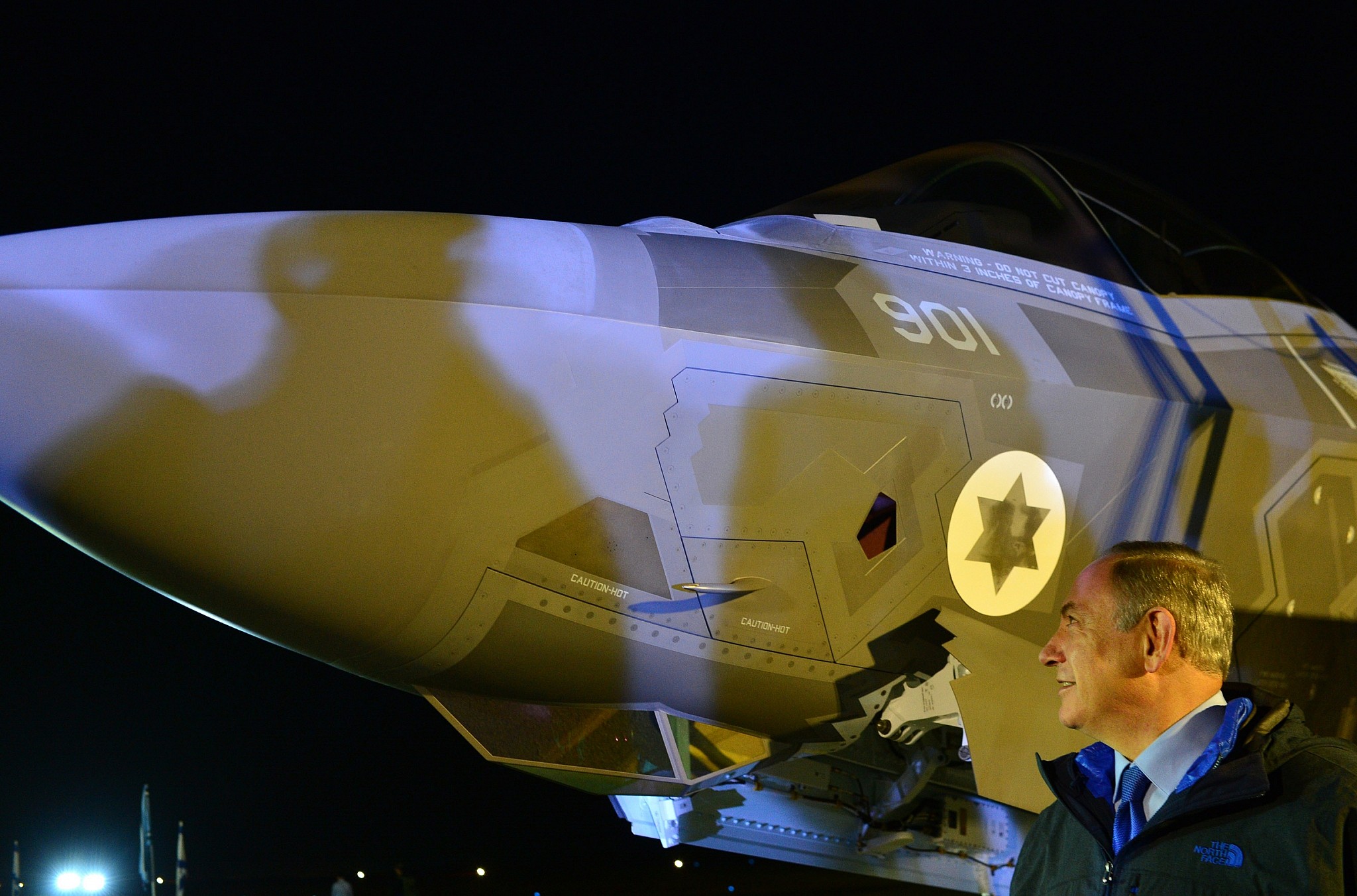
Benjamin Netanyahu at a ceremony for the new F-35 Adir stealth fighter jet at the Nevatim Air Force Base in the Negev Desert on December 12, 2016. (Kobi Gideon/GPO)

Benjamin Netanyahu at a ceremony for the new F-35 Adir stealth fighter jet at the Nevatim Air Force Base in the Negev Desert on December 12, 2016. (Kobi Gideon/GPO)

Israel is working to thwart the production of precision missiles that can be used against the country “both near and far,” Prime Minister Benjamin Netanyahu said Wednesday, the latest signal from an Israeli leader that Jerusalem may act against Iranian targets far from the border with Syria.

“Israel is determined to prevent Iran and its proxies from establishing a military presence in Syria,” Netanyahu told ministers at the start of the weekly cabinet meeting.

“We are taking strong action against these attempts and against the attempts to produce precision weaponry in all sectors, near and far. We will continue to take such action on behalf of the security of Israel,” he said.

The Israeli military on Tuesday acknowledged that it has conducted airstrikes against over 200 Iranian targets in Syria since 2017, shedding light on its largely unacknowledged activities across the border to prevent Tehran from establishing a permanent military presence in the war-torn country.

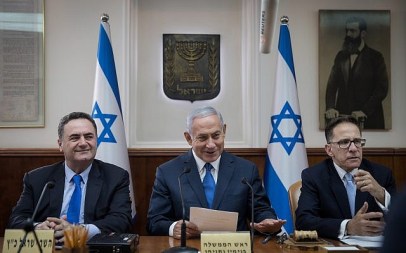
Prime Minister Benjamin Netanyahu (c) leads the weekly cabinet meeting at the Prime Minister’s Office in Jerusalem on September 5, 2018. (Hadas Parush/Flash90)

The revelation came as Israeli planes reportedly carried out strikes against Iranian and Assad regime targets in Hama and Tartus, deep inside Syria, according to a war monitor.

A day earlier, Defense Minister Avigdor Liberman hinted that Israel was not ruling out action against Iranian weapons transfers in Iraq.

According to Haaretz, a military official said Tuesday that the army was aware of Iran transferring weapons into Iraq and from there into Syria.

In Syria, Israel has for years been concerned that Iran was using opportunities presented by the Syrian civil war to entrench itself militarily in the country in order to further threaten the Jewish state — alongside the threat already posed by Iran’s proxy, Hezbollah, in Lebanon.

Israel has vowed to prevent such a military presence, but officially remains mum on most of the military’s efforts to do so.

The 202 targets hit in the Israeli airstrikes since 2017 were mostly shipments of advanced weaponry, as well as military bases and infrastructure, which the IDF officials said drove Iranian forces to abandon some posts.

In addition, Jerusalem has tried to get the Islamic Republic out of Syrian through diplomatic means by appealing to the two main power-brokers in the region: Russia and the United States.

While Russia does not seem to have accepted Israel’s demand for Iran to be completely removed from Syria, it has agreed to force the Islamic Republic’s forces and proxies to leave the areas closest to the border with Israel.

According to some reports, pro-Iranian forces would be required to stay 40 kilometers (25 miles) away from the border; others indicate that range would be set at 80 kilometers (50 miles).

Judah Ari Gross contributed to this report.


Iran slams Trump’s ‘chutzpah’ over UN Security Council plans

September 5, 2018

Source: Iran slams Trump’s ‘chutzpah’ over UN Security Council plans | The Times of Israel

Tehran’s foreign minister accuses US president of ‘bullying others’ to adopt sanctions instead of focusing session on ‘Palestine’

In this April 24, 2018, photo, Iran’s Foreign Minister Mohammad Javad Zarif is interviewed by The Associated Press in New York. (AP Photo/Richard Drew,)

TEHRAN, Iran — Iran’s foreign minister on Wednesday accused US President Donald Trump of trying to hijack the United Nations Security Council for the purposes of “bullying others” to turn against Tehran.

Trump plans to lead a meeting of the heads of state of the Security Council on Iran in late September, his envoy to the UN Nikki Haley, announced Tuesday.

With the United States now holding the presidency of the Security Council, Haley said the aim was to put further pressure on Tehran over its alleged violations of council resolutions.

But Iran’s foreign minister, Mohammad Javad Zarif, hit out at the US plan.

“There’s only one UNSC resolution on Iran…@realDonaldTrump is violating it & bullying others to do same,” Zarif wrote on Twitter.

Javad Zarif

@JZarif

There’s only one UNSC resolution on Iran. .@realDonaldTrump is violating it & bullying others to do same. Now he plans to abuse presidency of SC to divert a session—item devoted to Palestine for 70 yrs— to blame Iran for horrors US & clients have unleashed across M.E.

“Now he plans to abuse presidency of SC to divert a session — item devoted to Palestine for 70 yrs — to blame Iran for horrors US & clients have unleashed across (Middle East) #chutzpah.”

Washington has sought to build up international pressure on Iran after reimposing tough, unilateral sanctions on August 7 and setting a November 5 deadline for halting Iran’s oil exports.

Those moves came after the United States decided in May to pull out of the Iran nuclear deal, saying it failed to do enough to prevent Tehran from acquiring nuclear weapons and stop its ballistic missile program.

In reaction to the reimposition of sanctions, Iran demanded in The Hague that the top UN court suspend the unilateral US sanctions.

Europe has resisted joining the US sanctions move, but this week Japanese media said Tokyo had agreed to suspend crude imports from Iran.


How the Mossad op to retrieve Iran’s nuclear files took a surprising turn 

September 5, 2018

Source: How the Mossad op to retrieve Iran’s nuclear files took a surprising turn – Israel News – Jerusalem Post

At all stages, including mid-operation, Cohen pressed for bringing back as much physical original evidence as possible in order to deflate any objections from Iran that the evidence was doctored.

BY YONAH JEREMY BOB
 SEPTEMBER 5, 2018 18:36
Israeli Prime minister Benjamin Netanyahu speaks during a news conference at the Ministry of Defense

The Mossad agents who appropriated Iran’s nuclear secrets from a warehouse in Tehran in January knew they would be taking a large number of folders, but did not realize there would be a large volume of disks, Yediot Aharonot’s Ronen Bergman reported on Wednesday.

The Mossad agents involved were reportedly so surprised that they checked in with Mossad chief Yossi Cohen who was observing the mission from Israel. Cohen quickly gave the order to take as many of the disks as they could get.

The report said that in preparing for the operation, the planners debated whether to photograph the files or physically bring them – a more complex operation.

At all stages, including mid-operation, Cohen pressed to bring back as much  original evidence as possible in order to counter any claims from Iran that the evidence was doctored.

His ad hoc call mid-operation ended up having important repercussions as Prime Minister Benjamin Netanyahu decided to break with precedent and publicly present the intelligence materials in a press conference on April 30.

Many say that Netanyahu’s presentation moved US President Donald Trump the final mile toward deciding to abandon the 2015 Iran nuclear deal.

Further, the report said that information contained on the disks provided a wealth of data about Iran’s nuclear activities that was not in the files.


Report: Egyptian efforts to broker deal in Gaza come to grinding halt

September 5, 2018

Source: Report: Egyptian efforts to broker deal in Gaza come to grinding halt – Israel Hayom