Archive for September 5, 2018

Foreign Ministry says it will seek an ‘improved’ Iran deal in 2019 

September 5, 2018

Source: Foreign Ministry says it will seek an ‘improved’ Iran deal in 2019 | The Times of Israel

Annual ‘objectives’ plan also reportedly shows diplomatic service plans to improve relations with US Democrats, engage with other partners in Israeli-Palestinian negotiations
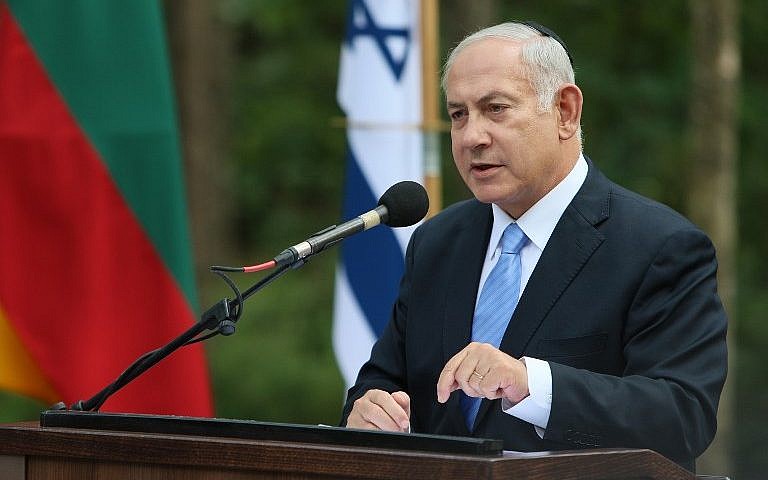
Prime Minister Benjamin Netanyahu speaks during a remembrance ceremony at the Paneriai Holocaust Memorial near Vilnius, Lithuania, on August 24, 2018. (AFP Photo/Petras Malukas)

Prime Minister Benjamin Netanyahu speaks during a remembrance ceremony at the Paneriai Holocaust Memorial near Vilnius, Lithuania, on August 24, 2018. (AFP Photo/Petras Malukas)

In the wake of the US withdrawal from the nuclear deal with Iran, a document from Israel’s Foreign Ministry reportedly says efforts for 2019 should focus “on pressuring for an improved agreement that will address the flaws in the old deal.”

According to Haaretz, which reported on the document, this wording in the ministry’s 2019 objectives document marks a change from the 2018 ministry plan, which focused instead on “establishing red lines” and “preventing Iran from making effective progress in its nuclear program, first and foremost with regard to the nuclear agreement.”

Prime Minister Benjamin Netanyahu, who long railed against the 2015 nuclear deal, gave a dramatic presentation a little over a week before US President Donald Trump’s May 8 decision to withdraw from the pact, in which he unveiled documents Israel spirited out of Tehran that he said proved Iran had lied about its nuclear program.

As in previous years, one of the goals of the Foreign Ministry is to work to end the presence of Iran and its proxies in Syria, the report said. However, this year a further aim of “diversifying those we rely on, including establishing and strengthening ties with Russia” has been added to the list of objectives.
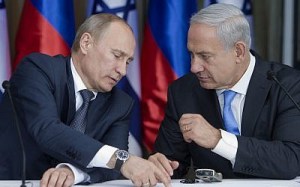
Russian President Vladimir Putin speaks with Prime Minister Benjamin Netanyahu as they prepare to deliver joint statements after a meeting and a lunch in the Israeli leader’s Jerusalem residence, Monday, June 25, 2012. (AP Photo/Jim Hollander, Pool)

For years, Israel has been concerned that Iran is using opportunities presented by the Syrian civil war to entrench itself militarily in the country in order to further threaten the Jewish state — alongside the threat already posed by Iran’s proxy, Hezbollah, in Lebanon.

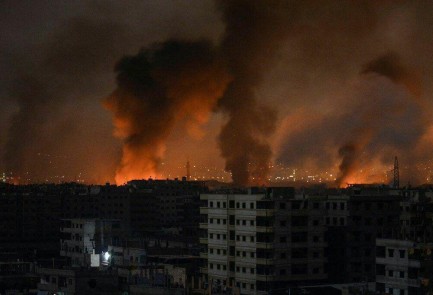
Israel has vowed to prevent such a military presence, but officially remains mum on most of the military’s efforts to do so. Israel reportedly carried out airstrikes against Iranian military targets in the Syrian provinces of Hama and Tartus on Tuesday, killing three people and wounding 23.

According to Haaretz, the ministry also seeks to “use the US recognition of Jerusalem as Israel’s capital to campaign for other countries to do the same.”

Jerusalem’s status is perhaps the thorniest issue in the decades-long Israeli-Palestinian conflict. Israel considers the entire city its capital, while the Palestinians see its eastern neighborhoods as the capital of their future state. So far only Guatemala and Paraguay have joined the US in moving their embassies to Jerusalem from the coastal city of Tel Aviv.

The document also spells out a specific need to improve ties with the US’s Democratic Party ahead of the November 2018 mid-term elections.

The party has had an increasingly strained relationship with Netanyahu and his government, as Israel has been seen to align itself with US President Donald Trump and the Republican Party, and against the Iran deal. Netanyahu serves as foreign minister as well as prime minister.

The document also seems to demonstrate a policy shift from working only with the Americans to try to bring about a solution to the Israeli-Palestinian conflict, to now engaging with other partners in the Middle East and international community. On top of that, the ministry aims to continue building partnerships with “the Visegrad Group [Hungary, Slovakia, Czech Republic and Poland], the ‘Hellenic triangle’ and the Baltic states,” the report said.

It also noted that, in contrast to the 2018 goals, the ministry will work to avert a humanitarian crisis in the Gaza Strip with the aim of creating long-term stability in the region.

A Palestinian checks a truck loaded with humanitarian aid from the US as it arrives in the Palestinian town of Rafah through the Kerem Shalom crossing between Israel and the southern Gaza Strip on August 6, 2014.

The document also reportedly uses the phrase “delegitimization” in a section of the report dedicated to the fight against anti-Semitism. According to the report, this represents a shift, as the phrase is most commonly used by the Strategic Affairs Ministry, which is responsible for the fight against the Boycott, Divestment and Sanctions (BDS) movement.

According to the newspaper, the document also addresses increasing tensions between Israel and the Diaspora community, in particular with liberal Jewish individuals and groups.

“Strengthen the ties with the various streams and establish a dialogue with key liberal elements inside and outside the Jewish world” is repeated as a goal from last year.
Israel thwarting precision arms production ‘near and far,’ Netanyahu says 

September 5, 2018

Source: Israel thwarting precision arms production ‘near and far,’ Netanyahu says | The Times of Israel

Statement comes day after military said it had bombed 202 sites in Syria over the past 18 months as part of effort to keep Iran from gaining foothold

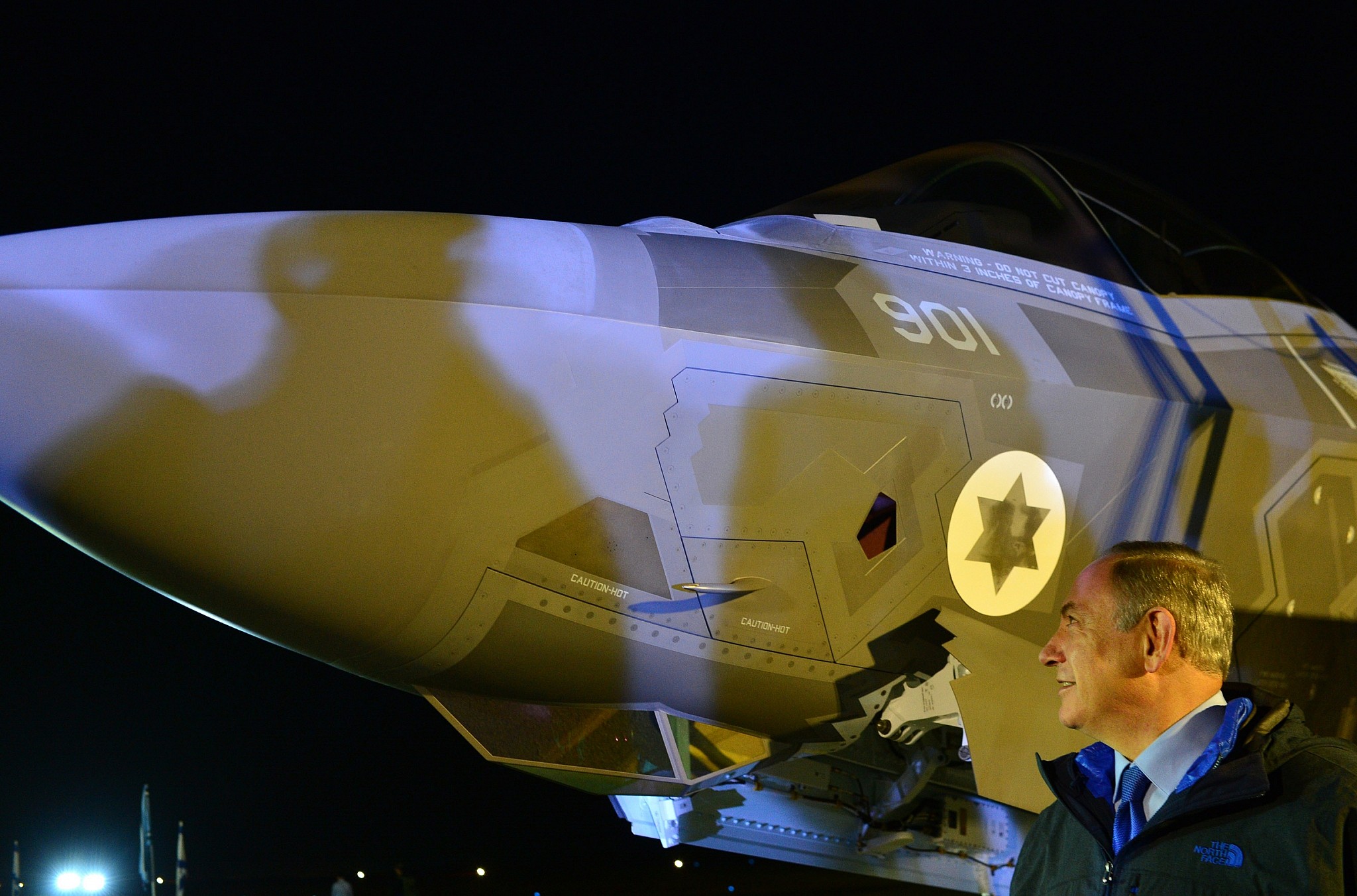
Benjamin Netanyahu at a ceremony for the new F-35 Adir stealth fighter jet at the Nevatim Air Force Base in the Negev Desert on December 12, 2016. (Kobi Gideon/GPO)

Benjamin Netanyahu at a ceremony for the new F-35 Adir stealth fighter jet at the Nevatim Air Force Base in the Negev Desert on December 12, 2016. (Kobi Gideon/GPO)

Israel is working to thwart the production of precision missiles that can be used against the country “both near and far,” Prime Minister Benjamin Netanyahu said Wednesday, the latest signal from an Israeli leader that Jerusalem may act against Iranian targets far from the border with Syria.

“Israel is determined to prevent Iran and its proxies from establishing a military presence in Syria,” Netanyahu told ministers at the start of the weekly cabinet meeting.

“We are taking strong action against these attempts and against the attempts to produce precision weaponry in all sectors, near and far. We will continue to take such action on behalf of the security of Israel,” he said.

The Israeli military on Tuesday acknowledged that it has conducted airstrikes against over 200 Iranian targets in Syria since 2017, shedding light on its largely unacknowledged activities across the border to prevent Tehran from establishing a permanent military presence in the war-torn country.

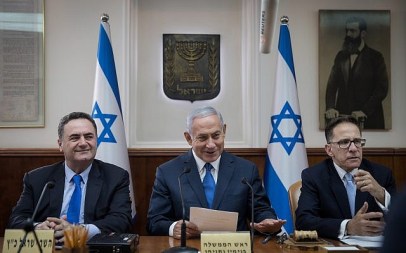
Prime Minister Benjamin Netanyahu (c) leads the weekly cabinet meeting at the Prime Minister’s Office in Jerusalem on September 5, 2018. (Hadas Parush/Flash90)

The revelation came as Israeli planes reportedly carried out strikes against Iranian and Assad regime targets in Hama and Tartus, deep inside Syria, according to a war monitor.

A day earlier, Defense Minister Avigdor Liberman hinted that Israel was not ruling out action against Iranian weapons transfers in Iraq.

According to Haaretz, a military official said Tuesday that the army was aware of Iran transferring weapons into Iraq and from there into Syria.

In Syria, Israel has for years been concerned that Iran was using opportunities presented by the Syrian civil war to entrench itself militarily in the country in order to further threaten the Jewish state — alongside the threat already posed by Iran’s proxy, Hezbollah, in Lebanon.

Israel has vowed to prevent such a military presence, but officially remains mum on most of the military’s efforts to do so.

The 202 targets hit in the Israeli airstrikes since 2017 were mostly shipments of advanced weaponry, as well as military bases and infrastructure, which the IDF officials said drove Iranian forces to abandon some posts.

In addition, Jerusalem has tried to get the Islamic Republic out of Syrian through diplomatic means by appealing to the two main power-brokers in the region: Russia and the United States.

While Russia does not seem to have accepted Israel’s demand for Iran to be completely removed from Syria, it has agreed to force the Islamic Republic’s forces and proxies to leave the areas closest to the border with Israel.

According to some reports, pro-Iranian forces would be required to stay 40 kilometers (25 miles) away from the border; others indicate that range would be set at 80 kilometers (50 miles).

Judah Ari Gross contributed to this report.


Iran slams Trump’s ‘chutzpah’ over UN Security Council plans

September 5, 2018

Source: Iran slams Trump’s ‘chutzpah’ over UN Security Council plans | The Times of Israel

Tehran’s foreign minister accuses US president of ‘bullying others’ to adopt sanctions instead of focusing session on ‘Palestine’

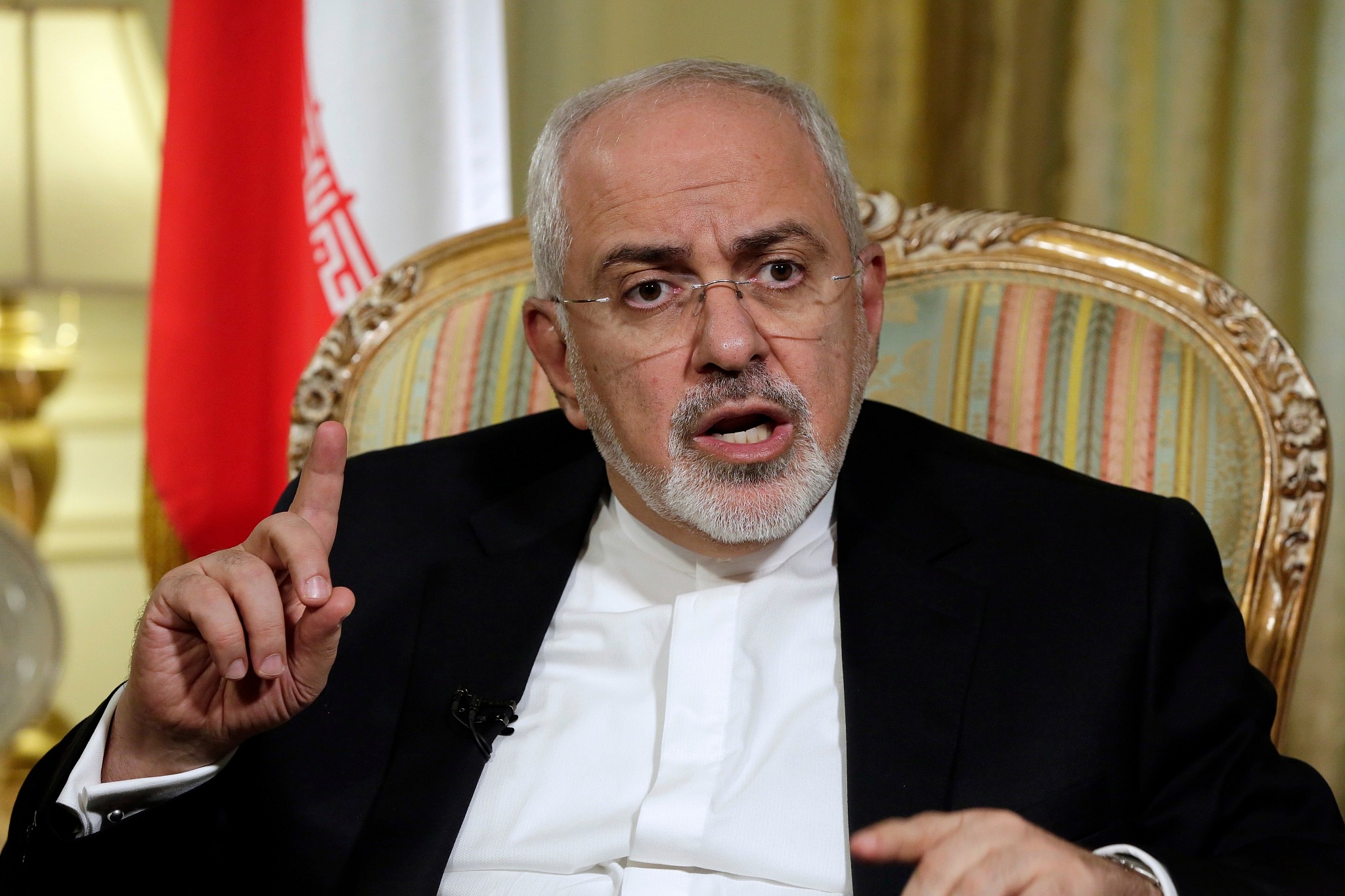
In this April 24, 2018, photo, Iran’s Foreign Minister Mohammad Javad Zarif is interviewed by The Associated Press in New York. (AP Photo/Richard Drew,)

TEHRAN, Iran — Iran’s foreign minister on Wednesday accused US President Donald Trump of trying to hijack the United Nations Security Council for the purposes of “bullying others” to turn against Tehran.

Trump plans to lead a meeting of the heads of state of the Security Council on Iran in late September, his envoy to the UN Nikki Haley, announced Tuesday.

With the United States now holding the presidency of the Security Council, Haley said the aim was to put further pressure on Tehran over its alleged violations of council resolutions.

But Iran’s foreign minister, Mohammad Javad Zarif, hit out at the US plan.

“There’s only one UNSC resolution on Iran…@realDonaldTrump is violating it & bullying others to do same,” Zarif wrote on Twitter.

Javad Zarif

@JZarif

There’s only one UNSC resolution on Iran. .@realDonaldTrump is violating it & bullying others to do same. Now he plans to abuse presidency of SC to divert a session—item devoted to Palestine for 70 yrs— to blame Iran for horrors US & clients have unleashed across M.E.

“Now he plans to abuse presidency of SC to divert a session — item devoted to Palestine for 70 yrs — to blame Iran for horrors US & clients have unleashed across (Middle East) #chutzpah.”

Washington has sought to build up international pressure on Iran after reimposing tough, unilateral sanctions on August 7 and setting a November 5 deadline for halting Iran’s oil exports.

Those moves came after the United States decided in May to pull out of the Iran nuclear deal, saying it failed to do enough to prevent Tehran from acquiring nuclear weapons and stop its ballistic missile program.

In reaction to the reimposition of sanctions, Iran demanded in The Hague that the top UN court suspend the unilateral US sanctions.

Europe has resisted joining the US sanctions move, but this week Japanese media said Tokyo had agreed to suspend crude imports from Iran.


How the Mossad op to retrieve Iran’s nuclear files took a surprising turn 

September 5, 2018

Source: How the Mossad op to retrieve Iran’s nuclear files took a surprising turn – Israel News – Jerusalem Post

At all stages, including mid-operation, Cohen pressed for bringing back as much physical original evidence as possible in order to deflate any objections from Iran that the evidence was doctored.

BY YONAH JEREMY BOB
 SEPTEMBER 5, 2018 18:36
Israeli Prime minister Benjamin Netanyahu speaks during a news conference at the Ministry of Defense

The Mossad agents who appropriated Iran’s nuclear secrets from a warehouse in Tehran in January knew they would be taking a large number of folders, but did not realize there would be a large volume of disks, Yediot Aharonot’s Ronen Bergman reported on Wednesday.

The Mossad agents involved were reportedly so surprised that they checked in with Mossad chief Yossi Cohen who was observing the mission from Israel. Cohen quickly gave the order to take as many of the disks as they could get.

The report said that in preparing for the operation, the planners debated whether to photograph the files or physically bring them – a more complex operation.

At all stages, including mid-operation, Cohen pressed to bring back as much  original evidence as possible in order to counter any claims from Iran that the evidence was doctored.

His ad hoc call mid-operation ended up having important repercussions as Prime Minister Benjamin Netanyahu decided to break with precedent and publicly present the intelligence materials in a press conference on April 30.

Many say that Netanyahu’s presentation moved US President Donald Trump the final mile toward deciding to abandon the 2015 Iran nuclear deal.

Further, the report said that information contained on the disks provided a wealth of data about Iran’s nuclear activities that was not in the files.


Report: Egyptian efforts to broker deal in Gaza come to grinding halt

September 5, 2018

Source: Report: Egyptian efforts to broker deal in Gaza come to grinding halt – Israel Hayom

Syria accuses Israel of bombing military targets ‎in Hama, Tartus‎

September 5, 2018

Source: Syria accuses Israel of bombing military targets ‎in Hama, Tartus‎ – Israel Hayom

In this war, everything goes 

September 5, 2018

Source: In this war, everything goes – Israel Hayom

Yoav Limor

Efforts to solidify its foothold and place missiles in western Iraq, arms shipments to Lebanon, and the precision missile factories that were attacked in Syria on Tuesday – are all just a fraction of Iran’s activities in the region.

These steps (which have been reported; we can assume there’s quite a bit more that is known but hasn’t been revealed) point mainly to one thing: Iranian determination to pursue the course of action plotted by the regime in Tehran. This plan is executed by the Quds Force under the command of Maj. Gen. Qassem Soleimani – unquestionably and unrivaled as the most dangerous person in the world.

Standing between Iran and the successful implementation of its plan is Israel. More than a few players are helping it, chief among them the United States, but the brunt of the work, as we saw yet again on Tuesday, is done by Israel. It has hit around 200 Iranian targets in Syria since January of 2017, with some 800 missiles and bombs.

In this war, everything goes. From attacks such as the one attributed to Israel on Tuesday – which curiously took place in broad daylight – to the various reports that have appeared in the foreign press, which we can assume don’t reach those news desks by chance. The bottom line is that Iran is the source of evil in the region, and comprehensive action is required to stop it.

Behind these actions, it isn’t hard to spot Israel’s growing concern, not to mention frustration, over the fact that Iran is adhering to its plan of action to solidify its presence in the area. Amid the backdrop of the severe economic crisis in Iran and intensifying criticism from home is a real debate over the Quds Force and its activities, including within the regime’s more conservative wing – but as of now, there’s no change in this policy which saps billions of dollars a year.

In the meantime, and we should hope into the future as well, Israel has the upper hand. The Iranians are still far from reaching their goals, mostly in Syria, and despite their declared intent they have also failed to exact a price from Israel for its overt and covert countermeasures. The nature of these types of conflicts, however, is that they don’t end quickly or in a final score. Required are fortitude, endurance and the willingness to exact and pay the cost of victory, even if it isn’t complete.

Hence, things will continue as they were. From the security aspect, over the past year, the Israeli public’s attention has mostly been diverted to incendiary kites and balloons from Gaza, but the defense establishment has largely remained fixed on Iran. We can assume this will continue to be the case throughout the coming year and will continue to be the main task of the IDF’s next chief of staff, slated to replace Lt. Gen. Gadi Eizenkot on January 1.

Israel signals lull in Syria strikes is over, resuming military action against Iran 

September 5, 2018

Source: Israel signals lull in Syria strikes is over, resuming military action against Iran – Syria – Haaretz.com

Airstrike attributed to Israel and threats made by its leaders suggest Israel may respond to any danger – even if it means deviating from deals made with Moscow

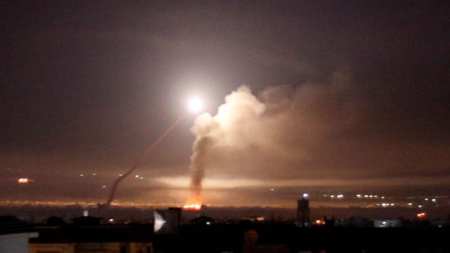
FILE PHOTO: Missile fire is seen from Damascus, Syria May 10, 2018.
FILE PHOTO: Missile fire is seen from Damascus, Syria May 10, 2018.  OMAR SANADIKI/REUTERS

The latest series of reports from Syria are somewhat foggy. At first came the report of a pre-dawn aerial assault Sunday near the Damascus international airport, attributed to Israel. The Syrian regime, which over the past two years has admitted relatively openly to Israeli strikes (even when Israel itself tried to remain ambiguous), this time claimed an electrical short as the cause of the explosions.

The explosions, in what was described as a weapon storehouse, were heard clearly throughout Damascus, but unlike previous strikes, no Syrian anti-aircraft fire was documented, either at planes or at missiles.

But if the report of an aerial assault in the Damascus area sounded a bit dubious, on Monday it was joined by another report, this time of an attack on a convey of Iranian forces and Shi’ite militias, bombed near the American base near the enclave of Al-Tanf in southern Syria. Eight people were reportedly killed In that incident, including Iranian fighters and militiamen. In the past such aerial bombings on convoys in this area were attributed both to Israel and to the United States. This is the road by which convoys bring fighters and weapons from Iran and Iraq and from there to Syria and Lebanon.

The east-west land corridor that Iran has been trying to strengthen over the past two years is now drawing more international attention. Just last weekend Reuters reported on an Iranian move to transfer medium-range missiles to Iraq, apparently as an interim area between Iran itself and its weapons stores in Syria, which are frequently bombarded by Israel.

Senior Israeli officials, including Prime Minister Benjamin Netanyahu and Defense Minister Avigdor Lieberman, have over the past few days gone back to expressing themselves publicly about the Iranian presence in Syria. Against the backdrop of visits by American envoys to Israel and of senior Iranians in Syria, it was once again reported that Israel is not entirely happy with the arrangement with Russia to keep Iranian forces in Syria away from Israel’s border. Moscow has kept its pledge to move the Iranians a distance of 85 kilometers (and according to another version, 100 kilometers) from the border with Israel in the Golan, but this pledge does not include Damascus.

The bottom line of the recent developments is that the brief interlude in the fighting on the Syrian border is apparently over. The period between February and July, during which Iranian action in Syria increased and following the re-taking of the Syrian Golan by the Assad regime, saw a great many incidents, some of which involved “leaking” of fire or aircraft from Syria into Israeli territory. But in recent weeks, after Assad completed his takeover of southern Syria, relatively quiet has prevailed.

And now it seems that Israel is signaling that it has gone back to operations as usual. As long as it identifies a danger, which to Israel also means deviating from understandings with the Russians, Israel reserves the right to respond. That is what Lieberman said yesterday in an interview in the framework of the Israel News Companies’ “influencers” conference.

Lieberman makes his choice

Meanwhile, the defense minister is considering the upcoming appointment of the next Israel Defense Forces chief of staff. Last week, in an unusual step, Lieberman told the daily Yedioth Ahronoth that he had already decided who will be the next chief of staff. He was keeping the name to himself. Only after the High Court of Justice hears a petition Thursday against the composition of the committee that decides senior government appointments, and hopefully issues a ruling, will Lieberman make public the names of the two final candidates. These will be his candidate and one other, in the unlikely event that the first appointment is struck down by the committee for ethical reasons.

On Monday, rather disingenuously, Lieberman confirmed that he had indeed decided on the appointment but because his memory “at my age is not great,” he couldn’t remember “at this second” who the man is. What is the logic in leaving four candidates in suspense and keeping the information to himself? The defense minister was not asked and did not say. In the army, meanwhile, they are analyzing the texts of these interviews as if they were intelligence data. From the few hints dropped by the defense minister, it emerges that he’s looking for an officer who will convey to him that the IDF under his command will be able to win wars, lead a revolution in the ground forces and will not bother him too much about strategic imperatives.

Not that anybody knows for sure, but as was reported last month, most members of the General Staff believe that the two names to be submitted to the committee will be Maj. Gen. Aviv Kochavi (the current deputy chief of staff) and Maj. Gen. Nitzan Alon. If Maj. Gen. Eyal Zamir, Prime Minister Benjamin Netanyahu’s former military secretary, reaches the final lap, it will be perceived as the result of pressure brought to bear by the prime minister himself.

As for the fourth candidate, Maj. Gen. Yair Golan, he sounded on Monday like someone who has been relieved from the pressure of the competition (not that this bothered him very much in the past). In a speech to the International Institute for Counter-Terrorism in Herzliya, Golan said: “Anyone who has dealt with combat understands that wars cannot be won only through intelligence and precise fire. Technology alone apparently will not win wars.” That is, the IDF needs to improve its ground maneuvering, an issue that is now under extensive discussion by experts.

Golan had a surprise ready for anyone who expected him to be careful of examples from a certain period of history. In wartime, he said, Israel needs “leadership like that of Winston Churchill in World War II.” It seems that this statement, at least, won’t turn Netanyahu against him, considering the prime minister’s well-known admiration for the British leader.

Iran’s president vows oil exports to continue despite US pressure

September 5, 2018

Source: Iran’s president vows oil exports to continue despite US pressure | The Times of Israel

Rouhani also says main export terminal to move from Gulf to Oman Sea, allowing shipments to go on if key waterway blocked

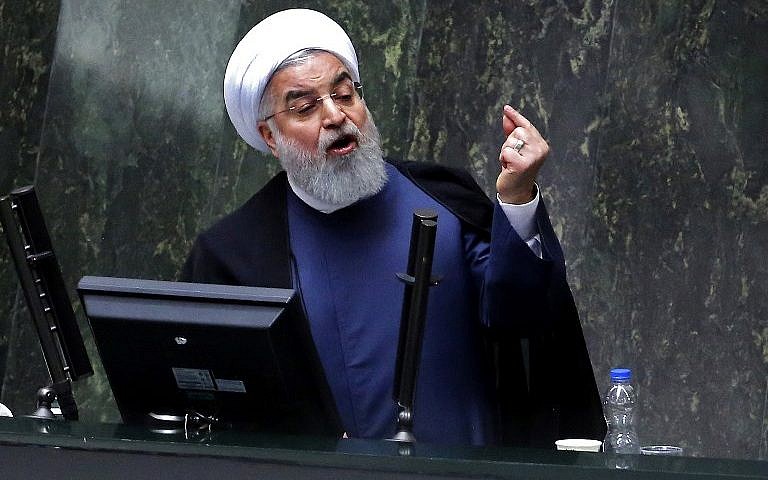
Iran's President Hassan Rouhani speaks at the Iranian Parliament in the capital Tehran on August 28, 2018. (AFP Photo/Atta Kenare)

Iran’s President Hassan Rouhani speaks at the Iranian Parliament in the capital Tehran on August 28, 2018. (AFP Photo/Atta Kenare)

Iranian President Hassan Rouhani said Tuesday that Iran will continue exporting crude oil despite US efforts to stop it through sanctions.

“We will continue by all means to both produce and export” oil, Rouhani said in remarks broadcast on state TV. “Oil is in the frontline of confrontation and resistance.”

The US wants to reduce Iran’s oil exports effectively to zero with renewed sanctions in November, after pulling out of the nuclear deal between Iran and world powers in May.

It’s unclear, however, how much other countries will cut back on Iranian oil imports. Britain, France, Germany, Russia and China, which also signed the nuclear deal, opposed the Trump administration’s decision to withdraw from it. European countries are trying to salvage the landmark accord.

Rouhani also said Iran is to move its main oil export terminal from the Gulf to the Oman Sea, sparing its tankers from using the strategic Strait of Hormuz.

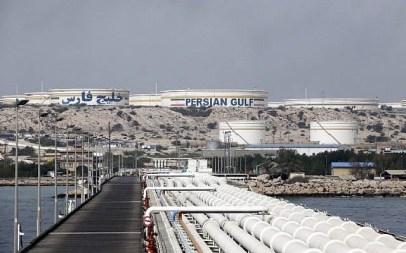
This photo from March 12, 2017, shows a an Iranian oil facility on Kharg Island, on the shore of the Gulf. (AFP Photo/Atta Kenare)

Rouhani said exports were already being shifted from the Kharg Island terminal, deep in the Gulf, to Bandar-e-Jask in the Oman Sea and would be completed by the end of his term in 2021.

“This is very important for me, it is a very strategic issue for me. A major part of our oil sales must move from Kharg to Jask,” Rouhani said in the speech as he inaugurated three new petrochemical plants in the southern energy hub of Asaluyeh.

To reach the oil terminal on Kharg Island, tankers must currently pass through the narrow Strait of Hormuz, slowing down deliveries.

Iran has in the past repeatedly threatened to block the Strait of Hormuz — which is used by its Gulf rivals including Saudi Arabia — when faced with sanctions on its oil exports and possible military action by the US.

The latest threat was in July when Rouhani said Iran has always guaranteed the security of the strait but warned the US “should not play with the lion’s tail.”

Moving its terminal to the Oman Sea would in theory allow Iran to continue exporting oil even if the strait was closed.

Illustrative: The Iranian warship Alborz, foreground, prepares to leave Iran’s waters at the Strait of Hormuz, in this photo released by the semi-official Fars News Agency, Tuesday, April 7, 2015. (AP/Fars News Agency, Mahdi Marizad)

The last time there was a major disruption in the flow of oil through Hormuz was in 1984 during the Iran-Iraq war when both sides attacked each other’s oil facilities and tankers.

The strait is the world’s most important oil chokepoint with roughly 35 percent of all seaborne oil passing through it, according to the US Energy Information Administration.

Bloomberg reported that Iran exported 2.1 million barrels per day (bpd) of oil in August, but analysts say US sanctions could reduce sales to around 1 million bpd.


Iran deepens military grip on Syria despite 200 Israeli strikes in 21 months – DEBKAfile

September 5, 2018

Source: Iran deepens military grip on Syria despite 200 Israeli strikes in 21 months – DEBKAfile

After 200 Israel attacks and 800 tons of ordnance, Iran has not halted its deepening military foothold in Syria, only switched tactics, DEBKAfile’s military sources report.

The IDF released those figures on Tuesday, Sept 4, in its summing-up of 21 months of operations for stalling Iran’s entrenchment in Syria. That evening, Israel was reported by foreign sources to have conducted more attacks in Syria: IDF fighter jets bombed Syria’s “scientific research center” in Masyaf near Hama; and missiles struck a group of Iranian buildings between the town of Masyaf and Wadi al-Uyun, as well as Iranian assets in the town of Banyas near the Mediterranean port of Tartus.

The IDF summary also reported that the large-scale Israeli bombardment of 50 Iranian targets on May 10 had halted Iran’s further expansion in Syria. DEBKAfile note that this claim was refuted by the IDF’s own continuing attacks since then, especially the repeated strikes on the Masyaf “research center,” where chemical weapons are reputed to be manufactured. Iran’s chief strategist Al Qods chief Gen. Qassem Soleimani has clearly not been deterred by Israeli assaults; he has only found different ways of attaining the same objective. In the past five months, he has been embedding Iranian bases and command centers inside the Syrian military network. Others have been planted close to the perimeter fences of Russian bases, or moved across the border into western Iraq, allowing Iranian and allied forces to escape to safety after an operation.

These tactics have enabled Iran to continue to go forward in Syria under an average of 10 Israeli air and missile strikes per month with 40 tons of ordinance dropped on its assets. IDF Major. Gen. Yair Golan was making this point when he said this week that a war can’t be won by intelligence and precise fire. He was criticizing the strategic guidelines governing the IDF’s fight against Iran’s presence in Syria.

This month, the IDF was substantially reinforced by US cooperation for a joint offensive against Iran’s military hold on Syria, an important change which occurred after US National Security Adviser John Bolton spent some time in Israel two weeks ago. On Sept. 2, the US air force jumped into the mission with a strike on an Iranian-Syrian military convoy driving near the American Al Tanf garrison, and which also carried Iraqi and Afghan Shiite militiamen .
However valuable US back-up is for the Israeli effort, nothing has changed in the IDF’s basic tactics of using air strikes and surface missiles against Iranian targets in Syria. It is obvious that these tactics are not working. Gen. Soleimani has not stopped – or even slowed down – his drive for widening and deepening Iran’s military infrastructure in Syria.