Archive for September 2018

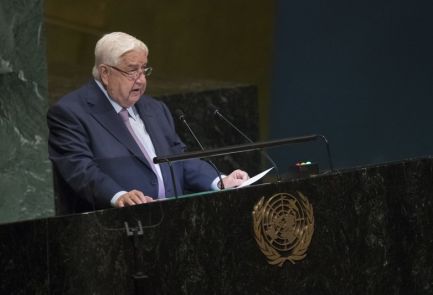
Syrian FM: Victory over terrorism near, ‘occupying forces’ must leave 

September 30, 2018

Source: Syrian FM: Victory over terrorism near, ‘occupying forces’ must leave – Israel Hayom


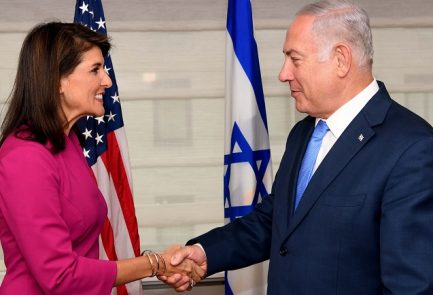
Haley to Netanyahu: Abbas is not helping the Palestinian people 

September 30, 2018

Source: Haley to Netanyahu: Abbas is not helping the Palestinian people – Israel Hayom


Playing in a different league – Israel Hayom

September 30, 2018

Source: Playing in a different league – Israel Hayom


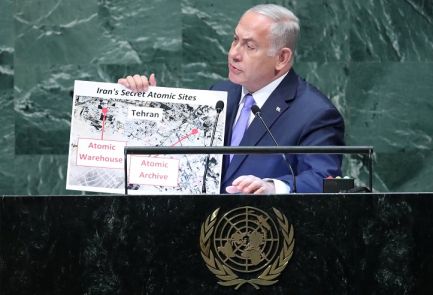
After UN reveal, PM to share more Iran nuclear secrets 

September 30, 2018

Source: After UN reveal, PM to share more Iran nuclear secrets – Israel Hayom


Off Topic: Sing Along With Israel 

September 30, 2018


I produced this video together with my ex back in 1988 in celebration of Israel’s 40th anniversary.

Directed by Dana Lustig with Kobi Oshrat as musical director, it was the first sing along (know in Israel as “shira b’tzibur”) ever produced in Israel.

It was featured aboard El Al flights for a number of years shown prior to departure.

– JW

Report: Syria paid Russia $1 billion for S-300 missiles 

September 30, 2018

Source: Report: Syria paid Russia $1 billion for S-300 missiles – Israel National News

Money was transferred to Russian banks years ago, but only given to Russia upon delivery of missile system, source says.

Arutz Sheva Staff, 29/09/18 22:17
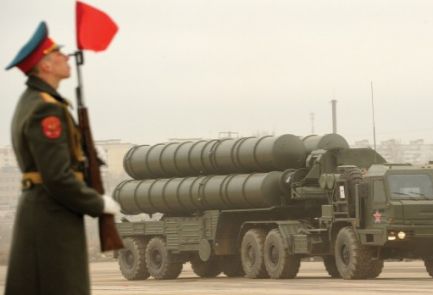
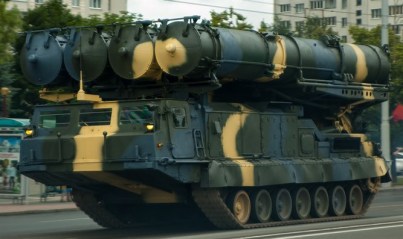
S-300 V missile system

S-300 V missile system

Russia received $1 billion in payment for the S-300 surface-to-air missile system, Kan reported.

According to Kan 11, Syria transferred the payment to Russian banks several years ago, but due to Israel’s pressure to freeze the deal, the money was not officially transferred to Russia.

With Russia’s transfer of the S-300 missile system to Syria, the money will become available for Russian use, a source told Kan. An additional diplomatic source admitted that Syria’s receipt of the missile system will “challenge Israel.”

“This is not a simple challenge for the country and we’re dealing with it in various ways, not necessarily by preventing the transfer,” the source said.

Russia announced earlier this week it would upgrade Syria’s anti-air defense network and send the S-300 system there, following the downing of a Russian military aircraft in Syrian airspace last week.

On Friday, Russian Foreign Minister Sergei Lavrov confirmed that delivery of the advanced missile system had begun.


Russia ramps up anti-Israel measures in Syria for possible war of attrition – DEBKAfile

September 30, 2018

Source: Russia ramps up anti-Israel measures in Syria for possible war of attrition – DEBKAfile

At some point in the last 48 hours, the fallout from the Russian Il-20 plane disaster has evolved into hostile steps by Moscow against Israel, as reported by DEBKAfile.
  1. Russian Foreign Minister Sergei Lavrov announced on Friday, Sept. 28 that Russia had already handed over advanced S-300 missile defense systems to Syria. This was a day after Russian National Security Adviser Nikolai Patrushev met in Tehran with his counterpart Ali Shamkhani. A tradeoff was to have been offered at that meeting, whereby Israeli would call off its air strikes in Syria if Iran stopped sending arms to Hizballah via Syria. Israel was given to understand by Russian officials that this deal would be sealed at an early face-to-face between President Vladimir Putin and Prime Minister Binyamin Netanyahu. Until then. the S-300s would be held in abeyance. However, as Lavrov indicated, either Israel was misled, or Moscow sharply changed course in the last 48 hours. Netanyahu responded to the Russian disclosure by calling the S-300 handover to Syria “irresponsible.”
  1. Mikhail Bogdanov, Russian Deputy Foreign Minister, commented caustically to Arab media on Friday that Israel should stop noting “our mistakes.” He was referring to disparaging, possibly patronizing, remarks from Israel military sources when they disowned responsibility for the IL-20 crash. Indeed, the IDF’s response to the Russian Defense Minister Sergei Shoigu’s warning of an electronic war was, “Our air force can handle their systems.” Many Israelis used social media to pour contempt on Russia’s military capabilities. This attitude no doubt irked Moscow and contributed to its decision to ratchet up its military stance in Syria against Israel.
  2. Russian military experts described the new electronic warfare systems – through local media – as already installed in Syria, in line with Shoigu’s pledge, and capable of tracking Israeli planes in Israel and Europe when they were still on the ground.
    As one Russian expert put it: “Once a plane is spotted at an airdrome, the reinforced radio-electronic warfare system automatically assigns a target number to it,” for Russian and Syrian air defenses.
  3. In addition to the S-300 and enhanced EW systems, the Russians are working overtime to install a new, short-range, Pechora M2 anti-missile system, for boosting the defenses of Damascus. Also known as Neva S-125, this weapon was upgraded in the last two years for intercepting low-flying aircraft, cruise missiles and combat helicopters, which manage to bypass the S-300 and S-400 missile belts protecting the Syrian capital.

The Russian president finds it hard to contend with Prime Minister Netanyahu’s staunch determination to drive Iranian forces from Syria and his constantly escalating anti-Tehran rhetoric. Putin believes Netanyahu’s goal to be unrealistic. That view is also shared by a part of the Trump administration. The US president’s new adviser on Syria, James Jeffrey, said on Friday, Sept. 28 at UN Center.  “We are not going to force Iranians out of Syria. We don’t even think the Russians can force the Iranians out of Syria because force implies force, military action.”

So can Israel, without active US or Russian military support, achieve Netanyahu’s goal on its own?

For now, Russia is not only becoming increasingly obstructive, say DEBKAfile’s military and intelligence sources, but hostile: The new air defense and electronic warfare measures Moscow is delivering to Syria indicate that the Russian military is digging in for a war of attrition against Israel. Those systems may be followed by squadrons of advanced Russian warplanes.

In many ways, history is repeating itself: In the years 1969-70, Israel fought back against a Soviet-backed Egyptian war of attrition by enclosing a 30-km deep security zone inside the Egyptian border where its air force could operate freely – that is, until Russia installed a line of SA-3 anti-air missiles around the Aswan Dam, Cairo and Alexandria. Israeli air strikes deep inside Egypt were blocked. Moscow then followed up with the deployment of four squadrons of Mig-21 fighters and its most advanced Mig-25s. Israeli warplanes were pushed back with heavy casualties in aircraft and air crews. The US then stepped in and brokered a Russian-Israeli ceasefire which was concluded in Aug. 1970.

Both Russian and Israeli capabilities have changed unrecognizably in the last 48 years. Nevertheless, the Israel Air Force has carefully abstained from raids over Syria since the dispute with Moscow erupted over Il-20 spy plane disaster.


12 incendiary balloon fires a day on average

September 30, 2018

Source: 12 incendiary balloon fires a day on average

IDF sources meet with security officials in Gaza vicinity communities in light of recent escalation of incendiary balloon terrorism; Security official: ‘Hamas has released its restrains and is heading towards another round of fighting.’

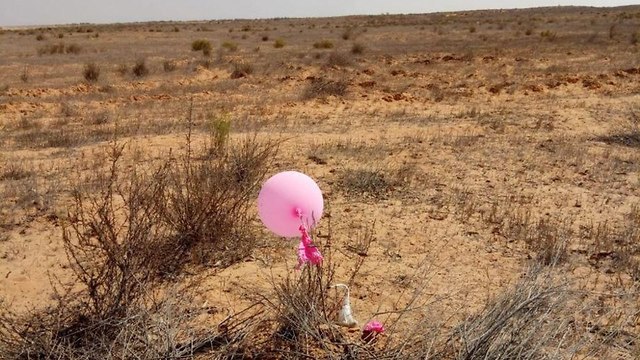
Local authorities in Gaza border communities have issued new and updated safety guidelines in recent days, in light of an increase in terrorist attacks involving balloons attached to explosives being launched from Gaza. Recently, an average of 12 fires a day were caused by incendiary balloons, most of them in the Be’eri and Kissufim forests or in open fields in the Eshkol and Sha’ar HaNegev Regional Councils.

Gaza region residents have been informed that police and IDF officials are concerned with the recent escalation in incendiary balloon terrorism, fearing it can lead to casualties since now terrorists are launching balloons attached to improvised explosive devices.

Incendiary balloon
Incendiary balloon

Although the explosives charges are not powerful, the explosives themselves and the inflammatory materials can certainly cause serious injuries.

“The incendiary balloons terrorism has escalated in the past few days and now Palestinians are launching balloons day and night. If you recognize something suspicious on the ground, do not touch it and keep away. We recommend that parents explain this to their children as well,” an announcement circulated in a community near Gaza read.

Despite the ongoing riots along the Gaza security fence, about two weeks ago, as fewer incendiary balloon incidents were reported, it seemed as if calm has been achieved.

Hamas appeared to have successfully restrained, to a certain extent, the terrorist squads involved in launching these balloons, in light of the progress made in the cease-fire talks with Israel.

But ever since the cease-fire talks halted, during the past two weeks the balloon terrorism has resumed and, with the addition of explosive devices,  became even more dangerous.

Security forces situated throughout Gaza vicinity communities were recently briefed by the IDF, and were told that the region has become more volatile and dangerous.

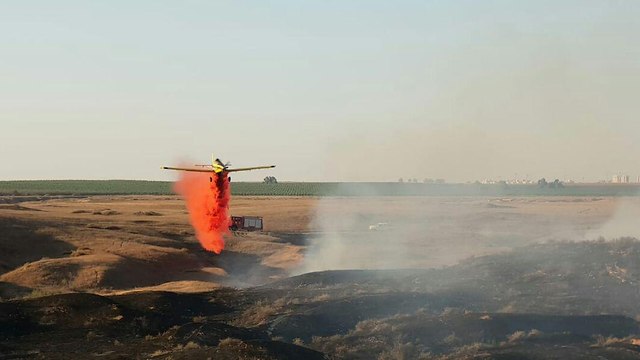
Fire erupts in Nachal Grar (Photo: The Israel Fire and Rescue Services, South District)

Fire erupts in Nachal Grar (Photo: The Israel Fire and Rescue Services, South District)

“Our feeling is that we are facing yet another round of escalation,” said a security official positioned in region.

“After at least five short rounds of escalation, there was a certain calm, as very few incendiary balloons incidents were reported. Now, after a few days, the incendiary balloon terrorism resumed, sending a clear message: Hamas has loosened the reins and is now authorizing the operation of incendiary balloon terrorist squads,” the security official added.

 (Photo: Benny Rubinov, KKL-JNF forester)

(Photo: Benny Rubinov, KKL-JNF forester)

The communities’ firefighting team has resumed their emergency work procedures, as JNF employees and the Israel Nature and National Parks Protection Authority’s personnel are on call.

On Saturday morning, highway 4 was blocked for traffic near Yad Mordechai Junction due to a suspicious object, which probably landed there as a result of a balloon flown from the Gaza Strip.

A sapper arrived at the scene and neutralized the object.

Later on Saturday, a fire caused by an incendiary balloon broke out near Nahal Oz, a kibbutz in southern Israel.


Iran boasts of fastest missile launchpads ‘in the world’

September 30, 2018

Source: Iran boasts of fastest missile launchpads ‘in the world’ | The Times of Israel

Navy commander says Tehran can carry out the ‘swiftest missile strikes against enemy targets’

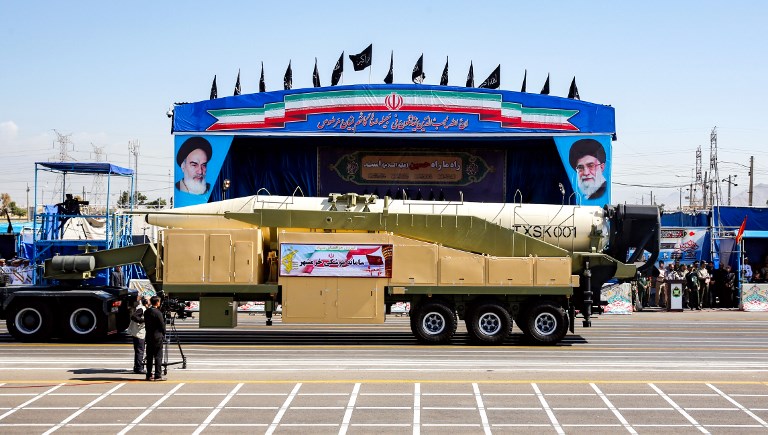
This picture taken on September 22, 2018 shows the long-range Iranian missile "Khoramshahr" being shown during the annual military parade marking the anniversary of the outbreak of the devastating 1980-1988 war with Saddam Hussein's Iraq, in the capital Tehran. (AFP PHOTO / STR)

This picture taken on September 22, 2018 shows the long-range Iranian missile “Khoramshahr” being shown during the annual military parade marking the anniversary of the outbreak of the devastating 1980-1988 war with Saddam Hussein’s Iraq, in the capital Tehran. (AFP PHOTO / STR)

The Iranian Navy on Saturday boasted that it possessed airships capable of carrying out the swiftest missile strikes in the world against enemy targets.

The commander of the Iranian Navy’s Airborne Unit General Pilot Mansour Rouh Ol-Amini told the Fars News Agency that the country had “two models of BH7 and SRN6 airships and they have given us the capacity to declare that we now have the swiftest missile platforms that can fly at a high-speed and leave the region after fire.”

He added that islands in the Persian Gulf act as “aircraft carriers” for helicopters which take off and land on them.

Iran’s missile capabilities and its ongoing development program has been a major source of tension with the West, particularly with the United States. US President Donald Trump, who pulled out of the 2015 nuclear deal with Iran and world powers in May, has called for a new agreement that restricts Iran’s missile capabilities and regional interventions.

Last month, the Trump administration began reinstating economic sanctions against Iran that were eased in exchange for concessions on Iran’s nuclear program in the nuclear agreement, known as the Joint Comprehensive Plan of Action. The UK, France, Russia, China, Germany, and the European Union, which also signed the deal, have criticized Trump’s decision and continue to back the agreement with Iran.

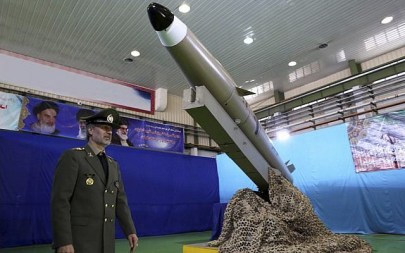
Also last month, Tehran unveiled a next-generation short-range ballistic Fateh missile, and vowed to further boost its capabilities.

The new missile’s range was not given, but previous versions of the Fateh had a range of around 200 to 300 kilometers (125-185 miles), according to the US-based Center for Strategic and International Studies.

In this picture released by the official website of the Iranian Defense Ministry on Aug. 13, 2018, Defense Minister Gen. Amir Hatami walks past the missile Fateh-e Mobin, or Bright Conqueror, during inauguration of its production line at an undisclosed location, Iran (Iranian Defense Ministry via AP)

“As promised to our dear people, we will not spare any effort to increase the missile capabilities of the country and we will certainly increase our missile power every day,” Iranian Defense Minister Amir Hatami said at the time.

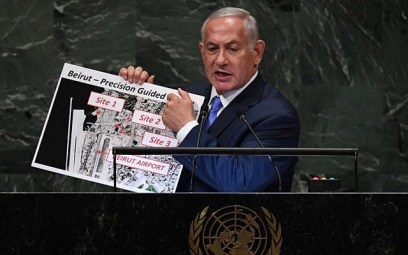
Earlier this week, Israeli Prime Minister Benjamin Netanyahu revealedwhat he said were precision missile sites hidden in Beirut by Iranian-proxy and Lebanese terror group Hezbollah.

Speaking at the UN General Assembly on Thursday, Netanyahu also revealed what he said was a previously unknown Iranian nuclear site, saying it could contain up to 300 tons of nuclear material. He accused the International Atomic Energy Agency of failing to investigate findings that he presented earlier this year about Iran’s nuclear program.

Israeli Prime Minister Benjamin Netanyahu addresses the General Assembly at the United Nations in New York September 27, 2018. (AFP / TIMOTHY A. CLARY)

In his speech before world leaders, Netanyahu said that “in Lebanon, Iran is directing Hezbollah to build secret sites to convert inaccurate projectiles into precision guided missiles, missiles that can target deep inside Israel within an accuracy of ten meters.”

“Hezbollah is deliberately using the innocent people of Beirut as human shields. They have placed three of these missile conversion sites alongside Beirut’s international airport,” he added.

Reasserting longstanding  Israeli policy, he promised: “Israel will do whatever it must do to defend itself against Iran’s aggression.”

To that end, he said, “We will continue to act against you in Syria, we will act against you in Lebanon, we will act against you in Iraq, we will act against you whenever and wherever we must act to defend our state and to defend our people.”


Iran says it expects EU to set up mechanism to bypass US sanctions by November

September 30, 2018

Source: Iran says it expects EU to set up mechanism to bypass US sanctions by November | The Times of Israel

Since Trump’s pullout from nuclear accord, European countries have begun working on payment system to allow oil companies and businesses to continue trading with Tehran

Abbas Araghchi (C), Iran's chief nuclear negotiator arrives at the Austria Center Vienna after another rounds of talks between the EU 5+1 on May 16, 2014 in Vienna. (photo credit: AFP/DIETER NAGL/file)

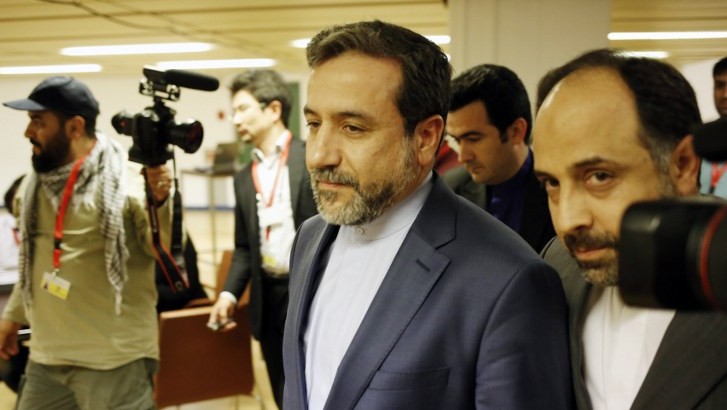
Abbas Araghchi (C), Iran’s chief nuclear negotiator arrives at the Austria Center Vienna after another rounds of talks between the EU 5+1 on May 16, 2014 in Vienna. (photo credit: AFP/DIETER NAGL/file)

Iran on Saturday said it expected the European Union to establish a legal framework by November 4 to bypass American sanctions and to allow the continuation of trade between Tehran and EU member states.

The European Union said Monday its members would set up a payment system to allow oil companies and businesses to continue trading with Iran, in a bid to evade sanctions after the US withdrew from a historic nuclear agreement signed in 2015.

Iranian Deputy Foreign Minister Abbas Araghchi said in an interview with the official IRNA news agency that “the mechanisms initiated by Europe should begin at the most by November 4,” according to Hadashot TV.

November 4 is the date on which US sanctions against its vital oil industry are set to begin.

After high-level talks at the United Nations among the remaining members of the nuclear accord, Iran and the European Union announced their defiance towards US President Donald Trump’s administration, saying in a statement that they were determined “to protect the freedom of their economic operators to pursue legitimate business with Iran.”

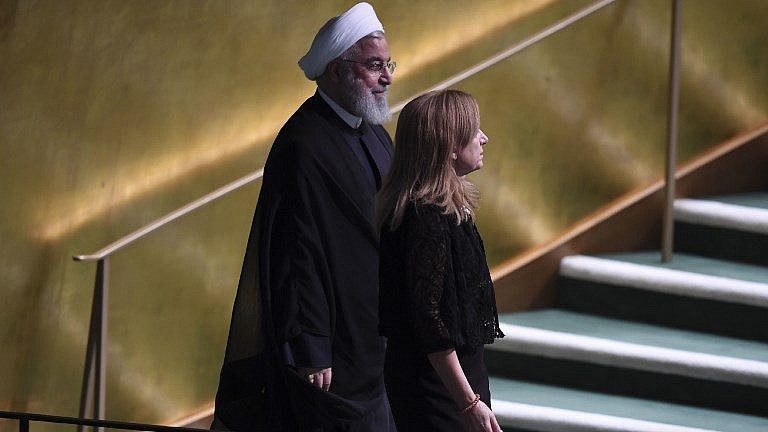
Hassan Rouhani President of the Islamic Republic of Iran arrives to speak to the Nelson Mandela Peace Summit September 24, 2018, a day before the start of the General Debate of the 73rd session of the General Assembly at the United Nations in New York. AFP/ Don EMMERT)

With the United States and the dollar dominating so much of global trade, the statement said the new mechanism would “facilitate payments related to Iran’s exports (including oil) and imports, which will assist and reassure economic operators pursuing legitimate business with Iran.”

EU foreign policy chief Federica Mogherini, speaking at the United Nations alongside Iranian Foreign Minister Mohammad Javad Zarif, said the countries were still working out the technical details.

“In practical terms, this will mean that EU member states will set up a legal entity to facilitate legitimate financial transactions with Iran and this will allow European companies to continue to trade with Iran in accordance with European Union law and could be open to other partners in the world,” she told reporters.

She said that the remaining members of the so-called Joint Comprehensive Plan of Action — Britain, China, France, Germany, and Russia — would also maintain their commitments to support Iran on civilian nuclear energy.

“The participants recalled that these initiatives are aimed at preserving the JCPOA, which is in the international interest,” she said.

During a briefing with Iranian reporters in New York on Friday, Zarif said of the preservation of the JCPOA that the Iranians “are seeing that [the European powers] are taking steps to implement it.”

Zarif added that “the most important step taken so far is creating the Special-Purpose Vehicle,” a mechanism allowing trade between European countries and Iran. “Many central banks in Europe are members of it.”

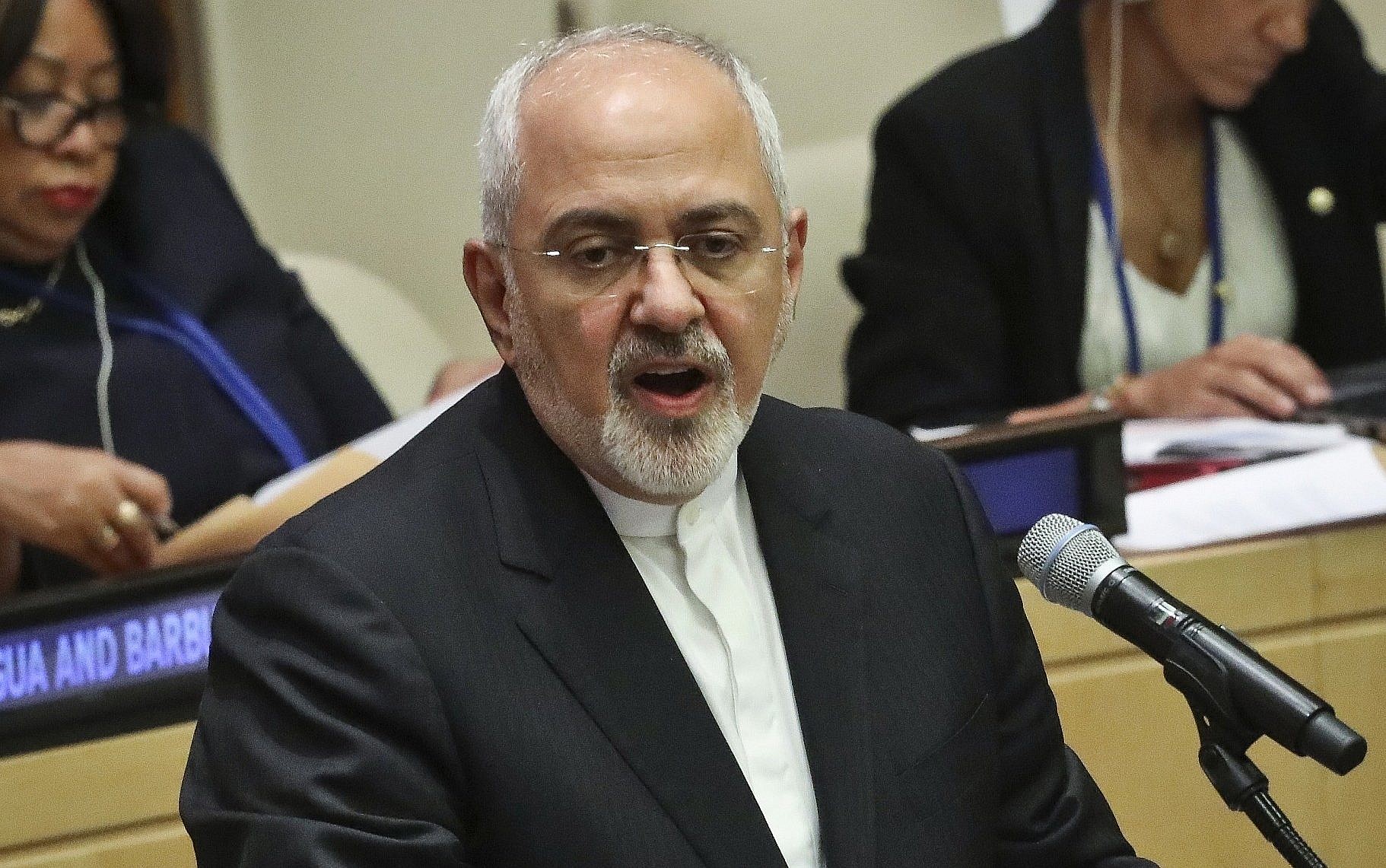
Iran’s Foreign Minister Mohammad Javad Zarif addresses a meeting to promote the elimination of nuclear weapons, during the United Nations General Assembly, Wednesday September 26, 2018 at UN headquarters (AP Photo/Bebeto Matthews)

Zarif said that these steps illustrate Europe won’t let the US dictate policy for them.

In line with findings of UN inspectors, Mogherini reiterated that Iran has been in compliance with the nuclear agreement — under which Tehran drastically scaled back its nuclear program in exchange for relief from sanctions.

The agreement was sealed in 2015 in a signature achievement for then US president Barack Obama.

Trump pulled out of the agreement in May, describing it as a “disaster” and quickly moving to reimpose sanctions on Iran.

Despite the protests of the European Union, a number of businesses including French energy giant Total and carmakers Peugeot and Renault as well as Germany’s Siemens and Daimler have already suspended operations in Iran for fear of triggering US sanctions.

With Iran’s economy already feeling the pinch, US national security adviser John Bolton vowed this week to impose “maximum pressure” on Tehran, while insisting that Washington was not pushing for regime change.

US Arab allies Saudi Arabia and the United Arab Emirates as well as Israel have long pushed for Washington to work to curtail Iran’s influence in the Middle East, including in war-torn Syria and its support for the Lebanese terror group Hezbollah.

AP and AFP contributed to this report.