Archive for July 2018

Israel announces nationwide military drills amid war preparedness on northern and Gaza fronts 

July 16, 2018

Source: Israel announces nationwide military drills amid war preparedness on northern and Gaza fronts – DEBKAfile

Saturday night, July 14, the Israeli military announced nationwide IDF exercises would be conducted until the end of the week – an effective measure for placing the armed forces on the ready for war.

The public was advised to expect unusual military traffic on the roads. This announcement appeared to conflict with earlier IDF assurances that large-scale tank and special units were standing by on the Gaza border ready for Hamas to further escalate the massive, continuous rocket barrage it launched against southern Israel as of Friday night (more than 100 rockets). A second large IDF force was on the ready on Israel’s northern border while Syrian, Hizballah and pro-Iranian troops were on the move in southwestern Syria and getting closer. 

However, launching military drills is a useful maneuver for underpinning a government’s policies, and the government in Jerusalem undoubtedly faces three fateful policy decisions:

  1. An Israeli ultimatum has been issued to Hamas to halt its various forms of anti-Israel violence from the Gaza Strip – ranging from rocket fire on civilian communities; protests riots on the border fence as the pretext for terrorist attacks and infiltration; and the destructive incendiary balloon and kites. If Hamas fails to meet this demand, the IDF will continue to escalate its attacks on the strongholds and infrastructure of Hamas and other terrorist groups in the Gaza Strip. DEBKAfile is skeptical of Hamas accepting these terms of surrender, since its leaders are flush with victory after getting away with a series of terrorist harrasments for four months. Its leaders may simply pause their rockets attacks without accepting Israel’s terms and then wait and see how Israel reacts.
  2. Another key decision depends on the outcome of the Trump-Putin summit on Monday, July 16 in Helsinki, with regard to the continued presence of Iran in Syria. If this issue is left open, the Syrian army and its Iranian allies, including an Iraqi Shiite militia, will feel free go forward for a showdown over the Quneitra region opposite Israel’s Golan border. They will be fighting under Iranian Revolutionary Guards officers.
  3. Israel is concerned that this showdown will start in the hours leading up to, or during, the Helsinki summit.

For dealing with flareups on the two fronts – north and south – the Israeli military needs roads cleared of heavy traffic and open skies.

How the Mossad stole Iran’s nuclear secrets

July 16, 2018

Following on from this previous post…

How did the Mossad get the nuclear papers out of Iran?
https://warsclerotic.com/2018/05/31/how-did-the-mossad-get-the-nuclear-papers-out-of-iran/

… is the following article from the New York Times.

How Israel, in Dark of Night, Torched Its Way to Iran’s Nuclear Secrets

//www.nytimes.com/2018/07/15/us/politics/iran-israel-mossad-nuclear.html

TEL AVIV — The Mossad agents moving in on a warehouse in a drab commercial district of Tehran knew exactly how much time they had to disable the alarms, break through two doors, cut through dozens of giant safes and get out of the city with a half-ton of secret materials: six hours and 29 minutes.

The morning shift of Iranian guards would arrive around 7 a.m., a year of surveillance of the warehouse by the Israeli spy agency had revealed, and the agents were under orders to leave before 5 a.m. to have enough time to escape. Once the Iranian custodians arrived, it would be instantly clear that someone had stolen much of the country’s clandestine nuclear archive, documenting years of work on atomic weapons, warhead designs and production plans.

The agents arrived that night, Jan. 31, with torches that burned at least 3,600 degrees, hot enough, as they knew from intelligence collected during the planning of the operation, to cut through the 32 Iranian-made safes. But they left many untouched, going first for the ones containing the black binders, which contained the most critical designs. When time was up, they fled for the border, hauling some 50,000 pages and 163 compact discs of memos, videos and plans.

In late April, Prime Minister Benjamin Netanyahu announced the results of the heist, after giving President Trump a private briefing at the White House. He said it was another reason Mr. Trump should abandon the 2015 nuclear deal, arguing that the documents proved Iranian deception and an intent to resume bomb production. A few days later, Mr. Trump followed through on his longstanding threat to pull out of the accord — a move that continues to strain relations between the United States and European allies.

Last week, at the invitation of the Israeli government, three reporters, including one from The New York Times, were shown key documents from the trove. Many confirmed what inspectors from the International Atomic Energy Agency, in report after report, had suspected: Despite Iranian insistence that its program was for peaceful purposes, the country had worked in the past to systematically assemble everything it needed to produce atomic weapons.

“It’s quite good,” Robert Kelley, a nuclear engineer and former inspector for the agency, said in Vienna, after being shown some of the fruits of the document theft. “The papers show these guys were working on nuclear bombs.”

There is no way to independently confirm the authenticity of the documents, most of which were at least 15 years old, dating from the time when an effort called Project Amad was ordered halted and some of the nuclear work moved deeper under cover. The Israelis handpicked the documents shown to the reporters, meaning that exculpatory material could have been left out. They said some material had been withheld to avoid providing intelligence to others seeking to make weapons.

The Iranians have maintained that the entire trove is fraudulent — another elaborate scheme by the Israelis to get sanctions reimposed on the country. But American and British intelligence officials, after their own review, which included comparing the documents to some they had previously obtained from spies and defectors, said they believed it was genuine.

From what the Israelis showed to the reporters in a secure intelligence facility, a few things are clear.

The Iranian program to build a nuclear weapon was almost certainly larger, more sophisticated and better organized than most suspected in 2003, when Project Amad was declared ended, according to outside nuclear experts consulted by The Times. Iran had foreign help, though Israeli officials held back any documents indicating where it came from. Much was clearly from Pakistan, but officials said other foreign experts were also involved — though they may not have been working for their governments.

The documents detailed the challenges of integrating a nuclear weapon into a warhead for the Shahab-3, an Iranian missile. One document proposed sites for possible underground nuclear tests, and described plans to build an initial batch of five weapons. None were built, possibly because the Iranians feared being caught, or because a campaign by American and Israeli intelligence agencies to sabotage the effort, with cyberattacks and disclosures of key facilities, took its toll.

David Albright, a former inspector who runs the Institute for Science and International Security, said in an interview that the documents contained “great information.”

“Iran conducted many more high-explosive tests related to nuclear weapons development than previously known,” he told Congress last month.

But the archive also shows that after a burst of activity, a political mandate delivered at the end of 2003 slowed the program dramatically, just as American officials had concluded in a 2007 intelligence report.

Israel, which has its own undeclared nuclear program, has long claimed that the Iranian program continued after 2003, and some documents show senior officials in Tehran’s program — including two who were later assassinated, presumably by Israeli agents — debating how to split it into overt and covert elements.

One of the scientists warned that work on neutrons that create the chain reaction for a nuclear explosion must be hidden. “‘Neutrons’ research could not be considered ‘overt’ and needs to be concealed,” his notes read. “We cannot excuse such activities as defensive. Neutron activities are sensitive, and we have no explanation for them.” That caution, the documents show, came from Masoud Ali Mohammadi, an Iranian nuclear physicist at the University of Tehran, who was assassinated in January 2010.

Mr. Netanyahu argues that the trove proves that the 2015 agreement, with its sunset clauses allowing the Iranians to produce nuclear fuel again after 2030, was naïve. The fact that the Iranians went to such lengths to preserve what they had learned, and hid the archive’s contents from international inspectors in an undeclared site despite an agreement to reveal past research, is evidence of their future intent, he has said.

But the same material could also be interpreted as a strong argument for maintaining and extending the nuclear accord as long as possible. The deal deprived the Iranians of the nuclear fuel they would need to turn the designs into reality.

Former members of the Obama administration, who negotiated the deal, say the archive proves what they had suspected all along: that Iran had advanced fuel capability, warhead designs and a plan to build them rapidly. That was why they negotiated the accord, which forced Iran to ship 97 percent of its nuclear fuel out of the country. Tehran would never have agreed to a permanent ban, they said.

The archive captures the program at a moment in time — a moment 15 years ago, before tensions accelerated, before the United States and Israel attacked Iran’s nuclear centrifuges with a cyberweapon, before an additional underground enrichment center was built and discovered.

Today, despite Mr. Trump’s decision to exit the deal with Iran, it remains in place. The Iranians have not yet resumed enrichment or violated its terms, according to international inspectors. But if sanctions resume, and more Western companies leave Iran, it is possible that Iranian leaders will decide to resume nuclear fuel production.

The warehouse the Israelis penetrated was put into use only after the 2015 accord was reached with the United States, European powers, Russia and China. That pact granted broad rights to the International Atomic Energy Agency to visit suspected nuclear sites, including on military bases.

So the Iranians, Israeli officials said in interviews, systematically went about collecting thousands of pages spread around the country documenting how to build a weapon, how to fit it on a missile and how to detonate it. They consolidated them at the warehouse, in a commercial district with no past relationship to the nuclear program, and far from the declared archives of the Ministry of Defense. There were no round-the-clock guards or anything else that would tip off neighbors, or spies, that something unusual was happening there.

What the Iranians did not know was that the Mossad was documenting the collection effort, filming the moves for two years, since the relocation began in February 2016. Last year, the spies began planning a heist that one senior Israeli intelligence official said bore a strong resemblance to George Clooney’s adventures in “Ocean’s 11.”

In most Mossad operations, spies aim to penetrate a facility and photograph or copy material without traces. But in this case, the Mossad chief, Yossi Cohen, ordered that the material be stolen outright. That would drastically shorten the time that the agents — many, if not all, of them Iranians — spent inside the building. But the Israelis wanted to be able to counter Iranian claims that the material was forged and offer it up for examination by international groups.

Clearly, the Israeli spies had inside help. They had learned which of the 32 safes held the most important information. They watched the habits of the workers. They studied the workings of the alarm system, so that it would appear to be working even though it would not alert anyone when the agents arrived around 10:30 p.m.

For all the cinematics of the raid, the immediate aftermath was absent much drama. There was no chase, said Israeli officials, who would not disclose whether the documents left by land, air or sea — though an escape from the coast, just a few hours’ drive from Tehran, appears the least risky.

Fewer than two dozen agents took part in the break-in. Fearing that some of them would be caught, the Israelis removed the materials on several different routes. At exactly 7 a.m., as the Mossad expected, a guard arrived and discovered that the doors and safes were broken. He sounded the alarm, and the Iranian authorities soon began a nationwide campaign to locate the burglars — an effort that, according to an Israeli official, included “tens of thousands of Iranian security and police personnel.”

The effort yielded nothing. And until Mr. Netanyahu’s speech, the Iranians never said a word in public about what had happened.

Among the most fascinating elements of the archive are pictures taken inside what were once key facilities in Iran, before the equipment was dismantled in anticipation of international inspections. One set of photos taken by the Iranians appears to show a giant metal chamber built to conduct high-explosive experiments, in a building at Parchin, a military base near Tehran.

Intelligence agencies had long suspected nuclear activity at the Parchin site, and Iran had refused to allow international inspectors in, saying that as a military base, it was off limits to inspectors and not part of any nuclear experiments.

By the time the head of the International Atomic Energy Agency, Yukiya Amano, was finally permitted to visit the site in 2015, it was empty, though the agency’s report indicated that it looked as if equipment had been removed. The photos indicate that is exactly what happened: They show a large chamber that nuclear experts say is tailor-made for the kind of experimental activity that the international inspectors were looking for.

It was part of a larger, previously known effort: Satellite photographs show that Parchin was so sanitized before the inspectors’ arrival that tons of soil in the area had been removed, to eliminate any traces of nuclear contamination.

The chamber appears to be part of neutron experiments that strongly point to an effort to build nuclear weapons. Nuclear explosions start when fast-moving particles known as neutrons split atoms of nuclear fuel in two, producing chain reactions that release more neutrons and enormous bursts of energy. At the core of an atom bomb, a device known as a neutron initiator — or sometimes a spark plug — creates the initial wave of speeding neutrons.

The Iranian papers repeatedly mention a specific substance used for making neutron initiators: uranium deuteride. Experts say it has no civil or military use other than making nuclear arms, and is known to have been used for that purpose by China and Pakistan. The initiator appears to be one of the key technologies that A.Q. Khan, the Pakistani nuclear expert who ran a black market in atomic goods, sold to Iran, North Korea and other nations.


Netanyahu instructs IDF to end kite, balloon terror

July 15, 2018

During weekly Cabinet remarks, prime minister fails to elaborate on how army is expected to end the phenomenon plaguing south Israel as several fires break out in the region throughout the day; referencing weekend flare-up, Netanyahu says he hopes Hamas ‘got the message; if not, they will get it later.’

Moran Azulay|Published:  07.15.18 , 21:22

https://www.ynetnews.com/articles/0,7340,L-5310629,00.html

Prime Minister Benjamin Netanyahu instructed the IDF Sunday morning to put an end to the phenomenon of kite and balloon terror from the Gaza Strip that has wreaked havoc on Israeli communities in recent months, scorching acres of farmland and forests and ravaging wildlife in southern Israel.

“I heard it being said that Israel has agreed to a ceasefire that would allow the continuation of terrorism by incendiary kites and balloons; this is incorrect. We are not prepared to accept any attacks against us and we will respond appropriately,” Netanyahu said at the beginning of the Cabinet meeting.

PM Netanyahu (Photo: Alex Kolomoisky)

PM Netanyahu (Photo: Alex Kolomoisky)

“Over the Sabbath we hit Hamas in a significant way and hard. Our policy is clear: Whoever hurts us, we will hit them with great strength. This is what we did yesterday. The IDF dealt Hamas the harshest blow since Operation Protective Edge. I hope that they got the message; if not, they will get it later,” he warned.

Despite the prime minister’s tough words, he did not elaborate publically on how the IDF is expected to implement the instruction as fires caused by the flaming kites and balloons continued to erupt inside Israel.

Israel says it has lost at least 7,000 acres (2,830 hectares) of farmland and forests to a recent surge in fires started by Gaza terrorists using incendiary balloons and similarly rigged kites.

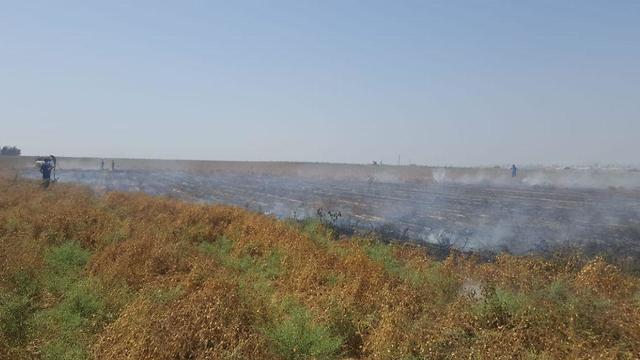
On Sunday afternoon, a 50-dunam Hummus farm was set ablaze near Kibbutz Alumim after an incendiary kite was launched from the Hamas-ruled strip.

In addition, a fire incinerated portions of the Asaf Simhoni Forest near Nahal Oz. Two other fires were extinguished in open fields near Kibbutz Be’eri.

Farmland blackened in south Israel from incendiary kite

Farmland blackened in south Israel from incendiary kite

In total, firefighters were forced to battle with six fires that broke out as a result of the flaming kites and balloons.

The notable drop in the number of kite-induced fires, which have averaged in recent weeks at around 20 per day, did little to allay the anxiety expressed by the southern residents.

With a major flare-up between Gaza and Israel gripping the border region over the weekend, The Israel Air Force resumed its retaliatory airstrikes Sunday when it attacked three Hamas terror cells launching incendiary balloon from the northern and central Gaza Strip into Israeli territory.

Unlike previous instances, in which the IAF fired near the incendiary balloon cells, this time they were fired at directly after intelligence emerged these cells included Hamas members.

Bennett faces off against IDF chief: Why aren’t you shooting?

July 15, 2018

‘I don’t think shooting children who are launching rockets is right. It is against my operational and ethical position.’

Tzvi Lev, 15/07/18 21:44
http://www.israelnationalnews.com/News/News.aspx/248973
TPS , IDF Chief of Staff Gadi Eizenkot

IDF Chief of Staff and Education Minister Naftali Bennett reportedly faced off during a cabinet meeting regarding the escalating security situation in southern Israel after Bennett demanded that the IDF bomb Gazans who launch flaming kites into Israel.

According to Channel 2, Bennett asked Eizenkot why “Why not shoot anyone who fires an aerial weapon at our towns and against the terror cells? Why shoot next to them and not at them? There is nothing legally preventing this- were are talking about terrorists in every way.”

Eizenkot replied that “I do not think that shooting boys and children who are the ones who launch the balloons and the kites is correct.”

Bennett then asked Eizenkot “what if we are talking about an adult who is identified as an adult?”

“Are you proposing to drop a bomb from an airplane on a squadron of kite and balloon launchers?” asked Eizenkot. After Bennett answered in the affirmative, Eizenkot said that “this contradicts my operational and moral position.”

Energy Minister Yuval Steinitz also complained that the media was twisting the coverage of the incendiary kites to make it appear as if Israel was refraining from responding. “They are saying that Israel is burning, Israel is burning. Israel is not burning,” Steinitz contended. Netanyahu agreed. “The media is intensifying the matter presenting things in a distorted way,” he said.

For over three months, Hamas has launched burning kites and balloons into Israel. Notoriously hard to spot and extremely potent during Israel’s dry summer months, the kites have burned up large portions of the south and caused hundreds of millions in damage.

The IDF has struggled to find an appropriate response to the kites whose small size make them impervious to radar. When the phenomenon first began, the IDF attempted to down the kites using amateur drone pilots before moving on to a strategy of preemptive drone strikes. Neither doctrine has found success and the military is under increasing pressure to respond forcefully to what has been dubbed ‘kite terror’.

Naftali Bennett has been taking an increasingly hawkish line towards Gaza and has been urging Israel to escalate it’s response towards Hamas. On Saturday night, following reports of a ceasefire between Israel and the Gaza terrorist organizations, Bennett alleged that the move was a “grave mistake” and called on the IDF to strengthen its response.

“Restraint creates escalation,” said Bennett. “Those who refrain to respond to the violation of our sovereignty and refrain from fundamental actions impose on us an ongoing war of attrition. The IDF must be ordered to act with force, sophistication and thoroughness.”

‘Give peace a chance,’ U.N. envoy tells Palestinians

July 15, 2018

“I have to appeal to all parents of children in Gaza today to step back and keep the protests peaceful.”

By Khaled Abu Toameh
July 15, 2018 22:29
https://www.jpost.com/Arab-Israeli-Conflict/Give-peace-a-chance-UN-envoy-tells-Palestinians-562593

UN Special Coordinator for the Middle East Peace Process Nickolay Mladenov appealed to the Palestinians in the Gaza Strip on Sunday to halt rocket and mortar attacks on Israel. He also called on Palestinians to stop launching incendiary kites toward Israel.

Mladenov, who played a key role in reaching Saturday’s cease-fire between Israel and the Palestinian groups in the Gaza Strip, made his appeal during a news conference in Gaza City.

“I have to appeal to all Palestinians in Gaza,” Mladenov said. “I have to appeal to all parents of children in Gaza today to step back and keep the protests peaceful.”

The UN representative was referring to the ongoing weekly protests along the border between the Gaza Strip and Israel, which Palestinians call the “March of Return.”

“I appeal to the Palestinian factions to not provoke incidents at the fence, to stop firing rockets and mortars, to stop the incendiary kites and to give peace a chance,” Mladenov said.

“This is a confrontation that nobody wants, nobody needs – a confrontation from which everybody would lose. Palestinians in Gaza for the last decade have lived in three conflicts. Israelis across the fence have lived with a constant threat of rocket attacks for the last decade. This cycle has to stop. It has to end. We are one step away from another confrontation, and everybody needs to take a step back.”

Mladenov said he was aware that, given the difficult conditions of Palestinians in the Gaza Strip, “it’s very difficult to believe the international community or anyone else who comes and tells you that your lives will be improved.”

He also appealed to Israel to display “restraint in its responses to the situation” in Gaza. “I appeal to [Israeli] snipers not to fire at children,” Mladenov said. “I appeal to everybody to step back from the brink.”

The UN representative also appealed to the international community not to forget the Palestinians in the Gaza Strip and the Palestinians “who have lived for generations without a state.” The Palestinians in the Strip, he added, “have had enough of war.”

“Parents should be able to allow their children to play freely in the streets,” Mladenov said. “We in the international community have a responsibility to move immediately and live up to the expectation of providing not just assistance to the people of Gaza, but also charting a political way forward. Our allies in this are the Palestinian people themselves. Our partners are the Palestinian government and anyone who wants to see an end to this current escalation.”

Mladenov said there was only one way to move forward – “by restoring calm and ending the shelling and firing.” The second step, he said, would be to “solve the humanitarian problems of Gaza, to create jobs for people, provide electricity, fix the healthcare system and provide water.”

THE UN is working, together with its partners, on a specific plan to immediately move on these priorities, in coordination with the Palestinian government, Mladenov stated. He acknowledged, however, that fixing the humanitarian problems of Gaza would not solve the political problems.

“Fixing the political problem means two things,” he explained. “Improving access and movement for the people of Gaza through Israel and Egypt. We will continue working with the Israeli authorities to improve access and movement restrictions for Gaza and to allow for more exports and imports for the people here. Without an economy, without people seeing opportunities, another escalation will come by very quickly.”

The second step, according to the top UN representative, is for Hamas and Fatah to return to the “reconciliation process.” He appealed to the two rival parties to take Egypt’s recent initiatives to end the Palestinian internecine dispute very seriously.

Meanwhile, Hamas leaders in the Gaza Strip said on Sunday that their movement gained the upper hand in the latest flare-up of violence. The Palestinians, they added, will continue to hold the weekly protests along the border with Israel.

“The Palestinian resistance groups had the final say,” said Hamas leader Ismail Haniyeh. He was speaking during the funeral of two Palestinian teenagers, Luay Kheil and Amir al-Nimra, who were killed in an Israel Air Force strike in Gaza City on Saturday. Haniyeh said that Hamas and the rest of the Palestinian groups in the Gaza Strip were determined to prevent Israel from “imposing new rules of engagement.”

Haniyeh said that the protests along the border between the Gaza Strip and Israel “will continue and intensify until the problems of the people are solved and the blockade is lifted.” He said that he met in Gaza City with Mladenov and told him that the Palestinians no longer believe in promises and want to see tangible results on the ground. “The blockade on the Gaza Strip has to end once and for all,” Haniyeh reportedly told the UN official.


Ceasefire Means No Attacks At All, Says Netanyahu – IDF Reinforces Iron Dome Batteries in Central, Southern Israel

July 15, 2018

Ceasefire Means No Attacks At All, Says Netanyahu – IDF Reinforces Iron Dome Batteries in Central, Southern Israel

An Iron Dome battery seen near the southern Israeli city of Be’er Sheva.

Contrary to claims by Hamas, Israel made no deal whatsoever to allow any “gradual” lessening of arson attacks by Gaza terrorists against Israel in the ceasefire agreement reached this weekend.

Prime Minister Benjamin Netanyahu clearly denied in opening remarks to Sunday’s government cabinet meeting that the ceasefire arranged with Gaza’s ruling Hamas terror organization includes an agreement for continuing its arson kite and firebomb balloon attacks flown across the border at Israel.

“I heard it being said that Israel has agreed to a ceasefire that would allow the continuation of terrorism by incendiary kites and balloons; this is incorrect,” the prime minister said.

“We are not prepared to accept any attacks against us and we will respond appropriately.”

Defense Minister Avigdor Liberman confirmed Netanyahu’s stance in his remarks, speaking after the prime minister. “There is no intention to ‘contain’ rockets or kites or anything,” he said. “I hope that Hamas will draw conclusions, and if they do not they will have to pay a heavy price.”

Intelligence Minister Yisrael Katz likewise added that he is expecting Liberman to present the cabinet with a clear, proposed policy on how to deal with Gaza.

“The collapse of Hamas and the elimination of terror — or separation from all civilian responsibility and the creation of a boundary with full deterrence — as with Syria and Lebanon,” Katz specified. “There is no option of continuing with the current situation. It’s not fair to the Gaza Belt residents and it harms the security of the State of Israel.”

Not unexpectedly, by late afternoon arson attacks against Israel had already resumed; but so did immediate Israeli air strikes against the terror squads launching the arson kites and firebomb balloons across the border into Israel.

Meantime, the IDF has added more Iron Dome anti-missile defense batteries in the Gush Dan region of central Israel in advance of another possible night of rocketfire. Iron Dome batteries have also been reinforced in southern Israel as well.

The military also called up reserves to reinforce the aerial defense array, citing the need “in accordance with the situational assessment.”

Netanyahu also told the cabinet that he had discussed the security and diplomatic situation with U.S. President Donald Trump in a phone conversation on Saturday, along with other issues that included regional developments involving Syria and Iran.

Trump is set to meet Monday in a summit in Helsinki with Russia’s President Vladimir Putin.

Cabinet: Retaliate for every terror kite launched from Gaza

July 15, 2018

Security Cabinet instructs defense establishment to respond to every incendiary kite and balloon after terrorists launch 100 rockets.

The Political-Security Cabinet on Sunday instructed the defense establishment and the IDF to continue the policy of response that began Saturday in which the IDF responds to every attack on Israeli territory which originates from the Gaza Strip.

The IDF struck a series of Hamas targets Saturday after terrorists fired over 100 rockets at Israel from Gaza.

According to the directive, there will be an identical military response to any attack involving a rocket, an incendiary kite or a Molotov cocktail and will include a direct attack by the launchers rather than near them. However, it was decided not to attack directly if the launchers were identified as children.

The Cabinet meeting was attended by Chief of Staff Gadi Eizenkot, ISA Director Nadav Argaman and Head of the Intelligence Directorate Major General Hartzi Halevy.

The ministers mainly wanted to hear the opinion of the heads of the defense establishment regarding the intensification of the response to terrorism by incendiary kites and balloons. The report revealed that the IDF received authorization to intensify its response and has even acted on this authorization,

Defense Minister Avigdor Liberman used his right of speech to criticize ministers Naftali Bennett and Yisrael Katz, who were interviewed today by the media and expressed their protest against the IDF’s perceived inaction against the phenomenon of kite terrorism.

He demanded that the two not publicly criticize the army, the government and Prime Minister Netanyahu.

Other ministers wondered what the cease-fire achieved on the Gaza border with Hamas was and heard that in the summations related to the creation of the fire, there was talk of a gradual halt that would within days turn to a complete end of the launching of balloons and incendiary missiles into Israeli territory.

IDF deploys Iron Dome in central Israel, reinforces batteries in the south

July 15, 2018

The army also conducted a limited reserve callup to boost manpower for aerial defense.

By Anna Ahronheim
July 15, 2018 18:13
https://www.jpost.com/Arab-Israeli-Conflict/IDF-strikes-Gaza-terror-cell-after-incendiary-balloons-launched-at-Israel-562551
The IDF deployed Iron Dome aerial defense batteries in Israel’s center and reinforced the batteries in the south of the country, the military announced Sunday evening.
The move, which also saw a limited reserve call-up to boost manpower in the Aerial Defense Division was made following a situational assessment the IDF said.

Throughout the day on Sunday the Israeli Air Force struck three cells of Palestinians terrorists who launched incendiary balloons towards Israel from the northern and central Gaza Strip.

Palestinian media reported that the strikes were carried out by drones,two near Beit Hanoun in the northern part of the Hamas-run coastal enclave which wounded three men and another near Deir al-Balah.
Three fires were caused by incendiary balloons in southern Israel near the communities of Erez, Yad Mordechai and Or HaNer. An emergency official told The Jerusalem Post that Sunday was the “quietest” day in terms of fires since March 30th.
Unlike previous cases where the IAF fired warning shots and then near cells launching aerial incendiary devices into Israel, the strikes on Sunday were directed towards the cell itself after intelligence showed that they included Hamas operatives.
The strikes came a day after some 200 rockets and mortars were fired from the Hamas-run enclave towards southern Israel on Saturday night with 40 of them intercepted by the Iron Dome Missile Defense System and another 73 landing in open territory.
Another 13 landed in communities bordering the Gaza Strip and another two hit the city of Sderot, injuring three residents who were transferred to hospital in light to moderate condition.
In response to the rocket fire Israel carried out several waves of airstrikes in the Gaza Strip on Saturday, dropping 50 tons of explosives on Hamas military targets as well as rocket launchers after the launch sites were identified.

According to a senior Air Force officer the IDF has been preparing for an escalation in the south for several weeks and struck targets which had been chosen in advance.

“We attacked a range of targets, including some surprising ones, after weeks of preparing for this day,” he said, warning nonetheless that “this is not all of the power we can bring. We have a broad list of high-quality targets, and we are prepared to act day and night.”

The senior air force officer said their planes were instructed not to hit Hamas operatives, as well as civilians who are not involved in the launching of incendiary balloons and devices into Israel.

“We acted in a very precise manner, in the most crowded place in the world, without harming those uninvolved in the fighting,” he said.

“The other side is learning. They [Hamas] got used to Israeli jets attacking at night; and military compounds are in populated areas. While we want to destroy their infrastructure, we wanted to do that without hitting civilians or fighters which is more challenging when it happens during the daylight,” the officer said.

“Our intelligence is very precise,” he continued. “If the other side remains quiet so will we. But if not, we are ready and we know what to do in order to return the quiet to the residents of the south.”

One Hamas training facility destroyed by an Israeli airstrike in Gaza on Saturday was known as the “Palestinian national library,” the IDF said Sunday morning.

The “building which was once a civilian residential building became a terror building,” the senior Air Force officer said.

The largely abandoned building in the al-Shati refugee camp was located next to the Sheikh Zayed mosque which sustained light damage from the strike which killed two Palestinian teenagers identified by The Hamas-run Gaza health ministry as 15-year-old Amir al-Nimra and 16-year-old Louay Kahil.

Another 25 people were injured in the strike despite the IDF stating that it had warned residents in advance of the strike which was in response to repeated mortar and rocket barrages from the coastal enclave towards southern Israel communities.

According to the army the building was targeted because it was being used by Hamas as an urban warfare training facility and had a tunnel underneath it for underground warfare training connected to a network of other Hamas tunnels in Gaza.

“Hamas continues using civilian infrastructure for military purposes, and in doing so endangers the civilians under its charge,” the IDF said in a statement.

“The building’s five floors were supposed to be used for residents of the Strip, for public and government services or at least for housing. Instead, for the past few years, the large building has been used as a training facility for Hamas’s fighting battalions for urban warfare, exercises in conquering buildings and recently as a facility for surviving inside tunnels — thanks to an attack tunnel that was dug underneath the building,” the statement continued.

The IDF holds the terror group which has ruled Gaza since 2007 “is responsible for the events transpiring in the Gaza Strip and emanating from it and will bear the consequences for its actions against Israeli civilians and Israeli sovereignty. The IDF views Hamas’ terror activity with great severity and is prepared for a wide variety of scenarios,” the army said.

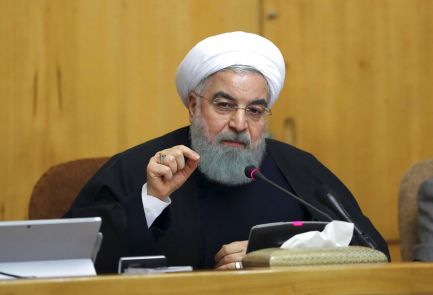
Iranian leader says US is isolated over sanctions, even among allies 

July 15, 2018

Source: Iranian leader says US is isolated over sanctions, even among allies – Israel Hayom

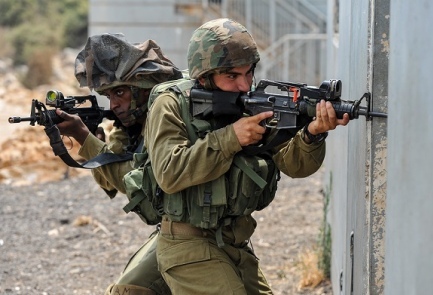
Amid rising tensions, IDF trains for ground operation in Gaza City 

July 15, 2018

Source: Amid rising tensions, IDF trains for ground operation in Gaza City – Israel Hayom