Archive for July 2018

With breakdown of Russian-Israeli “understandings” for S. Syria, Israel will strike Iranian targets 

July 22, 2018

Source: With breakdown of Russian-Israeli “understandings” for S. Syria, Israel will strike Iranian targets – DEBKAfile

 DEBKAfile Exclusive: The US-Russian-Israel formula for South Syria, composed in painstaking discussions for weeks, is not working. This became clear in phone conversations on Friday, July 20, between Prime Minister Binyamin Netanyahu and President Vladimir Putin and their defense ministers.

The “understandings” they had apparently reached were proving inoperable, including Russia’s guarantees for the non-presence of Iranian militias and Hizballah near Israel’s Golan border.
The breakdown stemmed from an abrupt Russian U-turn. Russian diplomats were suddenly claiming that Moscow never agreed to have Iranian proxies and Hizballah pushed back from the Israel border or out of Syria at large. According to DEBKAfile’s military sources, Netanyahu and Lieberman responded to this discovery by declaring that Israel would now feel free to wipe out any positions or bases those pro-Iranian and Hizballah forces, fighting with Syrian army units, may set up in Daraa and Quneitra. Strikes would also continue as before against those targets in other parts of Syria.

Only two understandings survived the Russian-Israeli leaders’ phone calls on Friday,:

  1. The Russian-IDF military coordination mechanism in Syria would continue to function to avert clashes.
  2. The Russian military would not interfere with Israel military operations in Syria.

Moscow’s abrupt reversion to the status quo ante effectively erased President Donald Trump’s disclosure in Helsinki just four days earlier of a collaborative effort agreed between the US, Russia and Israel at his summit with the Russian leader: He told reporters: “President Putin is also helping Israel. We both spoke to Bibi Netanyahu. They would like to do certain things with respect to Syria, having to do with the safety of Israel. In that respect, we absolutely would like to work in order to help Israel. Israel will be working with us. So both countries would work jointly.”

Netanyahu discovered when he talked to Putin on Friday that the Russian leader has no interest in working together for “the safety of Israel”– certainly not in the way it is understood in Washington and Jerusalem. Their relations on the personal level will likely remain, but security ties at the strategic level will be wound back to their low point of a year ago.

Of Topic: but these are dangerous developments .

July 22, 2018

Even SPD feared “mercenary army”: Von der Leyen wants to recruit for Bundeswehr foreigners

https://www.journalistenwatch.com/2018/07/21/soednertruppe-von-leyen/

Defense Ministers Ursula von der Leyen. Photo: Imago

After abolition of conscription, the Bundeswehr soldiers suffering from deficiency. Now should possibly foreigners fill the gap, said a spokeswoman for the Defense of the ” Augsburger Allgemeine “. Apparently, the authority of Ursula von der Leyen (CDU) discussed even offer foreign recruits in exchange for entry into force of a German passport. Now there are warnings of a “mercenary army”.

On request of the newspaper, a ministry spokeswoman said: “The armed forces will grow. For this, we need qualified personnel. Therefore, we consider all possible options carefully. ”

The CSU is taken with the idea. Florian Hahn, defense policy spokesman of the CSU group in the Bundestag, said the “Augsburger Allgemeine”: “Under the European free movement modern models could be developed here. However, for every soldier the special relationship of trust must be secured.

The SPD defense expert Karl-Heinz Brunner can imagine According to the newspaper, at least, take EU foreigners in the squad. He also warned: “If citizens of other countries be included, even the promise to get a German passport, the Bundeswehr threatens a kind of mercenary army to be.” For other foreigners, the order must be that they are German citizens first – then German soldier.

In fact stand out from the Leyen ideas contrary to the German soldiers Act, which would have to be broken or changed. The law requires a special relationship of trust between the state and soldier, as his condition does the German nationality of the soldier, the newspaper said. With the exchange of the German passport to entry into the armed forces could now be bypassed. (WS)

Turkey’s Erdogan Will Run Country Singlehandedly, “Dissenters Will Be Fired”: Top Advisor

July 22, 2018

Donald Trump and the Carl Schmitt Spectrum

July 22, 2018

Hamas evened the score and rushed to ask for a truce

July 22, 2018

Source: Hamas evened the score and rushed to ask for a truce

Analysis: Hamas considers the death of an IDF soldier an achievement, giving up on massive rocket fire, leading to the collapse of the ‘fire met with fire’ equation it was trying to instill. The IDF’s massive strikes, the Egyptians’ anger and Hamas’s fear of an IDF incursion into Gaza led the terror group to accept the terms of the truce. But it doesn’t end here.
The quick end to the round of hostilities on Friday was due to the tragic fact that Hamas’s snipers were able to shoot an IDF soldier and kill him. Hamas is doing macabre math, according to which it doesn’t matter how many of its fighters were killed by Israel, so long as it avenges them and responds to their death with fire. Based on this bloody bit of accounting, the death of an Israeli soldier or civilian evens the score.
That is why Hamas’s military wing tried two weeks ago to hurt an IDF officer with a hand grenade thrown at him. The officer was wounded, but to them it was not enough. After IDF aircraft and tanks killed some of their fighters last week, Hamas terrorists fired at an IDF soldier and killed him this week. To them, that is enough, and that is why they could do without rocket and mortar fire this time. Hamas settled for three rockets that caused no damage, and then rushed to ask for a ceasefire from the Egyptians and the UN envoy to the Middle East, Nickolay Mladenov.It’s important to note, though, that the sniper fire that killed the Israeli soldier was likely carried out by a group within Hamas’s military wing that did not coordinate it with the more moderate elements in the Izz ad-Din al-Qassam Brigades or with the political leadership. That is why Ismail Haniyeh was right by the border fence not long before the incident, and that is also why some of the Hamas positions along the border fence were manned at the time. This indicates not all members of the terror organization and its inner factions were aware of the intention to target Israeli soldiers with live fire.

IDF attacks in Gaza (Photo: AFP)

IDF attacks in Gaza (Photo: AFP)

But not all factions, including Hamas’s political leadership, considered the death of an IDF soldier to be an achievement that would allow them to ask for a quick ceasefire without humiliation. Still, Hamas had at least two other considerable reasons to ask for a ceasefire. One, the IDF attacks on Friday were the biggest since Operation Protective Edge, and destroyed three battalion command headquarters, which joined another one destroyed in an Israeli bombing two weeks ago. The damage to the military infrastructure—including the weapons Hamas had planned to use to surprise Israel in the next big round of fighting—alongside the loss of lives Hamas suffered, must have been too hard to bear. The terror group must have also been worried that if Israel continued with these strikes, it could stand to lose a considerable part of its military infrastructure.

The second reason that led Hamas to seek a quick ceasefire is the real fear of both Hamas’s political and military wings of an IDF incursion into Gaza as part of a large-scale military campaign. Hamas believes that Israel is serious in its intentions to overthrow its regime if the IDF enters the strip for another big operation. This is something Hamas wants to prevent at all costs, and this is the strategic reason to its rush to reach a ceasefire. Hamas prefers to leave the negotiating table with at least one card up its sleeve, rather than lose all of its cards in a single round of fighting.

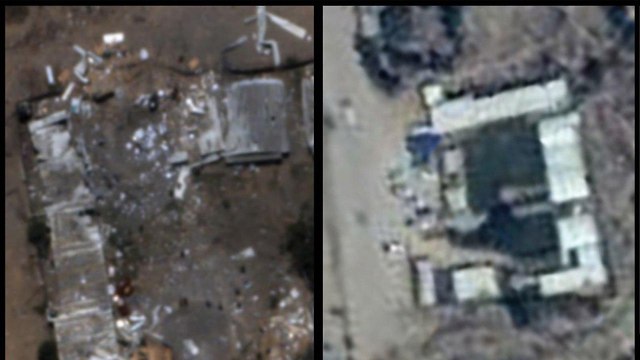
Destruction to Hamas battalion headquarters in Israeli strike (Photo: IDF Spokesman's Office)

Destruction to Hamas battalion headquarters in Israeli strike (Photo: IDF Spokesman’s Office)

Furthermore, the sniper fire and the ongoing arson terrorism greatly angered both the Egyptians and Mladenov, and they were the ones to contact Hamas, accusing the terror group of deceiving them. Hamas realized it had gone too far, and agreed to the terms of the ceasefire.

Prime Minister Benjamin Netanyahu and Defense Minister Avigdor Lieberman accepted the recommendation of the IDF to stop the strikes for two main reasons. One, because the IDF’s bombings on Friday were able to cause great damage to Hamas’s military infrastructure. Furthermore, despite the fatalities it suffered in these strikes, Hamas hardly retaliated with fire and was quick to ask for a ceasefire.

Prime Minister Netanyahu, Defense Minister Lieberman and IDF Chief Eisenkot hold situation assessment at the Kirya IDF headquarters (Photo: Ariel Hermoni/Defense Ministry)

Prime Minister Netanyahu, Defense Minister Lieberman and IDF Chief Eisenkot hold situation assessment at the Kirya IDF headquarters (Photo: Ariel Hermoni/Defense Ministry)

This means that the “equation of terror” Hamas has been trying to implement on the ground no longer exists. Israel attacked relentlessly, and there was only one Code Red siren on the Gaza border. Therefore, Hamas has stopped acting based on the principle of fire being met with fire.

The restraint recently shown by Israel and the IDF was perceived on the other side as weakness and caused partial erosion of the IDF’s deterrence. Friday’s strikes appeared to have at least partially restored the lost deterrence.

Another reason that led Israel to agree to a ceasefire as soon as Hamas proposed it was the terror group’s commitment to Egypt to stop the arson terrorism and the terrorism on the border fence. According to a senior diplomatic official, Egypt will guarantee that Hamas keeps its word. And so far, it appears Hamas is indeed trying to stop the incendiary kites and balloons from Gaza.

Hamas committed to stop the arson terrorism (Photo: Zohar Shafek)

Hamas committed to stop the arson terrorism (Photo: Zohar Shafek)

No rockets were fired Saturday, and there are signs we’re heading towards a temporary truce. However, on the long term, the story is not yet over. The basic situation in the Gaza Strip, and the relationship between the Palestinian Authority and Hamas, remains the same.

The Egyptians and Mladenov may be able to mediate ceasefires, but they are unable to uproot the reasons behind the escalations that erupt from time to time. This is why the residents of southern Israel will continue living under threat, and the residents of Gaza will continue drinking dirty water and getting four hours of electricity a day. And we all know what comes next.

How Russia wangled Israel into phony Gaza “ceasefire,” and acceptance of Iranian/Hizballah in the north 

July 22, 2018

Source: How Russia wangled Israel into phony Gaza “ceasefire,” and acceptance of Iranian/Hizballah in the north – DEBKAfile

On Friday afternoon, Netanyahu talked by phone to President Vladimir Putin. The subject of their conversation was not revealed. However, the prime minister’s office issued a statement affirming that he would continue to act against the establishment of an Iranian presence in Syria.

Lieberman was meanwhile on the phone to his Russian counterpart, Gen. Sergei Shoigu, following which Ambassador Alexander Shein in Tel Aviv announced that he was confirming as authentic the reports of an Russian-Israel accord to ensure the withdrawal of Iranian and Hizballah forces from Israel’s border.

After that verbal round came a spate of Russian backtracks. Ambassador to Baghdad Maksim Maksimov stated that Iranian forces would not quit Syria because, like the Russian army, they were there legitimately at the invitation of the Damascus government. He stressed that so long as Russian troops remained in Syria, so too would Iranian forces. Russian ambassador to Damascus Alexander Kimshchank came forward on Thursday to assert: “There are no pro-Iranian armed units in the south of Syria,” adding, “This issue has already been settled.”

Russia diplomats caught in a web of self-contradiction are less of a problem than the arrival of Hizballah and Shiite militias under the command of Iranian Revolutionary Guards officers to points just 2-3km from Israel’s Golan border. Their presence catches the Netanyahu government in contradiction of its frequent vows to prevent any Iranian or pro-Iranian forces from getting established in Syria, least of all on Israel’s border.

DEBKAfile’s military sources report that because Tehran has escaped scot-free in Syria, Israel found its hands tied on the Gaza front against Hamas. On Friday, Netanyahu and Lieberman decided to accept Putin’s guarantees to keep Iranian forces at a distance from Israel’s borders – despite his repeated default on former guarantees. But no more than five hours elapsed before Hamas turned the Gaza flame high with a deadly cross-border attack on Israel border forces.

For the first time in more than three months of explosive balloon and flaming kite attacks and violent border assaults, Hamas surprised Israel by deploying trained marksmen against Israeli troops and killing one soldier.  The furious IDF tank and air force reprisal on 8 Hamas outposts killed 4 Palestinians and injured more than 100.
While getting set for the next round of a wide-ranging IDF counter-terror offensive in Gaza, the diplomatic wheels began turning. Egyptian General Intelligence Director Gen. Kemal Abbas and the UN Middle East envoy, Nikolai Maldanov were enlisted to the effort.

The Israeli public were told (a) that Israel fighter jets had conducted three large-scale sorties against Hamas targets in the Gaza Strip Friday evening, as the prologue for a major ground operation, and (b) that Israel had asked Egypt to broker a ceasefire.

In fact, the Israeli jets dropped no more than 6 missiles on each Hamas command center attacked. Although they were said to have been flattened, they were damaged but remained standing.
After a quiet night on the Gaza front, Hamas offered Israel a dose of reality. On Saturday morning the terrorist group’s spokesmen commented that the ceasefire was very fragile and liable to break down at any moment. Furthermore, in none of the negotiations were the balloon-cum-kite offensive or the Palestinian border riots addressed and would therefore continue. Hamas had achieved exactly what it sought: the freedom to carry on as before, call the shots on when to goad the IDF into reprisals and to calibrate the level of escalation centering on the Gaza Strip.

After witnessing Israel’s handling of security threats on those two fronts, Hamas, Iran and Hizballah will feel free to continue to erode the IDF’s deterrence and self-confidence, while landing a fresh blow or setback on Israel’s head whenever they choose. Netanyahu-Putin phone calls will not change this skewed symmetry.

Khamenei: Tehran shouldn’t count on Europe to save nuclear deal

July 22, 2018

Source: Khamenei: Tehran shouldn’t count on Europe to save nuclear deal | The Times of Israel

Iranian leader says talks with EU should continue but is not optimistic about their success, claims negotiations with US shown to be ‘useless’ and ‘a blatant mistake’

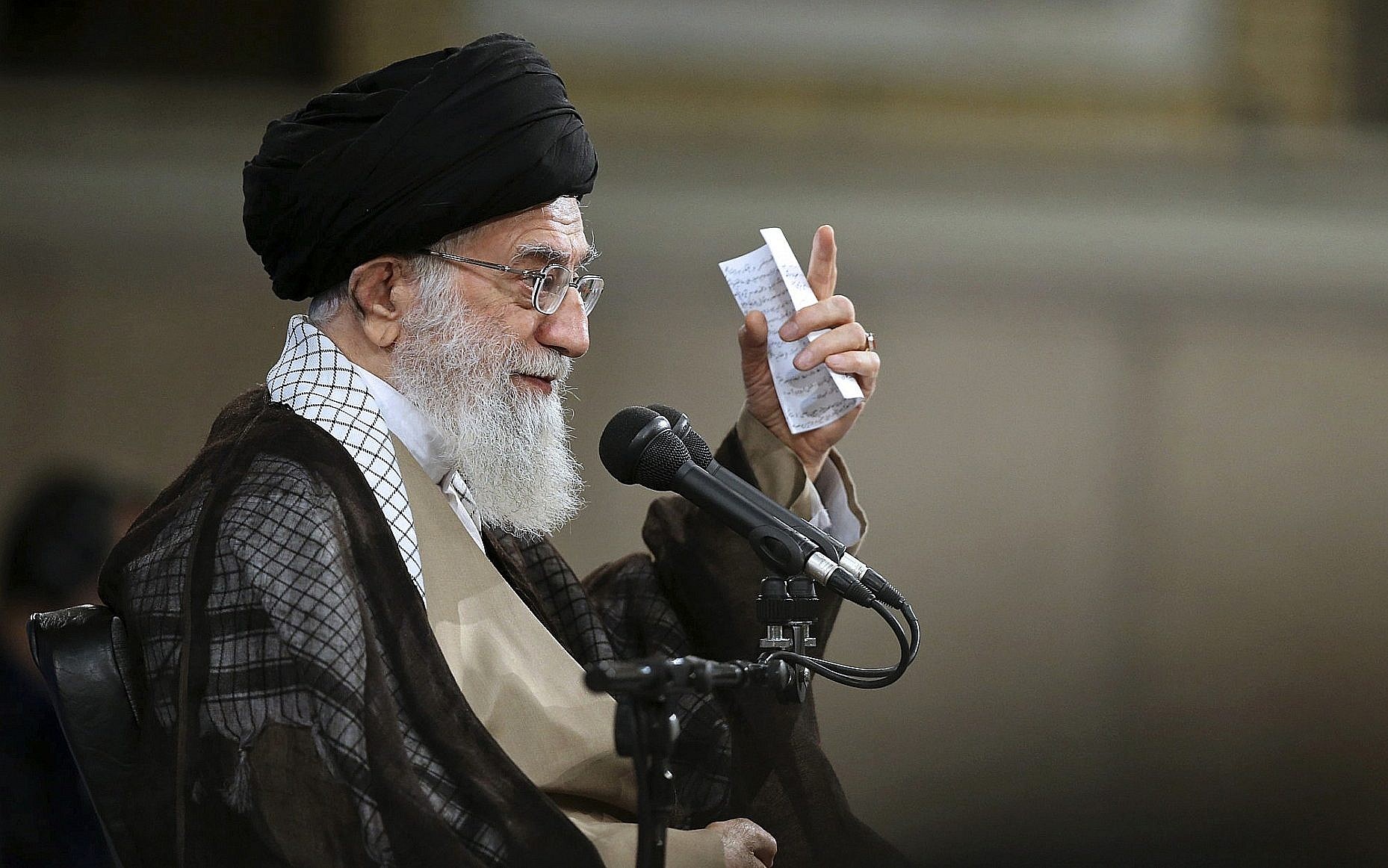
Iran's Supreme Leader Ayatollah Ali Khamenei attends a meeting with lawmakers in Tehran, Iran, on June 20, 2018 (Office of the Iranian Supreme Leader via AP)

Iran’s Supreme Leader Ayatollah Ali Khamenei attends a meeting with lawmakers in Tehran, Iran, on June 20, 2018 (Office of the Iranian Supreme Leader via AP)

Iran should not count on Europe’s proposals package to fix the nuclear deal following Washington’s exit, Iranian Supreme Leader Ayatollah Ali Khamenei said Saturday.

Having withdrawn from the landmark 2015 nuclear deal between Tehran and world powers, Washington is determined to isolate Iran and pile on economic pressure with a full reimposition of sanctions, starting in August.

Europe is opposed to the move and has vowed to find ways of maintaining its trade ties with Iran, which under the deal curbed its nuclear program in exchange for a lifting of sanctions. Proposals by EU nations for economic “guarantees” to Iran have so far been judged “insufficient” by Tehran.

Khamenei, in a meeting with Iranian diplomats in Tehran, said, “Negotiations with the Europeans should not be cut off, but we should not wait too long for a European package and instead, we should do a lot of work inside the country,” according to Iran’s Press TV.

US President Donald Trump has said he is open to a new deal that would cover not only Iran’s nuclear facilities, but also its missile program and regional interventions.

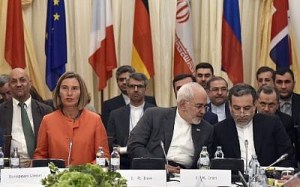
European Union High Representative for Foreign Affairs Federica Mogherini (L); Iranian Minister of Foreign Affairs Mohammad Javad Zarif (C) and political deputy at the Ministry of Foreign Affairs of Iran Abbas Araghchi take part in a Comprehensive Plan of Action (JCPOA) ministerial meeting on the Iran nuclear deal on July 6, 2018 in Vienna, Austria. (AFP/APA/Hans Punz)

But Khamenei said talks with the US had been proven to be “a blatant mistake” and “useless,” claiming Washington would not be satisfied until the current regime was gone.

“I have long pointed out that it is not possible to count on the words and even the signatures of the Americans, so negotiations with the United States are of no avail,” he said.

Washington has “a fundamental problem with the nature of Iran’s Islamic establishment,” Khamenei asserted.

Iran has warned it is ready to boost its uranium enrichment to higher levels if talks with Europe on salvaging the nuclear deal fail.

On Tuesday, Behrouz Kamalvandi, spokesman and vice president of Iran’s Atomic Energy Organization, said Tehran is “continuing to carry out and implement our obligations based on the JCPOA,” he said, referring to the 2015 nuclear deal

But, he added, “we have of course adopted some measures in order to prepare the ground for eventually increasing the level of enrichment if it is needed and if the negotiations with the Europeans fail.”

On Wednesday, the chief of Iran’s nuclear agency Ali Akbar Salehi said that his country’s effort to acquire uranium has resulted in a stockpile of as much as 950 tons.

U.S. launches campaign to erode support for Iran’s leaders

July 22, 2018

Source: U.S. launches campaign to erode support for Iran’s leaders

WASHINGTON (Reuters) – The Trump administration has launched an offensive of speeches and online communications meant to foment unrest and help pressure Iran to end its nuclear program and its support of militant groups, U.S. officials familiar with the matter said.

A staff member removes the Iranian flag from the stage after a group picture with foreign ministers and representatives of the U.S., Iran, China, Russia, Britain, Germany, France and the European Union during the Iran nuclear talks at the Vienna International Center in Vienna, Austria July 14, 2015. REUTERS/Carlos Barria/File

More than half a dozen current and former officials said the campaign, supported by Secretary of State Mike Pompeo and national security adviser John Bolton, is meant to work in concert with U.S. President Donald Trump’s push to economically throttle Iran by re-imposing tough sanctions. The drive has intensified since Trump withdrew on May 8 from a 2015 seven-nation deal to stop Iran from developing nuclear weapons.

The current and former officials said the campaign paints Iranian leaders in a harsh light, at times using information that is exaggerated or contradicts other official pronouncements, including comments by previous administrations.

The White House declined comment on the campaign. The State Department also declined to comment on the campaign specifically, including on Pompeo’s role.

A senior Iranian official dismissed the campaign, saying the United States had sought in vain to undermine the government since the 1979 Islamic Revolution. He spoke on condition of anonymity.

“Their efforts will fail again,” the official said.

    MORE CRITICAL POSTS

A review of the State Department’s Farsi-language Twitter account and its ShareAmerica website – which describes itself as a platform to spark debate on democracy and other issues – shows a number of posts critical of Tehran over the last month.

Iran is the subject of four of the top five items on the website’s “Countering Violent Extremism” section. They include headlines such as “This Iranian airline helps spread violence and terror.”

In social media posts and speeches, Pompeo himself also appeals directly to Iranians, the Iranian diaspora and a global audience.

On June 21, Pompeo tweeted out graphics headlined: “Protests in Iran are growing,” “Iranian people deserve respect for their human rights,” and “Iran’s revolutionary guard gets rich while Iranian families struggle.” The tweets were translated into Farsi and posted on the ShareAmerica website.

On Sunday, Pompeo will give a speech titled “Supporting Iranian Voices” in California and meet Iranian Americans, many of whom fled the Islamic Revolution that toppled Shah Mohammad Reza Pahlavi.

“Let me be clear, we are not seeking regime change. We are seeking changes in the Iranian government’s behavior,” a State Department official said in response to questions from Reuters.

“We know we are driving Iran to make some hard choices. Either they can change their ways or find it increasingly difficult to engage in their malign activities,” said the official, speaking on condition of anonymity. “And we believe we are offering a very positive vision for what we could achieve and what the Iranian people could have.”

    AGGRESSIVE CAMPAIGN

Some of the information the administration has disseminated is incomplete or distorted, the current and former officials said.

In a May 21 speech in Washington, Pompeo said Iranian leaders refused to spend on their people funds freed by the nuclear weapons deal, using it instead for proxy wars and corruption.

By contrast, in March testimony before a U.S. Senate committee, the U.S. Defense Intelligence Agency director, Robert Ashley, said social and economic expenditures remained Tehran’s near-term priority despite some spending on security forces.

Pompeo also accused “Iran-sponsored Shia militia groups and terrorists” of infiltrating Iraqi security forces and jeopardizing Iraq’s sovereignty throughout the period of the nuclear agreement.

While opponents accuse the Iran-backed Iraqi militias of human rights abuses against civilians, which the groups deny, the militias fought Islamic State extremists and helped keep them from overrunning Iraq in 2014 after Iraq’s army collapsed. They then aided the U.S.-backed offensives that liberated ISIS-held territory and some units are being incorporated into Iraqi security forces.

The State Department official acknowledged that the militias, known as the Popular Mobilization Forces, are by law part of Iraq’s security forces and played a role in countering Islamic State in 2014.

“We understand, however, that some of the undisciplined PMF are especially close to Iran, responsive to Iran’s directives, and have a history of criminal activity and terrorism,” the official said. “Those groups are as problematic for the Iraqi state as they are for us.”

Experts said the administration also is exaggerating the closeness of the relationship between Iran and Afghanistan’s Taliban militants and al Qaeda by calling them co-conspirators.

The State Department did not respond to requests for comment about the accuracy of the information it was disseminating.

It is too early to determine the impact of the administration’s communications campaign, U.S. officials said.

TWO POSSIBLE OUTCOMES

Karim Sadjadpour, an Iran expert at the Carnegie Endowment for International Peace think tank, said the strategy to economically strangle Iran and stoke public discontent with the leadership aimed to produce one of two outcomes.

“Outcome one is capitulation, forcing Iran to further curtail not only its nuclear program but also its regional ambitions,” Sadjadpour said. “Outcome two is the implosion of the Islamic Republic.”

But some U.S. officials and other experts cautioned that by fueling turmoil in Iran, the U.S. administration could foster greater authoritarian rule and a more aggressive foreign policy, raising the threat of a U.S.-Iran confrontation.

Washington has long called Iran the world’s leading “state sponsor of terrorism” because Tehran arms and funds proxy militant groups like Lebanese Hezbollah. Iranian leaders urge the destruction of the United States and Israel, and Iranian proxies have killed hundreds of U.S. soldiers and diplomats since the Islamic Revolution.

That record provided previous administrations with ample material for waging their own public relations campaigns against Tehran, including trying to communicate directly with the Iranian people.

President George W. Bush’s administration established Radio Farda, a U.S.-funded broadcaster that beams into Iran what it says is “objective and accurate news and information to counter state censorship and ideology-based media coverage.” The Obama administration launched a Farsi Twitter account – @USAdarFarsi – in 2011.

Additional reporting by Parisa Hafezi in Ankara and John Irish in Paris; Editing by Paritosh Bansal, Daniel Wallis and James Dalgleish

Egypt warned Hamas: Israel will go to war ‘in two hours’ if you respond to raids

July 22, 2018

TV report says Cairo, when fixing ceasefire late Friday, emphasized to terror group that Israeli strikes were the direct result of IDF soldier’s killing by Gaza sniper

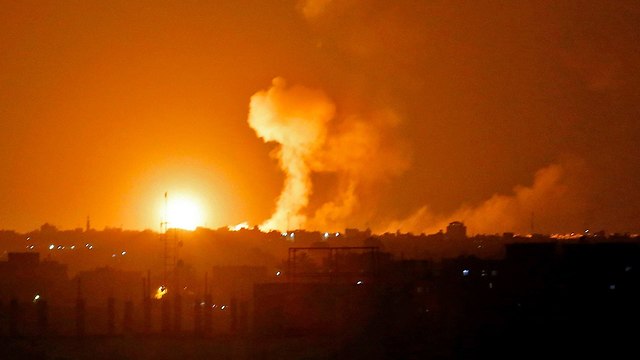
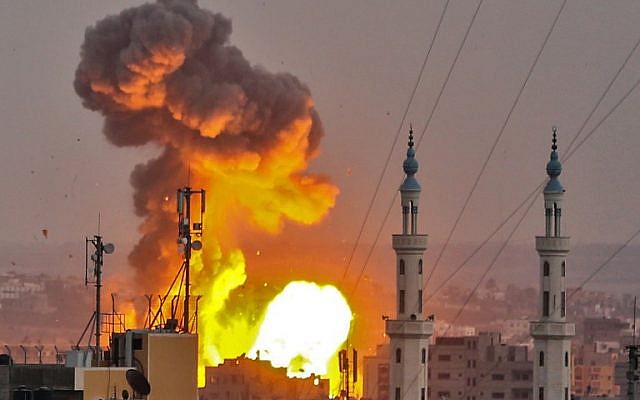
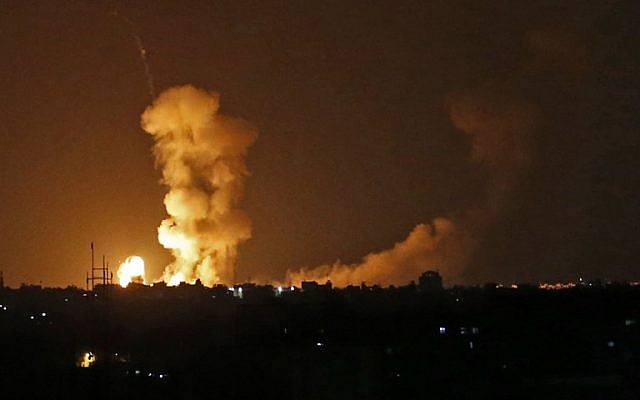
A picture taken on July 20, 2018 shows a fireball exploding in Gaza City during an Israeli airstrike. (AFP / BASHAR TALEB)

An unofficial ceasefire reached overnight Friday-Saturday between Israel and Hamas came after Egypt warned the Palestinian terror group that Israel would launch a war “in two hours” if Hamas responded to IDF retaliatory strikes in Gaza following the killing of an IDF soldier by Palestinian sniper fire, Israeli television reported Saturday.

Channel 10 news also reported that Egypt threatened to impose sanctions on Hamas if it does not end the launch of incendiary airborne devices toward Israeli territory.

In return for honoring these conditions, Hamas demanded Israel ease restrictions on the flow of goods into Gaza, the report said. Hamas also called for Egypt to keep open the Rafah border crossing and to press Palestinian Authority President Mahmoud Abbas to pay the salaries of PA employees in Gaza.

Abbas has been withholding the salaries as part of the split between Abbas’s Fatah party and Hamas, which seized Gaza from Fatah in 2007. A number of reconciliation agreements have failed to bridge the divide between the sides, including an Egyptian-mediated deal reached in October.

The ceasefire announced by Hamas, which Israel has not confirmed, came into effect around midnight Friday as the escalation in violence along the border raised fears of a wider military conflict.

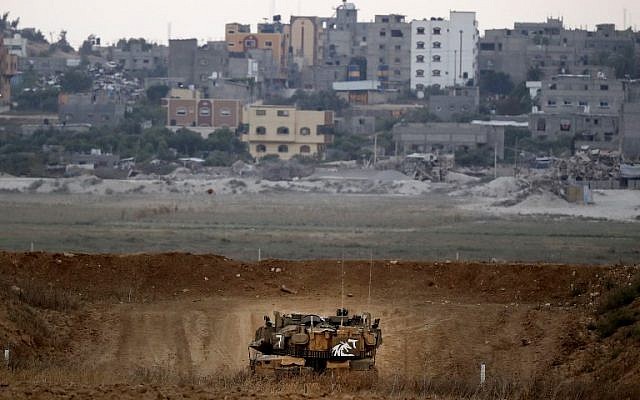
A picture taken on July 20, 2018 shows an Israeli Merkava battle tank patrolling along the border with the Gaza Strip near Kibbutz Nahal Oz in southern Israel. (AFP Photo/Jack Guez)

The Israel Defense Forces said it struck more than 60 Hamas targets Friday in response to sniper fire from the Strip that killed IDF infantryman Aviv Levi, 21, from Petah Tikva. Staff Sgt. Levi was the first Israeli fatality in fighting along the border since the 2014 war.

A photo released on July 21, 2018, shows Staff Sgt. Aviv Levi of the IDF’s Givati Brigade, who was killed by sniper fire from Gaza on July 20. (Israel Defense Forces)

According to Channel 10, Egypt noted to Hamas that the Israeli strikes were a response to Levi’s killing, and warned that any Hamas response to the strikes would prompt Israel to go to war in two hours.

The Hamas-run health ministry said four Palestinians were killed in Friday’s violence, three of whom were acknowledged as members of the terror group.

While Israel holds Hamas responsible for all violence emanating from Gaza, Hebrew media reported Saturday that defense officials believe the sniper attack that killed Levi was carried out at the initiative of local Hamas operatives and not approved by the terror group’s leadership.

Hamas leader Ismail Haniyeh gestures as he makes a stop on April 9, 2018, at the site of violent “March of Return” protests on the Israel-Gaza border east of Gaza City. (AFP Photo/Mahmud Hams)

Channel 10 reported that Hamas leader Ismail Haniyeh was touring the border at the time of the attack, exposing him to a potential Israeli response.

The ceasefire largely held Saturday, though Israeli tanks twice carried out reprisal strikes at Hamas observation posts.

The army said the first strike was in response to an attempted infiltration of the border fence in northern Gaza, while the second strike came after a flaming balloon launched from the Strip sparked a fire in nearby Kibbutz Nahal Oz.

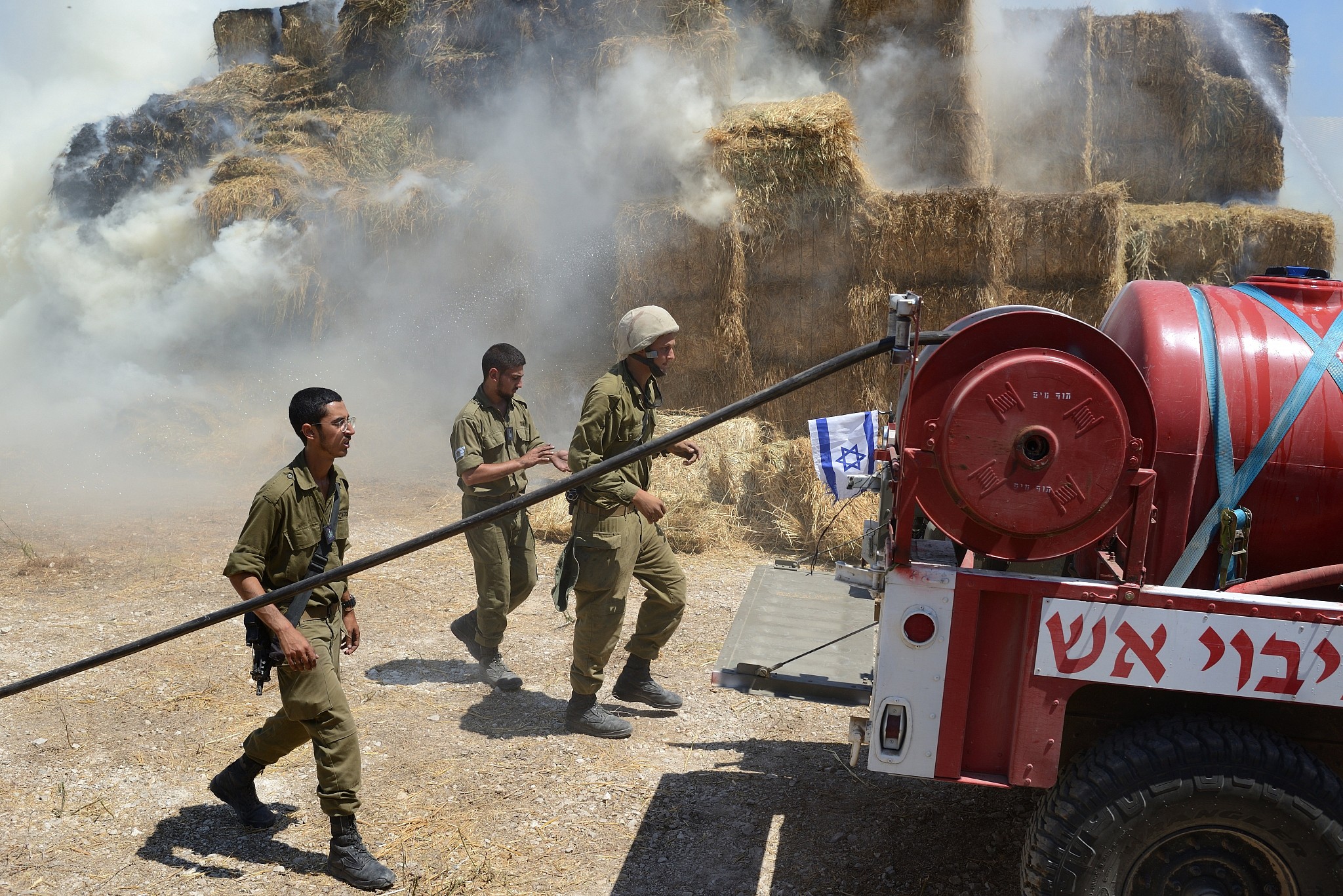
Firefighters and security teams fight a fire at a cowshed, caused by a kite loaded with an incendiary device from Gaza, at Kibbutz Nahal-Oz on July 21, 2018. (Gili Yaari/FLASH90)

A senior Israeli diplomatic official told Hebrew-language media that Hamas had vowed to halt airborne arson attacks against Israel going forward. But Hamas sources quoted by Israel Radio on Saturday afternoon denied this.

Nonetheless, Saturday saw the fewest launches of arson kites and balloons in weeks.

Hamas announces ceasefire after killing of IDF soldier near Gaza sparks strikes

July 21, 2018

20 Jul 2018

https://www.breitbart.com/jerusalem/2018/07/20/idf-soldier-killed-by-gaza-terror-snipers/

Soldier wounded by sniper fire on Friday dies of his wounds; IDF says three Hamas battalion headquarters destroyed in reprisal raids; 3 projectiles fired at Israel, 2 intercepted

A picture taken on July 20, 2018 shows explosions from Israeli bombardment in Khan Yunis in the southern Gaza Strip. Israeli aircraft and tanks hit targets across the Gaza Strip on July 20 after shots were fired at troops on the border and a soldier was killed, the army said, with Hamas reporting several members of its military wing killed in the latest flare-up in months of tensions.( AFP PHOTO / SAID KHATIB)

Hamas announced a ceasefire with Israel in the early hours of Saturday morning, after Palestinian snipers shot and killed an IDF soldier on the Gaza border earlier on Friday, sparking the night’s widespread Israeli strikes on Hamas targets across Gaza.

“With Egyptian and UN efforts, [an agreement] was reached to return to the previous situation of ceasefire between the occupation and Palestinian factions,” tweeted Hamas spokesman Fawzi Barhoum.

Israel had no official comment on the ceasefire announcement.

The IDF announced the death of the soldier late Friday night, revealing details on the deadly incident hours after it happened.

“Today, an IDF combat soldier was killed during operational activity near the southern Gaza Strip. During the incident, a terrorist squad shot at IDF troops and the IDF soldier was severely injured. He later succumbed to his wounds,” the army said.

Details of the death were withheld for several hours until the soldier’s family were notified. His name was not immediately published.

The death was the first of an Israeli soldier on the Gaza front since 2014’s Operation Protective Edge.

Earlier the IDF said Gaza snipers had opened fire on troops, calling it the “most serious incident since the 2014 Gaza war.

In response the Israel Air Force launched a major wave of strikes at Hamas targets across the Gaza Strip on Friday evening.

“At this time our aircraft are carrying out widespread attacks against terror targets belonging to Hamas in the Gaza Strip,” the IDF said, adding that this came after the “serious shooting incident against our forces,” referring to sniper fire at IDF troops during a riot on the border earlier in the day.

A picture taken on July 20, 2018 shows a fireball exploding in Gaza City during Israeli strikes (AFP PHOTO / BASHAR TALEB)

The army said around 60 targets were hit, including three Hamas brigade headquarters in Zeitoun, Khan Younis and al-Bureij. The army said the headquarters were completely destroyed along with “weapons and ammunition stores, training grounds, observation posts, control centers and the offices of the brigade commander.”

The IDF said it also destroyed factories and machinery for the manufacture of weapons, a drone storage facility, an entry shaft to tunnels and “elements for constructing underground infrastructure.”

There were no reports from Gaza of injuries in the strikes.

“The strikes are continuing,” the IDF said, releasing video of the strikes.


Following the strikes, rocket warning sirens wailed in communities around Gaza. At least two projectiles were intercepted by the Iron Dome system and another fell in an open field, the army said. There were no reports of projectiles falling in Israeli communities or injuries.

The air raids came as Prime Minister Benjamin Netanyahu arrived at the IDF headwaters in Tel Aviv to join Defense Minister Avigdor Liberman and the top IDF generals for a security assessment.

The IDF Spokesman Ronen Manelis did not rule out a major ground offensive, but said the IDF was not looking to enter a full-scale conflict. Nonetheless, the fire on the troops at the border was “the most serious incident” since the 2014 conflict, Manelis said, and the IDF’s Chief of Staff Gadi Eisenkot had spent the years since then ensuring that the army was ready for “whatever response is necessary.”

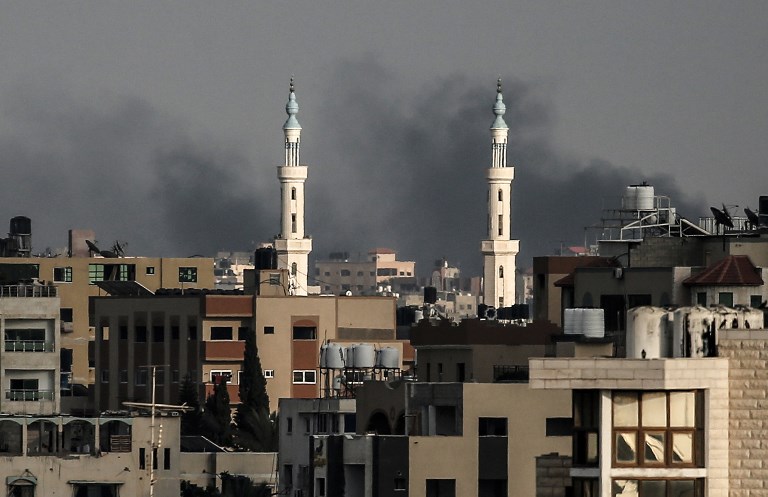
A picture taken on July 20, 2018 shows smoke plumes rising after an Israeli bombardment in Gaza City.
Israeli aircraft and tanks hit targets throughout the Gaza Strip on July 20 after shots were fired at troops along the border, the army said, with Gaza’s health ministry reporting three Palestinians killed. (AFP/Mahmud Hams)

Cabinet minister Tzachi Hanegbi told Hadashot news that Israel was preparing for a massive response on Gaza.

“Last week the air force carried out strikes that were described as the largest since Operation Protective Edge in 2014, we will look back at it after our response now and say it was a joke,” Hanegbi said. “The gloves are coming off.”

“The situation is that Hamas has repeatedly ignored our warnings, both private and public,” Hanegbi said.

Hadashot news analysts said that while Israel’s response would be widespread, it was unlikely to include the entrance of ground forces.

Israelis living close to the Gaza border were told to stay close to bomb shelters, and not to attend synagogues for Friday evening prayers in larger numbers than could be accommodated in protected rooms if Gaza terror groups were to launch rocket attacks.

Reports said that Israeli special forces had been stationed near border communities to prevent possible Hamas attacks through attack tunnels into Israel.

Manelis said that Hamas had spent the past three and a half months carrying out acts of terrorism during mass demonstrations at the border, firing rockets and mortar shells into Israel, and launching arson kites and balloons. Israel had tried to convey to the terror chiefs that it “means business” in demanding that the terrorism stop, but Hamas evidently had not got the message, he told Hadashot TV news.

Manelis noted that the IDF carried out a major drill this week, including simulating a ground incursion to retake control of Gaza, from where Israel withdrew in 2005. Asked whether that was a likely scenario, Manelis said it would be more sensible to wait for the completion of the current military action “over the next few hours.”

He noted that Israel had deployed Iron Dome missile defense batteries in the south and center of the country, and said the IDF was prepared “for all scenarios.”