
Published on May 4, 2018
Tony Abbot is a great guy, a true conservative and tough as nails. Did boxing at Uni, rides his bike for a zillion miles before breakfast and has done surf lifesaving. He is also a volunteer bush fire fighter, and was even working putting out fires with other volunteers when he was Prime Minister. Top bloke.
And he is a strong supporter of Israel.
Blogger Andrew Bolt is also a top guy, high profile here in Australia and is also a strong supporter of Israel, and aware of the dangers of islam.
Abbot: Move our embassy to Jerusalem
Tony Abbott is right: Australia should indeed consider moving its embassy in Israel to Jerusalem. In fact, we should do it. It recognises a reality and says the terrorists cannot scare us into shunning either the truth or Israel.
Tony Abbott
✔@TonyAbbottMHR
The US embassy is now in West Jerusalem, which has been Israel’s capital for nearly 70 years. Australia should consider following Trump’s move.
10:19 AM – May 15, 2018
But Malcolm Turnbull [current Prime Minister – Ed.] immediately rejects it, claiming it’s “more conducive to the peace process” not to.
But what “peace process”?
Staying in Tel Aviv just emboldens the hardliner rejectionists.
( All together now: BLAME THE JEWS ! – JW )
After more than 50 Palestinians were killed in the day’s protest, South Africa and Turkey recalled their ambassadors to Israel.
The international community urged Israel to stop shooting Palestinian protesters on the Gaza border, with South Africa and Turkey recalling their ambassadors in protest, after a day of violent riots left 58 Palestinians dead on Monday.
“The South African government condemns in the strongest terms possible the latest act of violent aggression carried out by Israeli armed forces along the Gaza border,” the South African government said. “Given the indiscriminate and grave manner of the latest Israeli attack, the South African government has taken a decision to recall Ambassador Sisa Ngombane with immediate effect until further notice,” it added.
Turkey’s Foreign Ministry minced no words and called Israeli actions on the Gaza border “a massacre,” and the country’s President, Recep Tayyip Erdogan, labelled it a “genocide.” At a speed in London he said his country had recalled its ambassadors to both the US and Israel, according to the Turkish web site the Daily Sabeh.
The United Nations Security Council plans to hold an emergency meeting on Gaza in New York on Tuesday, with the US appearing to have quashed calls for an investigation into the
The IDF did its best to make its case that the Hamas-led protests, known as the Great March of Return, were not peaceful demonstrations but violent riots designed to break through the border fence and kidnap soldiers.
But Israel’s allies in Europe, who earlier in the week spoke of Israel’s right to defend itself against Iran, called for restraint after Monday turned out to be the bloodiest day of protests since the Great March began on March 30.
The number of casualties was reported by the Hamas-led Ministry of Health in Gaza and there was no independent corroboration.
The German Foreign Office and the French Foreign Ministry expressed concern that Israeli actions in Gaza amounted to a disproportional use of force.
“Israel has the right to defend itself and to secure the fence against violent incursion. However, the principle of proportionality applies. That includes only using live ammunition when other, less forceful methods of deterrence do not work and in cases of concrete threats,” the German Foreign Office said.
At the same time, it also urged Hamas not to exploit the protest for violent ends.
“The right to peaceful protest must also apply in Gaza. At the same time, we have always made clear that this right must not be abused, taken as a pretext or exploited in order to escalate the situation, deploy violence or incite others to do so,” the German Foreign Office said.
“Those who wield power in the Gaza Strip must renounce violence and the Palestinian Authority must once again be in control in Gaza,” it added.
French Foreign Minister Jean-Yves Le Drian called for restraint on both sides, but unlike Germany did not make any statement against Hamas.
“France again calls on the Israeli authorities to exercise discretion and restraint with respect to the use of force, which must be strictly proportionate. It reaffirms the duty to protect civilians, especially minors, and the right of Palestinians to demonstrate peacefully,” Drian said.
French President Emmanuel Macron condemned Israel’s actions in Gaza. “(Macron) lamented the large number of Palestinian civilian casualties in Gaza today and over the past few weeks,” the French presidency said.
“He condemned the violence of Israeli armed forces against demonstrators.”
Macron talked with Jordan’s King Abdullah and Palestinian President Mahmoud Abbas on Monday and is planning to talk with Israeli Prime Minister Benjamin Netanyahu on Tuesday, the presidency said.
The European Union, the United Nations and Great Britain’s Theresa May also called for restraint. The EU, in addition, urged Israel not to use disproportional force and for Hamas to ensure that the demonstrations were peaceful.
UN Secretary-General António Guterres said, “it is imperative that everyone show the utmost restraint to avoid further loss of life, including ensuring that all civilians and particularly children are not put in harm’s way.
Zeid Ra’ad, the Office of UN High Commissioner for Human Rights tweeted a much sharper note out of Geneva.
The “shocking killing of dozens, injury of hundreds by Israeli live fire in #Gaza must stop now. The right to life must be respected. Those responsible for outrageous human rights violations must be held to account. The [international] community needs to ensure justice for victims.”
Reuters contributed to this report.
Turkey had promised back in December to recall its ambassador to the US should it move its embassy to Jerusalem.

Turkey on Monday recalled its ambassadors from Israel and the United States to demonstrate its anger over the mounting Gaza death toll and the relocation of the American Embassy to Jerusalem, according to the Turkish newspaper the Daily Sabah.
Already in December Turkey had warned that it would recall its ambassador should the US make good on its pledge to open relocate its embassy from Tel Aviv to Jerusalem.
Turkish President Recep Tayyip Erdogan announced the removal of the envoys at a speech he delivered in London. Israel’s Foreign Ministry has yet to confirm the report.
Turkish-Israeli ties have been fragile since the IDF killed nine Turkish activists in 2010 when it raided a Turkish ship, called the Mavi Marmara.
The boat was part of a Gaza bound flotilla that hoped to break Israel’s naval blockade of the Strip.
The two countries broke off diplomatic ties in 2011 and they only fully re-established formal diplomatic ties toward the end of 2016.
Monday’s death toll was the highest in a single day since Operation Protective Edge in 2014.

A Palestinian demonstrator uses a sling to hurl stones at Israeli troops during a protest at the Israel-Gaza border east of Gaza City May 14, 2018. (photo credit: REUTERS/MOHAMMED SALEM)
It was the highest Palestinian death toll in the Gaza Strip by Israeli fire since Operation Protective Edge in 2014.
The Hamas-run Health Ministry said 58 Palestinians were killed by IDF fire, including several teenagers, and 2,771 others were wounded, many by tear gas, with 116 in serious or critical condition.
Gazans have been protesting along the border with Israel for the past six weeks as part of what organizers have called the “Great March of Return.” But the mass protests on Monday were “unprecedented,” according to IDF Spokesman Brig.-Gen. Ronen Manelis.
According to the army, the violence began at 11:30 a.m. with hundreds of rioters running towards the fence in the northern part of the Strip. A number of Palestinians climbed the fence at several points.
Some 40,000 Palestinians took part in violent demonstrations at 13 different locations along the fence, throwing stones, explosive devices and Molotov cocktails at the fence and IDF troops, as well as burning tires and launching burning objects such as kites with charcoal or containers of burning fuel with the intention of setting fires in Israeli fields, the IDF said.
There were 25 kites flown over the course of the day, 17 of which had incendiary materials, causing 23 to set fire to a field before being extinguished by firefighting teams deployed to the area. More than 4,000 dunams of agricultural fields have been burned by such devices in the past month, an official from the Keren Kayemeth LeIsrael-Jewish National Fund told The Jerusalem Post.
Early on Monday, an IDF quadcopter, a drone with four rotors, was shot down near Jabaliya, in the northern Gaza Strip, leading the IDF to fire gas grenades and warning shots at protesters.
Amnesty International said the IDF response was deplorable.
“This is another horrific example of the Israeli military using excessive force and live ammunition in a totally deplorable way,” said Philip Luther, its research and advocacy director for the Middle East and North Africa. “This is a violation of international standards, in some instances committing what appear to be willful killings constituting war crimes.”
UN High Commissioner for Human Rights Zeid Ra’ad al-Hussein took to Twitter to condemn the “shocking” deaths, writing that “those responsible for outrageous human rights violations must be held to account. The international community needs to ensure justice for victims.”
The UN Security Council is expected to convene an emergency meeting on Tuesday over the violence following a request by Kuwait.
“The policy of Israeli authorities to fire irrespective of whether there is an immediate threat to life on Palestinian demonstrators in Gaza, caged in for a decade and under occupation for a half century, has resulted in a bloodbath that anyone could have foreseen,” said Sarah Leah Whitson, executive director of Human Rights Watch’s Middle East division.
According to the IDF, while the number of protesters was higher than in previous weeks, “it wasn’t as high as Hamas had hoped for, which is why the organization raised its level of violence.”
“Hamas placed many women at the front in an effort to make it difficult for us to deal with terror targets. This is the most significant level of violence we have seen since the start of the protests,” the IDF said, adding that despite intelligence that Hamas planned to breach the border fence en masse, that had yet to happen.
Hadashot TV news quoted Israeli security officials as warning Hamas via Egypt that if there were violent clashes along the border, Israel would resume the targeted killing of the group’s leaders, saying: “If the protests continue, the assassinations will return.”
Soldiers, including snipers, used tear gas and live fire to keep the thousands of protesters away from the fence. Intense gunfire was heard a few times close to areas where Gazans were demonstrating.
In response to terrorist attacks, Israeli jets and other aircraft struck 11 Hamas targets on Monday, and IDF tanks also struck two terrorist positions in the northern and southern Gaza Strip.
Late Monday afternoon, IDF fighter jets struck five Hamas targets in a training camp in Jabaliya following two attempts to plant explosive devices on the border fence near Rafah and Khan Yunis and gunfire toward soldiers near Jabaliya.
“The IDF will not allow damage to the infrastructure of the security fence and will act in a determined manner to defend and secure the citizens of Israel and its sovereignty,” the IDF said in a statement.
IDF Chief of the General Staff Lt.-Gen. Gadi Eizenkot held a situational assessment with Southern Command Commander Maj.-Gen. Eyal Zamir, Gaza Division Commander Brig.-Gen. Yehuda Fuchs and other commanders regarding the army’s ongoing operational activity.
Thousands of soldiers from 11 battalions, including from the Nahal and Givati brigades, special forces, intelligence-gathering units, the Armored Corps and snipers, and drones have been deployed to reinforce the troops already in the area. The training of regular combat troops has been put on hold to focus on the violent disturbances.
The IDF accuses Hamas of using the protests as cover to carry out terrorist attacks. On Sunday, its said it had identified protesters’ intentions to burn engineering tools belonging to the army, damage security infrastructures on the fence, including pillboxes, as well as attempts to kidnap soldiers under the guise of the protests.
Prime Minister Benjamin Netanyahu addressed the violence saying that “every nation has the right to defend its borders. Hamas clearly says its intentions are to destroy Israel and sends thousands to break through the border for that end. We will continue to act with resolve to defend our sovereignty and our citizens.”
Source: Hezbollah chief says Iran rocket fire on Golan marks start of ‘new phase’ | The Times of Israel
( Taken from Nasser’s playbook in the 6 day war.. Call utter defeat a “great victory.”. – JW )
Nasrallah claims Israel lied about magnitude of Iranian salvo from Syria, warns of ‘response’ to further Israeli raids
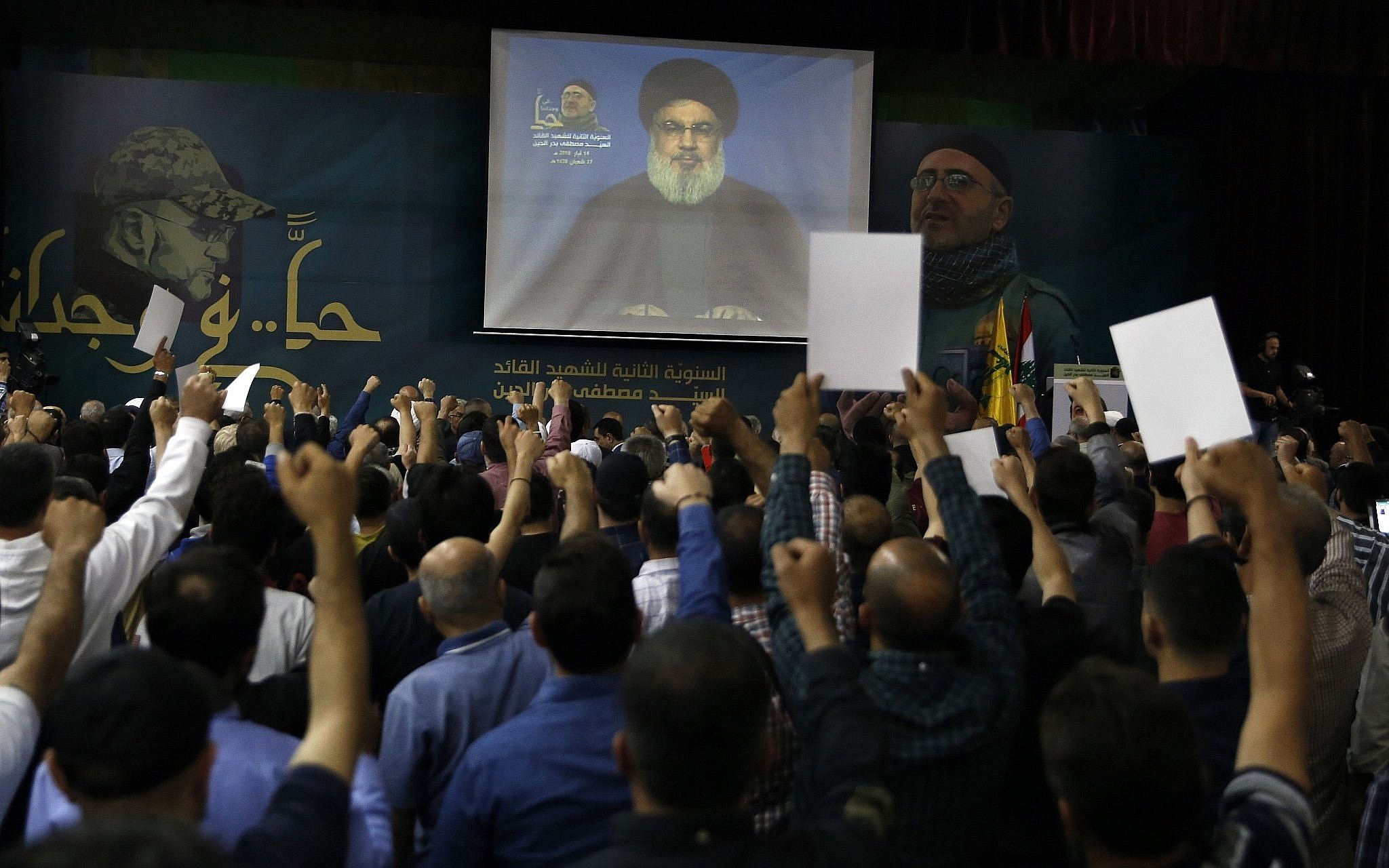
The head of the Lebanese terror group Hezbollah claimed Monday that Israel had lied about the extent of last week’s Iranian rocket strike on the Golan Heights, and said the Israeli military would now think twice about striking Iran’s assets in Syria.
According to the Israel Defense Forces, Iran last week launched 20 rockets toward Israel from Syria, four of which were intercepted and the rest of which fell short of Israeli territory. In response, the air force carried out retaliatory raids that the army said inflicted extensive damage on Iran’s military presence in Syria.
“Israel said that only 20 rockets were fired, some of which were downed, but the truth is that 55 rockets some of which were of heavy caliber were fired at a number of military posts, creating huge explosions that forced all residents in the Golan and some in northern Israel to scramble to bomb shelters in panic,” said Hassan Nasrallah, according to Naharnet.
Nasrallah said the Iranian rocket fire sent a message to Israel that it could no longer carry out airstrikes in Syria with impunity.
“This is one form of the response to Israel’s attacks on Syria. The message that the enemy received was resounding and we are following the Israeli media outlets. The message is that you are mistaken if you think that you can continue to kill and bomb as you please,” added the head of the Iran-backed terror group.

Nasrallah said Hezbollah and its allies Iran and Syria “will respond at the appropriate time and place and with the appropriate method” to Israel’s Syria raids, while adding, “This landmark rocket attack has launched a new phase.”
He warned “the next response would be in the heart of occupied Palestine should any red lines be crossed.”
Nasrallah also blasted Bahrain’s foreign minister, calling him an “idiot” and a “traitor” for supporting Israel’s right to respond to the barrage of rockets coming from Syria.
Last week’s rocket strikes came after Iran threatened retaliation on Israel for numerous airstrikes against it in Syria, namely following the raid on the T-4 army base in Syria, which killed at least seven members of the Iranian Revolutionary Guard Corps, including a senior officer responsible for the group’s drone program.
Earlier Monday, Nasrallah’s deputy, Sheikh Naim Kassem, said the Iranian rocket barrage affirmed “the balance of deterrence” between Israel and its regional enemies.
Iran, along with Hezbollah and Russia, is helping the Syrian regime suppress a bloody insurgency, now in its eighth year.
Israel has committed to preventing Iran from establishing forward bases in Syria, fearing they could be used to launch strikes against the Jewish state, and also to prevent advanced weapons from reaching Hezbollah.
AP contributed to this report.
Source: Russia denies air defenses to Syria to protect Iran forces from Israel – Business Insider

Russia on Friday reportedly declined to export its advanced S-300 missile defense system to Syria despite a high tempo of international and Israeli airstrikes peppering the country over the last few months, in the latest sign that Moscow has turned its back on Iran in the country.
Russia is Syria’s ally. The US, UK, and France launched airstrikes on Syria in April. Israel launched airstrikes on Syria in May, and likely many others in April, March, and February.
Israel maintains it will strike Iranian targets in Syria as long as they ally with Hezbollah and Hamas, both anti-Israel US-designated terror organizations that operate near Israel’s borders.
Despite the near constant stream of powerful countries bombing targets in Syria, and Syria’s weak attempts to defend against the attacks, Russian President Vladimir Putin’s aide in charge of foreign military assistance said Syria had “everything it needs.”
On Wednesday, Israeli Prime Minister Benjamin Netanyahu visited Putin in Moscow. That same night, Israeli airstrikes reportedly wiped out the majority of Syrian air defenses in the southern part of the country. Russian-owned and operated air defenses in Syria, which include the S-300, did nothing to stop the attack.
Israel has long wanted Russia to withhold its more powerful defenses from Syria.
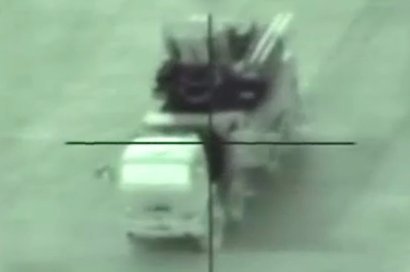
Israel stomped on Russian-made Syrian air defenses on Wednesday night in the largest Israeli Air Force attack in Syria since the two countries went to war in 1973. The massive battle saw Syria’s older Russian-made air defenses outmatched — and obliterated.
Israel has carried out strikes with the express purpose of beating down Iranian forces in southern Syria. By all accounts, the attacks succeeded in taking out command posts, infrastructure, and munitions. Israel won’t tolerate a buildup of Iranian forces along its borders in Syria as Iran explicitly seeks to destroy Israel.
Though Israel has engaged in more than 100 airstrikes in Syria since 2012, mostly against Iranian-linked forces, it has treaded softly and attempted to avoid a larger war.
Without new reinforcements like Russia’s S-300, and with the former defenses laying in ruin, Iranian forces in Syria will be greatly exposed to Israeli air power.
Russia may continue to trade with Tehran after the US imposed sanctions following its withdraw from the Iran deal, and continue to be Iran’s ally on paper. But Russia, by denying Syria air defenses, looks to have turned its back on supporting the regional ambitions of Ayatollah Khamenei.
by IAN MASON14 May 2018 Breitbart
Source Link: Exclusive — Ted Cruz: Israel Is ‘Undoubtedly’ a Model for Securing Our Borders
{Every once in a while, Ted Cruz gets it right, sort of like a broken clock that shows the correct time twice a day. – LS}
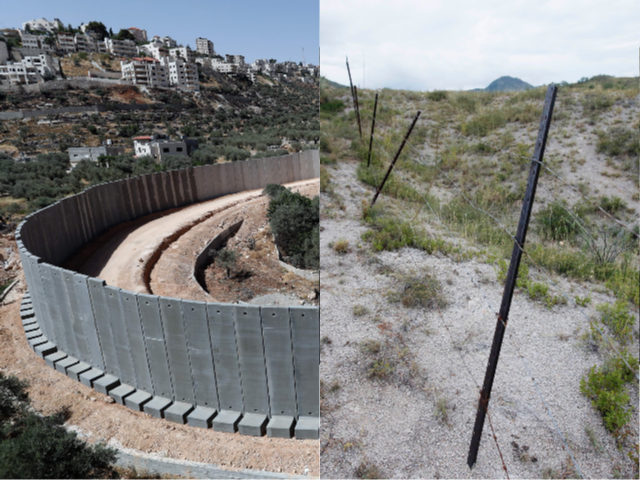
“When you are surrounded by enemies who would drive you into the sea, you don’t have the luxury of indulging in nonsense when it comes to national security,” Cruz told host Amanda House on the eve of the U.S. embassy in Israel’s move to Jerusalem. You don’t have the luxury of indulging in political correctness and ignoring the harsh realities of the world we live in.”
“For Israel, borders are life or death,” Cruz continued. “Borders are ensuring that innocent men, women, and children are not murdered by terrorists seeking to destroy them. And so, there is a great deal we can learn on border security from Israel in terms of how to effectively secure a border.”
As one of Congress’s most vocal advocates for the Jewish State, Cruz called the relocationof America’s embassy, as required by a 1995 law, a “momentous occasion.” Both the United States and Israel herself recognize Jerusalem as the capital, but until Monday, the U.S. had kept its embassy with most other countries in Tel Aviv.
Cruz’s comments came in the context of weeks of ongoing Hamas rioting conducted with the explicit aim of breaching Israel’s border, provoking deadly Israeli responses. On Monday, as celebrations were taking place in Jerusalem, roughly 60 miles south, deadly clashes between a Hamas-organized march and the Israeli Defense Force left dozens dead, according to Hamas-controlled medical authorities.
The events of the day gave a new relevance to Cruz’s remarks on Israeli border policy. In the years before this eruption of violence, Israel instituted a strategy of border walls that has proven highly effective in stopping crossings by Palestinian Arabs and have cut backdramatically on the terrorism that was once pervasive in Israeli society.
President Trump, on the campaign trail, made frequent reference to the existence and efficacy of Israel’s extensive, manned walls as he pitched his own plan for a U.S.-Mexico border wall.
By Brandon J. Weichert| May 14th, 2018 American Greatness
Source Link: Trump’s Iran Decision Is Already Paying Off
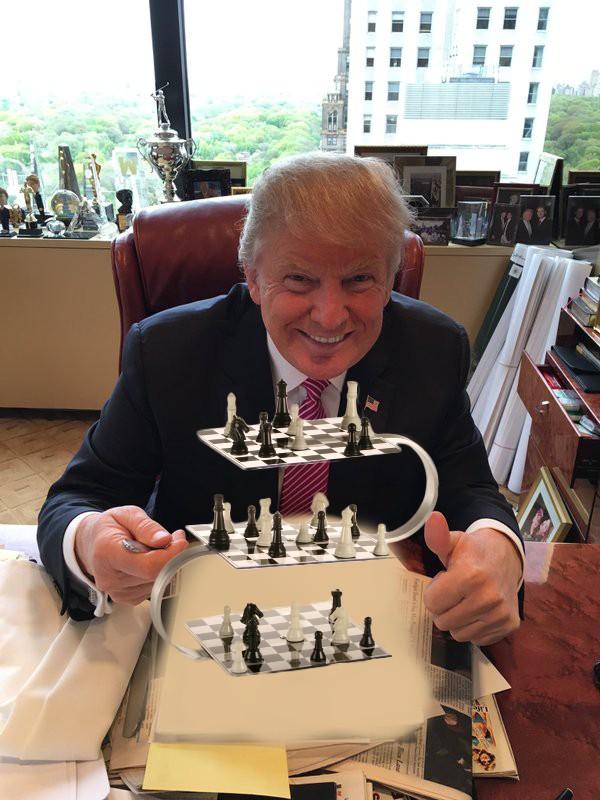
{Iran is no match for DJT’s four dimensional chess strategy. – LS}
The Iran deal has been killed. With it, Iran’s grand designs for regional hegemony are badly wounded.
President Trump’s decision last week to withdraw from the deal comes at a time when the Iranian economy is suffering the effects of a decades’ long decline. After the Obama Administration secured its ill-advised executive agreement with Iran over the mullahs’ nuclear weapons program, the United States gifted Tehran with with pallets of American cash and cleared the way for European multinationals to gobble up all sorts of lucrative business deals with Iranian state-owned enterprises. That breathed new life into the sclerotic theocracy.
U.S. policy until now has favored Iran, whether intentionally or not. The Iraq War of 2003 removed Iran’s chief rival in the region, allowing Tehran to expand its influence across the Middle East into the Levant and practically on to Israel’s doorstep, sowing all sorts of chaos along the way. With Obama’s legacy-seeking 2015 agreement, the pariah state suddenly had legitimacy in the international community, as well as a legal path toward acquiring nuclear weapons within the decade.
Ending the Iran deal proves that the president is committed to strengthening traditional alliances, as it shows how dangerous the Obama Administration’s feckless gambit was to begin with.
The Iran deal didn’t effect a fundamental transformation in Iran or make sane democrats out of mad mullahs. All it did was paper over the real differences between the West and Iran while giving the regime the time it needed to gather its strength, while the United States lowered its guard.
In the week since Trump made his announcement, Iran’s parliament chanted “death to America!” while incinerating an American flag, and Iran’s proxies launched 20 missiles into Israel from Syria. What’s more, the mullahs are vowing to restart their illicit nuclear program at “industrial strength”—as if they actually ever discontinued it. And they’ve reiterated their commitment promote Islamic terror groups around the world.
None of this is President Trump’s fault. The Iranians have been doing these things for decades. Now, they’ve been called out and they’re having an epic geopolitical temper tantrum.
Nevertheless, Trump’s detractors contend that his decision to withdraw from the deal undermines the United States diplomatically. They take for granted that Iran’s participation in the deal represented a legitimate pathway to peaceful integration in the global economy. Thanks to President Trump’s decision, some “experts” claim, we have now ensured that Iran will charge headlong into its destabilization strategy for the Middle East—and they will do it sooner rather than later.
Never mind that Iran never stopped backing Hezbollah in Lebanon. Never mind that Iran has been funding and arming the Islamist insurgents who regularly lob missiles from Yemen into Saudi Arabia. And never mind that Iranian armed forces—including the elite Quds Force—have operated more or less unchecked in Syria, Iraq, and western Afghanistan. Boosters of the Iran deal would ignore all of that for a worthless agreement and an illusion of “peace.”
Sometimes diplomacy works well. But diplomacy without the implicit backing of force—or, worse, mealy-mouthed diplomacy—negates any benefit a negotiated settlement may have.
This is especially true with rogue states, such as Iran and North Korea. Just days after Trump withdrew from the deal, Israel hit the bulk of known Iranian military bases in Syria. How did Iran’s ally Russia respond? By announcing its forces in the region would not interfere with Israeli military operations directed against Iranian targets in Syria.
More strangely, the religious blood feud between the Persian Shiites of Iran and the Arab Sunnis of Saudi Arabia has made the Saudis (and the other Sunni Arab states) look at Israel as a regional ally. Obama inexplicably opened the door for Iran to invade the Middle East. Trump has closed it. And, rather than the United States standing as the only force in the way of Iranian revanchism, an unlikely (and powerful) coalition of Sunni Arab states, Israel, and Russia have effectively joined with America in stuffing Iran back into its proverbial box.
None of this would have happened had the United States remained a party to Obama’s awful deal.
It is likely that tensions, as well as hostile actions involving Iran and its neighbors, will continue—and possibly intensify—over the next year. Even so, the termination of the deal will likely ensure that the Iranian threat dissipates quickly, as they are deprived of economic opportunity. Trump didn’t just kill the Iran deal. He very likely prevented the possibility of a long-term, costly nuclear confrontation between the Sunni Arabs, the United States, and Israel on one side, and Iran and Russia on the other.
A new balance of power is being rekindled that will isolate Iran, secure America’s allies, ensure America’s strategic dominance in the region, and respect Russia’s interests as well—all of which lends itself far more to regional stability and world peace than any ill-conceived giveaway to Iran could.
Following on from the post by Louisiana Steve here:
… I came across the article below.
The veracity of the threat is sketchy at best, and I have my doubts about whether it is accurate or not, but….. would be nice if it were true and did happen. Islamic nations always seem to make strategically dumb decisions.
Angry Iran threatens to expose Western officials who took bribes to make nuke deal happen
Shortly after President Donald Trump withdrew the United States from the Iran nuclear deal last Tuesday, an adviser to a top Iranian official retaliated by dropping a bombshell threat.
The threat concerned the president’s plan to reimpose sanctions on Iran:
An adviser to H.J.Ansari Zarif, the deputy for parliamentary and Iranian affairs within Iran’s Ministry of Foreign Affairs, specifically threatened to expose every corrupt official who accepted bribes to make the Iran deal happen three years ago.
“If Europeans stop trading with Iran and don’t put pressure on US then we will reveal which western politicians and how much money they had received during nuclear negotiations to make #IranDeal happen,” he either said or wrote, according to Hassan Ghashghavi.
A Middle East analyst for The Jerusalem Post, Ghashghavi posted the adviser’s threat on his Twitter profile Tuesday afternoon, only about an hour or so after Trump’s announcement.
The adviser’s tweet appears to suggest that some Western officials partook in “pay-to-play” schemes by accepting money to support and ultimately sign the deal. The accusation makes perfect sense given that there was no legitimate reason whatsoever to support the horrible one-sided deal pieced together in 2015 by then-President Barack Hussein Obama.
As noted by Fox News panelist Charles Krauthammer at the time, “The most astonishing thing [about the deal] is that in return, they [Iran] are not closing a single nuclear facility. Their entire nuclear infrastructure is intact.”
“They are going to have the entire infrastructure in place either for a breakout after the agreement expires or when they have enough sanctions relief and they want to cheat and to breakout on their own,” he added.
The world got absolutely nothing in return for signing the deal, yet numerous officials across the Western world signed it anyway. Why?




 anneinpt
 artaxes
 danmillerinpanama
 davidking1530
 Peter Hofman
 Joseph Wouk
 Peter
Peter Louisiana Steve

 WarSclerotic
Recent Comments