Archive for November 2017

IDF Chief Tells Cabinet It’s Time to Learn to Live with Iran at Israel’s Border

November 28, 2017

IDF Chief Tells Cabinet It’s Time to Learn to Live with Iran at Israel’s Border

Photo Credit: Courtesy US Embassy Tel Aviv

IDF Chief of Staff Lt. Gen. Gadi Eizenkot with US European Command Commander General Curtis M. Scaparrotti, March 2017.


IDF Chief of Staff Gadi Eizenkot on Monday briefed the members of the Political-Security Cabinet on the situation in Syria: the danger posed by the Iranian presence in post-civil war Syria and the meaning of the agreement signed earlier this month between the United States, Russia and Jordan, Israel’s Channel 1 TV reported.

The defense establishment claims the distance of pro-Iranians forces from Israel’s border (as short as 3 miles) set in the agreement does not matter as much as the agreement’s regional implications, most crucially the level of American involvement in the Middle East. Should the Trump administration follow Obama’s path and leave Syria’s future in Russia’s hands, trouble would surly ensue.

 This is why Israel will continue its hectic efforts in the near future, to present to the White House its concern over Tehran’s plans under Russia’s protection. To that end, the head of IDF intelligence, Major General Herzi Halevi, left for Washington this weekend, to be followed by the head of the National Security Council, Meir Ben-Shabbat who will meet with his counterpart, General Herbert McMaster.

Still, Jerusalem believes that the superpowers will not be the ones to remove the Iranians from Syria, and Israel may be required to act to protect itself from Hitler’s successors.

In that context, it should be noted that, despite Eizenkot’s global statement to the contrary, distance does matter. In a reality where Iran will essentially be given a free hand in Syria by an ambitious President Putin and a disinterested President Trump, keeping the Shiite militias as far away from the border as possible is emerging as Israel’s key pragmatic policy.

Israel threatens to attack Syria over Iranian bases near its border

November 28, 2017

By: Aryeh Savir, World Israel News

Latest News from Israel

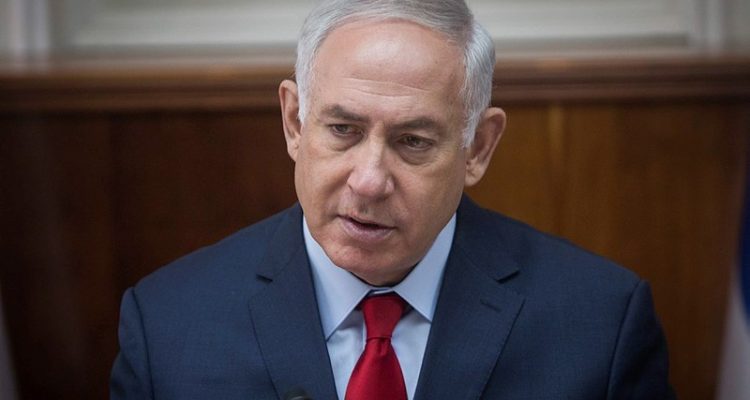
Prime Minister Benjamin Netanyahu (Alex Kolomoisky/POOL)

Israel warned Assad that it will not tolerate an Iranian presence in Syria and will act against it if needed. 

Israel has reportedly relayed a rare and sharp message to Assad’s regime in Syria, stating that it will not accept Iranian bases or forces on its border and will act against them – and against Assad himself – if need be.

According to a report by Israel’s Channel 2 news on Sunday, the message was transmitted from Prime Minister Benjamin Netanyahu through a third party, saying that while Israel has mostly refrained from intervening in the six-year-long civil war in Syria, it will change its policy and act against Assad’s regime if it feels threatened.

 Iran is actively working to establish a military presence in Syria, augmented by Shiite militias, and chiefly the Hezbollah terror group. Furthermore, Iran is reportedly working to build precision missile factories in the country as well as air and sea ports.

Iran and its proxies have been supporting the Assad regime in the Syrian civil war and have deployed a force estimated at 500 Iranian army soldiers, 5,000 Hezbollah terrorists and several thousand guerrillas from Afghanistan, Pakistan and Iraq.

The Iranian army has incurred over 1,000 casualties in Syria, and the question now is whether they are preparing to remain in the long term, after President Bashar al-Assad reasserts control.

Such a military presence would open another front against Israel on its northern border and bring the Iranian threat to its doorstep.

 Israel has long warned about the involvement of it archenemy Iran, and its terror proxy Hezbollah, in Syria. It has expressed concerns of a “Shiite corridor” with land links from Iran to Lebanon, providing free movement for terrorists and weapons across the region.

Netanyahu on Tuesday spoke with Russian President Vladimir Putin to discuss the latest developments in Syria. According to the Kremlin, Putin and Netanyahu discussed specifics related to a de-escalation zone in Syria’s south, near the border with Jordan, which Israel says endangers its security.

Israel is apprehensive of the deal because Iran is allowed to establish itself 7 km (4.5 miles) from it northern border, a distance Jerusalem insists is not satisfactory for its security needs.

In an interview with the BBC earlier this month, Netanyahu said Iran wanted to bring its air force and submarines as well as its military divisions very close to Israel.

Asked whether Israel would use military force to stop such developments, Netanyahu told the BBC: “You know, the more we’re prepared to stop it, the less likely we’ll have to resort to much greater things. There is a principle I very much adhere to, which is to nip bad things in the bud.”


Hamas Vows to Expand Terror from Gaza to Judea and Samaria

November 27, 2017

Nov 27, 2017

By: AP and United with Israel Staff

https://unitedwithisrael.org

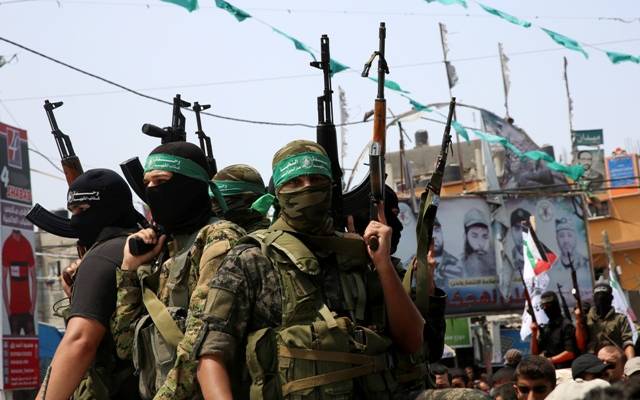
Hamas terrorists in Gaza. (AP/Adel Hana)

Hamas is refusing to cede control of its weapons and is threatening to infringe on Fatah territory. Is more violence on the horizon? 

The Palestinian Hamas terror group has vowed to expand its terror activities to the Judea and Samaria region, despite demands by the rival Fatah movement that it disarm as part of a reconciliation agreement.

A senior Hamas official, Khalil al-Hayya, stated the group’s arsenal “can’t be divided or talked about in any dialogue.”

His remarks on Monday highlight the stark antagonism between Hamas and Palestinian Authority (PA) head Mahmoud Abbas’s Fatah as the rivals negotiate steps for reconciliation.

Fatah, which holds sway in parts of Judea and Samaria, wants Hamas’s rockets, explosives and attack tunnels in Gaza neutralized. While Hamas is refusing to disarm, Fatah maintains that “the Palestinian weaponry must be one.”

In 2007, Hamas violently wrested control of Gaza from the PA after winning legislative elections a year earlier. It has wielded absolute power in Gaza since, driving humanitarian conditions to near-total collapse.

Last month, Fatah and Hamas signed a reconciliation deal under which Hamas began ceding control to Abbas, but differences remain.

More Violence on the Horizon

Middle East envoy Nickolay Mladenov warned the UN Security Council (UNSC) last week of the consequences, including a likely conflict, if the Hamas-Fatah agreement fails.

“Whether it would be triggered by a meltdown of law and order in Gaza, by the reckless action of extremists or by strategic choice, the result will be the same — devastation and suffering for all,” Mladenov said. “This cycle must be avoided at all costs.”

He said Palestinian leaders, Israel and the international community “have an important responsibility to advance the peace efforts.”

Some analysts say that the weapons control issue will ultimately cause the failure of the reconciliation and lead to more violence.

Earlier this month, Hazem Atallah, the Palestinian national police commander, cast doubt on whether the reconciliation agreement can be carried out, warning that his forces cannot guarantee law and order unless Hamas disarms in Gaza.

With his comments, Atallah acknowledged that this issue is nowhere near resolution.

“It is impossible. How can I do security when there are all these rockets and guns? Is this possible? It doesn’t work,” Atallah stated.

Several attempts have been made in the past to reconcile between Hamas and Fatah since Hamas violently took control of Gaza in 2007. So far, all attempts have failed.


Arab states will abandon Israel when Iran threat dies, security expert warns

November 27, 2017

Latest News from Israel

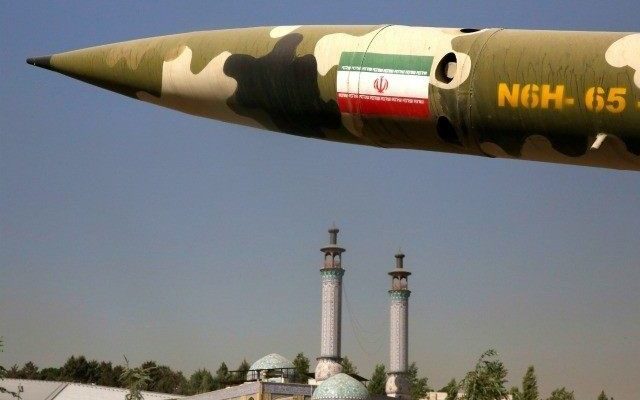
An Iranian missile (AP/Vahid Salemi/File)

Sunni Arab states will abandon Israel as US abandoned the Kurds, leading Israeli national security analyst warns.

By: Ben Cohen, The Algemeiner

One of Israel’s leading national security analysts has urged caution in assessing a potential alliance between the Jewish state and the conservative Sunni Arab countries, pointing to the recent abandonment of the Kurds by the international community as a sobering reminder that perceived national interests invariably trump other values like loyalty and shared security.

“[L]et us suppose the Iranian threat disappears because Israel launches a successful attack on Tehran’s nuclear facilities,” wrote Lt. Col. (Res) Mordechai Kedar in a briefing for Israel’s Begin-Sadat Center for Security Studies (BESA).  “As a result, war breaks out between Israel and Iran (including Hezbollah), Israel sacrifices hundreds of soldiers and civilians – and the Iranian problem ceases to exist. Will the Arab and Western worlds be grateful to Israel and act to protect its interests?”

“The answer is simple: look to the Kurds,” Kedar – an expert on Syria who spent 25 years with IDF military intelligence – continued. “What happened to them will happen to Israel,” he said, in a reference to last month’s onslaught on Kurdish-held areas by Iranian-backed and Iraqi government forces following the September 25 referendum in which 93 percent of Kurdish voters opted for independence.

‘Kurds Fought ISIS…and Were Thrown to the Wolves’

“The Kurds fought ISIS, sacrificed their soldiers and people, and were thrown to the wolves once they had outlived their usefulness,” Kedar asserted. “That is exactly what will happen to Israel once it saves the Arab states from the Iranian threat. And why not? The immediate interests of each state, not the moral rights of the Kurds and the Israelis, are what make the world go round.”

“The Kurds expected the world, headed by the US, to stand behind them once ISIS was defeated, remembering their great contribution to that defeat and supporting their demand for independence,” he noted. “Those hopes were dashed very quickly.”

Revived concern over the prospect of a new war with Hezbollah on Israel’s northern border and the escalation of a bitter of war of words between the Saudi and Iranian regimes have fueled the expectation that Saudi Arabia and its allies and Israel will end their historic enmity. On Thursday, Saudi Crown Prince Muhammed Bin Salman described Iran’s “supreme leader,” Ayatollah Ali Khamenei, as “the new Hitler of the Middle East” – echoing the language used by many Israeli and Jewish leaders in their responses to Iran’s frequent threats to eliminate Israel.

“Israel may indeed be the darling of the ‘moderate Sunni axis’ – for as long as there is an Iranian threat,” Kedar wrote. “Once that is gone, the possible fracturing of Iran into ethnic components (on the lines of the former USSR, Yugoslavia, and Czechoslovakia) will obviate the need for good relations with Israel. For this reason, Israel would do well not to give up land for a piece of paper with the word ‘peace’ stamped on it. That paper can easily fly away in the desert wind while the words on it fade in the blazing Middle Eastern sun.”

Examples of Short-term Alliances: Jordan, Egypt

Kedar argued that in addition to the Kurdish experience, Israel’s peace treaties with Egypt and Jordan provided “two unassailable confirmations” of the perils of an alliance of short-term convenience.

“The [Egypt-Israel] peace treaty did not stand in [former Egyptian President] Hosni Mubarak’s way when he allowed Hamas and its supporters to smuggle arms from Sinai to Gaza,” he wrote. “It was in Mubarak’s interest to bring about a war between Israel and Hamas, because it allowed Israel to do Egypt’s dirty work with the Palestinian branch of the Muslim Brotherhood (Hamas). As soon as Sinai became a haven of jihadism and began fighting Egypt, the weapons smuggling from Sinai to Gaza ceased abruptly. In short, the peace between Israel and Egypt exists so long as it suits Egyptian interests.”

On Jordan, Kedar said that “King Abdullah II changed his father’s [the late King Hussein] policies and is a strong backer of the idea of a Palestinian state in the West Bank with its capital in East Jerusalem. He acts against Israel in every international forum, as if he were one of its greatest enemies. He relates to the peace treaty as an agreement to refrain from war and no more, while enjoying its attendant economic benefits.”


Gaza Terror – Israel Tech

November 26, 2017

Time to Drain the Swamp – Also in Europe

November 26, 2017

Time to Drain the Swamp – Also in Europe, Gatestone InstituteGeert Wilders, November 26, 2017

(Please see also, US State Department puts $700,000 into Hungarian media, demands “programming” against Orban, patriots. — DM)

Our democracies in the Western half of Europe have been subverted. Their goal is no longer to do what the people want. On the contrary, our political elites often do exactly the opposite. Our parliaments promote open-door policies that the majority of the people reject. Our governments sell out sovereignty to the EU against the will of the people. Our rulers welcome ever more Islam, although the majority of the people oppose it.

Our democracies have become fake democracies. They are multi-party dictatorships, ruled by groups of establishment parties…. The establishment parties control everything, not just the politicians in their pay, but also the top brass of the civil service, the mainstream media, even the courts…. They call us “populists” because we stand for what the people want. They even drag us to court.

We need to show that Europe’s streets are our streets, that we want to stay who and what we are, and do not want to be colonized by Islam. Europe belongs to us!

Next month, I will be visiting Prague, the capital of the Czech Republic. I have been invited to speak to a group of Czech patriots. The Czechs are a freedom loving people. In 2011, on the occasion of the 100th birthday of Ronald Reagan, they named a street in Prague after this great American president and freedom fighter.

This fact reminded me of a shameful event in my home town of The Hague, the seat of the Dutch Parliament and the government of the Netherlands. Look for a Ronald Reagan Street in The Hague and you will find none. A proposal in 2011 to name a street in The Hague after Reagan ran into fierce political opposition. Leftist parties, such as Labor, the Greens and the liberal D66 party, argued that naming a street in honor of Reagan would “do the image of the city no good.” The whole affair ended in a disgraceful political compromise. Last year, a short stretch of a local bicycle path was named the “Reagan and Gorbachev Lane”.

This anecdote is indicative of the difference between East and West in Europe. We can see the same difference in the attitude of their ruling elites towards Islam, the new totalitarianism that is threatening Europe today. In the East, political leaders oppose Islam; in the West, they surrender.

Islam has already gained a strong foothold in Western Europe. Its streets have come to resemble the Middle East, with headscarves everywhere. Parts of Western Europe, such as the Schilderswijk district in The Hague, the Molenbeek borough in Brussels, the banlieues [suburbs] of Paris, Birmingham in Britain, the Rosengård area in Malmö, Sweden, and many other neighborhoods, have become hotbeds of Islamic subversion.

Islam’s totalitarian nature cannot be denied. The command to murder and terrorize non-Muslims is in the Koran. Islam’s prophet Muhammad was a mass murderer and a pedophile. Those who leave Islam supposedly deserve death. And everyone who criticizes Islam and exposes what it actually says, ends up like me: on an Islamic death list.

In the past decades, Islam has entered Western Europe with the millions of immigrants from Islamic countries. Now, the European Union wants to distribute third-world immigrants over all the 28 EU member states. The nations in Central and Eastern Europe reject the EU plans to impose permanent and mandatory relocation quotas for all EU member states. They warn about the dilution of their identity, which is not Islamic, but Judeo-Christian and humanist — rooted in the legacy of Jerusalem, Athens and Rome; not Mecca.

Hungarian Prime Minister Viktor Orbán has denounced the EU’s pro-immigration agenda as a means to eradicate the culture and Christian identity of Hungary. Czech President Miloš Zeman is an outspoken opponent of immigration and the Islamification of the Czech Republic. Slovak Prime Minister Robert Fico has said that “Islam has no place in Slovakia” and warns that “migrants change the character of our country.” Polish Prime Minister Beata Szydło staunchly defendsPoland’s refusal to accept the EU-imposed immigration quotas. “We are not going to take part in this madness,” she says. In the Eastern part of Europe, anti-Islamification and anti-mass migration parties see a surge in popular support.

Resistance is growing in the West, as well. This year, we have seen my party, the Party for Freedom (PVV), become the second-largest party in the Netherlands. This is a great achievement in a country with 13 parties in Parliament. In France, Marine Le Pen made it to the second round in the French presidential elections and her party, the Front National, got more votes than ever. In Austria, the FPÖ became the second biggest party. In Germany, the patriots of the AfD forced their way into the Bundestag.

Geert Wilders, leader of the Party for Freedom (PVV), casts his vote in The Hague during the Dutch general election that made his the second-largest party in the Netherlands, on March 15, 2017. (Photo by Carl Court/Getty Images)

However, the political elites in the West do all they can to keep the winners of the elections from power. Last month, in my country, the Netherlands, a new government coalition consisting of no less than four parties was formed. Because they stubbornly refused to talk to PVV, it took the political elites a record seven months to put together a coalition. They preferred to take in D66, the party which had denied Ronald Reagan his street in The Hague, and still they were only able to form a government with a majority of just one single seat in Parliament.

Our democracies in the Western half of Europe have been subverted. Their goal is no longer to do what the people want. On the contrary, our political elites often do exactly the opposite. Our parliaments promote open-door policies that the majority of the people reject. Our governments sell out sovereignty to the EU against the will of the people. Our rulers welcome ever more Islam, although the majority of the people oppose it.

Our democracies have become fake democracies. They are multi-party dictatorships, ruled by groups of establishment parties. They wheel and deal, often selling away the principles for which they have been elected. The establishment parties control everything, not just the politicians in their pay, but also the top brass of the civil service, the mainstream media, even the courts. Parties such as mine are excluded from coalition talks. They call us “populists” because we stand for what the people want. They even drag us to court.

Three decades ago, the countries in Central Europe witnessed a Velvet Revolution: Democratic, political and peaceful. They took to the streets. They decided that enough was enough. Thanks to their Velvet Revolution, they have leaders today who truly represent the people and who are not afraid to stand up for their nation and its identity.

We, in Western Europe, can learn lessons from the Velvet Revolution in the East. We, too, urgently need to make clear that enough is enough. In Western Europe, too, it is time to drain the swamp and to drive the elites from power. Peaceful and democratic, but thorough. We have to make our so-called democratic systems truly democratic again. The political actors should no longer be the professional politicians alone. The crisis is existential. It is time for every man and woman to do his and her duty. Because the survival of our nations itself is at stake.

We, too, have to make it very clear that we no longer want to take part in the madness of leaders, who sell out their country to the EU institutions in Brussels, and the madness of the EU elites, who sell out our continent to mass-immigration and Islam. That is why the PVV will demonstrate in the streets of Rotterdam on January 20th. We need to show that Europe’s streets are our streets, that we want to stay who and what we are, and do not want to be colonized by Islam. Europe belongs to us!

Geert Wilders is a member of the Dutch Parliament and leader of the Dutch Party for Freedom (PVV) in the Netherlands.

WATCH: ‘This is the Right Time’ to Move Embassy to Jerusalem, US Dignitaries Say

November 26, 2017

Rep. Jim Jordan (Youtube/Screenshot)

Nov 26, 2017

https://unitedwithisrael.org

The time has come for the US to move its embassy from Tel Aviv to Jerusalem, US dignitaries say.

The US recognizes some 188 countries around the world, and Israel is the only one among them where the US embassy is located outside its capital, Rep. Jim Jordan points out in a dialogue with former Ambassador to the UN John Bolton.

Furthermore, Israel is a staunch ally of the United States, he stresses.

“This is the right time” to move the US embassy to Jerusalem, he says.

Watch this interesting dialogue in which Jordan hits the nail on the head, showing why President Donald Trump should keep his election promise to move the US embassy to Jerusalem – and Bolton completely agrees.

https://youtu.be/MjfCnVDI44E


US Bows to Palestinian Pressure, Keeps PLO Mission Open

November 26, 2017

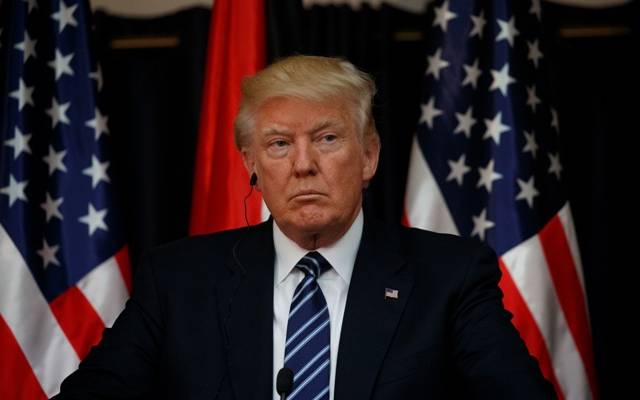
President Donald Trump (AP/Evan Vucci

Nov 26, 2017

https://unitedwithisrael.org/

The Trump administration has backtracked on its threat to close the PLO mission in Washington after it breached US law, watering it down with 90 day limitations.  

The Trump administration has backtracked on its decision to order the Palestinians’ office in Washington to close, instead saying it would merely impose limitations on the office that it expected would be lifted after 90 days.

Last week, US officials said the Palestine Liberation Organization (PLO) mission couldn’t stay open because the Palestinians had violated a provision in US law requiring the office to close if the Palestinians try to get the International Criminal Court (ICC) to prosecute Israelis. The move triggered a major rift in US-Palestinian relations that threatened to scuttle President Donald Trump’s ambitious effort to broker Mideast peace before it ever got off the ground.

Yet the US delayed shuttering the office for a week while saying it was working out the details with the Palestinians, before abruptly reversing course late Friday, as many Americans were enjoying a long Thanksgiving Day weekend. State Department spokesman Edgar Vasquez said the US had “advised the PLO Office to limit its activities to those related to achieving a lasting, comprehensive peace between the Israelis and Palestinians.”

Vasquez said even those restrictions will be lifted after 90 days if the US determines the Israelis and Palestinians are engaged in serious peace talks. The White House, in an effort led by Trump adviser and son-in-law Jared Kushner, has been preparing a comprehensive peace plan to present to both sides in the coming months.

“We therefore are optimistic that at the end of this 90-day period, the political process may be sufficiently advanced that the president will be in a position to allow the PLO office to resume full operations,” Vasquez said.

A Serious Reversal of Policy

The reversal marked a serious departure from the administration’s interpretation of the law only a week earlier. Officials had said then that, one way or another, the office had to close because Palestinian Authority (PA) head Mahmoud Abbas, in a UN speech in September, had called on the ICC to investigate and prosecute Israelis. That same law, though, says that the president can let the office re-open after 90 days despite an ICC push if serious Israeli-Palestinian talks are underway.

Asked how the Trump administration explains its new interpretation of about what must happen if the Palestinians call for an ICC investigation, Vasquez said: “These actions are consistent with the president’s authorities to conduct the foreign relations of the United States.”

There were no indications that the Trump administration had initially moved to close the office as part of a premeditated strategy to strengthen its hand in eventual peace talks. Instead, officials explained the move by saying Secretary of State Rex Tillerson, in a strict interpretation of the law, determined that Abbas’ speech had crossed the legal line.

The move led the Palestinians to issue an angry response last weekend threatening to suspend all communication with the US. Additionally, senior Palestinian negotiator Saeb Erekat accused the US of bowing to pressure from Prime Minister Benjamin Netanyahu’s government “at a time when we are trying to cooperate to achieve the ultimate deal.”

Vasquez said the original position had never been intended to create leverage or impose pressure. The State Department said that the administration is actively working to pursue lasting Israeli-Palestinian peace.

The requirement about the mission closing stems from a little-noticed provision in US law that says the US cannot allow the Palestinians to have a Washington office if they back the international court’s move to investigate or prosecute Israeli nationals for alleged crimes against Palestinians.

Abbas said at the United Nations in September that the Palestinians had “called on the International Criminal Court to open an investigation and to prosecute Israeli officials for their involvement in settlement activities and aggressions against our people.”

The Non-State of PLO

The PLO is the group that formally represents all Palestinians. Although the US does not recognize Palestinian statehood, the PLO maintains a “general delegation” office in Washington that facilitates Palestinian officials’ interactions with the U.S. government.

The United States allowed the PLO to open a mission in Washington in 1994. That required President Bill Clinton to waive a law that said the Palestinians couldn’t have an office. In 2011, under the Obama administration, the U.S. started letting the Palestinians fly their flag over the office, an upgrade to the status of their mission that the Palestinians hailed as historic.

Israel opposes any Palestinian membership in UN-related organizations until a peace deal has been reached.

The Israelis and Palestinians are not engaged in active, direct negotiations. But Trump’s team, led by Jared Kushner, is working to broker a deal aimed at settling the intractable conflict.

The Trump administration has not disclosed details about its effort to achieve an agreement that ostensibly would grant the Palestinians an independent state in exchange for an end to its conflict with the Israelis. Kushner and other top Trump aides have been shuttling to the region to meet with Palestinians, Israelis and officials from Arab nations.

The Palestinians, publicly supportive of the US effort, are nonetheless skeptical because Trump’s close ties to Israel suggest whatever deal he proposes might be unfavorable to them.

By: AP

Off Topic | German Shepherd Rejected As Police Dog For Being Too Friendly Is Hired As Greeter

November 26, 2017

German Shepherd Rejected As Police Dog For Being Too Friendly Is Hired As Greeter, Jonathan Turley’s Blog, Jonathan Turley, November 26, 2017

(With the media full of hatred,  this story made my day much better. I hope it does the same for you. — DM)

Credit: Facebook

Earliest this year, we discussed the fate of Gavel, a German shepherd flunked out of police canine academy in Queensland, Australia, for being too friendly.  For those of us who are ardent dog lovers, Gavel became an instant icon.   He rejection occurred despite his “family bloodline” of top German Shepard police dogs. The problem is that Gavel just wanted to be friends . . . with everyone.  Now Gavel has finally landed a job for which he is uniquely qualified: greeter.

Gavel is the new Vice-Regal Dog working for the Governor of Queensland, where he holds the official title Vice-Regal Dog.  Governor of Queensland Paul de Jersey welcomed the new greeter and says that Gavel will be given full access, including to cabinet meetings, in his new capacity.

Credit: Facebook

 Well done Gavel . . . and governor.

Revolutionary Guards Deputy: If Europe Becomes a Threat, Iran Will Increase Its Missile Range

November 26, 2017

Revolutionary Guards Deputy: If Europe Becomes a Threat, Iran Will Increase Its Missile Range

Photo Credit: Screenshot

Brigadier General Hossein Salami, who currently serves as the second-in-command of the Islamic Revolutionary Guard Corps, on Sunday responded to French President Emmanuel Macron call for an “uncompromising” dialogue with Iran about its ballistic missile program, saying: “If we have kept the range of our missiles to 2,000 kilometers (1,250 miles) and haven’t increased it yet, it’s not due to lack of technology.”

“So far we have felt that Europe is not a threat; therefore, we did not increase the range of our missiles,” Salami said, adding that if Europe turns into a threat, Iran will not hesitate to do so.

Salami also said the conflicts in Lebanon, Syria, Bahrain and Yemen “are the result of the Saudi regime’s evil and criminal nature, which wants to buy credibility for itself with petrodollars.”

“The threat of ISIS was very serious and if the domino effect of the fall of cities had continued, a big disaster would have threatened the Muslim world and even other countries,” Salami said, adding, “However, Iranian forces recognized the aptness of time and place and countered ISIS at the very beginning.”

Salami also accused the Saudis of helping the “Zionist regime” to undermine Hezbollah, Iran’s proxy terror group in Lbanon, saying “Saudi rulers view their survival in relying on the US power and secret contacts with Israel.”

On July 1, 2016, Salami stated: “Today, more than ever, there is fertile ground – with the grace of God – for the annihilation, the wiping out, and the collapse of the Zionist regime.”

Salami claimed that “only in Lebanon, more than 100,000 Qaem missiles are ready for launch… so that any time the Zionist regime seeks to repeat its previous mistakes with miscalculations, these missiles would… come down on the heart of the Zionist regime and be the prelude for a big collapse in the modern era… They are just waiting for the command, so that when the trigger is pulled, the accursed black dot will be wiped off the geopolitical map of the world, once and for all.”