Archive for September 2017

Washington’s despicable hypocrisy towards the Kurds

September 27, 2017

Washington’s despicable hypocrisy towards the Kurds, PJ Media,  David P. Goldman, September 25, 2017

There are 40 million Kurds living in Turkey, Iraq, Iran and Syria, and the question of Kurdish statehood can’t be untangled from the regional mess by a referendum. There is good reason to counsel the Kurds to exercise patience and careful statecraft in clearing this minefield. But it is utterly disgusting to ignore their national aspirations. Washington has reasons of state to manage the regional crisis artfully, and to ask the Kurds to be patient. But why are we so beholden to the doomed and destructive regimes of Iran, Syria, Turkey and Iraq that we cannot extend a hand of friendship to the Kurds? Their path to statehood may be tortuous and prolonged, but America should offer our counsel and support. If we do not, the rest of the Muslim world will smile grimly and exploit our moral cowardice.

***********************************

At Asia Times today, I explain why the entire world (excepting Israel) have lined up against the Kurds:

Except for the State of Israel and the Kingdom of Jordan, there isn’t one state in Western Asia that is viable inside its present borders at a 20-year horizon. All the powers with interests in the region want to kick the problem down the road, and that is why the whole world (excepting Israel) wants to abort an independence referendum to be held by Iraq’s eight million Kurds on Sept. 25.

I just want to add that our foreign policy elite is a pack of hypocritical, yellow-bellied, two-faced, fork-tongued, lying polecats who wouldn’t acknowledge the truth if it were tattooed on their ophidian foreheads.

Since September 11, 2001, we’ve been told that America has to ally with moderate Muslims against “extremism.” There are in fact moderate Muslims in the world. The Kurds are “moderate Muslims.” The Kurds do not persecute nonbelievers. They don’t hate Jews and Christians. They don’t forbid women to leave the house without a male relative; in fact, their militias are the only effective fighting force in the world that includes women in front-line combat units. They protect Iraqi Christians against ISIS, and Iraq’s Christians in turn support Kurdish independence. They have excellent and long-standing relations with the State of Israel. Jewish life is flourishing in the Kurdish Autonomous Region in the north of Iraq.

Most of all, Kurdish fighters are the spearhead of American-backed ground forces fighting ISIS in Syria and Iraq. They do not only act the way we say we want Muslims to act, protecting Christians and Jews and promoting the equality of women. They shed blood for what they believe in.

The Kurds are everything that George W. Bush and Barack Obama told us we should find in the Islamic world, and more. They want nothing but friendship with the United States of America. And we have thrown them under the bus. There isn’t an Appalachian outhouse that stinks worse than our foreign policy Establishment.

Why have we thrown them under the bus? Because we’re afraid of unsettling “extremists,” that is, the radical jihadists who have been killing Americans for decades. Kurdish independence would below up the artificial state of Iraq, which turned into an Iranian satrapy under majority Shi’ite rule as arranged by George W. Bush, Condoleezza Rice and the nation-builders of the Republican Establishment. It would destabilize Turkey, where Kurds of military age will outnumber Turks a generation from now. Turkish President Erdogan wants to restore Ottoman glory and the prospect of losing the Kurdish-majority Southeast drives him crazy. Turkey, notionally the Southeast flank of NATO, has already turned its back on the West, and lined up with Russia and China.

Thanks in small part to our bungling and in large part to Iran’s predation, the whole of Western Asia is unstable. Syria and Iraq look like the kind of scene from a Quentin Tarantino film where everyone has a gun trained on everyone else. The one island of stability in the whole miserable landscape, Iraqi Kurdistan, becomes a threat to the momentary stability of the region.

There are 40 million Kurds living in Turkey, Iraq, Iran and Syria, and the question of Kurdish statehood can’t be untangled from the regional mess by a referendum. There is good reason to counsel the Kurds to exercise patience and careful statecraft in clearing this minefield. But it is utterly disgusting to ignore their national aspirations. Washington has reasons of state to manage the regional crisis artfully, and to ask the Kurds to be patient. But why are we so beholden to the doomed and destructive regimes of Iran, Syria, Turkey and Iraq that we cannot extend a hand of friendship to the Kurds? Their path to statehood may be tortuous and prolonged, but America should offer our counsel and support. If we do not, the rest of the Muslim world will smile grimly and exploit our moral cowardice.


Brandeis University: Backing Hamas on Campus

September 27, 2017

Brandeis University: Backing Hamas on Campus, Front Page MagazineSara Dogan, September 27, 2017

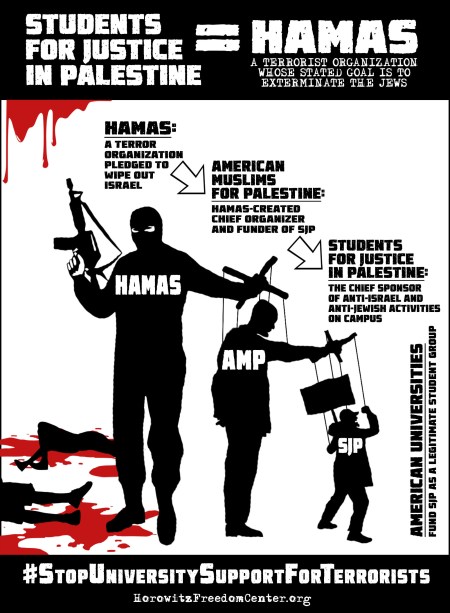
Editor’s note: David Horowitz Freedom Center is naming the “Top Ten Worst Schools that Support Terrorists.” The latest school to be named to this list is Brandeis University. Known for its Jewish origins, Brandeis joins the University of California-Berkeley, the University of California-Irvine, the University of Chicago, DePaul University, and San Francisco State University on the list. Coinciding with the naming of Brandeis to this list, the Freedom Center placed posters on the Brandeis University campus exposing the links between Students for Justice in Palestine and the terrorist organization Hamas, whose stated goal is the destruction of the Jewish state.

As revealed in recent congressional testimony, Students for Justice in Palestine is a campus front for Hamas terrorists. SJP’s propaganda activities are orchestrated and funded by a Hamas front group, American Muslims for Palestine, whose chairman is Hatem Bazian and whose principals are former officers of the Holy Land Foundation and other Islamic “charities” previously convicted of funneling money to Hamas. The report and posters are part of a larger Freedom Center campaign titled Stop University Support for Terrorists. Images of the posters that appeared at Brandeis and other campuses may be viewed at www.stopuniversitysupportforterrorists.org.

Brandeis University

Brandeis University was named for the first Jewish justice on the Supreme Court, Louis D. Brandeis, and is one of only a few prominent American universities to be founded primarily by Jews. In spite of these strong ties to the American Jewish community, Brandeis has stood apart in recent years for its hostility to Israel and its strong support of Israel’s terrorist enemies. In the past year, swastikas have appeared in multiple locations on campus and the campus SJP chapter has held an event supporting Hamas’s policy of refusing to normalize relations with Israel or its allies. Brandeis rescinded an honorary degree to Ayaan Hirsi Ali, a critic of radical Islam and advocate of Muslim women’s rights, while granting one to notoriously anti-Semitic playwright Tony Kushner. Brandeis also hosted a secret listserve where prominent professors exchanged emails attacking Israel—even comparing the Jewish state to Nazi Germany— and supporting the Boycott, Divestment and Sanctions (BDS) movement that is supported and funded by Hamas. When a Brandeis student used her personal twitter account to call for an Intifada, she was vigorously defended by the campus chapter of Students for Justice in Palestine (SJP). Two additional Brandeis students sought to restore relations between the university and Al Quds University in Palestine, which is a recruiting ground for the terror group Hamas.

Supporting Evidence:

In November 2016, a swastika was found on the door of the men’s restroom in the campus library at Brandeis.

On November 3, 2016, Brandeis SJP held an event titled “Apartheid is Not ‘Green’: Greenwashing and Palestine.” The purpose of the event was to demonize Israel and to claim that the Jewish state uses its record of positive environmental activism to hide its alleged “apartheid” and mistreatment of the Palestinians. The event description stated: “Israel inaccurately portrays itself as environmentally conscious in order to justify and distract from its violence against Palestine.” Of course all the violence in the Middle East conflict is the result of a 70-year unprovoked aggression by the Arab states and terrorist organizations like Hezbollah and Hamas against the Jewish state.

On March 8, 2016, Brandeis SJP held an event called “Presentation & Discussion on Pinkwashing.” The term “pinkwashing” is used by Israel’s enemies to claim that the Jewish state uses its overwhelmingly positive record on gay rights to hide its mistreatment of the Palestinians.

In May 2015, Former U.S. Ambassador Thomas Pickering, known for his extreme anti-Israel views, gave the Commencement address at Brandeis. In an op-ed recently co-written for Politico.com, Pickering repeated Hamas tropes such as “Israel’s half-century-long occupation” and stated that “the marginal improvement in Israel’s security provided by these expansive Israeli demands can hardly justify the permanent subjugation and disenfranchisement of a people to which Israel refuses to grant citizenship in the Jewish state.”

On April 23, 2015, Professor Noam Chomsky, known for his extreme anti-Israel views, spoke at Brandeis. During his speech, he described Israel’s actions towards Palestine as “vicious, brutal and criminal” and claimed that Israel “is alone in denying” its “illegal occupation of territories.”

During March 21-27, 2015, Brandeis SJP held Israel Apartheid Week on campus. Israel Apartheid Week is a weeklong series of anti-Israel events designed to demonize and destroy Israel. Events included a talk on “Facing the Ongoing Nakba.” (Nakba, an Arabic term meaning “catastrophe,” is used by Hamas and its supporters to describe the creation of Israel). The “Nakba” event included a display of the false Hamas maps which purport to show the infiltration and colonization by Jews of Arab “Palestine.” The Week also included a talk by Professor Sa’ed Atshan, an anti-Israel activist who currently serves as a professor in “Peace and Conflict Studies” at Swarthmore College, who has called Gaza an “open-aired prison” and has referred to Israeli military strategy as “scorched-Earth policy.”

In December 2014, Brandeis junior Khadijah Lynch, an undergraduate department representative in the African and Afro-American Studies Department, was exposed for her violent anti-American and anti-Israel tweets, including “amerikka needs an intifada. enough is enough” and “a social justice themed institution grounded in zionism. word. thats a fucking fanny dooley.” When Jewish student Daniel Mael published her public tweets, Lynch attacked him and Mael subsequently received death threats. Brandeis SJP defended Lynch in a public statement on Facebook.

On November 9, 2014, Brandeis SJP posted a petition in support of convicted Palestinian terrorist Rasmeah Odeh on its Facebook page. Odeh was convicted by an Israeli military court in 1970 for her involvement in two fatal terrorist bombings. She was subsequently convicted of immigration fraud by a U.S. federal jury in 2014, after she failed to disclose her previous conviction on her application for U.S. citizenship. Odeh has claimed that she was tortured into confessing to the Israeli bombings, but U.S. prosecutors have uncovered Israeli military reports indicating that they found “explosive bricks in her room” along with “extensive bomb-making materials and explosives.”

In July 2014, a Jewish student at Brandeis, Daniel Mael, exposed a secret faculty email Listserve of 92 left-wing professors at Brandeis. Some participants in the listserve expressed extreme anti-Israel views while also supporting Hamas’ rhetoric and positions. Professor Donald Hindley, for instance, referred to the Jewish state as “The Vile, Terrorist Israeli Government,” in a post about the kidnapping of three Israeli teenagers by Hamas terrorists. Hindley also sarcastically wrote: “Zionist olive trees grow wondrously on Palestinian corpses…In that way, we combine great trees with our own holocaustic ethnic cleansing.” Hindley also compared an eventchallenging the anti-Semitic BDS movement to a Nazi rally, describing it as “Germany in the later 1930s with everyone at least a Nazi sympathizer” and asking “Will the lunch be kosher?” Also on the listserve, Brandeis sociology professor Gordon Fellman sought signatures for an open letter to “end the illegal occupation in Palestine.” According to the letter, “the government of Israel, having provoked the firing of rockets by its rampage through the West Bank, is now using that response as the pretext for an aerial assault on Gaza which has already cost scores of lives.”

In April 2014, two Brandeis students, Eli Philip and Catriona Stewart, who served as co-presidents of the anti-Israel, Jewish student organization, J. Street U., received a $10,000 grant from an organization called the Davis Projects for Peace to travel to Al Quds University in Palestine to attempt to repair relations between Al Quds and Brandeis. The previous relationship between the universities formed in 2003 was severed in 2013 after Al Quds hosted rallies for Hamas during which participants performed a traditional Nazi salute. Philip and Stewart previously disrupted the speech of an IDF member on campus.

Under pressure from students and faculty, in April 2014 Brandeis withdrew an honorary degree offered to women’s rights activist Ayaan Hirsi Ali. Some students protested giving the honorary degree to Somali-born Ali, who has condemned the mistreatment of women in Muslim countries, including female genital mutilation, because she is a vehement critic of radical Islam. The tipping point in the controversy came when eighty-seven Brandeis faculty members signed a petition calling for rescinding Ali’s degree because of her “extreme Islamophobic beliefs.” (The term “Islamophobia” has been used polemically by the Muslim Brotherhood to censor any criticism of Islam, including Sharia law.)

Brandeis had previously awarded an honorary degree to playwright Tony Kushner, who has a long history of anti-Semitic statements, among them the claim that “The biggest supporters of Israel are the most repulsive members of the Jewish community.”

During February 2014, Brandeis SJP staged “Israel Apartheid Week,” a weeklong series of anti-Israel events designed to demonize Israel and create a rationale for its extinction. Events included a speech by notorious anti-Israel activist Max Blumenthal, author of Goliath: Life and Loathing in Greater Israel, a book about which one reviewer commented, “It is no exaggeration to say that it could have been published by the Hamas Book-of-the-Month Club (if it existed).”

On March 26, 2012, members of Brandeis SJP disrupted an event featuring members of the Israeli Knesset which was held at a local Temple. The SJP members wore shirts with “apartheid” written on them in Hebrew and shouted slogans, including “Israel is an apartheid state and the Knesset is an apartheid parliament!” and “We will not welcome Israeli officials to any Brandeis University event until apartheid ends!” These actions are consistent with Hamas’s policy of refusing to “normalize” relations with any pro-Israel groups.

On April 4, 2011, a university panel featuring six members of the Israeli Knesset was disrupted by Brandeis SJP activists who repeatedly called the members “war criminals” and attempted to distribute fake warrants calling for their arrest. The students particularly targeted Avi Dichter, former head of Shin Bet, Israel’s internal security agency, accusing him of torture. One student called to him in Hebrew, “Don’t worry Avi Dichter, we’ll meet you in The Hague.”

France: Muslim who was on terror watchlist becomes police officer

September 27, 2017

By – on

Source: France: Muslim who was on terror watchlist becomes police officer – Geller Report

After terrorist joining Interpol i,am not longer surprised .

No, this is not The Onion. Nor is this a case of “keep your friends close and your enemies closer.” This is PC idiocy at its apex. And France is going to reap the consequences, when he goes jihad while on the police, or enables some other Muslims to do so.

“Frenchman who was on terror watchlist becomes police officer,” by Anna Schaverien, The Local, September 25, 2017:

 A Frenchman who had been on France’s terror watchlist after showing signs of having been radicalized to extremist Islam has been accepted into France’s police force.

The man was placed on the terror watch list in 2012 as a known radical Islamist and France’s intelligence service DGSI kept him under surveillance for a number of years after being alerted to his behaviour, according to French news site RTL.

Unaware he was being watched, the man, who has not been named, applied to join the armed forces, but wasn’t successful.

He then decided to try to join the French police force.

Despite apparently being under watch he was recruited as an Adjoint de Securité, a role ranked below a qualified police officer which can involve patrolling the streets and administrative duties.

This is despite the DGSI receiving significant intelligence about his behaviour and sending his details on to the interior minister, who supervises the police, RTL reported.

He was kept under surveillance in this role, and once the security forces were sure he wasn’t involved in any terrorist plots, he was allowed to complete his training and became a fully qualified police officer on 22 September after undergoing the required training.

He has since been removed from the terror watchlist….

Remote Textile Plant May Secretly Fuel North Korea’s Weapons

September 27, 2017

Remote Textile Plant May Secretly Fuel North Korea’s Weapons, New York Times, September 27, 2017

A suspected production site for an advanced rocket fuel known as UDMH in Hamhung, North Korea. The kidney-shaped ponds near the bottom of the image appear designed to hold large amounts of wastewater, consistent with UDMH production.

Asked how North Korea could have so extensively developed this fuel without apparent outside notice, Mr. Lewis said outside analysts too often saw the country as primitive and backward.

“If you watch them in satellite photos and read their technical publications, it looks like a totally different country,” he said.

He added, sighing, “We’re in full-scale denial about North Korea’s capabilities.”

 *****************************

In the remote North Korean city of Hamhung, separated from the capital by vast, jagged mountains, an inconspicuous chemical plant may be secretly fueling the growing missile array that threatens the United States.

Researchers think that the plant is producing a specialized rocket fuel known as UDMH, which is used in the long-range missile launches that have escalated tensions between North Korea and the United States.

This would settle an esoteric but crucial debate among North Korea watchers, and not to Washington’s favor.

Some have argued that North Korea cannot produce the fuel, implying that the country imported it from Russia or China. Those countries could then be pressured to cut off exports, grounding North Korea’s missiles without firing a shot.

But the new finding, produced by the James Martin Center for Nonproliferation Studies at Middlebury University, suggests that North Korea has mastered UDMH production, closing off one of the last avenues for outside curbs on the country’s increasingly sophisticated weapons programs.

Though North Korea may have previously relied on foreign assistance in obtaining or making the fuel, as some analysts believe, it no longer appears to need the help.

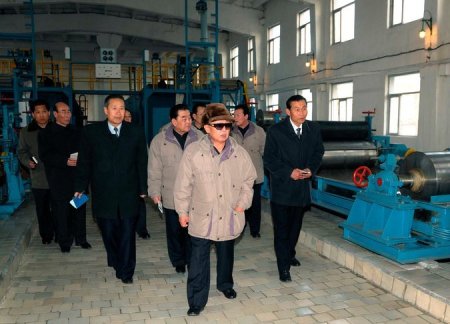
A photo from North Korea’s state news agency in 2010 purporting to show Kim Jong-il, the country’s leader at the time, at the February 8 Vinalon Plant in Hamhung. The plant is suspected of making missile fuel. Korean Central News Agency, via Reuters

Short of war or the country’s collapse, he added, “There’s nothing to stop this program from becoming a monster.”

The finding is based on satellite imagery, a technical analysis of UDMH production methods, information from a North Korean official who defected, and a set of obscure North Korean technical documents.

Jeffrey Lewis, who directs the Middlebury center’s East Asia program, had been hunting for weeks for hints of UDMH production.

“There are no real, obvious signatures for it,” he said, because it can be made with common chemicals like chlorine and ammonia using a variation of a process developed in 1906. India, while quietly developing its missile program in the 1970s, had produced UDMH in an old sugar factory.

The breakthrough came when his team found and translated a set of highly technical articles in an official North Korean science journal, Chemistry and Chemical Engineering, that referred to the fuel.

The articles, which ran between 2013 and 2016, discussed mundane matters like managing highly toxic wastewater, a notorious problem in UDMH production. But they betrayed suspiciously sophisticated knowledge. One explored methods for improving purity, crucial in advanced missiles.

“They don’t read like this is a speculative or nascent endeavor,” Mr. Lewis said. “They read like this is a problem they’ve been working on for a while,” describing problems a country would encounter only after producing large quantities of the fuel.

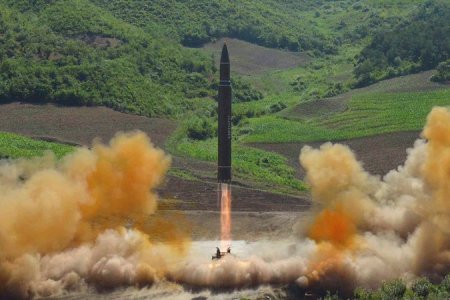
Another state news agency photo was said to show the launch of a Hwasong-14 intercontinental ballistic missile in July. The fuel UDMH makes such long-range weapons possible. Credit Korean Central News Agency, via Associated Press

It was an odd location for a highly trained rocket fuel specialist to work. The plant normally produces vinalon, a cheap synthetic material sometimes called “juche” fiber — a reference to North Korea’s tenet of juche, or self-reliance — that is often used in North Korean textiles and uniforms.

But it had long been, Mr. Lewis said, “our No. 1 candidate for UDMH production.”

His team had initially flagged the plant after scrutinizing, in painstaking detail, satellite images of Hamhung for clues.

The remote city is not an obvious home for sensitive military sites. Sitting on the country’s eastern coast, it is exposed to airstrikes, like the American bombing missions that devastated it in the Korean War.

But Ko Chong-song, a North Korea official who defected in the early 1990s, indicated in a 2001 book that it was the center of secret military chemical work. The Central Intelligence Agency had suspected as much since at least 1969, when it published a secret assessment of chemical production in Hamhung.

Now, Mr. Lewis’s team, looking again at the plant, noticed two unusually large wastewater pools, which aligned with standard UDMH production methods — and with the paper describing wastewater challenges. And Kim Jong-un, the North Korean leader, they found, had made a series of trips to the plant, underscoring its importance.

“That’s about as clear-cut as it gets,” Mr. Lewis said.

While the finding reveals important information about the extent of North Korea’s progress, it may come too late for the United States to act.

The country has most likely already stockpiled enough fuel to fight an extended war, Mr. Lewis said. And the fuel is designed to remain potent for years. Soviet UDMH lasted so long that, after the country collapsed, the United States had to help de-fuel its ICBMs.

Asked how North Korea could have so extensively developed this fuel without apparent outside notice, Mr. Lewis said outside analysts too often saw the country as primitive and backward.

“If you watch them in satellite photos and read their technical publications, it looks like a totally different country,” he said.

He added, sighing, “We’re in full-scale denial about North Korea’s capabilities.”

Trump cuts Obama’s refugee target in half, takes more Christians than Muslims

September 27, 2017

Trump cuts Obama’s refugee target in half, takes more Christians than Muslims, Washington Times,  September 26, 2017

President Barack Obama meets with President-elect Donald Trump in the Oval Office of the White House in Washington on Nov. 10, 2016. (Associated Press)

President Trump, in just eight months in office, has succeeded in upending U.S. refugee policy, cutting by more than half the 110,000-refugee target that the Obama administration had bequeathed him and dramatically shifting the demographics of who is accepted.

Gone is President Obama’s overwhelming focus on Muslims, and particularly on Syrians fleeing a civil war that his administration facilitated. Under Mr. Trump, the rate of Syrian refugees has been cut by more than 80 percent, and Christians have overtaken Muslims in total refugees resettled.

“It’s impossible to escape the clear message that there’s a new sheriff in town,” said Matthew O’Brien, research director at the Federation for American Immigration Reform, which advocates for stricter refugee controls.

 The Trump changes have reverberated around the globe, with the Office of the U.N. High Commissioner for Refugees drastically cutting the number of refugee candidates it submits to the U.S.

After recommending nearly 35,000 refugee candidates last year, the UNHCR submitted just 3,591 applications from January to July.

Refugee advocates say the U.S. is relinquishing its global leadership and moral standing and have challenged parts of the administration’s policy in the courts, pushing the country to move back toward the goals set by Mr. Obama.

The previous president called for up to 110,000 refugees to be admitted to the U.S. in 2017 and indicated that he wanted Syrians to be a large part of that, with the country on pace for more than 15,000 resettlements this year.

But Mr. Trump, as part of his first “extreme vetting” travel ban executive order, changed all that. He called for cutting the refugee cap from 110,000 to 50,000 and placed a four-month pause on the refugee program and a more lasting ban on Syrians.

Resistance by the courts, immigrant rights activists and Democrats on Capitol Hill dented those plans, but at the end of the fiscal year, it’s clear that the president mostly got his way.

As of Tuesday afternoon, with four days left in the fiscal year, the government had admitted slightly more than 53,000 refugees — less than half of Mr. Obama’s goal but slightly more than Mr. Trump wanted.

Perhaps the bigger impact was within the demographic breakdown, where Muslims dropped from nearly half of refugees under Mr. Obama to slightly more than a third. Christians, meanwhile, went from 43 percent to 53 percent under Mr. Trump.

Syrians, who represented a stunning 15 percent of all refugees under Mr. Obama, dropped to just 8 percent under Mr. Trump.

The State Department didn’t respond to an inquiry from The Times for this article.

Officials at the department are rushing to put together a recommendation for a refugee cap for fiscal year 2018, which begins Sunday.

Under the law, the administration is able to set an overall cap each year. It was set at 80,000 for the end of the Bush administration and beginning of the Obama administration, dropped to 70,000 in 2013, rose to 85,000 in 2016 and then to 110,000 this year.

Mr. Trump proposed cutting this year’s number to 50,000 and came close to fulfilling that, likely ending up just a few thousand over.

Courts had intervened, saying Mr. Trump couldn’t stop the arrival of refugees who had “close” ties to American entities, exempting them from his 50,000 cap.

The president is expected to suggest an even smaller refugee cap for 2018, analysts said. Several reports Tuesday put the figure at 45,000. The administration must conduct official consultations with Congress this week before finalizing the number.

Rep. Randy Hultgren, Illinois Republican and co-chairman of the Tom Lantos Human Rights Commission, said he was disappointed by the low figure.

“I believe we can balance both compassion and security and remain the world’s shining city on a hill,” he said in a statement, adding that he believed the U.S. should “trust our long-standing and rigorous vetting system” to weed out dangers while allowing the pipeline of refugees to flow.

Top Democrats, meanwhile, prodded the White House Wednesday over reports that it nixed a study that would have shown refugees were a net plus for the U.S. economy.

“It appears that the Trump Administration may have rejected these facts in order to present a biased, incomplete, and ultimately false political narrative,” the Democrats wrote in a letter demanding documents.

Advocates say the U.S. puts refugees through stricter screening than any other category of visitor or immigrant to the U.S. and that fears of terrorists using the program to exploit weaknesses are overblown.

But security analysts say countries such as Syria are so broken that the U.S. doesn’t have access to databases or on-the-ground information to vet the stories of would-be refugees.

Mr. O’Brien said his group doesn’t oppose refugees, which he said are part of America’s moral obligation. But he said the government simply can’t vet all cases.

“In those situations in the past, the default position has been to look to the interests of the refugee. I think after Sept. 11 that is an impossible circumstance,” he said. “There are some people where it’s just not going to be possible.”

Mr. O’Brien said Mr. Trump is flexing the powers that the law grants the president, learning that he doesn’t have to work through Congress to make major changes.

Even as some in the U.S. protest Mr. Trump’s changes, the rest of the world is adjusting.

The UNHCR — which screens and recommends to the U.S. potential refugees from some of the world’s hot spots — has drastically slowed the pipeline.

The number of Syrians submitted to the U.S. for resettlement screening is down more than 80 percent so far this year. Similar drops were recorded for Somalia, Iran and Afghanistan. Iraq had an even bigger drop in submission rate by the UNHCR.

The Economist: sending 1.2 billion unskilled Africans to Europe will increase world GDP | GEFIRA

September 27, 2017

Source: The Economist: sending 1.2 billion unskilled Africans to Europe will increase world GDP | GEFIRA

The Economist ran a couple of articles promoting migration as good for the global economy. Professor Bryan Caplan argued that labour is the world’s most valuable commodity and its value depends on location. If borders were open, a world of free movement would be $78 trillion richer1). Mexican labourers can expect to earn 150% more in the West. Unskilled Nigerians make even 1,000% more in Germany than in Africa. The value of an unskilled worker is so much higher in Europe that a Nigerian can make 1000 times as much in Germany, adding 1000 times more to global GDP. Because Western societies are more structured and organised than the Mexican or Nigerian, the unskilled worker can be more productive in a factory in Germany or a farm in the USA than in Africa. A taxi ride in Berlin is much more expensive and thus valued much higher than a taxi ride in Lagos, while the amount of work, driving a car for a while, is the same.

If The Economist expounds Professor Bryan Caplan’s view correctly, then the argument is plain idiotic. The Economist confuses countries with companies that are profit-oriented, and where people are disposable resources. Yet, countries are communities, and citizens do not usually expect their governments to merely maximize GDP. History teaches us that migration causes social unrest, disrupts social cohesion and ultimately the stability of the recipient nation. And even if we set aside these social or national considerations, The Economist‘s reasoning is still false.

The whole argument breaks down on social security and the massive world oversupply of unskilled labour. Social security determines the minimum price of labour. If there is an abundance of unskilled workers, governments step in and buy or take out of the market the oversupply of labourers for a minimum price called social welfare. Thus, social security does not differ from setting a minimum price for milk. The consequence of a minimum milk price is that farmers will produce more milk than can be consumed. The surplus is then bought by the authorities and ultimately destroyed, or a milk production quota is imposed.

Moroccans and Turks in the Netherlands are labour migrants. The Netherlands has no historical relation with either Turkey or Morocco. There is no colonial relationship whatsoever between these two countries and the Netherlands or shared history.

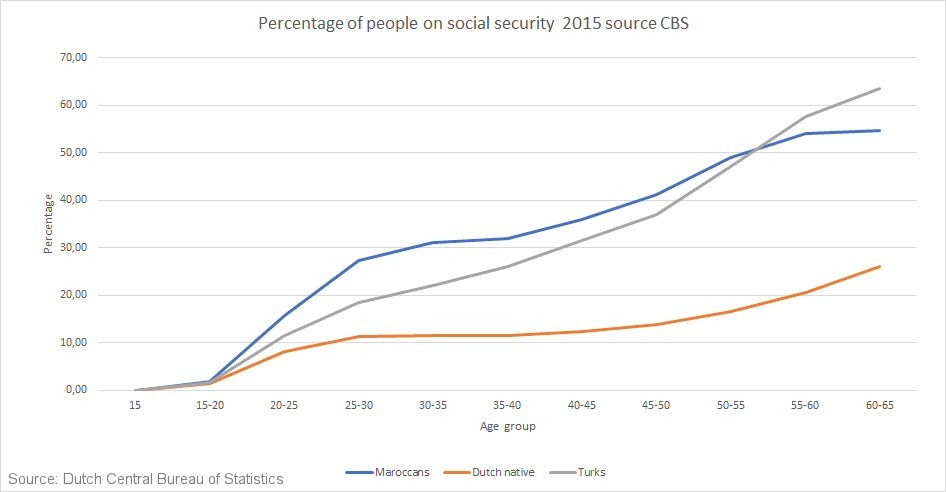
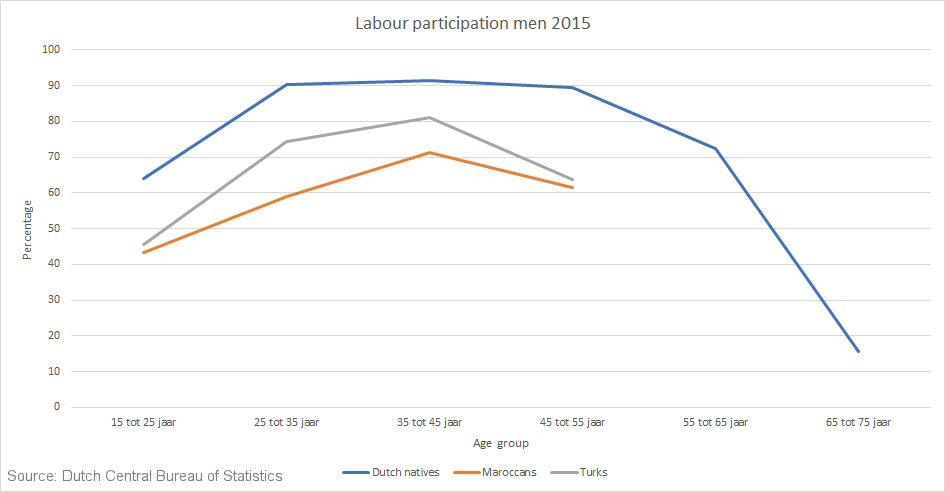
In the most productive group aged 30-35 more than 30% of the Moroccans and 22% of the Turks receive social security benefit, but only 11% native Dutch. The labour participation for Moroccan men aged 25-35 is a shocking 60%, whereas for the native Dutch it is about 90%. In the age group 50-55, nearly 50% of Moroccans and Turks receive social security while only 16% Dutch. Labour migrants are a drain on the indigenous population rather than a relief.

It is clear that the Dutch labour market has a massive oversupply of unskilled third-world workers. Apart from social security, there are also intangible costs such as an increase in crime, and especially terrorism, both related to North African migrants.

Africa has 1.2 billion people that will double in the next 25 years, of which huge numbers are about to join European labour force in the coming decades. At the same time the highly educated and skilled western populations will decline, reducing the demand for unskilled labour even further. There is no chance that Europe can afford to keep its social welfare without enforcing a quota on migrants. And even if social security is dropped altogether, the European labour market will reach a situation where there are so many labourers that they become as worthless as they are in Nigeria. For the unskilled European working class it is tantamount to suicide to vote open borders advocates into office.

Interestingly enough, The Economist implicitly stated that Africans are not able to utilise their labour force themselves. Bringing the African population under European supervision failed during the very brief period of colonisation of Africa, and now The Economist wants to bring the Africans under European supervision by using open borders policy and moving the African population to Europe. Does The Economist really suggest that white Europeans are the only ones who can solve Africa’s problems?

Two Fighters Come Together in Alabama

September 27, 2017

Two Fighters Come Together in Alabama, Front Page Magazine, Daniel Greenfield, September 27, 2017

(Please see also, Roy Moore and the Triumph of Hope Over Money. — DM)

“I’m going to be here campaigning like hell for him,” Trump vowed if Moore won. And, in one of his final ads, Moore declared, “I can’t wait.” By winning, Moore earned that campaigning.

When the race begins in earnest, two fighters will come together to campaign in Alabama.

***********************

Early this century, the Southern Poverty Law Center sued to remove the Ten Commandments from an Alabama courthouse. The case ended with Judge Roy Moore, the democratically elected Alabama Chief Justice, being removed from the bench for refusing to take down the Ten Commandments.

“Justice was served today,” the president of the leftist hate group cheered. “A public official who defied the law was removed from office.”

But the Southern Poverty Law Center couldn’t keep Roy Moore down no matter how hard it tried.

Last September, the SPLC was still fighting to remove Moore from the bench after his return. Now it will have to fight to remove him from the Senate because Roy Moore does not give up.

Roy Moore didn’t give up when a Federal judge and the Alabama Supreme Court ordered him to take down the Ten Commandments. He didn’t give up when he was removed from the bench. He didn’t give up in the face of a ruling by the United States Supreme Court and another suspension. He didn’t give up when he was massively outspent in every election. Including this one. Because he doesn’t give up.

There’s something to be said for a man who fights for what he believes in. And who won’t give up.

Agree or disagree with Roy Moore, no one can deny that he’s a fighter who overcomes long odds. He won his first election as a longshot candidate despite being outspent ten to one. He won his second election after being outspent six to one. He won the GOP Senate runoff last night after, once again, being outspent six to one. Including five to one on television advertising. And he won it by a landslide.

And by fighting for it, Judge Roy Moore earned his shot at the Senate.

It’s no secret that Republicans have lost winnable Senate seats when candidates with impeccable convictions, but poor electability, went to the front of the line. There’s nothing wrong with making electability a priority. A candidate who can’t win is just opening the door for a Democrat.

When Republicans replaced Jack Ryan with Alan Keyes, the outcome was the Obama nightmare. Keyes was a good man. But he wasn’t the right man to run against Barack Hussein Obama.

President Trump went down to Alabama to campaign for the candidate who could win. The presumption was that the most electable candidate was Luther Strange. By winning, Roy Moore proved he could win even when the big odds and the big money were against him. He proved that he deserved Trump’s support. Just the way that Trump proved that he deserved the support of his voters.

Principles and conviction are vital. But the acid test of politics is victory.

“I’m going to be here campaigning like hell for him,” Trump vowed if Moore won. And, in one of his final ads, Moore declared, “I can’t wait.” By winning, Moore earned that campaigning.

Trump is a businessman. He doesn’t reflexively support establishment or populist candidates. He needs to expand the Senate deck enough to be able to get things done without Democrat interference. And, at the very least, he needs a Senate firewall for his agenda and against the inevitable impeachment push.

These days, politics looks like war. And elections are tests by fire.

After Trump’s win, Democrats poured all their resources into winning special elections. And those were House races. There’s no doubt whatsoever that they will throw money into Alabama.

The Dems burned $40 million on four special elections. They are going to throw more than that into the pot for a Senate seat. Sessions won an uncontested election in 2014 with 97% of the vote after winning his seat by growing margins in every election.

But you can bet that this time around, it will be contested. Because while there might be seats that are statistically safe, there are no safe seats. The Democrat ethos is “total war” on every battlefield. And while the left is eager to stage campus riots and post selfies of themselves taking a knee, they are not about to neglect the old fashioned conflict of the election with its smears and provocations.

Some Republicans aren’t ready for “total war”, but Judge Roy Moore has been swimming in it for decades. He understands what it’s like to be the face of a culture war in a way few Republicans do.

And the election will just be a preview of the pitched battles in the Senate over ObamaCare, illegal alien amnesty and dozens of other conflicted issues that have left that body so fundamentally ineffectual.

It will take strength, courage and determination to face all that. And that is what the runoff was about.

Like Trump, Roy Moore persevered despite being outspent. He relied on populism instead of big ad spending. And, like Trump, he won because he is the face of a cultural counterrevolution.

Moore didn’t have the race handed to him on a silver platter. He had to fight for it. He was never the inevitable and untested candidate. Instead he, once again, had to overcome big odds to win.

And he did it. That is what President Trump respects.

There are plenty of electable candidates who can win when the odds are on their side. But, as we saw in the presidential election, the odds aren’t fixed. The polls are often wrong. Manufactured scandals shift the tide. And no Republican is so noble that the media can’t make him look lower than mud in a week.

The truly remarkable political creature is the “unelectable” candidate who wins anyway, who wins even though he isn’t supposed to, who wins even though the big money is against him and who wins even though the media spends all day shouting that he is the worst man that ever lived. That’s a true fighter.

Trump is such a candidate. So is Roy Moore.

The runoff wasn’t about populists and the establishment. It was a test of whether Roy Moore could do in a Senate election what he was able to do in his judicial contests. And the verdict is in.

Roy Moore and Donald Trump are certainly not the same man. Their beliefs differ in some areas. But they’re both fighters. And the GOP is looking for fighters more than for ideological conformity.

It needs men and women who are ready to fight for what they believe in. And who are good at it. Roy Moore proved once again in Alabama that he can fight. And that he can win.

When the race begins in earnest, two fighters will come together to campaign in Alabama.

No good deed goes unpunished for Israel

September 27, 2017

No good deed goes unpunished for Israel, American Thinker, Michael Berenhaus, September 27, 2017

Even the Syrians who were treated by Israel understand the situation better than the Post.  The article ended with this: “‘At first I was afraid, but then I saw that the treatment was superb,’ the 36-year-old woman said.  ‘We were told they are the enemy, but in reality, they are friends.'”

************************

Israel courts Syrians with humanitarian aid on border” (9/12/17) is yet another Washington Post article that tells a true, touching story yet spins it 180 degrees because of the paper’s antipathy toward Israel.  Israel takes in its neighbor’s war casualties and is vilified for the deed.  Talk about no good deed going unpunished! 

The article admits that “[m]ore than 600 Syrian children have been bused to Israeli hospitals for treatment in the past year.”  And “Israel has now treated more than 3,000 wounded Syrians, military officials say, though a Syrian medic on the other side of the border said the number traveling for care appeared to be higher.” 

But then there are the digs.  “Israeli officials stress the humanitarian aspect of the program, but it has another aim: to create a friendly zone just inside Syria as a bulwark against Israel’s arch enemy.”  The Washington Post provides no evidence to support this. 

The headline of the second page of the article on A13 reads, “Israeli aid to Syrians is humanitarian and strategic.”  But even according to the Post’s own reporting, “[i]t was in 2013, Israeli military officials say, when the first Syrians approached the Israeli fence on the Golan Heights.”  The Post provides no evidence that contradicts Israel’s official report.  The Post then adds its own spin by saying Israel’s motive for helping the wounded was “strategic.”  In a court of law, such conjecture would be deemed inadmissible.  Further, if the Syrians initiated the plea for help, what does that say about the motivations of the Israeli people?

According to the Post, “Israel has transferred 360 tons of food, nearly 120,000 gallons of gasoline, 90 pallets of drugs and 50 tons of clothing as well as generators, water piping and building material, the IDF says.”  Israel also has given supplies and medical care in areas ranging from as far away as Haiti and most recently Florida (See here.)  Was this also strategic?

 Moreover, is this reporting of Israel consistent with how The Washington Post reports on other countries providing humanitarian aid or disaster assistance?  Or does The Washington Post single out Israel when it comes to this sort of critique?  Without a doubt, the latter!

The Washington Post can’t help but be negative on Israel.  The Post states, “Israel has been in a state of war with its northern neighbor [Syria] for nearly 70 years.”  Hardly!  The truth: Syria and most surrounding Arab or Muslim nations have been at war with Israel for nearly 70 years.

Israel can’t get a break at The Washington Post.  Israel is less than 1% of the Middle East, and the moment it declared independence in 1948, five Arab armies and the local Arabs, now known as Palestinians, attacked the nascent Jewish state with the goal of genocide.  And they didn’t hide that goal!  They bragged about the impending genocide.  Fortunately, the Jewish state won.  Had it not, it would have meant back-to-back Holocausts for the Jewish people.

The Post described a seven-year old girl whose mother said a Syrian “local commander told them to go to Israel” for treatment.  Does this sound like a plot hatched by Israel for disingenuous reasons?

Even the Syrians who were treated by Israel understand the situation better than the Post.  The article ended with this: “‘At first I was afraid, but then I saw that the treatment was superb,’ the 36-year-old woman said.  ‘We were told they are the enemy, but in reality, they are friends.'”


Roy Moore and the Triumph of Hope Over Money

September 27, 2017

Roy Moore and the Triumph of Hope Over Money, BreitbartJohn Carney, September 26, 2017

Getty Images

It began with the Trump campaign, which was outspent by its competitors by unimaginable proportions. Let’s call it the Schaffley Rule: When voters are offered an echo, not a choice, money matters. When voters are offered a choice not an echo, policy and politics matter.

To put it more bluntly: Voters in Alabama showed that the new politics of economic nationalism, of Make America Great Again, of the rebirth of American hope can beat back the politics of the past and of the establishment.

**********************************

The campaign of Roy Moore was overwhelmed by a flood of GOP Establishment political cash, but it was not defeated. Millions were squandered in an effort to beat back Moore, but in the end it was the GOP Establishment that was vanquished.

The full accounting of how much money was spent in the attempt to bestow the GOP nomination on Luther Strange will have to wait for weeks, as the campaign finance filings trickle in. But it likely amounted to tens of millions of dollars raised by the Chamber of Commerce, by Mitch McConnell’s political action committees, and by other political vehicles of the Republican political establishment.

For all of that flood of campaign cash, however, Strange lost in a landslide. It couldn’t have been worse if not one dime was spent to promote Strange’s doomed candidacy.

So what happened? Why didn’t money work? For many years, money appeared to be the most important deciding factor in American politics. Whoever raised the most and therefore could spend the most would win. And, as a result, the donor class rose to power, directing the GOP to adopt positions on immigration, taxes, trade, and foreign policy even when it was clear these were largely rejected by Republican voters.

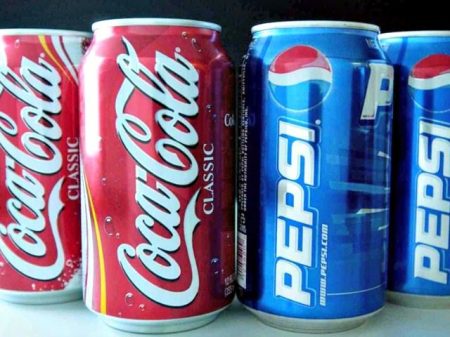
The answer might be found in the ancient wisdom of the advertising industry. Where advertising spending has its biggest effect is in places where the contest is between products so similar that only the advertising makes a difference. That is why some of the biggest expenditures on advertising throughout the years have been by companies making products that would be interchangeable under white labels. Coke versus Pepsi. One brand of cigarettes versus the other. This vodka against the other. Come to this casino rather than the other one.

When the Republican Party offered voters a version of the Democratic Party platform that was slightly slower and a bit more profitable, campaign cash mattered. It was about presenting an image, a message, a product rather than a genuine alternative. Coke versus Pepsi.

No longer. It began with the Trump campaign, which was outspent by its competitors by unimaginable proportions. Let’s call it the Schaffley Rule: When voters are offered an echo, not a choice, money matters. When voters are offered a choice not an echo, policy and politics matter.

To put it more bluntly: Voters in Alabama showed that the new politics of economic nationalism, of Make America Great Again, of the rebirth of American hope can beat back the politics of the past and of the establishment.

The lights are going out all over K Street and Madison Avenue.

China’s ‘Magic Weapons’: Influence Operations Subverting Foreign Governments

September 27, 2017

China’s ‘Magic Weapons’: Influence Operations Subverting Foreign Governments, Washington Free Beacon, September 27, 2017

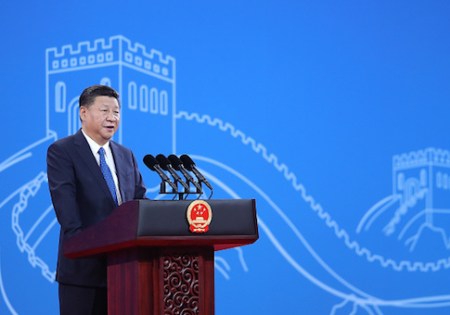
Xi Jinping / Getty Images

Chinese foreign influence operations in New Zealand raise security concerns here about China gaining accessing U.S. secrets. The government there is part of the British-American intelligence alliance known as Five Eyes—that involves the sharing of secrets among the spy services of the United States, Britain, Canada, Australia, and New Zealand.

“New Zealand is valuable to China, as well to other states such as Russia, as a soft underbelly to access Five Eyes intelligence,” the report said.

In the United States, China has been engaged in widespread influence operations primarily through the hiring of former government officials to lobby on its behalf. Other methods involve coercing American companies operating in China into influencing the U.S. government in support of China’s policies.

******************************

China under supreme leader Xi Jinping is stepping up coordinated intelligence operations aimed at influencing foreign governments into backing Beijing’s anti-democratic goals, according to a new study.

Chinese influence operations involve multiple government and Chinese Communist Party (CCP) intelligence organizations that seek to buy, guide, or coerce foreign governments into advancing its agenda, says the study written by New Zealand professor Anne-Marie Brady, a fellow at the Wilson Center.

“Even more than his predecessors, Xi Jinping has led a massive expansion of efforts to shape foreign public opinion in order to influence the decision-making of foreign governments and societies,” the report says.

“China’s foreign influence activities have the potential to undermine the sovereignty and integrity of the political system of targeted states,” the report warns.

Using New Zealand as a case study, the report reveals that Xi recently urged overseas Chinese nationals and ethnic Chinese residents to infiltrate foreign governments.

In New Zealand, several ethnic Chinese politicians have been elected to the parliament of the South Pacific nation, which is a key intelligence ally of the United States.

For example, New Zealand parliamentarian Jian Yang acknowledged recently that he concealed his past relationship with the People’s Liberation Army intelligence unit and membership in the Chinese Communist Party.

“New Zealand, like many other states in the world, is becoming saturated with the PRC’s political influence activities, and due to its pattern of engagement with China and its natural assets, it may even be experiencing more political influence activities than most,” the report says.

Chinese foreign influence operations in New Zealand raise security concerns here about China gaining accessing U.S. secrets. The government there is part of the British-American intelligence alliance known as Five Eyes—that involves the sharing of secrets among the spy services of the United States, Britain, Canada, Australia, and New Zealand.

“New Zealand is valuable to China, as well to other states such as Russia, as a soft underbelly to access Five Eyes intelligence,” the report said.

“New Zealand is also a potential strategic site for the PLA navy’s Southern Hemisphere future naval facilities and a future Beidou-2 [navigation satellite system] ground station—there are already several of these in Antarctica.”

Over the past several decades, China has focused on sowing divisions between the government in Wellington and the U.S., its ally. New Zealand has adopted increasingly anti-American policies, beginning in the 1980s when the nation refused to permit nuclear-powered or nuclear-armed warships from making port calls as part of an anti-nuclear policy.

China has targeted New Zealand’s 200,000 ethnic Chinese, part of the country’s population of 4.5 million people.

The report on Beijing influence operations was published as Democrats and most news outlets in the United States remain focused on Russian influence operations, specifically activities during the 2016 presidential election.

By contrast, Chinese influence operations in the United States have received little or no scrutiny from Congress or most news media.

The Chinese activities are based on what Beijing calls “united front” work—strategic influence operations first used in the 1940s by communists who eventually seized power in China.

Xi in September 2014 highlighted the importance of united front work in supporting influence activities around the world, calling them the Party’s “magic weapons” in pursuit of making China the dominant world power.

Concerned over the growing sub rosa intelligence operations in nearby Australia, the government there had drafted new laws designed to curb Chinese political and economic influence activities, including a ban on all foreign political donations.

In the United States, China has been engaged in widespread influence operations primarily through the hiring of former government officials to lobby on its behalf. Other methods involve coercing American companies operating in China into influencing the U.S. government in support of China’s policies.

During the 1990s, Chinese agents were caught by the FBI funding the reelection campaign of President Bill Clinton.

However, for the past 20 years, the FBI, which is responsible for countering foreign influence operations has produced few arrests or prosecutions related to Beijing influence operations.

Dissident Chinese businessman Guo Wengui revealed recently that Chinese companies are used often by the Ministry of State Security (MSS), the civilian spy service, to buy off American politicians and organizations in order to promote China’s foreign and economic policies.

The influence operations are carried out by Party units identified in the report as the United Front Work Department, the Central Propaganda Department, the International Liaison Department, the All-China Federation of Overseas Chinese, and the Chinese People’s Association for Friendship with Foreign Countries.

All are key players in covert Chinese foreign and defense affairs.

“United front activities incorporate working with groups and prominent individuals in society; information management and propaganda; and it has also frequently been a means of facilitating espionage,” the report says.

A key ploy of Chinese influence activities is creating networks of “friends of China” overseas who are called on to influence host governments and media.

Chinese military intelligence, known as the PLA Second Department, also has worked closely in the past with the International Liaison Department and United Front Work Department in backing revolutionaries in Southeast Asia and spying.

United Front operatives frequently operate under cover as Chinese diplomats who target foreign politicians, business people, and journalists.

Front groups include Chinese community associations and student groups along with organizations funded by China engaged in Chinese language, media, and cultural activities.

Another key influence tool is the numerous Beijing-funded Confucius Institutes that are located on many U.S. and foreign college campuses.

“CCP united front officials and their agents try to develop relationships with foreign and overseas Chinese personages (the more influential the better) to influence, subvert, and if necessary, bypass the policies of their governments and promote the interests of the CCP globally,” the report says.

The Party operatives attempt to guide the activities of front groups, oversea agents, and supporters by appealing to nationalist sentiment, such as urging support for the Chinese motherland, the Chinese race, and the Chinese ethnic population within their countries.

“The goal of successful overseas Chinese work is to get the community to proactively and even better, spontaneously, engage in activities which enhance China’s foreign policy agenda,” the report said.

China has been less successful in targeting overseas Chinese groups opposed to the communist regime, including pro-democracy dissidents, the Buddhist-oriented group Falun Gong, those promoting Taiwan independence, independent Chinese religious groups, and Tibetans and Uighurs seeking independence.

However, all those groups are major targets of infiltration by Party and intelligence agents who seek to divide or subvert the groups.

Recruiting ethnic Chinese as spies is also part of the influence operations, led by the MSS, Ministry of Public Security, PLA Joint Staff Headquarters’ Third Department, Xinhua News Service, the United Front Work Department, and International Liaison Department.

The report said a former Chinese spy revealed in 2014 that the PLA Third Department utilizes a network of some 200,000 agents around the world.

Guo, the dissident Chinese businessman, has stated that China dispatched between 25,000 and 40,000 agents to the United States, and increased the aggressiveness of their operations beginning in 2012.

“Political influence activities in the Xi era draw heavily on the approaches set in the Mao years and the policies of Deng, Jiang, and Hu, but take them to a new level of ambition,” the report said. “This reflects both the growing confidence of the Xi government in China’s international influence, as well as the high stakes strategy he is pursuing to maintain his regime through boosting economic growth and tightening control of information.”

The 57-page report, “Magic Weapons: China’s political influence activities under Xi Jinping,” was presented Sept. 18 at a conference on the corrosion of democracy under China’s international influence.

In New Zealand, the report identifies three ethnic Chinese politicians who it says maintain ties to Chinese united front groups and the Chinese embassy, including Yang, Raymond Huo, and Kenneth Wang, the descendent of a Communist Party revolutionary who was a member of parliament from 2004 to 2005.

The report said Yang “worked for fifteen years in China’s military intelligence sector,” information that was concealed on his New Zealand permanent residency application and job applications in New Zealand.

“The PLA would not have allowed anyone with Yang Jian’s military intelligence background to go overseas to study—unless they had official permission,” the report said.

As a member of parliament, Yang has been a “central figure promoting and helping to shape the New Zealand National government’s China strategy and been responsible for their engagement with the New Zealand Chinese community,” the report said.

Yang said earlier this month he is not a spy and has never been a spy but acknowledged being a part of the Chinese military.

Peter Mattis, an expert on Chinese intelligence said Yang’s statements at a press conference raised more questions than it answered.

“He claimed to have taught at Luoyang, but he told Chinese media in 2013 that he studied at the school run by China’s signals intelligence agency and earned a master’s degree,” Mattis said.

“New Zealand illustrates the challenge of dealing with Chinese influence operations once Beijing affects the political core,” he said. “The potential damage is unknown. Addressing the questions that need answering requires a much higher degree of political will than it might otherwise.”

Mattis said whenever Chinese influence activities are a focus of security concerns accusations of racism and ignorance of China are raised.

“The Yang case is no different. Brady’s paper shows the problem is neither racism, nor ignorance, but how the Chinese Communist Party operates abroad,” he said.

Huo, a member of the New Zealand parliament from 2008 to 2014, and again in 2017, has worked closely with Chinese united front groups, the report said.

Huo has maintained close contacts with China’s Zhi Gong Party, one of eight minor political parties under the control of the United Front Work Department.