H/t PJ Media Hot Mic
Iran Quadruples Cash Flow to Hizballah Since Nuclear Deal, Investigative Project on Terrorism, September 15, 2017
Proponents of the Iran nuclear deal, including many within the Obama administration, argued that the agreement would moderate Iran’s behavior. On the contrary, Iran immediately enhanced its support for terrorist organizations, while extremist factions within Iran gained more influence. Two years later, Iran has proved to be even more emboldened to pursue its regional hegemonic ambitions, drastically increasing financial and military support to terrorist organizations and cells worldwide.
*************************************
Iran has drastically increased financial support for its Lebanese-based terrorist proxy Hizballah since the Iran nuclear deal was signed two years ago, the Jerusalem Post reports.
Iran secured $100 billion in frozen assets and sanction relief in January 2016 as a result of the deal with the United States and European countries. Flush with cash, Iran immediately increased its support for terrorist proxies in the region and nefarious activities worldwide. Hizballah was receiving $200 million from Iran. Now, it’s $800 million.
Last month, Hamas terrorist leader Yahya Sinwar admitted that “relations with Iran are excellent and Iran is the largest supporter of the [Hamas military wing] Izz el-Deen al-Qassam Brigades with money and arms.” Iran reportedly provides Hamas with about $60-$70 million.
Both Hizballah and Hamas remain dedicated to Israel’s destruction and continue to invest considerable resources to fight the Jewish state. Iran also spends hundreds of millions of dollars for Shi’ite militias in Syria and Iraq, while increasing support for Houthi militants in Yemen.
Shortly after the July 2015 nuclear deal was signed, Iran expanded its presence in regional conflicts and even increased its own intervention in Syria’s civil war, leading to mounting Iranian Revolutionary Guard Corps (IRGC) casualties.
Iran also increased efforts to subvert its neighbors. In March, Bahrain security authorities arrested members of an Iranian-sponsored terrorist cell, accusing them of planning to assassinate senior government officials. The IRGC reportedly provided military training to several cell members.
Beyond Iran’s regional ambitions, it continues to plan terrorist attacks around the world. Earlier this year, for example, Germany accused Iran of plotting attacks on Israeli and Jewish targets.
Proponents of the Iran nuclear deal, including many within the Obama administration, argued that the agreement would moderate Iran’s behavior. On the contrary, Iran immediately enhanced its support for terrorist organizations, while extremist factions within Iran gained more influence. Two years later, Iran has proved to be even more emboldened to pursue its regional hegemonic ambitions, drastically increasing financial and military support to terrorist organizations and cells worldwide.
Source: Under the radar, Belarus seen quietly helping Assad boost missile program | The Times of Israe
Analyst Ronen Solomon links Minsk to Syrian military facility allegedly bombed by Israel this month
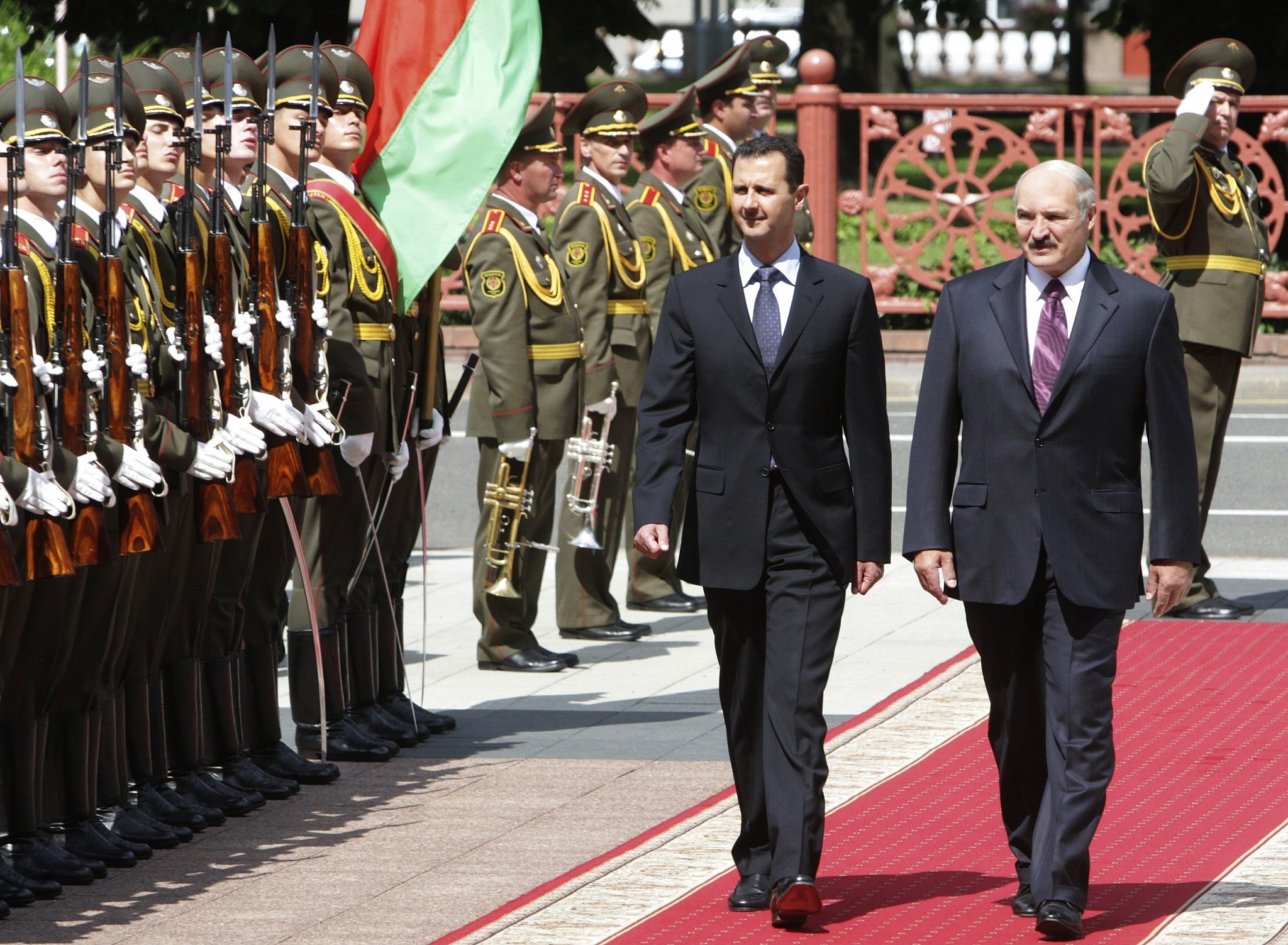
Throughout the Syrian civil war, as Russia and Iran have come under international scrutiny for their roles in the conflict, the small, former Soviet nation of Belarus has also quietly been contributing to President Bashar Assad’s regime.
Over the years, this assistance to Syria has waxed and waned, as Belarus has flitted between the so-called “moderate” Sunni states, like Saudi Arabia and the United Arab Emirates, and renegade states, like North Korea and Iran.
In the past year, Belarus has been increasingly vocal about its cooperation with the Assad regime and, according to some analysts, has assisted it and its allies with military equipment and know-how.
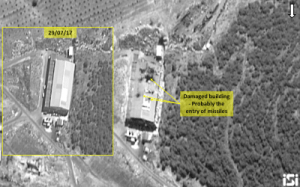
Ronen Solomon, an Israeli freelance intelligence analyst who has been tracking Syria’s weapons development programs for years, believes that Belarus has been working with Syria to upgrade its medium-range rockets, including in the Syrian military’s Scientific Studies and Research Center facility that was hit in an airstrike attributed to Israel last month. Other analysts have concurred with this view.
Solomon was one of the first to uncover the alleged Israeli airstrike on the country’s nuclear reactor in 2007, writing about it along with Yedioth Ahronoth’s Ronen Bergman, and has since created an independent intelligence blog called Intelli Times, which is regularly cited in Israeli media outlets.
In an investigative report that he shared with The Times of Israel, Solomon documented the connections between Belarus and Syria’s defense ministry, based on open-source information, satellite imagery, and intelligence shared by Syrian opposition.
The apparently deepening relationship between these two countries, and the possibility that Belarus is helping improve Assad’s — and allies Iran and Hezbollah’s — missile technology should concern Israel, which has full diplomatic ties with Minsk. This especially holds true as the IDF announced on Thursday that it was looking to expand its “war between wars” operations to counter Hezbollah and Iran’s growing presence in the region.
The Scientific Studies and Research Center facility near Masyaf, Syria, allegedly hit by Israel, has long been suspected of being used to improve missile accuracy, based on satellite intelligence that showed the types of structures and materials being brought to the site. It is also believed to house unconventional biological and chemical weapons.
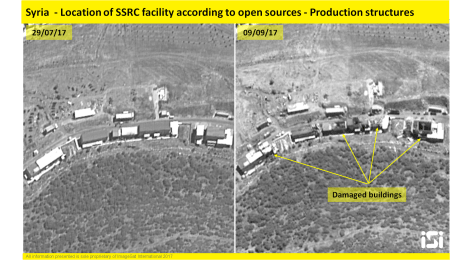
“In 2014, satellite images, like those on Google Earth, documented that in the center they’d begun building seven additional structures whose architecture is reminiscent of the facilities used in aerospace industries, along with another giant structure that is reminiscent of the factories in which the Iranians produce their various rockets,” Solomon noted in his report.
“By February 2016, ventilation systems that are used in buildings with underground levels had already been installed,” he wrote.
Solomon also connects Belarus to the Masyaf facility due, in part, to a report in the Syrian Zaman al-Wasl news outlet, which has been connected to opposition forces.
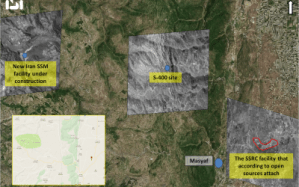
The website, which published that Iran was allegedly aiding in the construction of a missile base in northwestern Syria weeks before this was backed up by Israeli satellite imagery, subsequently reported that “military experts from Iran, Russia and North Korea” were working in the area.
However, Solomon believes that given the nature of the site and Russia’s interests in the region, it’s unlikely that Moscow would send experts to such a facility. While Russia has worked closely with Israel’s enemies Iran and Syria, it has at least attempted to not directly assist Hezbollah, a stance that would be compromised if it were found assisting this missile production facility. Instead, Solomon believes, it’s possible that these “Russian” military experts were in fact Belarusians.
Since at least 2012, Western countries have suspected that Belarus maintained ties to the Syrian military’s Scientific Studies and Research Center, which also goes by its French acronym CERS.
At the time, they believed that the former Soviet country was working with Damascus to improve the precision of its medium-range M600 missiles, the Syrian version of the Iranian Fateh 110, Solomon said.
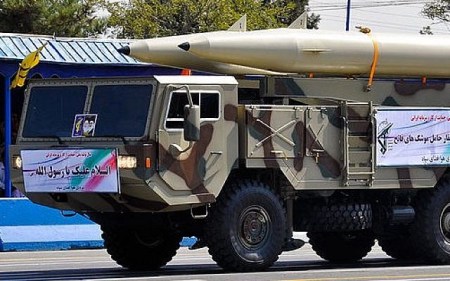
This missile, which Hezbollah is suspected of possessing, has a long enough range to be able to reach most of Israel from Lebanon or Syria, but its aim has not been particularly accurate.
Belarus, however, is particularly skilled in improving existing missiles with better guidance systems, owing to years of upgrading Russian technology, Solomon said.
In particular, he noted, the Belarusian companies that are suspected of operating in Syria tout not only their abilities to improve systems like the M600, but also their preparedness to sell technologies coveted by Hezbollah, like anti-aircraft systems, drones and shore-to-ship missiles.
In 2012, the France-based Intelligence Online website reported that Belarus was looking to sell fiber optic gyroscopes to Syria, which “are immune to cross-axis vibration, acceleration and shock, improve the guidance and accuracy of surface-to-surface missiles.”
Scott Johnson, an analyst with the IHS Jane’s intelligence company, told The Atlantic magazine at the time that this technology “would increase the regime’s ability to deliver destruction with even more deadly precision than with what is currently guiding their missiles.”
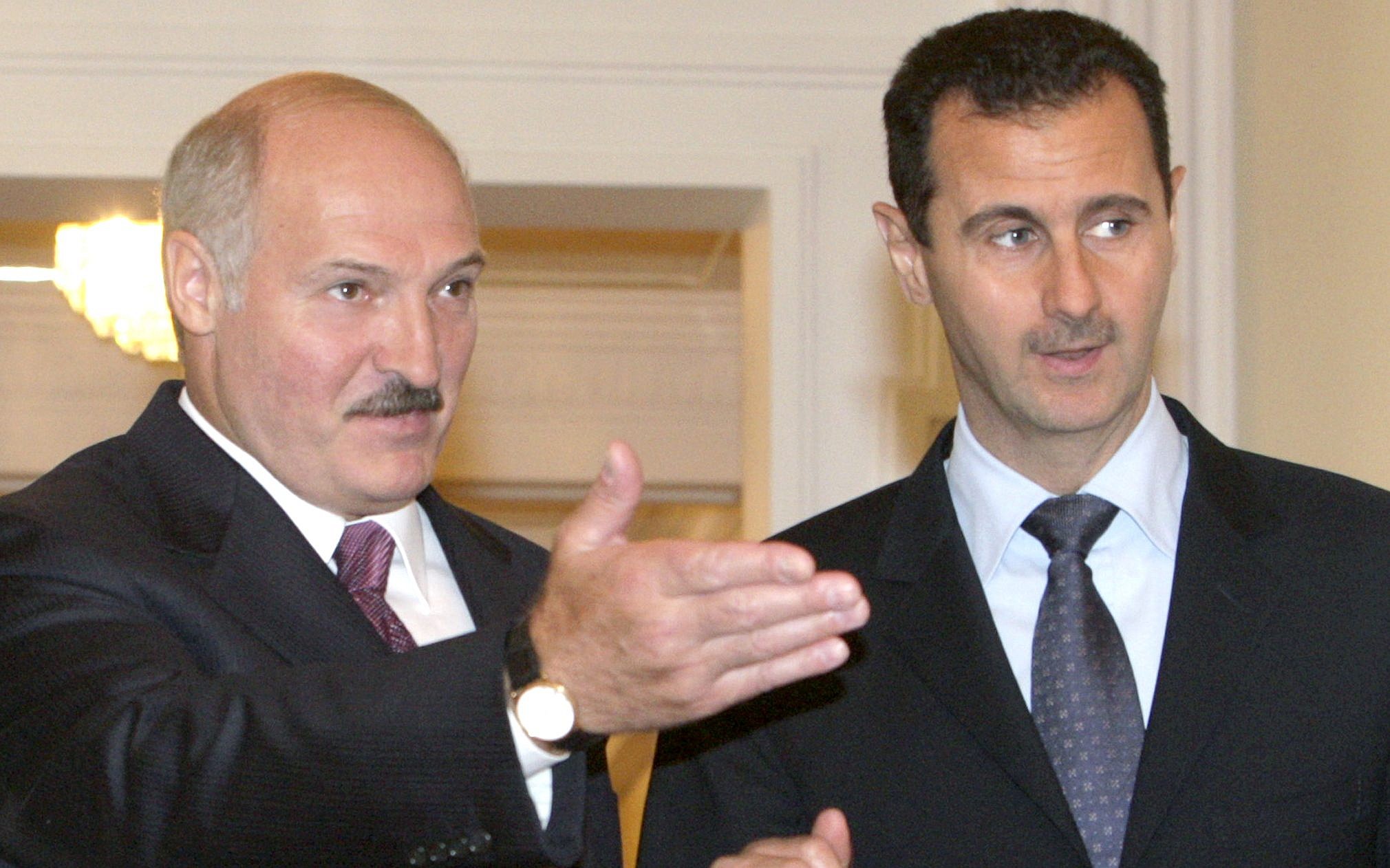
Belarus, which declared independence in 1991 after the fall of the Soviet Union, has been led by President Alexander Lukashenko since 1994.
Most news outlets have not been closely tracking Minsk’s assistance to Syria over the past five years, lost under the radar as larger powers such as Russia, Iran, the US, Saudi Arabia and Turkey maintain a confusing tangle of alliances and rivalries on the ground and over the skies of the countries.
But the American government has. In 2012, the US Treasury imposed sanctions on a state-owned Belarusian defense contractor, Belvneshpromservice (BVPS), for allegedly providing Assad with “fuses for general purpose aerial bombs.” For its part, Belarus denied that it tried to sell weapons to Assad.
The European Union has also intermittently sanctioned Belarus companies under similar allegations, only to remove them in attempts to woo Minsk away from Moscow and toward western Europe.
In June 2016, the US again imposed sanctions on Belarus’s BVPS for violating the Iran, North Korea, and Syria Nonproliferation Act, which forbids selling items to those countries that have the “potential to make a material contribution to the development of weapons of mass destruction (WMD) or cruise or ballistic missile systems.”
The sanctions remain in place today, though a representative from the US State Department would not elaborate on the specific allegations against BVPS, saying they are classified.
However, not everyone is convinced. Analyst Siarhei Bohdan, who writes for the Belarusian Ostrogorski Center think tank, said Belarus’s ties to the Assad regime are not as deep as they appear. He believes the country is still looking to maintain its business ties with the Gulf states, which have deeper pockets than Syria, and that Belarus would not risk those relationships for a quick buck from Assad or Iran.
What can Assad offer Minsk that can replace and compensate deals [with Gulf states]?
“I don’t see any signs of supplying military hardware or expertise,” he told The Times of Israel over the phone. “What can Assad offer Minsk that can replace and compensate these deals [with Gulf states]?”
But Bohdan acknowledged that the existence of American and occasionally EU sanctions on Belarus at least makes the allegations against the country “valid.”
Since the end of the Cold War, Belarus has carved out a niche for itself in the international weapons market by upgrading and selling Russian military technology. This has at times drawn the country close to Russia, while at other times put the two nations at odds with one another as they turned from close allies into fierce competitors for weapons contracts.
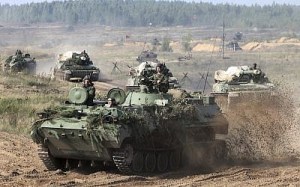
This involvement in the arms market has been a lucrative venture for tiny Belarus, though the full extent of it is not entirely clear.
The Stockholm International Peace Research Institute, a think tank that tracks weapons sales, calculated that Belarus made $625 million in arms sales from 2012 to 2016, making it the 18th largest weapons dealer in the world.
However, Belarus’s State Military Industrial Committee placed the figure dramatically higher, reporting this year that the country exported $1 billion worth of weapons and defense equipment in 2016 alone.
Solomon believes that at least a portion of the country’s defense income is coming from deals with Syria that are being routed through its leading defense exporter, BelTechExport
Last April, Intelligence Online, which has also been tracking Belarusian military cooperation with Syria since 2012, reported that the company’s “warehouses have been working overtime to meet [Syrian] demand.”
According to Solomon, Belarus’s decision to deepen its ties to Syria is likely not the result of a change in heart.
“They could make deals with Qatar, which backs [Syrian] rebels, or with Syria, which is fighting the rebels. They don’t have a God. The money is what matters, not the ideology,” Solomon told The Times of Israel.
The posting of a major-general as Syria’s defense attaché, Maj. Gen. Samer Arnus, to Minsk also points to the high level of military cooperation between the regimes, according to Solomon.
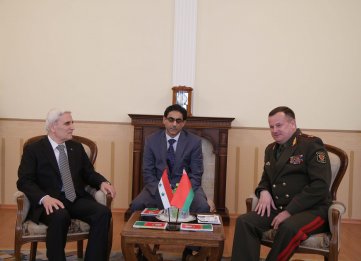
Typically, countries only have a major -general act as defense attaché in order to oversee highly developed relationships. Israel, for instance, has a major-general acting as defense attaché in the US, with which there are significant arms deals and intelligence sharing. Even in Germany, which supplies Israel with its strategic submarine fleet, an IDF colonel fills the post.
Solomon said he believes Arnus played a “respected role” in setting up the arms deals between the two countries, as evidenced by the fact that he met with and was thanked by Belarusian Defense Minister Lt. Gen. Andrei Ravkov in 2016 for his “significant contribution” to the countries’ cooperation, before he returned to Syria after completing his service in Belarus.
Solomon noted that this meeting happened at the same time as new structures were being completed at the Masyaf facility.
Despite Minsk being known as a secretive and oppressive regime, Belarus has not been quiet about its ties to the war-torn country and Assad, Solomon noted in his report.

The past two years saw a significant increase in the amount of cooperation between the two countries, with meetings between high-ranking officials, including senior defense figures, and the signing of multiple trade agreements.
These events were often followed by articles and pictures in both country’s state-run media.
In May, Assad gave an interview to a Belarusian television station, in which he described improving ties between the two countries.
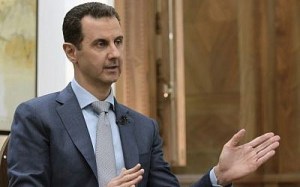
“We have had strong relationship with Belarus since the times of the USSR. This relationship still continues, based on the common interests,” Assad said, according to Belarusian state media.
The Syrian dictator also noted that a visit by Belarusian Industry Minister Vitaly Vovk in April to the war-torn country further improved ties between the two countries.
“A number of deals benefiting the two parties were agreed,” Assad said.
We have had a strong relationship with Belarus since the times of the USSR.
Since the interview, the two countries have signed an additional trade deal, as well as medical cooperation agreements. Last month, a delegation from Belarus attended a trade expo in Damascus in which additional trade deals were reached.
“Agreements were reached to supply Belarusian equipment and to develop strong business contacts with Syrian partners, to set out the prospects for the return of Belarusian products to the Syrian market,” Belarus’s embassy in Syria told state media.
According to Bohdan, the Belarusian resarcher, the importance of the deals was likely inflated as Minsk attempted to compensate for allegations made by pro-Russian news outlets that some Belarusian defense companies were supplying Syrian opposition fighters through Bulgaria a few years ago.
The reports had strained the relationship between Russia and Belarus over Syria, where ties are seen as close but tense.
Two analysts on Russia, Bruce McClintock and Bilyana Lilly, wrote about the countries’ strained relationship in an article for the National Interest this week. They noted that while the countries share a language and some older Belarusians “are nostalgic for the security and predictability of the Soviet era,” President Lukashenko has worked to maintain his country’s independence and stave off Russian attempts to encroach on its sovereignty.
This tension can be seen in Russia’s large-scale exercise, known as Zapad, which is taking place in Belarus this week. On the one hand, it shows the close relationship shared by the two countries, while on the other hand, Western security officials believe Russia might take advantage of its massive military presence in Belarus to launch a “Trojan horse” attack and establish a foothold in the country, as it did in Georgia in 2008 and Crimea in 2014.
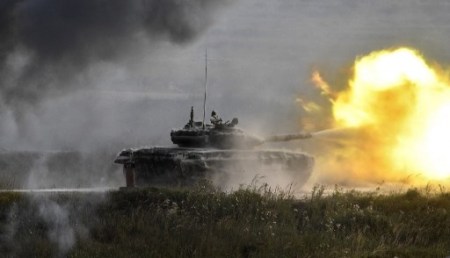
This dynamic of trying to stay close with Russia, while remaining a distinct country, plays out in the realm of defense exports as well.
At times, Belarus and Russia cooperate fully on arms projects. In an article last month, Bohdan noted two cases of a Belarus company filling an order to overhaul fighter jets that was “secured via Russia.”
In an October 2012 article, Intelligence Online also recalled cases of Belarus stepping in to supply countries with which Russia does not want to “directly involve itself,” like Iran, Syria and Iraq.
The French intelligence site gives as an example Iran’s 2008 bid to purchase a Russian S-300 missile defense system. At the time, Russia faced considerable international pressure not to sell the battery to Iran. So instead Belarus sold it “an older but still operational version of the system.” (Russia sold Iran the S-300 system earlier this year, after the sanctions against the Islamic Republic were lifted with the 2015 nuclear deal.)
Yet the two countries are also competitors on the international weapons market and Belarus is increasingly setting itself apart from Russia in this area, especially in the field of electronic warfare.
One example of this, Solomon noted, is Belarus’s recent development of a jammer pod, known as Veresk, that can be attached to an airplane and is meant to counter enemy air defense systems, notably the Russian S-300.
Solomon said he is not sure how Belarus’s relationship with Russia influences its involvement in Syria, nor is Bohdan who stresses the country’s sovereignty and individuality.
However, Solomon suspects Moscow does not appreciate little Minsk entering its territory.
“The Russians, it seems, do not have an interest at this time in letting Belarus take part in its arms deals with Syria. They also might have had a desire to show the Belarusians, on the backdrop of the conflict between them on various issues, who wins and who loses,” Solomon wrote.
Report: Kelly Is Blocking Negative Amnesty Coverage From Trump, Daily Caller, Alex Pfeiffer, September 15, 2017
 WASHINGTON, DC – Trump and Kelly. (Photo by Chip Somodevilla/Getty Images)
Axios’ Friday report noted: “Instead of being able to march into the Oval Office and hand Trump the latest Breitbart headline or printouts of tweets showing how badly his amnesty drive is playing with his fiercest nationalist supporters, aides opposing the decision would now have to go through the Kelly process, which would involve submitting an official, documented, request to meet with the president.”
White House staff secretary Rob Porter, who used to work for Trump critic Sen. Mike Lee, manages Trump’s news clips and briefing materials, according to the Axios report.
*************************
President Donald Trump’s embrace of amnesty is in part due to White House chief of staff John Kelly blocking negative coverage from the president, according to a Friday report from Axios.
Trump has reversed his stance from the campaign trail and asked Congress last week to “legalize” the Deferred Action for Childhood Arrivals (DACA) amnesty program that protects roughly 800,000 illegal immigrants. The reaction has been negative from conservative commentators and news outlets.
Trump has paid attention to outlets like Breitbart and The Daily Caller in office, which have been highlighting Trump’s flip-flop, two sources who speak with the president told The Daily Caller. However, a recent report from The New York Times said that Kelly has started to take TheDC and Breitbart stories out of Trump’s pile of media reports.
This is part of Kelly’s new regime in which there is more control over the flow of information to Trump. Axios’ Friday report noted: “Instead of being able to march into the Oval Office and hand Trump the latest Breitbart headline or printouts of tweets showing how badly his amnesty drive is playing with his fiercest nationalist supporters, aides opposing the decision would now have to go through the Kelly process, which would involve submitting an official, documented, request to meet with the president.”
White House staff secretary Rob Porter, who used to work for Trump critic Sen. Mike Lee, manages Trump’s news clips and briefing materials, according to the Axios report.
Second North Korean missile over Japan, DEBKAfile, September 15, 2017
The Trump administration’s response did not indicate that any action was afoot. Defense Secretary Jim Mattis spoke of a reckless action that put millions of Japanese in duck and cover mode, while Secretary of State Rex Tillerson again called on China and Russia to restrain Pyongyang.
*************************
For the second time in a month, North Korea fired a ballistic missile over northern Japan early on Friday, Sept. 15. This one was launched from a point near the country’s main international airport in the district of Sunan, where the North Korean capital of Pyongyang is also located. It reached an altitude of 770km, flying about 3,700km before splashing down in the Pacific Ocean and exploding.
On Sept. 3, North Korea exploded its sixth and most powerful nuclear bomb.
The US Pacific Command said its initial assessment indicated that North Korea had fired an intermediate-range ballistic missile. There were conflicting reports from Japan on the type of missile fired, indicating a certain lack of trust between Tokyo and Washington. Some Japanese sources asserted that it was a long-range ballistic missile whose range was longer than the distance between North Korea and Guam, the island holding big US bases which Kim Jong-un had threatened to hit.
The latest missile to fly over their heads triggered sirens on Japan’s eastern island of Hokkado sending residents rushing to shelters.
Exactly 90 minutes after the launch, a North Korean Air Koryo flight 151 took off from Pyongyang for Beijing apparently signifying that shooting missiles was not an extraordinary event for the North Korean ruler.
South Korea responded with a live fire drill that included a missile launch which the South Korean Joint Chiefs of Staff said was capable of striking Sunan launch pad from which the latest North Korean missile was test-fired.
The Trump administration’s response did not indicate that any action was afoot. Defense Secretary Jim Mattis spoke of a reckless action that put millions of Japanese in duck and cover mode, while Secretary of State Rex Tillerson again called on China and Russia to restrain Pyongyang.
IDF’s Gaza Wall May Change Hamas Terror Strategies, Investigative Project on Terrorism, Yaakov Lappin, September 15, 2017

The big question now is whether Hamas will sit back and watch Israel take away its offensive tunnel option, or whether it will feel cornered and strike out, risking a new conflict.
Hamas is most likely to respond to Israel’s improved position against the tunnels in Gaza by upping attempts to generate terrorism from the West Bank.
Hamas, together with Iran, could try to smuggle rockets into the West Bank, Karmon said, citing a directive by Iran’s Supreme Leader Ayatollah Khamenei to assist West Bank terrorist cells.
******************************
Time may be running out for one of Hamas’s main weapons against Israel: Its cross-border terror tunnels.
By 2019, according to Israel Defense Forces (IDF) assessments, Israel will complete an underground wall that stretches along the 60-kilometer (37 mile) border with Gaza. The wall is the product of several years of research and development, and is designed to eliminate the tunnel threat to Israeli communities located near Gaza.
During the past three years, since the end of its last conflict with Israel, Hamas has invested big resources into its tunnel maze. One of its top goals is to rehabilitate an ability to inject murder squads into Israeli territory through the tunnels.
Once inside Israel, they could target IDF soldiers and Israeli civilians for murder or kidnapping, whenever the next conflict breaks out.
But Israel has invested far more than Hamas to try stopping that threat. It is paying 150 million shekels ($42.5 million) for each kilometer of the new wall.
Work began on the subterranean project in areas where Israeli communities were very close to the border. Then, gradually, other areas began receiving protection.
During a conference call held with reporters in August, the commander of the IDF’s Southern Command, Maj.-Gen. Eyal Zamir, said the wall will prevent “the digging of tunnels into our territory,” adding that work is “advancing according to plan. In the coming months, this project is going to significantly accelerate. We will see an expansion in the scope of the works. Within two years, we will be able to complete work.”
Many details about the wall remain classified. But IDF sources have previously indicated that the wall will come with electronic sensors. The sensors will issue alerts to military control centers, sounding the alarm about suspicious tunnel digging activity.
The control rooms, would, in turn, be able to order action if necessary.
Similar military control rooms are popping up along the Gaza border to handle intelligence coming in from Israel’s above-ground border fence. Sensors installed on the barrier, together with units from the IDF’s Combat Intelligence Collection Corps, are joined by drones, spy balloons, and radars, all feed the control centers with a flow of data, and alert them to suspicious activity.
The big question now is whether Hamas will sit back and watch Israel take away its offensive tunnel option, or whether it will feel cornered and strike out, risking a new conflict.
“We very much hope we will not be challenged as this [work] continues,” said Zamir. “We hope that this quiet will continue, but continue to prepare. We are on high alert.”
Hamas’s military wing, the Izzadin Al-Qassam Brigades, issued a statement earlier this month saying that the underground wall “will not limit the ability of the resistance,” and vowing to “find the solutions needed to overcome it.”
But Hamas is unlikely to launch attacks in response to Israel’s wall, Ely Karmon, a senior research scholar at the International Institute for Counter-Terrorism in Herzliya, Israel, told the Investigative Project on Terrorism.
“They cannot initiate a military maneuver now. The timing is bad for them,” he said, citing Hamas’s financial woes, made worse by the fact that Qatar, under U.S. pressure, is cutting off the cash flow to the Gaza Strip.
Hamas wants to engage Egypt to improve its isolation and find a way out of its financial crisis. It just opened an office in Cairo. It cannot depend on friends like Turkey, which has a limited ability to provide assistance, Karmon said. “Beyond that, Hamas is under pressure from the Palestinian Authority. A new military clash with Israel will harm them,” he said.
During his remarks, Zamir said that the “Gaza arena is stable,” adding, “We have identified that Hamas remains deterred, and that it is restraining many attacks [by smaller Palestinian armed factions].”
At the same time, he said, Hamas is encouraging the flames of terrorism to spread in the West Bank, and is orchestrating terror cells remotely, as it prepares itself for future war in Gaza.
That’s an assessment that was echoed by Karmon, who said Hamas is most likely to respond to Israel’s improved position against the tunnels in Gaza by upping attempts to generate terrorism from the West Bank.
Hamas, together with Iran, could try to smuggle rockets into the West Bank, Karmon said, citing a directive by Iran’s Supreme Leader Ayatollah Khamenei to assist West Bank terrorist cells.
“The Iranians understood that Hamas is deterred in Gaza, and limited in what it can do,” Karmon said.
As a result, Hamas likely will remain focused on igniting the West Bank, and using it as a launchpad for terrorist attacks on Israel, he said.
Karmon cited information unveiled by the chief of Israel’s domestic intelligence agency, the Shin Bet, in recent days, which told the government that about 200 terror attacks had been thwarted in 2017.
“Most of the big attacks [that were stopped by the Shin Bet] were organized by Hamas, not Fatah,” Karmon said. “Hamas’s whole campaign is focused on the West Bank, and includes using clans that support Hamas, and distributing propaganda for violent incitement. They are neutralized in Gaza, and are trying to heat up the West Bank.”
Meanwhile, back in Gaza, Hamas continues neglecting the basic needs of the 2 million Palestinians it rules over, as it remains focused on its quiet military build-up, according to the chief of the IDF’s Southern Command.
“Many resources in Gaza are going to the Hamas military wing. They could be used instead to improve the humanitarian situation,” Zamir said. “We continue to prepare. Reality is explosive. It could deteriorate into a conflict at any time.”
In addition to offensive tunnels, Hamas has built a maze of tunnels that crisscross Gaza City. Zamir described them as “an underground metro network,” designed to move Hamas armed members, weapons, and logistics out of Israel’s sight.
Yet Israel’s Southern Command is watching these activities closely, and preparing a range of solutions designed to enable Israel to turn Hamas’s underground city into a large death trap if a new conflict begins.
The IDF’s Southern Command recently sent out images of civilian facilities in Gaza that Hamas uses as a cover for its military-terrorist activities.
One image is of a six-story residential building, which Hamas used to build an underground facility nearby, according to the military. The second photo is a of a home containing a family with five children, which is linked to a tunnel that leads to a mosque, enabling Hamas terrorists to move underground and use human shields as they do.
This type of activity “endangers the civilians of Gaza,” Zamir cautioned. “We hope that this quiet will continue, but we are continuing to prepare, and are on high alert.”
Yaakov Lappin is a military and strategic affairs correspondent. He also conducts research and analysis for defense think tanks, and is the Israel correspondent for IHS Jane’s Defense Weekly. His book, The Virtual Caliphate, explores the online jihadist presence.
The Thought Police Strike Again, Gatestone Institute, Giulio Meotti, September 15, 2017
How can we pretend that freedom of expression in the West is protected — from fascism, Islamism, anything — when we restrict it in our universities?
**********************************
This politically correct nonsense highlights even further the infantilization of our culture — such as the demand for “safe spaces” and “trigger warnings”. It may look like a comedy, but its effect is deadly serious.
Groupthink is a debilitating force. in any civilization. It undermines one’s ability to resist the real enemies of democracy and freedom: it makes us blind to radical Islam and jihadi terrorism, and it gives the impression that our society is a joke.
Instead of being intellectually diverse, universities are trying their utmost to impose homogeneity of thoughts and ideas. So-called “right wing newspapers” are banned from certain universities. Recently, at the City University of London, the student union, devoid of irony, fascistically voted to ban some conservative tabloids in order to “oppose fascism”.
Headlines every day proclaim the new religion: political correctness, cultural vandalism and censorship — not from Islamic emirates such as Saudi Arabia, but in Western cities right here.
The Writers Union of Canada, for instance, recently apologized for a magazine editorial that defended the right of novelists to create characters from backgrounds other than their own.
Just think of that: a writer defending the right to use one’s imagination?! What an insult! At least, to “the new Stalinists” it is.
“In my opinion anyone, anywhere, should be encouraged to imagine other peoples, other cultures, other identities,” Hal Niedzviecki, who was the editor of the union’s magazine, Write, defended freedom in an editorial. The Union then announced that Niedzviecki had resigned.
Another journalist also fell victim to this new religion. Jonathan Kay also recently resigned as editor of the magazine The Walrus. Defending Niedzviecki’s right to use his imagination cost Kay his job.
Their unspeakable crime was, it appears, “cultural appropriation” — one of the new “groupthink” expressions that the theologian Paul Griffiths condemned as “illiberal and totalitarian“. Griffiths, too, had to resign from Duke University after criticizing his colleagues for a “diversity program” that “provides foundational training in understanding historical and institutional racism.”
Every revolution needs to master a new “language” to achieve uniformity of expression and thought. George Orwell, in 1984, called the replacement language “Newspeak”.
Cardiff Metropolitan University, one of the largest in Britain, compiled a list of 34 words that it “encouraged” teachers and students to stop using, and replaced them with “gender-neutral” terms. “Fireman” should be replaced by “firefighter”; “mankind” should be replaced by banned “humanity”, and so on. Princeton University also expunged the word “man” in its various uses, in favor of supposedly more “inclusive” expressions. City University of New York decided to ban “Mr.” and “Mrs.” California State University replaced commercial terms such as “businessman”, “mailman”, “manpower” and “salesman” to avoid that horrendous, forbidden word.
While at it, why not also purge Christianity’s religious language? Some of the most famous theological universities, such as Duke and Vanderbilt, invited professors and staff to use “inclusive” language even when they are referring to God, because the masculine pronouns are “a cornerstone of patriarchy”.
This politically correct nonsense highlights even further the infantilization of our culture — such as the demand for “safe spaces” and “trigger warnings”. It may look like comedy, but its effect is deadly serious. British philosopher Roger Scruton has said that a kind of “moral obesity” is crippling Western culture.
Groupthink is a debilitating force. in any civilization. It undermines one’s ability to resist the real enemies of democracy and freedom: it makes us blind to radical Islam and jihadi terrorism, and it gives the impression that our society is a joke.
That is why Algerian writer Boualem Sansal, whose novel 2084 depicted a dystopian state governed by religious law, said “literature and arts are not playing a big role in this struggle against barbarism”. Those writers are, instead, far too busy implementing political correctness.
Universities in Britain are now even holding workshops to “deal with right wing attitudes in the classroom”. Instead of being intellectually diverse, universities are trying their utmost to impose homogeneity of thoughts and ideas. So-called “right wing newspapers” are banned from certain universities. Recently, the at the City University of London, the student union, devoid of irony, fascistically voted to ban some conservative tabloids in order to “oppose fascism”.
Dozens of personalities, conservative and liberal alike, have been prevented from speaking on many U.S. campuses. This is just a short list: Milo Yiannopoulos, Janet Napolitano, George Will, Condoleezza Rice, Madeleine Albright, Ayaan Hirsi Ali, Henry Kissinger, Christine Lagarde, Charles Murray and Jason Riley.
First, students asked to limit freedom of expression to a specific place on campus. Then they started issuing declarations about no rights to free speech. Finally, in a crescendo of hysteria, they ended up throwing firebombs. How can we pretend that freedom of expression in the West is protected — from fascism, Islamism, anything — when we restrict it in our universities?
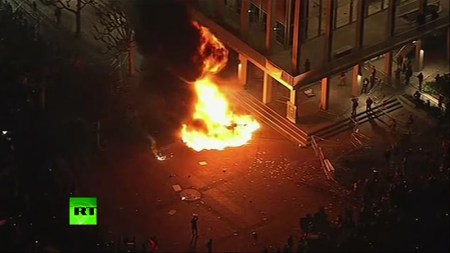 When the “politically incorrect” commentator and writer Milo Yiannopoulos was due to speak at the University of California, Berkeley on February 1, 2017, a mob of 150 people proceeded to riot, smash and set fires, causing more than $100,000 of damage. (Image source: RT video screenshot)
A few weeks ago, the 2017 Whitney Biennal in New York opened with a protest in front of a painting by the American-born artist Dana Schutz. The picture depicted Emmett Till, a boy lynched by racists in Mississippi in 1955. More than 25 black artists signed an open letter, written by the artist Hannah Black, to the Whitney’s curators and staff, asking that the painting be removed from the Biennial, allegedly because “the painting uses black suffering for “profit and fun'”. Ms. Black also asked that the painting be “destroyed and not entered into any market or museum”.
That request not only aimed at censoring different ideas, but, like the Grand Inquisitor, of destroying the “wrong thought”. The new religion — featuring political correctness, cultural vandalism and censorship — is dismantling the West.
Giulio Meotti, Cultural Editor for Il Foglio, is an Italian journalist and author.
U.S., Israel Reject Claims Relationship Strained, Deny Closed Door Shouting Match, Washington Free Beacon, Adam Kredo, September 14, 2017
(Please see also, Fake News About H.R. McMaster? and EXCLUSIVE: Gen. McMaster Sparked a Row With the Israeli Delegation at a White House Meeting on Hezbollah. — DM)
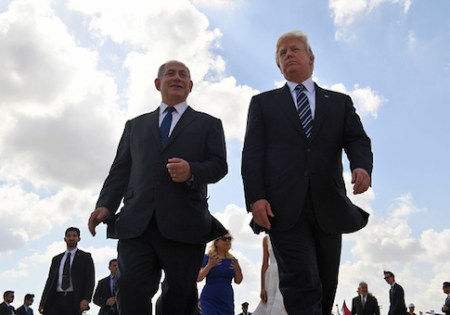
Israeli Prime Minister Benjamin Netanyahu speaks with President Donald Trump in Tel Aviv on May 23 / Getty Images (Photo by Kobi Gideon/GPO via Getty Images)
The issue of Hezbollah’s rise in the region—and the direct threat this poses to Israel as Iranian-backed forces gather closer to its borders—has been a mainstay of ongoing dialogue between the United States and Israel, with multiple senior Trump administration sources telling the Free Beacon that McMaster’s NSC fully agrees with Israel’s concerns and supports Hezbollah’s designation as a global terrorist organization.
*********************************
Senior U.S. and Israeli officials deny the relationship between the two countries has been strained over differences in how to deal with the threat of Hezbollah, according to multiple senior government officials from both countries who told the Washington Free Beacon that recent reports of a yelling match between senior Trump administration and Israeli government officials are false.
Recent media reports allege the Trump administration and Israel have been in conflict over the best way to deal with the threat posed by Hezbollah, an Iranian-backed terror organization that has played a major role in bolstering embattled Syrian President Bashar al-Assad.
Tensions are said to have come to a head during a high-level August meeting between the countries in which White House National Security Adviser H.R. McMaster is alleged to have yelled at his Israeli counterparts and dismissed concerns about Hezbollah being a terror organization—a charge that multiple senior U.S. and Israeli officials denied in conversations with the Free Beacon.
Further allegations that the Israeli delegation asked White House National Security Council staffer Mustafa Javed Ali to leave the room over concerns that he does not view Hezbollah as a terror organization also are being called untrue, according to both U.S. and Israeli officials who were present in the Aug. 17 meeting.
A copy of the official list of U.S. and Israeli officials participating in the high-level meeting shows that Ali was never scheduled to attend, according to a copy of that list viewed by the Free Beacon.
The situation is being portrayed in the U.S. and Israeli media as further proof of tension between McMaster’s NSC and their Israeli counterparts.
The issue of Hezbollah’s rise in the region—and the direct threat this poses to Israel as Iranian-backed forces gather closer to its borders—has been a mainstay of ongoing dialogue between the United States and Israel, with multiple senior Trump administration sources telling the Free Beaconthat McMaster’s NSC fully agrees with Israel’s concerns and supports Hezbollah’s designation as a global terrorist organization.
Michael Anton, spokesman for the White House NSC, denied that McMaster ever yelled at his Israeli counterparts and described multiple media reports claiming otherwise as flatly untrue.
Anton further disclosed to the Free Beacon that, as part of a renewed push to counter Hezbollah’s influence in the region, McMaster “has directed the NSC staff to look at ways the U.S. can be more aggressive in its posture towards Hezbollah.”
The effort to counter Hezbollah, which is supported by the Israelis, is “a major element of our Iran strategy,” according to Anton, who described this policy as directed at ensuring that Iran and it’s terror proxies do not retain a permanent foothold in Syria, where they would “endanger Israel’s borders.”
Anton further knocked down allegations that NSC aide Ali was asked to leave the meeting by the Israelis, telling the Free Beacon that he was never scheduled to participate in the discussions and was not present at any point.
Senior Israeli officials independently confirmed to the Free Beacon that recent media reports about the tension are false.
“Israel never asked for Mustafa Ali to not attend a meeting on Hezbollah, Syria, or any other matter,” Itai Bardov, spokesperson for the Israeli Embassy in Washington, told the Free Beacon. “Israel is not aware of any Trump administration official that does not consider Hezbollah a terror organization, and Gen. McMaster never yelled at Israeli officials.”
“The allegations in the article relating to Israel are totally false,” Bardov said, adding, “Israel appreciates Gen. McMaster efforts to strengthen the U.S.-Israel relationship and looks forward to continuing to work closely with the Trump administration to counter the threats posed by Iran and its terror proxy Hezbollah.”
A copy of the internal White House list of those participating in the meeting confirms comments from the senior U.S. and Israeli officials.
The meeting included McMaster, Homeland Security Adviser Tom Bossert, senior NSC official Dina Powell, senior White House Israel adviser Jason Greenblatt, senior NSC official Victoria Coates, CIA Director Mike Pompeo, and Director of National Intelligence Dan Coats, among several others.
Ali is not included on the list, as initial reports claimed.
On the Israeli side, participants included Israeli Ambassador to the United States Ron Dermer, Mossad Director Yosef Cohen, Israeli Defense Intelligence Chief Maj. Gen. Herzi Halevi, Acting Israeli National Security Adviser Eytan Ben-David, Israeli Defense and Armed Forces Attaché to the United States Maj. Gen. Michael Edelstein, and other Israeli embassy personnel, according to the list viewed by the Free Beacon.
In a high-level meeting such as this, it would be atypical for an official such as Ali to participate.
One senior Trump administration official who participated in the meeting further disclosed to the Free Beacon that the United States added one more official at the last moment: Sigal Mandelker, the undersecretary of treasury for terrorism and financial intelligence.
The addition was meant to let the Israeli delegation know the Trump administration is serious about tackling Hezbollah, and the inclusion of Mandelker signaled the Trump administration is using all avenues to target the terror group, including sanctions, according to senior administration sources.
“Kind of a funny person to add if you’re going to argue Hezbollah isn’t a terrorist group,” said one senior NSC official. “The Israelis were delighted to see her because her presence demonstrated Gen. McMaster’s key point—Hezbollah is of course a terrorist organization but the problem is compounded because they have grown into so much more—so straight [counter-terrorism] isn’t going to work against them.”
Bossert’s inclusion in the meeting was meant to signal that counter-terrorism remains a priority, but McMaster and other NSC officials believe “we also need all the other tools we have at our disposal,” according to the senior administration official.
“So it’s not that he [McMaster] disputes they are terrorists, and it’s not that he disputes the fact that they are a terrible threat—both to Israel and to us. He was simply pointing out the full scope of that threat,” the official explained, noting that given the nature of the subject matter, the discussions were “certainly intense,” but it was “a meeting of close friends and allies.”
Senior Trump administration sources further took exception to portrayals in the media that NSC official Ali is an enemy of Israel and that he remains sympathetic to Hezbollah.
Ali has been accused in the past of attempting to block human rights advocate Ayaan Hirsi Ali from attending a meeting at the White House—a charge U.S. officials familiar with the matter flatly denied.
Hirsi Ali, in fact, did meet with NSC staff at the White House.
Other rumors claiming that NSC official Ali once worked for the Council on American-Islamic Relations, or CAIR, a Muslim advocacy group hostile to Israel, also are untrue, according to senior NSC sources, who told the Free Beacon that Ali has flatly denied the charges in conversations with U.S. officials.
Fake News About H.R. McMaster? Power Line,
(Please see also, EXCLUSIVE: Gen. McMaster Sparked a Row With the Israeli Delegation at a White House Meeting on Hezbollah. Who is pushing “fake news” and why?– DM)
I have reservations about McMaster, and PJ Media attributed its report to “several administration sources, members of non-governmental organizations involved in national security, and a source within the Israeli government.” However, the idea that McMaster and his main counter-terrorism guy are soft on Hezbollah struck me as dubious. So I checked with Steve Hayward’s friend Michael Anton, who serves as spokesman on McMaster’s staff.
Anton told me that (1) Ali wasn’t at the meeting in question (which occurred on August 17, not the week of August 27, as reported), was never scheduled to be present, and thus was never asked to leave or not attend the meeting, (2) neither McMaster nor Ali has ever questioned Hezbollah’s status as a terrorist organization, (3) McMaster has asked his staff for ideas on how to be more aggressive towards Hezbollah, and (4) the Israelis were going to issue a statement debunking PJ Media’s story.
*****************************
Yesterday, PJ Media published a disturbing report about H.R. McMaster, President Trump’s national security adviser. It said that at a
meeting during the week of August 27 at the White House, McMaster brought with him Mustafa Javed Ali, NSC Senior Director on Counter-Terrorism. According to PJ Media’s report, Ali has been described by a senior administration source as being “opposed to Hezbollah’s designation as a terrorist organization.”
The Israelis reportedly demanded that Ali leave the room. Supposedly, they meant the demand to serve as a message to President Trump that McMaster’s behavior has subverted Trump’s stated Middle East policy.
The report also said that during the meeting, McMaster explicitly dismissed the Israelis’ specific concerns about Hezbollah. In particular, he blew off the concern that the “safe zone” currently being established within Syria would immediately become a safe haven from which Hezbollah could operate. In addition, McMaster reportedly yelled at the Israelis during the meeting.
I have reservations about McMaster, and PJ Media attributed its report to “several administration sources, members of non-governmental organizations involved in national security, and a source within the Israeli government.” However, the idea that McMaster and his main counter-terrorism guy are soft on Hezbollah struck me as dubious. So I checked with Steve Hayward’s friend Michael Anton, who serves as spokesman on McMaster’s staff.
Anton told me that (1) Ali wasn’t at the meeting in question (which occurred on August 17, not the week of August 27, as reported), was never scheduled to be present, and thus was never asked to leave or not attend the meeting, (2) neither McMaster nor Ali has ever questioned Hezbollah’s status as a terrorist organization, (3) McMaster has asked his staff for ideas on how to be more aggressive towards Hezbollah, and (4) the Israelis were going to issue a statement debunking PJ Media’s story.
Anton has also denied that McMaster shouted at the Israelis during the meeting. I should add, though, that doing so would hardly constitute a major offense. Exchanges can become heated, even among friends.
Israel now has denied the substance of the PJ Media report. Here is what Itai Bardov, spokesman for the U.S. Embassy in Washington, told Jeff Dunetz:
The allegations in the article relating to Israel are totally false.
Israel never asked for Mustafa Ali to not attend a meeting on Hezbollah, Syria or any other matter.
Israel is not aware of any Trump administration official that does not consider Hezbollah a terror organization, and General McMaster never yelled at Israeli officials.
Israel appreciates General McMaster’s efforts to strengthen the US-Israel relationship and looks forward to continuing to work closely with the Trump administration to counter the threats posed by Iran and its terror proxy Hezbollah.
In addition, the Washington Free Beacon’s Adam Kredo has reviewed a copy of the official list of U.S. and Israeli officials participating in the meeting at issue. According to Kredo, the list confirms that Ali was never scheduled to attend. And Dunetz has posted a “team picture” of those who participated in the August 17 meeting. He says Ali is not in the picture.
I have no personal knowledge of who was at the meeting, what transpired, or what McMaster believes about Hezbollah. However, the evidence that Ali wasn’t at the meeting seems quite strong. And, though I’m not a fan of McMaster, I continue very much to doubt that he is soft in any respect on Hezbollah.




 anneinpt
 artaxes
 danmillerinpanama
 davidking1530
 Peter Hofman
 Joseph Wouk
 Peter
Peter Louisiana Steve
 WarSclerotic
Recent Comments