Pro-Sharia feminist’s views defy reality, Rebel Media via YouTube, June 3, 2017
(Warning: “Islamophobic” content. — DM)
Pro-Sharia feminist’s views defy reality, Rebel Media via YouTube, June 3, 2017
(Warning: “Islamophobic” content. — DM)
Cassandra’s narco-curse, Venezuela News and Views, Daniel Duquenal, June 6, 2017
(An update on the current level of repression in Venezuela. — DM)
Now they steal while they repress. That is, they gas you while they are protected with their masks, and when you are coughing out your lungs they perform on you one or many of the following activities: frisk you, beat you up, smash you to the ground, break your camera or personal object of choice, steal your cell phone, steal your wallet and wristwatch, and who knows what else their nazified mind can come up with.
*********************************
It is hard not to be despondent in Venezuela these days. Even if the paradox is that the despondency of some translate into renewed energy. I suppose that when everything has been stolen from you, that is, your future, you may react strongly, if anything to see how many you can bring down with you.
I, for one, have been very despondent for two weeks, Well, particularly despondent I should correct. A very bad cold that drags on made things worse by making me feel guilty from not going out to any protest march for the past two weeks. Maybe I could have made an effort, but I also need to be as healthy as I can because my health affects the well being of others, like the SO. So I read twitter and watch in horror and awe the videos of what Venezuela has turned into.
For the last two weeks, as expected, the regime has been cranking up its terror machine. They attack with excess tear gas, excess violence, more and more live bullets, even before the protest marches get the time to coalesce. But that has not been enough to stop people from taking to the streets so they notched it up. Thus they started riding their bikes into shopping centers and shot people taking refuge in there. I know it, a brother of mine was the victim of one of such attacks when two bikes with two nazional guards each burst into the CCCT mall. While he was recovering from a long march with something to drink and eat before reaching for his car back home, the bikes pushed through the glass doors and on to the court floor, driving around panicked people, shooting their pellets at random.
But it has not been enough yet, so up a notch. Now they steal while they repress. That is, they gas you while they are protected with their masks, and when you are coughing out your lungs they perform on you one or many of the following activities: frisk you, beat you up, smash you to the ground, break your camera or personal object of choice, steal your cell phone, steal your wallet and wristwatch, and who knows what else their nazified mind can come up with.
There is no need for me to describe in further details: foreign newspapers are full of such stories and pics. Get any serious time line on tweet, like mine, and be blown away by some of the videos that you will see.
And yet there are still assholes that are not getting it, that speak of dialogue, or complain that I use words such as nazi as if nothing. Will they feel better if I were to use only Fascist? Stalinist? Franquista? Castrista? Aren’t this all the final representation of the root idea? That is, totalitarianism.
I can defend myself by noticing that the root nazi does not appear in any of my chosen label words. You can find f c and t words, but no n word. I know better. But in the end it does not make any difference. People should not judge today’s event with criteria of the past, just as sins of the past cannot be evaluated with morality of the present. And yet this is what you find in reporting on Venezuela in the press and many web pages, a desperate attempt at describing the post Chavez regime with cliches from the past when what we have, in truth, is the first true modern narco state, in need of its own words for its accounting.
And for those who think that a video of police unburdening defenseless women from their wallet, watches and phones is not such a terrible deal since they were left alive and unraped, I beg to differ. The Nazis in the Russian forests did awful things just at the Communists did at the Siberian Gulags. The difference between then and now is that the streets were not crowded with people holding an Iphone in hand, ready to film the evidence. As a matter of fact the Nazi were stupid enough to document some of their horrors, something that Stalin smartly made sure it never happened.
In today’s era of Facebook terror works best instilling the idea of what could happen to you if you leave home, rather than doing the actual violence. The horrors of the videos caught in Caracas streets are in fact lesser than the psychological terror that they pretend to create in the comfort of your own home. Without much success perhaps, for the time being, but not detracting from the fact that their totalitarian intent is there for all to see.
Even in my most pessimistic scenarios I did not envision a Venezuelan police beating to the ground someone without any weapon in hand, and then lower himself over his victim and search his pockets. Somehow for all my Cassandra qualities I was expecting more classical repression, more death counts. But no, a narco state does not operate this way. Its terror is sui generis. And now Cassandra is afraid to meditate on what comes next.
FGM vs Political Correctness — Which Will Prevail? Clarion Project, Paula Kweskin, June 7, 2017

This picture taken on February 10, 2013 shows a young Indonesian girl crying as doctors perform her circumcision in Bandung. Indonesia, home to the world’s biggest Muslim population, argues that this form of circumcision is largely symbolic, not harmful and should not be seen as mutilation. The United Nations thinks otherwise. In December it passed a resolution banning female genital mutilation (FGM), which extends to the circumcision practiced in Indonesia, home to the world’s biggest Muslim population. ADEK BERRY/AFP/Getty Images)
In February, federal investigators uncovered a Michigan-based network of doctors and others who practice female genital mutilation (FGM) on girls as young as six at medical clinics in the state. FGM is the cutting of a girl’s genitalia with the aim to “purify” her and repress her sexuality. All defendants in the case are members of the Dawoodi Bohra, a religious Muslim group. One of the girls who underwent the procedure was reportedly told that she was going on a “special girls’ trip” to “get the germs out.”
While the victim in this case may find justice in the courtroom, their lives and bodies have been irrevocably changed. Survivors of FGM whom I spoke to for my documentary film Honor Diaries tell of the physical and emotional pain that remains long after the abuse. Sexual intercourse and childbirth become horribly painful and traumatic experiences. Women may have chronic urinary tract infections and are often plagued with depression and other invisible scars.
The World Health Organization estimates at least 200 million women today live with the consequences of FGM. In the United States, 507,000 women are at risk or have undergone the procedure. In the U.S., there is a federal statute against the practice and it is criminalized in several states. However, these laws have not prevented families from mutilating their girls or traveling overseas to undergo the process. All that might change.
The arrest and prosecution of the Michigan perpetrators is a groundbreaking moment for women’s rights activists in the United States and globally. I applaud the federal investigators and prosecutors who took a stand against gender-based violence. It is the first national prosecution of an FGM case and many important questions will be raised during the course of the investigation and trial.
Already, defendants attempted (and failed) to receive bond by using their religious freedom as a defense. Defendants asserted the practice should not be classified as FGM, but rather as a religious practice. U.S. Magistrate Elizabeth Stafford denied bond stating that religion would not be used “as a shield” in the case. However, it is likely that as the case continues, religious freedom will be argued again.
I am concerned for the maelstrom which may ensue when the case goes to trial. At that moment, will women’s rights be asserted or will they be diluted in favor of political correctness? In the past, I’ve witnessed the disintegration of women’s rights in favor of political correctness: my film Honor Diaries was censored (in Michigan, actually) when certain groups deemed it “Islamophobic” for bringing up FGM, forced marriage and honor killings. Instead of focusing on the inherent misogyny of these practices, my film was vilified for having difficult conversations about cultural and religious practices.
The first federal FGM case will raise challenging questions. There is a simple metric we can use to evaluate competing claims: culture is no excuse for abuse. No religion or culture should be the impetus for hurting, mutilating or abusing anyone, and our children should be protected. For too long, FGM has been practiced under the radar in the United States. The arrest and prosecution of these individuals is a step in the right direction, but the true test will come at trial: will we allow our political correctness to coax us into complacency? Or will we use this moment to assert our loftiest convictions: that all people are equal and should be treated as such, regardless of their religion and culture? My hope for all women and girls is that we will stand for equality.
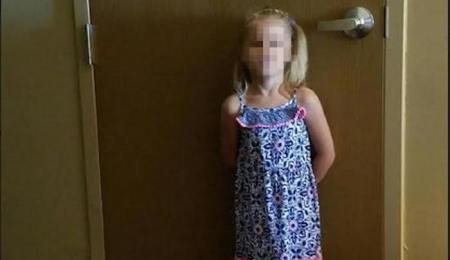
The travesty of justice in Idaho is now complete. In the summer of 2016, a 5-year-old girl was orally and anally raped and urinated upon by three Muslim migrant boys in Twin Falls, Idaho. Since then, instead of getting justice, the victim’s family has been abused by law enforcement and governing authorities as if they were the criminals – because what happened to their little girl contradicts the politically correct narrative about Muslim migrants. On Tuesday, the perpetrators were sentenced, and the final injustice was done to this poor girl.
The injustice began in the proceedings at the Snake River Juvenile Detention Center in Twin Falls when Judge Thomas Borreson of Idaho’s 5th Judicial District ordered the little victim’s parents to say nothing to anyone – ever – about what was said in the courtroom Tuesday, or to disclose the sentence that he gave to the savage attackers. He did allow them to say that they were unhappy with the sentencing, but threatened to jail them for contempt of court if they disclosed why they were unhappy with it.
But even though the victim’s parents were not allowed to talk to me, there were twelve to fifteen people in the courtroom who saw and heard the whole sorry business. I was nevertheless informed of what happened by an anonymous source inside the courtroom – and the more I heard, the more I understood why this judge wanted to keep all the proceedings secret.
Janice Kroeger, the Senior Deputy Prosecuting Attorney, who was supposed to be trying these boys for their crimes, defended the boys and repeatedly attacked Lacy, the victim’s mother. A therapist for the boys was present, as well as a parole officer and a detective. Everything that was said was designed to portray the perpetrators as victims. Throughout the proceedings, they were repeatedly called victims, and the youngest one was called “the biggest victim of them all.”
The court heard all about how the attackers are doing well in school, and about how smart they are. They were praised for the supposed ordeal they had to go through. It was claimed that all three are suffering from post-traumatic stress disorder (PTSD) from having to go through courtroom proceedings.
After this lovefest, which lasted for five hours in the courtroom, all three boys were sentenced, one after the other. All three were given probation. They were not found guilty of rape, but of sexually lewd conduct.
In the midst of this judicial mugging, every time Lacy’s lawyer tried to speak up, he was silenced. The little victim, Jayla, was never even mentioned once by Kroeger or the judge – or by the police or anyone else. Only Lacy mentioned her, when she made her statement. Lacy detailed how the poor girl is still suffering the effects of this attack: she is wetting the bed and having bad dreams, and more.
Yet when Lacy completed her statement, Kroeger lashed out not at the perpetrators or their parents, but at Lacy. She viciously tongue-lashed Lacy for a full fifteen minutes, until finally Judge Borreson had to stop her.
Understandably, the parents of the victim were and are devastated. Back in April, when the attackers initially pleaded guilty, Twin Falls County Prosecutor Grant Loebs said: “I am pleased that we were able to resolve this case in a way that was approved and agreed to by the victim’s family. This continues to be a serious and sad case, but it was resolved properly.”
Nothing could be farther from the truth. The resolution of the case was not accepted by the victim’s family, and it was not resolved properly.
From the beginning to the end, for Idaho officials this case was about one thing, and one thing: not justice for this poor little girl who was brutalized and abused, but about making sure that Americans don’t start to realize what is happening and oppose the Muslim migrant influx. Idaho officials were willing to sacrifice this girl’s wellbeing for that goal – to their everlasting shame.
If there were any justice, Judge Borreson would be impeached and removed now. Meanwhile, please help the victim and her family meet their considerable expenses: contribute here.
Obama Admin Did Not Publicly Disclose Iran Cyber-Attack During ‘Side-Deal’ Nuclear Negotiations, Washington Free Beacon, Susan Crabtree, June 7, 2017
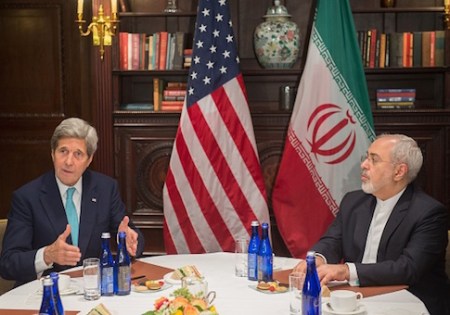
US Secretary of State John Kerry meets with Iran’s Foreign Minister Mohammad Javad Zarif on April 22, 2016 in New York. / AFP / Bryan R. Smith (Photo credit should read BRYAN R. SMITH/AFP/Getty Images)
President Trump, during his trip to the Middle East in late May, talked tough against Iran and its illicit ballistic missile program but has so far left the nuclear deal in place. A Trump State Department review of the deal is nearing completion, the Free Beacon recently reported, and some senior Trump administration officials are pushing for the public release of the so-called “secret side deals.”
Infiltrating State Department emails and internal communications about where the United States stood on a number of sensitive issues could have given the Iranians an important negotiating advantage, according to David Albright, a former U.N. weapons inspector and president of the Institute for Science and International Security.
“The [Joint Comprehensive Plan of Action] had a lot of loose language at the time and the question was whether the U.S. was going to accept it,” he told the Free Beacon, referring to the weeks immediately following the Congressional Review Period, which ended Sept. 17, and Iran’s own review process, which ended Oct. 15.
“It would be to Iran’s great benefit to know where the U.S. would be” on a number of these issues dealing with the possible military dimensions of the Iran nuclear program, he said. “If they could tell the U.S. was going to punt, they could jerk around the [International Atomic Energy Agency, or IAEA] a bit.”
“That’s essentially what happened with the IAEA,” he added.
***************************************
State Department officials determined that Iran hacked their emails and social media accounts during a particularly sensitive week for the nuclear deal in the fall of 2015, according to multiple sources familiar with the details of the cyber attack.
The attack took place within days of the deal overcoming opposition in Congress in late September that year. That same week, Iranian officials and negotiators for the United States and other world powers were beginning the process of hashing out a series of agreements allowing Tehran to meet previously determined implementation deadlines.
Critics regard these agreements as “secret side deals” and “loopholes” initially disclosed only to Congress.
Sources familiar with the details of the attack said it sent shockwaves through the State Department and the private-contractor community working on Iran-related issues.
It is unclear whether top officials at the State Department negotiating the Iran deal knew about the hack or if their personal or professional email accounts were compromised. Sources familiar with the attack believed top officials at State were deeply concerned about the hack and that those senior leaders did not have any of their email or social media accounts compromised in this particular incident.
Wendy Sherman, who served as Under Secretary of State for Political Affairs for several years during the Obama administration and was the lead U.S. negotiator of the nuclear deal with Iran, could not be reached for comment.
A spokeswoman for Albright Stonebridge LLC, where Sherman now serves as a senior counselor, said Tuesday that Sherman is “unavailable at this time and cannot be reached for comment.”
Asked about the September 2015 cyber-attack, a State Department spokesman said, “For security reasons we cannot confirm whether any hacking incident took place.”
At least four State Department officials in the Bureau of Near East Affairs and a senior State Department adviser on digital media and cyber-security were involved in trying to contain the hack, according to an email dated September 24, 2015 and multiple interviews with sources familiar with the attack.
The Obama administration kept quiet about the cyber-attack and never publicly acknowledged concerns the attack created at State, related agencies, and within the private contractor community that supports their work.
Critics of the nuclear deal said the Obama administration did not publicly disclose the cyber-attack’s impact out of fear it could undermine support right after the pact had overcome political opposition and cleared a critical Congressional hurdle.
The hacking of email addresses belonging to State Department officials and outside contractors began three days after the congressional review period for the deal ended Sept. 17, according to sources familiar with the details of the attack and the internal State Department email. That same day, Democrats in Congress blocked a GOP-led resolution to disapprove of the nuclear deal, according to sources familiar with the details of the attack and the internal State Department email. The resolution of disapproval needed 60 votes to pass but garnered just 56.
President Trump, during his trip to the Middle East in late May, talked tough against Iran and its illicit ballistic missile program but has so far left the nuclear deal in place. A Trump State Department review of the deal is nearing completion, the Free Beacon recently reported, and some senior Trump administration officials are pushing for the public release of the so-called “secret side deals.”
State Department officials in the Office of Iranian Affairs on Sept. 24, 2015 sent an email to dozens of outside contractors. The email alerted the contractors that a cyber-attack had occurred and urged them not to open any email from a group of five State Department officials that did not come directly from their official state.gov accounts.
“We have received evidence that social media and email accounts are being compromised or subject to phishing messages,” the email, obtained by the Washington Free Beacon, states. “Please be advised that you should not open any link, download or open an attachment from any e-mail message that uses our names but is not directly from one of our official state.gov accounts.”
“We appreciate learning of any attempts to use our names or affiliations in this way,” stated the email. Shervin Hadjilou, the public diplomacy officer in the Office of Iranian Affairs, sent the email and cc’d four other State Department officials who deal with Iran issues, including one cyber-security expert.
Two sources familiar with the details of the hack said the State Department and outside contractors determined that Iranian officials were the perpetrators. The hack, which began Sept. 21, had compromised at least two State Department officials’ government email accounts before they regained control of them, as well as private email addresses and Facebook and other social media accounts, the source said.
“They had access to everything in those email accounts,” the source said. “Everyone in the [State Department Iranian Affairs] community was very upset—it was a major problem.”
The hack also stood out because cyber-warfare between Iran and the United States, which had been the weapon of choice between the countries for years, had cooled considerably in 2015 during the nuclear negotiations in what cyber-security experts have described as a limited détente.
Since Iran discovered the Stuxnet virus—a cyber-worm the United States and Israel planted to degrade Iran’s nuclear capabilities—in 2011, the countries have been engaged in escalating cyber warfare as Tehran’s cyber capabilities become increasingly sophisticated and destructive.
Since 2011 Iran has attacked U.S. banks and Israel’s electric grid. In 2012, Iranian hackers brought down Saudi-owned oil company Saudi Aramco, erasing information on nearly 30,000 of the company’s work stations and replacing it with a burning American flag.
Cyber-security experts have long believed that Russia helped Iran quickly build up its cyberweaponry in response to Stuxnet. A team of computer-security experts at TrapX, a Silicon Valley security firm that helps protect top military contractors from hackers, said in April they officially confirmed that Iranians were using a cyber “tool set” developed by Russians.
Tom Kellerman, a TrapX investor who also served on a commission advising the Obama administration on cyber-security, said Iranian cyberwarfare has dramatically improved over the last two or three years in large part due to Russian technical assistance.
“Much like you see the alliance between Syria, Iran, and Russia, the alliance doesn’t just relate to the distribution of kinetic weapons,” he said, but extends into cyberwarfare.
In the late September 2015 hack, at least two State Department officials and a handful of outside contractors lost control of access to their email and social media accounts, which were automatically forwarding emails to work and personal contacts. This spread the hack to a wider network of victims.
The private-contracting community involved in State Department Iran programs—approximately 40 private firms, some of which are based in Washington and others located throughout the United States—were outraged by the infiltration.
“They were saying ‘We’re mad—we’re angry,'” the source recalled. “We all got compromised.”
Eric Novotny, who served as a senior adviser for digital media and cyber security at the State Department at the time, was involved in trying to shut down the hack and help affected officials and private contractors regain control of their accounts. Novotny was one of the four government officials copied on Hadjilou’s Sept. 24 email.
Critics of the Obama administration’s handling of the Iran nuclear deal argue that the State Department stayed silent about the hack because acknowledging it could have publicly undermined the pact right after it became official.
“Within hours of the Iran deal being greenlighted, Iran was already conducting cyberattacks against the very State Department that ensured passage of the [nuclear deal],” said Michael Pregent, a senior Middle East analyst at the Hudson Institute. “Acknowledging a cyberattack after the [nuclear deal] was greenlighted would be something that would immediately signal that it is a bad deal—that these are nefarious actors.”
Mark Dubowitz, the CEO of the Foundation for Defense of Democracies, said Iran’s hacking of State Department personnel at such a critical period is “just one of many of Iran’s malign activities that continued and the State Department essentially ignored while the Obama administration was working out the fine points of the nuclear deal.”
“The Obama administration didn’t acknowledge it publicly out of fear that public outrage could threaten the nuclear deal,” he said.
In early November 2015, the Wall Street Journal reported that the Iran’s hardline Revolutionary Guard military had hacked email and social-media accounts of Obama administration officials.
Yet that report wrongly tied the beginning of the uptick in Iranian cyberattacks to the arrest October 29, 2015 of Siamak Namazi, a businessman and Iranian-American scholar who has pushed for democratic reforms. Namazi and his elderly father remain imprisoned in Iran and face a 10-year sentence on espionage charges.
The Journal report also did not indicate that the attacks had occurred more than a month earlier, within three days of the end of the congressional review period, nor did it indicate any specific individual targeted nor how officials and contractors reacted to it.
The Sept. 24 email obtained by the Free Beacon shows the Iranian hacking of State Department officials occurred much earlier—the weekend after Republicans in Congress failed to push through a resolution disapproving the Iran nuclear pact, effectively sealing the foreign policy win for Obama.
The late September time period was particularly important for negotiating critical details of the nuclear deal’s implementation, what critics, including CIA Director Mike Pompeo, have labeled “secret side deals” allowing Iran to evade some restrictions in the nuclear agreement in order to meet its deadline for sanctions relief.
Among other non-public details of the pact, the side agreements involved the controversial exchange of American prisoners held in Iran for $1.7 billion in cash payments.
Infiltrating State Department emails and internal communications about where the United States stood on a number of sensitive issues could have given the Iranians an important negotiating advantage, according to David Albright, a former U.N. weapons inspector and president of the Institute for Science and International Security.
“The [Joint Comprehensive Plan of Action] had a lot of loose language at the time and the question was whether the U.S. was going to accept it,” he told the Free Beacon, referring to the weeks immediately following the Congressional Review Period, which ended Sept. 17, and Iran’s own review process, which ended Oct. 15.
“It would be to Iran’s great benefit to know where the U.S. would be” on a number of these issues dealing with the possible military dimensions of the Iran nuclear program, he said. “If they could tell the U.S. was going to punt, they could jerk around the [International Atomic Energy Agency, or IAEA] a bit.”
“That’s essentially what happened with the IAEA,” he added.
The IAEA is charged with verifying and monitoring Iran’s commitments under the nuclear agreement.
According to Albright, the IAEA ultimately accepted far less access to nuclear sites than it originally wanted. The United States and other world powers also accepted other concessions involving “loopholes” allowing Iran to exceed uranium enrichment and heavy water limits for a certain time period in order for Iran to meet implementation deadlines, he said.
“The IAEA didn’t know much at all and had to write a report [in December 2015] that it was content in knowing so little,” he said.
Others who credit Iran’s Islamic Revolutionary Guard with the cyber-attack say it may not have focused entirely on gaining leverage in the negotiations but simply demonstrating a resistance to the deal among hardline factions in the country.
“Iran has two personalities, and I think you were seeing the other personality shine through,” Kellerman said of the hack during a critical phase of the nuclear deal.
Sources said the September 2015 hacking incidents compromised email accounts by sending spear-phishing messages, or efforts to gain unauthorized access to confidential data by impersonating close contacts.
The phishing emails targeted both State Department and private contractors’ personal email and social media accounts, including Facebook, shutting down the users’ access and sending out emails to some of the hacked individuals contacts and forwarding other information to unfamiliar emails with Persian-sounding names, two sources told the Free Beacon.
Samuel Bucholtz, co-founder of Casaba, a cyber-security firm that conducts test-hacking for Fortune 500 companies, said the hackers were likely trying to gain access to contacts and emails. The hackers also may have tried to install malware that would provide greater access to information held on computers or the entire computer network of the organizations, he said.
“If it’s a phishing account that installs malware on your machine, then they have access to all the information on your machine,” he said. “Then they start using that foothold to start exploring access throughout the entire organization.”
13 Sivan 5777 – June 7, 2017
Iran’s state news agency Fars noted on Wednesday that Saudi Foreign Minister Adel al-Jubeir had stated that Iran must be punished for what he claimed is her interference in the region and support for terrorist organizations, just hours before the two attacks in Tehran which claimed the lives of eight people.
The Islamic State (ISIS) has claimed responsibility for the twin attacks, and posted the video above, from the attack inside the parliament building.
Iranian Deputy Interior Minister Hossein Zolfaqari said the militants who attacked the parliament building were dressed in women’s clothes.
“The assailants entered the parliament in women’s dress and through the special visitors gate, started the shooting spree and entered the area, causing fear and horror,” Zolfaqari said in an interview with state-run TV after the two, synchronized attacks on the parliament and on the shrine of Khomeini in Tehran.
“In the first minutes of the attack, the Islamic Revolution Guards Corps (IRGC) forces entered the scene and gained control of the floor and main area of the parliament building,” he Zolfaqari claimed.
Four militants fired at the parliament’s guards, killing five and wounding 25 on Wednesday morning. Four were killed on the spot, and a fifth died from his injuries at a nearby hospital. Ten of the wounded victims were civilians.
Several militants raided the shrine of the founder of the Islamic Republic, Ayatollah Khomeini, killing at least two and wounding ten others in one or two suicide bomb attacks and a shooting spree.
Source: Fatalities & injuries after shootings, bombings at Iranian parliament & Khomeini shrine — RT News
Attackers opened fire on guards inside the parliament building in the Iranian capital on Wednesday morning, FARS news agency reported.
Attackers opened fire on guards inside the parliament building in the Iranian capital on Wednesday morning, FARS news agency reported.
🔴🔴فیلم/ التهاب در خیابان اطراف #مجلس در بهارستان، در پی تیراندازی افراد ناشناس pic.twitter.com/IF10z90S2e
— خبرگزاری فارس (@FarsNews_Agency) June 7, 2017
A male assailant was arrested in a parliament hallway while attempting to escape, Akbar Ranjbarzadeh, a senior member of the parliament’s Presiding Board, told Farsnews.
“I was inside the parliament when the shooting happened. Everyone was shocked and scared. I saw two men shooting randomly,” one journalist at the scene said, as cited by Reuters.
According to Ali Larijani, the current chairman of the Iranian parliament, the attacks show that extremists want to undermine the country’s efforts in its battle against terrorism.
“Iran is an active and effective hub for combating terrorism, and terrorists wish to undermine such activities,” he said, as cited by Mehr news agency.
Larijani was heading a parliament session behind closed doors as the attack unfolded.
The attacks in Tehran show that terrorists won’t cease in their efforts to cause destruction, Russian Foreign Minister Sergey Lavrov said.
“The fact that terrorist won’t stop, is, unfortunately, confirmed every day. It includes today’s attacks in Iran which were claimed by Islamic State,” Lavrov said.
Amazing we have the house closed up, all windows and doors are in and that just in 7 weeks !!!
But , yeah in know always a but , the carpenter is running around with a sanding machine making a lot of noise, raving about the orbital sander reviews and DUST !
And to top this of, 2 of the 3 air conditioners got the idea to quit , one spit out his guts under a loud noise and dripping his oil on the roof which i was preparing for another coat of paint , ain’t that nice, oil before painting .
Yep , i,am in a fantastic mood , jumped into the pool with my best friend Heineken .Waiting for the airco guy under the monotone sound of a circular sander !
Have a nice day !




 anneinpt
 artaxes
 danmillerinpanama
 davidking1530
 Peter Hofman
 Joseph Wouk
 Peter
Peter Louisiana Steve
 WarSclerotic
Recent Comments