Archive for May 14, 2017

Dilbert on Climate “Science”

May 14, 2017

Dilbert on Climate “Science”, Power LineJohn Hinderaker, May 14, 2017

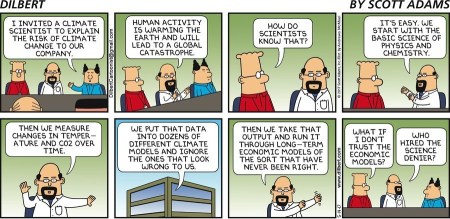
Today’s Dilbert cartoon sums up contemporary climate “science” very well. Click to enlarge:

Does the climate scientist in the cartoon remind you of anyone? Yeah. Here is a photo of the notorious Michael Mann:

Maybe Mann will add Scott Adams to his long-running lawsuit against Mark Steyn et al.

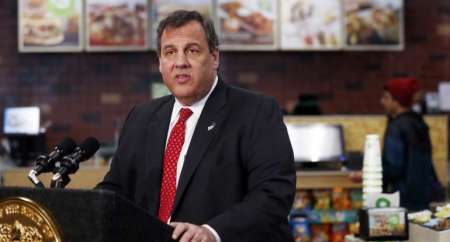
Chris Christie Vetoes Ban on Underage Marriages

May 14, 2017

Chris Christie Vetoes Ban on Underage Marriages, PJ MediaMichael Walsh, May 14, 2017

AP Photo/Julio Cortez)

Islamic religious customs have no place in western society, and especially not in American society. But there are a lot of Muslims in New Jersey.

***********************************

Creeping shariah creeps ever closer:

A high profile Republican governor has declined to sign into law, a measure that would have made his state the first to ban child marriagewithout exception.  Chris Christie, the governor of New Jersey and someone who has been a staunch supporter of Donald Trump, said such a ban would conflict with religious customs. He did not specify what religions he was referring to.

Reuters said underage marriage is widespread in the US, where about 170,000 children were wed between 2000 and 2010 in 38 of the 50 states where data was available. Although age 18 is the minimum for marriage in most of the nation, every state has legal loopholes allowing children to wed. The New Jersey bill would have prohibited any marriage of children under age 18.

Politico has more:

Gov. Chris Christie on Thursday conditionally vetoed a bill ( A3091) that would have banned outright all marriages for minors in New Jersey. Instead, the governor proposed putting more restrictions on New Jersey’s current law, which allows 16- and 17-year-olds to obtain marriage licenses with parental consent, and grants them to those under 16 with a family court judge’s permission.

“I agree that protecting the well-being, dignity, and freedom of minors is vital, but the severe bar this bill creates is not necessary to address the concerns voiced by the bill’s proponents and does not comport with the sensibilities and, in some cases, the religious customs, of the people of this State,” Christie said in his veto message.

The top sponsor of the measure was Republican Assemblywoman Nancy Munoz, who said at a committee hearing last year that she introduced it bill after hearing “compelling” stories of minors forced into marriages for religious reasons. The bill passed the Assembly and Senate with overwhelming support.

Islamic religious customs have no place in western society, and especially not in American society. But there are a lot of Muslims in New Jersey.

In case you’re wondering, Christie is term-limited out of office this year.

The Iranian People Hope Trump Will Support Them, Not Their Rulers

May 14, 2017

The Iranian People Hope Trump Will Support Them, Not Their Rulers, Iran Focus, May 14, 2017

(Please see also, Prosecutor General Warns against Attempts to Upset Election Security in Iran. — DM)

The new American president is reviewing policy with regards to Iran, and with an eye to change. Kashfi suggests that, “Any further support for the un-elected regime in Teheran, be it commercial, economic, diplomatic should be tied to a commitment by the Islamic regime to stop supporting international terrorism and to respect women, minorities, and human rights.”

With the change of power in America, the hope and expectation of the Iranian people is that Washington will support the Iranian people, and advocate the overthrow of the Islamic regime.

******************

London, 14 May – It’s been reported that more than 9 million Iranians have fled their homeland since the Revolution in 1979. This means that more than 12 percent of Iran’s citizens chose to abandon their homes, families, and belongings, to maintain their freedom. It is estimated that close to four million Iranians have taken refuge in the U.S since 1979.

These refugees consider the International, and specifically European, trade agreements and relations with Iran, their worst nightmare.

The Islamic regime and some in the international community claim that support for the so-called “reformist” and “pragmatic” President Hassan Rouhani will ultimately bring freedom and democracy to Iran. They attempt to convince the free world and democratic countries that appeasement and normalized relations will change the Iranian regime’s attitude and behavior.

“However,” writes Mansour Kashfi, author and president of Kashex International Petroleum Consulting with over 50 years’ experience in petroleum exploration, primarily in Iran in an article for WorldTribune, “the distinction between a ‘moderate’ president and ‘fundamentalist’ Supreme Leader in Iran is a political subterfuge used to mislead the population and perpetuate the inherent corruption of the Islamic regime governing system.

This corruption will not only continue to oppress the Iranian people but also undermine the transparency in business dealings with foreign investors.”

After two years of negotiations, an agreement was reached to lift the sanctions on Iran in return for the Islamic Republic halting its efforts to acquire nuclear weapons.

In the midst of this, former President Obama decided to attempt to make a connection with Ayatollah Khameini, the Supreme Leader of the Islamic regime. Obama sent Khameini several friendly letters. Some called this course of action outrageous, considering that the Iranian people were crying for democracy and American help to support a secular government in Iran, and the disastrous human rights issues in Iran, continued terrorist acts in the region, and ongoing testing of intercontinental missiles. Obama may have done better by establishing a relationship with the Iranian people, instead.

According to Kashfi, “Clergies in Iran are as murderous as any religious group in history. From the very first day of the Islamic regime’s establishment, they executed many innocent Iranian officials and military officers, and provoked war with Iraq just to consolidate their dictatorial regime,” and adds, “During eight years of bitter war with Iraq and over one million casualties, clergies dragged school children to the front lines, where their little bodies were used as sandbags to clear mine fields.”

“War was an excuse to execute dissidents and anyone who displeased the bloodthirsty clergies. Minorities including non-Shiite believers such as Sunnis, Jews, Christians, and Bahais were executed on political charges. All these killings and unjust acts in Iran were carried out on command of the Supreme Leader, Ayatollah Khameini,” writes Kashfi.

According to The U.S. Congress’s Human Rights Country Report there has been no change in the status of human rights in Iran. Since 2013, when Hassan Rouhani became president, the status of human rights worsened.

Respect for human rights distinguishes America as a great nation, so Kashfi wonders how it can “…still believe it can establish a lasting line of communication with a terrorist regime in Iran that routinely persecutes religious and ethnic minorities, tortures and systematically executes political prisoners, and promotes international terrorism abroad?” He adds, “…when America fails to lead, enemies of freedom like the Islamic regime of Iran and Russia fill the vacuum.”

After the U.S.withdrew from Iraq, Kashfi says that “the Islamic regime did everything it could to establish oppression and spread terror in that country, and Russia began focusing on the southern Persian Gulf states.”

The new American president is reviewing policy with regards to Iran, and with an eye to change. Kashfi suggests that, “Any further support for the un-elected regime in Teheran, be it commercial, economic, diplomatic should be tied to a commitment by the Islamic regime to stop supporting international terrorism and to respect women, minorities, and human rights.”

With the change of power in America, the hope and expectation of the Iranian people is that Washington will support the Iranian people, and advocate the overthrow of the Islamic regime.

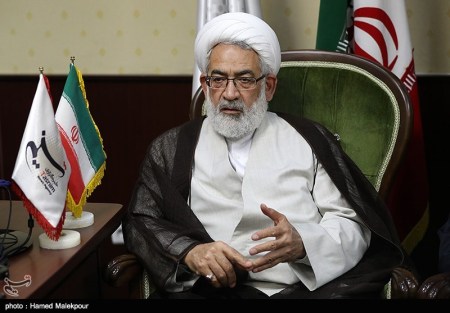
Prosecutor General Warns against Attempts to Upset Election Security in Iran

May 14, 2017

Prosecutor General Warns against Attempts to Upset Election Security in Iran, Tasnim News Agency, May 14, 2017

(Please see also, How to Secure and Stabilize the Middle East. Are the mad mullahs worried? — DM)

TEHRAN (Tasnim) – Iran’s Judiciary has obtained information about hostile schemes to create insecurity as the country is gearing up for presidential election, Prosecutor General Mohammad Jafar Montazeri warned, stressing that any move to disrupt security will receive a harsh response.

Speaking at a press conference on Sunday, Montazeri said reports suggest that “ill-wishers and enemies are seeking to upset security with any means” as election day is nearing.

Giving an assurance that hostile attempts at causing insecurity will get nowhere, the prosecutor general warned that the Iranian Establishment’s response to anyone wanting to upset the security of the country or the election will be severe.

In comments on May 10, Leader of the Islamic Revolution Ayatollah Seyed Ali Khamenei warned that the enemies’ short-term purpose is to upset Iran’s security and foment chaos.

The Leader also cautioned the six candidates running for presidency against moves or comments that may upset the country’s security and serve the interests of the enemy unintentionally.

“Anybody wanting to take any measure against the country’s security in the election will certainly receive a hard reaction and slap in the face,” Ayatollah Khamenei underlined.

“(The issue of) security is of great significance for the country, for the people, and consequently for me, and security must be fully maintained in the election,” the Leader added.

The 12th presidential election will be held in Iran on May 19.

Six candidates, Hassan Rouhani, Mohammad Baqer Qalibaf, Eshaq Jahangiri, Ebrahim Raisi, Mostafa Aqa-Mirsalim, and Mostafa Hashemitaba are running in the race.

Netanyahu Tells Tillerson Moving US Embassy to Jerusalem Would ‘Right Historic Wrong’

May 14, 2017

Source: Netanyahu Tells Tillerson Moving US Embassy to Jerusalem Would ‘Right Historic Wrong’The Jewish Press | Hana Levi Julian | 19 Iyyar 5777 – May 14, 2017 | JewishPress.com

Israel’s Prime Minister Benjamin Netanyahu responded to remarks made by U.S. Secretary of State Rex Tillerson during an exclusive interview Sunday with NBC’s Chuck Todd on the program ‘Meet the Press’ in which Tillerson said President Donald Trump is now holding back and “being careful to understand how sucha decision would impact a peace process” before deciding whether to make good on his campaign promise to move the U.S. Embassy from Tel Aviv to Jerusalem.

In two swift Hebrew-language tweets, the Israeli prime minister responded, saying that the transfer of the U.S. Embassy in Tel Aviv to Jerusalem would not only not damage the peace process, but would in fact have the opposite effect.

Netanyahu tweeted that moving the American Embassy to Jerusalem would advance the peace process by righting a historic wrong, and in so doing, would also “shatter the Palestinian fantasy that Jerusalem isn’t the capital of Israel.”

A full transcript of Tillerson’s remarks on the subject follow:

“The President, I think rightly, has taken a very deliberative approach to understanding the issue itself, listening to input from all interested parties in the region, and understanding what such a move in the context of a peace initiative what impact would such a move have.

“As you know the President has recently expressed his view that he wants to put a lot of effort into seeing if we cannot advance a peace initiative between Israel and Palestine, and so I think in large measure the President is being careful to understand how such a decision would impact a peace process.

“[Well] I think it [the issue] will be informed again by the parties that are involved in the talks and most certainly Israel’s view and whether Israel views it as being helpful to a peace initiative or perhaps a distraction. And so I think the President again is being very measured in how he goes about this, appropriately so.”

North Korea’s Latest Missile Test: Advancing towards an Intercontinental Ballistic Missile (ICBM) While Avoiding US Military Action

May 14, 2017

North Korea’s Latest Missile Test: Advancing towards an Intercontinental Ballistic Missile (ICBM) While Avoiding US Military Action, 38 North, May 14, 2017

(We interrupt the crucial and continuing coverage of the multiple threats President Trump poses to everything good to mention a trivial matter. — DM)

What would change the strategic balance is an ICBM capable of reaching the US mainland. This is not that missile but it might be a testbed, demonstrating technologies and systems to be used in future ICBMs like the KN-08 and KN-14. A full three-stage KN-08 would be very unlikely to work the first time it was tested, and the failure would be both expensive and very provocative. This missile would allow North Korea to conduct at least some of the testing necessary to develop an operational ICBM, without actually launching ICBMs, particularly if it includes the same rocket engines.

*********************************

North Korea’s latest successful missile test represents a level of performance never before seen from a North Korean missile. The missile would have flown a distant of some 45oo kilometers if launched on a maximum trajectory. It appears to have not only demonstrated an intermediate-range ballistic missile (IRBM) that might enable them to reliably strike the US base at Guam, but more importantly, may represent a substantial advance to developing an intercontinental ballistic missile (ICBM). Given speculation over the past months about the possibility of military action by the Trump administration to prevent Pyongyang from acquiring such a weapons, the possible testing of ICBM subsystems in this low-key manner may be a North Korean hedge against the possibility of such action.

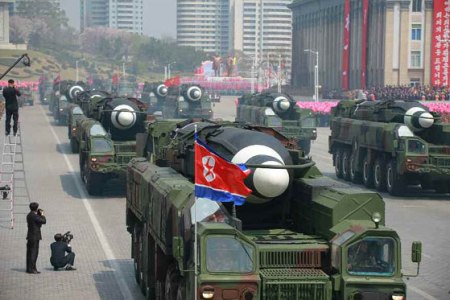
We are still awaiting more details on this test, and if the North Koreans follow their usual practice we can expect photographs soon. But unless Pyongyang is hiding something completely new, there’s only one real candidate for this missile. During last month’s parade, one genuinely new missile was revealed – one that looks very much like a small, two-stage version of their three-stage KN-08 ICBM prototype, on displayed on a mobile launcher previously used for the “Musudan” intermediate-range ballistic missile. We don’t have a name for this missile yet; the “KN-17” designation has been used for both this system and for a Scud-derived short-range ballistic missile with a maneuvering reentry vehicle displayed in the same parade. But whatever the name, it would be expected to have about the same performance as the missile just launched.

New North Korean IRBMs are displayed during an April 15 parade in Pyongyang celebrating the late Kim Il Sung’s birthday (Photo: Rodong Sinmun)

While the April 15 parade may be the first time this missile was seen, and yesterday’s test may be its first successful flight, there have been earlier indications that such a missile was under development. In January this year, intelligence sources reported that North Korea had deployed two prototype ICBMs at a test site, just under 15 meters long. All of North Korea’s ICBM prototypes and mock-ups are well over that size, which left us puzzled. But this new missile comes in at just under 15 meters, and while its performance doesn’t quite reach ICBM standards it clearly shares a common heritage with the KN-08 ICBM. Quite likely this was the missile that was reported in January.

It may have been tested on other occasions. Two failed missile tests from Kusong in October were presumed to be Musudans, but there was no solid evidence to confirm that – and the Musudan had recently been tested successfully, so it would be somewhat surprising for it to fail twice in a row. It wouldn’t be at all surprising for a new missile to fail twice, and if the missile were launched from a Musudan TEL, it might well be mistaken for a Musudan. Another failed test, on April 16, was initially ascribed to a new maneuvering reentry vehicle system, but may have been this missile instead – both were initially displayed in the parade the previous day, and a successful test of either one would neatly highlight the propaganda event.

While this missile appears to share a common heritage with the KN-08 ICBM, it isn’t simply a KN-08 with the third stage removed. The first two stages also appear to be reduced in scale. Unfortunately, we have little detail about the missile’s design. We do not, for example, know if it uses the same twin-engine propulsion system as the first stage of the KN-08. But the more important question is, what is the new missile for?

One possibility is that it is meant to replace the Musudan IRBM which. represents an attempt to stretch a Cold War vintage Russian missile to reach the US base at Guam, some 3500 km from North Korean launch sites. But the Musudan has proven unreliable in testing, with only one success in at least six attempts, and its performance is marginal for reaching Guam. The Musudan may have been the best North Korea could manage ten years ago, but that level of performance really calls for a two-stage missile. Now, it appears that they have one. But existing North Korean missiles are already capable of reaching targets anywhere in South Korea or Japan, and extending that reach to perhaps 4500 kilometers won’t greatly change the strategic balance – aside from Guam, there aren’t really any interesting targets in that range..

What would change the strategic balance is an ICBM capable of reaching the US mainland. This is not that missile but it might be a testbed, demonstrating technologies and systems to be used in future ICBMs like the KN-08 and KN-14. A full three-stage KN-08 would be very unlikely to work the first time it was tested, and the failure would be both expensive and very provocative. This missile would allow North Korea to conduct at least some of the testing necessary to develop an operational ICBM, without actually launching ICBMs, particularly if it includes the same rocket engines.

If North Korea has already conducted a successful test using the engines and other components of the first two stages of the KN-08, it may be closer to an operational ICBM than had been previously estimated. US cities will be at risk tomorrow, or any time this year since some tests have to be done with the full-scale system. With only one test of this reduced-scale system Pyongyang is probably some time from even beginning that process. But given this test and the possible North Korean path forward, a closer look will be needed to see how much progress has been made, and what technologies the North may have demonstrated, as will a reassessment of their ICBM program in that new light.

Russian Hacking and Collusion: Put the Cards on the Table

May 14, 2017

Russian Hacking and Collusion: Put the Cards on the Table, American ThinkerClarice Feldman, May 14, 2017

(As to the appointment of a special prosecutor, please see also, What Crime Would a ‘Special Prosecutor’ Prosecute?  No crime has been found to prosecute.– DM)

The notion that Russia interfered in the election to help Donald Trump was a John Brennan/James Clapper confection created in an unorthodox way, and defied logic, given that Hillary and her associates had far closer connections to Russia than Trump or his associates did. John Merline writes at Investor’s Business Daily:

THE CLINTON FAMILY BUSINESS [snip]

Bill Clinton received half a million dollars in 2010 for a speech he gave in Moscow, paid by a Russian firm, Renaissance Capital, that has ties to Russian intelligence. The Clinton Foundation took money from Russian officials and oligarchs, including Victor Kekselberg, a Putin confidant. The Foundation also received millions of dollars from Uranium One, which was sold to the Russian government in 2010, giving Russia control of 20% of the uranium deposits in the U.S. —  the sale required approval from Hillary Clinton’s State Department. What’s more, at least some of these donations weren’t disclosed. “Ian Telfer, the head of the Russian government’s uranium company, Uranium One, made four foreign donations totaling $2.35 million to the Clinton Foundation. Those contributions were not publicly disclosed by the Clintons, despite an agreement Mrs. Clinton had struck with the Obama White House to publicly identify all such donors,” the Times has reported.

JOHN PODESTA In March — that is, long after the election was over — it was revealed that Mrs. Clinton’s campaign chairman had failed to disclose the receipt of 75,000 shares of stock from a Kremlin-financed company — Joule Unlimited — for which he served as director from 2010 to 2014, when he joined the Obama White House in 2014. Podesta apparently had a large chunk of the shares transferred to “Leonidio Holdings, a brand-new entity he incorporated only on Dec. 20, 2013, about 10 days before he entered the White House,” according to a news account.

TONY PODESTA Mr. Podesta’s bother, who has close personal and business relations with Mrs. Clinton, was “key lobbyist on behalf of Sberbank, according to Senate lobbying disclosure forms. His firm received more than $24 million in fees in 2016, much of it coming from foreign governments, according to the nonpartisan Center for Responsive Politics,” a March news story reported. The bank was “seeking to end one of the Obama administration’s economic sanctions against that country.” The report goes on to note that “Podesta’s efforts were a key part of under-the-radar lobbying during the 2016 U.S. presidential campaign led mainly by veteran Democratic strategists to remove sanctions against Sberbank and VTB Capital, Russia’s second largest bank.” Mr. Obama imposed the sanctions following the Russian seizure of the Crimean region of Ukraine in 2014.

JOHN BREAUX Forbes magazine reports that Mr. Breaux, a former Senator from Louisiana who cut radio ads for Mrs. Clinton’s 2008 campaign, represents Gazprombank GPB, a subsidiary of Russia’s third largest bank, on “banking laws and regulations, including applicable sanctions.”

THE CLINTON CAMPAIGN In March, Mr. Putin’s spokesman said that Russian Ambassador Sergey Kislyak met with members of Mrs. Clinton’s campaign several times while she was running for president in 2016. Further, the campaign never disclosed the number or nature of these secret meetings.

As the great Sharyl Attkisson reports, 12 prominent public statements by those on both sides of the aisle who reviewed the evidence or been briefed on it confirmed there was no evidence of Russia trying to help Trump in the election or colluding with him:

  • The New York Times (Nov 1, 2016);
  • House Speaker Paul Ryan (Feb, 26, 2017);
  • Former DNI James Clapper , March 5, 2017);
  • Devin Nunes Chairman of the House Intelligence Committee, March 20, 2017);
  • James Comey, March 20, 2017;
  • Rep. Chris Stewart, House Intelligence Committee, March 20, 2017;
  • Rep. Adam Schiff, House Intelligence committee, April 2, 2017);
  • Senator Dianne Feinstein, Senate Intelligence Committee, May 3, 2017);
  • Sen. Joe Manchin  Senate Intelligence Committee, May 8, 2017;
  • James Clapper (again) (May 8, 2017);
  • Rep. Maxine Waters, May 9, 2017);
  • President Donald Trump,(May 9, 2017).
  • Senator Grassley, Chairman of the Senate Judiciary committee, indicated that his briefing confirmed Dianne Feinstein’s view that the President was not under investigation for colluding with the Russians.

The firing of FBI Director James Comey caught both the media and press off guard. Up until a few hours before the firing, prominent Democrats had been calling for him to resign or be fired and the media had been critical of his performance. There have been many leaks about former National Security Adviser Michael Flynn collected from government surveillance and unmasked and read by others, including recently fired acting attorney general and former DNI Clapper (and who knows how many others since that information was shared with others in the government). As the author of the Wall Street Journal’sBest of the Web observes: “Whoever has been leaking classified information, reporters might want to start asking their sources why the leaks never seem to contain any collusion evidence. They might also ask Mr. Schiff what it would take to get him interested in investigating potential abuses by his political allies.

Law professor Jonathan Turley says much the same thing: “No one has yet to explain to me what the core crime that would be investigated with regards to Russian influence,’ Turley said Wednesday evening. “I don’t see the crime, so I don’t see how it’s closing in on Trump.”

“For weeks I’ve questioned the need for special counsel because honestly I still don’t see the underlying crime here. You know, when we talk about the Russian influence and collusion, there’s not any evidence I’ve seen of collusion,” Turley said on Morning Joe today.

The Firing of Comey Was Certainly Justified

Unless you think it makes political and constitutional sense to have an FBI director holding open forever an investigation of his boss with no factual basis, you might understand how ridiculous Comey’s refusal to publicly detail his reasons for so doing. My guess: it’s his arrogation of power and his continuing pattern of posing as an above-it-all public official while engaged in the most partisan pro-Democrat actions.

Apart from his botched handling of the Clinton investigation, here are some examples right now of his blindness to his own flaws:

In 2015, he appointed E.W. Priestap to his Counterintelligence Division. Priestap’s wife, a former FBI agent, contributed $5,000 to Hillary’s 2008 campaign and serves as a campaign consultant. Priestap is not the only FBI official closely linked to the Clintons. Andrew McCabe, Comey’s second in command, also has close ties to the Clintons. His wife received  almost half a million dollars from one of Hillary’s closest associates and pals.

Mr. McAuliffe and other state party leaders recruited Dr. McCabe to run, according to party officials. She lost the election to incumbent Republican Dick Black.

McCabe failed to disclose those contributions in financial disclosure forms as required by law and he’s still there.

But there is much more than the misjudgment of allowing these people to head the investigation, which has run on for months with an ocean of leaks and no evidence.

In this same March 20th hearing Comey stated there was an investigation into intelligence leaks to the media.  However, on May 8th the source of the reports that were eventually leaked to the media, acting AG Sally Yates, said she was never questioned by the FBI.

In the segment of the questioning below Rep. Stefanik begins by asking Director Comey what are the typical protocols, broad standards and procedures for notifying the Director of National Intelligence, the White House and senior congressional leadership (aka the intelligence Gang of Eight), when the FBI has opened a counter-intelligence investigation.[snip]

Director Comey intentionally obfuscates knowledge of the question from Rep Stefanik; using parseltongue verbiage to get himself away from the sunlit timeline.

The counter-intel investigation, by his own admission, began in July 2016. Congress was not notified until March 2017. That’s an eight-month period – Obviously obfuscating the quarterly claim moments earlier.

The uncomfortable aspect to this line of inquiry is Comey’s transparent knowledge of the politicized Office of the DNI James Clapper by President Obama. Clapper was used rather extensively by the Obama Administration as an intelligence shield, a firewall or useful idiot, on several occasions.

Anyone who followed the Obama White House intel policy outcomes will have a lengthy frame of reference for DNI Clapper and CIA Director John Brennan as the two primary political operatives. Clapper lied to congress about collection of metadata. Brennan also admitted investigating, and spying on, the Senate Intelligence Committee as they held oversight responsibility for the CIA itself.

The first and second questions from Stefanik were clear. Comey’s understanding of the questions was clear. However, Comey directly evaded truthful response to the second question. When you watch the video, you can see Comey quickly connecting the dots on where this inquiry was going.

There is only one reasonable explanation for FBI Director James Comey to be launching a counter-intel investigation in July 2016, notifying the White House and Clapper, and keeping it under wraps from congress. Comey was a participant in the intelligence gathering for political purposes — wittingly, or unwittingly.

At the NY Post, Michael Goodwin writes the clearest, most readable account of why Comey had to go.

Comey’s power-grabbing arrogance is why I called him “J. Edgar Comey” two months ago. His willingness to play politics, while insisting he was above it all, smacked of Washington at its worst. He was the keeper of secrets, until they served his purpose.

[snip]

The president didn’t have just one good reason to act. He had a choice among many.

The one he cited, Comey’s handling of the investigation into Hillary Clinton’s private server, is rich with irony, given its prominence in the campaign. And the irony doesn’t stop, with Democrats who not so long ago were furious with Comey over the Clinton probe rushing out condemnations of Trump for firing him.

[snip]

Comey’s refusal to accept the department’s conclusion that he made major mistakes are reasonable grounds for dismissal of any employee in any circumstance, not least one who enjoys self-aggrandizing displays of independence.

It is understandable that his bosses, Attorney General Jeff Sessions and his recently confirmed deputy, Rod J. Rosenstein, lost confidence in Comey. They pushed for his ouster, and the president agreed.

Yet Comey could have been fired for other aspects of the Clinton probe. The failure to empanel a grand jury, the willingness to destroy evidence as part of immunity agreements, the absurd claim that no reasonable prosecutor would take the case — each action and assertion suggested a less-than-thorough probe designed to please his Democratic bosses.

Then there are the leaks of investigations that amounted to a flood of illegal disclosures about the Trump administration. Virtually everything we know about whether anyone in the Trump campaign colluded with Russian meddling in the election comes through leaks.

The names of those supposedly being investigated — Gen. Michael Flynn, Paul Manafort, Carter Page — all were made public through leaks. The fact that Sessions himself was wrong to tell the Senate he had not met with the Russian ambassador — we know that because of leaks to the Washington Post.

We know a computer server for Trump Tower was communicating with a Russian bank — because of leaks. Not incidentally, Hillary Clinton jumped on those leaks to insist Trump was guilty of collusion.

Only later did we learn — through leaks–that the FBI determined the server was sending spam.

Yet Comey adamantly insisted to congress that he could not even confirm that he was investigating any or all of these leaks – and that was that.

Kimberley Strassel makes mincemeat of Comey’s claim that he had to act as both investigator and prosecutor because his ostensible boss, then-attorney general Loretta Lynch, had compromised herself with the tarmac meeting with Bill Clinton during the investigation:

Which leads us to Mr. Comey’s most recent and obvious conflict of all — likely a primary reason he was fired: the leaks investigation (or rather non-investigation). So far the only crime that has come to light from this Russia probe is the rampant and felonious leaking of classified information to the press. Mr. Trump and the GOP rightly see this as a major risk to national security. While the National Security Agency has been cooperating with the House Intelligence Committee and allowing lawmakers to review documents that might show the source of the leaks, Mr. Comey’s FBI has resolutely refused to do the same.

Why? The press reports that the FBI obtained a secret court order last summer to monitor Carter Page. It’s still unclear exactly under what circumstances the government was listening in on former Trump adviser Mike Flynn and the Russian ambassador, but the FBI was likely involved there, too. Meaning Mr. Comey’s agency is a prime possible source of the leaks.

In last week’s Senate hearing, Chairman Chuck Grassley pointed out the obvious: The entire top leadership of the FBI is suspect. “So how,” Mr. Grassley asked, “can the Justice Department guarantee the integrity of the investigations without designating an agency, other than the FBI, to gather the facts and eliminate senior FBI officials as suspects?” Mr. Comey didn’t provide much of an answer.

All this — the Russia probe, the unmasking, the leaks, the fraught question of whether the government was inappropriately monitoring campaigns, the allegations of interference in a presidential campaign — is wrapped together, with Mr. Comey at the center. The White House and House Republicans couldn’t have faith that the FBI would be an honest broker of the truth. Mr. Comey should have realized this, recused himself from ongoing probes, and set up a process to restore trust. He didn’t. So the White House did it for him.

This is Like Watergate, Only With Respect to FBI Leaks, Not Presidential Wrongdoing

The press keeps referring to this as a second Watergate, doubling down on its ignorance and counting on that of the public.

Contrary to the widespread fiction that Woodward and Bernstein revealed Nixon’s wrongdoing through determined slogging and some assistance from an unnamed “Deep Throat”, they got the story from a disgruntled second in command at the FBI, Mark Felt, who handed it to them on a silver platter, instead of honorably turning over what he knew to a grand jury.

In fact, during the 1976 grand jury investigation of Felt’s own “black bag” operation, Assistant Attorney General Stanley Pottinger had learned that Felt was Deep Throat but the secrecy of grand jury proceedings prevented him from disclosing that to anyone.

[snip]

His reason? Probably for appointing someone else, not him, to the directorship of the FBI.

[snip]

In Felt’s case, it is hard to imagine a more monstrous betrayal than his. He reviewed every FBI report on the Watergate investigation and gave it to the reporters almost as soon as it hit his desk. One can only imagine the chaos and paranoia that action caused and how it impacted everything the FBI was working on.

So if this is Watergate, it’s not because this president is trying to cover up any wrongdoing on his part, but rather Comey and others at the FBI are trying to cover up theirs, rather like Mark Felt. The drive to arrogate power to one’s self is a feature of Washington politics, and hardly unknown to the top ranks of the FBI.

The Call from Some Quarters for a Special Prosecutor is Nonsensical

With the lapse of the Independent Prosecutor Statute, the only remaining way to have a special prosecutor is for the attorney general or his designee to appoint one. And only that person can discipline or remove him from office, and can do so only under regulations promulgated by Attorney General Janet Reno, regulations that lack an underlying statutory basis. The person appointed special prosecutor is a prosecutor, not someone designated to expose wrongdoing, and so if he finds some but it is not prosecutable, we’ll never know about it. In other words, it would result in burying information. Since the charges after extensive investigation have obviously proved fruitless, the appointment of a special prosecutor would likely only serve to keep the half-cocked notions of collusion and interference alive.

Writing earlier on the question of appointing a special prosecutor to review the Clinton emails, Andrew McCarthy wisely batted that off. The Constitution has a single means of dealing with official criminality: impeachment.

The aim of people like Senator Durbin that call for such an appointment is to keep the game going: Announce an investigation is ongoing, leak information which may well be false — and then decline to testify about matters because they are “still under investigation’” If the special prosecutor finds nothing, the conspiracy claims will continue. If he goes off the rails, as Patrick Fitzgerald surely did, and is removed, it will still keep going.

As we say in poker, “Game’s up — if you’ve got ’em, show ‘em.’
 

Sally Yates: What Rough Beast

May 14, 2017

Sally Yates: What Rough Beast, Power LineScott Johnson, May 14, 2017

(Please see also, Trump’s “Muslim Ban,” Obamacare and Sally Yates. — DM)

In the heart of her headline making testimony, Yates explained why she had found Flynn subject to blackmail by — who else? — the Russians. Andy McCarthy says it ain’t so in “Sally Yates: Much ado about nothing new.” At RedState Streiff concurs. On the contrary, according to Paul Sherry in the New York Post, “Sally Yates was the real blackmailer.” Sperry cogently concludes: “Yates was no Paul Revere saving the nation from Russian moles. She was a partisan hack trying to save Obama’s liberal legacy.”

****************************

Sally Yates testified before the Senate Judiciary Committee this past Monday, but it already feels like ancient history. Yates testified with former DNI James Clapper about events leading to the termination of Michael Flynn as President Trump’s National Security Adviser only days into his job.

At the time of the events in issue Yates served as Acting Attorney General, holding over from the Obama administration until her dismissal by President Trump on January 30. I find her slight southern accent endearing but, like so many Obama administration apparatchiks, Yates is one slippery customer and (to borrow a phrase from the better Yeats) rough beast.

Eli Lake provided an early take on the events leading to Flynn’s firing in “The political assassination of Michael Flynn” Lake’s subhead puts it this way: “Flynn was the appetizer. Trump is the main course.”

In her testimony Yates explained why she refused to defend President Trump’s first immigration executive order (the so-called “travel ban”) in the related judicial proceedings. Not many noticed — certainly no one in the mainstream media noticed — that Yates’s testimony veered from her original explanation. As Jack Goldsmith put it at Lawfare, Yates changed her tune. As I say, appearances to the contrary notwithstanding, Yates is one slippery customer. Goldsmith tacitly proves this point to a fare-thee-well.

In the heart of her headline making testimony, Yates explained why she had found Flynn subject to blackmail by — who else? — the Russians. Andy McCarthy says it ain’t so in “Sally Yates: Much ado about nothing new.” At RedState Streiff concurs. On the contrary, according to Paul Sherry in the New York Post, “Sally Yates was the real blackmailer.” Sperry cogently concludes: “Yates was no Paul Revere saving the nation from Russian moles. She was a partisan hack trying to save Obama’s liberal legacy.”

We are inundated with the Democrats’ propaganda and the related misinformation served up by the Democrats’ mainstream media adjunct. The chaos within the Trump information has left it standing unchallenged in the case of Sally Yates, which serves to open a window onto the critical matters on which she has had her hands.

How to Secure and Stabilize the Middle East

May 14, 2017

How to Secure and Stabilize the Middle East, Clarion ProjectShahriar Kia, May 14, 2017

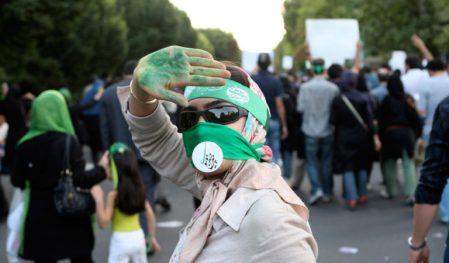
An Iranian protester during the Green Revolution (Photo: Reuters)

The opinions below are those of the author and do not necessarily reflect those of Clarion Project.

In contrast to other countries that lack a opposition that can be trusted, Iran enjoys an internationally-recognized alternative based on democratic values acknowledged across the globe.

The National Council of Resistance of Iran (NCRI) and its pivotal member, the People’s Mojahedin Organization of Iran (PMOI/MEK), is the largest and most organized opposition in the face of the Iranian regime. The NCRI enjoys widespread support inside Iran and throughout the world, with the ability to organize an uprising against the regime in Tehran. Senior Iranian regime officials have acknowledged the time and again that the main threat compromising Iran’s entire regime apparatus is none other than the PMOI/MEK. To this end, they have focused their entire efforts on physically obliterating this Iranian opposition group.

In 2009, when the Iranian people took to the streets and demanded fundamental change, their efforts went unsupported due to Obama’s appeasement policy that sought to sign the nuclear deal with Tehran at all costs. This was an opportunity that enjoyed the potential of significantly decreasing existing Middle East crises. Today, the regime in Tehran is facing crises far more dangerous than 2009.

The correct Iran policy is supporting regime change by the Iranian people and their organized and legitimate resistance. By adopting such a stance, the international community can begin to confront Iran’s notorious influence in the region and its nuclear ambitions in order to spread security in a non-nuclear Middle East free of terrorism.

***************************

U.S. Secretary of State Rex Tillerson announced at a press conference on April 19 that the White House is evaluating its policy on Iran. This policy overview will not merely cover the Iran nuclear deal, but will be a comprehensive look at all Iran-related issues.

At a press conference, Tillerson formalized Iran’s provocative and destructive measures in different fields.

“Iran is the world’s leading state sponsor of terrorism and is responsible for intensifying multiple conflicts and undermining U.S. interests in countries such as Syria, Yemen, Iraq, and Lebanon, and continuing to support attacks against Israel … An unchecked Iran has the potential to travel the same path as North Korea, and take the world along with it … Iran’s provocative actions threaten the United States, the region, and the world …” he said.

“Iran continues to have one of the world’s worst human rights records,” Tillerson added.

Defense Secretary James Mattis adopted a similar approach on April 22 at the Center for Strategic and International Studies, saying, “But we’re talking about the Mideast at an inflection point. And I would just point out right now that among the many challenges the Mideast faces, I think Iran is actually foremost … The Iranian regime, in my mind, is the single most enduring threat to stability and peace in the Middle East.”

Iran’s meddling has neutralized all efforts to resolve the region’s crises, said Bahrain Interior Minister Rashed bin Abdullah at a Gulf Cooperation Council (GCC) session, adding the region faces threats that demand cooperation to confront. He emphasized the need for unity in Gulf positions regarding strategic matters.

What is the right Iran policy?

Supporters of the Iran appeasement approach believe the correct policy is to engage the mullahs’ regime and continue dialogue. They justify this approach for two reasons: first, to contain Iran’s nuclear ambitions and second, to attempt to establish change from within by supporting so-called “moderates” inside the regime apparatus.

This is the policy pursued during the Obama years without any political or strategic reservation, and also that of previous administrations throughout the past few decades.

However, rapprochement with Tehran not only failed to contain the mullahs’ ambitions and terrorism; in fact, it further encouraged the regime and plunged the entire Middle East into insecurity and instability.

The Wall Street Journal wrote in a recent piece, “President Donald Trump’s hard-line view on Iran was at odds with State Department diplomats.”

Yet, the solution placed forward by Obama and the State Department’s experienced diplomats resulted in Iran escalating its flagrant human rights violations and expanding its devious influence throughout the Middle East.

Others believe the right Iran policy is a military solution and the U.S. must launch airstrikes targeting Iran’s nuclear sites. Although this can deliver significant blows to Iran’s ambitions and disrupt the mullahs’ efforts to obtain nuclear weapons, the consequences on regional security and stability are controversial, placing the U.S. and its allies in yet another Middle East war.

What is the durable solution? Can we avoid war while bringing an end to the spread of extremism and terrorism across the globe?

Iran is the leading state sponsor of terrorism in today’s world. Since the appeasement policy adopted by previous U.S. administrations has been fruitless in containing Iran and actually led to the current dangerous circumstances, the only viable long-term solution is to adopt a firm policy that hinges on regime change.

In contrast to other countries that lack a opposition that can be trusted, Iran enjoys an internationally-recognized alternative based on democratic values acknowledged across the globe.

The National Council of Resistance of Iran (NCRI) and its pivotal member, the People’s Mojahedin Organization of Iran (PMOI/MEK), is the largest and most organized opposition in the face of the Iranian regime. The NCRI enjoys widespread support inside Iran and throughout the world, with the ability to organize an uprising against the regime in Tehran. Senior Iranian regime officials have acknowledged the time and again that the main threat compromising Iran’s entire regime apparatus is none other than the PMOI/MEK. To this end, they have focused their entire efforts on physically obliterating this Iranian opposition group.

Following a visit paid by Senator John McCain to Albania and his meeting with Iranian opposition leader Maryam Rajavi, an analysis posted on April 27 in Iran Dideban, a state-sponsored outlet, made vivid the regime’s concern that the Revolutionary Guards (IRGC) failed to quell and destroy the PMOI/MEK.

“The IRGC’s involvement in Syria led to serious neglect. This inattention has surfaced, resulting in this group [MEK] gaining a more open hand to play a role in on-the-ground developments … It is worth noting this group has significant experience in organizing campaigns and can pose a potential security threat for the country. The use of social domestic networks inside the country and influencing grayscale correspondents are among the efforts of this group. This has launched a wave of disappointment among forces loyal to the establishment and state.”

In 2009, when the Iranian people took to the streets and demanded fundamental change, their efforts went unsupported due to Obama’s appeasement policy that sought to sign the nuclear deal with Tehran at all costs. This was an opportunity that enjoyed the potential of significantly decreasing existing Middle East crises. Today, the regime in Tehran is facing crises far more dangerous than 2009.

The correct Iran policy is supporting regime change by the Iranian people and their organized and legitimate resistance. By adopting such a stance, the international community can begin to confront Iran’s notorious influence in the region and its nuclear ambitions in order to spread security in a non-nuclear Middle East free of terrorism.

DOJ Charges California Felon With Dealing Heroin, Illegally Building and Selling Machine Guns

May 14, 2017

DOJ Charges California Felon With Dealing Heroin, Illegally Building and Selling Machine Guns, Washington Free Beacon, May 14, 2017

(Please see also, Bad Hombre Crackdown: Sessions Ramps War on Drug Traffickers. — DM)

WASHINGTON, DC – MAY 12: U.S. Attorney General Jeff Sessions speaks during an event at the Justice Department May 12, 2017 in Washington, DC. Sessions was presented with an award “honoring his support of law enforcement” by the Sergeants Benevolent Association of New York City. (Photo by Win McNamee/Getty Images)

The Department of Justice charged a California man on Thursday with dealing heroin, illegally manufacturing machine guns, and illegally selling those same guns.

“Illegally manufacturing and brokering the sale of guns and drugs on the streets of San Diego poses a tremendous danger to our community,” acting U.S. attorney Alana W. Robinson said in a statement. “Prosecuting firearms offenses is a top priority for the U.S. Attorney’s Office, and we will continue our efforts to disrupt the availability of illegal guns in our city.”

The Department of Justice alleges in a complaint filed in federal court that 39-year-old La Jolla, Calif., resident Paul Joseph Holdy sold a variety of firearms to undercover agents from the Bureau of Alcohol, Tobacco, Firearms, and Explosives as well as the Federal Bureau of Investigation. The agencies say they covertly purchased 19 firearms from Holdy over the course of several months in 2016—included were a number of fully automatic firearms that Holdy had manufactured himself.

Since Holdy was previously convicted of dealing drugs, he was prohibited from possessing any firearms. Additionally, since he did not have a license to manufacture or sell firearms, he was prohibited from building or selling them.

“Firearms traffickers are responsible for the crimes committed with the guns they provide to felons and gang members,” ATF Los Angeles Field Division Special Agent in Charge Eric Harden said in a statement. “Felons cannot skirt the system by manufacturing and selling untraceable firearms from unfinished lower receivers. ATF will use its resources to strategically target and identify these criminals and interrupt the illegal flow of firearms to those who are prohibited from possessing firearms under the law.”

“Illegal firearms and narcotics trafficking cannot be tolerated on our streets,” FBI Special Agent in Charge Eric S. Birnbaum said in a statement. “The FBI will continue to identify, disrupt and dismantle these traffickers in order to keep our communities safe.”

On top of the firearms charges, Holdy was also charged with distribution of heroin. The operation is the result of a partnership between federal, state, and local law enforcement agencies as a part of the Organized Crime Drug Enforcement Task Force. That task force focuses on disrupting and dismantling drug and weapons trafficking rings across the country.

Holdy now faces as many as 30 years in prison and $1.25 million in fines.