Full Measure A-Block 04/23/2017 Ghost Soldiers via YouTube, April 24, 2017
Iran, Russia Boost Military Ties Amid U.S. Action In Syria, Washington Free Beacon,
(Please see also, Obama’s hidden Iran deal giveaway. — DM)

Russian Foreign Minister Sergei Lavrov (C) shakes hands with his Iranian counterpart Mohammad Javad Zarif (R) as Syrian Foreign Minister Walid Muallem (L) looks on after a joint press conference after their talks in Moscow on April 14, 2017./ AFP PHOTO ALEXANDER NEMENOV/AFP/Getty Images)
Russia can serve as a major military ally for Iran and help provide it with not just military capabilities, but nuclear technology. Iran and Russia inked several deals in the past years to build a series of new light water nuclear reactors across the Islamic Republic.
***********************
Iran and Russia are moving closer together in their military alliance, working to boost ties and coordination in Syria and elsewhere in the region following the U.S. decision to launch a military strike in Syria, according to regional reports and experts.
Iran’s defense minister is slated to visit Moscow at the end of the month to discuss increased military ties, a move that is meant to deter U.S. action in the region and show a sign of increased force, according to regional experts who spoke to the Washington Free Beacon.
The Tehran-Moscow axis has been growing since the landmark Iran nuclear deal, with Russia making good on a series of weapons deliveries, including the Russian-made S-300 missile defense system. The two countries have been signing an additional number of military deals in recent months and that cooperation is likely to increase in light of the Trump administration’s decision to launch strikes against embattled Syrian President Bashar al-Assad, who is being backed by both Russia and Iran.
Iranian leaders have signaled in recent days that the alliance with Russia is a top priority going forward and that a number of new military deals are in the works.
“The visit by Iranian [President Hassan] Rouhani that took place on March 28 was another step toward developing extensive cooperation between Moscow and Tehran,” Iranian Ambassador to Russia Mehdi Sanaei was quoted in the country’s state-controlled press.
“We hope that we will witness even broader bilateral ties across all areas in the future,” Sanaei said during an event last week marking the Iranian Army Day.
Sanaei also celebrated the recent delivery by Russia of the S-300 missile system, which Tehran had been coveting for some time. The system is viewed by Iran as a major deterrence factor aimed at intimidating U.S. forces in the region.
The delivery of the S-300 system to Iran is a sign that Russia has an interest in bolstering Tehran’s military might, Sanaei said.
Since signing a massive military deal in 2015 with Russia, “important steps have been taken to strengthen bilateral relations in the area of defense,” Sanaei said. “One such step was the delivery of S-300 missile systems to Iran. This is an indicator of mutual trust in defense cooperation.”
As Iran’s defense minister gears up to visit Moscow, regional experts predict that the military ties between the countries will only increase as Assad comes under greater international pressure.
However, the alliance between the countries remains fragile and largely one of convenience.
“Russia and Iran have a similar goal in keeping Assad in power at all costs,” Boris Zilberman, a Russia expert at the Foundation for Defense of Democracies’ (FDD) Center on Sanctions and Illicit Finance, told the Free Beacon. “However, how each perceives the end state in Syria and the other’s role in that future is one of the big questions in the relationship.”
In the short term, both Iran and Russia will aggressively work to “show a united front after America’s first strike on the Assad regime,” Zilberman said. “This is what we are seeing in the flurry of activity, but it is yet to be seen if anything of substance comes out of these talks.”
Behnam Ben Taleblu, a senior Iran analyst at FDD, said that Russia views Iran as a chief counter to U.S. power in the region. The alliance between the countries is likely to strengthen as long as Moscow can use Tehran to offset American influence in the region.
“Russia can and will likely continue to use Iran instrumentally in its larger strategic competition with the United States,” Ben Taleblu said. “One wonders however, how the leadership of the Islamic Republic, which derided the late Shah of Iran for his closeness to the U.S. are able to justify—legally, politically, and even spiritually, the concessions they have made to befriend Russia. As a reminder, no country has taken more territory away from Iran and threatened its sovereignty in the past half millennia than Russia.”
Russia can serve as a major military ally for Iran and help provide it with not just military capabilities, but nuclear technology. Iran and Russia inked several deals in the past years to build a series of new light water nuclear reactors across the Islamic Republic.
“For the past two years Tehran has been drawing closer to Moscow,” Ben Taleblu explained. “Iran will look to Russia to help it drive the U.S. from the region, as well as support its nuclear development under the auspices of the [Iran deal], and engage in a highly selective modernization process for its military. Russia and China will likely become the two largest sources for arms as a UN-mandated arms ban is set to expire in 2020.”
Jordanian Columnist In Muslim Brotherhood Daily: A Million Hitlers From All Over The World Will Appear And Eliminate The Jews, MEMRI, April 23, 2017
(Another brotherly article from the Obama’s friends in the Muslim Brotherhood. When are we going to designate it a foreign terrorist organization?– DM)
In the last few months, Jamal Al-Shawaheen, a columnist for the Jordanian Muslim Brotherhood newspaper Al-Sabil, published two virulently antisemitic articles. In an article from March 18, 2017 titled “The Jewish Entity [Is] the Problem of the Whole World,” he wrote that the conflict in the Arab world will not end as long as Israel exists and that the objective of eliminating it will remain on the Arab agenda “generation after generation.” He added that the Jews have nothing in common except their religion and thus do not constitute a genuine nation but only “concentrations of greedy crooks.” Moreover, “history indicates that a million Hitlers from all over the world will [appear and] eliminate them… because they are the problem of the whole world and not just of the Arabs.”
In an article from December 10, 2016, he denied the factuality of the Holocaust and accused the Jews of operating a “meat-grinder for human flesh” in which they exterminate Palestinians and Arabs using British and American tools. He added that the only way to put a stop to this was to eliminate the Jews themselves.
It should be mentioned that, prior to this, Al-Shawaheen published several other antisemitic articles in Al-Sabil that were translated by MEMRI.[1]
The following are excerpts from his latest two articles:
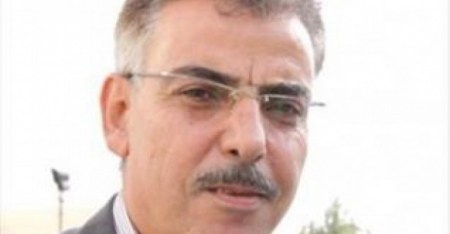 Jamal Al-Shawaheen (image: paltimes.net)
Eliminating The Jewish Israeli Entity Will Forever Remain On The Arab Agenda
In his March 18, 2017 article Al-Shawaheen wrote: “The conflict in the Arab world will persist and intensify in every way so long as the Israeli entity exists. There is no solution except erasing and uprooting [this entity], otherwise the boundless war will continue, moving from arena to arena, and sooner or later [the war] with the enemy entity will flare up [again]… Whoever thinks that the enemy’s power is eternal is surely mistaken, since foreign bodies must be removed from the body, otherwise they destroy it. Foreigners, no matter how powerful, have no hope of survival – that is what history shows us and teaches us.
“The Arab peoples are not in the same situation as the Indians [of America] who were eliminated entirely to make room for other peoples and countries… The times are different and the situation is not as it was in the past, for what force can eliminate the Arabs for good?!
“The elimination of the Jewish Israeli entity will therefore remain on the Arab agenda generation after generation, and even if today [we] are in an unfortunate state of submissiveness, this will not forever be the case. The history of nations teaches [us] many lessons… The Chinese have endured for thousands of years, as have the Russians and all the genuine peoples. It can be said that, of all the peoples in the world, only the Jews lack any [common] features that make them into a people, except for their religion, and throughout history this has never been sufficient to make them into any kind of nation. They have always been, and still are, nothing but concentrations of greedy crooks. Even if wars will not defeat them today, history indicates that a million Hitlers from all over the world will [appear and] eliminate them and get rid of them forever. This will not be long in coming, because they are the problem of the whole world and not just of the Arabs.”[2]
“The Jews Founded [Their] Usurping State Thanks To… The Lie Of The Holocaust”
In his December 10, 2016 article Al-Shawaheen wrote: “The Jews founded [their] usurping state thanks to the sympathy Britain and other countries felt for them, [sympathy aroused] by the lie of the Holocaust. [The Jews] continue to take this criminal usurpation as far as possible, yet [their state] enjoys the support of several countries, chief of them the U.S. This great Jewish crime continues… Now that this crime has persisted, and even intensified, for such a long time, is it possible to see those who abet it as criminals too, given that ‘one who abets terrorism is a terrorist himself’?
“If the Holocaust, assuming it even happened, exterminated dozens of German Jews, then the only way to describe the elimination of tens of thousands of Palestinians and Arabs is as a grinder of human flesh that initially used British tools and later many American ones, as well as funds exhuding the smell of gas.
“Therefore, we must take heed and prepare. The Palestinian people is facing a new phase on the way to this meat grinder, for Trump will certainly not wish to stop it. Moreover, this [meat] grinder also operates simultaneously in Iraq, Syria, Yemen and Libya, but with one difference: [in those countries] those who directly operate it are not Jews in terms of their faith but rather in terms of their submission to their [Jewish] masters, [whom they serve] as lackeys [even] lowlier than Al-Alqami…[3]
“There is an American movie called The Meat Grinder, whose main premise involves a gang that murders poor people and grinds their flesh [to sell it] as canned dog food. After this meat becomes popular with dog owners, dogs who become used to [eating] it turn feral and attack [people] to eat them. The movie focuses on how, in order to eliminate the problem, [both] the customers [i.e., dog owners] and the dogs are killed.[4] It appears that, in order to get rid of the Jews’ [meat] grinder, we have no choice but to adopt the same solution. That is what needs to be done, by any possible means, since the goal is a noble one, and then the world will be rid of terrorism, all of which is blatantly Jewish.”[5]
________________________
[1] See MEMRI Special Dispatch No.5733, Jordanian Journalist: Hitler Was A Million Times More Merciful Than Israel’s Leaders, May 7, 2014; Special Dispatch No. 6580, Jordanian Journalist In Three Antisemitic Articles: The Jews Want To Destroy Other Religions And Peoples And Endanger Europe; Depicting Them In A Positive Light Constitutes Brainwashing, August 18, 2016.
[2] Al-Sabil (Jordan), March 18, 2017.
[3] Ibn Al-Alqami, a Shi’ite minister in the court of the last Abbasid caliph Al-Musta’sim (1213-1258), rebelled against the Caliph and is accused of having a hand in the fall of the ‘Abbasid caliphate. His name is often used as a synonym for treason and collaboration with foreign enemies.
[4] Apparently a reference to a 1971 horror comedy The Corpse Grinders, in which a cat food company in financial trouble decides to utilize a cheap source of meat – the local cemetery – and mayhem ensues after the cats develop a taste for human flesh and start attacking people.
[5] Al-Sabil (Jordan), December 10, 2016.
Haley: China’s Been a ‘Really Great Friend’ to the U.S. Regarding North Korea, Washington Free Beacon, David Rutz, April 24, 2017
(Please see also, Chinese media: ‘China’s intervention not needed when only N.K.’s nuke facilities are hit’ — DM)
U.S. Ambassador to the United Nations Nikki Haley called China a “great friend” on Monday regarding its efforts to assist the U.S. with pressuring North Korea over its nuclear program.
Haley appeared on “CBS This Morning,” in addition to the other two network morning shows, to discuss rising tensions with North Korea over its nuclear and missile tests, as well as other foreign policy issues facing the Trump administration.
President Trump spoke on the phone Sunday night with Chinese President Xi Jinping, and CBS host Norah O’Donnell asked Haley what more China needs to do to deter the North Koreans from taking more provocative actions. China is North Korea’s most important ally and main trading partner, giving Beijing strong influence over the rogue state.
“I think China is really in good faith doing quite a bit,” Haley said. “They are trying to put pressure on North Korea. What we’ve said is we want you to put more pressure on North Korea, whether that’s with coal, whether that’s with oil, whether that’s with other sanctions … I think China’s been a really great friend of ours, and the way they came together with us to do the statement last week showed that we are united against wanting North Korea to stay away from doing any sort of nuclear threats.”
Haley added that North Korean leader Kim Jong-un is “flailing” and trying to show strength to his people.
“They’re panicking right now,” she said.
Last week, a Chinese spokesman said Beijing was “gravely concerned” about North Korean nuclear activity and praised the U.S. for “constructive” remarks about resolving the issue peacefully.
North Korea has continually made belligerent gestures toward the U.S., displaying a video last week showing the U.S. in flames during a military celebration.
Trump has softened his rhetoric about China, even refusing to call the country a currency manipulator after months of calling it one on the campaign trail, due to its assistance in pressuring North Korea.
“What, am I going to start trade war with China in the middle of him working on a bigger problem with North Korea?” Trump said last week. “I’m dealing with China with great respect. I have great respect for him. We’ll see what he can do.”
Trump has also cited friendly relations with the Chinese president as a reason to not start a trade war with the world’s largest country.
Chinese media: ‘China’s intervention not needed when only N.K.’s nuke facilities are hit’ Dong-a Ilbo, April 24, 2017
A Chinese state-run media outlet said that if North Korea continues nuclear and missile development, China may not provide military support to China even if the U.S. launches preemptive strike on the North. China and North Korea have agreed to provide military assistance if one of them gets under military attack, and hence the latest report is construed as Beijing’s stern warning against Pyongyang.
If the U.S. launches surgical strikes on North Korea’s nuclear facilities, China will seek diplomatic deterrence but military intervention is not needed, China’s state-run Global Times said on Saturday. However, the daily repeated its previous stance that f the U.S. and South Korean militaries cross the 38th parallel to invade the North and seek to topple the North Korean regime, China should immediately start military intervention.”
With the U.S. and China stepping up pressure on North Korea, U.S. President Donald Trump held calls in succession with Japanese Prime Minister Shinzo Abe and Chinese President Xi Jinping Sunday morning, and discussed ways to resolve the North Korean nuclear issue. President Trump reportedly asked the Japanese and Chinese leaders to extend cooperation to manage the situation wherein signs of North Korea’s sixth nuclear test are mounting. Notably, in his call with Chinese President Xi, President Trump reportedly commended Beijing’s recent efforts to deter the North’s nuclear development and called on Beijing to use more specific measures to pressure the North.
In the premiere of “Born in China, a movie jointly produced by the U.S. and China held at the Chinese embassy in Washington on Friday, Chinese Ambassador to the U.S. Cui Tiankai said that President Trump will visit China in the second half of this year. After President Trump and President Xi held summit at Trump’s Mar-a-Lago estate in Florida on April 6 and 7, the two leaders agreed to President Trump’s return visit to China at the earliest date.
Obama’s hidden Iran deal giveaway, Politico, Josh Meyer, April 24, 2017
 Sean McCabe for POLITICO
The biggest fish, though, was Seyed Abolfazl Shahab Jamili, who had been charged with being part of a conspiracy that from 2005 to 2012 procured thousands of parts with nuclear applications for Iran via China. That included hundreds of U.S.-made sensors for the uranium enrichment centrifuges in Iran whose progress had prompted the nuclear deal talks in the first place.
The saga of how the Obama administration threw a monkey wrench into its own Justice Department-led counterproliferation effort continues to play out almost entirely out of public view, largely because of the highly secretive nature of the cases and the negotiations that affected them.
That may be about to change, as the Trump administration and both chambers of Congress have pledged to crack down on Tehran’s nuclear and ballistic missile programs. Last Wednesday, Secretary of State Rex Tillerson announced a government-wide review of U.S. policy toward Iran in the face of “alarming and ongoing provocations that export terror and violence, destabilizing more than one country at a time.”
Over the past year, the system has kicked back into gear, with some new cases filed and movement in existing ones. Some, however, involve activity dating to 2008, including the prosecution of some of Ravan’s suspected associates in the Iraq IED case. Privately, some prosecutors and investigators are hopeful that the Trump administration’s more hard-line approach to Tehran will mean more support for their efforts.
***********************************
By dropping charges against major arms targets, the administration infuriated Justice Department officials — and undermined its own counterproliferation task forces.
When President Barack Obama announced the “one-time gesture” of releasing Iranian-born prisoners who “were not charged with terrorism or any violent offenses” last year, his administration presented the move as a modest trade-off for the greater good of the Iran nuclear agreement and Tehran’s pledge to free five Americans.
“Iran had a significantly higher number of individuals, of course, at the beginning of this negotiation that they would have liked to have seen released,” one senior Obama administration official told reporters in a background briefing arranged by the White House, adding that “we were able to winnow that down to these seven individuals, six of whom are Iranian-Americans.”
But Obama, the senior official and other administration representatives weren’t telling the whole story on Jan. 17, 2016, in their highly choreographed rollout of the prisoner swap and simultaneous implementation of the six-party nuclear deal, according to a POLITICO investigation.
In his Sunday morning address to the American people, Obama portrayed the seven men he freed as “civilians.” The senior official described them as businessmen convicted of or awaiting trial for mere “sanctions-related offenses, violations of the trade embargo.”
In reality, some of them were accused by Obama’s own Justice Department of posing threats to national security. Three allegedly were part of an illegal procurement network supplying Iran with U.S.-made microelectronics with applications in surface-to-air and cruise missiles like the kind Tehran test-fired recently, prompting a still-escalating exchange of threats with the Trump administration. Another was serving an eight-year sentence for conspiring to supply Iran with satellite technology and hardware. As part of the deal, U.S. officials even dropped their demand for $10 million that a jury said the aerospace engineer illegally received from Tehran.
And in a series of unpublicized court filings, the Justice Department dropped charges and international arrest warrants against 14 other men, all of them fugitives. The administration didn’t disclose their names or what they were accused of doing, noting only in an unattributed, 152-word statement about the swap that the U.S. “also removed any Interpol red notices and dismissed any charges against 14 Iranians for whom it was assessed that extradition requests were unlikely to be successful.”
Three of the fugitives allegedly sought to lease Boeing aircraft for an Iranian airline that authorities say had supported Hezbollah, the U.S.-designated terrorist organization. A fourth, Behrouz Dolatzadeh, was charged with conspiring to buy thousands of U.S.-made assault rifles and illegally import them into Iran.
A fifth, Amin Ravan, was charged with smuggling U.S. military antennas to Hong Kong and Singapore for use in Iran. U.S. authorities also believe he was part of a procurement network providing Iran with high-tech components for an especially deadly type of IED used by Shiite militias to kill hundreds of American troops in Iraq.
The biggest fish, though, was Seyed Abolfazl Shahab Jamili, who had been charged with being part of a conspiracy that from 2005 to 2012 procured thousands of parts with nuclear applications for Iran via China. That included hundreds of U.S.-made sensors for the uranium enrichment centrifuges in Iran whose progress had prompted the nuclear deal talks in the first place.
When federal prosecutors and agents learned the true extent of the releases, many were shocked and angry. Some had spent years, if not decades, working to penetrate the global proliferation networks that allowed Iranian arms traders both to obtain crucial materials for Tehran’s illicit nuclear and ballistic missile programs and, in some cases, to provide dangerous materials to other countries.
“They didn’t just dismiss a bunch of innocent business guys,” said one former federal law enforcement supervisor centrally involved in the hunt for Iranian arms traffickers and nuclear smugglers. “And then they didn’t give a full story of it.”
In its determination to win support for the nuclear deal and prisoner swap from Tehran — and from Congress and the American people — the Obama administration did a lot more than just downplay the threats posed by the men it let off the hook, according to POLITICO’s findings.
Through action in some cases and inaction in others, the White House derailed its own much-touted National Counterproliferation Initiative at a time when it was making unprecedented headway in thwarting Iran’s proliferation networks. In addition, the POLITICO investigation found that Justice and State Department officials denied or delayed requests from prosecutors and agents to lure some key Iranian fugitives to friendly countries so they could be arrested. Similarly, Justice and State, at times in consultation with the White House, slowed down efforts to extradite some suspects already in custody overseas, according to current and former officials and others involved in the counterproliferation effort.
And as far back as the fall of 2014, Obama administration officials began slow-walking some significant investigations and prosecutions of Iranian procurement networks operating in the U.S. These previously undisclosed findings are based on interviews with key participants at all levels of government and an extensive review of court records and other documents.
“Clearly, there was an embargo on any Iranian cases,” according to the former federal supervisor.
“Of course it pissed people off, but it’s more significant that these guys were freed, and that people were killed because of the actions of one of them,” the supervisor added, in reference to Ravan and the IED network.
The supervisor noted that in agreeing to lift crippling sanctions against Tehran, the Obama administration had insisted on retaining the right to go after Iran for its efforts to develop ballistic missiles capable of delivering nuclear warheads and cruise missiles that could penetrate U.S. defenses, and to illegally procure components for its nuclear, military and weapons systems.
“Then why would you be dismissing the people that you know about who are involved in that?” the former official asked.
A SHREWD CALCULATION
The saga of how the Obama administration threw a monkey wrench into its own Justice Department-led counterproliferation effort continues to play out almost entirely out of public view, largely because of the highly secretive nature of the cases and the negotiations that affected them.
That may be about to change, as the Trump administration and both chambers of Congress have pledged to crack down on Tehran’s nuclear and ballistic missile programs. Last Wednesday, Secretary of State Rex Tillerson announced a government-wide review of U.S. policy toward Iran in the face of “alarming and ongoing provocations that export terror and violence, destabilizing more than one country at a time.”
On Thursday, President Donald Trump declared that even if Iran is meeting the terms of its deal with the Obama administration and other world powers, “they are not living up to the spirit of it, I can tell you that. And we’re analyzing it very, very carefully, and we’ll have something to say about that in the not-too-distant future.”
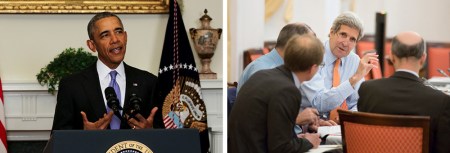 At left, President Barack Obama delivers a statement Jan. 17, 2016, on the relations between the U.S. and Iran. At right, Secretary of State John Kerry and Russian Foreign Minister Sergei Lavrov meet July 7, 2015, in Vienna, Austria, during the nuclear talks between the E3+3 and Iran. | AP and Getty Photos
Such reviews are likely to train a spotlight on an aspect of the nuclear deal and prisoner swap that has infuriated the federal law enforcement community most — the hidden damage it has caused to investigations and prosecutions into a wide array of Iranian smuggling networks with U.S. connections.
Valerie Lincy, executive director of the nonpartisan Wisconsin Project on Nuclear Arms Control, said Obama administration officials made a shrewd political calculation in focusing public attention on just those seven men it was freeing in the United States, and portraying them as mere sanctions violators.
That way, she said, “They just didn’t think it was going to make too many waves. And I think they were right.”
But Lincy, who closely tracks the U.S. counterproliferation effort against Iran, said that by letting so many men off the hook, and for such a wide range of offenses, Washington has effectively given its blessing to Iran’s continuing defiance of international laws.
Former Obama administration officials deny that, saying the men could still be prosecuted if they continue their illegal activity. But with their cases dropped, international arrest warrants dismissed and investigative assets redirected, the men — especially the 14 fugitives — can now continue activities the U.S. considers to be serious threats to its national security, Lincy said.
“This is a scandal,” she said. “The cases bear all the hallmarks of exactly the kinds of national security threats we’re still going after. It’s stunning and hard to understand why we would do this.”
Even some initial supporters of negotiating with Iran said the disclosures are troubling.
“There was always a broader conceptual problem with the administration not wanting to upset the balance of the deal or the perceived rapprochement with the Iranian regime,” said former Bush administration deputy national security adviser Juan Zarate, who later turned against the accord. “The deal was sacrosanct, and the Iranians knew it from the start and took full advantage when we had — and continue to maintain — enormous leverage.”
Most, if not all, of the Justice Department lawyers and prosecutors involved in the Counterproliferation Initiative were kept in the dark about how their cases were being used as bargaining chips, according to interviews with more than a dozen current and former officials.
So were the federal agents from the FBI and departments of Homeland Security and Commerce who for years had been operating internationally, often undercover, on the front lines of the hunt for Iranian arms and weapons smugglers.
It wasn’t just that prosecutors and agents with years of detailed knowledge about the cases were left out of the consultations about the significance of the 21 men let go in the swap. The lack of input also meant that negotiators were making decisions without fully understanding how the releases would impact the broader and interconnected matrix of U.S. investigations.
At the time, those investigations were providing U.S. officials with a roadmap of how, exactly, Tehran was clandestinely building its nuclear and ballistic missile programs and maintaining its military with the unwitting assistance of so many U.S. weapons parts and technology companies. The cases were also providing key operational details of how the Iranian procurement networks operate, and who in Tehran was calling the shots.
“So when they downplayed it, it really infuriated people,” said Kenneth MacDonald, a former senior Homeland Security official who helped establish the multi-agency coordination center at the heart of the National Counterproliferation Initiative.
“They’d spent months or years on these cases and the decisions were made with no review of what the implications were,” said MacDonald, who retired in 2013 but keeps in contact with agents as co-principal investigator at the DHS-affiliated Institute for Security Policy at Northeastern University. “There was absolutely no consultation.”
A SYSTEM IN LIMBO
In a series of interviews, senior officials from the Obama White House and Justice and State Departments said the prisoner swap was a bargain for the U.S., given the release of Washington Post reporter Jason Rezaian, former Marine Amir Hekmati and three others. Iran also promised cooperation on the case of former FBI agent Robert Levinson, who had disappeared in Iran nearly a decade earlier and was believed to be either imprisoned or dead.
Those senior officials acknowledged that all but a handful of people were kept in the dark, but said top representatives of the Justice Department and FBI helped vet the 21 Iranian proliferators and that then-Attorney General Loretta Lynch herself participated in blocking some other individuals demanded by Tehran from inclusion in potential prisoner trades.
“The condition was that they not be engaged in anything remotely attached to violence or proliferation activities,” said one senior Obama administration official familiar with the swap negotiations. “And none of them were in any stage where they were providing assistance to the [Tehran] government.”
That may be true for the seven men granted clemency in the United States, but it certainly wasn’t the case for the 14 fugitives.
“These were people under active investigation, who we wanted very badly because they were operating at such a high level that they could help us begin to find out what was happening inside the black box of how Iran’s procurement networks really operate,” said Aaron Arnold, a former intelligence analyst at CPC2, the FBI’s special Counterproliferation Center unit dedicated to thwarting Iranian nuclear and weapons smuggling. “Without that kind of strategic insight, it leaves our analysts, but more importantly, our policy-makers just guessing at what Iran is up to and how to stop it.”
Fifteen months later, the fallout from the nuclear deal and prisoner swap — and questions about the events leading up to them — continue to reverberate through the Justice Department and the specialized units at the FBI, Department of Homeland Security and Commerce Department created to neutralize the threat posed by Iran’s nuclear and military ambitions.
The National Counterproliferation Initiative, created with much fanfare a decade ago, has suffered greatly, many participants said, even as they acknowledged that metrics are hard to come by. Much of the work is done in secret, and in long-range efforts that can’t be publicly disclosed, much less measured in annual arrest or conviction statistics.
But key enforcement efforts are in limbo as the result of stalled or stymied investigations and prosecutions, and the trail of some high-value targets has gone cold, numerous participants said.
At least six times in the run-up to the nuclear deal, federal investigators scrambled to get Justice and State Department approval to lure top Iranian targets into traveling internationally in order to arrest them, according to one top Obama administration Justice Department official and other participants. But the requests weren’t approved and the targets vanished, depriving the U.S. of some of its best opportunities to gain insight into the workings of Tehran’s nuclear, missile and military programs, the sources said.
“We would say, ‘We have this opportunity and if we don’t do it now, we’ll never have the opportunity ever again,” the recently departed Justice Department official recalls. But, he added, “There were periods of time where State Department cooperation was necessary but not forthcoming.”
Obama Secretary of State John Kerry declined to comment through a former senior State Department official, who said certain requests might have been delayed temporarily because they came at particularly sensitive times in the negotiations, but only with the concurrence of the White House and Justice Department.
But even now, many experienced agents and prosecutors say they are reluctant to pursue counterproliferation cases for fear that they won’t go anywhere. They say they have also received no helpful guidance on what they can — and cannot — investigate going forward given the complicated parameters of the Iran deal and lifting of nuclear sanctions. Some said they are biding their time to see how hard-liners in the new administration, including Trump himself, deal with Iran.
But others have grown so frustrated that they have moved on from the counterproliferation effort, taking with them decades of investigative experience and relationships cultivated with other government agencies and cooperating U.S. companies, a number of current and former officials said.
And critical momentum has been lost, many say, as the 10-year anniversary of the initiative in October approaches.
“This has erased literally years — many years — of hard work, and important cases that can be used to build toward other cases and even bigger players in Iran’s nuclear and conventional weapons programs,” said former Justice Department counterproliferation prosecutor David Locke Hall, adding that the swap demolished the deterrent effect that the arrests and convictions may have had. “Even though these men’s crimes posed a direct threat to U.S. national security, the [Obama] administration has essentially told them their efforts have produced nothing more than political capital that can be traded away when politically expedient.”
One senior Obama administration official who served at the White House and DHS disagreed, saying much of the intelligence about Iranian networks remains usable even though the 21 cases were vacated, and that counterproliferation agents are a resilient bunch who will continue to do their jobs.
When asked whether the counterproliferation effort has struggled, one current Justice Department spokesman said no and quipped, “We are still in the export violation prosecuting business.”
That may be the case, said David Albright of the Institute for Science and International Security, a physicist and former weapons inspector whose decades of scientific research into Iran’s secret nuclear weapons program brings him into regular close contact with federal authorities.
But like others involved in ongoing U.S. counterproliferation efforts, Albright said he witnessed many instances since late 2014 in which important investigations and prosecutions were hindered. Albright, who serves as an expert witness in Justice Department Iran trafficking prosecutions, added that federal agents have told him of numerous cases of “lure memos” and other requests never approved by the State Department.
“You can’t keep turning these down and expecting them to want to keep doing this,” said Albright, who added that efforts to lure suspects to countries where they can be arrested are essential in getting beyond the lower rungs of middlemen for Iran. He said he could not disclose specific details, but said, “The amount of rejections has risen to the level where people were worried that it would kill the counterproliferation effort.”
“They had wanted all of these things prosecuted, they were on a roll, they were freaking out the Iranians and then they were told, boom, stop,” Albright said of the Obama administration’s counterproliferation efforts. “And it’s hard to get them back again. We are shooting ourselves in the foot, destroying the infrastructure that we created to enforce the laws against the Iranians.”
The repercussions from the prisoner swap are especially strong in Boston, where authorities had worked for years to build the case against Jamili, the suspected Iranian nuclear procurement agent, and his China-based associate Sihai Cheng.
The two were secretly indicted in 2013 along with two Iranian companies, and Cheng pleaded guilty in mid-December 2015 to four criminal counts. He acknowledged conspiring with Jamili to knowingly provide more than 1,000 high-tech components known as pressure transducers to Iran, which authorities say advanced its nuclear weapons capabilities.
Less than a month later, though, as the prisoner swap unfolded, Boston prosecutors got orders from Washington to file court papers vacating the charges against Jamili and dropping the Interpol arrest warrant for him.
It wasn’t until later that the case agents and prosecutors learned that the Iranian negotiators had specifically demanded that Jamili be included in the swap, said Arnold, the former analyst at the FBI’s Counterproliferation Center Iran unit, where he headed a financial intelligence team tracking the money flows of the Iranian networks.
A GLOBAL CAT AND MOUSE GAME
By the time of the nuclear deal and prisoner swap, the U.S. government had spent 35 years in pursuit of Iran’s ever more sophisticated web of smugglers, traffickers, transport operatives and procurement agents.
In 1979, President Jimmy Carter declared that Iran constituted an unusual and extraordinary threat to U.S. security after Islamic revolutionaries overran the U.S. Embassy in Tehran and took hostage 52 Americans. Tehran began calling the United States “the Great Satan” and vowed its destruction, in part by using proxy forces like Hezbollah.
A raft of economic sanctions against Iran and Iranian entities were put in place, followed by other restrictions on U.S. parts and technology that Tehran needed for military or other restricted applications, including its squadrons of F-class fighter jets that Washington sold it during friendlier times. Its ambitious ballistic missile program became a grave concern over the years, especially when it became apparent that Tehran was using U.S. commodities to engineer inter-continental versions that could reach the United States, and to top them with nuclear, conventional or even chemical and biological weapons.
And as Iran’s suspected nuclear weapons program ramped up, so did the U.S. effort to stop it.
Overseas, U.S. intelligence operatives shadowed Iranian procurement agents, cultivated informants and used cyberweapons to sabotage Iran’s clandestine program. The U.S. military tried to interdict illicit shipments headed for Tehran. The Treasury Department issued endless rounds of targeted sanctions, but each time it restricted access to global markets for suspect individuals and companies, Tehran would simply create new ones. And successive administrations tried the diplomatic route to slow or stop Iranian proliferation, including Tehran’s efforts to share weapons and research with other enemies of the United States, without success.
In response, federal law enforcement agents and prosecutors were deployed to shut down the Iranian procurement networks and dam the rivers of U.S. parts and technology illicitly flowing to Iran in violation of export control laws.
That proved virtually impossible, given the hundreds of trading, shipping and transport companies Iran employed, and the complex payment schemes and often unwitting procurement agents it used to get the products via other countries with lax export controls.
Meanwhile, since at least 1982, the Government Accountability Office began issuing stinging reports about how the lack of coordination and information-sharing among U.S. agencies severely hampered efforts to bring criminal cases against traffickers.
After the 9/11 attacks, those turf battles intensified. The cases often took years to investigate, and federal agents from two or even three agencies would sometimes discover they were conducting international undercover operations against the same target, a top former Homeland Security official recalls.
Securing convictions from American juries was also a huge challenge given the complex nature of the cases, especially when the procurement networks were buying so-called dual-use components that also could be used for less nefarious purposes.
Two post-9/11 cases exposed gaping holes in the global counterproliferation safety net. In the United States, Israeli-born trafficker Asher Karni was arrested for illegally shipping suspected U.S. nuclear components to Pakistan for its atomic bomb arsenal. And in Pakistan, metallurgist Abdul Qadeer Khan was caught selling his country’s nuclear capability to Iran, Libya and North Korea.
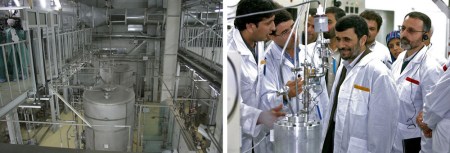 At left, an Iranian security employee walks in a part of the uranium conversion facility just outside the city of Isfahan, Iran, in 2005. At right, Iranian President Mahmoud Ahmadinejad visits the Natanz uranium enrichment facilities on April 8, 2008. Ahmadinejad announced on Iranian state television during the visit that Iran had begun the installation of some 6,000 new centrifuges, adding to to the 3,000 centrifuges already at the facility. | Getty
Both cases ratcheted up Washington’s fears that the vast underground of WMD trafficking rings could sell their wares to Al Qaeda and other terrorist groups.
In 2007, the Bush administration responded by establishing the National Counterproliferation Initiative, charging the Justice Department with coordinating and expanding U.S. efforts to dismantle the procurement networks.
Task forces were established around the country, with special training for prosecutors and agents in how to collectively build cases that would not only put front-line traffickers in prison, but also map the illicit networks and target their leadership.
From the outset, Iran cases were front and center, especially in cities like San Diego, Houston and New York with large military, industrial or technology sectors. Boston, in particular, seemed a favorite of the Iranian networks.
Soon, the multi-agency teams were homing in on key players in Iran’s nuclear and missile programs and another network procuring the IED components that Tehran’s fearsome Revolutionary Guard used to assist Iraqi insurgents killing American troops in Iraq.
An early high-value target was Amin Ravan, who by 2008 was working with a Singapore firm on behalf of the Aerospace Industries Organization, described by a secret State Department cable that year as “the umbrella organization and key procurement center for all Iranian industries responsible for developing and manufacturing missiles.”
Another was Behrouz Dolatzadeh, the suspected assault weapons buyer for Tehran. Authorities say he had been active as far back as 1995 in illegal arms smuggling and other illegal activities in connection with a sprawling business empire linked to Iran’s hard-line leader, Ayatollah Ali Khamenei.
By 2011, the Justice-led task forces had developed so many promising leads that the FBI, Commerce and Homeland Security Department had created special units to better coordinate efforts. Together, they also improved liaisons with overseas law enforcement agencies instrumental in interdicting shipments headed for Iran.
And working with U.S. intelligence agencies and the State Department, the task forces successfully lured several key Iranian operatives out of Tehran and China for capture elsewhere, including two who would end up on Obama’s prisoner swap list.
Dolatzadeh was indicted under seal in Arizona in February 2012, lured to the Czech Republic to inspect weapons en route to Iran, and arrested. And Ravan, already linked to the IED network, was secretly indicted in Washington in November 2012 and captured soon after in Malaysia.
And after a three-year undercover investigation, U.S. authorities lured a major Iranian proliferator named Parviz Khaki to the Philippines in May 2012 and arrested him on charges of conspiring to smuggle nuclear-related U.S. equipment to Iran.
“By dismantling this complex conspiracy … we have disrupted a significant threat to national security,” John Morton, then-director of DHS Immigration and Customs Enforcement, said at the time.
All three investigations provided U.S. officials with unprecedented insight into Iran’s secret procurement efforts, current and former task force members said. But Dolatzadeh and Ravan were released by courts overseas, and Khaki died in custody, before the U.S. could extradite them.
The counterproliferation teams also enlisted the help of American companies, providing them with Iran’s massive shopping list of needed items and hotlines to call when they got a nibble.
“It took a long time to mature, but by 2013 to 2014, it became very evident that we were getting a lot of great leads,” recalls Randall Coleman, who as assistant FBI director oversaw the bureau’s fledgling Counterproliferation Center and special coordinators in all 56 field offices.
“We were very aggressive, and as a result of that, our caseload went up about 500 percent,” Coleman said. “It really exploded. We were rocking and rolling.”
One of the most promising cases was in Boston, where federal agents were deep into their investigation of the illicit flow of parts to Iran from a Massachusetts firm, MKS Instruments, and its Shanghai subsidiary.
With help from MKS, which was not suspected of wrongdoing, agents initially focused on Cheng and gathered evidence that he had been indirectly supplying Iran with components with nuclear applications for years. The trail led to Eyvaz Technic Manufacturing, an Iranian company designated by European authorities as an entity involved in developing and procuring parts for Iran’s nuclear weapons and ballistic missile programs.
“Time is important, not only for you, for me, for your end user, but also for your nation,” Cheng wrote in a 2010 instant message to a suspected Iranian accomplice. “I personally believe the war will break out in 2 years and that will be the start of World War Three.”
But the agents’ curiosity was also piqued by another message from back in 2007, in which the Iranian accomplice, Seyed Jamili, asked Cheng for thousands of pressure transducers, for “a very big project and secret one.”
The project, authorities determined, was Iran’s clandestine uranium nuclear enrichment facilities at Natanz and Fordow, where the transducers helped run thousands of gas centrifuge cascades to reach weapons-grade capability. There was even a photo of then-president Mahmoud Ahmadinejad touring Natanz, with the centrifuges — and MKS transducers clearly visible — in the background.
International U.S. arrest warrants were secretly issued for the two men, and authorities nabbed Cheng when he traveled to London to watch a soccer match in February 2014. After he was extradited and brought to Boston that December, authorities began to realize that Jamili was a far more important cog in Iran’s proliferation network than they had suspected.
It was Jamili who had recruited Cheng with the promise of big and easy money, they determined, and who had been using his Iranian import-export firm as cover for personally recruiting other procurement agents on trips to China and possibly other countries.
Around that same time, negotiations over a comprehensive nuclear deal with Iran were heating up, and so were the top-secret prisoner swap talks on the sidelines of them.
AN OPERATIONAL SLOWDOWN
By the winter of 2014, federal agents and prosecutors began to detect waning support at the higher rungs of the Obama administration for their counterproliferation efforts against Iran, according to numerous officials involved. Also, they said, Justice Department management — and an interagency Iran working group — suddenly were scrutinizing Iran cases more closely, asking a lot more questions and holding up requests and approvals that in the past had been routine.
No specific guidance or order was given, some said, but the message was clear.
“They didn’t want to have cases just popping up in the workup to the agreement or shortly after the agreement. The administration would not look good if there were [cases documenting] these acquisition attempts. And the Iranians kept doing it,” MacDonald, the former senior Homeland Security official, said of Tehran’s illegal procurement efforts.
“They were never told no, just to wait,” MacDonald said of the agents. “It was a common theme among the people working these cases. The official response was that nothing had changed, that if you brought the case forward, it would be worked. But unofficially, that was just not the case.”
Some of the cases involved significant investigations into nuclear and missile proliferation that required State Department approval, including visas to lure suspects to the U.S. for arrest, said MacDonald, who had also served on the White House Task Force on Export Control Reform. “I’ve been told that the highest levels of the State Department weren’t processing those, and the cases couldn’t move forward.”
A former senior State Department official said that in most cases, State Department and White House could only provide nonbinding guidance on how ongoing law enforcement operations might affect the sensitive negotiations. Ultimately, he said, the Justice Department was responsible for pushing back and protecting the integrity of its investigations and prosecutions.
And while it’s possible that federal law enforcement officials missed opportunities as a result of State Department delays, “I am not aware of a single case where they lost out on some key arrest or information, or some proliferation activity was allowed to continue,” the former senior State Department official said, adding that some lures and extraditions were approved “until the very end of our tenure.”
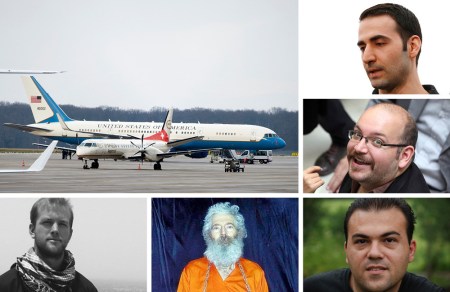 Clockwise from upper left: A U.S. plane sits on the tarmac of Geneva’s airport Jan. 17, 2016, awaiting the arrival of some of the Americans freed by Iran in a prisoner swap with the United States. The prisoners were former Marine Amir Hekmati, Washington Post reporter Jason Rezaian, Idaho pastor Saeed Abedini, private investigator and retired FBI and DEA agent Robert Levinson, Massachusetts student Matthew Trevithick and Nosratollah Khosravi-Roodsari (not pictured). | AP and Getty Photos
Richard Nephew, a former top Iran sanctions official at the State Department and National Security Council, said any delays were “much more a case of managing the diplomatic initiative than letting the bad guys get away with stuff. If we found out in the NSC that something involved active law enforcement activity, then we were advised to stay the hell away from it.”
A top Obama Justice Department official rejected the notion that the State Department didn’t undermine important cases. He said prosecutors and investigators sometimes acceded to requests for delays they believed to be reasonable. But they became infuriated at times, he said, especially when opportunities to lure and arrest key Iranian proliferators were lost due to delay or outright rejection by State.
“The impediment was not the leadership of DOJ but the other agencies that DOJ has to work with to bring these cases successfully,” the Obama Justice official said. “They can kibosh it, they can pocket veto it, they can tell us no, they can punt it down a couple of steps.”
Justice Department officials demanded “high-level conversations” with the State Department and White House, but “not a whole lot” changed, the Obama Justice official said. “Did it fix the issue? I don’t think it did. I remember people up and down at DOJ being frustrated with the inability to move things.”
A senior former federal law enforcement official involved in counterproliferation efforts agreed, saying the FBI was especially impacted. “Did some of these other agencies’ actions … undermine what we were trying to accomplish in terms of the Iran network in the U.S.? Yes. But you are treading into waters where people don’t like what you are doing because it affects other things they are trying to do, diplomatically and politically.”
Ultimately, the dysfunction created by the slowdown spread far beyond the enforcement agencies and damaged relationships with partners in private industry and foreign governments, former DHS official MacDonald and others said.
By early 2015, the Obama administration’s oft-publicized desire for securing an Iran deal “was politicizing all of the ongoing investigations,” Arnold said. He visited his former CPC Iran Unit colleagues that August while briefing Treasury and FBI officials on the Iran deal, reached a month earlier, as a counterproliferation expert at Harvard’s John F. Kennedy School of Government.
“There was a fear that as negotiations went on, the White House wouldn’t want to get caught in a flap” created by a high-profile arrest or criminal case, Arnold said.
For agents and prosecutors, the headlines such an incident would create would antagonize not only their superiors but also a White House intent on proving to Tehran that it was committed to reaching an accord. On the flip side, it could also provide ammunition to the proposed deal’s many critics in Congress and elsewhere, who were claiming that Iran was aggressively continuing its clandestine procurement efforts even as it pledged good behavior.
But agents and prosecutors had an even more powerful reason to throttle back on Iran proliferation cases, according to Arnold and others.
Despite repeated requests, many were not given guidance or reassurances that the nuclear deal being negotiated in secret wouldn’t render unprosecutable new and ongoing cases, especially high-priority ones against nuclear traffickers, Arnold said. So agents had no confidence that their work would bear fruit.
“It was absolutely insane,” Arnold said. “People didn’t know what to do.”
“From the summer of 2015 on, there was a serious slowdown” as many counterproliferation officials shut down prosecutions and investigations voluntarily, Arnold said. “During that time, CPC wasn’t as aggressive as it should have been.”
The senior Obama administration official acknowledged that the twin sets of negotiations influenced the overall U.S. counterproliferation effort against Iran, especially the timing of individual investigations, prosecutions and international efforts to bring suspects to justice.
Such competing equities are unavoidable when high-level matters of diplomacy and geopolitics are under consideration, the official said. At those times, the White House must be guided by broader policy objectives, in this case de-escalating conflict with Iran, curbing its nuclear weapons program and freeing at least four American prisoners.
“The White House wouldn’t be getting involved in saying yea or nay to particular arrests or cases or the like” that are the purview of the Justice Department, the administration official said. “It was not uncommon, though, that before we were going to undertake a law enforcement action that we thought would have foreign policy implications, we would alert folks at the White House so that there could be appropriate notice given to a foreign government. That happens.”
The former official also acknowledged the complaints by agents and prosecutors about cases being derailed but said they were unavoidable, and for the greater good.
“It’s entirely possible that during the pendency of the negotiations, that folks who were doing their jobs, doing the investigations and bringing cases, having no understanding of and insight into the other process, were frustrated because they don’t feel like their stuff is moving forward,” said the Obama official. “Or they were not getting answers, because there are these entirely appropriate discussions happening on the policy side.
“That doesn’t strike me as being, a, unusual or, b, wrong,” the official added. “But I completely understand why it’s frustrating.”
The Justice Department refused repeated requests to make available for interviews anyone related to the counterproliferation effort since the Iran deal, or to provide information about its role in the negotiations.
But in a statement to POLITICO, the Justice Department said the negotiations “did not affect the Department’s determination to investigate and charge worthy cases” and that it continued to “investigate, charge, and prosecute viable criminal cases … throughout negotiations of the JCPOA,” the formal term for the Iran deal. The Justice Department said it filed federal charges against 90 individuals and entities for violations of export controls and sanctions implicating Iran between 2014 and 2016, many under seal. It did not provide information about cases under seal for those or other years, making it impossible to place those numbers in the proper context.
Also, some of those cases involve the 21 Iranians let go in the swap. And because numerous individuals and entities often are charged in a single case, the statistics suggest a slowdown in counterproliferation efforts, according to current and former investigators and a POLITICO review of DOJ cases.
The timing of arrests, prosecutions and other investigative activities “may be informed by a variety of factors, including, especially in the national security context, collateral foreign policy consequences and impacts on American lives,” the Justice Department said. “Once an individual is charged, the Department works to ensure that the defendant, whether located in the U.S. or abroad, is held accountable. In seeking to apprehend defendants located abroad, however, we need assistance from other departments, agencies, and countries, and sometimes we cannot accomplish an arrest without it.”
Senior Obama administration officials also said the negotiations over the nuclear deal and, even more so the prisoner swap, required such extraordinary secrecy that only a tiny number of people were involved.
But as the nation’s top law enforcement official — and as a participant in the negotiations —Lynch failed in her responsibility as attorney general to protect the integrity of the Justice Department’s investigations and prosecutions from any political interference, some current and former officials believe.
Lynch, through an aide, declined to comment.
(A timeline graphic is at the link below. — DM
Trump’s attorney general, Jeff Sessions, raised the issue of Justice Department independence in 2015, when as a senator he asked incoming Deputy Attorney General Sally Yates about whether she knew that she had “the responsibility to say no to the president if he asks for something that’s improper?”
Earlier this year, this issue arose again when Trump fired then-Acting Attorney General Yates for doing just that and refusing to defend his executive order on immigration. By doing so, Trump had “placed the independence of the Justice Department at stake,” said Sen. Patrick J. Leahy (D-Vt.). “The attorney general is the people’s attorney, not the president’s attorney.”
Obama spokesman Kevin Lewis also emphasized the importance of such a firewall recently when addressing Trump’s claim that Obama had ordered wiretaps of him or his campaign. “A cardinal rule of the Obama administration was that no White House official ever interfered with any independent investigation led by the Department of Justice,” Lewis said.
Many front-line current and former authorities disagree, and say the Iran deal and prisoner swap is a glaring example of that.
“A lot of people were furious; they had cases in the pipeline for months, in some cases years, and then, all of a sudden, they were gone — all because they were trying to sell the nuke deal,” a former Department of Commerce counterproliferation agent said. “Things fell apart after that. There are some really good cases out there and they are not going forward. They just let them die on the vine.”
A MASTERMIND EMERGES
Top Obama administration officials insist that the nuclear deal does not impede any of the broader U.S. efforts to go after Iran’s vast nuclear, missile and conventional weapons procurement efforts. Even so, many participants said the way forward is still sufficiently unclear that they can’t, or won’t, proceed.
Over the past year, the system has kicked back into gear, with some new cases filed and movement in existing ones. Some, however, involve activity dating to 2008, including the prosecution of some of Ravan’s suspected associates in the Iraq IED case. Privately, some prosecutors and investigators are hopeful that the Trump administration’s more hard-line approach to Tehran will mean more support for their efforts.
Like many others, though, Albright said he is concerned that the counterproliferation effort has suffered significant and lasting damage, even if much of it involves classified efforts that may never become public.
“How much damage was done to the law enforcement side of this from us pulling back from these prosecutions?” he asked. “We have to pick up the pieces.”
Albright said that is especially the case in Boston, where he testified for the government against Cheng.
A few weeks after the prisoner swap, a judge sentenced Cheng to nine years in federal prison, even more than the prosecutors asked for, for his role in the conspiracy.
Cheng’s lawyer, Stephen Weymouth, accused federal prosecutors of unfair treatment, saying they threw the book at his client, a relatively small fish, while dropping all charges against the “mastermind,” Jamili.
Since the swap, federal authorities have learned more about Jamili, including intelligence tying him directly to Mostafa Ahmadi-Roshan, a top Iranian nuclear official who supervised a key “commercial affairs” initiative at the Natanz uranium enrichment facility, according to officials familiar with the case. Authorities believe Jamili was on the phone with Ahmadi-Roshan on Jan. 11, 2012, when unknown assailants on a motorbike killed him by attaching a bomb to his car. Tehran accused Israel’s Mossad in the attack.
But the federal agents’ efforts to pursue such leads, even in the U.S., have been complicated by the general uncertainty hanging over the broader counterproliferation effort, according to Arnold, the former FBI analyst.
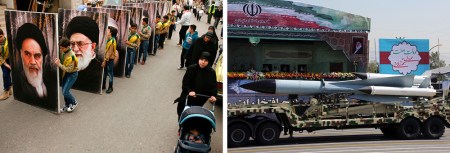 At left, young supporters of Lebanon’s militant Shiite Hezbollah movement carry portraits March 18, 2017, of the founder of Iran’s Islamic Republic, Ayatollah Ruhollah Khomeini, and Iran’s supreme leader Ayatollah Ali Khamenei as they march in the southern Lebanese town of Kfar Hatta during the funeral of a Hezbollah fighter. At right, an S-200 surface-to-air missile is driven past Iranian military commanders Sept. 22, 2015, during the annual military parade in Tehran marking the anniversary of the start of Iran’s 1980-1988 war with Iraq. | Getty
“Part of the frustration is that there is strong evidence Iran is still conducting illegal procurement operations and the FBI can’t really go forward with these cases,” said Arnold, who has been closely following the Jamili-Cheng case as part of a Harvard research project into nuclear proliferation networks.
That frustration is especially acute when it comes to Jamili and the 13 other fugitives. When dropping the charges, the Justice Department said it was doing so in large part because it was unlikely that the U.S. would ever be successful in capturing or extraditing them anyway.
Some federal officials familiar with the cases scoffed at that, noting that they have lured many Iranians to places where they could be arrested, and that others were tripped up by sealed Interpol warrants while traveling. In Jamili’s case, said one, “he has traveled so we know there’s a chance we could get him.”
Despite decades of intensive investigations, Arnold said, U.S. officials still have a “major air gap” when it comes to understanding the intermediaries like Jamili involved in the Iranian networks — who are between foot soldiers like Cheng and government officials running the nuclear and weapons programs.
“All of a sudden, we’re no longer playing whack-a-mole, and we suddenly have this key player who is directly involved and has insider knowledge as to how this whole process works,” he said. “So to see him being traded away is frustrating.”
Syed Soharwardy says Islamic Sharia law is the solution, Jizya is not discriminatory, CIJ News, Jonathan D. Halevi, April 24, 2017
(Please see also, Sharia-Advocate Sarsour to Give Graduation Address at CUNY. — DM)
 Syed Soharwardy. Photo: screenshot YouTube CBC
Imam Syed Soharwardy of Calgary, the head of the Calgary-based Islamic Supreme Council of Canada and the founder of Muslims Against Terrorism, is often invited by CBC as a guest expert to discuss issues related to terrorism and radicalization. He is introduced as a moderate voice in the Muslim community who “has worked to prevent the radicalization of youth in Canada.”
In an article entitled “Islamic Shari’a – A Blessing OR a Burden” posted on the official site of the Islamic Supreme Council, Soharwardy says the following:
The following are excerpts from Syed Soharwardy’s article:
Islam is not just a religion, it is a normal and natural way of life… The purpose of Islam is to
create a very strong ethical and spiritual society on earth. In order to create such a society, Islam provides a complete road map. This road map is called Shari’a.
From the early 7th century until the 18th century, the Islamic countries fully enforced the Islamic Shari’a… Currently, there is not a single Islamic state where Shari’a is enforced in its full and pure form, only bits and pieces of Shari’a have been enforced and this is what confuses many people…
Neither Prophet Muhammad (Peace be upon him), nor the Islamic Shari’a should be blamed for the behaviour of any extremist that uses Islam for his/her own personal gains. The current chaos in Muslim countries is not because of Shari’a. It is because of the absence of Shari’a…
Prophet Muhammad (Peace be upon him) implemented Shari’a after he purified the hearts and minds of the society (inner side of a person). He implemented Shari’a after he made sure that no one sleeps hungry in the Islamic state. When he (Peace be upon him) asked women to dress modestly, he also asked men to dress modestly and lower their gaze. Sincerity, honesty, purity and economic independence is the pre-requisite of Shari’a. Before implementing Shari’a, the Muslim governments and jurists must make sure that every citizen of their country has food, shelter and dress. Shari’a can not be implemented on empty stomachs. A person who is going to die because of hunger can steal food and no one has the right to cut his hands. This is what Shari’a says. If a woman is raped by a man, the man should be punished not the woman. The so-called honour killings is a cruel custom of ignorant times and has no basis in Islamic Shari’a. The rights of women and non-Muslim minorities are completely protected by the Islamic Shari’a. There should be no doubt about it. Therefore, Islamic Shari’a is a blessing not a burden.
On Sunday, April 2, 2017, Soharwardy delivered a speech at Christ Church Scraborough Village in Toronto. The following is an excerpts from Soharwardy’s speech entitled “Interfaith Dialogue – Understanding Islam and Muslims”:
“Jizya [poll-tax] is not a discrimination against non-Muslims… In Islam everybody pay taxes… Muslims pay taxes which is called Zakat and non-Muslims pay taxes which is called Jizya… This is not racism… non-Muslims should be used on non-Muslims to protect their lives… and to their security and safety.”
CIJnews obtained a copy of a book “The Quran” (Saheeh International) that is being distributed for free across Ontario by Islamic groups, mosques and the Islamic booths at Toronto’s Dundas Square and St. Lawrence Market.
The book explains the Islamic Law based on the Quran and Sunnah (narrations about Mohammad’s sayings and deeds) regarding the fighting (jihad) against disbelievers, enforcing of a poll-tax on Jews and Christians who live under the rule of the Islamic State, taking non-Muslims women as sex-slaves during war, wife beating under certain conditions, punishing those of wage war against Islam by execution, crucifixion and amputation, condemning sodomy as an “evil” act and executing married men and women who were convicted of fornication by stoning them to death.
The following are excerpts from the book that deals with rights of non-Muslims in the Islamic State (Quranic verse followed by a modern commentary):
Surah (chapter) Al Imra, verse 112: “They have been put under humiliation [by Allah] wherever they are overtaken, except for a rope [i.e., covenant] from Allah and a rope [i.e., treaty] from the people [i.e., the Muslims].144 And they have drawn upon themselves anger from Allah and have been put under destitution. That is because they disbelieved in [i.e., rejected] the verses of Allah and killed the prophets without right. That is because they disobeyed and [habitually] transgressed.”
Modern commentary, footnote 144: “Once they have surrendered, the People of the Scripture retain their rights and honor (in spite of their refusal of Islam) through payment of the jizyah tax in place of zakah and military service due from Muslims. They are then under the protection of the Islamic state.”
The book “Human Rights in Islam and Common Misconceptions” by Abdul-Rahman al-Sheha that was also handed out at the Islamic booth at Toronto’s Dundas Square states the following:
“The non-Muslim residents of an Islamic state are required to pay a minimal tax called ‘Jizyah’ which is specific type of head-tax collected from individuals who do not accept Islam and desire to keep their religion while living in an Islamic state and under Islamic rule…”
The book Minhaj Al-Muslim (A book of Creed, Manners, Character, Acts of Worship and other Deeds) by Abu Bakr Jabir Al-Jaza’iry, is being sold in Islamic bookstores across Canada and is deemed a reliable source on Islamic Sharia Law. The following is excerpts from Vol. 2 pp. 182-185 that deal with the rights and duties of non-Muslims in the Islamic State:
The Agreement of Protection given to the Non-Muslim subjects under the Islamic Government, and its Regulations.
1. The agreement of protection given to the non-Muslims subjects under the Islamic Government
The agreement of protection is an assurance to the disbelievers who respond to Muslims by paying the Jizyah tax. It is a pact in which they promise the Muslims to adhere to the laws of the Islamic Sharia related to the prescribed laws of punishment, such as for murder, stealing and breach of honor.
2. Who is responsible for the agreement of protection given to the non-Muslim subjects under the Islamic Government?
It is only the Imam or his deputy among thr military commanders who has the authority to give the agreement of protection to non-Muslims. As for others, they have no right to do that. As for giving personal protection and security, it is permissible for ant Muslim man and woman to do that…
3. Distinguishing between the Muslims and non-Muslims who live under the Islamic Government
It is obligatory for non-Muslims to distinguish themselves from Muslims in the matter of clothing and other things, so that they will be recognized (as non-Muslim). It is not permissible to bury them in the Muslims’ cemetery. Similarly, it is not permissible to stand for them, nor it is permissible to precede them with the greetings of peace. Also, they should not be given seats of honor at gatherings…
Things Forbidden to Non-Muslims living under the Islamic government
Certain things are forbidden to the non-Muslims living under the Islamic government, such as:
1) Constructing Churches or Synagogues, or renovating the demolished ones…
2) Erecting the residence of non-Muslims above the homes of the Muslims…
3) Publicly drinking intoxicants or eating swine (pork) in front of the Muslims, or eating and drinking during the daytime of Ramadhan. Rather, they must conceal whatever things are forbidden to Muslims, due to fear of them causing temptation (to do what is forbidden) for the Muslims.
Things that invalidate the Agreement of Protection given to Non-Muslims living under the Islamic Government.
There are certain things that invalidate the agreement of protection given to the non-Muslims living under the Islamic Government such as:
1) refusing to pay the Jizyah tax.
2) Lack of adherence to the Islamic laws, which was a condition in the contract.
3) Aggression against Muslims by killing, robbery, spying or giving asylum to such a spy for the enemy, or committing fornication or idolatry with Muslim women.
4) Mentioning Allah, His Messenger or His Book in a blasphemous way.
Rights of Non-Muslims living under the Islamic Government.
It is the duty of Muslims to protect the lives, property and honor of non-Muslims living under the Islamic Government. The Muslims should avoid causing them any harm as long as they comply with the agreement and do not breach it…
If they breach the agreement and break in some way, their blood and properties become lawful (i.e. no longer sacredly protected). However, their women and children would remain safe, as no one is to be punished for the sin of another.
See also:
Trump Takes on Terrorism in His First Hundred Days, Breitbart, Kristina Wong, April 24, 2017
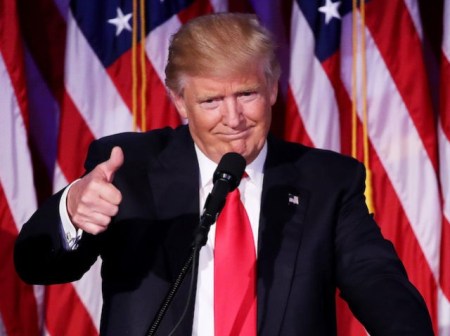
President Trump made defeating radical Islamic terrorists a key part of his presidential campaign. So far in his first 100 days, experts say he is making good on that promise.
“Right now, I give him an A honestly,” Retired Army Lt. Gen. Thomas Spoehr, director of the Center for National Defense at the Heritage Foundation, told Breitbart News.
The associate, Abdurakhmon Uzbeki, had planned the deadly New Year’s Eve attack at a nightclub in Istanbul, which killed 39 civilians.
In Trump’s first three months in office, there’s been a significant uptick in the number of airstrikes targeting terrorists in the Middle East, North Africa, and Afghanistan.
U.S. military officials say Trump has not given the military any “new” authorities – in terms of long-standing rules and standards governing the use of force.
But what Trump has done is expand commanders’ targeting authorities in some locations, roll back restrictions put into place by the Obama administration, and encourage military commanders to exercise the authority they already have.
“We’re actually using the authorities that weren’t used before for political reasons,” a senior White House official told Breitbart News. “Theater commanders have been unshackled. Everyone’s been unshackled to do their job.”
Specifically, Trump has rolled back in some areas a 2013 requirement put into place by former President Obama requiring all counterterrorism airstrikes outside of a conventional war zone like Afghanistan be vetted by the White House and other agencies.
Under Obama, such counterterrorism strikes would undergo “high-level, interagency vetting” to ensure that the targets posed a threat to Americans, and that there was a “near-certainty” that no civilians would be killed, according to the New York Times.
About a week after his inauguration, Trump approved a Pentagon proposal to roll back those requirements in Yemen, to allow the military to step up the counterterrorism fight in Yemen against Al-Qaeda in the Arabian Peninsula (AQAP) — considered the most dangerous al-Qaeda affiliate for its repeated attempts to attack the U.S. homeland.
The plan included the designation of three provinces in Yemen as “areas of active hostilities,” which allows commanders to strike when there is a “reasonable certainty” that no civilians will be killed, versus a “near certainty,” as reported by ABC News.
As a result, the number of strikes against AQAP has almost doubled under Trump, from 40 confirmed strikes in 2016, to at least 76 so far.
Similarly, President Trump in March designated parts of Somalia as areas of active hostilities, which granted U.S. Africom Commander Marine Gen. Thomas Waldhauser the authority to conduct offensive counterterrorism strikes and raids, versus striking only when Americans were under threat, and when there’s a “near-certainty” no civilians will be killed.
There have been no confirmed U.S. airstrikes in Somalia yet since the designation, but Africom is stepping up their advising mission. The command confirmed last Monday it were sending a “few dozen” U.S. soldiers from the 101st Airborne Division to Somalia to train Somali National Army and African Union peacekeepers – a doubling of American special operations forces there, according to CNN. Officials said the deployment was planned before Trump took office.
In the fight against ISIS, Trump during his first week on the job ordered Defense Secretary Jim Mattis to come up with a plan within 30 days on how to defeat the terrorist group.
Mattis submitted a plan, to be then fleshed out by the Central Command commander. The plan is in its final stages of planning, the senior White House official said.
In the meantime, the number of strikes in Iraq and Syria reached a record high in March since the U.S.-led air war began in 2014 — 3,878, according to statistics released periodically by U.S. Central Command.
Officials say the increase in airstrikes against ISIS has to do with the current phase of the campaign — simultaneous offensives in Mosul, Iraq and Raqqa, Syria — rather than any changes under Trump. They also say Centcom commander Army Gen. Joe Votel in December allowed for the delegating of strike authority from a three-star general to a one-star general to speed up the approval process for airstrikes.
But U.S. strikes against al-Qaeda in Syria — which is separate from the ISIS fight — have also seen a “relative increase” since Trump took office, a defense official said.
The U.S. military in late February also killed al-Qaeda’s second in command in Syria, and in March conducted a strike against al Qaeda in Jinah, which U.S. officials said killed a “few dozen” militants.
And more is expected to come in the ISIS fight, as the administration finalizes its new plan. A U.S. military official recently told Breitbart News that the strategy of U.S. troops supporting local forces on the ground – versus taking a direct combat role – will be “enduring.”
More U.S. forces are expected to deploy to Syria, however, where they would likely support local forces in what is expected to be a hard fight for ISIS’s de facto capital.
The Trump administration is also reviewing whether to get rid of limits set by the Obama administration on the numbers of U.S. troops who are authorized to deploy to Iraq and Syria.
The Obama administration had placed strict caps on the number of U.S. troops serving in Iraq and Syria, in an effort to keep troop numbers as low as possible. Currently, 5,262 are authorized for Iraq, and 503 troops for Syria. But in reality, there were hundreds more deployed on a “temporary” basis that weren’t counted, making those numbers misleading.
“In the previous administration, the secretary had to check very often with the White House, and the president, to deploy forces, especially if they were bumping up the cap,” Spoehr said.
Commanders also complained that the troop caps led to the deployment of only parts of a unit, forcing them to rely on contractors abroad for logistical support and waste taxpayer dollars.
In Afghanistan, there has been a 270-percent increase in airstrikes under Trump – from 54 in January to 200 in February – the largest increase in at least six years.
Recently, Army Gen. John “Mick” Nicholson, U.S. commander of U.S. and NATO forces in Afghanistan, ordered the dropping of the largest non-nuclear bomb in the U.S.’s arsenal – nicknamed the “Mother of All Bombs,” or MOAB – to root out a complex of tunnels and caves in Afghanistan used by the ISIS’s affiliate in Afghanistan, ISIS-Khorasan.
U.S. military officials said no new authorities were granted for the bombing, which fell within Nicholson’s existing authorities to order strikes against ISIS since January 2016. Current and former defense officials recently told The New York Times that he would probably have checked with his superiors under Obama.
The senior White House official gone are the days of the last administration when tactical decisions — from positioning ships to whether an A-10 attack fighter jet could strike or not — were being made by National Security Council staffers.
Former Secretaries of Defense Leon Panetta and Robert Gates both lambasted the micromanagement military commanders faced from the NSC under Obama. In his memoir Duty, Gates famously wrote about discovering a direct phone line from a White House staffer to a special operations command center in Afghanistan, and immediately ordering it to be ripped out.
“It’s the micromanagement that disappeared… the informal political things that were laid on top,” the senior White House official said.
Jonathan Schanzer, vice president of Foundation for Defense of Democracies, praised the new approach.
“I think we long-expected this president to be a delegator, that essentially being a businessman, his approach was that he was going to find excellent people, and give them their portfolios, especially given that the president himself didn’t have vast knowledge in the area of defense and foreign policy,” he said.
“That was never, I think, his forte, so the idea that he would delegate to experts seems to be a very wise decision.”
He also praised Nicholson’s decision to drop the MOAB on ISIS, which he said sent a message to all of the U.S.’s other adversaries.
“I think it’s important that [Trump] trusts them in their ability to deliver these sorts of strategic messages,” he said.
And Spoehr, who served as deputy commanding general of U.S. forces in Iraq in 2011, said allowing commanders to do their jobs has been a huge morale boost for the military.
“I think, in nearly every dimension, you can see a noticeable difference, that things have ratcheted-up… a little bit more spring in people’s step, little bit of a fire in people’s eyes,” he said.
The senior White House official agreed: “Morale is so much higher.”
Misogyny Meet Irony: Saudi Arabia Elected To United Nation’s Women’s Rights Commission, Jonathan Turley’s Blog, Jonathan Turley, April 24, 2017
(Please see also, United Nations Elects Saudi Arabia to Women’s Rights Commission. — DM)

If you like your misogyny with a heavy serving of irony, you could do no better than the United Nations this week after Saudi Arabia was elected to a 2018-2022 term on the Commission on the Status of Women, the U.N. agency that, according to its website, is “exclusively dedicated to the promotion of gender equality and the empowerment of women.” As with Iran being put on the Commission, the irony would be humorous if there were not millions of victims over decades of abuse by these countries. Previously, Saudi Arabia taking over the top spot on the Human Rights Commission was viewed as unbelievable, but the entry on the Commission on the Status of Women sets a level of irony that may be unsurpassable.
Notably, various groups demanded to know what countries voted for the inclusion. Only 7 of 54 ECOSOC states opposed the inclusion and many want the EU countries to reveal their votes. It is absurd that such votes should be taken on secret ballots.
Now that Saudi Arabia is a protector of women’s rights, it may want to immediately call for an investigation of the country responsible for:
Barring women from being able to travel without the permission of men;
Jailing a man for protesting the treatment of women;
Arresting women for ripped jeans or “Western haircuts“;
Stoning a woman to death (while just giving her male love flogging) for sex outside of marriage;
Sentencing human right activists to death;
Persecuting lawyers who help rape victims;
Permitting child bride arranged marriages;
Closing Women’z health clubs as UnIslamic;
Arresting women without head coverings;
Arresting even foreign women who sit next to unrelated men in public places;
Flogging women over use of bad language;
Enforcing the right to beat wives; and
Barring women from a Women’s Rights Conference.
That is only a partial list for the new Saudi Commissioner and it does not even require going outside of the Kingdom of Saudi Arabia.




 anneinpt
 artaxes
 danmillerinpanama
 davidking1530
 Peter Hofman
 Joseph Wouk
 Peter
Peter Louisiana Steve
 WarSclerotic
Recent Comments