The lead attorney for the latest legal challenge to President Trump’s executive order implementing a 90-day suspension on visa issuance to U.S.-bound travelers from six countries where terrorism remains a heightened concern, also volunteered to serve as legal counsel for Osama bin Laden’s bodyguard, Samir Hamdan on a pro-bono basis.
“Neal Katyal sued the U.S. government in 2006 on behalf of Osama Bin Laden’s bodyguard, Samir Hamdan in the landmark legal case Hamdan v. Rumsfeld. In his arguments however, Katyal made several questionable arguments, including equating the criminal justice rights of legal U.S. green card holders to captured foreign al Qaeda terrorists under the military commission system at the time.”
This exposes the sinister agenda of the Democrats and Never-Trumpers who wish to block the President from enacting immigration policies that would protect Americans from jihad terror. Does the pro-bono defender of Osama bin Laden’s bodyguard care at all about protecting Americans from jihad terror?
“Hawaii Hires Al Qaeda’s Best Lawyer to Lead Suit Against Trump,” Washington Free Beacon, March 10, 2017 2:31 pm
The lead attorney for the latest legal challenge to President Trump’s executive order implementing a 90-day suspension on visa issuance to U.S.-bound travelers from six countries where terrorism remains a heightened concern, also volunteered to serve as legal counsel for Osama bin Laden’s bodyguard, Samir Hamdan on a pro-bono basis.
On Tuesday, Neal Katyal, a former acting solicitor general of the United States during the Obama administration, filed suit on behalf of the state of Hawaii against the Trump administration, seeking to block the president’s latest executive order.
Katyal, whose name was once floated as a possible Obama Supreme Court nominee, but whose consideration was ultimately withdrawn due to perceived trouble that his nomination would encounter in the Senate, argues in Hawaii’s filing that this new executive order suffers from the same legal problems of the original order.
Neal Katyal sued the U.S. government in 2006 on behalf of Osama Bin Laden’s bodyguard, Samir Hamdan in the landmark legal case Hamdan v. Rumsfeld. In his arguments however, Katyal made several questionable arguments, including equating the criminal justice rights of legal U.S. green card holders to captured foreign al Qaeda terrorists under the military commission system at the time….
(Saudi Arabia is a hell-hole for human rights and its ideology is congruent with that of the Islamic State. However, we have allied with other bad regimes with which we have shared common interests. Russia during WWII comes to mind. Our common interest with Saudia Arabia, beyond defeating the Islamic State, lies in diminishing Iran as a world power and, perhaps, finding common ground with other Arab nations via a vis Israel. — DM)
Saudi Arabia and the Islamic State share a history in the Wahhabi movement. “The Islamic State’s religious genealogy comes from ‘Jihadi Salafism’, a theological current that is very old in Islam that is quite literalist.” Muhammad ibn Abd al-Wahhab is the founder of Wahhabism, rooted in the Salafist tradition. He eventually connected with “the leader of the al-Saud family in 1744. That alliance had very strong and lasting effects,”: the Saudi state was and is based on Wahhabism.
President Trump’s anti-Iran coalition would bring together Saudi Arabia, the United Arab Emirates (UAE), Israel, Egypt, and Jordan.
**************************
The Sunni Islamic State (ISIS/ISIL) has boasted that key U.S. Middle East ally Saudi Arabia is the top provider of terrorists for the jihadist group in Iraq, reports Fox News, citing Iraqi military sources.
Reports of a Saudi Arabia/Islamic State alliance have been ongoing, despite the Saudi “friendship” with the West:
i) Slaves taken by the Islamic State are sold in auctions in Saudi Arabia;
ii) Saudi Arabia was caught funding Taliban forces in Afghanistan, and the Taliban’s former financial minister regularly traveled to Saudi Arabia to raise millions of dollars;
iii) A leaked intelligence report from Germany’s BfV domestic intelligence agency and Federal Intelligence Service (BND) revealed that Saudi Arabia (along with Kuwait and Qatar) was promoting and funding the growth of the jihadi Salafi ideology in Germany, where it has already attracted 10,000 followers and continues to expand.
Saudi Arabia and the Islamic State share a history in the Wahhabi movement. “The Islamic State’s religious genealogy comes from ‘Jihadi Salafism’, a theological current that is very old in Islam that is quite literalist.” Muhammad ibn Abd al-Wahhab is the founder of Wahhabism, rooted in the Salafist tradition. He eventually connected with “the leader of the al-Saud family in 1744. That alliance had very strong and lasting effects,”: the Saudi state was and is based on Wahhabism.
Al-Wahhab “would appoint teachers to educate people in his version of the faith” once a town was conquered by his jihadis. “He wrote a number of short books that were the basis for the teaching, books that are used by ISIS today.”
Saudi Arabia has denied financing the Islamic State, and the Islamic State is not happy with the Saudis, either: “ISIS claims that the Saudi state has deviated from the true beliefs of Muhammad ibn Abd al-Wahhab, and that they are the true representatives of the Salafi or Wahhabi message.” Nonetheless:
A high-ranking Iraqi intelligence officer said, “The Saudi presence in ISIS is very large. What we have left are mainly Iraqis and Saudis.”
Report: More Citizens of Saudi Arabia Have Joined Islamic State Than Any Other Country”, by Edwin Mora, Breitbart, March 10, 2017:
The Sunni Islamic State (ISIS/ISIL) has boasted that key U.S. Middle East ally Saudi Arabia is the top provider of terrorists for the jihadist group in Iraq, reports Fox News, citing Iraqi military sources.
Sunni Saudi Arabia shares an estimated 500-mile-long border with war-ravaged Iraq.
Nevertheless, Fox News reports that the Saudi jihadists crossed into Iraq over the border the country shares with both Turkey and Syria.
The news outlet learned from unnamed Iraqi intelligence sources that jihadist from the Saudi kingdom comprise nearly one-third (up to 30 percent) of all ISIS terrorists in Iraq, adding that “Saudis comprise the largest single contingent of ISIS fighters, with Russian Chechens making up the second-largest contingent.”
Speaking to the news outlet on condition of anonymity, a high-ranking Iraqi intelligence officer said, “The Saudi presence in ISIS is very large. What we have left are mainly Iraqis and Saudis.”
“The Saudis make up a large number of suicide bombers, as they already have the ground work of radicalization installed in their minds from radical sheikhs in Saudi [Arabia]. And we’ve caught important ISIS commanders,” he added.
Fox News points out that it has seen various ISIS-linked photographs and documents showing identification and credit cards of Saudi terrorists.
The report comes nearly a month after an article by the Wall Street Journal (WSJ) revealed that President Donald Trump’s administration is considering forming a military alliance with major Middle East allies, including the Sunni Saudi kingdom, to combat Shiite Iran.
President Trump’s anti-Iran coalition would bring together Saudi Arabia, the United Arab Emirates (UAE), Israel, Egypt, and Jordan.
The Sharia law-compliant kingdom Saudi Arabia is regarded as a hotbed and top global exporter of radical Islamic thought, namely the Sunni extremist ideology of Wahhabism, adhered to by ISIS and various other jihadists groups.
Saudi Arabia imposes extremely strict Islamic laws on its citizens.
“Wahhabism was born in Saudi Arabia. Saudi is leading those extremist organizations like ISIS,” an anonymous Iraqi official told Fox News. “They have high-ranking officials and fighters among their ranks. Saudi is nothing without U.S. protection; it is only a bite for Iran to eat.”
Sunni Saudi Arabia considers Shiite Iran its regional rival. Iran exerts tremendous influence over the Shiite-led government of Iraq where militias backed by the Islamic Republic are fighting ISIS.
Saudi Arabia is part of the U.S.-led coalition against ISIS in Iraq and Syria…..
The Netherlands has barred a plane carrying Turkey’s foreign minister from landing, despite a threat he made earlier warning that such a move would prompt Turkey to impose sanctions on Holland, media in both countries report.
The Dutch revoked authorization for Mevlut Cavusoglu’s flight hours after he had warned that Turkey would retaliate if his visit was canceled, CNN Turk and ANP news agencies reported.
Amsterdam said Ankara’s threat of sanctions over the visit “made search for a reasonable solution impossible” and added that concerns over public order and safety were the reason to cancel the ministerial visit.
On Saturday, Cavusoglu insisted that he would go ahead with his visit to Rotterdam even if local Dutch authorities did not agree to his taking part in a rally promoting a change in Turkey’s constitution.
Cancelling the visit had been advocated by right-wing politician Geert Wilders, who secured a harsh dismissal from the Turkish top diplomat.
“Dutch Wilders acts like a Nazi,” the Turkish minister said in an Saturday interview with CNNTurk. “He threatens the foreign minister of the Turkish Republic with not letting the airplane take off. But I will go today.”
“If the Netherlands cancels my flight clearance today then we will impose huge sanctions,” he added.
The rebuke came in reaction to the cancelation of Cavusoglu’s appearance at a rally of Turkish citizens working in Europe. The Dutch snub is the latest in a series of similar measures taken by several European nations, including Germany, Austria, and the Netherlands.
Cavusoglu intended to campaign at the rally to drum up votes in favor of an April referendum that would give the Turkish president new powers, but Rotterdam’s mayor, Ahmed Aboutaleb, banned the Turkish official from speaking in public in the city late on Friday.
“He has diplomatic immunity and everything, so we will treat him with respect, but we have other instruments to prohibit things from happening in public spaces,” the mayor told reporters.
The Turkish minister said that, by preventing Turkish citizens from meeting with an official from their government, Holland’s authorities were effectively holding them hostage.
“These people are not your captives,” he said.
A number of other Turkish pre-referendum rallies have been canceled by local European authorities this week due to security concerns. However, observers say the conflict reflects a larger stand-off between NATO member Turkey and its European allies, which criticize Ankara for a heavy-handed crackdown in the wake of an attempted military coup last year. The Turkish government has fired or imprisoned thousands of alleged supporters of self-exiled US-based cleric Fethullah Gulen, whom Ankara holds responsible for the coup, as well as a series of anti-government protest in recent years.
Commenting on the confrontation, Cavusoglu warned that the Europeans were putting cooperation with Turkey on issues like immigration control at risk. Brussels and Ankara have stuck a deal in which Turkey agreed to ramp up its border security and take back asylum seekers from Europe in exchange for financial aid and political benefits.
However, the visa-free travel for Turks going to the EU that was promised as part of the deal has failed to materialize, angering Turkish officials. Brussels says that Turkey first needs to revise its counterterrorism laws and address other issues, but Ankara considers the condition an infringement on its sovereignty.
Das Kernkraftwerk Brokdorf musste für kurze Zeit geräumt werden
dpa/Christian Charisius
Because of an interrupted radio contact to an aircraft in the German airspace, five North German nuclear power plants were temporarily vacated on Friday morning.
Only emergency occupations remained in the works. In addition, interceptors of the Luftwaffe rose and accompanied the aircraft, which, according to information from the Luftwaffe, was a machine operated by Air India. The situation was soon under control again, informed the nuclear power authority in Schleswig-Holstein responsible Energiewende ministry in Kiel. The alarm was canceled after 22 minutes. Schleswig-Holstein’s Environment Minister Robert Habeck tweeted at 11.34 clock: “Location is under control, situation under control.”
The nuclear power stations Brunsbüttel, Brokdorf and Krümmel in Schleswig-Holstein as well as Grohnde, Lingen and Unterweser in Lower Saxony were affected. Krümmel, however, had not been evicted, but the employees had gone to shelters. The Brunsbüttel, Krümmel and Unterweser plants have been shut down for some time and the works in Brokdorf and Grohnde are currently being scaled down for revision.
The nuclear power stations Brunsbüttel, Brokdorf and Krümmel in Schleswig-Holstein as well as Grohnde, Lingen and Unterweser in Lower Saxony were affected. Krümmel, however, had not been evicted, but the employees had gone to shelters. The Brunsbüttel, Krümmel and Unterweser plants have been shut down for some time and the works in Brokdorf and Grohnde are currently being scaled down for revision. Contact about Hungary aborted
According to the Luftwaffe, the radio contact with the aircraft, which was on its way to London, had already broken off via Hungary. The machine had been accompanied by Czech interceptors and taken by two Eurofighters of the Luftwaffe when flying into German airspace and then handed over to Belgian combat aircraft at Cologne, a spokesman said. In such cases, visual contact checks that there is no unusual situation on board.
Why the radio contact was interrupted, the German air traffic control and the Luftwaffe could not say. It could have a crew fault or a technical fault. This always happens again. The airline was initially unable to reach an opinion. Nuclear power plants cleared quickly
It was a so-called Renegade pre-alarm, explained the ministry in Kiel. Renegade cases are those in which an aircraft of terrorist or other motives might be used as a weapon. The alarm was issued by the National Location and Management Center for Safety in the Airspace in the municipality of Uedem (North Rhine-Westphalia). It was established in 2003 to protect the airspace from such threats. The background is the terrorist attacks of 11 September 2001 in the USA.
A standardized procedure begins with such an alarm. However, the operators of the plants would have a margin of discretion as to how specifically they assessed the danger. If, for example, an airplane turns off in the direction of London to the north, then it does not necessarily have to react in the south, it was said from operators.
The nuclear power plants were cleared quickly, they said. In Brokdorf the police released a blockade demonstration on the same day before the two entrances. After the alarm was over the protest was continued.
The rule strikes at the very center of free speech, namely that of elected politicians, which the European Court of Human Rights has deemed in its practice to be specially protected. Members of the European Parliament are people who have been elected to
The rule strikes at the very center of free speech, namely that of elected politicians, which the European Court of Human Rights has deemed in its practice to be specially protected. Members of the European Parliament are people who have been elected to make the voices of their constituents heard inside the institutions of the European Union.
The rule can only have a chilling effect on free speech in the European Parliament, and will likely prove a convenient tool in trying to shut up those parliamentarians who do not follow the politically correct narrative of the EU.
By lifting Le Pen’s immunity while she is running for president of France, the European Parliament is sending the clear signal that publicizing the graphic and horrifying truth of the crimes of ISIS, rather than being received as a warning about what might soon be coming to Europe, instead ought to be punished.
Where does this clearly totalitarian impulse stop and who will stop it?
The European Parliament has introduced a new procedural rule, which allows for the chair of a debate to interrupt the live broadcasting of a speaking MEP “in the case of defamatory, racist or xenophobic language or behavior by a Member”. Furthermore, the President of the European Parliament may even “decide to delete from the audiovisual record of the proceedings those parts of a speech by a Member that contain defamatory, racist or xenophobic language”.
No one, however, has bothered to define what constitutes “defamatory, racist or xenophobic language or behavior”. This omission means that the chair of any debate in the European Parliament is free to decide, without any guidelines or objective criteria, whether the statements of MEPs are “defamatory, racist or xenophobic”. The penalty for offenders can apparently reach up to around 9,000 euros.
“There have been a growing number of cases of politicians saying things that are beyond the pale of normal parliamentary discussion and debate,” said British EU parliamentarian Richard Corbett, who has defended the new rule. Mr. Corbett, however, does not specify what he considers “beyond the pale”.
In June 2016, Mahmoud Abbas, president of the Palestinian Authority, addressed the European Parliament in a speech, which drew on old anti-Semitic blood libels, such as falsely accusing Israeli rabbis of calling on the Israeli government to poison the water used by Palestinian Arabs. Such a clearly incendiary and anti-Semitic speech was not only allowed in parliament by the sensitive and “anti-racist” parliamentarians; it received a standing ovation. Evidently, wild anti-Semitic blood libels pronounced by Arabs do not constitute “things that are beyond the pale of normal parliamentary discussion and debate”.
Palestinian Authority President Mahmoud Abbas receives a standing ovation at the European Parliament in Brussels on June 23, 2016, after falsely claiming in his speech that Israeli rabbis were calling to poison Palestinian water. Abbas later recanted and admitted that his claim had been false. (Image source: European Parliament)
The European Parliament apparently did not even bother to publicize their new procedural rule; it was only made public by Spain’s La Vanguardia newspaper. Voters were, it appears, not supposed to know that they may be cut off from listening to the live broadcasts of the parliamentarians they elected to represent them in the EU, if some chairman of a debate subjectively happened to decide that what was being said was “racist, defamatory or xenophobic”.
The European Parliament is the only popularly elected institution in the EU. Helmut Scholz, from Germany’s left-wing Die Linke party, said that EU lawmakers must be able to express their views about how Europe should work: “You can’t limit or deny this right”. Well, they can express it (but for how long?), except that now no one outside of parliament will hear it.
The rule strikes at the very center of free speech, namely that of elected politicians, which the European Court of Human Rights has deemed in its practice to be specially protected. Members of the European Parliament are people who have been elected to make the voices of their constituents heard inside the institutions of the European Union. Limiting their freedom of speech is undemocratic, worrisome and spookily Orwellian.
The rule can only have a chilling effect on freedom of speech in the European Parliament and will likely prove a convenient tool in trying to shut up those parliamentarians who do not follow the politically correct narrative of the EU.
The European Parliament lately seems to be waging war against free speech. At the beginning of March, the body lifted the parliamentary immunity of French presidential candidate Marine Le Pen. Her crime? Tweeting three images of ISIS executions in 2015. In France, “publishing violent images” constitutes a criminal offense, which can carry a penalty of three years in prison and a fine of 75,000 euros. By lifting her immunity at the same time that she is running for president of France, the European Parliament is sending the clear signal that publicizing the graphic and horrifying truth of the crimes of ISIS, rather than being received as a warning about what might soon be coming to Europe, instead ought to be punished.
This is a bizarre signal to be sending, especially to the Christian and Yazidi victims of ISIS, who are still largely ignored by the European Union. European parliamentarians, evidently, are too sensitive to deal with the graphic murders of defenseless people in the Middle East, and are more concerned with ensuring the prosecution of the messengers, such as Marine Le Pen.
So, political correctness, now effectively the “religious police” of political discourse, has not only taken over the media and academia; elected MEPs are now also supposed to toe the politically correct line, or literally be cut off. No one stopped the European Parliament from passing this undemocratic anti-free speech rule. Why did no parliamentarian out of the 751 MEPs raise red flags about the issue before it became an actual rule? Even more importantly: Where does this clearly totalitarian impulse stop and who will stop it?
DEBKAfile Exclusive Analysis March 11, 2017, 10:50 AM (IDT)
US Marines in northern Syria
Two close US allies, Israeli Prime Minister Binyamin Netanyahu and Turkish President Tayyip Erdogan, traveled to Moscow on Thursday and Friday (March 9-10), to press very different cases relating to Syria before Russian President Vladimir Putin.
Netanyahu chose to tackle the Russian leader on Iran, although he was recently welcomed at the White House as a close friend of US President Donald Trump and leader of a country strongly supported by the United States. He is regarded by the administration as the only Israeli politician capable of taking Israel through to a breakthrough in ties with the Arab world and a deal with the Palestinians. Whether this support will survive the personal attacks on Netanyahu and the investigations conducted against him remains to be seen.
Erdogan’s case is quite different. Trump originally viewed him as a partner in his plans for Syria. But the removal of Lt. Gen. Michael Flynn as national security adviser – and strong pro-Turkey advocate – undercut Erdogan’s influence in the White House. Flynn now turns out to have acted as a paid Ankara lobbyist licensed by the Justice Department during the Trump campaign.
In any case, the Turkish president lost much of his value as a useful partner when US generals awarded the Turkish army’s operations against ISIS in northern Syria a low grade, specifically its prolonged four-month siege on Al-Bab.
It was on the US generals’ recommendation that the Turkish army was substituted as spearhead for the main US offensive against the ISIS stronghold of Raqqa by the 55,000-strong Syrian Democratic Forces. Two-thirds of the SDF are fighters of the Syrian Kurdish YPG militia, which has exhibited exceptional prowess in winning battles against ISIS.
After this change of partners, the Americans embarked on a build up of the SDF’s weaponry. The Russians quickly followed suit. Erdogan was incensed. He tried arguing that the YPG was a terrorist group, a branch of the Turkish Kurdish PKK, and US-Russian backing would bring about the rise of an independent Kurdish state in northern Syria next door to Turkey.
When this complaint fell on deaf ears, Ankara threatened Thursday, March 9, to attack the Kurdish emplacements at the northern Syria town of Manbij. Washington reacted by stressing US support for the SDF, although the threat was hollow: Turkish troops were not about to confront the wall of US and Russian troops in their path.
Erdogan’ traveled to Moscow for a last attempt to persuade the Russian president to at least promise to prevent Kurdish self-rule. Although Putin lavishly praised their deal for jointly brokering a ceasefire in Syria and a peace conference, the Turkish president’s journey was wasted. He was fobbed off by Putin whose first priority at this time is to keep in step with the Trump administration’s head-spinning decision for direct military intervention in Syria – rather than look after Turkish interests.
Saturday, Kremlin sources confirmed: “The Russian-Turkish talks resulted in almost nothing.” They disclosed that the Turkish leader’s main concern was the Manbij standoff in northern Syria.
A day earlier, the Israeli prime minister may not have fared much better when he taxed the Russian president with security concerns about the entrenchment of Iranian and Hizballah forces in southern Syria ominously close to the Israel border. Putin greeted him with affection, but made it clear that his overriding concern was coordinating with Trump’s new initiatives in Syria and Israel’s security concerns were a side show. He advised the Israeli leader to look at the big strategic picture now unfolding in the war-torn country.
From the Kremlin’s viewpoint, a large-scale US-0Russian-Krudish military campaign against the Islamic State in Syria would additionally frustrate Iran’s main objective, which is to create a land bridge through northern Iraq and Syria to the Mediterranean. Putin believes that, once Tehran realizes that Trump will never let this plan take off, the Iranians will pull their forces out of Syria, because their only link with home base would still be by air or sea, both of which routes are exposed to Israeli attacks.
Netanyahu appears to have indicated to Putin that, for want of any other options, Israel would consider a direct attack on he Iranian and Hizballah forces in Syria. The Russian President listened but did not comment. Judging from the past, the prime minister would almost certainly bid for a green light from Washington before going through with such a plan – unless, of course, Netanyahu decides that the IDF can go it alone.
(Trump is clearly a vile, Mexican-hating beast to try to close our borders and drive these wonderful Sinaloa Cartel people out of business or at least keep their stuff out. The other Mexican cartels are probably just bringing in bibles. Right? Unfortunately, the long video is in Spanish. — DM)
Filmmaker Beriain (left) and one of his subjects
A new documentary provides a detailed look at the inner workings of Mexico‘s Sinaloa Cartel, from mules loaded down with sacks of marijuana to the methamphetamine cooks working on the outskirts of Culiacán.
Spanish journalist David Beriain spent weeks in northwest Mexico, documenting his interactions for the Discovery en Español show “Clandestino.” The result is three 45-minute episodes, which are available on Youtube, that take him from the capital of Sinaloa to just north of the US border, always in the company of his cameraman and one or more members of what has long been considered Mexico‘s most powerful criminal organization. (The full series is embedded below)
Beriain emphasizes at the outset of his documentary that some unnamed authority within the organization has blessed his project. Armed with that endorsement, he accompanies a seemingly endless stream of cartel members as they go about their jobs, and engages each of them in an interview lasting five or eight minutes. The subjests aren’t intimate friends with Jesus “El Mayo” Zambada or Joaquín “El Chapo” Guzmán, though their jobs are demonstrably impacted by the recent attacks on the group’s leadership.
Beriain’s method as an interviewer is simple and effective: He asks each of the employees about what exactly they do, and then he asks them why they do it. Many of Beriain’s queries are quite basic: “What is that stick for?” he asks the keeper of a safe house at one point. He focuses a great deal on the sequences of their chores, and also on the consequences of the mistakes. This provides viewers with an extremely granular understanding of precisely what it entails to serve as the Sinaloa Cartel‘s armament technician, or as the cultivator of a heroin field, or as a torturer.
“Clandestino” also shines when it tackles the moral compromises of working in the drug trade. Beriain does not shy away from asking people if they are personally responsible for harming others. He asks virtually all his interviewees how they feel about the uglier side of their trade, from beating people and risking their lives to profiting off of addiction and enabling murder.
The answers are often illustrative. Some recoil from the choices they’ve made, while others embrace their ability to inflict pain. At least two describe the Sinaloa Cartel in moralistic terms, as the one gang that refuses harm the civilian population. One of the most affecting portions of the film was a dirty cop, expressing some mixture of resignation and shame, explaining how he came to work for the group he’s theoretically paid to combat.
Virtually all of the members of the cartel point to money as their chief motivator. This line of questioning tends to lead to further disclosures about their pay scale. A woman charges $4,000 to fly with a half kilogram of heroin, contained in a tube hidden in her vagina, to Tijuana from points further south in Mexico. The leader of a team that drives a truck laden with drugs through the Tijuana border crossing receives $6,000. For the mule who carries loads of marijuana through the desert on foot, a trip that could last up to eight days, $2,000 awaits.
The data about salaries is just one of a series of unusually penetrating insights about the economics of the Sinaloa Cartel‘s operations revealed in “Clandestino.” Beriain observes early in the program that the gang’s privileged position derives from its control of the western half of the US border, similar to the way a legitimate company seeks to exploit its own unique assets, from productive oil fields to irreplaceable computer processors. Controlling access to the world’s largest drug market has made the Sinaloa Cartel the single most important gatekeeper in the world of organized crime.
Viewers also learn that the cartel operates as a sort of regulator for all manner of illegal activities. It fixes the retail and wholesale price for drugs within its territory, and it prohibits certain activities like extortion, kidnapping, and rape, we are told.
The Sinaloa Cartel is striking in its employees’ degree of specialization. Each member has one basic task: physically moving drugs across a single route, maintaining weapons, producing a single drug, guarding a safe house, picking up drugs in the United States, patrolling Culiacán in search of rival bands, or executing rivals. The members profess little awareness of other elements of the gangs’ operations, but all know their own work quite well.
The organization is in some senses like an assembly line stretching across the whole of northwestern Mexico. This makes it both extremely productive and extremely resilient. The individuals who appear in “Clandestino” are capable of moving hundreds of pounds a day of heroin, marijuana, and cocaine across the US border, something approaching industrial scale. They operate essentially in unison, forming one single organism.
But the gang is largely cellular in its operation, and attacking one part of the organism — for example, the gunmen in Culiacán — has little impact on another, like the specialists who prepare hidden compartments for cars.
Despite its many positive qualities, it is fair to lodge a few criticisms of “Clandestino.” The pulse-pounding music and the constant reminders of danger would not feel out of place in a low-budget thriller movie. And as effective as it is, Beriain’s formula in dealing with this succession of gangsters grows slightly redundant over the course of the two hours of filming. Moreover, while the breadth of the Sinaloa Cartel‘s portrayal is perhaps unprecedented, as characters, none of the people who appear before Beriain’s camera quite come alive. There is no one, for instance, who will etch themselves into viewers’ memories the way José Manuel Mireles did in “Cartel Land.”
Nevertheless, “Clandestino” is incisive, original, informative, and entertaining. It is among the most thorough cinematic treatments that one of the world’s most important criminal groups has ever received.
(Here is a clip from an appearance by Sharyl Attkisson before the Senate Judiciary Committee in January of 2015. She mentions Fast and Furious briefly, but devotes most of her time to the Obama administration’s apparent contempt for any media which had the audacity to report truthfully on its misdeeds.
A comparative analysis of President Obama’s and President Trump’s relationships with the press would be interesting.– DM)
Utah Congressman Jason Chaffetz subpoenaed two agents from the Bureau of Alcohol, Tobacco, Firearms, and Explosives (ATF) to appear before his committee in connection with the Obama Administration’s gun-running program, Fast and Furious. Firearms from the former president’s scheme were allegedly involved in the 2011 murder of Immigration and Customs Enforcement Agent Jaime Zapata in Mexico.
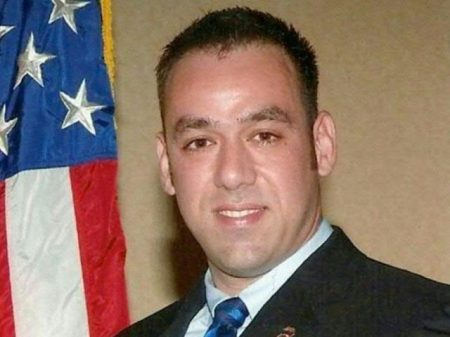
ICE Special Agent Jaime Zapata
Chaffetz, who serves as chairman of the House Oversight Committee issued the subpoenas after the two ATF agents failed to appear voluntarily before the committee.
“I’m tired of hearing from just [Justice Department] management, I want to hear from the people that actually are on the front lines doing this,” Chaffetz told Fox News.
Chaffetz wants to hear directly from ATF Agent William Temple, special agent in charge of the Dallas Field Division, and Associate Director Ronald Turk. The hearing marks the first effort by Congress to re-open the investigation into President Obama’s Fast and Furious gun trafficking scheme since he left office in January. ICE Agent Zapata was killed by one of the guns involved in this program, and Special Agent Victor Avila was injured during the attack in Mexico.
Following the attack on the two ICE agents, Breitbart News reported:
Agent Zapata’s partner Victor Avila spoke out about the attack that left Agent Zapata dead and him wounded. His twin sister Magdalena Avila-Villalobos spoke for him in the Univision special on Fast and Furious. Avila is so scared and hurt by the attack he did not speak out until he knew he was in a secure location.
No one knows for sure why Agent Zapata and Agent Avila, assigned to the US Embassy, were asked to travel on road 57, a road controlled by the Zeta Cartel and extremely dangerous. They didn’t even know why they were given the mission to retrieve electronic surveillance equipment. The urgency made it even more suspicious.
Agent Zapata and Agent Avila met with American consulate agents in Monterrey and received 14 boxes of equipment. They did stop for something to eat on road 57 before heading back to Mexico City. About a half hour after leaving the restaurant they noticed two cars closely following them. Within seconds the vehicles surrounded them and 14 heavily armed men formed a circle around their car.
Unfortunately, Agent Zapata put the car in park, which forced the doors to automatically open. Agent Avila said they thought their diplomatic plates would protect them and the screamed they were American agents. The men didn’t care and demanded them to exit the vehicle.
The agents refused to leave their vehicle. They frantically tried to relock the doors, but instead Agent Avila accidentally lowered his window. A rifle and handgun came in through the small opening and the man opened fire. Agent Avila pressed the emergency satellite button, but it did not work. He also tried to place an emergency call to the embassy, the Mexican capital, and the First Post of the Regional Security Command. They told Avila a Mexican Federal Police helicopter would be there in 40 minutes.
90 bullets were fired. Five hit Agent Zapata and three hit Agent Avila in his right leg. Agent Zapata turned to Agent Avila and said, “I am going to die.” Agent Avila responded, “No, you are not going to die. Be strong, help is on the way, you are not going to die.
While in the rescue helicopter Agent Avila was informed Agent Zapata did, in fact, die.
On Thursday, the two ATF officials failed to appear before the committee looking into the assault on the agents. ATF Acting Director Thomas Brandon, an Obama Administration holdover appointed in 2015, claims he did not order the two ATF officials to skip the hearing Fox News reported. However, he said he agreed with their decision to bypass the Oversight Committee’s hearing.
The failure of the two ATF officials to voluntarily appear before Congress sparked the issuance of a subpoena and sharp rebukes from both sides of the aisle.
“That puts us in a kind of awkward position. We got the boss, ‘OK guys, you don’t have to show up.’ And that sends a hell of a message. That’s a problem,” Elijah Cummings (D-MD), the ranking Democrat on the committee, said.
Chaffetz complained that the ATF “continues to insist” that his committee should not speak directly with the two officials.
Assistant U.S. Attorney for the Eastern District of Texas John Craft also failed to appear. Chaffetz said his committee issued the invitation to Craft late and he would not be issuing a subpoena for him at this time.
Fox News reported on an ATF Inspector General report that was completed in 2012 but not released until March 1, 2016. Fox reported:
The IG said the ATF were aware in 2010 that Osorio and his brother might be trafficking firearms to Mexico, but they did not follow up or further investigate until after Zapata’s death.
Otilio Osorio and Riendfliesh were arrested in late February 2011 after the ATF confirmed weapons used in Zapata’s murder had been purchased by them.
The report faulted ATF for its handling of the case, saying there was “probable cause” to arrest Osorio and his brother “after ATF witnessed the Osorios complete a transfer of 40 firearms on November 9, 2010.”
The IG said: “Overall, we found numerous problems with ATF’s assimilation of information concerning [the suspects] … and the timeliness of ATF’s response to mounting evidence that they were committing firearms offenses.”
The report states that two weapons used in the murder of Agent Zapata and wounding of Agent Avila traced back to a Dallas-area gun show purchase by Otilio Osorio, and a purchase by Robert Riendfliesh at a gun store in Beaumont, Texas. The report continues, stating the ATF suspected the two men were trafficking firearms to Mexico but failed to further investigate the purchases until after the murder of Agent Zapata. ATF agents eventually arrested the two men in connection with the purchases.
Despite the length of time since the incident, the creation of the report, and its issuance, ATF Inspector General told Chaffetz he was not prepared for the hearing. “That’s a bunch of crap,” Chaffetz snapped at the ATF official. Chaffetz responded that he received a draft of the report in December.
Murder of Border Patrol Agent Brian Terry
The murder of U.S. Border Patrol Agent Brian Terry in December 2010 is also connected to the Fast and Furious gun-running scheme. Two guns involved in Fast and Furious were found at the scene of his murder. Terry and other members of his elite Border Patrol BORSTAR team engaged a group of Mexican bandits. The bandits opened fire. Terry was shot in the back and died before reaching the hospital.
Border Patrol Agent Brian Terry
The Terry family met with then-presidential candidate Donald Trump several times during the campaign. In an exclusive interview with Breitbart Texas, the Terry family expressed hope that President Trump would get to the answers their family has been searching for over the past six years.
“I want people to grow a conscious and come clean as to what transpired, what was covered up and what the hell were they thinking,” Terry’s sister, Kelly Terry-Willis told Breitbart Texas.
She said she had heard many promises by many people. “If Mr. Trump can get those skeletons out and expose the truth then my family can finally get closure and justice for Brian,” Kelly explained. “I think there are a lot of people scared that just might happen. It may take time, and we will be patient, but the truth always reveals itself. I hope Trump can make that happen.”
On Friday, Terry’s brother, Kent Terry, spoke out about the new hearing and the subpoena issued to the two ATF officials.
“We have the House, Senate, and the White House now,” Kent Terry said. “There should be absolutely no reason we should fail to get the answers and accountability for the deaths of Agent Zapata and my brother. Their mothers have been put through Hell since these murders occurred. They deserve to know why their sons, who served every day, were killed by criminals armed by our government.”
“Enough time has gone by,” an exasperated Kent Terry explained. “I respect their hands were tied with the Obama Administration’s executive privilege taken on the Fast and Furious documents. But why hasn’t the Oversight Committee gone after the ATF agent who no longer works there? Why hasn’t the committee asked why who has been fired in connection with the program?”
The full report on the hearing held by the committee on March 9 is available on the Oversight Committee’s website. The committee is expected to hear from the two ATF officials under subpoena later this month.
At first glance, the bridal gown shop in the Palestinian city of Nablus appeared innocuous. But behind the scenes, Israeli intelligence says, the store served as a front for a major West Bank gun parts distribution center.
“Components for weapons were continuously being sold out of there,” a senior Israel Defense Forces (IDF) source told The Investigative Project on Terrorism.
The store turned out to be part of a wide network of weapons dealers who had imported their lethal goods by ordering them on the internet, the IDF stated this week.
Nine suspects, including the store owner, are in custody, and additional members of the weapons trafficking ring remain at large. “They came from all walks of life and from varied layers of Palestinian society,” the source stated.
Since mid-2016, the IDF has been engaged in an intensive, large-scale campaign to seize as many firearms circulating in the West Bank as possible to prevent them from falling into the hands of terrorists.
A growing number of such firearms have been used in deadly attacks, such as the Sarona Market shooting in Tel Aviv last June in which two Palestinian gunmen murdered four people in a restaurant. The gunmen used locally produced automatic rifles, dubbed ‘Carlos’ due to their resemblance to the Carl Gustav Swedish sub-machine gun.
While the latest wave of arrests focused on traders who used the internet to import gun parts, most of those on the IDF’s target list manufacture and assemble guns in local workshops. Seven such workshops have been shut down since the start of 2017, and 84 guns have been seized by Israeli security forces, according to figures made available by the IDF.
“The terrorist threat picture has changed. In the past, the main threat was posed by organized, institutional organizations,” the senior security source said. “For the most part, these were hierarchical terror cells, with a clear division of labor. There was someone responsible for financing, someone else had the designated job of transporting the suicide bomber or gunman, etc. This threat still exists. Hamas is trying to organize such cells all of the time. But the main challenge these days comes from terrorists that we do not have prior knowledge about.”
Lone attackers, or small, localized cells with no organizational affiliation or background of security offenses, are far harder for intelligence services to detect, and these are just the type of terrorists who are likely to use firearms available in their surroundings. These types of attackers, some of whom have suicidal tendencies or personal crises, according to the source, often will attempt simple attacks, using whatever is at their disposal. This can take the form of knife or vehicle attacks, or picking up locally available weapons.
Guns in the West Bank can be purchased by Palestinians for many reasons; whether for personal protection, to defend families and clans, to fire at wedding celebrations, or to reinforce one’s sense of ego.
As long as the guns are cheap and affordable, the source warned, “anyone can get [them]. Many of the shootings cells we captured in the West Bank were armed with these types of weapons.”
A year ago, a locally produced Carlo rifle cost around 2,300 shekels in the West Bank, meaning that Palestinians could purchase it with a single month’s salary, or take the money from family members, before moving ahead with an attack.
“The Sarona Market gunmen had no outside financial support, but still managed to get their hands on their firearms. The suits they wore [to disguise their identities] cost more than their guns,” the source said.
“This is why we are in the midst of an intensive campaign targeting the manufacturing and trade of weapons and gun parts. Even if I can’t get rid of the illegal weapons phenomenon, I can make them less accessible, and much harder to traffic in them.”
The increased Israeli pressure makes it more difficult to obtain guns, and increases the odds of catching people before they can attack. They have to leave their village or neighborhood and move around with the firearms where they can be caught and intercepted by the IDF. “People will fear more getting caught and moving around with these firearms,” the source said.
The Palestinian Authority would also like to see these guns taken off the streets, the source said, since it encourages lawlessness and anarchy in some areas that pose challenges to its rule.
Nablus, Balata Camp (next to Nablus), and Hebron are gun manufacturing focal points, according to IDF assessments. In addition, areas like Ramallah, Kalandia, and Palestinian neighborhoods on the outskirts of Jerusalem have workshops that take air or toy guns and convert them into real firearms using stolen components.
Thefts from IDF soldiers and Israeli civilians, as well as trade with Israeli weapons traffickers who do not care where the guns end up provide other sources of terrorist arms.
Efforts by security forces to stem the tide were beginning to pay dividends, the source said. Today, a Carlo gun costs more than 6,000 shekels, as numbers dwindle.
“With time, we are seeing improvements,” he said. “We are seizing more than we did in the past, and our intelligence techniques have improved, so that we can capture guns not only in homes, but also in the manufacturing locations, and when they are moved around. This is a campaign. No single incident will stamp out the problem. So long as the profit from this trade is big enough compared to the fear of arrest or facing raids, many Palestinians will continue to be active in it. ”
Ultimately, he said, “over time, we will seek to decrease the number of guns and keep raising the price. This will result in less terrorists getting their hands on them, and resorting to less lethal attack forms, such as knife attacks. Our soldiers’ alertness [to knife attacks] means such attacks produce less casualties – meaning that our effort will boost security.”








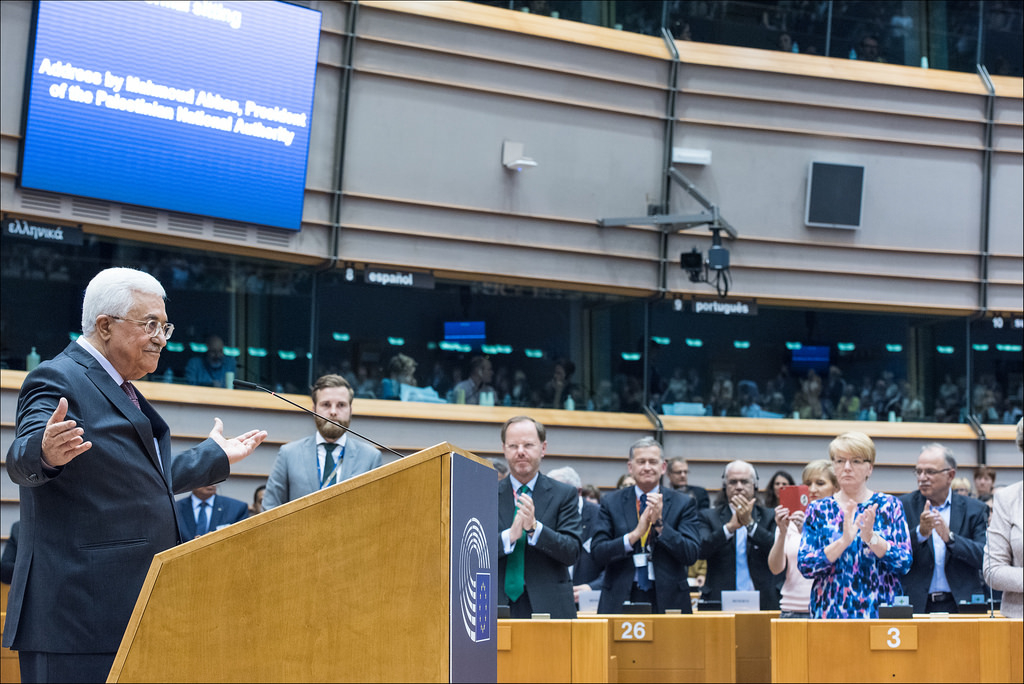 Palestinian Authority President Mahmoud Abbas receives a standing ovation at the European Parliament in Brussels on June 23, 2016, after falsely claiming in his speech that Israeli rabbis were calling to poison Palestinian water. Abbas later recanted and admitted that his claim had been false. (Image source: European Parliament)








 WarSclerotic
Recent Comments