Archive for February 3, 2017

Islamophobic French Soldiers Shoot Muslim Terrorist Trying to Behead Them

February 3, 2017

Islamophobic French Soldiers Shoot Muslim Terrorist Trying to Behead Them, Front Page Magazine (The Point), Daniel Greenfield, February 3, 2017

ntdwi

The non-existent problem of Islamic terror struck again near the Louvre, the famous French museum, as a terrorist of unknown religion and national origin shouting “Allah Akbar” (a phrase in Arabic that means everyone should be nicer to other people and not behead them) and waving a machete was shot by French soldiers occupying the historic Islamic homeland of Paris..

It’s unknown why the soldiers shot him, but some experts are blaming Islamophobia. Others complain that the soldiers used excessive force, first attempting to fight him off to prevent him from beheading them, before taking the extreme disproportionate approach of shooting him. Sadly, gun control once again failed to accomplish its stated purpose of allowing murderers to kill without any interference. 

The assailant, who has been hospitalized, has already complained that his nurses are female, alive and aren’t wearing hijabs. The European Court has promised to take up his case.

While it’s unknown why the man was carrying two machetes around, it’s possible that he wanted to present them as a gift to the soldiers in the traditional fashion by slashing at their heads with it, and they, misunderstanding his intentions due to their prejudices, shot him instead.

Either way it’s a tragedy and we should not jump to any conclusions, but we should welcome more refugees, as long as they’re Muslim, because we don’t want any religious tests, except for non-Muslims.

What we really should take away from this is that it has nothing to do with Islam, but possibly with Islamophobia, and we will shortly be interviewing a number of moderate Muslim Brotherhood spokesmen, most of whom aren’t carrying machetes, but who are very concerned about the Islamophobic backlash and the ability of French soldiers to shoot back.

Trump: New Iran sanctions, USS Cole to Red Sea

February 3, 2017

Trump: New Iran sanctions, USS Cole to Red Sea, DEBKAfile, February 3, 2017

2-3

Friday, the US President laid down his markers for the US-Iranian contest which has begun to unfold, and is not ruling out its further escalation into full military confrontations, which may involve America’s allies, including Saudi Arabia and Israel.

*************************

Donald Trump ended his second week as president Friday, Feb. 3, by demonstrating his resolve to cut Iran down to size. This is his main preoccupation in the Middle East to the exclusion of all other Middle East issues.

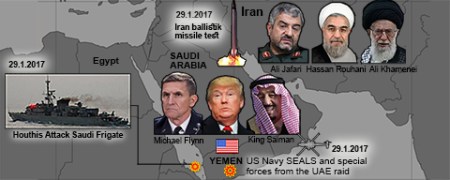
After Trump personally warned the Islamic Republic that it was “playing with fire,” the US Treasury released a fresh round of anti-Iran sanctions, targeting 13 individuals and 12 entities, some based in the UAE, Lebanon and China. In the next hours, the USS Cole destroyer was posted to the Red Sea’s Bab al Mandeb Straits, after Iran-backed Yemeni Houthi rebels began planting mines in the strategic waterway and oil route chokepoint.

This was seen in Washington as a fresh Iranian provocation for escalating tensions, six days after a Houthi suicide attack in fast boats on a Saudi frigate on patrol in the Red Sea, and attacks on US vessels in October.

National security adviser Michael Flynn’s statement Wednesday putting Iran “on notice” for last week’s ballistic missile test, drew a snooty response Thursday night, from a top adviser to supreme leader Ayatollah Ali Khamenei that Iran will not yield to “useless” US threats from “an inexperienced person.”

Trump had evidently decided that Tehran’s scornful provocations deserved a fitting response.

He also pushed to the side all other Middle East questions.

Israel got a light tap on the wrist from another White House statement Friday, that its “new or expanded settlements in the West Bank may not be helpful in achieving Middle East peace,” although the US “has no official position on settlement activity.”

Jerusalem was given to understand that the Trump administration was too busy turning the screws on Iran to deal with “Middle East peace” and develop a settlement policy.

In this sense, Donald Trump is taking the opposite line to Barack Obama, his Secretary of State John Kerry and European powers today, who judge Jewish West Bank settlements to be the root cause – not just of the Israeli-Palestinian dispute, but of most other Middle East woes.

The US president also made little time for the visiting King Abdullah of Jordan, who, after moving heaven and earth to be received in the Oval Office, had to be satisfied with breakfast with Trump in Washington – even though Jordan is a vital element in the US-Russian safe zones plan for Syria and moreover host to a US Central Command war room for Syria.

saudiiranyemenkoteret480eng

DEBKAfile’s sources in Washington report: After dodging the settlement issue, Trump was just as anxious to avoid being cornered on Jerusalem by the Jordanian monarch, which he would not have escaped had he received the king officially at the White House.

This does not mean that the new US president intends to line up with Prime Minister Binyamin Netanyahu or Education Minister Naftali Bennett on the settlement or any other issue. If he acts in character, Trump will not be sidetracked from his main objectives by actions which he views as irrelevant. He has said in the past that he would try his hand at Middle East peacemaking.

But for now, he is fully focused on getting Iran and its proxies, especially Hizballah, out of Syria. This goal is so challenging that he can’t hope to achieve it without Russia’s military assistance. Trump is willing to pay a high price for this help, including letting Vladimir Putin push his way into one corner after another n the Middle East, or standing aside for a partial reconciliation between Egypt and the Palestinian Hamas terrorists.

Last week, Ayatollah Khameinei still believed that by letting the Revolutionary Guards of the leash for provocative actions, he could push Trump back – hence the missile test, the Houthi suicide boats, and the advances made by pro-Iranian Shiite militias on the Mosul front in Iraq.

But Friday, the US President laid down his markers for the US-Iranian contest which has begun to unfold, and is not ruling out its further escalation into full military confrontations, which may involve America’s allies, including Saudi Arabia and Israel.

This contingency came up in the long conversation Trump held with Saudi King Salman on Jan. 29 and is widely covered in the Israeli prime minister’s almost daily discussions with members of his administration. Early Friday, Netanyahu talked on the phone to Secretary of State Rex Tillerson.

They all appreciate that Tehran or its Middle East proxies, such as the Lebanese Hizballah, may well hit back at the Trump administration in Syria or by limited military strikes against Riyadh and Tel Aviv.

These eventualities top Washington’s agenda for now and will dominate Middle East affairs in the near future.

Robert Reich is on the Case

February 3, 2017

Robert Reich is on the Case, Power LineScott Johnson, February 3, 2017

(“It was a vast right wing conspiracy.” I think I may have heard that song before.– DM)

At Mediaite, Alex Griswold reports that former Clinton Secretary of Labor Robert Reich is on the case of the Berkeley riots that prevented Milo Yiannopoulos from speaking on campus this past Wednesday evening. Reich actually holds down an honored position at Berkeley as Chancellor’s Professor of Public Policy. He was an eyewitness in part to the events. His pronouncements on campus events therefore carry some weight.

Reich asserted on CNN that he has “heard rumors.” According to the rumors Reich heard on campus, the anti-Trump riots were actually a right-wing plot to discredit Berkeley or the left.

The friendly Don Lemon fleshed out Reich’s train of thought, such as it was, to ask somewhat incredulously: “You think this was a strategy by Yiannopoulos or right wingers? That they put this on in an effort to show there’s no free speech on a college campus like UC Berkeley?”

Reich responded: “I wouldn’t bet against it, Don. Again, I saw these people. They all looked very–almost paramilitary. They were not from the campus. I’ve heard, I don’t want to say factually, that there was some relationship there between these people and the right wing and the right wing movement that is affiliated with Breitbart News.”

Our friend Ed Morrissey is on the case too, but Ed is dialed in to the reality principle. Ed comments on Reich here.

Reich leads a sheltered life. He apparently missed the wave of left-wing violence to which we have been treated in the age of Obama. He apparently missed the violence sponsored by the left during the inauguration of President Trump. Reich might want to take in the new Frontpage pamphlet by John Perazzo on Left Wing Hate Groups.

Putting Iran on Notice

February 3, 2017

Putting Iran on Notice, Front Page MagazineKenneth R. Timmerman, February 3, 2017

zoobinmissile

What will the new Sheriff do? It’s easy to imagine Tehran’s leaders with their turbans in a twist, trying to read between General Flynn’s lines.

Strategic uncertainty, as long as it is followed up at some point with concrete action, is a huge advance in our policy toward the Islamo-fascist regime in Tehran. Keeping the Iranians guessing exactly what we will do, and how hard, potentially could even deter them from taking some aggressive actions.

******************************

The announcement from National Security Advisor Lieutenant General Michael Flynn on Wednesday that the Trump administration was “putting Iran on notice” after its latest ballistic missile test is bad news for the ruling clerical elite and its Revolutionary Guards, and potentially good news for Iranians who love freedom.

Pundits in the United States and Europe bemoaned a lack of specificity, although one snarky establishment commentator noted, it sounded like Flynn was saying, “do that again, and we’ll pop you.”

The Iranians responded with predictable chest-thumping. “Iran is the strongest power in the region and has a lot of political, economic and military power,” said former foreign minister Ali Akbar Velayati, now a top advisor to absolute ruler Ayatollah Khamenei.

He and other Iranian leaders warned that Iran would act in “self-defense” if the United States struck first, a scarcely-veiled threat to attack U.S. assets, U.S. friends and allies in the region, and possibly to carry out terrorist attacks on U.S. soil.

So what exactly did Flynn mean?

First, the obvious: there is a new Sheriff in town. Donald Trump is not Barack Obama. Nor is he George W. Bush, or Bill Clinton, or any of his predecessors who for the past 38-years have pretty much given the Islamic regime in Tehran a pass whenever it has attacked Americans.

What will the new Sheriff do? It’s easy to imagine Tehran’s leaders with their turbans in a twist, trying to read between General Flynn’s lines.

Did he mean the United States will blow Iranian patrol boats out of the water the next time they try to “swarm” a U.S. navy vessel in the Persian Gulf? The Islamic Revolutionary Guards Corps (IRGC) has been practicing such tactics for years, breaking off just hundreds of meters short of collision.

Those swarming attacks are a serious threat, since our naval gunners cannot know which of a dozen small boats may be intending to break off from the swarm in a suicide attack against our ship.

Or did he mean that the U.S. will respond if Iran test-fires another long-range ballistic missile? How so? Militarily? With new sanctions? Or with some form of technical sabotage such as Stuxnet?

That’s just it: they can’t know.

Perhaps General Flynn was referring to the “emergency” United Nations Security Council meeting on Tuesday, convened by the United States? But that’s where both Russia and France came to Iran’s aid, praising the nuclear deal and calling on the United States to maintain it.

Perhaps General Flynn was responding to the failure of the United Nations to respond, meaning that the U.S. is planning unilateral measures?

Oh, my: in Tehran, they just can’t know.

Strategic uncertainty, as long as it is followed up at some point with concrete action, is a huge advance in our policy toward the Islamo-fascist regime in Tehran. Keeping the Iranians guessing exactly what we will do, and how hard, potentially could even deter them from taking some aggressive actions.

A new, more muscular policy toward the Islamic state in Iran will have many moving parts. But first and foremost, it will identify the regime as an enemy of the United States of America. Because that is how they have behaved since their inception thirty-eight years ago next week.

America has never used the powerful tools at our disposal to punish – or heaven forbid, actually undermine – the Iranian regime. Here are just a few of the options that should be on the table:

• The U.S. could intensify Persian-language broadcasting from the Voice of America and Radio Free Europe/Radio Liberty, providing Iranians deprived of a free press with accurate information about the United States and about their own country. This will require major reforms at both services spearheaded by a dynamic new CEO at the Broadcasting Board of Governors.

• The U.S. could use the levers of power diplomacy to shun Iran at international organizations such as the United Nations Human Rights Council and UNESCO, and to prevent Iranian diplomats from international travel.

• The U.S. could use our permanent delegation to the IAEA in Vienna, Austria, to intensify intelligence sharing with UN inspectors to ensure they conduct rigorous inspections of Iran’s nuclear installations.

• The U.S. could take steps to curtail Iranian expansionism into Iraq, Syria, Yemen and Lebanon.

• The U.S. could actually punish the Iranian regime for its acts of international terrorism, including the 1983 Beirut bombings of our embassy and the U.S. Marine barracks, the 1996 attack on the Khobar Towers, the 1998 attacks on U.S. embassies in Africa, the 2000 attack on the U.S.S. Cole, the September 11, 2001 attacks, the ongoing supply of Explosively Formed Projectiles (EFPs) to militias in Iraq that have taken the lives of an estimated 1,500 U.S. servicemen, the bounty offered by the IRGC to Taliban terrorists for every American they kill, and the September 11, 2012 attacks in Benghazi.

Many of these attacks were carried out in conjunction with al Qaeda or al Qaeda affiliates, a relationship long pooh-poohed by the U.S. intelligence community but which in recent years has been well-documented.

Punishment could include identifying as war criminals the Iranian regime officials responsible for these acts, indicting them, and issuing Interpol Red Notices on them to prevent them from international travel. It could also include Treasury and intelligence community efforts to identify, block, and seize their overseas assets.

Finally, and most important of all, the U.S. could provide support for opponents of the Iranian regime to include open support for human rights and freedom advocates similar to what President Reagan did for Soviet refusniks, and covert support for active opposition groups inside Iran.

What will President Trump choose from this menu – and from the many other policy proposals that undoubtedly are being floated by his advisors?

Oh, my: in Tehran, they don’t know.

If it were my decision, I would say: let’s keep them guessing until the policies are ready for prime time. Then let’s roll them out and watch the Islamic State of Iran’s leaders squirm.

Trump slaps sanctions on Iran over missile test

February 3, 2017

Trump slaps sanctions on Iran over missile test, Washington Times, Dave Boyer, February 3, 2017

rockettheboatIn this Dec. 29, 2016, photo, released by the semi-official Iranian Students News Agency (ISNA), a long-range S-200 missile is fired in a military drill in the port city of Bushehr, on the northern coast of Persian Gulf, Iran.

The Trump administration hit Iran with new sanctions Friday, one day after President Trump said he had put Tehran “on notice” for testing a missile.

The Treasury Department announced sanctions against 13 individuals and 12 entities.

Speaker Paul D. Ryan said the “swift and decisive response proves that our new administration is serious about holding the Iranian regime accountable for its illicit behavior.”

Iran’s latest ballistic missile test was a flagrant violation of U.N. Security Council resolutions,” the Wisconsin Republican said. “I applaud President Trump for imposing new sanctions to crack down on Tehran’s dangerous ballistic missile program and support for terrorism across the globe.”

House Foreign Affairs Committee Chairman Ed Royce, California Republican, said Iran’s action poses “a direct threat to the United States and our allies.”

“I’m glad the administration is taking long-overdue steps to hold the regime accountable,” Mr. Royce said. “I look forward to working with the administration to build on these designations, push back against Iran’s destructive policies, and promote stability in the Middle East.”

Some of those on the sanctions list are based in the United Arab Emirates, Lebanon and China. The penalties were imposed under existing authority that had been issued by then-President Barack Obama. A bipartisan group of senators had urged Mr. Trump in a letter Thursday to take action against Iran.

“Iranian leaders must feel sufficient pressure to cease deeply destabilizing activities, from sponsoring terrorist groups to continued testing of ballistic missiles,” the lawmakers wrote. “Full enforcement of existing sanctions and the imposition of additional sanctions on Iran for its ballistic missile program are necessary.”

Iran tested a missile Sunday. On Wednesday, White House national security adviser Mike Flynn said the Trump administration was putting Iran “on notice,” calling the missile test “provocative.”

The missile launch was followed by Iran-backed Houthi militants’ deadly attack this week on a Saudi naval vessel in the Red Sea.

Mr. Trump told reporters Thursday that he wasn’t ruling out the prospect of military action against Tehran.

“Nothing’s off the table,” the president said.

Iran’s Foreign Minister Javad Zarif said on Twitter that the Iranian government was “unmoved” by Mr. Trump’s warnings.

“We’ll never initiate war,” Mr. Zarif said. “We will never use our weapons against anyone, except in self-defense. Let us see if any of those who complain can make the same statement.”

Ali Akbar Velayati, a top aide to Iran leader Ayatollah Ali Khamenei, said Thursday that Iran will continue to test ballistic missiles and “not ask any country for permission in defending itself.”

“This is not the first time that an inexperienced person has threatened Iran,” he said. “Iran is the strongest power in the region and has a lot of political, economic and military power. America should be careful about making empty threats to Iran.”

Mr. Trump said Friday that Iran is “playing with fire.”

“They don’t appreciate how ‘kind’ President Obama was to them,” he said on Twitter. “Not me!”

Mr. Obama signed an agreement with other world powers in 2015 to lift economic sanctions against Iran in exchange for limits on Tehran’s nuclear program and regular international inspections.

Mr. Trump has called it a bad deal and says he wants to renegotiate parts of it.

Al Qaeda Chief: Use of Female Guard Denies Him Justice, Violates Muslim Rights

February 3, 2017

Al Qaeda Chief: Use of Female Guard Denies Him Justice, Violates Muslim Rights, Judicial Watch, February 2, 2017

An Al Qaeda leader and close associate of 9/11 mastermind Khalid Sheikh Mohammed (KSM) accused the U.S. government of denying him justice because a female guard escorted him to a recent court hearing in violation of his Islamic religious beliefs. His name is Abd al Hadi al Iraqi, one of 17 high-value prisoners at the U.S. military compound in Guantanamo Bay, Cuba and he’s being tried for running Al Qaeda’s army in Afghanistan, ordering attacks against American and coalition forces and civilians.

Judicial Watch was present at Hadi’s proceedings and has covered almost all the Military Commission hearings since KSM’s arraignment in 2008. The Department of Defense (DOD) approved Judicial Watch to monitor the terrorist trials as a Non-Governmental Organization (NGO) and Judicial Watch attorneys, investigators and reporters have witnessed a deep commitment to justice by military and civilian lawyers involved in the proceedings. Trials and hearings are held in a specially constructed, top security courtroom at the Naval Station in southeastern Cuba. Judicial Watch has also covered every proceeding conducted by President Obama’s special Guantanamo Periodic Review Board (PRB) via live broadcasts at the Pentagon. Comprised of senior officials from the departments of Defense, Homeland Security, Justice and State, the board reviews whether continued detention of certain individuals remains necessary to protect against significant threat to the security of the United States.

The charges against Hadi, an Iraqi national in his 50s, extend more than ten pages and outline his relationship with Osama bin Laden and plans to execute Al Qaeda’s objectives of “killing Americans and other civilians.” He is also charged with killing a U.S. solider, injuring and killing numerous German soldiers and planning a number of other attacks. In 2002, Hadi and KSM plotted to assassinate Pakistani President Pervez Musharraf, according to his DOD charging document. At the same time, KSM gave Hadi $100,000 for Al Qaeda operations and Hadi ordered numerous attacks against coalition forces in Afghanistan as well as civilians working for the United Nations. Hadi was captured in Gaziantep, Turkey while traveling from Afghanistan to Iraq in October 2006, the military file states.

During a recent arraignment in Gitmo, Hadi refused to be transferred to the courtroom by a group of guards that included a female because being touched by a strange woman violates his religious beliefs. His attorneys asked the military judge to replace the female guard with a man, but the judge refused. No criminal justice system in the world allows the defendant to decide the rules of the court. Furthermore, sidelining a woman at the request of the defendant goes against any moves the military has made to treat men and women equally. Hadi was eventually brought into the courtroom against his will, shackled into a wheelchair with straps that resembled a seatbelt on an airplane. He waved his arms, requesting permission to address the court and the military judge allowed it. Hadi rambled on about his religious rights and said that when a female guard tries to escort him he will not be able to meet with his lawyers and won’t come to court. “So I don’t know how we can achieve justice here,” he told the judge. A Middle Eastern news report on Hadi’s arraignment points out that the Islamic State is notorious for raping helpless Kurdish women and no extremist organization, including Al Qaeda, complains that it violates Islamic rules.

In 2015 Hadi’s attorneys filed a request for religious accommodation with the Office of Military Commissions in an effort to dictate the compound’s guard schedule. The document says Hadi is a “devout Muslim” and it’s a violation of his Islamic faith to have physical contact with females that aren’t his wife or close relatives. “Islam is two things—worship and rules,” the document states. “Both come from God as revealed to the Prophet.” The document proceeds to reveal that Hadi has been forcibly extracted three times because of his religious beliefs and that he will continue to resist when a female guard is assigned to him. “If female guards must have physical contact with me to bring me to meetings with my attorneys or to court, my faith requires me to refuse those movements, and I will continue to refuse them…”

Terror at the Louvre: Knife-wielding attacker shouts ‘Allahu Akbar’

February 3, 2017

Source: Terror at the Louvre: Knife-wielding attacker shouts ‘Allahu Akbar’ – TheBlaze

Terror at the Louvre: Knife-wielding attacker shouts ‘Allahu Akbar’

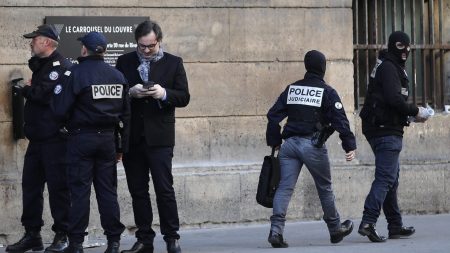
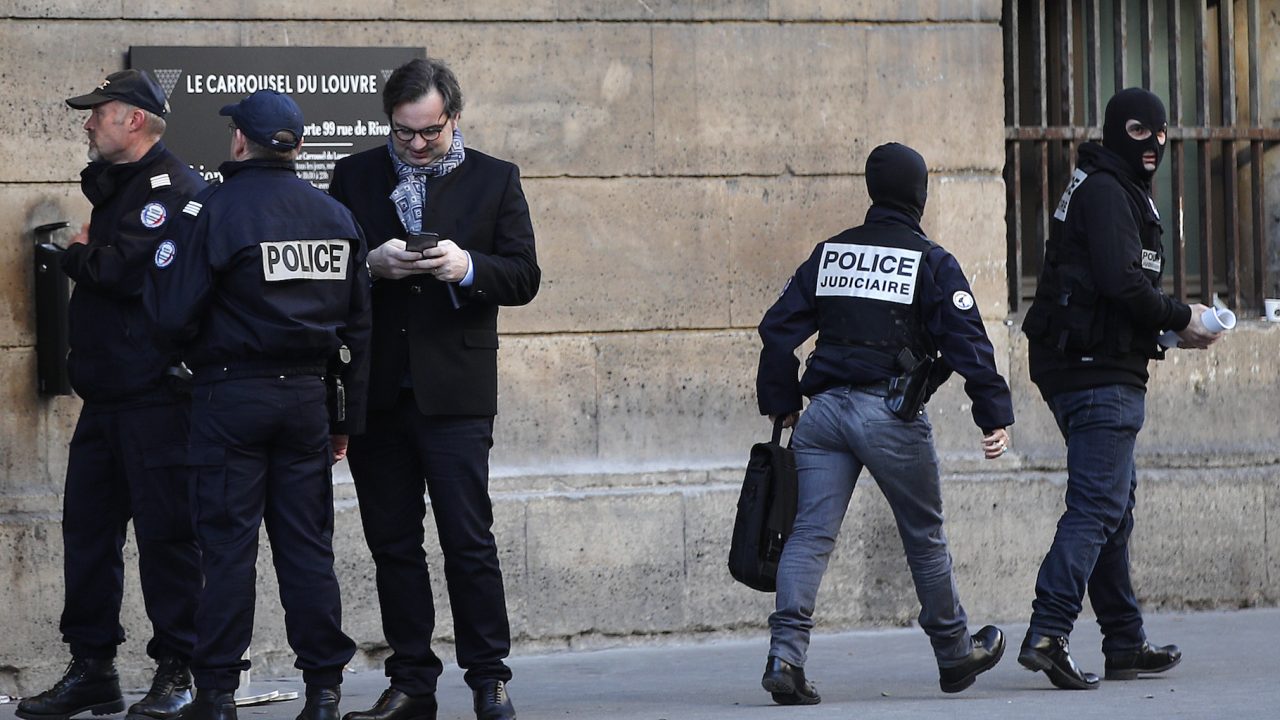
Police officers cordon off the area near the Louvre museum near where a soldier opened fire after he was attacked in Paris, Friday, Feb. 3, 2017. Police say the soldier opened fire outside the Louvre Museum after he was attacked by someone, and the area is being evacuated. (AP Photo/Christophe Ena)

A man with a machete attacked French soldiers Friday morning while they were on patrol outside the famous Louvre museum in Paris. According to eyewitness reports, the man shouted “Allahu Akbar.” French Prime Minister François Hollande has called the act “terrorist in nature.”

The suspect reportedly attacked the soldiers at an entrance to the shopping mall connected to the museum, and the soldiers first tried to subdue him using non-lethal force before opening fire. The suspect was shot in the abdomen and is seriously injured, according to BBC. CBS news also confirmed that the attacker was heard to shout “Allahu Akbar” during his attack.

French authorities said the suspect was carrying two backpacks and two machetes, and began his attack after the soldiers told him he couldn’t carry his backpacks into the shopping mall. “That’s when he got the knife out and that’s when he tried to stab the soldier,” said Yves Lefebvre, a French police official.

The Louvre was on lockdown as four soldiers tried to fight off the suspect before firing five shots at the assailant. One soldier sustained a slight head injury but is expected to recover. The suspect was taken to the hospital after being shot in the stomach, but Police Chief Michael Cadot told reporters he was still conscious and moving. He also said another person who was “acting suspiciously” was arrested at the time but did not appear to be involved.

Interior Ministry spokesman Pierre-Henry Brandet told reporters that about 1,000 people were inside the Lourve museum at the time and were safe in lockdown until the all-clear was given and they were evacuated in an orderly fashion after security checks.

Authorities searched the backpacks but no explosives were found.

The suspect is said to be in his mid-30s and did not have any identity papers. The attack at the Louvre is the latest in a string of attacks in Europe in which the assailants have used machetes, buses, or other non-firearm weapons for sometimes deadly attacks.

According To Iranian Officials, Obama Administration Gave Unwritten Consent In The Nuclear Talks And In The JCPOA Negotiations For Iran To Develop Ballistic Missiles With A Range Of Only 2,000 km – That Is, Capable Of Striking Israel But Not Europe

February 3, 2017

According To Iranian Officials, Obama Administration Gave Unwritten Consent In The Nuclear Talks And In The JCPOA Negotiations For Iran To Develop Ballistic Missiles With A Range Of Only 2,000 km – That Is, Capable Of Striking Israel But Not Europe, MEMRI, A. Savyon and Yigal Carmon and U. Kafash*, February 2, 2017

“Likewise, the Zionist regime is the most important enemy of Iran in the regionregion, and is less than 1,200 km away. Therefore, short- and medium-range missiles are sufficient to strike U.S. bases near Iran, and long-range missiles are sufficient to strike the occupied territories [Israel]. The diagram shows several of these American bases and [also] the missiles that are counting [down] to the moment [when they will be able to] strike them.”

*********************

Introduction

On January 30, 2017, U.S. sources announced that Iran had conducted a failed test of a new ballistic missile, the Khorramshahr. According to reports, the missile exploded after a 965-km flight.[1] Both Iranian Foreign Minister Zarif (on January 31) and Defense Minister Dehghan (on February 1) stressed that Iran “asks permission from no one in the matter of its defense program.”[2]

It should be emphasized that contrary to statements by Iranian regime spokesmen who say that Iran’s missile program is defensive, missiles with a 2,000-km range are strictly offensive and strategic. This is why Iran has faced constant demands to stop developing them.

In the years that preceded the U.S.-Iran nuclear talks, Iran developed ballistic missiles with ranges of 2,500-5,000 km that threaten Europe and even the U.S.

Dr. Hassan Abbasi, theoretician of Iran’s Islamic Revolutionary Guards Corps (IRGC) and director of the IRGC Center for Borderless Security Doctrinal Analysis, said in 2004: “We have a strategy drawn up for the destruction of Anglo-Saxon civilization and for the uprooting of the Americans and the English.

“Our missiles are now ready to strike at their civilization, and as soon as the instructions arrive from Leader [Ali Khamenei], we will launch our missiles at their cities and installations… And because of Khatami’s policies and dialogue between the civilizations, we have been compelled to freeze our plan… and now we are [again] about to carry out the program… The global infidel front is a front against Allah and the Muslims, and we must make use of everything we have at hand to strike at this front, by means of our suicide operations or by means of our missiles.”[3]

The London-based Saudi daily Al-Sharq Al-Awsat also reported, on June 14, 2004, that the Shihab 4 and Shihab 5 long-range missile projects had been revived, on orders from Iranian Supreme Leader Ali Khamenei.[4]

It should be noted that a December 14, 2013 report on Iran’s missile program published by the IRGC-affiliated Mehr news agency immediately following the Geneva Agreement provided details on the various Shihab models. According to the report, Shihab 3D missiles, with a range of 2,200-3,000 km, “can easily reach the occupied territories [Israel]… and cover their entire area.” The report also stated that the Shihab 4 has a range of 3,000 km and the ability to launch satellites into orbit, and that “very little information” has been published about the Shihab 5. The diagrams in the article also feature a Shihab 6 model.[5]

U.S. Approves Iranian Development Of Missiles With A Range Of Only 2,000 km – That Is, Capable Of Reaching Israel

However, after U.S.-Iran negotiations began, and at the end of their first stage, in Geneva in November 2013, Iranian officials began reporting that Iran’s missile program for missiles with ranges above 2,000 km was being restricted.

Thus, for example, immediately after the interim agreement was reached in Geneva, on December 10, 2013, and in reference to it, IRGC commander Mohammad Ali Jafari said that Iran is capable of producing missiles with a range of over 2,000 km but that Khamenei had restricted the IRGC to a 2,000-km range: “We want to increase the range of the IRGC’s missiles, but despite this, the Leader [Khamenei] has restricted us to a range of 2,000 km. We have the capability to increase the range of our missiles, and our missiles should obviously reach Israel… The regime’s red lines were not crossed during the nuclear talks with the P5+1 [Group] and in the Geneva Agreement.”[6]

Indeed, IRGC commanders stressed that the most important thing for the regime was missiles capable of striking Israel; see, for example, comments by IRGC Aerospace and Missile Division director Amir Ali Hajizadeh, who said following a 2016 missile launch: “For us, Israel’s evil is totally clear, and the 2,000-kilometer range of our missiles [is intended] to confront the distant Zionist regime.”[7]

Extensive quotes regarding the Iranian regime’s explicit intent to target Israel with its missiles can be found in MEMRI Inquiry & Analysis No. 1135, Iranian IRGC Missile Unit Commanders: We’ve Developed 2,000-km Range Missiles And Equipped Hizbullah With 300-km Range Missiles; Fars News Agency: Israel’s Illusions About Its Natural Gas Fields Will Be Buried In The Mediterranean, December 3, 2014, and Special Dispatch No. 6349, Iran Launches Long-Range Missiles Emblazoned With Slogan: ‘Israel Should Be Wiped Off The Face Of The Earth’, March 16, 2016.
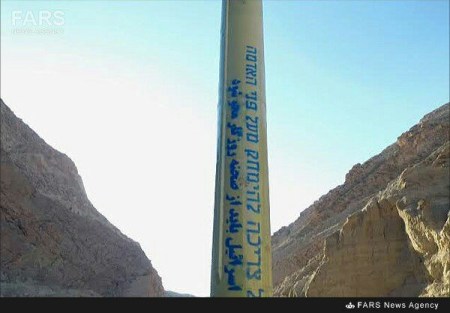
1298aIranian missile emblazoned with the slogan ‘Israel Should Be Wiped Off The Face Of The Earth” (Fars, Iran, March 9, 2016)

On November 17, 2014, the IRGC-affiliated Tasnim news agency posted a diagram explaining that Iran “makes do” with a range of 2,000 km, which it considers “desirable” and which covers all of Israel: “On the Firing Line – The commanders of the army of the Islamic Republic [of Iran] have said several times that with its attainment of long-range missiles with a range of up to 2,000 km, Iran has arrived at the range ceiling that it considers desirable, and that ‘in the meantime’ there is no need to increase this range. Although the U.S. is 11,000 km from Iran, in recent years it has approached the borders of Iran, [and therefore] its military bases, equipment, and forces are a target for Iran’s missiles.

“Likewise, the Zionist regime is the most important enemy of Iran in the region, and is less than 1,200 km away. Therefore, short- and medium-range missiles are sufficient to strike U.S. bases near Iran, and long-range missiles are sufficient to strike the occupied territories [Israel]. The diagram shows several of these American bases and [also] the missiles that are counting [down] to the moment [when they will be able to] strike them.”[8]

Additionally, Defense Minister Hossein Dehghan said on August 18, 2015 in response to a reporter’s question on the manufacture of missiles with a range greater than 2,000 km: “We do not produce missiles with ranges greater than 2,000 km.”[9]

Is U.S. Permission For Iran To Develop Missiles With Ranges Up To 2,000 km – Which Reach Israel – A Secret Annex Of The JCPOA, Or Simply Unwritten Consent?

In statements, IRGC officials hinted that restrictions on the range of Iranian missiles so that they reach Israel but not Europe were part of the Iran deal. Thus, for instance, IRGC commander Mohammad Ali Jafari referred to the IRGC’s November 2, 2015 consent to UN Security Council Resolution 2231, saying: “One of the points in this resolution was the matter of restrictions, which some military elements feared. Therefore, we held meetings in [Iran’s] Supreme National Security Council, and also went to the Leader [Khamenei]. The [Iranian] negotiating team told the Westerners that we do not agree to these restrictions. They [the Westerners] said that these issues must be included in the resolution. Even when I met with the Leader, he said that there were no restrictions on developing defensive capabilities. The only restriction relates to nuclear missiles, which, obviously, we never wanted.”[10]

The next day, on November 3, 2015, Iranian Army chief of staff Hassan Firouzabadi referred to Jafari’s remarks, saying: “I confirm statements by the IRGC commander that Iran’s missile activity is not restricted. We will follow two restrictions: The first is mentioned in the JCPOA, in the matter of no nuclear planning, and the second is the range of 2,000 km, which has already been noted previously by all elements in Iran.”[11]

It should be noted that the Hebrew version of this news, which IRIB published on November 4, 2015 explicitly mentioned, in both the headline and the text, that the JCPOA allows Iran to possess ballistic missiles of a range of 2,000 km. The Hebrew news item read:

Firouzabadi: The Nuclear Agreement Promises Iran Missiles With 2,000-km Range

“The chief of staff of Iran’s armed forces, Maj.-Gen. Hassan Firouzabadi, stressed that the state, under orders from the general commander [i.e. Khamenei] of the IRGC, undertakes, inter alia, to restrict nuclear planning, but that it is entitled to produce missiles with a range of 2,000 km.

“Firouzabadi made these statements yesterday (Tuesday) to a group of Islamic regime leaders and officials, and referred to [statements by] the IRGC general commander emphasizing that Iran would commit to the sections of the nuclear agreement with the West that include a restriction on nuclear planning, and that in addition, Iran is entitled to possess missiles with a range of 2,000 km.”[12]

These statements indicate that although the permission given to Iran to develop missiles capable of striking Israel is likely not a secret annex of the JCPOA, it still constitutes unwritten consent that is an integral part of the nuclear deal. It is convenient for both sides not to publish this understanding in written form – for Iran because it rejects any public reference to its missile program, which it defines as defensive but is in fact offensive; and for the Obama administration, because there would be repercussions if it were to be revealed that it had given Iran permission to develop missiles capable of striking Israel.

It should be noted that UN Security Council Resolution 2231 (2015) constitutes an additional concession by the Obama administration to Iran, in comparison with the previous resolution 1929 (2010). This concession has two components:

One, UNSCR 1929 banned Iran from conducting any activity concerning missiles capable of carrying nuclear warheads, while UNSCR 2231 replaced the word “capable,” which refers to objective specifications, with the word “intended,” which concerns fluid political matters.

Two, while UNSCR 1929 banned Iran from conducting any missile activity, UNSCR 2231 rescinds this ban.

Following Iran’s May 9, 2016 missile test, which took place after the JCPOA’s Implementation Day – and which embarrassed the Obama administration – IRGC Aerospace and Missile Division director Amir Ali Hajizadeh said: “The Americans are telling [us]: ‘Don’t talk about missile affairs, and if you conduct a test or maneuver, don’t mention it.'”[13]

*A. Savyon is Director of MEMRI’s Iran Media Project; Y. Carmon is President of MEMRI; U. Kafash is a Research Fellow at MEMRI.


[1] Foxnews.com, January 30, 2017.

[2] Yjc.ir, January 31, 2017; Tasnim (Iran), February 1, 2017.

[3] Shargh (Iran), June 5, 2004; Al-Sharq Al-Awsat (London), May 28, 2004. Also see MEMRI Inquiry & Analysis No. 181, The Internal Debate in Iran: How to Respond to Western Pressure Regarding Its Nuclear Program, June 17, 2004; MEMRI Special Dispatch No. 723, Iran’s Revolutionary Guards Official Threatens Suicide Operations: ‘Our Missiles Are Ready to Strike at Anglo-Saxon Culture… There Are 29 Sensitive Sites in the U.S. and the West…’, May 28, 2004; and MEMRI TV Clip No. 252, Iranian Revolutionary Guard Official In Tehran University Lecture (Part II): We Plan To Target US Nuclear Warheads On US Soil; Should Take Over England, May 22, 2004.

[4] A military source in the Iranian Defense Ministry stated: “In a meeting last week with Revolutionary Guards commanders, Khamenei said that Israel was planning to attack Iran’s nuclear installations and the Iranian military soon, and therefore defense and military preparedness should be boosted as soon as possible. Khamenei stressed that the increase in petroleum prices allowed Iran to allocate a larger budget to its military projects. [Iran’s] Ministry of Defense received $1 billion to resume its Shihab 4 and Shihab 5 project. It is known that in the past, Iran conducted an experiment with Shihab 3 missiles whose range is 1,200 kilometers [and which can reach Israel], but [President] Khatami halted the project of the Shihab 4, whose range is 2,800 [which covers Western Europe], and the Shihab 5, whose range is 4,900-5,300 km [and which can reach the U.S.], because he thought it was a project incompatible with Iran’s strategic interests and defense needs.” Al-Sharq Al-Awsat (London), June 14, 2004.

[5] Mehrnews.com, December 14, 2013.

[6] ISNA (Iran), December 10, 2013.

[7] Fars (Iran), March 9, 2016. See MEMRI Special Dispatch No. 6349, Iran Launches Long-Range Missiles Emblazoned With Slogan: ‘Israel Should Be Wiped Off The Face Of The Earth’, March 16, 2016.

[8] Tasnim (Iran), April 17, 2014. See MEMRI Inquiry & Analysis No. 1135, Iranian IRGC Missile Unit Commanders: We’ve Developed 2,000-km Range Missiles And Equipped Hizbullah With 300-km Range Missiles; Fars News Agency: Israel’s Illusions About Its Natural Gas Fields Will Be Buried In The Mediterranean, December 3, 2014.

[9] Yjc.ir, August 18, 2015.

[10] Fars (Iran), November 2, 2015.

[11] Mashregh (Iran), November 3, 2015.

[12] Hebrew.irib.ir, November 4, 2015.

[13] See MEMRI Special Dispatch No. 6430, IRGC Aerospace And Missile Force Commander: The Americans Are Telling Us ‘Don’t Talk About Missile Affairs, And If You Conduct A Test… Don’t Mention It’, May 15, 2016.
Why Mexico’s Governors Became A Prime Target of Criminal Groups

February 3, 2017

Why Mexico’s Governors Became A Prime Target of Criminal Groups, Insight Crime, Patrick Corcoran, January 31, 2017

(Please see also, Mexico’s President Cancels White House Visit After Trump Hits Cartels. — DM)

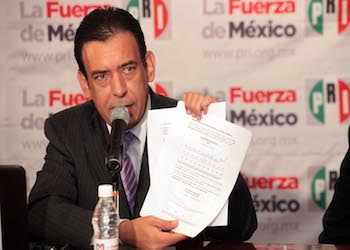
G23051125.JPG MÉXICO, D.F.-Conferencia-Moreira. El presidente nacional del PRI, Humberto Moreira durante conferencia de prensa la mañana de este lunes en la sede nacional de dicho instituto político. EGV. Foto: Agencia EL UNIVERSAL/Juan Boites.

MÉXICO, D.F.-Conferencia-Moreira. El presidente nacional del PRI, Humberto Moreira durante conferencia de prensa la mañana de este lunes en la sede nacional de dicho instituto político. EGV. Foto: Agencia EL UNIVERSAL/Juan Boites.

A growing stream of corruption allegations against governors in Mexico exemplifies how changes in the country’s political landscape have inadvertently served to expand these officials’ role in enabling organized crime.

As reported by InSight Crime and other sources, a reputed financial operator for the Zetas criminal group accused former Coahuila Gov. Humberto Moreira of accepting $2 million in monthly payments in exchange for allowing the gang to open hundreds of so-called “narcotiendas” (narco-stores) and giving them virtually free rein to operate throughout the state. As part of the bargain, the Zetas intimidated and attacked political and business enemies of Moreira, according to the testimony of the former Zetas member.

Moreira has denied the charges, and while they have not been verified, they do fit with the broader pattern of Moreira’s tenure at the head of the Coahuila state government, which lasted from 2005 to 2011. After having operated primarily as an offshoot of the Gulf Cartel in Tamaulipas, the Zetas took control of Coahuila in 2007 and 2008. In so doing, they initiated a campaign of kidnapping and extortion that had no local precedent and turned certain cities, such as Torreón, into virtual war zones. Rumors that Moreira was directly responsible for the Zetas‘ rise were rampant during his tenure, and since his exit, Moreira’s alleged ties to the criminal group have sparked multiple criminal investigations, including some convictions, against him and his subordinates in the United States.

The grim arc of Moreira’s career is not unusual. Two former governors of Tamaulipas, Tomás Yarrington and Eugenio Hernández, are facing indictments in the United States for allegedly aiding criminal groups. Former Veracruz Gov. Javier Duarte is a fugitive with a raft of corruption cases hanging over his heard, while his former counterpart from Sonora, Guillermo Padrés, turned himself in to Mexican authorities in November amid similar allegations.

InSight Crime Analysis

This confluence of stories on governors’ wrongdoing is not a coincidence, but rather a byproduct of a Mexican political system that concedes enormous and largely unchecked authority to the statehouse.

In the post-Mexican Revolution political system that dominated the 20th Century, while Mexican governors enjoyed a great deal of autonomy strictly within their domain, they operated at the orders of a near-omnipotent president. The power of the presidency provided an important check on their power. The multi-party system that emerged in the 1990s and 2000s brought the days of the all-powerful president to an end, but this opening had the unintended effect of vastly increasing the practical control that governors exercised.

If a gang secures the support of a single governor whose state controls a major port or a border crossing, it has likely guaranteed itself a major role in the national criminal landscape.

It is not a coincidence that one of the first examples of the so-called narco-governor essentially coincided with the end of the PRI’s monopoly on Mexican politics. Former Quintana Roo Governor Mario Villanueva went underground days before the end of his term in 1999, amid rampant rumors that, in exchange for bribes much like those Moreira is accused of receiving, he had given the Juarez Cartel of Amado Carrillo free use of his state. After being arrested in Mexico in 2001, Villanueva was later extradited to the United States. After serving a lengthy prison sentence, earlier this month Villanueva was returned to Mexico and subsequently arrested. He is reportedly awaiting another lengthy prison term.

Today, governors rather than presidents exercise practical control over their states’ congressional delegations. They often wield substantial influence over the municipal governments within their states as well, as mayors rely on them for budgetary transfers and for support in advancing their political futures.

This shift in the political landscape over the past two decades has made governors collectively the most important cohort in Mexican politics, frequently described as modern-day viceroys. Working as a unit, they are capable of scuttling a president’s agenda.

This has consequently turned them into an irresistible target for criminal groups looking for allies within government. The scope of governors’ authority makes it ideal for criminal groups to try to corrupt or otherwise co-opt them. If a gang secures the support of a single governor whose state controls a major port or a border crossing, it has likely guaranteed itself a major role in the national criminal landscape. The Familia Michoacana and the Knights Templar, for example, were largely concentrated in a single state, but that has been enough to make the gangs major players over the past decade.

A gang can leverage the support of a key governor in any number of ways. They can use his government as a sort of beachhead amid a territorial expansion, as the Zetas allegedly did. Most governors control large and relatively effective state police forces, which, when deployed at the service of a criminal group, can be extremely valuable allies.

Criminal groups can also use political support indirectly to lean on local governments. Governors can help gangs by pressuring prosecutors to limit prosecutions against their members, as many laws targeting organized crime are in the realm of state courts. As the chief interlocutors with the federal government, governors can also obstruct federal efforts to target one group or another.

From a criminal group’s perspective, governors are also more reachable than the president. The fact that they occupy a lower profile than the president makes dealing with governors far less risky. In addition, governors are not burdened with the prerogatives of statesmanship, from monetary policy to foreign relations, which limit time for focusing on law enforcement and security matters. Relative to presidents, governors are also more isolated from pressure from the US government to crack down on criminal groups.

This collective dynamic is behind the spate of cases like Moreira’s and Yarrington’s, among many others. Although much of the commentary on security issues in Mexico focuses on the goals and missteps of the presidency, a great deal of the government’s efforts are channeled through other offices. And as long as Mexican governors in key states are actively boosting the interests of powerful crime groups like the Zetas, there will be a limit to what federal policies can accomplish.

Trump Changes US Policy on Settlements, But Will Netanyahu Pick Up the Ball?

February 3, 2017

Trump Changes US Policy on Settlements, But Will Netanyahu Pick Up the Ball?, The Jewish PressStephen Leavitt, February 3, 2017

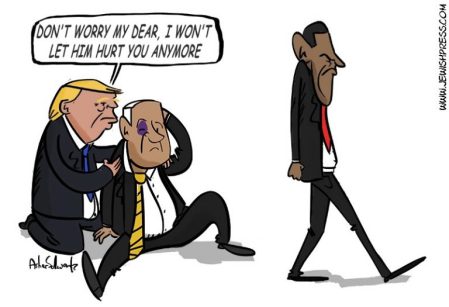
battered-bibi-syndrome-2-768x525Photo Credit: Asher Schwartz

The official White House statement thoroughly rejects the JPost’s quote, craftily eliminating both concerns: Trump is not committed to a two-state solution, and he does not consider the settlements an obstacle to peace.

**********************************

For the first time in many years, the White House on Thursday released a statement regarding Jewish settlements in Judea and Samaria without the adjectives “illegal” or “illegitimate” next to the word “settlements.”

While not 100 percent perfect — a policy of benign neglect would be best — it is clearly a complete turnaround from previous administration positions, particularly former-President Obama’s “not one brick anywhere” policy, including Jerusalem.

The White House
Office of the Press Secretary
For Immediate Release

Statement by the Press Secretary

“The American desire for peace between the Israelis and the Palestinians has remained unchanged for 50 years. While we don’t believe the existence of settlements is an impediment to peace, the construction of new settlements or the expansion of existing settlements beyond their current borders may not be helpful in achieving that goal. As the President has expressed many times, he hopes to achieve peace throughout the Middle East region. The Trump administration has not taken an official position on settlement activity and looks forward to continuing discussions, including with Prime Minister Netanyahu when he visits with President Trump later this month.”

In other words, what began a few months ago as a video of Prime Minister Benjamin Netanyahu asking why should having Jews living in Judea and Samaria be considered an impediment to peace – is now US foreign policy.


In addition to the biggest item of recognizing the legitimacy of the settlements, by omitting the words “illegal” and “illegitimate,” the statement actually declares, for all the world to see: “We don’t believe the existence of settlements is an impediment to peace.”

It should be noted that even that one seemingly negative-note in the Trump statement against new settlements or expansion isn’t exactly that:

“the expansion of existing settlements beyond their current borders may not be helpful in achieving that goal.”

First of all, the statement gives implicit approval to construction within existing settlements, and not just to communities within the settlement blocs (i.e. Gush Etzion, Ariel, etc), but rather to all settlements. This is a much wider definition, and includes many smaller Jewish communities that exist outside of the blocs, representing some 80,000 Jews.

Not to name names, but that’s more settlement legitimacy than what even some members of Netanyahu’s cabinet recognize.

Furthermore, it doesn’t actually forbid or rebuke Israel if it does build a new settlement or expand beyond the borders of an existing one. The White House statement merely questions if it is helpful to achieving peace, and leaves that question open for further discussion.

The other glaring omission in the Trump White House statement is the term “two-state solution,” so beloved by every Administration since the 1993 Oslo Accords. Why, only last Wednesday, the new, relatively pro-Israel UN Secretary-General, Antonio Guterres, had his spokesperson release a statement saying that,

“the recent announcement by the Israeli Government to advance 5,000 settlement units in the occupied West Bank could […] threaten to unravel plans for a two-State solution between Israelis and Palestinians. […] We once again warn against any unilateral actions that can be an obstacle to a negotiated two-state solution.”

Having praised the Trump statement so much, it’s also easy to realize that there must be some conflict within the Administration over the settlements issue, with one faction obviously pushing the traditional State Department line.

Rumor has it that the White House statement was released not so much as a response to Netanyahu’s recent settlement construction announcements, but in response to an unauthorized leak from within the Administration to the Jerusalem Post, which the latter reported Thursday:

“The White House warned Israel on Thursday to cease settlement announcements that are ‘unilateral’ and ‘undermining’ of President Donald Trump’s effort to forge Middle East peace, a senior administration official told The Jerusalem Post. For the first time, the administration confirmed that Trump is committed to a comprehensive two-state solution to the Israeli- Palestinian conflict negotiated between the parties.”

The official White House statement thoroughly rejects the JPost’s quote, craftily eliminating both concerns: Trump is not committed to a two-state solution, and he does not consider the settlements an obstacle to peace.

Indeed, the White House statement acknowledges the value and validity of the Israeli PM in forging US foreign policy:

“The Trump administration has not taken an official position on settlement activity and looks forward to continuing discussions, including with Prime Minister Netanyahu when he visits with President Trump later this month.”

This is tantamount to an Obama statement saying: “The Obama administration will decide on the Iran nuclear deal after continued discussions with Prime Minister Netanyahu when he visits to speak to Congress on March 3, 2015.” Yes, that’s how impossibly big this statement is.

It is now entirely up to Prime Minister Netanyahu.

Will Netanyahu have what it takes to change forever Israel’s future? Will he take full advantage of Trump’s invitation to help forge US foreign policy in a way that bolsters the Zionist vision? Will he step back from his Bar Ilan speech, and return to his former, maximalist positions?

From the White House statement it appears that the ball is completely in Netanyahu’s court.