Archive for January 2017

Shootout at U.S. Consulate in Nuevo Laredo Part of Cartel-Terrorist Attack Plan for Trump Inauguration

January 15, 2017

Shootout at U.S. Consulate in Nuevo Laredo Part of Cartel-Terrorist Attack Plan for Trump Inauguration, Judicial Watch, January 12, 2017

(Please see also Jihadists Train, Plan U.S. Attack from Mexican Border State. — DM)

A deadly shootout at the construction site of the new American Consulate occurred this week in a Mexican border town where Islamic terrorists and drug cartels plan to launch attacks against the U.S. during the period surrounding the presidential inauguration, high-level government sources tell Judicial Watch. An unknown number of gunmen fired multiple rounds adjacent to the new U.S. Consulate compound in Nuevo Laredo, Mexico, a crime-infested city in the state of Tamaulipas that lies directly across from Laredo, Texas.

The Mexican military responded to the attack, law enforcement sources on both sides of the border confirm insisting that their identities be kept confidential for security reasons, and at least three soldiers were either killed or critically wounded in the ambush. A local newspaper in Tamaulipas reported that 13 people died during a shootout in Nuevo Laredo, referring to the deceased as heavily armed “delinquents” with an arsenal that includes 12 automatic weapons, a rocket launcher, grenade, loads of ammunition and drugs in three vehicles, one of them armored. The deceased have not been identified and Mexican authorities will continue to investigate, the article states, attributing the information to a press release issued by Mexico’s Defense Secretary.

Judicial Watch’s law enforcement and intelligence sources say the barrage outside what’s soon to be the new U.S. Consulate is connected to a broad operation between Islamic terrorists and Mexican drug cartels to send President-elect Donald Trump a message by engaging in attacks at border ports. “Cartels usually don’t work with jihadists for fear of having the border shut down,” a veteran federal law enforcement official told Judicial Watch. “But Trump is causing so much disruption in Mexico that they are partnering to send a message as to who is in control. This is as outrageous as a small group of guys crashing planes into U.S. buildings.” Another official who has worked in the region for years said “Trump is causing a huge amount of fear in Mexico throughout all sectors; private, government, business, criminal, police….”

Nuevo Laredo is among the border towns that the terrorists and narcotraffickers plan to launch attacks in, according to intelligence gathered by law enforcement agencies in the U.S. and Mexico. Others include Matamoros, Reynosa and Ciudad Juárez. In 2015 Judicial Watch reported that ISIS is operating a camp just west of Ciudad Juárez, around eight miles from El Paso. Sources that include a Mexican Army field grade officer and Mexican Federal Police inspector revealed that, during a joint operation, they discovered documents in Arabic and Urdu, as well as “plans” of Fort Bliss – the sprawling military installation in El Paso that houses the US Army’s 1st Armored Division. Muslim prayer rugs were recovered with the documents during the operation.

Just last week Judicial Watch reported that a Jihadi-cartel alliance in the Mexican state of Nuevo León is collaborating to carry out attacks in American cities and ports of entry along the southern border. Confidential U.S. and Mexican law enforcement sources said that, as part of the plan, militant Islamists have arrived recently at the Monterrey International Airport situated in Apodaca, Nuevo León, about 130 miles south of the Texas border. An internal Mexican law enforcement report obtained by Judicial Watch confirms that Islamic terrorists have “people along the border, principally in Tijuana, Chihuahua, Coahuila, Nuevo León and Tamaulipas.” Cartel informants tell law enforcement contacts that “they are only waiting for the order and the times to carry out a simultaneous attack in the different ports of entry or cities of the United States of America.”

The area where this week’s shootout originated is a 5.6-acre parcel just south of downtown Nuevo Laredo on Paseo Colon. The State Department predicts that by September the new U.S. Consulate compound, which broke ground in mid-2015 and will cost $155 million, should be completed. It will have multiple buildings, including an office structure, U.S. Marine Security Guard residence, support annex and other facilities for the consulate community. The primary function of consulates is helping and protecting Americans abroad.

BREAKING NEWS ; Right after call to sue Merkel: Freedom Author-journalist Ulfkotte deceased

January 15, 2017

BREAKING NEWS

http://info.kopp-verlag.de/hintergruende/deutschland/jochen-kopp/in-memoriam-dr-udo-ulfkotte-196-2-17-.html

Right  after call to sue Merkel: Freedom Author-journalist Ulfkotte deceased

The German author-journalist Udo Ulfkotte (photo), a former editor at the Frankfurter Allgemeine Zeitung, yesterday deceased suddenly after a cardiac arrest. The just under 57 years old became Ulfkotte wrote several bestsellers in which he with numerous hard facts and evidence to the plans of the European elite to Islamize our continent with millions of Muslim immigrants and impoverish revealed. Ulfkottes death is suspicious found on some forums, because he was only four days ago made an open call for the drafting of a joint indictment against Chancellor Angela Merkel. His American counterpart Andrew Breitbart died a few years ago the same suspicious death.


MORE FOLLOWS

Trump and the American Divide

January 15, 2017

Trump and the American Divide, City JournalVictor Davis Hanson, Winter 2017

In sum, Donald Trump captured the twenty-first-century malaise of a rural America left behind by globalized coastal elites and largely ignored by the establishments of both political parties. Central to Trump’s electoral success, too, were age-old rural habits and values that tend to make the interior broadly conservative. That a New York billionaire almost alone grasped how red-state America truly thought, talked, and acted, and adjusted his message and style accordingly, will remain one of the astonishing ironies of American political history.

*****************************

At 7 AM in California’s rural Central Valley, not long before the recent presidential election, I stopped to talk with an elderly irrigator on the shared border alleyway of my farm. His face was a wrinkled latticework, his false teeth yellow. His truck smelled of cigarettes, its cab overflowing with flotsam and jetsam: butts, scribbled notes, drip-irrigation parts, and empty soda cans. He rolled down the window and muttered something about the plunging water-table level and whether a weak front would bring any rain. And then, this dinosaur put one finger up on the wheel as a salutation and drove off in a dust cloud.

Five hours later, and just 180 miles distant, I bought a coffee at a Starbucks on University Avenue in Palo Alto, the heart of Silicon Valley, the spawn of Stanford University. Two young men sat at the table next to me, tight “high-water” pants rising above their ankles, coat cuffs drawn up their forearms, and shirts buttoned all the way to the top, in retro-nerd style. Their voices were nasal, their conversation rapid-fire— politics, cars, houses, vacations, fashion, and restaurants all came up. They were speaking English, but of a very different kind from the irrigator’s, accentuating a sense of being on the move and upbeat about the booming reality surrounding them.

I hadn’t just left one part of America to visit another, it seemed, but instead blasted off from one solar system to enter another cosmos, light-years distant. And to make the contrast even more radical, the man in the truck in Fresno County was Mexican-American and said that he was voting for Trump, while the two in Palo Alto were white, clearly affluent—and seemed enthused about Hillary Clinton’s sure win to come.

The postelection map of Republican and Democratic counties mirrored my geographical disconnect. The Donald Trump nation of conservative red spanned the country, to within a few miles of the two coasts, covering 85 percent of the nation’s land area. Yet Clinton won the popular vote, drawing most of her support in razor-thin, densely populated blue ribbons up and down the East and West Coast corridors and in the Great Lakes nexus. As disgruntled liberal commentator Henry Grabar summed up the election result: “We now have a rural party and an urban party. The rural party won.” This time around, anyway.

The urban party has been getting beat up a lot, even before Trump’s surprising victory. Not only have the Democrats surrendered Congress; they now control just 13 state legislatures and 15 governorships—far below where they were pre–Barack Obama. Over the past decade, more than 1,000 elected Democratic state lawmakers have lost their jobs, with most of the hemorrhaging taking place outside the cities. As political analyst Ron Brownstein puts it, “Of all the overlapping generational, racial, and educational divides that explained Trump’s stunning upset over Hillary Clinton . . . none proved more powerful than the distance between the Democrats’ continued dominance of the largest metropolitan areas, and the stampede toward the GOP almost everywhere else.”

“Everywhere else” basically means anywhere but the two coasts. After the election, in liberal, urban America, one often heard Trump’s win described as the revenge of the yahoos in flyover country, fueled by their angry “isms” and “ias”: racism, anti-Semitism, nativism, homophobia, Islamophobia, and so on. Many liberals consoled themselves that Trump’s victory was the last hurrah of bigoted, Republican white America, soon to be swept away by vast forces beyond its control, such as global migration and the cultural transformation of America into something far from the Founders’ vision.

As insurance, though, furious progressives also renewed calls to abolish the Electoral College, advocating for a constitutional amendment that would turn presidential elections into national plebiscites. Direct presidential voting would shift power to heavily urbanized areas—why waste time trying to reach more dispersed voters in less populated rural states?—and thus institutionalize the greater economic and cultural clout of the metropolitan blue-chip universities, the big banks, Wall Street, Silicon Valley, New York–Washington media, and Hollywood, Democrat-voting all.

Barack Obama’s two electoral victories deluded the Democrats into thinking that it was politically wise to jettison their old blue-collar appeal to the working classes, mostly living outside the cities these days, in favor of an identity politics of a new multicultural, urban America. Yet Trump’s success represented more than simply a triumph of rural whites over multiracial urbanites. More ominously for liberals, it also suggested that a growing minority of blacks and Hispanics might be sympathetic with a “country” mind-set that rejects urban progressive elitism. For some minorities, sincerity and directness might be preferable to sloganeering by wealthy white urban progressives, who often seem more worried about assuaging their own guilt than about genuinely understanding people of different colors.

Trump’s election underscored two other liberal miscalculations. First, Obama’s progressive agenda and cultural elitism prevailed not because of their ideological merits, as liberals believed, but because of his great appeal to urban minorities in 2008 and 2012, who voted in solidarity for the youthful first African-American president in numbers never seen before. That fealty wasn’t automatically transferable to liberal white candidates, including the multimillionaire 69-year-old Hillary Clinton. Obama had previously lost most of America’s red counties, but not by enough to keep him from winning two presidential elections, with sizable urban populations in Wisconsin, Michigan, Ohio, and Pennsylvania turning out to vote for the most left-wing presidential candidate since George McGovern.

Second, rural America hadn’t fully raised its electoral head in anger in 2008 and 2012 because it didn’t see the Republican antidotes to Obama’s progressive internationalism as much better than the original malady. Socially moderate establishmentarians like the open-borders-supporting John McCain or wealthy businessman Mitt Romney didn’t resonate with the spirit of rural America—at least not enough to persuade millions to come to the polls instead of sitting the elections out. Trump connected with these rural voters with far greater success than liberals anticipated. Urban minorities failed in 2016 to vote en bloc, in their Obama-level numbers; and rural Americans, enthused by Trump, increased their turnout, so that even a shrinking American countryside still had enough clout to win.

What is insufficiently understood is why a hurting rural America favored the urban, superrich Trump in 2016 and, more generally, tends to vote more conservative than liberal. Ostensibly, the answer is clear: an embittered red-state America has found itself left behind by elite-driven globalization, battered by unfettered trade and high-tech dislocations in the economy. In some of the most despairing counties, rural life has become a mirror image of the inner city, ravaged by drug use, criminality, and hopelessness.

Yet if muscular work has seen a decline in its relative monetary worth, it has not necessarily lost its importance. After all, the elite in Washington and Menlo Park appreciate the fresh grapes and arugula that they purchase at Whole Foods. Someone mined the granite used in their expensive kitchen counters and cut the timber for their hardwood floors. The fuel in their hybrid cars continues to come from refined oil. The city remains as dependent on this elemental stuff—typically produced outside the suburbs and cities—as it always was. The two Palo Altoans at Starbucks might have forgotten that their overpriced homes included two-by-fours, circuit breakers, and four-inch sewer pipes, but somebody somewhere made those things and brought them into their world.

In the twenty-first century, though, the exploitation of natural resources and the manufacturing of products are more easily outsourced than are the arts of finance, insurance, investments, higher education, entertainment, popular culture, and high technology, immaterial sectors typically pursued within metropolitan contexts and supercharged by the demands of increasingly affluent global consumers. A vast government sector, mostly urban, is likewise largely impervious to the leveling effects of a globalized economy, even as its exorbitant cost and extended regulatory reach make the outsourcing of material production more likely. Asian steel may have devastated Youngstown, but Chinese dumping had no immediate effect on the flourishing government enclaves in Washington, Maryland, and Virginia, filled with well-paid knowledge workers. Globalization, big government, and metastasizing regulations have enriched the American coasts, in other words, while damaging much of the nation’s interior.

Few major political leaders before Trump seemed to care. He hammered home the point that elites rarely experienced the negative consequences of their own ideologies. New York Times columnists celebrating a “flat” world have yet to find themselves flattened by Chinese writers willing to write for a fraction of their per-word rate. Tenured Harvard professors hymning praise to global progressive culture don’t suddenly discover their positions drawn and quartered into four part-time lecturer positions. And senators and bureaucrats in Washington face no risk of having their roles usurped by low-wage Vietnamese politicians. Trump quickly discovered that millions of Americans were irate that the costs and benefits of our new economic reality were so unevenly distributed.

As the nation became more urban and its wealth soared, the old Democratic commitment from the Roosevelt era to much of rural America—construction of water projects, rail, highways, land banks, and universities; deference to traditional values; and Grapes of Wrath–like empathy—has largely been forgotten. A confident, upbeat urban America promoted its ever more radical culture without worrying much about its effects on a mostly distant and silent small-town other. In 2008, gay marriage and women in combat were opposed, at least rhetorically, by both Barack Obama and Hillary Clinton in their respective presidential campaigns. By 2016, mere skepticism on these issues was viewed by urban elites as reactionary ignorance. In other words, it was bad enough that rural America was getting left behind economically; adding insult to injury, elite America (which is Democrat America) openly caricatured rural citizens’ traditional views and tried to force its own values on them. Lena Dunham’s loud sexual politics and Beyoncé’s uncritical evocation of the Black Panthers resonated in blue cities and on the coasts, not in the heartland. Only in today’s bifurcated America could billion-dollar sports conglomerates fail to sense that second-string San Francisco 49ers quarterback Colin Kaepernick’s protests of the national anthem would turn off a sizable percentage of the National Football League’s viewing audience, which is disproportionately conservative and middle American. These cultural themes, too, Trump addressed forcefully.

Is there something about the land itself that promotes conservatism? The answer is as old as Western civilization. For the classical Greeks, the asteios(“astute”; astu: city) was the sophisticated “city-like” man, while the agroikos(“agrarian”; agros: farm/field) was synonymous with roughness. And yet there was ambiguity as well in the Greek city/country dichotomy: city folk were also laughed at in the comedies of Aristophanes as too impractical and too clever for their own good, while the unpolished often displayed a more grounded sensibility. In the Roman world, the urbanus (“urbane”; urbs: city) was sometimes too sophisticated, while the rusticus (“rustic”; rus: countryside) was often balanced and pragmatic.

Country people in the Western tradition lived in a shame culture. Family reputation hinged on close-knit assessments of personal behavior only possible in small communities of the like-minded and tribal. The rural ethos could not afford radical changes in lifestyles when the narrow margins of farming safety rested on what had worked in the past. By contrast, self-reinvention and social experimentation were possible only in large cities of anonymous souls and varieties of income and enrichment. Rural people, that is, don’t honor tradition and habit because they’re somehow better human beings than their urban counterparts; a face-to-face, rooted society offers practical reinforcement for doing so.

In classical literature, patriotism and civic militarism were always closely linked with farming and country life. In the twenty-first century, this is still true. The incubator of the U.S. officer corps is red-state America. “Make America Great Again” reverberated in the pro-military countryside because it emphasized an exceptionalism at odds with the Left’s embrace of global values. Residents in Indiana and Wisconsin were unimpressed with the Democrats’ growing embrace of European-style “soft power,” socialism, and statism—all the more so in an age of European constitutional, financial, and immigration sclerosis. Trump’s slogan unabashedly expressed American individualism; Clinton’s “Stronger Together” gave off a whiff of European socialist solidarity.

Farming, animal husbandry, mining, logging—these traditional bodily tasks were often praised in the past as epitomes of the proper balance between physical and mental, nature and culture, fact and theory. In classical pastoral and Georgic poetry, the city-bound often romanticized the countryside, even if, on arrival, they found the flies and dirt of Arcadia bothersome. Theocritus and Virgil reflected that, in the trade-offs imposed by transforming classical societies, the earthiness lost by city dwellers was more grievous to their souls than the absence of erudition and sophistication was to the souls of simpler farmers and shepherds.

Trump, the billionaire Manhattanite wheeler-dealer, made an unlikely agrarian, true; but he came across during his presidential run as a clear advocate of old-style material jobs, praising vocational training and clearly enjoying his encounters with middle-American homemakers, welders, and carpenters. Trump talked more on the campaign about those who built his hotels than those who financed them. He could point to the fact that he made stuff, unlike Clinton, who got rich without any obvious profession other than leveraging her office.

Give the thrice-married, orange-tanned, and dyed-haired Trump credit for his political savvy in promising to restore to the dispossessed of the Rust Belt their old jobs and to give back to farmers their diverted irrigation water, and for assuring small towns that arriving new Americans henceforth would be legal—and that, over time, they would become similar to their hosts in language, custom, and behavior.
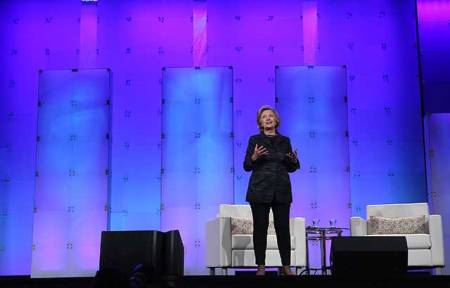
27_1-vdh2Hillary Clinton, speaking here at a Silicon Valley conference, drew strong support from technocratic elites. (JUSTIN SULLIVAN/GETTY IMAGES)

Changes come more slowly to rural interior areas, given that the sea, the historical importer of strange people and weird ideas, is far away. Maritime Athens was liberal, democratic, and cosmopolitan; its antithesis, landlocked Sparta, was oligarchic, provincial, and tradition-bound. In the same way, rural upstate New York isn’t Manhattan, and Provo isn’t Portland. Rural people rarely meet—and tend not to wish to meet—the traders, foreigners, and importers who arrive at ports with their foreign money and exotic customs.

The “Old Oligarch”—a name given to the author of a treatise by an anonymous right-wing grouch of fifth-century BC Athens—described the subversive hustle and the cornucopia of imported goods evident every day at the port of Piraeus. If one wished to destroy the purity of rural, conservative society, his odd rant went, then the Athens of Pericles would be just about the best model to follow. Ironically, part of Trump’s attraction for red-state America was his posture as a coastal-elite insider—but now enlisted on the side of the rustics. A guy who had built hotels all over the world, and understood how much money was made and lost through foreign investment, offered to put such expertise in the service of the heartland—against the supposed currency devaluers, trade cheats, and freeloaders of Europe, China, and Japan.

Language is also different in the countryside. Rural speech serves, by its very brevity and directness, as an enhancement to action. Verbosity and rhetoric, associated with urbanites, were always rural targets in classical literature, precisely because they were seen as ways to disguise reality so as to advance impractical or subversive political agendas. Thucydides, nearly 2,500 years before George Orwell’s warnings about linguistic distortion, feared how, in times of strife, words changed their meanings, with the more polished and urbane subverting the truth by masking it in rhetoric that didn’t reflect reality. In the countryside, by contrast, crops either grow or wither; olive trees either yield or remain barren; rain either arrives or is scarce. Words can’t change these existential facts, upon which living even one more day often depends. For the rural mind, language must convey what is seen and heard; it is less likely to indulge adornment.

Today’s rural-minded Americans are little different. Trump’s appeal to the interior had partly to do with his politically incorrect forthrightness. Each time Trump supposedly blundered in attacking a sacred cow—sloppily deprecating national hero John McCain’s wartime captivity or nastily attacking Fox superstar Megyn Kelly for her supposed unfairness—the coastal media wrote him off as a vulgar loser. Not Trump’s base. Seventy-five percent of his supporters polled that his crude pronouncements didn’t bother them. As one grape farmer told me after the Access Hollywood hot-mike recordings of Trump making sexually vulgar remarks had come to light, “Who cares? I’d take Trump on his worst day better than Hillary on her best.” Apparently red-state America was so sick of empty word-mongering that it appreciated Trump’s candor, even when it was sometimes inaccurate, crude, or cruel. Outside California and New York City and other elite blue areas, for example, foreigners who sneak into the country and reside here illegally are still “illegal aliens,” not “undocumented migrants,” a blue-state term that masks the truth of their actions. Trump’s Queens accent and frequent use of superlatives—“tremendous,” “fantastic,” “awesome”—weren’t viewed by red-state America as a sign of an impoverished vocabulary but proof that a few blunt words can capture reality.

To the rural mind, verbal gymnastics reveal dishonest politicians, biased journalists, and conniving bureaucrats, who must hide what they really do and who they really are. Think of the arrogant condescension of Jonathan Gruber, one of the architects of the disastrous Obamacare law, who admitted that the bill was written deliberately in a “tortured way” to mislead the “stupid” American voter. To paraphrase Cicero on his preference for the direct Plato over the obscure Pythagoreans, rural Americans would have preferred to be wrong with the blunt-talking Trump than to be right with the mush-mouthed Hillary Clinton. One reason that Trump may have outperformed both McCain and Romney with minority voters was that they appreciated how much the way he spoke rankled condescending white urban liberals.

Poorer, less cosmopolitan, rural people can also experience a sense of inferiority when they venture into the city, unlike smug urbanites visiting red-state America. The rural folk expect to be seen as deplorables, irredeemables, and clingers by city folk. My countryside neighbors do not wish to hear anything about Stanford University, where I work—except if by chance I note that Stanford people tend to be condescending and pompous, confirming my neighbors’ suspicions about city dwellers. And just as the urban poor have always had their tribunes, so, too, have rural residents flocked to an Andrew Jackson or a William Jennings Bryan, politicians who enjoyed getting back at the urban classes for perceived slights. The more Trump drew the hatred of PBS, NPR, ABC, NBC, CBS, the elite press, the universities, the foundations, and Hollywood, the more he triumphed in red-state America.

Indeed, one irony of the 2016 election is that identity politics became a lethal boomerang for progressives. After years of seeing America reduced to a binary universe, with culpable white Christian males encircled by ascendant noble minorities, gays, feminists, and atheists—usually led by courageous white-male progressive crusaders—red-state America decided that two could play the identity-politics game. In 2016, rural folk did silently in the voting booth what urban America had done to them so publicly in countless sitcoms, movies, and political campaigns.

In sum, Donald Trump captured the twenty-first-century malaise of a rural America left behind by globalized coastal elites and largely ignored by the establishments of both political parties. Central to Trump’s electoral success, too, were age-old rural habits and values that tend to make the interior broadly conservative. That a New York billionaire almost alone grasped how red-state America truly thought, talked, and acted, and adjusted his message and style accordingly, will remain one of the astonishing ironies of American political history.

Israeli media defects show thru Bibi’s cigar smoke

January 14, 2017

Israeli media defects show thru Bibi’s cigar smoke, DEBKAfile, January 14, 2017

(Might the dislike of Trump by the Israeli left, the intensely negative coverage of Trump by America’s “mainstream media” and the apparent cordiality of the Netanyahu – Trump relationship stimulate the anti-Netanyahu media coverage in Israel — at a critical time when Netanyahu’s attention needs to be devoted to warding off or at least ameliorating Obama’s last efforts to doom Israel?– DM)

The torrent of alleged misdemeanors pouring out day after day against Prime Minister Binyamin Netanyahu, across the front pages and prime-time news broadcasts of Israel’s mainstream media, this week developed a new angle: Predictions from the same quarters of a summer election.

If the heavily biased media were counting on the police to produce hard evidence to support their charges, they were premature. No evidence of criminal conduct has yet come to light, despite leaked innuendo to favored reporters. Police investigators continue to dig hard, spurred on by the insatiable media appetite for sensational “revelations.”

Known for his penchant for the good things of life, Netanyahu’s fondness for Cuban cigars, paid for by good, very rich, friends, is no crime; nor is imbibing expensive champagne in their company – even if both are provided as gifts in lavish quantities.

Equally, even in democratic countries, politicians are not accused of criminal activity when they engage senior newspersons in hush-hush, give-and-take swaps of favors. It is pretty much par for the course.

However, Netanyahu’s secret conversations two years ago with his arch foe, Arnon Mozes, the publisher and editor of the wide-circulation tabloid Yediot Aharonot, are being branded by the media as “extremely serious.” According to tape recordings leaked from the same police investigation, the deal on the table was this: Mozes offered to tone down his paper’s virulent campaign against the prime minister. Netanyahu would in turn “arrange” to cut down the circulation of the free tabloid Israel Today, which was established by the Las Vegas casino mogul Sheldon Adelson as a platform for the prime minister to counter the systematic media campaigns against him.

Mozes was – and still is – in serious financial trouble: his paper can’t’ stand up to the competition by Israel Today. But the bargain he hoped for was unlikely to take off for three reasons:

1. The prime minister doesn’t own Israel Today. The paper’s editorial and business staff is not compelled to obey him – only the proprietor. So if Netanyahu did indeed strike a deal with Mozes, which is not proved, he would have been selling a favor that was not his to sell, and liable to be sued, if by anyone, by the real owner.

2.  According to the recordings, Netanyahu repeated that he needed to discuss the issue with Adelson. It sounded as though the prime minister was willing to consider a deal, but deferred to the owner for the final word. He even suggested that it might be possible to persuade Adelson to buy Yediot from Mozes and merge it with Israel Today.

3. Yet in their daily “revelations” on this affair, senior reporters doggedly maintain that Netanyahu calls the shots in the free tabloid. They refuse to back down from the picture they have built up in one false report after another that Netanyahu dictates editorial policy at Israel Today.

What would they say if Adelson got fed up with Netanyahu and decided to turn the paper against him? He is perfectly free to switch the paper’s editorial support to whomsoever he chooses without consulting the prime minister.

Therefore the firestorm around the “Netanyahu affair” is focusing increasingly on the pack of attackers snapping at his heels. The publications which hammer at his culpability are being exposed themselves as far from being practitioners of the neutral, honest, professional, ethical and honest standards they preach for others.

It is common knowledge in the industry that, for years now, the leading news media have habitually sold out to various political and financial interests. The names of the pens, editors and publishers for hire are known to their colleagues.

But the general public is clearly in on the secret. They know which paper or reporter is the hired mouthpiece of a politician or business interest. They are not fooled by the sanctimonious protestations of “values” and “ideals” by the pundits and columnists promoting government critics.

Rather than being scandalized by Bibi’s ways – which are no secret –many have given up reading newspapers and following TV and radio news programs – and not just because they prefer the Internet. Stacks of newspapers on offer for free at cafes, supermarkets, or gas stations are left untouched.

The paucity of readers is countered by a large print to jack up advertising rates. In a flagrant breach of ethics, some newspapers deceitfully hide advertising plugs in regular editorial content, while TV “consumer” programs may be “sponsored” for pay, without informing the public that the “advice” on offer is tainted. In some magazines, cover stories are on sale to the highest bidders, as are prominent interviews in other media.

Certainly, not a few professional journalists who plied their trade honestly have quit the media and given up writing in disgust. The Press Council, which was founded originally as an independent forum for adjudicating on matters of ethics, has held silent in the face of flagrant violationsfor the past 11 years — ever since the appointment of retired high court judge Dalia Dorner as its head – and slept soundly when the Israeli communications media descended to the pits.

Opposition rivals seeking to topple Israel’s third-term prime minister have found a ready bludgeon, the corrupt mainstream media which is more than willing to push its ferocious onslaught on Netanyahu, confident that he can be railroaded into throwing in the towel – either by stepping down or calling an early election.

Netanyahu has so far shown no sign of weakness. He insists that the charges against him are trumped up and he will outlive them all.

The UN and Obama’s Act of Aggression

January 14, 2017

The UN and Obama’s Act of Aggression, Gatestone InstituteMaria Polizoidou, January 14, 2017

UNSC Res. 2334 is an act of political aggression against foundation of the Judeo-Christian civilization and should be treated as such. The Jewish nation has every right to consider this attack as an act of war against it.

President Obama sometimes seems to have an indifference to historical truth that often borders on antagonism. Obama has again tried to re-write history by claiming that Greece, with the help of the winners of World War I, was an aggressive and imperialistic state that cared only to re-build its Empire against the Turks.

The notion that ancient non-Muslim nations are occupiers in their own lands, is repeated in the UN Resolution 2334.

Historically, Muslim forces began invading Syria in 634, and ended by conquering Constantinople in 1453. They invaded not only all of Turkey — obliterating the great Christian empire of Byzantium — but then went on to conquer all of North Africa, Greece, southern Spain, parts of Portugal and eastern Europe.

President Obama apparently did not learn about the Trojan War in school; he apparently never read Homer to know that the inhabitants of the Bosporus and much of Asia Minor were Greeks — just as he apparently never read the Bible, or the Greek and Roman historic records of the Jewish people and their capital, Jerusalem.

The US and the UN are not who determine what is historically true and what is not. These shameful votes should be reversed immediately; if not, all funding should be withdrawn from the United Nations. They are now, to paraphrase the words Vladimir Lenin, “paying for the rope with which members of the UN will hang them.”

If US President Barack Obama were uneducated, if his staff consisted of people who had never been taught history at school, if the government consisted of savages who have just emerged from the Amazon jungle, we could somehow “justify” their ignorance about the history of the Mediterranean and the Middle Eastern people.

But that is not what is going on. This ambush against Israel in UN Security Council Resolution 2334, which considers the Jewish people “occupiers” in their own ancient capital and the holiest part of it, is an act of jihad and an act of political violence – perpetrated by governments to achieve political goals.

This resolution did not randomly emerge from a historical moment, or as the result of political choices based on reasonable criteria to provide peace and stability in the region. It does not help either the Arabs living in the disputed territories — Judea, Samaria and the Gaza Strip – or the Israelis in any peace process. It is an act of vengeance against the foundations of Judeo-Christian civilization and should be treated as such. The Jewish nation has every right to consider this attack an act of war against it. It certainly is an act of war against the history of the Jews and the freedom, democracy, human rights, pluralism and rule of law that Israel represents in the Middle East.

President Obama and his government at the beginning of their service eight years ago turned against the history of the Greek nation with the same political aggression. Obama had a chance to do that when he went to the Turkish Parliament, on April 6, 2009.

Sadly, he did not acknowledge the genocide of the Greeks by the Turkish army under Mustafa Kemal Ataturk. Between 1913 and 1923, millions of Greeks who had lived in Turkey since before the great Christian Byzantine empire, were either slaughtered or driven out. According to some Greek historians, between 800,000 and 1,200,000 Greeks were slaughtered during this period; every year on September14, the State of Greece officially honors the memory of those who died in Asia Minor.

Instead, Obama gave political cover to what the Turks did by saying at the Turkish Parliament on April 6, 2009: “You freed yourself from foreign control, and you founded a republic that commands the respect of the United States and the wider world”.

The “foreign control” to which President Obama refers is the Paris Peace Conference of 1919, where the League of Nations was established. [1]

President Obama, in evident his enthusiasm to flatter the ego of Turkey’s current president, Recep Tayyip Erdogan, “forgot” to mention some important events of that era. President Obama “forgot” all about the genocide of Greeks and Christians in Asia Minor by Mustafa Kemal’s Ataturk Turkish. Barack Obama methodically “murdered” historical truth, by ignoring the fact that the Greek army, after the end of World War I in 1918, was sent to Asia Minor under the instructions of the great powers and the winners of the war, to protect Christian populations from persecution, murders and rapes of Muslim Turkish. The Greek army did not go as an occupier but as a protector of human life and human rights.

President Obama sometimes seems to have an indifference to historical truth that often borders on antagonism.[2]

The Greek Ministry of Foreign Affairs immediately responded by saying that “history cannot be rewritten”.

Now, this is what President Obama has tried to do again: to re-write history by claiming that Greece, with the winners’ help of World War I, was an aggressive and imperialistic State that cared only to re-build its Empire against the Turks. In other words, President Obama seemed to mean that the winners of WW I were some Christian Countries who wanted through Greece to establish a Christian Empire, such as the Byzantine Empire, and that Muslim territories and the International Community should, as he was the leader of such a powerful nation, “adopt” his view of history.

The notion that ancient nations which are not Muslim are occupiers in their own lands, is repeated in the UN Resolution 2334.

Obama was complimenting Turkey on not returning to the Ottoman Empire, which officially ended in 1922.

Democracy in Turkey now -what is left of it, that is – consists of all the military and the judiciary purged of anyone who believed in government by the people. Just since August, Turkey has arrested more than 26,000 people, including 120 journalists and has closed 150 news outlets.

“There is no more critical journalism, 90 percent of the free press is destroyed directly or indirectly,” according to Erol Onderoglu, the Turkish representative for Reporters Without Borders. “Investigative journalism is considered treason. Journalism has been stolen by the government.”

Is that kind of clampdown what Europeans would eventually like to see happen here, too?

Historically, Muslim forces began invading Syria in 634, and ended by conquering Constantinople in 1453.

They invaded not only all of Turkey – obliterating the great Christian empire of Byzantium – but then went on to conquer all of North Africa, Greece, Southern Spain, parts of Portugal, and eastern Europe, including Hungary, Serbia and the Balkans.

Emperor Constantine the First had moved the capital of the Roman Empire from Rome to Constantinople and laid the foundation for Christianity to become the official religion of the Roman-Byzantine State and the Western world in general. Emperor Constantine had given the citizens of the Roman Empire the right of the religious tolerance, a liberal action 1700 years ago; today, many leaders in the Arab world say they cannot tolerate Christian Churches in their territories.

The Greeks wanted during the World War I to re-establish the Byzantine Empire, but the Turkish-Muslim world prevented it from happening. Instead, commencing in 1914-15, they conducted a genocide against both the Armenians, and the Greeks until 1923.

At present the Greek community in Turkey numbers around 3000 and are not allowed to attend Greek schools.

For President Obama, the Turkish “victory” seems to have been a sensational win against the Western-Christian world, even though it was this world that had made him President of the United States.

President Obama apparently “forgot” the American’s testimonies who helped the Greeks to escape from Kemal’s Turkish massacres. He “forgot” the 1.5 million Greek refugees who were expelled from their homes in Asia Minor by the Turkish army. The Turkish “democracy” which Mr. Obama so admires, built on seas of blood of other people who were living in those areas. Perhaps, refugees for President Obama and his government, are only those who are Muslims. All the others are “occupiers”…

But even if the Greek army went to Asia Minor as an occupier — if we adopt the most distorted view of history, where exactly it would be an occupier? In the cities that were inhabited by Greeks from the beginning of recorded history?

President Obama apparently did not learn about the Trojan War in school; he apparently never read Homer to know that the inhabitants of the Bosporus and much of Asia Minor were Greeks – just as he apparently never read the Bible, or the Greek and Roman historic records of the Jewish people and their capital, Jerusalem.

The Obama administration, to cover the president’s shameful ambush against the Jewish state, sought through Obama’s Deputy National Security Advisor, Ben Rhodes, to shift the responsibility for the UN resolution onto the Israeli government of Benjamin Netanyahu. Where does the US Democratic party’s downhill plummet end?

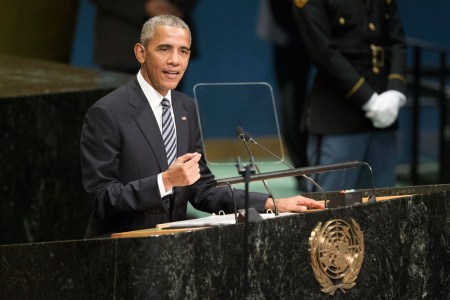
President Barack Obama addresses the general debate of the General Assembly’s seventy-first session, September 20, 2016. UN Photo/Manuel Elias US President Addresses the Hall. General Debate of the seventy-first Regular Session of the General Assembly

U.S. President Barack Obama addresses the UN General Assembly’s seventy-first session, September 20, 2016. (Image source: United Nations)

The US and the UN – both the Security Council and UNESCO – are not who determine what is historically true and what is not. These shameful votes should be reversed immediately; if not, all funding should be withdrawn from the United Nations, by United States and all freedom-loving democracies. They are now, to paraphrase the words of the Soviet Union’s Vladimir Lenin, “paying for the rope with which members of the UN will hang them.”


[1] President Obama also said in the same speech: At the end of World War I, Turkey could have succumbed to the foreign powers that were trying to claim its territory, or sought to restore an ancient empire”. The “ancient empire” that Obama refers to, is unclear – Ottoman or Byzantine – and the “foreign powers that were trying to claim its territory” were the winners of World War I, including the USA.

[2] Such as claiming for weeks that a video had caused the attacks on the US Embassy in Benghazi, Libya; his knowingly false promises to his own people about the effects of his Affordable Care Act; lies about the Internal Revenue Service; or his endless lies about the “Iran deal”.

‘We will not be Trumped’: Sharpton calls for protests against Sessions

January 14, 2017

‘We will not be Trumped’: Sharpton calls for protests against Sessions, Washington ExaminerKyle Feldscher, January 14, 2017

Rev. Al Sharpton called for an occupation of senators’ offices to call on them to block Alabama Republican Sen. Jeff Session from becoming President-elect Trump’s attorney general, chanting “We will not be Trumped.”

Sharpton, speaking at a march in Washington organized by his National Action Network, called on his supporters to take action to stymie Trump’s agenda.

“We’ve come not to appeal to Donald trump, because he’s made it clear what his policies are and what his nominations are,” he said. “We come to say to the Democrats in the Senate and in the House, and to the moderate Republicans, to get some backbone and get some guts.”

“We didn’t send you down here to be weak-kneed and to get in the room and try and make friends. We sent you down here to stand up.”

Sharpton issued a warning to Republicans who he believes have targeted African American voting rights in recent years, telling them that an election defeat in 2016 was not tantamount to overturning the progress the civil rights movement made.

He recalled the warning Coretta Scott King, wife of Dr. Martin Luther King, Jr., sent about Sessions’ nomination to the federal bench in the 1980s, which he lost due to past accusations of racism. Sharpton said it’s time to honor Coretta Scott King by fighting hard against Sessions.

“We owe it to her to have a roll call on those that would put him in the Justice Department,” Sharpton said.

“We want the world to see if you sell us out, we’re going to let everybody know who you are.”

He added that the passion he saw from the crowd, gathered on a rainy Saturday morning in Washington, showed there was plenty of fight in his supporters.

“We are not here because we didn’t have something else to do. We are here because we fought hard to make sure this administration had our pride and we are not going away now,” he said. “Criminal justice and police reform must go forward.”

Vatican opens Palestinian embassy ahead of critical summit in Paris

January 14, 2017

Vatican opens Palestinian embassy ahead of critical summit in Paris, Jihad Watch

A Palestinian state would, like Gaza, be simply another jihad base from which “Palestinians” would launch new attacks against the State of Israel. That the Pope would validate it in this way is an unconscionable granting of the Catholic Church’s imprimatur both to the fictional “Palestinian people,” who were invented by the KGB and Yasir Arafat in the 1960s to counter the view of the tiny Jewish state surrounded by numerous gargantuan Arab states, and to the Palestinian jihad, which seeks a new genocide of the Jews, with “Palestinians” openly celebrating the murder of Israeli civilians.

The very “Palestinians” whose cause Pope Francis is aiding and abetting will, given the chance, oppress and subjugate the Christians in their domains as dhimmis, deprived of basic rights under Islamic law. In Israel, by contrast, Christians live in freedom. The Pope is betraying his own people.

“Leave them; they are blind guides. And if a blind man leads a blind man, both will fall into a pit.” (Matthew 15:14)

abbas-and-pope-francis

“BREAKING: Vatican opens Palestinian embassy ahead of critical summit in Paris,” Christians United for Israel, January 13, 2017:

The Pope is set to open a Palestinian embassy at The Vatican this weekend, in what is a hugely significant move by the papacy.

The inauguration of the embassy on Friday, attended by Palestinian Authority leader, Mahmoud Abbas, takes place just two days before 70 nations gather in Paris to vote on an anti-Israel decree.

PA President Mahmoud Abbas will also meet with Pope Francis on Saturday. This will be the third time the two have met. When they met last year, Pope Francis referred to Abbas as “an angel of peace”. The Vatican later explained that the reference was mistranslated, and in fact was meant as encouragement for Abbas to pursue peace with Israel.

As head of the Palestinian Authority, Abbas has been accused of inciting violence against Jews. Abbas is also the chairman of the Palestinian Liberation Organization (PLO) which was recognised by Israel and the US as a terror organisation until 1991.

Israel does have an embassy in Vatican City, but the Vatican Embassy in Israel is in Tel Aviv, whilst the Vatican has an “embassy to Palestine” located in East Jerusalem. The Vatican officially recognised a Palestinian State almost two years ago.

Pope helps to undermine peace by today opening a “Palestinian embassy” at the Vatican. @CUFI_UK https://t.co/OOBV5k54SD

— Rɪᴄʜᴀʀᴅ Kᴇᴍᴘ (@COLRICHARDKEMP) January 13, 2017

Palestinian Foreign Minister Riyad Maliki confirmed that Abbas will primarily be raising issue with incoming President-elect Donald Trump, who is set to take office next week, and his proposed plan to move the US embassy from Tel Aviv to Jerusalem….

Journalists: How Should We Cover Trump?

January 14, 2017

Journalists: How Should We Cover Trump? Power LineJohn Hinderaker, January 14, 2017

We all know the answer to that question. But The Hill reports that on January 25, representatives of Slate, the Huffington Post, Univision, the New Yorker and CNN will put on a public program on the topic at NYU:

Journalists from The Huffington Post, Slate and Univision will gather days before Donald Trump’s inauguration to publicly discuss “how the news media can and should proceed to cover” the president-elect.

Slate will host the event next Wednesday, called “Not the New Normal.” CNN’s Brian Stelter will moderate the panel at New York University.

Interesting that CNN is willing to associate itself with that group.

The focus of the discussion will include “how journalists and media companies at large can play a bigger role in making sure that fact prevails over fiction in the coming months and years,” according to Slate.

“Fact” means anti-Trump, anti-Republican and anti-conservative narratives. “Fiction” means anything liberals would prefer you didn’t know.

Slate’s editor-in-chief, Julia Turner, and Slate Group Chairman Jacob Weisberg — who hosts “Trumpcast,” a podcast dedicated to covering the president-elect — will participate in the panel.

Joining them will be Borja Echevarría, Univision Digital’s vice president and editor-in-chief; Huffington Post editor-in-chief Lydia Polgreen; and New Yorker editor David Remnick.

Most of the panelists were staunchly critical of Trump during the campaign and have remained so since Election Day.

“Most”?

ZeroHedge adds this image of a ticket to the event:

ticket


Everyone knows what is in store. It will be open warfare between Trump and the press for the next four years.

The Hill, by the way, makes this contribution to illiteracy, adjacent to the article on the NYU program:

hillwithenglish

That’s our “elite” news media.

Cartoons and Video of the Day

January 14, 2017

Via Latma-TV


H/t Power Line

obama-titanic


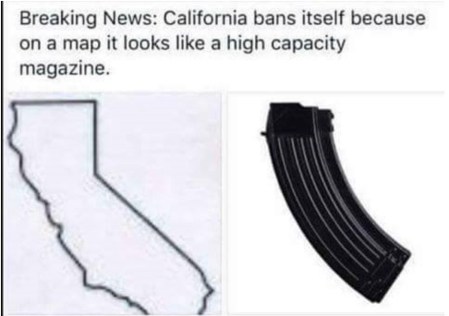
california-bans-itself


pc-good-old-days


bash-cnn


trump-over-media


H/t Freedom is Just Another Word

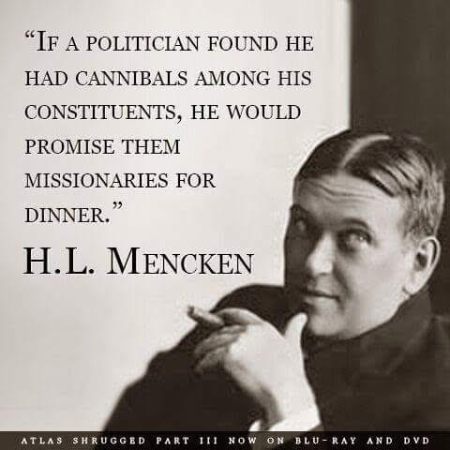
dinner


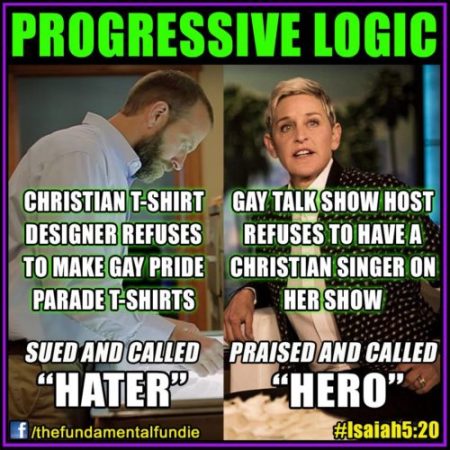
logic1


H/t Joop

drivingmscrazy

Protest Aims to ‘Take Down’ WhiteHouse.Gov on Inauguration Day

January 14, 2017

Protest Aims to ‘Take Down’ WhiteHouse.Gov on Inauguration DayNational PR service circulates—then pulls—release highlighting campaign to crash government website

BY:
January 14, 2017 4:56 am

Source: Protest Aims to ‘Take Down’ WhiteHouse.Gov on Inauguration Day

AP

A leading public-relations service blasted and then removed a news release this week highlighting a campaign to protest the inauguration of Donald Trump by crashing WhiteHouse.gov.

PR Newswire, a global news-release distribution service, circulated a release on Thursday highlighting a campaign launched by Protester.io, a digital protest organizing platform, to “take down” the White House website next Friday in protest of Trump’s inauguration.

“On January 20th, hundreds of thousands of Americans are going to Washington, DC to march in protest of the inauguration of Donald Trump. Millions more around the country will be joining the cause from home. If you can’t make it to Washington DC on inauguration day, you can still participate by occupying whitehouse.gov online,” the release read.

“Why is it important to participate? Isn’t this just another election? We haven’t lost our democracy yet, but it is most definitely under threat. The only way we’re going to defend and revive our democracy is by mobilizing.”

Protester.io describes itself as a platform that helps individuals “organize protests like a crowdfunding campaign.” A description of the Inauguration Day protest on its website, named “Occupy WhiteHouse.gov,” instructs interested parties to go to the White House website on Jan. 20 and refresh the page as often as possible throughout the day. The page also includes instructions for protesters to “automate” page refresh so that their computers do this automatically.

“When enough people occupy www.WhiteHouse.gov the site will go down. Please join us and stand up against this demagogue who is threatening our democracy and our security,” the protest page states.

Shortly after blasting the news release, PR Newswire issued a correction, changing the headline of the release from “Protester.io Launches Campaign to Take Down WhiteHouse.gov on Inauguration Day” to “Protester.io Launches Campaign to Voice Your Opinion at WhiteHouse.gov on Inauguration Day.” Later, the news-release service removed the press release entirely.

PR Newswire was purchased by Cision, a global public relations software company based in Chicago, for $841 million from British business events organizer UBM in 2015. PR Newswire is based in New York and distributes public relations messages for companies largely located in the United States and Canada, according to the New York Times.

When contacted, a spokesman for Cision confirmed to the Washington Free Beacon that the original release had been modified and later removed entirely “after further evaluation.”

“The issuer modified the original release at our request, but after further evaluation, we ultimately decided to remove the release in its entirety and have requested that the rest of our network remove the content as well,” Stacey Miller, director of communication for Cision, wrote in an email Friday afternoon.

An organizer for the protest did not respond to a request for comment.

Federal investigators have probed what are called distributed denial of service, or DDoS, attacks, which block users from websites by overloading them with traffic. Such attacks brought down Twitter, Spotify, and Amazon last October, prompting investigations by the FBI and Department of Homeland Security.

It is unclear whether the planned “Occupy WhiteHouse.gov” protest campaign would constitute a DDoS attack. Attempts to reach the FBI on Friday were unsuccessful.

Several protests have been organized around Inauguration Day, including the “Women’s March on Washington” that is expected to draw some 200,000 women to the nation’s capital on Jan. 21, the day following Trump’s inauguration. Fox News reported that protesters are also planning to blockade security checkpoints at the inauguration and organize a “dance party” outside the home of Vice President-elect Mike Pence.