On Watch: Episode 4 – The So-called ‘Hack’, Judicial Watch via YouTube, January 17, 2017
If you Brexit, You Own it, Power Line,
Forget all the attention on Trump and trade and China and Trump smashing china and China dealing a trump and all that. It is possible that the most salient event of the next few years will be the breakup, or least dramatic restructuring, of the European Union. Now that British PM Theresa May has pronounced that Britain proceed to a “clean break” or “hard Brexit,” attention will begin to shift to the other weak members such as Italy, etc.
Or perhaps we’ll revive the Greek financial crisis, which has never really gone away. There was a stunning little detail in a story about Greece in the Wall Street Journal last Friday, in particular how Greeks are slowly depleting what little savings they have trying to keep up with a sinking ship of state:
Financial strains extend even to the wealthier suburbs of Athens. Retirees Ioanna and Petros Kokkalis never had debts, nor feared losing their home. But now the 87-year-old former economist and his 81-year-old wife are unable to repay the property tax imposed on their 70-year old house, a family inheritance. The annual tax is around €33,000, but Mr. Kokkalis’s pension—already cut by half—is €28,000 a year.
The couple borrowed money when the tax was imposed, initially as a temporary austerity measure in 2011. But they are already behind on nearly €200,000 of tax payments and can’t borrow more. Mr. Kokkalis says the state is calculating tax based on outdated property prices that have since collapsed, and that if he tried to sell the house now, nobody would be interested. “They impose taxes on an imaginary value,” Mr. Kokkalis says. “This is confiscation.”
€33,000 a year in property taxes? In most states in the U.S. that would surely be a house with a value between $3 and $4 million. I’m sure there are such houses in Greece, but as this story hints, the amount is likely something like a surtax imposed as a “temporary” measure in 2011. This can’t possibly work, and won’t be paid. At some point, the finance ministers of the other EU countries that imposed austerity on Greece will notice that the revenues aren’t coming in, and the Greek bond market will collapse again, and Greece will ponder withdrawing from the EU, and Germany won’t want to bail them out this time, especially with the Euro-peso sinking on currency markets.
Maybe time for someone to come along in Athens with the slogan, “Make Greece great again!”
Reminder:

Part II: NEW Investigation Uncovers Plot to Chain the Trains & Shut Down DC During Inauguration, Project Veritas via YouTube, January 17, 2017
The blurb beneath the video states,
The latest Project Veritas video reveals DisruptJ20 plot to Chain Trains and Halt the DC Metro.
This video exposes the collusion between the various groups under the DisruptJ20 umbrella. The video shows that DJ20 is not simply a movement of fringe groups but instead a nefarious organization.
Democrats wasting time hating Donald Trump, Washington Times, Wesley Pruden, January 16, 2017
 Rep. Keith Ellison (Associated Press
ANALYSIS/OPINION:
Democrats who confuse hating Donald Trump with Mom and apple pie as the all-American recipe to win elections are blowing their chances, such as they are, for the 2018 midterm elections. If you’re a Democrat it’s never too soon to fret and stew about the prospects.
But Democrats are having so much fun despising the Donald they’re forgetting duty to party and responsibility to exploit opportunity. The party on the outs nearly always picks up a few seats in the midterms. But sore losers forget the ancient bipartisan admonition that “now is the time for every man to come to the aid of the party.” And that includes the women.
Even if the diehard losers can get their act together soon, the job of making a dent in the Donald’s Republican prospects will be daunting. Thirty-three seats in the Senate will be up for election in 2018, and 25 of those are now held by Democrats. Additionally, two independents who caucus and usually vote with Democratic senators will be completing their six-year terms.
The action will be in the Senate. Sen. Cory Gardner of Colorado, the campaign chairman for the Senate Republicans, is already at work and the Democrats still have no party chairman. The favorite to be the face of the party is Rep. Keith Ellison of Minnesota, a Muslim. Mr. Ellison is no doubt the paragon of virtue, tolerance and forbearance that Democrats, pundits and Muslim enthusiasts say he is, but any marketing man in America will tell you that Islam is not a hot brand in America just now, and isn’t likely to be one soon. Worse, Mr. Ellison is a onetime protege of Louis Farrakhan, the leader of the Nation of Islam, the particularly harsh strain of the Mohammedan faith who won’t win any popularity contests, either.
But it’s the continuing inability of the Democrats to get beyond the first stage of grief and mourning that threatens to push the party to the edge, where it would fall into a very deep ditch. The party’s in the position of the widow who can’t stop crying, even though her man was a scoundrel, knave and wastrel, and was not very nice besides.
The gathering thousands are arriving hourly in the nation’s capital to celebrate — and to repudiate — Donald Trump, some with high hopes eager to raise a toast to the nation and the new president with champagne, others with low hopes for a disaster eager to raise a toast with wormwood, bile and gall. The cops, reinforced by the National Guard, are prepared for jerks to do their worst.
One blogger describes the demonstrations and the threat of boycotts, counterdemonstrations and rotten eggs as “a big circus organized by entitled smug celebrities who think they’re in charge of the culture.” The Democratic women, with a few men riding shotgun (so to speak), marching on the day after the Donald is sworn in, will put finis at last on the Obama years. Their goals are not quite clear, but they say they won’t rest until women have something called “parity and equity at all levels of leadership in society.” That sounds fine and good, like something written for a feminist website, but nobody knows quite what it means. Sisterhood may be more fun than powerful.
The sorehead losers who tried everything they could think of to upset the upset — attempting to subvert the Electoral College and then trying to prevent Congress from affirming the vote of the Electoral College — organized a claque around Rep. John Lewis to declare the Donald the illegitimate president. When that didn’t impress anyone, the Democrats went to work to organize a “boycott” of the Inaugural, something like standing in the street to protest not being invited to a neighbor’s dinner party. Some of the LGBQTs are even doing that, too, with a dance and kiss-in at Mike Pence’s home in suburban Maryland.
This is energy that could be spent to do something positive for the party, which will need all the energy it can muster to get through the next four years. America needs two parties to make the system work — but it doesn’t need this one.
Watch: PM Theresa May’s Speech Invoke BREXIT, Pound Soars 2,5%, Gatestone EU, Vincent van den Born, January 17, 2017
UK prime minister Theresa May has just given her speech on Britain’s departure from the European Union. The essence seemed to be that from now on, British people will decide on British laws, interpreted by British judges. They will regain control over their borders, leave the EU single market and establish separate free trade deals, alleviate as many barriers to trade as possible, and Britain will stop contributing large annual sums of money to the EU apparatus. May also warned against countries seeking a punitive Brexit, emphasising that if Britain suffers, Europe will suffer economically as well. May said:
“We will leave the EU, but we will not leave Europe.”
According to the EU, there will be no negotiating the four EU “fundamental freedoms.” Nor is there any inclination in EU countries to be very forthcoming in helping with Brexit: “It’s not up to Europe to figure out Brexit for Britain,” according to Christophe Caresche, French Socialist MP, “They need to present a clear framework, and we will respond within the negotiation process.”
With president-elect Trump going on record saying how good an idea he thinks Brexit is, and offering a bilateral trade deal, Brussels can’t rest easily. In an interview with German Welt, UK finance minister Philip Hammond didn’t mince words either. When told that in Germany, many still hope that the UK chooses to remain in the EU, Hammond was unequivocal: “That will not happen. Those of us who, like me, have campaigned to stay in the EU and tried to reform it from within have moved on. To put it frankly: since the referendum on the European side, we have seen a movement away from British positions. This suggests that the underlying driving force on the European side is still towards more political integration, towards a defence component for the European Union – things which are an abomination to the UK.”
The UK front, thus, is solid. The same is not the case in Brussels. While Germany sounds a harsh note, in the person of Norbert Röttgen, MP of Angela Merkel’s CDU, by engaging aggressively with Hammond’s firm assertions that he will do everything to make Brexit work: “The U.K.’s two main economic weaknesses are its considerable trade deficit and a big budget deficit, (…) As such, Hammond’s threats with duties and tax cuts would primarily damage the U.K. and should be regarded as an expression of British cluelessness.” But ‘British cluelessness‘ is not what Caresche is scared of: “What we definitely don’t want is a negotiation that will create an attractive standard for leaving the EU that other countries would want to imitate. It’s not just a British issue — it’s also about not creating incentives for other countries to leave.”
A sentiment that is shared in ‘New Europe‘, as Hungarian Foreign Minister Péter Szijjartó makes clear: “If the U.K. will be able to sign economic and trade agreements with many serious actors of the world economy, and [at the same time] if the EU is not able to build this kind of cooperation with the U.K., then is going to be a very unfavorable position for us.”
What Obama Owes Putin—and Why Donald Trump Is Left Holding the Bag, Tablet Magazine, Lee Smith, January 17, 2017
(A long but fascinating analysis of Obamas’ Middle East policy, of which a strong Iran was the centerpiece and in which Putin was his tool, ally and master. — DM)
The Obama administration’s dual-track diplomacy was different because the public track was intended to cover for the real show going on behind the scenes. For instance, if it looked like Obama was at odds with Putin over Russia’s destructive escalation in Syria and its role in crushing the rebels and killing civilians, nothing could have been further from the truth. Yet Obama needed Putin to rescue Iran and save its regional position. So while Obama was denouncing Putin in public, his White House errand boys were actually meeting in private with Putin’s errand boys, helping the Russians to accomplish the very things that the administration—especially the State Department—then publicly denounced. On bad days, it could look like there were actually two U.S. governments, pursuing policies that were diametrically opposed to each other. In fact, there was only one government, led by Obama—and the policy of that government was entirely coherent, although not necessarily wise.
For what mattered most to Obama wasn’t Syria, nor even was it the Joint Comprehensive Plan of Action, which is typically referred to as Obama’s signature foreign-policy initiative. Even that was a feint, cover for a larger strategy that entailed a realignment of interests in the Middle East and a new form of foreign-policy “realism” that would get American troops out of the Middle East—and put America in the same column as Iran and its allies, including Vladimir Putin.
How could Obama cover America’s retreat, yet ensure a certain amount of stability in the Middle East? Israel was too small for the role of regional policeman, and besides, its policies toward the Palestinians pointed toward instability. The Sunni Arab states were fractious and incapable of working together, and their own internal problems gave rise to extremism. That left Iran.
Trump’s nominee for defense secretary, Gen. James Mattis, . . . thought crushing Assad would be a huge strategic setback for Iran. And that’s just what worried Obama, who hardly needed the Iranians to warn him that realignment would collapse if America targeted the Syrian regime. After all, realignment was predicated on the idea of a strong Iran with a can-do Quds Force that could act as the region’s new policeman. An Iran knocked back down to size, and where the country’s internal opposition would be emboldened, would be of no use to a White House keen to hand over the keys to the Middle East and get out. Obama needed a big Iran, a “successful regional power,” as he’s put it.
***************************
Is Donald Trump a Russian secret agent? Did he pay FSB hookers to pee on the bed the Obamas slept in at the Ritz in Moscow, overlooking the Kremlin? It’s silly season, so any drunk on a fat oppo-research expense account can write down any crazy foolishness they want and Buzzfeed will let you decide if it’s true because that, as Buzzfeed’s editor, Ben Smith, solemnly explained to The New York Times, is where American journalism is at in 2017. Duly noted, Buzzfeed. Enjoy the golden showers.
What’s being obscured by this grotesquerie is the origin and the actual substance of U.S. foreign policy toward Russia, which in turn affects the lives of hundreds of millions of people living in Syria, Iraq, Ukraine, and elsewhere. Or, to put it another way: Is Donald Trump likely to continue the policies of his predecessor, which set the Middle East on fire and led to 500,000 deaths in Syria, and to Putin biting off large chunks of the sovereign nation of Ukraine? Or is he likely to reverse those policies? Or can he, even if he wanted to?
The single-mindedness with which the White House and the remnants of the Clinton campaign have pursued the idea that Donald Trump is a pawn of Vladimir Putin is not based on silly stories about peeing prostitutes or secret computer servers that connect the Trump organization to the Kremlin. Rather, it’s an attempt to manufacture more smoke to obscure the reality of Obama’s own determination to collaborate with a hostile Russian leader in Syria, and elsewhere in the Middle East.
Sure, Obama recently sent 35 Russian diplomats packing and shuttered Russian diplomatic facilities in Maryland and New York, but this was after seven years of looking the other way while Russia seized Crimea, then Donbass; waged cyberattacks on the Baltic countries; brought down a passenger jet over Ukraine; sheltered Edward Snowden; and bombed schools and hospitals in Syria. All of these actions threatened global stability and American interests, yet Obama only puffed his chest after the cyberattacks on the Democratic National Committee and Clinton Campaign Chairman John Podesta’s emails—long after it mattered, and after the moving vans have already started to haul his stuff out of the White House.
The reason top national-security journalists, policy mandarins, and much of the Washington establishment can’t fathom Obama’s relationship with Putin is only partly due to partisanship. The real reason it’s so hard to see how much room the outgoing president gave Putin is because misdirection has been Obama’s guiding principle for seven years.
The president made it look like he was at odds with Putin for much of his two terms—for instance, loudly poo-pooing the Russian campaign in Syria and warning of Vietnam-style “quagmires,” dismissing Russia as a weak country, sending an LGBT delegation to the Sochi Olympics to underscore his differences with Russia’s treatment of the LGBT community. All this helped obscure the fact that when it really counted, Obama took special care to signal the Russian strongman that their interests were aligned. That wasn’t because he has a man-crush on Putin, but because he had a larger purpose in view—securing the Iran nuclear deal.
The point isn’t that Obama lied. Sure, he lied. All politicians lie all the time, right and left, Republican and Democrat. All governments lie, perhaps especially liberal democracies, which don’t have the luxury afforded authoritarian regimes to do whatever they want at no cost to their approval ratings, which hardly matter. Liberal democracies lie especially when they’re crafting policies that would make many of their constituents queasy.
For two terms the Obama White House staged a foreign-policy puppet show, while the real drama took place far from the spotlight—a mutant variation of dual-track diplomacy. Policy is often conducted along two tracks—maybe military and diplomatic, or hard power and soft power, like development assistance or cultural-exchange programs. Diplomacy is almost always conducted on two tracks. Track-two diplomacy is a term of art that refers to the nonofficial meetings held by private individuals or groups that give the official parties the nonofficials represent enough room to disclaim ownership if or when it blows up. The Oslo peace process began as track-two diplomacy, for example, as have plenty of other major diplomatic initiatives. The point is that whether we’re talking about foreign aid or political pressure, military force or moral suasion, the two tracks of dual-track diplomacy are almost always pointed in the same general direction, with the aim of securing the same outcome.
The Obama administration’s dual-track diplomacy was different because the public track was intended to cover for the real show going on behind the scenes. For instance, if it looked like Obama was at odds with Putin over Russia’s destructive escalation in Syria and its role in crushing the rebels and killing civilians, nothing could have been further from the truth. Yet Obama needed Putin to rescue Iran and save its regional position. So while Obama was denouncing Putin in public, his White House errand boys were actually meeting in private with Putin’s errand boys, helping the Russians to accomplish the very things that the administration—especially the State Department—then publicly denounced. On bad days, it could look like there were actually two U.S. governments, pursuing policies that were diametrically opposed to each other. In fact, there was only one government, led by Obama—and the policy of that government was entirely coherent, although not necessarily wise.
For what mattered most to Obama wasn’t Syria, nor even was it the Joint Comprehensive Plan of Action, which is typically referred to as Obama’s signature foreign-policy initiative. Even that was a feint, cover for a larger strategy that entailed a realignment of interests in the Middle East and a new form of foreign-policy “realism” that would get American troops out of the Middle East—and put America in the same column as Iran and its allies, including Vladimir Putin.
Yes, as Obama believed, Americans were sick of the problems and psychoses of the Middle East, and angry that George W. Bush failed to win his two Middle East wars. But neither Congress nor the U.S. foreign-policy establishment was keen to see the United States dismantle a regional security architecture it took 70 years to build, and which Obama and his young aides saw as a guarantee of future friction, and future U.S. military engagement. Someone needed to smash that architecture with a hammer.
So the Obama White House made stuff up. No one wanted to side with Iran and downgrade traditional allies like Israel. And so the Obama administration said that wasn’t happening. And the way it obscured the truth was to stage a dog-and-pony show with familiar Beltway names and faces to keep the Buzzfeed kids busy pondering the complexities of U.S. foreign policy while the adults went about their deadly serious business. What looked like the president of the United States pulling a rabbit out of his hat was actually Obama sawing a woman in half—and drawing blood.
***
Is that really what happened? Some former Obama officials, like the administration’s onetime Syria point man, Frederic Hof, argue that the reason the administration’s foreign policy is a mess is because the president and his men in the White House lacked experience in the federal bureaucracy. In this view, the Obama team—namely, National Security Adviser Susan Rice—didn’t know how to manage what people in the know call the “interagency process,” or how the various institutions, like the National Security Council staff, State Department, Pentagon, and intelligence community process policy.
The reality is that Obama and his closest aides were contemptuous of the institutions, staffed by those very same Beltway bureaucrats that collectively make up what Obama deputy Ben Rhodes disparagingly called “The Blob.” As both Obama and Rhodes have explained, the mediocrities worthy of contempt included members of Obama’s cabinet. The reason for tapping figures like Leon Panetta, Robert Gates, David Petraeus, Hillary Clinton, John Kerry, and Samantha Power was to use the establishment as cover, while the real players, like Obama and Rhodes, Rob Malley, and a few select others, maneuvered in the shadows, and spun covering fictions. By 2012, as Gates and Panetta detailed in their memoirs, the Wise Men came to understand they were simply pawns in the president’s larger game, and quit before the real bloodshed started.
Hillary Clinton, with an eye to her presidential campaign, was not about to cross Obama in public, as Gates, Panetta, Chuck Hagel, and others did, but she knew she was window dressing, too. Her State Department was surprised when John Kerry, then head of the Senate Foreign Relations Committee, was tasked to open a channel with the Iranians through Oman. The concessions Kerry offered Iran, especially the right to enrich uranium, angered Clinton’s staff. Kerry was screwing up badly, they leaked to reliable press contacts, they’d never have blundered like that.
Was the Clinton team really shocked and outraged? No, it was just cranking up its own fog machine, lest anyone realize the White House had done the worst thing anyone can do to someone else in Washington—make them irrelevant. Hillary Clinton’s job wasn’t to make policy—it was to rack up frequent-flier miles and stay out of the way while the White House handled the big-ticket items like Israel, Iran, China, and every other issue of any major importance. Nor did she particularly want the responsibility for decisions that she and her coterie may have opposed, and which certainly were likely to anger many of her prominent traditional liberal supporters. “The president,” as one official from a pro-Israel organization in Washington told me, “leapfrogged the State Department.”
Clinton’s successor, John Kerry, was either less ambitious or more vain than Clinton, or maybe both. He was the electronic rabbit while the real work of shaping the world was done by much younger men who represented the will of the president of the United States. What Kerry did in public, all those marathon negotiating sessions, all those windy speeches, was a sideshow. The fact that his tremendous vanity made him think that it was real only added conviction to his performance—all the better to generate buzz among 27-year-old reporters at Buzzfeed and their instant-foreign-policy-expert buddies at the newly-minted Washington “think tanks” led by Democratic political operatives like Neera Tanden, whose actual experience of any particular part of the world or area of human endeavor—warfare, diplomacy, nuclear engineering, you name it—was nil.
So while Buzzfeed—and the New Yorker—wrote articles about how John Kerry was manfully negotiating cease-fires in Syria with his Russian counterpart, Sergei Lavrov, it was, in fact, Obama’s own Middle East point man, Robert Malley, who conveyed the president’s real policy. Almost as soon as Obama called for Assad to step aside in August 2011, the administration came to regret that bit of grandstanding, and walked it back. As Tony Badran, a research fellow at the Foundation for the Defense of Democracies told me, “The administration went from ‘transitioning away from Assad’ to ‘de-escalating’ the conflict, or stopping the bloodshed. The White House used a veneer of humanitarian concern to elide the fact that removing Assad was no longer a part of the equation. It was now about shutting down the war against Assad.”
It wasn’t long before foreign officials came to understand that Obama was working two seemingly opposing channels—the trick was figuring out which channel was real. As a source close to the Turkish government explained to me, Turkey’s former prime minister, Ahmet Davutoglu, eventually concluded that Obama was using Clinton as a prop. Whatever promises she might make on Syria, for instance, were worthless. They were also often actively misleading, as they were unconnected to what the Americans were actually doing on the ground. The White House had sent its top diplomat out to lie, and without informing her she was lying.
No one saw more of the administration’s shell game than Israel. The White House reassured Jerusalem that it wasn’t going to sell Iran the farm—Israel was their ally, and Iran was the enemy. As one former senior U.S. official told me, “The Bush administration and Israel had developed a pressure track on Iran, primarily through the intelligence community. This was the track that produced Stuxnet. But Obama shut down the pressure track with the opening of the Oman channel since they didn’t believe that pressure and diplomacy work together. But the Obama White House couldn’t tell the Israelis they were shutting down the pressure track. So the president wrapped them up in planning, promising, for instance, a Stuxnet 2.0. So you have emissaries going back and forth, planning and planning and planning, which was actually just stalling.”
Moreover, said the former U.S. official, the Israelis knew that Obama was lying about the Oman channel. He added that the head of the U.S. team negotiating with Iran, Wendy Sherman, “would meet openly with the Iranians as part of the P5+1 talks, then fly to Jerusalem, and tell the Israelis, ‘We got your back.’ But the Israelis knew the Americans were meeting with Iran because they had the tail numbers of planes going to Oman. The Israelis went to Obama’s then national security adviser, Thomas Donilon, and said, ‘We know what’s going on.’ ”
In fact, the Israelis didn’t understand. They thought, like most critics of the Iran deal, that the administration was just flubbing negotiations and needed help. But the White House didn’t care that much about the particulars because the JCPOA was simply a device to allow for a larger, even more historic play—Obama wanted to get America out of the Middle East, and realigning with Iran was America’s exit strategy.
For the big problem with the region, from Obama’s perspective, is the lure of the “Washington playbook,” a set of guiding principles that typically point to the use of force, which was passed down by generations of government grandees—the kind he used as rodeo clowns. The question was: How could Obama cover America’s retreat, yet ensure a certain amount of stability in the Middle East? Israel was too small for the role of regional policeman, and besides, its policies toward the Palestinians pointed toward instability. The Sunni Arab states were fractious and incapable of working together, and their own internal problems gave rise to extremism. That left Iran.
Clearly, there are plenty of Obama administration officials enamored with the Islamic Republic, whether they’re attracted to the vintage patina of late 20th-century Third Worldism or classic Persian culture. What was most appealing to Obama, as he told a meeting of Gulf Arab officials at Camp David in 2015, was simply that the Iranians are capable of getting things done—a sentiment that he expressed in the context of his admiration for the Revolutionary Guards Corps’ expeditionary unit led by Qassem Soleimani. However, he also realized that this conviction and the policy it undergirded would have grossed out a large number, likely a majority, of Americans, and their elected representatives. So he lied, or misled and misdirected—and said the JCPOA was about stopping Iran from getting a nuclear weapon, and nothing more.
***
All the major foreign-policy issues of the Obama presidency (the fraying of the bilateral relationship with Israel, the withdrawal from Iraq, Russia, etc.) were subsets of realignment policy—including the administration’s management of the single largest strategic, political, and humanitarian catastrophe of the 21st century, the Syrian conflict. Obama’s cabinet held the mainstream view of the Syrian war—Panetta, Clinton, Kerry, Petraeus, and Power all supported arming the rebels to defeat Assad, or at least compel him to negotiate under harder circumstances. But that was exactly the opposite of what Obama wanted to do.
A more hawkish position was expressed by the U.S. officials like then-head of CENTCOM and now Trump’s nominee for defense secretary, Gen. James Mattis, who thought crushing Assad would be a huge strategic setback for Iran. And that’s just what worried Obama, who hardly needed the Iranians to warn him that realignment would collapse if America targeted the Syrian regime. After all, realignment was predicated on the idea of a strong Iran with a can-do Quds Force that could act as the region’s new policeman. An Iran knocked back down to size, and where the country’s internal opposition would be emboldened, would be of no use to a White House keen to hand over the keys to the Middle East and get out. Obama needed a big Iran, a “successful regional power,” as he’s put it.
A victory for the Syrian opposition—whom the White House could not help but disparage even as the president and his aides honored the victims of Assad’s depredations, i.e., the opposition—would have been a disaster for the Obama administration. It would have not only cashiered Obama’s hopes for a hegemonic Iran capable of managing American regional interests but would have required Washington to manage the varied and often conflicting interests of its regional allies, Israel, Jordan, Saudi Arabia, Turkey, etc. In other words, an opposition victory would have demanded more American involvement in the Middle East—more time, attention, energy, money, and perhaps blood.
The structural problem with Obama’s grand realignment is that Iran simply can’t handle the load. Obama should have understood this every time he had to tip the scales on behalf of the Iranians. When the administration leaked that Israel struck Iranian arms convoys headed to Hezbollah, Obama should’ve understood that he was tipping the scales, but it still wasn’t working. Qassem Suleimani turned out to be less than impressive, for his Quds Force couldn’t even tackle ISIS without the U.S. providing air support in Tikrit. The much-heralded operation to take back Mosul before Obama left office is such a mess that the White House simply doesn’t talk about it anymore.
When the Russians escalated in Syria in September 2015, Obama should have seen it as a clear sign he’d been wrong about Iran: The IRGC couldn’t even put down the farmers and carpenters the American president repeatedly disparaged. They needed the Russians to do it for them.
The White House said Putin’s action caught them by surprise, but that is unlikely to be true. The Russians were moving men and materiel for months through the Bosphorus—under the control of NATO member Turkey—at least since Suleimani’s July 2015 trip to Moscow to ask for Russian intervention.
The reality is that the Russian campaign in Syria served vital Obama interests. There was no point in realigning with Iran if Tehran’s regional position collapsed. Putin saved not only Assad and Iran, but Obama’s realignment policy. It was the second time the Russian president rescued Obama’s realignment policy—the first being when he offered the deal over Assad’s chemical weapons that allowed the commander-in-chief to walk back his red line.
Obama owes Putin, which is why he let the Russians get away with nearly everything it chose to do the last seven years, including its attacks on the American political system. What’s left for Trump is to manage the Russia policy he inherited from Obama—or overturn the table.
Where is Suit-Wearing Jihadi Suhail Khan Today? Understanding the Threat, January 17, 2017
Prolific suit-wearing jihadi Suhail Khan was in the White House on 9/11. After officials discovered his father was a prominent Muslim Brotherhood leader, he was moved out, but found himself back in the fold in a relatively short amount of time, serving two Secretaries of Transportation in the Bush administration. This gave Suhail Khan a security clearance, access to America’s infrastructure, and a great resume boost.
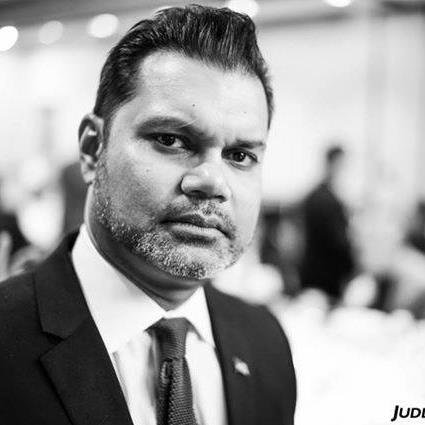
He continues his war against America as a leader in the Muslim Brotherhood’s movement here.
Khan’s father, Mahboob Khan, founded the Muslim Students Association as well as the Muslim Brotherhood’s largest organization in North America, the Islamic Society of North America (ISNA). ISNA has an annual award entitled the “Mahboob Khan Award,” which should give readers and idea of his influence in the U.S. Muslim Brotherhood.
 Mahboob Khan
This would explain why- at the 1999 ISNA conference – Khan said, muslims love death more than non-muslims love life – a common statement heard out of the mouths of ISIS and Al Qaeda jihadis on the battlefield.
He also thanked an praised Al Qaeda financier Abdurahman Alamoudi, who also spoke fondly of Suhail’s father.
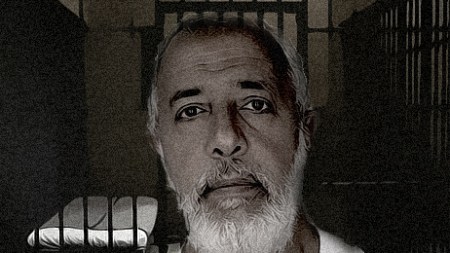 Al Qaeda Financier & Close Friend of Suhail Khan – Abdurahman Alamoudi
See the UTT video of Suhail Khan HERE. (Video embedded below. — DM)
Suhail serves on the board of Muflehun with the former President of ISNA (ie a jihadi) Mohamed Magid. The two were deeply involved in the creation of the Muslim-Jewish Advisory Council – a Muslim Brotherhood operation to deceive naive Jewish leaders into believing jihadis like Khan and Magid had “come to their senses” and no longer hate Jews or deny the holocaust.

Khan also serves with the Institute for Global Engagement (IGE) where Muslim Brotherhood propaganda is supported, encouraged, and directed at a significant level in the United States. IGE’s Board of Advisors includes Muslim Brotherhood stooge John Esposito of Georgetown University, former Secretary of State Madeleine Albright, President Bush’s Former Under Secretary of State for Public Diplomacy and Public Affairs Karen Hughes, Ambassador Robert Seiple (Chairman Emeritus), and others.
Suhail Khan continues his work with Republican strategist Grover Norquist, and has been a guest at CPAC, where he is defended by Republicans against those who speak truth about his terrorist ties.
 Jihadi Suhail Khan with Grover Norquist
This penetration into our system continues. Suhail Khan is still walking the streets welcome in Republican circles and wreaking havoc in a suit.
Khan is now the Director of External Affairs for Microsoft, which might explain the pro-Muslim add campaign from Microsoft in December 2016.
AFDI video: New Yorkers prefer martial law to Trump, Jihad Watch,
It isn’t directly discussed in this video, but one of the principal reasons why Trump is so widely hated is because he wants to defend America from, among other things, the jihad terror threat. This video shows how deeply the Leftist cultural rot has set in: people don’t understand or appreciate the importance of a peaceful transfer of power to the opposition, and they no doubt think that defending the U.S. against the global jihad is inherently “racist” and “Islamophobic.”
AFDI Unveils Shocking New Video Showing New Yorkers Prefer Martial Law to Trump
NEW YORK, January 16: The human rights advocacy group the American Freedom Defense Initiative (AFDI) today unveiled a shocking new video, filmed at Times Square in New York City, showing that all too many New Yorkers would prefer that Barack Obama impose martial law and postpone the inauguration than allow Donald Trump to become President of the United States on Friday.
AFDI President Pamela Geller noted: “Rosie O’Donnell recently called for Obama to impose martial law and postpone the inauguration of Donald Trump until the president-elect could be prosecuted for crimes she did not name.”
Geller added: “We sent AFDI correspondent Laura Loomer to Times Square to ask people whether or not they agreed with this outrageous, deeply un-American and unconstitutional proposal. We were sure that the vast majority of people would say No, Rosie is crazy, the inauguration and the peaceful transfer of power should go on as always. And some did. But an alarming number didn’t.”
Explained Geller: “These people have no understanding of the rule of law or the value of a peaceful transition of power. They’re a testament to the failure of teachers in the U.S. and elsewhere to explain why America is unique. But some people still knew. Those people were heartening. But the fact that so many agreed with Rosie O’Donnell’s proposal for martial law and the postponement of the inauguration shows one reason why America is in such deep crisis today: vast numbers of people don’t even appreciate the uniqueness and strength of our republic. Most disquieting of all, such people will not be willing to defend it.”
AFDI stands for:
Ads in two dozen cities offer protesters up to $2,500 to agitate at Trump inaugural, Washington Times, Valerie Richardson, January 17, 2017
Donald Trump may have a point about paid protesters: Job ads running in more than 20 cities offer $2,500 per month for agitators to demonstrate at this week’s presidential inauguration events.
Demand Protest, a San Francisco company that bills itself as the “largest private grassroots support organization in the United States,” posted identical ads Jan. 12 in multiple cities on Backpage.com seeking “operatives.”
“Get paid fighting against Trump!” says the ad.
The job offers a monthly retainer of $2,500 plus “our standard per-event pay of $50/hr, as long as you participate in at least 6 events a year,” as well as health, vision and dental insurance for full-time operatives.
Mr. Trump has complained about paid activists both before and after the 2016 presidential campaign, but if anti-Trump advocacy groups are juicing their crowds with hired help, nobody’s admitting it.
“There’s simply no credible evidence that the opposition to Trump is spurred by anything other than legitimate concern about what his presidency might entail,” said a Nov. 17 column in the Washington Post’s The Fix.
PolitiFact reported that a widely shared Nov. 11 article claiming an anti-Trump protester was paid $3,500 was fake news created by Paul Horner, who runs a number of phony news sites.
If the Demand Protest ads are ruses, however, someone has gone to a great deal of trouble to sell the scam. The classifieds are running in at least two dozen cities, including Los Angeles, New York, Chicago, Dallas and Houston, and the company operates a slick website that includes contact information.
A San Francisco phone number listed on the website was answered with a voice-mail message identifying the company by name. A request for comment left Monday evening was not immediately returned.
The website, which says that the company has provided 1,817 operatives for 48 campaigns, promises “deniability,” assuring clients that “we can ensure that all actions will appear genuine to media and public observers.”
“We are strategists mobilizing millennials across the globe with seeded audiences and desirable messages,” says the website. “With absolute discretion a top priority, our operatives create convincing scenes that become the building blocks of massive movements. When you need the appearance of outrage, we are able to deliver it at scale while keeping your reputation intact.”
More than 100 left-wing groups, led by organizations such as Occupy Inauguration and the DisruptJ20 coalition, are calling on Trump foes to participate in inauguration protests being organized in Washington, D.C., and all 50 states.
The demonstrations are aimed at disrupting Friday’s inaugural ceremony and parade, as well as balls and festivities pegged to the celebration.
A search by the Washington Times showed the Backpage.com ads also ran in Austin, Charlotte, Colorado Springs, Columbus, Denver, Detroit, El Paso, Fort Worth, Jacksonville, Oakland, Oklahoma City, Omaha, Philadelphia, Phoenix, San Diego, San Francisco, Seattle, Tulsa, and Washington, D.C.




 anneinpt
 artaxes
 danmillerinpanama
 davidking1530
 Peter Hofman
 Joseph Wouk
 Peter
Peter Louisiana Steve





 WarSclerotic
Recent Comments