Archive for January 11, 2017

Iranian Political Prisoners in Dire Need of the Support of the International Community

January 11, 2017

Iranian Political Prisoners in Dire Need of  the Support of the International Community, Iran News Update, January 11, 2017

(Perhaps if we referred to them as “Palestinians” the international community might notice their plight. — DM)

iranian-political-prisoners-750

Silence of the global community sends a message to the Iranian regime that it can get away with these crimes, and that is a message not to be condoned with silence.

**************************

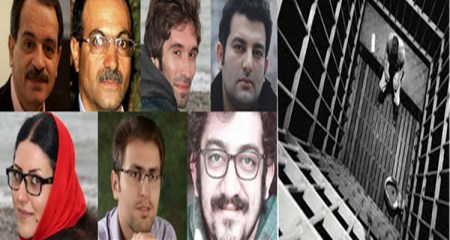
An article in The Hill by Ali Safavi, member of the Foreign Affairs Committee of the National Council of Resistance of Iran and president of the Near East Policy Research, discusses the alarming reports which from came from Gohardasht Prison, that activist and political prisoner Ali Moezzi, had disappeared on January 4, 2016.

Moezzi spent years in prison in the 1980’s for his affiliation with the Iranian opposition group, the Mujahedin-e Khalq (PMOI/MEK).  Beginning in 2008, he served two more years, for having visited his two daughters residing in Camp Ashraf, Iraq. Arrested again in 2011, seven months after his latest release, for attending the funeral of a fellow political prisoner, he’s been imprisoned ever since. He has faced much pressure, including the extension of his current prison term beyond its specified four years.He’s also be subjected to numerous explicit death threats.

Reportedly, he’s undergone routine beatings and torture and the absence of medical care for his pre-existing health problems. Moezzi’s arrest came shortly after he had been released from a hospital after undergoing surgery following a cancer diagnosis.

The regime has repeatedly been charged with disregard for the health and well-being of prisoners, especially those detained for political or religious offenses.  A recent example is Arash Sadeghi, who is serving a 15-year prison sentence for his peaceful human rights activism. Sadeghi began a hunger strike shortly after his wife was arrested. Sadeghi finally ended his hunger strike after judicial authorities granted his wife temporary release from her pre-trial detention. His hunger strike lasted more than 70 days befor the regime agreed to even that, and it was not the likelihood of Sadeghi’s imminent death that prompted them to act, but the massive support that his protest had garnered within Iran and abroad. Hundreds of Iranians gathered outside of Evin Prison, to protest his treatment. His cause was promoted on the internet and via banned social media networks by several thousands of supporters.

Salve writes, “It may not be a coincidence that Moezzi disappeared from Gohardasht Prison just one day after it was announced that Sadeghi had been hospitalized and brought back from the brink of death.”  He adds, “Both incidents demonstrated that the Iranian regime has no qualms about endangering the lives of its political adversaries, but the ruling mullahs can only take such a situation to its drastic conclusion if relatively free from public scrutiny.”

He says that it may be easier for the regime simply allow political prisoners to die, if those deaths occur in secret locations, so that they can claim “plausible” deniability.

Iran’s domestic activists or the international community may still be able to save Moezzi in much the same way they saved Sadeghi, but it is impossible to know Moezzi’s current condition, much less to follow its deterioration in real time.  This is a challenge as it is difficult to rally around a cause that they cannot see.  However, these atrocities must not be allowed to continue in the shadows.

This is the challenge that requires serious commitment, and a campaign that includes the international community and media. “World powers must take an interest in this case, and in the overall plight of Iranian prisoners of conscience,” writes Salvi.

Which is actually underscored by the recent success of the Sadeghi case.  Silence of the global community sends a message to the Iranian regime that it can get away with these crimes, and that is a message not to be condoned with silence.


Iran Demands ‘Compensation’ for U.S. Breach of Nuke Deal

January 11, 2017

Iran Demands ‘Compensation’ for U.S. Breach of Nuke Deal, Washinton Free Beacon, , January 10, 2017

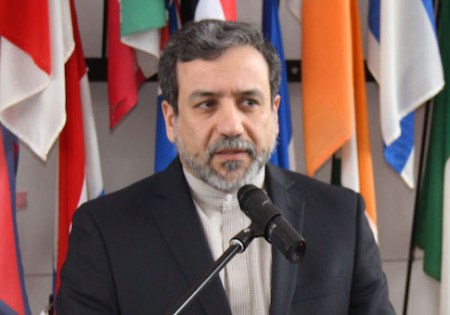
Abbas Araqchi, Iran's deputy foreign minister for legal and international affairs and top nuclear negotiator, meets the press in Vienna, Austria, on Feb. 24, 2015, after talking with International Atomic Energy Agency chief Yukiya Amano on Tehran's nuclear program. (Kyodo) ==Kyodo

Abbas Araqchi, Iran’s deputy foreign minister for legal and international affairs and top nuclear negotiator. (Kyodo)

The call for further compensation comes just days after the Obama administration was forced to admit that it had been providing Iran with around $700 million in assets every month since the nuclear deal was approved.

*******************************

Iran is demanding further “compensation” from the United States following claims America violated the nuclear agreement by passing new sanctions on the Islamic Republic, according to comments by senior Iranian officials following meetings with the Obama administration in Vienna.

The demand for further concessions by the Obama administration comes on the heels of reports that the United States has deflated the total amount of cash, gold, and other assets provided to the Islamic Republic during the past several years. The sum is believed to be in excess of $10 billion.

Iran has threatened to retaliate against the United States in recent weeks following the passage late last year by Congress of the Iran Sanctions Act, or ISA, which will continue to economically penalize Iran for the next 10 years.

The call for further compensation comes just days after the Obama administration was forced to admit that it had been providing Iran with around $700 million in assets every month since the nuclear deal was approved.

Ahead of a series of meetings Tuesday with senior U.S. officials, Iranian Deputy Foreign Minister Abbas Araqchi again accused the United States of violating the nuclear agreement and demanded compensation for the purported breach.

“The extension of the ISA is a breach of the U.S. obligations under the Joint Comprehensive Plan of Action (JCPOA) and must be compensated in an effective way,” Araqchi was quoted as telling reporters in Vienna.

The latest meetings about the nuclear deal were orchestrated by Iranian officials, who remain angry about the passage of new sanctions.

Araqchi made clear on Monday that Tehran is “serious” about retaliating against the United States for its passage of new sanctions, stating the Islamic Republic has already made moves to restart contested work on nuclear powered submarines and other weapons.

The Washington Free Beacon reported on Monday that official estimates about the amount of money awarded to Iran by the Obama administration are actually higher than previously known.

A State Department official told the Free Beacon that it would not prejudge its meetings with Iran when asked if further concessions are on the table.

“While we are not going to prejudge the outcome of any meeting, we will discuss ongoing implementation of the JCPOA as we always do,” the official said.

The total worth of the cash, assets, gold, and bullion given to Iran is in excess of $10 billion, according to Bahram Ghasemi, the spokesman for Iran’s Foreign Ministry.

“I will not speak about the precise amount,” Ghasemi was quoted as saying in Persian language reports independently translated for the Free Beacon.

The $10 billion figure is actually a “stingy” estimate, Ghasemi claimed, adding that the cash and gold sent by Washington to Iran’s Central Bank was subsequently “spent.”

“This report is true but the value was higher,” Ghasemi was quoted as saying.

“After the Geneva conference and the resulting agreement, it was decided that $700 million dollars were to be dispensed per month” by the United States, according to Ghasemi. “In addition to the cash funds which we received, we [also] received our deliveries in gold, bullion, and other things.”

Iran: How Will Rafsanjani’s Death Affect Regime?

January 11, 2017

Iran: How Will Rafsanjani’s Death Affect Regime? Iran News Update, January 10, 2017
rafsanjani-750

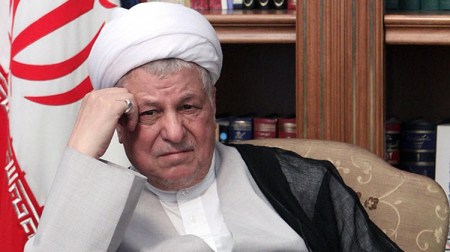
In his January 10 article for Al-Arabiya,, Heshmat Alavi, political and rights activist who focuses on Iran, writes about the effect of senior cleric Ali Akbar Hashemi Rafsanjani’s death by heart attack on Sunday, January 8, at the age of 82.

As Rafsanjani was known for his influential role in shaping the regime’s politics following the 1979 revolution, the Iranian regime was dealt a significant blow, and a power vacuum is created, less than four months prior to crucial presidential elections.

Rafsanjani’s role for the past 38 years helped maintain the regime’s measures of domestic crackdown, export of terrorism and extremism abroad, and their effort to obtain nuclear weapons, according to Alavi. 

“The death of Rafsanjani, one of the pillars of the religious fascism ruling Iran and its balance factor collapsed, and the regime in its entirety is closer now to its overthrow,” said Iranian opposition leader Maryam Rajavi, President of the National Council of Resistance of Iran.

After Iran-Iraq War of the 1980s, Rafsanjani served as president from 1989 to 1997. He ran again for office again in 2005, but lost the election to firebrand Mahmoud Ahmadinejad.

In recent years, Rafsanjani has been mentoring the so-called “moderate” Iranian President Hassan Rowhani, and was known for his fierce rivalry with Iranian Supreme Leader Ali Khamenei.

Although known for his close ties to the regime founder Ruhollah Khomeini, who died in 1989, the West believed him to be a “pragmatic conservative” willing to mend fences with the outside world, especially the US.

Rafsanjani’s last post was head of the Expediency Council, a body assigned to resolve conflicts between the regime’s parliament (Majlis) and the Guardian Council, which has close links to Khamenei, and vets all candidates based on their loyalty to the establishment before any so-called elections. Rafsanjani himself was disqualified by the Guardian Council when he sought to participate in the 2013 elections as a “reformist” candidate.

Instead, Rafsanjani placed his power behind Rowhani after the latter assumed power as president in 2013.  Rafsanjani used this position to “carve himself and his family an economic empire from the country’s institutions and natural resources in the past decades,” writes Alavi.

“One brother headed the country’s largest copper mine; another took control of the state-owned TV network; a brother-in-law became governor of Kerman province, while a cousin runs an outfit that dominates Iran’s $400 million pistachio export business; a nephew and one of Rafsanjani’s sons took key positions in the Ministry of Oil; another son heads the Tehran Metro construction project (an estimated $700 million spent so far),” states a 2003 Forbes analysis, which also alludes to the billions cached in Swiss and Luxembourg bank accounts by the Rafsanjanis.

While the West was convinced that Rafsanjani was more moderate than his “hardline” counterparts, he went along with them in suppressing dissidents, namely members and supporters of the People’s Mojahedin Organization of Iran (PMOI/MEK), the main opposition group that first blew the whistle on Iran’s clandestine nuclear weapons program.

“Four rulings are a must for the [PMOI]: 1- Be killed. 2- Be hanged. 3- Arms and legs be amputated. 4- Be separated from society,” Rafsanjani said back in 1981. He also played a presiding role in the 1988 massacre of over 30,000 political prisoners.

During his presidency, Rafsanjani allegedly directed numerous assassinations of dissidents abroad, including renowned human rights advocated Dr. Kazem Rajavi, former Iranian ambassador to Italy Mohammad Hossein Naghdi and Iranian Kurdish leader Abdulrahman Ghassemlou.  He was also indicted for his role in the 1994 AMIA bombing in Buenos Aires that left 85 killed and hundreds wounded.

Alavi writes, “Rafsanjani has through four decades of mullahs’ rule in Iran played the role of the regime’s No. 2 figure and a balancing element, always securing the regime’s higher interests. His death will significantly weaken the mullahs’ regime in its entirety and will trigger major upheavals across the regime’s hierarchy.”  He concludes by saying, “If past is any indication, the mullahs will most likely resort to further violence and the export of terrorism and extremism to prevent this newest crisis from spiraling out of control.”

The NCRI referred to Rafsanjani as “one of the two pillars and ‘key to the equilibrium’ of the Iranian regime,” adding that, “during his long career he was associated with some of the regime’s most egregious actions, including mass-casualty terror attacks and the assassinations of exiled dissidents.”

Rafsanjani is considered as one of its founding fathers of the Iranian regime, who played an outsized political role in the life of the Islamic republic, not only by serving as President after serving as Speaker of Parliament and Deputy Commander of the Armed Forces, but also heading two of the regime’s most important institutions, the Assembly of Experts, an 88-member body of top clerics which nominates the Supreme Leader; and the Expediency Council, a body that advises the Supreme Leader.

“Rafsanjani, who had always been the regime’s number two, acted as its balancing factor and played a decisive role in its preservation. Now, the regime will lose its internal and external equilibrium,” opposition leader Maryam Rajavi said in a statement that also referred to the “approaching overthrow” of the clerical regime.

On January 9 the NCRI published a list, outlining some of his outrageous conduct:

• Rafsanjani called for the extermination of members of Iran’s main opposition group, the People’s Mojahedin Organization of Iran (PMOI or MEK). On October 3, 1981, the state-run Ettela’at daily wrote, “Referring to the grouplets’ operations, Hashemi Rafsanjani, Speaker of the Islamic Parliament and Tehran’s acting Friday prayer leader, said in his sermon, ‘Divine law defines four sentences for them which must be carried out: 1 – kill them, 2 – hang them, 3 – cut off their arms and legs, 4 – banish them…‘Had we caught and executed 200 of them right after the Revolution, they would not have multiplied so much. If we don’t deal decisively with [Mojahedin] armed grouplet and agents of America and the Soviet Union today, in three years we will have to execute thousands of them instead of one thousand now…”

• According to Hossein-Ali Montazeri, Khomeini’s former heir, Khomeini sought counsel on his decisions from just two individuals: Rafsanjani and current Supreme Leader Ali Khamenei, including his decision to issue a fatwa ordering the massacre of at least 30,000 political prisoners at the end of the Iran-Iraq war in the summer of 1988.

During Rafsanjani’s tenure as President and as head of the Supreme National Security Council (SNSC), a body that oversees and authorizes the regime’s terrorist operations, the assassination of Iranian dissidents abroad and the regime’s terror attacks skyrocketed. The terror targets were not only Iranians.

• Rafsanjani’s remarks on May 5, 1989 as carried by Iran’s official state news agency IRNA , and were reported by The Associated Press:: “If in retaliation for every Palestinian martyred in Palestine, they will kill and execute, not inside Palestine, five Americans or Britons or Frenchmen, the Israelis could not continue to do these wrongs… It is not hard to kill Americans or Frenchmen. It is a bit difficult to Kill [Israelis]. But there are so many [Americans and Frenchmen] everywhere in the world.”

• Argentinian investigators implicated Rafsanjani in 2006, in one of the deadliest instances of Iranian terrorism abroad – a suicide truck bombing of the AMIA Jewish community center in Buenos Aires, in which 85 people were killed in 1994.  The investigators accused Iran of instructing Hezbollah to carry out the bombing. They issued arrest warrants for Rafsanjani, seven other senior Iranians, and a Lebanese national, Imad Mughniyah, Hezbollah terrorist chief.

Interpol, at Argentina’s request, issued red notices – the organization’s equivalent of arrest warrants – for five of the Iranians and Mughniyah.

• The FBI established undeniable evidence that Tehran had masterminded the deaths of 19 American servicemen, in the bombing of Khobar Towers in Saudi Arabia on June 25, 1996.

According to the NCRI, these are some of the most significant killings of prominent dissidents abroad during Rafsanjani’s tenure:

• In 1992, four Iranian Kurdish dissidents in a Berlin restaurant called Mykonos were assassinated. A German court ruled in 1996 that the Iranian regime under Rafsanjani was directly responsible for the killings, which the U.S. State Department said provided further proof that Iran was a terrorist state.

• Maryam Rajavi’s brother-in-law, Kazem Rajavi of the National Council of Resistance of Iran (NCRI) – Iran’s most renowned human rights advocate and a former Iranian ambassador to the U.N. was shot dead near Geneva in 1990. Swiss investigators accused the Iranian regime of responsibility and authorities issued an arrest warrant for Rafsanjani’s intelligence minister, Ali Fallahian.

• Mohammad Hossein Naghdi, the NCRI representative in Rome, was shot dead on a street in the Italian capital in March 1993.

• Zahra Rajabi, the NCRI’s representative on refugee issues, was shot dead with an NCRI colleague in an Istanbul apartment in February 1996.

Rafsanjani was the one who pushed the Iranian clandestine nuclear weapons program forward as a guarantor of the regime’s survival. He cooperated with countries like North Korea to achieve these objectives.

Rafsanjani acknowledged that during his time as parliamentary speaker and President, both he and Khamenei sought ways to obtain a nuclear bomb in an interview published by the regime’s official state news agency IRNA on October 27, 2015. “Our basic doctrine was always a peaceful nuclear application, but it never left our mind that if one day we should be threatened and it was imperative, we should be able to go down the other path,” Rafsanjani said.  He added he had travelled to Pakistan to try to meet Abdul Qadeer Khan, the father of Pakistan’s nuclear weapons program, who later helped North Korea to develop a bomb. Fortunately, the meeting never occurred.
A necessary, natural move

January 11, 2017

A necessary, natural move, Israel Hayom, Prof. Eyal Zisser, January 10, 2017

(Please see also, Palestinians: Glorifying Mass Murderers. — DM)

The Palestinian terrorist, who perpetrated the deadly ramming at the Armon Hanatziv promenade Sunday afternoon in Jerusalem, did not any need any excuse to murder his victims. It’s possible he was influenced by previous ramming attacks carried out by Islamic State supporters in France and Berlin. It is also possible, however, that he was influenced by recent threats from people close to Palestinian Authority President Mahmoud Abbas, who warned that moving the American embassy from Tel Aviv to Jerusalem — as promised by U.S. President-elect Donald Trump — would lead to an ungodly eruption of violence.

Either way, we must recognize that in Palestinian society — inundated with incitement on social media but also from its institutions — there exists a fundamental motivation to harm Israel and Israelis, and it only takes a little for this desire to bubble to the surface. The appearance of ISIS on the scene as a radicalizing element has enraptured a large portion of the younger generation in the Arab and Muslim world, only making this reality worse.

The terrorist attack in Jerusalem came a few days after U.S. Secretary of State John Kerry chose to warn Trump against relocating the American embassy to Jerusalem, as doing so would send the region up in flames.

Perhaps Kerry has failed to notice that the Middle East is already burning, for quite some time now. The flames have consumed Libya, Syria, Yemen and Iraq. But of all these places, which represent living proof of his failed policies, the outgoing secretary of state chose to focus specifically on the Israeli-Palestinian conflict and repeat the same tired mantra that the region’s problems are rooted in the fight between Israel and the Palestinians.

Kerry’s advice to Trump not to move the embassy, therefore, is misleading and should be ignored.

Why is transferring the American embassy from Tel Aviv to Jerusalem not inherently hazardous, and why is it possible to “sell” such a move to the Arab world? Because any reasonable person understands that doing so would not change the status of the city or the existing reality there in any significant way, nor would it cause a shift in Washington’s fundamental positions on the conflict.

After all, Jerusalem is home to Israel’s state institutions, from the President’s Residence to the Knesset, and all foreign dignitaries visiting Israel, including U.S. President Barack Obama and Kerry, comes to the city to meet their Israeli counterparts. Can anyone seriously argue for forbidding a meeting between a visiting president and his Israeli counterpart in Jerusalem, because it could set the Middle East aflame?

Trump, therefore, can relocate the embassy to Jerusalem unperturbed and also make it clear that such a move, while necessary and natural, will not decide any of the fundamental questions pertaining to the Israeli-Palestinian conflict, not even regarding Jerusalem. With that, it would be best for Trump to notify Washington’s allies in the region and explain to them, politely but firmly, that moving the embassy is recognition of the reality on the ground, which Jordan and Egypt also accept. Doing so would help prevent any unnecessary emotional outbursts.

What Trump can learn from Kerry is that hesitation and trepidation are perceived as weakness in the region and invite pressure, belligerence and even a rejectionist approach. Russian President Vladimir Putin, on the other hand, who never sought favor from anyone, is respected and feared; certainly no one threatens to burn the region down in response to his policies.


