Archive for October 28, 2016

IRGC commander killed on eve of Aleppo battle

October 28, 2016

IRGC commander killed on eve of Aleppo battle, Long War Journal, , October 28, 2016

While employing foreign fighters minimizes domestic political backlash in Iran, it also serves a long-term strategic objective to develop capable Shiite proxies. A retired IRGC commander who has deployed to Syria recently claimed the formation of a “Shiite liberation army,” and IRGC commanders have openly discussed a global Basij paramilitary taking shape in the laboratory of Syria, with talks of laying the groundwork for the apocalypse and the Mahdi’s arrival in more intimate quarters. The IRGC, however, has not hesitated to inject regular Iranian soldiers and mid-ranked officers during major offensives and whenever the situation has demanded it, such as the offensive in southern Aleppo in October 2015 and the assault north of Aleppo in February 2016.

********************

The Jaysh al Fath and Fath Halab coalitions and their allies launched an anticipated major offensive today west of Aleppo in another bid to break the siege of rebel-held eastern Aleppo, according to Reuters. In early September forces allied with the Syrian government backed by Russian air power repelled the opposition’s first attempt to break the siege following a month-long battle. Pro-regime forces attempted to build upon their momentum and launched major offensives in late September to tighten their grip on Aleppo. They have made slow but steady gains on the city blocks of eastern Aleppo, and have attempted to push their gains in western and southwestern Aleppo to prevent the opposition from breaking the siege again.

The pro-government coalition includes the Syrian Arab Army (SAA), the Shiite expeditionary forces led by Iran’s Islamic Revolutionary Guard Corps (IRGC), as well as Lebanese Hezbollah, Iraqi Harakat al Nujaba, Afghan Fatemiyoun Division and the Pakistani Zeynabiyoun. Furthermore, the Palestinian Quds Brigade, which has effectively become Russia’s proxy, has made gains in the northern Aleppo sector alongside the SAA.

The Russian defense minister has reportedly asked President Vladimir Putin to resume airstrikes today in Aleppo following a 10-day hiatus, citing an upsurge in opposition activities, but Putin has said that airstrikes are unnecessary for now, according to Reuters citing Interfax News Agency. The IRGC provides intelligence to Russia for airstrikes in Syria.

A high-ranking former IRGC commander was killed in Syria on Oct. 26 during an “advisory mission” in Aleppo. according to Iranian media. He was buried in Mashhad, Iran, today along with two Afghan Fatemiyoun Division combatants killed in Syria this past week. The IRGC Qods Force deputy commander Brigadier General Esmail Gha’ani, who delivered remarks at the deceased commander’s funeral, said “the blood of martyrs strengthen the foundation of the Islamic Republic system.”

Qolam-Reza Samai was a retired commander with the rank of Brigadier General or Brigadier General Second Class who had volunteered to fight Syria, and will be buried in his home province of Khorasan. A veteran of the Iran-Iraq War (1980–1988), Samai held several command posts in artillery, intelligence, and operations capacities in several provincial Ground Forces units.

The IRGC has tapped into its retired and active duty Ground Forces, and special forces officer corps to augment the efforts led by the Qods Force in Syria and Iraq. The deployment pattern of Ground Forces commanders depends on the mission need and crisis at hand. For example, there was a surge of commanders in Iraq following the incursion of the Islamic State in mid-2014, and most were called back when the IRGC-backed Shiite militias were able to better manage the situation.

The IRGC Ground Forces have been present in Syria since as early as 2011. Their numbers have increased as the war deteriorated, peaking in Oct. 2015 as Iran deployed significant numbers of its regular forces in coordination with Russia’s military intervention, before spiking again in Feb. 2016 during a major offensive north of Aleppo. More than a dozen senior Guard commanders were killed in Syriaduring the past year, with the overwhelming majority in Aleppo. Fatalities and causalities of high-ranking officers have continued as the Guard has reduced regular Iranian forces since May and has relied more on Shiite proxies. Contrary to the insistence of the IRGC, commanders are engaged in more than just advising: they design and lead operations for the Iranian-led Shiite expeditionary forces.

The high fatality rate of Iranian commanders is explained by the tactically risk-tolerant and egalitarian culture of the Guard, which values martyrdom in battle as the highest honor and takes pride in fighting on the frontline. Whereas the IRGC is tactically risk-tolerant, it is strategically risk-averse and prefers to limit Iranian exposure, as discussed in depth by Ali Alfoneh and Michael Eisenstadt in The Washington Institute. 

While employing foreign fighters minimizes domestic political backlash in Iran, it also serves a long-term strategic objective to develop capable Shiite proxies. A retired IRGC commander who has deployed to Syria recently claimed the formation of a “Shiite liberation army,” and IRGC commanders have openly discussed a global Basij paramilitary taking shape in the laboratory of Syria, with talks of laying the groundwork for the apocalypse and the Mahdi’s arrival in more intimate quarters. The IRGC, however, has not hesitated to inject regular Iranian soldiers and mid-ranked officers during major offensives and whenever the situation has demanded it, such as the offensive in southern Aleppo in October 2015 and the assault north of Aleppo in February 2016.

Satire | Early voting data shows World War I veterans overwhelmingly support Hillary Clinton

October 28, 2016

Early voting data shows World War I veterans overwhelmingly support Hillary Clinton, Duffel Blog, October 28, 2016

(Seems about right. They are all dead, the last one having died at the age of one hundred and five. Dead vets for Hillary! — DM)

deadlikehil

WASHINGTON, D.C. — With over seven million votes cast so far in the U.S. presidential election, early voting data is pointing to a tight race in most key battleground states.

But there is one battleground upon which the Donald Trump campaign appears to be headed towards utter defeat: The fight for votes from World War I veterans.

With at least 25,000 World War I veterans casting their votes thus far, the party affiliation breakdown of submitted ballots is suggesting a hard break towards the Clinton camp among veterans who fought in the Great War from 1914-1918, sources say.

Some 98 percent of ballots cast from the demographic have been from veterans who are registered Democrats.

“This is tremendous news for the Hillary Clinton campaign and for the Democratic Party,” said Donna Brazile, interim chairperson of the Democratic National Committee. “We knew that if we could get a strong turnout among the doughboy demographic, we could win this election.”

Other Democratic Party operatives have been coordinating a strong grassroots campaign to register veterans to vote and ensure their ballots are submitted ahead of voting deadlines.

“I’ve been knocking on doors, searching public records to track people down, all sorts of things to identify vets and ensure their ballots make it to a mailbox,” said Andrew Spieles, a college student at James Madison University who is associated with Young Virginia Democrats. “I’m proud to say that I’ve personally registered sixteen World War I vets to vote in the last two weeks, and all of them have indicated their intention to vote for Hillary Clinton.”

Democratic lawmakers expressed their satisfaction with the success of the grassroots operations.

“Winning elections is not about your message as much as it is about voter turnout, so I’m proud of our efforts to get these veterans registered and their votes submitted early,” said Christina ‘Tita’ Ayala, a Connecticut state Representative elected to office on the Democratic ticket. “Vote early and vote often, I always like to say.”

Unfortunately, all World War I veterans we tried to contact declined to comment on the record.


Julian ASSANGE The next leak will lead to the arrest of Hillary CLINTON

October 28, 2016

Published on Oct 28, 2016

Julian ASSANGE The next leak will lead to the arrest of Hillary CLINTON

Wikileaks Explodes! MSNBC/WSJ/NYTimes/WashPost! Media Blackout Ending! Chelsea Comes Clean!

Published on Oct 28, 2016

The Clinton corruption is now being covered by MSM. The New York Times, Wall Street Journal, MSNBC, Bloomberg , and Washington Post. The tide has turned. Wikileaks has finally burst the Clinton bubble. There is no turning back now. There has been a media blackout for months while the MSM kept blaming everything on the Russians. Seems that barrier is now broken and the truth is coming out big time. Trump will be all over this in his rallies. Even if Hillary becomes president, the Clintons are going down. She should withdraw and go into hiding!

Al-Hariri’s Choice Of Hizbullah Ally Aoun For Lebanese Presidency Is Another March 14 Forces Concession To Pro-Iran Axis

October 28, 2016

Al-Hariri’s Choice Of Hizbullah Ally Aoun For Lebanese Presidency Is Another March 14 Forces Concession To Pro-Iran Axis, MEMRI, E.B. Picali and Y. Yehoshua, October 28, 2016

Introduction

On October 31, 2016, the Lebanese parliament will convene and is expected to vote in Free Patriotic Movement leader and Hizbullah ally Michel Aoun as president of Lebanon; he is Hizbullah’s sole candidate. The move follows a deal struck between Aoun and former Lebanese prime minister Sa’d Al-Hariri, leader of the Sunni Al-Mustaqbal stream, under which Aoun, if elected, will assign Al-Hariri the task of forming the next government.

This move by Al-Hariri has significant implications for the intra-Lebanese political arena and for the regional power balance. Therefore it has encountered criticism both within and outside Lebanon. This move represents a surrender by the March 14 Forces, headed by Al-Mustaqbal, to Hizbullah’s will, and reinforces the position of Hizbullah’s patron Iran at the expense of Saudi Arabia.

The following report reviews Al-Hariri’s decision, the reactions it has encountered, and what it means for Lebanon and the region.

Hizbullah Ally Aoun Expected To Be Chosen President

On October 31, 2016, the Lebanese parliament will hold its 46th presidential selection session since Michel Suleiman’s term ended two-and-a-half years ago.  That session is expected to choose Free Patriotic Movement leader Michel Aoun, who is an ally of Hizbullah, as president. Aoun’s selection will end a two-and-a-half-year presidential vacuum that resulted from disagreement over Suleiman’s successor from among the country’s opposing streams – primarily Al-Mustaqbal, led by Sa’d Al-Hariri, and Hizbullah, which together with Aoun stymied the formation of the quorum that is necessary to elect a president. The breakthrough in the talks over the selection of a president came when Al-Hariri and Aoun reached an agreement under which Al-Hariri would support Aoun’s presidential candidacy and in return Aoun would task Al-Hariri with forming the new government, which would be a national unity government as stipulated in the agreement.[1] This constitutes an Al-Hariri surrender to Hizbullah, which sought an Aoun presidency. It should be mentioned that Al-Hariri’s support for an overt Hizbullah ally is not unprecedented; a year ago, Al-Hariri announced his support for another ally of Hizbullah, and of Syrian president Bashar Al-Assad, Suleiman Frangieh, for the post of Lebanese president.[2]

Al-Hariri announced his support for Aoun in an October 20, 2016 speech, saying that by supporting him he was aiming to save Lebanon from dangerous leadership and economic crises which could, in turn, lead to a new civil war.[3]

Two days later, on October 22, Hizbullah secretary-general Hassan Nasrallah announced that his party’s MPs, who had been boycotting presidential selection sessions, as had MPs from other parties including Aoun’s own Change and Reform bloc, would be attending the October 31 session and would be choosing Aoun.  Nasrallah added that Hizbullah had no objections to Al-Hariri’s serving as prime minister in the new government.

These statements by Al-Hariri and Nasrallah pave Aoun’s path to the presidential palace, even though obstacles and uncertainty remain, both in Lebanon and in the region, in this matter.

Various Lebanese Elements Oppose Aoun’s Appointment As President

The opposition to Aoun’s appointment comes mainly from Lebanese parliamentary speaker Nabih Berri, and from Suleiman Frangieh, who is running against Aoun in the presidential race. Both Berri and Frangieh are March 8 Forces members and open Hizbullah allies. Berri even announced that he would not be part of the government that would be established under the Al-Hariri-Aoun deal, and questioned the deal’s future, saying that it had been arrived at by two sides only, without taking into account the country’s main political elements, himself among them. Druze leader and centrist bloc member Walid Jumblatt, who is another major Lebanese political figure, has not yet expressed a position on this matter, but it is thought that he will back Aoun.

On the other side as well, some in Al-Hariri’s Al-Mustaqbal party and in the March 14 Forces in general   oppose this deal. Immediately after Al-Hariri’s October 20 announcement of support for Aoun, another former prime minister, Fouad Al-Siniora, the head of the Al-Mustaqbal party, (a component of Al-Hariri’s broader Al-Mustaqbal stream) announced that he would not join Al-Hariri in backing Aoun for president. Al-Siniora was joined by other party members, including parliamentary vice president Farid Makari, MPs Ahmad Fatfat and Ammar Houri, Telecommunications Minister Boutros Harb of the March 14 Forces, and March 14 Forces secretary-general Fares Souaid.

Along with the opposition to an Aoun presidency within the Al-Mustaqbal party, other Sunni public figures also objected to the deal, among them Justice Minister Ashraf Rifi, former director-general of the Lebanese Internal Security Forces and a former Al-Hariri supporter. Last year, Rifi harshly attacked Al-Hariri for his support for Hizbullah and Syrian regime ally Suleiman Frangieh. On October 22, 2016, two days after Al-Hariri’s announcement of his support for Aoun as president, Rifi organized an anti-Aoun protest in Tripoli called “Proud Tripoli Rejects the Candidate of Iranian Patronage.” The next day, October 23, a convoy of vehicles from Akkar in the north of the country made its way to Rifi’s home in Tripoli bearing posters of him and expressing support for his position on this matter. It should be mentioned that in the past year, Rifi has gradually chipped away at overall Lebanese Sunni support for Al-Hariri, as evidenced by his party’s landslide victory over Al-Hariri’s party in the mayoral elections in Tripoli, the city with the largest Sunni concentration in the country.

Many in the Al-Mustaqbal party, the March 14 Forces, and the Sunni public who oppose the Al-Hariri-Aoun deal see Al-Hariri’s support for Aoun as yet another concession to Hizbullah and the pro-Iran axis that backs it, and to Hizbullah as an armed state within a state.[4] They accuse Al-Hariri, inter alia, of seeking to become prime minister by selling out Sunni interests and the political legacy of his father Rafiq Al-Hariri, whose 2005 assassination, when Syria was the real power in Lebanon, is thought to have been carried out by five senior Hizbullah officials.

Addressing critics of his deal, Al-Hariri explained his support for Aoun as well as his previous support for Frangieh: “I am willing to take the risks a thousand times over, just as I am willing to risk myself, my people, and my political future, to defend Lebanon and its people.”[5]

Al-Hariri’s Choice Of Aoun Is A Political Victory For Hizbullah

Al-Hariri’s move to support the Hizbullah candidate and ally Aoun has major implication for the internal Lebanese political arena. It constitutes another successful attempt by Hizbullah to impose its wishes there and a further weakening of the country’s main Sunni force, the Al-Mustaqbal party. This triumph for Hizbullah comes at a time when it is mostly preoccupied outside of Lebanon’s borders, primarily with fighting alongside the Assad regime in Syria, as well as elsewhere in the Arab world as a proxy of Iran. The organization has fortified its position within Lebanon by virtue of its network of political alliances in the country, as well as by virtue of the quantity of weapons in its possession.

Ibrahim Al-Amin, head of the board of directors of the Lebanese daily Al-Akhbar and a known Hizbullah supporter, argued that the March 14 Forces, including the Al-Mustaqbal stream, show “the symptoms of card-game addicts,” who delude themselves that they can win and are “unwilling to give up” even when it is clear that it is Hizbullah who is actually directing events on the ground.[6]

At the same time, Hizbullah’s success in pushing its own candidate through is also a result of the political weakness of its rivals, particularly the Hariri-led Al-Mustaqbal stream, who wants the premiership at nearly any cost in order to strengthen his own political status in the country and perhaps his economic status as well.

An Aoun presidency does not mean that the issues contributing to the vast schism between the sides in Lebanon will be resolved, among them the disarming of Hizbullah as demanded by the March 14 Forces – Aoun opposes the organization’s disarmament.[7] As president, Hizbullah ally Aoun would be in charge of a number of security and military portfolios, aggravating the tension between the sides and jeopardizing the army’s independence .

Additionally, the Al-Hariri-Aoun deal does not guarantee that Al-Hariri will actually succeed in forming a government, because of the opposition he faces both inside and outside Lebanon. The deal with Aoun could also harm Al-Hariri’s status among his traditional Sunni support base, thus weakening him in the upcoming spring 2017 parliamentary elections.

An Aoun Presidency: Ramifications For The Regional Power Balance – Down With Saudi Arabia, Up With Iran

Since Lebanon’s future depends on the regional political balance, with Iran, Syria, and Saudi Arabia the patrons of various local Lebanese political players, Al-Hariri’s move has regional ramifications. His surrender to Hizbullah’s wishes reflects the strengthening of Iran, which has exploited the Syrian civil war to deepen its penetration of the region and of Lebanon in particular. Electing the Hizbullah presidential candidate Aoun will definitely serve future pro-Iran interests in Lebanon at the expense of Sunni interests in Lebanon, and also at the expense of Saudi Arabia, which views itself as the protector of these interests.

Saudi Arabia has previously backed Al-Hariri’s past substantial political moves even if these moves haven’t always served Saudi political interests in Lebanon or elsewhere. It is still unclear whether his deal with Aoun has Saudi support, and the Lebanese press has published conflicting reports on the matter. As yet, there has been no official Saudi comment on this, but recent articles in the Saudi press indicate a lack of support for Al-Hariri’s deal with Aoun. However, following a lengthy Saudi silence, Saudi Gulf Affairs Minister Thamer Sabhan, who visited Beirut on October 27 said that his country would not intervene in the selection of Lebanon’s president and would support the president chosen by the Lebanese.[8]

There were also reports in the Lebanese press noting that Al-Hariri’s political status in Lebanon is declining, and that the Saudis no longer consider him the sole representative of the Sunnis in Lebanon, but only one such representative.

It should be noted that in previous years, Saudi Arabia, as the leader of the Sunni world, played a key role in the selection of Lebanese presidents, as did Syria, which together with Hizbullah’s patron Iran represented the resistance axis. Al-Hariri’s choosing Aoun for president without full Saudi backing reflects a decline in Saudi influence in Lebanon, and in Saudi Arabia’s regional status in general. In this context, a report in the Lebanese daily Al-Safir, a known supporter of the resistance axis, claims that Egypt was involved in promoting Aoun’s prospects for the presidency.[9] A possible inference from this report is that Egypt is attempting to step into Saudi Arabia’s shoes in Lebanon in an attempt to restore its status in the Arab world, and particularly in the Sunni world.

Articles in the daily Al-Akhbar, known for its pro-Hizbullah line, addressed the regional implications of Al-Hariri’s gambit and gloated that the move reflected Saudi Arabian weakness. Al-Akhbar columnist Ghassan Saoud wrote that an Aoun presidency would be a manifestation of “Hizbullah’s ability to break the international will, and the Saudi will.”[10]

However, Ibrahim Al-Amin wrote in an Al-Akbar editorial that wars in the Arab region created a reality that was forcing the March 14 Forces to see the choice of Lebanese president differently, and that they needed to realize that the Saudis can no longer help them. As he usually does, he concluded his piece with implied threats, stating: “Anyone who does not want anarchy in Lebanon has no alternative but to choose Aoun for president.”[11]


*E. B. Picali is a research fellow at MEMRI; Y. Yehoshua is Vice President for Research And Director of MEMRI Israel


Endntoes:

[1] One of the main political players pushing for an Aoun presidency is Samir Geagea, chairman of the Lebanese Forces. In January 2016, after a long period of talks, Geagea and Aoun, formerly bitter Christian political rivals, agreed that Geagea would support Aoun’s presidential bid. One of the main reasons behind Geagea’s decision to do so was Al-Hariri’s previous support for the presidential candidacy of Suleiman Frangieh – a fierce rival of Geagea who had been accused of killing several members of the Frangieh family during the country’s civil war.

[2] Similarly, in 2008, during another presidential interregnum, the March 14 Forces and Al-Hariri were forced to make concessions to Hizbullah, which was included in the newly formed Fouad Siniora government; this took place at the Doha conference. The most important concession won by the Hizbullah-led March 8 Forces, as stipulated in the government guidelines, was the legitimation of the Resistance (which allowed Hizbullah to operate as an independent armed force within Lebanon). Hizbullah also received enough cabinet seats to veto any government decision, and Hizbullah subsequently used this veto power against Al-Hariri’s government in 2011. Hizbullah obtained these concessions following the leadership vacuum, the lengthy Hizbullah siege on central Beirut, and the violent events of May 7, 2008.

[3] Al-Mustaqbal (Lebanon), October 21, 2016.

[4] See MEMRI Inquiry & Analysis Series Report No. 1092, Al-Mustaqbal Losing Ground As Representative Of Lebanese Sunnis, May 19, 2014.

[5] Al-Mustaqbal (Lebanon), October 21, 2016.

[6] Al-Akhbar (Lebanon), October 24, 2016.

[7] In an interview with Al-Akhbar, Lebanese Foreign Minister Gebran Bassil, who is Aoun’s son-in-law and heads the Change and Reform bloc founded by Aoun, said that Free Patriotic Movement, to which the Change and Reform bloc belongs, supports Hizbullah’s retention of its weapons. Al-Akhbar(Lebanon), October 22, 2016.

[8] Al-Watan (Saudi Arabia), October 28, 2016.

[9] Al-Safir (Lebanon), October 25, 2016.

[10] Al-Akhbar (Lebanon), October 27, 2016.

[11] Al-Akhbar (Lebanon), October 24, 2016.
Clinton campaign responds to FBI director’s letter regarding email investigation

October 28, 2016

Clinton campaign responds to FBI director’s letter regarding email investigation, Washington Examiner, T. Becket Adams, October 28, 2016

(It’s all the fault of Trump and Republicans and it’s all old stuff anyhow! — DM)

Hillary Clinton‘s team formally responded Friday afternoon to news that the FBI had uncovered additional emails related to the private homebrew server she maintained when she worked at the State Department.

“Upon completing this investigation more than three months ago, FBIDirector Comey declared no reasonable prosecutor would move forward with a case like this and added that it was not even a close call. In the months since, Donald Trump and his Republican allies have been baselessly second-guessing the FBI and, in both public and private, browbeating the career officials there to revisit their conclusion in a desperate attempt to harm Hillary Clinton‘s presidential campaign,” the Democratic nominee’s campaign chairman, John Pdoesta, said in a statement made available to the Washington Examiner.

FBI Director Comey should immediately provide the American public more information than is contained in the letter he sent to eight Republican committee chairmen. Already, we have seen characterizations that the FBI is ‘reopening’ an investigation but Comey’s words do not match that characterization. Director Comey’s letter refers to emails that have come to light in an unrelated case, but we have no idea what those emails are and the Director himself notes they may not even be significant.

“It is extraordinary that we would see something like this just 11 days out from a presidential election,” the statement concluded. “The Director owes it to the American people to immediately provide the full details of what he is now examining. We are confident this will not produce any conclusions different from the one the FBI reached in July.”

Report: Weiner sexting probe led FBI to reopen Clinton case

October 28, 2016

Report: Weiner sexting probe led FBI to reopen Clinton case, Washington Examiner, Sarah Westwood, October 28, 2016

FBI Director James Comey moved to reopen the investigation into Hillary Clinton‘s treatment of classified material after discovering new materials on devices belonging to Huma Abedin, Clinton’s former deputy chief of staff, and Anthony Weiner, her soon-to-be ex-husband who is presently the subject of a separate probe into sexually-charged messages he allegedly sent to a minor.

Agents seized the devices from Abedin and Weiner’s home during the sexting investigation, and found emails that potentially contained classified information, the New York Times reported Friday.

In a letter to Congress, Comey did not indicate what prompted him to revisit the Clinton email case. He cited only an “unrelated” probe in his letter to lawmakers Friday afternoon as the reason why his agents are again looking into Clinton’s handling of sensitive information.

Comey closed the investigation in July after failing to find evidence that Clinton and her staff intentionally mistreated classified documents.

France’s De-radicalization Program Deemed a Failure

October 28, 2016

France’s De-radicalization Program Deemed a Failure, Investigative Project on Terrorism, Patrick Dunleavy, October 28, 2016

(Why not get them jobs with the Clinton Foundation? There, they could learn the benefits, and earn the rewards, of jobs honestly done. — DM)

jailcell

The latest attempt by Western democracies to deal with the ever-growing threat of Islamic radicalization in the prison system has been deemed an utter failure. French officials announced Tuesday that they would no longer isolate inmates with jihadists tendencies from other inmates, or offer therapeutic services or specialized counseling aimed at de-radicalizing Islamic terrorists already in prison.

They found that the program actually increased the threat of radicalizing inmates into terrorists rather than diminishing it.

Following a series of terrorist attacks in France, counterterrorism investigators found that a large number of the jihadists had previously spent time in prison for petty crimes. It was there, in the fertile soil of prison, where they were influenced by the radical Islamic teachings of incarcerated members of groups like al-Qaida, the GIA (Armed Islamic Group of Algeria) and ISIS.

In announcing the suspension of the program Justice Minister Jean Jacques Urvoas admitted the failure: “I don’t use the term de-radicalization. I don’t think we can invent a vaccine against this temptation” (Islamism).

France has produced more soldiers for ISIS than any other Western country.

But France is not the only country that has attempted to come up with a program to prevent Islamic radicalization in prison and help rehabilitate those terrorists who have been successfully prosecuted and sent to prison. The United Kingdom previously announced plans to form “specialized isolation units” within its prison system to deal with convicted Islamic terrorists, like Anjem Choudary, who were seen as a danger to the other inmates.

The United States also sought to establish a de-radicalization program for potential jihadists. Minnesota U.S. District Court Judge Michael Davis devised a de-radicalization program that included hiring researcher Daniel Koehler, who has dealt with the neo-Nazi movement in Germany, to provide counseling and training for both inmates and staff.

The first inmate placed in the program, Abdullahi Yusuf, was an example of the program’s potential for failure.

Yusuf was arrested in 2014 when he attempted to board a flight to Turkey to join ISIS and fight in Syria. While awaiting trial, he was admitted to the program for de-radicalization counseling and was allowed to stay in a halfway house instead of in jail. Less than four months later he was removed from the program after he was found with a box cutter.

Further resistance to the U.S. de-radicalization program came from the defense attorney appointed to represent Adan Abdihamid Farah. Farah was arrested last yearas he tried to travel to Syria and fight alongside other Islamic State jihadists. “If the de-radicalization is for him (Farah) to moderate his religious beliefs, I can’t do that,” defense attorney Kenneth Udoibok told the Wall Street Journal.

Some saw the program as a direct violation of the Religious Freedom Restoration Act (RFRA).

And now, faced with the possibility that as many as 100 inmates convicted of terrorism crimes in the United States will be paroled in the next five years, authorities have had to admit that there is no effective re-radicalization program in place to deal with the very really potential for recidivism. The Justice Department acknowledged we are not prepared to release them.

“There are [rehabilitation] programs for drug addicts and gang members [in prison]. There is not one [program] with a proven track record of success for terrorism,” Assistant Attorney General for National Security John Carlin said earlier this year.

The situation appears hopeless without changes in our approach to radical Islamism. To effectively deal with the threat of terrorists coming out of prison and committing more heinous acts, or others being radicalized by their influences while they are incarcerated, officials must commit to long range counter terrorism initiatives that do not end when the terrorist is captured.

These inmates’ access to Islamic extremist literature should be limited. Their visitors and the volunteers at correctional facilities need to be monitored, and a standardized vetting process for chaplains needs to be instituted.

The Justice Department Inspector General’s office strongly recommended these reforms12 years ago, but they have not been implemented.

Finally, there must be coordination between intelligence agencies, law enforcement, and correctional officials. Courts have reasoned that inmates have a lesser expectation of privacy and corrections administrators can more closely monitor their phone calls, correspondence and financial transactions.

Information gleaned from that data would immensely help in the fight against Islamic terrorism.

Seeking a simple inoculation vaccine like the French does not work.

Hillary Clinton accepts cash from Hamas-linked CAIR, leads 2016 list of pols getting money from Islamic supremacists

October 28, 2016

Hillary Clinton accepts cash from Hamas-linked CAIR, leads 2016 list of pols getting money from Islamic supremacists, Jihad Watch,

Hillary Clinton: bought and paid for, and not by those who have America’s best interests at heart.

cairhil

“Hillary Clinton Accepts Cash From CAIR, Leads 2016 List of Islamist Donations,” by John Hayward, Breitbart, October 27, 2016:

The Middle East Forum’s “Islamist Money in Politics” project compiles an annual list of politicians who receive campaign contributions from Islamist groups and “individuals who subscribe to the same Islamic supremacism as Khomeini, Bin Laden, and ISIS.”

The top-ranking recipient in the 2015-2016 list is Hillary Clinton, who raked in $41,165 from prominent Islamists, says the report:

This includes $19,249 from senior officials of the Council on American-Islamic Relations (CAIR), declared a terrorist organization by the United Arab Emirates on November 15, 2014. For example, Mrs. Clinton has accepted $3,900 from former CAIR vice-chairman Ahmad Al-Akhras, who has defended numerous Islamists in Ohio indicted – and later convicted – on terrorism charges.

The top ten list includes nine Democrats, one independent (who just happens to have been Clinton’s chief rival for the Democratic nomination, Bernie Sanders) and zero Republicans.

Donald Trump received no Islamist money, and neither did Libertarian Gary Johnson. Jill Stein of the Green Party accepted $250 in such donations.

“While the amounts of Islamist donations are relatively small, the information: (1) holds politicians accountable for accepting funds from soiled sources; (2) signals the Islamist lobby’s affections and intentions; and (3) tells voters who takes money from individuals linked to enemies of the United States and its allies,” the Middle East Forum argues.

CAIR has been declared a terrorist organization by the United Arab Emirates and was named by federal prosecutors as an unindicted co-conspirator in a Hamas-funding operation. 

CAIR is closely entwined with Islamists and with jihadis that court documents and news reports show that at least five of its people — either board members, employees or former employees — have been jailed or repatriated for various financial and terror-related offenses.

Breitbart has also published evidence highlighted by critics showing that CAIR was named an unindicted co-conspirator in a Texas-based criminal effort to deliver $12 million to the Jew-hating HAMAS jihad group, that CAIR was founded with $490,000 from HAMAS, and that the FBI bans top-level meetings with CAIR officials. “The FBI policy restricting a formal relationship with CAIR remains … [but] does not preclude communication regarding investigative activity or allegations of civil rights violations,” said an Oct. 2015 email from FBI spokesman Christopher Allen.

In 2009, a federal judge concluded that “the government has produced ample evidence to establish the associations of CAIR… with Hamas.”

Awad has a long history of pro-HAMAS statements, according to critics. CAIR has posted its defense online.

Comey Sends Letter To Congress Citing New Evidence (and An Investigation) In The Clinton Email Scandal

October 28, 2016

Comey Sends Letter To Congress Citing New Evidence (and An Investigation) In The Clinton Email Scandal, Jonathan Turley’s Blog, Jonathan Turley

(Please see also, FBI to conduct new investigation of emails from Clinton’s private server. — DM)

jcomey-100


hillfbi

There is a major news development with the release of a letter from FBI Director James B. Comey that the Bureau has decided that new evidence requires further investigation into the Clinton emails. It was a surprising change just days before the election. After all, as recently as September 27, 2016, Comey rejected the idea that the bureau would reopen its investigation into Hillary Clinton’s use of a private email server while she was secretary of state. Comey wrote in a letter to top members of Congress that the bureau has “learned of the existence of emails that appear to be pertinent to the investigation.”

I have been critical recently of the handling of the FBI investigation, particularly in the granting of immunity to key potential targets. I recently wrote a column on FBI investigation into the Clinton email scandal and revised my view as to the handling of the investigation in light of the five immunity deals handed out by the Justice Department.  I had previously noted that FBI Director James Comey was within accepted lines of prosecutorial discretion in declining criminal charges, even though I believed that such charges could have been brought. However, the news of the immunity deals (and particularly the deal given top ranking Clinton aide Cheryl Mills) was baffling and those deals seriously undermined the ability to bring criminal charges in my view.

Wikileaks disclosures have only embarrassed the Bureau further in showing Clinton aides debating how to explain the deletions and how to delay turning over material. Comey now has told legislators that “I agreed that the FBI should take appropriate investigative steps designed to allow investigators to review these emails to determine whether they contain classified information, as well as to assess their importance to our investigation.”

He did note that the FBI could not yet assess whether the new material is significant. Comey clearly felt obligated to let the Committees know about the development. In making such a decision, Comey is caught in the horns of a dilemma. The Justice Department strongly discourages investigatory announcements or actions shortly before an election to avoid any claims of trying to influence the outcome. On the other hand, if this is significant, the FBI does not want to be accused of hiding material developments from Congress or the public, particularly after criticism over its alleged different treatment given Clinton and her aides as opposed to other recent cases.

In such a situation, caution favors disclosure. It is unlikely that we will see major developments in the remaining two weeks, but the announcement shows that this is not a closed matter. In many ways, the lingering character of this scandal was only worsened by the tactics of Clinton aides in changing explanations and refusals to cooperate absent immunity. That served to delay the investigation, which will now likely extend beyond the election.

Congress: Attorney General Lynch ‘Pleads Fifth’ on Secret Iran ‘Ransom’ Payments

October 28, 2016

Congress: Attorney General Lynch ‘Pleads Fifth’ on Secret Iran ‘Ransom’ Payments, Washington Free Beacon, October 28, 2016

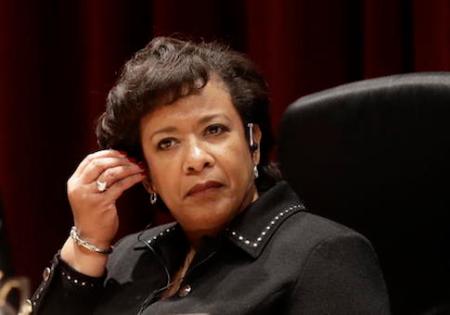
US attorney general, Loretta E. Lynch attends a conference on organised crime in Rome, Thursday, Oct. 20, 2016. (AP Photo/Gregorio Borgia)

US attorney general, Loretta E. Lynch, AP Photo/Gregorio Borgia

Attorney General Loretta Lynch is declining to comply with an investigation by leading members of Congress about the Obama administration’s secret efforts to send Iran $1.7 billion in cash earlier this year, prompting accusations that Lynch has “pleaded the Fifth” Amendment to avoid incriminating herself over these payments, according to lawmakers and communications exclusively obtained by the Washington Free Beacon.

Sen. Marco Rubio (R., Fla.) and Rep. Mike Pompeo (R., Kan.) initially presented Lynch in October with a series of questions about how the cash payment to Iran was approved and delivered.

In an Oct. 24 response, Assistant Attorney General Peter Kadzik responded on Lynch’s behalf, refusing to answer the questions and informing the lawmakers that they are barred from publicly disclosing any details about the cash payment, which was bound up in a ransom deal aimed at freeing several American hostages from Iran.

The response from the attorney general’s office is “unacceptable” and provides evidence that Lynch has chosen to “essentially plead the fifth and refuse to respond to inquiries regarding [her] role in providing cash to the world’s foremost state sponsor of terrorism,” Rubio and Pompeo wrote on Friday in a follow-up letter to Lynch, according to a copy obtained by the Free Beacon.

The inquiry launched by the lawmakers is just one of several concurrent ongoing congressional probes aimed at unearthing a full accounting of the administration’s secret negotiations with Iran.

“It is frankly unacceptable that your department refuses to answer straightforward questions from the people’s elected representatives in Congress about an important national security issue,” the lawmakers wrote. “Your staff failed to address any of our questions, and instead provided a copy of public testimony and a lecture about the sensitivity of information associated with this issue.”

“As the United States’ chief law enforcement officer, it is outrageous that you would essentially plead the fifth and refuse to respond to inquiries,” they stated. “The actions of your department come at time when Iran continues to hold Americans hostage and unjustly sentence them to prison.”

The lawmakers included a copy of their previous 13 questions and are requesting that Lynch provide answers by Nov. 4.

When asked about Lynch’s efforts to avoid answering questions about the cash payment, Pompeo told the Free Beacon that the Obama administration has blocked Congress at every turn as lawmakers attempt to investigate the payments to Iran.

“Who knew that simple questions regarding Attorney General Lynch’s approval of billions of dollars in payments to Iran could be so controversial that she would refuse to answer them?” Pompeo said. “This has become the Obama administration’s coping mechanism for anything related to the Islamic Republic of Iran—hide information, obfuscate details, and deny answers to Congress and the American people.”

“They know this isn’t a sustainable strategy, however, and I trust they will start to take their professional, and moral, obligations seriously,” the lawmaker added.

In the Oct. 24 letter to Rubio and Pompeo, Assistant Attorney General Kadzik warned the lawmakers against disclosing to the public any information about the cash payment.

Details about the deal are unclassified, but are being kept under lock and key in a secure facility on Capitol Hill, the Free Beacon first disclosed. Lawmakers and staffers who have clearance to view the documents are forced to relinquish their cellular devices and are barred from taking any notes about what they see.

“Please note that these documents contain sensitive information that is not appropriate for public release,” Kadzik wrote to the lawmakers. “Disclosure of this information beyond members of the House and Senate and staff who are able to view them could adversely affect the diplomatic relations of the United States, including with key allies, as well as the State Department’s ability to defend [legal] claims against the United States [by Iran] that are still being litigated at the Hague Tribunal.”

“The public release of any portion of these documents, or the information contained therein, is not authorized by the transmittal of these documents or by this communication,” Kadzik wrote.

Congressional sources have told the Free Beacon that this is another part of the effort to hide details about these secret negotiations with Iran from the American public.

One senior congressional source familiar with both the secret documents and the inquiry into them told the Free Beacon that the details of the negotiations are so damning that the administration’s best strategy is to ignore lawmakers’ requests for more information.

“Every Obama administration official and department involved in the Iran Deal appear to be running for cover,” the source said. “Like we feared, the [Iran deal] is turning out to be a disaster and Iran is emboldened in its aggression. Evidently Attorney General Lynch and the Department of Justice have decided ‘refusal to cooperate’ is their best strategy. But this is dangerous and ultimately won’t protect them from anything.”

Update: The headline has been updated to more accurately characterize the story.