Archive for August 23, 2016

Hamas, Palestinian Authority Target Journalists Ahead of Election

August 23, 2016

Hamas, Palestinian Authority Target Journalists Ahead of Election

by Khaled Abu Toameh

August 23, 2016 at 5:00 am

Source: Hamas, Palestinian Authority Target Journalists Ahead of Election

  • Both of the journalists who were arrested made the mistake of reporting on the suffering of Palestinians living under Hamas rule. These are not the kind of stories that Hamas wishes to see ahead of the local and municipal elections. Rather, Hamas wants to see printed lies of prosperity.
  • It is a puzzle why foreign journalists choose not to report about the campaign of intimidation facing their Palestinian colleagues.
  • One might wonder if the human rights groups neglect these abuses because of their continued obsession with destroying Israel.

Palestinian journalists are at the top of the Palestinian Authority (PA) and Hamas hit-list in the crackdown occurring alongside preparations for the Palestinian local and municipal elections, scheduled for October 8.

The crackdown is part of an ongoing campaign by the two rival parties to silence critics in the West Bank and Gaza Strip. Neither Hamas nor the PA tolerates a free and independent media — especially on the eve of a crucial election that could have far-reaching political implications in the Palestinian arena.

A Hamas victory in the upcoming elections would be catastrophic for President Mahmoud Abbas and his Palestinian Authority. Such an electoral outcome would be tantamount to a vote of no-confidence in their policies and performance.

Hamas, for its part, is investing a huge amount of resources in the election campaign, in hopes that the results would further boost its standing among Palestinians. Hamas fears that a defeat would undermine its power in the Gaza Strip and pave the way for its collapse.

As the election campaign heats up, it is clear that Hamas and the PA agree on one thing: intensifying their repressive measures against Palestinian journalists.

This media crackdown is essentially ignored by international human rights organizations. Why? One reason is that when Israel is not involved, assaults on freedom of the media and expression do not interest them.

Some Western journalists and human rights advocates also treat these cases as “internal Palestinian issues” that are of no relevance to international public opinion. A story about a Palestinian journalist who is arrested by Israel is news. A Palestinian journalist incarcerated or threatened by the Palestinian Authority or Hamas is not.

Take, for example, the case of Ahmed Said, a journalist from the Gaza Strip. Last week, he was arrested by Hamas security forces, who also confiscated his personal computer. Said has a radio show on the Sawt Al Sha’ab (Voice of the People) radio station, where Palestinians call in to voice their grievances and talk openly about the problems they are facing under Hamas rule in the Gaza Strip.

Before he was arrested, Said had phoned the spokesman of the Hamas police force, Ayman Al Batnihi, to discuss the recent rise in cases of homicide in the Gaza Strip. According to the journalist, the furious spokesman threatened him: “You are causing us a lot of problems and inciting people. I know how to deal with people. You need to be hanged.”

Said is no stranger to this sort of encounter. Last year, he was summoned for investigation for “incitement” against the Gaza City Municipality. The move came after Said used his talk show to talk about the case of street vendor Mohamed Abu Assi, who tried to commit suicide by ingesting poison after Gaza City Municipality inspectors banned him from selling corn at the beach.

Earlier, Hamas arrested another Palestinian journalist, this time for no clear reasons. Mahmoud Abu Awwad, who works for the Palestinian daily Al-Quds, was arrested from his home in the Shati refugee camp on July 25. He too had his personal computer and cellular phone seized.
Ahmed Said (left) and Mahmoud Abu Awwad (right) are two journalists living in the Gaza Strip who were recently arrested by Hamas security forces. Both journalists made the mistake of reporting on the suffering of Palestinians living under Hamas rule.

Abu Awwad’s family have since been banned from seeing him in prison. Their son, they were told by Hamas, is being held for “security reasons.” Abu Awwad, who has been working for Al-Quds for the past three years, had been reporting mostly about the hardships facing Palestinians in the Gaza Strip. In addition, he was also reporting for the Saudi London-based pan-Arab daily, Asharq Al Awsat.

“Hamas is trying to spread lies to distort the image of my son and justify his arrest,” Abu Awwad’s father told Al-Quds. “He was arrested because he was critical of the situation in the Gaza Strip and the Hamas government.”

Said and Abu Awwad have something in common. Both journalists made the mistake of reporting on the suffering of Palestinians living under Hamas rule. These are not the kind of stories that Hamas wishes to see ahead of the local and municipal elections. Rather, Hamas wants to see printed lies of prosperity.

In the context of its election campaign, Hamas has released a video featuring new houses and neighborhoods, as well as green and clean parks and smiling children. Entitled, “Thank You Hamas,” the video seeks to persuade Palestinian voters that life under Hamas is the best thing that could ever happen to them. And that is why they need to help Hamas extend its control from the Gaza Strip to the West Bank through the local and municipal elections. Journalists such as Said and Abu Awwad are spoiling the effect with their inconvenient truths.

Hamas, however, is the proverbial pot calling the kettle black. In the face of its own massive journalistic repression, Hamas dares to criticize the Palestinian Authority for taking similar measures in the West Bank.

Like Hamas, the PA leadership has always been intolerant towards Palestinian (and sometimes non-Palestinian) journalists who dare not toe the party line. Hardly a week passes without hearing about another Palestinian journalist who has been arrested or summoned for investigation by the Palestinian Authority.

In recent weeks, the crackdown on journalists in the West Bank seems to have increased in light of the upcoming elections. The PA too wants to remove from the scene any journalist who might harm its loyalists’ chances of winning the local and municipal vote. In this regard, journalists are easy prey.

One of the recent victims is Mohamed Abu Khabisah, who reports on economic issues for the Turkish news agency, Anadolu. Palestinian security officers who raided his home shortly after midnight in Al Bireh, near Ramallah, seized his personal computer and documents before taking him into custody. His wife, Hana, said she too was briefly questioned about her husband’s source of income and the nature of his work. Palestinian sources say he was apparently arrested for reporting about financial corruption in the Palestinian Authority’s official news agency, Wafa.

Abu Khabisah was the sixth journalist to be arrested by the PA since the decision to hold local and municipal elections was taken two months ago. The other four are Yehya Saleh, Raghid Tabisah Ibrahim Al Abed, Mohamed Abu Jheisheh and Ziad Abu Arrah. In another recent incident, Palestinian security officers raided the home of journalist Musab Kafisheh and seized his personal computer, but did not take him into custody.

It is anxiety that is driving Hamas and the Palestinian Authority in their crackdown on Palestinian journalists. The “security reasons” they tout as an excuse for their repression is a foil for their sense of instability: the less politically secure they feel, the more they strip Palestinian journalists of their ability to report how things really stand in the Gaza Strip and the West Bank.

So far, so good, from the point of view of Hamas and the PA. Palestinian reporters have been duly deterred. But they are far from the only ones affected.

Foreign journalists rely almost entirely on Palestinian “fixers” and producers for information about what is happening under the Palestinian Authority and Hamas. Now, local Palestinians will think ten times before they provide their foreign employers with information. Still, it is a puzzle as to why foreign journalists choose not to report about the campaign of intimidation facing their Palestinian colleagues.

One might wonder if the human rights groups neglect these abuses because of their continued obsession with destroying Israel.
Report: FBI investigating whether Roanoke County double stabbing was inspired by ISIS

August 23, 2016

Source: Report: FBI investigating whether Roanoke County double stabbing was inspired by ISIS

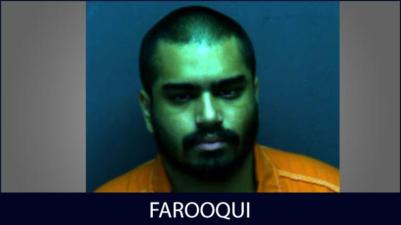
Wasil Farooqui
By Web Staff |

ROANOKE CO., Va. (WDBJ7) According to CBS News, the FBI is investigating whether a random double stabbing in Roanoke County on Saturday was inspired by ISIS.

Click here to read the story from CBS News.

20-year-old Wasil Farooqui of Roanoke County is charged with two counts of aggravated malicious wounding. Investigators say Farooqui stabbed two people Saturday evening at The Pines Apartments in the 4300 block of Banbury Lane, which is near the Oak Grove Shopping Center. Roanoke County Police say the attack was random.

A source told CBS News that Farooqui has been on the FBI’s radar for several months and is believed to be self-radicalized. The source also told CBS News that Farooqui tried to go to Syria earlier this year, but only got as far as Europe.

Witnesses told police that during the attack Farooqui was yelling “Allah Akbar.” In Arabic translates to “God is the greatest.” The law enforcement source told CBS the FBI is investigating whether the attack made with a sharpened EDC knife was possibly inspired by ISIS and whether the suspect may have been trying to behead the two victims.

The victims are recovering well, according to Roanoke County Police.

While officers were at the hospital Saturday, police say Farooqui came into the emergency room for treatment of his own injuries. He was arrested and charged with two counts of aggravated malicious wounding.

Farooqui is being held at the Western Virginia Regional Jail without bond.

Roanoke County Police confirmed Monday that the FBI is helping with the investigation.

Iran Expanding Terror Network in Latin America

August 23, 2016

Iran Expanding Terror Network in Latin America, Washington Free Beacon, August 23, 2016

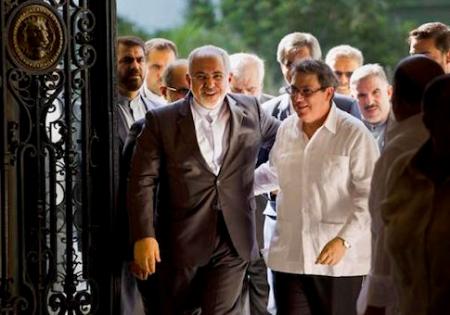
Iranian Foreign Minister Mohammad Javad Zarif, left, is welcomed by Cuban Foreign Minister Bruno Rodriguez, in Havana, Cuba, Monday, Aug. 22, 2016. Iran’s foreign minister begun a Latin American tour in Cuba, declaring Iran and Cuba united by their histories of resisting what he called U.S. atrocities. Zarif also plans to visit Nicaragua, Ecuador, Chile, Bolivia and Venezuela. (AP Photo/Ramon Espinosa)

Iranian Foreign Minister Mohammad Javad Zarif, left, is welcomed by Cuban Foreign Minister Bruno Rodriguez, in Havana, Cuba, Monday, Aug. 22, 2016.  (AP Photo/Ramon Espinosa)

Iran is solidifying its foothold in Latin America, sparking concerns among U.S. officials that the Islamic Republic will enlist these regional allies in its push to launch terror attacks on U.S. soil, according to conversations with congressional sources.

Iranian Foreign Minister Javad Zarif has been on a diplomatic tour through key Latin American countries known for hostility towards the United States, including Cuba, Venezuela, and a host of other countries believed to be providing shelter to Iranian terrorist proxies such as Hezbollah.

As Iranian-ally Russia boosts its spy operation in the region, sources have raised concerns about the rogue nations working together to foster anti-U.S. unrest.

Zarif’s trip through the region has raised red flags among some senior congressional sources familiar with the region. For example, Zarif took aim at the United States and touted the regime’s desire to align with anti-American countries during his stay in Cuba.

One senior congressional source who works on the issue said to the Washington Free Beacon that Iran is seeking to recruit “potential terrorists who want to cause the U.S. harm.”

Increased ties between Iran and these Latin American nations are setting the stage for terrorists to penetrate close to U.S. soil with little detection.

These individuals “can travel easily to Venezuela, and once there, they can get to Nicaragua or Cuba without passports or visas, which poses a national security risk for our nation,” the source explained.

Iran has also reopened its embassy in Chile, a move that has only added fuel to speculation among U.S. officials that the Islamic Republic is making moves to position its global terror network on America’s doorstep.

“The threat to U.S. national security interests and our allies should be setting off alarm bells,” Rep. Ileana Ros-Lehtinen (R., Fla.), chair of the House Subcommittee on the Middle East and North Africa, said in a statement about Zarif’s Latin American tour.

“The Obama administration has failed to prevent Russia and China from expanding in our Hemisphere, and now Iran is once again stepping up its efforts to gain a greater presence to carry out its nefarious activities,” Ros-Lehtinen said. “I urge the White House to stop downplaying the Iranian threat and take immediate action to prevent the world’s leading state sponsor of terrorism from establishing a regional safe haven in the Americas.”

Asked to comment on Zarif’s trip and the potential repercussions on Monday, a State Department official said to the Free Beacon that the administration had no comment.

Ros-Lehtinen said the high-profile trip by Zarif should serve as a warning.

“The timing of Zarif’s trip is significant as Iran could use many of these rogue regimes to circumvent remaining sanctions, undermine U.S. interests, and expand the drug trafficking network that helps finance its illicit activities,” she said. “Tehran’s classic playbook is to use cultural centers, new embassies or consulates, or cooperative agreements on various areas to act as façades aimed at expanding Iran’s radical extremist network.”

The renewed concerns about Iran’s footprint in Latin America comes nearly two years after the State Department said Tehran’s influence in the region was “waning.”

“The timing of Zarif’s trip speaks volumes,” said the senior congressional aide who would discuss the issue only on background. It “is worrisome that as we just celebrated the 22nd year of the horrific terrorist attack against the AMIA Jewish community center in Argentina, Iran can now have personnel nearby in a new embassy in Chile.”

“Just recently, a Hezbollah member was picked up in Brazil, an explosive device was found near the Israeli embassy in Uruguay, and Hezbollah members are reportedly traveling on Venezuelan passports,” the source added. “It was not too long ago that Venezuela offered flights to Iran and Syria, and as of last week, Hezbollah cells were found in the West Bank where Venezuela lifted its visa requirements for Palestinians.”

Zarif slammed the United States on Monday during a speech in Havana.

“Iran and Cuba could prove to the U.S. that it cannot proceed with its policies through exerting pressure on other countries,” Zarif said, according to Iran’s state-controlled media.

“Now the time is ripe for realizing our common goals together and implement the resistance economy in Iran and materialize [Cuban dictator Fidel] Castro’s goals of reconstruction of the Cuban economy,” Zarif added.

Zarif went on to note that Iran “has age-old and strong relations with the American continent and the Latin American countries.”

Zarif is reported to have brought along at least 60 Iranian officials and executives working in the country’s state-controlled economic sector.

Behnam Ben Taleblu, senior Iran analyst at the Foundation for Defense of Democracies, told the Free Beacon that Iran has boosted efforts to engage Latin America in the wake of last summer’s nuclear agreement.

“Iran’s Foreign Minister Mohammad-Javad Zarif is aggressively continuing Iran’s diplomatic outreach, a policy which began early in the Rouhani administration and was kicked into high gear in the aftermath of the JCPOA—last summer’s nuclear deal,” he said. “Zarif’s sojourn into the Western hemisphere follows on the heels of his May visit to the region. Zarif’s trip symbolically commences in Havana, Cuba, where the Iranian foreign minister harped on themes of steadfastness and resistance to American legal and economic pressure.”

The Iranian leader’s goal is to “build on this experience to help promote an anti-American and anti-capitalist world order,” he added. “What’s most clear however, is that in addition to seeking to solidify the anti-American political orientation of these states, Iran aims to capitalize on the increasingly detached stigma of doing business with it in the aftermath of the nuclear accord. Therefore, we can expect to see trade deals or memorandums of understanding inked. In short, Iran will be looking to deepen to its footprint in Latin America.”

Germany may reintroduce conscription if defense of NATO borders needed

August 23, 2016

Germany may reintroduce conscription if defense of NATO borders needed

reports Published time: 23 Aug, 2016 08:52

Source: Germany may reintroduce conscription if defense of NATO borders needed – reports — RT News

© Thomas Peter / Reuters

The German government may revive nationwide conscription in times of crisis, such as situations in which the country needs to “defend NATO’s external borders,” according to local media citing a controversial paper drafted by the Interior Ministry.

The so-called “Civil Defense Concept,” which is due to be discussed by the German cabinet on Wednesday, mainly focuses on fulfilling Germany’s obligations to defend NATO’s external border.

However, the controversial proposal to revive conscription does not lie on the surface and can only be found buried in a section entitled “Civil support for the armed forces,” according to DPA news agency.

Read more

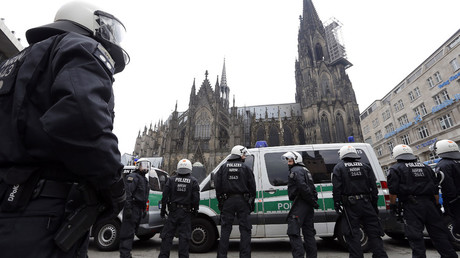
German riot police stand in front of the Cologne Cathedral in Cologne, Germany.© Vincent Kessler

“Quick and reliable delivery of mail especially important for the Bundeswehr (in particular, call-up papers and notices of performance in times of reintroduction of conscription) is ensured under Post- and Telecommunications Safety Act,” reads the draft cited by DPA.

Conscription was suspended in Germany in 2011 after long-standing debates in the government and society, with advocacy groups and experts arguing that it was no longer necessary for the country to maintain a large Cold War-era standing army to defend Europe from a perceived Soviet threat.

In June, German Defense Minister Ursula von der Leyen said conscription will not be reintroduced, notwithstanding renewed tensions with Russia and the terror threat posed by Islamic State (IS, previously ISIS/ISIL).

Conscription is specifically authorized in the German constitution and can be returned with a simple law approved by the parliament, according to Die Zeit.

Apart from conscription, the German Interior Ministry’s paper also mentions the obligations of civilians and civilian organizations to assist the Bundeswehr in other ways, particularly by helping “recruitment organizations and accommodation infrastructure.”

Some of the military’s support functions could also be outsourced to civilian companies, such as “a limited provision of catering for the troops during operations,” the paper reportedly says.

However, then the document goes far beyond modern-day military outsourcing tasks and discusses other proposals resembling war-time measures.

In times of crisis, the draft reads, the federal government can ensure “nutritional emergency preparedness” by imposing “tax obligations relating to cultivation, processing, distribution and sale of food products.”

Other excerpts from the paper previously leaked by German media included the idea of making citizens stockpile food and water reserves – enough to last at least ten days – in the event of a major disaster or a military invasion.

The “Civil Defense Concept” marks the first time since the Cold War that the German government has considered such measures, but the plan was devised as early as 2012, according to Frankfurter Allgemeine.

Israel strikes Syria

August 23, 2016

Israel strikes Syria After mortar fire landed in the Golan Heights, the Israeli Air Force struck back.

Source: Israel strikes Syria – Defense/Security – News –

Israel Air Force (Illustration)

Israel Air Force

The Israeli Air Force struck a military target in Syria in response to mortar fire which landed in the Golan Heights in the north.

IAF jets scrambled into the air when a mortar strayed over from Syria and exploded in the Golan Heights. The fighter jets targeted a Syrian army missile launcher in retaliation, near Quneitra, Syria.

According to Syrian media, an unmanned aircraft struck a Ba’ath party position at the outskirts of Quneitra.

No one was injured. The mortar landed in open terrain.

No Red Alert rocket sirens sounded when the mortar breached Israeli territory.

Israel maintains a policy that spillover fighting, even of rebels, is the responsibility of the country who allowed it into Israel.

WATCH: Dozens of illegal guns seized in West Bank crackdown

August 23, 2016

Dozens of illegal guns seized in West Bank crackdown IDF, police, Shin Bet conduct raids in Bethlehem, Hebron as part of ongoing campaign against illicit weapons

By Judah Ari Gross

August 23, 2016, 1:53 pm

Source: WATCH: Dozens of illegal guns seized in West Bank crackdown | The Times of Israel


In the largest operation of the year, Israeli security forces seized dozens of weapons, confiscated equipment and made arrests in Hebron and Bethlehem early Tuesday morning as part of an ongoing effort to crack down on illegal guns in the West Bank, an IDF official said.

In total, seven illegal gun workshops were raided and 22 pieces of gunsmithing machinery — drill presses and metal lathes — were seized, along with “approximately 50 weapons,” including handguns, shotguns, hunting rifles and Carlo-style submachine guns, a cheap and simple automatic weapon loosely based off the design of the Carl Gustav submachine gun, the official said.

 Security forces also recovered ammunition and dozens of gun pieces — grips, barrels, stocks, etc. — that would have been used to create more weapons, the official added.

Two of the alleged manufacturers were arrested in the raids. The suspects do not appear to be connected to any terrorist groups, but were more likely driven by financial motives, the army source said.

“It seems to be a combination of market demand and the ability to manufacture,” he said.

The IDF, along with the police and Shin Bet security service, seizes machinery believed to have been used to create illegal weapons in Bethlehem and Hebron on August 23, 2016, as part of a large crackdown effort on illicit guns in the West Bank. (IDF Spokesperson's Unit)

The IDF, along with the police and Shin Bet security service, seizes machinery believed to have been used to create illegal weapons in Bethlehem and Hebron on August 23, 2016, as part of a large crackdown effort on illicit guns in the West Bank. (IDF Spokesperson’s Unit)

Though the tools necessary to create Carlo-style submachine guns are “dual purpose” and can be found in almost any machine shop in the world, the factories raided early Tuesday morning appeared to be “specifically designed for the manufacturing of weapons,” the IDF official said.

More arrests are expected to come, as Shin Bet and Israel Police investigators will now begin interrogating the two suspects in order to locate the manufacturing and distribution network, the official said.

Dozens of illegal weapons seized by Israeli security forces in Bethlehem and Hebron on August 23, 2016, as part of a large crackdown effort on illicit guns in the West Bank. (IDF Spokesperson's Unit)

Dozens of illegal weapons seized by Israeli security forces in Bethlehem and Hebron on August 23, 2016, as part of a large crackdown effort on illicit guns in the West Bank. (IDF Spokesperson’s Unit)

The joint operation was conducted between 1 a.m. and 5:30 a.m. by five battalions from the Israel Defense Forces — the elite Duvdevan unit, the Nahal Brigade’s 50th Battalion, soldiers from an artillery battery and two reservist battalions — along with representatives from the Israel Police and Shin Bet security service, according to spokespeople for the organizations.

IDF soldiers break into a workshop  believed to have been used to create illegal weapons in Bethlehem and Hebron on August 23, 2016, as part of a large crackdown effort on illicit guns in the West Bank. (IDF Spokesperson's Unit)

IDF soldiers break into a workshop believed to have been used to create illegal weapons in Bethlehem and Hebron on August 23, 2016, as part of a large crackdown effort on illicit guns in the West Bank. (IDF Spokesperson’s Unit)

The raids in Bethlehem and Hebron were the culmination of months of gathering “signal intelligence, human intelligence and visual intelligence,” an IDF official said.

There was no immediate indication that any of the guns sold by the two alleged manufacturers were specifically sold for use in terror attacks. These types of guns can be used for any number of reasons, including terrorist attacks, self-defense and criminal activity, the IDF official said.

However, a weapon purchased for self-defense can still end up being used in a terror attack, the official added.

“Someone who has one of these weapons at home [for self-defense] might hide it in a closet. And when his son gets carried away by incitement, he goes and takes this weapon to carry out attacks,” the officer said.

IDF soldiers, along with the police and Shin Bet security service, seize dozens of illegal weapons in Bethlehem and Hebron on August 23, 2016, as part of a large crackdown effort on illicit guns in the West Bank. (IDF Spokesperson's Unit)

IDF soldiers, along with the police and Shin Bet security service, seize dozens of illegal weapons in Bethlehem and Hebron on August 23, 2016, as part of a large crackdown effort on illicit guns in the West Bank. (IDF Spokesperson’s Unit)

This year over 30 shooting attacks have been carried out with illegally produced weapons. In response, the IDF and other security agencies have been cracking down on illegally produced weapons in recent months, arresting more than 140 people suspected of being involved in the creation or distribution of illicit arms, police said.

Over 300 illegal guns and nearly 50 pieces of manufacturing equipment have also been confiscated in raids across the West Bank in recent months, according to police.

The ongoing crackdown has already had an effect on the market, driving up the price of guns Col. Roman Gofman told the Associated Press last month. For example, a crude Carlo-style submachine gun cost around $500 a few months ago, whereas now it can cost upward of $2,500, he said.

State Dept Warns: Iran Seeking to Capture U.S. Citizens

August 23, 2016

State Dept Warns: Iran Seeking to Capture U.S. Citizens, Washington Free Beacon, August 22, 2016

Iran's President Hassan Rouhani addresses the nation in a televised speech after a nuclear agreement was announced in Vienna, in Tehran, Iran, Tuesday, July 14, 2015. Rouhani said "a new chapter" has begun in his nation's relations with the world. He maintained that Iran had never sought to build a bomb, an assertion the U.S. and its partners have long disputed. (AP Photo/Ebrahim Noroozi)

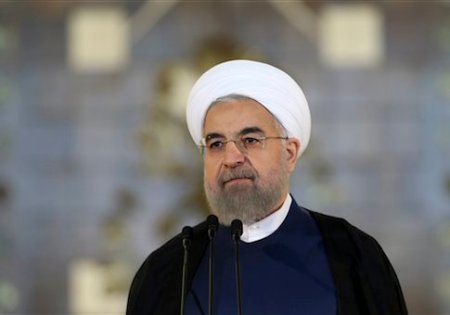
Iran’s President Hassan Rouhani (AP Photo/Ebrahim Noroozi)

The State Department issued a warning on Monday urging U.S. citizens to avoid traveling to Iran, which has made the detention of Americans a priority.

The latest travel advisory, which emphasizes Iran’s desire to capture U.S. citizens, comes on the heels of a growing scandal over the Obama administration’s decision to pay Iran $400 million in cash on the same day that it freed several U.S. hostages.

The payment has been cast by lawmakers and others as a ransom payment and prompted concern among U.S. officials that Iran is making arresting Americans a priority.

The travel warning is meant to “highlight the risk of arrest and detention of U.S. citizens, particularly dual national Iranian-Americans,” according to a State Department announcement on Monday. “Foreigners, in particular dual nationals of Iran and Western countries including the United States, continue to be detained or prevented from leaving Iran.”

“U.S. citizens traveling to Iran should very carefully weigh the risks of travel and consider postponing their travel,” the warning adds. “U.S. citizens residing in Iran should closely follow media reports, monitor local conditions, and evaluate the risks of remaining in the country.”

Iran continues to imprison Americans, particularly those holding dual Iranian citizenship, according to the State Department.

“Iranian authorities have detained and harassed U.S. citizens, particularly those of Iranian origin,” the travel warning states. “Former Muslims who have converted to other religions, religious activists, and persons who encourage Muslims to convert are subject to arrest and prosecution.”

The Obama administration expressed particular concern about commercial airlines doing business with Iran. This warning comes as American companies such as Boeing continue to pursue million-dollar business deals with the Islamic Republic.

“The U.S. government is concerned about the risks to civil aircraft operating into, out of, within, or over Iran due to hazards from military activity associated with the conflicts in Iraq and Syria,” the warning states. “The FAA has advised U.S. civil aviation to exercise caution when flying into, out of, within, or over the airspace over Iran.”

The warning emphasizes that “the U.S. government’s ability to assist U.S. citizens in Iran in the event of an emergency is extremely limited.”