Archive for April 28, 2016

Muslim Countries Slam Israel—For Protecting them

April 28, 2016

Muslim Countries Slam Israel—For Protecting them, Front Page MagazineP. David Hornik, April 28, 2016

OIC

On Tuesday the Organization of Islamic Cooperation held an “emergency,” “extraordinary” meeting in Jeddah, Saudi Arabia.

The OIC includes violence-wracked countries and failed states like Syria, Iraq, Yemen, Libya, Afghanistan, Nigeria, and others, as well as severely poor and dysfunctional countries like Burkina Faso, Somalia, Bangladesh, and others. Not a single one of the organization’s 57 countries is a frontrunner in terms of freedom and prosperity, and most are far below that level.

But the topic of Tuesday’s “emergency meeting” was that on April 17 Israeli prime minister Benjamin Netanyahu said that: “Israel will never withdraw from the Golan Heights.”

The meeting’s final communiquéCondemns strongly Israel, the occupying power, and its macabre acts to change the legal status, demographic composition, and institutional structure of the occupied Syrian Golan.” It also “expresses unconditional support for the legitimate right of the Syrian people to restore their full sovereignty on the occupied Syrian Golan.”

The Arab League—whose 22 member states make up a sizable chunk of the OIC—had already weighed in on Netanyahu’s words on April 21, calling for a special criminal court to be set up and put Israel on trial for the transgression.

The Golan was controlled by Syria from 1948 to 1967, during which time Syrian gunners often fired at the Israeli communities below and forced their residents to sleep in bomb shelters. Israel captured the Golan from Syria in the 1967 Six Day War—and fortunately, since then, has kept it and developed it.

Today, with Syria devolved into Hobbesian war and fragmentation, the Heights are all the more strategically vital to Israel, and the idea of trading them for “peace” has—at least in the Israeli discourse—died a well-deserved death. The Golan, by the way, constitutes less than 1 percent of Syrian territory, and Syria’s loss of it almost 50 years ago is the least of its problems.

But there is further irony in the Arab League’s and the OIC’s reactions to Netanyahu’s words.

At present, Israel is engaged in tight strategic cooperation with two of its neighbors—Egypt and Jordan—against ISIS, one of the two most dangerous of the entities now fighting it out in Syria. More broadly, according to numerous reports, as well as hints dropped by Israeli and some Arab leaders, Israel and Sunni Arab states—led by Saudi Arabia—are also working together against the Iranian axis, the second of the two most threatening forces now operating in Syria.

Not only, then, do the Arab and Muslim countries as corporate bodies denounce Israel as a “macabre” criminal even as it acts as a crucial ally of not a few of these countries. They also react with outrage to the very Israeli policy—retaining the Golan—that keeps Israel strong in the face of the threats emanating from Syrian territory.

The signers of Tuesday’s communiqué in Jeddah know that there no longer exists a “Syrian people” to which sovereignty on the Golan could be restored. Some of the signers also know that a strong Israel is now one of the guarantors of their survival; and more specifically, that Israel’s presence on the Golan helps shield Jordan from imminent peril.

That Netanyahu’s words about keeping the Golan continue to spark fierce denunciations, then, reflects something deeper: an ongoing, profound antipathy to Israeli—that is, Jewish—control of any land in what is seen as, by rights, a Muslim domain. From that standpoint, even for Israel to hold onto a sliver of what used to be Syria, won in a defensive war almost half a century ago, is intolerable.

That same antipathy was on display earlier this month when seven Arab countries—including Egypt—got UNESCO to pass a particularly vicious resolution negating any Jewish connection to Judaism’s most sacred sites in Jerusalem, declaring them exclusively Muslim sites, and going so far as to accuse Israel of “planting Jewish fake graves in…Muslim cemeteries.” (Among the “yea” votes: France, Spain, and Sweden.)

These rhetorical eruptions suggest that, despite the growing behind-the-scenes collaborations, Israel remains very far from being accepted and legitimized in the region. Its best bet is to keep building its power, which gets some of its neighbors to deal with it pragmatically and rationally.

As for the Arab and Muslim countries, their continuing hang-up with the geographically tiny Jewish state, and repeated displays of ganging up on it in righteous fury, are unedifying and linked to their inability to tackle their real problems.

Horowitz: The Biggest Election Deception

April 28, 2016

Horowitz: The Biggest Election Deception, Truth Revolt, David Horowitzz, April 28, 2016

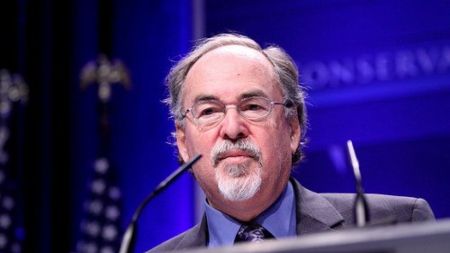
David Horowiz

One thing we do know, however, because Republican primary voters have already spoken: The political landscape is changing before our eyes, and the Republican Party will never be the same. This is true whether the GOP falls apart at the convention in August and cedes the election to Hillary Clinton, or whether its standard-bearer is an anti-establishment Republican like Trump or Cruz.

******************************

We hear a lot of talk about the November election especially from John Kasich who has lost 45 of 46 primary contests but stays in the race because he’s the only Republican who beats Hillary head on in the polls. “Remember this,” Kasich told Fox, “I’m beating Hillary Clinton in every single poll… I’m the only one with the positive ratings so we ought to be focusing on what happens in the fall not just who wins the nomination.”

But as Kasich knows – and everyone else should – polls are merely snapshots of the way people think when they are taken. Polls taken before the actual campaigns, whose purpose is to influence people’s opinions, are meaningless. They are also meaningless because events like the Iranian hostage crisis in the Reagan-Carter election of 1980 can change everything.

There have already been campaigns in the primaries. On the Republican side this is a good part of the reason why the negatives for Trump and Cruz are so high. Republicans have spent more than 100 million dollars to convince voters to never vote for Trump, and Trump has fought back by flooding the TV airwaves with character attacks on “Lyin’ Ted” that have driven his negatives almost as high. Perhaps in the next election cycle Republicans will have learned to design their primary advertising and debates so that they don’t destroy their potential candidates before the Democrats even get a crack at them. But don’t bet on it.

Fortunately for Republicans, Hillary has raised her own negatives high enough by her own efforts that the two may cancel each other out. No one knows what the effects of such negatives on both sides will be, because no one knows what the electorate’s opinion in November will be.

In any case a simple glance at the facts is enough to show why all polls about the November elections taken in April are virtually meaningless, especially when the spread is 10 or 11 points as most of those polls are now.

In April 1980 Carter led Reagan 40% to 34%. In November, Reagan beat Carter by 50.7% to 41%

In May 1988 Dukakis led Bush 54% to 38%. In November Bush beat Dukakis by 53.4% to 45.6%

In April 1992, Bush led Clinton 44% to 25%. Clinton won in November 43% to 37.4%.

That’s three important elections. But one need look no further than this year’s Republican primaries to see how campaigns can change the numbers. At first it was said that Trump would be toast in September, then that he couldn’t break a 20% ceiling in winning Republican support. Then the ceiling became 30%, then 40%, then 50%. In the latest primaries, Trump won 60% of the Republican vote. Obviously he has overcome a lot of negatives and a lot of hostile political ads to reach those figures. Could he do the same in a general campaign? At this point nobody knows.

One thing we do know, however, because Republican primary voters have already spoken: The political landscape is changing before our eyes, and the Republican Party will never be the same. This is true whether the GOP falls apart at the convention in August and cedes the election to Hillary Clinton, or whether its standard-bearer is an anti-establishment Republican like Trump or Cruz.

Where Have All the “Good Boys” Gone?: Effective Handling of Captured Terrorists

April 28, 2016

Where Have All the “Good Boys” Gone?: Effective Handling of Captured Terrorists, Investigative Project on Terrorism, Patrick Dunleavy, April 28, 2016

133

Captured terror suspect Salah Abdeslam now sits in an isolated cell inside a French maximum security prison. Before his extradition from Belgium this week, the individual responsible for the recent terror attacks in both Paris and Brussels that killed over 150 people was known to prison officials as a model inmate and is being called “a very good boy.”

This is not the first time a captured Islamist terrorist received this type of description. In 2013, Indiana U.S. District Court Judge Jane Magnus-Stinson lauded the prison behavior of John Walker Lindh. Lindh, also known as the “American Taliban,” is serving a 20-year sentence after he was captured by American forces in 2001 fighting alongside the jihadists in Afghanistan. He also carried an explosive device and was believed by many to be partly responsible in the death of a CIA Operations Officer named Johnny Micheal Spann. Spann was killed in 2001 when inmates in the Qali-Jangi prison at Mazar-e Sharif started a riot at the fortress in Afghanistan.

The riot occurred the same day Lindh was interviewed by Spann and another CIA officer. Some felt strongly that Lindh purposely withheld information he had regarding the pending prison revolt.

Appearing before Judge Magnus-Stinson, Lindh requested lightening some conditions of his confinement. The Bureau of Prisons opposed the changes, saying it believed Lindh remained a security risk.

The judge saw it differently, finding that although Lindh was convicted of the terrorist acts, “His scant, nonviolent disciplinary history during his incarceration has merited him a classification of low security.”

In other words becoming “jail wise” can make you less of a threat to the United States. The term has become synonymous with inmates who have learned to work the system to their advantage by outwardly appearing to be compliant to prison rules without ever changing their criminal nature.

They don’t call them “cons for nothing.

We know that Lindh did not attend any de-radicalization program specifically designed to treat radical Islamists because there is none in the United States prison system. What then of the terrorists incarcerated at Guantanamo Bay? As the administration pursues a policy of closing the prison at any cost, we find ex-detainees being sent to dubious locations.

Earlier this month, nine inmates were transferred from GITMO to Saudi Arabia. What awaits them there? The Saudis have a de-radicalization program that would be the envy of most captured jihadists.

Located at the al-Ha’ir prison outside of Riyadh, inmates can look forward to lavender walls, red carpet, queen size beds, a refrigerator, television and private showers. There is even an ATM so inmates can draw from their commissary accounts which the government replenishes every month. Married inmates are entitled to monthly conjugal visits with fresh linens, tea, and sweets provided on the nightstand.

The Wahhabi/Salafist teachings prominent in Saudi Arabia allow men to have up to four legitimate wives, so inmates can actually get a wife to visit once a week. The de-radicalization philosophy there is to see the terrorists as misguided, or simply suffering from an ideological sickness which can be easily corrected with the proper treatment. Sounds simple and extravagant.

No wonder terrorists are calling for the closing of the Guantanamo prison. They want to go to the Islamic version of Disneyland.

Yet even with all these perks, a very real threat of recidivism remains which the Saudis have had to face. Several graduates of the program have gone on to become suicide bombers right there in Saudi Arabia. Others returned to the battlefield in countries outside the kingdom.

Recent events both in Europe and the United States raise legitimate questions as to how best to handle terrorists once they are captured and incarcerated. Several terrorists in both the Brussels and Paris attacks had spent time in prison where they were radicalized by other jihadists. Authorities neglected to have an adequate post-release program in place to monitor those getting out of prison. After all, as far back as 10 years ago, French intelligence officials knew they had a serious problem with Islamic radicalization in the prison system. They also knew that the main radicalizing influence was by those already incarcerated for terrorist acts or providing material support for terrorists.

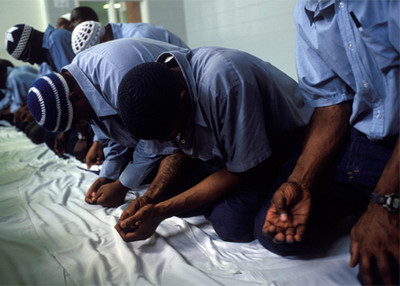
Officials in the United Kingdom have known for years that they had a problem, not only with radicalized inmates, but also with clergy who made things worse. Some Islamic prison clergy provided literature to inmates that espoused a strict Wahhabi-Salafist form of the religion. This not only led to more inmates being exposed to radical Islamist ideology, but it also created a form of extortion and intimidation, as shariah law was imposed on whole cell blocks.

Again, no effective post-release program was created so authorities could gauge whether released inmates were de-radicalized or continuing down the path of a committed jihadist.

The United States faces a similar problem with the pending release of a large number of convicted terrorists after years of incarceration. The Justice Department acknowledges we are not prepared to release them. No established de-radicalization or rehabilitation program is in place to deal with those individuals. The DOJ identifies three distinct groups of incarcerated international terrorists: those convicted of actual terrorism like 1993 World Trade Center bombers El Sayyid Nosair, Ramzi Yousef, etc.; those whose convictions included a nexus to terrorism like financing and support; and perhaps the most enigmatic, are those inmates whose conduct during their time in prison was connected to terrorism.

A recent example involves David Wright and Nicholas Rovinski, who were arrested in Boston last June and charged with providing material support for ISIS. Roviniski was still able to communicate with Wright through letters sent from the jail. Rovinski wrote to Wright last August, describing ways to continue their plans to take “down the United States government and decapitate non-believers,” prosecutors allege in a superseding indictment. This is not the first time a terrorist in prison was able to send letters out to other terrorists.

Mohammed Salameh, convicted in the 1993 World Trade Center bombing and incarcerated in the maximum security federal prison in Florence, Col. managed to smuggle letters out to Mohamed Acraf. Acraf was one of the individuals responsible for the 2004 train bombing in Madrid, Spain that killed 200 people. This glaring security leak was outlined in a report by the Inspector General’s Office which stated the Bureau of Prisons “is unable to effectively monitor the mail of terrorist and other high-risk inmates in order to detect and prevent terrorism and criminal activities.”

This would be the same IG office that also stated the BOP was unable to effectively vet Islamic clergy or religious volunteers entering the prisons.

Something has to be done to stop the leaks. Yes, terrorists go into prison, yet they are not rendered harmless. Terrorists also eventually complete their sentences and get out of prison. A study by the Centre on Religion and Geopolitics (CRG), found that 65 percent of Islamic terrorists spent time in prison during their careers.

It is therefore incumbent that there be a comprehensive strategy that deals not only with capturing radical Islamic terrorists but also effective confinement and post release monitoring. U.S. Rep. Stephen Fincher, R-Tenn., has sponsored H.R. 4285, which would tighten some of the security lapses now occurring in regard to terrorists in prison. For example, federal prison volunteers would be screened for connections to terrorism. This would be an effective first step in initiating the strategy. Legislating prison reform is nothing new.

Prison officials nationally routinely face federal mandates on how to operate. Failure to comply often leads to funding cuts. Perhaps it is time to tighten the purse strings until an effective counter-terrorism program for corrections is in place nationwide. The ultimate motivation should come from a steadfast desire to keep us safe from those committed to do us harm.


Debate In Jordan On Syrian Refugees’ Future In The Country – From Fear They’ll Be Naturalized To Calls For Integrating Them Into Jordanian Society

April 28, 2016

Debate In Jordan On Syrian Refugees’ Future In The Country – From Fear They’ll Be Naturalized to calls for integrating them into Jordanian Society, MEMRI, Z. Harel*, April 28, 2016

Introduction

Since the onset of the war in Syria, refugees have flocked to Jordan. Some have been housed in refugee camps, but the vast majority settled throughout the country, burdening its society and economy – the latter of which is based primarily on foreign aid. Jordan has taken in massive waves of immigration over the years, mostly Palestinians and Iraqis, and with the influx of refugees from Syria is facing a huge financial burden as well as the demographic, social, economic, and political ramifications of their arrival and their presence.
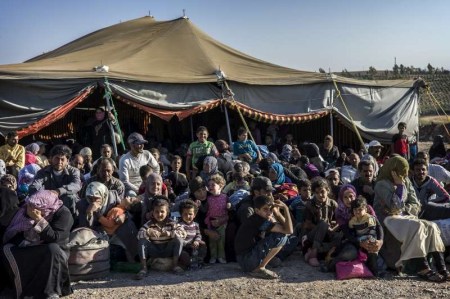
27813Syrian refugees in Jordan (Image: Unhcr.org)

The Jordanian media have been increasingly occupied with the issue of the Syrian refugees and their future in the kingdom, particularly following two major events. First, the Jordanian census, conducted in late 2015, showed that non-Jordanians comprise some 30.6% of the population, and that the approximately 1.3 million Syrian refugees in the country now total about 13.2% of the population.[1] According to a special supplement in the official Jordanian daily Al-Rai on the issue of the Syrian refugees, 62% of them in Jordan are not registered with the UN High Commissioner for Refugees (UNHCR), meaning that the organization is not bearing the expenses that they incur in the kingdom. Furthermore, some 80% of the refugees reside not in refugee camps but in Jordanian cities and villages, and therefore receive the same services, such as education and healthcare, as Jordanian citizens do.[2]

The second event was the Supporting Syria and the Region Conference, held in London in early February 2016, on the issue of Syrian refugees in countries bordering Syria. The conference, sponsored by the UK, Kuwait, Germany, Norway, and the UN, was attended by 70 heads of state and international organizations.[3] Prior to the conference, Jordan made every effort to increase awareness of its situation: Jordanian officials, including King Abdullah II, met with officials from all over the world and explained in detail the economic and social challenges that Jordan is facing because of the refugees.[4] At the conference it was agreed to guarantee Jordan was $2.1 billion in grants for development of infrastructure and $5.7 billion in loans for reducing its deficit.

These two events sparked a lively public debate in Jordan on the issue of the refugees, including dozens of articles in the Jordanian press, where Jordanian writers discussed the ramifications of the refugee presence in the kingdom. Some were critical of the international community for making Jordan responsible for them while doing little to help either the refugees or Jordan. Many expressed concern that the refugees would be granted Jordanian citizenship, to the detriment of Jordan’s existing citizens, and argued that the interests of Jordan and its existing citizens should take priority. However, following the London conference, several articles called for accepting the new reality and for seeking ways for Jordan to benefit from it.

This report will review the public debate in Jordan on the issue of the Syrian refugees:

Concern For The Interests Of Jordan And Its Citizens, Fears Of Refugee Naturalization

A substantial part of the debate on the refugees centered on the need to deal with the problem while prioritizing the interests of the kingdom and its citizens. A common motif in statements by Jordanian officials, and in articles in the press, was that Jordan has already done much more for the refugees than its limited economic resources allow. The debate also focused on the duration of the refugees’ stay in Jordan, highlighting fears that they would be naturalized.

King Abdullah: We Are At The Limit Of Our Capacity To Bear This Burden

In his opening remarks at the Supporting Syrian and the Region Conference in London, Jordan’s King Abdullah II spoke of how the Jordanian people have suffered because of the refugee crisis, saying: “…[L]ooking today into the eyes of my people and seeing the hardship and distress they carry, I must tell you: We have reached our limits. I represent the people of Jordan. Their well-being and safety are my first priority. Our country will continue to do what we can to help those in need, but it cannot be at the expense of our own people’s welfare.”[5]
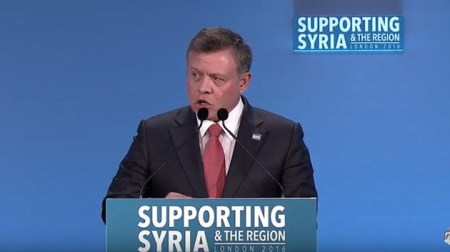
27814King Abdullah II at the Supporting Syria and the Region Conference (Al-Ghad, Jordan, February 5, 2016)

On the eve of the conference, the king told the BBC in an interview that he expects the Syrian refugees to remain in Jordan for an extended period – “at least 17 years.” He stressed that the aid Jordan would receive from the international community would also be crucial for Jordanian citizens, not just the Syrian refugees: “If we are going to create jobs for Syrians, and bring them as part of our labor force, I know it is sometimes considered, has been considered over the years, as unpopular. Refugees, when they come to a country will stay for a long period of time, UN figures say at least 17 years, so whether we like it or not Syrian refugees are going to be part of our country for some period of time to come. So they have to be integrated into the labor force, everybody knows that. But as we go to this conference, if you are going to create a job for Syrians, you have got to create more jobs for Jordanians. So we are going to this conference in that respect. You can’t just do it for Syrians and ignore the Jordanians. That’s part of the process…”[6]

In January, Jordanian Royal Court Chief Fayez Al-Tarawneh met with Jordanian intellectuals to discuss the Syrian refugee issue; his statements at that meeting caused a stir and sparked criticism. He called for a halt to complaints about the presence of refugees in the kingdom, and hinted that Jordanians must eventually accept the “Syrian element” in the country because it would likely be there for at least a decade.[7] In response, Jordanian MP Bassam Al-Batoush protested against Al-Tarawneh’s use of the term “Syrian element,” calling this a dangerous development in official discourse that prepares the ground for the naturalization of Syrian refugees in Jordan. He expressed concern about an obliteration of the Jordanian identity and about Jordanians becoming a minority in their own country.[8] At a parliamentary session following the Supporting Syria and the Region Conference, several MPs expressed concern that the aid promised to the kingdom was conditional upon bringing refugees into the labor force, and demanded that the aid guaranteed to Jordan in the conference would be used to cover the budgetary deficit.[9]

This desire to give preference to Jordan’s interests in dealing with the refugee crisis, as well as the fears regarding Jordan’s future, were also apparent in the press. Several articles also expressed concerns regarding the permanent resettlement of refugees in the kingdom, the marginalization of Jordanian laborers by Syrian refugees in the job market, and of the kingdom’s inability to bear the costs of the refugee presence.

Columnist: “The Human Torrent, Which Could Drown Our Country And Harm Our Sovereignty, Terrifies Us”

Tareq Masarwa, a columnist for the official Jordanian daily Al-Rai, wrote about Palestinian and Iraqi refugees’ settlement in Jordan, and warned that many Syrian refugees would likewise prefer to remain there permanently. He wrote: “The end of the fighting in Syria will not prompt all the refugees to return [there], since people, like trees, cannot live without putting down roots in the soil, particularly after years of living as refugees… When the Syrian war ends, many [refugees] will return, but many [others] will remain…

“We in Jordan are people of tolerance, honor, and Arabism, but the human torrent, which could drown our country and harm our sovereignty, terrifies us… Everyone is welcome, provided they do not harm the rights of Jordanians to their own country, and their exclusive right to defend its constitution, its army, its security, its stability, and its national honor.”[10]

Former Jordanian Minister: We Fear That The World Will Place The Burden Of Refugees On Jordan At The Expense Of Its Citizens

Former Jordanian government spokesman and minister of media and communication Samih Al-Ma’aytah, who now heads the board of directors of Al-Rai, also expressed apprehensions about granting the refugees citizenship in Jordan, based, he said, on past experience with Palestinian refugees. He wrote: “The term ‘naturalization,’ that is linked first and foremost to the Palestinian issue, is causing concern among the Jordanians. This is because it is the interest of the Zionist occupation to resettle the sons of Palestine outside its borders, so that they hold other citizenships and actualize their political and national rights at the expense of other countries and other peoples. Jordan and its citizens, and the Palestinians, are the main victims of the ‘naturalization’ issue, because it is only the Zionist side that stands to gain from it.

“Today, this [issue] is reemerging in the lives of the Jordanians, but in the context of the Syrian refugees. We have all begun to hear about ideas coming from others, informing the Jordanians that they have to prepare for the process of naturalizing their displaced Syrian brothers. And, as with all ‘naturalization’ efforts, in which the Jordanians have become well versed, they begin with a first dance [step], and we all know how they end. The first step in preparing the ground [for ‘naturalization’] is to make us believe that because no solution for the Syrian crisis is on the horizon, our Syrian brothers will remain in Jordan forever, becoming elements in [its] economic, social, and demographic situation…

“We fear that the world, which opened its gates [to the refugees] cautiously and in a measured fashion, [now] wants to place the burden of this crisis on the countries that border Syria, chiefly Jordan, while taking advantage of these countries’ economic situation. Naturalizing these millions will gradually become the [final] objective, that will [necessarily] come at the expense of the citizens of these countries and their rights to work, education, and healthcare – even at the expense of a safe life. This will be in exchange for aid and economic relief that might end at any given moment…

“Today maybe they say that we must [provide] employment [for the refugees] and tomorrow we will hear that [we must provide them] with temporary passports. The day after that, [they will demand equal rights] for the children of Jordanian women married to Syrian men.[11] The [aid] given to Jordan will not reach Jordanian [citizens], because the cost of hosting [refugees] is far greater than the [aid] provided by the international community – which is given today, but may not be given tomorrow.”[12]

Writer: Hosting Refugees Must Not Come At The Expense Of Citizens Of The Host Country

On the eve of the Supporting Syria and the Region Conference, Al-Ghad writer Fahd Al-Khitan called for directing the conference first and foremost towards dealing with the interests of Jordan and its economy. He wrote: “Now that the [Syrian] crisis has entered its fifth year with no solution in sight, the countries hosting [Syrian refugees] and the international community must come up with a new, creative approach for dealing with this long-term challenge, and must manage a refugee crisis that will last many years, until Syria’s security stabilizes. Therefore, they must start to think of replacing emergency aid programs with other frameworks that take into account a long stay by refugees [in their host countries], and that provide [them] with the chance of a dignified life.

“[However,] all this must not come at the expense of citizens of the host countries, whose suffering has increased as a result of the stiff competition for jobs and the state budget’s inability to provide development needs and services to areas where the population has, in some cases, doubled, such as the cities and towns in the North…

“An unemployed Jordanian citizen will have a hard time seeing his Syrian brother hired for a project while he himself is not given the same opportunity. This situation will create, in the medium term, many problems and complications that we don’t need…”[13]

Columnist: In Job Market, Jordanians Should Take Priority Over Syrians

Al-Rai columnist ‘Issam Qadamani also addressed the issue of hiring Syrian refugees in Jordan, arguing that when it comes to hiring, Jordanians should be prioritized: “The issue of hiring Syrian refugees in Jordan will be discussed at the donor conference in London [i.e., the Supporting Syria and the Region Conference], and has already been a main topic of discussion for UN officials who visited Jordan in recent weeks. But what of the hiring of Jordanians as well?…

“[I] support the notion that Syrians should be employed, as part of a job market that is open to all, but that preference should be given to Jordanians. This, however, will require large-scale and permanent investments and projects, open commercial trade routes, and markets that are ready for consumption [of goods]. These can only be achieved with true aid from the international community, without raising the bar of expectations. Jordan must not meet the demands of the international community if it does not meet its own needs.”[14]

Criticism Of Insufficient International And Gulf Aid For Jordan

Along with concern for Jordan’s interests, several Jordanian writers criticized the international community, claiming that it itself was not doing enough to deal with the Syrian refugee crisis, and that it was failing to provide enough aid to Jordan that was buckling under the weight of the refugee burden, leaving it to its own devices and even demanding that it take in more. Others complained that the Gulf states, despite their wealth, are not helping Jordan, and are themselves refusing to bring Syrian refugees into their job markets even though they hire large numbers of foreign laborers.[15]

Al-Ghad Editor: International Aid To Jordan Is Insufficient

Jumana Ghanimat, editor-in-chief of the daily Al-Ghad, criticized the scope of the aid guaranteed to Jordan at the Supporting Syria and the Region Conference, calling it insufficient. She wrote that only a small portion of the aid – $2.1 billion – was in grants, while the rest – $5.7 billion – was in the form of loans: “The large scale of loans compared to grants proves that the world has yet to feel truly responsible for the refugees and for the suffering experienced by them and by their hosts. The Europeans should expect further movement of refugees in their direction, because the aid they provided is insufficient.”[16]

Al-Ghad Writer To UN Envoy: What Will You Offer Jordan In Return For Your Request That We Accept More Refugees?

Al-Ghad writer Fahd Al-Khitan criticized UNHCR High Commissioner Filippo Grandi’s demand that Jordan increase the number of Syria refugees in its territory: “Mr. Grandi yearns for Jordan to agree to increase the number of Syrian refugees it accepts, ‘without this affecting the security situation in Jordan.’ In other words, the high commissioner wishes to be generous to the Syrian refugees, at Jordan’s expense…

“Let’s be reasonable, Grandi: A country with limited resources like Jordan, which must deal with dangers from every direction and with struggles to ensure its own stability, cannot let just anyone do as they please [there]. Let us ask, with all due respect: What aid have you up your sleeve for Jordan, in return for your request that we accept more refugees? Dozens of UN officials before you have already made a mockery of us – coming to Amman, visiting the Al-Za’atari refugee camp, praising our generous hospitality, showering us with compliments – and then leaving, with promises [to give us] millions [of dollars], of which we have so far seen nothing…

“Jordan’s capability to absorb [refugees] cannot be exceeded – in fact, it already has been exceeded, and Jordan now has a grave demographic problem that prevents it from maintaining its open-border policy. This comes in addition to the harsh economic situation, and to the worrying indications that the Syrian struggle will be continuing for an unknown period of time. We realize that the solution to the Syria situation is not in the hands of Grandi and the UN; it is also not in the hands of Jordan, unless the international community intends to evacuate all Syria’s residents [to Jordan] as a radical solution for the conflict. If this is the line of thinking, then we have already done more than our part.”[17]
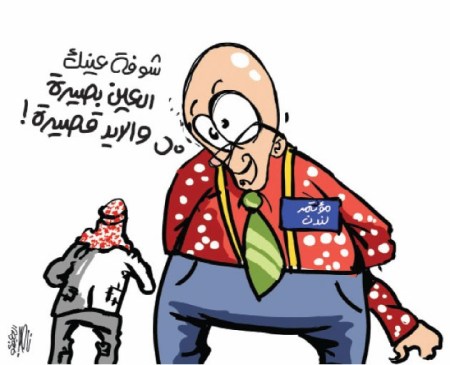
27815“The London Conference” tells Jordan that it cannot have the aid it wants: “The eye sees [what it wants], but the hand cannot provide it” (Al-Ghad, Jordan, February 4, 2016)

Al-Dustour Columnist: U.S., Europe Are Responsible For Refugees’ Sorry State

Al-Dustour columnist Ibrahim ‘Abd Al-Majid Al-Qaisi wrote:  that the wealthy U.S. and European countries are responsible for the Syria crisis, and rebuked them for complaining about the refugees who have arrived in the West: “Our country is a kind of refuge, and is expected to remain one at the expense of our livelihood, future, and security… We are not grumbling or complaining about the arrival of our brothers from Syria. On the contrary – they are brothers who escaped death and have arrived in Jordan. But who is it that expelled them, destroyed their country, and still delays finding a solution for the Syrian problem? It is the international community and the superpowers, led by the U.S. and Europe – who, despite their great economic capabilities, were angered… when a few Syrian refugees – not even half the number of Syrian refugees and other Syrians who came to Jordan – fled to their soil.”[18]

Senior Al-Rai Writer: Impoverished Jordan Houses Refugees, Wealthy Gulf States Do Not

After Al-Rai’s publication of the 2015 Jordanian census statistics, senior journalist Fahed Al-Fanek, former Al-Rai board of directors head, complained about foreign countries’ limited aid to Jordan, and also criticized the Gulf states’s failure to help on this issue: “The initial data published by Al-Rai regarding the census show that Jordan, which lacks natural resources, including oil and water, and lives day to day thanks to foreign aid and grants it receives, has been given the role of warehouse for many who choose to leave their homeland and live elsewhere though they were not expelled or threatened… After every such wave [of immigration], donor countries quickly provided financial aid to Jordan to help it swallow this bitter pill, but then stopped the aid in anticipation of another wave.

“Why does Jordan open its gates freely to this intensive movement of refugees from Syria, while the wealthy Gulf states, which need workers and which import them from around the world, do not open their borders to Arab refugees[?] Especially considering that some of these countries are helping fund and support the violence in Syria, and should bear the consequences.”[19]

Calls For Accepting Reality Of Refugees Remaining In Jordan, And For Attempting To Benefit From It

Following the Supporting Syria and the Region Conference, some accepted that the refugees would be remaining in Jordan for a long time, perhaps even permanently. They suggested leveraging this into benefit for the country by developing the labor market, transforming refugees into consumers buying local goods, and integrating them into industry and trade projects.

Former Foreign Minister: Refugees Can Be Useful If We Utilize Aid Money To Create Jobs

Former Jordanian foreign minister Marwan Al-Mu’asher called on the country to benefit from the refugee crisis by coming up with a strategic development program using aid funds to create jobs for both Jordanians and Syrian refugees. He wrote in Al-Ghad: “It is not enough to demand additional foreign aid [from the international community], even though it is vital. It is more important that we use this aid to implement a development program that substantially increases the Jordanian economy’s ability to create new jobs… If we do not use the additional money [from foreign aid], whatever its sum, to invest in development, which will jumpstart job creation for Jordanians and Syrians, then we will face a very difficult challenge in all senses, economic, security, and social…

“This crisis can be turned into an opportunity. We can benefit from the potential of the Syrian refugees, while at the same time creating jobs for Jordanians. But this requires a smart economic policy that does not tackle each issue individually, but rather as part of a comprehensive strategic perspective that takes into account these refugees’ remaining among us for 20 years…”[20]

Al-Ghad Columnist: Providing Refugees An Opportunity To Integrate Into Society Is A National Interest

Al-Ghad columnist Ayman Al-Safadi argued that providing Syrian refugees with an opportunity to integrate into Jordanian society was a national interest, and was also the only thing that would ensure that their impact on Jordanian society would be positive: “Jordan will not naturalize Syrian refugees. This is known to anyone versed in Jordanian politics. However, it is also a fact that most refugees will not be leaving any time soon…

“Thousands of the Syrians’ children will grow up in Jordan. Educating them, and taking responsibility for providing them with tools to participate productively in society, are a [Jordanian] national interest. The alternative is living together with a huge number of frustrated, angry, and unproductive young people – constituting a social danger that begins with a heavier economic burden – dozens of times heavier – on the state, and will not end with the spread of crime and the creation of a miserable environment that terrorists will exploit to spread their falsehoods and lies…

“Today, we need a policy based on acceptance of the reality that the refugees are here to stay, for many years… Some have criticized the decision to find ways to employ them. Such criticism disregards the fact that giving them jobs is 10 times better than focusing on [providing] humanitarian aid, since they will surely remain [in Jordan] for who knows how long. Syrian refugees will not become Jordanian citizens, but they have already become a part of the society, influencing it as it influences them. Opportunities for education, employment, and dignified lives are the only guarantee that they will have a positive impact. This is in anticipation of the day when they can return to their homeland – [but] the wait for that day will be long.”[21]

Al-Ghad Columnist: Syrian Refugees Are A Source Of Income And A Chance To Build The Economy

Similarly, Ibrahim Ghuraiba wrote in Al-Ghad that the refugees should be integrated into the society and into the country, becoming a productive workforce that would benefit the country, expand its sources of income, and develop its economy: “We can translate the phenomenon of Arab refugees in Jordan into advancements in the economy, new sources of income, and more. The arguments [that they pose] an economic and social threat, or that they threaten the fundamental sources of income, are baseless, since the economy today relies on human resources more than on natural resources…

“Naturally, there is nothing wrong with asking for aid and grants to absorb the refugees, but this will not provide substantial help for the national economy or the refugees. But what can help both Jordan and the refugees is transforming the existing manpower into a source of income and business, so that it advances the economy and increases the refugees’ [quality of] life, making them productive individuals who are helping both themselves and the country. This is not difficult [to do]…

“The Egyptians,’[22] Syrians’, and others’ entry into [Jordan’s] job market will increase [the quality and quantity] of goods and services, foster competition, and protect the consumer. When refugees and non-citizen residents become a productive workforce, they create a series of revenues that will increase the GDP, [strengthen] the economy, and improve [quality of] life. This is because they will be consumers paying taxes, purchasing goods, renting, and consuming services and products, thus increasing the country’s revenue, markets, and existing services, and adding additional income…

“It is known, of course, that an increase in the population also increases the opportunities to establish institutions, and [increases] the number of talented innovators and entrepreneurs. [It also] expands the markets, and streamlines industry and trade projects. In order to make the refugees a source of economic development and prosperity, we need nothing more than good intentions and a scrap of proper and honest management.”[23]

* Z. Harel is a research fellow at MEMRI.
Endnotes:

[1] Al-Ghad (Jordan), January 31, 2016.

[2] Al-Rai (Jordan), February 2, 2016.

[3] Aljazeera.net, February 3, 2016.

[4] Jordanian Foreign Minister Nasser Judeh met with the EU’s Foreign Affairs Committee in Brussels, which included 28 EU foreign ministers and King Abdullah met with UNHCR High Commissioner Filippo Grandi. Al-Rai (Jordan), January 19, 2016. Jordanian Minister of Planning and International Cooperation ‘Imad Al-Fakhoury travelled to Germany and France. Al-Rai(Jordan), January 21, January 26, 2016. He also met with the international affairs advisor of the U.S. Deputy Secretary of the Treasury to discuss American aid to Jordan. Al-Rai (Jordan), January 26, January 26, 2016.

[5] Jordanembassyus.org, February 4, 2016.

[6] Kingabdullah.jo, February 2, 2016.

[7] Al-Quds Al-Arabi (London), January 24, 2016.

[8] Allofjo.net, January 29, 2016.

[9] Al-Ghad (Jordan), February 10, 2016.

[10] Al-Rai (Jordan), February 3, 2016.

[11] This is a reference to previous processes involving Palestinian refugees in Jordan. “Children of Jordanian women married to foreign men” is a common term in Jordanian media, and refers to the offspring of Jordanian women who married foreigners, mostly Palestinians. These men are not citizens, and their children also do not enjoy full citizen rights.

[12] Ammonnews.net, February 6, 2016.

[13] Al-Ghad (Jordan), January 31, 2016.

[14] Al-Rai (Jordan), January 31, 2016.

[15] See MEMRI Special Dispatch No. 6153, Arab Press Reacts To Syrian Refugee Crisis: Condemnation Of Arab Indifference, Calls For Internal Reform, Alongside Criticism Of West, U.S., September 8, 2015.

[16] Al-Ghad (Jordan), February 6, 2016.

[17] Al-Ghad (Jordan), January 20, 2016.

[18] Al-Dustour (Jordan), February 4, 2016.

[19] Al-Rai (Jordan), January 13, 2016.

[20] Al-Ghad (Jordan), March 30, 2016.

[21] Al-Ghad (Jordan), February 21, 2016.

[22] The late 2015 census data indicated that there are 636,000 Egyptian workers in Jordan. Al-Ghad (Jordan), January 31, 2016.

[23] Al-Ghad (Jordan), February 20, 2016.
Swedish Govt Spends Millions Telling Citizens To Eat Insects To End Global Warming

April 28, 2016

Swedish Govt Spends Millions Telling Citizens To Eat Insects To End Global Warming, BreitbartOliver JJ Lane, April 28, 2016

(Sweden — where Islamisation and environmentalism are welcomed. Don’t laugh; they might be offended.– DM)

Eat bugsGetty

The Swedish government is showing their commitment to green principles and fighting climate change by spending tax payer money on developing ‘meat’ made out of crickets and mealworms.

Vinnova, the Swedish government agency that distributes money for research and development, spending some 2.7 billion kronor (£230 million) a year has announced its latest tranche of funding for creating a greener, more sustainable future — by weaning Europe off meat. It is hoped people will want to eat a so-called “climate smart” diet instead, reports FriaTider.

Green activists and the United Nations are behind such political initiatives as ‘Meat Free Mondays’ — a gateway to full vegetarianism — which are based on the premise that meat consumption is driving man-made climate change. Another method to reduce that so-called burden on the earth is replacing meat protein with that harvested from insects instead.

A patron shows a grasshopper burger piled high with dried crickets and mealworms June 4, 2014 during a global Pestaurant event sponsored by Ehrlich Pest Control, held at the Occidental Restaurant in Washington, DC. For one day only, pop-up Pestaurants will appear in cities across the globe to offer sweet and savoury edible insects, grasshopper burgers and much more. Ehrlich Pest Control will be donating $5 USD to DC Central Kitchen for every person who eats something at the event. AFP PHOTO / Karen BLEIER (Photo credit should read KAREN BLEIER/AFP/Getty Images)

A patron shows a grasshopper burger piled high with dried crickets and mealworms June 4, 2014 during a global Pestaurant event sponsored by Ehrlich Pest Control, held at the Occidental Restaurant in Washington, DC.KAREN BLEIER/AFP/Getty Images)

To that end, Vinnova is awarding half a million kronor each to fifteen different projects across the country, each of which tasked with creating an “edible prototype” of a new food.

Among the mouth-watering projects being funded are an attempt to produce a “good and healthy product from mealworms which are fed on vegetable food scraps to become a climate friendly source of protein”, “food prototypes” made from “refined mealworms”, and mincemeat made out of “climate smart insects” such as crickets.

Other enticing offerings not involving insects include “climate-fungal protein”, a “healthy vegetarian barbecue” made from by-products” and “fibrous raw materials”, and a “blue cheese-like product” made from beans.

A competition in November will select the best product, with a potential of an extra two million kronor investment from the government to get the “food” off the ground.

Speaking on the reasons for launching the initiative in their press release, Vinnova explains that insect-based nourishment will reduce food miles by encouraging interest in food grown in Sweden. They said: “Vinnova make an effort to develop climate-friendly proteins to help develop innovative, healthy and delicious food for the future, as an alternative to conventional meat production.

“The projects can also increase the Swedish food industry’s competitiveness by products that are developed based on raw materials that can be produced cost-effectively in Sweden”.

This is not the first time Sweden has attempted to kick-start interest in this food of the future. Last year the city of Stockholm launched a “climate-smart” cookbook which advocated insect larvae as an “environmentally friendly” pizza topping. According to press surrounding the release of the book “larvae tastes good! Freeze Dried caterpillars taste like cashew nuts with a gentle tone of the yolk”.

Op-Ed: Swedish “neutrality” has brought in the Islamist Trojan Horse

April 28, 2016

Op-Ed: Swedish “neutrality” has brought in the Islamist Trojan Horse, Israel National News, Giulio Meotti, April 28, 2016

When in 1988 the Greens landed at Swedish Parliament for the first time, they were called “the sons of seal”. Since then, their environmentalism has always supported political ideological battles. During the Cold War it was pacifism: “How to talk about ecology without talking about Vietnam?” So they said then. Today it is the turn of migrants and multiculturalism.

Now the Greens, who are part of the ruling coalition in Stockholm, are shaken by the accusation of being infiltrated by Islamic fundamentalists. Last week, the Minister of Housing, Mehmet Kaplan, resigned after the press revealed his ties with the Nationalist Islamists in his country of origin, Turkey (he also compared Israel to the Nazis).

Lars Nicander at the Swedish National Defence College said that “today people close to the Muslim Brotherhood, an Islamist party, have gained a strong position in the Green Party. I see a similarity with the way that Soviet communism was acting during the Cold War, when it tried to infiltrate into various democratic parties”.

Two senior officials of the Greens, Jon Karlfeld and Anders Wallner, stated that “although there are no signs of infiltration, the Green Party will go on and investigate the potential vulnerabilità”.

After Kaplan’s resignation, it was the turn of Yasri Khan, a candidate for a seat in the political leadership of the Greens and a former president of the organization “Muslims for Peace and Justice”, who refused to shake hands with a female journalist, in compliance with the Sharia, Islamic law . The prime minister, Stefan Löfven,, who already has to manage the entry of 250,000 immigrants in a country of 10 million people, had to intervene to condemn intolerance.

According to numerous surveys, 65 percent of Swedes now want the Greens, the most vocal advocates of open borders, to be expelled from the ruling coalition. “In our desire to embrace a pluralistic and multicultural society, we have turned a blind eye on the undemocratic views [they espouse],” said Gulan Avci, a member of the rightist opposition.

Trying to cool tempers, the leader of the Green Party Asa Romson, who is also a deputy prime minister, has made it worse and in a TV interview she described the September 11 attacks as “accidents”. Then founder of the Greens, Per Gahrton, has said that the former minister Kaplan was the victim of a witch-hunt concocted by Israel. Gahrton was the president of the Palestine Solidarity Association for ten years.

But it does not end here. New images have emerged in which Kaplan and other members of the Greens raise their four fingers, the gesture used by the Muslim Brotherhood in Egypt. One of them, the young Greens leader Salahaden Raoof, repeated the gesture during a broadcast on Swedish television. The four fingers raised to the sky is a reference to the Rabaa mosque, in Cairo: Rabaa, which in Arabic means “four.” It is where the largest sit-in in the capital took place, where the Muslim Brotherhood had gathered the day of deposition of Mohammed Morsi.

The gesture is not illegal in Sweden, but many Green members now question if representatives of the Muslim Brotherhood are compatible with the feminist and gay friendly platform of the Swedish Greens.

This “infiltration”, as it has been called, fomented anti-Semitism in Sweden. For the Global Peace Index, Sweden is a world model of equal opportunities. Stockholm excels only in a particular type of hate, the one against Israel. Social democratic, feminist and humanitarian, eurocommissioner 1999-2009, the minister of foreign affairs, Margot Wallström, charged Israel of “extrajudicial executions” in the Third Intifada.

A year ago, Sweden was officially the first EU country to recognize the “State of Palestine”. Meanwhile, anti-Semitism is fomented and flourishing in a large sector of Swedish society:

  •  The Israeli ambassador to Stockholm, Isaac Bachman, has been asked on the radio: “Are the Jews responsible for the growth of anti-Semitism?”
  • Omar Mustafa had to resign from the Social Democrats for having called for “bombarding” Israel.
  • The government has funded with 104,000 € a manual entitled “Colonialism and Apartheid”, which accuses Israel of ethnic cleansing.
  • The Swedish pension fund divested from the Israeli company Elbit.
  • The main Swedish supermarket chain, Coop, has eliminated some Israeli products from the shelves of its six hundred outlets (boycott eventually canceled due to protests).
  • Dagens Nyheter, the most sophisticated Swedish newspaper, published an editorial entitled “It is allowed to hate the Jews” in which the author, the historian of religions Jan Samuelson, explains that Islamic hatred of the Jewish State is justified.
  • The Stockholm National Museum has exhibited a work “of art” with a picture of Hanadi Jaradat, a Palestinian suicide bomber who killed 21 Israelis in a restaurant in Haifa.

During the Cold War, the Soviets took advantage of the famous Swedish “neutralità” with its rejection of the US-USSR conflict, the rapid recognition of Mao’s China, the suspension of relations with America after the bombing of North Vietnam, the nuclear disarmament preached by Swedish PM Olof Palme, the Swedish socialism and “non-alignment”, in short, the Swedish disengagement from the West.

A very ambiguous neutrality is now tinged with green: the color of Islam.

Rutgers goes Sharia-Compliant,

April 28, 2016

Rutgers goes Sharia-Compliant, Front Page MagazineRobert Spencer, April 28, 2016

rutgers3

The April 5, 2016 issue of The Gleaner, the student paper of Rutgers University–Camden, published a cartoon of Muhammad, Buddha and Jesus in a bar. Its content, however, cannot be known at this point, because at the behest of Muslims on campus, and in a case fraught with implications for the health of the freedom of speech today, the entire issue has been deep-sixed.

Two weeks after the cartoon was published, the April 19 issue of The Gleaner contained a letter from the Muslim Brotherhood campus group, the Muslim Students Association, saying that it found the image offensive and asking The Gleaner to remove the image from the April 5 issue and circulate a new edition of that issue without it. The MSA letter claims that Christians and Jews on campus told MSA members that they, too, found the image offensive.

The MSA letter states: “Even though freedom of speech and press is emphasized and is something all of us value as proud Americans, the University prides itself on diversity of people of different faith and backgrounds so we feel that it is necessary to respect those faiths and backgrounds by honoring their beliefs.”

The April 19 Gleaner also contains a response to the MSA letter, written by Christopher Church, the Editor-in-Chief of The Gleaner. Church apologizes to the MSA and agrees to meet with it “so that we can rectify this issue and ensure that it doesn’t happen again.” He also agrees to remove any copies of the offending April 5 issue from the Gleaner boxes around campus and destroy them.

The Jihad Watch reader who alerted me to this sums up what is wrong here:

1. Freedom of speech is a Constitutional right. It is not negated by someone’s taking offense. This could have been and should have been a chance for Rutgers and The Gleaner to explain why the freedom of speech must be protected as our fundamental bulwark against tyranny, and why that means that we must all learn to put up with material that offends us.

2. Once a group’s feeling offended is taken as decisive, it may begin to take offense at other aspects of campus life it finds offensive. In the MSA’s case, it may begin getting offended at men and women sharing classrooms or coeds wearing tight jeans on campus.

3. In light of the violent attacks on those who have depicted Muhammad, The Gleaner by removing the image is bowing to the implicit threat of violence — which only in the long run encourages more violence. Rutgers’ Art Library recently featured an “artwork” depicting Jesus on a dartboard. It was ultimately removed, but not because it offended Christians. No one cares if Christians are offended: Rutgers officials know that offended Christians won’t murder them. Their solicitousness toward the MSA, by contrast, reveals that they know offended Muslims might very well kill them, and rather than stand up for the freedom of speech and against this kind of bullying, they signal their willingness to surrender and fall into line, accepting Sharia restrictions on speech.

Imagine how Rutgers would react if its Art Library had displayed, instead of this Jesus-on-a-dartboard “artwork,” a cartoon of Muhammad. The air would have been thick with cries of “Islamophobia.” Fragile Leftist students would be running for their safe spaces. The university would be instituting mandatory seminars designed to inculcate the proper “respect” that one must show for “The Other” so as to avoid charges of “racism” and “bigotry.”

The double standard is stark: Jesus crucified on a dartboard is art – and what’s more, it’s courageous. One Rutgers student chortled on Facebook that the dartboard “art” was “hilarious,” and crowed that “we don’t have to cater to the wills of the Church or any denomination of Christianity or religion.” Those who complained would be admonished: Don’t you respect the freedom of expression, you right-wing bigot?

A cartoon of Muhammad, on the other hand, even one as innocuous as the one in The Gleaner appears to have been — that’s an outrage. No one was crowing in that instance about not having to cater to the wills of the mosque. On the contrary, the message was clear: Don’t you respect Muslims as human beings, you right-wing bigot?

This is the kind of “respect” being irrationally violent will win you. Rutgers officials knew that Christians weren’t going to kill them, and that they could mock Christianity with impunity. They would only start blathering about “respect” when it comes to Islam. This respect won at the point of a sword does not bode well for the future of free expression in the West.

Turkey’s Fake War on Jihadis

April 28, 2016

Turkey’s Fake War on Jihadis, Gatestone InstituteBurak Bekdil, April 28, 2016

♦ Last year, a Turkish pollster found that one in every five Turks thought that the Charlie Hebdo attack in Paris was the natural response to men who insulted Prophet Mohammed.

♦ “Infidels who were enemies of Islam thought they buried Islam in the depths of history when they abolished the caliphate on March 3, 1924 … Some 92 years after … we are shouting out that we will re-establish the caliphate, here, right next to the parliament.” — Mahmut Kar, media bureau chief for Hizb ut-Tahrir Turkey.

♦ At a March meeting with top U.S. officials, King Abdullah of Jordan accused Turkey of exporting terrorists to Europe. He said: “The fact that terrorists are going to Europe is part of Turkish policy and Turkey keeps on getting a slap on the hand, but they are let off the hook.”

♦ And Turkey is the country its Western allies believe will help them fight jihadists? Lots of luck!

In theory, Turkey is part of the international coalition that fights the Islamic State (IS). Since it joined the fight last year, it has arrested scores of IS militants, made some efforts to seal its porous border with Syria and tagged IS as a terrorist organization. Turkish police have raided homes of suspected IS operatives. More recently, Turkey’s Interior Ministry updated its list of “wanted terrorists” to include 23 IS militants, and offered rewards of more than 42 million Turkish liras (more than $14 million) for any information leading to the suspects’ capture. But this is only part of the story.

On March 24, a Turkish court released seven members of IS, including the commander of the jihadists’ operations on Turkish soil. A total of 96 suspects are on trial, including the seven men who were detained but released. All are free now, although the indictment against them claims that they

“engaged in the activities of the terrorist organization called DAESH [Arabic acronym of IS]. The suspects had sent persons to the conflict zones; they applied pressure, force, violence and threats by using the name of the terrorist organization, and they had provided members and logistic support for the group.”

The release of terror suspects came in sharp contrast with another court decision that ruled for a trial, but while under detention, for four academics who had signed a petition calling for peace in Turkey’s Kurdish dispute. Unlike the IS militants, the academics remain behind bars.

The Turkish government, which controls the judiciary almost in its entirety, relies on Islamist grassroots supporters of various flavors — from Islamists and ‘lite jihadists’ to radicals.

Last year the Turkish pollster MetroPOLL found that one in every five Turks thought that theCharlie Hebdo attack in Paris was the natural response to people who insulted Prophet Mohammed [only 16.4% of Turks thought of the incident as an attack on freedom of expression]. Among the ruling Justice and Development Party’s (AKP) voters, the rate of approval of the attack was 26.4%; and only 6.2% viewed it as an attack on free speech. Only 17.8% of AKP voters thought the attack was the work of radical Islamists. Three-quarters of AKP voters thought Muslims were aggrieved by the attack; while as few as 15.4% thought the victims were the cartoonists who were murdered. Two-thirds of AKP voters thought attacks on Islam by Christian Crusaders were continuing.

The fact that key IS suspects are now free because the government may fear looking mean to its Islamist supporters only partly explains the appalling judicial rulings on jihadists and academics. “The suspects may be holding the Turkish government hostage … What if they threatened the authorities that they would reveal the government support for their organization in the past? You normally don’t walk free over such serious legal allegations,” observes one western diplomat in Ankara.

Russia has been claiming that Turkey keeps supporting the Islamic State through trading the jihadists’ oil, their main source of income. A new report claims that total supplies to terrorists in Syria last year was 2,500 tons of ammonium nitrate; 456 tons of potassium nitrate; 75 tons of aluminum powder; sodium nitrate; glycerine; and nitric acid. The report stated:

“In order to pass through the border controls unimpeded, effectively with the complicity of the Turkish authorities, products are processed for companies that are purportedly registered in Jordan and Iraq … Registration and processing of the cargo are organized at customs posts in the [Turkish] cities of Antalya, Gaziantep and Mersin. Once the necessary procedures have been carried out, the goods pass unhindered through the border crossings at Cilvegozu and Oncupinar.”

Turkey keeps playing a fake war on jihadist terrorists. At a March meeting with top U.S. officials, King Abdullah of Jordan accused Turkey of exporting terrorists to Europe. He said: “The fact that terrorists are going to Europe is part of Turkish policy and Turkey keeps on getting a slap on the hand, but they are let off the hook.”

In fact, the Turkish government’s secret love affair with various Islamist groups is not always so secret. In March, thousands of supporters of Hizb ut-Tahrir, a global Islamist group, gathered at a public sports hall in Ankara — courtesy of the Turkish government — to discuss the re-establishment of the Islamic caliphate. In his speech, Mahmut Kar, the media bureau chief of Hizb-ut Tahrir Turkey said:

“Infidels who were enemies of Islam thought they buried Islam in the depths of history when they abolished the caliphate on March 3, 1924 … We are hopeful, enthusiastic and happy. Some 92 years after … we are shouting out that we will re-establish the caliphate, here, right next to the parliament.”

(Hizb ut-Tahrir, viewed by Russia and Kazakhstan as a terrorist group, defines itself as a political organization aiming to “lead the ummah” to the re-establishment of the caliphate and rule with sharia law.)

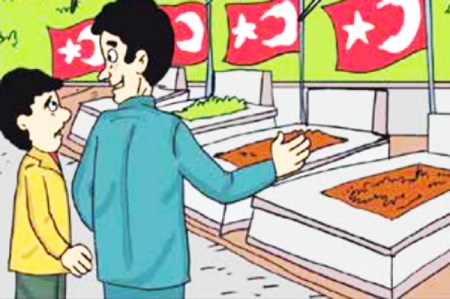
Guess what else Turkey is doing while pretending to be fighting jihadists? Apparently, President Recep Tayyip Erdogan’s declared political ambition to “raise devout generations” seems to have geared up. Turkey’s Religious Affairs General Directorate (Diyanet), the ultimate official religious authority in the country, recently issued comic books to the nation’s children telling them how marvelous it is to become an Islamic martyr.

1566Turkey’s Religious Affairs General Directorate (Diyanet), the ultimate official religious authority in the country, recently issued comic books to the nation’s children telling them how marvelous it is to become an Islamic martyr.

One comic strip is a dialogue between a father and his son. “How marvelous it is to become a martyr,” the father says. Unconvinced, the son asks: “Would anyone want to become a martyr?” And the father replies: “Yes, one would. Who doesn’t want to win heaven?”

And this is the country its Western allies believe will help them fight jihadists? Lots of luck!

Education Dept encourages Islam in classroom to stop bullying of Muslims

April 28, 2016

Education Dept encourages Islam in classroom to stop bullying of Muslims, Jihad Watch, Robert Spencer, April 27, 2016

(For some textbooks that might be appealing, please see also, I Love Islam. — DM)

Isn’t this unconstitutional? Wasn’t there a decades-long struggle to get Christianity out of public school classrooms? Now what had been accepted norms for the separation of religion from public school education are out the window. This initiative to introduce Islam into classroom teaching is based on spurious claims that Muslim students are bullied, when actual FBI statistics show that incidents against Jews are far more common.

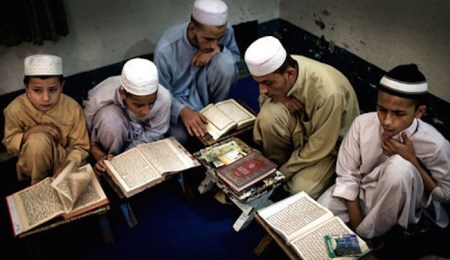
peshawar-madrassa-school-007

“Department Of Education Encourages Islam In Classrooms To Stop Muslim Bullying,” by Diane Palmer, Parent Herald, April 27, 2016 (thanks to The Religion of Peace):

The U.S. Department of Education calls educators to include Islam in the curriculum to address the bullying of Muslim students.

The Department of Education (DOE) in the U.S. encouraged educators to be more responsible in protecting Muslim students from bullying by teaching Islam in class. Many people rejected the demands of the DOE’s instructions by saying that it is inappropriate to bring up religion in class.

The DOE posted instructions on their website urging teachers to include Islam in classroom discussions. Educators are encouraged to incorporate experiences of Muslim people into the curriculum through current events, social studies and children’s literature.

The alleged bullying is said to be largely based on the lack of information about the religion and the tendency to associate Islam with terrorism. Although no firm statistics show how often Muslim students are bullied, activists claim that the numbers became higher after the attacks of 9/11, according to Huffington Post.

A 2010 survey of 57 Muslim teenagers aged 11 to 18 reported being called a name because of their faith. About 80 percent of the respondents also said they have been called a ‘terrorist’.

DOE cites an increase in incidents targeting the Muslim community due to the 10 incidents that happened nationwide, according to WND. Of the 10 events, two resulted in assaults, three reported the vandalism of mosques, five involved alleged threats and intimidation and only one involved a student inside school.

Parents were also called to educate their kids on how to prevent bullying. Parents were told to teach how to appreciate their peers and make friends across different cultures.

However, many groups rejected the claim of DOE by organizing a Change.org petition drive demanding the department to stop efforts to Islamize children in school. Nowhere in the blog does it talk about incorporating Christian or Judaism into classroom discussions despite far more actual violent attacks on Jews and Christians all over the world, according to Martin Mawyer, president and founder of Christian Action Network….

Report: Israel hunting chemical-armed ISIS terrorists in Golan

April 28, 2016

Report: Israel hunting chemical-armed ISIS terrorists in Golan, Israel National News, Ari Soffer, April 28, 2016

Isl St in SyriaISIS terrorist in Syria (file)Reuters

Israeli intelligence officials are concerned that an ISIS terrorist cell operating in the southern Golan Heights – along the border with Israel – has obtained chemical weapons.

According to a Channel 10 report, Israel is hunting the cell, located on the Syrian side of the border, amid fears the jihadists have imminent plans to use the chemical weapons in their possession.

The report added that the jihadists are not believed to be planning on using the chemical agents against Israel, but against their enemies inside Syria, of which there are no shortages. ISIS in Syria is currently fighting a multi-pronged war against the Assad regime, rival jihadists from Al Qaeda, other Syrian rebels, and, in northern Syria, against Kurdish forces.

Nevertheless, the prospect of an apocalyptic Islamist terrorist group possessing chemical weapons along Israel’s borders has naturally raised serious concerns in Jerusalem.

The Assad regime was supposed to destroy its massive chemical weapons arsenal under a Russian-brokered deal, but UN inspectors believe Damascus maintained reserves of nerve agents and other deadly chemical weapons. Fears have also been repeatedly raised of jihadists seizing chemical and even biological weapons depots from former regime positions.