Archive for March 4, 2016

Palestinians: The Right Time to Take Big Steps?

March 4, 2016

Palestinians: The Right Time to Take Big Steps? Gatestone InstituteBassam Tawil, March 4, 2016

♦ Despite the “official” surveys taken among Palestinians, which show support for Hamas, the residents of the West Bank are terrified that Hamas will gain control and destroy our lives and property, the way they did in the Gaza Strip.

♦ The BDS organizations are trying to boycott products made in the West Bank, which only throws masses of Palestinians out of good jobs in an effort to force Israel into a hasty withdrawal that has no chance of taking place. The Israelis and everyone else remember all too well that the last Israeli withdrawals — from southern Lebanon and the Gaza Strip — led to the terrorist takeover of the vacuums created.

♦ Ikrima Sabri, the former Mufti of Jerusalem, often said that Palestinians were better off with the Jews in charge of Al-Aqsa mosque and Jerusalem, because in the future they could be removed and killed off, but if the Crusaders returned to Jerusalem — such as an international commission headed by the French — it would be harder to get rid of them.

During a visit to Berlin, German Chancellor Angela Merkel told Israel’s Prime Minister Benyamin Netanyahu that now is not time to move forward with the “two-state solution” and the establishment of a Palestinian state.

Merkel, evidently seeing Israel as a dam protecting Europe from Islamist extremists, told Netanyahu that while the Germans recognized the terrorist threat faced by Israel, and that a peace process had to be advanced based on two states for two peoples, now was not the right time to take big steps.

1494Agreed: It’s not a good time to establish a Palestinian state. Pictured: Israeli Prime Minister Benjamin Netanyahu and German Chancellor Angela Merkel address a press conference in Berlin, Germany, on February 16, 2016. (Image source: Israel Government Press Office)

The Palestinians living in the Gaza Strip are well aware that they are hostages of the terrorist organizations, in particular Hamas. Jibril Rajoub, a senior official in the Palestinian Authority (PA), told Al-Jazeera TV the same thing just last week.

The Palestinians in the West Bank, regardless of public declarations, also secretly support security collaboration with Israel, which protects us from radical Islamist terrorism. Therefore, despite the “official” surveys taken among Palestinians, which show support for Hamas, the residents of the West Bank are terrified that Hamas will gain control and destroy our lives and property the way they did in the Gaza Strip. We do want a Palestinian state, but one that will preserve the lifestyle and accomplishments we have built over the years — not a state that will have them fall to the horrors of Hamas and ISIS.

In light of the quiet, passive public support for the regime of Mahmoud Abbas, Hamas is inciting Palestinians against it. Hamas, in an attempt to overthrow the Palestinian Authority, is portraying Abbas’s security forces as traitors who transmit information to Israel.

Like Germany — and unlike Sweden and France — Britain has recently instituted a more balanced policy. The UK has begun to fight the anti-Israel BDS (Boycott, Divestment and Sanctions) organizations. Matthew Hancock, Britain’s Minister for the Cabinet Office, who coordinates activities between various government ministries, is advancing protocols to prevent the ongoing boycotts by the British establishment.

These BDS organizations are trying to boycott products made in the West Bank, but the boycott only throws masses of Palestinians out of good jobs and great benefits in an effort to force Israel into a hasty withdrawal that has no chance of taking place. The Israelis and everyone else remember all too well that the last Israeli withdrawals — from southern Lebanon and the Gaza Strip — were nothing more than case-studies for the terrorist takeover of the vacuums created, exactly the same way as the U.S. withdrawal from Iraq made room for the Islamic State (ISIS).

As Palestinians we know that the BDS may or may not harm Israel, but it does untold damage to the Palestinians who support their families by working in the settlement factories and would otherwise be unemployed and then, as a scarcity of jobs will have been created, hired by various terrorists. When the SodaStream factory moved out of the West Bank, 500 Palestinians lost their well-paid jobs.

In view of the current U.S. helplessness in dealing with the Russians, Iranians and Syrians, the Obama administration has now chosen to bare its fangs at Israel. Despite what are apparently his predictable personal objections, U.S. President Barack Obama is expected to sign into law the Trade Facilitation and Trade Enforcement Act, which includes anti-BDS provisions. It introduces new policy language by including all “Israeli-controlled territories” as part of Israel. Meanwhile, the American customs authority is still continuing to enforce a 20-year-old law, marking products made in the West Bank and hurting Palestinians. Labeling products hurts the Palestinians, who then are driven look for work in the eager arms of the terrorist organizations radicalizing the region.

The French, as usual, slither and shift. A number of months ago, they tried to build up steam for an international commission of inquiry into the Al-Aqsa mosque. Both the Israelis and the Palestinians objected.

Ikrima Sabri, the former Mufti of Jerusalem, often said that Palestinians were better off with the Jews in charge of Al-Aqsa mosque and Jerusalem, because in the future they could be removed and killed off, but if the Crusaders returned to Jerusalem through the back door — such as an international commission headed by the French — it would be harder to get rid of them.

The French, fearing for their lives at the hands of their own local Islamist enclaves, are in dire straits and doggedly try one maneuver after another to appease them. In desperation, they have proposed peace negotiations for the Palestinians and Israel “with international mediation.” They even brazenly suggested that if the negotiations failed, they would recognize the Palestinian state. The outcome is written on the wall: the Palestinians, who will have no reason to negotiate, will fall over themselves rushing to the conference, then automatically veto every proposal or possible compromise, and then receive the promised recognition of Palestine.

The French are masters of diplomatic flimflam: on the one hand, they will do anything to appease their own Islamists at the expense of Israel, and on the other, they know full well neither Israel nor any other Western country will accept their self-serving suggestion. The French keep revealing their duplicity again and again. They refuse to designate Iranian-backed Hezbollah as a terrorist organization; they instead call it a “political party,” despite its full participation in slaughtering Sunni Muslims in Syria. Hezbollah is also one of the main actors pushing the countless asylum-seekers (and occasional ISIS operative) flooding Europe, Turkey and Jordan.

The atrocities committed today in the Middle East are the direct result of the refusal of Europe (including France) and the United States to intervene, and the stunning silence of the Arab states. Unwilling to fight ISIS, they are more than willing to condemn, slander and criticize Israel, while the Middle East slips into anarchy.

The result for us Palestinians will be bloodletting, either in the Hamas-Fatah rivalry, or as collateral damage in the Israelis’ war against Islamist terrorism, or, when the Palestinian Authority falls, at the hands of ISIS and Al-Qaeda and the Al-Nusra Front as they sweep through the Jordan Valley on their way to attack Israel.

Al-Jazeera TV is also trying to serve its master, Qatar, radicalize the Palestinians by saying that the Palestinian Authority’s security coordination with Israel, which benefits everyone here by keeping out Islamic terrorists, is betraying the Palestinian cause. In addition, Israeli intelligence, by saying that a seaport for Hamas should be built is, for some mysterious reason, trying to kill off the Palestinian Authority by strengthening Hamas. Both the Egyptians and we Palestinians — and even the Israelis — do not need Hamas strengthened at our expense. Hamas and the many other extremist organizations that have infiltrated the Gaza Strip, including ISIS, are what enable Israelis to justify their security concerns as well as those regarding peace negotiations with the Palestinians, and that prevent a withdrawal from the West Bank. Given the current situation in the Middle East, Angela Merkel was correct. It is not the right time now to take big steps.
Saudis ready to give Syrian rebels missiles against Russian warplanes and tanks

March 4, 2016

Saudis ready to give Syrian rebels missiles against Russian warplanes and tanks, DEBKAfile, March 4, 2016

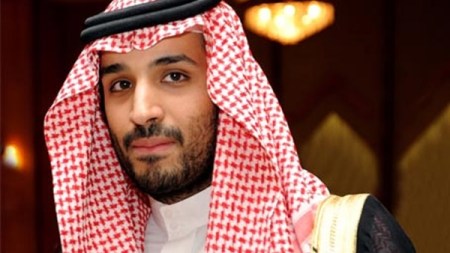
Saudi def minSaudi Defense Minister Prince Mohammed bin Salman

For the first time in the five-year Syrian conflict, Saudi Arabia is preparing to supply Syrian rebel groups with anti-air and anti-tank missiles in an attempt to stall Russia’s military efforts to extend Bashar Assad’s days in power. Deputy Crown Prince Mohammed bin Salman, the defense minister, is choreographing this escalated Saudi intervention in the Syrian war. He plans to arm Syrian rebels militias with missiles capable of striking the new Russian T-90 tanks, which DEBKAfile’s intelligence sources disclose were shipped directly to the Syrian army’s armed divisions in the last two weeks from the Russian Black Sea base of Novorossiysk.

The big Russian landing craft Novocherkassk, which unloaded a further supply of tanks at Tartus port on Thursday, Thursday, March 3, also delivered a consignment of MLRS rocket launchers.

A second Russian vessel is heading for Syria with more hardware.

This is in line with Moscow’s decision to upgrade the Syrian army’s armaments and rebuild the units severely ravaged by five years of combat. For Riyadh, this is tantamount to the indefinite and unacceptable prolongation of Assad’s days in power.

Most Western and Middle East observers think the Saudis may be bluffing about their plan to arm Syrian rebels with missiles, as a ploy to get Washington and Moscow to treat them seriously as a player on the Syrian stage and take their interests into account. Ideally, Riyadh would hope to break up American cooperation with Iran in Iraq and Russian cooperation with Iran in Syria.

The Saudis have so far pitched into this endlessly complex scenario with two tangible steps:

1. The deployment last week of four Saudi Air Force F-15 bomber fighters at the Turkish base of Incirlik near the Syrian border, to be followed by a contingent of ground troops for operations in Syria.

2. A direct challenge to Iran’s fighting arm in Syria, the Lebanese Hizballah and its leader Hassan Nasrallah,  by cancelling the $4 billion defense package Riyadh had pledged for the rehabilitation of Lebanon’s armed forces. The Lebanese high command is collaborating increasingly with Hizballah and a large slice of Saudi assistance funds would most certainly have reached its hands.

According to a high-ranking Saudi source, the decision to arm Syrian rebels with missiles is final. He said, “The Syrian opposition might soon acquire surface-to-air missiles, which will raise the wrath of Russia and Iran.” He added:: “No Saudi official will own up to these consignments but, just as 30 years ago, Saudi Arabia was not deterred from intervening in Afghanistan against the Russian army – and we came out the winners” – we will not hesitate to take on the Russian army in Syria too.

DEBKAfile’s military sources point out that in the Afghan war, the Saudis acted with the full support of the United States, whereas in Syria, the Americans are solidly opposed to any Saudi intervention. That is a huge difference between the two cases.

The introduction of Saudi missiles in support of the anti-Assad opposition would create a new situation in the Syrian conflict, whereby Riyadh also has a say – not just Washington, Moscow and Tehran. And that is exactly what Defense Minister Mohammed was after. Saudi willingness to give the rebels missiles takes the oil kingdom’s intervention in the Syrian conflict a lot farther than Israel, the Gulf emirates, Jordan or Turkey have been ready to go until now.

DEAR RNC: An Everyday American Writes A Letter To Explain The Trump Phenomenon To The Washington Elite

March 4, 2016

DEAR RNC: An Everyday American Writes A Letter To Explain The Trump Phenomenon To The Washington Elite

By 100% FED Up – Mar 2, 2016

Source: DEAR RNC: An Everyday American Writes A Letter To Explain The Trump Phenomenon To The Washington Elite » 100percentfedUp.com

This letter was sent to 100% FED Up! by an anonymous author:

It doesn’t matter who you support for President in 2016. This letter will make you want to stand up and cheer for the 80 year old American who expresses what most of us are feeling right now. Enjoy…

RNC
P.O. Box 96994
Washington DC 20090-6994

Dear Representative,

From the time I was able to vote I voted Republican. I am 80 years old, and have a great deal of respect and influence with hundreds of senior ball players who also network with thousands of others around the country.

I received your questionnaire and request for money and strongly agree with every question, as I have since Obama was elected. Unfortunately the one question that was missing is “What have the Republicans done for the American people?” We gave you a majority in the House and Senate, yet you never listened to us. Now you want our money.

You should be more concerned about our votes, not our money. You are the establishment, which means all you want is to save your jobs and line your pockets… Well guess what? “It’s not going to happen” You shake in your boots when I tell you we’re giving our support to TRUMP and he hasn’t asked for a dime.

You might think we are fools because you feel Trump is on a self destruction course, but you need to look beyond Washington and listen to the masses. Nobody has achieved what he has, especially in the liberal state of New York.

You clearly don’t understand why the Trump movement is so strong, so I’d like to share with you an analogy to help explain the Trump phenomenon. By the way, it’s not just the Republicans who feel ignored and disrespected, there are plenty of Democrats and Independents who also feel let down by the Washington elite. You seem to have  forgotten about “We The People” and who hired you to represent us.

So here it is, the best analogy I could come up with. Here is the reason so many Americans have boarded the Trump Train, and why you’re pleas to come back to the party who deserted us, is falling on deaf ears:

You’ve been on vacation for two weeks, you come home, and your basement is infested with raccoons. Hundreds of rabid, messy, mean raccoons have overtaken your basement. You want them gone immediately…You call the city and four different exterminators, but nobody could handle the job. There is this one guy however, who guarantees you he will get rid of them, so you hire him. You don’t care if the guy smells, you don’t care if the guy swears, you don’t care how many times he’s been married, you don’t care if he was friends with liberals, you don’t care if he has plumber’s crack…you simply want those raccoons gone! You want your problem fixed! He’s the guy. He’s the best. Period. Here’s why we want Trump: Yes he’s a bit of an ass, yes he’s an egomaniac, but we don’t care. The country is a mess because politicians have become too self-serving. The Republican Party is two-faced & gutless. Illegal aliens have been allowed to invade our nation. We want it all fixed! We don’t care that Trump is crude, we don’t care that he insults people, we don’t care that he had been friendly with Hillary, we don’t care that he has changed positions, we don’t care that he’s been married three times, we don’t care that he fights with Megan Kelly and Rosie O’Donnell, we don’t care that he doesn’t know the name of some Muslim terrorist. This country is weak, bankrupt, our enemies are making fun of us, we are being invaded by illegal aliens and bringing tens of thousands of Muslim refugees to America, while leaving Christians behind to be persecuted. We are becoming a nation of victims where every Tom, Ricardo and Hasid is part of a special group with special rights, to the point where we don’t even recognize the country we were born and raised in; “AND WE JUST WANT IT FIXED” and Trump is the only guy who seems to understand what the people want.

We’re sick of politicians. We’re sick of the Democratic Party and the Republican Party. We just want this thing fixed. Trump may not be a saint, but he isn’t beholden to lobbyist money and he doesn’t have political correctness restraining him. All we know is that he has been very successful, he’s an excellent negotiator, he has built a lot of things, and he’s also not a politician. He’s definitely not a cowardly politician. When he says he’ll fix it, we believe him because he is too much of an egotist to be proven wrong or looked at and called a liar.

Oh yeah…I forgot…we don’t care if the guy has bad hair either. 

We just want those raccoons gone.

Out of your house.

NOW!

EXCLUSIVE: Turkey ‘protects & supplies’ Al-Nusra camps at its border – Syria’s YPG to RT

March 4, 2016

EXCLUSIVE: Turkey ‘protects & supplies’ Al-Nusra camps at its border – Syria’s YPG to RT

Published time: 4 Mar, 2016 05:04 Edited time: 4 Mar, 2016 09:51

Source: EXCLUSIVE: Turkey ‘protects & supplies’ Al-Nusra camps at its border – Syria’s YPG to RT — RT News

And now a statement from the State Department ?

Read also : https://warsclerotic.wordpress.com/2016/03/04/state-department-issues-new-warning-about-terrorist-threat-to-u-s-citizens/#comment-84060

Jabhat Al-Nusra terrorists have pitched their camps right next to the border and receive regular supplies from the Turkish side, Syrian Kurdish forces told RT’s Lizzie Phelan, who traveled with YPG to investigate suspicious activity there.

An RT crew has filmed a number of vehicles coming through the Bab al-Salam crossing on the Turkish-Syrian border, on the outskirts of the northern town of Azaz, which is partially controlled by Al-Nusra, according to reports.

“We can actually see here the important border town of Azaz, that Turkey is determined to prevent YPG from taking. Just a little beyond that you can see the Bab al-Salam border crossing and a heavy flow of vehicles coming from Turkey into Azaz,” the RT correspondent said, reporting from the Turkey-Syria border, an area that TV crews rarely gain access to.

https://www.instagram.com/p/BCc9siFSq4o/

“When we zoom in we can see Turkish military vehicles, probably around a kilometer away, maybe less. And just in front here’s another small village that YPG say Al-Nusra uses for training,” Phelan said.

“Beyond that we can see the Turkish flag flying, that’s on the Turkish side of the border, and through there the YPG says they monitor a regular supply of weapons coming from Turkey to that Al-Nusra camp.”

2.&just a few km from Nusra controlled Azaz that is determined 2 prevent YPG from taking.

There were reports of dozens of Turkish military vehicles crossing into Kurdish northern Syria, with servicemen digging trenches in the area. Turkey’s “provocative” military buildup on the border and shelling of the Syrian territory could thwart the fragile truce and disrupt the peace process in the Arab Republic, the head of the Russian ceasefire monitoring center Lt. Gen. Sergey Kuralenko said this week.

Read more

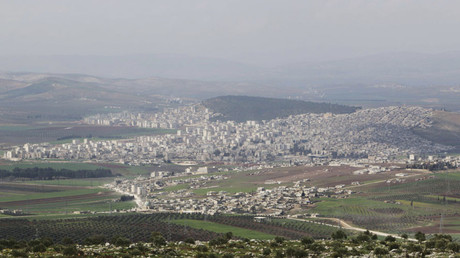
A general view shows the Kurdish city of Afrin, in Aleppo's countryside March 18, 2015. © Mahmoud Hebbo

The ceasefire in Syria, which came into force on February 27, brokered by leading world powers, including the US and Russia, is designed to pave the way to reconciliation between the Syrian government and moderate rebel forces. They would together agree on a peaceful transition in the country. Some of the forces in Syria, including IS and Al-Nusra, are not subject to the ceasefire.

Experts have been criticizing moderate rebel forces, but even they think that the situation is shifting now.

Moderate rebels used to be “a fable, a pure lie,” Syrian political analyst Taleb Ibrahim told RT.

“Everyone remembers what happened to the rebels who had been trained in Turkish camps by the CIA, and when they returned to Syria, and turned to Al-Nusra Front”.

However, the situation is starting to change slowly, as more and more Syrian rebel fighters “discover that they are destroying their country and serving external plans to divide Syria.”

Russian aircraft continue to carry out airstrikes against Al-Nusra front militants to “stabilize the situation” in the regions north of the city of Aleppo, the Russian Defense Ministry said in a statement.

READ MORE: Russia presents proof of Turkey’s role in ISIS oil trade

There have been at least 31 violations of the Syrian ceasefire over the past three days, Russian Foreign Ministry spokeswoman Maria Zakharova said on Wednesday, adding that during the same period the number of local ceasefire agreements between various factions had increased to 38.

Hillary Emails – NATO Commander on Libya War Mission: ‘Inshallah, Soon’

March 4, 2016

Hillary Emails – NATO Commander on Libya War Mission: ‘Inshallah, Soon’

by Aaron Klein

3 Mar 2016

Source: Hillary Emails – NATO Commander on Libya War Mission: ‘Inshallah, Soon’ – Breitbart

TEL AVIV – James Stavridis, who led the 2011 intervention in Libya as NATO’s 16th Supreme Allied Commander, used unusual terminology to express his hope that the United Arab Emirates would step up its involvement in the Libya war.

In an email forwarded to Hillary Clinton’s private server, Stavridis discussed a mission change that would put U.S. bombs on UAE aircraft for strikes in Libya.

“As to how long … inshallah, soon,” wrote Stravridis, a retired U.S. Navy admiral.

The dispatch was contained in Monday’s batch of roughly 3,900 pages said to be the last of Clinton’s work-related emails. The messages were reviewed in full by this reporter.

Stravridis was replying to an email sent from one of Clinton’s top deputies, Jake Sullivan, to Ivo H. Daalder, the U.S. Permanent Representative on the NATO Council.

“Any way to get the UAE suggestion that they will contribute aircraft for strike missions firmed up and announced by the SYG?” Sullivan asked.

Daalder forwarded the query to Stravridis, asking, “Gather you and Clinton talked about this. When do you think they will be able to start?”

Here is Stavridis’s full reply:

What the UAE For Min said was they wanted US bombs so we’ll have to work that on DoD circuits (Centcom presumably) We’ll also go mil-to-mil via force gen, JFC Naples, and JTF and push them to use their own air to ground ordnance in the interim Suggest you guys work the political side up there

As to how long … inshallah, soon

Best, Jim Admiral, USN Supreme Allied Commander, Europe Commander, US European Command “Stronger Together”

Inshallah is Arabic for “Allah willing” or “if Allah wills it.”

Aaron Klein is Breitbart’s Jerusalem bureau chief and senior investigative reporter. He is a New York Times bestselling author and hosts the popular weekend talk radio program, “Aaron Klein Investigative Radio.” Follow him on Twitter @AaronKleinShow. Follow him on Facebook.

Hillary Clinton Lands in Texas, Goes DIRECTLY to Muslim Fund-Raiser, Collects $500,000

March 4, 2016

Hillary Clinton Lands in Texas, Goes DIRECTLY to Muslim Fund-Raiser, Collects $500,000

Post by Newsroom – Mar 02, 2016

Source: Hillary Clinton Lands in Texas, Goes DIRECTLY to Muslim Fund-Raiser, Collects $500,000

On a recent trip to Texas, Hillary Clinton showed she is directly in the pocket of Pakistani Muslims!

Sources close to the private fundraiser held for Hillary Clinton in Beaumont, TX told 12News it raised hundreds of thousands of dollars.

Some estimates put the amount collected at half-a-million dollars, making it one of the top five private fundraisers Clinton has had in this country.

Pakistani businessman Tahir Javed hosted the reception for Clinton at this home in West Beaumont.

Former U.S. Representative Nick Lampson, who attended the event, says 250 people were there.

Lampson says Clinton spoke about education, healthcare and individual freedoms for people of all backgrounds and faiths.

Many of the Pakistanis at the event were pleased with Clinton’s vocal support of the Muslim religion.

Aisha Zahid said, “Talking about Muslims and favoring Muslims, so I really appreciate her whatever effort she is making against Islamaphobia, so I really think she needs to be the next President of the United States.”

Also in attendance, congress people from the Houston area, Sheila Jackson-Lee and Al Green.

But not everyone was a fan.  A handful of protesters demonstrated near the event, over Clinton’s response to the Benghazi attack and her email controversy.

With all the terrorism perpetrated against the United States and our people – from 9/11 right up to the 14 people machine-gunned to death in San Bernardino, CA, — why would Hillary do this?  Because Hillary Clinton is in the pocket of Muslims.

 Think we’re over-stating things a bit?  We respectfully remind you of this tweet:

State Department Issues New Warning About Terrorist Threat to U.S. Citizens

March 4, 2016

State Department Issues New Warning About Terrorist Threat to U.S. Citizens

BY:
March 3, 2016 5:59 pm

Source: State Department Issues New Warning About Terrorist Threat to U.S. Citizens – Washington Free Beacon

Did the state department declare now Turkey as a criminal state ?

The State Department issued a new Worldwide Caution on Thursday that warned about the ongoing terrorist threat to U.S. citizens across the world from groups like ISIS and al Qaeda.

“Current information suggests that ISIL, al-Qa’ida, Boko Haram, al-Shabaab, and other terrorist groups continue to plan terrorist attacks in multiple regions,” the State Department said in a release updating the Worldwide Caution, using another name for ISIS.

“Recent terrorist attacks, whether by those affiliated with terrorist entities, copycats, or individual perpetrators, serve as a reminder that U.S. citizens need to maintain a high level of vigilance and take appropriate steps to increase their security awareness. ”

The new alert replaced a previous alert issued in July of last year, months before ISIS launched terror attacks in Paris that killed 130 people last November. Authorities believe that ISIS continue to plot attacks against U.S. and Western interests worldwide, especially in the Middle East, North Africa, Europe, and Asia, the new alert stated.

The State Department warning cited major terrorist attacks that have been carried out in France, Belgium, Mali, Turkey, and other countries, and emphasized that U.S. citizens are at risk of kidnapping by operatives from ISIS, al Qaeda, and other groups. It noted that terrorists targeting U.S. citizens at home and abroad generally focus on places that attract crowds, including sporting events, hotels, restaurants, and public transportation systems.

“Extremists may use conventional or non-conventional weapons and target both official and private interests,” the State Department warning said. “Examples of such targets include high-profile sporting events, residential areas, business offices, hotels, clubs, restaurants, places of worship, schools, public areas, shopping malls, and other tourist destinations both in the United States and abroad where U.S. citizens gather in large numbers, including during holidays.”

The alert included information about threats in various regions, including Europe, the Middle East and North Africa, and parts of Asia. It noted that “credible information” indicated that all countries in Europe are “vulnerable” to attacks from terrorist organizations.

“Authorities believe there is a high likelihood terror attacks in Europe will continue as European members of ISIL return from Syria and Iraq. European governments are taking action to guard against terrorist attacks; however, all European countries remain potentially vulnerable,” the warning said.

The agency also reminded U.S. citizens that it is a crime to provide support to terrorist groups like ISIS.

“Private U.S. citizens are strongly discouraged from traveling to any country to join in armed conflict.  U.S. citizens are reminded that fighting on behalf of or providing other forms of support to designated terrorist organizations, including ISIL, can constitute the provision of material support for terrorism, which is a serious crime that can result in penalties including prison time and large fines,” the alert warned.

American citizens have been arrested for attempting to join or provide material support to ISIS. More than 200 Americans have tried to fight for ISIS, the head of the FBI said in 2015.

Report: Hamas fully restocked its missile arsenal

March 4, 2016

Hamas said to have fully restocked its missile arsenal Israeli assessment says terror group back at rocket total from before Operation Protective Edge, just 1.5 years later.

By Ari Yashar

First Publish: 3/4/2016, 10:24 AM

Source: Report: Hamas fully restocked its missile arsenal – Defense/Security – News – Arutz Sheva

Hamas terrorists parade rockets (file)
Flash 90

Just over a year-and-a-half has passed since Israel’s government agreed to a ceasefire with the Hamas terrorist organization in August 2014, ending Operation Protective Edge, but new Israeli assessments indicate Hamas has already fully restocked its missile arsenal.

The appraisal, reported by Walla on Friday, notes that most of the missiles that bring Hamas back to the amount it had before it launched its third terror war on the Jewish state are of a shorter-range, and are domestically produced and therefore of a lower quality.

Back in June 2014 the terror group had around 12,000 rockets of various ranges, including long-range missiles. According to reports Hamas used around 4,600 of its rockets during the Operation, and another 4,000 or so were damaged in Israeli strikes, leaving the terrorists with a third of their arsenal by the end of the fighting.

But in the 18 months that have passed, Hamas has worked intensively to rebuild its military capabilities while largely ignoring the civilian population in Gaza that continues to suffer from poor conditions, to the point that the UN has estimated Gaza will be “unlivable” by 2020.

Hamas has been rebuilding its terror tunnel system breaching into Israel, and likewise has ramped up its domestic production of rockets given that the Israeli naval blockade and Egyptian construction of a buffer zone has largely cut off the influx of weapons to the terrorists. However, Hamas is unceasing in its efforts to illegally smuggle in materials for building weapons and digging tunnels.

In addition to the many short-range missiles held by Hamas it has added many mortar shells, which were proven to be lethally effective in the last round of fighting.

Israel estimates that the number of Hamas terrorists and members of the various Hamas mechanisms in Gaza including its civilian police force stands at roughly 40,000 people. Around half of that number are members of the terror group’s Al-Qassam Brigades, with around 1,000 of them working on the tunnel digging project.

Mohammed Deif remains the terror chief for Hamas, after having survived a sixth assassination attempt by Israel against him during Protective Edge, and is playing a key role in rebuilding the terror group’s capabilities. Deif is supported by Yahya Sanwar, who serves as a sort of “defense minister” for him – Sanwar sat in an Israeli jail for 22 years before being released in the 2011 Shalit deal.

Deif, who is missing his legs from previous assassination attempts, had his wife and son killed in the strike that missed him during the Operation.

According to a report as Protective Edge wound down, Israel delayed striking Deif three full days when it had concrete information on his whereabouts due to a ceasefire agreement, thereby missing the chance to take out the elusive terrorist – even though Hamas had breached numerous ceasefires during the war.

Amos Yadlin, formerly the head of Military Intelligence, revealed in August 2014 that in the last attempt on Deif’s life in 2006, “instead of a one ton bomb, we decided to shoot two quarter ton bombs in order to avoid hitting innocent civilians. One of them didn’t explode, and Deif survived.”

Why is Israel sitting around waiting for the next war with Hamas?

March 4, 2016

Why is Israel sitting around waiting for the next war with Hamas? The terror group’s cross-border tunnels represent a grave threat to Gaza-adjacent communities, but for now Israel’s military planners prefer uneasy quiet to war

By Judah Ari Gross March 4, 2016, 10:14 am

Source: Why is Israel sitting around waiting for the next war with Hamas? | The Times of Israel

srael’s Defense Ministry and its army recognize that Hamas in Gaza is gearing up for a fight. Since the end of the 2014 conflict, the terror group has been digging tunnels, improving rockets, amassing weapons, training fighters — and yet Israel’s military has been largely quiet.

Last Tuesday, the head of Military Intelligence Maj.-Gen. Hertzi Halevy warned a Knesset committee that the deteriorating humanitarian crisis in the Gaza Strip could further push the coastal enclave into desperation and war with Israel.

Hamas has set up military outposts right along the border, and last week, Defense Minister Moshe Ya’alon told reporters that Hamas is building “both defensive and attack tunnels — we’re not kidding ourselves.”

The writing is not just on the wall, it is in the newspaper and the parliamentary record.

Palestinian militants from the Islamic Jihad's armed wing, the al-Quds Brigades, squat in a tunnel used for ferrying rockets and mortars back and forth in preparation for the next conflict with Israel, as they take part in military training in the south of the Gaza Strip on March 3, 2015. (AFP/Mahmud Hams)

Palestinian militants from the Islamic Jihad’s armed wing, the al-Quds Brigades, squat in a tunnel used for ferrying rockets and mortars back and forth in preparation for the next conflict with Israel, as they take part in military training in the south of the Gaza Strip on March 3, 2015. (AFP/Mahmud Hams)

“There are inevitable threats coming down the pike. And certainly [Prime Minister Benjamin] Netanyahu and Ya’alon are sure that Israel’s going to be attacked again,” Dr. Natan Sachs, a fellow at the Brookings Institution’s Center for Middle East Policy, told The Times of Israel.

So if conflict is inevitable, the question becomes: Why is Israel allowing its sworn enemy to rearm and better entrench itself for the next round? Why allow Hamas to dig tunnels, when they constitute a significant potential weapon against Israel?

Strictly from a tactical standpoint, it is always preferable to catch your opponents with their pants down. But the strategic gains of another tunnel-busting operation, Israel’s military planners believe, pale in comparison to the cost — especially because a victory for Israel in such a conflict would not completely eliminate its root cause, Hamas.

Palestinians stand near a road flooded with rainwater following heavy rains, in Khan Younis in the southern Gaza Strip on January 24, 2016. (Abed Rahim Khatib/Flash90)

Palestinians stand near a road flooded with rainwater following heavy rains, in Khan Younis in the southern Gaza Strip on January 24, 2016. (Abed Rahim Khatib/Flash90)

Moreover, that conflict would be detrimental to the people of southern Israel and the State of Israel, the very groups such a war would trying to help.

For what would be the umpteenth time, a military operation in Gaza would disrupt the daily lives and economy of southern Israel, which has scarcely recovered from 2014’s Operation Protective Edge; it would again devastate Gaza, catching the Strip’s civilians between the terrorists who use them as human shields and the IDF; it would again wreak diplomatic havoc on Israel as a country, as photographs and videos of war-torn Gaza would appear in newspapers and computer screens around the world.

Though the murmurs and rumors of a possible normalization of ties with Turkey could change the facts on the ground, most experts agree: War with Hamas is inevitable. “But the timing of it is not at all inevitable,” according to Sachs. “It could be two years, it could be very soon — within the next few months — but it could also be in four or five years.”

Escalating towards war

Hamas appears to be stuck in a state of cognitive dissonance. On the one hand it denies intentions to escalate violence, while on the other it does everything in its power to provoke the Israeli public.

“We’re not interested in war. We’re interested in tahdiya (temporary calm) and quiet,” a senior Hamas official told The Times of Israel this month.

‘There are no overt indications that Hamas is intending to start a new confrontation’

Hamas has professed its lack of interest in renewed conflict not only to Israeli news outlets but also, reportedly, to its allies.

“There have been communications from Hamas via Qatar and Turkey that they are not looking for a confrontation,” Mark Heller, a senior analyst at the Institute for National Security Studies, told the Canadian Globe and Mail newspaper in an interview earlier this month.

“There are no overt indications that Hamas is intending to start a new confrontation,” Heller said.

That matches the consensus among the country’s defense officials, including the head of IDF operations, Maj. Gen. Nitzan Alon, who told reporters earlier this month that Hamas is not yet prepared to start a conflict with Israel.

The threat is coming and the threat is real, but Hamas is not interested in war today, Alon said.

But at the same time, the terror group is actively antagonizing Jewish communities surrounding the Gaza Strip.

Palestinian militants of the Izz ad-Din al-Qassam, the armed wing of Hamas, burn a fake Israeli bus during an anti-Israel rally in the southern Gaza Strip city of Rafah on February 26, 2016. (Abed Rahim Khatib/Flash90)

Palestinian militants of the Izz ad-Din al-Qassam, the armed wing of Hamas, burn a fake Israeli bus during an anti-Israel rally in the southern Gaza Strip city of Rafah, February 26, 2016. (Abed Rahim Khatib/Flash90)

Residents claim they can actually hear Hamas digging tunnels. This is unlikely, as the soil and rocks in the area are not capable of transmitting sound well enough. More likely, the industrial and military sounds coming out of the Gaza Strip, which have been recorded within Israel, are a misinformation effort by Hamas designed to terrorize and disturb the population of southern Israel. And it is working.

“For 15 minutes we heard detonations and explosions. Afterwards there was total silence — and then calls in Arabic, that sounded like the war cries of fighters,” a resident of one of the Jewish communities outside the Gaza Strip told the Yedioth Ahronoth newspaper last week. “It is terrifying.”

Those residents, who have been living under the threat of Hamas attacks — previously in the form of Qassam rockets and now in the form of tunnels — are pushing for the government to act before a terror cell enters a Jewish community and carries out an attack.

‘Advanced capabilities’

Under the actual threat of Hamas and the panicked pressure from citizens who read reports of Hamas bragging about its tunnel infrastructure and see photographs of military outposts near the border with Israel, the government has made a variety of statements to reassure the public that it is taking the threat seriously.

Last week, Netanyahu promised local government officials that the army was “likely to find an imminent solution to the problem of tunnels from Gaza.”

Still from an August 2015 Hamas video purporting to show a Gaza tunnel dug under the Israeli border (Ynet screenshot)

Still from an August 2015 Hamas video purporting to show a Gaza tunnel dug under the Israeli border (Ynet screenshot)

Earlier this month, IDF Chief of Staff Gadi Eisenkot hinted at technological developments to detect and eliminate these tunnels, citing “advanced capabilities” and presumably referring to the rumored tunnel detection system that Israel has been developing in response to the underground threat from Gaza.

Perhaps most overtly, Maj. Gen. Yoav Mordechai intimated to Palestinian media about surreptitious efforts by Israel to destroy the tunnels.

When asked if Israel was responsible for the recent rash of tunnel collapses, Mordechai, who serves as Israel’s coordinator of government activities in the territories, responded: “God knows. I would suggest the residents of the Gaza Strip not occupy themselves with the tunnels and get away from them, especially after seeing the results in recent days.”

Eisenkot, during the same speech in which he pointed to “advanced capabilities,” also pointed to the possibility of a preemptive strike, saying the option was “being discussed in the places where it needs to be discussed.”

Hitting them first

Israel has carried out preemptive strikes in the past. By far the clearest example is Israel’s bombing runs against Egyptian planes that helped kick off the Six Day War in 1967, which crippled the Egyptian Air Force and gave Israel near total air superiority throughout the conflict. More recently, when Syria began developing a nuclear reactor, Israeli jets bombed the facility in 2007.

“Preemptive action makes sense if your adversary is getting stronger and you have a certainty — or very high likelihood — that there’s going to be a conflict,” Sachs said over the phone.

Dr. Natan Sachs (Courtesy)

Dr. Natan Sachs (Courtesy)

On the latter there seems to be widespread agreement. The former point, however, is not so clear.

“The question with Hamas is that though they are building their arsenal, are they getting substantially stronger such that a war now would be better for us than a war later?” Sachs asked.

And his answer is no.

Israel is technologically and militarily leaps and bounds beyond a Hamas at full capacity. The terror group is no pushover; another round of conflict will lead to Israeli civilian and military casualties, but regardless of any gains made by Hamas with its tunnels and weaponry, Israel’s advantage over Hamas will remain “overwhelming,” Sachs said.

In an article, “Past Lessons and Future Objectives: A Preemptive Strike on Hamas Tunnels,” Amos Yadlin, director of the Institute for National Security Studies and former head of Military Intelligence, argues in favor of a preemptive strike on Hamas’s tunnels, saying that option is second only to a technological solution to counteract the tunnels that is not yet “ripe for use.”

However, Yadlin said, that strike will only be effective if it has a “a clear strategic objective that, unlike all previous military encounters, has the potential to effect a fundamental change in the balance of power and the dynamics between the sides.”

The problem, however, is that Israel lacks that clear objective, since for Netanyahu and Ya’alon “potential losses loom far larger than potential gains,” Sachs argued.

At this point another conflict would not oust Hamas. It would just be another case of Israel pulling up weeds, knowing they will simply grow back in another few years.

And the cost for a preemptive strike would be dear. In exchange for the comparative benefits of fighting a less prepared Hamas, Israel would have to give up something precious: its quiet.

Not peace, but quiet

The current “quiet” in southern Israel is tense, strained and threatened by the possibility of terrorists infiltrating Jewish communities through underground tunnels and killing the inhabitants. But albeit flawed, the quiet is crucial, and the more of it the better.

Though they may be afraid, the residents of Jewish communities surrounding the Gaza Strip are still working in the fields along the border — producing food and making money.

A few years of respite can allow the south to rebound and rebuild. The difference between a war with Hamas in Gaza today versus one tomorrow is “huge,” Sachs said.

Children in Kiryat Malachi run toward a bomb shelter Friday. A residential building in the southern city was hit by a rocket Thursday, killing three. (photo credit: IDF Spokesperson)

Illustration. Children in the southern Israeli city of Kiryat Malachi run toward a bomb shelter during Operation Pillar of Defense in 2012. (Yuval Haker/IDF Spokesperson)

“If you have to hide every day in a bomb shelter, you can’t have a normal life or much of an economic life,” Sachs said. “Ariel Sharon, who was not a big peacenik, extolled the virtues of just some quiet.”

Sharon was specifically referring to northern Israel, which in the mid-2000s was at risk of rocket fire from Hezbollah in Lebanon, but the same logic applies to the residents of southern Israel.

“That extra amount of time of quiet would be enormous for the people in the south of Israel, and it would be enormous for Israel diplomatically,” Sachs said.

In addition, a preemptive attack or large-scale operation in the vein of 2014’s Protective Edge, 2012’s Operation Pillar of Defense or 2008-2009’s Operation Cast Lead would not actually solve anything.

Israeli army troops operating in Gaza during Operation Protective Edge (IDF Spokesperson's Unit)

Israeli army troops operating in Gaza during Operation Protective Edge (IDF Spokesperson’s Unit)

“Another round, fought by the same rules, is not recommended; it will only exact high costs from both sides while producing no positive results for Israel’s long-term security,” Yadlin wrote in his article for the think tank earlier this month.

“If you’re going to bring down Hamas, if you have a plan for what happens afterward, if you reasonably think you’d be better off, then there would be a logic for going to war. You could end this cycle of recurring conflicts, and then you wouldn’t have another 2,000 dead in two years,” Sachs said.

“But the assessment of Netanyahu and Ya’alon is that they don’t want to bring down Hamas because they don’t see a viable alternative. Therefore, biding their time and postponing the conflict, from their perspective, is the goal,” he said.

Turkey, Egypt and unintended escalation

The nature of Israel’s standoff with Hamas leaves it highly vulnerable to rapid and unwanted escalation, according to Sachs, who is currently writing a book on Israel’s grand strategy and worldview.

“There’s this unofficial tit for tat, this macabre menu of what the price for each thing is,” Sachs said.

A rocket launched from the Gaza Strip that lands in an open field, for instance, “costs” Hamas an Israeli airstrike on one of its unmanned training facilities.

Illustrative. A man holds part of a rocket that exploded and fell inside the Israeli border with the Gaza Strip on August 20, 2014. (photo credit: Edi Israel/Flash90)

Illustrative. A man holds part of a rocket that exploded and fell inside the Israeli border with the Gaza Strip on August 20, 2014. (Edi Israel/Flash90)

A more serious assault on Israel would result in a more serious response against Hamas, which can quickly escalate into all-out war.

That has been the pattern of the ongoing conflict with Hamas, and it will likely remain the modus operandi until something dramatic happens, like an overthrow of Hamas — which is something no one in the Israeli government is seriously considering, Sachs said.

But a possible game-changer in this dynamic could be in the works.

“A lot of these rumblings about changing things in Gaza — which have not been changed in 10 years — have to do with a deal with Turkey,” Sachs said.

Turkish President Recep Tayyip Erdogan addresses a joint press conference with Yemen's president at the presidential complex in Ankara on February 16, 2016. (AFP / ADEM ALTAN)

Turkish President Recep Tayyip Erdogan addresses a joint press conference with Yemen’s president at the presidential complex in Ankara on February 16, 2016. (AFP / ADEM ALTAN)

The ongoing talks with the Turks, who hold some sway over Hamas, and the potential for an export-only seaport for Gaza, which would grant the coastal enclave some economic relief, could alter the nature of the conflict and may be closer than expected.

Ankara and Jerusalem may release a joint statement “in the coming days,” the Turkish Hurriyet Daily News quotes the country’s Foreign Minister, Mevlut Cavusoglu, as saying.

Israel has been largely quiet on the negotiations with Turkey, save for Defense Minister Ya’alon who has displayed a healthy amount of skepticism at the prospect and expressed a generous dose of criticism toward Turkish President Recep Tayyip Erdogan.

“I am not sure that it will be possible to reach an arrangement of relations with Turkey. Perhaps we’ll succeed, but they will have to address our conditions in order to overcome existing obstacles,” Moshe Ya’alon told a press conference in Bern, Switzerland, earlier this month during an official visit.

“Turkey is hosting in Istanbul the terror command post of Hamas abroad. We cannot accept this,” he said, as an example.

Turkey's President Recep Tayyip Erdogan, right, shakes hands with Hamas leader Khaled Mashal, left, prior to their meeting at the Presidential palace in Ankara, Turkey, August 12, 2015 (AP/Press Presidency Press Service)

Turkey’s President Recep Tayyip Erdogan, right, shakes hands with Hamas leader Khaled Mashal, left, prior to their meeting at the presidential palace in Ankara, Turkey, August 12, 2015 (AP/Press Presidency Press Service)

And Ya’alon is not alone in his criticism and general wariness of an agreement with Turkey. Both Russia and Egypt, two crucial allies for Israel, have expressed concerns over the move.

“It is going to annoy the Egyptians tremendously. They have already signaled that they don’t like this because Egypt has very strained relations with Turkey and Hamas, and the Muslim Brotherhood,” Sachs said.

Normalized ties would also mean “giving Turkey a role in Gaza, even an unofficial role in Gaza, which might tie Israel’s hands if and when Hamas violates agreements,” Sachs said.

But there are benefits to normalizing ties with Turkey. Clout with the NATO member-state can help Israel diplomatically around the world and strategically in Syria. Ankara could also become a buyer for Israel’s natural gas fields as they come online, an issue that is of the utmost importance to Netanyahu, Sachs said.

But until some long-term resolution for Gaza can be found, the best Israel can hope for is just some more time until the next conflict.

The Hillary Files Continue With More Israel Trash Talking From Blumenthal

March 4, 2016

Blumenthal repeatedly told Clinton the U.S. must punish Israel for “wrongdoings.” Clinton’s response? ‘Pls print.’

By: Lori Lowenthal Marcus

Published: March 4th, 2016

Source: The Jewish Press » » The HillaryFiles Continue With More Israel Trash Talking From Blumenthal

Hillary Clinton. July 7, 2015
Photo Credit: screen capture

The second in a series.

On May 31, 2010, there was an historic confrontation between the Israeli Navy and six ships sailing from Turkey, seeking to blow up the internationally-recognized legal naval blockade of the Gaza Strip.

Starting the very morning of the incident, Sidney Blumenthal began emailing Hillary Clinton, haranguing her to treat this grave tragedy as a whip with which to lash Israel.

Blumenthal also sent screeds written by his unhinged son Max, who insisted that the entire incident was orchestrated in advance by a bloodthirsty Israel as a means to blow up the peace process.

But this confrontation, known as the Mavi Marmara raid – after the lead Turkish ship  – or as the Gaza Flotilla built to a crescendo when the IHH-terrorists aboard the ship ignored repeated warnings to change course and steer towards the Israeli coastal town of Ashdod, just north of Gaza. When the ships refused to heed the directions, elite IDF naval commandos were lowered from helicopters by ropes, onto the ship’s deck.

As soon as the Israelis landed aboard the Mavi Marmara, they were attacked by demonstrators who used clubs to beat them, as well as knives. Weapons were also stripped from the Israeli soldiers, and used against them. One soldier was thrown over the deck.

By the time the attack ended, seven IDF soldiers were wounded and nine Turkish citizens were killed when off-board soldiers came to their colleagues’ rescue.

Eight out of the nine who died aboard the ship were later identified as members of Turkish Islamist organizations. Half of those killed had written wills or informed others that they sought to die as martyrs. Not a single human rights activist were among the victims on May 31, as they all stayed below deck, choosing not to join in the fracas with the antagonists carrying an array of weapons.

Weapons taken from the Mavi Marmara. May 31, 2010.

Closer view of some weapons removed from the Mavi Marmara. May 31, 2010.

Early that very afternoon, Blumenthal père wrote to Clinton, viciously comparing the Flotilla raid to the 1976 Entebbe raid, in which Benjamin Netanyahu’s brother, Yoni, was tragically killed despite the complete success otherwise.

“The raid on the ship to Gaza resembles the raid on Entebbe, except that there are no hostages, no guns, it’s not in Africa, and it’s a fiasco; otherwise, it’s Entebbe,” Blumenthal wrote to Clinton. He went on, warning Clinton that the international press will want to know how the U.S. is going to respond to Israel’s calamitous actions, and pointed out that the U.S. shouldn’t look as though it was secretly supporting Israel on this.

Finally, Blumenthal pointed out the likelihood of harm to the peace process and to embarrassment to Obama just on the eve of Netanyahu’s visit. Blumenthal then suggestively asks, “Or are the Israelis bone stupid? I don’t think so. Cheers, Sid.” In other words, this is what the Israelis intended.

Clinton forwarded this email to her deputy chief of staff Jake Sullivan, with an “FYI” and “ITYS” notation.

By the next morning, Blumenthal had written a seven-point memo to Clinton suggesting ways in which she and the United States should respond to the flotilla incident. Amongst other points, he told her that “someone in authority needs to read Israel the riot act”; Michael Oren should be given the “full dress Biden treatment”; that the “Gaza embargo is obviously wildly counterproductive,” which “has to end” and that end “should begin now.”

In this same memo to Clinton, Blumenthal told her that U.S. approaches to Hamas “should be more open.” And he makes very clear that the U.S. must distance itself from Israel, stressing that: “The US should not be in the business of reinforcing Israeli propaganda on the incident. No assistance should be provided on its public diplomacy.”

Over the next few days Blumenthal sent Clinton at least a half dozen more emails about the Mavi Marmara incident. Every Blumenthal memo contained either his own thoughts or articles on the incident, each of which placed all of the blame squarely and unequivocally on Israel.

During this same time period Max Blumenthal wrote a hit piece (with several more to come), claiming the violence was planned in advance by the Israelis. He refused to even consider what turned out to be the truth, that the violence was caused by the weapons-carrying terrorists and their supporters, all of whom were trying to break a blockade that even the UN has said was legal, and with the Israeli response only escalating in response to the brutally bludgeoning of their troops as they boarded the ship.

Four days after the Mavi Marmara incident, Sid Blumenthal sent Hillary Clinton four articles. One was by his son, another was titled “Israel as a Strategy Liability?” a third from the Washington Post: “The U.S. Needs to Keep Nudging Israel on a Gaza Fix,” another by a Jewish critic of Israel, “Operation Make the World Hate Us,” and the final, a letter to the New York Times from a former U.S. Ambassador to Israel, also castigating Israel for the incident.

Did Clinton actually listen to Blumenthal? Although Blumenthal had direct email access to the-then Secretary of State, maybe he was just writing to a blank wall.

We know that isn’t true, because dozens of times Clinton either responded directly to Blumenthal, or forwarded on his emails to others, asking them to “please print” or “fyi” or to “forward without headers.”

Sometimes Clinton initiated the contacts. Occasionally she asked personal questions of Blumenthal or wished him a “mazel tov” – on his mother’s marriage – or told him how “moving” she found Max Blumenthal’s article about a murdered Palestinian Arab (who was, by the way, killed by other Arabs, but you’d never know that from the bulk of the article which went on and on about the horrors of the “occupation”), or discussed plans for dinner in Georgetown, or asked how well Max’s (viciously anti-Israel) book was faring.

Just one more example of the close relationship between Hillary Clinton and Sidney Blumenthal follows.

Just after midnight on May 31, 2010, Blumenthal sent Clinton yet another email, this one with an article from an Israeli newspaper, detailing yet another stage of the Obama-Netanyahu lack-of-love-fest. Clinton wrote back to Blumenthal at 6:58 a.m. the next morning, asking: “Are you up? Can I call?” to which Blumenthal replied an hour later: “Call anytime. Sid.”

Later that same morning, Blumenthal sent another quick email to Clinton, this one entitled, “one more quick thought.” The body of the memo contained just ten words: “Without ‘tough love,’ any support for Israel will lack credibility.”

And it’s true — Sid’s love for Israel comes through loud and clear in all of his emails to the Secretary. And her appetite for the emails, and for Blumenthal’s take on every aspect of Middle East policy, tells American pro-Israel voters everything they need to know about the Israel policy that would be followed by a Hillary Clinton administration. It’s all there in black, white and REDACTED.