Archive for March 1, 2016

Kerry Announces New Plan not to Talk about Failed Ceasefire

March 1, 2016

Kerry Announces New Plan not to Talk about Failed Ceasefire, Front Page Magazine, Daniel Greenfield, March 1, 2016

kerrynuke_1

Long, talk [Sic] drink of failure John Kerry is on his second failed ceasefire in Syria in a matter of weeks. And he’s got a bold new plan for dealing with the fact that everyone is still shooting up Syria. Don’t ask, don’t tell.

John Kerry said on Monday he had agreed with his Russian counterpart not to discuss alleged violations of a cessation of hostilities plan in Syria… Speaking at a news conference with German Foreign Minister Frank-Walter Steinmeier, Kerry said he had talked with Russian Foreign Minister Sergei Lavrov and agreed not to “litigate … in a public fashion” the reports of violations on both sides.

So the plan is for Russia to keep violating the ceasefire while Kerry and the Europeans refuse to mention it. This is pure genius. They’ve really got Putin on the run now.

This will be followed by a bold plan to ignore any Iranian violations of the nuclear deal and just hold more negotiations to create a mechanism for privately resolving any violations.

And people said that John Kerry was unqualified to get a cup of coffee, let alone be America’s top diplomat. I bet that Kerry could get a cup of coffee almost without burning himself. But the ceasefire that isn’t, is producing all sorts of unintended results.

Over the past month, the Kremlin has turned up the dial once again in its low intensity war in Ukraine’s east.

In September 2015, when the Kremlin decided to intervene in Syria, it reduced the violence in the Donbas and reined in local fighters who opposed this course. Before September, ceasefire violations had averaged 70 to 80 fire incidents per day, before dropping to 30 to 40.

Can someone give Obama another Nobel Peace Prize? Maybe an even bigger one covered in diamonds. Because he deserves it. He really does.

Imams in UK Marrying 11-Year Olds to Foreign Men Over Skype

March 1, 2016

Imams in UK Marrying 11-Year Olds to Foreign Men Over Skype, Clarion Project, March 1, 2016

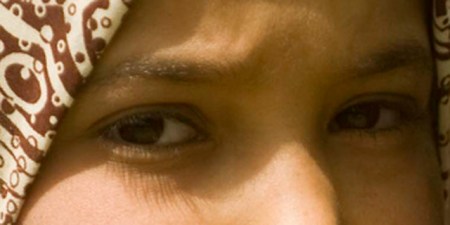
hijab-eyes-creative-commons-640-320Illustrative picture. (Photo: © Creative Commons)

Certain Muslim communities in the UK have been marrying girls as young as 11 to older foreign men in countries such as Pakistan in remote ceremonies via Skype, according to the anti-forced marriage charity Freedom.

The girls are later “put on a plane and consummating the marriage at the earliest opportunity,” according to Freedom.

“The reason is to curb the behaviour of their children when they become ‘too western’,” the founder of Freedom Aneeta Prem told The Sunday Times.

“Once married, there is enormous pressure to get a spouse visa. The hope is the girl will visit (country of husband’s origin) and fall pregnant to make the union seem more legitimate before bringing the partner back,” she said.

It is unclear how the UK could grant a spousal visa to the husband of a child. Forced marriage is illegal in the UK.

Issues have previously been raised over sharia marriages in the UK. There is currently a movement called One Law for All which campaigns against religious arbitration courts.

Human rights campaigner Baroness Caroline Cox has been championing the Arbitration and Mediation Services (Equality) bill in the Houses of Parliament. This would regulate sharia courts and implement protections for women.

Sharia marriages are also the topic of a new book by esteemed academic and women’s rights activist Dr. Elham Manea, entitled Women and Sharia Law: The Impact of Legal Pluralism in the UK. The book goes into detail about issues surrounding sharia marriages in Britain and quotes one Imam as saying girls of 12 or 13 are “more or less fully-fledged women.”

“The fatwas and opinions of these men have grave consequences. A child will be raped in the name of religion. A woman will be beaten in the name of religion” Dr. Manea said in the book, according to The Daily Mail.

Obama Setting up yet Another Fight with Israel

March 1, 2016

Obama Setting up yet Another Fight with Israel, Front Page Magazine, Daniel Greenfield, March 1, 2016

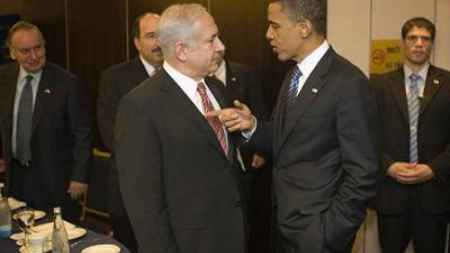
obama_netanyahu_1

Flashback to ’10. Biden visited Israel.

Obama, Biden and Hillary decided to use the visit to stage an incident with Netanyahu. They claimed that a housing project (which was never built) in Jerusalem passing one stage of a multi-stage review was a calculated and deliberate “insult” to the United States.

Biden refused to come down. Then he did and the results were ugly. Hillary Clinton spent hours screaming at Netanyahu over the phone.

The whole point of this was to stage a fight with Israel as part of a plan to discredit Netanyahu.

Six years later, Obama is pulling the same stunt all over again.

Ahead of US Vice President Joe Biden’s trip to the Holy Land next week, the American administration is “hysterical” about the possibility of Israeli authorities embarrassing him by announcing the construction of new housing during his visit, the Hebrew news site nrg reported on Monday.

According to the exclusive report, the level of anxiety in Washington is so high on this score that senior administration officials are sidestepping proper diplomatic channels and directly appealing to Israeli public figures to prevent an incident similar to that which occurred during Biden’s visit six years ago.

The “level of anxiety” is similar to that experienced by Brer Rabbit asking not to be thrown into the briar patch. This is set dressing for the fight Obama wants to pick.

Israel is not a dictatorship. Prime Ministers actually have less power than presidents. Which means it’s quite possible that somewhere, some part of Israel’s bureaucracy will review and approve something in one of the many parts of Israel that Obama doesn’t want to see any Jews living in.

And, I highly suspect, that Obama Inc. already knows where and when, and has scheduled the visit for just that when.

At the time, Netanyahu apologized to Biden, claiming he had not been aware that the municipal committee tasked with deciding on such matters would be meeting during the visit. Since the “Ramat Shlomo incident,” Netanyahu has demanded that all announcements of construction in Jerusalem be run by him first – something that nrg claimed has dramatically slowed the building process.

However, according to nrg, Biden has indicated a lack of confidence that a similar incident will not occur during his upcoming visit, and therefore a number of phone calls have purportedly been made from Washington to Israel’s housing and interior ministries, as well as to Jerusalem’s City Hall, to “beg” that no such announcements be made next week. However, the same Israeli representatives were told, according to nrg, that “construction in the Arab section of the city would be welcome.”

So aside from crippling construction for Jerusalem, itself an objective, Obama Inc. is adding stress to the situation even though it’s entirely up to the White House to regard some committee somewhere signing a piece of paper as an “insult”.

So this is a game. It’s the kind of game that people play in abusive relationships. Which is what Obama’s relationship with Israel is.

No new dawn in Iran

March 1, 2016

No new dawn in Iran, Israel Hayom, Ruthie Blum, March 1, 2016

For the past three years, the West has been tricking itself into seeing the Islamic Republic of Iran as a country undergoing a gradual process of reform. The outcome of Friday’s two elections — one for the Majlis (parliament) and the other for the Assembly of Experts — is serving as the latest mirage in the delusion.

In 2013, when Hassan Rouhani replaced Mahmoud Ahmadinejad as president of Iran, the United States and Europe took it as a sign of a new dawn. Even Supreme Leader Ali Khamenei, the chief mullah controlling Iran’s “elected” leader, came to understand that Rouhani was preferable to the volatile and fanatic Ahmadinejad, whose repeated pronouncements about wiping Israel off the map before attending to America were not serving Tehran in good stead.

Rouhani’s appearance on the international stage provided particular fantasy-fodder for supporters of a diplomatic solution to the problem of Iran’s race to obtain nuclear weapons and to guarantee its regional, and eventually global, hegemony.

Those people today feel vindicated for two reasons. The first is that world powers finally did reach a nuclear deal with Iran. The second is that Rouhani’s “pro-deal” camp emerged victorious in the latest parliamentary election, and two of the most hard-line ayatollahs were voted out of the Assembly of Experts, the body charged with appointing the supreme leader. And considering Khamenei’s advancing age and questionable health, this clerical assembly, which sits for eight years, is likely to end up selecting his successor.

To understand why the above is no cause for celebration, two crucial things need to be kept in mind: the only thing the nuclear deal accomplished was to enable Iran to step up its nuclear program, but with lots more money at its disposal; and Rouhani is no moderate.

Indeed, Iran continues to assert its right to nuclear power, while flexing its military muscles nearly daily by testing missiles and threatening the West not to intervene. In addition, celebrations less than three weeks ago marking the anniversary of the 1979 revolution that turned Iran into an Islamic state included chants of “death to America,” “death to Israel” and a reenactment of the Iranian Revolutionary Guard Corps Navy’s humiliation of U.S. sailors who had strayed into Tehran’s territorial waters.

A review of Rouhani’s record also leaves little room for optimism. Though the Shiite cleric was not Khamenei’s preferred choice, he would never have been approved as a candidate in the first place if his revolutionary credentials had not been impeccable. And they certainly were.

Rouhani was a long-time Ayatollah Ruhollah Khomeini loyalist, who has always backed and spearheaded the quelling of any popular protests, employing any bloody means to nip them in the bud. The only real difference between him and his predecessor is in his strategic understanding of how to accomplish Iran’s goals by presenting himself as more palatable to the West.

In 1992, his eldest son committed suicide, leaving a note to this very effect, saying, “I hate your government, your lies, your corruption, your religion, your double-dealing and your hypocrisy. I am ashamed to live in an environment in which I am forced to lie to my friends every day and tell them that my father is not part of all this — to tell them that my father loves the nation and to know that the reality is far from this. I get nauseated when I see you, father, kissing Khamenei’s hand.”

But it was his resume that made Rouhani such an appropriate nuclear negotiator, a role he fulfilled for years. Addressing Iran’s Supreme Cultural Revolution Council in September 2005, he explained the purpose of being a wolf in sheep’s clothing: “While we were talking with the Europeans in Tehran, we were installing equipment in parts of the Isfahan facility,” he said. “By creating a calm environment, we were able to complete the work.”

It is this tactic that puts Rouhani in the “pragmatist” camp.

In July, after the completion of the nuclear deal was first announced — and then disputed as to its contents, perceived differently in Washington and Tehran — Rouhani made a speech to the Iranian public.

“Peace and blessings upon the pure souls of the prophets and the holy men, the great Prophet of Islam [Muhammad], the imams, the imam of the martyrs [Khomeini], and the exalted martyrs, especially the nuclear [scientists], and peace and blessings upon the Hidden Imam,” he began.

“We aspired to achieve four goals: The first was to continue the nuclear capabilities, the nuclear technology, and even the nuclear activity. The second was to remove the mistaken, oppressive, and inhuman sanctions. The third was to remove the Security Council resolutions that we see as illegitimate. The fourth was to remove the nuclear dossier from Chapter VII of the U.N. Charter and the Security Council in general. All four goals have been achieved today.”

He later referred to Israel’s warnings about the deal. “The people in Gaza, the West Bank, Jerusalem and Lebanon are happy, too, because the hollow efforts of the oppressive Zionist regime to thwart the negotiations during the past 23 months have failed,” he said, ending with a message to the Arab countries of the region.

“Do not be misled by the propaganda of the Zionist regime and the evil-mongers of this [Iranian] nation,” he cautioned. “Iran and its might are always your might. We see the security of the region as our security, and the stability of the region as our stability.”

Let us not kid ourselves. Rouhani’s showing in the elections does not signify a new era of freedom for the Iranian people. Nor does it indicate a shift away from the regime’s sponsorship of global terrorism. On the contrary, if anything, it could provide American voters with a false sense of national — and international — security that is utterly unwarranted.

Moderate “European” Islam: Stemming Terror with Band Aids

March 1, 2016

Moderate “European” Islam: Stemming Terror with Band Aids

by Judith Bergman March 1, 2016 at 4:00 am

Source: Moderate “European” Islam: Stemming Terror with Band Aids

  • The project of a “French Islam” has failed abysmally. A 2,200-page report, “Suburbs of the Republic,” concluded that Muslim immigrants in France were increasingly rejecting French values and identity, and instead immersing themselves in Islam. The report warned that Islamic sharia law was displacing French civil law in many parts of suburban Paris.
  • The pattern of “importing” imams with no knowledge of the local language and customs is the same all over Europe.
  • Qatar and Saudi Arabia, where the official form of Islam is Wahhabism, are the main financiers of mosques in Europe. Wahhabism discourages Muslim integration in the West, but actively encourages jihad against non-Muslims. Qatar has financed mosques in France, Italy, Ireland and Spain, among other places, thus spreading Wahhabism across the continent.

Last week Austria ordered the first foreign-funded imam to be expelled when his visa expires. The decision was made under the new provisions of an anti-radicalization law, which Austria passed one year ago under considerable controversy. The main aim of the law is to counter extremism by requiring imams to speak German, and to prohibit foreign funding for mosques, imams and Muslim organizations in Austria. It also stresses that Austrian law must take precedence over Islamic sharia law for Muslims living in the country.

“We want a future in which increasing numbers of imams have grown up in Austria speaking German, and can in that way serve as positive examples for young Muslims,” said Integration Minister Sebastian Kurz, who helped draft the law. Another 65 imams are expected to be deported in the coming weeks, after being informed that their visas will not be renewed. The decision to deport the foreign imam has — predictably — been deemed unconstitutional by Austria’s Constitutional Court, which finds the law discriminatory because it targets only Muslims.

In a similar vein, the Belgian government recently earmarked €3.3 million to be able to pay the wages of 80 new imams in order to “help stimulate a moderate European form of Islam,” reported the Flemish daily newspaper De Standaard last week. Justice Minister Koen Geens said that official recognition of mosques forms “part of our strategy to promote a more integrated form of Islam,” one intended to counter radicalization, violent extremism and terrorism. He added: “A recognized mosque is a sign of an integrated Islam. In the fight against radicalization, it is important that young people don’t drift into the arms of radical mosques. This also provides us with more interlocutors.”

Last year, the news outlet Antwerpen revealed that a young Moroccan imam who had preached in the officially recognized “moderate” mosque, the Dome in Borgerhout, had gone to Syria with two other men to join the jihadists. Youssef El G. — the imam in question — had not been monitored, because the mosque was considered moderate. The police said his departure came as a surprise.

Encouraging Muslims toward a more moderate “European” Islam is an old idea, but has not yet succeeded in practice anywhere in Europe and its specific nature remains largely undefined.

In France, the concept of a “French Islam” was put to the test in 2003, when Nicolas Sarkozy, then interior minister, created the French Council for the Muslim Religion (CFCM) to help address issues such as imam training, mosque building and regulating halal slaughter. The purpose was to encourage a homegrown, liberal version of Islam. “What we should be afraid of is Islam gone astray, garage Islam, basement Islam, underground Islam. It is not the Islam of the mosques, open to the light of day,” Mr. Sarkozy said at the time.

The project of a “French Islam” has failed abysmally. Already in 2011 a 2,200-page report, “Banlieue de la Republique” (Suburbs of the Republic), commissioned by the influential French think tank L’Institut Montaigne — directed by Gilles Kepel, a well-known political scientist and specialist in the Muslim world — concluded that Muslim immigrants in France were increasingly rejecting French values and identity, and instead immersing themselves in Islam. The report also warned that Islamic sharia law was rapidly displacing French civil law in many parts of suburban Paris.

The report showed how radical Muslim leaders in France, who are promoting the social marginalization of Muslim immigrants in order to create a parallel Muslim society ruled by sharia law, are exacerbating the problem. The report described a proliferation of mosques and prayer rooms in the suburbs. The religious orientations of the mosques were already heavily influenced by the national origin of the founder or president of a given mosque, in other words, not nearly close to any “French” Islam, regardless of what that concept might actually contain.

Indeed, according to Reuters, only 25-30 percent of practicing imams in France are French nationals. Many do not speak French and have no knowledge of French law or customs. According to Abdelali Mamoun, an imam of Alfortville, just outside Paris, of the roughly 2,500 mosques in France, 800 are Moroccan, 600 Algerian and 400 Turkish-linked. The Grand Mosque in Paris, for example, was assigned to Algeria’s trusteeship by the French government in 1957. Since 1982, Algeria has been responsible for funding the Grand Mosque. Only between 30% and 40% of the mosques in France are independent, says Mamoun. He defines independent mosques as institutions that set out to serve all Muslim communities, that are not sponsored from abroad and do not have imams imported and paid from abroad.

The Grand Mosque in Paris was assigned to Algeria’s trusteeship by the French government in 1957. Since 1982, Algeria has been responsible for funding the Grand Mosque. (Image source: Wikimedia Commons)

Nevertheless, France still holds onto the idea of a French “moderate” Islam. In March 2015, in the wake of the terrorist attacks on the satirical magazine Charlie Hebdo and the concern about the influence of radical foreign imams on Muslims in France, French Prime Minister Manuel Valls announced that France would finance double the number of university courses on Islam — from six to twelve — to stop the influence of foreign funding on the training of French imams.

Valls said he wanted more imams and other religious figures, such as prison chaplains, who have been trained abroad to “undergo more training in France, to speak French fluently and to understand the concept of secularism” that is a core pillar of French Republican values. “The only response to the dangers that we face is the French Republic,” Valls said. “This means the acceptance of the secular state, improving education, universities, understanding and intelligence… But there will be no laws, decrees or government directives to define what Islam means,” Valls said. “The French state will never attempt to take control of a religion.”

After the Paris attacks in November 2015, Anouar Kbibech, president of the French Council for the Muslim Religion, said it would fight extremists by creating a permit to preach for imams, as well as a new religious body to fight jihadist propaganda. The certificate would be given to those imams who promote a “tolerant and open Islam.”

“The time for action has come. The Muslims of France will play their part,” said Kbibech. Actually, the time for action was over more than a decade ago, in 2003, at the founding of the CFCM. By now, any action is probably too little, much too late.

The pattern of “importing” imams with no knowledge of the local European languages and customs is the same all over Europe. Qatar and Saudi Arabia, where the official form of Islam is Wahhabism, are the main financiers of mosques in Europe. Qatar has financed mosques in France, Italy, Ireland and Spain, among other places, thus spreading Wahhabism across the continent. Wahhabism is a version of Sunni Islam that discourages Muslim integration in the West, but actively encourages jihad against non-Muslims. The former emir of Qatar, Sheikh Hamad bin Khalifa al-Thani, vowed a few years ago to “spare no effort” to spread the fundamentalist teachings of Wahhabi Islam across “the whole world.”

In October 2014, General Jonathan Shaw, a former commander of British Forces in Iraq, who retired as Assistant Chief of the Defence Staff in 2012, told The Telegraph that Qatar and Saudi Arabia were primarily responsible for the rise of the extremist Islam that inspires Islamic State terrorists by funding the global spread of radical Islam. “The root problem is that those two countries are the only two countries in the world where Wahhabi Salafism is the state religion – and Isil is a violent expression of Wahhabist Salafism,” said Gen. Shaw.

In December 2015, German vice-chancellor Sigmar Gabriel said that the Saudi regime is funding extremist mosques and communities that pose a danger to public security. “We have to make clear to the Saudis that the time of looking away is over… Wahhabi mosques all over the world are financed by Saudi Arabia. Many Islamists who are a threat to public safety come from these communities in Germany,” the vice-chancellor said. In addition to the mosques it has already built, Saudi-Arabia offered to build an additional 200 mosques for the benefit of the mass migration of Muslims into Germany, one for every 100 migrants and refugees entering the country.

The question that invariably arises is whether European governments genuinely believe in the possibility of a moderate “European Islam” in the face of the failure that attempts to bring about such a concept, still largely undefined, have met with thus far.

Considering the massive Muslim radicalization with which the continent is faced, much of it homegrown — the head of Europol said last week that the terror threat in Europe is the highest in over a decade — trying to foster a hazy concept of a “moderate” European Islam at this late point is like trying to stem a tidal wave with a band-aid.

In some European countries, the most basic concepts of how Islamic radicalization works are seemingly not even understood by the relevant judicial authorities. Denmark’s State Prosecutor recently decided that imam Hajj Saeed will not be prosecuted for his statements in a sermon where he incited Muslims to wage war against Jews, and said that the Western “infidel” civilization has led non-Muslims “to an abyss of deprivation and corruption and has reduced them from being human to being at the level of animals.” Saeed incited war against Jews at a mosque associated with Hizb ut-Tahrir in Copenhagen on February 13, 2015 — in the very same sermon that the terrorist Omar Abdel Hamid El-Husseini attended the day before he murdered two people in separate terrorist attacks at the local synagogue and at a café.

The Danish State Prosecutor, in her decision, writes that the imam’s statements,

“…were part of a sermon about interfaith dialogue. It is my assessment that the statements regarding war against Jews must be understood in that context and as a historical reference to the reaction of the prophet Muhammed in a particular historical situation. It therefore cannot be assumed that this was a direct encouragement to attack Jews. I therefore do not find that there is sufficient evidence to find the imam guilty of breaching § 266b and I do not find that further investigation will bring such evidence.”

The sermon had been organized by Hizb ut-Tahrir, a radical organization that works for the re-establishment of the caliphate — not for “interfaith dialogue.”

When investigations against imam Hajj Saeed began in March 2015, after a private Danish citizen filed a complaint, Hizb ut-Tahrir told Danish journalists that the complaint against the imam was baseless: “The sermon refers to a historical context and it is taken out of context… He has not incited to violence or murder. He is just referring to a historical event.” Conspicuously, Hizb ut-Tahrir’s “explanation” ended up being exactly what the state Prosecutor decided in the end.

It is noteworthy that several European governments have finally come to the realization that foreign funding of local mosques and imams is counterproductive to the security of their states and that it is essential that this foreign funding and training of foreign imams stop. Based on previous experience, however, the hope that a “European Islam” will be fostered is a vain and rather utopian one. In Belgium, the existence of a state-recognized “Belgian mosque” did not stop the “moderate” imam in question from traveling to Syria to join the jihadists there.

Judith Berman is a journalist based in the Middle East.

Palestinians: We Want Our Own Knesset

March 1, 2016

Palestinians: We Want Our Own Knesset

by Khaled Abu Toameh March 1, 2016 at 5:00 am

Source: Palestinians: We Want Our Own Knesset


  • Apparently Najat Abu Bakr forgot that she is a member of the Palestinian parliament and not the Israeli one. She and her colleagues have no right to criticize President Abbas or any senior official in Ramallah. Such criticism is considered an “insult” to top officials and even an act of treason.
  • And so we have two legislators. One is forced to seek shelter within her own parliament for fear of being arrested by the Palestinian security forces. The other receives all the rights and privileges enjoyed by her fellow Arabs inside Israel — in spite of her immensely provocative behavior.
  • That is the difference between a law-abiding country and the Palestinian Authority, which has been functioning for many years as a mafia.
  • Najat Abu Bakr and many Palestinians dream of the day they too will have a Knesset, a true parliament, where leaders are held accountable.

What do Haneen Zoabi and Najat Abu Bakr have in common?

Both women are outspoken members of parliament — Zoabi in Israel and Abu Bakr in the Palestinian territories.

Zoabi, who hails from Nazareth, is a citizen of Israel. Abu Bakr, from the West Bank city of Nablus, is an elected member of the Palestinian Legislative Council (PLC), the parliament that has been effectively paralyzed since 2007, when Hamas expelled the Palestinian Authority (Abbas ) from the Gaza Strip.

Haneen Zoabi (left) and Najat Abu Bakr (right) are outspoken members of parliament — Zoabi in Israel and Abu Bakr in the Palestinian territories. That is pretty much where the similarities end.

But outspoken participation in parliaments is pretty much where the similarities end.

Zoabi, who resides inside Israel, lives a rather different life from her colleague, Abu Bakr, who is a Palestinian citizen.

Zoabi, the Israeli member of parliament, is a provocateur of long standing who regularly enrages the Jewish-Israeli public. She joined a flotilla “aid” convoy to the Gaza Strip — a move that left many Israelis furious.

On other occasions, her statements have also been interpreted as a show of solidarity with Israel’s enemies. More recently, she received a light sentence after signing a plea-bargain admitting she had insulted an Arab working for the Israel Police.

Zoabi was back in the headlines again last month — along with two other Arab members of Israel’s Knesset, Jamal Zahalka and Basel Ghattas — for meeting with families of Palestinians who had carried out terror attacks against Israelis.

By all accounts, for that performance she and the other two Knesset members received a mere “slap on the wrist:” they were suspended from attending parliamentary committee meetings for a few months.

Even though Zoabi’s behavior and rhetoric are thoroughly abhorrent to many Israelis, including some of Israel’s Arab citizens, Israel’s president, Reuven Rivlin, along with other Israelis, came out against expelling her and some other Joint Arab List colleagues from the Knesset.

“We cannot allow the Knesset, whose representatives are chosen by the public, to independently overturn the public’s choice,” Rivlin said, referring to proposed legislation that would allow Knesset members to vote out their colleagues who express support for terrorism.

But let us return to the question: how are Haneen Zoabi and Najat Abu Bakr, our two female parliamentarians, each doing?

While Zoabi, an Arab Muslim citizen of Israel, carries out her duties — and lives her life — freely, Abu Bakr has been forced to seek refuge within the Palestinian Legislative Council building in Ramallah.

In short, the two women are living in different worlds.

Since last week, when President Mahmoud Abbas ordered her arrest, Abu Bakr has been holed up inside the Palestinian Authority parliament building. Her crime: blowing the whistle on the financial corruption of a cabinet minister who is closely associated with President Abbas.

Her claim is that the minister has been privately selling water to Palestinians and has illegally taken more than $200,000 from the Palestinian budget.

But that is not her only alleged crime. A further one concerns her public support for a teacher’s strike in the West Bank. The strike has seriously embarrassed President Abbas and the Palestinian Authority leadership. Abbas has ordered scores of striking teachers arrested and has deployed hundreds of policemen at checkpoints to foil a protest organized by the teachers, who are demanding higher salaries and better conditions.

Apparently, Abu Bakr forgot that she is a member of the Palestinian parliament and not the Israeli one. She and her colleagues have no right to criticize President Abbas or any senior official in Ramallah. Such criticism is considered an “insult” to top officials and even an act of treason.

Members of the Palestinian Authority’s Parliament enjoy none of the rights enjoyed by Arab members of Israel’s parliament, the Knesset.

Parliamentary immunity, for instance, means that Zoabi and her colleagues cannot be detained or summoned for interrogation by the authorities.

In truth, there is no life in the Palestinian parliament. It has been paralyzed, thanks to the PA and strife with Hamas, and mostly functions as the butt of Palestinian jokes.

But the absence of an effective parliament suits President Abbas and his government just fine. No parliament means no one to hold them accountable.

Meanwhile Abu Bakr, the MP who dares to open her mouth against the president or a top-echelon Palestinian Authority official, is grabbed by the long arm of the Palestinian security forces.

Abu Bakr is now a fugitive. Monday was the sixth day she has been huddling in the parliament building. She has refused to leave the building or report for interrogation, and is demanding that Abbas cancel the arrest warrant issued against her.

Where is comrade Zoabi now? The Joint Arab List in Israel has been conspicuously silent about the harassment of their fellow member of parliament in Ramallah.

What a different picture we would have seen had Abu Bakr been delayed at an IDF checkpoint for fifteen minutes. In less time than that, Zoabi would have strung Israel up for violating the rights of a parliament member in the Palestinian territories.

And so we have two legislators. One is forced to seek shelter within her own parliament for fear of being arrested by the Palestinian security forces. The other receives all the rights and privileges enjoyed by her fellow Arabs inside Israel – in spite of her immensely provocative behavior.

That is the difference between a law-abiding country and the Palestinian Authority, which has been functioning for many years as a mafia.

Najat Abu Bakr and many Palestinians dream of the day they too will have a Knesset, a true parliament, where leaders are held accountable. For now – and for the foreseeable future – that day is just a pipedream.

Zoabi and her fellow Arab citizens of Israel will not be packing their bags and heading for Ramallah anytime soon, however. It seems that another Arab dictatorship is not their idea of prime real estate.

Khaled Abu Toameh, an award-winning journalist, is based in Jerusalem.

Turkey’s ‘provocative’ military actions could jeopardize Syria ceasefire

March 1, 2016

Turkey’s ‘provocative’ military actions could jeopardize Syria ceasefire – Russian military

Published time: 29 Feb, 2016 23:27 Edited time: 1 Mar, 2016 01:37

Source: Turkey’s ‘provocative’ military actions could jeopardize Syria ceasefire – Russian military — RT News


Turkey’s “provocative” military buildup on the border and shelling of the Syrian territory could thwart the truce and disrupt the peace process in the Arab Republic, said the head of the Russian ceasefire monitoring center Lt. Gen. Sergey Kuralenko.

Turkey is strengthening its military positions on the border with Syria and is concentrating armored vehicles in the area, Lieutenant General Kuralenko said, denouncing these moves as “obviously provocative steps that could lead to a breakdown of the ceasefire and the peace process in the Syrian Arab Republic.”

The Russian military has examined footage taken by a Russian TV crew near the Syrian city of Tel Abyad located not far from the Turkish border, which demonstrated Ankara’s military “organizing firing positions and concentrating armored vehicles near the border,” Kuralenko said.

Meanwhile Turkish artillery fired at least 50 rounds at alleged Islamic State (IS, formerly ISIS/ISIL) targets north of Aleppo as part of the US-led coalition’s offensive, according to local media reports.

Read more

© Ammar Abdullah

The truce in Syria is generally being observed, the Lt. Gen. added, noting however that terrorist groups shelled populated areas at least seven times on Monday.

“In general, the truce between the governmental troops and the opposition forces on the territory of the Syrian Arab republic holds,” he said adding that a Russian center in Latakia monitors the situation in the six Syrian provinces of Hama, Homs, Latakia, Damascus, Aleppo and Deraa on a 24-hour basis.

“Within the last 24 hours, officers from the Russian [ceasefire monitoring] center as well as Syrian government forces and self-defense forces recorded seven cases of terrorist groups shelling Syrian residential areas,” he told journalists.

Kuralenko said that Al-Nusra militants attacked Syrian Kurdish positions in Aleppo province using artillery, while IS terrorists continued shelling the road between the cities of Hama and Aleppo, making the “delivery of humanitarian aid to Aleppo and nearby provinces impossible.”

The Lieutenant General stressed that governmental forces and the opposition achieved “significant progress” in the reconciliation process in four Syrian provinces, although he did not mention them by name.

The head of the Russian ceasefire monitoring center also discussed the first results of the truce with his US counterpart and they both expressed satisfaction with the joint efforts. “We discussed the first results of the ceasefire and signified satisfaction with the concerted efforts,” Kuralenko told journalists referring to a telephone conversation with representatives of the US ceasefire monitoring center in Amman.

In the meantime, Russian aircraft carried out several air strikes against Al-Nusra front militants to “stabilize the situation” in the regions north of the city of Aleppo, according to the Russian Defense Ministry.

Al-Nusra extremists were shelling the Syrian army positions from the Narb-Nafsa village located north of Aleppo. In response, Russian Air Space Forces “carried out missile and bomb attacks against… Al Nusra units in the region and hit positions of terrorists near Narb-Nafsa…” the statement said.

At the same time, the Russian ceasefire monitoring center once again stressed that Russian aircraft conducted no strikes against the groups which joined the truce.

Secretary of State John Kerry said that Moscow and Washington have worked out a mechanism to track down all reported violations of the ceasefire in Syria through specially set up teams in Geneva and Amman. Kerry specified that he and Lavrov agreed that the mechanism should ensure that any strikes in Syria target only Islamic State and Al Nusra Front.

“We are going to track down each alleged violation and work even more now to put in place a construct which will help us to guarantee that missions are indeed missions against Nusra or missions against Daesh [the Arabic name for IS],” Kerry said at a news conference with German Foreign Minister Frank-Walter Steinmeier.

‘We will participate’: Saudi military admits US coalition mulling ground invasion in Syria

March 1, 2016

‘We will participate’: Saudi military admits US coalition mulling ground invasion in Syria

Published time: 1 Mar, 2016 03:23

Source: ‘We will participate’: Saudi military admits US coalition mulling ground invasion in Syria — RT News

© Faisal Al Nasser
Saudi Arabia has acknowledged that the US-led anti-ISIS coalition has held a “political” discussion about a potential ground troop deployment in Syria. Riyadh’s statements have been criticized by Damascus as destructive and a threat to regional security.

In an interview with Reuters, an aide to Saudi Arabia’s defense minister, Brigadier General Ahmed Asseri, confirmed that defense ministers from the anti-Islamic State (IS, formerly ISIS/ISIL) coalition debated placing ground troops on the ground in Syria during a ministerial meeting in Brussels last month.

“It was discussed two weeks ago in Brussels,” Asseri said, clarifying that the discussions took place on the “political” level only without going into details of a potential “military mission.”

Read more

© Bulent Kilic

The general stressed that if the decision is made, Saudis would be more than willing to contribute troops – a move that Syria strongly warned against on a number of occasions. Asseri also acknowledged that Riyadh has been working on the military implementation of a possible Syria invasion.

“Once this is organized, and decided how many troops and how they will go and where they will go, we will participate in that,” he said.

“We need to discuss at the military level very extensively with the military experts to make sure that we have a plan.”

The Saudi general stressed that for the time being, the Kingdom’s air force is ready to strike Islamic State targets from Turkey’s Incirlik air base, where four Saudi fighter jets were deployed last month.

Washington also confirmed Saudi Arabia’s’ willingness to strike targets in Syria, with State Department spokesman John Kirby saying that the US would welcome the Kingdom’s participation.

“But there’s a lot that needs to be discussed in terms of what they would do, what their makeup would be, how they would need to be supported by the coalition going forward. So there’s a lot of homework that needs to be done,” Kirby said.

Read more

© Ammar Abdullah

Saudi Arabia’s push for ground incursion into Syria comes at a time when Moscow warned that Turkey is strengthening its military positions on the border with Syria at a time when US and Russia are doing their best to cement a fragile ceasefire in the country.

On Monday, an official source at the Syrian Foreign and Expatriates Ministry told Syria’s official SANA news agency that Saudi Arabia is playing a “destructive role” in the peace process while “threatening security and stability” of the world.

The statement came in reply to Saudi Foreign Minister Adel Al-Jubeir comments that he made on Sunday, accusing Syrian troops of violating the ceasefire brokered by Russia and the US, and reiterating the Kingdom’s position that Bashar Assad has no place in the future of Syria.

The Syrian official stressed that Al-Jubeir’s statements violate UN Security Council resolution 2268 that endorses the ceasefire. The resolution specifically demands that all parties to the agreement use their influence to ensure that parties to the Syrian conflict fulfill their commitments and create the conditions for a durable ceasefire.

In this regards, the source told SANA that Damascus requests that the UN Secretary-General form a committee to examine the possibility of “crimes that were committed and are still being committed by the Saudi regime and in the Arab world.”

Meanwhile, a US defense official told Reuters that Washington will continue to support forces on the ground in Syria that fight against Islamic State terrorists.

“We will continue to provide equipment packages to vetted leaders and their units so that over time they can make a concerted push into territory still controlled,” the official said. “As a matter of policy, we won’t comment or speculate on potential future operations.”