Archive for October 14, 2015

State Department clarifies Kerry’s link between terror wave and settlements

October 14, 2015

State Department clarifies Kerry’s link between terror wave and settlements

Source: State Department clarifies Kerry’s link between terror wave and settlements – Israel News – Jerusalem Post

Clarify this State department, kerry, obama , svp .

Video,s  added by JK


WASHINGTON — US Secretary of State John Kerry does not believe that Israel’s settlement policy is providing cause for Palestinian violence against Israelis, his spokesman said on Wednesday, attempting to clarify an earlier comment from the top diplomat.

At an event at at Harvard University on Tuesday evening, Kerry spoke of the unraveling situation in and around Jerusalem, where a tempo of violence has relentlessly increased over the last two weeks.

“What’s happening is that, unless we get going, a two-state solution could conceivably be stolen from everybody,” Kerry said. “And there’s been a massive increase in settlements over the course of the last years, and now you have this violence because there’s a frustration that is growing.

According to the State Department, the comment was not intended to justify the wave of violence— which it characterizes as terrorism— gripping the country.

http://tinyurl.com/ozu9h7x

The secretary wasn’t saying, well now you have the settlement activity as the cause for the effect we’re seeing,” State Department spokesman John Kirby told The Jerusalem Post on Wednesday. “Is it a source of frustration for Palestinians? You bet it is, and the secretary observed that. But this isn’t about affixing blame on either side here for the violence. What we want to see is the violence cease.”

He said that the US position against Israel’s settlement construction is “crystal clear” and remains unchanged.

“We’re not going to dictate immediate security requirements onto Israel. The Israel government has a right and a responsibility to protect its citizens,” Kirby added. “We’ve certainly seen some reports of what many would consider excessive use of force. Obviously we don’t like to see that.”

While Kirby has called on both Israel and the Palestinians to reduce tensions by ending “incitement,” he declined to list examples of such incitement on either side. He also declined to attribute blame for the current cycle of terrorism, which has seen 28 separate attacks in 14 days, claiming 7 Israeli lives and wounding 70 others. Palestinian organizations also report at least 25 Palestinian deaths.

The State Department also concluded on Wednesday that an attack by an Israeli Jew against Israeli Arabs constituted terrorism. “Certainly, individuals on both sides of this divide have proven capable of and, in our view, are guilty of acts of terror,” Kirby said.

Kerry plans on visiting the region in the near future to discuss the crisis, though he may not visit Israel or the Palestinian territories. His aides have left open a trip to Jordan, instead, where he would meet with Israeli and Palestinian leadership.

Kerry hopes that a calming of the situation may provide an opening for the resumption of negotiations toward a two-state solution.

But “its difficult to have that kind of discussion,” Kirby said, “when you have so much violence going on.”

New Anti-Terror Barrier Blocks Jerusalem’s ‘Terror Central’ Neighborhood

October 14, 2015

Jerusalem’s “terrorist central” incubator neighborhoods are being temporarily sealed by security personnel.

By: Hana Levi Julian Published: October 14th, 2015

Source: The Jewish Press » » New Anti-Terror Barrier Blocks Jerusalem’s ‘Terror Central’ Neighborhood

Israeli Border Guard Police officers set up a road block to seal the entrance to the Jerusalem Arab neighborhood of Jabel Mukabar.

Israeli Border Guard Police officers set up a road block to seal the entrance to the Jerusalem Arab neighborhood of Jabel Mukabar.
Photo Credit: Yonatan Sindel / Flash 90

A new anti-terror security barrier was built Wednesday to protect residents living and traveling in the Jerusalem neighborhood of Armon Hanatziv from the hostility of Arab residents in Jabel Mukabar.

The high barrier was built between Rehov Meir, the main street in Armon Hanatziv, and the hostile next-door Arab neighborhood in an attempt to prevent firebombing and stone-throwing attacks by Arab terrorists.

More than a few are residents of Jabel Mukabar, including the three who perpetrated two lethal attacks on Tuesday, the deadliest so far this year.

If the experiment proves successful, similar barriers will be built in other areas around the capital as well, according to the Hebrew-language 0404 website.

Israeli police began temporarily sealing the neighborhoods that have become incubators for terror within hours after receiving authorization from the Security Cabinet.

The first to be cut off was Jabel Mukabar, home to Ala Abu Jamal, 33, a Bezeq technician and one of Tuesday’s jihadists.

Until that morning, Jamal was simply known as the cousin of the Har Nof terrorists and an employee at an Israeli utility company. His relatives had shot and stabbed Jewish worshipers with axes, knives and a gun as they prayed in Kehillat Bnei Torah, a synagogue in the Har Nof neighborhood in Jerusalem. The dead included four anglo immigrant rabbis and a Druze Israeli police officer who responded to their desperate call for help. Seven others were badly wounded. It was to Jamal that the television cameras turned during the mourning period at the family home in Jabel Mukabar; he became a media star. Then everything quieted down.

On Tuesday, the Bezeq technician decided to join his cousins on the martyrs’ roll. Jamal rammed his Bezeq car into a crowd of people, many of them elderly, waiting at a bus stop on Malchei Yisrael Street in central Jerusalem. He then leaped out of the car and stabbed those who were still standing, butchering a 60-year-old rabbi in the process. At the end he was shot and killed.

A number of other terrorists have hailed from the same neighborhood. Now all the entrances to Jabel Mukabar have been blocked with concrete barriers.

By 11 pm Wednesday, Israeli security forces had also set up temporary road blocks at the entrances to the neighborhoods of Ras el Amud, and Sur Baher.

More than 4,500 police officers are currently patrolling Jerusalem, supplemented by nearly a thousand additional Border Guard Police officers and 300 IDF combat soldiers.

Security personnel and government leaders will reconvene to assess the situation as needed, officials said.

They will not drive us out because we have nowhere else to go

October 14, 2015

They will not drive us out because we have nowhere else to go | Anne’s Opinions, October 14th 2015
Professor William Jacobson, (a law professor at Cornell University, an avowed conservative, Zionist and staunch defender of Israel, whom I have had the pleasure of meeting a couple of times in Israel) who runs the law-blog Legal Insurrection kindly invited me to write a guest post on how we Israelis are feeling during this onslaught of terror. You can read my post at LI . Following is a slightly different version, taking into account the events of the past couple of days – anneinpt)
—-

The words in my headline express what I and most of my family, friends and acquaintances are feeling at the moment. And yet, being obedient citizens and not generally of a murderous nature even when faced with an onslaught of terror, these feelings are not expressed in anything more violent than a noisy demonstration (which was cancelled last night precisely because of the security situation) and angry talkbacks or letters to the editor.

Even so, when Professor Jacobson asked if I wanted to wrote a post describing how we Israelis are feeling under the current onslaught of terror and vicious incitement, I thought to myself “How do I expand “furious, angry, frightened and frustrated” into a few hundred words? It is rather hard to put these harsh emotions into words and explain how they affect our lives, but I shall try.

Having taken not one single survey, (so my apologies for generalizing and extrapolating from my own emotions) I think the dominant feeling amongst the Israeli populace is not fear or terror (though there is that too) but anger, accompanied by a good deal of frustration.

We are angry at the government, particularly at Binyamin Netanyahu who urges us not to let the terror affect our lives. Mr. Netanyahu, it IS affecting our lives! How could it not? And yet, we are also frustrated because we know that Bibi is right. We were more frustrated a few days ago because we felt the government wasn’t being forceful enough in confronting the wave of terror, and concentrating on defensive rather than offensive steps. But they seem to be on the right path now, with the piling on of extra security in Jerusalem, on public transport and on the roads, plus easing the rules of engagement for the police and IDF and easing the way to obtaining a gun licence.

We are furious at the Arab members of the Knesset who incite their constituents to murder, who defy the government’s orders not to cause provocations by going up to the Temple Mount, who claim the Jews have no rights on the Temple Mount, and who then claim victimization and accuse the government of incitement.

For example, here is the (Arab) Joint List MK Zahalka screaming at Israelis;

“Why are you letting them in? It’s a disgrace, only to hurt Muslims’ feelings. This is not yours, get out of here, go home, you’re not wanted,”

Watch the video:

They are arsonists in a bone-dry forest, and they are as responsible for the terror as those miserable kids who are going around stabbing Israelis. The one piece of good news about which Israelis were very happy today (if that’s the right word) is that Bibi called for a criminal investigation against Hanin Zoabi for calling for a popular intifada. But knowing our soft-left Attorney General, I’m not holding my breath for an indictment to emerge.

It is not only the average Israeli who is angry at the Arab MKs. In a very unusual scenario, the Arab mayor of Nazareth, Ali Salam, hurled a furious tirade against MK Ayman Odeh, the head of the United Arab List, accusing him and the rest of his party of “ruining” the city.

The unrest throughout Israel, in which dozens of stabbings and rock attacks have taken place in recent weeks, has caused a dearth of traffic in public places throughout the country, and has badly hurt the economy of Israeli Arab-owned businesses in Nazareth, Jaffa, Ramle, and other areas with large Arab populations.

Salam, frustrated with the situation, spotted Odeh speaking to the Channel Two reporter – and in the midst of the interview, began screaming at the MK in Arabic, telling him how he had “ruined this city, ruined everything. We did not have even one Jew here today, not one.

“What are giving interviews for? You have done nothing! You have destroyed the world! Get Out of here!,” screamed Salam, venting his frustration.

Watch the video:

We are upset, and more than a bit mystified, at the President – Rivlin, not Obama (though him too, but that’s another story) for asserting that we are not at war with Islam. Those are pretty words meant to tamp down the fire that threatens to engulf us, especially in Jerusalem, and they may be true in theory, but in practice, Islam is at war with us. How does one square that circle? Not facing up to reality has been the cause of most of our woes.

We are both furious and frustrated with Mahmoud Abbas who incites to murder out of one side of his mouth with dreadful libels about the Jews desecrating Al-Aqsa with “their filthy feet“:

Yet calls for calm from his own chieftains, and then again pronounces his solidarity with the Temple Mount rioters from the other side of his mouth. He cannot have it both ways. He cannot be arsonist and firefighter, though the world seems to have no problem accepting him as such.

We are angry, frustrated and terrified of our own hotheads who take the law into their own hands and who could ignite a civil war with the throw of a stone or the touch of a match.

We are spitting mad at the international media who distort, lie, slander and generally lie about Israel, and in particular about our efforts at self-defence. No matter what we do or how we go about it, you can be sure that the BBC, CNN, the NYT et al will distort the news into “all the news that we see fit to print, and if it’s not to our liking, we’ll edit it or invent it accordingly”.

I mentioned some examples of this media bias in my previous post. In another example, David Harris, director of the AJC, talks about the world’s deafening silence when Israelis are under attack:

And I’ve been wondering, not for the first time, what it would take for the world to wake up and acknowledge — without equivocation, resort to moral equivalence, or diplomatic gobbledygook — that Israel, the lone liberal democracy in the Middle East, is facing violence that must be condemned unequivocally, and that it, like any other nation, has the obligation to defend itself.

It’s striking how, when it comes to these issues, some otherwise intelligent and thoughtful people in government, media, or think tanks, just shut down their critical faculties. Instead, they resort to a Pavlovian response mechanism that essentially rejects any possible legitimacy for the Israeli position and blindly defends whatever Palestinian narrative comes along.

In this mindset, if Israelis are being shot or stabbed, they must have done something to “deserve” it.

If Israeli authorities mobilize the army and police to stop the terrorism, then, by definition, Israel is using “excessive force.”

No matter how inflammatory President Abbas’s speeches at the UN may be, he is a man of “peace.”

No matter how many times Israeli leaders call for face-to-face negotiations with the Palestinians, Israel is always branded as the “obstacle” to peace.

Isn’t it long overdue to get real, see things as they actually are, and stop living in a world of self-imposed illusions and falsehoods?

While they do not hesitate to push, prod, and criticize Israel when they believe, rightly or wrongly, that Israel isn’t acting in the spirit of a two-state vision, they’re too often deafeningly silent when it comes to Palestinian behavior — including right now.

This double standard is the height of condescension or, indeed, infantilization.

And Brett Stephens in a very hard-hitting article in the Wall Street Journal decries the Palestinians’ psychotic stage and the way the world’s media reports on it:

Regarding the causes of this Palestinian blood fetish, Western news organizations have resorted to familiar tropes. Palestinians have despaired at the results of the peace process—never mind that Palestinian President Mahmoud Abbas just declared the Oslo Accords null and void. Israeli politicians want to allow Jews to pray atop the Temple Mount—never mind that Benjamin Netanyahu denies it and has barred Israeli politicians from visiting the site. There’s always the hoary “cycle of violence” formula that holds nobody and everybody accountable at one and the same time.

And would this be supplemented by the usual fake math of moral opprobrium, which is the stock-in-trade of reporters covering the Israeli-Palestinian conflict? In the Middle East version, a higher Palestinian death toll suggests greater Israeli culpability. (Perhaps Israeli paramedics should stop treating stabbing victims to help even the score.) In a U.S. version, should the higher incidence of black-on-white crime be cited to “balance” stories about white supremacists?

Didn’t think so.

Treatises have been written about the media’s mind-set when it comes to telling the story of Israel. We’ll leave that aside for now. The significant question is why so many Palestinians have been seized by their present blood lust—by a communal psychosis in which plunging knives into the necks of Jewish women, children, soldiers and civilians is seen as a religious and patriotic duty, a moral fulfillment. Despair at the state of the peace process, or the economy? Please. It’s time to stop furnishing Palestinians with the excuses they barely bother making for themselves.

We are angry at the Administration who “urge us to be calm” but don’t urge the Arabs to turn off the terror. And we’re both highly amused yet really furious at the inane John Kerry who appears dangerously clueless or menacingly malevolent when it comes to understanding the Middle East. Click on the links within the following tweets to read the relevant stories:

https://twitter.com/zlando/status/654152825849683968

The Elder of Ziyon has produced a great debunking of Kerry’s lies. proving that the conflict is not about the settlements at all:

The truth is that there has been next to no expansion. No land is being “gobbled up” by the supposedly voracious Jews. No Arab houses are being demolished so that Jews could move in.

The only reason these lies are so accepted is because people like John Kerry want to believe them.

More sickening is the idea that Kerry is justifying Arab violence by ascribing a bogus reason to it.

We are frustrated and depressed at the thought of this violence sparking up every few years for the smallest of reasons.

I find it profoundly depressing, almost nauseating, to realize that with the anti-Israel indoctrination by UNRWA-run schools with their extremist teachers, the anti-Jewish incitement from the rest of the Palestinian education system, and the malign influence of the Palestinian media, yet another generation of Palestinian children is brainwashed into vicious and unreasonable Jew-hatred, and there is not a chance in hell of us ever reaching any kind of workable way for the two nations to live at least in an armed truce if not peace in our little country.

It is terrifying to understand that the Palestinian masses can be “switched on” into an almost zombie-like mass hysteria by a few words – false words, vicious words, words that can, and do, light a conflagration; those words being “the Jews are attacking the Al-Aqsa Mosque!”.

Palestinian cartoons of incitement against Jews


It is even worse to bear when we all know that those words are utterly false. How many times does Bibi have to swear that Israel has no designs on the Mosque, that the Jews are not interested in entering the Mosque, that we have not changed that unholy status quo one iota; in fact it is the Muslims themselves who have changed the status quo by turning the holy site into a battlefield, complete with rocks, firecrackers and even weapons, ready to be turned on the Jewish worshippers at the Western Wall below the Mosque and on the Israeli police and troops who are there to protect those worshippers.

On these two subjects, the indoctrination of Palestinian children, and the Temple Mount libels, I would recommend two excellent articles from the Times of Israel, both of which describe the profoundly depressing nature of the conflict and its insolubility:

Armed with rocks and stones, the children of Oslo come of age by Avi Issacharoff:

This generation of Palestinian youth has been named the “children of Oslo” by Palestinian society. They were born after the Oslo agreements of 1993, and after the establishment of the Palestinian Authority. They have heard about the old model of the Israeli occupation, but don’t really know what it means. The Palestinian Authority, from their perspective, has been the government since before they were born, yet they view it with open contempt and suspicion.

They’re addicted to the Internet and, of course, to Facebook. The official media outlets of the Authority, such as Palestinian television and radio stations, are so 1990s. They pass around videos and messages in WhatsApp and other apps — like the video of the terrorist from Nazareth who was shot in Afula by cops after they surrounded her on all sides — and in that way create a communication and news network all their own. Even al-Jazeera seems to them “news for old people.”

Yet more incitement from the Palestinian Authority

And the second article: A stabbing war born of hysterical intolerance by the always incisive editor David Horovitz:

There is an almost surreal aspect to this particular eruption of conflict: Israel has been plunged into a terror war because of a false assertion that it intends to allow Jewish prayer at the holiest place in Judaism. This rather begs the question of why Israel would not allow Jewish prayer at the holiest place in Judaism, which it captured and liberated, to a great outpouring of Jewish emotion in the 1967 war.

The answer? Utilizing the rabbinical halachic consensus that forbids Jews from setting foot on the Temple Mount for fear of desecrating the site of the Holy of Holies, Israel’s defense minister 48 years ago, Moshe Dayan, took the pragmatic decision not to fully realize renewed Jewish sovereignty at the Temple Mount, and therefore not to risk a religious confrontation with the Muslim world. Instead, Israel opted to bar Jewish prayer there and to permit the Jordanian-run Waqf authority to continue to administer the Muslim holy places. That Israeli forbearance has all too evidently been misunderstood and misrepresented among many Palestinians as evidence that the Jewish state has no genuine attachment to the Mount. That Israeli forbearance is now rewarded with violence.

As to the fear that we are experiencing, yes, we are scared of the terrorist acts that are popping up all around us, not only on the dangerous roads of Samaria, but in the middle of Jerusalem, in our major cities like Tel Aviv and Hadera (and even my quiet little hometown of Petach Tikva!), and on our major highways.

But we Israelis have known a lot worse. The deadly days of the Second Intifada are not easily forgotten, when we thought twice about going to the mall or riding a bus into town. Yet we did go to the mall and ride those buses and eat in those pizzerias; we just did it all with our eyes darting around and our ears sharpened for strange noises. My own method for dealing with the terror in those days was: no mooching in the mall if it was for no particular reason (that applied mainly to my teenage children), but if you need to go there to buy something, then go. Ditto for driving in Judea and Samaria, for eating out etc. In other words, the terror did affect our way of life, but we tried to minimize the impact as much as possible. We simply hunkered down and just got on with it.

That is the attitude that is starting to take effect now as well, at least for myself and my circle of family and friends. We are trying to carry on as normally as possible: my husband still drove on Route 443 from Jerusalem the other day although it is regularly stoned along the way because it was the quickest way home; my son drives in and out of his settlement because he has to work near Tel Aviv even though an IED was discovered on the approach road a couple of days ago. But – I admit I’m having second and third thoughts about visiting both him and our daughter in her settlement because there have been several stoning attacks and even, allegedly, a shooting the other day. For the moment I can wait a while to see my grandchildren. But for how long? At some point, if this situation continues, I will take the risk to drive out there. I can’t stay away forever. And the settlement’s residents too have to drive in and out in their daily lives.

For that is the one thing that the Arab world has not internalized about us – they will never drive us out, no matter how much terror they pour on us, no matter how much delegitimization they activate against us in the international sphere, no matter what weapons they launch at us.

For we have nowhere else to go.

Erdogan Pushing Kurds and Russians Into Each Other’s Arms

October 14, 2015

Erdogan Pushing Kurds and Russians Into Each Other’s Arms Attacking both the Kurds and Assad turns out not to be a successful policy for Turkey

Source: Erdogan Pushing Kurds and Russians Into Each Other’s Arms

This article originally appeared in German Economic News. Translated from the German by Paul Dunne

The Kurds in Syria have indicated that they are willing to co-operate with Russia.  This would be a setback for Turkish President Erdogan, who wants to defeat the PKK.  However, in the USA support is growing for working together with Russia, because the US fight against IS is turning out to be harder than thought.

At present the Syrian army still controls a third of Aleppo.  The city is linked to the rest of the areas controlled by the government by a narrow road.  This route is under danger of being cut by Al-Qaida or IS.  The Assad regime has therefore been forced to co-operate with Kurdish fighters of the YPG, the Syrian wing of the PKK.  The Kurds on the other hand want to build a corridor between the cantons Afrin and Kobane and the Kurdish quarter of Aleppo, according to a report from the Washington Institute for Near East Policy think tank.  The author of the report, Fabrice Balanche of Lyon University, recommends therefore that the US government should co-operate with the Russians, in order not to lose the YPG as an ally.
The Syrian Kurd leader Salih Muslim said on 1st October in an interview with “al-Monitor” that the Syrian Kurds are interested in an alliance with Russia and Syria.  Muslim also said that he himself was ready to fight not just for the Kurds, but with anyone willing to fight against IS.  On the other hand, Turkey fears that a new Kurdish region will emerge along its southern border, which could lead to destabilisation within Turkey.  Indeed, the Syrian Kurdish leader fears that Turkey may intervene.  Russia has promised the Damascus government to oppose any Turkish intervention in Syria.  At the end of the day, the Kurdish regions of Syria remain part of Syria.
The battle for Aleppo seems to be harder for the Russians than they thought.  The FT cites Syrian groups and anonymous militants as claiming that the IS overran the northern part of Aleppo on Thursday and gained significant ground.  This has not been confirmed.  Nevertheless the fact that the official Russian media have been silent about this up until now, indicates that the operations in Syria are not going so smoothly as planned.
Fabrice Balanche advised the US government not to hope that Syria will become a new Afghanistan for Putin.  The Americans ought rather to adjust to the new situation and make sure that they have a say in the new order in the Middle Eat.  This strategy is also supported by major players in the US government.

Abbas accuses Israel of ‘aggressive offensive’ despite day of Palestinian terror attacks –

October 14, 2015

Abbas accuses Israel of ‘aggressive offensive’ despite day of Palestinian terror attacks

Source: Abbas accuses Israel of ‘aggressive offensive’ despite day of Palestinian terror attacks – Arab-Israeli Conflict – Jerusalem Post

Palestinian Authority President Mahmoud Abbas on Wednesday accused Israel of stepping up its “aggressive offensive” on Palestinians and their holy sites and said the Palestinians won’t accept any change of the status quo at the Temple Mount.

In a speech broadcast on Palestine TV, Abbas also accused Israel of carrying out “field executions” against Palestinians, saying the Palestinians would bring the case before the International Criminal Court.

Abbas did not issue any call to Palestinians to stop the current wave of terrorism. Nor did he condemn the terrorist attacks.

Instead, Abbas warned that Israel’s actions threatened peace and stability and could ignite a “religious conflict” between Israelis and Palestinians and the entire world.

“We unequivocally and clearly say that we won’t accept a change of the status quo at  al-Aksa Mosque,” Abbas declared. “We won’t permit the passing of any Israeli plans targeting the sanctity of the mosque.”

Abbas said the Palestinians “wouldn’t surrender to the logic of wanton force, the policies of the occupation and the aggression of the Israeli government and settlers who are practicing terrorism against our people, holy sites, houses and trees.”

Abbas accused Israel of “cold-bloodedly executing” Palestinian children, citing the case of Ahmed Manasrah, one of the two assailants who stabbed two Israelis in Jerusalem’s Pisgat Ze’ev neighborhood last Monday.

“We will continue with our national struggle, which is based on our right to self-defense, peaceful popular resistance and political and legal struggle,” Abbas added. “We won’t remain hostage to agreements that are not honored by Israel and we will continue to join international conventions and treaties. We will present new files to the International Criminal Court about the field executions against our sons, daughters and grandchildren. Those who fear international law must stop committing crimes against our people.”

In response to Abbas’s comments, Prime Minister Benjamin Netanyahu said Abbas’s comments were “lies and incitement.”

“The boy Abbas spoke about is alive at Hadassah hospital after stabbing an Israeli boy on his bike,” the prime minister said. “As Israel maintains the status quo on the Temple Mount, Abbas with his incitement is making cynical use of religion and causing acts of terrorism.”

Deputy foreign minister Tzipi Hotovely also responded, saying that Abbas and his cronies “continue with their lies and incitement.” She said his accusations “lay the groundwork for murder and terrorism, sometimes even [encouraging] children to go out and attack.”

“The blood of our wounded and murdered citizens is on his hands,” she said.


Added by JK


Police release footage of Pisgat Ze’ev attack after Palestinians deny teens
were terrorists

The footage was released to show a
fuller scope of the attack, combating Palestinian media reports claiming
the two young terrorists were completely innocent.


Russia peaceful, defence will drive growth: Putin

October 14, 2015

Russia peaceful, defence will drive growth:

Putin 13 October 2015 Kremlin.ru

Source: Russia peaceful, defence will drive growth: Putin | Russia & India Report

Defence cooperation with partners and military hardware sales will drive Russian growth, even while Russia’s foreign policy remains completely peaceful, Russian President Vladimir Putin said in a wide-ranging interview with Rossiya-1 television channel presenter Vladimir Solovyov. President Putin particularly spoke about the excellent defence cooperation with India, giving the example of the BrahMos missile, and other joint ventures, creating a “high-tech production sector” in India. The interview was conducted after the massive bomb explosions in Ankara over the weekend rekindled fears of increased terrorist strikes in the wake of the Russian aerial raids on Syria.


Vladimir Solovyov: The defence industry will drive growth?Vladimir Putin: “Yes, that’s right. This is the way things work all around the world; in the United States, Europe, China and India.

We built the BrahMos missile together with our Indian partners, for example, and developed a whole new sector in Indian industry. India’s scientists worked very actively. This was a real step towards developing a high-tech production sector in India. Our Indian partners are very happy and have proposed developing this programme further, and we intend to do so.”

Despite defence cooperation and military hardware sales set to restore the Russian economy on a growth trajectory, Russia’s foreign policy has always been a peaceful one, the President said. He also denied any ambitions of taking over smaller former Soviet Republics as has been widely speculated.

“Russia has a peaceful foreign policy, and this is no exaggeration. If you look at the political map of the world and Russia’s place on it, it is obvious that we have no need for others’ territory or natural resources. We have enough resources of our own and we have no need for war or conflict with anyone else,” President Putin said.

“In 1990, it was Russia that started the divorce process between the republics making up the former Soviet Union. We showed good will and gave these countries their independence. This happened not as a result of civil war or conflict, but was a consensus decision, and Russia’s stance played a central role in this decision.

We therefore have no desire to restore the empire or rebuild the Soviet Union, but we do have a duty to defend Russia’s independence and sovereignty. This is what we have been doing and will continue to do.”

“As for the economic dimension, coming back to what I said before, we drew up the plans to modernise and rearm our country’s armed forces with the most up-to-date systems several years ago. It was 10 years ago now that we started working on these plans and formulating the tasks ahead. Let me say again that this was all about natural replacement of aging weapon systems,” the Russian President said in a rare interview.

“Another circumstance I want to note in this respect is that all of this work involves advanced technology, and the tasks we are carrying out in the defence industry will push us into developing not just applied but also fundamental science and will have benefits for the entire economy.”

Referring to the sanctions which have hurt the Russian economy and increased the urgency to look for import substitution, President Putin said, “Let me say a few words about import replacement in this respect. We purchased abroad many of the components we were using in the defence industry. But it was always clear that importing more sensitive components and technology and even spare parts for the defence industry was not a very far-sighted policy, to put it mildly.

Having petrodollars made it easy to buy things abroad of course, but we need to develop science and industry here in Russia. In this sense, the import replacement that our partners’ actions have pushed us into is actually precisely what our country needs. We are therefore not creating problems for our economy, but on the contrary, are raising it to new levels of technological progress.”

Vladimir Solovyov: The terrorist attack in Turkey raises questions that many are asking themselves now in Russia. We are fighting terrorism, which threatens our country too, and are trying to stop it before it reaches our borders. But are we ready here at home to resist attempts to once again bring suffering and death to our soil?

Vladimir Putin: “If you think about it, we have already become used to hearing of a terrorist attack here, a terrorist attack there. Unfortunately, we have not yet got rid of this threat. Back at the time when I took the decision to launch operations against international terrorist groups following the attack on Dagestan, many people said to me that we cannot do this for all sorts of reasons, said there is a risk the terrorists will do this, try that.

I came to the conclusion that if we fear that the terrorists will so something, they will definitely do it. We must take pre-emptive action. Of course, there are risks, but let me say that these risks existed anyway, even before we began our operations in Syria.”

Reliable partners get Russian technology

Terror slowdown as Israelis absorb first shock and gear up for the next round

October 14, 2015

Terror slowdown as Israelis absorb first shock and gear up for the next round, DEBKAfile, October 14, 2015

Central_Bus_Station_in_Jerusalem_14.10.15Anti-terror operations in Jerusalem

Israelis have absorbed the first shock of the wave of Palestinian terror unleashed in the last two weeks. The Palestinians are likely absorbing the package of tough penalties for terror and deterrents the Netanyahu government began putting together Tuesday night. Wednesday, Oct. 14, saw relative calm after the deadly violence reached a new peak Tuesday with the first Palestinian shooting attack on a Jerusalem bus – this time by adults.

The relative lull is expected to last only until the Palestinians and their Israeli Arab supporters take stock, before inevitably launching their next round of terror.

Meanwhile, Jerusalem saw “only” two stabbing attacks. In the first, a terrorist wearing army fatigues tried to stab a Border Guardsman at Nablus Gate in Jerusalem, and was shot and killed by policemen and visitors. Two hours later, another terrorist attacked a woman bus passenger at the city’s central station. A police special ops officer ran after him up and shot him dead.

One of the counter-terror measures that went into effect Wednesday morning was the Knesset Foreign Affairs and Security Committee’s approval of Emergency Order 8 authorizing the mobilization of an additional 600 Border Guards combatants from the reserves, over and above the 800 already called up.

DEBKAfile’s military experts note that the rapid processing of this new intake with equipment and operational orders will reduce the need to detach from their regular duties the 500 IDF soldiers allocated for manning the streets of Jerusalem.

That is all to the good, because managing police officers and soldiers in harness is bound to be problematic.

Israel is not the first country to inject military strength into its capital to fight terror. The British and French governments have been known to deploy paratroops and armed personnel carriers into the streets of London and Paris when they were beset by a rising level of terror. This deployment never lasted more than a few days – just enough to calm a terrified citizenry.

But Jerusalem is different. The state of security is such that soldiers once in place may face a long-term stay in the capital to contend with a long-running security threat.

Another difficulty is that the soldiers assigned to this mission have been pulled out of tank, artillery and engineering courses with no training for combating urban terror. Those who come from outside the city will furthermore need to familiarize themselves with a new environment and its rhythms.

The Jerusalem Police are special. They must cope with complex, demanding and multi-tasking challenges to the town’s security. More than one terror attack may take place at different parts of the city. Unlike ordinary soldiers, they are trained and have the experience to quickly spot and take action against a terrorist in ordinary clothes who may pop up suddenly from among a large crowd to sow death.

A seasoned police officer can judge when to cut the assailant down to save lives and when to arrest him.

But the IDF servicemen to be recruited for anti-terror duties in support of security forces are much younger than the average policeman – on average around nineteen years old. Their firearms and kits are designed for conventional warfare on the Golan in the north or the Gaza Strip in the south – not for securing civilian buses or heavy vehicular and pedestrian traffic in a crowded city center.

That Border Guards reservists were hastily mobilized at the same time as the military units indicates that someone had the sense to understand that the presence of IDF troops on the streets and buses was good psychological first aid for people jumping at shadows for fear of a lone terrorist, but hardly an effective operational arm for the war on terror.

Looking beyond the ‘third intifada’

October 14, 2015

Looking beyond the ‘third intifada’ Jerusalem PostLouis Rene Beres, October 13, 2015

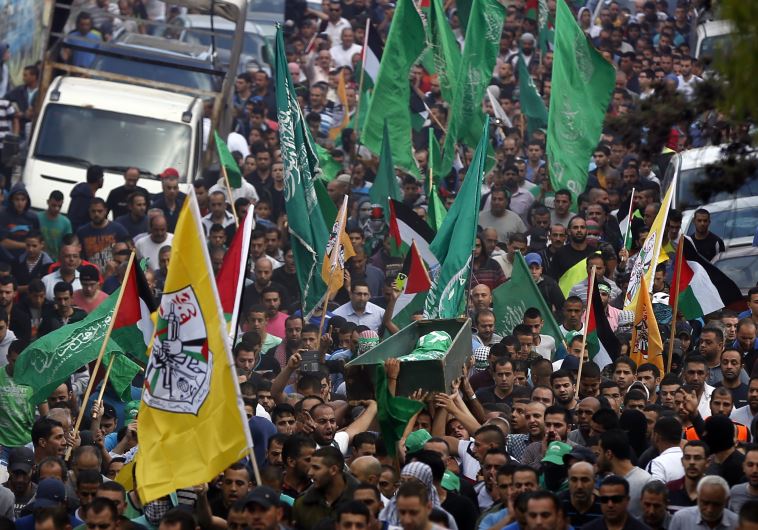
ShowImage (14)Funeral in the Shuafat refugee camp in east Jerusalem, on October 10, 2015. (photo credit: AHMAD GHARABLI / AFP)

About expected Palestinian state intentions, there is little real mystery to fathom. It should already be widely understood that any new state of Palestine could provide a ready platform for launching endlessly renewable war and terrorism against Israel. Significantly, not a single warring Palestinian faction has ever even bothered to deny such overtly criminal intent. On the contrary, aggressive intent has always been openly embraced, fervently cheered as a distinctly sacred “national” incantation.

*********************************

It’s farewell to the drawing-room’s civilized cry, The professor’s sensible where to and why, The frock-coated diplomat’s social aplomb, Now matters are settled with gas and with bomb.”

– W.H. Auden, Danse Macabre

With apparent suddenness, and a very deliberate brutality, Palestinian terrorists are launching a new wave of indiscriminate assaults they proudly hail as a “third intifada.”

But behind the protective veneer of language, where homicide is conveniently transfigured into revolution, these latest Arab attacks remain what they have always been – that is, crudely camouflaged expressions of rampant criminality.

Jurisprudentially, this is all perfectly obvious. Prima facie, under all pertinent international law, calculated assaults on mostly women and children can never be sanitized or justified. Always, rather, they represent codified crimes of war and crimes against humanity.

Always, such crimes are unpardonable.

Oddly enough, even after the painfully long history of egregious Palestinian crimes carried out against noncombatant populations, a sizable portion of the “international community” still seeks to encourage Palestinian statehood. Self-righteously, of course, and with ritualistic indignation directed against Israeli “intransigence,” the “civilized community of nations” remains willing to rip a 23rd Arab state from the still-living body of Israel. Even now, as the Palestinians remain rigorously segmented into barbarously warring factions – into opponents who enthusiastically maim and torture each other, all while cooperating in doing the same to their commonly despised Israeli victims – world public opinion calls naively for Palestinian “self-determination.”

Even now, when any new Palestinian state could quickly come to resemble an already-fractured Syria, the United Nations and its secretary – general seem much more concerned with comforting the markedly unheroic Palestinian criminals than with protecting fully innocent Israeli civilians.

Unapologetically, and whatever their unhindered and ongoing excesses, Fatah, Hamas and Islamic Jihad are easily able to incite followers to inflict and then celebrate incessant harms upon Israel.

At some point, it is likely that such harms, joyously imposed with a reassuring impunity, could involve diverse weapons of mega-terrorism, including assorted chemical, biological, or even nuclear agents.

In this last category of insidious choice, Palestine, after formalizing its sought-after condition of statehood or sovereignty, could be placed in an optimal position to assault Israel’s Dimona nuclear reactor.

This plainly sensitive facility was previously attacked, in both 1991 and again in 2014. Those earlier missile and rocket barrages, which produced no ascertainably injurious damages to the critical reactor core, had originated with Iraqi and Hamas aggressions, respectively.

About expected Palestinian state intentions, there is little real mystery to fathom. It should already be widely understood that any new state of Palestine could provide a ready platform for launching endlessly renewable war and terrorism against Israel. Significantly, not a single warring Palestinian faction has ever even bothered to deny such overtly criminal intent. On the contrary, aggressive intent has always been openly embraced, fervently cheered as a distinctly sacred “national” incantation.

A September 2015 poll by the Palestinian Center for Policy and Survey research – the leading social research organization in the Palestinian territories – found that a majority of Palestinians unhesitatingly reject a two-state solution.

When asked, as a corollary question, about any preferred or alternate ways to establish an independent Palestinian state, 42 percent called for “armed action.”

Only 29% favored “negotiation,” or some sort of peaceful resolution.

Not much mystery here.

On all currently official Hamas and Palestinian Authority (PA ) maps of “Palestine,” Israel has been removed altogether, or identified exclusively as “occupied Palestine.”

By these revealingly forthright and vengeful depictions, Israel has already been forced to suffer a “cartographic genocide.” Unambiguously, from the standpoint of any prospective Palestinian state policies toward Israel, such incendiary maps are portentous, predictive and possibly even prophetic.

What is not generally recognized is that a Palestinian state, any Palestinian state, could play a determinedly serious role in bringing some form of nuclear conflict to the Middle East. Palestine, of course, would itself be non-nuclear; but that’s not the issue. There would remain several other ways in which the new state’s predictable infringements of Israeli security could make the Jewish state more vulnerable to an eventual nuclear attack from Iran, or, in the even more distant future, from a newly-nuclear Arab state.

This second prospect would likely have its core origins in understandable reactions to the plainly impotent Vienna pact with Iran.

Following the July 14, 2015 Joint Comprehensive Plan of Action (JCPOA ), several Sunni states in the region, most plausibly Egypt and/ or Saudi Arabia, will likely feel compelled to “go nuclear.”

In essence, any such considered Sunni Arab nuclear proliferation would represent a more-or-less coherent “self-defense” reaction against expectedly escalating perils, once still-avoidable dangers now issuing from the reciprocally fearful Shi’ite world.

There is also more to expect from the Sunni side. Here, in actions that would have no apparent connection to expected Iranian nuclearization, Islamic State (IS) could begin an avowedly destructive march westward, across Jordan, and all the way to the borders of West Bank (Judea/Samaria). There, should a Palestinian state already be established and functional, dedicated Sunni terrorist cadres would likely make quick work of any deployed Palestinian army. In the event that a new Arab state had not yet been suitably declared – that is, in a fashion consistent with codifying Montevideo Convention (1934) expectations – invading IS forces (not Israel) will have become the principal impediment to Palestinian independence.

Credo quia absurdum – “I believe because it is absurd.” In either case, any such IS or IS-related conquest could create another available platform for launching relentless terrorist attacks across the region.

In time, of course, most of these murderous attacks would be aimed precisely at Israel.

IS, as everyone can see, is on the move. It has already expanded well beyond Iraq and Syria, notably into Yemen, Libya, Egypt and Somalia.

Although Hamas leaders generally deny any IS presence in Gaza, that terrorist group’s black flag is now seen more and more regularly in that expressly Palestinian space.

In principle, at least, Israel could sometime find itself forced to cooperate with Hamas against IS, but any reciprocal willingness from the Islamic Resistance Movement, whether glaringly conspicuous or beneath the radar, is implausible.

Additionally, Egypt regards Hamas as part of the much wider Muslim Brotherhood, and prospectively, just as dangerous as IS.

In any event, after Palestine, and even in the absence of any takeover of the new Arab state by IS forces, Israel’s physical survival would require increasing self-reliance in existential military matters.

Such expansions, in turn, would demand: 1) an appropriately revised nuclear strategy, involving deterrence, defense, preemption and warfighting capabilities; and 2) a corollary conventional strategy.

Significantly, however, the birth of Palestine could impact these strategies in several disruptive ways.

Most ominously, a Palestinian state could render most of Israel’s conventional capabilities substantially more problematic. It could thereby heighten certain eventual chances of a regional nuclear war.

Credo quia absurdum. A nuclear war in the Middle East is not out of the question. At some point, such a conflict could arrive in Israel not only as a “bolt-from-the-blue” surprise missile attack, but also as a result, whether intended or inadvertent, of escalation.

If, for example, certain enemy states were to begin “only” with conventional and/or biological attacks upon Israel, Jerusalem might then respond, sooner or later, with nuclear reprisals. Or if these enemy states were to begin hostilities with certain conventional attacks upon Israel, Jerusalem’s own conventional reprisals might then be met, at least in the future, with enemy nuclear counterstrikes.

For now, this second scenario could become possible only if Iran were to continue its evident advance toward an independent nuclear capability. It follows that a persuasive Israeli conventional deterrent, at least to the extent that it could prevent enemy state conventional, and/or biological attacks, would substantially reduce Israel’s risk of any escalatory exposure to a nuclear war. Israel will need to maintain its capacity for “escalation dominance,” but Palestinian statehood, on its face, could still impair this overriding strategic obligation.

A subsidiary question comes to mind. Why should Israel need a conventional deterrent at all? Israel, after all, seemingly maintains a capable nuclear arsenal and corollary doctrine, even though both still remain “deliberately ambiguous.”

And there arises a still further query. Even after “Palestine,” wouldn’t enemy states desist from launching conventional and/or biological attacks upon Israel, here, out of an entirely reasonable and prudent fear of suffering a nuclear retaliation? Not necessarily. Aware that Israel would cross the nuclear threshold only in certain extraordinary circumstances, these enemy states could be convinced – rightly or wrongly – that so long as their attacks were to remain non-nuclear, Israel would respond only in kind. Faced with such probable calculations, Israel’s ordinary security would still need to be sustained by conventional deterrent threats.

A strong conventional capability will still be needed by Israel to deter or to preempt conventional attacks – attacks that could, if undertaken, lead quickly, via escalation, to various conceivable forms of unconventional war.

Credo quia absurdum. It is still not sufficiently understood that Palestine could have serious effects on power and peace in the Middle East. As the creation of yet another enemy Arab state would need to arise from the intentional dismemberment of Israel, the Jewish state’s strategic depth would inevitably be diminished. Over time, therefore, Israel’s conventional capacity to ward off assorted enemy attacks could be correspondingly reduced.

Paradoxically, if enemy states were to perceive Israel’s own sense of expanding weakness and desperation, this could strengthen Israel’s nuclear deterrent. If, however, pertinent enemy states did not perceive such a “sense” among Israel’s decision-makers (a far more likely scenario), these states, now animated by Israel’s conventional force deterioration, could then be encouraged to attack. The cumulative result, spawned by Israel’s post-Palestine incapacity to maintain strong conventional deterrence, could become: 1) defeat of Israel in a conventional war; 2) defeat of Israel in an unconventional chemical/biological/nuclear war; 3) defeat of Israel in a combined conventional/unconventional war; or 4) defeat of Arab/Islamic state enemies by Israel in an unconventional war.

For Israel, a country less than half the size of Lake Michigan, even the “successful” fourth possibility could prove intolerable. The tangible consequences of a nuclear war, or even a “merely” chemical/ biological war, could be calamitous for the victor as well as the vanquished.

Under such exceptional conditions of belligerency, the traditional notions of “victory” and “defeat” would likely lose all serious meaning.

Although a meaningful risk of regional nuclear war in the Middle East must exist independently of any Palestinian state, this uniquely serious threat would be still greater if a new Arab terrorist state were authoritatively declared.

Palestine, it has increasingly been argued, could sometime become vulnerable to overthrow by even more militant jihadist Arab forces, a violent transfer of power that could then confront Israel with an even broader range of regional perils.

In this connection, IS, again, could find itself at the outer gates of “Palestine.” In such a scenario, it is plausible that the IS fighters would make fast work of any residual Palestinian defense force, PA and/ or Hamas, and then absorb Palestine itself into a rapidly expanding Islamic “caliphate.”

Before anything remotely decent could be born from such a determined theocracy, a very capable sort of gravedigger would have to wield the forceps.

The “third intifada” is just another legitimizing term for remorseless Palestinian terrorism. Should it transform the always fratricidal Palestinian territories into another corrupted Arab state, Palestine, either by itself, or as a newly-incorporated part of a still-growing IS “caliphate,” would become another Syria. Even more significantly, Palestine could bring specifically nuclear-based harms to the broader region.

Then, quite predictably, all pertinent “matters” would be settled “with gas and with bomb.”

Stabbing Attack at Jerusalem Central Bus Station

October 14, 2015

Stabbing Attack at Jerusalem Central Bus Station 70-year-old woman wounded in latest Arab terrorist attack; terrorist shot dead by police. Share on facebook Share on twitter Share on email Share on print More Sharing Services 63

By Ari Soffer

First Publish: 10/14/2015, 6:47 PM / Last Update: 10/14/2015, 7:46 PM

Source: Stabbing Attack at Jerusalem Central Bus Station – Defense/Security – News – Arutz Sheva

One person has been wounded in a terrorist stabbing attack just outside Jerusalem’s central bus station.

The terrorist began his attack by stabbing a 70-year-old Jewish woman, leaving her with moderate-to-serious wounds. An alert bus driver then quickly spirited the woman onto his bus before closing the doors, keeping the terrorist out.

The attacker attempted to flee the scene, but was spotted by a Yassam police special forces officer who ran towards the terrorist, shooting and fatally wounding him.

“A terrorist tried to board a bus, after apparently stabbing a woman aged about 70,” a police statement said. “A policeman fired and neutralized him.”

The victim has been transferred to Shaarei Tzedek hospital for treatment. United Hatzalah paramedics who treated her say she suffered multiple stab wounds to her upper body, and that treatment was also given at the scene to several people suffering from shock.

Acting on claims by witnesses of a possible second armed terrorist, dozens of police first poured into the bus station, before diverting their search in the direction of the Geula neighborhood, after receiving additional intelligence.

Police later clarified that there were no additional suspects, and that the reports were a false alarm.

Pictures: Hezki Ezra

Meanwhile, the terrorist shot dead while carrying out an attack earlier today in Jerusalem’s Old City has been identified as Bassel Sadr, 20, from Hevron.

Added by JK

The terrorist was Ahmed Sha’aban, a 23-year-old resident of the Ras el-Amud neighborhood in Jerusalem. He was released from prison earlier this years after serving a three-year sentence for terror activity.

http://www.jpost.com/Breaking-News/Breaking-Stabbing-attack-at-Jerusalem-Central-Bus-Station-424948


Never Again’ means standing with Israel

October 14, 2015

Never Again’ means standing with Israel, Jerusalem Post, Dr. Ben Carson, October 14, 2015

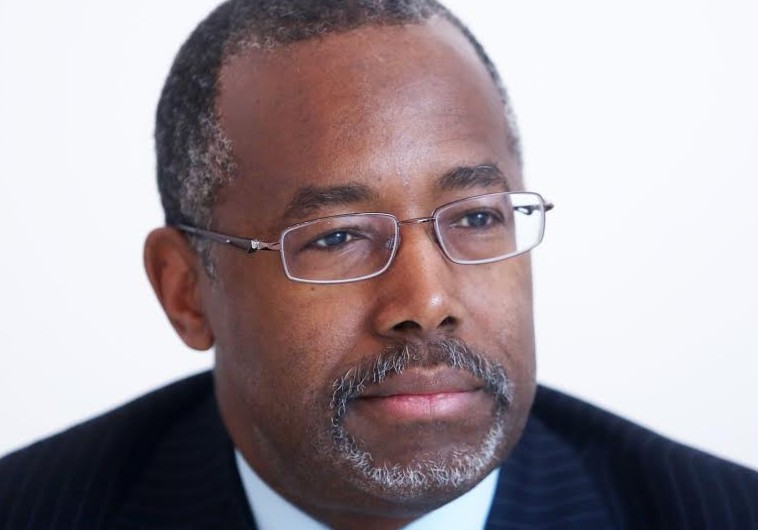
ShowImage (13)Ben Carson . (photo credit: MARC ISRAEL SELLEM)

While Israel must be able to go it alone, it should never have to stand alone.  In recent years, personalities and politics have been permitted to negatively affect America’s relationship with Israel despite the fact that the bonds between our two nations are so unique and vital.  When the enemies of Israel and the United States sense rifts between us, they are emboldened and grow even more dangerous.

****************************

Sometimes it is hard to find the right words to talk about the kind of evil that defies reason and destroys lives.  We saw that evil on full display during the Holocaust perpetuated by the fanatical and tyrannical Nazi regime under Adolph Hitler.  The lessons to be drawn from those darkest of days in world history are plentiful, and as relevant today as they were nearly 80 years ago.

In recent days I suggested that things might have unfolded in a very different manner in Europe had the Jewish people been armed and better able to defend themselves. What would have been the impact on Hitler’s war machine if his victims had had more access to guns? It is something that we will never know for sure.

What I do know however, beyond any shadow of a doubt, is that I never intended for my words to diminish the enormity of the tragedy or in any way to cause any pain for Holocaust survivors or their families.

Both those who perished and those who survived the Nazi camps deserve our deepest reverence, as do the partisan fighters who rose in armed opposition.

It is truly incomprehensive to imagine what these men, women and children endured, and it is impossible for us to put ourselves in their shoes.  This I know, since I have seen some of those actual shoes first-hand at the Holocaust Museum in Washington, D.C. and at Yad Vashem in Israel. Those shoes, stripped from just some of the millions of Holocaust victims, are a jarring symbol that humanizes the loss.

They are poignant and painful reminders. I have learned about the Holocaust and studied the history.  So should every American, as well as others all around the world.

When I was in Israel last year, stepping from the dimmed lights of their Holocaust Museum into the bright Jerusalem sunshine underscored for me in a literal and figurative manner that often out of darkness comes light.  And upon reflection, I concluded that there are vital lessons that can be drawn from the Holocaust’s senselessness and savagery.  One is that going back centuries the Jewish people have somehow managed to find a way to overcome every oppressor who sought to destroy them.

Another is that the Jewish people need a state and that they must have the ability to defend themselves in order to ensure that “never again” remains a reality. That state, Israel, has been re-established in their historic homeland.

The founding of the State of Israel in 1948 was an accomplishment that almost never fully came to pass. Just hours after declaring its independence, Arab armies descended on the fledgling state in a war of annihilation only to be overcome by spirited Israeli forces who fought with the conviction and valor of those with nowhere else to go and no other option for survival.

Sadly for Israel, serious threats remain and its people must still live in a perpetual state of readiness to confront those who seek her destruction.  Israel’s armed forces and the country’s qualitative military edge over other nations in the Middle East are essential elements that ensure that the Jewish people continue to have a state of their own and that Israel can thrive.

The Middle East is a region awash with dictatorships, ruthless violence, turmoil and political instability where Israel is the only Western-style democracy.

As Americans we stand with Israel because the Jewish state embodies many of the same aspects that make the United States the greatest nation in the world: commitment to human rights, religious liberty for all citizens, the rule of law, equal rights for women, a free press, a robust judicial system.

America’s relationship with Israel is one with deep benefits for both nations. This proves invaluable every day in term of strategic cooperation and in specific arenas of homeland security and counterterrorism.

In the years to come, America’s ability to defend herself against all enemies, foreign and domestic, will be critical.  Our determination to secure our homeland and to safeguard our citizens against adversaries and radical Islamist terrorist groups must be stronger than ever.

Looking to the future, while remaining mindful of the past, I believe that it is in America’s national security interests to deepen our commitment to Israel.  If elected president in November 2016, I will explore every opportunity to strengthen ties between our two nations and to ensure that Israel always has the tools it needs to protect herself and our shared interests.

While Israel must be able to go it alone, it should never have to stand alone.  In recent years, personalities and politics have been permitted to negatively affect America’s relationship with Israel despite the fact that the bonds between our two nations are so unique and vital.  When the enemies of Israel and the United States sense rifts between us, they are emboldened and grow even more dangerous.

The strength of the U.S.-Israel relationship can and must be strengthened.

That is precisely why I look forward to my first conversation as President of the United States with the Prime Minister of Israel. On that phone call I will utter four important words that reflect the future direction we will take together: “Our relationship is restored.”