Archive for October 11, 2015

How 200,000 invaders turns into 2,000,000 in the blink of an eye

October 11, 2015

How 200,000 invaders turns into 2,000,000 in the blink of an eye, American ThinkerCarol Brown, October 11, 2015

(Please see also, Germany: Migrant Crime Wave, Police Capitulate. — DM)

If you think 200,000 invaders imported into the United States is appalling, consider this: Once they settle here, they bring their family. The Australian reported on a leaked document that reveals how this results in the base number of invaders expanding almost overnight. Although the article is about the situation in Germany, the point applies to the United States (or any country accepting these conquerors).

Chancellor Angela Mer­kel is facing open dissent from members of her coalition government amid predictions that the number of migrants arriving in Germany this year could reach 1.5 million. (snip)

The new estimate of 1.5 million came in a confidential government paper leaked to the newspaper Bild. It is widely believed the source of the leak was the interior ministry.

The secret document said each refugee had a “family factor” of four to eight people, meaning they could be expected to arrange for up to eight relatives to join them once settled in….

The “family factor.”

So when Obama says we should accept 200,000 “refugees,” what that really means (as if 200,000 isn’t awful enough) is that we are accepting as many as 1,600,000 invaders. If you factor in the high likelihood that many of these families will continue to have children once they’re here, the number easily reaches 2 million.

Two million (more) Muslims, few of whom speak English, many of whom are uneducated, a large number of whom are unemployable or who won’t want to work, many if not most of whom will never integrate into our culture, the majority of whom will come “clinging to their religion” (to use a misdirected phrase in the proper context), and Lord knows how many of whom will inflict harm.

Why are we doing this? Oh, yes. I forgot. The fundamental transformation of America.

In this case, the particular pathway to said transformation has several options and can move pretty rapidly (the left’s favorite pace).

There are as many as three avenues for bringing family members once a refugee is admitted, with an I-730 application being the most common. Eligible family members are those considered “immediate family,” such as spouses (multiple?), children, and/or parents. Cousins, for example, do not qualify. However, in light of how common inbreeding is in Islamic culture, these relationships may be difficult to tease apart.

The timeline for approval is relatively fast. Once an application is submitted, the average processing time (based on global stats) is a year to a year-and-a-half.

Imagine that. You are admitted into the United States and as soon as a year later your entire family may be imported as well. That is how fast 200,000 invaders becomes well over a million and a half. And counting.

So when you educate people and speak out against this madness, be aware that the dangerously high numbers of “refugees” Obama wants to admit is actually much higher. And the higher it goes, the harder we fall.


Germany: Migrant Crime Wave, Police Capitulate

October 11, 2015

Germany: Migrant Crime Wave, Police Capitulate, Gatestone InstituteSoeren Kern, October 11, 2015

  • According to a classified document, the German government now estimates that Germany will receive as many as 1.5 million asylum seekers in 2015, including 920,000 in the last quarter of 2015 alone. With family reunifications, the actual number of asylum seekers could swell to more than 7 million. Separately, German authorities now estimate that at least 290,000 migrants and refugees have entered the country without being registered.
  • “The behavior of these highly delinquent youths towards police officers can be characterized as aggressive, disrespectful and condescending. … When they are arrested, they resist and assault [police officers]. The youths have no respect for state institutions.” — Confidential report, leaked to Die Welt.
  • In Berlin, a classified police report revealed that a dozen Arab clans hold reign over the city’s criminal underworld. The report says the clans, which are dedicated to dealing drugs, robbing banks and burglarizing department stores, run a “parallel justice system” in which they resolve disputes among themselves with mediators from other crime families. If the state gets involved, the clans use cash payments or threats of violence to influence witnesses.
  • “For years the policy has been to leave the population in the dark about the actual crime situation… The citizens are being played for fools.” — André Schulz, head of the Association of Criminal Police.
  • According to the President of the German Police Union, “In Berlin or in the north of Duisburg there are neighborhoods where colleagues hardly dare to stop a car — because they know that they’ll be surrounded by 40 or 50 men.” These attacks amount to a “deliberate challenge to the authority of the state — attacks in which the perpetrators are expressing their contempt for our society.”

Asylum seekers are driving a surge in violent crime in cities and towns across Germany. German authorities, however, are downplaying the lawlessness, apparently to avoid fueling anti-immigration sentiment.

A confidential police report leaked to a German newspaper reveals that a record-breaking 38,000 asylum seekers were accused of committing crimes in the country in 2014. Analysts believe this figure — which works out to more than 100 a day — is only the tip of the iceberg, as many crimes are either not resolved or not reported.

The current spike in crime — including rapes, sexual and physical assaults, stabbings, home invasions, robberies, burglaries and drug trafficking — comes amid a record-breaking influx of refugees from Africa, Asia, the Middle East and the Western Balkans.

According to a classified document obtained by the German newspaper, Bild, the government now estimates that Germany will receive as many as 1.5 million asylum seekers in 2015, including 920,000 in the last quarter of 2015 alone. This figure is nearly double the previous estimate, from August, which was 800,000 for all of 2015. By comparison, Germany received 202,000 asylum seekers in all of 2014.

The document warns that with family reunifications, the actual number of asylum seekers could swell to more than seven million, based on the assumption that individuals whose applications are approved will bring between four and eight additional family members to Germany.

Separately, German authorities now estimate that at least 290,000 migrants and refugees have entered the country without being registered and whose whereabouts are unknown.

1250 (1)According to the latest UN figures, of the 579,617 refugees/migrants who have entered the EU by sea so far this year, 69% have been adult men. Above, some of the hundreds of migrants who arrived in Munich on September 12, 2015.

With more than 10,000 new migrants entering Germany every day, observers warn that crime in the country is sure to snowball. Experts say that many of the migrants will never be integratedinto German society because they lack even the most basic skills to find work in the country. Some are warning of the establishment of parallel societies across Germany in which shiftless migrants are sustained by a volatile mix of taxpayer-funded social welfare handouts and crime.

Migrants are becoming increasingly unruly in their disrespect for German law. On September 11, for example, two asylum seekers from Libya attempted to shoplift items from a Netto-Markt grocery store in Freiberg, a town in the state of Saxony. After the men were caught with the merchandise by a security guard, they became violent and managed to escape.

A short while later, the men returned to the store with a machete and pepper spray, and began threatening the employees. When police arrived at the scene, the men attacked the officers, who fired warning shots into the air. One of the migrants was arrested; the other escaped.

Within hours, the detained man — a 27-year-old being housed at taxpayer expense in a refugee shelter in Freiberg — was released without charge. The next morning, the two men returned to the grocery store, pulled a knife and threatened to behead the employees.

According to local media, public prosecutors instructed police to release the men because they did not use force during the initial act of shoplifting. “The deeds could not be classified under the offense of robbery or predatory theft because the accused did not use violence or the threat of violence to carry out their act,” a spokesperson said. In any event, he added, the men do not need to be detained because, as asylum seekers, they do not pose a significant risk of flight from justice.

Freiberg Mayor Sven Krüger, of the center-left Social Democrats, publicly denounced the judicial inaction. “Words fail me,” he said. “I have no comprehension of our justice system; it released the offender. Yesterday he threatened employees and police. We cannot protect our citizens in this way, and the work of the police is wasted effort.”

Local media report that the incident at the Netto-Markt is not an isolated event: that acts of shoplifting committed by migrants are becoming a fact of daily life in Freiberg, and the shoplifters seldom face consequences.

In early September, a supermarket cashier in the town was punched in the face by migrants after she tried to stop a brawl between asylum seekers inside her store. The manager of another store said that he has been verbally abused and spat at by migrants, and has been forced to hire a private security service to reduce losses from shoplifting by migrants.

In Hamburg, the second-largest city in Germany, police say they are helpless to confront a spike in crimes committed by young migrants from North Africa. Hamburg is now home to more than 1,000 so-called unaccompanied minor migrants (minderjährige unbegleitete Flüchtlinge, MUFL), most of whom live on the streets and apparently engage in all manner of criminal acts.

A confidential report, leaked to the German newspaper, Die Welt, reveals that Hamburg police have effectively capitulated to the migrant youths, who outnumber and overwhelm them. The document states:

“Even the smallest issue can quickly lead to aggressive offensive and defensive behavior. The youths come together in groups to stand up for each other and also to fight each other…

“When dealing with others, the youths are often irreverent and show a lack of respect for local values ​​and norms. The youths congregate mainly in the downtown area, where they can be seen almost every day. During the daytime, they hang out mostly in the St. George district, but in the evenings they carry out their activities in the Binnenalster, Flora- and Sternschanzenpark and St. Pauli [all across central Hamburg]. They usually appear in groups; up to 30 youths have been observed on weekend nights in St. Pauli. The behavior of these highly delinquent youths towards police officers can be characterized as aggressive, disrespectful and condescending. They are signaling that they are indifferent to police measures…

“The youths quickly become conspicuous, mainly in the domains of pickpocketing or street robbery. They also break into homes and vehicles, but the crimes are often reported as trespassing or vandalism because the youths are just looking for a place to sleep. Shoplifting for obtaining food is commonplace. When they are arrested, they resist and assault [the police officers]. The youths have no respect for state institutions.”

The paper reports that German authorities are reluctant to deport the youths back to their countries of origin because they are minors. As a result, as more unaccompanied minors arrive in Hamburg each day, the crime problem not only persists, but continues to grow.

Meanwhile, in a bid to save the city’s tourism industry, Hamburg police have launched a crackdown on purse-snatchers. More than 20,000 purses — roughly 55 a day — are stolen in the city each year. According to Norman Großmann, the director of the federal police inspector’s office in Hamburg, 90% of the purses are stolen by males between the ages of 20 and 30 who come from North Africa or the Balkans.

In Stuttgart, police are fighting a losing battle against hundreds of asylum seekers from Gambia who are openly trafficking drugs on the city’s streets. At the same time, migrant gangs from North Africa are dedicated to the fine art of pickpocketing. Police say that one out of four migrants housed at a refugee shelter in nearby Remstal have been accused of theft.

In Dresden, migrants from Algeria, Morocco and Tunisia have effectively taken control over the iconic Wiener Platz, a large public square in front of the central train station. There they sell drugs and pickpocket passersby, usually with impunity. Police raids on the square have become a game of whack-a-mole, with a never-ending number of migrants replacing those who have been arrested.

A local newspaper editorial expressed shock at the state of affairs in downtown Dresden:

“The central train station is normally a city’s business card, at the same time it is also a magnet for dubious activities…

“But a visit to the site yesterday leaves one shuddering: desperate businesses, intimidated employees, shocked passersby — dealers selling their drugs in front of their eyes. This has created a climate of fear — and it must be swiftly countered.

“It cannot be that a gang of young men lays claim to an entire area to operate their illegal business. The Wiener Platz is a major entry point to Dresden…. Thousands of people — commuters and tourists — walk along there every day. They should be able to feel safe…

In Berlin, a classified police report leaked to the German newspaper, Bild, revealed that a dozen Arab clans hold reign over the city’s criminal underworld. The report says the clans, which are dedicated to dealing drugs, robbing banks and burglarizing department stores, run a “parallel justice system” in which they resolve disputes among themselves with mediators from other crime families. If the German state gets involved, the clans use cash payments or threats of violence to influence witnesses.

Separately, a politically incorrect police report leaked to the German newspaper, Der Tagesspiegel, revealed that more than 80% of the violent crimes registered in Berlin are committed by non-Germans.

At the same time, thousands of police officers in Berlin are no longer being allowed to carry guns because of cuts to the budget for mandatory firearms training.

In Duisburg, spiraling levels of violent crime perpetrated by immigrants from the Middle East and the Balkans are turning parts the city into “areas of lawlessness” — areas that are becoming de facto “no-go” zones for police, according to a confidential police report leaked to the German newsmagazine, Der Spiegel.

Duisburg, a key industrial city that has a total population of around 500,000, is home to an estimated 60,000 Muslims, mostly from Turkey. This total makes it one of the most Islamized cities in Germany. In recent years, however, thousands of Bulgarians and Romanians (including Sinti and Roma “gypsies”) have flocked to Duisburg. This combination has been creating a volatile ethno-religious cauldron.

According to Der Spiegel:

“There are districts where immigrant gangs are taking over entire metro trains for themselves. Native residents and business people are being intimidated and silenced. People taking trams during the evening and nighttime describe their experiences as ‘living nightmares.’ Policemen, and especially policewomen, are subject to ‘high levels of aggressiveness and disrespect.’

“In the medium term, nothing will change, according to the report. The reasons for this: the high rate of unemployment, the lack of job prospects for immigrants without qualifications for the German labor market and ethnic tensions among migrants. The Duisburg police department now wants to reinforce its presence on the streets and track offenders more consistently.

“Experts have warned for some time that problem neighborhoods could become no-go areas. The president of the German Police Union, Rainer Wendt, told Spiegel Online years ago: ‘In Berlin or in the north of Duisburg there are neighborhoods where colleagues hardly dare to stop a car — because they know that they’ll be surrounded by 40 or 50 men.’ These attacks amount to a ‘deliberate challenge to the authority of the state — attacks in which the perpetrators are expressing their contempt for our society.'”

The steady flow of leaked police reports seems to indicate that police are losing patience with the state-sponsored multicultural policies that are making Germany increasingly more unsafe.

German authorities have repeatedly been accused of underreporting the true scale of the crime problem in the country. For example, according to the head of the association of criminal police (Bund Deutscher Kriminalbeamter, BDK), André Schulz, up to 90% of the sex crimes committed in Germany in 2014 do not appear in the official statistics. He said:

“For years the policy has been to leave the [German] population in the dark about the actual crime situation… The citizens are being played for fools. Rather than tell the truth, they [government officials] are evading responsibility and passing blame onto the citizens and the police.”

Schultz also warned that, based on past experience, fully 10% of the migrant population will end up being involved in criminal activity, including theft, assault or drugs. This implies that with the massive influx of migrants in 2015, Germany is effectively importing 100,000 additional criminals into the country.

Meanwhile, crime reports use all manner of politically correct euphemisms to describe foreign suspects without using the terms “migrant” or “Muslim migrant.”

On October 7, for example, an 86-year-old woman had her purse stolen by a man with “dark hair” (dunklen Haaren) in Bad Urach. Also on October 7, three “southerners” (Südländer) robbed a clothing store in Fellbach.

On October 6, an 89-year-old woman in Darmstadt was robbed by two men who spoke German with an “Eastern European accent” (osteuropäischem Akzent). On October 5, a 72-year-old man was robbed by three people with a “brownish skin” (bräunliche Haut) in Stuttgart.

On October 2, a 64-year-old woman had her purse stolen by two women with “black hair” (schwarze Haare) in Gießen. On October 1, a 24-year-old man was robbed at knifepoint by two “dark skinned” (dunkelhäutig) men in Wiesloch.

On September 11, a 16-year-old girl was raped by a man with “a dark skin type” (dunklem Hauttyp) close to a refugee shelter in the Bavarian town of Mering. On August 30, a 21-year-old man was robbed by two men speaking “broken German” (gebrochenem Deutsch) in Karlsruhe.

On August 30, a 24-year-old man was assaulted by a man with a “southern appearance” (südländischem Aussehen) at a gas station in Ludwigsburg. On August 30, a 33-year-old man was attacked with pepper spray and robbed by two men with a “southern appearance” (südländisches Erscheinungsbild) in Stuttgart. On August 29, four Germans were assaulted by a man with “short dark hair, dark eyes, southern appearance” (südländisches Aussehen) in Überlingen, a city on the northern shore of Lake Constance.

On August 29, a 21-year-old man was robbed by two men with “brown skin color” (braune Hautfarbe) in Heidelberg. On August 28, a woman with “long black hair” (schwarzen langen Haaren) stole 1,000 euros from a 95-year-old man and a 93-year-old woman in Sigmaringen, a town in Baden-Württemberg.

On June 5, a 30-year-old Somali asylum seeker called “Ali S” was sentenced to four years and nine months in prison for attempting to rape a 20-year-old woman in Munich. Ali had previously served a seven-year sentence for rape, and had been out of prison for only five months before he attacked again. In an effort to protect the identity of Ali S, the newspaper, Münchner Abendzeitung, referred to him by the more politically correct “Joseph T.”

In a book titled, “The End of Security: Why the Police Can No Longer Protect Us,” author Franz Solms-Laubach writes that German police are becoming increasingly demoralized in the face of spiraling crime. He blames German policymakers for budget cuts and staff reductions that are making it impossible for the police to do their job, namely to protect German citizens and their property.

According to Solms-Laubach, non-Germans make up roughly 10% of the German population, but they commit more than 25% of the crimes. The only solution, he argues, is that migrants must understand that if they commit crimes in Germany, they will be deported.

Putin and Saudi defense minister meet in Russia, agree on common goals in Syria

October 11, 2015

Putin and Saudi defense minister meet in Russia, agree on common goals in Syria

Published time: 11 Oct, 2015 23:08

Source: Putin and Saudi defense minister meet in Russia, agree on common goals in Syria — RT News

Russian President Vladimir Putin, 3rd right, and Deputy Crown Prince, Second Deputy Prime Minister and Defense Minister of Saudi Arabia Mohammad bin Salman Al Saud, 4th left, at their meeting in Sochi, October 11, 2015. © Aleksey Nikolskyi
Russian President Vladimir Putin and Saudi Arabia’s defense minister have agreed that Moscow and Riyadh should pursue common goals in Syria, including national reconciliation and combating terrorists, Russian FM Sergey Lavrov said.

Putin met with Sheikh Mohammed bin Salman for talks on the sidelines of a Formula 1 race in Sochi on Sunday. The meeting was also attended by the foreign ministers of both states.

“The sides confirmed that Saudi Arabia and Russia have similar goals concerning Syria,” said Russian FM Sergey Lavrov following the talks. “First of all, they are to prevent a terrorist caliphate from getting the upper hand in Syria.”

The second goal that we share with Riyadh is “ensuring the triumph of national reconciliation in Syria so that all Syrians, regardless of their nationality or religion, will feel masters of their land,” he said.

Saudi Arabia’s FM, Adel al-Jubeir, expressed Riyadh’s concerns about the targets of Russia’s military operations in Syria. In turn, Putin said Moscow understands the Saudi’s concern and expressed readiness to cooperate and share intelligence, according to Lavrov.

READ MORE:Putin: Russia has no intention of mounting Syria ground operation, wants to see political compromise

“On our part, we expressed readiness, which was met with a positive response from the successor to the Crown Prince, to begin close cooperation between our militaries, and security services in order to eliminate any doubts that the targets of the Russian Air Force are ISIS militants, al-Nusra Front, and other terrorist organizations,” he said.

During the talks, Saudi Arabia expressed readiness to intensify its efforts to cooperate with Russia with regard to anti-terrorist operations, al-Jubeir said.
Though sharing views on reaching a speedy political resolution in Syria, Russia and Saudi Arabia have different stances with regard to President Bashar Assad’s future as president. Russia has reiterated that Assad should remain in power, Lavrov said, adding that this does not prevent launching a process for resolving political differences. Riyadh believes that Assad must step down for there to be a political transition in Syria, al-Jubeir said.

Lavrov said that Russia calls on “all external players who can influence political processes in Syria to promote the soonest launch of a nationwide dialogue in Syria.”

He added that, after the talks between the two sides in Sochi, “we have a much clearer vision of how to move along the path of political settlement.”

Moscow and Riyadh also confirmed that there were a number of opportunities for bilateral cooperation in different areas, including the military-technical sphere, Lavrov said. “The parties stated the existence of very good opportunities in various fields, including economic investment, and military-technical cooperation. Corresponding plans will be implemented.”

World view: Politics may force Obama to ‘over-react’ militarily in Syria

October 11, 2015

World view: Politics may force Obama to ‘over-react’ militarily in Syria, BreitbartJohn J. Xenakis, October 11, 2015

(Fine. But what advice will he take from whom before he does something? Perhaps his favorite military political adviser?

PJ boy and Obama

— DM)


obamaz-640x480

Palestinian-Israeli violence continues in Gaza and West Bank

g151009bPalestinian protesters in Gaza on Friday (AP)

Six Palestinians were killed and hundreds of Palestinians and Israeli were wounded on Friday as several weeks of violence continued. ( “9-Oct-15 World View — Israeli-Palestinian violence spreads across West Bank as anger grows”)

Ismail Haniyeh, the leader of Hamas, which governs Gaza, applauded the recent Palestinian knife attacks on Israelis, and called for a “third intifada.” By contrast, Israeli Prime Minister Benjamin Netanyahu “strongly condemned the harming of innocent Arabs.” Both Israeli and Palestinian security forces are on high alert, with more violence expected. Fox News/AP

Obama administration announces an abrupt change of policy in Syria

The Obama administration’s widely ridiculed $500 million program to train and equip Syrian rebels to fight the so-called Islamic State (IS or ISIS or ISIL or Daesh) was “paused” on Friday as a publicly admitted failure. The program was supposed to train thousands of rebels, but the public was shocked several weeks ago when the administration admitted that only “four or five” had been trained, despite the program’s huge price tag.

As Foreign Policy magazine put it: “On Capitol Hill, it’s been called “a joke,” a “total failure,” and “a bigger disaster than I could have ever imagined.” And now we have another name for it: dead.”

A new program has been announced. The new program will provide air support and basic equipment and training to vetted opposition group leaders who are already fighting ISIS and who are committed to fighting ONLY ISIS, and not the regime of Syria’s president Bashar al-Assad.

Brett McGurk, whose title is “White House deputy envoy to the Global Coalition to Counter Islamic State,” described the new program as follows:

“Is it best to take those guys out and put them through training programs for many weeks, or to keep them on the line fighting and to give them additional enablers and support? I think the latter is the right answer, and that’s what we’re going to be doing.”

According to Secretary of Defense Ash Carter: “I remain convinced that a lasting defeat of ISIL in Syria will depend in part on the success of local, motivated and capable ground forces. I believe the changes we are instituting today will, over time, increase the combat power of counter-ISIL forces in Syria and ultimately help our campaign achieve a lasting defeat of ISIL.”

The old policy was criticized and mocked from the day it was announced last year. The new policy is receiving similar treatment. A NY Times editorial titled “An Incoherent Syria War Strategy” points out that the strategy of finding and arming rebel groups that want to fight ISIS but who are going to be forbidden from fighting the al-Assad regime makes no sense:

“The initial plan was dubious. The new one is hallucinatory, and it is being rolled out as the war enters a more perilous phase now that Russia has significantly stepped up its military support of Mr. Assad’s forces.

There is no reason to believe that the United States will suddenly be successful in finding rebel groups that share its narrow goal of weakening the Islamic State, also known as ISIS or ISIL, but not joining the effort to topple Mr. Assad. Washington’s experience in Syria and other recent wars shows that proxy fighters are usually fickle and that weapons thrust into a war with no real oversight often end up having disastrous effects.”

This harsh criticism from a newspaper that regularly slobbers over President Obama symbolizes how much even the left-wing mainstream media, not to mention foreign media throughout the Mideast, now views the Obama administration as weak and rudderless, lurching from one policy to the next. (As another example, it had been widely expected that Secretary of State John Kerry would win this year’s Nobel Peace Prize for the Iran nuclear deal, but even the loony Norwegians have lost faith.) VOA and NY Times

Obama administration may be forced into greater military role

I’ve written many times about the Harry Truman’s Truman Doctrine of 1947, which made America policeman of the world. The justification is that it’s better to have a small military action to stop an ongoing crime than to let it slide and end up having an enormous conflict like World War II. Every president since WW II has followed the Truman Doctrine, up to and including George Bush. Barack Obama is the first president to repudiate the Truman Doctrine, essentially leaving the world without a policeman.

Call it Kismet or Karma or God’s Will (or call it an unstoppable generational trend), but America does have an exceptional role in the world, and repudiating that role does not end it. Obama’s policy of apologizing for America has held sway for over six years, but now powerful political pressures are growing to force a change. Those forces are being driven by massive shifts in public attitudes towards Obama, both in the US and abroad, as reflected in worldwide criticism of him in the media as a weak president.

According to the left-leaning Washington Post:

“Russia’s military moves in Syria are fundamentally changing the face of the country’s civil war, putting President Bashar al-Assad back on his feet, and may complicate the Obama administration’s plans to expand its air operations against the Islamic State. …

But others within the administration, and many outside experts, are increasingly worried that if President Obama does not take decisive action — such as quickly moving to claim the airspace over northwestern Syria and the Turkish border, where Russian jets are already operating — it is the United States that will suffer significant damage to both its reputation and its foreign policy and counterterrorism goals. …

The current internal administration debate is largely the same one that has kept the administration out of significant intervention in Syria’s civil war for the past four years. On one side, Russia’s involvement has strengthened the winning argument that the United States should avoid direct involvement in yet another Middle East conflict and should continue directing its resources toward countering forces such as the Islamic State that pose a direct threat to U.S. national security.

On the other side, the argument is that it makes no strategic sense for the United States to concede Russian dominance of the situation: If Russia succeeds in keeping Assad in power, the problems in the West caused by both the Syrian war and militant expansion will only get worse.”

The article describes two sides of the debate whether to intervene in Syria, but does not draw the obvious conclusion that the weight of political opinion is moving sharply towards the side of some kind of intervention — although those that say that “it makes no strategic sense … to concede Russian dominance” do not agree on what steps should be taken to avoid conceding.

The left-leaning Brookings Institution makes the claim that intervention in Syria is costing Russia enormously, and so “For the United States, avoiding the temptation to over-react is still the key guideline.”

But the article then goes on to describe problems with doing nothing, and even conclude:

“Finally, the United States and its allies could deliver a series of airstrikes on the Hezbollah bands around Damascus. That would be less confrontational vis-à-vis Russia than hitting Assad’s forces. Hezbollah has already suffered losses in the Syrian war and is not particularly motivated to stand with Assad to the bitter end, away from own home-ground in Lebanon. (Israel would appreciate such punishment, too.)”

I almost can’t believe my eyes reading this recommendation. American warplanes around Damascus would almost certainly come into contact with Russian warplanes, and even if they didn’t, bombing al-Assad’s close ally Hezbollah could be the trigger that sets off a wider war in this generational Crisis era.

Policy can sometimes act like a rubber band that be stretched in one direction so far that when it’s released, it snaps back in the other direction violently. After six years of constantly apologizing for America, the pressure is on President Obama to do something different. Brookings advises Obama about “avoiding the temptation to over-react,” but Obama may be politically forced to decide that with his previous policies so widely criticized and mocked, he has to take some step to prove to the world that he’s a tough leader after all, and he may have to over-react, because no half-measure will provide the proof he needs. Washington Post and Brookings Institution.

Reacting to the terror wave: action or inaction?

October 11, 2015

Reacting to the terror wave: action or inaction? | Anne’s Opinions, 11th October 2015


The Palestinian terror wave (the authorities are not calling it a 3rd intifada – yet) continues to sweep Israel. There were more stabbings in Jerusalem on Shabbat, rock throwing, and violent Arab protests in many towns. After Shabbat there were Israeli protests across Israel against the Arab violence.

Attempted car bombing outside Maale Adumim

This morning we saw an escalation as a female bomber blew up her car at a checkpoint outside Maale Adumim. Miraculously the only casualty was the bomber herself. severely injured. The circumstances of how the bomber was stopped sound almost like a spoof – but a diligent traffic cop stopped what could have been a massive terror attack in Jerusalem:

Police said officers noticed a “suspicious vehicle” driven by a woman toward a checkpoint en route to Jerusalem and signaled to her to stop. The woman then yelled “Allahu Akbar” and detonated a bomb in her car, a police statement said.

Army Radio reported the wounded officer is a traffic policeman who pulled over the bomber in her car for driving in a lane specified for public transport and carpooling.

Initial reports pointed to a possible suicide bombing, saying that the woman had died in the attack. Police later said the woman exited her car just before the bomb went off, indicating that it may not have been a suicide bombing attempt.

I wonder if the bomber was coerced into the attack to save herself from a “family honour” punishment. We’ll probably never know.

Hamas is obviously feeling neglected so they organized huge demonstrations at the border with Israel. After several protestors breached the border, the IDF opened fire, killing up to 7. In retaliation Hamas launched rockets at Israel last night, and in return the IAF bombed some Hamas targets.

Same old same old.

The question at the moment is how should the government, and Israeli citizens, react to this new uprising? Should we be taking a harsher stance with the Arabs or try to defuse the situation? Should Netanyahu be building more settlements davka now or is he right to placate and appease Obama and the Europeans?

I bring you some differing viewpoints here, and I find myself agreeing with them all, depending on the time of day and what’s on the news. I offer no solutions myself. I’m glad I’m not in the position to have to offer such and I don’t envy the government. On the other hand, that is what they were elected for, and the situation cannot be permitted to drift.

First I’ll quote from a few of Arlene Kushner‘s latest posts. She is well-worth following and reading on a regular basis. She always talks sense and her clarity is refreshing:

Boy, this is tough:

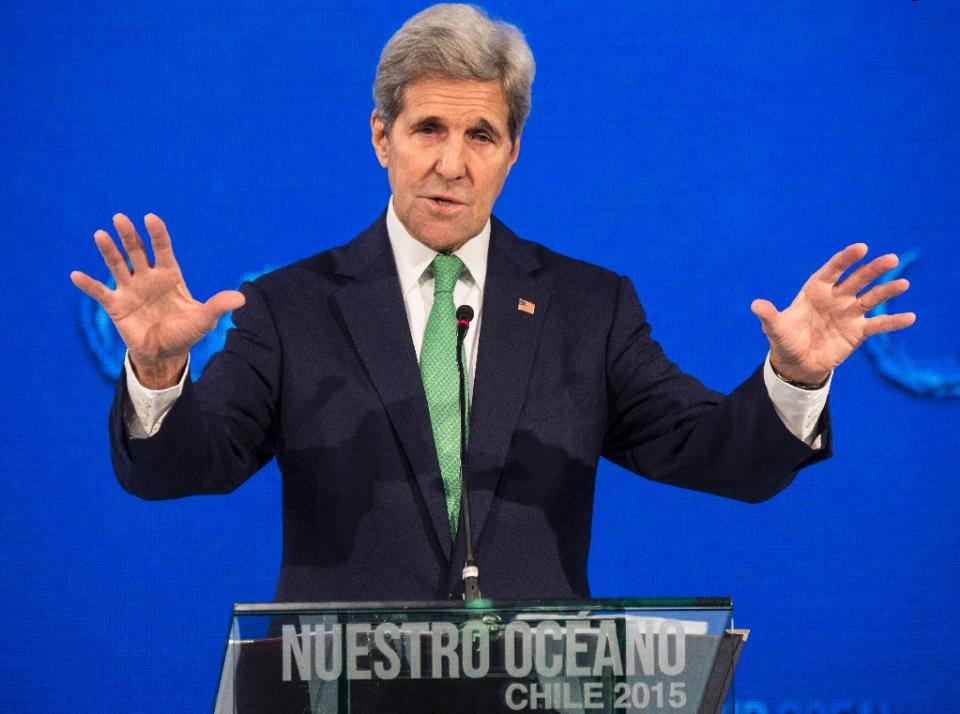
… I read what Kerry said yesterday in Valpariso, Chile, where he was giving a talk:

John Kerry

“Regarding Jerusalem, it absolutely is unacceptable on either side to have to have violence resorted to as a solution.

“And I would caution everybody to be calm, not to escalate the situation…it is very important to maintain a sense of calm that will minimize the instinct for escalation.”

http://www.timesofisrael.com/us-urges-rapid-end-to-unacceptable-violence-in-jerusalem/

~~~~~~~~~~

Let me get this straight: Arabs are killing Jews, but our government should not ratchet up the response to the terrorists? And whatever we do, we should not use violence in persuading those terrorists to stop what they are doing? We should, maybe, reason with them? Offer them perks if they stop?

This is moral equivalency run amuck. Politically correct thoughts from an empty head.

What it illustrates is the breath-taking international bias against Israel that we must contend with. No calling out the Arabs for their execrable behavior. No recognition of Israel’s right to defend her Jewish citizens. It helps us to understand (though not excuse) some of Netanyahu’s reluctance (until now) to take a strong stand against Arab terrorists.

In “Navigating choppy waters” she writes:

It has been revealed by media sources that during the Security Cabinet meeting Prime Minister Netanyahu held Monday night, after the close of Simchat Torah, the issue of threats by Obama was raised. Some of the right wing/nationalist members of the Cabinet (some within the Likud itself) were urging that part of the response to terrorism be increased building in Judea and Samaria.

This is not going to happen, Netanyahu informed them. For Obama has said that if there is building in Judea and Samaria, he will not veto a French resolution that is to be brought to the UN Security Council, a resolution that reportedly would declare “Palestine” a state and would declare the settlements “illegal.”

“We will not jeopardize international support for a declaration of building,” a senior source in the Netanyahu administration reportedly said, While the prime minister himself called for “a sober political maneuver.”

http://www.israelnationalnews.com/News/News.aspx/201499#.VhUukJuhfIX

The question I want to explore, then, is whether Netanyahu simply “caved” to the US, as Arutz Sheva suggests, and as is his pattern, or whether he has valid reason to be cautious here.

My gut impulse is to say, damn them all, go ahead and build. Now is the time for us to stand up for what is ours by right. But I know that my gut impulse is not necessarily the wisest course of action.

In exploring precisely what IS the wisest course, I contacted two highly respected and knowledgeable international lawyers, and here share their responses. Please, walk this through with me:

One lawyer, deeply involved in legal issues in Judea and Samaria, was interested in looking at the repercussions in terms of international law.

His opinion (this is not a legal opinion) is that a resolution would be tempered, and would

“call for an immediate return to negotiations, with the aim of establishing a Palestinian state and recommending a freeze in settlements.” All this, he says would not “really dramatically change the present situation.”

But the settlement issue as well as that of Jerusalem have regrettably reached panic proportions thanks to very clever Palestinian manipulation of Obama and the EU and their evidently existing predisposition to harm Netanyahu and hence harm Israel.” (My emphasis added here)

The other lawyer, a man with sterling international credentials, chose to look at other, non-legal aspects of the issue (my emphasis added):

”The SC resolution would be very very damaging. Not because of any particular legal point, but because it would lock in a fundamental delegitimization of Israel, trigger a wave of EU sanctions, and make it harder for future US presidents to support Israel.

“Unless Bibi has concrete assurances on this, it makes sense to assume there will be no veto and build anyway…His (Obama’s) promise may be worth something if made publicly or with some other additional indicia of reliability.”

What we see then is that this is not a simple matter and should be taken seriously, but received without panic. It is not easy, being the head of a state that is isolated internationally and against which much venom is directed.

In the end it may well be that now is the time to stand up and claim our rights. But I would not make light of Netanyahu’s hesitancy to move forward.

And here is Arlene in a more belligerent mood after detailing the active incitement promoted by Mahmoud Abbas and his PA, Hamas, Islamic Jihad and all the rest of those “peace-loving Palestinians”: War. Whatever they call it:

One way or another we must vanquish them, make them afraid of us. But how?

The war that should happen will not happen, because no one wants to call it a war.

I’ve read a lot of suggestions both on the Internet, and from readers’ emails. What I will say here is that some of the suggestions that seem appealing – from the gut – will not work. We cannot banish all the Arabs to Gaza. We cannot take down whole Arab villages. We cannot.

Abbas speaks with forked tongue

But please be assured, I am not suggesting that Abbas has us cornered and that there is nothing we can do. This is only the case if we allow ourselves to be cornered. I believe attitude has a great deal to do with it. We must convey a self-confidence – a belief that we are in the right – which we are, and IN CONTROL.

No expressions of gratitude to Abbas for his cooperation on security matters. How ludicrous. Rather, a very quiet message to Abbas that if he doesn’t let his people know that they should cool it, it will go very badly with them and he will pay the price.

David Rubin, former mayor of Shilo, makes a host of suggestions in a blog on Arutz Sheva.

http://www.israelnationalnews.com/Blogs/Message.aspx/7584#.VhaFlJuhfIW

Rubin makes other suggestions, including:

“Declare the Levy Report, which in 2012 proved the legal basis for Jewish sovereignty in Judea and Samaria, to be the basis for government policy in ‘the territories.’”

That last suggestion, to implement the Levy Report – a campaign for which. called We have Legal Grounds, is being run by Arlene and others – is probably the best suggestion anyone has made for a long time. Don’t expect it to be implemented any time soon.

The blogger Abu Yehuda is also an excellent read and I would highly recommend you follow him and read his insights. His two latest posts contain interesting advice for our leaders (which of course won’t be followed):

In “Learning from Putin” he writes:

The Prime Minister’s reaction to the escalating terrorism of the last few months is an example. On the one hand, he wants to get tough with the stone- and firebomb-throwers. But on the other, he rejects the idea of changing the status quo with the PA, either by increased building or cutting off subsides. This is an attempt to treat the symptoms while feeding and stimulating the disease.

In all of these situations Israel is being forced to give up its sovereignty bit by bit. In each case, the government chooses to give in to blackmail. Our ‘strategy’, if you can call it that, is to walk between the raindrops. Unfortunately, as time goes on it rains harder and there is less and less room. We may have reached the point in all three of these cases that the old non-strategy no longer works.

We have allowed our fear of international reactions to keep us from exercising our rights in Judea and Samaria, and our fear of terrorism to limit actions against the PA. But at the same time, the US and EU keep increasing the pressure, and the PA keeps inciting and financing terror. So what have we gained?

I’m not going to try to provide a detailed prescription for solving these difficult problems. But in all of them we are moving in the wrong direction, from strength to weakness, from more to less independence and sovereignty.

There is a reason for this: it is because we haven’t articulated a clear picture of the desired end result. Lacking clear objectives, we are passive. Everything we do is a reaction to our enemies’ actions. No wonder we get boxed in – they are writing the screenplay, and we are performing our role in it.

Do we think that all faiths should be able to worship on the Temple Mount, including Jews? If so, we should insist on it. Rav Shlomo Goren wanted to build a synagogue on the Mount (not a third Temple, a synagogue). Why should this be an impossible goal?

And isn’t it past time that the PLO, the organization that has murdered more Jews because they are Jews than any other since the Nazis, joined their Nazi role models in oblivion?

I am not a fan of Vladimir Putin, but we could learn from him. The chaos of recent times is also an opportunity.

I find myself nodding my head in support at these suggestions.

On a similar theme, in “Sovereign or satellite?” Abu Yehuda addresses the American threat not to veto anti-Israel UN resolution, and writes:

Israel ought to have a close relationship with the US, because we share many of the same ideals. We certainly have the potential to be a valuable ally in a dangerous part of the world. But the present administration in Washington does not behave like an ally. … the president and his appointees like to talk about how much they care about Israel’s security. But they continue to act in ways that directly damage it.

I propose that we do implement a freeze, not on construction, but on our relationship with the Obama Administration.

The Prime Minister should publicly announce that while Israel wishes to continue its close relationship with the American people, it does not see the Obama Administration as an appropriate partner with which to do so. Therefore, until January 20, 2017, Israel will downgrade its relationship with the administration to the minimum required for diplomatic relations.

The PM should say that Israel does not see the administration as an unbiased broker in any negotiations with the PLO or anyone else.

Questionable US personnel in Israel (those suspected of working for the CIA) should be made persona non grata and asked to leave. The US-operated X-band radar station on Mt. Keren in the Negev, which serves as much to spy on Israel as to warn of an Iranian attack, should either be transferred to IDF control or shut down. Intelligence cooperation with the US should be limited.

I admit I like this suggestion the best of all that I have read, but it’s probably in the realm of a pipe-dream. I’m prepared to be proven wrong however!

Meanwhile, Israeli citizens have been reacting in their usual courageous way – in addition to the many protests last night.

Read this message of outrage from the bereaved Henkin family (click “more) at the end of the English to see the whole message) or see the whole text below this:.

I have to offer you my sincere condolences, Ambassador Shapiro. It is your duty, after all to explain on a daily basis an unexplainable and unjustifiable policy.

You have to defend a US government which on the one hand demanded that Israel should not free Palestinian terrorists with American blood on their hands, and on the other hand demanded that Israel will free Palestinian terrorists with Israeli blood on their hand. Apart from the blatant hypocrisy the US government has seemed to forget that by doing so it raised the chances that more people, among them US citizens like my brother Eitam, would be murdered at the hands of cold blooded terrorists.

You have to defend a government that appeases its enemies and pressures its friends; A government that decided that its army will “no longer be sized to conduct large-scale, prolonged stability operations”, when apparently the government itself is no longer sized to conduct prolonged operations or policy of any sort, perhaps explaining how chemical weapons continued to be used in Syria and how Russia got back into the middle east with a vengeance. You have to defend a government which focuses more on Timetables than on results, succeeding in pulling out forces but and almost nothing else.

You have defend a government that was so full of itself, that in 2009 it let Rahm Emmanuel declare that that “in the next four years there is going to be a permanent status arrangement between Israel and the Palestinians… and it doesn’t matter to us at all who is prime minister”. How unfortunate it was that the Arab-Israel conflict cannot be solved by pulling US troops out and declaring that the war has been won.

And now we have Mr. Putin and co. making fun of the US in the Crimea, sending a clear message to the whole world not to trust America’s assurances and guarantees. We have him in Syria too. In 2012, President Obama has ridiculed senator McCain when the latter said that Russia is a bigger geopolitical threat than al-Qaeda. ” The 1980s are now calling to ask for their foreign policy back”, said the president. Well, now the 1980s are calling once again, to ask if we, if the US, if the current administrations needs them to lend us some leadership, since apparently they had way more than we have today, and we have less than we need.

You Ambassador Shapiro, have to defend all that and more. It is a heavy burden for any honest man. I offer you my sincere condolences.

These words, written in anger and bereavement, ring out with the truth.

And finally – a reminder to everyone that Israelis have not lost their humanity while under attack, in stark comparison to our enemies, one of whom named his new baby after a murderous terrorist:


At the site of the stabbing at the Petach Tikva mall last week, Shacharit (morning prayers) was held at that very site:

Let these be a reminder that we Israelis, we Jews, hold on to our humanity even in the darkest and harshest of times, especially when our enemies act in the most inhumane way possible.

It’s a POGROM not an Intifada

October 11, 2015

It’s a POGROM not an Intifada

By Diane Weber Bederman — Bio and Archives

October 11, 2015

Source: It’s a POGROM not an Intifada

Dear Mr. Netanyahu: It’s a POGROM not an Intifada

“The settlers’ presence is illegal, and therefore every measure taken against them is legitimate and legal.”

Another pogrom in the 21st century is taking place in Israel, the Jewish state. It’s based on the latest blood libel; the Jews defiling the Temple Mount with their “filthy feet.”

Here are some still shots of the video. The video has been removed because of the policy violation regarding hate speech.

Abbas and the PA leadership are sending “a message to Palestinians that it is fine to murder Jewish parents in front of their children, or Jews on their way to pray at the Western Wall.”

I fear Israel is acting as if she were held hostage by the terrorists.  For the past twenty years Israel has sustained buses blown up, suicide attacks against pizzerias, nightclubs and supermarkets, missiles shot at Israeli civilians, shootings, stabbings, kidnappings, cars rammed, stones as deadly as bullets, and harassment of Jews at religious sites.

If Jews cannot be safe in Israel, where can we be safe? If Jews are not aggressively defended in the Jewish state, who will defend us?

Why is there this policy of restraint, a fear of offending? Offending whom? The EU?  EU Foreign Policy Chief Federica Mogherini said Israel must conduct “a thorough investigation” on circumstances which led to “the deaths of Palestinians at the hands of Israeli security forces.” The UN? The man in the White House? The moral relativist? White House spokesman Josh Earnest said that the US “condemns in the strongest possible terms violence against Israeli and Palestinian civilians.” These are same people who pushed Israel under an Iranian bus. The ones who accuse Israel of incitement.

Do we fear offending the Arabs who have stealthily attempted to erase our history and replace it with a fairy tale that includes their belief that they own the Temple Mount, that they are the indigenous people of Judea/Samaria when all the facts say unequivocally that this is the land of the Jews?

Temple Mount: Murabitun and Murabitat; their special forces who harass the Jews and the Christians

Khaled Abou Toameh wrote:

“The campaign of incitement reached its peak recently when Abbas was quoted as accusing Jews of “defiling the Aqsa Mosque with their filthy feet.” Abbas also announced that, “Every drop of blood spilled in Jerusalem is pure blood…The Palestinian Authority’s fiery anti-Israel rhetoric has led to a wave of terrorist attacks that could easily deteriorate into a third intifada.”

A Third Intifada? This is no intifada-a shaking-off of the Jews. These people are in the mood for another feeding frenzy and they want the world to support their killing of us so they use the word intifada, to play on the emotions of the Western liberals who choose to see these Arabs as victims rather than the aggressors.

And it’s working. Main stream media, like the CBC in Canada, write:

“A new generation of angry, disillusioned Palestinians is driving the current wave of clashes with Israeli forces: too young to remember the hardships of life during Israel’s clampdown on the last major uprising, they have lost faith in statehood through negotiations, distrust their political leaders and believe Israel only understands force.”

And:

“A major Jerusalem shrine that is central to the national identities of both sides and sparked major bouts of violence in the past also looms large in the rising tensions.”

The only tension on the Temple Mount comes from the Muslims: The Murabitun and Murabitat; their special forces who harass the Jews and the Christians. And it has overflowed to a full on attack against the Jewish people.

Female Palestinian terrorist shot after stabbing Jewish man in latest Jerusalem attack. Israeli couple killed in West Bank shooting attack, 4 children escape unhurt. Terrorist kills two, wounds toddler and mother in capital’s Old City.

Assailant stabs IDF soldier in attempted weapon snatch in Kiryat Gat.

Petah Tikva stabbing attack: Terrorist a 30-year-old resident of the Hebron area.

Israeli Seriously Hurt in Terror Attack Near Hebron:IDF hunting Palestinian suspect who stabbed 25-year-old man in back outside West Bank settlement of Kiryat Arba.

And, and, and…

On Wednesday in Judea/Samaria near the community of Tekoa a Palestinian mob smashed the windscreen of Rivi Ohayon’s car, surrounded the vehicle, opened the door, and tried to attack her. Six other vehicles were hit by the stone-throwing mob; Israelis in the area fired on the attackers, badly injuring a Palestinian teenager.

A Palestinian youth was subdued by security forces in Jerusalem’s Abu Tor neighborhood after pulling out a knife. There was another incident on the Jerusalem-Ma’ale Adumim highway, an apparent attempt by a Palestinian motorist to ram into soldiers at a roadblock.

A Jewish man was stabbed Thursday in his upper body in Jerusalem, in the third stabbing attack in just over 24 hours. In addition, a fourth stabbing attack and a fifth suspected terror attack were thwarted Wednesday evening.

Asraa Zidan Tawfik of Nazareth was shot by security forces in the northern city of Afula on Friday morning after trying to stab a security guard. Seven more Israelis were injured in attacks in Hebron, Kiryat Arba and Afula.

There are riots in Jaffa.

And, and, and…

This is a pogrom. One of too many in our history. And in the Middle East they began long ago. Mufti Haj Amin al Husseini of Jerusalem, a collaborator of Hitler, was “considered largely responsible from the beginning of the 20th century for organized anti-Jewish pogroms throughout Palestine” (ed. the future Jewish state) We cannot stand by and allow anyone to wantonly kill Jews; especially in the Jewish state. When we had no country we were at the mercy of the Jew-haters. We had to lie low, be quiet, and persevere with restraint. Now we have a country.

Mr. Netanyahu, stop this pogrom.

Does the PA have a strategy?‎

October 11, 2015

Does the PA have a strategy?‎ Israel Hayom, Richard Baehr, October 11, 2015

Abbas may sense that a reconciliation between Israel and the ‎Obama administration is not at hand this time around. The obvious and petty ‎boycott of Netanyahu’s speech at the U.N. certainly supports that thesis. This president ‎carries grudges. In Israel’s case, he seems to have come into office carrying one. ‎With the president in full-time legacy-building mode in his last 16 months in office ‎‎(the climate treaty and executive action on gun control are next up), it is hard to ‎believe that he will simply accept defeat and an inability to influence the Israeli-‎Palestinian conflict in the time he has left. ‎

************************

A third intifada has not yet been officially designated by Haaretz or The New York ‎Times or National Public Radio, though it may feel as if one is underway, when ‎over 60% of Israelis in the latest public opinion survey say they now fear for their ‎personal safety. So too, there is no evidence yet that the wave of Palestinian ‎attacks or — new to this current campaign — the attempted mass crossings from Gaza, ‎have peaked. ‎

Certainly, the reporting on the current events in Israel reflects old habits about ‎how most journalists cover stories of Palestinian violence and Israeli responses. ‎Two standbys always work. One if that there is “a cycle of violence” ( a pox on both ‎your houses), always leaving unclear who the original perpetrators were in an ‎individual attack or group of attacks. A second is to keep a daily scorecard of the ‎comparative body counts, especially when there are more Palestinian casualties ‎and fatalities than Israeli, courtesy of Israeli police or soldiers responding to ‎stabbing attacks, not all of which prove lethal before the attacker is neutralized. ‎This narrative leads to the inevitable charge of disproportionality, one that has ‎become the principal media assault on Israeli responses to terror emanating from ‎Gaza in recent years. As in every other instance in recent years, Haaretz is playing ‎its appointed role of feeding the many international journalists in the country with ‎the “truth in English” as it sees it, and as the international media want to receive ‎and see it, confirming all their established biases about Israel behavior.

For Israeli ‎responses to the current violence to be “fair” and proportional, the comparative ‎Jewish and Arab body counts would need to be more in balance than in prior ‎years. When the current campaign of attacks on Israelis began, The New York Times ‎relegated the story to it its interior pages. Once a few Palestinians were killed by ‎Israeli police, the story became front page news.‎

Any attack on Arabs by an Israeli is always highlighted since it removes any ‎attempt by Israel to argue it is the victim of attacks. It also buttresses the PA’s ‎charges that Israelis, whether in security roles or settlers, are willing executioners, ‎committing crimes against Palestinians. Regardless of how infrequent these individual attacks by Israelis ‎are, they serve to solidify the cycle of violence theme. The Israeli government can ‎condemn these attacks and capture the perpetrators, but it makes no difference. ‎The PA, meanwhile, will applaud the heroism of their new martyrs protecting the ‎holy places on the Temple Mount from an invasion of stinking Jewish filth.‎

The current wave of Arab attacks followed a Palestinian Authority incitement ‎campaign with language such as that above, in which President Mahmoud Abbas, ‎seemingly the president for life, though only elected to a four year term, ‎condemned Israel’s campaign to change the status of the Temple Mount, for which ‎there is no evidence whatsoever. U.S. Secretary of State John Kerry, probably in ‎seclusion and being treated with antidepressants since being denied the Nobel ‎Peace Prize for his abject surrender to the Iranians in Geneva, has acknowledged ‎to Israeli Prime Minister Benjamin Netanyahu that the Americans understand there is no ‎Israeli effort underway to reshape any policy regarding behavior on the Temple ‎Mount. Kerry can probably blame Yasser Arafat’s Nobel Peace Prize for the peace ‎prize medal he did not receive (and likely would not have tossed away). The ‎selection committee was probably not anxious to have the Iranians make them look ‎like fools in years to come once they violated the nuclear deal as Arafat tossed Oslo ‎aside when it was inconvenient. ‎

The naked demagoguery of Abbas’ continually repeated lies about Israeli plans for ‎the Temple Mount will always have the desired affect on the many young men on ‎whom the PA can depend to take to the streets and do their part to protect the ‎‎”holy places” for a fee. While there is no consensus on the degree of PA control ‎over the attacks, the Palestinians certainly know where their rhetoric leads.‎

The question, though, is why the Palestinians have chosen this point in time to ‎overheat the situation, resulting in the loss of both Israeli and Palestinian lives.‎

The answer offered by most analysts so far is that the PA wanted to draw ‎international attention back to its grievances with Israel, which most basically ‎begins with the continued existence of the State of Israel. For many months, ‎relations between Israel and the United States, never very good at any time during ‎the Obama years, have become much more fractious as a result of the ‎disagreement between the two countries over the wisdom of America’s ‎spearheading the effort to make all the concessions required as achieve the ‎nuclear deal with Iran by the ‎P5+1 group of nations. ‎

In prior administrations, when relations between the two countries hit a rough ‎patch over some policy disagreement, typically there was an effort made by both ‎parties to try to restore the historic relationship. In the Obama years, the White ‎House has had problems with Israel on pretty much everything — whether to ‎impose new sanctions on Iran, inhibiting Israeli steps targeting Iran’s nuclear ‎program, the nuclear deal itself, and of course the peace process with the ‎Palestinians, the breakdown of which was blamed on Israel by the administration. ‎In no prior administration has the public rhetoric and off-the-record commentary ‎about Israel and its elected leader been so consistently hostile. A boycott of Netanyahu’s speech to a joint meeting of Congress was supported by the ‎administration, which pulled Vice President Joe Biden from attendance. Near a quarter ‎of all Democrats in Congress chose to observe the boycott. The administration ‎doubled down on its boycott campaign when Kerry and ‎Ambassador Samantha Power were instructed not to attend ‎Netanyahu’s recent speech to the U.N. General Assembly. It makes sense that the president has never condemned the Boycott, Divestment and Sanctions campaigns targeting Israel on American ‎college campuses. He would probably be leading them if he were now a student. ‎

In any case, Abbas may sense that a reconciliation between Israel and the ‎Obama administration is not at hand this time around. The obvious and petty ‎boycott of Netanyahu’s speech at the U.N. certainly supports that thesis. This president ‎carries grudges. In Israel’s case, he seems to have come into office carrying one. ‎With the president in full-time legacy-building mode in his last 16 months in office ‎‎(the climate treaty and executive action on gun control are next up), it is hard to ‎believe that he will simply accept defeat and an inability to influence the Israeli-‎Palestinian conflict in the time he has left. ‎

Abbas has resorted to the strategy that always works to get his cause back in the ‎news — get some of his people killed by Israel, and blame it on Israeli over-reaction ‎and trigger-happy behavior. Maybe Obama will then show his disgust with Israel ‎and commit to not vetoing new measures targeting Israel at the U.N. Security ‎Council, including establishing a plan for Israeli withdrawal from the West Bank ‎and Jerusalem. ‎

It is also possible that Obama planned to lower the temperature of the American-‎Israeli relationship now that the Iran deal had not been blocked by Congress. The prime minister had been invited to the White House next month, and reportedly ‎the president planned to show up. If Abbas thought this was the new glide path, ‎then throwing a monkey wrench into the mix with new violence would certainly ‎complicate things. Obama’s press secretary, Josh Earnest, gave a particularly awful ‎response when questioned about the new wave of Palestinian violence this week, ‎suggesting he had not been advised to turn any page:‎

“The United States condemns in the strongest possible terms ‎violence against Israeli and Palestinian civilians. We call upon ‎all parties to take affirmative steps to restore calm and refrain ‎from actions and rhetoric that would further enflame tensions ‎in that region of the world. We continue to urge all sides to find ‎a way back to the full restoration of the status quo at the ‎Temple Mount in Haram al-Sharif, the location that has ‎precipitated so much of the violence that we’ve seen there.”

In other words, both sides are guilty for attacking the other’s ‎civilians, and somehow a change in the status of the Temple ‎Mount (Israel’s doing) was the root cause of the new problems. ‎

When the administration’s top spokesperson makes this kind ‎of comment, do you think Abbas will decide to ease ‎up on the violence accelerator?

Op-Ed: Chaos and 2nd Cold War, Part II: Israel’s Nuclear Strategy

October 11, 2015

Op-Ed: Chaos and 2nd Cold War, Part II: Israel’s Nuclear Strategy, Israel National News, Prof. Louis René Beres, October 11, 2015

(Part I is available here. — DM)

Israel should now be calculating the exact extent or subtlety with which it should consider communicating key portions of its nuclear posture and positions. Naturally, Israel should never reveal any too-specific information about its nuclear strategy, its nuclear hardening, or even its nuclear yield-related capabilities. Still, sometimes, the duty of finely-honed intelligence services should not be to maximize strategic secrecy, but rather, to carefully “share” certain bits of pertinent information.

**********************************

How will Russia respond to any ramped up American uses of force in the Middle East, and, more plausibly, vice-versa?  One must assume that Jerusalem is already asking these key questions, and even wondering whether, in part, greater mutualities of interest could sometime exist with Moscow than with Washington.

To wit, Prime Minister Benjamin Netanyahu met with Russia’s President Vladimir Putin in September 2015. Among other things, the Israeli leader must  be calculating: 1)Will the Obama Administration’s incoherent retreat from most of the Middle East point toward a more permanent United States detachment from the region; and 2) If it does, what other major powers are apt to fill the resultant vacuum? Just as importantly, and as an obvious corollary to (2), above, the prime minister should be inquiring: “How will the still-emerging Cold War II axis of conflict impact America’s pertinent foreign policy decisions?”

There are some additional ironies yet to be noted. Almost certainly, ISIS, unless it is first crushed by U.S. and/or Russian-assisted counter-measures, will plan to march westward across Jordan, ultimately winding up at the borders of West Bank (Judea/Samaria). There, ISIS Jihadists could likely make fast work of any still-posted Hamas and Fatah forces, in effect, taking over what might once have become “Palestine.” In this now fully imaginable scenario, the most serious impediment to Palestinian statehood is not Israel, but rather a murderous band of Sunni Arab terrorists.[16]

What about the larger picture of “Cold War II?” Israeli defense planners will need to factor into their suitably nuanced calculations the dramatically changing relationship between Washington and Moscow. During “Cold War I,” much of America’s support for the Jewish State had its most fundamental origins in a perceived need to compete successfully in the Middle East with the then Soviet Union. In the progressive development of “Cold War II,” Jerusalem will need to carefully re-calculate whether a similar “bipolar” dynamic is once again underway, and whether the Russian Federation might, this time around, identify certain strategic benefits to favoring Israel in regional geo-politics.

In all such strategic matters, once Israel had systematically sorted through the probable impact of emerging “superpower” involvements in the Middle East, Jerusalem would need to reassess its historic “bomb in the basement.” Conventional wisdom, of course, has routinely pointed in a fundamentally different policy direction. Still, this “wisdom” assumes that credible nuclear deterrence is simply an automatic result of  physically holding nuclear weapons. By the logic of this too-simplistic argument, removing Israel’s nuclear bomb from the “basement” would only elicit new waves of global condemnation, and would likely do so without returning any commensurate security benefits to Jerusalem.

Scholars know, for good reason, that the conventional wisdom is often unwise. Looking ahead, the strategic issues facing Israel are not at all uncomplicated or straightforward.  Moreover, in the immutably arcane world of Israeli nuclear deterrence, it can never really be adequate that enemy states merely acknowledge the Jewish State’s nuclear status. Rather, it is also important that these states should be able to believe that Israel holds usable nuclear weapons, and that Jerusalem/Tel-Aviv would be willing to employ these usable weapons in certain clear, and situationally recognizable, circumstances.

Current instabilities in the Middle East will underscore several good reasons to doubt that Israel could ever benefit from any stubborn continuance of deliberate nuclear ambiguity. It would seem, too, from certain apparent developments already taking place within Mr. Netanyahu’s “inner cabinet,” that portions of Israel’s delegated leadership must now more fully understand the bases of any such informed skepticism.

In essence, Israel is imperiled by compounding and inter-related existential threats that justify its fundamental nuclear posture, and that require a correspondingly purposeful strategic doctrine. This basic need exists well beyond any reasonable doubt. Without such weapons and doctrine, Israel could not expectedly survive over time, especially if certain neighboring regimes, amid expanding chaos,  should soon become more adversarial, more Jihadist, and/or less risk-averse.

Incontestably, a purposeful nuclear doctrine could prove increasingly vital to coping with various more-or-less predictable strategic scenarios for Israel, that is, those believable narratives requiring preemptive action, and/or an appropriate retaliation.

Typically, military doctrine carefully describes how national forces should fight in various combat operations. The literal definition of “doctrine” derives from Middle English, from the Latin doctrina, meaning teaching, learning, andinstruction. Though generally unrecognized, the full importance of doctrine lies not only in the several ways that it can animate and unify military forces, but also in the uniquely particular fashion that it can transmit certain desired “messages.”

In other words, doctrine can serve an increasingly imperiled  state as a critical form of communication, one directed to its friends, and also to its foes.

Israel can benefit from just such broadened understandings of doctrine. The principal security risks now facing Israel are really more specific than general or generic. This is because Israel’s extant adversaries in the region will likely be joined, at some point, by: (1) a new Arab state of “Palestine;” and/or by (2) a newly-nuclear Iran. It is also because of the evidently rekindled global spark of “bipolar” or “superpower” adversity, and the somewhat corollary insertion of additional American military forces to combat certain new configurations of Jihadi terror.

For Israel, merely having nuclear weapons, even when fully recognized in broad outline by enemy states, can never automatically ensure successful deterrence. In this connection, although starkly counter-intuitive, an appropriately selective and thoughtful end to deliberate ambiguity could improve the overall credibility of Israel’s nuclear deterrent.  With this point in mind, the potential of assorted enemy attack prospects in the future could be reduced by making available certain selected information concerning the safety of  Israel’s nuclear weapon response capabilities.

This crucial information, carefully limited, yet more helpfully explicit, would center on the distinctly major and inter-penetrating issues of Israeli nuclear capability and decisional willingness.

Skeptics, no doubt, will disagree. It is, after all, seemingly sensible to assert that nuclear ambiguity has “worked” thus farWhile Israel’s current nuclear policy has done little to deter multiple conventional terrorist attacks, it has succeeded in keeping the country’s enemies, singly or in collaboration, from mounting any authentically existential aggressions. This conclusion is not readily subject to any reasonable disagreement.

But, as the nineteenth-century Prussian strategic theorist, Karl von Clausewitz, observed, in his classic essay, On War, there may come a military tipping point when “mass counts.” Israel is already coming very close to this foreseeable point of no return. Israel is very small.  Its enemies have always had an  undeniable advantage in “mass.”

More than any other imperiled state on earth, Israel needs to steer clear of such a tipping point.

This, too, is not subject to any reasonable disagreement.

Excluding non-Arab Pakistan, which is itself increasingly coup-vulnerable, none of Israel’s extant Jihadi foes has “The Bomb.”  However, acting together, and in a determined collaboration, they could still carry out potentially lethal assaults upon the Jewish State. Until now, this capability had not been possible, largely because of insistent and  persistently overriding fragmentations within the Islamic world. Looking ahead, however, these same fragmentations could sometime become a source of special danger to Israel, rather than remain a continuing source of  national safety and reassurance.

An integral part of Israel’s multi-layered security system lies in the country’s ballistic missile defenses, primarily, the Arrow or “Hetz.” Yet, even the well-regarded and successfully-tested Arrow, now augmented by the newer and shorter-range iterations of “Iron Dome,” could never achieve a sufficiently high probability of intercept to meaningfully protect Israeli civilians.[17] No system of missile defense can ever be “leak proof,” and even a single incoming nuclear missile that somehow managed to penetrate Arrow or corollary defenses could conceivably kill tens or perhaps hundreds of thousands of Israelis.[18]

In principle, at least, this fearsome reality could be rendered less prospectively catastrophic if Israel’s traditional reliance on deliberate ambiguity were suitably altered.

Why alter? The current Israeli policy of an undeclared nuclear capacity is unlikely to work indefinitely. Leaving aside a Jihadi takeover of already-nuclear Pakistan, the most obviously unacceptable “leakage” threat would come from a nuclear Iran. To be effectively deterred, a newly-nuclear Iran would require convincing assurance that Israel’s atomic weapons were both (1) invulnerable, and (2) penetration-capable.

Any Iranian judgments about Israel’s capability and willingness to retaliate with nuclear weapons would then depend largely upon some prior Iranian knowledge of these weapons, including their expected degree of protection from surprise attack, as well as Israel’s expected capacity to “punch-through” all pertinent Iranian active and passive defenses.

Jurisprudentially, at least, following JCPOA in Vienna, a  nuclear weapons-capable Iran is a fait accompli. For whatever reasons, neither the “international community” in general, nor Israel in particular, had ever managed to create sufficient credibility concerning a once-timely preemptive action. Such a critical defensive action would have required very complex operational capabilities, and could have generated Iranian/Hezbollah counter actions that might have a  very significant impact on the entire Middle East. Nevertheless, from a purely legal standpoint, such preemptive postures could still have been justified, under the authoritative criteria of anticipatory self-defense, as permitted under customary international law.

It is likely that Israel has undertaken some very impressive and original steps in cyber-defense and cyber-war, but even the most remarkable efforts in this direction will not be enough to stop Iran altogether. Earlier, the “sanctions” sequentially leveled at Tehran – although certainly better than nothing – could have had no tangible impact on effectively halting Iranian nuclearization.

Strategic assessments can sometimes borrow from a Buddhist mantra. What is, is. Ultimately, a nuclear Iran could decide to share some of its nuclear components and materials with Hezbollah, or with another kindred terrorist group. Ultimately, amid growing regional chaos, such injurious assets could find their way to such specifically U.S- targeted groups as ISIS.

Where relevant, Israeli nuclear ambiguity could be loosened by releasing certain very general information regarding the availability and survivability of appropriately destructive  nuclear weapons.

Israel should now be calculating the exact extent or subtlety with which it should consider communicating key portions of its nuclear posture and positions. Naturally, Israel should never reveal any too-specific information about its nuclear strategy, its nuclear hardening, or even its nuclear yield-related capabilities. Still, sometimes, the duty of finely-honed intelligence services should not be to maximize strategic secrecy, but rather, to carefully “share” certain bits of pertinent information.

What about irrational enemies? An Israeli move from ambiguity to disclosure would not likely help in the case of an irrational nuclear enemy. It is even possible, in this regard, that particular elements of Iranian leadership might meaningfully subscribe to certain end-times visions of a Shiite apocalypse. By definition, any such enemy would not necessarily value its own continued national survival more highly than any other national preference, or combination of preferences. By definition, any such enemy would present a genuinely unprecedented strategic challenge.

Were its leaders to become authentically irrational, or to turn in expressly non-rational directions, Iran could then effectively become a nuclear suicide-bomber in macrocosm.  Such a profoundly destabilizing strategic prospect is improbable, but it is also not inconceivable. A similarly serious prospect exists in already-nuclear Pakistan.

To protect itself against military strikes from irrational enemies, especially those attacks that could carry existential costs, Israel will need to reconsider virtually every aspect and function of its nuclear arsenal and doctrine. This is a strategic reconsideration that must be based upon a number of bewilderingly complex intellectual calculations, and not merely on ad hoc, and more-or-less presumptively expedient political judgments.

Removing the bomb from Israel’s basement could enhance Israel’s strategic deterrence to the extent that it would heighten enemy perceptions of the severe and likely risks involved. This would also bring to mind the so-called Samson Option, which, if suitably acknowledged, could allow various enemy decision-makers to note and underscore a core assumption. This is that Israel is prepared to do whatever is needed to survive. Interestingly, such preparation could be entirely permissible under governing international law, including the 1996 Advisory Opinion of the International Court of Justice.[19]

Irrespective of  its preferred level of ambiguity, Israel’s nuclear strategy must always remain oriented toward deterrence, not to actual war-fighting.[20] The Samson Option refers to a policy that would be based in part upon a more-or-less implicit threat of massive nuclear retaliation for certain anticipated enemy aggressions.  Israel’s small size means, inter alia, that any nuclear attack would threaten Israel’s very existence, and could not be tolerated. Israel’s small size also suggests a compelling need for sea-basing (submarines) at least a recognizably critical portion of its core nuclear assets,

From a credibility standpoint, a Samson Option could make sense only in “last-resort,” or “near last-resort,” circumstances. If the Samson Option is to be part of a convincing deterrent, as it should, an incremental end to Israel’s deliberate ambiguity is essential. The really tough part of this transformational process will lie in determining the proper timing for such action vis-a-vis Israel’s security requirements, and in calculating authoritative expectations (reasonable or unreasonable) of the “international community.”

The Samson Option should never be confused with Israel’s overriding security objective: To seek stable deterrence at the lowest possible levels of military conflict. As a last resort, it basically states the following warning to all potential nuclear attackers:  “We (Israel) may have to `die,` but (this time) we won’t die alone.”

There is a related observation. In our often counter-intuitive strategic world, it can sometimes be rational to pretend irrationality. The nuclear deterrence benefits of any such pretended irrationality would depend, at least in part, upon an enemy state’s awareness of Israel’s intention to apply counter-value targeting when responding to a nuclear attack. But, once again, Israeli decision-makers would need to be aptly wary of ever releasing too-great a level of specific operational information.

In the end, there are specific and valuable critical security benefits that would likely accrue to Israel as the result of a purposefully selective and incremental end to its historic policy of deliberate nuclear ambiguity.   The right time to begin such an “end”  has not yet arrived. But, at the precise moment that Iran verifiably crosses the nuclear threshold, or arguably just before this portentous moment, Israel should  promptly remove The Bomb from its “basement.”

When this critical moment arrives, Israel should already have configured (1) its presumptively optimal allocation of nuclear assets; and (2) the extent to which this preferred configuration should now be disclosed. Such strategic preparation could then enhance the credibility of Israel’s indispensable nuclear deterrence posture.

When it is time for Israel to selectively ease its nuclear ambiguity, a second-strike nuclear force should be revealed in broad outline. This robust strategic force – hardened, multiplied, and dispersed – would need to be fashioned so as to recognizably inflict a decisive retaliatory blow against major enemy cities. Iran, it follows, so long as it is led by rational decision-makers, should be made to understand that the actual costs of  any planned aggressions against Israel would always exceed any expected gains.

In the final analysis, whether or not a shift from deliberate ambiguity to some selected level of nuclear disclosure would actually succeed in enhancing Israeli nuclear deterrence would depend upon several complex and intersecting factors. These include, inter alia, the specific types of nuclear weapons involved; reciprocal assessments and calculations of pertinent enemy leaders; effects on rational decision-making processes by these enemy leaders; and effects on both Israeli and adversarial command/control/communications operations. If  bringing Israel’s bomb out of the “basement” were to result in certain new enemy pre-delegations of nuclear launch authority, and/or in new and simultaneously less stable launch-on-warning procedures, the likelihood of unauthorized and/or accidental nuclear war could then be substantially increased.

Not all adversaries may be entirely rational. To comprehensively protect itself against potentially irrational nuclear adversaries, Israel has no logical alternative to developing an always problematic conventional preemption option, and to fashion this together with a suitable plan for subsequent “escalation dominance.” Operationally, especially at this very late date, there could be no reasonable assurances of success against many multiple hardened and dispersed targets. Regarding deterrence, however, it is noteworthy that “irrational” is not the same as “crazy,” or “mad,” and that even an expectedly irrational Iranian leadership could still maintain susceptible preference orderings that are both consistent and transitive.

Even an irrational Iranian leadership could be subject to threats of deterrence that credibly threaten certain deeply held religious as well as civic values. The relevant difficulty here for Israel is to ascertain the precise nature of these core enemy values. Should it be determined that an Iranian leadership were genuinely “crazy” or “mad,” that is, without any decipherable or predictable ordering of preferences, all deterrence bets could then have to give way to preemption, and possibly even to certain plainly unwanted forms of war fighting.

Such determinations, of course, are broadly strategic, not narrowly jurisprudential. From the discrete standpoint of international law, especially in view of Iran’s expressly genocidal threats against Israel, a preemption option could still represent a permissible expression of anticipatory self-defense. Again, however, this purely legal judgment would be entirely separate from any parallel or coincident assessments of operational success. There would be no point for Israel to champion any strategy of preemption on solely legal grounds if that same strategy were not also expected to succeed in specifically military terms.

Growing chaotic instability in the Middle East plainly heightens the potential for expansive and unpredictable conflicts.[21] While lacking any obviously direct connection to Middle East chaos, Israel’s nuclear strategy must now be purposefully adapted to this perilous potential. Moreover, in making this adaptation, Jerusalem could also have to pay special attention not only to the aforementioned revival of  major “bipolar” animosities, but also, more specifically and particularly, to Russia’s own now-expanding nuclear forces.

This cautionary warning arises not because augmented and modernized Russian nuclear forces would necessarily pose any enlarged military threat to Israel directly, but rather because these strategic forces could determine much of the way in which “Cold-War II” actually evolves and takes shape. Vladimir Putin has already warned Washington of assorted “nuclear countermeasures,” and recently test launched an intercontinental nuclear missile.[22] One such exercise involved a new submarine-launched Bulava missile, a weapon that could deliver a nuclear strike with up to 100 times the force of the 1945 Hiroshima blast.

Current adversarial Russian nuclear posturing vis-à-vis the United States remains oriented toward the Ukraine, not the Middle East.[23] Nevertheless, whatever happens to U.S.-Russian relations in any one part of the world could carry over to certain other parts, either incrementally, or as distinctly sudden interventions or escalations. For Jerusalem, this means, among other things, an unceasing obligation to fashion its own developing nuclear strategy and posture with an informed view to fully worldwide power problems and configurations.

Whether looking toward Gaza, West Bank (Judea/Samaria), Iran, Lebanon, Iraq, Jordan, Egypt, or Syria, Israel will need to systematically prioritize existential threats, and, thereafter, stay carefully focused on critically intersecting and overriding factors of global and regional security. In all such meticulously careful considerations, both chaos and Cold War II should be entitled to occupy a conspicuous pride of place.

Sources:

[16] A further irony here concerns Palestinian “demilitarization,” a pre-independence condition of statehood called for by Israeli Prime Minister Benjamin Netanyahu. Should Palestinian forces (PA plus Hamas) ever actually choose to abide by any such formal legal expectation, it could makes these forces less capable of withstanding any foreseeable ISIS attacks. Realistically, however, any such antecedent compliance would be highly improbable. See, for earlier legal assessments of Palestinian demilitarization, Louis René Beres and (Ambassador) Zalman Shoval, “Why a Demilitarized Palestinian State Would Not Remain Demilitarized: A View Under International Law,” Temple International and Comparative Law Journal, Winter 1998, pp. 347-363; and Louis René Beres and Zalman Shoval, “On Demilitarizing a Palestinian `Entity’ and the Golan Heights: An International Law Perspective,” Vanderbilt Journal of Transnational Law, Vol. 28, No. 5, November 1995, pp. 959-972.

[17] There is another notable and more generic (pre-nuclear age) risk of placing too-great a reliance on defense. This is the risk that a corollary of any such reliance will be a prospectively lethal tendency to avoid taking otherwise advantageous offensive actions. Recall, in this connection, Carol von Clausewitz On War:  “Defensive warfare…does not consist of waiting idly for things to happen. We must wait only if it brings us visible and decisive advantages. That calm before the storm, when the aggressor is gathering new forces for a great blow, is most dangerous for the defender.” See: Carl von Clausewitz, Principles of War, Hans W. Gatzke, tr., New York: Dover Publications, 2003, p. 54.

[18] For early authoritative accounts, by the author, of expected consequences of a nuclear attack, see: Louis René Beres, Apocalypse: Nuclear Catastrophe in World Politics (Chicago: University of Chicago Press, 1980); Louis René Beres, Mimicking Sisyphus: America’s Countervailing Nuclear Strategy (Lexington, Mass., Lexington Books, 1983); Louis René Beres, Reason and Realpolitik: U.S. Foreign Policy and World Order (Lexington, Mass., Lexington Books, 1984); and Louis René Beres, Security or Armageddon: Israel’s Nuclear Strategy (Lexington, Mass., Lexington Books, 1986).

[19] See: “Summary of the Legality of the Threat or Use of Nuclear Weapons,” Advisory Opinion, 1996, I.C.J., 226 (Opinion of 8 July 1996). The key conclusion of this Opinion is as follows: “…in view of the current state of international law, and of the elements of fact at its disposal, the Court cannot conclude definitively whether the threat or use of nuclear weapons would be lawful or unlawful in an extreme circumstance of self-defense, in which the very survival of a State would be at stake.”

[20] This advice was a central recommendation of the Project Daniel Group’s final report,  Israel’s Strategic Future (ACPR, Israel, May 2004: “The overriding priority of Israel’s nuclear deterrent force must always be that it preserves the country’s security without ever having to be fired against any target. The primary point of Israel’s nuclear forces must always be deterrence ex ante, not revenge ex post.” (p. 11). Conceptually, the core argument of optimizing military force by not resorting to any actual use pre-dates the nuclear age. To wit, Sun-Tzu, in his ancient classic, The Art of War, counseled: “Supreme excellence consists of breaking the enemy’s resistance without fighting.”

[21] Once again, Prussian military thinker, Carl von Clausewitz, had already highlighted the generic (pre-nuclear age) dangers of unpredictability, summarizing these core hazards as matters of “friction.”

[22] ICBM test launches are legal and permissible under the terms of New START, It does appear, however,  that Russia has already developed and tested a nuclear-capable cruise missile with a range of 500-5500 KM, which would be in express violation of the Intermediate Nuclear Forces Treaty (INF). At the same time, current research into the U.S. Conventional Prompt Global Strike Program seeks to circle around INF Treaty limitations, by employing a delivery vehicle trajectory that is technically neither ballistic nor cruise.

[23] Russia, of course, is operating much more openly and substantially in Syria, but here, in the Middle East theatre, at least, Moscow’s public tone toward Washington is somewhat less confrontational or adversarial.
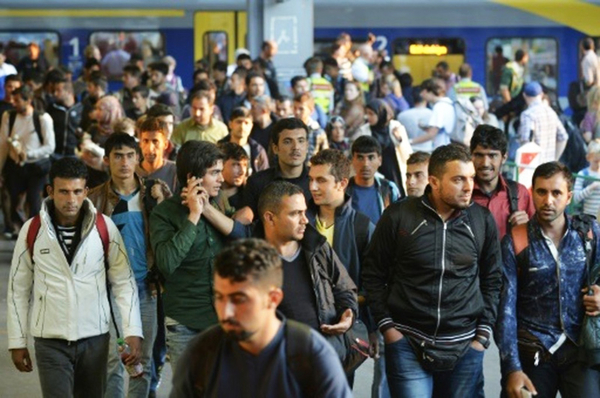
 

Is Russia Plotting To Bring Down OPEC?

October 11, 2015

Is Russia Plotting To Bring Down OPEC?

By
Posted on Sun, 04 October 2015 00:00

Source: Is Russia Plotting To Bring Down OPEC? | OilPrice.com

President Putin’s recent moves in the Middle East—to shore up Bashar al-Assad’s regime in Syria through deployment of combat aircraft, equipment, and manpower and build-out of air-, naval-, and ground-force bases, and the agreement in the last week with Iran, Iraq, and Syria on intelligence and security cooperation—could contribute to Russian efforts to combat the myriad negative pressures on Russia’s vital energy industry.

Live by Energy…

Energy is the foundation of Russia, its economy, its government, and its political system. Putin has highlighted on various occasions the contribution Russia’s mineral wealth, in particular oil and natural gas, must make for Russia to be able to sustain economic growth, promote industrial development, catch up with the developed economies, and modernize Russia’s military and military industry.

Even a casual glance at the IMF’s World Economic Outlook statistics for Russia shows the tight correlation since 1992 between GDP growth on the one hand and oil and gas output, exports, and prices on the other (economic series available here). According to the IMF’s 2015 Article Iv Consultation-Press Release and Staff Report, published August 3, oil and natural gas exports comprised 65 percent of exports, 52 percent of the Federal government budget, and 14.5 percent of GDP in 2014. Including their domestic contribution, hydrocarbons represent ~30 percent of GDP.

While oil and natural gas are crucial to Russia, Russia’s crude and natural gas are crucial to its neighbors on the Eurasian landmass. Russia supplied about 30 percent (146.6 bcm) of Europe’s natural gas in 2014, and about 25 percent of its crude (3.5 mmbbl/day) in 2013. Russia’s oil and natural gas are also important to its Asian and Central Asian neighbors.

It is not only the commodities that make Russia crucial, but its massive land-based infrastructure for their distribution throughout the Eurasian landmass. As Tatiana Mitrova, head of the oil and gas department, Energy Research Institute, Russian Academy of Sciences, pointed out regarding natural gas in The Geopolitics of Russian Natural Gas:

“Russia has a unique transcontinental infrastructure in the heart of Eurasia (150,000 km of trunk pipelines), which also makes it a backbone of the evolving, huge Eurasian gas market (which could include Europe, North Africa, the Commonwealth of Independent States (CIS), Caspian Sea region, and Northeast Asia). Control over the transportation assets in this region together with vast gas reserves make Russia the key element of this new market.”

The land-based oil distribution network is smaller, but also important. The 4,000 km Druzhba pipeline delivers about 1 mmbbl/day of crude to Europe—about 30 percent of total shipments to Europe. In the Far East, Rosneft shipped 22.6 million tons of crude to China in 2014 through the East Siberian Pacific Ocean (ESPO) pipeline.

The Russian government continues to seek to extend and expand the natural gas distribution infrastructure—into Europe, with various proposed pipeline projects (Nord Stream 2, Turkish Stream 2, 3, and 4, South European Pipeline), and into China, with two large pipeline projects, Power of Siberia Pipeline (to supply China from East Siberia), and the proposed Altai pipeline (to supply China from West Siberia).

…Death by Energy

In the last few years, the threats to Russia’s energy industry have multiplied and intensified. They pose an existential threat to the industry and therefore to the Russian economy:

– The revenues Russia can earn from its crude and natural gas exports face intense pressure. The Saudi decision to let the market set prices and to pursue market share, has led to steep declines in crude and petroleum product prices. The decision also has impacted natural gas export prices negatively, since, for Russia’s long-term supply agreements, they wholly or partially are indexed to oil prices. The transition in Europe to hybrid natural gas pricing models (which take European spot hub prices into account) also has pressured natural gas pricing. (Natural gas data from Gazprom).

Adding to the revenue pain, natural gas export volumes have been falling, according to Gazprom (which has a monopoly on pipeline exports), as have domestic volumes within Russia:

It is therefore not surprising that the aforementioned IMF Article Iv Consultation-Press Release and Staff Report projected sharp declines in 2015 and 2016 from 2014 levels for oil export revenues ($109.8 billion and $96 billion respectively) and natural gas export revenues ($12 billion and $14.3 billion respectively).

– The U.S. and European Union’s decisions to impose—and maintain—sanctions on Russia after its invasion and annexation of Crimea and invasion and informal annexation eastern Ukraine will pile more pressure on the Russian energy industry. They include bans on financing for and the supply of critical equipment and technology to important Russian energy projects. Novatek and its partners Total and Chinese National Petroleum Company still lack $15 billion of the $27 billion needed to finance the Yamal LNG plant. Denis Khramov, Russia’s deputy Minister of Natural Resources, said September 28 at a conference in Russia’s Far East that Rosneft and Gazprom are delaying some offshore drilling by two to three years because of sanctions and low oil prices. The sanctions are also impeding Gazprom’s ability to develop the Chayandinskoye and Kovyktinskoye fields in eastern Siberia, from which it plans to supply natural gas to China under the bilateral $400 billion, thirty year deal signed in 2014.

– Following the Russian invasion of Crimea and eastern Ukraine, The European Union is now even more determined to reduce its dependence on Russia for natural gas and to force Gazprom submit to EU competition rules. Europe has sought and continues to seek alternatives Russian natural gas (among them, U.S. LNG and Iranian pipeline and/or LNG). The European Commission, the European Union’s executive body, has refused to bless Gazprom’s proposed 55 bcm/year Nord Stream 2 natural gas pipeline project, citing existing surplus Gazprom pipeline capacity into Europe and insufficient future demand for Russian natural gas. Also, the EU Commission in April charged Gazprom with violating the EU’s anti-trust laws for anti-competitive practices and unfair pricing in Central and Eastern Europe. If found guilty, Gazprom could face substantial fines of around $1 billion. Even if Gazprom avoids fines and manages to reach a settlement with the EU, as it hopes to do, its European market share and pricing will remain under pressure into the future.

– The emergence of the U.S., along with Canada, as powerful crude, NGL, and natural gas producers is also a major concern for the Russian economy. This has transformed the U.S. from a market for Russian crude and natural gas (via LNG) to a global competitor. If, as seems increasingly likely, the ban on crude exports is lifted, U.S. crude will compete with Russian crude in several key markets. It would also force foreign suppliers to seek other markets for all or part of the exports they previously sent to the U.S. This in turn would intensify competition among these crude exporting countries for share in those markets. In regard to natural gas, its explosive output growth in the U.S. undercut Gazprom’s rationale for its Baltic LNG project (10 mtpa), turned the U.S. into a major (potential) LNG competitor in global LNG import markets, and, via the U.S. toll- and Henry Hub- pricing model, weakened Gazprom’s ability to insist on oil-indexed, long-term contracts.

Saving Russian Energy (and Russia) through the Middle East?

Putin’s moves in the Middle East could help Russia address the impact of these threats to the Russian energy industry. They potentially enhance the attractiveness of Russian crude and natural gas supplies compared to those from Saudi Arabia and its Gulf Arab allies.

In the selection of crude and natural gas suppliers, security is a key consideration for importers. Wary of U.S. naval power, the Chinese, for example, prefer pipeline natural gas supplies over seaborne LNG supplies. Importers therefore must take into consideration the potential threats to transport. In this critical area, Russia enjoys a decided advantage over Saudi Arabia and the Gulf Arab producers, which depend on sea transport through the Persian Gulf and the Red Sea to ship their oil and LNG.

Each of the three routes from these two bodies of water passes through a “choke point” (from the Red Sea, through the Suez Canal to Europe and through the Mandeb Strait to Asia, from the Persian Gulf through the Strait of Hormuz). By adding an airbase to their military presence in Syria, the Russians—coordinating with Iran, Syrian President Assad, and eventually possibly Iraq—would have the capability to disrupt shipments from Persian Gulf and Red Sea terminals.

Russia’s export channels are less susceptible to disruption. With the exception of LNG exports to Asia from Sakhalin, Russia sends natural gas to its customers via pipeline. About 70 percent of Russia’s seaborne oil exports are susceptible to choke points (shipments from two ports on the Gulf of Finland through the Baltic Sea to the Atlantic and one port on the Black Sea through the Turkish Strait/Bosporus to the Mediterranean), while 30 percent are not (pipeline shipments to Europe and ESPO pipeline shipments to the port of Primorsk near Vladivostok).

Putin’s moves also are strengthening Russia’s influence with OPEC. Russia already has extensive and close ties with Iran and Venezuela, and is now laying the basis for such ties with Iraq. Putin has aligned Russia with OPEC’s have nots–the members lacking financial resources to withstand low crude prices for an extended period and that have objected to Saudi policies (Iran, Iraq, Angola, Nigeria, Libya, Algeria, Ecuador, and Venezuela)—against the haves (Saudi Arabia, Kuwait, the UAE, and Qatar). He has continually supported Venezuelan President Maduro’s calls for an emergency OPEC meeting on prices and his efforts to persuade Saudi Arabia to reverse its policy. Most recently, in the beginning of September, Putin told Maduro that the two countries “must team up to shore up oil prices”.

In addition, Russia’s deputy prime minister in charge of energy policy, Arkady Dvorkovich, in the beginning of September made comments that, in tone and substance, mocked Saudi policy, saying that “OPEC producers are suffering the ricochet effects of their attempt to flush out rivals by flooding the world with excess output,” expressing doubt that OPEC members “really want to live with low oil prices for a long time,” and implying that Saudi policy is irrational.

Indeed, Russia can be seen as maneuvering to split OPEC into two blocs, with Russia, although not a member, persuading the “Russian bloc” to isolate Saudi Arabia and the Gulf Arab OPEC members within OPEC. This might persuade the Saudis to seek a compromise with the have nots.

A strategic alliance with Iran and Iraq offers Putin two more potential avenues to pressure the Saudis. They can test Saudi determination to defend their market share at any price and its wherewithal financially to do so. Iran claims it can raise crude output by one million barrels within six or so months of the lifting of sanctions. The Saudis may be calculating that Iran must first rehabilitate its oil fields and that Iran, cash poor, cannot do so quickly. If this is the case, Russia could step in, offer Iran financing, and force the Saudis to contemplate prices staying lower longer than they anticipated and therefore continuing pressure on their economy.

Russia also could cooperate with Iran and Iraq to take market share from Saudi Arabia in the vital Chinese market. As a recent Bloomberg article pointed out, Saudi Arabia, Iran, Russia, Iraq and other countries are vying intensely for sales to China, the second largest import market and the major source of demand growth in coming years. Coordinating their pricing and consistently offering the Chinese prices below the Saudi price, they could seek to win market share. Such a price war would pressure the competitors’ currencies.

Since the Russians allow the Ruble to float, Iran maintains an informal and unofficial peg for its Rial to the US$, and Iraq has indicated it is willing to adjust its peg if necessary, while the Saudis are committed to the Riyal’s peg to the US$, Russia, Iran, and Iraq would have any advantage over Saudi Arabia. To the extent that Iran and Iraq allowed their currencies to adjust, Russian, Iranian, and Iraqi revenues in local currency terms would not decline as much as Saudi revenues fixed in US$ (and might even increase) as their currencies depreciated.

Results

Each of these opportunities offers the possibility to address the pressures on the Russian energy industry. However, Putin will have to play his cards carefully. Played heavy-handedly, he could intensify fears in Europe of excessive dependence on Russian energy supplies and awaken such fears in China. This could lead the Europeans and Chinese to search for other suppliers. In addition, mismanaged confrontation with the U.S. and Europe in and over Syria could lead to broadening and strengthening of economic and financial sanctions. Moreover, neither Iran nor Iraq will want to become overly dependent on Russia, which lacks the resources they need develop their energy industries.

Finally, the opportunities assume Putin’s gambits in Syria and with Syria, Iran, and Iraq in intelligence and security cooperation will succeed. And this, given the Soviet experience in Afghanistan and Putin’s experience in eastern Ukraine, is far from certain.

Check Out What Obama’s Former Pastor Says About Jesus During Million Man March Speech

October 11, 2015

Check Out What Obama’s Former Pastor Says About Jesus During Million Man March Speech, The Blaze, October 10, 2015

(Obama was a member of the Reverend Mr. Wright’s church for some twenty years. However, he never heard a single word that he said.

Please see also, Jeremiah Wright: Jesus was a Palestinian! at Power Line and Jeremiah Wright claims ‘Jesus was a Palestinian’ at American Thinker. The latter begins,

The man who married Barack and Michelle Obama, baptized their daughters, gave him the title of one of his books, and was the only beneficiary of his charity dollars before Obama’s presidential run, has made a remarkably ignorant antisemitic claim.

— DM)

The Rev. Jeremiah Wright, former pastor of President Barack Obama, offered the traditional Muslim greeting — “salaam alaikum” — at the beginning of his speech at the 20th anniversary of the Million Man March in Washington on Saturday.

Then the pastor emeritus of Chicago’s Trinity United Church of Christ launched into an appeal for “Palestinian justice” and for blacks to stand with them.

rev-jeremiah-wright-e1444529619382Image source: C-SPAN

Not mentioning Israelis, he called Palestinians the “original people” — and then offered the crowd a reminder.

“Please remember, Jesus was a Palestinian,” Wright said.

He added that Palestinians are fighting against those who say “their god told them they could have somebody else’s country,” calling it “one of the most egregious injustices in the 20th and 21st centuries.”

Wright also said that youths in Ferguson, Missouri, and youths “in Palestine” have “united” and that blacks should join them.

Wright made headlines in 2008 after his sermons were examined and Barack Obama — then campaigning for the presidency — was forced to renounce his former pastor‘s controversial statements (e.g., “No, no, no, not God bless America! God damn America — that’s in the Bible — for killing innocent people.”)

After Obama’s election, Wright commented in 2009 that “them Jews” were keeping him from the new president. ”Them Jews ain’t going to let him talk to me,” Wright told the Daily Press of Newport News, Virginia. “I told my baby daughter that he’ll talk to me in five years when he’s a lame duck, or in eight years when he’s out of office.”

Here’s the clip from Wright’s Saturday speech: