Archive for August 22, 2015

Unveiling new missile, Rouhani says Iran will obtain ‘any weapons we need’

August 22, 2015

Unveiling new missile, Rouhani says Iran will obtain ‘any weapons we need’

‘We can negotiate with other countries only when we are powerful,’ says president at ceremony displaying precision solid-fuel rocket

By Times of Israel staff August 22, 2015, 12:00 pm

via Unveiling new missile, Rouhani says Iran will obtain ‘any weapons we need’ | The Times of Israel.

In this photo released by the official website of the office of the Iranian Presidency on Saturday, Aug. 22, 2015, Iran's President Hassan Rouhani, left, briefs the media as Defense Minister Hossein Dehghan listens after unveiling the surface-to-surface Fateh-313, or Conqueror, missile in a ceremony marking Defense Industry Day, Iran. (Iranian Presidency Office via AP)

In this photo released by the official website of the office of the Iranian Presidency on Saturday, Aug. 22, 2015, Iran’s President Hassan Rouhani, left, briefs the media as Defense Minister Hossein Dehghan listens after unveiling the surface-to-surface Fateh-313, or Conqueror, missile in a ceremony marking Defense Industry Day, Iran. (Iranian Presidency Office via AP)

Iran on Saturday unveiled a new surface-to-surface ballistic missile with a 500-kilometer (310 miles) range, saying military might was a precondition for peace and effective diplomacy.

The Fateh 313 missile was unveiled during a ceremony marking the anniversary of Iran’s military industry, attended by Iranian President Hassan Rouhani.

The military industry called the solid-fuel missile one of the most exact ever manufactured, boasting that it has successfully hit multiple targets with great precision, Israel’s Walla website reported.

“We will buy, sell and develop any weapons we need and we will not ask for permission or abide by any resolution for that,” Rouhani said in a speech at the ceremony, which was broadcast live on state television, according to Reuters.

“We can negotiate with other countries only when we are powerful. If a country does not have power and independence, it cannot seek real peace,” the president said.

A senior commander in Iran’s Revolutionary Guards said Friday that the country is planning massive “ballistic missiles war games,” adding that the announcement comes after Tehran said it plans to begin phasing in a new generation of missiles.

“The IRGC Aerospace Force will hold a large-scale ballistic missiles war-games soon,” Brigadier Gen. Amirali Hajizadeh said, according to the state-run Fars news agency.

Tehran said last month that its ballistic missile program was not connected to the UN Security Council resolution endorsing the July 14 accord with world powers that limits its nuclear program.

Under the terms of the agreement, Iran is barred from developing ballistic missiles capable of carrying a nuclear warhead.

Iran says it has ballistic missiles with a range of 2,000 kilometers (1,200 miles), which are capable of striking both Israel and Saudi Arabia. But the Foreign Ministry said that the UN’s resolution endorsing the deal did not have jurisdiction over its missile development.

“Iran’s military capacities, especially ballistic missiles, are strictly defensive and, as they have not been conceived to carry nuclear weapons, they are outside the scope and competence of the Security Council resolution,” the ministry wrote in a statement.

“The Islamic Republic of Iran is committed to implementing its commitments… so long as world powers keep their side of the agreement to lift sanctions in exchange for guarantees that Tehran will not develop a nuclear program,” the statement said.

Khamenei urges Islamic unity against real enemies: US and Israel

August 22, 2015

Khamenei urges Islamic unity against real enemies: US and Israel

Leader suggests Iranians use Mecca pilgrimage to spread truth about ‘bullying powers’ to Muslims worldwide

By Itamar Sharon August 22, 2015, 5:03 pm

via Khamenei urges Islamic unity against real enemies: US and Israel | The Times of Israel.

Iranian Supreme Leader Ayatollah Ali Khamenei (photo credit: AP/Office of the Supreme Leader)

Iranian Supreme Leader Ayatollah Ali Khamenei (photo credit: AP/Office of the Supreme Leader)

Iran’s supreme leader claimed Saturday that Islamic nations were being manipulated into internal strife by the world’s “bullies” and urged Islamic unity in the face of what he identified as the Umma’s two greatest enemies: the US and Israel.

Ayatollah Ali Khamenei said the US had long sought to incite “third-party” states against Iran but “such third parties are only deceived puppets,” the Islamic republic’s Fars news agency reported.

“The root cause of the problems returns to their real enemies, the US and Israel,” he said.

The bullying powers, as he called them, are conspiring “against the Quran and not Shiism and Iran, because they know that the Quran and Islam are the center of awakening nations.”

Iranians, he said, “have realized that their real stubborn enemy is the world arrogance and Zionism and that’s why they chant slogans against the US and Zionism.”

Khamenei was speaking to Iranian officials in charge of the Hajj — the annual pilgrimage to Mecca that Muslims from all over the world undertake.

He explained to them that the pilgrimage to Mecca was a prime opportunity for Iranians to convey their aforementioned insights to other Muslims and thus encourage Islamic unity against its true enemies.

“The world bullies are fully, seriously seeking to stir violence and discord under the name of Islam and are trying to disrepute the religion of Islam, foment internal fights among Islamic nations and even among the people of one nation to weaken the Muslim Ummah, and transferring the Iranian nation’s experience about unity and recognition of the enemy to other nations in the Hajj season can defuse these plots,” he said.

Since the signing of the nuclear deal between Iran and world powers in July, Khamenei has repeatedly spoken out against Tehran’s main negotiating partners in Washington.

Earlier this week he strongly impugned the motives of the US in the talks, saying “their intention was to find a way to penetrate into the country.

Khamenei, who has final say on all state matters in Iran, has not publicly approved or disapproved the deal, though he repeatedly offered words of support for Iran’s nuclear negotiators during the course of the talks.

Last Saturday a prominent Iranian hard-liner, journalist Hossein Shariatmadari, said he believed Khamenei was in fact opposed to the accord. However, an editorial appearing Sunday in the Tasnim news agency, thought closely tied to the Iranian regime, derided Shariatmadari for claiming to speak for Khamenei.

Likud MK slams Barak for tapes discussing Israeli plans to attack Iran

August 22, 2015

Likud MK slams Barak for tapes discussing Israeli plans to attack Iran

Knesset Defense Committee member says Israel’s security hurt by disclosure of debates on aborted strikes in 2010, 2011 and 2012

By Times of Israel staff August 22, 2015, 2:55 pm

via Likud MK slams Barak for tapes discussing Israeli plans to attack Iran | The Times of Israel.

Likud MK Yoav Kish (screen capture: YouTube)

Likud MK Yoav Kish (screen capture: YouTube)

Likud MK Yoav Kish on Saturday lambasted former defense minister Ehud Barak for making recordings in which he details Prime Minister Benjamin Netanyahu’s unsuccessful attempts to win approval for a military strike on Iran’s nuclear facilities.

Kish, a member of the Knesset’s Foreign Affairs and Defense Committee, questioned Barak’s motives for making the recordings, saying he was uncertain what “political gain” Barak hoped to achieve, Israel’s Maariv newspaper reported.

Channel 2 television on Friday night broadcast the recordings, which relate to a new biography of Barak being written by Danny Dor and Ilan Kfir. The former defense minister, who was also previously prime minister and chief of staff, attempted to prevent the recordings being played, but Israel’s military censors allowed Channel 2 to play them.

In the recordings, Barak said he and Netanyahu on more than one occasion sought to order an Israeli Air Force attack on Iran’s nuclear facilities, but were scuppered first by chief of staff Gabi Ashkenazi in 2010, who said the IDF was not ready for the operation, and then by fellow cabinet ministers Moshe “Bogey” Ya’alon and Yuval Steinitz, who did not support the idea. He also said a 2012 strike was aborted because it coincided with a joint Israel-US military exercise.

Gantz, then-Defense Minister Ehud Barak, and Maj. Gen. Gadi Eizenkot during a February 15, 2011 tour of the northern border (photo credit: Ministry of Defense/ Flash 90)

“On Friday we were exposed to cabinet deliberations of a preemptive attack on Iran via the story of Ehud Barak, the defense minister at the time. Publishing the discussions is the responsibility of the IDF censor and of Ehud Barak. The censor was wrong to approve the publication of the book on this issue,” said Kish, a freshman MK and former Israeli Air Force fighter pilot.

“The reports from the forum [of senior ministers] are the most sensitive in the state and disclosure of information on the issue, which is still a major threat to Israel, harms state security,” Kish continued. “I do not know what political gain Ehud Barak sought to achieve with these reports, but we would do well to cease the online chatter.”

Kish is one of the leaders of the “New Likud” movement, which calls for Likud to return to its liberal roots, and the lion’s share of its agenda, as published on its website, deals with social justice issues like the cost of living and ultra-Orthodox military service.

Inspector Clouseau was unavailable (4)

August 22, 2015

Inspector Clouseau was unavailable (4), Power LineScott Johnson, August 21, 2015

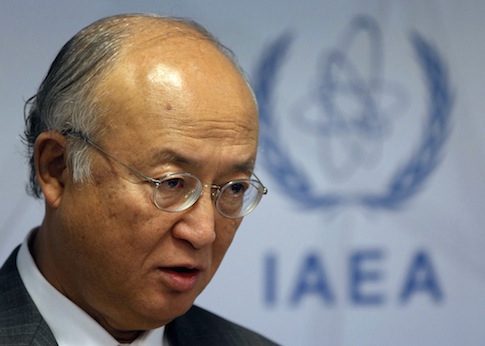
Amano’s defense of the Parchin side deal comes amid speculation that the IAEA is being subject to overwhelming pressure by the Americans and the Iranians. On the American side, the leverage is straightforward: Amano is up for reelection next year, and he perennially relies on Western nations to provide him with slim majorities [r].

************************

Omri Ceren emails an update on the IAEA side deal with Iran on Parchin. I think that readers who have followed this important story so far will find this of interest as well. Omri writes:

As was more or less inevitable, today was all about the AP scoop describing the secret IAEA-Iran side deal on Parchin, the military base where Iran conducted hydrodynamic experiments relevant to the detonation of nuclear warheads. The IAEA has been trying to get access to the facility for years to figure out how far the Iranians got, as a prerequisite to setting up a verification regime preventing them from going further. The Obama administration told lawmakers throughout the Iran talks there could be no deal without the Iranians providing that access, but the AP yesterday published the text of a side deal between the IAEA and Iran indicating that the West had caved on that demand.

The document, titled “Separate arrangement II” – which was referenced in a Wednesday AP story and published Thursday – indicates that Iranians will be allowed to inspect themselves for evidence of the nuclear work they conducted at Parchin [a][b]. Instead of allowing IAEA inspectors to collect evidence from the facility, samples will be collected by the Iranians using Iranian equipment. Instead of allowing the IAEA to collect everything it wants, only seven samples will be handed over from mutually agreed upon areas. Instead of giving inspectors access to facilities, photos and videos will be taken by the Iranians themselves, again only from mutually agreed upon areas.

Iran deal supporters haven’t settled on just one response. As of last night administration liaisons were playing for time by telling lawmakers that the earlier AP story about the side deal was just a rumor. Then the AP published the actual draft. So this morning White House allies – including groups that have worked with the administration in lobbying Congress – tweeted around the theory that maybe the AP document was forged, at one point even referencing Israeli Prime Minister Benjamin Netanyahu [c][d][e]. Other validators have been trying to argue that the IAEA can still do its work even without access [f]. The White House will end up taking that latter claim – the IAEA stuff, not the Parchin Truther insanity – and insulating it with the argument that past work doesn’t matter anyway because what matters is the verification regime for future inspections. State Department spokesman Kirby was already floating that claim at yesterday’s press briefing [g].

That talking point might work on a political level. Administration officials can simply assert that the side deal is adequate and then – when pressed for details – declare that they can’t reveal their reasoning because it’s classified. They’ll heavily leverage yesterday’s statement from IAEA chief Amano saying that, for all sorts of classified reasons, the IAEA can live with the arrangement [h]. The opacity might well get the White House through the next month and a half of Congressional review.

But on a policy level, the side deal guts the JCPOA’s verification regime for future violations, which the administration has put at the center of the Iran deal. Administration officials really had no choice: once they gave up on any demands that would physically preclude the Iranians from going nuclear – dismantling centrifuges, mothballing facilities, etc – verification was all they had left. But it’s difficult to see how the pretense of verification can be sustained now that the Parchin side deal has been detailed:

(1) The side deal will become the precedent for future inspections of military sites — The Parchin arrangement – no physical access, restricted sampling, restricted video surveillance, etc. – will likely be used at least in part as a precedent for inspections of future sites. There is at least one other secret side deal out there: the AP’s Parchin document describes itself as “Separate arrangement II,” so presumably there’s a ‘Separate arrangement I’ that isn’t public and that may describe the verification arrangements. The Iranians were already saying that the future verification regime will not include inspector access to military sites, which would track with the Parchin precedent [j][k][l]. David Albright, president of the Institute for Science and International Security, told CNN about the Parchin arrangement “you have to worry that this would set a bad precedent in the Iran context and in the context of other countries” [m]. Rep. Royce sent Kerry a letter a few weeks ago that was even more explicit: the “side deals of today will become central to the agreement’s verification provisions tomorrow” [n] [quote omitted].

(2) IAEA sign-off suggests the agency has bent to political pressure — The Parchin arrangement is a humiliation for the IAEA. Heinonen told CNN that “It is very unusual… I find it really hard to understand why you would let someone else take the samples and only see through the camera” while Albright said “It’s really not normal… I don’t know why they accepted it. I think the IAEA is probably getting a little desperate to settle this” [o]. Until very recently Amano was explicit that the agency required further access to Parchin to resolve PMD issues: last March he “what we don’t know [is] whether they have undeclared activities or something else. We don’t know what they did in the past… we cannot tell we know all their activities” and last June he reiterated “the Agency is not in a position to provide credible assurance about the absence of undeclared nuclear material and activities in Iran” [p][q].

Amano’s defense of the Parchin side deal comes amid speculation that the IAEA is being subject to overwhelming pressure by the Americans and the Iranians. On the American side, the leverage is straightforward: Amano is up for reelection next year, and he perennially relies on Western nations to provide him with slim majorities [r]. On the Iranian side, there are several mechanisms that are getting attention. Some are overt: this week Iran’s Fars News Agency published a boast that Amano knew he “would have been harmed” had he disobeyed Iranian wishes and revealed details of the side deal to Congress (the threat was scrubbed after it garnered international attention; some Iran defenders have suggested that Fars published the threat due to a mistranslation of a speech, though it’s unclear why having a state-controlled vehicle go out of its way to mistranslate and publish a threat is supposed to be reassuring [s][t]). Other Iranian pressure mechanisms are more subtle: for the first eight years of the JCPOA Iran is only bound to provisionally apply, rather than to ratify, the Additional. Even JCPOA supporters describe the concession as being “all about Iran keeping some leverage over the IAEA… it wants to be able to keep the option of revoking its provisional implementation, and not ratifying the AP, as leverage” [u].

[a] http://bigstory.ap.org/article/d8bfeff00c8341caab084841f44d9cde/what-secret-agreement-between-iran-and-un-says
[b] http://bigstory.ap.org/article/bedd428e26924eed95c5ceaeec72d3a4/text-draft-agreement-between-iaea-iran
[c] https://twitter.com/jstreetdotorg/status/634743999597801472
[d] https://twitter.com/tparsi/status/634743163467526144
[e] https://twitter.com/Max_Fisher/status/634726697263349761
[f] http://www.nbcnews.com/id/57764838/ns/msnbc-all_in_with_chris_hayes/#.VdeLL_mrT4Y
[g] http://www.state.gov/r/pa/prs/dpb/2015/08/246211.htm
[h] https://www.iaea.org/newscenter/pressreleases/statement-iaea-director-general-yukiya-amano-1
[i] http://www.powerlineblog.com/archives/2015/07/speaking-of-iran-6.php
[j] http://english.farsnews.com/newstext.aspx?nn=13940429001105
[k] http://en.mehrnews.com/news/108760/No-military-sites-inspections-Velayati
[l] http://www.latimes.com/world/middleeast/la-fg-iran-deal-zarif-20150722-story.html
[m] http://edition.cnn.com/2015/08/20/politics/iran-inspections-report-nuclear-deal-experts/index.html
[n] http://foreignaffairs.house.gov/sites/republicans.foreignaffairs.house.gov/files/Parchin%20side%20deal_0.pdf
[o] http://www.cnn.com/2015/08/20/politics/iran-inspections-report-nuclear-deal-experts/index.html
[p] http://www.pbs.org/newshour/bb/iaea-monitoring-irans-nuclear-program/
[q] https://www.iaea.org/newscenter/statements/introductory-statement-board-governors-63
[r] http://carnegieendowment.org/2012/11/20/plan-for-iaea-safeguards
[s] http://freebeacon.com/national-security/iran-threatened-harm-to-top-nuke-inspector-to-prevent-disclosure-of-secret-deal/
[t] http://english.farsnews.com/newstext.aspx?nn=13940526000960
[u] http://armscontrollaw.com/2015/07/15/much-much-more-on-the-jcpoa/

Train gunman: French intelligence fails again to distinguish between informer and Islamist terrorist

August 22, 2015

Train gunman: French intelligence fails again to distinguish between informer and Islamist terrorist.

DEBKAfile Special Report August 22, 2015, 9:18 AM (IDT)

Injured terror victim taken off train in France

Injured terror victim taken off train in France

The Moroccan gunman, Ayoub Qahzzani, 26, who injured three passengers on the Amsterdam-Paris fast train Friday, Aug. 21, before he was subdued, was one more Muslim extremist known to French intelligence who was nonetheless able to commit an act of terror.

He was heavily armed, yet two unarmed American servicemen and other passengers tackled him and so prevented a massacre on the packed Thalys train as it sped through Belgium.

Commended for bravery were Anthony Sadler, from Pittsburg, California, Alek Skarlatos from Roseburg, Oregon, and Chris Norman, a Briton living in France.

The terrorist was arrested when the train stopped at Arras in northern
debkafile’s counterterrorism sources: El-Qahzzani resided in Spain for some years before traveling to Syria in 2014 and then moving to France. It turns out that he was under the radar both of Spanish and French counterterrorism authorities. This was yet another case of a potential terrorist threat, suspected of contact with the Islamic State in Syria, who was nevertheless at large.

This selfsame scenario has been repeated time and again. Last month, another suspect under French surveillance beheaded the owner of a US-owned gas factory near Lyon and seriously injured two people. An intelligence file was opened on his case in 2006 and not renewed in 2008.
Three years ago, Mohamed Merah murdered a teacher and three pupils at a Jewish school in Toulouse after killing two French servicemen. Not only was he known to French security services, but they had sent him on trips to the Middle East and Israel.

The terrorist who attacked the Jewish Museum in Brussels in May 2014 and murdered a Jewish couple and a museum guard was a familiar face to the French secret service. Its agents were indeed waiting for when he stepped off the bus from Belgium.
In the most dramatic attack, the Islamist terrorists who raided the Charlie Hebdo satirical magazine for a massacre – and the killer who murdered four Jews at a Paris supermarket three days later – were likewise on the books of French security services.

Since the Charlie Hebdo attack, France has been on high security alert for terror.

The high-speed train is popular for travel between France, Belgium, the Netherlands and Germany. It is used extensively by businesspeople, diplomats, European Union officials and tourists. Yet, unlike the Eurostar train between Paris and London, luggage does not pass through X-ray machines or other forms of screening.

President Francois Hollande is rightly outraged and stricken by these tragedies, but it is also his responsibility to prevent their systematic recurrence on his watch. Every one of those episodes has been characterized by the perpetrators being “known to French intelligence.”

It is therefore obvious that French anti-terror agencies are badly in need of an overhaul and a fresh approach to the recurrent terrorist attacks, that enables them to differentiate between inside informers and dangerous terrorists, otherwise the next outrage will not be long in coming.

Inspector Clouseau was unavailable (3)

August 22, 2015

Inspector Clouseau was unavailable (3), Power LineScott Johnson, August 21, 2015

I think it is very likely the side-deal documents were drafted by the United States and given to the IAEA, which agreed to make them into secret agreements with Iran to finalize the main agreement.

***********************

The pushback against George Jahn’s AP scoop on the IAEA side deal with Iran now includes the allegation that the draft of the side deal posted by the AP is a forgery — perhaps an Israeli forgery. Fred Fleitz has reported the relevant details with links and evidence here at NR’s Corner. Fleitz’s knowledgeable assessment seems reasonable to me:

First, the errors and non-IAEA prose in the AP’s transcribed document appear to indicate a first draft written by a party other than Iran or the IAEA to resolve the Parchin issue. This is consistent with my assessment that the side deal documents were drafted by the United States and handed to the IAEA to finalize after U.S. diplomats were unable to resolve the issues of the Parchin military base and possible military dimensions of Iran’s nuclear program during the talks. The AP says it was told by two anonymous officials that this document is a draft and “does not differ from the final, confidential agreement between the IAEA and Iran.” I believe it probably is a first draft written by a political appointee at the State Department or an NSC staffer.

Second, to believe this is a forgery one has to believe George Jahn and the Associated Press were deceived by two anonymous diplomats or U.S. officials. I doubt this could happen to a reporter as experienced as Jahn. (MSNBC believes otherwise and attacked Jahn as “not a real reporter” for his article.) The AP is standing by this story and I doubt it would put its reputation on the line if it did not believe Jahn’s article was rock solid.

Third, claims by backers of the Iran deal that this is an Israeli forgery are nonsense. If the Israelis wanted to do a forgery like this it would be perfect. An Israeli foreign ministry or intelligence officer would never use the wrong terminology for Iran.

My bottom line is that the side-deal document transcribed by the AP is not a forgery but a first draft written by a third party that is essentially the same as the final version agreed to by the IAEA and Iran. The outstanding question is who wrote this initial draft. Given Secretary Kerry’s efforts in May and June to drop the issues of the Parchin base and possible military dimensions, I think it is very likely the side-deal documents were drafted by the United States and given to the IAEA, which agreed to make them into secret agreements with Iran to finalize the main agreement.

Fleitz adds in the final paragraph of his post that “what [Jahn] reported apparently is consistent with classified briefings provided to Congress on the secret side deals[.]”

I trust that all will become clear in time. The relevant self-inspection provisions of the side deal are so absurd that they should be fraudulent. Consistent with Fleitz’s conclusion, however, I believe they will prove to be an integral part of the finalized side deal. Neither the administration nor the IAEA disputes the accuracy of Jahn’s reportage. I conclude that the terms of the side deal reported by Jahn are a joke, but not a forgery.

Cartoon of the day

August 22, 2015

H/t Conservative Tree House


Cong-Sign-600-LI

Not Satire | White House Allies Suggest Israel Forged Iran-IAEA Agreement Document

August 22, 2015

White House Allies Suggest Israel Forged Iran-IAEA Agreement Document, Washington Free Beacon, August 21, 2015

"Director

Trita Parsi, the head the National Iranian American Council (NIAC), another White House-allied group, hinted that Israeli President Benjamin Netanyahu might have forged the document himself. (Huh? — DM)

*********************

Top White House allies are mounting a campaign to discredit recent reports Iran will be responsible for investigating its own military facility for evidence of nuclear activities under an agreement between international inspectors and Tehran.

The International Atomic Energy Agency will rely on Iran to collect its own environmental samples and turn over photos and videos from its suspected nuclear military site Parchin, according to a draft of a secret side-deal between the agency and the Iranian government published by the Associated Press on Thursday.

White House allies rushed to denounce the report, accusing the AP of publishing a phony document and suggesting that the Israeli government forged it to undermine the Obama administration’s Iran deal.

J Street, one of a number of groups that has been meeting with White House officials as part of a lobbying push to support the nuclear deal, questioned the accuracy of the document obtained by the AP on Friday and suggested that it was forged by Israel.

“The AP report should be thoroughly investigated and verified,” J Street tweeted. “Very worrying if there is any doubt of authenticity.”

Obama administration officials and the IAEA have not disputed the authenticity of the document. The existence of the Parchin side deal was first mentioned publicly by Sen. James Risch (R., Idaho) at a Senate Foreign Relations Committee hearing last month.

Trita Parsi, the head the National Iranian American Council (NIAC), another White House-allied group, hinted that Israeli President Benjamin Netanyahu might have forged the document himself.

Parsi noted that the draft document published by AP referred to the “Islamic State of Iran” in one instance, instead of the “Islamic Republic of Iran.”

“The only one who refers to Iran as ‘Islamic State of Iran’ is Netanyahu. And strangely, @AP‘s dubious ‘draft’ of the IAEA-Iran agreement…” wrote Parsi on Twitter.

Others also floated the idea that Israel fabricated the document and leaked it to the AP.

“Could it be that #Israel stands behind leaking this document to #AP?” tweeted Said Arikat, the Washington bureau chief for Al Quds daily newspaper.

Jeffrey Lewis, a professor at the Middlebury Institute of International Studies at Monterey (MIIS) who tweets under the name ArmsControlWonk, also questioned the accuracy of the report on Twitter.

MIIS, J Street, and NIAC have all received funding from the Ploughshares Fund, one of the top financers of the lobbying campaign to support the Iran deal.

The pushback against the AP story, and insinuations about Israeli sabotage, follow a months-long campaign to discredit Jewish lawmakers and others who have announced their opposition to the deal.

These attacks include charges of “dual loyalty” against Jewish politicians, which pro-Israel groups said crossed the line into anti-Semitism.

Vox blogger Max Fisher also argued that the AP story was “badly flawed,” noting that an ex-IAEA official questioned its authenticity and that some details were removed from the story after it was posted. The AP later added those details back into the article and said it had been shorted for brevity and not due to accuracy issues.

“As with many AP stories, indeed with wire stories generally, some details are later trimmed to make room for fresh info so that multiple so-called ‘writethrus’ of a story will move on the AP wire as the hours pass,” AP spokesperson Paul Colford told Fisher. “It was unfortunate that some assumed (incorrectly) that AP was backing off.”

AP reporters noted that the Obama administration and the IAEA have not disputed the document’s authenticity.

“If you don’t want to believe the report, so be it. But I would look for someone to actually deny what’s in it,” said AP diplomatic reporter Matt Lee in a tweet to Fisher.

“I am curious if you have managed to find a current official anywhere to back up the fraud claim,” Lee later added. As of Friday afternoon, Fisher had not.

The original AP article was written by Vienna bureau chief George Jahn.

According to the report, a draft of a side deal between the IAEA and Iran would allow the Iranian government to police its own military site for nuclear activities.

Iran has been accused of conducting nuclear detonations testing at the Parchin military facility, and supporters of the nuclear agreement said the site would be opened to international inspectors under the deal.

But according to the AP, the IAEA side agreement would not allow independent inspections of Parchin. Instead the Iranian government would turn over photographs and videos of the military site to the IAEA.

Under the deal, Iran would collect its own environmental samples from the Parchin military facility, which international inspectors would then test for nuclear residue.

Iran has been accused of conducting nuclear detonations testing at Parchin, and supporters of the nuclear deal said the facility would be opened to international inspectors under the recently signed agreement.