Archive for August 5, 2015

Mark Moyar: Lurching without direction

August 5, 2015

Mark Moyar: Lurching without direction, Power Line, Mark Moyar, August 5, 2015

Because crisis management focuses on reducing symptoms rather than eliminating causes, its practitioners typically resort to half measures and token gestures. By demonstrating that the White House is “doing something,” symbolic actions often suffice to alleviate press scrutiny and public pressure for action, at least temporarily. They seldom remedy the problem that they were ostensibly addressing.

**********************

Mark Moyar is Visiting Scholar at The Foreign Policy Initiative and the author, most recently, of the important new book Strategic Failure: How President Obama’s Drone Warfare, Defense Cuts, and Military Amateurism Have Imperiled America. We invited Mark to write something for us bearing the subject of his book. He has responded with this column:

Last year, shortly before Barack Obama fired him, Secretary of Defense Chuck Hagel chided America’s President for “lurching from crisis to crisis without direction.” The treatment of foreign policy as an exercise in ad hoc crisis management has characterized Obama’s entire Presidency, as indeed it has every Democratic Presidency of the last half century. Fixated on domestic affairs and reluctant to assert American power overseas, Democrats from Lyndon Johnson to Barack Obama have viewed foreign policy challenges as nuisances to be kept off the front page of the New York Times, rather than problems to be solved through a coherent grand strategy.

Whereas a good strategy drives an active foreign policy, crisis management is inherently reactive. International problems reach the President’s attention mainly when they generate inordinate press coverage or cause a spike in unfavorable polling. Active adversaries, like North Vietnam in 1964 and Russia and ISIS in 2015, have consistently beaten a reactive United States to the punch and dodged the counterpunches.

Because crisis management focuses on reducing symptoms rather than eliminating causes, its practitioners typically resort to half measures and token gestures. By demonstrating that the White House is “doing something,” symbolic actions often suffice to alleviate press scrutiny and public pressure for action, at least temporarily. They seldom remedy the problem that they were ostensibly addressing.

In the case of Syria, Obama rejected recommendations from his cabinet to arm moderate Syrian rebels until 2013, by which time most of the moderate rebels had been killed or co-opted by extremists. He then decided to train and equip rebel forces in such small numbers and with such restrictions on their activities as to render them insignificant. When ISIS advances compelled Obama to restart American training of Iraqi forces, Obama put a ceiling on the number of U.S. trainers that limited throughput to 3,000 trainees per year, too few to make a difference in the war against ISIS or to lessen the influence of the 100,000 Iraqi Shiite militiamen whom the Iranians were training.

In Afghanistan, Obama authorized a troop surge, but began withdrawing troops much earlier than his generals advised, preventing completion of the military’s counterinsurgency campaign and discouraging Afghans from siding with the pro-American government. In Libya, Obama joined a NATO campaign against Muammar Gadhafi after international outrage about Gadhafi’s atrocities reached fever pitch, but his refusal to send American military forces to help secure the peace or protect American interests led to the collapse of central governance and the killing of the U.S. ambassador at Benghazi.

Of the recent additions to the administration’s list of token gestures and half measures, the most flagrant offender is Obama’s nuclear deal with Iran. Less well known is his response to the crisis of Russian expansionism. For more than a year, Eastern European allies and American critics—some of them within the Obama administration—have been calling for tougher American actions to discourage further Russian advances. Obama finally made his token gesture at the end of June, announcing that the United States would send American troops and heavy weaponry to several eastern European countries.

The joy that the initial announcement may have brought the eastern Europeans quickly faded when they saw the fine print, which was issued by U.S. ambassador to NATO Douglas Lute. The United States, Lute explained, was not going to deploy forces to eastern Europe on a permanent basis. “The tanks are empty, the … vehicles are empty, and will be parked, stored and maintained in training areas across the six Eastern most allies for training purposes,” Lute said. “Then the soldiers, on exercise after exercise, will be flown in.” One doubts that the Latvians will feel secure, or the Russians will feel deterred, by empty American vehicles and occasional visits from jet-setting American soldiers.

Many of Obama’s token gestures and half measures are clearly intended to keep simmering crises from boiling over until Obama leaves office. Administration spokesmen have repeatedly said that defeating ISIS will be a “multiyear” effort. The diluted U.S. military presence in Afghanistan is scheduled to last until the end of Obama’s term. Most of the fallout from Obama’s bad Iran deal will not hit ground until someone else occupies the White House. Obama and his proxies will no doubt craft stories explaining how his successor’s errors undid all of his foreign policy masterstrokes.

The President’s tokenism also serves one of the few national security objectives that Obama has pursued with any consistency, the diminution of American military power. The White House ramped up drone strikes in Pakistan and Yemen as a means of diverting the American people’s attention and showing that the United States could still do damage to terrorists without large military forces. While boasting about the number of people killed by drones, Obama quietly forced through drastic reductions in the armed services and withdrew American forces from critical regions. The drone strikes, in actuality, succeeded mainly in killing low-level fighters and antagonizing the Pakistani and Yemeni governments to the point that the United States eventually had to discontinue most strikes.

If one believes that Obama’s foreign policy should be driven by mitigation of immediate crises, particularly those that might detract from perceived domestic achievements such as Obamacare and environmental regulation, then there may be cause for optimism about the next year and a half. If, on the other hand, one believes that Obama’s foreign policy should be driven by protection of America’s enduring national security interests, then there is cause only for worry. Obama’s remaining months in office will give America’s enemies time and space to accumulate strength. The continuance of passivity and tokenism may even invite audacious provocations from enemies seeking to steal more sheep before a more vigilant shepherd comes along.

Iran Warns of ‘Third World War’

August 5, 2015

Iran Warns of ‘Third World War’

BY:
August 5, 2015 4:09 pm

via Iran Warns of ‘Third World War’ | Washington Free Beacon.


A senior Iranian official on Wednesday warned of an impending “third world war” that will be sparked by terrorists, according to regional reports.

Akbar Hashemi Rafsanjani, the chairman of Iran’s powerful Expediency Council, warned in comments that the “outbreak of World War III” is coming in the near future, according to a report by Iran’s Fars News Agency.

“The threat of the outbreak of the third world war by the terrorists is serious,” Rafsanjani was quoted as saying in a meeting with Italian Foreign Minister Paolo Gentiloni, who was in Tehran this week for a meeting with Iranian officials.

Rafsanjani blamed the United States and NATO for fostering the conditions that will lead to World War III.

“The U.S. and the NATO had invaded Afghanistan to uproot terrorism and narcotics, but we saw that terrorism expanded in the form of the ISIL, Boko Haram and Al-Nusra Front to remote parts of the world from Al-Qaeda and Taliban in Pakistan and Afghanistan,” he was quoted as saying.

Rafsanjani went on to demand that the United States and other Western countries “stop their support for the terrorist groups” in the region.

Iran and the United States are on opposite sides of multiple ethnic wars in the region, including in Syria and Yemen. However, the United States and Iran have found themselves allies in the war to defeat the Islamic State in Iraq.

Italy’s Gentiloni welcomed Rafsanjani’s comments, according to Fars.

“In my meetings with Iranian and Italian officials I will mention this and I hope that your proposal will be a starting point in inflicting a historical defeat on the terrorists in different human societies,” he was quoted as saying.

Iranian President Hassan Rouhani also has warned of the threat posed by terrorism, though he has not directly acknowledged Iran’s role in fostering much of it.

“Terrorism and insecurity is an epidemic disease which doesn’t belong to a special region, and efforts should be made to encounter extremism and violence to prevent its spread and we shouldn’t allow any innocent person, regardless of his/her nationality and religion, to become a victim of the terrorist groups,” Rouhani was quoted as saying following his own meeting with Gentiloni.

Iran Already Sanitizing Nuclear Site, Intel Warns

August 5, 2015

Iran Already Sanitizing Nuclear Site, Intel Warns, Bloomberg View&  August 5, 2015

The U.S. intelligence community has informed Congress of evidence that Iran was sanitizing its suspected nuclear military site at Parchin, in broad daylight, days after agreeing to a nuclear deal with world powers.

For senior lawmakers in both parties, the evidence calls into question Iran’s intention to fully account for the possible military dimensions of its current and past nuclear development. The International Atomic Energy Agency and Iran have a side agreement meant to resolve past suspicions about the Parchin site, and lawmakers’ concerns about it has already become a flashpoint because they do not have access to its text.

Intelligence officials and lawmakers who have seen the new evidence, which is still classified, told us that satellite imagery picked up by U.S. government assets in mid- and late July showed that Iran had moved bulldozers and other heavy machinery to the Parchin site and that the U.S. intelligence community concluded with high confidence that the Iranian government was working to clean up the site ahead of planned inspections by the IAEA.

The intelligence community shared its findings with lawmakers and some Congressional staff late last week, four people who have seen the evidence told us. The Office of the Director of National Intelligence briefed lawmakers about the evidence Monday, three U.S. senators said.

“I am familiar with it,” Senate Intelligence Committee Chairman Richard Burr told us Tuesday. “I think it’s up to the administration to draw their conclusions. Hopefully this is something they will speak on, since it is in many ways verified by commercial imagery. And their actions seem to be against the grain of the agreement.”

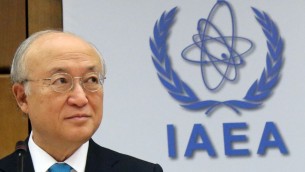
Burr said Iran’s activities at Parchin complicate the work of the IAEA inspectors who are set to examine the site in the coming months. IAEA’s director general, Yukiya Amano, was in Washington on Wednesday to brief lawmakers behind closed doors about the side agreements.

“They are certainly not going to see the site that existed. Whether that’s a site that can be determined what it did, only the technical experts can do that,” Burr said. “I think it’s a huge concern.”

A senior intelligence official, when asked about the satellite imagery, told us the IAEA was also familiar with what he called “sanitization efforts” since the deal was reached in Vienna, but that the U.S. government and its allies had confidence that the IAEA had the technical means to detect past nuclear work anyway.

Another administration official explained that this was in part because any trace amounts of enriched uranium could not be fully removed between now and Oct. 15, the deadline for Iran to grant access and answer remaining questions from the IAEA about Parchin.

Senate Foreign Relations Committee Chairman Bob Corker told us Tuesday that while Iran’s activity at Parchin last month isn’t technically a violation of the agreement it signed with the U.S. and other powers, it does call into question Iran’s intention to be forthright about the possible military dimensions of its nuclear program.

“The intel briefing was troubling to me … some of the things that are happening, especially happening in such a blatant way,” he said. “Iran is going to know that we know.” He added the new information gave him “a lot of concerns” about Iran coming clean on military dimensions of its nuclear work.

According to the overall nuclear agreement, sanctions relief for Iran can come only after the IAEA and Iran resolve their outstanding concerns about possible military dimensions of past and current work. But the agreement does not specify how the issue must be resolved, only that it be resolved to the IAEA’s satisfaction.

Several senior lawmakers, including Democrats, are concerned that Iran will be able to collect its own soil samples at Parchin with only limited supervision, a practice several lawmakers have compared to giving suspected drug users the benefit of the doubt to submit specimens unsupervised. Iran’s sanitization of the site further complicates that verification.

Democratic Senator Chris Coons, a member of the Foreign Relations Committee, told us Tuesday that this area is part of why he is undecided on supporting the Iran deal.

“I have concerns about the vigorous efforts by Iran to sanitize Parchin,” he said. “I’ve gotten some reassurance about how difficult it is for them to effectively conceal what we know to have been their illicit nuclear weapons developments there.”

Coons said he was most concerned about the integrity of the IAEA inspection process going forward and not as concerned about figuring out what happened in the site in the past: “We know what the Iranians did at Parchin.”

David Albright, the president of the Institute for Science and International Security, obtained a commercially available image of the Parchin site taken by satellites on July 26 that shows renewed activity at the Parchin site. He told us there are two new large vehicles, alterations ongoing to roofs of two of the buildings and new structures near two of the buildings.

“You have to worry that this could be an attempt by Iran to defeat the sampling, that it’s Iran’s last-ditch effort to eradicate evidence there,” he said. “The day is coming when they are going to have to let the IAEA into Parchin, so they may be desperate to finish sanitizing the site.”

The facility, outside of Tehran, first came to the attention of the international community in 2004 when news reports surfaced that it was being used to test explosives for a nuclear warhead.

A 2007 U.S. National Intelligence Assessment concluded that Iran halted this kind of work in 2003. Between 2005 and today, Iran has allowed IAEA inspectors access to Parchin — a vast complex with dozens of buildings — on only five occasions. In 2012, Abright’s group reported on satellite imagery that it said showed efforts to clean up evidence of an explosives testing chamber there.

Representative Ed Royce, the Republican chairman of the House Foreign Affairs Committee, said that Amano had told him in recent conversations that the IAEA had “thousands of pages of documentations on tests to weaponize a nuclear device.” Royce added, “For a long time, they have been altering sites.”

The IAEA has documented this as well. The agency’s report from May 29 this year said there was  satellite imagery of vehicles, equipment and “probable construction materials” at Parchin. The report said, “The activities that have taken place at this location since February 2012 are likely to have undermined the Agency’s ability to conduct effective verification.”

Secretary of State John Kerry has said that the U.S. government has “absolute knowledge” about what Iran has done in the past. Ahead of the vote on the agreement next month, many lawmakers don’t share Kerry’s confidence. Iran would seem to have its doubts as well, since it’s still trying to cover its tracks.

Obama negotiator says she didn’t see final Iran ‘side deals’

August 5, 2015

Obama negotiator says she didn’t see final Iran ‘side deals,’ The Hill, Kristina Wong, August 5, 2015

(Were the secret agreements on which Kerry, et al, were “fully briefed” and hence know “exactly” what they say also “rough drafts?” Unlike Ms. Sherman, Kerry testified that he had not seen the secret agreement(s).– DM)

shermanwendy_052715gettyGetty Images

[L]ater in the hearing, she walked back her comments about not seeing the final arrangements. 

“I was shown documents that I believed to be the final documents, but whether there were any further discussions…” she added before being cut off by another question by Sen. Pat Toomey (R-Pa.). Later, she said responded, “I have” when asked whether she saw the final versions of the deals.

****************

The only Obama administration official to view confidential “side deals” between Iran and the International Atomic Energy Agency (IAEA) admitted Wednesday she and her team have only seen rough drafts.

“I didn’t see the final documents. I saw the provisional documents, as did my experts,” said Wendy Sherman, a lead U.S. negotiator for the deal, at a Senate Banking Committee hearing.  

Sherman, undersecretary of State for political affairs, said she was only allowed to see the confidential deals “in the middle of the negotiation” when the IAEA “wanted to go over with some of our experts the technical details.” 

She maintained the deals — which focus on with Iran’s prior work on a bomb and access to Iran’s Parchin military site — are still confidential and can’t be submitted to Congress.

Sherman said the U.S. did not protest to the confidentiality of the agreements, despite the Iran Nuclear Agreement Review Act demanding all related agreements, because the administration wanted the IAEA to respect the confidentiality of their agreements with the U.S.

“We want to protect U.S. confidentiality … this is a safeguards protocol. The IAEA protects our confidential understandings … between the United States and the IAEA,” she said.

However, later in the hearing, she walked back her comments about not seeing the final arrangements.

“I was shown documents that I believed to be the final documents, but whether there were any further discussions…” she added before being cut off by another question by Sen. Pat Toomey (R-Pa.). Later, she said responded, “I have” when asked whether she saw the final versions of the deals.

She also argued they could not be submitted to Congress because the administration does not have the deals, and that the Senate had “every single document” the administration has.

Sherman emphasized she would brief Senators later Wednesday afternoon in a classified session on everything she knows about the deal.

A similar briefing for House lawmakers last week did not assuage concerns for Rep. Ed Royce (R-Calif.), chairman of the House Foreign Affairs Committee, who sent a letter to Secretary of State John Kerry on Monday calling on the administration to submit the deals.

She also noted that IAEA Director General Yukiya Amano was meeting with the Senate Foreign Relations Committee later in the afternoon.

Although she said the U.S. did not ask or pressure Amano to conduct the briefing, she suggested it was a gesture beyond what the IAEA is obligated to do.

Report: Iran orders Hezbollah not to retaliate now because finalizing nuclear deal

August 5, 2015

Report: Iran orders Hezbollah not to retaliate now because finalizing nuclear deal, Jerusalem PostAriel Ben Solomon, August 5, 2015

Iran instructed Hezbollah not to respond to reported Israeli Air Force strikes last week because it wants to focus on finalizing the nuclear deal with world powers, a Saudi newspaper reported on Wednesday.

Tehran does not want an escalation now that could risk the release of funds that will flow in from frozen assets as sanctions relief kicks in as the deal is finalized, sources told Al-Watan.

The unconfirmed report could well be false and part of the ongoing media battle going on between Sunni states such as Saudi Arabia and the Iran Shi’ite axis.

Iran will get access to over $100 billion of assets frozen abroad, US officials say, equivalent to a quarter of its annual output. The inflow may start around the end of this year, after Tehran is certified in compliance with the deal.

The alleged Israel Air Force drone attack last week struck a vehicle on the outskirts of the Druse village of Hader, near the Golan Heights. The UK-based Syrian Observatory for Human Rights said that five people were killed in the attack – two members of Hezbollah and three from the Syrian National Defense Forces, a pro-government militia.

The observatory added that the cell was led and supervised by Kuntar, who was traded by Israel in 2008 in exchange for the bodies of two Israeli reservists killed by Hezbollah in 2006.

A second strike targeted a Lebanese military installation near the Syrian border, wounding six, according to Arab media reports.

Other sources told the Saudi paper that the Shi’ite group aims to cover up its inability to protect its fighters in Syria and particularly from Israeli attacks.

In January, Israel carried out a helicopter attack in Quneitra province that killed a top Iranian Revolutionary Guard general and several Hezbollah members including the son of the group’s late military commander, Jihad Mughniyeh.

Meanwhile, Hezbollah recently arrested a Lebanese engineer who was allegedly an Israeli spy and turned him over to Lebanese authorities, a security force told the Lebanese Daily Star newspaper in a report on Wednesday.

He was recruited and trained in Europe by Israelis, according to the source,

Obama: Israel sole objector to Iran deal; Netanyahu is ‘wrong’

August 5, 2015

Obama: Israel sole objector to Iran deal; Netanyahu is ‘wrong’

Making case for nuclear agreement, US president says Jerusalem has ‘rightly’ stated it can only rely on itself militarily; says PM is ‘sincere’

By Marissa Newman August 5, 2015, 7:02 pm

via Obama: Israel sole objector to Iran deal; Netanyahu is ‘wrong’ | The Times of Israel.

US President Barack Obama on Wednesday said Israel was the only country to object to the Iran nuclear deal, opposition he said was “sincere” but “wrong.”

In an address to the American University in Washington, Obama said the Iran deal was “the strongest nonproliferation agreement ever negotiated. And because it’s such a strong deal, every nation in the world that has commented publicly, with the exception of the Israeli government, has expressed support.”

The UN Security Council has “unanimously supported it,” Obama added, as well as over “100 former ambassadors who served under Democratic and Republican presidents.”

“I’ve had to make a lot of tough calls as president. But whether or not this deal is good for American security, this isn’t a hard one, it isn’t even close,” he said.

Netanyahu ‘sincere,’ but ‘wrong’

Obama said he believes Prime Minister Benjamin Netanyahu is “sincere” in his opposition, but “wrong.”

“When the Israeli government is opposed to something, people in the United States take notice. They should,” Obama said. Iranian leaders “deny the Holocaust,” and “facilitate the flow of rockets” on Israeli cities. “In such a dangerous neighborhood, Israel has to be vigilant.” Obama said.

Israel “rightly” says it can only rely on itself for its security, he added.

Nonetheless, the president argued that thwarting Iran’s nuclear program, something he said the deal successfully does, remains the top priority.

“A nuclear-armed Iran is far more dangerous to Israel, to America, and to the world, than an Iran that benefits from sanctions relief. I recognize that Prime Minister Netanyahu disagrees. I don’t doubt his sincerity. But I believe he is wrong,” Obama said.

Lashing out at unnamed critics of the deal, Obama said those who opposed the interim deal “were wrong,” and were now using the success of the interim deal to buttress its opposition to the nuclear deal.

“When the interim deal was announced, the critics, the same critics we’re hearing from now called it a historic mistake… The critics were wrong,” Obama said. “The progress of Iran’s nuclear program was halted, for the first time in a decade…. Inspections did increase. There was no flood of money into Iran. And the architecture of the international sanctions remained in place.”

The critics are right in one respect, he said. “Walk away from this and you will get a better deal,” Obama said, “for Iran.”

As “president of the United States, it would be an abrogation of my constitutional duty” to fail to pursue a policy good for America “simply because it causes friction with a friend and ally,” Obama said.

‘Diplomacy or war’

The only alternative to the deal is war, Obama maintained, adding that he is not saying this to “be provocative.”

It’s “diplomacy or some form of war. Maybe not tomorrow. Maybe not three months from now, but soon,” Obama said.

The president said he has not hesitated to use force during his term.

“There are times when force is necessary, ” the president said. If Iran does not abide by the deal “it’s possible war” will become necessary, he conceded. “But how can we justify” military action before trying a diplomatic approach? he asked.

The military option would not be as effective as diplomacy, Obama stressed, noting that Israeli analysts have said a strike would only set back Iran’s nuclear program by a few years.

He said that under the deal, it would be difficult for Iran to cheat, arguing that it would have to build “a secret source for every aspect of its program,” something the president said no other nation had succeeded in doing with such stringent oversight.

Obama said the US had “no illusions” about Iran’s support for terror groups such as Hezbollah. “But they engaged in these activities for decades. Before sanctions, and while sanctions were in place. They even engaged in them during the Iran-Iraq War, which cost them a million lives. The truth is Iran has always found a way to fund these efforts.”

Moreover, Israel and the Gulf states have larger defense budgets, Obama said.

“Iran’s defense budget is eight times smaller than the combined Gulf allies. Its military will never compare to Israel’s, and our commitment to Israel’s qualitative military edge will guarantee that,” Obama said.

Obama said those who were pushing for a better deal either didn’t understand the Iranian public or were purposely misleading the US public.

“Just because hardliners chant ‘death to America’ doesn’t mean that’s what all Iranians believe. Those hardliners have been opposed to the deal. They’re making common cause with the Republican caucus,” said Obama. “The majority of the Iranian people have powerful incentives to urge their government to move in another direction. We should offer them that chance, that opportunity.”

Obama said that the opposition to the deal was emerging from those who supported the Iraq war in 2003, a conflict he said bred the Islamic State, and “ironically” improved Iran’s regional standing.

The speech, which was supposed to start at 11:20 a.m., was delayed by over 25 minutes. No reason was given for the delay.

WATCH LIVE: Obama delivers major address on Iran accord

August 5, 2015

Kerry casts doubt on Iran’s desire to annihilate Israel

August 5, 2015

Kerry casts doubt on Iran’s desire to annihilate Israel

US secretary says Tehran’s ‘fundamental ideological confrontation’ with the Jewish state doesn’t necessarily ‘translate into active steps’

By Stuart Winer August 5, 2015, 4:42 pm

via Kerry casts doubt on Iran’s desire to annihilate Israel | The Times of Israel.

US Secretary of State John Kerry in Singapore, August 4, 2015. (AFP/POOL/BRENDAN SMIALOWSKI)

US Secretary of State John Kerry in Singapore, August 4, 2015. (AFP/POOL/BRENDAN SMIALOWSKI)

US Secretary of State John Kerry on Wednesday expressed doubt that Iran really wants to annihilate Israel, arguing that while Tehran has “a fundamental ideological confrontation” with the Jewish state, it has not implemented “active steps” to “wipe it off the map.”

In an interview with Jeffrey Goldberg published in The Atlantic on Wednesday, Kerry said that the proposed nuclear deal with Iran is as “pro-Israel” as it gets, and that should Congress block the agreement it would only reaffirm the Iranian leadership’s mistrust of America.

Regarding Iran’s open animosity to Israel, Kerry said that while “they have a fundamental ideological confrontation with Israel at this particular moment” that doesn’t necessarily mean “that translates into active steps” and pointed out that Iran has not ordered Hezbollah to use its arsenal of 80,000 missiles in Lebanon against Israel.

The discussion about Iran’s hostility toward Israel in connection with the nuclear deal is “a waste of time here,” opined Kerry.

The secretary of state also defended comments he made last Friday in which he warned that should Congress vote against the Iranian nuclear deal signed last month in Vienna, Israel could find itself more isolated in the international arena and “more blamed.”

It was, he explained, more of a head’s up to Israel than a threat.

“If you’ve ever played golf, you know that you yell ‘fore’ off the tee,” he said. “You’re not threatening somebody, you’re warning them: ‘Look, don’t get hit by the ball, it’s coming.’”

Kerry insisted the deal, which has been vehemently criticized by Prime Minister Benjamin Netanyahu for not going far enough to prevent Iran obtaining nuclear weapons, is the best that Israel could have hoped for.

“I’ve gone through this backwards and forwards a hundred times and I’m telling you, this deal is as pro-Israel, as pro-Israel’s security, as it gets,” Kerry said. “And I believe that just saying no to this is, in fact, reckless.”

The top US envoy, who led the American team in negotiations with Iran alongside diplomats from the UK, France, Russia, China, and Germany, cautioned that if Congress votes to block the deal it will only serve to play on the doubts and mistrust held by Iranian supreme leader Ayatollah Ali Khamenei.

“The ayatollah constantly believed that we are untrustworthy, that you can’t negotiate with us, that we will screw them,” Kerry said and warned that congressional intervention to stop the deal “will be the ultimate screwing.”

On the other hand, Kerry revealed, Iranian Foreign Minister Mohammad Javad Zarif had personally assured him that “If we get this finished, I [Zarif] am now empowered to work with and talk to you about regional issues.”

However, if Congress stops progress on the deal they would “shut that down, shut off that conversation, set this back, and set in motion a series of inevitables about what would happen with respect to Iranian behavior,” Kerry said.

As for restarting the Israeli-Palestinian peace process, the secretary of state, who sponsored that last round of talks that failed in 2014 after nine months of negotiations, still offered some hope of a solution.

“Doable,” he said. “But not unless somebody wants to do it.”

The US Congress is expected to vote on the Iran deal by September 17. Congress can pass a motion of disapproval, which US President Barack Obama has already said that he would veto. An override of the veto requires two-thirds approval in both the House and Senate.

Times of Israel staff contributed to this report.

In new project, pro-Israel voices opt for satire over polemic

August 5, 2015

In new project, pro-Israel voices opt for satire over polemic

Frustrated with classic ‘hasbara’ or public advocacy, Israeli cartoonists volunteer their talents for the cause

By Elhanan Miller August 5, 2015, 5:13 pm

via In new project, pro-Israel voices opt for satire over polemic | The Times of Israel.

A caricature by Yossi Shahar posted on the Israeli Cartoon Project Facebook page [courtesy/The Israeli cartoon Project/Yossi Shahar]

A caricature by Yossi Shahar posted on the Israeli Cartoon Project Facebook page [courtesy/The Israeli cartoon Project/Yossi Shahar]


Presenting Israel’s case to the world is a difficult endeavor, especially now when the country finds itself increasingly isolated diplomatically and culturally.

A new online initiative takes a different approach to Israel advocacy, however, striving to explain Israel’s case through satirical caricatures rather than emphatic argumentation.

Using Israeli cartoonists who volunteered their creative talents to the cause, The Israeli Cartoon Project has already garnered over 7,000 fans since its Facebook launch in June.

Asaf Finkelstein, 38, said the initiative was born out of a deep sense of frustration over the British Student Union’s vote to boycott Israel, and a statement by the CEO of mobile giant Orange, Stephane Richard, that he would pull his company out of Israel “tomorrow” were he not bound by contracts.

A caricature by Israeli artist Vladik Sandler courtesy/Vladik Sandler

“We realized that the people opposing us are much more numerous than we are,” he told The Times of Israel, recalling a conversation with Israeli cartoonist Uri Fink. “We said: ‘Hey, no one’s listening to us any more.’”

So Finkelstein, who promotes Israeli nonprofits, turned to his friend and colleague Yossi Klar, and together they began recruiting Israeli artists “on both sides of the political map” so as not to be tainted as partisan.

Shay Charka, an Israeli caricaturist, didn’t hesitate for a second when he was approached by Finkelstein and Klar. He said that fighting the pro-Palestinian global boycott campaign against the Jewish state and Israel defamation is one of his top priorities.

“There’s a huge amount of ignorance in the world about what goes on here,” Charka said. “It’s very easy for people to ‘buy’ horrific images of us, while there are no buyers for our argument of ‘listen, it’s not that terrible.’”

The only way to fight hostile images, Charka argued, is with images of our own.

A caricature posted by Israel artist Shay Charka courtesy/Shay Charka

“A caricature grabs you immediately because of its humor,” he said. “It works like a Trojan horse: once you’ve smiled, you’ve opened up. And that’s when the message can trickle down, even if you didn’t mean for it to.”

Veteran Israeli caricaturist Uri Fink said he had attempted to launch a similar initiative a few years ago through an Israel advocacy comics competition, but failed. “I’m a caricaturist but not such a great manager,” he said. So when Finkelstein approached him several months ago, he immediately jumped on board.

A caricature by Israeli artist Uri Fink posted on the Facebook page of The Israeli Cartoon Project courtesy/Uri Fink

“Caricatures are the best weapon in this war of ideas,” Fink told The Times of Israel.

Even though political caricatures have existed since the 18th century, they are much more effective in the age of social media, he opined.

“It jumps out at you, it takes you a second to get the message, and you go happily on your way,” he said. “It’s not too deep.”

Iran’s deputy FM brands nuclear program ‘big loss’ economically

August 5, 2015

Iran’s deputy FM brands nuclear program ‘big loss’ economically, Times of Israel, August 4, 2015

(Please see also, The Iranian Nuke Deal Depends on This One Myth. — DM)

Iran deputy foreign ministerDeputy Foreign Minister Abbas Araqchi speaking in Tehran, Iran, on October 22, 2013. (AFP/Atta Kenare)

Due to the pressure from above, . . .  the original report was removed by the national broadcasting service, which stated that the publication of Araqchi’s statements was a “misunderstanding.”

*********************

Iran’s deputy foreign minister and senior nuclear negotiator has called the Islamic Republic’s nuclear program “a big loss” economically, but necessary to defend the country’s honor.

In a leaked off-the-record meeting with journalists Saturday, Abbas Araqchi stressed that “if we want to calculate the expenses of the production materials, we cannot even think about it.” But, he said, “we paid this price so we protect our honor, independence and progress, and do not surrender to others’ bullying.”

Yet, he explained, “If we value our nuclear program based only on the economic calculations, it is a big loss.”

Meeting with the country’s news chiefs under the direction of the Supreme Leader Ali Khamenei, Araqchi said the Iranian Foreign Ministry’s public diplomacy and media relations have so far been unable to sell the agreement to the Iranian people and “the national broadcasting [service] has to help so the people do not feel frustrated with the agreement.”

During the meeting, which was leaked by the Iranian media soon after, the deputy foreign minister suggested that the Iranian parliament should only review the agreement reached in Vienna, and not present it for ratification.

Araqchi stressed that Iran should declare its final position on the deal as soon as possible, “so that should Congress reject the agreement, the burden of rejection and the failure of the talks would fall on the United States.”

1234The Iranian Parliament (CC-BY Parmida76/Flickr)

“If the [Iranian] National Security Council approves the Vienna nuclear agreement and the leader of the Islamic Republic signs it, then this resolution becomes law,” he added.

With regards to the implications of the agreement on Iranian support for Hezbollah in Lebanon, Araqchi explained that, “we said during the talks that we cannot not provide weapons to Hezbollah, and we are not willing to sacrifice them [Hezbollah] for our nuclear program. Therefore, if you want to keep the weapon sanctions as part of the agreement, we will continue with our efforts. We discussed this matter for a while.”

The Western powers eventually agreed to separate that resolution from the agreement, Araqchi said.

This is in direct contrast to remarks by US officials, who claimed Tuesday that Iran’s support for terror groups was never considered for inclusion in the nuclear deal.

The Iranian minister told journalists that he took seriously previous American threats of a possible military action. “It might be that people do not know the details, however, our IRGC and military friends know that every night in 2007-8 we were concerned that we would wake up in the morning and Iran would be surrounded by all necessary means for an attack against it.”

Iranian military personnel had shown the country’s negotiating team maps of bases where potential foreign attack planes had been identified. “The attack on Iran was a matter of the political will of Mr. Obama,” Araqchi said. “Despite everything, we still continued to object and did not compromise.”

He said that the West tightened the economic sanctions as much as they could and they reached a level where their continuation would lead to a “confrontation.”

“They tried 10 years of economic sanctions and military threats,” he explained, “and it was our strength and capabilities that brought them to the negotiation table.”

Austria-Iran-Nuclear_Horo-e1401748045152-305x172Yukiya Amano, director general of the International Atomic Energy Agency (IAEA) in Vienna, Austria, June 2, 2014. (AP/Ronald Zak)

Araqchi admitted that the regime had made some mistakes, and that those “mistakes in the past, made-up documentations and excuses were turned into claims against us.” He cited the example of International Atomic Energy Agency chief Yukiya Amano, who Araqchi said submitted a 60-paragraph report that included Iran’s use of detonators with multiple timers.

Iran, Araqchi said, has “to be careful with the information that we provide them… It is not that we are dealing only with the IAEA and these spies, but we are dealing with all countries that have nuclear programs. There are formulas and methods that prevent us from providing excess information to the IAEA inspectors. We did not know this in the past and provided information that we should not have done.”

Against national interest and security

The content of this supposedly off the record briefing was published a day later on the website of the Islamic Republic of Iran Broadcasting and picked up almost immediately by various other news sites inside Iran.

Due to the pressure from above, however, the original report was removed by the national broadcasting service, which stated that the publication of Araqchi’s statements was a “misunderstanding.”

Some believe that radical elements within the national broadcasting authority, who oppose the nuclear deal, leaked the briefing in order to undermine the reformist government’s achievements.

Araqchi called the leak “immoral” and “unprofessional,” saying it went “against national interest and security.”

The leak apparently occurred just days after the Iranian Ministry of Culture and Islamic Guidance issued confidential instructions to the media, warning them to avoid publications that could question “the achievements of the nuclear talks,” or would “indicate contradictions among the views of the high-ranking officials.”

On the day of leak, Iranian President Hassan Rouhani said during an interview on live Iranian television that the achievements of the nuclear talks exceeded his initial expectations.