H/t Joopklepzeiker
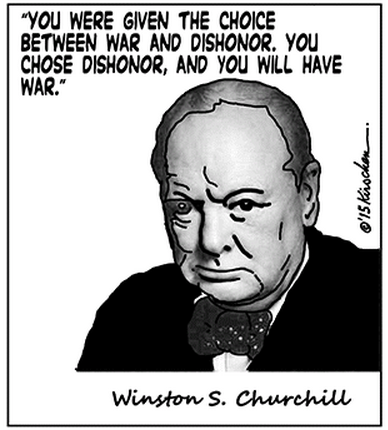
H/t Joopklepzeiker
The irrelevance of Congress, Power Line,
The gambit undermines the Corker bill – to say nothing of American sovereignty – on multiple levels. On a policy level, the UNSCR on its own would compel American action even if Congress rejects the Iran deal. On a political level, the administration intends to take the UNSCR and go to lawmakers while they’re considering the deal and say ‘you can’t reject the agreement because it would put America in violation of international law.’
*********************
Omri Ceren writes to elucidate the unfolding process in the Iran deal brought to us by President Obama. Omni’s message explores the issue I noted yesterday here. This is important. Omni writes:
Lead negotiator Wendy Sherman confirmed for journalists yesterday that the Obama administration will, over the next few days, pursue a binding United Nations Security Council resolution (UNSCR) that will lift sanctions on Iran. The resolution was circulated yesterday by the U.S. and a leaked text is already online [1]. When asked how the move could be reconciled with the 60-day Congressional review period mandated by the Corker legislation, Sherman sarcastically responded that you can’t really say “well excuse me, the world, you should wait for the United States Congress” because there has to be some way for “the international community to speak.” [2]. She noted that at least the UNSCR would have a 90 day interim period before its mandatory obligations kick in.
The gambit undermines the Corker bill – to say nothing of American sovereignty – on multiple levels. On a policy level, the UNSCR on its own would compel American action even if Congress rejects the Iran deal. On a political level, the administration intends to take the UNSCR and go to lawmakers while they’re considering the deal and say ‘you can’t reject the agreement because it would put America in violation of international law.’
The pushback from the Hill yesterday was immediate and furious. Corker: “an affront to the American people… an affront to Congress and the House of Representatives” [3]. Cardin: “it would be better not to have action on the U.N. resolution” [4]. Cruz: “our Administration intended all along to circumvent this domestic review by moving the agreement to the UN Security Council before the mandatory 60-day review period ends” [5]. Kirk: “a breathtaking assault on American sovereignty and Congressional prerogative” [6]. McCarthy: “violates the spirit of the Iran Nuclear Agreement Review Act of 2015, which the President signed into law… inconceivable – yet sadly not surprising” [7].
The Washington Post article [by Karen DeYoung here covers some of those statements and has a bunch of background. The story will develop throughout the day and through the beginning of next week. It’s going to be particularly brutal given that the Corker legislation was created and passed to stop exactly this scenario.
Remember how we got here. The March 9 Cotton letter, signed by 47 Senators, declared that without Congressional buy-in any deal with Iran would not be binding on future presidents [8]. Iranian FM Zarif responded with a temper tantrum in which he revealed that the parties intended to fast-track an UNSCR that would make Congress irrelevant and tie the hands of future presidents: “I wish to enlighten the authors that if the next administration revokes any agreement with the stroke of a pen, as they boast, it will have simply committed a blatant violation of international law”[9]. That created a firestorm of criticism from the Hill [10]. Zarif doubled down from the stage at NYU: “within a few days after [an agreement] we will have a resolution in the security council … which will be mandatory for all member states, whether Senator Cotton likes it or not” [11].
And so Congress responded with the Corker legislation. 98 Senators and 400 Representatives passed the bill with the intention of preventing the Obama administration from immediately going to the U.N. after an agreement and making good on Zarif’s boast. President Obama signed the bill. Now the administration is doing exactly what the legislation was designed to prohibit.
______________________
[1] http://www.scribd.com/doc/271711382/Iran-Deal-Draft-UNSC-Resolution-as-Uploaded-by-Inner-City-Press#scribd
[2] http://www.c-span.org/video/?327147-1/state-department-briefing
[3] http://www.cbsnews.com/news/biden-woos-hill-democrats-on-iran-nuclear-deal/
[4] http://thehill.com/homenews/senate/248228-senators-balk-at-un-action-on-iran
[5] http://www.cruz.senate.gov/files/documents/Letters/20150716_LettertoPOTUSonIranDeal.pdf
[6] http://www.kirk.senate.gov/?p=press_release&id=1474
[7] http://www.majorityleader.gov/2015/07/16/un-not-consider-iran-deal-congress/
[8] http://www.cotton.senate.gov/content/cotton-and-46-fellow-senators-send-open-letter-leaders-islamic-republic-iran
[9] http://www.npr.org/sections/thetwo-way/2015/03/10/392067866/iran-calls-gop-letter-propaganda-ploy-offers-to-enlighten-authors
[10] http://www.thedailybeast.com/articles/2015/03/12/gop-goes-ballistic-over-plan-to-take-the-iran-nuke-deal-to-the-u-n.html
[11] http://freebeacon.com/national-security/zarif-a-few-days-after-deal-un-will-drop-all-sanctions-whether-sen-cotton-likes-it-or-not/
NOTE: Noah Rothman has more here.
Read Chattanooga Shooter’s Blog, Daily Beast, Katie Zavadski, July 16, 2015
(Nothing to do with the Islam with which “we” are not at war? — DM)
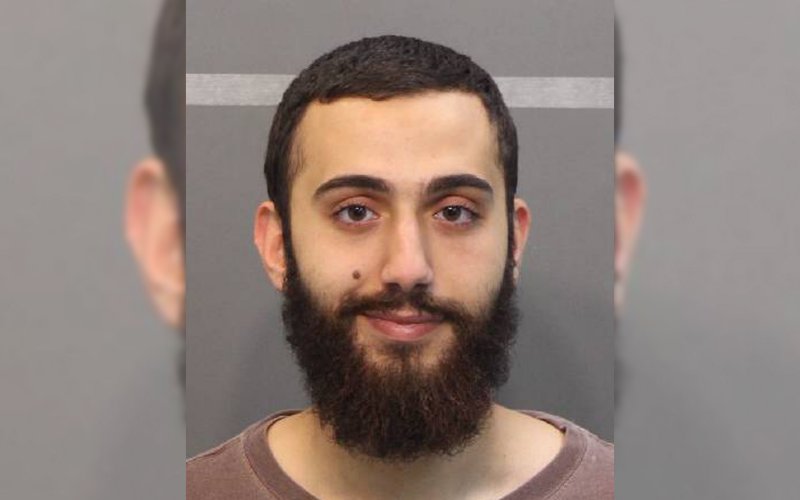 Handout
“We ask Allah to make us follow their path,” Abdulazeez wrote. “To give us a complete understanding of the message of Islam, and the strength the live by this knowledge, and to know what role we need to play to establish Islam in the world.”
***********************
The killer of four U.S. Marines in Chattanooga maintained a short-lived blog that hinted at his religious inner life. Mohammad Youssef Abdulazeez’s blog had only two posts, both published July 13 and written in a popular style of Islamic religious reasoning.
The first post was entitled “A Prison Called Dunya,” referring to the temporal world. In it, Abdulazeez uses the hypothetical example of a prisoner who is told he would be given a test that would either take him out of his earthly prison—or send him into a more restrictive environment.
“I would imagine that any sane person would devote their time to mastering the information on the study guide and stay patient with their studies, only giving time for the other things around to keep themselves focused on passing the exam,” Abdulazeez wrote. “They would do this because they know and have been told that they will be rewarded with pleasures that they have never seen.”
This life is that test, he wrote, “designed to separate the inhabitants of Paradise from the inhabitants of Hellfire.”
The second post is called “Understanding Islam: The Story of the Three Blind Men.” It suggests Abdulazeez felt his fellow Muslims had a “certain understanding of Islam and keep a tunnel vision of what we think Islam is.”
He uses the example of blind men who feel an elephant but can’t quite tell what the creature is. He says Muslims have a similar understanding of the earliest companions of the Prophet Muhammad. That they were “like priests living in monasteries is not true,” he says; rather they were “toward the end of the lives were either a mayor of a town, governor of a state, or leader of an army at the frontlines.”
“We ask Allah to make us follow their path,” Abdulazeez wrote. “To give us a complete understanding of the message of Islam, and the strength the live by this knowledge, and to know what role we need to play to establish Islam in the world.”
(Those who don’t learn from history’s mistakes are doomed to repeat them…..or something like that. – LS)
Senator Asks Why FBI Let Benghazi Attacker Go
Terrorist operative later joined the Islamic State as a recruiter of foreign fighters
BY: Follow @TheWiserChoice
July 17, 2015 4:59 am
via Senator Asks Why FBI Let Benghazi Attacker Go | Washington Free Beacon.
The FBI mishandled the case of an Islamic State terrorist linked to the murder of four Americans in Benghazi, the chairman of the Senate Judiciary Committee says.
Sen. Chuck Grassley (R., Iowa) wrote a letter to James Comey, the FBI director, and Loretta Lynch, the U.S. attorney general, earlier this month regarding Ali Awni al Harzi, a Tunisian recruiter and arms trafficker for the Islamic State (IS, also known as ISIS or ISIL) who was killed in a U.S. drone strike last month.
Just after the Sept. 11, 2012, attack on the U.S. diplomatic mission in Benghazi began, al Harzi is reported to have posted messages on social media about the fighting, which assisted U.S. intelligence in later finding him in Turkey. He was then transferred to Tunisian authorities.
Once in Tunisian custody, he was eventually released in January 2013 after being interviewed for three hours by FBI investigators. He went on to join IS in Iraq.
Grassley asks in his letter how al Harzi “somehow slipped out of our government’s reach,” despite his reported links to Ansar al-Sharia, an al Qaeda-affiliated group that is believed to be a key perpetrator of the Benghazi assault. Militants killed four Americans in the attack, including Ambassador Chris Stevens.
“Although al Harzi was on our radar in 2012 for his terrorist activities, he somehow slipped out of our government’s reach, only to continue his terrorist career for years,” Grassley wrote. “This raises important questions about the Obama administration’s policies and procedures related to the apprehension, interrogation, and detention of terrorists and the roles of the Justice Department and the FBI.”
FBI investigators were finally able to interview al Harzi in December 2012 after months of requests to Tunisian authorities. In addition to his social media postings, U.S. officials have said video footage captured al Harzi at the attack on the consulate in Benghazi and made him a “person of interest.”
Yet a Tunisian judge released him in January 2013—a move opposed by the attorney general’s office in the country—citing a lack of evidence. According to Grassley’s letter, Hillary Clinton, U.S. secretary of state at the time, told lawmakers in congressional testimony that she was “assured that [al Harzi] is under the monitoring of the court” after his release. She also consulted Robert Mueller, then the FBI director, about his case.
“He was released, because at the time—and Director Mueller and I spoke about this at some length—there was not an ability for evidence to be presented yet that was capable of being presented in open court,” Clinton said.
Tunisian authorities eventually lost track of al Harzi, who had joined the Islamic State, also known as ISIS or ISIL. Seth Jones, a terrorism expert at the RAND Corporation, told the New York Times that al Harzi’s “links with ISIL recruitment and financial networks in such locations as Europe, Africa and the Persian Gulf helped ISIL expand from a local group to a more globalized organization.” U.S. forces relocated al Harzi last month in Mosul, Iraq, where he was killed in a drone strike.
Tom Joscelyn, a senior fellow at the Foundation for Defense of Democracies and an expert on jihadist networks in the Middle East, said that U.S. officials have never explained why they allowed al Harzi to walk free. Tunisian authorities did not appear to monitor al Harzi very closely after his release, he said, despite their assurances to the Obama administration. And U.S. officials apparently chose not to use a wealth of evidence at their disposal to further prosecute him, including social media posts, details from the FBI interview, or other classified information, he added.
“None of the excuses that were made for him being released, or for not being concerned about his release, made any sense,” Joscelyn said.
In his letter, Grassley posed several questions to the FBI and Justice Department, including why al Harzi was not extradited to the United States, and why classified information was not used in a criminal case against him. He also asked whether officials considered a military operation to retrieve al Harzi.
U.S. special operations forces captured Ahmed Abu Khattala, leader of Ansar al-Sharia in Benghazi and the suspected coordinator of the 2012 attack, in a raid last year.
While questions remain unanswered about al Harzi’s release, the House Select Committee on Benghazi has been attempting to obtain all government records pertaining to the attack and then issue a final report.
Rep. Jim Jordan (R., Ohio), a member of the committee, said the State Department’s response to records requests has been “pathetic.” According to a recent report, some emails between Clinton and her top aides—which involved the Obama administration’s talking points about the attack—were withheld from the committee due to “deliberative process privilege.”
“We’re not going to have a complete record,” Jordan said. “We’re just going to have do the best we can, and try to get the information for the American people and also importantly for the families of those four individuals” who were killed.
Neither the FBI nor the Justice Department responded to requests for comment for this article. A spokesman for Clinton also did not respond.
Mueller, the former FBI director, declined to comment through a spokeswoman
Congress Lines Up to Oppose Iran Nuke Deal
Nearly 200 House lawmakers express disapproval
BY: Follow @Kredo0
July 17, 2015 8:20 am
via Congress Lines Up to Oppose Iran Nuke Deal | Washington Free Beacon.
Nearly 200 House lawmakers have lined up behind a resolution opposing the recently signed Iran nuclear deal, according to a copy of the measure obtained by the Washington Free Beacon and congressional sources apprised of the situation.
Less than a week after the Obama administration agreed to a deal with Iran that will provide it with billions of dollars in economic sanctions relief, at least 171 Republican House lawmakers have backed a measure expressing disapproval of the deal, the Free Beacon has learned.
As the Obama administration works to wrangle a coalition of lawmakers in support of the deal, the House resolution appears to be a sign that many in Congress have already decided to oppose it.
Congress has 60 days to review the deal and then take an up or down vote on it. The Obama administration has already vowed to veto any rejection of the deal by Congress.
The House resolution, which has already garnered widespread support from leading lawmakers, expresses “form disapproval” of the nuclear deal and reiterates congressional support to stop Iran from building a nuclear weapon, according to a copy of the measure, which was spearheaded by Rep. Peter Roskam (R., Ill.)
The resolution also rejects key portions of the deal, including ones providing Iran with billions of dollars in assets and approving of the Islamic Republic’s right to construct ballistic missiles and freely purchase arms.
In addition, it highlights that the deal “allows key restraints on Iran’s nuclear program to expire within 10 to 15 years, including those on Iran’s domestic uranium enrichment program and heavy-water reactor at Arak,” according to the measure.
“The Joint Comprehensive Plan of Action [JCPOA] fails to address Iran’s egregious human rights record, Iran’s role as the world’s leading state-sponsor of international terrorism, and Iran’s unjust imprisonment of innocent United States citizens,” the resolution states.
Lawmakers and analysts in recent days have accused the White House of trying to bypass congressional approval of the deal by going straight to the United Nations.
If the U.N. approves the deal before Congress signs off, the Obama administration could have leverage to begin removing key sanctions on Iran.
The deal also prohibits American nuclear inspectors from entering any contested Iranian site.
The resolution has already attracted the support of 171 House lawmakers and is expected to garner many more, according to congressional sources.
In addition to Roskam, 14 of 22 House committee chairs have lent their support for the resolution, as well as three members of the House leadership and other notable legislators, such as Reps. Ileana Ros-Lehtinen (R., Fla.), Jim Jordon (R., Ohio), and Bill Flores (R., Texas).
Roskam told the Free Beacon that the final deal fails to adequately address key nuclear concerns and rein in Tehran’s rogue behavior.
“This agreement fails on every level to ensure Iran never acquires a nuclear weapons capability. Tehran is allowed to keep much of its nuclear infrastructure intact and is rewarded a $150 billion cash infusion from sanctions relief,” Roskam said. “The so-called ‘anytime, anywhere’ inspections regime in reality provides Iran nearly a month’s notice on inspections.”
“And, in an unprecedented last-minute concession, the U.N. arms embargo and ban on ballistic missiles will be lifted in just a few short years,” he added. “This is a bad deal and it must be stopped.”
Roskam explained that his legislation will “set the stage” for the 60-day review period being undertaken by Congress.
“The unprecedented outpouring of support for this resolution proves that Congress will not rubber-stamp a deal that severely threatens the United States and our allies by paving Iran’s path to a bomb,” he said.
One senior congressional aide familiar with the resolution said that a large number of lawmakers have already made their mind up about the deal.
“Attracting this level of opposition to the deal so early in the process is remarkable,” the source said. “Members are lining up behind this resolution for one simple reason: the administration’s nuclear agreement is an unmitigated disaster. Iran gets everything it wants and more—sanctions relief, lax inspections, conventional weapons, and even ballistic missiles.”
While the Obama administration “may be confident that it has a veto-proof majority in both chambers,” the quick “outpouring of dissent from Congress with two months before a vote could halt the agreement in its tracks,” the source said.
Poll: 47 percent of Israelis back Iran strike following nuke deal
By AFP and Times of Israel staff July 17, 2015, 11:18 am

An Israeli Air Force F-16 warplane…all dressed up and nowhere to go.(Ofer Zidon/Flash90)
(Unbelievable that so many of the world’s democracies are split on key issues today. In terms of America (Israel included), I ask myself when will the ‘sleeping giants’ of the world awaken from this self-induced coma? – LS)
Almost half of Israelis would support a unilateral strike to prevent Iran obtaining the atomic bomb, an opinion poll carried out after Tuesday’s nuclear deal between Tehran and major powers found.
In survey by Maariv, 71% say they believe accord brings Iran closer to bomb, and 51% support bypassing Obama in effort to nix it.
Nearly three-quarters of respondents in the poll published by the Maariv newspaper on Friday said they thought the agreement would accelerate Iran’s development of a nuclear weapon, not prevent it as claimed by the powers.
Asked “Do you support independent military action by Israel against Iran if such action is needed to prevent Iran from obtaining a nuclear weapon?” 47 percent said yes, 35% said no and 18% expressed no opinion.
Additionally, a majority of Israelis (51%) felt Jerusalem should use whatever means necessary to convince the US Congress to reject the deal, while only 38% said it was now time to engage with US President Barack Obama on the execution of the deal in order to achieve conditions preferable to Israel. Eleven percent said they did not know what the best course of action was.
Asked: “In your view, does the agreement that was signed bring Iran closer to obtaining a nuclear weapons capability?” 71% said yes.
The paper did not give a sample size or margin of error for the poll carried out by Panels Politics Polling Institute.
Israel has long opposed any deal with its arch-foe Iran, and Prime Minister Benjamin Netanyahu has lambasted the landmark agreement as a “historic mistake.”
He has repeatedly threatened to take military action if necessary to prevent Iran obtaining a nuclear weapon.
Netanyahu has said Israel is not bound by the deal between Iran and the six world powers and on Wednesday said the agreement was “not the end of the story.”
Israel is believed to have the Middle East’s sole, if undeclared, nuclear arsenal. Iran has always denied any ambition to acquire one, insisting its nuclear program is for peaceful energy and medical purposes only.
Israel’s air force commander Major-General Amir Eshel said earlier this year that while the use of military force against Iran’s nuclear facilities would be an act of “last resort,” the military had “the genuine capacity to get the job done.”
The Channel 10 TV report in April said that Israel had invested “immense resources” in preparing for a possible strike on Iran. “The Israeli Air Force has been building the capacity to attack Iran for more than a decade,” it said.
Exclusive Interview – Former Israeli Ambassador Michael Oren, Blackfive, July 16, 2015
Why do some in the press want to discredit Oren’s roots? Possibly because the Ambassador is publicly warning that the Obama Administration is setting a dangerous precedent concerning the Iranian nuclear deal. As Daniel Silva profoundly wrote in his latest book, The English Spy, “Now the president’s confronted with a world gone mad, and he doesn’t have a clue as to what to do about it.”
***************************
The following interview and book review is a special for BlackFive readers provided by Elise Cooper. You can read all of our book reviews and author interviews by clicking on the Books category on the right side bar.
Former Israeli Ambassador Michael Oren’s latest book Ally is a riveting description of the relationship between Israel and the United States. Readers get a behind the scenes look at how the Obama Administration has a one sided point of view. Through his numerous notes and direct insight he tells of the struggles Israel has had with the Obama Administration, especially regarding the Iranian nuclear deal. He warns that Israel is in existential danger, that his only agenda is a reality check regarding this administration’s policies toward Israel. Blackfive.net interviewed him about his book and the Iranian nuclear deal.
He gave an exclusive to Blackfive.net, stating that he only tells those people “who come to work with me about this clip. I ask them to watch it so that they will understand me.” The clip (https://www.youtube.com/watch?v=ImtrifoxW4c) is about the Battle of the Bulge with interviews from participants including Oren’s father, Lester Bornstein, a US Army Corps Engineer whose duty was to clear roads and build bridges during World War II. Yet, in the Ardennes Forest in France on December 16, 1944, Lester along with his friend Jimmy Hill became infantrymen to help fend off the German advance, which had taken the American military off guard. He and his friend bravely disabled the first German tank in line, forcing a halt in the advance.
Oren, born in America, feels a kinship with America’s culture, principles, and spirit. He remembers his father telling the family war stories and during his first combat mission in the war, Operation Peace for the Galilee, thought of his father’s experience, wondering “how I would conduct myself under fire.”
Throughout the book Oren emphasizes the closeness he feels with both America and Israel. Yet, some in the media like Newsweek’s Jonathan Broder attempt to discredit him by writing, “The American-born Oren, who renounced his U.S. citizenship and now serves as a lawmaker in Netanyahu’s right-wing coalition, transforms from a measured historian into a breathless polemicist.” This is anything but the truth. Oren noted, “By Federal law any American who officially served a foreign county had to renounce their US Citizenship. My loyalties to the United States and the Jewish State are mutually validating.”
He wrote in the book how his love for America is filled with gratitude. “From the time that all four of my grandparents arrived on Ellis Island, through the Great Depression, in which they raised my parents, and the farm-bound community in which I grew up, America held out the chance to excel. True, prejudice was prevalent, but so, too, was our ability to fight it. Unreservedly, I referred to Americans as ‘we.’ The United States and Israel, are both democracies, both freedom-loving, and similarly determined to defend their independence. One could be — in fact, should be — a Zionist as well as a patriotic American, because the two countries stood for identical ideals.” Except now Israel is being thrown under the bus with the Iranian nuclear deal.
Why do some in the press want to discredit Oren’s roots? Possibly because the Ambassador is publicly warning that the Obama Administration is setting a dangerous precedent concerning the Iranian nuclear deal. As Daniel Silva profoundly wrote in his latest book, The English Spy, “Now the president’s confronted with a world gone mad, and he doesn’t have a clue as to what to do about it.”
Oren noted to blackfive.net about another irrational period in history and compared it to the current situation; “Lets remember one infamous example, when the Nazis pursued their insane ends. Even during the last days of World War II, as the Allied armies liberated Europe, they diverted precious military resources to exterminating Jews. The Israeli position is that this Iranian regime is irrational. Unlike Israel, which is in Iran’s backyard, the US is not threatened by the proximity of national annihilation. This is about our survival as a people. It’s about our children and grandchildren. What may look like an academic debate here in America is for us in Israel a matter of life and death.”
Asked if he agrees with the quote from former CIA Director Michael Hayden, who said of Iran, “the enemy of our enemy is still our enemy,” Oren told blackfive.net, that Americans should not forget that Iran “wants to wipe Israel off the face of the earth, something they have been calling for the last thirty years. Let’s not forget they also attempted to blow up the Israeli Embassy in Washington DC and assassinate the Saudi Ambassador. Iran and its terrorist groups have killed more Americans than any other terrorist group outside of Al Qaeda. This does not even include those in the American military who were killed by Iran during the Iraq War. They are not friends.”
But a true friend, an ally, is defined by Oren as assisting “in saving American lives on and off the battlefield. On an ideological level, an ally is a country that shares America’s values, reflects its founding spirit, and resonates with its people’s beliefs. And an ally stimulates the U.S. economy through trade, technological innovation, and job creation. The two countries I love need to unite on issues vital to both and yet they remain separated ideologically and even strategically. However, on issues of security, anybody in the Israeli military, in the intelligence community, will tell you that security relations between Israel and the United States are better now than probably any other time in the past.”
In the Middle East Israel is America’s staunchest ally. Even though the Obama Administration appears not to recognize this, Americans do. A recent Gallup Poll shows that two out of three Americans sympathize with Israel, with support for Israel in the United States rising, not declining.
Ambassador Oren wrote this book, Ally, to send a clear message, “A friend who stands by his friends on some issues but not others is, in Middle Eastern eyes, not really a friend. In a region famous for its unforgiving sun, any daylight is searing.” Ally is a must read, because it alerts people that Israel faces the greatest challenge they have faced since World War II.
Investors eye rewards and risks in post-sanctions Iran
Foreign companies are flocking to seize business opportunities in Tehran, though analysts warn market is tricky
By AFP July 17, 2015, 9:25 am
via Investors eye rewards and risks in post-sanctions Iran | The Times of Israel.
TEHRAN, Iran — Foreign firms are eager to exploit the potential of Iran’s long-isolated economy following a landmark nuclear deal, but experts say doing business in the Islamic Republic will remain hugely challenging.
The agreement between Tehran and major powers announced in Vienna on Tuesday offers an opening for international companies as sanctions are rolled back in return for steps to rein in Iran’s nuclear program.
With the ink barely dry, Germany said its vice-chancellor and economy minister Sigmar Gabriel would visit Iran for three days from Sunday with a “small delegation of industry and science representatives.”
His ministry said there was “great interest on the part of German industry in normalizing and strengthening economic relations with Iran.”
French Foreign Minister Laurent Fabius and Italian Economic Development Minister Federica Guidi also plan to visit Iran following the nuclear accord.
But despite the buzz over the historic agreement, analysts said Iran was no El Dorado for foreign firms.
“Doing business in Iran will not change overnight as the country suffers from an outdated legal system, restrictive labor laws and a lack of significant experience in dealing with international investors,” said Firas Abi Ali, an analyst at London-based research firm IHS.
French firms, particularly in the car industry, are already well established in Iran although they have suffered from the international sanctions imposed since 2006.
“Companies set to benefit most immediately” from the rollback of sanctions “are those that are already present in Iran,” said Ramin Rabii, head of Turquoise Partners Group, an investment firm in Tehran. They include firms such as Danone, Airbus and LVMH.
French manufacturer PSA Peugeot Citroen, which quit Iran, its second-largest market, in early 2012, is discussing a renewed partnership with IranKhodro.
PSA said that the nuclear agreement “should allow significant progress in ongoing discussions.”
Germany’s BDI industry federation believes exports to Iran could rise fourfold to more than 10 billion euros ($10.9 billion) in the medium-term, up from 2.4 billion in 2014, thanks to the need to modernize industry, especially the oil sector.
Italian exports — which stood at 1.15 billion euros before the sanctions, led by machine tool sales — could reach four billion euros in 2018, according to estimates from export credit company Sace quoted in the Italian press.
For major companies a priority is for Iran to be reconnected to the global network of SWIFT banking transactions to enable companies present in Iran to transfer funds directly to and from that country.
One area in need of urgent investment is the creaking oil sector.
Iran, which has the world’s fourth-biggest oil reserves, has seen its production fall to less than three million barrels per day (bpd) since 2012.
Its oil exports have roughly halved to about 1.3 million bpd, from 2.5 million bpd in 2011.
Iran also has the world’s largest reserves of gas and was the number four producer last year.
“Our priority is to develop our oil and gas fields using domestic and foreign potential,” Iranian Oil Minister Bijan Zanganeh said.
He said his country wanted to “accelerate” the development of the petrochemical industry, but experts said foreign energy companies face numerous hurdles.
“Although the deal will present foreign oil and gas companies in particular with a broad range of opportunities, the operating environment in a post-sanctions Iran will almost certainly remain challenging,” said Torbjorn Soltvedt, an analyst with Verisk Maplecroft.
“While Iran has committed to improving the fiscal terms offered to oil and gas companies, the country’s petroleum bureaucracy remains bloated and inefficient.”
The US refused to condition ObamaDeal on Iran’s stopping its threat to destroy Israel. State Dept.: “That’s a question for Iran’s leaders.”
By: Tzvi Ben-Gedalyahu
Published: July 17th, 2015
via The Jewish Press » » State Dept. Ignores Question on Iran’s Wanting to Wipe Out Israel .

Indian Globe reporter “Goyal” and Sate Dept. spokesman John Kirby.
The U.S. State Dept. fumbled a golden opportunity Thursday to ask, beg or insist that Iran stop threatening to wipe Israel off the map.
Indian Globe reporter Raghubir Goyal asked State Dept. spokesman John Kirby:
In the past, Iranian president said that Israel will be wiped off the world map. Are they going to turn back this and – this as far as this renouncing Israeli – Israel’s existence?
Kirby asked, for clarification, “Who going to turn back what?,” and Goyal, as he is called in Washington, asked again, until he was cut off, “If they are going to denounce terrorism and also what they said in the past that Israel will be wipe –”
Kirby answered by not answering:
Will Iran? Well, I think you’d have to – I mean, that’s a question for Iran’s leaders.
It would seem that U.S. Secretary of State John Kerry never asked Iran during the marathon talks with Iran if the Islamic Republic might at least tone down, just for a bit of good public relations, its constant threat to annihilate Israel, as was reiterated on the eve of the agreement.
But Kirby reassured everyone that the United States is “not going to turn a blind eye to Iran’s other destabilizing activities in the region, to include the state sponsorship of terrorists and terrorist networks. Nothing’s going to change about our commitment to continuing to press against those kinds of activities through a broad range of methods, whether it’s our unilateral sanctions, UN sanctions which will stay in effect, or U.S. military presence in the region.”
He is right. The United States is not turning a blind eye to Iranian terror. It is looking at it straight in the eye and figuring it will go away by freeing up to $150 billion for Iran.
President Barack Obama said at his press conference Wednesday night:
Do we think that with the sanctions coming down, that Iran will have some additional resources for its military and for some of the activities in the region that are a threat to us and a threat to our allies? I think that is a likelihood that they’ve got some additional resources. Do I think it’s a game-changer for them? No.
They are currently supporting Hezbollah, and there is a ceiling — a pace at which they could support Hezbollah even more, particularly in the chaos that’s taking place in Syria.
Out of $150 billion, President Obama says Iran will have “some” additional funds. Then he assumes there is a “ceiling” of how much Iran can support Hezbollah.
ObamaDeal raised the ceiling sky-high.
But President Obama is not worried that Iran will “only” pocket “some” of $150 billion to wipe out Israel, which makes its procurement of a nuclear weapon less urgent.
The video below. at 0:42 seconds, shows Goyal and Kirby’s exchange:




 anneinpt
 artaxes
 danmillerinpanama
 davidking1530
 Peter Hofman
 Joseph Wouk
 Peter
Peter Louisiana Steve
 WarSclerotic
Recent Comments