Archive for July 10, 2015

Nasrallah: Iran only hope to liberate Jerusalem

July 10, 2015

Nasrallah: Iran only hope to liberate Jerusalem

Hezbollah leader delivers annual speech via massive screen in Beirut; Pro-Palestinian rallies spread across Iran as a new deadline is set for negotiations on Iran’s nuclear program.

Roi Kais, Associated Press

Latest Update: 07.10.15, 19:21 / Israel

via Nasrallah: Iran only hope to liberate Jerusalem – Israel News, Ynetnews.

Hezbollah leader Hassan Nasrallah gave his annual speech Friday to mark “Al-Quds Day,” calling Iran “The only hope left for liberating Palestine and Jerusalem.”

Nasrallah’s speech was televised and filmed in a hidden bunker and screened in a event in the Dahiya quarter of Beirut. He also said that Iran would be “perverting her own religion” if Tehran agreed to Prime Minister Benjamin Netanyahu’s demands that Israel be recognized as a Jewish State.


Nasrallah on the big screen.


He also addressed fighting in Syria during the speech saying that “If Syria goes to Hell, Palestine will go to Hell.”

Meanwhile, tens of thousands of Iranians chanted “Down with America” and “Death to Israel” during pro-Palestinian rallies nationwide on Friday, as a deadline on talks to reach a deal on Iran’s nuclear program was postponed until Monday – the third postponment in two weeks.

The “Al-Quds Day” rallies took place as Iran and six world powers were meeting in Vienna to work out a deal to limit Iran’s nuclear program in exchange for easing tens of billions of dollars in economic penalties on the Islamic Republic.


Photo: AFP
Photo: AFP

 Iranian President Hassan Rouhani made a brief appearance at the rally in the capital, Tehran, but did not mention the nuclear talks that have blown past two extensions and entered the 14th day of the current round on Friday. US Secretary of State John Kerry warned on Thursday that the Americans were ready to leave.


Photo: AP
Photo: AP

However, a top leader said Friday the US would be making a “strategic mistake” if it pulled out of ongoing negotiations on Tehran’s nuclear program.


Photo: EPA
Photo: EPA

 “If you drive the talks into a dead end then it will be you who will be committing a strategic mistake,” Iran’s parliament speaker Ali Larijani said at Friday prayers following the rally in Tehran, addressing the US “And its outcome will not benefit you since Iran’s nuclear staff are ready to accelerate nuclear technology at a higher speed than before.”


Photo: EPA
Photo: EPA

 At the rally, the hard-line protesters wrapped America, British, Israeli and Saudi flags around pillars and set them ablaze.


Photo: EPA
Photo: EPA

 Since the 1979 Islamic Revolution, Iran has observed “Al-Quds Day” during the Islamic holy month of Ramadan. Tehran says the occasion is meant to express support for Palestinians and emphasize the importance of Jerusalem for Muslims.

Iran does not recognize Israel and supports anti-Israeli militant groups like Hamas in Palestine and Hezbollah in Lebanon.

Reuters contributed to this report.


First Published: 07.10.15, 18:27

Iran deal ‘done,’ Israeli report says, after major US concessions

July 10, 2015

Iran deal ‘done,’ Israeli report says, after major US concessions

Channel 2 analyst Ehud Yaari says agreement will be signed early next week after US drops demand for snap inspections; Obama faces challenge of securing Congress’ approval

By Times of Israel staff and AFP July 10, 2015, 9:59 pm

via Iran deal ‘done,’ Israeli report says, after major US concessions | The Times of Israel.

US Secretary of State John Kerry (C) and State Department Chief of Staff Jon Finer (L) meet with members of the US delegation at the garden of the Palais Coburg hotel where the Iran nuclear talks are being held in Vienna, Austria July 10, 2015. (AFP/Pool/Carlos Barria)

US Secretary of State John Kerry (C) and State Department Chief of Staff Jon Finer (L) meet with members of the US delegation at the garden of the Palais Coburg hotel where the Iran nuclear talks are being held in Vienna, Austria July 10, 2015. (AFP/Pool/Carlos Barria)

deal has been reached between the world powers and Iran over the latter’s nuclear program after a series of major American concessions, Ehud Yaari, the Middle East affairs commentator for Israel’s Channel 2 television, said Friday night. “It is done. It is done,” he said, and will be signed “early next week.”

The aim of the agreement is to put a negotiated end to a 13-year standoff with Iran over its suspect nuclear program and to block its pathway to developing a nuclear bomb in exchange for lifting biting global sanctions. Israel’s leadership has relentlessly opposed the emerging agreement, with Prime Minister Benjamin Netanyahu warning that it will pave Iran’s path to a nuclear arsenal.

According to Yaari, Israel’s most respected Middle East analyst, the deal was reached because the Americans “have made a series of capitulations over the past two to three weeks in almost every key aspect that was being debated.”

Yaari said that even those in the US who had supported the agreement with Iran “admit that it is worse than they thought.” Now, he said, the ball is in the court of Democratic lawmakers who have to decide whether to support their president as he seeks to secure Congressional approval, or to join the vocal Republican opposition to an agreement.

Ehud Yaari (photo credit: Courtesy)

Ehud Yaari (photo credit: courtesy)

One major concession, Yaari said, is the issue of inspections of Iranian nuclear sites, which has long been a sticking point in the negotiations. According to Yaari, the US negotiators have given in to an Iranian demand that inspections are “managed” — in other words, there will be no surprise visits, only those that are pre-arranged and approved by the Iranian regime.

While there has been no official word that the deal is finalized, US Secretary of State John Kerry said Friday evening that progress had been made in the talks, and praised what he called the “constructive” atmosphere.

“I think we have resolved some of the things that were outstanding and we’ve made some progress,” he said, speaking to a few reporters as he met with his team of experts in Vienna.

Meetings have been happening all day, Kerry said, adding: “We have a couple of different lines of discussion that are going on right now.”

“The atmosphere is very constructive,” he told the reporters who travelled with him from Washington.

“We still have a couple of very difficult issues, and we’ll be sitting down to discuss those in the very near term – this evening and into tomorrow.”

The talks are now heading into their third weekend in Vienna. Kerry met Friday morning with his Iranian counterpart Mohammad Zarif in an effort to close remaining gaps.

The terms of a 2013 interim accord under which Iran has suspended much of its uranium enrichment in return for some sanctions relief were extended to Monday in a bid to overcome a deadlock.

France’s Laurent Fabius and British Foreign Secretary Philip Hammond are also due to return to the Austrian capital Saturday in the hopes of advancing the deal.

Goodnight Vienna (8)

July 10, 2015

Goodnight Vienna (8), Power LineScott Johnson, July 10, 2015

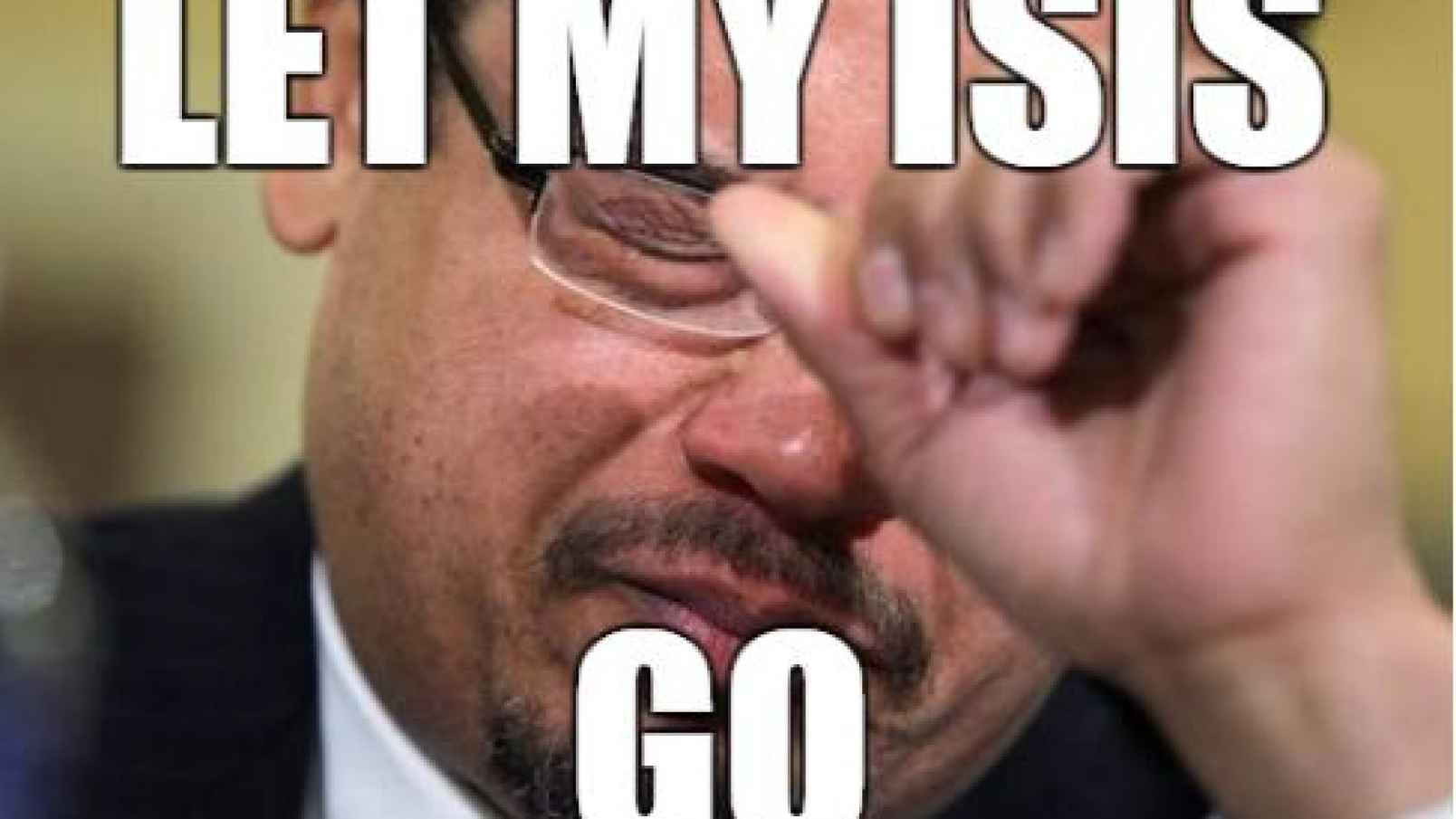
Keith X. Ellison: set my ISIS jihadists free

July 10, 2015

Keith X. Ellison: set my ISIS jihadists free, Front Page Magazine, Daniel Greenfield, July 10, 2015

keith_ellison

ISIS Jihadists locked up by the Great Satan.

Muslim leaders in Minnesota, including Democratic Rep. Keith Ellison, argue that the best way to discourage Somali-Americans caught trying to join the Islamic State (IS, also known as ISIL or ISIS) from embracing radical Islam is to allow them to remain in their communities while awaiting trial.

Also the best way to discourage serial killers is by leaving them alone with a room full of knives.

And why even put them on trial? If keeping them out of prison discourages them from joining ISIS, just think how much completely freeing them will discourage them.

I bet they’ll spontaneously break into a patriotic number like Yankee Doodle Dandy. Either that or they’ll get on a plane and join ISIS.

However, Muslim leaders in Minnesota — which has become a hot recruitment spot for terrorists — insist that young would-be IS terrorists like these should instead be allowed to return to their communities and engage in activities such as coaching youth basketball and helping immigrants fill out job applications.

Job applications… for ISIS.

But I can’t see any reason why we should lock up ISIS members when they can instead be spending time around impressionable young people while in a position of authority.

Rep. Keith Ellison (D., Minn.), himself a Muslim, spoke in favor of such a design.

“If you integrate them back into their family relationships and you have responsible faith leaders, then that’s going to be the check on them that they need,” Ellison explained. “There’s going to be people watching them, encouraging them.”

Isn’t that how they ended up joining ISIS in the first place?

Iran Reminds the World How Much They Love Us

July 10, 2015

Chanting ‘Death to America, Israel,’ millions march in Iran on al-Quds Day

By Times of Israel staff, AP and AFP July 10, 2015, 12:08 pm


Iran’s version of a friendly gesture. [Source: Unknown]

(I’d burn the Iranian flag but it’s not worth my time. Like most folks, I’m busy earning a living, providing for my family, and making a promising future for my children and grandchildren. – LS)

Protesters burn US, Israeli flags at annual rallies; condemn Saudi Arabia over Yemen conflict

Millions of Iranians took part in anti-Israel and anti-US rallies across Iran on Friday, chanting “Down with America” and “Death to Israel” on Al-Quds Day, internationally observed annually on the last Friday of the month of Ramadan.

The controversial holiday was proclaimed in 1979 by Iran’s Ayatollah Ruhollah Khomeini as a religious duty for all Muslims to rally in solidarity against Israel and for the “liberation” of Jerusalem. Tehran says the occasion is meant to express support for Palestinians and emphasize the importance of Jerusalem for Muslims.

Iranian President Hassan Rouhani attended the protest on Friday but did not speak at the main rally in Tehran, which coincided with seemingly deadlocked nuclear talks between Iran and world powers led by the United States.

Large demonstrations were also held in Iraq and Lebanon.

Some protesters in Tehran burned Israeli and American flags. Posters showed Israeli Prime Minister Benjamin Netanyahu, Saudi King Salman and US President Barack Obama in flames.

Iranian protesters set dummies depicting US President Barack Obama and Israeli Prime Minister Benjamin Netanyahu on fire on top of an Israeli flag during a demonstration to mark the Quds (Jerusalem) International day in Tehran on July 10, 2015.

Using the al-Quds Day hashtag, supreme leader Ayatollah Ali Khamenei tweeted: “There are two sides in oppression: oppressor & the oppressed. We back the oppressed and are against oppressors.”

At a mock checkpoint, several men and a woman dressed in Israeli army uniforms shouted at people who wanted to pass and pushed them back, threatening them with batons and guns.

“We are all here to see the freedom of Quds. The people of Palestine are oppressed and their lands occupied,” said Ahmad Moghadam, a 67-year-old clerk.

“We stand behind Palestine until its people are freed.”

Iranian military commanders also attended, with General Yahya Rahim Safavi, a senior adviser to Khamenei, saying the al-Quds march was different this year because of a worsening regional security situation.

Iran has backed Iraqi forces against IS and Syrian government forces against rebels including Al-Qaeda affiliate Al-Nusra Front.

“Terrorist groups such as Daesh and Al-Nusra, with the support of the Zionists and Saudi’s cruel war against the oppressed people of Yemen… have created a new situation in the region and the world,” the official IRNA news agency quoted Safavi as saying.

Fereshteh Ashuri, 23, a law student, said: “We still recognize Israel as the enemy of Islam. I tell Israel to stop daydreaming and rest assured that you will collapse.”

The annual event drew massive crowds, despite the scorching temperatures in Tehran, which were set to climb to 97 degrees Fahrenheit. Rallies were held in cities throughout the country.

Arch-rival Saudi Arabia was also publicly condemned at the mass rallies over its air campaign against the Iran-backed Houthi rebels in Yemen since March, AFP reported, with the main slogan of the event denouncing the killing of children in “Gaza and Yemen.”

The crowd in Tehran chanted “Down with US, Israel and the House of Saud,” and carried placards that declared “Zionist soldiers kill Muslims” and “the Saudi family will fall.”

Demonstrators also set fire to a large effigy representing the Islamic State, labeled “Saudi’s doll.”

It was later burned along with American, Israeli and British flags, a common gesture at public demonstrations ever since the Islamic revolution of 1979.

The rallies come as Iran and six world powers hold talks in Vienna aimed at working out a deal to limit Iran’s nuclear program in exchange for easing tens of billions of dollars in economic penalties on the Islamic Republic.

Earlier this week, a top Iranian general said Iran will never view the US positively, even if a deal is signed with world powers over the Islamic Republic’s nuclear program.

The commander of the Iranian ground forces, Brigadier General Ahmad Reza Pourdastan, declared Sunday that a rapprochement was out of the question, as the enemy is “exploiting nations and putting them in chains,” the semi-official Iranian FARS News Agency reported.

“The US might arrive at some agreements with us within the framework of the Group 5+1 [the US, Russia, China, Britain and France plus Germany], but we should never hold a positive view of the enemy,” Pourdastan said.

“Our enmity with them is over principles and rooted in the fact that we are after the truth and nations’ freedom, but they seek to exploit nations and put them in chains,” he added.

Know Comment: Sham smiles all around

July 10, 2015

Know Comment: Sham smiles all around, Jerusalem PostDavid M. Weinberg, July 9, 2015

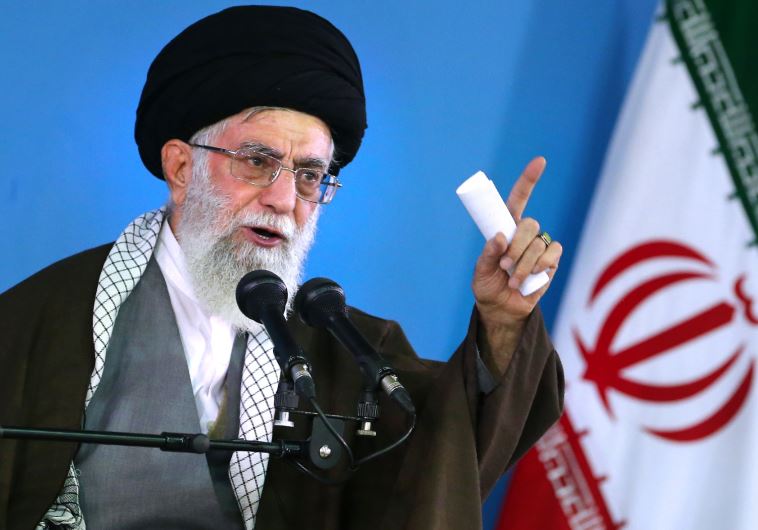
Supreme Leader 1Iran’s supreme leader, Ayatollah Ali Khamenei. (photo credit:AFP PHOTO)

Decoupling allows Obama to smile and sell sham narratives about Iran, even as Khamenei rebuffs and humiliates America. With a smile, of course.

*************************

With four deadlines come and gone, it’s probably safe to predict that there won’t be a grand package deal with Tehran this weekend, or at all. Instead, we’ll get a lot of smiles, and agreement to continue talking indefinitely, “for as long as the talks are useful,” without closure on Iran’s nuclear weapons drive.

Meanwhile, Ayatollah Khamenei’s centrifuges will continue to spin, Iran’s adventurism in the region will proceed unchecked, and President Obama won’t have to reveal to Congress the deep concessions he has already deposited in Iran’s pocket.

American analyst Michael Ledeen puts it bluntly: Khamenei doesn’t want to sign anything. He has two fixed principles: No “new relationship” with the Great Satan, and relentless pursuit of the atomic bomb. But since Obama won’t take an Iranian “no” for a definitive answer, the default American position will be a new form of “creative appeasement.”

Iran will promise to try really, really hard to be nice, and Obama will pay for this. Iran will continue to get its monthly sanctions relief payoff, while Obama will get Iranian smiles.

This will allow Obama to give another interview in which he blathers about meeting Iran’s “legitimate needs and concerns” and about his hopes that Iran will become “a very successful regional power.” After all, Obama will yet tell us, Iran “is one of the oldest and grandest civilizations in the world” – or something obsequious like that.

Who could have imagined, just a few years ago, that the president of the United States of America would wish the mullahs well in their quest for regional hegemony? What strategic thinker would have believed that the US would actively enter a de facto alliance with Shi’ite Iran (in Iraq, Syria and the Gulf) at the expense of America’s traditional Sunni allies and its ally in Israel? The metamorphosis of Iran, in pro-Obama elite opinion circles, from terrorist state into US partner is a long-brewing triumph for a certain set of pro-Iranian apologists and anti-Israel lobbyists in Washington.

Writing in The Wall Street Journal this week, Sohrab Ahmari showed how the National Iranian American Council advanced the argument that Iran deserves strategic respect, and placed its people in the Obama National Security Council.

Indeed, US think tanks played a prominent role in paving the way toward a climb-down from Obama’s declared policy of halting Iran’s nuclear drive.

Start with Thomas R. Pickering, the former under secretary of state for political affairs (and US ambassador to Russia, the UN and Israel), who showed up in Israel in 2012 as the head of “The Iran Project.” Peddling a “nuanced and sophisticated” view of Iran, he counseled an “engagement” strategy.

In a lecture at the Begin-Sadat Center for Strategic Studies, Pickering asserted that the US must end its confrontation with Iran over nuclear weapons. Sanctions, he said, were only “contributing to an increase in repression and corruption within Iran,” and were “sowing the seeds of longterm alienation between the Iranian people and the US.” What about the use of military force to crush the Iranian nuclear bomb program? Well, military force should be the very last resort taken by the US, Pickering told us, “and probably not at all.”

Next was the Center for a New American Security.

Its 2013 report, primarily authored by former Obama administration deputy assistant secretary of defense for the Middle East Colin H. Kahl, outlined “a comprehensive framework to manage and mitigate the consequences of a nuclear- armed Iran.” In other words, stopping the Iranian nuclear effort was already a passé discussion.

Then came the Atlantic Council, which called for Washington to “lessen the chances for war through reinvigorated diplomacy that offers Iran a realistic and face-saving way out of the nuclear standoff.” That’s diplomatic-speak for a containment strategy.

Then the Rand Corporation concluded that a nuclear-armed Iran would not pose a fundamental threat to the US and its regional allies. “An Iran with nuclear weapons will still be a declining power,” it said. “Iran does not have territorial ambitions and does not seek to invade, conquer, or occupy other nations.”

In his last article before dying in 2013, the leading realist theorist Ken Waltz of Columbia University even argued that Iran should get the bomb. It would create “a more durable balance of military power in the Middle East,” he wrote in the establishment journal Foreign Affairs.

The writing has been on the wall. Both Washington’s retreat from confrontation with Iran and its shift toward appeasement of Iran were there for those willing to see.

Obama has even invented a fancy term – “decoupling” – to obscure the magnitude of American collapse before Iran.

“Decoupling” means that the nuclear talks can take place in a virtual vacuum, without reference to Iranian behavior in any other field or arena – as if Iran were Iceland. There is just no coupling or link between Iran the nuclear power and Iran the aggressive adversary.

Decoupling means that Obama can be forgiven for failing to constrain Iranian terrorism. It means that Iran can get nuclear sanctions relief without having to scale back its hegemonic and subversive muckraking around the region.

The suave concept allows Obama to “decouple” the ayatollahs’ unpleasant anti-Semitic and genocidal rhetorical outbursts from Iran’s “responsible” (sic) understandings with the West on nuclear matters. It also allows Obama to ignore Iran’s human rights abuses.

Decoupling allows Obama to smile and sell sham narratives about Iran, even as Khamenei rebuffs and humiliates America. With a smile, of course.

Diplomacy: Shifts happen – India and the Israeli-Palestinian conflict

July 10, 2015

Diplomacy: Shifts happen – India and the Israeli-Palestinian conflict

via Diplomacy: Shifts happen – India and the Israeli-Palestinian conflict – International – Jerusalem Post

India’s left-wing, influential Hindu newspaper ran a story in December under the headline “India may end support to Palestine at UN.” The over-line to the headline read: “Major shift in foreign policy.”

“In what could amount to a tectonic shift in the country’s foreign policy, the Modi government is looking at altering India’s supporting vote for the Palestinian cause at the United Nations to one of abstention,” the story read, referring to the government of Prime Minister Narendra Modi, who was elected in May 2014.

“Two sources within the government confirmed to The Hindu that the change, which will be a fundamental departure from India’s support to the cause of a Palestinian state, was under consideration,” the report continued.

The story obviously captured the attention of policy-makers in Jerusalem, but there was skepticism.

In fact, it was seen by some as an attempt by certain officials in the Indian government to scuttle the policy – smother it before it was even born – by making it public.

If that was the case, however, the tactic failed.

After India’s high-profile abstention last Friday on an anti-Israel resolution at the UN Human Rights Council in Geneva – which followed by a month another Indian abstention on a vote to give UN recognition to an NGO with alleged links to Hamas – it now seems fair to say that, well, shift happens. And it is not an inconsequential shift.

Israelis were not the only ones to notice, although the Israelis did notice, and – at a blue-ribbon political dialogue in Jerusalem on Tuesday with a delegation from New Delhi – expressed their appreciation for the vote.

The Palestinians also took heed. Indeed, they noted, complained and even issued veiled threats.

The Palestinian Authority’s ambassador to India, Adnan Abu Alhaija, told the Hindu this week that the Palestinian people were “shocked” by the vote – based on the UNHRC’s investigative committee that censured both Israel and Hamas, but especially Israel, for last year’s war in Gaza – and that the vote detracted from the “happiness” they felt at the adoption of the resolution.

In an odd twist to voting patterns, India abstained on the resolution – as did Ethiopia, Kenya, Paraguay and the former Yugoslav Republic of Macedonia – while 41 countries, including eight EU countries and friends of Israel such as Britain, Germany, France and the Netherlands, voted for it. And, of course, the only country to vote against was the US.

“India is a very special country for us, and its abstention from voting can be termed as a departure from India’s traditional position on Palestine that has remained unwavering since the last seven decades,” Alhaija said.

“In a scenario where European Union members who were once considered steadfast supporters of Israel voted against it, India’s abstention stands out as a sore thumb, and will send a confusing signal,” he added.

Confusing, indeed. What adds to the confusion is a report, not denied in Israel, that Jerusalem actually asked Britain and Germany to vote for the resolution, to ensure that the Palestinians put forth only a watered-down resolution – which they would do in order to get European support – rather than a much tougher one.

A watered-down resolution would essentially mean an end to the UNHRC investigation of Operation Protective Edge, while a tougher one – that would pass, even if the Europeans voted against it – would likely have sent the issue to the UN General Assembly, where it would have kicked around for quite some time, gaining more momentum.

After articulating Palestinian confusion, the PA envoy in his interview issued a veiled threat to India that its efforts to gain a long-soughtafter seat as a permanent member on the UN Security Council might be imperiled by these types of votes.

“There is a positive momentum on India’s claim over the expansion of the UNSC and inclusion of more permanent members,” he said. “This posture on Palestine will send a confusing signal to other UN members as to what India’s role would be, if and when it becomes a permanent member.”

The subtext to what he said is clear: Vote for the Palestinians or the world’s Arab and Muslim countries might not support the permanent inclusion of the world’s second- most populous nation on the UN Security Council.

But some, like Efraim Inbar, head of the Begin-Sadat Center for Strategic Studies at Bar-Ilan University, said that one of the reasons India feels able to move in the positive and high-profile direction it is moving with Israel is the collapse of the Arab world.

There is no united Arab world to speak of any longer, said Inbar, who has written extensively in the past on Israel-Indian ties, so the threat of Arab diplomatic or economic sanctions is not what it once was. Or, as one diplomatic source said, “India is too important and too big for Arab countries to say, “We will get you for this.”

“What can they do to them?” Inbar said, noting that the Saudis are “weak,” the Palestinians are “marginal,” Iraq and Syria are only shadows of what they once were, and the Persian Gulf states have common strategic interests with Israel. The Indians, he said, are much less worried about angering the Arab world through ties with Israel than they might have been in the past.

And as to whether this would not ignite anger among the 180 million Muslims in India, the world’s second-largest Muslim population, Inbar said that not all the Indian Muslims automatically identify with what are seen as pan-Islamic issues.

“Islam in southeast Asia is more moderate than in the Middle East,” he said. While in the Middle East Islam is the dominant component of many people’s identity, that is not necessarily the case for India’s Muslims, 8 percent of whom voted for Modi in the last election.

Nonetheless, in a move seen as an attempt to placate Arab or Muslim anger after the UNHRC vote, India’s External Affairs Ministry issued a statement saying “there is no change in India’s long-standing position on support to the Palestinian cause.” It also explained its vote as having to do with the fact that India is not a signatory to the Rome Statute, which established the International Criminal Court and which was referenced in the resolution.

Inbar, however, cautioned to put those comments – even like the vote itself – into context and perspective.

Regarding the vote, Inbar said, it is important to recognize that India abstained but still didn’t vote for Israel.

“There is no need to exaggerate the importance,” he said.

As if to illustrate this, and the fact that India will not be replacing the US as Israel’s top friend and ally anytime soon, Modi on Thursday tweeted a picture of himself meeting Iranian President Hassan Rouhani at a summit in Russia, under a text that read: “India-Iran friendship discussed at the meeting.”

And regarding the statements explaining the vote put out by the Indian foreign ministry, Inbar said it is clear that the directives for this came from the top, and that the External Affairs Ministry – like so many foreign ministries around the world which are more predisposed to the Arab position than to Israel – was taking its directives from above.

And “above” in this case, Inbar said, was Modi himself, the leader of the Hindu nationalist BJP party who in his first year in power has taken strong Israel-India ties – which have developed over the last two decades, largely motored by arms sales and security cooperation – to a new level altogether.

Modi has met Prime Minister Benjamin Netanyahu and publicly referred to him as “friend,” has tweeted holiday wishes to Israelis in Hebrew, and has announced he will come to visit Israel in the next few months, something that would make him the first-ever Indian leader to do so.

Mark Sofer, a deputy director- general in the Foreign Ministry and head of its Division for Asia and the Pacific, said that while some attribute this positive orientation to the BJP, it is “deeper than that.”

While it was under then- BJP prime minister Atal Bihari Vajpayee that Ariel Sharon became the first Israeli prime minister to visit India in 2003, even then the ties were nowhere near where they are now, and there was no talk of India altering its voting pattern in the UN.

The relations have improved steadily over the years, but there has been a special “impetus” since Modi came into power, something Sofer called a “qualitative leap forward in every form of interaction.”

Sofer said that this “qualitative change is palpable in every single sphere, and that is important to note.”

India, he pointed out, has some 1.25 billion people, and everyone is running to engage with it.

While much – perhaps too much – is made of a lack of personal chemistry between Netanyahu and US President Barack Obama (the differences there are more about fundamentally different ideologies and ways of seeing the world than about a failure to personally “click”), Sofer said there was a “chemistry” between Modi and Netanyahu, and that they speak “quite a bit” on the phone.

But that chemistry obviously flows from the fact that both men come from right-wing parties and share a conservative worldview.

Yet, he said, there is something else at play as well: “We suffer from a lot of the same things – from extremism coming from our neighbors.

They have terrible extremism coming from Pakistan.”

Under Modi, Sofer said, the Israeli-Indo relationship has “matured into a completely normal relationship, without hang-ups.” And one of those “hang-ups” being put to rest is India’s feeling the need to vote against Israel everywhere, at any time.

US-Israeli-Egyptian mobile sensor-fence projects to block further ISIS Mid East expansion

July 10, 2015

US-Israeli-Egyptian mobile sensor-fence projects to block further ISIS Mid East expansion, DEBKAfile, July 10, 2015

mobile_surveillance_sensor_towers7.15A US mobile surveillance sensor tower

US counter-terror experts are overseeing a lightning operation for setting up mobile sensor towers and electronic fences in Tunisia, Egypt, Jordan and Israel in a desperate bid to seal their borders off against the fast-moving impetus of the Islamic State of Iraq and the Levant – ISIS, or at least slow it down. This reign of terror is spreading out from Iraq and Syria and creeping into southern Jordan, the Israeli Negev, and Egyptian Sinai, then on to Libya and over to Tunisia and Algeria, covering a distance of 4,000 km.

When President Abdel-Fatteh El-Sisi saw his army had not repelled the ISIS Sinai affiliate’s offensive in North Sinai as it went into its second week – controlling only the main highway from El Arish to Cairo via Bardawil Lake – he turned to Washington with an urgent request to ship over mobile surveillance sensor towers and American crews to operate them. His plan is to string them across the Sinai Peninsula and along Egypt’s borders with Libya and Sudan in a last-chance bid to block the constant influx of reinforcements and weapons to ISIS fighters reaching Sinai from Libya, through the Egyptian borde,r and from Iraq, through southern Jordan and the Israeli Negev.

The State Department acceded to the Egyptian request and has submitted the application worth $100 million for congressional approval.

The application states: “This procurement is intended for Egyptian Border Guard Forces, which currently lack any remote detection capability along unpatrolled areas of Egypt’s borders.” Libya, Sudan and Sinai are specified. The application goes on to explain: “The system would provide an early warning capability to allow for faster response times to mitigate threats to the border guards and the civilian population.”

DEBKAfile’s counter-terror and intelligence sources disclose that Egypt already has one set of American mobile sensor towers. They were installed on the 193 km long banks of the Suez Canal more than a year ago and have kept ISIS terrorists from reaching those banks and firing missiles at passing ships to block the waterway, like the RPG attack of Sept. 5, 2013.

The sensor towers have proved effective so long as the various terrorist groups, such as ISIS, were deterred from directly attacking American facilities by tactical considerations of their own, such as a preference for those systems rather than a large-scale army forces to police the Suez zone, which would physically impede the convoys carrying men and arms from Libya into Egypt.

The drivers of these convoys stop over at Suez and Port Suez to rest up before carrying on with the long drive to their destinations in Sinai. Scattering the mobile sensor towers in areas unpatrolled by Egyptian troops would expose the American operators to ISIS attacks and abductions. So while solving one problem, they may well generate another. In any case they won’t make the ISIS threat go away.

Whereas Egypt asked for mobile sensors, Tunisia is to have a new, permanent fence with electronic warning stations along its route. Our counter-terror experts point out that, however effective this system is, it can’t promise Tunisia hermetic protection against terrorist encroachment.

ISIS has at least two ways of getting around the fence barrier:

1. Landing by sea. The gunman who massacred 39 tourists on the Soussa beach on June 26 landed from the Mediterranean by speedboat.

2. Circumventing the fence through the meeting point of the Tunisian-Libyan-Algerian borders. That point will not be enclosed. Tunisia may be reached through western Algeria where the border is wide open.

The second electronic fence the United States is providing will run down 30 km of the border between Israel and Jordan from Timna to Eilat. It is a joint project, which has become necessary to curb ISIS movements from southern Jordan through the Israeli Negev and onto Egyptian Sinai and the Gaza Strip.

Hamas Restates Demands for Kidnapped Israelis

July 10, 2015

Hamas Reiterates Demands for Talks on Kidnapped Israelis

Senior Hamas official Mahmoud al-Zahar says as far as he is concerned the matter is ‘closed’ until Israeli frees dozens of terrorists.

By Dalit Halevi

First Publish: 7/10/2015, 3:44 PM

via Hamas Restates Demands for Kidnapped Israelis – Defense/Security – News – Arutz Sheva.

Hamas leader Mahmoud al-Zahar

Hamas leader Mahmoud al-Zahar
Flash 90

Hamas is continuing to demand massive concessions from Israel as a precondition for even starting talks over two Israeli citizens held captive in Gaza.

In an interview Thursday with Turkish media, senior Hamas official Mahmoud al-Zahar reiterated conditions set by the terrorist group Thursday for opening talks over 26-year-old Avraham Mengistu and another as-yet unnamed Israeli civilian it is holding hostage, as well as the remains of two soldiers still held by Hamas since last year’s Operation Protective Edge.

Chief among those conditions is the release of dozens of terrorists who were released from Israeli prisons under the 2011 prisoner swap to release IDF soldier Gilad Shalit, and were later rearrested after returning to terrorist activities.

More than 1,000 terrorists were released – many of them convicted murderers – in exchange for just one Israeli soldier in the lopsided Shalit Deal. Analysts warned that enormous price would merely encourage further kidnappings.

As part of the deal released terrorists had to sign a written guarantee they would not resume terrorist activity, and that if they did they would be rearrested and forced to serve the rest of their previous sentences.

Among the 71 rearrested Shalit Deal terrorists are a number serving life sentences.

Al-Zahar emphasized that Hamas would not issue any responses or open negotiations concerning the fate of the two kidnapped Israelis, and that the matter was “closed” until its conditions were met.

Mengistu – who has a history of mental illness – has been held by Hamas for 10 months, after reportedly crossing the border into Gaza, where he was immediately detained by terrorists.

However, details of his case were only revealed yesterday (Thursday), when a gag order was lifted after his family appealed.

Another Israel citizen – believed to be a Bedouin from the Arab town of Hura in the Negev – is also being held captive, although a gag order is still in place vis-a-vis his identity and the circumstances surrounding his capture.

Hamas is also holding the remains of IDF Sergeant Oron Shaul and Lt. Hadar Goldin, who were killed during last summer’s war with Gazan terrorists.

Obama’s Infinite Nuclear Deadlines for Iran

July 10, 2015

Obama’s Infinite Nuclear Deadlines for Iran

Only the final deadline will be deadly.

July 10, 2015

Daniel Greenfield

via Obama’s Infinite Nuclear Deadlines for Iran | Frontpage Mag.

Daniel Greenfield, a Shillman Journalism Fellow at the David Horowitz Freedom Center, is a New York writer focusing on radical Islam.

“We are certainly not going to sit at the negotiating table forever,” John Kerry said. That was last year around the time of the final deadline which had been extended from July 2014.

“New ideas surfaced” in the final days, he claimed and “we would be fools to walk away”. That’s also the theme of every sucker caught in a rigged card game, MLM scheme and Nigerian prince letter scam.

Smart people walk away after getting cheated. Only fools stay.

The final deadline was extended to March. White House spokesman Josh Earnest said in March that, “I think it’s fair to say that we’ve reached our limit, right now, in as far as the conversations have been going on for more than a year.”

The March deadline was extended until the end of June.

Earnest said earnestly that the Obama Squad was ready to walk away even before June 30. An official claimed, “No one is talking about a long-term extension. No one.”

The Iranians had a good laugh and sent the US negotiators out to fetch them some coffee and smokes.

The latest deadline, which also lapsed, has been extended to Friday while the interim agreement from two years ago, which Iran violated by buying equipment for a plutonium reactor, testing new centrifuges and continuing enrichment, was extended.

That’s the same agreement that Secretary of State John Kerry claimed that Iran had kept even while his own State Department was secretly telling the United Nations Security Council that Iran had violated it.

But Kerry was almost coherent compared to European Union foreign policy chief Federica Mogherini who stated that, “We are continuing to negotiate for the next couple of days. This does not mean we are extending our deadline.”

When you don’t treat a deadline as final, that means it’s being extended. A deadline that isn’t kept, isn’t a deadline. It’s an ex-deadline pining for the peaceful Iranian fjords.

But Federica explained that the deadlines weren’t being extended, they were being “interpreted… in a flexible way.” A flexible deadline is a good metaphor for the Obama negotiating posture.

If the negotiators can’t even make one of many deadlines stick, who really believes they’ll stand their ground on nuclear inspections or sanctions snapback? But instead of taking a stand, Obama’s people are admitting that the deadlines are dead and want to get rid of the deadlines, timetables and standards.

We’ve gone from “No deal is better than a bad deal” to “No deadline is better than a bad deadline.”

Josh Earnest belatedly admitted that the Obama Squad weren’t going to walk away from the talks no matter what deadlines were crossed making the deadlines deader than Obama’s credibility.

Now Earnest has promised that the United States “won’t walk away from the table as long as the negotiations continue to be useful.”

‘Useful’ is a really vague term that could mean anything at all. The negotiations might be useful in perhaps convincing the Iranians to one day meet a deadline that even our side no longer bothers with. Maybe the negotiations will be useful in obtaining another Nobel Peace Prize for Obama. But really the only ones who have gotten any use out of the otherwise useless negotiations are the tyrants of Tehran.

As J.E. Dyer, a retired Naval Intelligence officer, pointed out in her latest column, “It’s better for Iran to get everything she truly wants without having to let a deal happen.”

Our leaders are very invested in putting things down on pieces of paper. The only pieces of paper that Iran is interested in are those inside their Korans and in their foreign bank accounts.

Aside from every other concession that Obama and Kerry have made to the Mullahs, and it is a very long list, they have conceded that the deadlines and the threats that the United States would walk away from the negotiations if the Iranians didn’t give them something, anything at all, were empty threats.

Obama’s people have admitted that they will negotiate until doomsday. And doomsday is likely to be the date that Iran detonates its first bomb.

The deadline concession officially puts Iran in the driver’s seat.

That’s not a big worry for Team Post-USA in Vienna which a recent article tells us has gobbled up, “10 pounds of Twizzlers (strawberry flavored), 20 pounds of string cheese, 30 pounds of mixed nuts and dried fruit, and more than 200 rice krispies treats.”

The boys and girls taking photos of each other passed out and trying to decide who gets to play who in the movie about the negotiations (Kerry would be played by Ted Danson and Marie Harf by Kirsten Dunst) enjoy an atmosphere with “the feel of a college dorm room during exam week.”

Except there’s no exam. All the exams have been cancelled.

Every few months, Marie Harf would quickly brush her hair, hide her bong and clomp out to tell the press that “significant progress” had been made and that they were on the verge of a deal.

Like a teenager telling mom and dad that she would get her grades up “like right now”, Marie didn’t even bother telling convincing lies and the press didn’t even bother pretending they believed her.

Now we’re past the part where Marie Harf tells us that she’ll stop smoking pot and start getting better grades, and when she instead starts selling us on how lucrative a career in medical marijuana can be.

According to Harf, Team Post-USA is “more concerned about the quality of the deal than we are about the clock.” That and getting wasted at Da Capo Pizzeria after every round of negotiations, deciding who will play them in the HBO movie and getting a legacy for Obama after six years of foreign policy failures.

That and the brothels of Vienna which are reportedly busy around the clock as our amateur prostitutes of politics and the press use their expense accounts to consult their professional counterparts.

We are told that Team Jihad and Team Post-USA “have never been closer” to getting that deal. Not in any of the previous years or any of the previous deadlines. And that’s why we don’t need deadlines.

Meanwhile Iranian Foreign Minister Zarif is yelling, “Never try to threaten the Iranians” at poor Federica.

It might be that the representative of the Shiite version of ISIS where women are not allowed to remove hijabs, leave the country or watch soccer games, is not used to females, even those willing to interpret Iranian nuclear deadlines flexibly, talking back to him.

Maybe in keeping with the Iranian Islamic law which tells Muslims that “a woman’s testimony as a witness is worth half that of a man”, Zarif just refuses to take her credibility seriously.

Or after beating all the spirit out of Kerry during previous sessions, he needs someone else to bully.

The agreement has never been closer. That’s why the chants of “Death to America” coming from Iran have never been louder. Each time a deadline lapses, a negotiating team members stuffs her face full of strawberry flavored Twizzlers and Rice Krispie treats, a devil gets his horns and Kerry shuffles out to tell us how much progress has been made and how much closer we are to an agreement.

And meanwhile Iran invades another country or smuggles illegal nuclear parts with wealth from the sanctions relief they’ve been given for a deal they aren’t keeping and deadlines they aren’t meeting.

At the end of last month, European Union foreign policy chief Federica Mogherini said of the nuclear deadline, “If we need to have a couple of additional days more, it’s not the end of the world.”

But eventually it just might be.

The final deadline isn’t set and discarded by Obama’s laughing boys and girls filling their Instagram accounts with selfies and photos of taxpayer-funded Vienna dinners; it’s the dark line at which Iran deploys nuclear weapons which will not be marked by papers, but by zones of fallout, radiation readings, lines of ash and piles of corpses.

That last deadline will be the line where the sand of the Middle East melts and turns to glass.