Archive for July 3, 2015

Researcher: ISIS Could Exist Without Islam Because There Is Christianity & Judaism

July 3, 2015

Researcher: ISIS Could Exist Without Islam Because There Is Christianity & Judaism, Truth RevoltTrey Sanchez, July 3, 2015

isis-fighters

“Dalia Mogahed may be the most influential person guiding the Obama Administration’s Middle East outreach.” For years she has been a frequent spokesperson in league with the most prominent Muslim Brotherhood front groups in America: CAIR, ISNA, ICNA, MAS, and MPAC.

******************

Dala Mogahed, a research director for the Institute for Social Policy and Understanding, said that ISIS could exist without Islam because extremist groups simply use “the local social currency” to carry out their terror and that could just as easily be Christianity or Judaism.

Mogahed is not merely some policy wonk for an obscure institute. As Hudson Institute fellow Lee Smith, author of The Strong Horse: Power, Politics, and the Clash of Arab, put it: “Dalia Mogahed may be the most influential person guiding the Obama Administration’s Middle East outreach.” For years she has been a frequent spokesperson in league with the most prominent Muslim Brotherhood front groups in America: CAIR, ISNA, ICNA, MAS, and MPAC. Check out her extensive profile here at the Freedom Center’s Discover the Networks resources site.

Speaking at a global terrorism forum at the Aspen Ideas Festival, Mogahed said, “[A] world without Islam would still have a group like ISIS — they would just be called something else that may be less catchy.” She added, “That is sometimes Christianity. That is sometimes Judaism. That is sometimes Buddhism. And it is sometimes secular ideologies.”

As The Atlantic points out, Mogahed is suggesting that the Qur’an is not the driving force behind ISIS’s violence but simply their desire for violence to begin with. “We start at the violence we want to conduct, and we convince ourselves that this is the correct way to interpret the texts,” Mogahed said.

Or she could just read from the Muslim holy book:

I will cast terror into the hearts of those who disbelieve. Therefore strike off their heads and strike off every fingertip of them.” — Qur’an (8:12)

EU’s head of security said what about political Islam?

July 3, 2015
Published on Jul 2, 2015

The Head of Security for the EU has just announced that radical Islam is a legitimate political force in Europe.

She says “Islam is a victim” and “diversity is our strength.” Ezra Levant of TheRebel.media says her comments violate the spirit of separation of church and state and invite the spread of sharia law in the public square.

JOIN TheRebel.media for more fearless news and commentary you won’t find anywhere else.
http://www.TheRebel.media/

READ The Enemy Within: Terror, Lies, and the Whitewashing of Omar Khadr, Ezra Levant’s new book about domestic terrorism and radicalization.
https://tinyurl.com/LevantEnemyWithin

ISIS’ Sinai Attacks Show Real Threat to Hamas

July 3, 2015

ISIS’ Sinai Attacks Show Real Threat to Hamas, The Clarion ProjectRyan Mauro, July 3, 2015

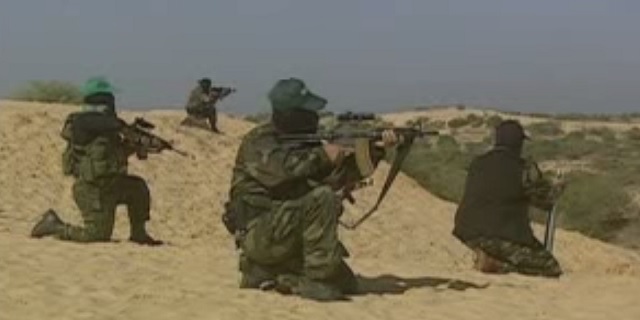
Hamas-640Hamas fighters (Photo: Video screenshot)

Should a full-blown war between Hamas and ISIS break out that makes Gaza look like Syria, the West mustn’t embrace Hamas as the better alternative. The minute differences between them should not be exaggerated out of a desire for a side to pick. They are the two manifestations of the same enemy.

*********************

The attacks on Egypt in the Sinai Peninsula by the Islamic State (ISIS) this week shows why its new vow to topple Hamas in the Gaza Strip should be taken seriously. Polls show that Palestinians have the highest level of sympathy for ISIS in the Arab world with the possible exception of Syria.

ISIS has killed at least 17 Egyptian security personnel (13 soldiers and 4 police officers) and injured 30 in coordinated attacks that reflect increasing sophistication.  The Egyptian military said 70 Islamist terrorists participated and five checkpoints were assaulted. ISIS claims it struck 15 sites all at once.

The Egyptian government immediately accused the Muslim Brotherhood of involvement as it has in the past. Egypt also claims Hamas, the Brotherhood’s Palestinian wing, is secretly supporting ISIS operations in the Sinai Peninsula. It has even threatened to attack Hamas in Gaza in response.

The Egyptian claims are questionable because of the open animosity between the two groups and ISIS’ new video pledging to conquer the Gaza Strip, but the Israeli military confirmed the links after Wednesday’s attacks. It identified two senior Hamas officials who advise ISIS and covertly arrange for hospital visits in Gaza for its injured operatives.

The Brotherhood denies involvement and its website has a statement urging Egyptians to reject violence, but the group’s double-talk is well-documented. It is simply false that the Brotherhood is completely non-violent and Brotherhood media outlets explicitly call for violence like that perpetrated by ISIS this week.

However, there does appear to be a division within the Brotherhood. Youth leaders and elements outside the country are advocating violent jihad, while the older generation repeatedly reaffirms the group’s non-violent stance in Egypt. It’s possible this is all a calculated deception. It’s also possible the rift is real and a faction would be willing to support ISIS against a common enemy.

One Brotherhood official, Mohamed Gaber, said it “seeks to use all expertise inside and outside the Brotherhood to achieve its goals at this stage,” referring to toppling the Egyptian government.

The Egyptian government’s crackdown on the Brotherhood makes it tempting for Hamas to support ISIS operations in the Sinai. Hamas may prefer a situation where its southern border is a battlefield between ISIS and Egyptian forces instead of a base for either. Plus, the Brotherhood uses every death as proof that Egypt’s crackdown is counter-productive and should end.

There are three possibilities: Claims of Hamas/Brotherhood links to ISIS in Sinai are simply wrong; the two groups simultaneously collaborate and fight with each other depending on circumstances; or there are elements within Hamas/Brotherhood that work independently with ISIS against the wishes of the leadership.

Whatever the truth is, the attacks in the Sinai show the threat to Hamas should be taken seriously.

A November 2014 poll found that the Palestinians are the most sympathetic population to ISIS in the Arab world. Only 4% view ISIS positively but if you include those who view it somewhat positively, it grows to nearly one-quarter of the population. However, another poll found that only 3% of Palestinians view ISIS’ gains positively and 88% view it negatively.

ISIS could capitalize on widespread dissatisfaction with Hamas and the situation in Gaza. ISIS’ message that Gaza is in bad shape because Hamas is not sufficiently implementing Sharia could resonate with Islamists who are struggling to understand why Hamas’ rule has not been blessed by Allah. The video also slams Hamas for being too soft on Israel.

A poll released last month shows that 50% of the population in Gaza—and an astounding 80% of the youth—want to leave. About 63% favor continuing rocket attacks on Israel. Another poll found that almost 25% would not vote if elections were held today.

Should a full-blown war between Hamas and ISIS break out that makes Gaza look like Syria, the West mustn’t embrace Hamas as the better alternative. The minute differences between them should not be exaggerated out of a desire for a side to pick. They are the two manifestations of the same enemy.

Israeli policymakers’ alarming over-reliance on Egypt to grapple with Hamas and ISIS

July 3, 2015

Israeli policymakers’ alarming over-reliance on Egypt to grapple with Hamas and ISIS, DEBKAfile, July 3, 2015

Sinai_fight_1.7.15Egyptian troops battle ISIS in Sinai

The statements coming from different Israeli spokesmen this week were not just at dangerous variance with the actual events but with one another, when it came to Egypt’s massive confrontation this week with ISIS close to Israel’s border, a fresh round of Palestinian West Bank anti-Israel terror and the ambivalent role played by Hamas extremists in all these events.

Coordinator of Government Activities in the Territories, Maj. Gen. Yoav Mordechai said in an Al Jazeera interview Thursday, July 2, that Israel had “clear evidence” of Hamas aiding the offensive the Islamic State’s Sinai affiliate launched against Egyptian positions in northern Sinai Wednesday.

The Israeli commander accused Hamas of giving “weapons and logistical support to the ISIS affiliate.”  He added “we have examples of Hamas commanders who actively participated in this assistance,” and named “Wael Faraj, a brigade commander of the military wing of Hamas…who smuggled wounded [ISIS fighters] from Sinai into Gaza,” and “Abdullah Kitshi …who trained operatives belonging to Wilayat Sinai.”

Asked about Israeli-Egyptian cooperation, Mordechai commented: “Egypt is a strong and independent country.”

The Defense Ministry’s strategic adviser Amos Gilead was more specific: He said Egypt was “a strong country of 90 million people with an army of half a million.” Gilead was sure that the Egyptians would do everything necessary for a determined war on ISIS.

Thursday, July 2, the day after the ISIS raid, the Egyptian military said it had killed 123 Islamic State gunmen in two days, 100 of which were killed on Wednesday. Egyptian bombers were then described as wiping out ISIS concentrations around the northern Sinai town of Sheikh Zuwaid. “The situation in northern Sinai is now under complete control,” said the Egyptian spokesman

All three officials were doing their best to put a good face on the Egyptian army’s reverses in its largest battle yet with ISIS, say DEBKAfile’s military sources. No one was ready to admit that the Islamic State’s Sinai branch had won this confrontation on points.

For two years, the Egyptian army has only chipped away at the edges of the threatening Islamist presence growing larger in the Sinai Peninsula, even through Israel suspended the restrictions of the 1979 peace accord and allowed Egypt to bring large military forces, tanks, artillery and helicopters into Sinai for a major campaign to expunge that presence. This has not happened although both the Egyptians and the IDF know the exact whereabouts of the Islamist terrorists’ bases.

Even while playing down the unwelcome outcome of the Wednesday battle, the IDF took the precaution of closing to traffic the main Israeli highway running parallel to the Egyptian border from Nitzana to the southern port of Eilat. The army in the south was also placed on high alert in case ISIS raiders crossed the border from Egyptian Sinai.

Then, on Friday afternoon, parts of southern Israel heard a red alert for rockets which the IDF estimated had come from Sinai, i.e. ISIS, rather than the Gaza Strip.

Israeli officials are at their most mixed up when they discuss Hamas – even after crediting that extremist Palestinian group with conducting a fresh surge of terrorist attacks on the West Bank and Jerusalem. In the past week, they murdered three Israelis – David Capra, Danny Gonen and Malachi Moshe Rosenfeld.

Yet, according to the mantra the IDF has taught accredited military correspondents, all Hamas wants is a long-term ceasefire so as to live in peace. They also trot out the official claims that the deadly attacks were the work of “lone wolves,” just as the persistent trickle of rocket fire from the Gaza Strip comes from “rogue” elements.

Israeli officials appear to have lost their way amid vain attempts to let Hamas off the terrorist hook.

Hamas’ own willingness to jump into bed with Egypt, Hizballah, Iran and ISIS – all at once – undoubtedly creates a confused picture about its shifting motives. However, Israeli policymakers must beware of falling into the dangerous trap of ambivalence and loss of focus.

President El-Sisi must realize by now that his army has missed the boat for a resounding one-strike victory against ISIS, because that enemy is no longer alone. Its association with Hamas is further bolstered by a secret pact with the Egyptian Muslim Brotherhood, the deadly foe of the El-Sisi administration.

Hamas, as the Brotherhood’s ideological offspring, in fact hosted Mahmud Izzat Ibrahim, head of the Brotherhood;s clandestine operational networks, which run from Libya through to Sinai.

This tripartite ISIS-Muslim Brotherhood-Hamas axis is currently in full momentum. Egypt is therefore in for a drawn-out bloody war.

Israeli policymakers would be foolish to depend on Cairo pull this red-hot iron out of the terrorist fire any time soon. They must find ways – the sooner the better – to grapple with the reality of a rampant Islamic State next door. ISIS is already in the process of overrunning the Gaza Strip; it is on the way to seizing expanding sections of the Sinai Peninsula. That territory will serve as a convenient base for Islamist raids against Israel.

If ISIS leaps further to hijack the coastal areas of Sinai, it may be necessary to fight a major war to preserve  the freedom of navigation in the Suez Canal and Israel’s southern exit through the Gulf of Aqaba.

The worst agreement in U.S. diplomatic history – The Washington Post

July 3, 2015

The worst agreement in U.S. diplomatic history – The Washington Post.


Secretary of State John F. Kerry at the Iran nuclear talks on Thursday. (Carlos Barria/Associated Press)

Opinion writer July 2 at 7:36 PM

The devil is not in the details. It’s in the entire conception of the Iran deal, animated by President Obama’s fantastical belief that he, uniquely, could achieve detente with a fanatical Islamist regime whose foundational purpose is to cleanse the Middle East of the poisonous corruption of American power and influence.

In pursuit of his desire to make the Islamic Republic into an accepted, normalized “successful regional power,” Obama decided to take over the nuclear negotiations. At the time, Tehran was reeling — the rial plunging, inflation skyrocketing, the economy contracting — under a regime of international sanctions painstakingly constructed over a decade.

Then, instead of welcoming Congress’ attempt to tighten sanctions to increase the pressure on the mullahs, Obama began the negotiations by loosening sanctions, injecting billions into the Iranian economy (which began growing again in 2014) and conceding in advance an Iranian right to enrich uranium.

It’s been downhill ever since. Desperate for a legacy deal, Obama has played the supplicant, abandoning every red line his administration had declared essential to any acceptable deal.

Inspections. They were to be anywhere, anytime, unimpeded. Now? Total cave. Unfettered access has become “managed access.” Nuclear inspectors will have to negotiate and receive Iranian approval for inspections. Which allows them denial and/or crucial delay for concealing any clandestine activities.

To give a flavor of the degree of our capitulation, the administration played Iran’s lawyer on this one, explaining that, after all, “the United States of America wouldn’t allow anybody to get into every military site, so that’s not appropriate.” Apart from the absurdity of morally equating America with the world’s foremost state sponsor of terrorism, if we were going to parrot the Iranian position, why wait 19 months to do so — after repeatedly insisting on free access as essential to any inspection regime?

Coming clean on past nuclear activity. The current interim agreement that governed the past 19 months of negotiation required Iran to do exactly that. Tehran has offered nothing. The administration had insisted that this accounting was essential because how can you verify future illegal advances in Iran’s nuclear program if you have no baseline?

After continually demanding access to their scientists, plans and weaponization facilities, Secretary of State John Kerry two weeks ago airily dismissed the need, saying he is focused on the future, “not fixated” on the past. And that we have “absolute knowledge” of the Iranian program anyway — a whopper that his staffers had to spend days walking back.

Not to worry, we are told. The accounting will be done after the final deal is signed. Which is ridiculous. If the Iranians haven’t budged on disclosing previous work under the current sanctions regime, by what logic will they comply after sanctions are lifted?

Sanctions relief. These were to be gradual and staged as the International Atomic Energy Agency certified Iranian compliance over time. Now we’re going to be releasing up to $150 billion as an upfront signing bonus. That’s 25 times the annual budget of the Iranian Revolutionary Guard. Enough to fuel a generation of intensified Iranian aggression from Yemen to Lebanon to Bahrain.

Yet three months ago, Obama expressed nonchalance about immediate sanctions relief. It’s not the issue, he said. The real issue is “snap-back” sanctions to be reimposed if Iran is found in violation.

Good grief. Iran won’t be found in violation. The inspection regime is laughable and the bureaucratic procedures endless. Moreover, does anyone imagine that Russia and China will reimpose sanctions? Or that the myriad European businesses preparing to join the Iranian gold rush the day the deal is signed will simply turn around and go home?

Nonnuclear-related sanctions. The administration insisted that the nuclear talks would not affect separate sanctions imposed because of Iranian aggression and terrorism. That was then. The administration is now leaking that everything will be lifted.

Taken together, the catalog of capitulations is breathtaking: spot inspections, disclosure of previous nuclear activity, gradual sanctions relief, retention of nonnuclear sanctions.

What’s left? A surrender document of the kind offered by defeated nations suing for peace. Consider: The strongest military and economic power on earth, backed by the five other major powers, armed with what had been a crushing sanctions regime, is about to sign the worst international agreement in U.S. diplomatic history.

How did it come to this? With every concession, Obama and Kerry made clear they were desperate for a deal.

And they will get it. Obama will get his “legacy.” Kerry will get his Nobel. And Iran will get the bomb.

Rocket explodes in southern Israel

July 3, 2015

Rocket explodes in southern Israel | The Times of Israel.

No casualties or damage reported; security forces checking whether projectile came from Gaza or increasingly volatile Sinai

July 3, 2015, 4:38 pm
Illustrative photo of a rocket fired from Gaza City toward Israel, August 9, 2014. (AP/Dusan Vranic)

Illustrative photo of a rocket fired from Gaza City toward Israel, August 9, 2014. (AP/Dusan Vranic)

A rocket exploded in Israeli territory near the Gaza Strip Friday afternoon, and security officials were checking whether the launch had come from the Palestinian territory or the Sinai peninsula.

There were no reports of casualties or damage in the attack.

The launch set off “Color Red” warning sirens in the Eshkol Regional Council, which borders the southern Gaza Strip as well as the Egyptian peninsula. Security teams were scouring the area for the impact site.

Palestinian media also reported explosions in northern Gaza, according to Walla News.

There has recently been in increase in sporadic attacks by terror elements in the Strip. Recent weeks have seen several rocket launches from Gaza, the first significant attacks since the conclusion of the war between Israel and armed groups in the coastal territory last summer.

In each incident, one or two projectiles were fired at Israel. The IDF has at times responded with limited aerial strikes in response.

While the IDF believes Hamas is not directly involved in the attacks, as it is not interested in another round of violence, the defense establishment has repeatedly said it holds Hamas solely responsible for any violence coming out of the Gaza Strip, where Hamas is de facto in control.

The Israeli military is also increasingly wary of attacks from jihadists in Sinai, where a deadly assault by an Islamic State-affiliated group Wednesday killed over 70 Egyptian troops.

On Thursday the Israel Defense Forces ordered the closure of Highway 12, which runs along the border with Egypt, until further notice. It also upped its presence along the border, as security officials cautioned that the IS-affiliated group Wilayat Sinai could attempt to overrun the Gaza Strip.

AP contributed to this report.

Deadlines, red lines

July 3, 2015

Deadlines, red lines, Israel Hayom, Ruthie Blum, July 3, 2015

(Please see also, Iran’s Nuclear Negotiators Emboldened by Islamic Ideology: Cleric at (Iranian) Tashim News Agency. — DM)

The regime in Tehran has made its position clear. So has the White House. It will take a miracle — or a military strike — to prevent Iran from building nuclear bombs.

**********************

The deadline for a nuclear deal between the P5+1 powers and Iran was extended on Tuesday, when too many bones of contention remained unresolved on June 30. The new date set by the parties to finalize the “framework for an agreement” reached in Lausanne three months ago is July 7.

This means that there are four days to go before the current talks in Vienna bear fruit in the form of an official document. If such a piece of paper is signed, two leaders will feel particularly vindicated: U.S. President Barack Obama and Iranian President Hassan Rouhani — the former for playing out his fantasy of peace through diplomacy and the latter for delivering the goods to his boss, Ayatollah Ali Khamenei.

The rest of the world, however, will be in mortal peril. And Israel will be forced to act fast.

The only sliver of a silver lining in this otherwise black cloud is that Islamists sometimes play their cards wrong. Buoyed by the weakness of the West in the face of their fanaticism, they often take their visions of grandeur to heights that even American and European appeasers cannot accept. So by next week, it is possible that the Iranian negotiators will overstep their counterparts’ bounds, and everyone will return to the country from whence they came with nothing but another date and venue to show for their efforts.

But because the stakes are nuclear weapons in the hands of a mullah-led regime bent on global hegemony — and working toward it through proxy terrorist organizations — one cannot count on the above scenario.

A number of recent statements are cause for concern.

On Thursday, Iranian Foreign Minister Mohammad Javad Zarif told reporters: “The negotiations are moving forward and we should be hopeful. Today is a good day.”

This was an abbreviated version of what his deputy, Abbas Araqchi, said the day before in a TV interview: “A positive atmosphere is ruling the negotiations, and the spirit for going forward exists in all delegations, but this doesn’t mean that all delegations, including us, are ready to reach an agreement at any price.”

Araqchi also defined a “good deal” as one that would honor Khamenei’s “red lines.”

These were spelled out in a June 23 speech by Khamenei (and included in a June 30 Middle East Media Research Institute report): “In contrast to what the Americans are insisting on, we do not accept long-term restrictions for 10 to 12 years.

“Research, development and construction will continue. … They say, ‘Don’t do anything for 12 years,’ but these are particularly violent words, and a gross mistake.

“The economic, financial and banking sanctions — whether related to the Security Council or the American Congress and administration — must be lifted immediately with the signing of the agreement. The remainder of the sanctions will also be lifted within a reasonable time frame. The Americans are presenting a complex, convoluted, bizarre, and stupefying formula for [removing the] sanctions, and it is unclear what will emerge from it, but we are clearly stating our demands.

“The lifting of the sanctions must not depend on Iran carrying out its obligations. Don’t say, ‘You carry out your obligations and then the IAEA will approve the lifting of the sanctions.’ We vehemently reject this. The lifting of the sanctions must take place simultaneously with Iran’s meeting of its obligations. We oppose the delay of the implementation of the opposite side’s obligations until the [release of] the IAEA report [verifying that Iran has met its obligations], because the IAEA has proven repeatedly that it is neither independent nor fair, and therefore we are pessimistic regarding it.

“They say, ‘The IAEA should receive guarantees.’ What an unreasonable statement. They will be secure only if they inspect every inch of Iran. We vehemently reject special inspections [that are not customary for any country except Iran], questioning of Iranian personnel, and inspection of military facilities.

“Everyone in Iran — including myself, the government, the Majlis [parliament], the judiciary, the security apparatuses, and the military, and all institutions — want a good nuclear agreement … that is in accordance with Iran’s interests.

“Although we wish the sanctions lifted, we see them as [having brought us] a particular kind of opportunity, because they made us pay more attention to domestic forces and domestic potential.”

A few days later, on June 29, Obama’s deputy national security adviser, Ben Rhodes, gave an interview to The Atlantic’s Jeffrey Goldberg at the Aspen Ideas Festival.

When asked whether Obama believes a deal will exact change in Iran’s behavior, Rhodes replied: “We believe that an agreement is necessary … even if Iran doesn’t change. … That said, we believe that a world in which there is a deal with Iran is much more likely to produce an evolution in Iranian behavior than a world in which there is no deal. In fact … if the notion is that Iran has been engaged in these destabilizing activities under the last several years when they’ve been under the pressure of sanctions, clearly sanctions are not acting as some deterrent against them doing destabilizing activities in the region. … [T]he point is … in a world of a deal, there is a greater possibility that you will see Iran evolve in a direction in which they are more engaged with the international community and less dependent upon the types of activities that they’ve been engaged in.”

The regime in Tehran has made its position clear. So has the White House. It will take a miracle — or a military strike — to prevent Iran from building nuclear bombs.


