Archive for June 2015

An Inside Look At How Obama Killed The U.S.-Israel Relationship

June 19, 2015

An Inside Look At How Obama Killed The U.S.-Israel Relationship

Oren book reveals Iimmense hostility, anger at Israel

BY:
June 19, 2015 5:00 am

via An Inside Look At How Obama Killed The U.S.-Israel Relationship | Washington Free Beacon.

Michael B. Oren / AP
In his new memoir, former Israeli Ambassador Michael Oren documents the rapid dissolution of the historically close U.S.-Israel alliance under President Barack Obama. Oren recounts being threatened and intimidated at multiple junctures by Obama and his senior officials, marking many firsts in a relationship that has long been the cornerstone of American foreign policy.

The memoir, Ally: My Journey Across the American-Israeli Divide, has already rushed to the top of Amazon’s bestseller list. It provides a window into the daily stresses and strains Obama and his allies heaped upon the Jewish state—from placing unprecedented demands on Israel regarding the peace process to fabricating crises in the U.S.-Israel alliance.

“Prophecy was not required to foresee that an Obama presidency might strain the U.S.-Israel alliance,” Oren writes in the early pages of his book.

Obama stacked his administration with senior officials hostile to Israel and pursued a policy of “daylight” with Jewish state, Oren recounts.

“The first thing Obama will do in office is pick a fight with Israel,” Oren recalls a confidant as telling him in the early days of the administration.

Below are a series of passages that reveal in detail how the U.S.-Israel alliance hit historic lows under the Obama administration.

1. ‘I know how to deal with people who oppose me’

The tension between Obama and Prime Minister Benjamin Netanyahu of Israel began during their first meeting at the White House, Oren recalls. While the meeting appeared to go “smoothly,” behind the scenes Obama outwardly threatened Netanyahu.

“Face-to-face, I later heard, Obama had demanded that Netanyahu cease all building not only in the territories but also in the disputed areas of Jerusalem,” Oren writes. “‘Not a single brick,’” the president purportedly said. ‘I know how to deal with people who oppose me.’”

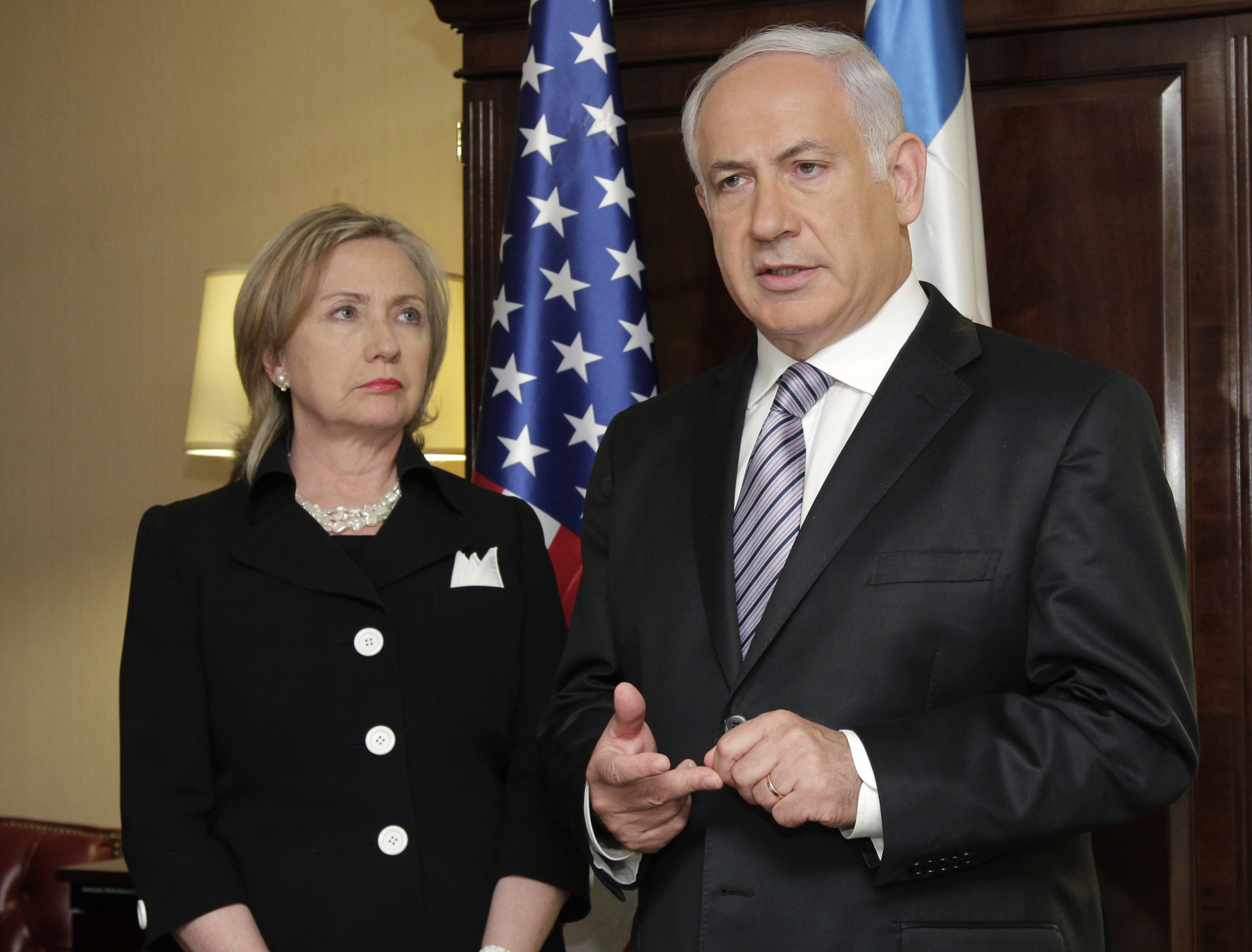
Obama and Netanyahu / AP

2. Israel Defense Forces (IDF) Commanders Never Trusted Obama

Oren recounts listening to Obama’s 2009 speech in Cairo while stationed in the IDF’s headquarters. “Their reactions typified that of a great many Israelis.”

These commanders “scoffed at what they regarded as Obama’s inexperience with the Middle East, where magnanimity is often seen as weakness. They cringed at his tendency to equate America’s moral foibles with the honor killings, human trafficking, and the suppression of women, foreign workers, and indigenous minorities rampant in many Muslim countries,” Oren writes.

Their opinions only grew dimmer when Obama “linked that legitimacy [of Israel] to the Jews’ ‘tragic history’ in the Holocaust. That linkage seemed to me to be the most damaging part of his speech.”

3. The Anti-Israel State Department

Oren’s first meeting with then-Deputy Secretary of State Jim Steinberg was fraught and filled with demands that Israel consent to Obama administration demands for a total building freeze in Jerusalem. Such intimidation and threats would be a cornerstone of Oren’s meetings with senior officials at Foggy Bottom.

“Discord indeed mired my initial meeting with Deputy Secretary of State Jim Steinberg,” Oren writes.

“Under the administration’s policy, a Jew could only build his home in certain Jerusalem neighborhoods but an Arab could build anywhere—even illegally—without limit. ‘In America,’ I said, ‘that’s called discrimination.’”

Later in his tenure, Steinberg would again upbraid Oren. State Department staffers apparently “listened in on” the angry meeting and “cheered,” according to Oren.

4. Congressional Democrats Scold Oren

A handful of congressional Democrats berated Oren during his first trip to Capitol Hill as ambassador.

“In our first conversation, Sen. Bill Nelson of Florida caught me off guard with a letter from a constituent alleging ‘Israeli economic apartheid’ in the territories,” Oren recalls.

Later, “Senator Dianne Feinstein offered me a glass of select California wine and said, ‘I am a peacemaker but you are a fighter.’”

Later in the book, Oren recalls taking a call from Sen. Barbara Boxer (D., Calif.), who “railed at me so furiously [about Israeli criticism of Obama] that I literally had to hold the phone form my ear.”

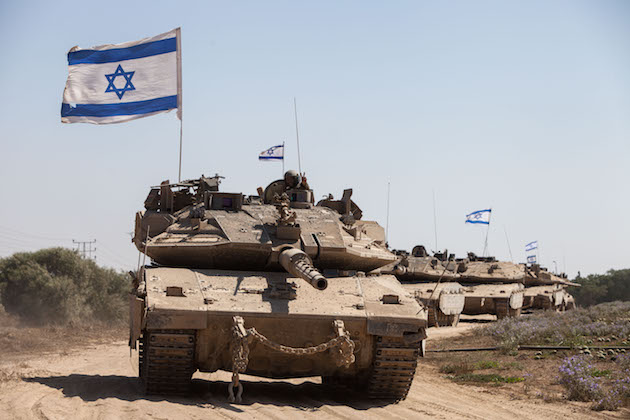
IDF tanks / AP

5. Obama Tells Off Prominent American Jewish Leaders in Private Meeting

Obama’s first meeting with a delegation of top American Jewish leaders was tense, according to Oren.

While such gatherings “had become standard” for previous White Houses, “for Obama … the briefings were less a means of garnering support than of muting opposition. Indeed, what many American Jewish leaders saw as the placing of undue pressure on Israel, the president regarded as displays of restraint.”

Obama invited the anti-Israel fringe group J Street to participate in these private meetings, a move that angered more mainstream Jewish leaders.

6. Rahm Emanuel’s Angry Outbursts

Former White House Chief of Staff Rahm Emanuel, notorious for his profanity-laden outbursts, woke Oren one morning with an angry call.

“I don’t like this f***ing shit,” Oren quotes Emanuel as saying about Israel’s refusal to stop building Jewish homes in disputed territories.

“Rahm, I knew, was not enamored of my boss or of the American Jewish leaders whom he faulted for backing Netanyahu unconditionally,” Oren writes.

Later in the book, Oren recalls Emanuel referring to a settlement dispute between Israel and the U.S. as “a pimple on the ass of the U.S.-Israel friendship.”

7. White House Orders Senior Officials to Criticize Israel

In addition to privately embracing the anti-Israel fringe group J Street, the Obama administration sent top officials to speak at its first national conference in Washington, D.C.

Oren, who refused to participate in the event, reveals that Obama administration officials had direct orders to criticize Israel publicly.

Hannah Rosenthal, the administration’s former adviser on anti-Semitism, “issued her first denunciation not of anti-Semites, but rather of me for boycotting the summit,” Oren writes.

“Hannah eventually became a friend and I never took her comment personally,” he adds. “Nor did I believe that she acted on her own, since I later learned that some of the criticism emanated directly from the White House.”

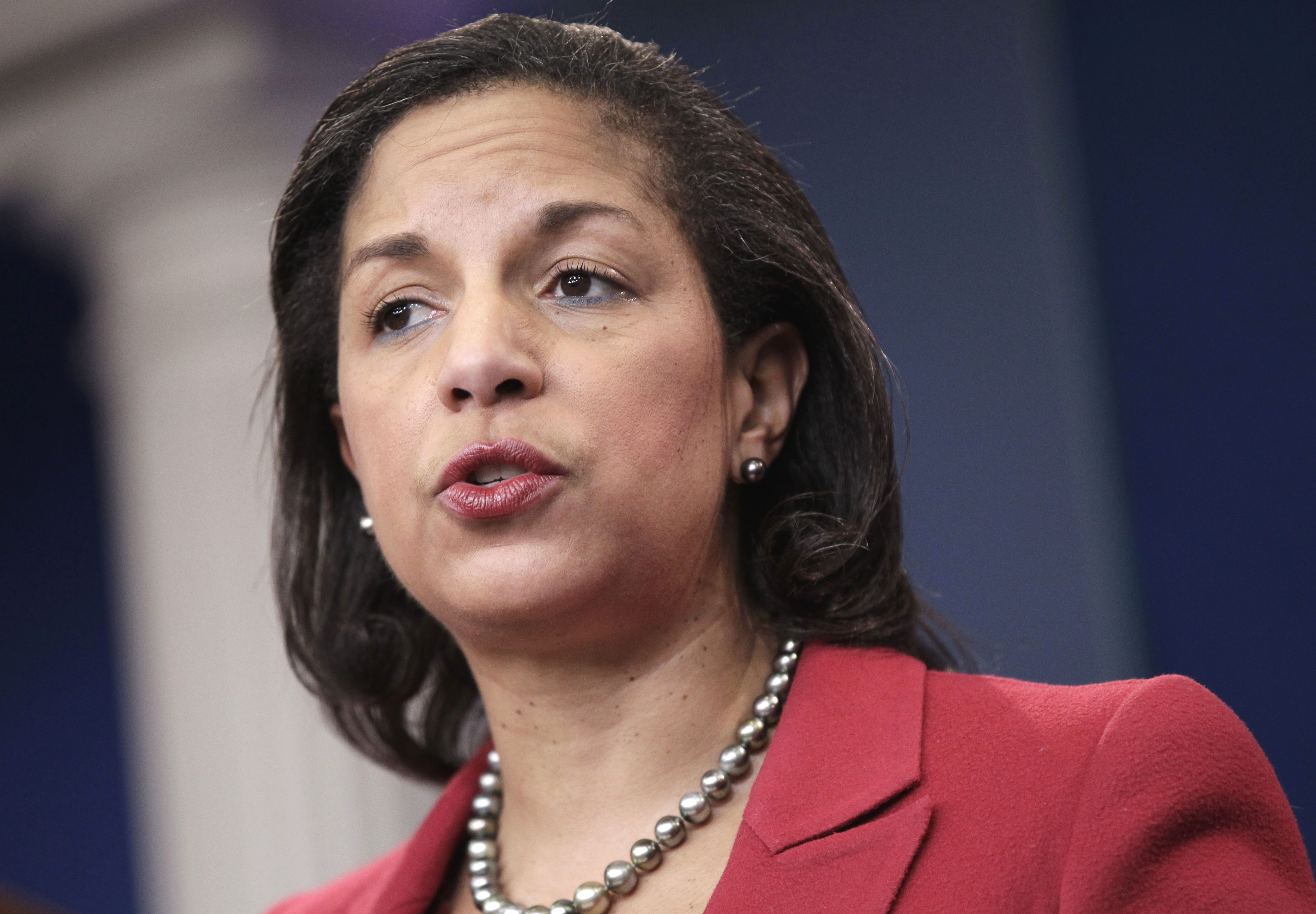
AP

8. Hillary Clinton Refuses to Meet With Oren

Oren reveals that in the early days of his tenure, then-Secretary of State Hillary Clinton refused to meet with him in person.

“I reached out to Hillary Clinton, asking for a private meeting, only to be rebuffed,” Oren recalls.

9. Hillary Blows Her Top

When Secretary of State Hillary Clinton learned of Israeli plans to transform a slum in Jerusalem into a ritzy tourist mall, “she nearly blew her top,” according to Oren.

The slum was deemed controversial due to its location in an East Jerusalem neighborhood the administration considered as disputed.

“We practically had to scrape her off the ceiling,” according to a senior American official who spoke to Oren.

10. White House Wrongly Accuses Oren Of Interfering in U.S. Politics

When U.S.-Israel tensions hit a high point in 2010, Oren frantically sought to diffuse the hostility by setting up a meeting with then-Senior White House Adviser David Axelrod.

“I urged him to find a way out of a situation that I feared might become dangerous for Israel, but Axelrod calmly brushed this aside,” Oren recalls. “Instead, he accused me of urging congressmen to hold on until [the] 2012 [elections], that Obama would never get reelected. That charge of interfering in internal American politics could have rendered me persona non grata and resulted in my expulsion from the United States.”

11. Obama Withholds Vital Arms From Israel

After working furiously to secure a deal with U.S. officials for 20 F-35 Joint Strike Fighters, Obama cancelled the arms sale, according to Oren.

“The impact, for Israel, was calamitous,” Oren writes. “Editorials—apparently fanned by official sources—suggested that the F-35s has been an Israeli demand, rather than an American offer.”

12. Robert Gates Has A ‘Visceral Dislike of Netanyahu’

A $60 billion U.S. arms sale to Saudi Arabia in 2010 sent Israeli officials scrambling.

U.S. and Israeli leaders saw the sale as an affront to the Jewish State’s Qualitative Military Edge (QME), a longstanding deal in which the United States has assured Israel’s military supremacy in the region.

“Such concerns [about maintaining the QME] unnerved Netanyahu in a July 6 meeting with [former Secretary of Defense] Robert Gates,” who had “long harbored a visceral dislike of Netanyahu,” according to Oren.

“The animus” between Netanyahu and Gates “was discernible in the Blair House reception room, where Netanyahu promptly took Gates to task for the Saudi sale.”

13. White House Orders Israel to Hold Off On Iran Strike

As the Iranian march for nuclear weapons hit a critical point in the summer of 2009, the Obama administration publicly affirmed Israel’s right to defend itself.

Behind the scenes, though, the White House ordered Israel to lay off Tehran.

“Off camera … the message was ‘Don’t you dare,’” Oren recalls. “Washington quietly quashed any military option for Israel.”

14. Obama Destroys ‘More Than 40 Years of American Policy’ Toward Israel

On the eve of a critical vote at the United Nations on a Palestinian-backed resolution to condemn Israeli settlements, Obama held a 50-minute phone call with President Mahmoud Abbas of the Palestinian Authority .

Obama, during that call, promised to “renew America’s demand for a total freeze on Israeli construction in the West Bank and East Jerusalem.” He also promised to lend his support “for a Palestinian state based on the 1967 lines,” an unprecedented call from a U.S. president, Oren writes.

Israel “was never consulted about this conversation nor even informed,” Oren writes, claiming that the White House even lied about the conversation. “The White House spokesman insisted the subject was Egypt.”

“The Prime Minster’s Office had learned of Obama’s offer to Abbas from U.N. sources, not the United States, and was outraged,” Oren recounts. “The White House has overnight altered more than forty years of American policy” and “Israel felt abandoned.”

15. Susan Rice Yells At Oren

Following the White House’s move to leave Israel in the dark on the U.N. vote, Oren met with then-U.N. Ambassador Susan Rice.

Rice sat in her New York office “brooding and peevishly tapping her forehead with her finger,” according to Oren.

“Israel must freeze all settlement activity,” Oren recalls her saying. “Otherwise the United States will not be able to protect Israel from Palestinian actions at the U.N.”

“’If you don’t appreciate the fact that we defend you night and day, tell us,’ Rice fumed, practically rapping her forehead. ‘We have other important things to do.’”

16. ‘The President is Going to Take On the Prime Minister’

Ahead of the American Israel Public Affairs Committee’s (AIPAC) annual conference in Washington, a senior U.S. official told Oren that Obama was out to “take on” Netanyahu directly.

Both leaders were scheduled to give talks at the pro-Israel lobbying group’s annual confab.

“The president is going to take on the prime minster in front of AIPAC,” former White House Chief Of Staff Bill Daley told Oren. “And if he gets booed, so what?”

17. Obama Officials Embrace ‘Israel Lobby’ Canard

Writing in the New York Times after Netanyahu’s address to AIPAC, columnist Tom Friedman asked if “Netanyahu understands that the standing ovation he got in Congress was bought and paid for by the Israel lobby.”

“I called Tom the moment the article came online and urged him to retract it,” Oren recalls. “You’ve confirmed the worst anti-Semitic stereotype, that Jews purchase seats in Congress,” Oren informed him.

Friedman’s response: “For every call I’ve received protesting, I’ve gotten ten congratulating me for finally telling the truth. … Many of those calls were from senior administration officials.”

18. Senior State Department Official Curses at Oren

Disagreements between the United States and Israel reached another boiling point when the Palestinian Authority moved to gain unilateral recognition at the U.N.

Congressional law mandated that such a move should result in the closure of the Palestinian Liberation Organization’s Washington office, the cut off of U.S. aid to the PA, and the termination of all U.S. funding to any U.N. organization that recognized Palestine.

“Israel strongly endorsed all three repercussions, which the White House just as vehemently opposed,” Oren writes.

While pushing Israel’s cause at the State Department, Oren was chastised by Deputy Secretary Tom Nides.

“You don’t want the fucking U.N. to collapse because of your fucking conflict with the Palestinians, and you don’t want the fucking Palestinian Authority to fall apart either,” Nides purportedly said to Oren.

19. Obama Hearts Erdoğan

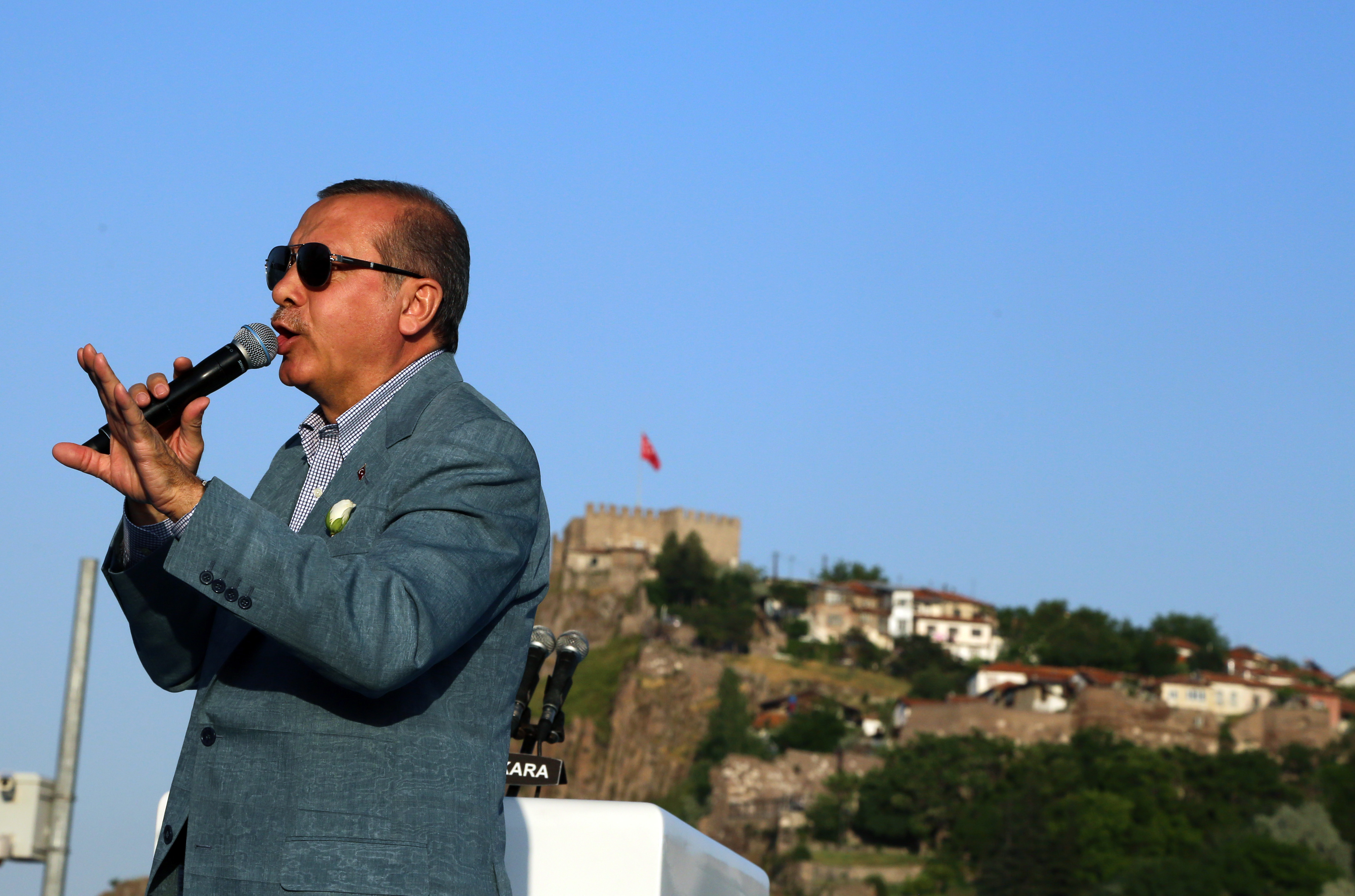
During a meeting at the White House with Israeli leaders, Obama allegedly expressed great support and faith in Turkish leader Recep Tayyip Erdoğan, a notorious critic of Israel who has promoted anti-Semitic conspiracy theories.

“He’s not living in the sixteenth century,” Obama told the Israelis present in the meeting, according to Oren. “We could do much worse than have a bunch of Erdogans in the Middle East.”

20. Obama Keeps Israel In Dark About Syria Strikes

When the United States first decided to launch airstrikes against Syria, Israel was left in the dark, another first in the U.S.-Israel relationship, according to Oren.

The ambassador learned about the strikes while listening to the radio.

“The razor froze in mid-shave,” he writes. “Wiping the foam from my face, I rushed to the embassy. The once-sacred principle of ‘no surprises’ in the U.S.-Israel alliance had fallen into desuetude during the Obama period, but never to this depth on an issue so vital to our immediate security.”

21. Obama Only Backs Israel ‘Because That’s What the American People Want’

During yet another meeting between Obama and Netanyahu, the president attempted to reassure Israel that it would defend it in any war with Iran.

Obama revealed that he only backs Israel because a plurality of Americans demands it.

“If war comes, we’re with you, because that’s what the American people want,” Oren recalls Obama saying.

Iran Fails to Receive Miss Congeniality Award

June 18, 2015

Iran’s Global Image Mostly Negative

Jun 18, 2015, 2:26 PM ET By Hani Zainulbhai and Richard Wike Via Pew Research Center


Oh well, there’s always rugby. (photo credit: AP)

(I have a feeling the ‘Most Likely to Succeed’ award will go to someone else as well. – LS)


views of iranAs the June 30 deadline for negotiations over its nuclear program approaches, a new Pew Research Center poll finds that attitudes toward Iran are mostly negative worldwide. Majorities or pluralities in 31 of 40 countries surveyed hold an unfavorable opinion of the Islamic Republic. And in several Muslim-majority countries in the Middle East and Asia, ratings have declined considerably in recent years.

June also marks the second anniversary of the election of Iranian President Hassan Rouhani, who generally receives low marks across the Middle Eastern nations polled.

These are among the key findings of a new survey by the Pew Research Center conducted in 40 countries among 45,435 respondents from March 25 to May 27, 2015.

Low Marks for Iran in Middle East, Other Regions

Iran is viewed negatively by most nations surveyed, with a global median of 58% saying they have an unfavorable opinion of the country that borders Afghanistan in the east and Iraq in the west. Pakistan is the only country polled where a majority (57%) views Iran favorably.

In the Middle East, roughly nine-in-ten Israelis (92%) hold a negative opinion of Iran, including nearly all Israeli Jews (97%) and more than six-in-ten Israeli Arabs (63%).

Attitudes are nearly as negative in Jordan, where 89% have an unfavorable view of Iran. Smaller majorities of Turks, Lebanese and Palestinians also give their regional neighbor low marks. Meanwhile, in Lebanon attitudes divide along religious lines. More than nine-in-ten Lebanese Shia Muslims (95%) express a positive opinion of Iran — the country with the world’s largest Shia Muslim population — compared with 29% of Lebanese Christians and just 5% of Sunni Muslims.

With the exception of Pakistan, publics in the Asia-Pacific region are either mixed or negative in their assessments of Iran. Unfavorable views of the Islamic Republic are especially widespread in Japan and Australia (73% and 67%, respectively). Even in Pakistan, opinion of Iran has somewhat soured, with negative ratings increasing from 8% to 16% over the past year.

Iran’s image also suffers in Latin America, where a median of 61% across six countries express unfavorable views. Publics in Africa, while negative on balance, are more mixed in their assessments of Iran. A median of 39% in nine African nations surveyed view Iran in a negative light, 32% view the nation positively, and a quarter do not offer any opinion. In Nigeria, attitudes differ among the predominant religious groups: 43% of Muslims express favorable views of Iran while only 23% of Christians hold that view.

Amidst the negotiations over the future of Tehran’s nuclear program, publics in the so-called “P5+1” countries are generally critical of Iran. Roughly three-quarters of Americans (76%) view Iran unfavorably, virtually unchanged from last year. Majorities in France (81%), Germany (78%), the UK (62%) and China (61%) share this opinion. Only in Russia do about a third (34%) rate Iran positively, and even here the prevailing view is negative (44%).

Declining Ratings for Iran in Muslim-Majority Nations

views of iranPerhaps influenced by political and sectarian tensions in the Middle East, favorable views of majority-Shia Iran have declined precipitously in some Muslim-majority countries over the last decade.

Since 2006-2007, favorable ratings of Iran have dropped by 41 percentage points each in Indonesia and Jordan. Turkish public opinion has also deteriorated significantly (-36 points) over the same period. Sizable declines in Iran’s standing are also evident in Malaysia (-22), the Palestinian territories (-21) and Pakistan (-15). In Lebanon, opinions of Iran have remained relatively stable – 41% currently express a positive view, similar to the 36% registered in 2007. Over the last eight years, however, the percentage of Lebanese Shia who have a very favorable opinion of the Persian nation has increased significantly, rising from 47% to 80%.

Little Support for Rouhani in Middle East

views of rouhaniAs is the case with his country as a whole, Iranian President Hassan Rouhani receives generally poor marks among neighboring publics in the Middle East, with half or more in each country surveyed viewing him unfavorably. In Lebanon, views divide along religious lines: 95% of Lebanese Shia have a positive opinion of Rouhani, compared with a quarter of Christians and roughly one-in-ten Sunnis (11%). Since his first year in office, the Iranian president’s favorable ratings have slightly increased in the Palestinian territories (+10 percentage points) and Jordan (+8).


In America, you wear uniform. In Russia, uniform wear you.

June 18, 2015

Russian Army Re-Brands Under Putin

Jun 17, 2015, 2:26 PM ET By PATRICK REEVELL Via ABC News


Putin showcases all the latest military goodies. (photo credit: Don’t Want to Know)

(Get out your checkbooks! – LS)

MOSCOW — Russia’s president Vladimir Putin on Tuesday opened a massive military expo in a brand new army exhibition center just outside Moscow, unveiling another major project meant to showcase Russia’s armed forces as modern and professional.

In the past five years, Russia has spent hundreds of billions of dollars modernizing its military; this year alone it will spend $57 billion on defense. Much of this has gone towards rearming the Russia’s troops, supplying them with new tanks and armored vehicles.

But the modernization efforts are not limited just to buying new weapons. Russia’s army has been overhauling its training, recruitment and, most recently, its image. Beginning with its logo, the army has been undergoing a re-branding. Uniforms and paint jobs have been redesigned, as have mess halls and rec rooms; Russia’s defense ministry has even launched its own clothing line, modeled after popular European brands. The idea is to make the Russian military more appealing to young Russians.

The exhibition center and expo are part of this trend. Named Park Patriot, the exhibition center will eventually form part of a military-themed amusement park. It has vast car-parks — the government appears to be expecting a lot visitors.

Under Putin the military has become a more and more prominent part of Russian society. Following Russia’s annexation of Crimea last year and with tensions now high with the West, the army has become a constant feature on state television and a theme at many public events. The number of military exercises has also jumped considerably, taking place almost continuously since the Ukraine crisis began.

But behind the shiny exteriors of the expo and re-branding, the modernization plans are running into difficulties.

The drop in oil prices has forced Russia to cut back on defense spending for the first time since 2010. The Russian government has announced that it is trimming its budget by roughly 5 percent for 2015, reducing it to $57 billion instead of $60 billion. A number of economists have warned Russia’s budget cannot sustain this level of military spending while its economy continues to struggle, stifled by Western sanctions over Ukraine and more significantly by low energy prices.

Even with the cuts, Russia still has the fourth largest defense budget in the world, although its spending is dwarfed by that of the United States, which is set to spend well over $500 billion this year.

The Myth of Muslim Radicalization

June 18, 2015

The Myth of Muslim Radicalization, Front Page Magazine, Daniel Greenfield, June 18, 2015

Usaama RahimUsaama Rahim

Mainstreaming extremism is . . . Obama’s policy. It’s the logic behind nearly every Western diplomatic move in the Middle East from the Israel-PLO peace process to the Brotherhood’s Arab Spring. And these disasters only created more Islamic terrorism.

****************

After some of its quarter of a million Muslims headed to join ISIS, Quebec decided the answer was a $2 million anti-radicalization center headed by a specialist in cultural sensitivity. But if you’re about to be beheaded by a masked ISIS Jihadist, a specialist in cultural sensitivity isn’t going to help you much.

Western governments nevertheless keep rolling out their culturally sensitive approaches to fighting ISIS.

The key element in Obama’s strategy for fighting ISIS isn’t the F-15E Strike Eagle, it’s a Twitter account run by a Muslim Brotherhood sympathizer which claims to “Counter Violent Extremism” by presenting moderate Islamists like Al Qaeda as positive role models for the Islamic State’s social media supporters.

So far 75% of planes flown on combat missions against ISIS return without engaging the enemy, but the culturally sensitive State Department Twitter account has racked up over 5,000 tweets and zero kills.

Cultural sensitivity hasn’t exactly set Iraq on fire in fighting ISIS and deradicalization programs here start from the false premise that there is a wide gap between a moderate and extremist Islam.  Smiling news anchors daily recite new stories about a teenager from Kentucky, Boston or Manchester getting “radicalized” and joining ISIS to the bafflement of his parents, mosque and community.

And who is to blame for all this mysterious radicalization? It’s not the parents. It certainly can’t be the moderate local mosque with its stock of Jihadist CDs and DVDs being dispensed from under the table.

The attorney for the family of Usaama Rahim, the Muslim terrorist who plotted to behead Pamela Geller, claims that his radicalization came as a “complete shock” to them.

It must have come as a truly great shock to his brother Imam Ibrahim Rahim who claimed that his brother was shot in the back and that the Garland cartoon attack had been staged by the government.

It must have come as an even bigger shock to Imam Abdullah Faaruuq, the Imam linked to Usaama Rahim and his fellow terrorist conspirators, as well as the Tsarnaev brothers, who had urged Muslims to “grab onto the gun and the sword.”

The culturally insensitive truth about Islamic ‘radicalization’ is that it is incremental.

There is no peaceful Islam. Instead of two sharply divided groups, peaceful Islam and extremist Islam, there is a spectrum of acceptable terrorism.

Muslim institutions have different places on that spectrum depending on their allegiances and tactics, but the process of radicalization is rarely a sharp break from the past for any except converts to Islam.

The latest tragic victim of radicalization is Munther Omar Saleh; a Muslim man living in New York City who allegedly plotted to use a Tsarnaev-style pressure cooker bomb in a major landmark such as the Statue of Liberty or the Empire State Building. Saleh claimed to be following orders from ISIS.

Media coverage of the Saleh arrest drags out the old clichés about how unexpected this sudden radicalization was, but what appears to be his father’s social media account shows support for Hamas.

Likewise one of Usaama Rahim’s fellow mosque attendees said that Rahim and another conspirator had initially followed the “teachings of the Muslim Brotherhood” but that he had been forced to cut ties with them when they moved past the Brotherhood and became “extreme”.

Despite the media’s insistence on describing the Muslim Brotherhood as a moderate organization, it has multiple terrorist arms, including Hamas, and its views on non-Muslims run the gamut from the violent to the genocidal.

A year after Obama’s Cairo speech and his outreach to the Muslim Brotherhood, its Supreme Guide announced that the United States will soon be destroyed, urged violent terrorist attacks against the United States and “raising a jihadi generation that pursues death just as the enemies pursue life.”

Despite this, Obama continued backing the Muslim Brotherhood’s rise to power across the region.

There are distinctions between the Muslim Brotherhood and Al Qaeda, but the latter is a splinter group of the former. Al Qaeda’s current leader came out of the Muslim Brotherhood. A move from one to the other is a minor transition between two groups that have far more in common than their differences.

And since the Brotherhood controls much of the Islamic infrastructure in the United States, the idea that Munther Omar Saleh or Usaama Rahim became radicalized because they went from a Jihadist group that takes the long view in the struggle against the infidel, putting political structures into place to make a violent struggle tactically feasible, to a Jihadist group that focuses more on short term violence, is silly.

Radicalization isn’t transformational; it’s incremental.

It’s the Pakistani kid down the block deciding that instead of joining the Muslim Students Association and then CAIR to build Islamist political structures in America, he should just cut to the chase and kill a few cops to begin taking over America now.

Radicalization is the moderate Imam who stops putting on an act for PBS and the local politicians and moves to Yemen where he openly recruits terrorists to attack America instead of doing it covertly at his mosque in Virginia.

Radicalization is the teenage Muslim girl who forgets about marrying her Egyptian third cousin and bringing him and his fifty relatives to America and goes to join ISIS as a Caliphate brood mare instead.

It’s not pacifism giving way to violence. Instead it’s an impatient shift from tactical actions meant to eventually make Islam supreme in America over many generations to immediate bloody gratification. ISIS is promising the apocalypse now. No more waiting. No more lying. You can have it tomorrow.

Radicalization does not go from zero to sixty. It speeds up from sixty to seventy-five.

It builds on elements that are already there in the mosque and the household. The term “extremism” implicitly admits that what we are talking about is not a complete transformation, but the logical extension of existing Islamic beliefs.

Omar Saleh seemed cheerful enough about Hamas dropping Kassam rockets on Israeli towns and cities. Would he have supported his son setting off a bomb in the Statue of Liberty? Who knows, but his son was already starting from a family position that Muslim terrorism against non-Muslims was acceptable.

Everything else is the fine print.

When Usaama Rahim followed the way of the Muslim Brotherhood, he was with a moderate group whose spiritual guide, the genocidal Qaradawi was the godfather of cartoon outrage and had endorsed the murderous Iranian fatwa against Salman Rushdie.

The slope that leads from Qaradawi’s cartoon rage to trying to behead Pamela Geller isn’t a slippery one; it’s a vertical waterfall. And this is what radicalization really looks like. It doesn’t mean moderates turning extreme. It means extremists becoming more extreme. And there’s always room for extremists to become more extreme which turns old extremists into moderates while mainstreaming their beliefs.

In the UK, Baroness Warsi, Cameron’s biggest mistake, blamed Muslim radicalization on the government’s refusal to engage with… radicals. Or as she put it, “It is incredibly odd and incredibly worrying that over time more and more individuals, more and more organisations are considered by the government to be beyond the pale and therefore not to be engaged with.”

The reason why the government is refusing to “engage” with these organizations is that they support terrorism in one form or another. Warsi is proposing that the UK fight radicalization by mainstreaming it.

Mainstreaming extremism is also Obama’s policy. It’s the logic behind nearly every Western diplomatic move in the Middle East from the Israel-PLO peace process to the Brotherhood’s Arab Spring. And these disasters only created more Islamic terrorism.

The Muslim teenagers headed to join ISIS did not come out of a vacuum. They came from mosques and families that normalized some degree of Islamic Supremacism and viewed some Muslim terrorists as heroes and role models. It’s time for Western governments to admit that the ISIS Jihadist is more the product of his parents and his teachers than of social media Jihadis on YouTube and Twitter.

Radicalization doesn’t begin with a sheikh on social media. It begins at home. It begins in the mosque. It just ends with ISIS.

Cartoon of the day

June 18, 2015

H/t Joopklepzeiker

Iran's Iron Dome

Michael Oren sees a US alliance in tatters, and Israel ‘on our own’

June 18, 2015

Michael Oren sees a US alliance in tatters, and Israel ‘on our own’ | The Times of Israel.

Asked whether people might look back on this period as the last days before Israel was wiped out, the MK-diplomat-historian responds: ‘It’s happened before in history, hasn’t it?’

June 18, 2015, 10:55 am
President Barack Obama welcomes Ambassador Michael B. Oren of the State of Israel to the White House Monday, July 20, 2009, during the credentials ceremony for newly appointed ambassadors to the United States (White House photo)

Michael Oren, Israel’s ambassador to the United States from 2009 to 2013, chose to give his book on that period in Washington the catchy title “Ally”. But this new memoir — an unprecedented case of a former public servant so quickly writing up sometimes intimate revelations on acutely sensitive core issues — does not describe an alliance at all.

The US-born former diplomat, who is now a Knesset member for the Kulanu party, notes in his foreword that the Hebrew term for “ally” is ben brit — literally “the son of the covenant.” And what he documents is actually the breaching of a covenant, the collapse of an alliance — an accumulated arc of abandonment by the Obama administration, and most especially the president himself, of Israel.

It’s a charge, unsurprisingly, that the administration has rushed to deny, and, rather more surprisingly, that Oren’s own party chief Moshe Kahlon has hurried to dissociate Kulanu from.

Oren’s style is not excitable or melodramatic. In fact, he writes in generally understated tone, with the measured sense of perspective you’d expect from a best-selling historian. So when he notes, as he does near the very end of the book, that last summer’s Israel-Hamas war left “aspects of the US-Israeli alliance in tatters,” you take him seriously, and you worry.

And when you read that Washington worked relentlessly to quash any military option for Israel, most especially in 2012 — arguably the last moment at which Israel could have intervened effectively to thwart Iran’s drive to the bomb (though Oren does not confirm this) — you sense that he has exposed the emptiness of Prime Minister Benjamin Netanyahu’s endless assertions that Israel will stand alone if necessary to stop a nuclear Iran. And you register, with all its grim repercussions, the realpolitik of a broken relationship with our key defender — the rupture that now leaves Israel vulnerable to an increasingly bold Islamist regime that avowedly seeks our annihilation.

Michael Oren. (Photo by Nati Shohat/Flash90)

For an hour in his Knesset office on Monday, Oren discussed his book with The Times of Israel, elaborating in several key areas, and often rendering his depiction of relations with the Obama administration, and the implications for Israel in its battle for survival, still more disconcerting. So much so that I found myself asking Oren, “Are people going to look back in a few years’ time and say, This is what they were talking about in Israel as Iran closed in on the bomb and they were wiped out?”

His bleak reply? “It’s happened before in history, hasn’t it?”

Oren then laughed rather bitterly, and remarked, “The whole conversation is very down here.”

And how.

The Times of Israel: You call the book “Ally,” but its central theme is the incredibly problematic Obama presidency, to put it mildly, on Israel.

The central theme of the book is about someone who grows up in America, loves America, but has an abiding passion for Israel and the Jewish people, and dreams of someday being the bridge between these two countries that he loves, gets to actually do it, but does it during a period of almost unprecedented challenge in those relationships.

Secretary of State John Kerry and ambassador Michael Oren at Ben Gurion Airport in March 2013. (US State Department)

Obama is one challenge. The press is another challenge. The American Jewish community is another challenge. What isn’t a challenge? There are objective challenges. There is America that is starting 2009 in the depths of the worst financial crisis since the Depression. There is America that is bogged down in political polarization such as they’ve never experienced. Nothing can get done. There is America that is traumatized by two wars in the Middle East, exhausted. It doesn’t like to hear about the Middle East. It’s sick of us, wants to go home. That kind of challenge. To say nothing of what was going on here. Then the entire Middle East unravels. Egypt has not one, but two violent revolutions. Syria and Iraq cease to exist. The peace process is dead in the water. Abbas won’t talk to us for most of the period. All that’s going on, plus other issues: Women of the Wall, people spitting at women. All these things are happening in a very short period of time.


You took notes every night?


Michael and Sally Oren (Facebook)

I’m not a diarist, but when I got into this job my wife Sally got me a really nice diary. She said, You might want to jot down a few things. And I came back from my first meeting with Obama in May 2009, and I thought, “Wow, that was interesting. Let me start jotting down a few things.” Then it became an actual diary. I never wrote anything secret in it, but I wrote discussions and observations. Some of them are very funny. When (the then White House chief of staff) Rahm Emanuel calls me at 2 o’clock in the morning and says, “I don’t like this fucking shit,” and I have nothing else to say to him other than “I don’t like this fucking shit either” and it goes on like that, I would then turn around and write this. I thought it was so funny. So interesting. But it’s also very revealing.

There’s a tendency to put this book in black and white terms and it wasn’t like that. I had excellent relationships with a lot of people in the administration. Many people in the administration were dear friends of the State of Israel. Someone like Tom Nides, the deputy secretary of state, Jewish guy, very funny guy and I quote him in the book: After UNESCO recognizes a Palestinian state (in 2011), he calls me and he says, the way they do in Washington, you know, “You don’t want to fucking defund UNESCO. They fucking teach the fucking Holocaust.” Because that’s the way they talk in Washington. That’s been quoted as an example of an anti-Israel bent for Tom Nides. It’s not like that. That’s the way they talk. We had an issue about UNESCO. We had a serious issue about UNESCO. I’d come back and say, that was a funny conversation. Let me write that down.


Is there a precedent for a book by an ambassador coming out this close to the end of his term?


No. I also urged Random House to bring it out in June. They wanted to bring it out much later. Listen, we’re at a crucial juncture. We’re at a crucial juncture now with the Iran issue, and it’s very important to set certain records straight as we go into what could be a fateful period for the State of Israel.


Michael Oren with Prime Minister Benjamin Netanyahu and US Ambassador Dan Shapiro in Jerusalem during President Barack Obama's visit to Israel in March 2013 (Facebook)


Was material taken out when it was reviewed here by the various official bodies?


It went through numerous reviews. In addition to all these different reviews, you need approval of the “inter-ministerial committee,” which is actually an office in the Prime Minister’s Office. The problem is that when the government collapsed, there were no ministers, so there’s no ministers on the inter-ministerial committee and I had a June deadline that I wanted to make and it was very difficult. In the end that committee was terrific. Everybody I worked with — the military censor, the Defense Ministry, the Foreign Ministry, the Mossad — were terrific. There were things that they took out, but everything they took out had a reason — which I didn’t necessarily understand until I actually sat down with them. And then there were things that I was able to persuade them to keep in.


You say early on that these allies are in danger of drifting apart and you believe you can help prevent that. But the arc of the book is this accumulation of dismay and anguish over the administration and the president and their treatment of Israel. You call the book “Ally,” but you’re documenting the failure of an alliance, hopefully not forever. That’s what it is. That’s how it reads. After only a year in the job, you’re gasping at the absurdity of Rahm Emanuel telling Charlie Rose that Obama and Netanyahu are “friends” who have a very good honest constructive relationship. That’s only a year in, and you already know that that’s absurd.

I was taken aback (Laughs).

Yes, that’s my point. After a mere year, you’re already gasping at how at odds that assertion is with your knowledge of how things really are. And it just gets worse from there. Only a year in, you are already amazed that anyone could be asserting that. Right?

Umm hmm. (Laughs). Is that a question?

It’s a really worrying book. You’re documenting — you’re describing it; you’re the ambassador — a presidency that is so wrong and so increasingly problematic on Israel. You talk about an America that wants to pull out of the Middle East. I think the worst criticism is the line about the administration negotiating with Iran in secret on an issue of existential importance to Israel… (Oren writes in the book: “Most disturbing for me personally was the realization that our closest ally had entreated with our deadliest enemy on an existential issue without so much as informing us.”)

For seven months behind our back.

President Barack Obama and Prime Minister Benjamin Netanyahu hold a meeting in the Oval Office of the White House in Washington, DC, September 30, 2013. (Photo credit: Kobi Gideon/GPO/Flash90)

Again, the book is called “Ally,” but it’s not the documentation of an alliance. It’s the documentation of the failure of an alliance.

It’s a cri de coeur, that’s what it is, for an alliance that should be in a much better place than it is.

I’m gonna take this conversation somewhere. You don’t have to use any of this. We’ve been living here pretty much the same amount of time. I’m older than you. I’m getting up to 40 years here. I’ve done a lot of different things in Israel… I thought I knew this country before I got in here. I got in here and found I don’t know squat.

This (Knesset) building?

(Laughs). This building is Israel. I’ll tell you about three discussions I went to, on one day, last Thursday. Anybody who would want to in any way endanger this little pearl of democracy, with all of its craziness, is being reckless and unappreciative of what we have here

I went to a discussion in the constitutional committee about whether the State of Israel should give grants, advantages, to industries within the Gaza envelope area. That’s defined as seven kilometers from the border. Seems like an open and shut case. Of course you give them advantages. These guys have been under shell fire. All these different NGOs show up and they say, “Wait a minute. If you give advantages to the Gaza envelope, my factory in Eilat is going to close and my factory in Afula is going to close.” Should a person who owns a factory in Sderot but lives in Tel Aviv get those advantages? What happens if you own a factory that’s 7 kilometers and 2 meters from Gaza? It was a fascinating debate, where these NGOs were interacting with the elected officials.

Then I went to the lobby for Arab Book Week. There is no Arab Book Week. I feel strongly about it. I was in there with a Knesset member from Meretz and other Arab Knesset members. They’re o a panel. There are Arabs there, with women with head coverings. Some writers. And the entire conversation is in Hebrew (laughs). This is Israel.

Then I go to a huge caucus meeting, attended by people from Meretz, Likud, Yesh Atid, my party, on educating young Israeli people about transgenderism. There were maybe 100 transgender young kids there.

Now all of this is happening about a two hour drive from ISIS. Think about it. There were two extraordinary things: One, this is happening a two-hour drive from ISIS. And two, I’m probably the only person in the room who thinks this is extraordinary. I’m sure I’m the only one who is thinking, “holy shit, this is happening here!”

Michael Oren of the Kulanu party at the swearing in ceremony for the 20th Knesset, on March 31, 2015. (Photo by Miriam Alster/Flash90)

Why do I bring this up in this conversation? Anybody who would want to in any way endanger this little pearl of democracy, with all of its craziness, to me is being reckless and unappreciative of what we have here. There’s a tremendous lack of appreciation for what we’ve accomplished here. That doesn’t mean we don’t make mistakes. We make huge mistakes. But as irreplaceable as the United States is for Israel as the ultimate ally, we are an ultimate ally for the United States. You’re not going to find anything (else) like this here. There’s a lot of talk in this book about being on the right side of history. History’s going the other way. There is no Iraq. There is no Syria anymore. And this alliance is crucial for Middle East stability, and through Middle East stability is crucial to the world. I deeply believe that.

Don’t get me wrong. You can have disagreements. The Obama administration was problematic because of its world view: Unprecedented support for the Palestinians. Reconciling with what Obama calls the Muslim world; even the choice of the term is interesting. And outreach, reconciling with Iran. From the get-go. You see that right from the beginning. He comes into office going after Iran.

But (the administration) is also problematic because the White House jettisoned the two core principles of the alliance, which were “no surprises” and “no daylight.” Obama said it: I’m putting daylight. And proceeds to put daylight, public daylight. And then surprises. I was told that with previous administrations — I’m certainly going back to Clinton — we were always given advance copies of major policy speeches. The Cairo speech (that Obama delivered in 2009) was twice as long as the First Inaugural Address. It touched on issues that were vital to our security. We never had any preview.

How endangered are we? My impression, from the book, is that the summer or fall of 2012 was Israel’s last opportunity to intervene militarily against Iran.

I don’t know that for a fact. I really don’t. I didn’t know it for a fact then.

How endangered are we on Iran because of the Obama administration? You say nobody should want to endanger this pearl. But that’s what’s happened, isn’t it?

It has happened.

US Secretary of State John Kerry (left) talks with Iranian Foreign Minister Mohammad Javad Zarif in Geneva, Switzerland, May 30, 2015. (AFP/Susan Walsh, Pool)


The good news is that America is not just the administration, as you know. America is America. America is the Congress. My biggest fear is not the Obama administration. I am deeply concerned about the future of the Democratic Party, with the progressive wing in the background. I think we have to do much more to reach out to that progressive wing. I would love to have had members of the progressive wing in the Democratic Party sit in that caucus the other day. I think they’d be blown away.

Which one, the transgender one or the Arab Book Week one?

Either one. Either one. Hello?!

(Senator) Lindsey Graham has been here many times and he’s an old friend, but he’d never been to the Knesset. I took him to the Knesset. He was here just over a week ago. I took him to a plenary session. I sat him down and what was the subject? You couldn’t make this up. Homophobia in the health care system. He watches an Arab Christian woman up there and give a speech, and he watches a Druze get up there and give a speech, about homophobia in the health system. There’s people yelling at each other. It was supposed to be a two-minute visit, but I couldn’t get him out of there. He was fascinated, couldn’t believe this was happening. This is why I talk about learning Israel in a different way. People don’t know it. This is our failure too. People don’t know us.

Let’s go back to the question of the United States and the danger (we face). We are in danger, but we’re not the only ones. A lot of people think they’re endangered by this. One of the ironies, as I mention in the book, is that Obama set out to bring Arabs and Israelis closer together through peace. He didn’t. He brought us closer together, but not through peace. He brought us together through our common anxiety over his policies. Our relationship with the Gulf countries is probably closer than at any time in our existence because of it. We’re living in a tremendously perilous time.

My conclusion from your book is that America prevented Israel from taking action to stop Iran thus far and isn’t going to take action itself.

(On Israel’s non-intervention) I can’t say that for sure. There might have been other factors.

You write about Washington “quashing” Israel’s military option.

I don’t know. I wasn’t privy to that decision-making process.

They’re not going to use force against Iran. That’s for sure.


Ally by Michael Oren


Well, there was a debate whether Obama would ever use force. And I reach certain conclusions (in the book) about the conditions under which they might. But in the summer of 2012 you had major (Israeli) figures (urging no attack on Iran) — Meir Dagan; Gabi Ashkenazi; Shimon Peres saying, “If the president says he’s not bluffing, he’s not bluffing.” Now, in a recent interview with Ilana Dayan, Obama basically says there’s no military option. What are we to say about that?

The bottom line is that the day that Obama didn’t act against the Syrians (for their use of chemical weapons in 2013, and thus failed) to maintain the Syrian “red line,” was the day that the debate (over whether Obama was serious about his military option on Iran) stopped here. Did you notice that? Just stopped. Dead. And everyone went quiet. An eerie quiet. Everyone understood at that point that that was not an option, that we’re on our own.

To me that’s a refreshing Zionist moment. We realize we’re on our own. It’s a different topic, but I have a thing about this regional peace conference with the moderate Arab states that everyone keeps talking about here, certain parties. To me it’s running away from what I believe is an Israeli Zionist responsibility: taking our fate into our own hands. Waiting for the Saudis to somehow bring redemption? I don’t think it’s going to happen.

This administration is in power for another year and a half. How do you see it playing out on the Palestinian front?

It’s very important to note, and I say this in the book, that when Obama says security relations are closer than ever, it’s true. Security relations are closer than ever. It was also part of an approach that said we can have daylight on diplomatic issues, but not daylight on security issues. The problem is that in the Middle East, it doesn’t work. Nobody believes it. They don’t distinguish between types of daylight where we live. Impressions are paramount here.

The administration has a mantra: If you don’t make moves on peace, if you don’t freeze (settlements), you’re going to be isolated, you’re going to be boycotted, you’re going to be sanctioned. We all understood this was a threat

In the last Gaza war, as you note, Obama used the word “appalling” to describe the deaths of Palestinian civilians, a word he had last used to condemn Gaddafi massacring his own people. You highlight again and again the demands of Israel and the absent demands on the Palestinians, the misguided tactic that makes the Palestinians harden their position. And now we face efforts at the UN for statehood, and boycott efforts, and there’s still a year and a half of this administration to go. How do you see that playing out?

Right now, not well. I don’t want to focus just on the administration. I have to talk about what we’re doing too. It takes two to make a bad tango.

The administration has a mantra: If you don’t make moves on peace, if you don’t freeze (settlements), you’re going to be isolated, you’re going to be boycotted, you’re going to be sanctioned. We all understood this was a threat. When your parents say if you don’t clean up your room… it’s a threat. I always thought it was the wrong approach. I say in the book, Israelis make concessions when we feel secure. “If you do this, no matter what anybody tries to do to you, we’re going to defend you” — that should have been the approach. But it wasn’t. It was always trying to hit us over the head. Maybe someone thought that if you beat Bibi on the head frequently enough, he’ll give in. After all, they called him “chickenshit.” Until he showed up in Congress and all of a sudden he wasn’t chickenshit any more.


President Barack Obama, right, and Palestinian President Mahmoud Abbas, front left, walk along to red carpet for a troop review during an arrival ceremony as Obama arrives at the Muqata Presidential Compound Thursday, on March 21, 2013, in the West Bank town of Ramallah. (photo credit: AP Photo/Carolyn Kaster)


Congress is not going to cut aid to us, but there’s Europe, and that stick was flashed in front of our face an awful lot. We can’t stop these Europeans. Sometimes I meet with European officials here and I say, “Don’t you ever get sick of being America’s stick? Why don’t you do something creative, not just be America’s stick?”

I refer to the Palestinian issue as one of Obama’s kishke (gut) issues. It’s one of those core issues that he has.

This book, respecting you as a historian, reading you as a diarist, it seems terribly worrying. You say we’re either at May 1948 or May 1967. Do you consider that Israel is facing potential disaster? You say this book is a cri de coeur. How worried should we be about Israel’s place, especially given that we have this incredibly problematic relationship with a president who at the end there you quote saying that “America will be with you in a war because that’s what Americans want” rather than “because that’s what I want” or “because we’re allies with shared values”? So how bad is it?

There’s two stories, two sides to it. Everything has two sides to it. As I say in the book, best case we’re May ’67, worst case, we’re May ’48, because rarely in our history have Israeli decision makers faced such a broad spectrum of monumental threats all at the same time. ISIL is the least of them, in many ways. 100,000 rockets in Lebanon; NATO doesn’t have 100,000 rockets. I don’t know a state in modern times that’s faced anything like it. Last summer we were hit by twice as many rockets as were fired by Nazi Germany at Britain in all of World War II. I’m talking about V1s, V2s. 100,000 rockets. In the Cold War, countries built up rocket arsenals, missile arsenals, in order not to use them. That’s not the case with Hezbollah. It’s built it to use it.

We face the Iranian nuclear program. We face instability along our crucial Jordanian border. Our security border is not Jordan-Israel, it’s Jordan-Iraq. Insecurity in Sinai too. The Palestinian issue going nowhere. BDS. Delegitimization around the world. That’s also a strategic threat. It’s immense, it’s enormous.

Rarely in our history have Israeli decision makers faced such a broad spectrum of monumental threats all at the same time

And daylight, to put it mildly, with our key ally.

Yes. So I’ll give you a bad scenario. If Hezbollah opens fire at us, we can’t neutralize them from the air. We’d have to send our army in. They’ve put at least 25,000 rockets in houses underground. We’re going to have to go into all those houses. You’re talking about a military operation that’s going to take months, involve many, many thousands of casualties. The army has put out its estimates of how many hundreds, if not thousands of rockets will be hitting us every day. We’ll not only need Iron Dome. We’ll need Diplomatic Iron Dome. Who’s going to protect us? Last summer we had a case where the administration held up supplies of vital munitions. We’re going to expend munitions; it’s not going to be a couple of weeks. These are hard questions.

And therefore?

And therefore, we have to think strategically, always. We had a difference of opinion on how to deal with Obama, how to meet the challenge. I thought that if we could show more flexibility on the Palestinian issue, we could dig in our heels more on the Iranian issue. I thought if we didn’t sweat the small stuff so much, we could be tougher on the big stuff. There was a difference of opinion (between me and Netanyahu). It was like the Guiliani broken window thing: if you let the small stuff go, people will assume you won’t stand up for the big stuff. It was an honest argument. It was an argument that sometimes I won. But then I ran into a problem. The moratorium (on settlement expansion agreed by Netanyahu in 2009-10), Bar-Ilan (Netanyahu’s 2009 speech in favor of the two-state solution), all those things that Netanyahu did to try to go some way towards Obama (on the Palestinian issue), he received no credit for. On the contrary.

Indeed. Your argument is not overwhelmingly compelling.

It is not.

And Netanyahu’s is not unreasonable.

And I think I’m rather honest in the book about that.

Absolutely.

I felt that I was there to try to make things better, but (the administration) didn’t make it easy for me. And then we do things that aren’t smart. The United States will stick with us at the UN and we’ll annex 960 dunams and build on it in the West Bank. What do you expect? Yes, the administration committed what I think is a cardinal error in disavowing the Bush-Sharon letter of 2004 (ruling out an Israeli return to the pre-1967 lines) which I think was a great diplomatic achievement. It gave space not only to us, it gave space to the Palestinians. When Abbas gives that great interview to Jackson Diehl in which he says Obama put me up a tree and then he went down the ladder and took the ladder away, that’s what he was referring to. But we didn’t help. They (the administration) erased the difference between building a balcony in Gilo and building a neighborhood in Itamar, but we didn’t stand by the difference either. We should have said no. This is a presidential commitment.

By the way, it’s a terrible precedent: a president coming in and not recognizing a presidential (commitment). A lot of our security understandings with the United States are based on presidential commitments. It’s a source of worry.

George W. Bush, right, and Ariel Sharon, left, walk together at the end of a joint press conference in the Cross Hall of the White House in Washington in April, 2004. (photo credit: AP/Pablo Martinez Monsivais, File)

Everyone looks at this alliance as a type of litmus for the way America treats its friends in the world. Even the Palestinians (look at it in that way). I was shocked. We have these relations with Arabs in Washington that you can’t have outside of Washington. At one point there were two different groups of Palestinians who didn’t talk to one another, but I talked to both of them. When Obama came out publicly against us on the settlements, it had the exact opposite effect on the Palestinians than you’d think. It made them think, if this guy does this to his friends, we can’t trust him. Amazing. President Bush in 2007 — this is President Bush beat up by Iraq and Afghanistan — in November convened the Annapolis Peace Conference. Very quickly, within like two weeks, he got 47 almost heads of state, secretaries of state, including all the Arab states, to convene in Annapolis. Obama now has trouble getting a couple of Gulf Arab states to go to Camp David. That’s telling you something about the way people have looked at alliances here. That’s why I said that the alliance with Israel is vital to the United States too, and vital to the region. Everyone’s looking at us.

It seems that Obama is the most dangerous president there has been for Israel?

Prime Minister Benjamin Netanyahu sits under a portrait of the first Israeli prime minister David Ben-Gurion as he speaks during a special cabinet meeting at the Sde Boker academy to mark 40 years since Ben-Gurion's death. November 10, 2013. (Photo credit: Edi Israel/POOL/Flash90)

There’s dangerous in different ways. Kennedy had a notorious relationship with Ben-Gurion. You want to get scared, read the protocol of Ben-Gurion’s talk with Kennedy in the Waldorf Astoria Hotel (in 1961), about Dimona. Eisenhower threatened to sanction us.

But we are now exposed to a potential nuclear threat by a regime that wants us to be annihilated.

Yes. I can’t put a finer point on it.

And that didn’t have to be. With a different president, that would not have been (the case).

Er, yes. This is ideological for him. Clearly ideological for him. It is hard-wired. Listen, one of the first things he does when he gets into the Oval Office, even before that, he’s talking about Iran. It didn’t have to be.

You know, I disagreed with the prime minister’s decision to give the speech in Congress, but I certainly agree with everything he said in Congress, which was the alternative (path to tackling Iran). The administration gave a binary view: you’re either for this deal or you’re for war.

Yes, the president was so disingenuous. He actually said words to that effect.

But it’s false. Of course there’s a better way of doing it: a better deal. A better deal through harder sanctions and a credible military threat. Clearly. I suggest some ways in the book why they reached this conclusion. But for us none of the rationales are good. There are structural differences between the United States and us on Iran. A big country, far away, not threatened, big military capabilities, versus a small country, near, threatened, you know. But there’s also deep ideological differences, worldview. It all boils down to two lines. Obama says Iran is not North Korea, and Bibi says Iran’s worse than 50 North Koreas. It all comes down to that.

Our margin for error with Iran is exactly zero. The Iranians are smart. Ehud Barak used to always say, they don’t play checkers, they play chess and they don’t play chess, they play triple tier chess. So, they’re moving 100,000 rockets to Hezbollah. They’re moving into Yemen. They’re coming across Iraq.


A truck bearing the slogan 'Death to Israel' at an Iranian military parade, April 18, 2015 (screen capture: Reuters/YouTube)

They’re out to destroy us?

They’re out to do many things.

Yes, but what I care about the most is, Are they out to destroy us?

We are one of the things they want to achieve. I think it’s dear to their hearts. They make no secret of that.

Our demise is something they would like to achieve?

Yes, it’s part of their raison d’etre. And it may have deep, not just ideological, but maybe theological roots, but they’re moving at us in various ways. One of the fears I express in the book is that the Iranians are very smart. They observe. They observed what happened to Gaddafi and what didn’t happen to North Korea. One guy gave up his nuclear program and the other guy chose (nuclear) experiments. They saw what happened.

The big question with the operation on Iran was not the actual operation, which by all accounts would have been certainly complex, but we always used to worry about (the fallout)

They also saw what happened to Assad. That was one of the most illuminating episodes in modern Middle East history. It happened over the course of a couple of days. We discussed its impact on the debate here. The Iranians also watched it and what did they conclude? They saw how Assad went from being part of the problem to being the solution. The minute he gave up whatever percentage of his chemical weapons program, he could barrel-bomb his own people with impunity. That locution “Assad must go” disappeared from the American vocabulary. Just disappeared. You think the Iranians didn’t notice that? And they drew a lot of conclusions.

Let’s talk about Netanyahu for a second. I interviewed (former foreign minister) Liberman last week.

Yeah, I read that.

He said, in about six languages, that Netanyahu’s all talk. Is Netanyahu all talk on Iran? You write about his emphasis on rhetoric.

That’s what he has in common with Obama.

But is he going to do anything on Iran?

I don’t know.

The man who feels that he is fated to be prime minister to protect us from genocide, and who may have allowed himself not to act in the summer of 2012 because the Americans were pressing him, has the moment passed? I get the sense that the moment passed and then I have people telling me that he just doesn’t have the guts. That he couldn’t even face down Hamas.

I don’t know. I know this: What you said, that Netanyahu is a man who views himself as a person in history, which is different from many leaders. Ehud Olmert didn’t see himself as a person in history. Not all leaders see themselves as transformative and as being born for a certain moment. Of that I have no doubt.

Really what I’m asking you is: Are people going to look back in a few years’ time and say that this is what they were talking about in Israel as Iran closed in on the bomb and they were wiped out? And they were moaning about this and moaning about that.

It’s happened before in history, hasn’t it? (Laughs grimly) The whole conversation is very down here.

You’re in caucus meetings about transgenders…

I mean really, it’s crazy.

And they’re closing in on the bomb.

There are people who are dealing with that. It doesn’t mean we can afford to overlook the suffering of people who have sexual challenges.

By all means, I understand, I agree. And yet, in a few years’ time, I don’t want somebody to be looking back and saying, Oh, and that’s when Israel was lost. That was the period when Israel was lost. Did you spend four years in Washington when we missed the opportunity to protect ourselves and we no longer had a protector there?

(Long pause) I can’t say. I don’t know. You’re asking me about being privy to certain conversations that I wasn’t privy to. The ambassador knows an awful lot…

No, I’m not asking you that. I’m asking you about your wise assessment.

In the book I talk about my deep ambivalence. On the one hand, I share that feeling that this is our historic mission. There may have been a moment (for fulfilling that mission) in 2012. I don’t know.

Our historic mission being?

Our historic mission is to ensure the survival of the Jewish state and the Jewish people. That’s our historic mission.

And there may have been a moment…?

Hezbollah leader Sheikh Hassan Nasrallah delivers a speech shown on a screen during a rally commemorating "Liberation Day," which marks the withdrawal of the Israeli army from southern Lebanon in 2000, in the southern town of Nabatiyeh, Lebanon, Sunday, May 24, 2015.  (AP Photo/Mohammed Zaatari)

And I was ambivalent (at that moment). My daughter was getting married that summer and my whole family was coming. And there was ambivalence because I knew what it would mean for our relationship with the United States. The big question with the operation on Iran was not the actual operation, which by all accounts would have been certainly complex, but we always used to worry about (the fallout): D1, D2, D3. D1, D2, D3 was Hezbollah. It was at that time we could still think about getting hit by Syrian rockets. Iranian rockets. Who was going to defend us? Who was going to defend our ability to defend ourselves? That was always the question. And we understood already from the Second Lebanon War that this defense could not be ensured from the air. Who was going to defend us from lawfare? Who was going to defend us from condemnations in the UN Human Rights Council, from sanctions? That was what I call the Diplomatic Iron Dome and I was not at all sure of it. I am not at all sure of it.

The Israeli public don’t know the depths of Netanyahu’s exhaustion

Last summer shows that my fears were founded. Toward the end of the book I mention the closing of Ben Gurion Airport. (Two-thirds of foreign airlines, including all US carriers, ceased flying to Israel for a day and a half after a rocket from Gaza struck a mile from the airport during last summer’s war.) Now my good friend and former colleague Dan Shapiro (the current US ambassador to Israel) explained to me that there’s a federal regulation that says that if a rocket falls less than a mile from… Ask any Israeli if they believe that.

Of one thing you can be certain: The next war, thousands of rockets at Ben Gurion Airport. It was the single greatest strategic achievement ever given to a terrorist organization. They closed this country off from the air. There was a decision made (by the US administration to bar US airlines from flying to Israel). What can I say? That’s going to tell you something about if there’s another round. Is Hezbollah watching this? Is Hezbollah thinking this? Hezbollah was watching last summer’s war very carefully. So, yes, I have my fears.

On the other hand, as Obama hiimself said in his last meeting with Bibi that I quote: “If war comes, we’re with you, because that’s what the American people want.”

The way you write it, it was as though Obama was speaking through gritted teeth: Unfortunately, because the American people want to stand with Israel…

Amazing remark.

Netanyahu does come out of your book quite well.

Does he? I didn’t set out to write a book…

Prime Minister Benjamin Netanyahu and then-ambassador Michael Oren meeting with members of the Senate Foreign Affairs Committee, September 30, 2013, in Washington, DC. (photo credit: GPO/ Koby Gidon)

Do you think you could do this job?

I used to say I wake up in the morning and say a little blessing that I don’t have to deal…He gets really about 4 hours sleep and he gets woken up constantly. The Israeli public don’t know the depths of his exhaustion. I’m just dealing with one small aspect of his job. His job is to deal with labor unions, and things you don’t want to know about, party politics.

Would you like to be prime minister?

Don’t ask me that question.

You’d say no if you wanted to say no.

I’m going to give you the diplomatic answer, which is that I will fulfill whatever role the people of Israel call me to fulfill. That’s the line. But I have an appreciation, certainly, of that part of the prime minister’s job. That, in itself, is a triple-time job: the care and feeding of the American-Israel relationship.

Reading your book I’m not convinced that even if Netanyahu had done all those things that you advised him to do — more empathetic in principle on the Arab Peace Initiative, not building in isolated settlements, etc. — it would have had any effect on this administration.

If there was a Labor government, I don’t think it would have been much different.

Unless it was a Labor government prepared to take far greater risks (on the Palestinians)?

Would a Labor government have had problems with the Iranian nuclear agreement?

Yes, I think so. But on the Palestinians…

Even the Palestinians. At the end of the day the Palestinians were not going to sign an agreement with us.

Vice President Joe Biden speaks at the Saban Forum on Saturday, December 6, 2014. (screen capture: YouTube)

That’s such a great line in the book: Biden, during his 2010 visit, asks Abbas to look him in the eye and promise he can make peace with Israel, and Abbas refuses.

Biden told me that story. Both Biden and Dennis Ross told me that story.

And Biden goes back to Obama and tells him that story, or he doesn’t?

Biden was a great friend, he really was. In many ways.

I’m asking you: Does Biden then go home and say to Obama, I did ask Abbas to promise me he can make peace, and he refused?

You’re dealing with a kishke issue.

One of the reasons I joined Kulanu was because it gave me an opportunity to be the architect of a diplomatic platform, which I published in the Wall Street Journal three months ago, called The Two-State Situation. I think that our position should be, as a matter of diplomacy, we support the two-state solution. As a practical matter, think it out. We’re not just talking about moving 80 to 100,000 Israelis. We’re talking about creating a state that has no institutions, no economy, a corrupt, unelected leadership, which is incapable of defending itself, even last summer when Abbas was going to be overthrown. So how long is this state going to last? Really. No one is being realistic.

Michael Oren, number four on the Kulanu party's list, applauds as exit polls show his party is slated to receive between nine and ten seats in the 20th Knesset on March 17, 2015. It wound up with 10. (Photo credit: Judah Ari Gross/Times of Israel)

We should always say, “We’re at the table ready to negotiate,” even if Abbas is not here. We should limit where we build. We should go back to the Bush-Sharon formula. That would go a long way to lessening the chances for boycotts. It would help our friends in the Democratic Party tremendously.

The president is very serious about the two-state solution and now maybe perhaps is not guaranteeing that he’ll veto a French resolution (at the UN Security Council on Palestinian statehood). I can’t guarantee you that they’re going to veto the French resolution. But I do know that if we adopted that kind of policy, we could go a long way to ensuring that the United States would oppose.

Assuming that Israel gets to the next presidency intact and given your dealings with Hillary Clinton, how effective might she be as president in healing this fracture? Is it fractured, broken, collapsed, in tatters?

Part of it was in tatters. Certainly. When you have people in the White House calling your prime minister what they call him, and the prime minister going and giving a speech without informing the president, that’s not a very healthy situation.

I had a lot of hours working with Hillary. She’s an incredibly formidable intellect, physically robust. She’s of that generation that still has that warm place in her heart (for Israel). Her formational experience with Israel was the Six Day War and not, say, the First Intifada. But we’d still have to move toward her. We’d have to meet her halfway. If she were president — and this is all highly hypothetical — and we retained the status quo (on the Palestinians), we would still be in a very difficult situation.

Michael Oren with Hillary Clinton, December 2014  (Facebook)

But there would be a level of empathy that there isn’t…?

But empathy only gets you so far. Even Bush put a lot of pressure on us at various times. Think about the presidents who had empathy for us who put a lot of pressure on us.

We couldn’t just sit back on our laurels and not do anything. But she comes from a place of empathy.

In the book I wrote about our abortive attempt to take our first vacation, in our fourth year (in late 2012), in Mexico. I landed. There was Sandy Hook. A guy goes missing in Syria. We can’t have a vacation. Hillary has some kind of physical breakdown. She gets sick. This is not in the book. I call the prime minister from the cab. I called him. I told him what happened. He got very upset. Fifteen minutes later he calls me back again. “Is she okay?” Fifteen minutes later, he calls me back again. “What am I going to do? Is she okay?” I was amazed by this. Suddenly you realize that this guy actually cared for her. Why was he doing this? She was near the end of her period as secretary of state. He was genuinely concerned. They had a rapport. Did they agree on (all) things? They did not. But they had a rapport. They go back. She understands certain things about Israel. She writes about it in her book. She gets it. She also thought that the abandonment of Bush-Sharon was a bad idea. Just tactically, it’s a bad idea.

(An aide comes in to call Oren for a meeting of his Kulanu faction.) David, we didn’t talk about Jews at all. There’s also a long section in the book about relations with the press. I really wrote so much of the book for the American Jewish community, to get in that discussion about us. (Sighs). Everything’s Obama and Bibi.

Obama offers further concessions to keep Iran nuclear deal alive

June 17, 2015

Obama offers further concessions to keep Iran nuclear deal alive, Breitbart, John Hayward, June 17, 2015

ap_barack-obama_ap-photo9-640x493

Why is current intransigence — the refusal to engage in honest disclosure about past activities — not taken as a very major clue about Iran’s likelihood to make good on assurances about the future? This is like waving aside the arrest record of an infamous thief to hire him as a bank security guard, insisting that what he writes on his employment application today matters far more than whatever the cops were so upset about a few years ago.

*****************

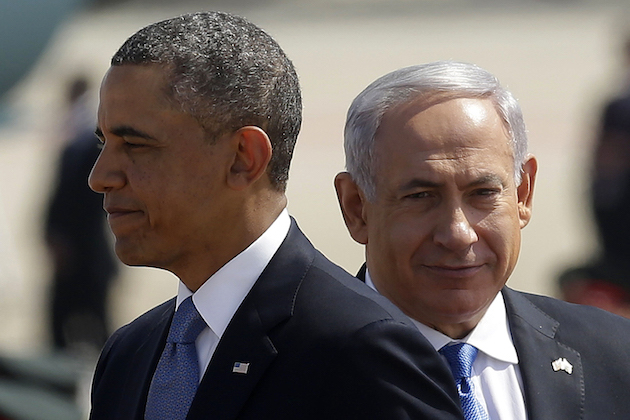
As if the Iran nuclear deal farce were not ridiculous enough already, President Obama is ready to reward Tehran for its intransigence once again.

Until now, a sticking point in the deal was Iran’s refusal to come clean about its history of nuclear cheating, to establish an honest baseline from which future compliance can be measured. Secretary of State John Kerry just signaled the Administration is willing to unstick this point and give Iran what it wants, immediate sanctions relief, without resolving those issues.

“In his first State Department news conference since breaking his leg last month in a bicycling accident, Mr. Kerry suggested major sanctions might be lifted long before international inspectors get definitive answers to their longstanding questions about Iranian experiments and nuclear design work that appeared aimed at developing a bomb. The sanctions block oil sales and financial transfers,” the New York Times reports.

In a video conference from Boston, Kerry said, “We’re not fixated on Iran specifically accounting for what they did at one point in time or another. It’s critical to us to know that going forward, those activities have been stopped, and that we can account for that in a legitimate way. That clearly is one of the requirements in our judgment for what has to be achieved in order to have a legitimate agreement.”

The move reveals this “nuclear deal” as a bit of badly-staged theater in which Obama pretends to be securing Peace In Our Time by working out a tough deal, when in reality Iran is completely driving this process, extracting one concession after another from Obama because they know he cannot afford to walk away from the table. Obama’s concern about his reputation and political legacy, and the damage to his party that would result in the 2016 election cycle if his much-ballyhooed deal falls apart, trump any and all concerns he has about exactly when Iran gets the bomb.

Without knowing what Iran has been up to in the past, it is impossible to accurately judge whether they are complying with whatever sketchy agreement they sign now. The New York Times does a good job of explaining this, and warning that capitulation to Iran will set a dangerous example to other aspiring rogue nuclear states:

Those favoring full disclosure of what diplomats have delicately called the “possible military dimensions” of Iranian nuclear research say that the West will never know exactly how long it would take Iran to manufacture a weapon — if it ever developed or obtained bomb-grade uranium or plutonium — unless there is a full picture of its success in suspected experiments to design the detonation systems for a weapon and learn how to shrink it to fit atop a missile.

For a decade, since obtaining data from an Iranian scientist on a laptop that was spirited out of the country, the C.I.A. and Israel have devoted enormous energy to understanding the scope and success of the program.

Failing to require disclosure, they argue, would also undercut the atomic agency — a quiet signal to other countries that they, too, could be given a pass.

Support for the concessions Kerry teases is based on the idea that Iran will never allow its national pride to be injured by divulging the details of its past mischief. When only one side in a negotiation is permitted to introduce its pride as leverage, that is the winning side. The people trading away vital security considerations to curry favor with the prideful party are the losers.

The Times finds Kerry suggesting “assurances about the future were more important than excavating the past.” What good are those assurances when there is no evidence on where the Iranian program stands on the day a new deal is signed?

Why is current intransigence — the refusal to engage in honest disclosure about past activities — not taken as a very major clue about Iran’s likelihood to make good on assurances about the future? This is like waving aside the arrest record of an infamous thief to hire him as a bank security guard, insisting that what he writes on his employment application today matters far more than whatever the cops were so upset about a few years ago.

No one on Earth, outside the Obama White House and its friends in U.S. media, will interpret capitulation on this issue as anything less than a major victory for Iran. As Lawrence J. Haas notes at U.S. News and World Reportthe White House was loudly insisting it would never make this concession, just a few months ago. “They have to do it. It will be done. If there’s going to be a deal, it will be done,” Haas recalls Kerry saying in a PBS interview in April. But suddenly they don’t have to do it, and it won’t be done.

Another discarded scrap of Obama rhetoric will be the President’s repeated assurances that Iran is X number of years away from having a nuclear weapon. Without the historical evidence Iran refuses to provide, there is really no way to be sure how far Iran is from a deliverable weapon. Once again, it seems as if Obama’s major concern is making sure it happens after he collects a round of applause for striking a “historic” deal, enters a comfortable retirement, and watches the whole mess become someone else’s problem.

The Iran scam worsens — Part II, North Korea – China connection

June 17, 2015

The Iran scam worsens — Part II, North Korea – China connection, Dan Miller’s Blog, June 17, 2015

(The views expressed in this article are mine and do not necessarily reflect those of Warsclerotic or its other editors. — DM)

It is likely that the P5+1 nuke “deal” with Iran will be approved soon. Military and other nuke sites which Iran has not “disclosed” will not be inspected. Nor will Iran’s nuke ties with North Korea — which P5+1 member China seems to be helping, Iran’s massive support for terrorism and abysmal human rights record be considered because they are also deemed unnecessary for “deal” approval. Sanctions against Iran are moribund and will not be revived regardless of whether there is a “deal.” However, a bronze bust of Obama may soon be displayed prominently in Supreme Leader Khamenei’s office and one of Khamenei may soon be displayed proudly in Dear Leader Obama’s office.

Iran fenced in

Part II — The North Korea – China connection

The North – Korea connection is a “natural,” and its basis should be obvious: Iran has been receiving funds through sanctions relief and will get substantially more when the P5+1 “deal” is made. North Korea needs money, not to help its starving and depressed masses, but to keep the Kim regime in power and for its favorites to continue their opulent lifestyles.

As I have written here, here and elsewhere, North Korea has been making substantial progress on nuclear weapons and means to deliver them, which it shares with Iran. Now, China appears to be intimately involved in their transfers of nuclear and missile technology as well as equipment.

As noted in an April 15, 2015 article titled Obama Hid North Korea Rocket Component Transfer to Iran,

US intelligence officials revealed that during the ongoing Iran nuclear negotiations, North Korea has provided several shipments of advanced missile components to the Islamic regime in violation of UN sanctions – and the US hid the violations from the UN. [Emphasis added.]

The officials, who spoke to the Washington Free Beacon on Wednesday on condition of anonymity, said more than two shipments of missile parts since last September have been monitored by the US going from North Korea to Iran.[Emphasis added.]

One official detailed that the components included large diameter engines, which could be used to build a long-range missile system, potentially capable of bearing a nuclear warhead. [Emphasis added.]

The information is particularly damaging given that Admiral Bill Gortney, Commander of North American Aerospace Defense Command (NORAD) and US Northern Command (USNORTHCOM), admitted this month that the Pentagon fears that North Korea and possibly Iran can target the US with a nuclear EMP strike.

Critics have pointed out that the nuclear framework deal reached with Iran earlier this month completely avoids this question of Iran’s intercontinental ballistic missile (ICBM) program, which would allow it to conduct nuclear strikes. [Emphasis added.]

US President Barack Obama was given details of the shipments in his daily intelligence briefings, but the officials say the information was hidden from the UN by the White House so that it would not take action on the sanctions violations. [Emphasis added.]

On June 17th, Secretary Kerry stated, just before leaving to participate in P5+1 negotiations, that the

“US and its negotiating partners are not fixated on the issue of so-called possible military dimensions [of the Iranian nuclear program] because they already have a complete picture of Iran’s past activities.”

This comment was a compendium of contradictions and untruths.

Sure, John. A June 17th article at Power Line on the same subject is titled Kerry’s absolute idiocy.

Here are the highlights from a March 29, 2015 article at The Daily Beast titled Does Iran Have Secret Nukes in North Korea?

As can be seen from the North Korean base housing Tehran’s weapons specialists, Iran is only one part of a nuclear weapons effort spanning the Asian continent. North Korea, now the world’s proliferation superstar, is a participant. China, once the mastermind, may still be a co-conspirator. Inspections inside the borders of Iran, therefore, will not give the international community the assurance it needs. [Emphasis added.]

Inspections? We don’t need and won’t get no stinkin inspections since His Omniscience Kerry knows everything and is not troubled by it.

The cross-border nuclear trade is substantial enough to be called a “program.” Larry Niksch of the Center for Strategic and International Studies in Washington, D.C., estimates that the North’s proceeds from this trade with Iran are “between $1.5 billion and $2.0 billion annually.” A portion of this amount is related to missiles and miscellaneous items, the rest derived from building Tehran’s nuclear capabilities.

Iran has bought a lot with its money. Mohsen Fakhrizadeh, thought to be Tehran’s chief nuclear scientist, was almost certainly in North Korea at Punggye-ri in February 2013 to witness Pyongyang’s third atomic test. Reports put Iranian technicians on hand at the site for the first two detonations as well.

. . . .

The North Koreans have also sold Iran material for bomb cores, perhaps even weapons-grade uranium. The Telegraph reported that in 2002 a barrel of North Korean uranium cracked open and contaminated the tarmac of the new Tehran airport.

The relationship between the two regimes has been long-lasting. Hundreds of North Koreans have worked at about 10 nuclear and missile facilities in Iran. There were so many nuclear and missile scientists, specialists, and technicians that they took over their own coastal resort there, according to Henry Sokolski,  the proliferation maven, writing in 2003.

As noted in a January 31, 2014 Daily Beast article titled Iran and North Korea: The Nuclear ‘Axis of Resistance,’

Last September, at the same time Iran was secretly meeting with U.S. officials to set up the current nuclear talks, North Korea leaders visited Tehran and signed a science and technology agreement that is widely seen as a public sign the two countries are ramping up their nuclear cooperation.

“Iran declared Sept. 1, 2012 North Korea was part of their ‘Axis of Resistance,’ which only includes Iran, Syria, and Hezbollah. They’ve announced to the world they are essentially allies with North Korea,” said David Asher, the State Department’s coordinator for North Korea from 2001 to 2005. [Emphasis added.]

On February 13, 2013, DEBKAfile reported that North Korea —  Iran nuclear connection is substantial.

There is full awareness in Washington and Jerusalem that the North Korean nuclear test conducted Tuesday, Feb. 12, brings Iran that much closer to conducting a test of its own. A completed bomb or warhead are not necessary for an underground nuclear test; a device which an aircraft or missile can carry is enough. [Emphasis added.]

Mahmoud Ahmadinejad’s boast this week that Iran will soon place a satellite in orbit at an altitude of 36,000 kilometers – and Tehran’s claim on Feb. 4 to have sent a monkey into space – highlight Iran’s role in the division of labor Pyongyang and Tehran have achieved in years of collaboration: the former focusing on a nuclear armament and the latter on long-range missile technology to deliver it. [Emphasis added.]

Their advances are pooled. Pyongyang maintains a permanent mission of nuclear and missile scientists in Tehran, whereas Iranian experts are in regular attendance at North Korea’s nuclear and missile tests.[Emphasis added.]

Since the detonation of the “miniature atomic bomb” reported by Pyongyang Tuesday – which US President Barack Obama called “a threat to US National security”- Iran must be presumed to have acquired the same “miniature atomic bomb” capabilities – or even assisted in the detonation. [Emphasis added.]

On the same day, an article at Fox News observed,

In an exclusive interview with Fox News, Ambassador Thomas Graham, Jr, who has advised five U.S. presidents as a world renowned authority on arms control and nuclear non-proliferation, noted “If the assessments are correct as to his (Fakhrizadeh’s) role in the Iranian nuclear program, if China knowingly permitted him transfer from Iran across China to witness the North Korea test … then it would appear that China or at least some element in China are cooperating with nuclear programs in North Korea and Iran.” [Emphasis added.]

The Feb. 11 test has been described by experts as a miniaturized atomic bomb test of a relatively small yield of 6-7 kilotons, mounted on a Nodong missile.

. . . .

Ambassador Graham added: “The objective of this test has said to be the development of a compact highly explosive nuclear warhead mated with a North Korean missile. Iranian missiles were developed from North Korean prototypes. It could appear that North Korea is building nuclear weapons for transfer to Iran.” [Emphasis added.]

A June 11, 2015 Gatestone Institute article titled North Korea’s Serious New Nuclear Missile Threat, noted that North Korea already has upwards of twenty nukes and that

if North Korea’s technical advances are substantive, its missiles, armed with small nuclear weapons, might soon be able to reach the continental United States — not just Hawaii and Alaska. Further, if such missile threats were to come from submarines near the U.S., North Korea would be able to launch a surprise nuclear-armed missile attack on an American city. In this view, time is not on the side of the U.S. Submarine-launched missiles come without a “return address” to indicate what country or terrorist organization fired the missile.

The implications for American security do not stop there. As North Korea is Iran’s primary missile-development partner, whatever North Korea can do with its missiles and nuclear warheads, Iran will presumably be able to do as well. One can assume the arrangement is reciprocal.

Although attempts have been made to debunk recent photoshopped images of North Korea firing of a missile from a submerged platform, the immediately linked Gatestone article offers substantial reasons to think that it was indeed fired and that it is troubling.

The linked Gatestone article continues, despite hopes that China may force or talk North Korea into halting its missile development program and sharing with Iran, such hopes are

painfully at odds with China’s established and documented track record in supporting and carrying out nuclear proliferation with such collapsed or rogue states as Iran, Syria, Pakistan, North Korea and Libya, as detailed by the 2009 book The Nuclear Express, by Tom C. Reed (former Secretary of the Air Force under President Gerald Ford and Special Assistant to the President of National Security Affairs during the Ronald Reagan administration) and Daniel Stillman (former Director of the Lawrence Livermore National Laboratory).(Emphasis added.]

Far from being a potential partner in seeking a non-nuclear Korean peninsula, China, say the authors, has been and is actually actively pushing the spread of nuclear weapons to rogue states, as a means of asserting Chinese hegemony, complicating American security policy and undermining American influence. [Emphasis added.]

The problem is not that China has little influence with North Korea, as China’s leadership repeatedly claims. The problem is that China has no interest in pushing North Korea away from its nuclear weapons path because the North Korean nuclear program serves China’s geostrategic purposes. [Emphasis added.]

As Reed and Stillman write, “China has been using North Korea as the re-transfer point for the sale of nuclear and missile technology to Iran, Syria, Pakistan, Libya and Yemen”. They explain, “Chinese and North Korean military officers were in close communication prior to North Korea’s missile tests of 1998 and 2006.″ [Emphasis added.]

Thus, if China takes action to curtail North Korea’s nuclear program, China will likely be under pressure from the United States and its allies to take similar action against Iran and vice versa. China, however, seems to want to curry favor with Iran because of its vast oil and gas supplies, as well as to use North Korea to sell and transfer nuclear technology to both North Korea and Iran, as well as other states such as Pakistan. As Reed again explains, “China has catered to the nuclear ambitions of the Iranian ayatollahs in a blatant attempt to secure an ongoing supply of oil.” [Emphasis added.]

What about Russia which, like China, is a P5+1 member? Russia announced in late May of this year that it would build an Iranian nuclear reactor for “peaceful” generation of electricity. It announced in April that it would provide accurate, long range S-300 missiles to Iran.

Iranian news sources are reporting that negotiations with Russia to buy the S-300 surface-to-air missile systems were “successful.”

Western officials say delivery of the system would essentially eliminate the military option to stop Iran from obtaining nuclear weapons.

During a press conference Monday, Iran’s Deputy Foreign Minister for Arab and African Affairs Hossein Amir-Abdollahian said that the missiles will be delivered as soon as possible.

On September 23, 2014, the Iranian FARS News Agency announced that Iran was completing its own version of the S-330 missile.

Last month, senior Iranian military officials announced that their home-grown version of the Russian S-300 missile defense system, called Bavar (Belief)-373, has already been put into test-run operation and has once shot at a target successfully.

Commander of Khatam ol-Anbia Air Defense Base Brigadier General Farzad Esmayeeli told the Iranian state-run TV that “Bavar-373 has fired a first successful shot”.

Might Russia have given Iran the plans needed to build its own version of the Russian missile? Why not?

Conclusions

We have to guess far more than we actually know about the North Korea – China – Iran nuclear connection. That is unfortunate. It is absurd that the P5+1 joint plan of action and the White House summary focus on Iran’s uranium enrichment to the exclusion of its militarization of nukes. Since nuke militarization, among other substantial matters, is deemed irrelevant to whether there is a “deal,” so is the connection with North Korea, China and possibly Russia.

Obama wants a “deal” with Iran, regardless of what it may say or — more importantly — what it may not say.

NK and Iran

Cartoon of the day

June 17, 2015
Obama Gitmo

Iran Needs More Time to Say No

June 17, 2015

Iran Daily: Tehran Looks to Extension of Deadline for Nuclear Deal, Makes Concession on Sanctions

By By Scott Lucas June 17, 2015 Via EA World View


Blah, blah, blah, and most of all, blah. (photo credit: Unknown)

(Apparently, more time is needed to lift sanctions. – LS)

Iran’s lead nuclear negotiator has indicated that Tehran is prepared for extension to a June 30 deadline for a comprehensive agreement.

Speaking on Tuesday, Deputy Foreign Minister Abbas Araqchi (pictured) said no deadline would prevent Iran from reaching a “good and favorable” deal with the 5+1 Powers (US, Britain, France, Germany, China, and Russia): “A specific date is not sacred to us.”

Political deputies of Iran and the 5+1 renew discussions in Vienna today on the final draft of the agreement.

Araqchi said that “relatively good but slow progress” was made during the latest round of talks from last Wednesday to Sunday. Technical teams have remained in Vienna for talks over the last 72 hours.

In a notable shift, Araqchi indicated that Iran will not expect sanctions to be lifted immediately on signature of the comprehensive agreement. He said that, due to “some technical and legal procedures”, the restrictions will be removed “on the possible agreement’s implementation date”.

The US said after the announcement of a nuclear framework on April 2 that UN, European Union, and US sanctions would be removed or suspended as soon as the International Atomic Energy Agency verified Iranian compliance with the terms of the final agreement.

Iranian Foreign Minister Mohammad Javad Zarif initially accepted that interpretation, but Iranian officials — including the Supreme Leader — insisted that the removal of sanctions must occur immediately.