Archive for June 5, 2015

ISIS Moving Into Position for Monumental Defeat

June 5, 2015

BREAKING: ISIS Moves Assets to Southern Syria – Gaza ISIS Launches MISSILE ATTACK on Israel

By June 5, 2015 by Jim Hoft Via The Gateway Pundit

(ISIS, ISIL, or whatever name the press calls them these days, has decided it’s time to take on the Little Satan. – LS)

Islamic State supporters reported today that ISIS is heading towards Israel.
isis israel

Islamists also claim ISIS supporters launched an attack on Israel from Gaza this week.
World Net Daily reported:

Supporters of ISIS in the Gaza Strip provided WND with a video they say proves they launched a rocket from the Gaza Strip that hit central Israel last week.

The video, with an ISIS flag on the upper left banner, shows a rocket and launcher burrowed in sand. The next scene contains footage of the rocket being launched followed by Arabic news reports about the attack.

Last week, WND was the first media outlet to report ISIS supporters claimed they were behind the rocket attack, citing a senior Salafist militant leader in Gaza.

Israeli defense officials surmised the Iranian-backed Islamic Jihad may have been behind the attack as part of an internal dispute.

ISIS in Gaza declared war on Israel earlier this week.


The Islamic State Is Here to Stay

June 5, 2015

The Islamic State Is Here to Stay, VICE NewsAhmed S. Hashim, June 6, 2015

(Please see also, The Kurd-Shia War Behind the War on ISIS. — DM)

The victories against IS in early 2015 have proven ephemeral — or have been nullified by IS gains elsewhere. On Sunday, CIA director John Brennan said on Face the Nation, “I don’t see this being resolved anytime soon.” Assad’s vaunted offensives of February 2015 have fallen short as the regime faced stiff resistance from a wide variety of opposition fighters, including elements from IS. The failure was alarming in part because the campaign was designed and aided by both Hezbollah and the Iranians, two seemingly ascendant Shia powers.

************************

Just a few months ago, analysts and policy-makers were certain that the defeat of Islamic State (IS) forces was simply a matter of time.

Coalition airstrikes would degrade the group’s capabilities and eventually allow Iraqi forces and Kurdish Peshmerga — though discredited by their poor military showing in mid-2014 — to push back the extremists. And indeed, IS fighters were ejected from Tikrit in March 2015 by the Iraqi army and thousands of motivated fighters from Shia militias. In Kobani in northern Syria, IS fighters were defeated by Syrian Kurdish fighters. Elsewhere in the country, the regime of Bashar al-Assad was going on the offensive with help from Hezbollah and advisers from the Iranian Revolutionary Guard.

The Islamic State, however, rose like a phoenix from the ashes of every setback. And today, the situation is not so rosy.

The victories against IS in early 2015 have proven ephemeral — or have been nullified by IS gains elsewhere. On Sunday, CIA director John Brennan said on Face the Nation, “I don’t see this being resolved anytime soon.” Assad’s vaunted offensives of February 2015 have fallen short as the regime faced stiff resistance from a wide variety of opposition fighters, including elements from IS. The failure was alarming in part because the campaign was designed and aided by both Hezbollah and the Iranians, two seemingly ascendant Shia powers.

The situation in Iraq is just as complicated, something that the Obama administration appears either oblivious to or reluctant to acknowledge. Much of the US strategy continues to hinge on what is increasingly a mirage: a unified, albeit federal, Iraq under the control of Baghdad. Meanwhile, the resilience of IS is greatly enhanced by the ability of its military forces to innovate and adapt faster on the ground than its lackluster opponents.

In light of the constant aerial strikes by the US and its allies, IS has dispersed and made its forces more mobile, no longer presenting dense concentrations of fighting men as it did when it seized Mosul in mid-2014. Instead, when IS seized Ramadi in May 2015, it made use of inclement weather and sent several small units from different directions simultaneously into the city aided by suicide bombers. Moreover, the fact that the group faced ill-equipped and poorly motivated Sunni fighters in and around Ramadi did not do anything for Baghdad’s standing with the country’s already alienated Sunni community, which had pleaded for arms while caught between the unfathomable brutality of IS and revengeful Shia militias.

Many Sunnis are now angling for their own “super-region,” one that would have considerable independence from Baghdad. The problem? In order to have it, the Sunnis would need to first defeat IS. Currently, they’re unable to do so because they lack the resources; despite all the talk from Baghdad and Washington about arming Sunni tribes, Baghdad is not actually keen to do so.

And besides, the Sunnis seem relatively ambivalent about defeating IS. They took an unequivocal stance between late 2006 and 2009, when they joined with the Americans and the Iraqi government to deal the Islamist militants what was then seen as a decisive blow. Now, however, despite Sunnis’ resentment and fear of IS, the Islamists’ existence is seen as a kind of insurance policy against Shia revanchism should Baghdad succeed in retaking the three Sunni provinces of Anbar, Salahuddin, and Ninevah.

(Please see video at the link. — DM

The “victory” of the Iraqi government in Tikrit was more propaganda than reality; a few hundred IS fighters managed to inflict considerable damage on the Shia militias that had been mobilized to fight alongside the Iraqi army, then withdrew because they were outnumbered and wished to avoid being surrounded. The IS forces in Tikrit simply felt that they had done enough damage; there was no need to waste further assets in an untenable situation.

Militarily, the Iraqi Shia militias are better motivated and more dedicated than the regular army. Anecdotal information out of Baghdad suggests that Iraqi Shias are wondering whether the government should invest more effort building these forces into an effective and more organized parallel army. Even that parallel army, however, might be reluctant to commit to any significant long-term offensive to reclaim provinces full of “ungrateful” Sunnis.

But the Shia are willing to die to defend what they have, and there is increased sentiment among the Shia in central Iraq and Baghdad, along with the southern part of the country, that they would be better off without the Sunnis. There also exists the belief that the Kurds have more or less opted out of the Iraqi state despite the fact that they maintain a presence within the government in Baghdad. The Shia would seemingly not be sorry to see them exit the government in a deal that would settle as best as possible divisions of resources and territory. However, whether the Kurds would take the plunge and opt for de jure rather than de facto independence is a question that is subject to regional realities — How would Ankara and Tehran react? — rather than merely a matter of a deal between Baghdad and Erbil.

The Islamic State will continue to be a profound geopolitical problem for the region and the international community, and a long battle lies ahead. Syria and Iraq are more or less shattered states; it is unlikely that they will be put back together in their previous shapes. If Assad survives 2015, it will be as head of a rump state of Alawites and other minorities protected by Hezbollah, Iran, and Alawite militias. Shia Iraq will survive, and will possibly dissociate itself from the nettlesome Sunni regions. The Kurds will go their own way step by step. The international community is currently at a loss for how to stem the flow of foreign fighters to the IS battlefields — and even more serious is the growing sympathy and admiration for the group in various parts of the world among disgruntled and alienated youth.

If the US is serious about defeating IS, it needs to take on a larger share of the fight on the ground. This means more troops embedded with regular Iraqi forces in order to bring about better command, control, and coordination. It also means advisors who can continue to train these forces so that they improve over time. If this is not done, the regular Iraqi military will continue to be nothing more than an auxiliary to the more motivated — and pro-Iranian — Shia militias. Currently, militia commanders are giving orders to the regular military; that cannot be good for morale.

This month, the Islamic State celebrates the first anniversary of its self-declared caliphate. The group has little reason to fear it will be the last.

Welcome to The New World Disorder

June 5, 2015

Nuke Deal Could Result in Iran Joining Eurasian Security Bloc Led by Russia and China

By Patrick Goodenough June 5, 2015 Via CNS News

putin-kremlin
Straight out of a James Bond movie, Russian and China plot to take over the world.

(Iran under the protective arms of the Bloc? Could be the best place to be when announcing to the world that you now have nukes. – LS)

(CNSNews.com) – Apart from other benefits Iran may accrue as a result of an international agreement on its nuclear program, Russia on Thursday held out another, long sought-after reward – membership in a growing Eurasian security bloc, which some observers view as a means to counterbalance the West and NATO.

After hosting a meeting in Moscow of foreign ministers from Shanghai Cooperation Organization (SCO) member-states, Foreign Minister Sergei Lavrov gave the clearest indication yet that Iran’s decade-old bid to join the group will succeed.

“Iran has been actively engaging in SCO issues as an observer since 2005,” Lavrov said. “Bloc members have discussed Iran’s application for SCO membership and reached consensus to raise Iran’s status in the organization after its nuclear issue is solved.”

June 30 is the deadline for Iran and the P5+1 group – the U.S., Britain, France, Russia, China and Germany – to reach a final agreement resolving the lengthy nuclear stand-off.

Ten days later Russia will host a summit of SCO leaders in the southern city of Ufa.

Last September, as Russia looked forward to holding the rotating presidency of the six-country bloc, Lavrov said that the SCO hoped to begin a long-deferred expansion “during the Russian presidency.”

Whether he was including Iran in that prediction remains to be seen. Meanwhile two other countries knocking on the door, India and Pakistan, look set to join: “We adopted recommendations paving the way for India and Pakistan’s accession to the SCO,” Lavrov said on Thursday.

Current members of the SCO are Russia, China, and the former Soviet Central Asian republics of Kazakhstan, Kyrgyzstan, Tajikistan and Uzbekistan.

Official observer states are Iran, India, Pakistan, Afghanistan and Mongolia, while Turkey, Belarus and Sri Lanka are “dialogue partners.”

Together the current members account for one-quarter of the world’s population, and control resource-rich territory stretching from the Caucasus to the Pacific Ocean.

Should India, the world’s second-largest country by population, and Pakistan become members, the SCO’s combined population will be more than two-fifth of the global total.

From its beginnings as the Shanghai Five in the late 1990s the bloc’s stated mission has centered on regional security, including combating “terrorism, extremism and separatism.”

Beyond regular joint military exercises and security coordination, SCO members also cooperate in other fields, including economic development, law enforcement including drug trafficking, transportation, disaster relief and culture.

SCO officials and governments, especially core members Russia and China, have long dismissed Western concerns about the bloc being a counterweight to NATO or the West in general, insisting that the organization poses no threat to “any third party.”

Nonetheless, Russian media outlets and analysts in particular characterize the SCO as a “counter balance” to NATO, and Russian leaders at times use phrases alluding to Moscow’s rejection of a U.S.-dominated world system, for instance calling the SCO “an important factor in the emergence of a new polycentric world order.”

U.S. officials were troubled when in 2005 the bloc called for the U.S. to set a deadline for withdrawing from Central Asia troops who were supporting operations in Afghanistan. Months later, SCO member Uzbekistan year expelled the U.S. from the strategically-located Karshi-Khanabad airbase, amid strained relations over human rights abuses.

Also in 2005, the SCO turned down a request from the United States to become an observer – at the same time as it gave Iran, India and Pakistan observer status.

Addressing the foreign ministers gathered in Moscow, Putin said Wednesday that “the SCO is gaining greater weight and importance all the time, as it addresses the issues of greatest priority for our countries and for the region as a whole.”

On Thursday, a member of the Iranian delegation led by Foreign Minister Mohammad Javad Zarif predicted that the SCO could “become the main competitor of the G7” – the Group of 7 major industrialized countries: the U.S., Canada, Japan, Britain, Germany, France and Italy.

(Russia formally joined the G7 – which thus became the G8 – in 2002, but its membership was suspended in March 2014 in response to the Ukraine crisis.)

Iranian deputy foreign minister Ebrahim Rahimpour told Russia’s official Sputnik news agency that the SCO “will become stronger as an international institution if the organization accepts new members,” adding that Iran wants “want the SCO region to be strong and independent.”

Goodbye to the First Amendment

June 5, 2015

Goodbye to the First Amendment, Pat Condell via You Tube, January 5, 2015

(What’s left of it, anyway. — DM)


Iran Will Walk

June 5, 2015

Iran Will Walk, The Gatestone InstituteLawrence A. Franklin, June 5, 2015

(What if the article is otherwise correct but Obama agrees to a “deal” anyway? — DM)

  • The Islamic Revolutionary Guard Corps (IRGC), the Praetorian Guard of Iran’s regime, controls most of the economy, as well as the black-market, alternative economy. The IRGC therefore actually benefits from sanctions; it is private firms, such as those involved in international commerce, that suffer. Why would IRGC operatives want to see the playing field made more level by private investment, transparency and a competitive economy?
  • Sanctions never hurt the regime’s ruling class; lifting them only helped the regime solidify its power over its people.
  • The objective of these two demands [an immediate lifting of all sanctions and no, or severely limited, inspections] is either to have them accepted, or to render it untenable for the Obama administration to offer Congress any deal that could be accepted – thereby shifting blame for the collapse of the talks to the U.S.
  • The U.S should also be on guard against the mullahs’ belief that the Obama administration is weak both politically and its aversion to using force. The mullahs might find great pleasure in humiliating Obama, as they did President Jimmy Carter, by dragging out hostage crisis negotiations by running out the clock until his term was over. They clearly believe that the Obama administration, simply to say it got “a deal,” is ready to sign anything.

From Washington to Riyadh, not to mention Jerusalem, statesmen are gritting their teeth at the possibility of a U.S.-Iran nuclear deal that seems overly generous to the theocratic-terror state of the Islamic Republic.

1008Representatives of the P5+1 countries pose with Iranian Foreign Minister Javad Zarif after nuclear negotiations in Lausanne, Switzerland on April 2, 2015. (Image source: U.S. State Department)

Most intelligence analysts and journalists assume that because Iran’s leadership endorsed the negotiations and has been the beneficiary of several key concessions by the P5+1 (the five permanent members of the UN Security Council, plus Germany), that an agreement is imminent. Forecasters have been predicting what the likely consequences of such a deal would be: negative.

But what if the Iranians walk?

Sanctions never hurt the regime’s ruling class; lifting them only helped the regime to solidify its power over its people.

A nuclear deal combined with an improvement in the commercial and business relations with the West would be inimical to IRGC interests.

The Islamic Revolutionary Guard Corps (IRGC), the Praetorian Guard of the regime, controls most of the economy as well as the black-market, alternative economy. IRGC-controlled conglomerates operate outside the law and reap huge profits through their control of the black market. The IRGC therefore actually benefits by sanctions; it is the private firms, such as those involved in international commerce, that suffer.

Furthermore, IRCG naval vessels, and private ships under their control, have been engaging in sanctions-breaking deliveries of imports across Persian Gulf waters to Dubai. The IRGC then sells the products at a profit by filtering them through the many foundations they control in Iran.

The most recent example of IRGC’s skirting of sanctions involved the illegal acquisition of aircraft through front-organizations with offices in both Europe and the Arabian Peninsula. Mahan Air, an IRGC front, was able to purchase 15 used commercial aircraft for $300 million. Another front, al-Naser Air, was about to purchase two more aircraft, this time from a U.S. owner. Israeli intelligence, however, passed details of the planned sale to the U.S. government, and on May 21, the deal was scuttled by the Office of Export Enforcement of the Department of Commerce.

Why would IRGC operatives want to see the playing field made more level by private investment, transparency and a competitive economy?

Moreover, if a nuclear deal indicated improved relations with the United States, Iranian hardliners, whether clerical revolutionaries or intelligence operatives, might fear seeing their ideological legitimacy erode. The Iranian regime’s only remaining fig leaf of legitimacy is its anti-American animus, with its accompanying pledge to “protect” Iran’s interests against the U.S.-Israel-Sunni “alliance.”

Improved relations with Washington might raise false hopes among Iran’s citizens that the regime may ultimately improve its woeful record on human rights. There remains only a thin patina of clerical control over Iranian society; if the hoped-for social and political reforms were not implemented, the result could produce a destabilizing political environment, harmful to the interests of the regime.

Another fallacy embraced by many “inside-the-beltway” analysts is that, as the Supreme Leader Ayatollah Khamenei endorsed the negotiations, a legitimate deal is now probable.

The once all-powerful Office of the Supreme Leader no longer calls all the shots. The current Iranian regime resembles a military junta or a security state as much as a theocracy. While the reach of Ayatollah Khamenei, through his network of representatives, still penetrates all dimensions of Iranian society, he does not have the final decision on key security matters. The regime’s strategic assets, for instance, such as its ballistic missile programs, are firmly under the control of the IRGC. Decisions related to Iran’s expansionist presence in the region are made by IRGC Quds Force Commander Qasem Soleimani. The role of Khamenei’s representative to the IRGC resembles more that of a handler than of an action officer.

The principal task for the regime is to find a way to back out of the negotiations while avoiding the blame. Iran’s efforts at disengagement may already have been underway for the past few weeks; the pace of decoupling from the talks seems to be accelerating. Iran has been increasing its demands apparently in the hope that they will either be accepted, or else rejected like the “poison pills” they are — such as inspectors no longer being allowed on its military sites.[1]

Another way to make the talks no longer palatable for the Obama administration was to create a hostile incident with the United States in the Persian Gulf, as it has tried to do by aggressively tailing American warships. Iranian ships affiliated with the IRGC Navy also seized a commercial ship, the Maersk Tigris, in the Strait of Hormuz, and temporarily detained both vessel and crew. Then, on May 14, IRGC boats fired several shots across the bow of a Singapore flagged vessel, but it escaped unharmed.

By this type of reckless comportment, the IRGC Navy appears intent on producing a clash with American naval vessels in the Gulf waters. Western negotiators have only to recall the presidency of Mohammad Khatami, when the IRGC and Iran’s Ministry of Intelligence and Security operated independently after they felt that the reformers had gone too far, thus threatening hard-liner control of the regime. The IRGC may have decided that Rouhani along with his American-educated Foreign Minister Zarif have reached a similar tipping point. This independent IRGC initiative is being executed even though a deal would release Iranian monetary assets that would in turn boost the sagging economy.[2]

Iran’s combative posture in Gulf waters against international shipping is also a direct challenge to international maritime law, which guarantees freedom of navigation through the world’s shipping lanes such as the Strait of Hormuz. A key principle of U.S. foreign policy is to enforce this freedom of navigation, if it is challenged by any foreign power, as one also hopes the U.S. will do in the South China Sea.

Iranian military and political spokesmen have also raised the temperature of their anti-American and anti-Israeli rhetoric of late. Leading members of the regime, including its Supreme Leader, Ali Khamenei, keep repeating, “Death to America” as well as its theological “obligation” to destroy Israel. While the Obama administration has alleged that these threats are just for “internal consumption,” an old Persian saying goes: “They spit in his eye and he calls it rain.”

Mojtaba Zolnour, Ayatollah Khamenei’s Deputy Representative to the IRGC, stated that the Islamic Republic of Iran, “has the divine permission to destroy Israel.” This media assault on Israel was designed to widen the divergence between the Obama administration and the Israeli government regarding the efficacy of the framework of a nuclear agreement negotiated so far.

Additionally, various Iranian principals have drawn “lines in the sand” designed to cause the Americans to disengage from the talks, such as the assertion that Iran will never accept inspection of its declared military sites. Another is Tehran’s repeated statement that it will not accept a gradual lifting of sanctions. Iranian leaders have insisted on immediate and irreversible lifting of all sanctions immediately after a nuclear deal is signed. The objective of these two demands is either to have them accepted, or to render it untenable for the Obama administration to offer Congress any deal that could be accepted — thereby shifting the blame for the collapse of the talks to the U.S.

Regime hard-line representatives to the majlis [Iranian Parliament] have already been mobilizing members to denounce the talks as detrimental to Iran’s national sovereignty. Eighty majlismembers signed a petition on May 12, calling upon the regime to suspend the nuclear talks until Washington halts its rhetorical threats against Iran. Hardliners in the majlis and elsewhere within the regime’s bureaucracy will likely continue to lobby against any deal.

Western analysts should be looking for the Iranian regime’s hard-line media outlets to increase domestic commentary condemning alleged U.S. deception in the negotiations as a reason to abandon the talks.

The death knell for the nuclear negotiations could come from newspapers such as Kayhan, a pro-regime newspaper run by Hossein Shariatmadari, and often characterized as a Khamenei mouthpiece.

The regime’s Friday-prayer Imams in key Iranian cities might also start opposing the talks. The themes of their noonday khutbahs [sermons] are likely to appeal to Iranian people’s patriotism, and suggest that it is more important for Iran to endure continued sanctions rather than submit to intrusive monitoring that offends Iran’s sovereignty.

Finally, hardliners who oppose any possibility of Iran’s improved relations with the U.S. may launch personal attacks on Iran’s negotiators to the nuclear talks, and, in an effort to discredit them, challenge their loyalty to the Iranian revolution. Their point of attack on Foreign Minister Mohammad Javad Zarif’s loyalty might be his alleged obsequious behavior to Secretary of State John Kerry. Zarif, on account of his many years of residency and education in the United States, can be depicted as an Americanized Iranian.

The United States should also be on guard against the mullahs’ belief that the Obama administration is weak — both politically and in its reluctance to use force. The mullahs might find great pleasure in humiliating Obama as they did President Jimmy Carter, when they dragged out hostage crisis negotiations by running out the clock until his term was over. They clearly believe that the Obama administration, simply to say it got “a deal,” is ready to sign anything.


[1]Iran’s powerful Guard rejects inspection of military sites” by Ali Akhbar Dareini, Associated Press, 19 April 2015. Deputy Chief of the IRGC General Hossein Salami is quoted and several more statements by IRGC officials since have repeated the same prohibitive statements regarding Iran’s military sites.

[2]U.S. to Award Iran $11.9 Billion Through End of Nuke Talks,” Washington Free Beacon, 21 January 2015. In the first of many subsequent denunciations, Senator Mark Clark of Illinois attacked the Obama administration’s plan to free Iran’s frozen assets if nuclear deal is reached.

Barack Obama: Born-Again Jew

June 5, 2015

Barack Obama: Born-Again Jew, Front Page Magazine, Daniel Greenfield, June 5, 2015

were

The Yiddish description of a hypocritical fraud is “As Kosher as a pig’s foot.” Obama supporters who partake of his particular set of Jewish values are unlikely to be familiar enough with the Bible to understand the significance of a pig’s split hoof, the Midrashic tale of the pig that stretches out its cloven hooves and squeals, “See how Kosher I am” or even the Kosher status of a pig.

But those Jews who do, recognize “The First Jewish President” for the Kosher pig hoof that he is.

*********************

Obama introduced himself to the nation as the son of black and white parents. He has gone back and forth between Christianity and Islam like a philanderer in a bar.

Now he has added a third religion and race to complete his identity politics trinity.

At the last White House Chanukah dinner, he claimed to have a Jewish soul. At a synagogue speech last month, he called himself “an honorary member of the tribe”. Now his former senior advisor has quoted him as saying, “I think I am the closest thing to a Jew that has ever sat in this office.”

Of course Barack Obama has also been Irish. He stated, “I consider myself an honorary Italian, because I love all things Italian”. Newsweek dubbed him “The First Woman President” in 2008 for “bending gender conventions” and promoted him to “The First Gay President” four years later. Cabinet Secretary Lu and Congressman Honda argued that he was “The First Asian American President”.

If you make up an ethnic group or race, by tomorrow Barack Obama will be a member of it. By next week, he will be lecturing it on why it isn’t living up to their shared values.

Obama’s Jewish toadies, like his multicultural frog pond toadies of all races and ethnicities, have been trying to sell Barack Obama as a “Born-Again Jew” for seven years.

His left-wing mentor Abner Mikva claimed during the original campaign, “When this all is over, people are going to say that Barack Obama is the first Jewish president.” But Abner hedged his bets, baptizing Obama in a Mikvah by urging him to study the speaking patterns of Baptist preachers instead.

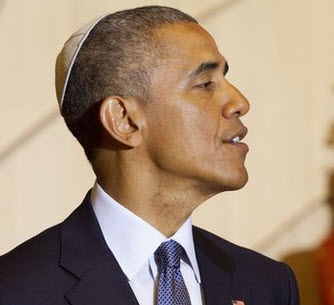
New York Magazine put Obama on the cover under a photoshopped Kippah as “The First Jewish President” and whined inside that, “Barack Obama is the best thing Israel has going for it right now. Why is that so difficult for Netanyahu and his American Jewish allies to understand?”

And that’s always the conclusion. Photoshop a Kippah on Obama’s head, dub him an honorary Jew and then use that to excuse his attacks on Israel.

Jerry Seinfeld accused his dentist of converting to Judaism to be able to tell Jewish jokes. Obama undergoes an honorary conversion to be able to bash Israel.

As an “honorary member of the tribe” he is entitled to all the anti-Semitic jokes and all the anti-Semitic policies he wants. When he signs off on nukes for Iran and a PLO state cut through the heart of Jerusalem accompanied by demands for the ethnic cleansing of half-a-million Jews, it’s as “The First Jewish Anti-Israel President” who cares about the Jewish State so much that he has to destroy it.

When Peter Beinart switched his career from the New Republic hawk who after September 11 wrote “The left has proved remarkably creative over the years at blaming virtually any Middle Eastern malfeasance…on the Jewish State” to the Daily Beast’s Israel basher who could blame bad weather or a lost sock in a dryer on Israel, he declared that he was bashing Israel because he was a “Liberal Zionist”.

Beinart, among others, has argued that Obama only bashes Israel because he too is a liberal Zionist.

Jeffrey Goldberg, the White House’s choice for heading up its media anti-Israel campaign to relay vital tidbits like the fact that the administration thinks Netanyahu is “Chickens__t” has been pushing the “Jewish Obama” meme the hardest. After his latest agonized interview with Obama featuring the kind of journalism usually only found when teen girls interview their movie idols for Tiger Beat, he explained that “The First Jewish President” only hated Israel because he was “The First Woody Allen President”.

Or as he put it, “Obama’s impatience with Israel, and his dislike of Netanyahu, is rooted in the fact that he is a very specific kind of Jew – an intellectual, Upper West Side, social action-oriented, anguished-about-Israel liberal values Jew.”

Not the bad kind of Jew who peers through a rifle scope on the Golan or pores over a Bible.

Obama’s finest Jewish toady was reassuring liberal Jewish tribals that the man in the White House didn’t hate Israel because he was one of “them”, but because he was one of “us”. Obama’s hatred of Israel is in the finest tradition of neurotic Manhattan liberals who can’t decide whether to bemoan Israel’s descent into nationalistic warmongering or take nude photos of their adopted Asian stepdaughters.

Or, as Woody Allen preferred it in the late nineties, both.

In his synagogue speech, Obama made the pitch that he embodies Israel’s classic leftist values of the Kibbutz and its Labor politicians. His disagreements with Israel are based on “our shared values”. He was turning the language of values commonality so often used by American politicians into appropriation.

Not only was Obama the country’s first Jewish president, but he is also its first Israeli president. He can’t be anti-Israel, because he represents Jewish and Israeli values better than Netanyahu.

The correct Jewish term for Obama contending that he is more Jewish than the Jews is “Chutzpah”.

Goldberg foresees a “civil war” between the Woody Allens and the Benjamin Netanyahus. “A civil war… between an American Jewry that has been nurtured on the values of the Civil Rights Movement, and an Israeli Jewry that has been taught, harshly, that the Middle East is not a place of mercy.”

As entertaining as it might be to watch a boxing match between Woody Allen and Netanyahu, he has missed the real civil war.

Obama does embody the Jewish values of a Goldberg or a Beinart because their Jewish identity is synonymous with the left. He equally embodies the Catholic values of Irish or Italian leftists or the Cherokee values of Elizabeth Warren. When your religious values have no religion in them, when your culture is a punchline and you want to sacrifice your heritage for an inspiring speech, then why not?

While Goldberg claims that the “anguished-about-Israel liberal values Jew” is the dominant Jewish archetype, demographics are reducing it to a minority in New York within a generation.

Even the Upper West Side is turning Modern Orthodox. And Woody Allen, whom I witnessed yelling at a white-bearded Orthodox Rabbi over the Palestinians a few decades ago, came out in defense of Israel during the last war and suggested that a lot of the criticism of Israel is disguised anti-Semitism.

When you’ve lost Woody Allen, then you’ve lost your “anguished-about-Israel liberal values Jew” vote.

The civil war has already been fought and won. Jews in the UK are voting conservative and support Netanyahu. So do the majority of Canadian and Australian Jews. Being anguished about values is a luxury for those whose synagogues aren’t being bombed and whose children aren’t being beaten.

When you have something to really agonize about, then you stop agonizing about your values.

The liberal Jews “nurtured on the values of the Civil Rights Movement” are dying out and are being replaced by Jews nurtured on the values of the Bible. They see no contradiction between Jewish values and a Jewish State because their values come not from the Torah of Tikkun Olam, but the Torah of Moses and Joshua, of King David and King Solomon, of Maimonides and the Maccabees.

Obama appears confident that American Jews will accept him as more Jewish than the Jewish State, but Romney picked up the most Jewish votes since Reagan and Jewish midterm support for Democrats fell 21 percent in eight years. As his pal Bill Ayers, who recently called for a boycott of Israel, could tell him, “You don’t need a Weatherman. To know which way the wind blows.”

Goldberg insists that “Obama is asking Israel (pleading with Israel, in fact) to be… more Jewish.”

And Obama’s way of trying to make Israel more Jewish is by denouncing Jews for building houses in Jerusalem. Similarly “Liberal Zionists” denounce Netanyahu for wanting Israel to be a “Jewish State” because they want it to live up to the Jewish values of Barack Obama, Bill Ayers and Jeremiah Wright.

It’s all a matter of definitions.

To the Goldbergs, making Israel more Jewish means making it less Jewish. By surrendering land to terrorists, expelling Jews from their homes, dividing up Jerusalem and giving up on a Jewish State, Israel will become more “Jewish”. And when its last Jewish Prime Minister, Mohammed Hussein Osama, informs them that Jewish values demand the end of Israel, they will applaud him for his Jewishness.

The other way of being Jewish is by having Jews live in a Jewish State where they speak the Jewish language and live lives based on thousands of years of Jewish tradition, heritage and religion.

The left’s values are self-nullifying. They destroy whatever they touch. The American left must destroy America for the sake of “American values”. The Catholic left must destroy the Catholic Church. The Jewish left must destroy Jews. Its idea of Jewish values is unmaking Jews, Judaism and the Jewish State.

The left has boldly appropriated Jewish values and identity. It has tried to pass off its politics as Tikkun Olam and the Democratic Party as the new synagogue. The Judaization of Obama is the last effort by a discredited ideology to fool its followers into believing that its anti-Jewishness is Jewish.

The Yiddish description of a hypocritical fraud is “As Kosher as a pig’s foot.” Obama supporters who partake of his particular set of Jewish values are unlikely to be familiar enough with the Bible to understand the significance of a pig’s split hoof, the Midrashic tale of the pig that stretches out its cloven hooves and squeals, “See how Kosher I am” or even the Kosher status of a pig.

But those Jews who do, recognize “The First Jewish President” for the Kosher pig hoof that he is.

Hamas member killed in tunnel collapse near Israeli border

June 5, 2015

Hamas member killed in tunnel collapse near Israeli border | The Times of Israel.

( Too bad, so sad… –  JW )

Terror group says incident occurred during ‘resistance-related activities’; two others moderately injured

June 5, 2015, 2:37 pm
Palestinian militants from the Islamic Jihad's armed wing, the al-Quds Brigades, squat in a tunnel used for ferrying rockets and mortars back and forth in preparation for the next conflict with Israel, as they take part in military training in the south of the Gaza Strip on March 3, 2015. (photo credit: AFP/Mahmud Hams)

Palestinian militants from the Islamic Jihad’s armed wing, the al-Quds Brigades, squat in a tunnel used for ferrying rockets and mortars back and forth in preparation for the next conflict with Israel, as they take part in military training in the south of the Gaza Strip on March 3, 2015. (photo credit: AFP/Mahmud Hams)

A member of the armed wing of the Palestinian terror group Hamas died Friday when a tunnel collapsed in the Gaza Strip near the Israeli border, Hamas and medical sources said.

The sources did not say why the tunnel, located in eastern Shejaiya in northern Gaza, collapsed.

A statement from izz ad-Dine al-Qassam Brigades, the armed wing of de facto Gaza rulers Hamas, said a member was killed in the collapse of “a resistance tunnel.”

Hamas has created a network of underground tunnels that enable the movement of arms and fighters throughout the coastal Palestinian enclave. Some extend into Israel, and were used to carry out attacks during the July-August 2014 war with the Jewish state.

The Israeli army did its best to destroy the tunnel network during the 50-day conflict, but it says that Gaza terror groups have since resumed work on the infrastructure.

The Egyptian army has destroyed some 1,600 tunnels on its border with Gaza, used primarily to smuggle goods into the Palestinian enclave, since having ousted Islamist president Mohamed Morsi in July 2013.

A spokesman for the Gaza health ministry said two others were “moderately injured” in the tunnel collapse.

A Palestinian source said the collapse occurred while terrorists were conducting “resistance-related activities,” a possible reference to weapon transfers or training.

In a separate incident, Hamas said Israeli tanks had carried out a limited incursion into Gaza near Shejaiya, without linking the events. The Israeli army said it was checking the report.

Saudis to Israel: We Don’t Recognize You, But We Can Sure Use Your Help

June 5, 2015

Israelis and Saudis Reveal Secret Talks to Thwart Iran

JUN 4, 2015 4:42 PM EDT By Eli Lake Via Bloomberg


Representatives of Saudi Arabia and the Nonexistent State of Israel shake hands after discussing their options in saving Saudi Arabia’s ass from Iran.

(At this point, the Saudis have to ask themselves…’Is the formation of a Palestinian state worth the cost of risking your own state?’ Somehow, I think the Iranian threat will have an impact on their reasoning and will inspire them to kick the proverbial Palestinian can down the road. I know this isn’t the point of the article, but it does raise a lot of questions that go beyond a united front against Iran. Besides, they need Israel more than Israel needs them. – LS)

Since the beginning of 2014, representatives from Israel and Saudi Arabia have had five secret meetings to discuss a common foe, Iran. On Thursday, the two countries came out of the closet by revealing this covert diplomacy at the Council on Foreign Relations in Washington.

Among those who follow the Middle East closely, it’s been an open secret that Israel and Saudi Arabia have a common interest in thwarting Iran. But until Thursday, actual diplomacy between the two was never officially acknowledged. Saudi Arabia still doesn’t recognize Israel’s right to exist. Israel has yet to accept a Saudi-initiated peace offer to create a Palestinian state.

It was not a typical Washington think-tank event. No questions were taken from the audience. After an introduction, there was a speech in Arabic from Anwar Majed Eshki, a retired Saudi general and ex-adviser to Prince Bandar bin Sultan, the former Saudi ambassador to the U.S. Then Dore Gold, a former Israeli ambassador to the United Nations who is slotted to be the next director general of Israel’s foreign ministry, gave a speech in English.

While these men represent countries that have been historic enemies, their message was identical: Iran is trying to take over the Middle East and it must be stopped.

Eshki was particularly alarming. He laid out a brief history of Iran since the 1979 revolution, highlighting the regime’s acts of terrorism, hostage-taking and aggression. He ended his remarks with a seven-point plan for the Middle East. Atop the list was achieving peace between Israel and the Arabs. Second came regime-change in Iran. Also on the list were greater Arab unity, the establishment of an Arab regional military force, and a call for an independent Kurdistan to be made up of territory now belonging to Iraq, Turkey and Iran.

Gold’s speech was slightly less grandiose. He, too, warned of Iran’s regional ambitions. But he didn’t call for toppling the Tehran government. “Our standing today on this stage does not mean we have resolved all the differences that our countries have shared over the years,” he said of his outreach to Saudi Arabia. “But our hope is we will be able to address them fully in the years ahead.”

It’s no coincidence that the meetings between Gold, Eshki and a few other former officials from both sides took place in the shadow of the nuclear talks among Iran, the U.S. and other major powers. Saudi Arabia and Israel are arguably the two countries most threatened by Iran’s nuclear program, but neither has a seat at the negotiations scheduled to wrap up at the end of the month.

The five bilateral meetings over the last 17 months occurred in India, Italy and the Czech Republic. One participant, Shimon Shapira, a retired Israeli general and an expert on the Lebanese militant group Hezbollah, told me: “We discovered we have the same problems and same challenges and some of the same answers.” Shapira described the problem as Iran’s activities in the region, and said both sides had discussed political and economic ways to blunt them, but wouldn’t get into any further specifics.

Eshki told me that no real cooperation would be possible until Israel’s prime minister, Benjamin Netanyahu, accepted what’s known as the Arab Peace Initiative to end the Israeli-Palestinian conflict. The plan was first shared with New York Times columnist Tom Friedman in 2002 by Saudi Arabia’s late King Abdullah, then the kingdom’s crown prince.

Israel’s quiet relationships with Gulf Arab states goes back to the 1990s and the Oslo Peace Process. Back then, some Arab countries such as Qatar allowed Israel to open trade missions. Others allowed an Israeli intelligence presence, including Abu Dhabi, the capital of the United Arab Emirates.

These ties became more focused on Iran over the last decade, as shown by documents released by WikiLeaks in 2010. A March 19, 2009, cable quoted Israel’s then-deputy director general of the foreign minister, Yacov Hadas, saying one reason for the warming of relations was that the Arabs felt Israel could advance their interests vis-a-vis Iran in Washington. “Gulf Arabs believe in Israel’s role because of their perception of Israel’s close relationship with the U.S. but also due to their sense that they can count on Israel against Iran,” the cable said.

But only now has open cooperation between Saudi Arabia and Israel become a possibility. For Gold, it represents something of a sea change. In 2003, he published a book, “Hatred’s Kingdom,” about Saudi Arabia’s role in financing terrorism and Islamic extremism. He explained Thursday that he wrote that book “at the height of the second intifada when Saudi Arabia was financing and fundraising for the murder of Israelis.” Today, Gold said, it is Iran that is primarily working with those Palestinian groups that continue to embrace terrorism.

Gold went on to say that Iran is now outfitting groups such as Hezbollah in Lebanon with precision-guided missiles, as opposed to the unguided rockets Iran has traditionally provided its allies in Lebanon. He also said Iranian Revolutionary Guard Corps forces propping up the Bashar al-Assad regime are now close to the Israeli-Syrian border.

A few years ago, it was mainly Israel that rang the alarm about Iranian expansionism in the Middle East. It is significant that now Israel is joined in this campaign by Saudi Arabia, a country that has wished for its destruction since 1948.

The two nations worry today that President Barack Obama’s efforts to make peace with Iran will embolden that regime’s aggression against them. (Hint…it already has. – LS)It’s unclear whether Obama will get his nuclear deal. (Another Hint:  He will and it will be worthless. – LS) But either way, it may end up that his greatest diplomatic accomplishment will be that his outreach to Iran helped create the conditions for a Saudi-Israeli alliance against it.  (I never would have believed it….the Arab states running for cover under Israel’s undelared nuclear umbrella for protection.  What a crazy world we live in. – LS)


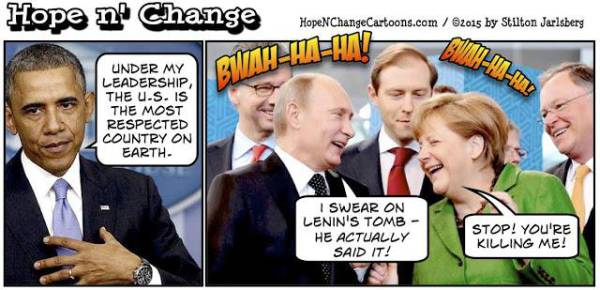
Cartoon of the day

June 5, 2015

H/t Freedom is just another word

under

The Kurd-Shia War Behind the War on ISIS

June 5, 2015

The Kurd-Shia War Behind the War on ISIS, The Daily BeastMat Wolf, June 5, 2015

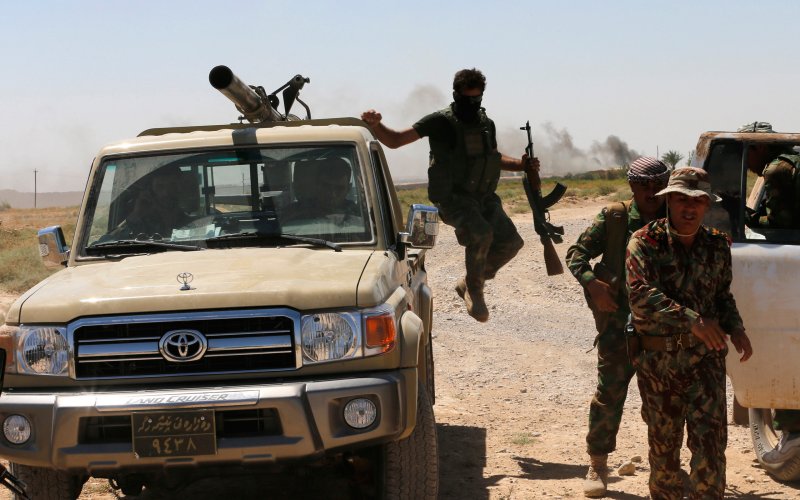
1433495718557.cachedAhmed Jadallah/Reuters

“We could see outright civil war,” Farhan Siddiqi, a research fellow on international politics and national security at the Middle East Research Institute (MERI), tells The Daily Beast. Siddiqi says he believes the Kurds and the Shia central government would face domestic and international pressure to avoid such a conflict, but if cooler heads failed a hypothetical conflict could escalate into something even worst than the current ISIS war.

********************

In a dusty town near the Iranian border, the terror group was defeated, but the victors are at each other’s throats.

JALAWLA, Iraq — Behind Iraq’s front lines against the so-called Islamic State, Kurdish and Shia factions already are drawing a blueprint for what could be the region’s next major conflict.

In the city of Jalawla in Iraq’s Diyala province, near the Iranian border approximately 80 miles east of Baghdad, Kurdish forces have given the boot to the Shia militia they previously allied with to take the city from ISIS in a bloody November battle. Last month, the commanding Kurdish Peshmerga general in Jalawla threatened to start shooting if the Shia refused to leave the city immediately.

“This area is ours now, and that’s not changing,” Brig. Gen. Mahmoud Sangawi told The Daily Beast. He added that Jalawla, an abandoned city that previously had 83,000 people and was 80 percent Sunni Arab in 2003, would soon have a Kurdish mayor. Sangawi bragged that henceforth the city would also be called by its new Kurdish moniker, “Golala.”

Not so fast, say the Shia militias. They were recruited in the name of a fatwa from Iraqi Grand Ayatollah Ali al-Sistani in June 2014, following the Iraqi army’s humiliating loss of Mosul, Iraq’s second largest city, virtually without a fight. Many are trained and advised by Iranians, and they have been the spearhead of Baghdad’s efforts to recover lost territory in the name of the national government.

The Kurds, meanwhile, have fought hard to protect, consolidate and indeed expand areas they consider “their” territory.

“They [the Kurds] need to recognize this region is Iraq,” says Ali Khorasani, the commander of the Hashd al-Shaabi militias that Sangawi’s Peshmerga expelled from Jalawla. Hashd al-Shaabi is the Arabic term for Popular Mobilization Units, the name preferred by the volunteer Shia militias.

Khorasani said the Kurds “are strong, and they’re very organized, and our relationship was good, but now our relationship has problems.” And that appears to be an understatement. When asked if Kurdish moves in the region might lead to another war, Khorasani replied tersely: “Maybe.”

For now, Khorasani’s unit has been dispersed to the south of Jalawla around a town called Sadiya. It’s only a five-minute drive from Jalawla, but Kurdish forces are limiting access to Sadiya and prevented us from going there. Khorasani spoke to The Daily Beast by phone.

The ISIS blitz of northern and central Iraq one year ago sent the on-paper highly trained and well-equipped Iraqi army scrambling, and led to the sacking of controversial Shia Prime Minister Nouri al-Maliki. He was widely criticized for his sectarian policies that alienated the country’s Sunni Arabs, who are now the main support base for ISIS.

The Iraqi army’s retreat also opened the door for Kurdish forces to seize large swaths of territory abandoned by government forces.

Now, the central government’s inability to deal decisively with ISIS in Anbar province and its loss of the Anbar provincial capital Ramadi has seen the Kurds acting even more brazenly in anticipation of an independence push. Iraqi Kurdistan President Masoud Barzani has promised a long-awaited Kurdish independence referendum.

“Certainly an independent Kurdistan is coming,” Barzani said on a visit to Washington D.C. on May 6. “It will take place when the security situation is better and when the fight against ISIS is over.”

“We could see outright civil war,” Farhan Siddiqi, a research fellow on international politics and national security at the Middle East Research Institute (MERI), tells The Daily Beast. Siddiqi says he believes the Kurds and the Shia central government would face domestic and international pressure to avoid such a conflict, but if cooler heads failed a hypothetical conflict could escalate into something even worst than the current ISIS war.

Since the summer of 2014, the Kurds have increased their territory by 40 percent, most notably around the oil-rich city of Kirkuk, often called the “Kurdish Jerusalem.” Today Kirkuk has a Kurdish population of around 50 percent combined with large groups of Arabs and Turkmens. The city and its outlying territories were frequent targets of “Arabization” by the Saddam Hussein regime, a policy meant to shift the ethnic balance of power there as he waged a genocidal war against the rebellious Kurds. Now they want the city back, but Arab families who have lived there for decades have no place to go.

Areas like Jalawla are a different matter. It is closer to Baghdad than to the Iraqi Kurdish capital Erbil. It, too, was the target of waves of Arabization, but it has been a majority Arab city for decades. By Sangawi’s own admission the population was less than 10 percent Kurdish in 2003.

“The Baath regime had a process of oppressing the Kurdish people. They had to change their names to Arab names or leave the city,” Sangawi says. “When filling out forms they had to register as Arab. In 1970, 32 percent of this city was Kurdish. The city was only 8 percent Kurdish at the time of the American invasion in 2003. The Arabs tried to rob the Kurds of their land.”

Today, Jalawla has been completely abandoned by its civilian inhabitants, many of whom supported ISIS, according to Sangawi. Feral dogs dart in front of Peshmerga convoys and Kurdish graffiti proclaims the city part of Kurdistan. The immediate surrounding area of the town—dusty flat fields speckled with palm groves—clashes with the green, mountainous terrain often associated with Kurdistan, and syncs up more with stereotypically Arab lands.

Parts of Jalawla, especially the former ISIS command center on high ground overlooking the city, have been reduced to rubble. However, a spring bloom of un-manicured pink desert roses has overrun the walls and sidewalks, offsetting the many bullet holes and craters that otherwise dot the settlement.

“One-hundred and ten Peshmerga died in the fighting. When ISIS came in here they left many IEDs and explosives on the roads,” says Sangawi.

But the November fighting wasn’t the area’s first battle, and likely not its last. The Kurdish-Arab rift in the city goes back over a millennium.

Golala, Jalawla’s Kurdish name, means the “land of flowers.” Its Arabic title’s etymology is more grisly. In 637 AD, Arab Muslim forces during the early Islamic conquest of the Middle East won a decisive battle here against a Zoroastrian Persian force. A popular tale in the region holds the Arabs named the location Jalawla from an Arabic verb meaning to cover or to fill, as so many Zoroastrian corpses filled the landscape.

Sangawi knows this tale, and says he considers the Zoroastrians the Kurds’ forebears before Arabs took their territory—a perfect and historically convenient parable for Kurdish claims on the region.

Dark haired with a round face, thick droopy mustache and rosy cheeks, the 63-year-old Sangawi at first comes across as a friendly grandfatherly type, albeit one who travels with an entourage equipped with RPGs and machine guns. And most grandfathers don’t blithely threaten former heads of state.

“We’ve killed lots of people, a lot of them like Maliki,” he says of the former Iraqi prime minister, who said in a TV interview last month that anyone wishing to break up Iraq would create a “river of blood.”

“Maliki can eat shit,” Sangawi chuckles.

Sangawi’s been with the Peshmerga since the 1970s and has jumped around the Kurds’ various political parties, at one point even becoming a Marxist before joining up with the Patriotic Union of Kurdistan (PUK), the party of former Iraqi President Jalal Talabani.

Compared to Sangawi’s stance of bold antagonism, Khorasani is more conciliatory. The 45-year-old says he was in the legal profession before volunteering for the militia, and he makes a point of saying how the liberation of Jalawla was a joint effort. Even before then, he adds, the Kurds and Shia Arabs could find common cause.

“This is Iraq. We used to be united. They opposed the former regime and so did we,” he laments. “We were one.”

But Sangawi counters: “We were both against Saddam Hussein. We fought together. However, when the Shias came to power they treated us the same as Saddam Hussein, that’s why we don’t have a good relationship now.”

Siddiqi, at the Middle East Research Institute, says that the new Baghdad government under Prime Minister Haider al-Abadi has shown a willingness to negotiate and be more accommodating to Iraq’s minorities, but the country’s age-old tensions still run deep.

“Saddam Hussein is gone, but his authoritarianism still survives along all levels of Iraqi society,” Siddiqi says. “It remains to be seen if the government becoming more accommodating will reduce calls for independence.”

If a conflict were to occur, he adds, the Hashd al-Shaabi would be at the forefront of any government pushback against the Kurds. “The central government could easily call on the Shia militias it’s currently using against ISIS, using religious pretexts and slogans to drive them forward,” he says.

The central Iraqi government has already come under fire for its use of the militias, whose religious zealotry exacerbates sectarian tensions in Iraq. The government’s operation to retake the Sunni-majority Ramadi was originally named “At Your Service, Hussein,” in honor of a major Shia historical and religious figure. Human Rights Watch has also raised concerns that the Hashd al-Shaabi have committed serious human rights abuses while ostensibly fighting ISIS.

Siddiqi says the international community, including the central government’s main ally, Iran, would be wary of seeing another war in the region. “Iran wants peace, it does not want Iraq to become another Syria or another Yemen,” he says, adding that although opposed on many issues, the U.S. and Iran have tacit tactical cooperation in Iraq these days, and neither would support a Shia-Kurd conflict.

If a fight did occur, Siddiqi says he believes world powers would do their best to take a “hands-off” approach to avoid further escalation. If Kurdish independence were to succeed, he continues, it would only be accomplished via an agreement with Baghdad, not another war.

But far from Tehran and the beltway, on the dusty plains of disputed Jalawla, Sangawi says he’s ready for that war, drawing little distinction between Shia Hashd al-Shaabi and Sunni ISIS, and viewing them both as his people’s ancient enemies.

“The Shia militias believe if they kill ISIS they’re going to heaven, and ISIS believes if they kill the Shia people they are going to go to heaven,” Sangawi declares. “They fight over religion, not for land.”

“For me, if they attack me I will attack them, because this is my land. If they come to this land, of course I will fight them.”