Displaced Sunni people, who fled the violence in the city of Ramadi, arrive at the outskirts of Baghdad Photo: STRINGER/IRAQ
Its strategy is essentially Maoist – the comparison has not been enough made, but now that Isil has declared itself an agent of Cultural Revolution, with its destruction of history, perhaps it will be more. Like Mao’s revolutionaries, it conquers the countryside before storming the towns.
Even now, the fact that much of its territory is rural or even desert is seen as a weakness. But it is beginning to “pick off” major towns and cities with impunity. In fact, where society is fractured, like Syria and Iraq, the “sea of revolution” panics the citizenry, making it feel “surrounded” by unseen and incomprehensible agents of doom.
********************
Have any words come back to haunt President Obama so much as his description of Islamic State of Iraq and the Levant last team as a “JV” – junior varsity – team of terrorists?
This wasn’t al-Qaeda in its 9/11 pomp, he said; just because a university second team wore Manchester United jerseys didn’t make them David Beckham.
How times change. As of this weekend, the JV team is doing a lot better than Manchester United. With its capture of Palmyra, it controls half of Syria.
Its defeat in Kobane – a town of which few non-Kurds had heard – was cheered by the world; its victory in Ramadi last Sunday gives it control of virtually all of Iraq’s largest province, one which reaches to the edge of Baghdad.
Calling itself a state, one analyst wrote, no longer looks like an exaggeration.
Senior US officials seem to agree. “Isil as an organization is better in every respect than its predecessor of Al-Qaeda in Iraq. It’s better manned, it’s better resourced, they have better fighters, they’re more experienced,” one said at a briefing to explain the loss of Ramadi. “We’ve never seen something like this.”
How did Isil manage to inflict such a humiliation on the world’s most powerful country? As with many great shock-and-awe military advances over the years, it is easier to explain in hindsight than it apparently was to prevent.
Ever since Isil emerged in its current form in 2013, military and and political analysts have been saying that its success is due to its grasp of both tactics and strategy.
Its strategy is essentially Maoist – the comparison has not been enough made, but now that Isil has declared itself an agent of Cultural Revolution, with its destruction of history, perhaps it will be more. Like Mao’s revolutionaries, it conquers the countryside before storming the towns.
Even now, the fact that much of its territory is rural or even desert is seen as a weakness. But it is beginning to “pick off” major towns and cities with impunity. In fact, where society is fractured, like Syria and Iraq, the “sea of revolution” panics the citizenry, making it feel “surrounded” by unseen and incomprehensible agents of doom.
Like Mao, Isil uses propaganda – its famed dominance of social media – to terrorise its targets mentally. Senior Iraqi policemen have recounted being sent images via their mobile phones of their decapitated fellow officers. This has a chastening effect on the fight-or-flight reflex.
It then uses actual terror to further instil chaos. Isil’s main targets have been ground down by years of car bombs and “random” attacks. It seems extraordinary, but one of the reasons given by Mosul residents for preferring Isil rule is that there are no longer so many terrorist attacks: not surprising, since the “terrorists” are in control.
Only once your enemy is weak, divided, and demoralised, do you strike.
You then do so with an awesome show of force – one which can mislead as to the actual numbers involved.
The final assault on central Ramadi, which had been fought over for almost 18 months, began with an estimated 30 car bombs. Ten were said to be individually of an equivalent size to the 1995 Oklahoma bombing, which killed 168 people.
There is nothing new in saying that both Syrian and Iraqi governments have contributed greatly to the rise of Isil by failing to offer the Sunni populations of their countries a reason to support them.
Some say that focusing on the failings and injustices of these regimes ignores the fact that militant Islamism, like Maoism, is a superficially attractive, even romantic idea to many, whether oppressed or not, and that its notions must be fought and defeated intellectually and emotionally.
That is true. But relying on Islamic extremism to burn itself out, or for its followers to be eventually persuaded of the errors of their ways, is no answer. Like financial markets, the world can stay irrational for longer than the rest of us can stay politically and militarily solvent.
Rather, the West and those it supports have to show they can exert force against force, and then create a better world, one which all Iraqis and Syrians, especially Sunnis, are prepared to fight for.
In March, an uneasy coalition of Shia militias, Iraqi soldiers, and US jets took back the town of Tikrit from Isil. It remains a wasteland, whose inhabitants have yet to return, ruled over by gunmen rather than by the rule of law.
That is not an attractive symbol, for Iraqi Sunnis, of what victory against Isil looks like. If the war against Isil is to be won, the first step is to make clear to Iraqis and Syrians alike what victory looks like, and why it will be better for them.
It shall be written that in the second decade of the twenty first century, when the forces of authoritarianism, Islamist zealotry, and sectarian fanaticism plunged large swaths of the Arab world into a state of ‘the war of all against all’, the reaction of the world’s sole great world power, was equivocal, indecisive, deceptive and cynical.
It is axiomatic that Arabs are in the main responsible for their tragic conditions, but it is also self-evident that the United States did, over the years contribute politically and militarily to the immense human tragedies unfolding along a brittle political order collapsing under its own weight.
The United States cannot retrench or resign from a broken region, assuming that it could escape being haunted – and maybe hunted- by the daemons unleashed, in part for sure, by its disastrous invasion of Iraq, its botched and incomplete intervention in Libya, and all the legacies of decades of support of Arab authoritarianism. Yet, this is what the Obama administration is trying to do. All his protestations aside, President Obama in the second half of his second term is not seriously trying to resolve any of the conflicts of the region, including those that he had contributed to, but merely applying half-measures particularly in Syria and Iraq designed to buy him time, while kicking the can down the road to his successor and hoping to avoid disasters he will not be able to ignore, such as the Islamic State (ISIS) knocking at the gates of Baghdad. It shall be written, that Obama inherited a broken Arab world from his predecessor George W. Bush, but that he will bequeath to his successor a shattered Arab world, partly because of his flawed leadership.
There was one pivotal moment during the recent Camp David summit between President Obama and the leaders of the Gulf Cooperation Council (GCC) that resonated deeply with the Arab leaders according to a participant. The president said to his guests that he invited them because he cares about the region, but that in fact ‘the American people don’t care.’ One wonders if the President was channeling his own deep seated doubts about America’s ability to shape events in that complex region, more than reflecting the supposed ambivalence of the American people.
Words, words, words
President Obama never wanted his tepid support for the Syrian opposition to be translated into effective means to topple the Assad regime, and in fact one can see that with Syria’s national nightmare entering its fifth year, the Obama administration is very concerned that the recent battlefield setbacks suffered by the Syrian army and its allies could lead to the collapse of the Assad regime, hence its return to the position of ‘Assad still represents the least worst option in Syria’. President Obama and his aides still dissemble when they turn the argument of their critics on its head by claiming that they are being asked to ‘invade’ Syria or ‘impose’ a solution on it, when no serious scholar or expert ever suggested such a policy. But the White House did perfect this Syria straw man argument to the point where administration officials seem to believe their own disinformation. The U.S. policy on Syria is cynical because one of the operating principles seems to be to provide the rebels with enough arms not to lose the war, but not enough to defeat the Assad regime.
Recently, the Obama administration has created a similar Iraqi straw man. To begin with, the President’s limited and tentative military actions against ISIS in Iraq and Syria betray his public boasts that he is pursuing a policy of ‘degrading then destroying’ ISIS, when in fact he is at most trying to contain the threat of ISIS and leaving the task of destroying the monstrous organization to the next president. Following the fall of the Iraqi city of Ramadi into the hands of ISIS, the President called it a ‘tactical setback’ but rejected the notion that the U.S. is losing the war. His Chairman of the Joint Chiefs of Staff General Martin Dempsey was more colorful when he dryly said ‘the Iraqi Security Forces was not driven out of Ramadi, They drove out of Ramadi.’
Secretary of state John Kerry claimed that Ramadi will be retaken within days but he was engaging in wishful thinking, then there were hints of a review of the Iraq strategy, only to be corrected by the spokesperson of the state department that ‘there’s no formal strategy review’. Commenting on the Ramadi debacle White House spokesperson Josh Earnest said that the war on ISIS is still in the ‘degrade phase’ and that President Obama believes that his successor will continue the fight. The straw man reared its head when Earnest stressed Obama’s belief that helping the Iraqis in degrading ISIS is the best long term strategy, instead of a ‘full-scale reinvasion’ as if there is serious talk of a full reinvasion of Iraq.
Judging by his admittedly eloquent speeches, one cannot escape concluding that President Obama believes that his words at times have the force of actions; it is as if you don’t have to follow up on your demands of Assad to step down, or to deliver on threats of retribution if the Syrian despot crosses the president’s red line, or to continue demanding that the Israeli Prime Minister Benjamin Netanyahu should freeze settlements in Palestinian territories, or asking Russian President Vladimir Putin to stop his aggression against Ukraine. President Obama, after more than six years in office still acts as if accommodation and negotiations can resolve every intractable problem regardless of who are the antagonists. He still behaves, as one observer puts it, as if he does not believe that the U.S. has enemies in the world.
Killing past, present and future
In one week the hordes of ISIS stormed and occupied two important cities hundreds of miles apart in Iraq and Syria, proving once again the limits of the U.S. led international coalition against ISIS, which is winning because of its well-earned reputation as a merciless terror organization and because of the weakness of its enemies. A nagging question was asked repeatedly; why is it that the U.S. led coalition failed to bomb ISIS’ columns advancing against the important Syrian city of Palmyra with its unique and breathtaking archaeological treasures, in broad daylight and in the open desert?
This is particularly disturbing given ISIS’ savage war against all cultures and civilizations deemed ‘un-Islamic’ in their fanatic and primitive views. The Assad regime and ISIS are destroying Syria’s present and future, the regime uses barrel bombs against civilians to uproot communities and cleanse (mostly Sunni) neighborhoods to create new demographic facts on the ground. ISIS’s brutal reputation, its ritualistic murdering of people by swords and machetes intimidate ancient communities like the Assyrians, Yazidis and Christians and force them to flee. The Assad regime and ISIS leave in their wake only victims and desolation. And while the Assad regime’s forces never hesitated in bombing archaeological and ancient forts occupied by rebels, ISIS’ zealots relish destroying non-Muslim archaeological sites, including structures revered by Muslims like the sacking of Jonah’s tomb.
The zealots of ISIS are the modern equivalent of a Biblical plague of locusts. This has been their impact on ancient cities and communities; they plundered Assyrian cities including the famed Nimrud once the capital of the Assyrian Empire, bulldozed temples and statutes, ransacked ancient manuscripts, and smashed statutes of deities at the Mosul Museum.
Bride of the desert
The sprawling ancient city of Palmyra, a UNESCO World Heritage Site, with its Greek, Roman and Arab architecture contains archeological wonders not found outside the Eastern Mediterranean region. The thought that the fanatics of ISIS will bulldoze Palmyra’s magnificent amphitheater, the temple of Baal and its roman columns, should send shivers down the spine of every civilized person anywhere in the world. Yes, we lament human loses but we should lament those special stones that still speak to us as eloquently as those artists who carved them. It is a false dichotomy that posits that ancient and historic but ‘dead stones’ should not be among our priorities in Syria and Iraq. Those Syrians, who are fighting for a better future, are also fighting as those who inherited the marvels and histories of the various peoples and cultures that made Palmyra, Aleppo and Damascus, great cities.
If Palmyra, called by Syrians the ‘bride of the desert’ is destroyed, even partially, all of humanity will be poorer. The deep cultural scars that have been inflicted on Damascus, Aleppo, and Homs in Syria and on Nimrud and Mosul in Iraq will never heal. The passage of time may lessen the pain, but it will not diminish, nor should it our collective memories of it.
Silent sectarian cleansing
At the time of ISIS’ depredations in Iraq and Syria, another reminder that the most efficient killers in these orgies of violence remain the state actors, came in the form of another sober report by the Naame Shaam a group of Iranian, Syrian and Lebanese activists that focuses on the destructive role of the Iranian regime in Syria. The title of the report speaks for itself ‘silent sectarian cleansing: Iranian role in mass demolition and population transfers in Syria’.
The reports which is based on mostly open sources, documents with satellite photos, and statistics the frightening role of Iran and its proxies, mostly the Lebanese based Hezbollah, in restructuring almost every aspect of life in Syria. The report provide cases of human rights violations, war crimes and crimes against humanity committed in Syria by the Assad regime with the support and complicity of the Iranian Revolutionary Guards. The report accuses the Syrian regime, Iran’s Revolutionary Guards and Hezbollah of ‘systematic forced displacement of Syrian civilians and the destruction and appropriation of their property in certain parts of Syria, such as Damascus and Homs’. The reports documents how the demolition and reconstruction in some areas are intended to punish those communities supporting the revolution, the majority of which happened to be Sunni. The satellite photos show areas of demolished homes in Tadamoun district in Damascus, and near the Mezzeh airport.
The objective of the cleansing is to get rid of ‘unwanted elements’ and replacing them with Syrian Alawites (an offshoot of mainstream Shiism). The ultimate objective is to secure the Damascus-Homs-Coast (where the majority of the Alawites live) corridor along Lebanon’s eastern borders, with its mostly Shiite inhabitants, in order to create a contiguous geographic and demographic area. Such area could become a rump Shiite state, and it will maintain Iran’s links with its most valuable ally, Hezbollah which is now an integral part of Iran’s deterrence strategy against Israel.
Naame Shaam director Fouad Hamdan who visited Washington recently and met with human rights groups, and government officials to galvanize support to pressure the International Criminal Court to investigate these alleged war crimes, stressed that the report specifically names General Qassem Soleimani who is in charge of overseas operations of Iran’s Islamic Revolutionary Guard Corps as the main culprit who should stand trial.
Arid results
It is unlikely that the recent setbacks in Ramadi and Palmyra will lead President Obama to alter his Middle East policy, particularly at this sensitive point in the negotiations with Iran over its nuclear program, which is seen by some analysts as one of the reasons Obama does not want to antagonize Iran in Syria by taking on Syria’s air defenses or any other military target.
Well into the sixth year of his presidency, President Obama has little to show for in the Middle East. It is practically impossible to maintain the integrity of Iraq as a unitary state, when the Kurds who constitute more than quarter of the population want to determine their future. (The current Kurdish leadership is the last that speak Arabic). Syria is literally in flames, and it was on President Obama’s watch, and after his warnings to Assad, that Syrian civilians were at the receiving end of chemical weapons. Libya is descending towards more fragmentations, bloodletting and the creation of large ungoverned spaces ideal for groups like ISIS and al-Qaeda. Yemen’s conflicts will continue to fester for some time to come, and its economic challenges will make governance more difficult than ever. Egypt’s alienation from the Obama administration will continue, and it might discover that the problem is deeper and it involves the Washington ‘establishment’ and not only the Obama administration. And there is no hope of reviving the Palestinian-Israeli peace talks. This poor record, makes it imperative for the President to reach a historic nuclear deal with Iran.
In one week President Obama made it clear to the GCC states, to the Iraqis and to the Syrians, that his concept of American engagement in the Middle East is limited to ‘partnerships’, but that they have to lead themselves, fight their own wars, (with conditional backing from the U.S.) and settle their own conflicts. There is a positive element in this approach. Arabs should take the lead in charting their own destinies, and should exercise more responsibilities. But that does not relieve the U.S. from its leadership burdens in the region; deterring predatory states, combatting terrorism and extremism, providing protective umbrella to its allies and contain the proliferations of weapons of mass destruction and settling the protracted conflicts. The U.S. cannot afford to ‘pivot’ away from the Middle East, and adopt a retrenchment mode and call it strategy. President Obama’s policy of retrenchment has called into question the quality of his leadership. If the economy continues to improve, the role of the U.S. in a rapidly changing world, and the quality and role of America’s leadership in the world should be at the heart of the presidential race in 2016.
_____________ Hisham Melhem is the bureau chief of Al Arabiya News Channel in Washington, DC. Melhem has interviewed many American and international public figures, including Presidents Barack Obama and George W. Bush, Secretaries of State Colin Powell and Condoleezza Rice, Secretary of Defense Robert Gates, and Chairman of the Joint Chiefs of Staff Admiral Mike Mullen, among others. Melhem speaks regularly at college campuses, think tanks and interest groups on U.S.-Arab relations, political Islam, intra-Arab relations, Arab-Israeli issues, media in the Arab World, Arab images in American media , U.S. public policies and other related topics. He is also the correspondent for Annahar, the leading Lebanese daily. For four years he hosted “Across the Ocean,” a weekly current affairs program on U.S.-Arab relations for Al Arabiya. Follow him on Twitter : @hisham_melhem
According to the [Israeli intelligence] official, Hezbollah has an estimated 100,000 short-range rockets capable of striking northern Israel, several thousand missiles that can reach Tel Aviv and central Israel and hundreds more that can strike the entire country.
********************
Hezbollah has built a vast network of advanced tunnels along the border with Israel for us in a future war, using them to conceal tens of thousands of rockets aimed at the Jewish state, a Lebanese newspaper with ties to the Lebanese terror group reported on Friday.
In a series of articles published over the weekend, the daily As-safir examined Hezbollah’s preparations for war against Israel, painting a picture of a military force highly prepared for conflict, both in terms of equipment and of infrastructure.
It should be noted that As-safir, a mouthpiece for the Shiite organization, is neither an objective nor necessarily a credible news source. The accuracy of its claims cannot be verified.
According to the reports, based on a tour of Hezbollah facilities given to the newspaper, the group has built a sprawling underground array of tunnels, bunkers and surveillance outposts along the border with Israel, which it is manning at peak readiness for battle.
The tunnels are said to be highly-advanced, with durable concrete, a 24-hour power supply via underground generators, a ventilation system to prevent damp from damaging military equipment and a web of secondary escape shafts in case of attack. The tunnels are said to be housing tens of thousands of rockets ready for launch, themselves wrapped in protective materials in order to preserve them.
The paper reported that Hezbollah was constantly surveying the Israeli border area with electronic equipment as well as observation posts equipped with night-vision technology.
Israeli artillery on the Lebanon border, January 28, 2015 (Photo credit: IDF Spokesperson)
Tunnel construction was said to be continuing around the clock, using primitive means rather than advanced machinery in order to avoid detection by Israeli surveillance.
A senior Israeli intelligence official said last week that Hezbollah has built up a massive arsenal of rockets and other advanced weapons in Shi’ite villages of southern Lebanon, warning civilians would be at risk if war breaks out.
According to the official, Hezbollah has an estimated 100,000 short-range rockets capable of striking northern Israel, several thousand missiles that can reach Tel Aviv and central Israel and hundreds more that can strike the entire country.
Most of the weapons have been transferred to Lebanon through war-torn Syria, coming from Hezbollah’s key allies, the Syrian government and Iran, he said.
The official showed reporters satellite photos of what Israeli intelligence believes are Hezbollah positions in dozens of Shiite villages in southern Lebanon.
The photos were marked with dozens of red icons, signaling what are believed to be missile launchers, arms depots, underground tunnels and command posts.
The official, who spoke on condition of anonymity under military guidelines, said an estimated 200 villages have been turned into “military strongholds.”
One photo showed the village of Muhaybib, with a population of around 1,000 people and 90 buildings, of which more than a third had been marked as Hezbollah assets. In the larger village of Shaqra, with some 4,000 people, Israeli intelligence identified Hezbollah targets in around 400 out of some 1,200 buildings.
The army refused to allow publication of the images.
If war breaks out and Hezbollah fires missiles at Israel, these buildings will be targeted by Israel’s air force, the official said, adding that Israel would give civilians time to evacuate.
Israel and Hezbollah fought a month-long war in 2006 that killed some 1,200 Lebanese, including hundreds of civilians, and 160 Israelis and caused heavy damage to Lebanon’s infrastructure.
Though another Israel-Hezbollah war is always possible, analysts say the group has no interest in renewing hostilities while it is busy fighting alongside President Bashar Assad’s forces against rebels trying to topple him in Syria, including the forces of Islamic State.
Hezbollah leader Hassan Nasrallah warned Friday that the Islamic State posed an existential threat to Lebanon and said his organization may soon be required to call for a general mobilization to fight the group.
“Now is the time for everyone to enlist, anyone who can take part,” Nasrallah told senior organization commanders in a speech. “The danger that threatens us is an existential threat similar to 1982,” he added, referring to the Lebanon War and the Israeli military invasion of Lebanon.
The Hezbollah chief vowed to “use all our strength and all our capabilities to cope with extremist groups.
“In the next phase we may declare general mobilization to all people,” he said.
Reconnaissance drone operated by US special forces in Lebanon
How do Obama’s repeated commitments to Israel’s security square with close US military and intelligence cooperation with an organization whose vow to destroy Israel is backed by 100,000 missiles – all pointed south?
************************
Another strange pair of bedfellows has turned up in one of the most critical Middle East battlefields: the United States is helping Hizballah, Iran’s Lebanese surrogate, in the battle for control of the strategic Qalamoun Mountains. DEBKAfile’s intelligence sources disclose that a US special operations unit, stationed at the Hamat air base on the coast of northern Lebanon, is directing unarmed Aerosonde MK 4.7 reconnaissance drone intelligence-gathering flights over the Qalamoun Mt arena, 100 km to the west.
Washington set up the base originally in line with an assurance to Beirut of military assistance for the next three years to counter any threatened invasion by extremist elements.
However, it turns out that the data the US drones pass to Lebanese army general staff in Beirut goes straight to Hizballah headquarters – and on to the Iranian officers in Syria running Bashar Assad’s war effort.
The Aerosonde MK 4.7 can stay aloft for 10 to 12 hours at a stretch at an altitude of 4.5 km. It functions day or night, equipped with an advanced laser pointer capability. It is capable of carrying ordnance but US sources say they the aircraft in Lebanon are unarmed.
Since Hizballah is also operating Ababil-3 surveillance drones of its own over Qalamoun, coordination had become necessary between the American team and the Shiite group. The consequence is that for the first time, the US military is working directly with an internationally-designated terrorist organization – a development with earthshaking ramifications for Israel’s security. This partnership has in fact become a game-changer for the worse in terms of Israel’s security ties with the US and has caused an upheaval in its military and intelligence disposition in the region, in at least six respects:
1. To counter US-Hizballah intelligence collaboration, Israel is obliged to reshuffle the entire intelligence mechanism it maintains to protect its northern borders with Lebanon and Syria.
2. Israel finds itself forced to monitor the progress of the US special unit’s interface with Hizballah, its avowed enemy.
3. Israel can no longer trust American intelligence coming in from Lebanon because it is likely tainted by Hizballah sources.
4. Hizballah is gaining firsthand insights into the operating methods of US special operations forces, which Israel’s methods strongly resemble and must therefore revamp.
5. The Hizballah terrorist group is winning much needed prestige and enhanced status in the region from its collaboration with the US.
6. Hizballah’s Ababil drones are in fact operated by the hostile Iranian Revolutionary Guards, which leaves Israel with no option but to overhaul from top to bottom the intelligence-gathering systems employed by its surveillance drones to track Iranian movements in the region.
At the Washington Adas Israel synagogue Friday, May 22, President Barack Obama wearing a kipah “forcefully” objected to suggestions that policy differences between his administration and the Israeli government signaled his lack of support for the longtime US ally.
This raises a question: How do Obama’s repeated commitments to Israel’s security square with close US military and intelligence cooperation with an organization whose vow to destroy Israel is backed by 100,000 missiles – all pointed south?
Assuming that Obama intends his remarks to be taken seriously, which I don’t, I find Obama’s comments among the stupidest and most ignorant he has ever uttered, although I concede on this point that that the competition is stiff.
*********************
In the course of his recent interview of President Obama — painful reading from beginning to end — Jeffrey Goldberg asked a somewhat challenging question regarding the Islamic Republic of Iran. “You have argued,” Goldberg observed, “that people who subscribe to an anti-Semitic worldview, who explain the world through the prism of anti-Semitic ideology, are not rational, are not built for success, are not grounded in a reality that you and I might understand. And yet, you’ve also argued that the regime in Tehran—a regime you’ve described as anti-Semitic, among other problems that they have—is practical, and is responsive to incentive, and shows signs of rationality.” Oh, wise man, how do you square this particular circle? Obama responded:
Well the fact that you are anti-Semitic, or racist, doesn’t preclude you from being interested in survival. It doesn’t preclude you from being rational about the need to keep your economy afloat; it doesn’t preclude you from making strategic decisions about how you stay in power; and so the fact that the supreme leader is anti-Semitic doesn’t mean that this overrides all of his other considerations. You know, if you look at the history of anti-Semitism, Jeff, there were a whole lot of European leaders—and there were deep strains of anti-Semitism in this country—
Goldberg (unfortunately) interrupted him at this point. Obama then continued:
They may make irrational decisions with respect to discrimination, with respect to trying to use anti-Semitic rhetoric as an organizing tool. At the margins, where the costs are low, they may pursue policies based on hatred as opposed to self-interest. But the costs here are not low, and what we’ve been very clear [about] to the Iranian regime over the past six years is that we will continue to ratchet up the costs, not simply for their anti-Semitism, but also for whatever expansionist ambitions they may have. That’s what the sanctions represent. That’s what the military option I’ve made clear I preserve represents. And so I think it is not at all contradictory to say that there are deep strains of anti-Semitism in the core regime, but that they also are interested in maintaining power, having some semblance of legitimacy inside their own country, which requires that they get themselves out of what is a deep economic rut that we’ve put them in, and on that basis they are then willing and prepared potentially to strike an agreement on their nuclear program.
This appears to have been good enough for Goldberg, but it should make a serious man cry. Let me count the ways.
Obama is in the process of finalizing an absurd arrangement with Iran that will at the same time obviate the cost of its pursuit of nuclear weapons and reward the regime for entering into the arrangement. They will reap the economic rewards of taking advantage of President Obama’s surrender to their (absurd) terms.
The Islamic Republic continues its program of ideological anti-Semitism and regional expansion. We await Obama’s “ratchet.” The regime evidently fears it not. This is glorified hot air.
Obama reiterates “military option [he’s] made clear[.]” The word “clear” here is the tell; it demonstrates that Obama is lying. There is no United States military option. Indeed, Obama’s public relations work on behalf of the Islamic Republic of Iran is suggestive of its removal from the shelf.
How does a seriously committed anti-Semitic regime weigh the costs and benefits of its anti-Semitism? I long for Professor Obama to draw from the well of his historical learning to apply the cost-benefit analysis to the Nazi regime of 1933-1945. Somebody get this man a copy of Lucy Dawidowicz’s The War Against the Jews, 1933-1945.
The Israelis draw the lesson they refer to in the slogan “Never again.” Emanuele Ottolenghi offers reflections that are precisely on point.
How does Professor Obama apply his cost-benefit analysis to the Iran’s 1979 bombing of the AMIA (Jewish) in Buenos Aires? It targeted Jews and killed 85 people. What costs was Iran prepared to incur? What costs has Iran incurred? The applicable cost-benefit analysis might illuminate how Iran thinks about the prospect of “eliminating” Israel by means of its proxies and with the nuclear weapons it is striving at all cost to obtain.
As for the regime’s alleged need to maintain a “semblance of legitimacy” inside Iran and therefore its alleged need to “get themselves out of a deep economic rut,” what does he mean? Obama is not saying that the regime lacks a semblance of legitimacy inside Iran at present. Obama himself continues to provide the regime something more than a “semblance of legitimacy.” Is the Supreme Leader feeling the pressure? No one outside Obama’s circle of friends can take this at face value.
Assuming that Obama intends his remarks to be taken seriously, which I don’t, I find Obama’s comments among the stupidest and most ignorant he has ever uttered, although I concede on this point that that the competition is stiff.
NOTE: Noah Rothman also takes a stab at doing justice to Obama’s comments here. It occurs to me that the words of Walter Laqueur in connection with Jan Karski’s mid-war report on the Holocaust in his book The Terrible Secret also apply here: “Democratic societies demonstrated on this occasion as on many others, before and after, that they are incapable of understanding political regimes of a different character….Democratic societies are accustomed to think in liberal, pragmatic categories; conflicts are believed to be based on misunderstandings and can be solved with a minimum of good will; extremism is a temporary aberration, so is irrational behavior in general, such as intolerance, cruelty, etc. The effort needed to overcome such basic psychological handicaps is immense….Each new generation faces this challenge again, for experience cannot be inherited.” In Obama’s world, I would add, experience can’t even be experienced. Ideological blinders render him obtuse (again assuming his words are to be taken at face value, which I don’t).
On May 27, the American novelist Herman Wouk will attain the prodigious age of 100.
Over his long career, Wouk has achieved all the wealth and fame a writer could desire, or even imagine. His first great success, The Caine Mutiny (1951), occupied bestseller lists for two consecutive years, sold millions of copies, and inspired a film adaptation that became the second highest-grossing movie of 1954. Wouk’s grand pair of novels, The Winds of War and War and Remembrance, likewise found a global audience, both in print, and then as two television miniseries in the 1980s.
Wouk won a Pulitzer for The Caine Mutiny. From then on, however, critical accolades eluded him. Reviews of the two “War” novels proved mostly dismissive—sometimes even savage. Critics assigned the proudly Jewish Wouk to the category that included Leon Uris and Chaim Potok rather than Saul Bellow and Philip Roth.
Negative critical judgment matters. After the first fizz of publicity, it is critics who in almost all cases determine what will continue to be read. The novelist known as Stendhal described books as tickets in a lottery, of which the prize is to be read in a hundred years. If enduring readership is the ultimate prize for a writer, then Wouk is at present failing. Readers under 40 know Wouk, if they know him at all, as a name on the spine of a paperback shoved into a cottage bookshelf at the end of someone else’s summer vacation—or perhaps as the supplier of the raw material for Humphrey Bogart’s epic performance as Captain Queeg of the USS Caine. What they don’t know is that Herman Wouk has a fair claim to stand among the greatest American war novelists of them all.
The plot of The Caine Mutiny is easily summarized. A spoiled, self-indulgent young man named Willie Keith joins the Navy, mostly because it promises less walking than the Army. (If you want to see Keith as a symbol for America itself, Wouk won’t object.) Keith finds himself aboard an antique minesweeper, the Caine. The ship performs a succession of minor missions under oddball commanders. One of those commanders, Queeg, ultimately puts the whole ship at risk. The officers of the Caine mutiny against Queeg’s leadership, and are subsequently court-martialed. They are acquitted but never forgiven by the Navy higher command. The bravest and most capable of the officers forfeits his hopes of promotion. After an unexpected act of heroism, Willie Keith finds himself the last commander of the Caine. When he is finally demobilized, months after the war has ended for everybody else, he emerges chastened, matured, and ready for the responsibilities of the postwar world.The two “War” novels aren’t as compactly formed as The Caine Mutiny. The “War” novels tell the stories of two families, that of a U.S. naval officer, “Pug” Henry, and that of a Jewish-American scholar, Aaron Jastrow. The Henry and Jastrow families become connected when one of Pug’s sons marries Jastrow’s niece. Wouk deploys the members of the two families—and their friends, lovers, and military units—around the planet in order to tell the story of the war from the late 1930s until the liberation of the Nazi death camps. Pug himself at various points meets President Roosevelt, Benito Mussolini, Adolf Hitler, Winston Churchill, and Josef Stalin, along with much of the U.S. naval and military high command. In title and structure, the two “War” novels invite comparison to Tolstoy’s War and Peace. That’s asking for trouble right there. But if the only books worth writing or reading were those that equal War and Peace, then none of us would need much bookshelf space. What Wouk did in the “War” novels is accomplishment enough.
Pull that paperback from off the cottage shelf, open the pages—and suddenly there you are: walking a Polish country road as a Stuka buzzes overhead … in the wardroom of a warship tasting thin Navy coffee … shivering in the unpressurized cabin of a bomber above Germany … or waiting amid a roomful of desperate visa applicants for the stamp that will mean the difference between life and death. Between these dramatic incidents, Caine and the “War” novels pulse with the everyday details of 1940s America: what it felt like to wait for a letter in the post, the passage of time on a transcontinental railway trip, the crinkle of the carbon paper between two copies of an army report, the uncertainty of knowing who would win the war, and when, and how.
“It is the war itself,” was reportedly Henry Kissinger’s high praise for the “War” novels. Even as we retain memories of the war’s events, the war’s atmosphere—the way people felt and talked and thought—fades from our understanding. In The Imitation Game, the recent movie about the British computer scientist Alan Turing, the moviemakers got every visual detail right: clothes, cars, streetscapes. Then they represented Turing as a single lonely scientist building a machine by hand out of discarded spare parts in a Victorian stable. The industrial vastness and technological sophistication of the British war effort somehow eluded the moviemakers’ memories or failed to engage their interest.
Wouk never lets the reader forget that the Second World War was the biggest collective undertaking in the history of the human race. No movie could ever depict it, because no movie could ever have the budget. Imagine, however, a movie with an infinite budget—because the special effects are all in the reader’s mind—and you have something of the effect of Wouk’s Caine and his War novels. Wouk’s methods are cinematic. He describes battles as a moviemaker would try to film them, cutting back and forth from a wide-angle view of the contending armies or battle fleets to the individual experience of a particular character. His account of the attack on Pearl Harbor, for example, shifts back and forth between an omniscient narration of the Japanese bombing of the U.S. battleships at anchor and the vantage point of Pug’s daughter-in-law, who happens to observe the bombing of the ships from the shoulder of a road on a hill above the U.S. naval base.Wouk uses the wide angle because he wants us to see the whole war and understand what it was all about. More critically admired novelists of the 20th century—from Erich Marie Remarque to Pat Barker—want us to feel the terror and filth and cruelty of war from the perspective of the individual caught in its violence. Wouk wants us to see war’s cruelty too. But he also wants us to appreciate why the generals or admirals made the decisions they did, why each side won or lost. His war is not a roar of irrational violence without form or purpose. His war is the war of a documentary on the History Channel: violent, yes, but violence with a shape, a goal, and a justification.One of the most harshly depicted characters in The Caine Mutiny is an aspiring writer at work on a novel sharply critical of the Navy. The aspiring writer makes the mistake of missing the barbed compliment when a character who (obviously) speaks for Wouk congratulates the writer for satirizing the Navy’s “stupid, stodgy Prussians.” The Wouk stand-in then upbraids the writer: While the two of them were enjoying the benefits of peace, it was those “stupid, stodgy Prussians” of the regular Navy and Army who were “standing guard on this fat, dumb, and happy country of ours.” Even as the cultural climate shifted in the Vietnam era (Winds of War was published in 1971; War and Remembrance in 1978) Wouk stood his ground in believing that war can be necessary, and that death in battle is a risk that men can rationally accept.Wouk doesn’t deny the horror of war, but he doesn’t look closely at it. There’s nothing here like the horrific description of the death of the bombardier Snowden in Heller’s Catch-22: the still-living intestines spilling out of a man’s gashed, bleeding body. Even the most painfully described death in the War novels (that of Pug’s aviator son Warren) is presented as somehow uplifting. Having heroically sunk a Japanese warship at the Battle of Midway, Warren’s plane is struck by Japanese anti-aircraft fire. Wouk describes the heat of burning gasoline roasting a human being alive; the flyer’s anguished awareness of imminent death and the loss of all future hopes. The plane tumbles into the ocean. The pain of the fire is soothed by the inrush of water, and the not altogether likable Warren’s final thoughts are brave and noble.
Wouk’s war is not a roar of irrational violence without form or purpose.
This is war literature as influenced by Rupert Brooke rather than Wilfred Owen. Again and again through the War novels, flawed characters—a coward, a cad—are redeemed by the manner of their deaths: one parachuting into France to aid the Resistance; another saving his submarine from enemy air attack by giving the order to submerge before he can re-enter. Yes, as Joseph Heller shows, people get their intestines blown out in war. They can also get their intestines blown out by an armed invader if they refuse to defend against a military aggressor—and it’s that latter horror about which Wouk has the most to say.
The Nazi Holocaust pervades the War novels and lurks in the corners of Caine too. Some of Wouk’s characters stumble into the Holocaust’s maw; others glimpse inside and are transformed forever. Adolf Eichmann makes a large and memorable appearance in War and Remembrance. Let it be noted that the supposedly middlebrow Wouk more shrewdly penetrated the Nazi murderer’s self-serving lies than the echt highbrow Hannah Arendt. Wouk’s Eichmann is no banal bureaucrat, but a fanatical plunderer and murderer—just as the historical documents that have become available since the writing of Wouk’s novels have confirmed.
It’s really a striking thing how unexpressed a place the Jewish Holocaust occupied in the writing of American Jewish novelists in the decades after the war: Heller, Bellow, Malamud, Doctorow. (Mordecai Richler too, to include a Canadian.) With Wouk, the Holocaust is always front of mind. In 2012, at 97, when he was asked by Vanity Fair which living person he most despised, he answered, “The Jewish writer who traduces his Jewishness.” (The runner-up, it would seem, is the U.S. military veteran who traduces the U.S. military.)Just as the invention of photography forced painters to rethink the purposes of their art form, so writers have had to rethink their medium since the advent of cinema. What’s the novel for when a story can be told so much more immediately by film? The various possible answers to this question supply the literary history of the 20th century. Some writers decided that the purpose of the novel was to explore the artistic potential of language itself. Some writers plunged beneath the surfaces of people and things to explore human psychology and the structure of consciousness. Wouk’s answer was to revert to the foundations of human story, to The Iliad and the troubling mysteries of combat. Wouk was a participant in the most terrible war in human history, and he wanted to record what had happened and why it had to be done. To achieve that end, Wouk fused fiction with history in ways sometimes hugely successful (his character sketch of Franklin Roosevelt—even better as rendered in FDR’s Groton accent in the audiobook superbly performed by Kevin Pariseau), and sometimes not (the interpolation of an imaginary history of the war by a fictitious German general).The contrivances necessary to move Wouk’s characters from event to event sometimes creak. The characters themselves, however, never feel contrived—not the fictitious characters and (even more difficult) not the historic ones. Their stories and their personalities endure in the memory. Wouk may not be a stylistic innovator or a polisher of the perfect phrase. What he does achieve however is to create characters one finds oneself talking about years afterward as if they were people one knew, with problems as urgent as one’s own.Half a century ago, Norman Podhoretz accused Wouk of lacking moral sophistication. Here’s an extract from Podhoretz’s harsh 1955 review of Marjorie Morningstar, Wouk’s first major post-Caine novel:
That Wouk should pass for a serious writer is perhaps no more an occasion of surprise than the success of a dozen other inconsequential novelists. But an error of taste alone obviously cannot account for his reputation. The people who enjoy Wouk, I would guess, read him earnestly, with a reverence they never feel when confronted by, say, Thomas B. Costain or Sloan Wilson. His books are not “mere entertainment,” time-killers to carry on the subway; they “stimulate the mind,” they “provoke thought.” Marjorie, like The Caine Mutiny (which is, incidentally, a better novel), gives its audience a satisfied sense of having grappled with difficult questions, of having made an honest, painstaking effort to examine both sides of a problem before reaching a mature decision.
Podhoretz would later recant the severity of his assessment. Yet he wasn’t wrong in saying that moral ambiguity is not Wouk’s idiom. The Caine Mutiny builds to a big set-piece speech by the attorney who wins acquittal for the mutineers. In that speech, the attorney angrily condemns the mutineers for failing to appreciate that it’s men like Queeg who keep the Navy afloat in between great wars. The speech might have jolted us into rethinking our view of Queeg … if Wouk hadn’t so relished depicting Queeg as not merely a paranoid tyrant, but also an incompetent seaman, a coward in the face of the enemy, and a petty crook and cheat.
But if the case for and against Queeg isn’t as morally challenging as Wouk might imagine, Queeg as a character is absolutely unforgettable. His name is familiar even now to people who have no idea what book it comes from. How morally complex are the characters of the early Dickens, really? They are real, they are memorable, and that’s enough to prove their literary power.In his famous essay on the fox and the hedgehog, Isaiah Berlin characterized Wouk’s model, Tolstoy, as a fox who wanted to be a hedgehog. (The fox, as you’ll remember, knows many things, while the hedgehog knows one big thing.) Wouk comes as close to being a hedgehog as probably any novelist can. Wouk’s novels aren’t books that yield a different point of view on a second reading. Every time you read them, they will say the same thing. Yet if didacticism is Wouk’s worst fault as a writer, it is not the fault that has done most damage to his reputation. Contemporary critics don’t mind didacticism in the right cause. (See Walker, Alice, career of.) Wouk’s, however, was very much the wrong cause.In 2005, a left-wing journal published an angry article denouncing Wouk as “the first neoconservative.” If a “neoconservative” is someone who continued to adhere to the consensus politics of the 1950s deep into the 1970s, then Wouk is guilty as charged. Wouk is no partisan: The War novels are emphatically admiring of Franklin Roosevelt. Yet in his own non-ideological way, Wouk is a conservative writer: conservative about religion, about gender roles, and above all about duty, service, country, and warfare.Wouk’s novels abound in developed female characters. No question though, that Wouk’s sexual politics would appall almost any modern college department of English.Wouk respects women’s intelligence, strength, and independence. In the War novels, Warren’s widow will reject remarriage and plan instead an independent professional life. He describes a father-daughter team of English journalists in which the daughter does all the work, while the father claims all the credit. The War novels’ most consistently heroic character is a woman: Natalie Jastrow, who hurls herself into one danger spot after another, and ultimately rescues her child, Pug’s grandson, from the Nazi murder apparatus.
If Wouk accepts that women can be brave, strong, and independent, he also expects that good women will be chaste. For snobbish, prejudiced reasons, Willie Keith cruelly jilts his working-class, Catholic girlfriend. After a near-death experience, he repents and resolves to woo her back. At war’s end, he finds her working as a singer in a jazz band. An agonizing question overhangs their reunion: Has she slept with the bandleader? After tormenting Willie a little, she reveals that she has not. The clear implication is that it would serve Willie right if she had—but that it’s a proof of her greater virtue that she hasn’t.
Wouk takes a dim view of sexual infidelity in men too, it should be said. As best I recall, the only male character in Caine and the two War novels to cheat on a wife or fiancé and not receive some drastic come-uppance is General Eisenhower. Still, it’s possible for the doomed Warren to be a philanderer and also a brilliant mind and a gallant aviator. A faithless woman in Wouk’s novels is almost always also contemptible in every other dimension of life. Thus Pug’s Rhoda not only cuckolds him, but also cheerfully traffics in stolen Jewish property during a stay in wartime Germany. She complains tiresomely about even the mildest wartime hardship and ultimately proves a callously neglectful grandmother. Wouk’s good women, whatever else they may accomplish, are always first and foremost loving wives and devoted mothers.
By the publication of The Winds of War in 1971, Wouk’s sexual politics already seemed old-fashioned. The politics that most jeopardized Wouk’s critical standing, however, were his high politics: his views of America’s place in the world, of the military’s place in America, and of the commanders’ place in the military—views on every count intolerable and offensive to the professional gatekeepers of literary reputation.
Wouk is an unabashed admirer of great men: not only Roosevelt, but also the commanders of the U.S. Army and (always in first place) the U.S. Navy. (The novels consistently convey that while the U.S. Army is a perfectly good army, as armies go, the U.S. Navy is the sublimest invention of the mind of man: The novelist character in Caine describes the Navy as a “a master plan designed by geniuses for execution by idiots.” The character doesn’t mean the phrase as a compliment, but Wouk does.) Not for Wouk the brutal, swinish officers of From Here to Eternity or the bottom-up perspective of The Naked and the Dead. The heroes who win the war, in Wouk’s telling, are the military and civilian leaders who gave the orders that won battles and then brought their fighting men home mostly in safety.
Wouk disdained to write about World War II as a symbolic prelude to Vietnam, or as a postscript to the dispossession of native peoples, although both get mentions in the vast corpus of War novels. He accordingly rejects attempts to complicate our understanding with sophisticated narrative gambits like those in Vonnegut’s Slaughterhouse Five. Underneath the amazing mass of geographic, historic, and military technical detail, his version of the war is the version they used to teach in high school: a great cause fought for great aims by great men with great success.
As for the country that fought the war … Wouk’s view is also uncomplicated. He believes in it, wholeheartedly. The wrongs of wartime America don’t go unnoticed exactly. (Wouk does observe that the black personnel on the Caine all work as menials.) But he doesn’t fret over those wrongs either. For Wouk, the United States is a haven of safety and plenty in a planet on fire—and the only possible source of rescue for all those in danger.Early in The Winds of War, Natalie Jastrow has her U.S. passport seized from her by a Polish police captain. The shock of the loss of the protection of the American eagle’s talons—and the relief at regaining it—is a harbinger of much that is to come. Ultimately, Natalie and her uncle Aaron find themselves stateless refugees, scratching at the golden door of the United States. The War novels are the opposite of social criticism, works built on an adamantine foundation of patriotism without doubt or apology.One can detract from Wouk by saying there’s more to the story than he tells. Yet the story he tells is story enough. Give Wouk’s books to someone who knows little of the Second World War, and when they finish, they will feel almost as if they had lived through it. The novels are a monument as polished and fitting as all the marble slabs and columns erected since 1945—and vastly more eloquent and informative. The writer who created them deserves better remembrance and more honor in the literature of the country he loves so well.
(They can talk the talk, but can they walk the walk? – LS)
A speech by the Israeli defense minister sets the stage for a discussion of whether Jerusalem threatens Tehran or the other way around. Daniel Pipes debated Brian Becker of ANSWER Coalition.
An excerpt from the conversation, at 12:45:
Pipes: Do I think the U.S. government should bomb the Iranian nuclear installations? Absolutely, and the sooner the better.
Moderator: No, should Israel do it?
Pipes: I would prefer the United States government do it but if the United States government won’t do it, I hope the Israelis will do it, be otherwise we have madmen in Tehran controlling nuclear weapons that threaten the Iranian population, the Israeli population, the American population, and many other populations besides. Best to get rid of this in advance, such as the Israelis did in Iraq in 1981 and in Syria in 2007.
Here are the contents of the two pages Mr. Pipes showed the camera:
1. Iran finances and provides arms to Hamas which periodically attacks Israel.
2. Iran finances and provides arms to Hezbollah which periodically attacks Israel.
3. Khomeini called for “wiping Israel out of existence” on coming to power in. (1979)
4. Mohammad Khatami, president of Iran: “If we abide by real legal laws, we should mobilize the whole Islamic world for a sharp confrontation with the Zionist regime … if we abide by the Koran, all of us should mobilize to kill.” (2000)
5. Ayatollah Ali Khamenei: “It is the mission of the Islamic Republic of Iran to erase Israel from the map of the region.” (2001)
6. Hassan Nasrallah, a leader of Hezbollah: “If they [Jews] all gather in Israel, it will save us the trouble of going after them worldwide.” (2002)
7. Mahmoud Ahmadinejad, president of Iran: he repeatedly called for Israel to be “wiped off the map.” (2005)
8. Nasrallah: “Israel is our enemy. This is an aggressive, illegal, and illegitimate entity, which has no future in our land. Its destiny is manifested in our motto: ‘Death to Israel.'” (2005)
9. Yahya Rahim Safavi, commander of Iran’s Revolutionary Guard Corps: “With God’s help the time has come for the Zionist regime’s death sentence.” (2008)
10. Mohammad Hassan Rahimian, Khamenei’s representative to the Moustazafan Foundation: “We have manufactured missiles that allow us, when necessary to replace [sic] Israel in its entirety with a big holocaust.” (2010)
11. Mohammad Reza Naqdi, the commander of the Basij paramilitary force: “We recommend them [the Zionists] to pack their furniture and return to their countries. And if they insist on staying, they should know that a time while arrive when they will not even have time to pack their suitcases.” (2011)
12. Khamenei: “The Zionist regime is a cancerous tumor that will be removed.” (2012)
13. Ahmad Alamolhoda, a member of the Assembly of Experts: “The destruction of Israel is the idea of the Islamic Revolution in Iran and is one of the pillars of the Iranian Islamic regime. We cannot claim that we have no intention of going to war with Israel.” (2013)
14. Nasrallah: “The elimination of Israel is not only a Palestinian interest. It is the interest of the entire Muslim world and the entire Arab world.” (2013)
15. Hojateleslam Alireza Panahian, the advisor to Office of the Supreme Leader in Universities: “The day will come when the Islamic people in the region will destroy Israel and save the world from this Zionist base.” (2013)
16. Hojatoleslam Ali Shirazi, Khamenei’s representative in the Revolutionary Guard: “The Zionist regime will soon be destroyed, and this generation will be witness to its destruction.” (2013)
17. Khamenei: “This barbaric, wolflike & infanticidal regime of Israel which spares no crime has no cure but to be annihilated.” (2014)
18. Hossein Salami, the deputy head of the Revolutionary Guard: “We will chase you [Israelis] house to house and will take revenge for every drop of blood of our martyrs in Palestine, and this is the beginning point of Islamic nations awakening for your defeat.” (2014)
19. Salami: “Today we are aware of how the Zionist regime is slowly being erased from the world, and indeed, soon, there will be no such thing as the Zionist regime on Planet Earth.” (2014)
20. Hossein Sheikholeslam, the secretary-general of the Committee for Support for the Palestinian Intifada: “The issue of Israel’s destruction is important, no matter the method. We will obviously implement the strategy of the Imam Khomeini and the Leader on the issue of destroying the Zionists.” (2014)
21. Khamene’i called for Israel to be “annihilated.” (November 10, 2014)
22. Mohammad Ali Jafari, the commander-in-chief of the Revolutionary Guard: “The Revolutionary Guards will fight to the end of the Zionist regime … We will not rest easy until this epitome of vice is totally deleted from the region’s geopolitics.” (2015)
23. Mujtaba du Al-Nour, a senior figure in the Iranian Revolutionary Guards: Iran has rockets that can reach the heart of Tel-Aviv within six or seven minutes after being given the go ahead by the Supreme Guide, “even before the dust of rockets of the Zionists reach us”. (February 23, 2015)
24. General Mohammad Reza Naqdi, commander of Iran’s Basij militia in late March 2015: “Wiping Israel off the map is not up for negotiation.” (April 1, 2015)
25. Mojtaba Zolnour, a Khamenei representative in the IRGC: The “government of the Islamic Republic of Iran has divine permission to destroy Israel. … The Noble Koran permits the Islamic Republic of Iran to destroy Israel. … Even if Iran gives up its nuclear program, it will not weaken this country’s determination to destroy Israel.” (May 12, 2015)
At the bedrock of American nuclear doctrine is the concept of mutual deterrence. It is a principle that rests on the assumption that the actor you are attempting to deter has a rational interest in self-preservation. A subject that is suicidal or has a romantic attachment to the poetically redemptive aspects of self-immolation cannot be deterred. Quite the opposite, in fact; those irrational actors might be tempted to provoke their adversaries to engage in violence. There is no debate as to whether or not Iran should be allowed to possess a nuclear weapon for the very reason that the Islamic Republic is universally understood to be an irrational international actor. Both proponents and opponents of the framework nuclear accord with Iran share this fundamental assumption. This fact renders President Barack Obama’s most recent comments about the regime in Tehran not only uniquely insulting but also utterly perplexing.
In a recent interview with The Atlantic’s Jeffrey Goldberg, an interlocutor so highly regarded by this administration that he manages to coax incendiary quotes out of White House officials with near metronomic regularity, Obama appeared to let his guard down a bit. On the subject of Iran and its nuclear ambitions, Goldberg noted that the president has in the past argued, “quite eloquently in fact,” that the Islamic Republic officially subscribes to a particularly virulent strain of anti-Semitism. The destruction of the state of Israel is official Iranian policy. That is an end that Tehran works arduously toward as a state sponsor of terrorism, and it is a goal that it might achieve should it develop one or more fissionable devices.
“You have argued,” Goldberg queried, “that people who subscribe to an anti-Semitic worldview, who explain the world through the prism of anti-Semitic ideology, are not rational, are not built for success, are not grounded in a reality that you and I might understand. And yet, you’ve also argued that the regime in Tehran—a regime you’ve described as anti-Semitic, among other problems that they have—is practical, and is responsive to incentive, and shows signs of rationality.”
The president’s amiable interrogator noted politely that he could not square these two entirely antithetical concepts. Goldberg then asked, with all due deference, if the president might help him to reconcile this contradiction. Obama’s unconvincing response demonstrated clearly that, if any party in this conversation suffered from some cognitive shortcomings, it was not Goldberg.
Well the fact that you are anti-Semitic, or racist, doesn’t preclude you from being interested in survival. It doesn’t preclude you from being rational about the need to keep your economy afloat; it doesn’t preclude you from making strategic decisions about how you stay in power; and so the fact that the supreme leader is anti-Semitic doesn’t mean that this overrides all of his other considerations. You know, if you look at the history of anti-Semitism, Jeff, there were a whole lot of European leaders—and there were deep strains of anti-Semitism in this country—
…
They may make irrational decisions with respect to discrimination, with respect to trying to use anti-Semitic rhetoric as an organizing tool. At the margins, where the costs are low, they may pursue policies based on hatred as opposed to self-interest. But the costs here are not low, and what we’ve been very clear [about] to the Iranian regime over the past six years is that we will continue to ratchet up the costs, not simply for their anti-Semitism, but also for whatever expansionist ambitions they may have. That’s what the sanctions represent. That’s what the military option I’ve made clear I preserve represents. And so I think it is not at all contradictory to say that there are deep strains of anti-Semitism in the core regime, but that they also are interested in maintaining power, having some semblance of legitimacy inside their own country, which requires that they get themselves out of what is a deep economic rut that we’ve put them in, and on that basis they are then willing and prepared potentially to strike an agreement on their nuclear program.
How callous.
First, and it’s not out of bounds to make note of this, but strict adherence to a prejudicial belief system like anti-Semitism or any form of bigotry is, at root, irrational. It is a weltanschauung that is unprincipled, unthinking, brutish, and serves as the basis for the contention that Iran’s messianic approach to geopolitics renders them an irresponsible international actor. The White House has in the past dismissed Iran’s anti-Semitism and anti-Americanism as propaganda products packaged for purely domestic consumption. This is classic projection bias; the president imagines that the anti-Semitic agitation of Iran’s ruling class is mere political positioning because he so often makes assertions he doesn’t truly believe.
Secondly, irrationality is not synonymous with insanity. Because the Islamic Republic’s leaders are effective governors of a state with a return address and they can engage in effete diplomatic courtesies with their Western counterparts in Lausanne does not mean that Tehran is incapable of making calculations that outside observers would find reckless. Irrationality is subjective. What Tehran might see the reasonable pressing of a perceived advantage the West might consider dangerous brinkmanship.
There is nothing illogical, for example, for the Islamic Republic’s leaders to believe that a preemptive terrorist attack on Israeli targets with weapons of mass destruction would both consolidate their grip on power. Moreover, Tehran might see some upside in the inevitable defusing of the tensions between the region’s Sunni and Shiite powers in the wake of an Israeli retaliatory response. It would be irrational, it would spark a regional war characterized by weapons of horrible destructive power, but it is a misunderstanding of rationality to suggest this strategic approach is totally unhinged.
Barack Obama is most likely to get himself into trouble when he indulges his inner professor and waxes longwinded on subjects better suited to the classroom than the Oval Office. This self-indulgent intellectual exercise might have a place in an introductory international relations theory course, but it is terrifying to hear uttered from the commander of America’s armed forces. If the president’s strategic approach to Iran is founded on the fallacious assumption that they just like him insofar as they don’t really mean what they say in public, the last 18 months of this administration are going to be particularly perilous.
In an interview, the U.S. president ties his legacy to a pact with Tehran, argues ISIS is not winning, warns Saudi Arabia not to pursue a nuclear-weapons program, and anguishes about Israel.
On Tuesday afternoon, as President Obama was bringing an occasionally contentious but often illuminating hour-long conversation about the Middle East to an end, I brought up a persistent worry. “A majority of American Jews want to support the Iran deal,” I said, “but a lot of people are anxiety-ridden about this, as am I.” Like many Jews—and also, by the way, many non-Jews—I believe that it is prudent to keep nuclear weapons out of the hands of anti-Semitic regimes. Obama, who earlier in the discussion had explicitly labeled the supreme leader of Iran, Ayatollah Ali Khamenei, an anti-Semite, responded with an argument I had not heard him make before.“Look, 20 years from now, I’m still going to be around, God willing. If Iran has a nuclear weapon, it’s my name on this,” he said, referring to the apparently almost-finished nuclear agreement between Iran and a group of world powers led by the United States. “I think it’s fair to say that in addition to our profound national-security interests, I have a personal interest in locking this down.”
The president—the self-confident, self-contained, coolly rational president—appears to have his own anxieties about the nuclear talks. Which isn’t a bad thing.Jimmy Carter’s name did not come up in our Oval Office conversation, but it didn’t have to. Carter’s tragic encounter with Ayatollah Ruhollah Khomeini, the leader of the Islamic Revolution, is an object lesson in the mysterious power of Iran to undermine, even unravel, American presidencies. Ronald Reagan, of course, also knew something of the Iranian curse. As Obama moves to conclude this historic agreement, one that will—if he is correct in his assessment—keep Iran south of the nuclear threshold not only for the 10- or 15-year period of the deal, but well beyond it, he and his administration have deployed a raft of national security-related arguments to buttress their cause. But Obama’s parting comment to me suggests he knows perfectly well that his personal legacy, and not just the future of global nuclear non-proliferation efforts (among other things), is riding on the proposition that he is not being played by America’s Iranian adversaries, and that his reputation will be forever tarnished if Iran goes sideways, even after he leaves office. Obama’s critics have argued that he is “kicking the can down the road” by striking this agreement with Iran. Obama, though, seems to understand that the can will be his for a very long time.
When we spoke on Tuesday, he mentioned, as he often has, his feelings of personal responsibility to Israel. In the period leading up to the June 30 Iran-negotiation deadline, Obama has been focused on convincing Arab and Jewish leaders—people he has helped to unite over their shared fear of Iran’s hegemonic ambitions—that the nuclear deal will enhance their security. Last week, he gathered leaders of the Gulf Arab states at Camp David in an attempt to provide such reassurance. On Friday, he will be visiting Washington’s Adas Israel Congregation, a flagship synagogue of Conservative Judaism (also, coincidentally, the synagogue I attend) ostensibly in order to give a speech in honor of Jewish American Heritage Month (whatever that is), but actually to reassure American Jews, particularly in the wake of his titanic battles with Israel’s prime minister, Benjamin Netanyahu, that he still, to quote from my 2012 interview with him, “has Israel’s back.” (There are no plans, as best as I can tell, for Obama to meet with Netanyahu in the coming weeks; this appears to be a bridge too far for the White House, at least at the moment.)
A good part of our conversation on Tuesday concerned possible flaws in the assumptions undergirding the nuclear deal, at least as the deal’s provisional parameters and potential consequences are currently understood. (A full transcript of the conversation appears below.)
Obama also spoke about ISIS’s latest surge in Iraq, and we discussed the worries of Arab states, which remain concerned not only about Iran’s nuclear ambitions, but about its regional meddling and its patronage of, among other reprehensible players, Lebanon’s Hezbollah and Syria’s Assad regime. Tensions between the U.S. and the Gulf states, I came to see, have not entirely dissipated. Obama was adamant on Tuesday that America’s Arab allies must do more to defend their own interests, but he has also spent much of the past month trying to reassure Saudi Arabia, the linchpin state of the Arab Gulf and one of America’s closest Arab allies, that the U.S. will protect it from Iran. One thing he does not want Saudi Arabia to do is to build a nuclear infrastructure to match the infrastructure Iran will be allowed to keep in place as part of its agreement with the great powers. “Their covert—presumably—pursuit of a nuclear program would greatly strain the relationship they’ve got with the United States,” Obama said of the Saudis.As in previous conversations I’ve had with Obama (you can find transcripts of these discussions here, here, and here), we spent the bulk of our time talking about a country whose future preoccupies him almost as much as it preoccupies me. In the wake of what seemed to have been a near-meltdown in the relationship between the United States and Israel, Obama talked about what he called his love for the Jewish state; his frustrations with it when it fails to live up to both Jewish and universal values; and his hope that, one day soon, its leaders, including and especially its prime minister, will come to understand Israel’s stark choices as he understands Israel’s stark choices. And, just as he did with Saudi Arabia, Obama issued a warning to Israel: If it proves unwilling to live up to its values—in this case, he made specific mention of Netanyahu’s seemingly flawed understanding of the role Israel’s Arab citizens play in its democratic order—the consequences could be profound.
Obama told me that when Netanyahu asserted, late in his recent reelection campaign, that “a Palestinian state would not happen under his watch, or [when] there [was] discussion in which it appeared that Arab-Israeli citizens were somehow portrayed as an invading force that might vote, and that this should be guarded against—this is contrary to the very language of the Israeli Declaration of Independence, which explicitly states that all people regardless of race or religion are full participants in the democracy. When something like that happens, that has foreign-policy consequences, and precisely because we’re so close to Israel, for us to simply stand there and say nothing would have meant that this office, the Oval Office, lost credibility when it came to speaking out on these issues.”
Though Obama’s goal in giving speeches like the one he is scheduled to give at Adas Israel is to reassure Jews of his love for Israel, he was adamant that he would not allow the Jewish right, and the Republican Party, to automatically define criticism of the Netanyahu government’s policies as anti-Israel or anti-Semitic. Referring to the most powerful Jewish figure in conservative America, Obama said that an “argument that I very much have been concerned about, and it has gotten stronger over the last 10 years … it’s less overt than the arguments that a Sheldon Adelson makes, but in some ways can be just as pernicious, is this argument that there should not be disagreements in public” between the U.S. and Israel. (Obama raised Adelson’s name in part because I had mentioned his view of the president—Adelson’s non-subtle criticism is that Obama is going to destroy the Jewish state—earlier in the interview.)I started the interview by asking Obama if—despite his previous assertion that ISIS was on the defensive—the United States was, in fact, losing the fight against the Islamic State terror group. When we spoke, the Iraqi city of Ramadi, in Anbar Province, had just fallen to ISIS; Palmyra, in Syria, would fall the day after the interview.
“No, I don’t think we’re losing,” he said. He went on to explain, “There’s no doubt there was a tactical setback, although Ramadi had been vulnerable for a very long time, primarily because these are not Iraqi security forces that we have trained or reinforced. … [T]he training of Iraqi security forces, the fortifications, the command-and-control systems are not happening fast enough in Anbar, in the Sunni parts of the country.” When I asked about the continuing role Iraq plays in American politics—I was making a reference to Jeb Bush’s recent Iraq-related conniptions—Obama pivoted from the question to make the argument that Republicans still don’t grasp key lessons about the Iraq invasion ordered 12 years ago by Jeb’s brother.
“I know that there are some in Republican quarters who have suggested that I’ve overlearned the mistake of Iraq, and that, in fact, just because the 2003 invasion did not go well doesn’t argue that we shouldn’t go back in,” he said. “And one lesson that I think is important to draw from what happened is that if the Iraqis themselves are not willing or capable to arrive at the political accommodations necessary to govern, if they are not willing to fight for the security of their country, we cannot do that for them.”
I turned the conversation to Iran by quoting to him something he said in that 2012 interview (the same interview in which he publicly ruled out, for the first time, the idea of containing a nuclear Iran, rather than stopping it from crossing the nuclear threshold).
This is what he told me three years ago: “It is almost certain that other players in the region would feel it necessary to get their own nuclear weapons” if Iran got them. I then noted various reports suggesting that, in reaction to a final deal that allows Iran to keep much of its nuclear infrastructure in place, Saudi Arabia, and possibly Turkey and Egypt as well, would consider starting their own nuclear programs. This, of course, would run completely counter to Obama’s nuclear non-proliferation goals.
I asked Obama if the Saudis had promised him not to go down the nuclear path: “What are the consequences if other countries in the region say, ‘Well you know what, they have 5,000 centrifuges? We’re going to have 5,000 centrifuges.’”Obama responded by downplaying these media reports, and then said, “There has been no indication from the Saudis or any other [Gulf Cooperation Council] countries that they have an intention to pursue their own nuclear program. Part of the reason why they would not pursue their own nuclear program—assuming that we have been successful in preventing Iran from continuing down the path of obtaining a nuclear weapon—is that the protection that we provide as their partner is a far greater deterrent than they could ever hope to achieve by developing their own nuclear stockpile or trying to achieve breakout capacity when it comes to nuclear weapons.”
He went on to say that the Gulf countries, including Saudi Arabia, appear satisfied that if the agreement works as advertised, it will serve to keep Iran from becoming a nuclear threat. “They understand that ultimately their own security and defense is much better served by working with us,” Obama said.
One of the reasons I worry about the Iran deal is that the Obama administration seems, on occasion, to be overly optimistic about the ways in which Iran will deploy the money it will receive when sanctions are relieved. This is a very common fear among Arabs and, of course, among Israelis. I quoted Jack Lew, the treasury secretary, who said in a recent speech to the Washington Institute for Near East Policy that “most of the money Iran receives from sanctions relief will not be used to support” its terrorist-aiding activities. I argued to Obama that this seemed like wishful thinking.
Obama responded at length (please read his full answer below), but he began this way: “I don’t think Jack or anybody in this administration said that no money will go to the military as a consequence of sanctions relief. The question is, if Iran has $150 billion parked outside the country, does the IRGC automatically get $150 billion? Does that $150 billion then translate by orders of magnitude into their capacity to project power throughout the region? And that is what we contest, because when you look at the math, first of all they’re going to have to deliver on their obligations under any agreement, which would take a certain period of time. Then there are the mechanics of unwinding the existing restraints they have on getting that money, which takes a certain amount of time. Then [Iranian President] Rouhani and, by extension, the supreme leader have made a series of commitments to improve the Iranian economy, and the expectations are outsized. You saw the reaction of people in the streets of Tehran after the signing of the agreement. Their expectations are that [the economy is] going to improve significantly.” Obama also argued that most of Iran’s nefarious activities—in Syria, Yemen, and Lebanon—are comparatively low-cost, and that they’ve been pursuing these policies regardless of sanctions.
I also raised another concern—one that the president didn’t seem to fully share. It’s been my belief that it is difficult to negotiate with parties that are captive to a conspiratorial anti-Semitic worldview not because they hold offensive views, but because they hold ridiculous views. As Walter Russell Mead and others have explained, anti-Semites have difficulty understanding the world as it actually works, and don’t comprehend cause-and-effect in politics and economics. Though I would like to see a solid nuclear deal (it is preferable to the alternatives) I don’t believe that the regime with which Obama is negotiating can be counted on to be entirely rational.
Obama responded to this theory by saying the following: “Well the fact that you are anti-Semitic, or racist, doesn’t preclude you from being interested in survival. It doesn’t preclude you from being rational about the need to keep your economy afloat; it doesn’t preclude you from making strategic decisions about how you stay in power; and so the fact that the supreme leader is anti-Semitic doesn’t mean that this overrides all of his other considerations. You know, if you look at the history of anti-Semitism, Jeff, there were a whole lot of European leaders—and there were deep strains of anti-Semitism in this country—”
I interjected by suggesting that anti-Semitic European leaders made irrational decisions, to which Obama responded, “They may make irrational decisions with respect to discrimination, with respect to trying to use anti-Semitic rhetoric as an organizing tool. At the margins, where the costs are low, they may pursue policies based on hatred as opposed to self-interest. But the costs here are not low, and what we’ve been very clear [about] to the Iranian regime over the past six years is that we will continue to ratchet up the costs, not simply for their anti-Semitism, but also for whatever expansionist ambitions they may have. That’s what the sanctions represent. That’s what the military option I’ve made clear I preserve represents. And so I think it is not at all contradictory to say that there are deep strains of anti-Semitism in the core regime, but that they also are interested in maintaining power, having some semblance of legitimacy inside their own country, which requires that they get themselves out of what is a deep economic rut that we’ve put them in, and on that basis they are then willing and prepared potentially to strike an agreement on their nuclear program.”On Israel, Obama endorsed, in moving terms, the underlying rationale for the existence of a Jewish state, making a direct connection between the battle for African American equality and the fight for Jewish national equality. “There’s a direct line between supporting the right of the Jewish people to have a homeland and to feel safe and free of discrimination and persecution, and the right of African Americans to vote and have equal protection under the law,” he said. “These things are indivisible in my mind.”
In discussing the resurgence of anti-Semitism in Europe, he was quite clear in his condemnation of what has become a common trope—that anti-Zionism, the belief that the Jews should not have a state of their own in at least part of their ancestral homeland, is unrelated to anti-Jewish hostility. He gave me his own parameters for judging whether a person is simply critical of certain Israeli policies or harboring more prejudicial feelings.
“Do you think that Israel has a right to exist as a homeland for the Jewish people, and are you aware of the particular circumstances of Jewish history that might prompt that need and desire?” he said, in defining the questions that he believes should be asked. “And if your answer is no, if your notion is somehow that that history doesn’t matter, then that’s a problem, in my mind. If, on the other hand, you acknowledge the justness of the Jewish homeland, you acknowledge the active presence of anti-Semitism—that it’s not just something in the past, but it is current—if you acknowledge that there are people and nations that, if convenient, would do the Jewish people harm because of a warped ideology. If you acknowledge those things, then you should be able to align yourself with Israel where its security is at stake, you should be able to align yourself with Israel when it comes to making sure that it is not held to a double standard in international fora, you should align yourself with Israel when it comes to making sure that it is not isolated.”
Though he tried to frame his conflict with Netanyahu in impersonal terms, he made two things clear. One is that he will not stop criticizing Israel when he believes it is not living up to its own founding values. And two—and this is my interpretation of his worldview—he holds Israel to a higher standard than he does other countries because of the respect he has for Jewish values and Jewish teachings, and for the role Jewish mentors and teachers have played in his life. After equating the creation of Israel with the American civil-rights movement, he went on to say this: “What is also true, by extension, is that I have to show that same kind of regard to other peoples. And I think it is true to Israel’s traditions and its values—its founding principles—that it has to care about … Palestinian kids. And when I was in Jerusalem and I spoke, the biggest applause that I got was when I spoke about those kids I had visited in Ramallah, and I said to a Israeli audience that it is profoundly Jewish, it is profoundly consistent with Israel’s traditions to care about them. And they agreed. So if that’s not translated into policy—if we’re not willing to take risks on behalf of those values—then those principles become empty words, and in fact, in my mind, it makes it more difficult for us to continue to promote those values when it comes to protecting Israel internationally.”
As I was listening to him speak about Israel and its values (we did not discuss the recent controversy over a now-shelved Israeli Defense Ministry plan to segregate certain West Bank bus lines, but issues like this informed the conversation), I felt as if I had participated in discussions like this dozens of times, but mainly with rabbis. I have probably had 50 different conversations with 50 different rabbis over the past couple of years—including the rabbi of my synagogue, Gil Steinlauf, who is hosting Obama on Friday—about the challenges they face in talking about current Israeli reality.
Many Reform and Conservative rabbis (and some Orthodox rabbis as well) find themselves anguishing—usually before the High Holidays—about how to present Israel’s complex and sometimes unpalatable reality to their congregants. (I refer to this sermon generically as the “How to Love a Difficult Israel” sermon.) Obama, when he talks about Israel, often sounds to me like one of these rabbis:
“My hope is that over time [the] debate gets back on a path where there’s some semblance of hope and not simply fear, because it feels to me as if … all we are talking about is based from fear,” he said. “Over the short term that may seem wise—cynicism always seems a little wise—but it may lead Israel down a path in which it’s very hard to protect itself [as] a Jewish-majority democracy. And I care deeply about preserving that Jewish democracy, because when I think about how I came to know Israel, it was based on images of … kibbutzim, and Moshe Dayan, and Golda Meir, and the sense that not only are we creating a safe Jewish homeland, but also we are remaking the world. We’re repairing it. We are going to do it the right way. We are going to make sure that the lessons we’ve learned from our hardships and our persecutions are applied to how we govern and how we treat others. And it goes back to the values questions that we talked about earlier—those are the values that helped to nurture me and my political beliefs.”
I sent these comments on Wednesday to Rabbi Steinlauf to see if he disagreed with my belief that Obama, when he talks about Israel, sounds like a rabbi in the progressive Zionist tradition. Steinlauf wrote back: “President Obama shares the same yearning for a secure peace in Israel that I and so many of my rabbinic colleagues have. While he doesn’t speak as a Jew, his progressive values flow directly out of the core messages of Torah, and so he is deeply in touch with the heart and spirit of the Jewish people.”
I have to imagine that comments like Steinlauf’s may be understood by people such as Sheldon Adelson and Benjamin Netanyahu as hopelessly naive. But this is where much of the Jewish community is today: nervous about Iran, nervous about Obama’s response to Iran, nervous about Netanyahu’s response to reality, nervous about the toxic marriage between Obama and Netanyahu, and nervous that, once again, there is no margin in the world for Jewish error.
The transcript of my conversation with President Obama, including the contentious bits, is below. I’ve edited some of my baggier questions for clarity and concision. The president’s answers are reproduced in full.
The War Against ISIS in Iraq and Syria
Jeffrey Goldberg: You’ve argued that ISIS has been on the defensive. But Ramadi just fell. Are we actually losing this war, or would you not go that far?
President Barack Obama: No, I don’t think we’re losing, and I just talked to our CENTCOM commanders and the folks on the ground. There’s no doubt there was a tactical setback, although Ramadi had been vulnerable for a very long time, primarily because these are not Iraqi security forces that we have trained or reinforced. They have been there essentially for a year without sufficient reinforcements, and the number of ISIL that have come into the city now are relatively small compared to what happened in [the Iraqi city of] Mosul. But it is indicative that the training of Iraqi security forces, the fortifications, the command-and-control systems are not happening fast enough in Anbar, in the Sunni parts of the country. You’ve seen actually significant progress in the north, and those areas where the Peshmerga [Kurdish forces] are participating. Baghdad is consolidated. Those predominantly Shia areas, you’re not seeing any forward momentum by ISIL, and ISIL has been significantly degraded across the country. But—
Goldberg: You’ve got to worry about the Iraqi forces—
Obama: I’m getting to that, Jeff. You asked me a question, and there’s no doubt that in the Sunni areas, we’re going to have to ramp up not just training, but also commitment, and we better get Sunni tribes more activated than they currently have been. So it is a source of concern. We’re eight months into what we’ve always anticipated to be a multi-year campaign, and I think [Iraqi] Prime Minister Abadi recognizes many of these problems, but they’re going to have to be addressed.
Goldberg: Stay on Iraq. There’s this interesting conversation going on in Republican circles right now, debating a question that you answered for yourself 13 years ago, about whether it was right or wrong to go into Iraq. What is this conversation actually about? I’m also wondering if you think this is the wrong conversation to have in the following sense: You’re under virtually no pressure—correct me if I’m wrong—but you’re under virtually no pressure domestically to get more deeply involved in the Middle East. That seems to be one of the downstream consequences of the Iraq invasion 12 years ago.
Obama: As you said, I’m very clear on the lessons of Iraq. I think it was a mistake for us to go in in the first place, despite the incredible efforts that were made by our men and women in uniform. Despite that error, those sacrifices allowed the Iraqis to take back their country. That opportunity was squandered by Prime Minister Maliki and the unwillingness to reach out effectively to the Sunni and Kurdish populations.
Reuters / The Atlantic
But today the question is not whether or not we are sending in contingents of U.S. ground troops. Today the question is: How do we find effective partners to govern in those parts of Iraq that right now are ungovernable and effectively defeat ISIL, not just in Iraq but in Syria?
It is important to have a clear idea of the past because we don’t want to repeat mistakes. I know that there are some in Republican quarters who have suggested that I’ve overlearned the mistake of Iraq, and that, in fact, just because the 2003 invasion did not go well doesn’t argue that we shouldn’t go back in. And one lesson that I think is important to draw from what happened is that if the Iraqis themselves are not willing or capable to arrive at the political accommodations necessary to govern, if they are not willing to fight for the security of their country, we cannot do that for them. We can be effective allies. I think Prime Minister Abadi is sincere and committed to an inclusive Iraqi state, and I will continue to order our military to provide the Iraqi security forces all assistance that they need in order to secure their country, and I’ll provide diplomatic and economic assistance that’s necessary for them to stabilize.
But we can’t do it for them, and one of the central flaws I think of the decision back in 2003 was the sense that if we simply went in and deposed a dictator, or simply went in and cleared out the bad guys, that somehow peace and prosperity would automatically emerge, and that lesson we should have learned a long time ago. And so the really important question moving forward is: How do we find effective partners—not just in Iraq, but in Syria, and in Yemen, and in Libya—that we can work with, and how do we create the international coalition and atmosphere in which people across sectarian lines are willing to compromise and are willing to work together in order to provide the next generation a fighting chance for a better future?
Reuters / The Atlantic
The Nuclear Deal With Iran
Goldberg: Let me do two or three on Iran, and then we’ll move to Israel and Jews. All of the fun subjects. By the way, you’re coming to my synagogue to speak on Friday.
Obama: I’m very much looking forward to it.
Goldberg: This is the biggest thing that’s happened there since the last Goldberg bar mitzvah.
Obama: [Laughs]
Goldberg: So in 2012 you told me, when we were talking about Iran, “It is almost certain that other players in the region would feel it necessary to get their own nuclear weapons if Iran got them.” Now we’re in this kind of weird situation in which there’s talk that Saudi Arabia, maybe Turkey, maybe Egypt would go build nuclear infrastructures come the finalization of this deal to match the infrastructure that your deal is going to leave in place in Iran. So my question to you is: Have you asked the Saudis not to go down any kind of nuclear path? What have they told you about this? And what are the consequences if other countries in the region say, “Well you know what, they have 5,000 centrifuges? We’re going to have 5,000 centrifuges.”
Obama: Well, he’s not in the government. There has been no indication from the Saudis or any other [Gulf Cooperation Council] countries that they have an intention to pursue their own nuclear program. Part of the reason why they would not pursue their own nuclear program—assuming that we have been successful in preventing Iran from continuing down the path of obtaining a nuclear weapon—is that the protection that we provide as their partner is a far greater deterrent than they could ever hope to achieve by developing their own nuclear stockpile or trying to achieve breakout capacity when it comes to nuclear weapons, and they understand that.
What we saw at the GCC summit was, I think, legitimate skepticism and concern, not simply about the Iranian nuclear program itself but also the consequences of sanctions coming down. We walked through the four pathways that would be shut off in any agreement that I would be signing off on. Technically, we showed them how it would be accomplished—what the verification mechanisms will be, how the UN snapback provisions [for sanctions] might work. They were satisfied that if in fact the agreement meant the benchmarks that we’ve set forth, that it would prevent Iran from getting a nuclear weapon, and given that, they understand that ultimately their own security and defense is much better served by working with us. Their covert—presumably—pursuit of a nuclear program would greatly strain the relationship they’ve got with the United States.
Goldberg: Stay with Iran for one more moment. I just want you to help me square something. So you’ve argued, quite eloquently in fact, that the Iranian regime has at its highest levels been infected by a kind of anti-Semitic worldview. You talked about that with Tom [Friedman]. “Venomous anti-Semitism” I think is the term that you used. You have argued—not that it even needs arguing—but you’ve argued that people who subscribe to an anti-Semitic worldview, who explain the world through the prism of anti-Semitic ideology, are not rational, are not built for success, are not grounded in a reality that you and I might understand. And yet, you’ve also argued that the regime in Tehran—a regime you’ve described as anti-Semitic, among other problems that they have—is practical, and is responsive to incentive, and shows signs of rationality. So I don’t understand how these things fit together in your mind.
Obama: Well the fact that you are anti-Semitic, or racist, doesn’t preclude you from being interested in survival. It doesn’t preclude you from being rational about the need to keep your economy afloat; it doesn’t preclude you from making strategic decisions about how you stay in power; and so the fact that the supreme leader is anti-Semitic doesn’t mean that this overrides all of his other considerations. You know, if you look at the history of anti-Semitism, Jeff, there were a whole lot of European leaders—and there were deep strains of anti-Semitism in this country—
Goldberg: And they make irrational decisions—
Obama: They may make irrational decisions with respect to discrimination, with respect to trying to use anti-Semitic rhetoric as an organizing tool. At the margins, where the costs are low, they may pursue policies based on hatred as opposed to self-interest. But the costs here are not low, and what we’ve been very clear [about] to the Iranian regime over the past six years is that we will continue to ratchet up the costs, not simply for their anti-Semitism, but also for whatever expansionist ambitions they may have. That’s what the sanctions represent. That’s what the military option I’ve made clear I preserve represents. And so I think it is not at all contradictory to say that there are deep strains of anti-Semitism in the core regime, but that they also are interested in maintaining power, having some semblance of legitimacy inside their own country, which requires that they get themselves out of what is a deep economic rut that we’ve put them in, and on that basis they are then willing and prepared potentially to strike an agreement on their nuclear program.
Reuters / The Atlantic
Goldberg: One of the other issues that’s troubling about this is—and I’m quoting [Treasury Secretary] Jack Lew here, who said a couple of weeks ago at the Washington Institute when talking about Iran’s various nefarious activities, he said, “Most of the money Iran receives from sanctions relief will not be used to support those activities.” To me that sounds like a little bit of wishful thinking—that [Iran’s Revolutionary Guard Corps] is going to want to get paid, Hezbollah is going to see, among other groups, might see a little bit of a windfall from these billions of dollars that might pour in. I’m not assuming something completely in the other direction either, but I just don’t know where your confidence comes from.
Obama: Well I don’t think Jack or anybody in this administration said that no money will go to the military as a consequence of sanctions relief. The question is, if Iran has $150 billion parked outside the country, does the IRGC automatically get $150 billion? Does that $150 billion then translate by orders of magnitude into their capacity to project power throughout the region? And that is what we contest, because when you look at the math, first of all they’re going to have to deliver on their obligations under any agreement, which would take a certain period of time. Then there are the mechanics of unwinding the existing restraints they have on getting that money, which takes a certain amount of time. Then [Iranian President] Rouhani and, by extension, the supreme leader have made a series of commitments to improve the Iranian economy, and the expectations are outsized. You saw the reaction of people in the streets of Tehran after the signing of the agreement. Their expectations are that [the economy is] going to improve significantly. You have Iranian elites who are champing at the bit to start moving business and getting out from under the restraints that they’ve been under.
And what is also true is that the IRGC right now, precisely because of sanctions, in some ways are able to exploit existing restrictions to have a monopoly on what comes in and out of the country, and they’ve got their own revenue sources that they’ve been able to develop, some of which may actually lessen as a consequence of sanctions relief. So I don’t think this is a science, and this is an issue that came up with the GCC countries during the summit. The point we simply make to them is: It is not a mathematical formula whereby [Iranian leaders] get a certain amount of sanctions relief and automatically they’re causing more problems in the neighborhood. What makes that particularly important is, in the discussion with the GCC countries, we pointed out that the biggest vulnerabilities that they have to Iran, and the most effective destabilizing activities of the IRGC and [Iran’s] Quds Force are actually low-cost. They are not a threat to the region because of their hardware. Ballistic missiles are a concern. They have a missile program. We have to think about missile-defense systems and how those are integrated and coordinated. But the big problems we have are weapons going in to Hezbollah, or them sending agents into Yemen, or other low-tech asymmetric threats that they’re very effective at exploiting, which they’re already doing—they’ve been doing despite sanctions. They will continue to do [this] unless we are developing greater capacity to prevent them from doing those things, which is part of what our discussion was in terms of the security assurances with the GCC countries.
You know, if you look at a situation like Yemen, part of the problem is the chronic, endemic weakness in a state like that, and the instability that Iran then seeks to exploit. If you had GCC countries who were more capable of maritime interdiction, effective intelligence, cutting off financing sources, and are more effective in terms of working and training with allied forces in a place like Yemen, so that Houthis can’t just march into Sana’a, well, if all those things are being done, Iran having some additional dollars from sanctions relief is not going to override those improvements and capabilities, and that’s really where we have to focus. Likewise with respect to Hezbollah. Hezbollah has a certain number of fighters who are hardened and effective. If Iran has some additional resources, then perhaps they’re less strained in trying to make payroll when it comes to Hezbollah, but it’s not as if they can suddenly train up and successfully deploy 10 times the number of Hezbollah fighters that are currently in Syria. That’s not something that they have automatic capacity to do. The reason that Hezbollah is effective is because they’ve got a core group of hardened folks that they’ve developed over the last 20-30 years, and—
Goldberg: You could buy more rockets and put them in south Lebanon.
Obama: Well, and the issue though with respect to rockets in south Lebanon is not whether [Iran has] enough money to do so. They’ve shown a commitment to doing that even when their economy is in the tank. The issue there is: Are we able to interdict those shipments more effectively than we do right now? And that’s the kind of thing that we have to continue to partner with Israel and other countries to stop.
Reuters / The Atlantic
The President’s Relationship With Israel and the Jewish People
Goldberg: Let me go to these questions related to Israel and your relationship to the American Jewish community. So a number of years ago, I made the case that you’re America’s first Jewish president. And I made that assessment based on the depth of your encounters with Jews: the number of Jewish mentors you’ve had—Abner Mikva, Newton Minow, and so on—teachers, law professors, fellow community organizers, Jewish literature, Jewish thought, and of course your early political base in Chicago. There are obviously Jews in America who are immune to the charms of this argument, led by Sheldon Adelson but not only him.
Here’s a quote from Adelson which always struck me as central to the way your Jewish opponents understand you: “All the steps he’s taken”—“he” meaning you—“against the State of Israel are liable to bring about the destruction of the state.”
I have my own theories about why there’s this bifurcation in the American Jewish community, and we’ve discussed this in past interviews, but what is going on? Is this the byproduct of well-intentioned anxiety about Iran, about the explosive growth of anti-Semitism in Europe? Something else?
Obama: Let me depersonalize it a little bit. First of all, there’s not really a bifurcation with respect to the attitudes of the Jewish American community about me. I consistently received overwhelming majority support from the Jewish community, and even after all the publicity around the recent differences that I’ve had with Prime Minister Netanyahu, the majority of the Jewish American community still supports me, and supports me strongly.
Obama: 70 percent is pretty good. I think that there are a lot of crosscurrents that are going on right now. There is no doubt that the environment worldwide is scary for a lot of Jewish families. You’ve mentioned some of those trends. You have a Middle East that is turbulent and chaotic, and where extremists seem to be full of enthusiasm and momentum. You have Europe, where, as you’ve very effectively chronicled, there is an emergence of a more overt and dangerous anti-Semitism. And so part of the concern in the Jewish community is that, only a generation removed from the Holocaust, it seems that anti-Semitic rhetoric and anti-Israeli rhetoric is on the rise. And that will make people fearful.
What I also think is that there has been a very concerted effort on the part of some political forces to equate being pro-Israel, and hence being supportive of the Jewish people, with a rubber stamp on a particular set of policies coming out of the Israeli government. So if you are questioning settlement policy, that indicates you’re anti-Israeli, or that indicates you’re anti-Jewish. If you express compassion or empathy towards Palestinian youth, who are dealing with checkpoints or restrictions on their ability to travel, then you are suspect in terms of your support of Israel. If you are willing to get into public disagreements with the Israeli government, then the notion is that you are being anti-Israel, and by extension, anti-Jewish. I completely reject that.
Goldberg: Is that a cynical ploy by somebody?
Obama: Well I won’t ascribe motives to them. I think that some of those folks may sincerely believe that the Jewish state is consistently embattled, that it is in a very bad neighborhood and either you’re with them or against them, and end of story. And they may sincerely believe it. My response to them is that, precisely because I care so deeply about the State of Israel, precisely because I care so much about the Jewish people, I feel obliged to speak honestly and truthfully about what I think will be most likely to lead to long-term security, and will best position us to continue to combat anti-Semitism, and I make no apologies for that precisely because I am secure and confident about how deeply I care about Israel and the Jewish people.
I said in a previous interview and I meant it: I think it would be a moral failing for me as president of the United States, and a moral failing for America, and a moral failing for the world, if we did not protect Israel and stand up for its right to exist, because that would negate not just the history of the 20th century, it would negate the history of the past millennium. And it would violate what we have learned, what humanity should have learned, over that past millennium, which is that when you show intolerance and when you are persecuting minorities and when you are objectifying them and making them the Other, you are destroying something in yourself, and the world goes into a tailspin.
And so, to me, being pro-Israel and pro-Jewish is part and parcel with the values that I’ve been fighting for since I was politically conscious and started getting involved in politics. There’s a direct line between supporting the right of the Jewish people to have a homeland and to feel safe and free of discrimination and persecution, and the right of African Americans to vote and have equal protection under the law. These things are indivisible in my mind. But what is also true, by extension, is that I have to show that same kind of regard to other peoples. And I think it is true to Israel’s traditions and its values—its founding principles—that it has to care about those Palestinian kids. And when I was in Jerusalem and I spoke, the biggest applause that I got was when I spoke about those kids I had visited in Ramallah, and I said to a Israeli audience that it is profoundly Jewish, it is profoundly consistent with Israel’s traditions to care about them. And they agreed. So if that’s not translated into policy—if we’re not willing to take risks on behalf of those values—then those principles become empty words, and in fact, in my mind, it makes it more difficult for us to continue to promote those values when it comes to protecting Israel internationally.
Reuters / The Atlantic
Goldberg: You’re not known as an overly emotive politician, but there was a period in which the relationship between you and the prime minister, and therefore the U.S. government and the Israeli government, seemed very fraught and very emotional. There was more public criticism coming out of this administration directed at Israel than any other ally, and maybe at some adversaries—
Obama: Yeah, and I have to say, Jeff, I completely disagree with that assessment, and I know you wrote that. And I objected to it. I mean, the fact of the matter is that there was a very particular circumstance in which we had a policy difference that shouldn’t be papered over because it goes to the nature of the friendship between the United States and Israel, and how we deal government to government, and how we sort through those issues.
Now, a couple of things that I’d say at the outset. In every public pronouncement I’ve made, I said that the bedrock security relationships between our two countries—these are sacrosanct. Military cooperation, intelligence cooperation—none of that has been affected. I have maintained, and I think I can show that no U.S. president has been more forceful in making sure that we help Israel protect itself, and even some of my critics in Israel have acknowledged as much. I said that none of this should impact the core strategic relationship that exists between the United States and Israel, or the people-to-people relations that are so deep that they transcend any particular president or prime minister and will continue until the end of time.
But what I did say is that when, going into an election, Prime Minister Netanyahu said a Palestinian state would not happen under his watch, or there [was] discussion in which it appeared that Arab-Israeli citizens were somehow portrayed as an invading force that might vote, and that this should be guarded against—this is contrary to the very language of the Israeli Declaration of Independence, which explicitly states that all people regardless of race or religion are full participants in the democracy. When something like that happens, that has foreign-policy consequences, and precisely because we’re so close to Israel, for us to simply stand there and say nothing would have meant that this office, the Oval Office, lost credibility when it came to speaking out on these issues.
And when I am then required to come to Israel’s defense internationally, when there is anti-Semitism out there, when there is anti-Israeli policy that is based not on the particulars of the Palestinian cause but [is] based simply on hostility, I have to make sure that I am entirely credible in speaking out against those things, and that requires me then to also be honest with friends about how I view these issues. Now that makes, understandably, folks both in Israel and here in the United States uncomfortable.
But the one argument that I very much have been concerned about, and it has gotten stronger over the last 10 years … it’s less overt than the arguments that a Sheldon Adelson makes, but in some ways can be just as pernicious, is this argument that there should not be disagreements in public. So a lot of times the criticism that was leveled during this period—including from you, Jeff—was not that you disagreed with me on the assessment, but rather that it’s dangerous or unseemly for us to air these disagreements—
Goldberg: I don’t think I ever—
Obama: You didn’t make that argument—
Goldberg: I didn’t make that argument. I spend half my life airing those arguments.
Obama: Fair enough. But you understand what I’m saying, Jeff. I understand why the Jewish American community, people would get uncomfortable. I would get letters from people saying, “Listen, Mr. President, I completely support you. I agree with you on this issue, but you shouldn’t say these things publicly.” Now the truth of the matter is that what we said publicly was fairly spare and mild, and then would be built up—it seemed like an article a day, partly because when you get in arguments with friends it’s a lot more newsworthy than arguments with enemies. Well, and it’s the same problem that I’m having right now with the trade deals up on Capitol Hill. The fact that I agree with Elizabeth Warren on 90 percent of issues is not news. That we disagree on one thing is news. But my point, Jeff, is that we are at enough of an inflection point in terms of the region that trying to pretend like these important, difficult policy questions are not controversial, and that they don’t have to be sorted out, I think is a problem. And one of the great things about Israel is, these are arguments that take place in Israel every day.
Obama: If you sit down in some cafe in Tel Aviv or Jerusalem, you’re hearing far more contentious arguments, and that’s healthy. That’s part of why Americans love Israel, it’s part of the reason why I love Israel—because it is a genuine democracy and you can express your opinions. But the most important thing, I think, that we can do right now in strengthening Israel’s position is to describe very clearly why I have believed that a two-state solution is the best security plan for Israel over the long term; for me to take very seriously Israel’s security concerns about what a two-state solution might look like; to try to work through systematically those issues; but also, at the end of the day, to say to any Israeli prime minister that it will require some risks in order to achieve peace. And the question you have to ask yourself then is: How do you weigh those risks against the risks of doing nothing and just perpetuating the status quo? My argument is that the risks of doing nothing are far greater, and I ultimately—it is important for the Israeli people and the Israeli government to make its own decisions about what it needs to secure the people of that nation.
But my hope is that over time that debate gets back on a path where there’s some semblance of hope and not simply fear, because it feels to me as if … all we are talking about is based from fear. Over the short term that may seem wise—cynicism always seems a little wise—but it may lead Israel down a path in which it’s very hard to protect itself—
Goldberg: As a Jewish-majority democracy.
Obama: —as a Jewish-majority democracy. And I care deeply about preserving that Jewish democracy, because when I think about how I came to know Israel, it was based on images of, you know—
Obama: Kibbutzim, and Moshe Dayan, and Golda Meir, and the sense that not only are we creating a safe Jewish homeland, but also we are remaking the world. We’re repairing it. We are going to do it the right way. We are going to make sure that the lessons we’ve learned from our hardships and our persecutions are applied to how we govern and how we treat others. And it goes back to the values questions that we talked about earlier—those are the values that helped to nurture me and my political beliefs. It’s interesting, when I spoke to some leaders of Jewish organizations a few months back, I said to them, it’s true, I have high expectations for Israel, and they’re not unrealistic expectations, they’re not stupid expectations, they’re not the expectations that Israel would risk its own security blindly in pursuit of some idealistic pie-in-the-sky notions.
Reuters / The Atlantic
Goldberg: But you want Israel to embody Jewish values.
Obama: I want Israel, in the same way that I want the United States, to embody the Judeo-Christian and, ultimately then, what I believe are human or universal values that have led to progress over a millennium. The same values that led to the end of Jim Crow and slavery. The same values that led to Nelson Mandela being freed and a multiracial democracy emerging in South Africa. The same values that led to the Berlin Wall coming down. The same values that animate our discussion on human rights and our concern that people on the other side of the world who may be tortured or jailed for speaking their mind or worshipping—the same values that lead us to speak out against anti-Semitism. I want Israel to embody these values because Israel is aligned with us in that fight for what I believe to be true. And that doesn’t mean there aren’t tough choices and there aren’t compromises. It doesn’t mean that we don’t have to ask ourselves very tough questions about, in the short term, do we have to protect ourselves, which means we may have some choices that—
Goldberg: Hard decisions.
Obama: —And hard decisions that in peace we will not make. Those are decisions that I have to make every time I deploy U.S. forces. Those are choices that we make with respect to drones, and with respect to our intelligence agencies. And so when I spoke to Prime Minister Netanyahu, for example, about can we come up with a peace plan, I sent out our top military folks to go through systematically every contingency, every possible concern that Israel might have on its own terms about maintaining security in a two-state agreement, and what would it mean for the Jordan Valley, and what would it mean with respect to the West Bank, and I was the first one to acknowledge that you can’t have the risk of terrorists coming up right to the edge of Jerusalem and exposing populations. So this isn’t an issue of being naive or unrealistic, but ultimately yes, I think there are certain values that the United States, at its best, exemplifies. I think there are certain values that Israel, and the Jewish tradition, at its best exemplifies. And I am willing to fight for those values.
Goldberg: On this question, which is an American campus question, and which is a European question as well: Hollande’s government [in France]—Manuel Valls, the prime minister—David Cameron [in the U.K.] … we were talking about the line between anti-Zionism and anti-Semitism. And I know that you’ve talked about this with Jewish organizations, with some of your Jewish friends—how you define the differences and the similarities between these two concepts.
Obama: You know, I think a good baseline is: Do you think that Israel has a right to exist as a homeland for the Jewish people, and are you aware of the particular circumstances of Jewish history that might prompt that need and desire? And if your answer is no, if your notion is somehow that that history doesn’t matter, then that’s a problem, in my mind. If, on the other hand, you acknowledge the justness of the Jewish homeland, you acknowledge the active presence of anti-Semitism—that it’s not just something in the past, but it is current—if you acknowledge that there are people and nations that, if convenient, would do the Jewish people harm because of a warped ideology. If you acknowledge those things, then you should be able to align yourself with Israel where its security is at stake, you should be able to align yourself with Israel when it comes to making sure that it is not held to a double standard in international fora, you should align yourself with Israel when it comes to making sure that it is not isolated.
But you should be able to say to Israel, we disagree with you on this particular policy. We disagree with you on settlements. We think that checkpoints are a genuine problem. We disagree with you on a Jewish-nationalist law that would potentially undermine the rights of Arab citizens. And to me, that is entirely consistent with being supportive of the State of Israel and the Jewish people. Now for someone in Israel, including the prime minister, to disagree with those policy positions—that’s OK too. And we can have a debate, and we can have an argument. But you can’t equate people of good will who are concerned about those issues with somebody who is hostile towards Israel. And you know, I actually believe that most American Jews, most Jews around the world, and most Jews in Israel recognize as much. And that’s part of the reason why I do still have broad-based support among American Jews. It’s not because they dislike Israel, it’s not because they aren’t worried about Iran having a nuclear weapon or what Hezbollah is doing in Lebanon. It’s because I think they recognize, having looked at my history and having seen the actions of my administration, that I’ve got Israel’s back, but there are values that I share with them that may be at stake if we’re not able to find a better path forward than what feels like a potential dead-end right now.
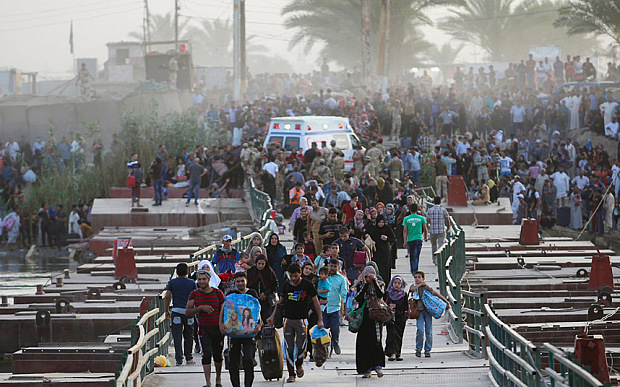

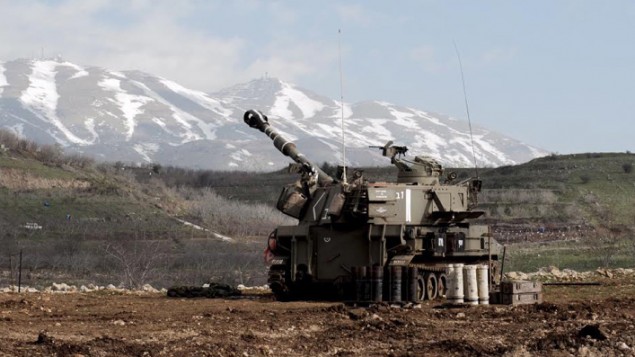







 anneinpt
 artaxes
 danmillerinpanama
 davidking1530
 Peter Hofman
 Joseph Wouk
 Peter
Peter Louisiana Steve
 WarSclerotic
Recent Comments