Archive for May 30, 2015

Behind the Lines: Hezbollah – Born in Lebanon, dying in Syria?

May 30, 2015

Behind the Lines: Hezbollah – Born in Lebanon, dying in Syria? Jerusalem PostJonathan Spyer, May 30, 2015

(Please see also, Iran weighs turning Hizballah’s anti-Israel missiles against ISIS to save Damascus and Baghdad. — – DM)

Hezbolla1Hassan Nasrallah talks to his Lebanese and Yemeni supporters via a giant screen during a speech against US-Saudi aggression in Yemen, in Beirut’s southern suburbs on April 17.. (photo credit:REUTERS)

With the minority communities that formed the core of Assad’s support no longer willing or able to supply him with the required manpower, the burden looks set to fall yet further onto the shoulders of Assad’s Lebanese friends.

What this is likely to mean for Hezbollah is that it will be called on to deploy further and deeper into Syria than has previously been the case.

The Israeli assessment is that with its hands full in Syria, Hezbollah will be unlikely to seek renewed confrontation with Israel.

**********************

The latest reports from the Qalamoun mountain range in western Syria suggest that Hezbollah is pushing back the jihadis of Jabhat al-Nusra and Islamic State.

The movement claims to have taken 300 square kilometers from the Sunni rebels.

The broader picture for the Shi’ite Islamists that dominate Lebanon, however, is less rosy.

The Iran-led alliance of which Hezbollah is a part is better-organized and more effectively commanded than its Sunni rivals. The coalition’s ability to marshal its resources in a centralized and effective way is what has enabled it to preserve the Assad regime in Syria until now.

When President Bashar Assad was in trouble in late 2012, an increased Hezbollah mobilization into Syria and the creation by Iran of new, paramilitary formations for the regime recruited from minority communities was enough to turn the tide of war back against the rebels by mid-2013.

Now, however, the numerical advantage of the Sunnis in Syria is once more reversing the direction of the war.

With the minority communities that formed the core of Assad’s support no longer willing or able to supply him with the required manpower, the burden looks set to fall yet further onto the shoulders of Assad’s Lebanese friends.

What this is likely to mean for Hezbollah is that it will be called on to deploy further and deeper into Syria than has previously been the case.

In the past, its involvement was largely confined to areas of particular importance to the movement itself. Hezbollah fought to keep the rebels away from the Lebanese border, and to secure the highways between the western coastal areas and Damascus.

The movement’s conquest of the border town of Qusair in June 2013, for example, formed a pivotal moment in the recovery of the regime’s fortunes at that time.

But now, Hezbollah cannot assume that other pro-regime elements will hold back the rebels in areas beyond the Syria-Lebanese frontier.

This means that the limited achievement in Qalamoun will prove Pyrrhic, unless the regime’s interest can be protected further afield.

Hezbollah looks set to be drawn further and deeper into the Syrian quagmire.

Movement Secretary-General Hassan Nasrallah acknowledged this prospect in his speech last Sunday, marking 15 years since Israel’s withdrawal from southern Lebanon.

In the talk, Nasrallah broadened the definition of Hezbollah’s engagement in Syria.

Once, the involvement was expressed in limited sectarian terms (the need to protect the tomb of Sayyida Zeinab in Damascus from desecration).

This justification then gave way to the claimed need to cross the border precisely so as to seal war-torn Syria off from Lebanon and keep the Sunni takfiris (Muslims who accuse other Muslims of apostasy) at bay.

On Sunday, Nasrallah struck an altogether more ambitious tone. Hezbollah, he said, was fighting alongside its “Syrian brothers, alongside the army and the people and the popular resistance in Damascus and Aleppo and Deir al-Zor and Qusair and Hasakeh and Idlib. We are present today in many places, and we will be present in all the places in Syria that this battle requires.”

The list of locations includes areas in Syria’s remote north and east, many hundreds of kilometers from Lebanon (Hasakeh, Deir al-Zor), alongside regions previously seen as locations for the group’s involvement.

Nasrallah painted the threat of Islamic State in apocalyptic terms, describing the danger represented by the group as one “unprecedented in history, which targets humanity itself.”

This language fairly clearly appears to be preparing the ground for a larger and deeper deployment of Hezbollah fighters into Syria. Such a deployment will inevitably come at a cost to the movement; only the starkest and most urgent threats of the kind Nasrallah is now invoking could be used to justify it to Hezbollah’s own public.

The problem from Hezbollah’s point of view is that it too does not have inexhaustible sources of manpower.

The movement has lost, according to regional media reports, around 1,000 fighters in Syria since the beginning of its deployment there. At any given time, around 5,000 Hezbollah men are inside the country, with a fairly rapid rotation of manpower. Meanwhile, Hezbollah’s entire force is thought to number around 20,000 fighters.

Faced with a task of strategic magnitude and ever-growing dimensions in Syria, there are indications the movement is being forced to cast its net wider in its search for manpower.

A recent report by Myra Abdullah on the Now Lebanon website (associated with anti-Hezbollah elements in Lebanon) depicted the party offering financial inducements to youths from impoverished areas in the Lebanese Bekaa, in return for their signing up to fight for Hezbollah in Syria.

Now Lebanon quoted sums ranging from $500 to $2,000 as being offered to these young men in return for their enlistment.

Earlier this month, Hezbollah media eulogized a 15-yearold youth, Mashhur Shams al-Din, who was reported as having died while performing his “jihadi duties” (the term usually used when the movement’s men are killed in Syria).

All this suggests that Hezbollah understands a formidable task lies before it, and that it is preparing its resources and public opinion for the performance of this task.

As this takes place, Hezbollah seems keen to remind its supporters and the Lebanese public of the laurels it once wore in the days when it fought Israel.

The pro-Hezbollah newspaper As-Safir recently gained exclusive access to elements of the extensive infrastructure the movement has constructed south of the Litani River since 2006. The movement’s Al-Manar TV station ran an (apparently doctored) piece of footage this week purporting to show Hezbollah supporters filming a Merkava tank at Mount Dov. Nasrallah, in his speech, also sought to invoke the Israeli enemy, declaring Islamic State was “as evil” as Israel.

The Israeli assessment is that with its hands full in Syria, Hezbollah will be unlikely to seek renewed confrontation with Israel.

It is worth noting, nevertheless, that a series of public statements in recent weeks from former and serving Israeli security officials have delivered a similar message regarding the scope and depth of the Israeli response, should a new war between Hezbollah and Israel erupt.

Israel Air Force commander Maj.-Gen. Amir Eshel, former IAF and Military Intelligence head Maj.-Gen. (res.) Amos Yadlin, former national security adviser Maj.-Gen. (res.) Giora Eiland and other officials speaking off the record expressed themselves similarly in this regard.

Hezbollah plainly has little choice regarding its deepening involvement in Syria, Nasrallah’s exhortations notwithstanding.

The organization is part of a formidable, if now somewhat overstretched regional alliance, led by Iran.

This alliance regards the preservation of the Assad regime’s rule over at least part of Syria as a matter of primary strategic importance.

Hezbollah and the Shi’ites it is now recruiting are tools toward this end. It would be quite mistaken to underestimate the efficacy of the movement; it is gearing up for a mighty task, which it intends to achieve. Certainly, many more Hezbollah men will lose their lives before the fighting in Syria ends, however it eventually does end.

Given the stated ambitions of the movement regarding Israel and the Jews, it is fair to say this fact will be causing few cries of anguish south of the border.
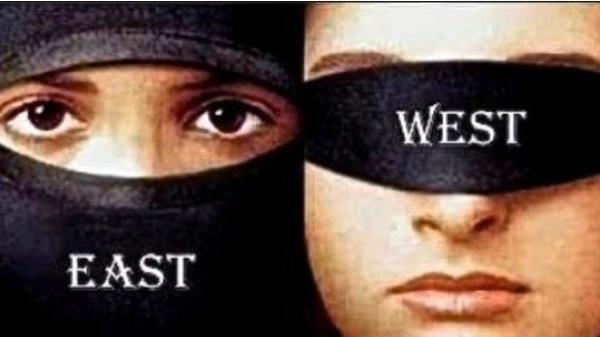
Cartoon of the day

May 30, 2015

H/t The Last Refuge

political-correctness-east-west


Iran rejects site inspections in nuclear deal

May 30, 2015

Iran rejects site inspections in nuclear deal | The Times of Israel.

As diplomats meet, Tehran’s chief negotiator says interviewing scientists, military base visits ‘completely out of the question’

May 30, 2015, 3:23 pm
Iranian Deputy Foreign Minister Abbas Araqchi (YouTube screen capture/Channel 4 News)

Iranian Deputy Foreign Minister Abbas Araqchi (YouTube screen capture/Channel 4 News)

Iran said Saturday it would be “out of the question” for the UN atomic watchdog to question Iranian scientists and inspect military sites as part of a final nuclear agreement with world powers. question and so is inspection of military sites,” senior Iranian negotiator Abbas Araqchi told state television.

The head of the UN’s atomic watchdog Yukiya Amano told AFP in an interview this week that if Iran signs a nuclear deal with world powers it will have to accept inspections of its military sites.

Araqchi’s comments come as Iran’s Foreign Minister Mohammad Javad Zarif and his US counterpart John Kerry were holding crucial talks in Geneva to try and hammer out a historic nuclear deal ahead of a June 30 deadline.

Iran’s supreme leader Ayatollah Ali Khamenei last week ruled out allowing nuclear inspectors to visit military sites or the questioning of scientists.

And Zarif has said the Additional Protocol of the Nuclear Non-Proliferation Treaty which Iran has accepted allows “some access” but not inspections of military sites.

“Anyway we are continuing our negotiations in the framework of procedures predicted by the Additional Protocol. There isn’t and hasn’t been any agreement yet,” said Araqchi.

“One of the questions we are discussing is how the Additional Protocol should be implemented,” he said.

The protocol allows for snap inspections of Iran’s nuclear facilities, and if required, of its military sites. But Iran insists that such access should be regulated and must be justified.

French Foreign Minister Laurent Fabius said Wednesday that France would oppose a nuclear deal with Iran if it did not allow inspections of military sites.

French Foreign Minister Laurent Fabius at the Maison des Océans in Paris, March 17, 2015. (photo credit: AFP/KENZO TRIBOUILLARD)

An agreement “will not be accepted by France if it is not clear that verifications can be made at all Iranian facilities, including military sites,” Fabius told parliament.

Kerry and Zarif arrived simultaneously Saturday on the first floor of a leading Geneva hotel in opposite elevators and greeted each other with smiles and a handshake.

They chatted as they walked together along the corridor to the meeting room on the same floor.

Asked by a journalist, whether they expected to meet the nuclear negotiating deadline, Zarif smiled and said: “We will try.” Kerry did not respond.

After an interim accord hammered out in Geneva in November 2013, Washington and Tehran are grappling with the final details of the ground-breaking agreement that would see Iran curtail its nuclear ambitions in return for a lifting of crippling international sanctions.

World powers believe they have secured Iran’s acquiescence to a combination of nuclear restrictions that would fulfill their biggest goal: keeping Iran at least a year away from bomb-making capability for at least a decade. But they are less clear about how they’ll ensure Iran fully adheres to any agreement.

The US says access to military sites must be guaranteed or there will be no final deal. A report Friday by the UN nuclear agency declared work essentially stalled on its multiyear probe of Iran’s past activities.

The Iranians aren’t fully satisfied, either.

The unresolved issues include the pace at which the United States and other countries will provide Iran relief from international sanctions — Tehran’s biggest demand — and how to “snap back” punitive measures into place if the Iranians are caught cheating.

President Barack Obama has used the “snapback” mechanism as a main defense of the proposed pact from sharp criticism from Congress and some American allies.

And exactly how rapidly the sanctions on Iran’s financial, oil and commercial sectors would come off in the first place lingers as a sore point between Washington and Tehran.

Speaking ahead of Kerry’s talks with Zarif, senior State Department officials described Iranian transparency and access, and questions about sanctions, as the toughest matters remaining.

They cited “difficult weeks” since the April 2 framework reached in Lausanne, Switzerland, but said diplomats and technical experts are getting back on a “smooth path.”

Israel has come out as a fierce opponent of the emerging deal, with Prime Minister Benjamin Netanyahu warning that the agreement would pave the way for Iran to acquire nuclear arms.

Prime Minister Benjamin Netanyahu leads the weekly cabinet meeting at his office in Jerusalem on May 26, 2015. (Marc Israel Sellem/FLASH90)

“It is still not too late to retract the plan,” he said earlier this month. “We oppose this deal and we are not the only ones. It is both necessary and possible to achieve a better deal because extremists cannot be allowed to achieve their aims.”

Arab and largely Sunni Muslim states of the Gulf fear a nuclear deal could be a harbinger of closer US ties with their Shiite arch-foe Iran, a country they also see as fueling conflicts in Yemen, Syria and Iraq.

US President Barack Obama tried to reassure America’s Gulf allies at a Camp David summit earlier in the month that engaging with Iran would not come at their expense.

Iran weighs turning Hizballah’s anti-Israel missiles against ISIS to save Damascus and Baghdad

May 30, 2015

Iran weighs turning Hizballah’s anti-Israel missiles against ISIS to save Damascus and Baghdad, DEBKAfile, May 30, 2015

(But only about 1,000 of the claimed 80,000.– DM)

Hezbollahs_missile_5.15A Hizballah missile

Hizballah’s General Secretary Hassan Nasrallah frequently brags that his 80,000 missiles can reach any point in Israel. He may have to compromise on this. His masters in Tehran are casting about urgently for ways to save the Assad regime in Damascus and halt the Islamic State’s’ inexorable advance on Baghdad and the Shiite shrine city of Karbala. According to DEBKAfile’s Gulf sources, Iran is eyeing the re-allocation of the roughly 1,000 long-range rockets in Hizballah’s store for warding off these calamities.

Some would be fired from their pads in Lebanon, exposing that country to retaliation, after Beirut rebuffed Hizballah’s demand for the Lebanese army to join in the fight for Assad.

Iran has not so far approved the plan. But if it does go through, Iranian spy drones operating over the war zones would feed with targeting data on ISIS and rebel positions and movements to the Hizballah rocket crews manning the mobile batteries of Fajr-5s – range 400-600 km; Zelzal-2s – range 500 km; Fateh-110s -range 800 km; and Shaheen 2s – 800-900 km.

Discussions in Tehran on this option took on new urgency Thursday, May 28, when White House spokesman Josh Earnest declared that the United States “would not be responsible for securing the security situation in Iraq. Our strategy is to support the Iraqi security forces… back them on the battlefield with coalition military air power as they take the fight to ISIS in their own country,” he said.

Tehran took this as confirmation that the US was quitting the war on the Islamic State in Iraq although the Obama administration’s decision was coupled with a free hand for the Baghdad government to do whatever it must to deal with the peril, including calling on external forces for assistance in defending the country.

In the Iraqi arena, Iran has thrown into the fray surrogate Shiite militias grouped under “The Popular Mobilization Committee.” It is led by Abu Mahdi al-Muhandis, who turns out to be an Iranian, not an Iraqi, and working under cover as the deputy of the Al Qods Brigades Commander Gen. Qassem Soleimani.

This grouping is too shady for President Barack Obama to accept as worthy of US air support. Therefore, the entire anti-ISIS campaign has been dumped in Iran’s lap. Loath to expose its own air force planes to the danger of being shot down over Iraq, Iran is looking at the option of filling the gap with heavy missiles.

In the Syrian arena, Tehran is under extreme pressure:

1. The Assad regime can’t last much longer under fierce battering from the rebel Nusra Front, freshly armed and funded with massive assistance from Saudi Arabia, Qatar and Turkey. To disguise this group’s affiliation with al Qaeda, the Saudis have set up a new outfit called “The Muslim Army of Conquest.” In a few days it was joined by 3,000 Nusra adherents.

2.  The Syrian army has lost heart under this assault and many of its units are fleeing the battlefield rather than fighting, with the result that Bashar Assad is losing one piece of territory after another in all his war sectors. Soon, he will be left without enough troops for defending Damascus.

3.  Although Hizballah’s leaders proclaim their determination to fight for Assad in every part of Syria, the fact is that the Shiite group is too stretched to support a wide-ranging conflict in Syria and defend its own home base in Lebanon at one and the same time.

4. Tehran is also considering rushing through a defense pact with Damascus to enable Assad to call on Iranian troops to come over and rescue him.

5. Saudi Arabia has singled out leaders of top Hizballah leaders for sanctions. This week, Riyadh impounded the assets and accounts of Khalil Harb and Muhammad Qabalan in Gulf banks. This act was taken in Tehran as a major provocation.

The names don’t mean much outside a small circle in the region. However, Harb is Hizballah’s supreme chief of staff whose military standing is comparable to that of the Iranian Revolutionary Guards commander Gen. Ali Jaafary, while Qabalan is the organization’s senior intelligence and operations officer and responsible for orchestrating Hizballah’s terrorist hits outside Lebanon.

The Iranians are not about to let this affront go by without payback, which could come in the form of missile attacks by Hizballah on Saudi-backed groups in Syria.

Marco Rubio: Obama’s strategy for the Middle East has backfired – The Washington Post

May 30, 2015

Marco Rubio: Obama’s strategy for the Middle East has backfired – The Washington Post.


Sen. Marco Rubio (R-Fla.) (Michael Reynolds/EPA)

May 29 at 9:02 PM

Marco Rubio, a Republican from Florida, is a member of the U.S. Senate.

The fall of the Iraqi city of Ramadi to the Islamic State and recent gains by the group in Syria are the latest signs that President Obama’s strategy to defeat this brutal terrorist group is failing. But the problem is far bigger than that. The president’s entire approach to the Middle East has backfired.

The Middle East is more dangerous and unstable than when Obama came into office — a time when Iraq and Syria were more stable, the Iranian nuclear program was considerably less advanced and the Islamic State did not yet exist.

Much of this instability is a result of Obama’s disengagement from the region, best symbolized by the withdrawal of all U.S. troops from Iraq in 2011. The vacuum created by America’s pullback has been filled by bad actors, including terrorist extremists, both Sunni and Shiite, who have flourished in the absence of U.S. leadership.

On one side are the radical Sunni extremists of al-Qaeda, the Islamic State and affiliated groups. The Islamic State has capitalized on the political grievances many Iraqi Sunnis have with their sectarian Shiite leaders, as well as the divisions between Syrian Sunnis and the brutal Alawite-dominated Assad regime, which is supported by Iran. The Islamic State’s black banner is now spreading as far afield as Libya and Afghanistan.

On the other side is Iran, a country run by a militant Shiite clerical regime that is the world’s leading sponsor of terrorism and has as its primary goal regional domination and the export of the Iranian revolution. As the Obama administration has focused on negotiating a nuclear deal with Iran, Tehran has exploited U.S. weakness and expanded its reach into Syria, Iraq and Yemen, among other countries.

To begin to deal with the challenges we face, we need a reassertion of U.S. leadership in the region and specifically in the fight against the Islamic State. This should include the following:

Broaden the coalition. We should build and lead a coalition of our regional partners that will work to defeat the Islamic State. In addition to the Kurds and Sunni tribes, this should include the Persian Gulf countries and those such as Egypt, Jordan and Turkey, many of which realize that this fight is not just a military one but also an ideological battle for the heart and soul of Islam. The current coalition is suffering because our allies and friends doubt our commitment to this effort.

Increase U.S. involvement in the fight. As part of this multinational effort, the president should increase the number of U.S. forces in Iraq and remove restrictions on their ability to embed with the Iraqi units they are training and advising. Having the proper number of U.S. forces in Iraq is crucial for both weaning the Iraqi government off its reliance on Iran for military assistance and moving toward a unified and inclusive Iraq.

We also need to increase the frequency and pace of airstrikes and Special Operations raids against the Islamic State — and ensure that we are assisting a wide range of local actors, especially Sunni tribes — not just the central government in Baghdad, which has been overly reliant on Shiite militias controlled by Iran. We need to make clear to Iran that any attacks by its proxies in Iraq against U.S. personnel will result in a response from the United States.

Not cut a bad deal with Iran. Among the reasons that I have been so vocally opposed to the outline of the Iranian deal announced by Obama is that, in addition to leaving Iran as a nuclear threshold state, we will also be providing the regime with billions of dollars of sanctions relief to fuel its export of terrorism and further its regional expansionism, including its efforts to undermine Iraq’s stability.

Prevent the Islamic State’s expansion beyond Iraq and Syria. We need to act more quickly to prevent the emergence of other failed and failing states that are fertile territory for the Islamic State and other terrorist groups. Addressing instability before countries devolve into anarchy is essential. Libya is a prime example.

Because of the Obama administration’s “lead from behind” approach to the effort to topple Moammar Gaddafi, Libya is a growing haven for the Islamic State, where the group is able to freely control large swaths of territory for training and recruitment for the fight in Iraq and Syria, just as al-Qaeda once used Afghanistan for its operations against the United States.

Despite the enormousness of the challenge, we can still defeat the enemies that we face in a Middle East that remains crucial to U.S. national interests and security. Doing so will require urgent action and leadership from President Obama before our options get even worse.


