Archive for March 2015

Iranians Chant “Death to America” While Negotiations Continue

March 22, 2015

Iranians Chant “Death to America” While Negotiations Continue, The Clarion Project, March 22, 2015

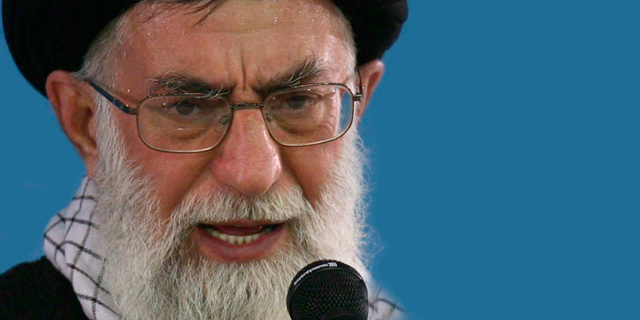
Iran-Ayatollah-Khamenei-IP_0Supreme Leader of the Islamic Republic of Iran Ayatollah Khamenei (Photo: © Reuters)

Ayatollah Khamenei, the Supreme Leader of Iran, presided over chants of “Death to America” in his Nowruz address to the people of Iran.

Nowruz is the Persian New Year and the Supreme Leader traditionally gives on address to mark the festival.

As part of his Nowruz address, Khamenei responded to President Obama’s Nowruz video message, in which he spoke directly to the Iranian people and called on them to support a nuclear deal.

Ayatollah Khamenei said that Obama’s Nowruz message was asking Iranians to submit to American demands in exchange for economic relief, couching the negotiations in terms of struggle rather than mutual benefit.

The crowd then broke out in chants of “Death to America” which was repeated multiple times over the course of the hour long speech.


By contrast, Obama’s Nowruz message to the Iranian people said that a nuclear deal would bring a brighter future for the people of Iran and urged them to support the negotiations.


Jerusalem: US ‘reassessment’ threat aims to distract attention from Iran nuke deal

March 22, 2015

Jerusalem: US ‘reassessment’ threat aims to distract attention from Iran nuke deal – Israel News – Jerusalem Post.

Some in Jerusalem viewed White House threats of ‘reassessing’ ties as a way of putting Israel on the defensive, US House Speaker Boehner to visit Israel.

Jerusalem is concerned that Washington’s threat to reassess US policy toward the Middle East diplomatic process is an effort to deflect attention from the Iranian nuclear negotiations as they approach a conclusion, diplomatic sources said Saturday.

Despite a congratulatory phone call from US President Barack Obama to Prime Minister Benjamin Netanyahu Thursday night, and Netanyahu clarifying in several US media interviews since his reelection on Tuesday that he remains committed to the two-state solution, Washington continued to threaten to “reassess” its position on the Mideast diplomatic process over the weekend, even as it continued to pledge continued security support for Israel.

Some in Jerusalem viewed this as a way of putting Israel on the defensive, and perhaps blunting Netanyahu’s criticism of a possible deal with Iran.

Netanyahu’s comment on Monday, the day before the election, that a Palestinian state would not emerge as long as he is prime minister, as well as his Election Day encouragement to his supporters to go to the polls ostensibly because Arab voters were voting en masse, triggered fierce criticism in Washington.

White House spokesman Josh Earnest said at his daily press briefing on Friday  that if Israel was no longer committed to a two-state solution then that would impact on US policy decisions at the UN, a hint that the US may not protect Israel down the line from what Jerusalem views as problematic UN Security Council resolutions calling for two states.  Any re-evaluation of policy, Earnest stressed, would “not include a reassessment of our strong and close security cooperation with Israel,” which he said “will endure.”

Obama, in his first public comments on the election in an interview with the Huffington Post on Friday said of Netanyahu’s comment regarding a Palestinian state that “We take him at his word when he said that it wouldn’t happen during his prime ministership, and so that’s why we’ve got to evaluate what other options are available to make sure that we don’t see a chaotic situation in the region.”

Regarding Netanyahu’s comment about the Arab voters, Obama said that in his conversation with the prime minister “we indicated that that kind of rhetoric was contrary to what is the best of Israel’s traditions. “

Obama said that “although Israel was founded based on the historic Jewish homeland and the need to have a Jewish homeland, Israeli democracy has been premised on everybody in the country being treated equally and fairly. And I think that that is what’s best about Israeli democracy. If that is lost, then I think that not only does it give ammunition to folks who don’t believe in a Jewish state, but it also I think starts to erode the name of democracy in the country.”

Earnest said that if Israel were no longer committed to a two-state solution, this would impact US policy decisions at the UN. This was a clear hint that the US may not protect Israel down the line from what Jerusalem views as problematic UN Security Council resolutions calling for two states. Any re-evaluation of policy, Earnest stressed, would “not include a reassessment of our strong and close security cooperation with Israel,” which he said “will endure.”

“But, now that our closest ally in the region, and one of the two parties who would be responsible for negotiating a two-state solution, has withdrawn from their commitments to that ideal, it means that we need to rethink the kinds of policy decisions that we’re going to have to make going forward,” he said.

Asked why the White House does not believe Netanyahu when he said in post-election interviews that he was still committed to a two-state solution, Earnest said because “he said earlier this week that he wasn’t.” The spokesman did not give a direct reply when reminded that Obama has reversed himself on policy matters over the years.

While the PMO did not issue a read-out of the call from the president, which came four days earlier than it did in 2013, when Obama waited six days to congratulate Netanyahu, the White House did issue a statement that said Obama “emphasized the importance the United States places on our close military, intelligence and security cooperation with Israel, which reflects the deep and abiding partnership between both countries.”

The statement said the two men agreed to continue consultations on a range of regional issues, “including the Israeli-Palestinian conflict,” and that Obama reaffirmed America’s “long-standing commitment to a two-state solution that results in a secure Israel alongside a sovereign and viable Palestine.”

The statement said that, regarding Iran, Obama reiterated that Washington is focused on “reaching a comprehensive deal with Iran that prevents Iran from acquiring a nuclear weapon and verifiably assures the international community of the exclusively peaceful nature of its nuclear program.”

In a related development, Netanyahu on Saturday gave his full backing to Israel’s ambassador to the US, Ron Dermer, amid whispers in Washington that replacing Dermer may be necessary to restore a better working relationship with the Obama administration.

A statement put out Saturday by the Prime Minister’s Office said Netanyahu made clear at the AIPAC conference earlier in March that he “couldn’t be prouder to have Ron Dermer representing Israel in Washington.”

“That is as true today as it was then,” the statement read. “The prime minister has full confidence in Ambassador Dermer, whose service to the people and State of Israel continue to reflect his extraordinary dedication, professionalism, and passion.”

The statement came after Earnest was asked at his daily briefing whether work to repair the relationship could take place with Dermer as ambassador.

Earnest said the decision about ambassadorial appointments “is the responsibility of the leaders of the country. And so, obviously, Prime Minister Netanyahu will decide who is the person who is best positioned to represent his country in the United States.”

Last week, The New York Times quoted administration officials as saying it would “improve the atmosphere” if Dermer stepped down, though it would not change fundamental policy differences between Washington and Jerusalem.

Dermer, viewed by some administration officials since his appointment in September 2013 as too close to the Republicans, sparked anger in the White House because it perceived him as being responsible for working with House Speaker John Boehner to invite Netanyahu to address Congress on Iran.

Boehner, meanwhile, is expected to visit Israel before the end of the month. One government official, asked about the wisdom of Boehner – a stalwart Obama political adversary – coming now at a point of great friction between Netanyahu and Obama, said “If the speaker of the House of Representatives wants to come to Israel, he is a welcome guest.”

Earnest was asked about the Boehner visit in his press briefing and said that it is “certainly not uncommon for members of Congress in both parties to travel to Israel,” adding that “it doesn’t come as a surprise to anybody here.”

France balks at the US-Iranian deal on five counts – not least with an eye on its Gulf ties

March 21, 2015

France balks at the US-Iranian deal on five counts – not least with an eye on its Gulf ties, DEBKAfile, March 21, 2015

hollande_obama-IranObama and Hollande fail to meet on nuclear Iran.

Why does Washington respect France’s right to balk at its nuclear policy but disallows prime minister Binyamin Netanyahu’s objections in the name of Israel’s security?

The answer is simple. It is easier to put the squeeze on the Israeli prime minister than the president of France or Gulf rulers. Obama has hit on the presentation of Netanyahu’s hawkish attitude as the main hurdle in the way of a nuclear deal as a useful tactic for dealing with the spreading opposition to the deal in Europe and the Persian Gulf.

******************

President Barack Obama failed to shift French President France Hollande from his objections to the nuclear accord taking shape between the US and Iran in the call he put through to the Elysée Friday night, March 30 [sic]. US Secretary of State John Kerry fared no better Saturday, when he met British, French and German Foreign ministers in London for a briefing on the talks’ progress intended to line the Europeans up with the American position. He then found, according to DEBKAfile’s sources, that France was not alone; Germany too balked at parts of the deal in the making.

The French are demanding changes in five main points agreed between Kerry and Iranian Foreign Minister Javad Zarif before the Iranians quit the talks Friday:

They insist that –

  • Iran can’t be allowed to retain all the 6,500 centrifuges (for enriching uranium) conceded by the Americans. This figure must be reduced.
  • Similarly, the stocks of enriched uranium accepted by the US to remain in Iranian hands are too large.
  • France insists on a longer period of restrictions on Iran’s nuclear work before sanctions are eased. It is pushing for a longer moratorium – 25 years rather than the 15 years offered by the Obama administration – and guarantees at every stage.
  • The main sticking point however is France’s insistence that UN sanctions stay in place until Iran fully explains the evidence that has raised suspicions of past development work on a nuclear warhead design. The Iranians counter that they could never satisfy the French condition, because they would never be able to prove a negative and disprove evidence of a weapons program that is forged.There is no chance of Tehran ever admitting to working on a nuclear warhead – or allow US inspectors access to suspected testing sites – because that would belie supreme leader Ayatollah Ali Khamenei’s solemn contention that Iran’s nuclear program is solely for peaceful purposes and always has been.

DEBKAfile’s Gulf sources disclose that the tough French bargaining position in the nuclear stems partly from its intense ties with Saudi Arabia and other Gulf nations, including the United Arab Emirates.

France maintains military bases in the Gulf, including air and unit units in Saudi Arabia and the UAE. The emirates moreover have become the most profitable market for the French munitions industry.

Riyadh and Abu Dhabi have been pushing Paris hard not to sign off on the text shaping up between the Obama administration in Tehran because they believe it would place their national security at grave risk.

This raises an interesting question: Why does Washington respect France’s right to balk at its nuclear policy but disallows prime minister Binyamin Netanyahu’s objections in the name of Israel’s security?

The answer is simple. It is easier to put the squeeze on the Israeli prime minister than the president of France or Gulf rulers. Obama has hit on the presentation of Netanyahu’s hawkish attitude as the main hurdle in the way of a nuclear deal as a useful tactic for dealing with the spreading opposition to the deal in Europe and the Persian Gulf.

Why Islam Needs a Reformation

March 21, 2015

Why Islam Needs a Reformation, Wall Street Journal, Ayaan Hirsi Ali, March 20, 2015

(What are the chances of such a reformation over the next hundred years or so? — DM)
bn-hm855_cover_m_20150319160506A man prays during the Muslim festival of Eid al-Adha, or the Festival of Sacrifice, at Jama Masjid in New Delhi on Oct. 6, 2014. Eid al-Adha marks the end of the Hajj, the annual pilgrimage to Mecca. PHOTO: AGENCE FRANCE-PRESSE/GETTY IMAGES

“Islam’s borders are bloody,” wrote the late political scientist Samuel Huntington in 1996, “and so are its innards.” Nearly 20 years later, Huntington looks more right than ever before. According to the International Institute for Strategic Studies, at least 70% of all the fatalities in armed conflicts around the world last year were in wars involving Muslims. In 2013, there were nearly 12,000 terrorist attacks world-wide. The lion’s share were in Muslim-majority countries, and many of the others were carried out by Muslims. By far the most numerous victims of Muslim violence—including executions and lynchings not captured in these statistics—are Muslims themselves.

Not all of this violence is explicitly motivated by religion, but a great deal of it is. I believe that it is foolish to insist, as Western leaders habitually do, that the violent acts committed in the name of Islam can somehow be divorced from the religion itself. For more than a decade, my message has been simple: Islam is not a religion of peace.

When I assert this, I do not mean that Islamic belief makes all Muslims violent. This is manifestly not the case: There are many millions of peaceful Muslims in the world. What I do say is that the call to violence and the justification for it are explicitly stated in the sacred texts of Islam. Moreover, this theologically sanctioned violence is there to be activated by any number of offenses, including but not limited to apostasy, adultery, blasphemy and even something as vague as threats to family honor or to the honor of Islam itself.

It is not just al Qaeda and Islamic State that show the violent face of Islamic faith and practice. It is Pakistan, where any statement critical of the Prophet or Islam is labeled as blasphemy and punishable by death. It is Saudi Arabia, where churches and synagogues are outlawed and where beheadings are a legitimate form of punishment. It is Iran, where stoning is an acceptable punishment and homosexuals are hanged for their “crime.”

As I see it, the fundamental problem is that the majority of otherwise peaceful and law-abiding Muslims are unwilling to acknowledge, much less to repudiate, the theological warrant for intolerance and violence embedded in their own religious texts. It simply will not do for Muslims to claim that their religion has been “hijacked” by extremists. The killers of Islamic State and Nigeria’s Boko Haram cite the same religious texts that every other Muslim in the world considers sacrosanct.

Instead of letting Islam off the hook with bland clichés about the religion of peace, we in the West need to challenge and debate the very substance of Islamic thought and practice. We need to hold Islam accountable for the acts of its most violent adherents and to demand that it reform or disavow the key beliefs that are used to justify those acts.

As it turns out, the West has some experience with this sort of reformist project. It is precisely what took place in Judaism and Christianity over the centuries, as both traditions gradually consigned the violent passages of their own sacred texts to the past. Many parts of the Bible and the Talmud reflect patriarchal norms, and both also contain many stories of harsh human and divine retribution. As President Barack Obama said in remarks at the National Prayer Breakfast last month, “Remember that during the Crusades and the Inquisition, people committed terrible deeds in the name of Christ.”
bn-hm858_cover_m_20150319160800Islamic State militants marching through Raqqa, Syria, a stronghold of the Sunni extremist group, in an undated file image posted on a militant website on Jan. 14, 2014. PHOTO: ASSOCIATED PRESS

Yet today, because their faiths went through a long, meaningful process of Reformation and Enlightenment, the vast majority of Jews and Christians have come to dismiss religious scripture that urges intolerance or violence. There are literalist fringes in both religions, but they are true fringes. Regrettably, in Islam, it is the other way around: It is those seeking religious reform who are the fringe element.

Any serious discussion of Islam must begin with its core creed, which is based on the Quran (the words said to have been revealed by the Angel Gabriel to the Prophet Muhammad) and the hadith (the accompanying works that detail Muhammad’s life and words). Despite some sectarian differences, this creed unites all Muslims. All, without exception, know by heart these words: “I bear witness that there is no God but Allah; and Muhammad is His messenger.” This is the Shahada, the Muslim profession of faith.

The Shahada might seem to be a declaration of belief no different from any other. But the reality is that the Shahada is both a religious and a political symbol.

In the early days of Islam, when Muhammad was going from door to door in Mecca trying to persuade the polytheists to abandon their idols of worship, he was inviting them to accept that there was no god but Allah and that he was Allah’s messenger.

After 10 years of trying this kind of persuasion, however, he and his small band of believers went to Medina, and from that moment, Muhammad’s mission took on a political dimension. Unbelievers were still invited to submit to Allah, but after Medina, they were attacked if they refused. If defeated, they were given the option to convert or to die. (Jews and Christians could retain their faith if they submitted to paying a special tax.)

No symbol represents the soul of Islam more than the Shahada. But today there is a contest within Islam for the ownership of that symbol. Who owns the Shahada? Is it those Muslims who want to emphasize Muhammad’s years in Mecca or those who are inspired by his conquests after Medina? On this basis, I believe that we can distinguish three different groups of Muslims.

The first group is the most problematic. These are the fundamentalists who, when they say the Shahada, mean: “We must live by the strict letter of our creed.” They envision a regime based on Shariah, Islamic religious law. They argue for an Islam largely or completely unchanged from its original seventh-century version. What is more, they take it as a requirement of their faith that they impose it on everyone else.

I shall call them Medina Muslims, in that they see the forcible imposition of Shariah as their religious duty. They aim not just to obey Muhammad’s teaching but also to emulate his warlike conduct after his move to Medina. Even if they do not themselves engage in violence, they do not hesitate to condone it.

It is Medina Muslims who call Jews and Christians “pigs and monkeys.” It is Medina Muslims who prescribe death for the crime of apostasy, death by stoning for adultery and hanging for homosexuality. It is Medina Muslims who put women in burqas and beat them if they leave their homes alone or if they are improperly veiled.
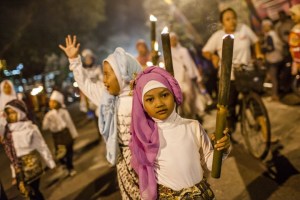
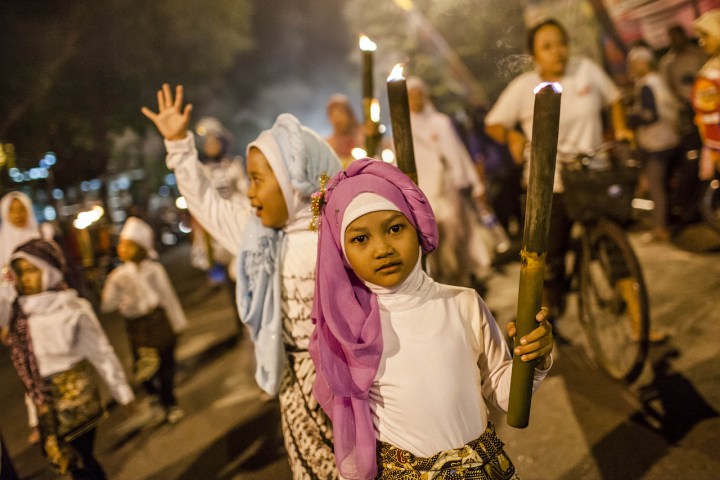
bn-hm863_cover_m_20150319161118Muslim children carry torches during a parade before Eid al-Fitr, at the end of the holy month of Ramadan, on July 27, 2014, in Yogyakarta, Indonesia. PHOTO: GETTY IMAGES

The second group—and the clear majority throughout the Muslim world—consists of Muslims who are loyal to the core creed and worship devoutly but are not inclined to practice violence. I call them Mecca Muslims. Like devout Christians or Jews who attend religious services every day and abide by religious rules in what they eat and wear, Mecca Muslims focus on religious observance. I was born in Somalia and raised as a Mecca Muslim. So were the majority of Muslims from Casablanca to Jakarta.

Yet the Mecca Muslims have a problem: Their religious beliefs exist in an uneasy tension with modernity—the complex of economic, cultural and political innovations that not only reshaped the Western world but also dramatically transformed the developing world as the West exported it. The rational, secular and individualistic values of modernity are fundamentally corrosive of traditional societies, especially hierarchies based on gender, age and inherited status.

Trapped between two worlds of belief and experience, these Muslims are engaged in a daily struggle to adhere to Islam in the context of a society that challenges their values and beliefs at every turn. Many are able to resolve this tension only by withdrawing into self-enclosed (and increasingly self-governing) enclaves. This is called cocooning, a practice whereby Muslim immigrants attempt to wall off outside influences, permitting only an Islamic education for their children and disengaging from the wider non-Muslim community.

It is my hope to engage this second group of Muslims—those closer to Mecca than to Medina—in a dialogue about the meaning and practice of their faith. I recognize that these Muslims are not likely to heed a call for doctrinal reformation from someone they regard as an apostate and infidel. But they may reconsider if I can persuade them to think of me not as an apostate but as a heretic: one of a growing number of people born into Islam who have sought to think critically about the faith we were raised in. It is with this third group—only a few of whom have left Islam altogether—that I would now identify myself.

These are the Muslim dissidents. A few of us have been forced by experience to conclude that we could not continue to be believers; yet we remain deeply engaged in the debate about Islam’s future. The majority of dissidents are reforming believers—among them clerics who have come to realize that their religion must change if its followers are not to be condemned to an interminable cycle of political violence.

How many Muslims belong to each group? Ed Husain of the Council on Foreign Relations estimates that only 3% of the world’s Muslims understand Islam in the militant terms I associate with Muhammad’s time in Medina. But out of well over 1.6 billion believers, or 23% of the globe’s population, that 48 million seems to be more than enough. (I would put the number significantly higher, based on survey data on attitudes toward Shariah in Muslim countries.)

In any case, regardless of the numbers, it is the Medina Muslims who have captured the world’s attention on the airwaves, over social media, in far too many mosques and, of course, on the battlefield.

The Medina Muslims pose a threat not just to non-Muslims. They also undermine the position of those Mecca Muslims attempting to lead a quiet life in their cultural cocoons throughout the Western world. But those under the greatest threat are the dissidents and reformers within Islam, who face ostracism and rejection, who must brave all manner of insults, who must deal with the death threats—or face death itself.

For the world at large, the only viable strategy for containing the threat posed by the Medina Muslims is to side with the dissidents and reformers and to help them to do two things: first, identify and repudiate those parts of Muhammad’s legacy that summon Muslims to intolerance and war, and second, persuade the great majority of believers—the Mecca Muslims—to accept this change.

Islam is at a crossroads. Muslims need to make a conscious decision to confront, debate and ultimately reject the violent elements within their religion. To some extent—not least because of widespread revulsion at the atrocities of Islamic State, al Qaeda and the rest—this process has already begun. But it needs leadership from the dissidents, and they in turn stand no chance without support from the West.

What needs to happen for us to defeat the extremists for good? Economic, political, judicial and military tools have been proposed and some of them deployed. But I believe that these will have little effect unless Islam itself is reformed.

Such a reformation has been called for repeatedly at least since the fall of the Ottoman Empire and the subsequent abolition of the caliphate. But I would like to specify precisely what needs to be reformed.

I have identified five precepts central to Islam that have made it resistant to historical change and adaptation. Only when the harmfulness of these ideas are recognized and they are repudiated will a true Muslim Reformation have been achieved.

Here are the five areas that require amendment:

1. Muhammad’s semi-divine status, along with the literalist reading of the Quran.
Muhammad should not be seen as infallible, let alone as a source of divine writ. He should be seen as a historical figure who united the Arab tribes in a premodern context that cannot be replicated in the 21st century. And although Islam maintains that the Quran is the literal word of Allah, it is, in historical reality, a book that was shaped by human hands. Large parts of the Quran simply reflect the tribal values of the 7th-century Arabian context from which it emerged. The Quran’s eternal spiritual values must be separated from the cultural accidents of the place and time of its birth.

2. The supremacy of life after death.
The appeal of martyrdom will fade only when Muslims assign a greater value to the rewards of this life than to those promised in the hereafter.

3. Shariah, the vast body of religious legislation.
Muslims should learn to put the dynamic, evolving laws made by human beings above those aspects of Shariah that are violent, intolerant or anachronistic.

4. The right of individual Muslims to enforce Islamic law.
There is no room in the modern world for religious police, vigilantes and politically empowered clerics.

5. The imperative to wage jihad, or holy war.
Islam must become a true religion of peace, which means rejecting the imposition of religion by the sword.

I know that this argument will make many Muslims uncomfortable. Some are bound to be offended by my proposed amendments. Others will contend that I am not qualified to discuss these complex issues of theology and law. I am also afraid—genuinely afraid—that it will make a few Muslims even more eager to silence me.

But this is not a work of theology. It is more in the nature of a public intervention in the debate about the future of Islam. The biggest obstacle to change within the Muslim world is precisely its suppression of the sort of critical thinking I am attempting here. If my proposal for reform helps to spark a serious discussion of these issues among Muslims themselves, I will consider it a success.

Let me make two things clear. I do not seek to inspire another war on terror or extremism—violence in the name of Islam cannot be ended by military means alone. Nor am I any sort of “Islamophobe.” At various times, I myself have been all three kinds of Muslim: a fundamentalist, a cocooned believer and a dissident. My journey has gone from Mecca to Medina to Manhattan.

For me, there seemed no way to reconcile my faith with the freedoms I came to the West to embrace. I left the faith, despite the threat of the death penalty prescribed by Shariah for apostates. Future generations of Muslims deserve better, safer options. Muslims should be able to welcome modernity, not be forced to wall themselves off, or live in a state of cognitive dissonance, or lash out in violent rejection.

But it is not only Muslims who would benefit from a reformation of Islam. We in the West have an enormous stake in how the struggle over Islam plays out. We cannot remain on the sidelines, as though the outcome has nothing to do with us. For if the Medina Muslims win and the hope for a Muslim Reformation dies, the rest of the world too will pay an enormous price—not only in blood spilled but also in freedom lost.
Security Challenges of the New Israeli Government

March 21, 2015

Security Challenges of the New Israeli Government, Middle East Forum, Efraim Inbar, March 19, 2015

1111Israel lies at the center of the territorial caliphate envisioned by ISIS – and that’s only it’s second greatest security concern.

The US is racing toward an agreement that will legitimize the nuclear threshold status of Iran

Israel’s main challenge is to maintain its freedom of action, while on a collision course with current American policy.

Israel must prepare for worst-case scenarios, not best-case dreams.


************************

A new Likud-led government will take office in Jerusalem in the upcoming weeks. The government will have to face many security challenges emerging from the turbulent strategic environment.

The most important issue is Iran. The US is racing toward an agreement that will legitimize the nuclear threshold status of Iran. Many key Mideast powers have signaled their displeasure with the nascent accord, as well as their desire to develop uranium enrichment capabilities on par with Iran.

The American attempt to offer a nuclear umbrella to forestall regional nuclear proliferation – which is a strategic nightmare – is doomed to failure. No Arab leader trusts President Obama. Therefore, only a military strike to destroy the Iranian capability to produce fissionable material needed for nuclear bombs can stop nuclear proliferation in the region.

The only country with ‘enough guts’ to do this is Israel. This decision must be taken by the next Israeli government. The timetable for such a strike is not to be determined by additional Iranian progress on the nuclear path, but by the perceptions of regional leaders of Iranian ambitions and power. The expansion of Iranian influence to Iraq and Yemen, in addition to its grip over Syria and Lebanon, has heightened threat perceptions. American willingness to accept a greater Iranian regional role undermines American credibility and underscores the need for Israeli action in the near future.

An Israeli strike is needed to prevent nuclear proliferation and to prevent imperial and Islamist Iran from acquiring hegemony in the Middle East. History indicates that such Israeli actions are not welcomed by American administrations, but are highly appreciated later on. In this case, it is Israel that will have to save the Americans from themselves.

Israel’s main challenge is to maintain its freedom of action, while on a collision course with current American policy. This is not an easy endeavor, but Israel has large reservoirs of goodwill in the US that should allow Israel to act on its cardinal security interests against the will of an unpopular American president.

Despite the fact that some of the Arab armies that posed a threat to Israel have largely disintegrated and the power differential between Israel and its Arab neighbors grows constantly, the Jewish state still faces great hostility from Islamist sub-state armed groups. Hezbollah, Hamas and Islamic Jihad cannot conquer Israel, but have acquired impressive capabilities to cause massive damage to Israel. Large armored formations are still needed to tackle those challenges. In addition, Israel’s active defense missile capabilities must be augmented.

Unfortunately, the IDF is underfunded, which has led to cuts in ground forces and in training for the regular army and its reserves. Whoever will be the new defense minister has the task of securing a much larger, multi-year military budget on which the IDF can definitively plan a sustained force build-up. Israel’s strong economy can definitely sustain larger defense layouts.

Another area that needs attention is the navy. Over 90 percent of Israel’s exports travel via the East Mediterranean. Moreover, this area is rich in energy resources that are vital for Israel’s future prosperity. Yet, the East Mediterranean is increasingly becoming an Islamic lake.

Turkey under Erdogan grows more hostile every month. Syria is an Iranian ally, and its civil war has brought about the rise of Islamist militias of all kinds. Lebanon is largely ruled by Hezbollah – a Shiite radical organization aligned with Iran. Hezbollah occasionally perpetrates attacks against Israel and has threatened to hit Israel’s gas rigs at sea. Hamas, a radical Sunni terrorist group linked to Iran, has taken over Gaza. It has launched thousands of rockets into Israel and staged attacks on Israeli gas installations in the Mediterranean. In Sinai, a plethora of Islamist armed groups are challenging the sovereignty of Egypt and even attacked targets along the Suez Canal. Libya is no longer a real state and the Islamist militias are fighting to carve out areas of influence. In short, we may soon see real piracy and terrorist attacks in the East Mediterranean.

Israel’s responses must include a larger and stronger navy. This is an expensive project that has already started. Hopefully, all budgetary problems will be overcome. Fortunately, some of the vessels needed for this are procured in Germany (not the US), while others can be built in Israel if enough money is allocated.

The strategic landscape of the Middle East is begetting new leaders and new ruling elites. Israel’s intelligence apparatus faces a difficult job in identifying the important players and their modus operandi. Many of the devils Israel knew are no longer in power. This means greater uncertainty and higher chances of surprises. Since Israel cannot prevent all surprises (that is their nature), it must prepare for worst-case scenarios rather than be tempted by best-case, rosy dreams.

Cartoon of the Day

March 20, 2015

Cartoon of the Day
By A.F. Branco Thursday, March 19, 2015 at 5:15pm


(Note the placement of the flags. – LS)

Marco Rubio Delivers Blistering Speech on Obama’s Assault on Israel

March 20, 2015

Marco Rubio Delivers Blistering Speech on Obama’s Assault on Israel, Washington Free Beacon via You Tube, March 19, 2015

(An extensive catalogue of Obama’s relations with Israel. — DM)

Obama’s Unraveling Foreign Policy

March 20, 2015

Obama’s Unraveling Foreign Policy, Front Page Magazine, March 20, 2015

Obama-facepalm-485x350-450x325

Secretary of State John Kerry has long been an admirer of Bashar Assad. He absurdly characterized Assad as “a man who wants change” and advocated the return of Israel’s strategic Golan Heights to the Syrian dictator. Of course, had Israel heeded Kerry’s advice, ISIS, Hezbollah or Iran or perhaps all three would today be swimming in Israel’s Sea of Galilee.  In February 2009, in a sickening display of corrupt morals or lack of scruples, or perhaps both, Kerry was photographed having an intimate dinner with Assad and his wife. In 2011, the year that Assad commenced genocide against his people, he described the autocrat as a “very generous” man.

Kerry hasn’t lost a step since that time. His assessment of regional threats continues to be marred by poor judgment and delusion. On Face the Nation Kerry stated that “we have to negotiate with [Assad].” His State Department quickly backpedaled and tried to clean up the mess by issuing a nonsensical clarification but the very fact that such a statement would be uttered speaks volumes of Kerry’s abject lack of understanding. Imagine if a leader of the Allied command had issued a proclamation of willingness to negotiate with Hitler during World War II. Such a scenario of course would have been unthinkable but in the Obama White House, appeasement and vacillation rule the day.

If that wasn’t bad enough, Kerry astounded analysts when he announced that he had “great respect – great respect – for the religious importance of a fatwa.” The alleged fatwa that he was referencing was purportedly issued by Iran’s “Supreme Leader,” Ayatollah Khamenei, opposing acquisition of nuclear weapons. Kerry has now officially incorporated Islamic fatwas into US foreign policy and is relying on the edicts of a medieval mullah as a cornerstone of his ongoing talks with the Islamic Republic.

Moreover, in an effort to appease the mullahs, the Director of National Intelligence, James Clapper, recently issued a report to the Senate which removed Iran and Hezbollah from its list of terrorism threats. Iran is the world’s premier state sponsor of terrorism and employs proxy militias such as Hezbollah to foment regional instability and expand its hegemony. It has either directly or indirectly through its proxies, committed acts of terrorism on five continents. Yet the report is inexplicably devoid of such references. The only logical conclusion that one can draw is that the administration fears alienating Iran during the nuclear negotiations or alternatively, sees Iran as a positive regional force and a potential ally. Either conclusion is frighteningly surreal and demonstrates with utmost clarity how far removed from reality this administration has become.

But while coddling the mullahs, the administration has been busy at work trying to undermine the region’s only democratic leader. A number of high-level Obama campaign operatives worked relentlessly with a left-wing organization called One Voice and its left-wing Israeli affiliate V-15, to unseat Prime Minister Benjamin Netanyahu. One Voice was also the recipient of a State Department grant of $350,000. Though One Voice and the State Department denied that any money was channeled into the campaign, a US Senate panel has commenced an investigation into possible links between the State Department and efforts to meddle in an overseas election campaign of a long-time ally.

Clearly, One Voice is nervous. Shortly after lawmakers began questioning One Voice’s use of State Department funds, the nonprofit organization filed for a new IRS status that would enable it to engage in political activism. Its current status precludes such activity. It would indeed be interesting to see how quickly the IRS moves to grant One Voice’s application given the way the government agency dragged its heels on 501c3 exemptions for groups perceived to be right-wing or pro-Israel. My guess is that the IRS will move rather quickly on this one.

Despite Obama’s best efforts to publicly disparage Netanyahu – who among us can forget “chickensh*tgate” – and the State Department’s covert meddling campaign, Netanyahu secured a clear and decisive victory over his left-wing rivals. Israeli voters, who overwhelmingly distrust Obama, did not take kindly to Obama’s interference and the voting outcome reflected that.

Irrespective of Obama’s personal animus toward Israel’s democratically elected leader, the Israeli-US alliance transcends personality differences and endures because of shared moral values and strategic interests. That used to be the conventional wisdom before Obama’s ascendancy but the president has done all that is within his power to translate his loathing for Netanyahu to wrecking relations with the Jewish State. During Operation Protective Edge, while Hamas was hurling rockets at Israeli civilian population centers, Obama held up shipments of Hellfire missiles to Israel. His Secretary of State in the meantime, was busy adopting the talking points of Israel’s sworn enemies trying to force the Israelis to accept a ceasefire arrangement – unanimously rejected by the Israeli cabinet – that made no mention of Israel’s security concerns.

But the Mideast is not the only place where Obama has fouled things up. In 1994 the United States (along with Great Britain and the Russian Federation) signed a security agreement with Ukraine whereby the signatories would guarantee Ukraine’s territorial sovereignty and Ukraine would in exchange, relinquish its arsenal of nuclear weapons, relics of the Cold War.

The Budapest Memorandum on Security Assurances, as the memorandum of understanding came to be known, proved to be as worthless as the paper it was written on. Russia’s land grab in Crimea as well as its territorial infringements in eastern Ukraine and Obama’s feckless response to this naked aggression has caused great harm to American credibility. The United States still refuses to supply the poorly equipped Ukrainian army with weapons sorely needed to combat a Russian-backed insurgency.

The lack of seriousness in which the administration regards the dire situation in eastern Ukraine was amply demonstrated by National Security Advisor Susan Rice. Appearing on the Charlie Rose show, Rice was asked about military setbacks experienced by Ukrainian forces in the recent fighting. Her response? Uncontrollable laughter as though she was some vapid, giggling high school teen. It was an embarrassing display, even for an Obama official.

We are currently witnessing the unraveling of a pusillanimous American foreign policy marked by vacillation, indecision and naiveté where dictators are coddled and allies are undermined; where sound decisions based on geo-political dictates are substituted by fatwas and other bizarre religious edicts and where discussion on serious foreign policy issues is addressed with laughter and giggles. The Obama administration has substantially undermined the credibility of the United States among friends and enemies alike. The next administration, Democrat or Republican, will be forced to pick up the shattered pieces of a broken, dysfunctional and directionless foreign policy, the sad but natural result of eight years of Obama.

Iranians break off deadlocked nuclear talks to… attend Tehran funeral. Another pressure gambit

March 20, 2015

Iranians break off deadlocked nuclear talks to… attend Tehran funeral. Another pressure gambit, DEBKAfile, March 20, 2015

nuclear_talks_collapsed__20.3.15Nuclear talks reach deadlock

The Iranian delegation suddenly informed its US, British, French, Germany, Russian and Chinese counterparts Friday, March 20, that they were packing their bags and leaving Lausanne for Tehran later that day to attend the funeral of President Hassan Rouhani’s 90-year-old mother and would return next week.

Earlier, Foreign Minister Mohammed Jawad Zarif and US Secretary of State John Kerry failed to break the impasse on a nuclear accord at their sixth meeting.

Iran’s national security chief Ali Akhbar Salehi was part of the delegation. Another delegation member, Hossein Fereydoun, Rouhani’s brother, left earlier.

The Iranians set no date for resuming the talks, although other sources mentioned Wednesday, March 25. Another sign of a crisis was the cancellation of a briefing Friday in Brussels of British, German, French and European Union leaders on progress in the negotiations, that was supposed to reflect progress toward a deal by the March 31 deadline.

An hour before France, Britain and Germany were to join the talks in Lausanne, the Iranians announced they were about to leave.

It was announced subsequently that Kerry would hold the cancelled Brussels briefing in France Saturday for officials rather than top leaders.

Speaking to Western news agencies Friday, Western and Iranian officials admitted that all the sides were very far apart. “We are not close to anything resembling a draft agreement,” said a European negotiator. Russian Deputy Foreign Minister Sergei Ryabkov said the length of an agreement, the pace of sanctions relief and international monitoring remain points of contention. No draft would be circulated until closer to the June 30 deadline for technical annexes, said the Russian official.

In other words, the March 31 deadline for a framework accord appeared to have gone by the board.

Obama speaks sweetly to Iran

March 20, 2015

Obama speaks sweetly to Iran, The White House via You Tube, March 19, 2015

(Oh well. It’s Obama. — DM)