Archive for January 2015

Obama comes out swinging against new Iran sanctions

January 18, 2015

U.S. President Barack Obama vows to veto any sanctions on Iran, pleading to Congress, “Just hold your fire” • In unusual move, British Prime Minister David Cameron personally calls U.S. senators to lobby against new sanctions on Iran.

The Associated Press and Israel Hayom Staff

U.S. President Barack Obama speaks during a joint news conference with British Prime Minister David Cameron at the White House, Friday|

Photo credit: AP

U.S. President Barack Obama came out swinging Friday against congressional attempts to slap fresh sanctions on Iran, warning such a move would likely destroy nuclear talks and increase prospects for a military showdown. Vowing to veto any sanctions that reach his desk, Obama pleaded, “Just hold your fire.”

In an unusual move by a foreign leader, British Prime Minister David Cameron said he was personally calling U.S. senators to say that new sanctions would drive a wedge through international unity.

Standing side by side with Cameron at the White House, Obama said world powers would be sympathetic to Iran and would blame the U.S. if Congress moved ahead with more sanctions while fragile negotiations are under way. At that point, Obama argued, the world would lose its best chance to prevent Iran from obtaining a nuclear weapon.

“Congress should be aware that if this diplomatic solution fails, then the risks and likelihood that this ends up being at some point a military confrontation is heightened — and Congress will have to own that as well,” Obama said in his most impassioned rebuke yet of the sanctions effort.

Clinching a nuclear deal would be a major foreign policy victory for Obama, who for years has fended off accusations of naiveté in engaging diplomatically with countries like Iran. Obama said prospects for a deal are still 50-50 at best, insisting he wouldn’t agree to any deal that fails to ensure that world powers can verify Iran’s actions or to protect Israel’s security.

Iran maintains that its program is solely for energy production and medical research purposes. Under the interim deal, Iran agreed to some restrictions to its program in exchange for billions of dollars in relief from U.S. economic sanctions.

The U.S. ,Britain and other world powers are struggling to reach a framework accord with Iran by March, with hopes of finalizing a longer-term deal by July that would limit Iran’s ability to produce a nuclear weapon. U.S. Secretary of State John Kerry has spent much of the week holed up in European hotels with his Iranian counterpart, Foreign Minister Mohammed Javad Zarif, as both countries seek to infuse the talks with fresh urgency.

But in Washington, many lawmakers are so skeptical of the negotiations that they have insisted the U.S. move forward with additional sanctions to keep tightening the screws on Iran.

A tense exchange between Obama and a top Democrat this week illustrated the degree to which Obama’s diplomacy with Iran has rattled even members of his own party.

At a closed-door strategy meeting with Senate Democrats, Obama and Sen. Bob Menendez, a Democrat, traded arguments about whether fresh penalties would undermine or bolster the negotiations. It was then that Obama renewed his longstanding vow to veto sanctions legislation passed by Congress while talks are still ongoing.

“We just have a fundamental disagreement,” Menendez told reporters Friday in New Jersey. “It is counterintuitive to understand that somehow Iran will walk away because of some sanctions that would never take place if they strike a deal.”

Menendez, who until recently chaired the Senate Foreign Relations Committee, has been working across partisan lines with Sen. Mark Kirk, a Republican on new sanctions on Iran’s economy that would kick in only if Iran fails to sign or live up to a nuclear deal in time.

Yet Obama argued that Iran would rightfully interpret any new sanctions — even ones that don’t kick in right away — as violating the terms of the interim deal reached in 2013 that made the current talks possible. He said the likelihood that Iran would pull out of the talks was “very high.”

“They would be able to maintain that the reason that they ended negotiations was because the United States was operating in bad faith and blew up the deal,” Obama said. “And there would be some sympathy to that view around the world.”

Cameron, who was holding two days of meetings with Obama, took the rare step of calling another nation’s lawmakers to lobby them against proceeding with more penalties. Cameron said his calls Friday to U.S. senators were intended not to tell them what to do, but to convey that sanctions have already had their desired effect.

via Israel Hayom | Obama comes out swinging against new Iran sanctions.

800,000-strong Shiite militia calls for formal recognition by Baghdad

January 18, 2015

800,000-strong Shiite militia calls for formal recognition by Baghdad, RUDAW, January 18, 2015

(RUDAW is a Kurdish media network. Hezbollah was conceived by Muslim clerics and funded by Iran following the Israeli invasion of Lebanon in 1982. From the inception of Hezbollah to the present, the elimination of the State of Israel has been one of Hezbollah’s primary goals. [Footnotes omitted.] — DM)

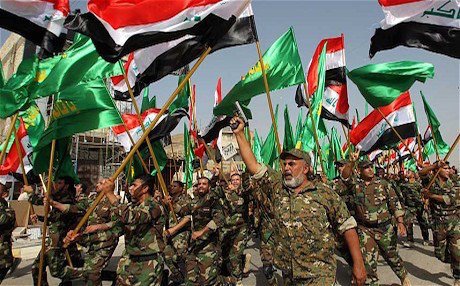
97644Image1Thousands of Shiite men responded to a call for jihad after ISIS stormed across Iraq in June and captured a third of the country. AFP photo.

BAGHDAD, Iraq – The leader of Iraq’s Hezbollah met with Shiite clerical authorities in Najaf Sunday to discuss formal recognition of hundreds of thousands of militiamen by the government and putting them on official payroll, a Hezbollah statement said.

Sheikh Abbas al-Mahmadawi, leader of the Shiite militia group Hezbollah, said that he met with Shiite clerics in Najaf, including Ayatollah Muhammad Saeed al-Hakim, to seek recognition “for the success of the militia groups in the fight against the Islamic State (ISIS).”

Al-Mahmadawi added that the Shiite volunteer militia should be recognized by the authorities and compensated financially “because many of them do not have any salaries and many have been wounded and handicapped.”

According to al-Mahmadawi, there are 800,000 volunteer Shiite fighters in Iraq who joined the fight against ISIS last June.

But he added that “the numbers have been inflated by some political parties” by more than double.

“We do not have any such numbers on the ground which is put down as 2 million volunteers,” he said in a statement following his visit to Najaf.

Al-Mahmadawi hoped that Baghdad would put the Shiite militia on its payroll now that the country is about to pass this year’s budget.

Thousands of Shiite men responded to a call for jihad against ISIS by Iraq’s Grand Ayatollah Ali Sistani last year, when the extremist Sunni group captured Mosul and made a lightening advance towards Baghdad and important Shiite shrines.

A great number of Shiite militiamen are based in the towns of Jalawla and Saadiya, north of Diyala, which they jointly liberated from ISIS in November.

Local residents, mainly the Kurdish population, have remained apprehensive about returning to their homes for fear of the armed militia groups, which operate outside government control and have been accused by Sunnis of acting as vigilantes.

On Saturday, Iraq’s parliament speaker Salim al-Jibouri met with Kurdish leaders in Sulaimani on forming a joint committee to facilitate the return of displaced peoples to Jalawla and Saadiya.

Meanwhile, around 200 tribal and political figures in Diyala met on Saturday to discuss normalizing the situation in the province after some of the fiercest battles between ISIS and a joint force of Peshmerga and Shiite militia groups.

Obama explains it all

January 18, 2015

Israel Hayom | Obama explains it all.

Boaz Bismuth

In Paris, too, U.S. President Barack Obama is having a hard time understanding. A week ago, he made the mistake of not taking part in the solidarity march against the jihadist terrorism that had struck France. Now he’s the one explaining to the French where they went wrong and giving them a lesson on how to better integrate the Muslim population.

Obama’s remarks sound more like the things that Muslim kids in the French periphery say than declarations by the leader of the free world. It seems that Obama doesn’t understand that the ideology of the Islamic State group and al-Qaida has no borders, and the threat to the West is the same threat, regardless of immigration policy.

Obama, who will go down in history as a marked absence in the “march of the millions,” explained on Friday that the U.S.’s “biggest advantage … is that our Muslim populations feel themselves to be Americans.” He did not utter one simple phrase: “Islamist terrorism.”

Has Obama forgotten the attacks in Boston and Fort Hood? Wasn’t it Muslims who “felt themselves to be Americans” who were behind them? In the Texas attack, the perpetrator even had officer’s insignia. So was the U.S. immigration policy the reason for that?

Obama is right about one thing: America is a wonderful nation of immigrants that knows how to integrate them. The minute one lands at John F. Kennedy International Airport, an immigrant from Poland will announce that he is proud to be an American. But France is also a nation of immigrants, and everyone remembers the large influx from Italy and Spain at the start of the 20th century. Right away, they were proud to be French. People are constantly arriving from China, from Vietnam, and from Cambodia. But what can we do — despite political correctness, which prevents us from calling a spade a spade — it is the children of the Muslim immigrants who boo the “Marseilles” and who refused to stand for the moment of silence in honor of the terror victims. It’s the children of the Muslim immigrants who are involved in terrorist attacks. So maybe the problem is radical Islam, and not the welfare benefits that France grants immigrants from Tunisia, Algeria, or Cambodia.

The American president also explained that in the end, “there also has to be a recognition that the stronger the ties of a North African or a Frenchman of North African descent to French liberties, that’s going to be important over time.” Will it? When was the last time Obama visited the outskirts of any large European cities? When was the last time he saw the radicalization of the young people who see Jews, not the Kouachi brothers, as the enemy? Is he unaware of the large-scale demonstrations throughout the Muslim world that feels no connection to the slogan “Je suis Charlie”? So maybe the integration of immigrants isn’t the problem — maybe religion is. Doesn’t Obama see that the latest issue of Charlie Hebdo also upset the Muslim community?

Obama needs to understand that France has a tough problem: how to reconcile Charlie Hebdo and its drawings, and everything it stands for, with the Muslim population — or the opposite: How to incorporate the Muslim population into the secular French public. How can a society for whom Islam is sacred — a legitimate belief — be integrated with a French society for whom secularism is a religion, which is no less legitimate?

It seems like Obama, even after six years as president, is having difficulty understanding the processes taking place in the world. Or maybe it is difficult for him to detach from the idyllic reality he has constructed. It will be interesting to see if any French leader tries to explain to Obama how best to integrate the African American population the next time riots erupt in Ferguson.

No Room for Parody

January 18, 2015

No Room for Parody, American ThinkerClarice Feldman, January 18, 2015

I was sound asleep when the phone rang and so I cannot be absolutely sure the conversation was not a dream, but it seemed real enough.

“Hello,” the caller began. “My name is Mr. Mensch, I am president of the Parodists of the World, professional comedy writers, and we want to engage you in a suit against the administration for tortious interference with our livelihood.”

“What exactly are you alleging, I mean specifics?” I responded.

He then launched into a litany of grievances against the administration which the Parodists claimed had made it impossible for them to continue making a living.

“First, our country sent no one to the important anti-terrorism demonstration in Paris, and then there’s Valerie Jarrett calling the march against the slaughter of innocents in Paris a ‘Parade’, as if this were some sort of celebration.‘ Certainly We Would Have Loved To Participate In The Parade,” But We “Got The Substance Right”’.” She said and then proceeded to claim that Holder couldn’t attend because he was in a very important terrorism conference at the time, forgetting that we knew everyone else at the conference made it to the march except Holder. So at the time of the march he was meeting with himself, it seems.”

“Well, that was silly, “I agreed.  “And?” I waited for the next item.

“Then our secretary of state, John Kerry, whose entire life has been fashioned around his self-imagined superior diplomatic skills and international affairs expertise, shows up speaking execrable high school level French, accompanied by  an aging ex-druggie who sings to the grieving French ‘You’ve Got a Friend’”

“I have to agree that was preposterous and really embarrassing. One wag suggested the French ought to respond by having Carly Simon sing, ‘You’re so Vain’ to the President and his Secretary of State. ‘Send in the Clowns’ comes to mind.”

“It’s all of a piece you know. It’s cutting substantially into our employment prospects. Let me read this to you,” Mensch said:

“ ‘A scandal has erupted in the American Consulate in Jerusalem, as three Israeli security guards have quit following a plan to hire 35 armed Palestinian guards from East Jerusalem. The Palestinians have been undergoing weapons training in Jericho in recent days. The decision to hire and arm the Palestinian security personnel was made by the consulate’s chief security officer, Dan Cronin. The plan is to employ them mostly as escorts to American diplomats’ convoys in the West Bank. Their operating base will be at the consulate in the city’s west, as well as six other facilities around the city belonging to the consulate, of which five are in western Jerusalem.

The plan is a breach of a 2011 agreement between the consulate and the Israeli government, which determined that only former IDF combat soldiers hired by the consulate would be allowed to carry weapons. That year, Israel gave the consulate approval to keep about 100 guns for its security guards, but only if they’re American diplomats or Israelis who served in the army. While the consulate employs scores of guards from East Jerusalem, they have not been armed up until now.’”

“Sounds like a bad joke to me,” I replied. “With the world’s attention focused on Moslem extremists. New jihadi groups showing up all through Europe, and Palestinians continuing to attack our ally Israel  and we train and arm Palestinian guards to protect us in Jerusalem in violation of  our agreement with Israel?”

“Even the liberal foreign policy pundit Leslie Gelb is concerned that the administration is absolutely clueless,” sputtered Mensch.

“And he keeps releasing men from Gitmo who then return to fight against us. He released Mullah Abdul Rauf and immediately on his return he’s recruiting for the Taliban in Afghanistan.”

By this time Mensch was on a roll.

“The White House spokesman, Josh Earnest is tripping over his own tongue trying not to say the magic words ’Moslem extremist’. Listen to this circumlocution of his: ‘We want to describe exactly what happened. These are individuals who carried out an act of terrorism. And they later tried to justify that act of terrorism by invoking the religion of Islam and their own deviant view of it.’”

“Then there’s the nonsensical negotiations with Iran,” I interjected.

Mensch sputtered, “Thursday Obama announced he would not tighten sanctions on Iran which is violating the sanctions already in place because if we tighten the reins it will only drive them to war. Think about that! If we impose stricter sanctions on them, they’ll go to war, and if we don’t, they’ll go to war with nuclear weapons.”

“That’s nothing to joke about,” I said.

“Precisely! Obama‘s leaving us nothing to parody. We can’t make a living in comedy. He and his administration are themselves the joke. We might as well just send in news clippings to our editors as try to dream up anything wackier than what they’re doing. And, look, it’s not just foreign affairs. Take the Keystone Pipeline — I mean it should be clear to everyone that we are hurting Iran and Russia financially each time we and others increase the supply of gas and oil on the world market and we need jobs badly, so why is he still sitting on this? George Will captured this bit of nuttiness,” he added and I heard the rustle of newspaper as he read this to me.

Actually, there no longer is any reason to think he has ever reasoned about this. He said he would not make up his mind until the Nebraska Supreme Court ruled. It ruled to permit construction, so he promptly vowed to veto authorization of construction.

The more Obama has talked about Keystone, the less economic understanding he has demonstrated. On Nov. 14, he said Keystone is merely about “providing the ability of Canada to pump their oil, send it through our land, down to the gulf, where it will be sold everywhere else. That doesn’t have an impact on U.S. gas prices.” By Dec. 19, someone with remarkable patience had explained to him that there is a world market price for oil, so he said, correctly, that Keystone would have a “nominal” impact on oil prices but then went on to disparage job creation by Keystone. He said it would create “a couple thousand” jobs (the State Department study says approximately 42,100 “direct, indirect, and induced”) and said, unintelligibly, “Those are temporary jobs until the construction actually happens.” Well.

“I understand your distress,” I sympathized, “but to make your case you have to prove that Obama intended to harm your business, and as Will notes it’s just that he isn’t that smart.”

“C’mon,” the parodist, countered, “Almost every professor in America supported and voted for him. Are you calling them all stupid?”


Europe rounds up 25 jihadi suspects. Crackdown hamstrung by lack of counterterrorism center

January 18, 2015

Europe rounds up 25 jihadi suspects. Crackdown hamstrung by lack of counterterrorism center.

DEBKAfile Exclusive Analysis January 16, 2015, 6:28 PM (IDT)
Belgium elevates terror level

Belgium elevates terror level

In the last two days, 25 jihadi suspects were rounded up in secret cells uncovered in Belgium, France and Germany. But these counter-terror operations lifted just one corner of the Islamist terrorist network of active cells spread across Europe, made up of dedicated killers, armed to the teeth and expertly trained in Syria, Iraq or Afghanistan in the skills of mass murder.

debkafile’s counterterrorism and intelligence sources note that genuine operational cooperation among Europe’s intelligence and security services at state level is far too rare, even among otherwise friendly governments with common interests.

The Belgian counter-terror operation, which forestalled a Charlie Hebdo-scale attack, was the rare product of an ad hoc partnership with French counter-terror agencies, rather than part of organized intelligence-sharing and regular updates for forestalling assaults.

And so, notwithstanding relaxed interstate diplomatic relations, systemic collaboration is lacking among West Europe’s intelligence agencies, except on rare opportunities when they are pushed into synchronizing their efforts and data by an outside power or ally, or when common diplomatic or economic interests are at stake.
Europol is Europe’s sole central mechanism for fighting crime at continental level – and even its operational effectiveness is in doubt.
The continent has no centralized strategy or a common security mechanism for concerted action to locate or counter a peril that jumps out of the shadows from inside and outside Europe.
The sheer numbers are overwhelming: Belgium has roughly 750,000 Muslims, France – some 5 million; Germany – 4.2 m, Italy – 1.5 m, Netherlands – around 1 m, Spain – 1.2 m and Britain – app. 3 m.
The tasks of hunting needles in these haystacks before the peril jumps out of the shadows from inside or outside – or both – are daunting.

The insular approach by individual European member-nations puts them at a serious disadvantage because the Islamic terrorist organizations share a strong, unified mission and operational and intelligence resources. These groups uniformly condemn all parts of Europe alike as infidels, without distinctions of nationality, language or geographical borders. Each separate country is therefore easy prey for the dedicated, single-minded jihadists, especially when it declares – as Belgium did incredibly – that no links with any other cells were discovered.

Overnight Thursday, German security police raided 11 Muslim residential apartments in Berlin and other places. Two or more suspected members of the Islamic State of Iraq and the Levant were detained.

In Paris, French police rounded up 10 people suspected of connections with last week’s terrorist violence. One is a woman who gave the Kouachi brothers her Citroen as their getaway car after their massacre at Charlie Hebdo.

In the Belgian counter-terror raid on 10 apartments Thursday, two suspects were killed in a firefight with the police in the eastern town of Verviers. Searches were also carried out in the Brussels area. Thirteen suspects were arrested in Belgium and two more in France. Weapons, munitions and explosives were found, as well police uniforms and large sums of money. These raids thwarted a plan to kill policemen on the street and at police stations, Belgian prosecutors said Friday. The attacks were imminent.

Jittery French security officials evacuated the big Gare de l’Este railway station Friday over a bomb threat.

In Belgium, Jewish schools, institutions – and even synagogues, for the first time since WWII – closed their doors Friday morning.  In France, Jewish schools are also closed for now.
But bombs and submachine guns are clearly not the only weapons the ISIS is wielding against the West.

For some days now, French Internet sites have been under assault. By Friday, 19,000 sites had been hacked.

debkafile’s counter-terrorism and cyber experts report that the Islamist hackers are working out of different locations world wide, many of them in the Middle East, from Iraq, Tunisia, Egypt and the Gaza Strip – but some also out of Malaysia, Indonesia and Vietnam.
The hackers mostly replace the targeted French site’s home page with ISIS flags and slogans and passages from the Koran. Some websites have crashed under DDOS (Distributing Denial of Service) assault.
The attacks cover a wide range of targets in the Paris region – from banks, public health clinics and hospitals, and government and local authority offices, up to academic research institutions and even a gardening landscape firm and pizza chain.

Adm. Arnaud Coustilliere, director of cyber warfare in the French army, has been placed in charge of measures to combat the ISIS cyber war which holds the threat of infrastructure mayhem in France.

Our sources identify one group of Islamist hackers as the Tunisian FallaGa, whose Facebok page carried a list of its targets along with the messages and images it is planting on their sites.

Joint operations against cyber-attacks top the agenda of UK Prime Minister David Cameron’s talks with President Barack Obama in Washington Friday.

Sisi or ISIS?

January 18, 2015

Into the Fray: Sisi or ISIS? – Opinion – Jerusalem Post.

It’s difficult to overstate the potential importance of the Egyptian president’s New Year speech on Islam – and equally important to avoid overly optimistic expectations as to its practical impact.

“Is it possible that 1.6 billion people [Muslims] should want to kill the rest of the world’s inhabitants – that is 7 billion – so that they themselves may live? Impossible!” – Egyptian President Abdel Fattah al-Sisi, Al-Azhar, January 1

“O ye who believe! Fight those of the disbelievers who are near to you, and let them find harshness in you, and know that Allah is with those who keep their duty.” – Koran, Sura 9:123

“Violence… occurs between Muslims, on the one hand, and Orthodox Serbs in the Balkans, Jews in Israel, Hindus in India, Buddhists in Burma and Catholics in the Philippines. Islam has bloody borders.” – Samuel Huntington, “The Clash of Civilizations?” Foreign Affairs, 1993

On New Year’s Day, Egyptian president Abdel Fattah al-Sisi delivered a remarkable address at Cairo’s Al-Azhar University.

The Obama-Sisi contrast

He directed measured, but nonetheless severe, censure at much of the Islamic clergy, their interpretation of religious texts and their prescription for how Muslims should practice their faith in the modern day: “I am referring here to the religious clerics. We have to think hard about what we are facing – and I have, in fact, addressed this topic a couple of times before. It’s inconceivable that the thinking that we hold most sacred should cause the entire umma [Islamic world] to be a source of anxiety, danger, killing and destruction for the rest of the world. Impossible!”

Ironically, Sisi spoke at the same venue that Barack Obama chose to deliver his 2009 “Outreach Speech” to the Muslim world. But the contrast between the two could hardly be more striking. As one US analyst deftly noted: “Obama began the 2009 speech by praising the same seminary that Sisi reprimanded,” emphasizing “That [Obama’s approach] is different from Sisi, who is trying to suppress the Brotherhood movement and push Al-Azhar’s Islamic leaders toward modernity.”

Sisi used the occasion to condemn the ongoing practices in the Islamic world, after having coercively removed the regressive and ruinous regime of the Muslim Brotherhood from power. By contrast, Obama heaped effusive praise on Islam, and insisted on places of honor for senior Brotherhood representatives – to the chagrin of his host, president Hosni Mubarak. Indeed, many consider Obama’s words and gestures in Cairo as providing a considerable – arguably, crucial – fillip in the process that swept the Brotherhood to power barely two years later.

Revolution not reform

Although Sisi was at pains to appear respectful to Islam as a religion per se, there was little doubt as to the grim view he took of the consequences of the manner in which Muslims were being instructed to observe their faith.

“That thinking – I am not saying ‘religion’ but ‘thinking’ – that corpus of texts and ideas that we have sacralized over the years, to the point that departing from them has become almost impossible, is antagonizing the entire world!” he said.

Sisi appealed to the religious establishment for a “more enlightened perspective”: “I am saying these words here at Al-Azhar, before this assembly of scholars and ulema [top Islamic scholars] – Allah Almighty be witness to your truth on Judgment Day concerning that which I’m talking about now…you cannot feel it if you remain trapped within this mindset. You need to step outside of yourselves to be able to… reflect on it from a more enlightened perspective.”

But despite his ostensible deference, Sisi made no bones about what was called for. Not gradual reform but swift revolution. “I say and repeat again that we are in need of a religious revolution. You, imams, are responsible before Allah. The entire world, I say it again, the entire world is waiting for your next move,” he urged.

Tendency to appease

Sisi is undoubtedly correct in his diagnosis of Islam as comprising “a source of anxiety, danger, killing and destruction for the rest of the world.” However, until recently the tendency of the “rest of the world” has been to appease rather than oppose, to understand rather than withstand, to excuse rather than expunge.

Nonetheless, lately there does appear to be the beginning of rumbling discontent in the West, and indications that resistance to Islamic-inspired outrages is beginning to emerge – albeit far too timidly and far too slowly.

It is still too early to assess whether the savage slaughter in Paris last week will prove a tipping-point in the mood toward Islam and shift it from angst to anger. There is, however, considerable room for skepticism.

For despite the short-term uproar the killings at Charlie Hebdo and Hyper Cacher has generated, the death toll pales when compared to far-greater Muslim-motivated atrocities perpetrated in the West without producing a sustained, resolute response to deal adequately with the manifest menace.

With 17 dead, last week in Paris seems unlikely to become a watershed event. After all, the Madrid train bombings left 191 dead and 1,800 wounded in 2004; the London subway bombing 52 dead and 700 wounded in 2005; the Mumbai attacks almost 170 killed and over 600 injured in 2008, and the Moscow metro bombing 40 dead and over 100 injured in 2010. This of course is but a minute sample of a long, gory list of post 9/11 Muslim massacres, carried out in the name of their religious belief.

Islam’s bloody borders

It is difficult to see why the ordeal in Paris, gruesome as it was, will produce the required stiffening of resolve.

After all, the incipient clash between the Islamic and non-Islamic worlds has been part of the public discourse for over two decades. In his controversial – some might say, prescient – article “The Clash of Civilizations?” in Foreign Affairs (1993), the late Harvard political scientist Samuel Huntington predicted: “The fault lines between civilizations will be the battle lines of the future.” He warned: “… the great historic fault lines between civilizations are once more aflame. This is particularly true along the… boundaries of the… Islamic bloc of nations, from the bulge of Africa to central Asia…. Islam has bloody borders.”

In a subsequent book, The Clash of Civilizations and the Remaking of World Order (1998), Huntington wrote: “No single statement in my Foreign Affairs article attracted more critical comment than: ‘Islam has bloody borders.’… Quantitative evidence from every disinterested source conclusively demonstrates its validity.”

Subsequent events and statistics strongly corroborate Huntington’s contentions.

Bloody borders (cont.)

It is possible to fill tomes with examples of obdurate Islamic enmity to Judaism and Christianity. But Islamic intolerance is not confined to the monotheistic People of the Book.

One of the most graphic illustrations of Islam’s abiding rejection of all that is not Islamic is provided by the 2001 destruction of the giant Buddha statues in Afghanistan.

The statues, which stood for 15 centuries (!) were designated by UNESCO as a World Heritage Site, and were perhaps the best-known cultural landmark of the region. Despite all this, and ignoring international appeals, the Taliban government reduced the statues to rubble, in a determined, prolonged and complex effort.

According to the then-Afghan culture minister, 400 religious clerics from across the country decided the “statues were un-Islamic.”
The Taliban’s spiritual leader and supreme commander Mullah Muhammad Omar, proclaimed: “Muslims should be proud of smashing idols. It has given praise to God that we have destroyed them.” The then-foreign minister told a Japanese daily: “We are destroying the Buddha statues in accordance with Islamic law… it is purely a religious issue.”

This implacable enmity toward the un-Islamic is reflected in the appalling statistics regarding Islamic violence.

Some estimates indicate that since 9/11, there have been a staggering 25,000 lethal acts of Islamic terrorism.

Islam’s bloody innards

In his Al-Azhar address, Sisi issued a stern warning: “… this umma [Islamic world] is being torn, it is being destroyed, it is being lost – and it is being lost by our own hands.” The warning is timely and accurate.

For, as I pointed out in last week’s column, as appalling as Muslim violence against non-Muslims might be, it pales into insignificance when compared to violence among Muslims themselves.

In a sense, Sisi was echoing views Huntington articulated in his book: “Islam’s borders are bloody and so are its innards. The fundamental problem for the West is not Islamic fundamentalism. It is Islam, a different civilization whose people are convinced of the superiority of their culture and… obsessed with the inferiority of their power.”

Judging from the scope of the carnage, Islam’s innards are if anything bloodier than its borders, and the enmity for fellow Muslims far outstrips that for the infidel.

Quite apart from the well-known Sunni- Shia rift that has resulted in untold deaths, the myriad massacres in mosques, marketplaces and madrassas across Syria, Iraq, Afghanistan, Pakistan and elsewhere in the Muslim-dominated Dar a-Salaam (Zone of Peace) make it impossible for anyone other than a learned expert to decipher the patterns of intra-Islamic rivalries and the reasons for their lethal consequences.

Sisi’s passionate cry that the Muslim world is being torn apart at its own hands is corroborated everyday by a never-ending stream of blood-soaked facts.

‘No stronger retrograde force exists…’

Well over 100 years ago, in his book The River War (1899), Winston Churchill predicted with stunning prescience much of the realities which Sisi laments in his New Year address: “How dreadful are the curses which Mohammedanism lays on its votaries! Besides the fanatical frenzy, which is as dangerous in a man as hydrophobia in a dog, there is this fearful, fatalistic apathy.”

Churchill warned of adverse effects on Muslim economies and societies: “The effects are apparent in many countries. Improvident habits, slovenly systems of agriculture, sluggish methods of commerce, and insecurity of property exist wherever the followers of the Prophet rule or live… the influence of the religion paralyzes the social development of those who follow it. No stronger retrograde force exists in the world.”

On Islam’s attitude to women, he wrote: “The fact that in Mohammedan law every woman must belong to some man as his absolute property – either as a child, a wife or a concubine – must delay the final extinction of slavery until the faith of Islam has ceased to be a great power among men.”

Regarding conflict with the West, he provided an ominous caveat: “Far from being moribund, Mohammedanism is a militant and proselytizing faith. It has already spread throughout Central Africa, raising fearless warriors at every step; and were it not that Christianity is sheltered in the strong arms of science… the civilization of modern Europe might fall, as fell the civilization of ancient Rome… ”

Given the situation in Europe today, this is a prognosis that should not be lightly dismissed.

Ataturk or Anwar Sadat?

It’s difficult to overstate the importance that Sisi’s speech could have – and equally important to exercise sober caution in developing excessively optimistic expectations as to the practical impact it may have.

Earlier this week, the influential US columnist George Will raised both the prospects and the perils: “…as head of the Egyptian state, Al Sisi occupies an office once occupied by Anwar Sadat who was murdered by Islamic extremists for his opening to Israel. This was an act of tremendous bravery by Sisi, and if the Nobel Peace Prize committee is looking for someone who plausibly deserves it, they could start there.”

Will Sisi be able to initiate a Kemalist-like transformation of Egypt as Kemal Ataturk did in Turkey just under a hundred years ago (and now disintegrating rapidly under the Islamist Erdogan regime)? The answer is far from certain. The times and circumstances in today’s Egypt are vastly different – and arguably more daunting – than those in post-WWI Turkey.

Egypt faces almost insurmountable socioeconomic challenges, and failure by Sisi to address them adequately will provide his numerous radical opponents much grist for their extremist mills to grind.

Recent reports (The Jerusalem Post, January 12) that a newly exposed Islamic State-affiliated cell that “planned to assassinate government ministers, media personalities and businessmen in the coming days” dramatically underscore how a tragic rerun of political assassination in Egypt cannot be discounted.

So while Sisi’s endeavor should be warmly applauded – and supported – its chances of success are sufficiently uncertain – indeed, remote – that it would be more than imprudent of the West and for Israel to make any assumption of such success a basis for future policy.

Sisi, ISIS & Israel

The outcome of the titan battle between Sisi and Islamic State will, of course, have dramatic impact on Israel, particularly with regard to the fate of Sinai, and the ramifications this will have on our long southern border and the city of Eilat.

But that is a topic for another – and somewhat depressing – article in the future.

Martin Sherman (www.martinsherman.org) is the founder and executive director of the Israel Institute for Strategic Studies http://www.strategicisrael.org.

U.S. Military Not Taught Ideology of Islamic Jihad, ‘Our Nation Is In Great Peril,’ Says CSP

January 17, 2015

U.S. Military Not Taught Ideology of Islamic Jihad, ‘Our Nation Is In Great Peril,’ Says CSP, CNS News, Penny Starr, January 16, 2015

(The pending release of the report was noted here. Released today, it is in PDF format and 74 pages in length. It should be interesting reading. — DM)

(CNSNews.com)Center for Security Policy (CSP) official Tommy Waller, who fought against Islamic jihadists “on their turf” in Afghanistan and elsewhere, said his military training did not include instruction in the ideology of the enemy, a deliberate omission that puts America in “great peril.”

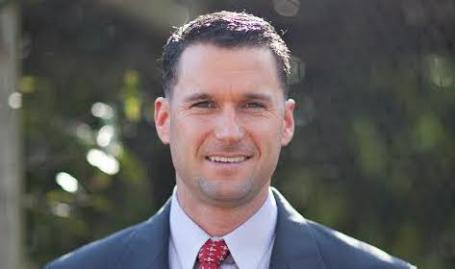
Tommy WalkerTommy Waller, director of state outreach for the Center for Security Policy.

Waller, a Marine Reserve major, speaking via Skype at the National Press Club on Jan. 16, said he was speaking as an employee of the CSP, a conservative national security group in Washington, D.C., which released that day a new report, The Secure Freedom Strategy: A Plan for Victory Over the Global Jihad Movement.

The plan, designed by 16 experts on counter-terrorism, intelligence, the military and national security, is based on President Ronald Reagan’s plan to defeat the Communist Soviet Union.

The Secure Freedom Strategy explains that Muslims who adhere to Sharia law are behind the global jihad movement and the deadly attacks around the world on innocent people of all faiths, including other Muslims.

Waller, who is CSP’s director of state outreach, said it was his hope that the strategy can help defeat that enemy. His full remarks are reproduced below:


“Ladies and gentlemen, the first thing I have to tell you is that I’m addressing you as Tommy Waller, an employee of the Center for Security Policy and not as Major Waller, a commissioned officer in the Reserve component of the Marine Corps.

“Now, why is it that I have to make that distinction? Well, it saddens me to say that if I were currently in an active duty I would have to refrain from speaking about factual information about this ideology – Sharia — the very ideology that threatens our way of life because my words might be offensive.

“Ladies and gentlemen, I took an oath to the Constitution of the United States to defend it against all enemies foreign and domestic and when those that take an oath cannot be taught about the threat to our Constitution, which is both foreign and domestic, our nation is in great peril.

“Now I’ve deployed as an active duty Marine to numerous theaters of operations. I’ve faced the global jihad movement on their turf. And yet I was never taught what animated those Jihadists.

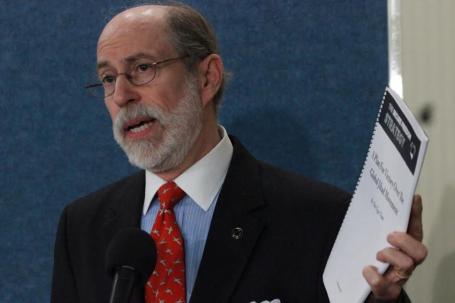
Frank GafneyFrank Gafney, president of the Center for Security Policy. (Photo: CNSNews.com/Penny Starr)

“Still to this day, if you attend a formal military school, you’ll find that there’s never mention of the ideology that animates our enemies.

“We speak in terms like violent extremist organizations. We never nail down the facts about what animates these organizations or, as Clare mentioned, individuals that subscribe to the ideology.

“I recently attended a school that was nearly a year long – a formal military school for commissioned officers at the field grade level. And in 10-plus months we covered information operations for less than an hour and our case study was the Communist insurgency and how we conducted propaganda operations against it in Vietnam.

“It’s mind-boggling to me how our enemies maintain absolute information dominance but it makes sense if that’s the curriculum that we have in our military’s formal schools.

“I’ve been up until this point, shocked and saddened by – and almost bewildered – by the absence void in factual analysis of our enemy on behalf of the national security community and what we face today is tantamount to the military of the Cold War being prevented from studying Communism. Being prevented from studying the ideology that they faced on the battlefield.

“And so it’s my sincere hope that my generation and those that follow it can recover the courage that our previous generation had to study the ideology of the enemy.

ISIL-militantsMembers of the Islamic State of Iraq and the Levant (ISIL).

I have to say that the ‘Secure Freedom Strategy’ gives me hope. It’s the first step in our generation doing a major course correction.

“And my personal request on behalf of the men and women who have given the ultimate sacrifice to that Constitution – in defense of that Constitution – on behalf of them, my request is that we embrace this strategy because we owe it to the generations that went before us and those that will follow us.”

At Waller’s request, the press conference ended with the Pledge of Allegiance.

Members of the “Tiger Team” include Lt. Gen. William G. “Jerry” Boykin; Clare Lopez, former Operations Officer in the CIA’s Clandestine Service and senior vice president for research and analysis at the CSP; Admiral James A. “Ace” Lyons, former Commander–in-Chief, U.S. Pacific Fleet and father of the Navy Red Cell counterterrorism unit and chairman of CSP’s military committee; Dr. J. Michael Waller, expert on psychological warfare, propaganda and influence operations and a senior fellow at CSP; and Frank Gaffney, former acting Assistant Secretary of Defense for International Security Policy and the president of CSP.

You can see read the report here.

US Strongly Backs Israel over ICC Move to Probe Israel for War Crimes

January 17, 2015

The Obama administration is not in love with Israel but certainly is divorcing itself from the Palestinian Authority.

By: Tzvi Ben-Gedalyahu

Published: January 17th, 2015

via The Jewish Press » » US Strongly Backs Israel over ICC Move to Probe Israel for War Crimes.


Does Abbas really want a war crimes probe Above: Hamas fires rockets on Israel from a hotel.

Does Abbas really want a war crimes probe Above: Hamas fires rockets on Israel from a hotel.


The U.S. State Dept. has strongly attacked the International Criminal Court (ICC) for opening a probe of alleged Israeli war comes and left open the question whether the ICC even has the a right to conduct a probe of last year’s war with Hamas.

The State Dept. called the ICC announcement a “tragic irony,” a statement that was further bolstered by praise for the ICC decision by Hamas, which may find itself under the ICC microscope.

Jeff Rathke, director of the State Dept. press office, stated:

We strongly disagree with the ICC Prosecutor’s action today. As we have said repeatedly, we do not believe that Palestine is a state and therefore we do not believe that it is eligible to join the ICC. It is a tragic irony that Israel, which has withstood thousands of terrorist rockets fired at its civilians and its neighborhoods, is now being scrutinized by the ICC.

He told reporters at Friday’s daily press briefing:

We don’t think that the Palestinians have established a state, and we don’t think they’re eligible to join the International Criminal Court. I would highlight that many other countries share this view.

In answer to a question whether the ICC is conducting “an illegitimate preliminary examination,” Rathke responded, ” I’m not going to characterize it.,” and he declined to say one way or the other if the United States will appeal to the ICC to drop the preliminary examination.

Prime Minister Binyamin Netanyahu spoke with Sec. of State John Kerry Friday and asked him to intervene against the ICC on behalf of Israel

Hamas was thrilled by the ICC decision and declared on Saturday, “We are ready to provide (the court) with thousands of reports and documents that confirm the Zionist enemy has committed horrible crimes against Gaza and against our people.”

“Tragic irony” is an excellent definition of the ICC decision, which is even more astonishing since it apparently follows a complaint by the Palestinian Authority, which will not be a member of the ICC until April 1.

Technically, the ICC is off the hook of overreaching its authority.

The “Rome Statute” concerning war crimes states that non-members cannot ask for an investigation of war crimes.

The ICC got around this restriction by stating it is “examining” whether an investigation should be conducted, and it obviously cannot make a decision until April 1.

But how can the ICC examine alleged war crimes dating back to last year, when the Palestinian Authority did not even apply for ICC membership.

PA chairman Mahmoud Abbas presented documents to the ICC giving it authority to act retroactively.

The ICC stated it will open its examination on alleged Israeli war crimes in last summers’ war with “full independence and impartiality.”

If so, it will have a hard time ignoring Hamas war crimes, which Israel documented day by day in the war, having learned to do so after the United Nations’ scathing Goldstone Report that barely mentioned Hamas’ war crimes in the three-week Operation Cast Lead counter-terrorist campaign in late December 2008 and early January 2009.

Prime Minister Netanyahu said that the ICC announcement of a preliminary examination as based on an “outrageous request” by the Palestinian Authority.

Meet the honor brigade, an organized campaign to silence debate on Islam

January 17, 2015

Meet the honor brigade, an organized campaign to silence debate on Islam, Washington Post, Asra Q. Nomani, January 16, 2015

(It’s encouraging to read that a few actually moderate Muslims are slowly bringing modest changes to a few who practice the Religion of the Perpetually Offended and Violent. However, much more and a long time will be needed before significant numbers of “moderate” and “non-extremist” Muslims begin to accept freedoms for themselves and for others and to reject Sharia law in its present and historic form.  Until then?– DM)

[W]e need a new interpretation of Islamic law in order to change the culture. This would require rejecting the eight schools of religious thought that dominate the Sunni and Shiite Muslim world. I propose naming a new one after ijtihad, the concept of critical thinking, and elevating self-examination over toxic shame-based discourse, laws and rules.

********************

“You have shamed the community,” a fellow Muslim in Morgantown, W.Va., said to me as we sat in a Panera Bread in 2004. “Stop writing.”

Then 38, I had just written an essay for The Washington Post’s Outlook section arguing that women should be allowed to pray in the main halls of mosques, rather than in segregated spaces, as most mosques in America are arranged. An American Muslim born in India, I grew up in a tolerant but conservative family. In my hometown mosque, I had disobeyed the rules and prayed in the men’s area, about 20 feet behind the men gathered for Ramadan prayers.

Later, an all-male tribunal tried to ban me. An elder suggested having men surround me at the mosque so that I would be “scared off.” Now the man across the table was telling me to shut up.

“I won’t stop writing,” I said.

It was the first time a fellow Muslim had pressed me to refrain from criticizing the way our faith was practiced. But in the past decade, such attempts at censorship have become more common. This is largely because of the rising power and influence of the “ghairat brigade,” an honor corps that tries to silence debate on extremist ideology in order to protect the image of Islam. It meets even sound critiques with hideous, disproportionate responses.

The campaign began, at least in its modern form, 10 years ago in Mecca, Saudi Arabia, when the Organization of Islamic Cooperation — a mini-United Nations comprising the world’s 56 countries with large Muslim populations, plus the Palestinian Authority — tasked then-Secretary General Ekmeleddin Ihsanoglu with combating Islamophobia and projecting the “true values of Islam.” During the past decade, a loose honor brigade has sprung up, in part funded and supported by the OIC through annual conferences, reports and communiques. It’s made up of politicians, diplomats, writers, academics, bloggers and activists.

In 2007, as part of this playbook, the OIC launched the Islamophobia Observatory, a watchdog group based in Jiddah, Saudi Arabia, with the goal of documenting slights against the faith. Its first report, released the following year, complained that the artists and publishers of controversial Danish cartoons depicting the prophet Muhammad were defiling “sacred symbols of Islam . . . in an insulting, offensive and contemptuous manner.” The honor brigade began calling out academics, writers and others, including former New York police commissioner Ray Kelly and administrators at a Catholic school in Britain that turned away a mother who wouldn’t remove her face veil.

“The OIC invented the anti-‘Islamophobia’ movement,” says Zuhdi Jasser, president of the American Islamic Forum for Democracy and a frequent target of the honor brigade. “These countries . . . think they own the Muslim community and all interpretations of Islam.”

Alongside the honor brigade’s official channel, a community of self-styled blasphemy police — from anonymous blogs such as LoonWatch.com and Ikhras.com to a large and disparate cast of social-media activists — arose and began trying to control the debate on Islam. This wider corps throws the label of “Islamophobe” on pundits, journalists and others who dare to talk about extremist ideology in the religion. Their targets are as large as Israeli Prime Minister Benjamin Netanyahu and as small as me.

The official and unofficial channels work in tandem, harassing, threatening and battling introspective Muslims and non-Muslims everywhere. They bank on an important truth: Islam, as practiced from Malaysia to Morocco, is a shame-based, patriarchal culture that values honor and face-saving from the family to the public square. Which is why the bullying often works to silence critics of Islamic extremism.

“Honor brigades are wound collectors. They are couch jihadis,” Joe Navarro, a former supervisory special agent in the FBI’s behavioral analysis unit, tells me. “They sit around and collect the wounds and injustices inflicted against them to justify what they are doing. Tragedy unites for the moment, but hatred unites for longer.”

In an e-mail exchange, the OIC’s ambassador to the United Nations denied that the organization tries to silence discussion of problems in Muslim communities.

The attacks are everywhere. Soon after the Islamophobia Observatory took shape, Sheik Sabah Ahmed al-Sabah, the emir of Kuwait, grumbled about “defamatory caricatures of our Master and Prophet Muhammad” and films that smear Islam, according to the OIC’s first Islamophobia report.

The OIC helped give birth to a culture of victimization. In speeches, blogs, articles and interviews widely broadcast in the Muslim press, its honor brigade has targeted pundits, political leaders and writers — from TV host Bill Maher to atheist author Richard Dawkins — for insulting Islam. Writer Glenn Greenwald has supported the campaign to brand writers and thinkers, such as neuroscientist and atheist Sam Harris, as having “anti-Muslim animus” just for criticizing Islam.

“These fellow travelers have made it increasingly unpleasant — and even dangerous — to discuss the link between Muslim violence and specific religious ideas, like jihad, martyrdom and blasphemy,” Harris tells me.

Noticing the beginnings of this trend in December 2007, a U.S. diplomat in Istanbul dispatched a cable to the National Security Council, the CIA, the Defense Intelligence Agency and various State Department offices. The cable said the OIC’s chief called supporters of the Danish cartoons of Muhammad “extremists of freedom of expression” and equated them with al-Qaeda.

Most of the criticism takes place online, with anonymous bloggers targeting supposed Islamophobes. Not long after the cable, a network of bloggers launched LoonWatch, which goes after Christians, Jews, Hindus, atheists and other Muslims. The bloggers have labeled Somali author Ayaan Hirsi Ali, a born Muslim but now an atheist opponent of Islamic extremism, an “anti-Muslim crusader.” Robert Spencer, a critic of extremist Islam, has been called a “vicious hate preacher” and an “Internet sociopath.” The insults may look similar to Internet trolling and vitriolic comments you can find on any blog or news site. But they’re more coordinated, frightening and persistent.

One prominent target of the honor brigade’s attacks was Charlie Hebdo, the French newspaper where several staffers were recently killed by Islamic extremists. According to some accounts, as the killers massacred cartoonists, they shouted: “We have avenged the prophet Muhammad.” The OIC denounced the killings, but in a 2012 report, it also condemned the magazine’s “Islamophobic satires.” Its then-secretary general, Ihsanoglu, said the magazine’s “history of attacking Muslim sentiments” was “an outrageous act of incitement and hatred and abuse of freedom of expression.”

Charlie Hebdo is not the only evidence that, to self-appointed defenders of the faith, a call to kill the message can very easily become a plan to kill the messenger. In January 2011, a security officer for the governor of Pakistan’s Punjab province, Salman Taseer, assassinated him after Taseer defended a Christian woman accused of blasphemy. In court, supporters laid flowers on the shoulders of the assassin in approval.

Murderers like him would be much harder to radicalize in a climate that welcomed debate about Islam rather than seeking revenge on its critics. But in so many Muslim communities now, saving face trumps critical thinking and truth-telling. This is why reform from within Islam is so difficult. In my experience, if you try to hold the community accountable, you’re more likely to be bullied and intimidated than taken seriously.

When Rupert Murdoch recently tweeted, “Maybe most Moslems peaceful, but until they recognize and destroy their growing jihadist cancer they must be held responsible,” he was criticized for indelicately saying all Muslims were responsible for the acts of a few. But I do believe we bear collective responsibility for the problems in our communities.

After my threatening meeting at Panera, I kept advocating for women’s rights in the mosque and in the bedroom. Among other things, I argued that Muslim women have the right to orgasm, an intimacy too often denied in societies with a tradition of female genital mutilation.

Then came the death threats. In the fall of 2004, my parents and my son picked me up after I spoke at a conference. “Somebody wants to kill you,” my father said from behind the wheel of our gold Dodge Caravan, his voice trembling. The death threat was posted on Muslim WakeUp!, a now-defunct progressive Web site. The offender told the FBI that he would stop harassing me, and he did. More prosaic taunts in the past decade have called me a “Zionist media whore,” a “House Muslim” and many other unprintable insults.

Two years ago, Zainab Al-Suwaij, executive director of the American Islamic Congress, was so battered by online attacks aimed at silencing her that she experienced a physical response to the stress and anxiety, and ended up in an emergency room. When I met her in her office near the White House, she pulled up her sleeves to show me the marks left by IV injections that the hospital staff had administered to get her necessary fluids.

“The attacks just killed me,” Al-Suwaij said, wearily.

Bullying this intense really works. Observant members of the flock are culturally conditioned to avoid shaming Islam, so publicly citing them for that sin often has the desired effect. Non-Muslims, meanwhile, are wary of being labeled “Islamophobic” bigots. So attacks against both groups succeed in quashing civil discourse. They cause governments, writers and experts to walk on eggshells, avoiding important discussion.

For my part, I have continued to write, calling on American Muslims to root out extremism in our communities and arguing that certain passages of the Koran are too antiquated for our times. As I see it, the injunction to “stand out firmly for justice even against . . . your kin” is our divine “See something, say something” mandate. But too often, this passage is misused as a justification for attacking our own.

While we still have a long way to go, I have seen progress since I started calling for women’s rights in mosques and challenging the extremism I saw in American Muslim communities. Our mosque in Morgantown, a mostly male congregation, elected its first female president a few years ago, and she was largely accepted as a leader. But most women still shuffle through the back door and pray in a separate balcony.

Four years ago, the Muslim Public Affairs Council, an advocacy group, announced programs to discuss “taboo topics” such as homosexuality, interfaith marriage and extremism. Recently, young Muslim leaders in Northern Virginia started an initiative to create mosques that promote assimilation, interfaith harmony and women’s rights. Later this month, a new group, the Women’s Mosque of America, will hold a female-led prayer service in Los Angeles, a rare event in Muslim communities.

Next month, the Obama administration will hold a conference on challenging violent extremism, and President Obama last year called on Muslim communities to “explicitly, forcefully and consistently reject the ideology of al-Qaeda and ISIL.” But his administration isn’t framing extremism as a problem directly tied to Islam. Last month, by contrast, Egyptian President Abdel Fatah al-Sissi acknowledged that there was an ideology problem in Islam and said, “We need to revolutionize our religion.”

When I heard Sissi’s words, I thought: Finally.

Beyond these statements, though, we need a new interpretation of Islamic law in order to change the culture. This would require rejecting the eight schools of religious thought that dominate the Sunni and Shiite Muslim world. I propose naming a new one after ijtihad, the concept of critical thinking, and elevating self-examination over toxic shame-based discourse, laws and rules. Such a project could take the power out of the hands of the status quo clerics, politicians and experts and replace it with a progressive interpretation of faith motivated not by defending honor but acting honorably.

PAMELA GELLER’s Atlas Shrugs website is under attack.

January 17, 2015

PAMELA GELLER’s Atlas Shrugs website is under attack. Please help.

http://www.barenakedislam.com/..

Atlas Shrugs subscribers did not receive their free daily newsletter today because the website has been under a massive DDoS attack.
Our Islamic Jew hatred ads in San Francisco have gotten huge national
and international press. In addition, our free speech rally this weekend
countering the “Stand with the Prophet” anti-free speech.


The DDoS meltdown is huge. There is no end in sight. Please be patient. I am working furiously to move and get back online.The costs associated with the move, the server, the IT expertise are staggering. I need your help. If you believe that Atlas Shrugs must survive, contribute here.

http://www.barenakedislam.com/..