Posted tagged ‘Venezuela’

Venezuela seizes General Motors plant as property of the state

April 20, 2017

Venezuela seizes General Motors plant as property of the state, Hot Air, Jazz Shaw, April 20, 2017

This news broke overnight and it undoubtedly comes as a shock to anyone who hasn’t been paying to socialism in general and the regime of Venezuelan President Nicolas Maduro in particular. The government of Venezuela came in and seized control of the General Motors plant in the city of Valencia, taking over the property, assets and accounts. The automotive giant responded by saying that they were immediately halting operations. (CNN)

General Motors says it will immediately halt operations in Venezuela after its plant in the country was unexpectedly seized by authorities.

GM (GM) described the takeover as an “illegal judicial seizure of its assets.”

The automaker said the seizure showed a “total disregard” of its legal rights. It said that authorities had removed assets including cars from company facilities.

“[GM] strongly rejects the arbitrary measures taken by the authorities and will vigorously take all legal actions, within and outside of Venezuela, to defend its rights,” it said in a statement.

GM’s Venezuelan operation was already pretty much at the point of stagnation. Productivity was approaching zero because their currency had collapsed and they couldn’t order parts to keep the lines running. Also, the domestic market for cars wasn’t exactly booming because their potential customers have money which is basically worthless and they’re mostly too busy looking for scraps of food to worry about a new set of wheels.

If nothing else, this incident will provide an enlightening, educational moment for the rest of the world. It’s a given that this is bad news for General Motors, for the workers there… let’s just say it. This is bad news for everyone except Maduro and his cronies. But it also serves to further pull away the mask, allowing the rest of the world to see what’s actually going on. So gather around, kids, because we’re not only seeing how socialism ends (and it always ends this way) but also how the socialist machinery operates through the various phases of its life cycle.

Originally, the government tolerates the presence of foreign manufacturing entities such as General Motors to fill needs they have which can’t be handled domestically. (GM has been there for roughly seven decades.) It’s not that the Venezuelan people are incapable of innovation or creation… there’s simply no motivation for them to strive for success. Anything they create simply becomes the property of the state anyway, so the hard working, innovative person doesn’t realize much more success than the guy who can barely keep his eyes open to show up for his job sweeping the sidewalk. There’s no point to being particularly innovative.

So companies such as GM are allowed to go to work. But once the system inevitably begins to implode, the tyrant in charge begins looking for new resources to grab. In the name of the socialist concept wherein everything “belongs to the people” he seizes the GM plant. They take the cars which are there to hand out to high ranking party officials and divide up the assets while demanding that the workers get back to producing automobiles. This is, of course, impossible because they don’t have the parts to do it and the people who actually know how to run things are fleeing.

These are the fruits of socialism. It’s a humanitarian disaster to be sure, but it’s also a teachable moment. Watch and learn.

Rex Tillerson’s Tough Talk on Iran

April 20, 2017

Rex Tillerson’s Tough Talk on Iran, Power LinePaul Mirengoff, April 19, 2017

Yesterday, as we noted here, Secretary of State Rex Tillerson informed Congress that Iran is in compliance with the nuclear deal and that the administration will continue to provide relief from sanctions, as called for by the agreement. He added, however, that “Iran remains a leading state sponsor of terror through many platforms and methods.”

Today, Tillerson (1) elaborated in scathing language on Iran’s role as a leading sponsor of terrorism and on other of its misdeeds, (2) made clear that the nuclear deal is unsatisfactory, and (3) stressed that the U.S. government is engaged in a thorough review of our Iran policy.

Tillerson characterized the Iran deal as “another example of buying off a power who has nuclear ambitions.” Citing the North Korean example, Tillerson complained “we buy them off for a short period of time, and then someone has to deal with it later.” He then added that the administration does not intend to follow this course.

It is rumored that President Trump hit the roof when he saw Tillerson’s letter to Congress (or maybe the way it was reported) and demanded that he issue today’s tough statement. According to this account, the tough statement had been drafted previously, nixed by influential soft-liners in the administration, and revived in light of the Tillerson letter.

Whether or not this is what happened, I think today’s statement was much needed.

But what will come of the policy review promised in Tillerson’s statement? The Obama administration did an effective job of fencing in its successors. I discussed the future of the Iran deal under Trump in this post.

The upshot of two days of Tillerson talk about Iran seems to be that our Iran policy is up-for-grabs, like much else in the policy realm. Sharp disagreement probably exists within the administration about how to proceed and, not unlike other policy disputes, the disagreement occurs in the context of no truly good options.

You can watch Tillerson’s speech, plus a brief Q&A, below. Don’t miss Andrea Mitchell fretting that if the U.S. backs out of the Iran deal, rogue states like North Korea won’t trust us.


The dictator’s hour

April 19, 2017

The dictator’s hour, Venezuela News and Views, Daniel Duquenal, April 18, 2017

(My wife and I were in Venezuela off and on for several years in the late 1990s and early in the current century, before and after el Thugo Chavez came to power. Food and essentials were plentiful and inexpensive and the medical care we received was quite good. The people in urban and rural areas seemed reasonably happy and well-fed. The situation changed slowly but inexorably for the worse, then much became worse and then became unbearable.

Now Venezuela is at least as hellish as any country in the Middle East. The people of Venezuela are revolting but the “mainstream” media are paying scant attention. 

It would be very difficult for the Mad Mullas of The Islamic Republic of Iran to deal more harshly with protesters than have the Venezuelan dictators. Perhaps, with the Iranian elections coming next month, the Iranian people will achieve more than have the Venezuelans thus far; the slate of candidates, unfortunately, suggests that the situation in Iran will not change for the better unless the Iranian people have a successful revolution. At least the Middle-East media will be more attentive. — DM)

So we are in a dictatorship. And this one has made new progress these past days to prove to the world it is so.  We had Sunday a totally infamous presentation by the president Nicolas Maduro where live on TV he decided who is guilty of what and how.  This based on torture.  Yesterday he went further on that path convoking the militia to Caracas to stop the massive opposition protest planned for tomorrow and forcing the army to repeat once again their indefectible oath to the revolution and its heir, the dictator.  As a bonus he promised to arm the militia, which one needs to be recalled , is not constitutional. But details are not the regime’s forte.

The army today is controlling all the streets it can and all the entries to Caracas to make sure protesters do not come to fill in Caracas protests. Useless as the opposition is convoking protests in all major cities of Venezuela. You need not go to Caracas to state that Maduro is a piece of shit: you can do it in the comfort of your own city where repression awaits for you all the same than in Caracas. Decentralization at its best.

Funny dicator. He does not rule, he is just the front man but it seems that he has started to believe that all the narco generals, the corrupt generals and civilians, the Cubans cashing in whatever cash they can still grab, trust power into his hands.  Meanwhile we read things like this:

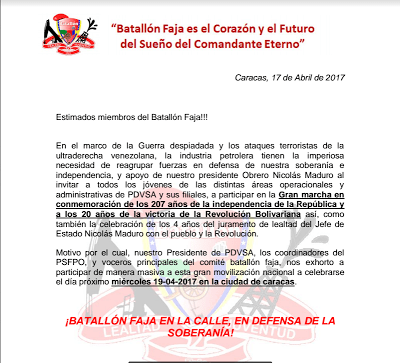
This memo of April 17 “exhorts” PDVSA employees from the Orinoco area (almost a day drive to Caracas) to attend the regime called counter march to block access to the opposition to downtown Caracas. It starts with the following words “Within the merciless War and the terrorist attacks of the venezuelan ultra right, the oil industry has the imperious need to regroup its forces in the defense of our sovereignty and independence, and support to our Worker president Nicolas Maduro to invite all….” you get it.  I respected the words with capital letters as I think they betray the subconscious of whomever wrote this memo.

Of course outside the country no body is buying it and even Cuba takes its distances from an eventual bloodbath for which they probably gave the order to the army. the local representation of the European Union had a communique (rather vague but better than nothing, and at least implying that the EU will have observers in the streets). OAS secretary on the other hand went all out with a communique of a strength unheard of in the OAS, which reflects the major hemispheric concern about what Maduro is trying to do. In English.

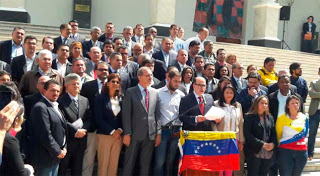
Of course, solemne declarations also exist in Venezuela, like the one from the National Assembly with a solid representation of its members, putting a face to the resistance to Maduro, and putting a face to its possible victims tomorrow.

The hour is dire indeed.

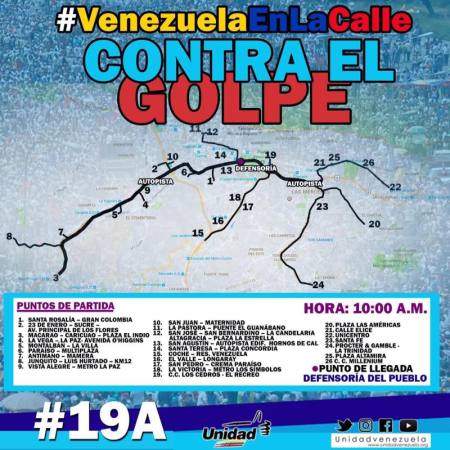
The opposition has convened a freedom march tomorrow starting from more than a dozen points in Caracas. As such it is impossible to block unless the regime acts early to block through whatever means the starting points in downtown Caracas, their hallowed excuse for repression.

The regime who dodged such a massive show of strength by the opposition last year through a fake dialogue has not found any excuse this time to slow down the mounting protest. The aslt two weeks fo marches and repression only seem to have united the opposition and render it more decided to end this conflict once and for all.

All sorts of threat have been uttered such as this Monday promises to arm the militia to maintain order against the opposition. That an election would be the best way to end the conflict is not an option for a regime who knows that 1) it will lose them and 2) it will have its leadership go to jail shortly afterwards for the crimes committed.  So we have pictures like this one commented by Le Monde from France. Of course, when you are an European and you see brown shirts like that with a peppering of military you jump. This is possibly the worst message to be read in any capital of Europe, probably even Budapest (Ankara is not in Europe and will never be apparently, but I digress).

Le Monde underlines this:

« Fini le temps des traîtres, des trahisons, fini le temps des hésitations, que chacun se définisse : on est avec la patrie ou on est contre elle ! », a lancé le président vénézuélien, lundi.
“The time of traitors is over, the times of hesitation is over, may each one self define: we are with the fatherland or we are against it.” thrown by the venezuelan president on Monday.

Sieg Heil would do nice at the end of that.

We also read the declarations of 11 LatAm countries warning the regime about abuse tomorrow. It is nice to see that Tal Cual reports on this lifting the logo of this blog, a logo since 2003 which has been lifted by several people from chavistas to Tal Cual. Lifted by Tal Cual is an honor and proves that at least someone there reads my blog. I do take the best pictures, check out my instagram 🙂

But again I digress.

The point here is that Maduro seems to go all out against tomorrow and he is clearly wanting a confrontation to solidify his dictatorship. Will the army oblige?

Meanwhile tomorrow in Caracas you may choose your meeting point for 10:00 AM. I will start from Plaza Las Americas #20 if anyone cares to meet me. And I will try to post stuff through Instagram if signal allows, which is rare when so many people are in the street using bandwidth. It will be nice if I could get a pic from EVERY starting point to post it here tomorrow evening.

Que este sea el punto de partida de la mayor presión que se haya hecho contra la dictadura. Desbordemos Vzla.


Venezuela: State Sponsor of Terrorism?

February 18, 2017

Venezuela: State Sponsor of Terrorism? Investigative Project on Terrorism, February 17, 2017

1977

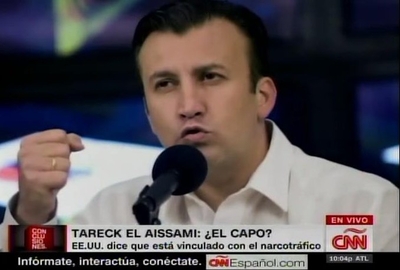
U.S. intelligence has long considered Tareck El Aissami as a key figure in the global narcotics trade with ties to Iran. He oversaw massive shipments of drugs from Venezuela to other countries, including the United States, and issued identification documents to Hizballah operatives. But El Aissami isn’t an affiliate of Hizballah or the Iranian Revolutionary Guard Corp (IRGC). El Aissami is the vice president of Venezuela.

After an extensive Treasury Department investigation spanning several years, the Trump administration levied sanctions against El Aissami on Monday, freezing his assets in the United States and prohibiting business relationships with him. American officials have previously identified and sanctioned other senior Venezuelan officials involved in drug trafficking operations with Colombian FARC and close cooperation with Iran’s terrorist activities.

U.S. officials previously have criticized Venezuela’s failure to cooperate on global counterterrorism issues. Yet these latest allegations – surrounding the upper echelons of Venezuela’s government – suggest that the South American country has devolved into a full-blown state sponsor of terrorism.

Earlier this month, CNN received a 2013 secret intelligence document from several Latin American countries highlighting ties between El Aissami and 173 Venezuelan identification cards and passports issued to people from the Middle East, including Hizballah affiliated personnel. El Aissami “took charge of issuing, granting visas and nationalizing citizens from different countries, especially Syrians, Lebanese, Jordanians, Iranians, and Iraqis,” the report shows.

Previous U.S. reports detailed blatant corruption and vulnerabilities on Venezuela’s borders, failing to even conduct basic biographic screening at various ports of entry. However, the allegations surrounding El Aissami’s operations take these security concerns to a whole new level. One of the most powerful leaders of a large Western country stands accused of facilitating terrorist infiltration into other states, including the United States.

The Simon Wiesenthal Center also suggests that El Aissami served as an interlocutor between Iran and Argentina in an effort to hide the Islamic Republic’s role in coordinating the 1994 Jewish Center bombing in Buenos Aires. Hizballah operatives are widely believed to be responsible for that attack, which killed 85 people and wounded 300. Moreover, a Wiesenthal Center representative in South America fears that El Aissami may encourage the Venezuelan government to adopt formal state policies based on anti-Semitism.

Under the reign of former President Hugo Chavez, Iran exploited friendly ties with Venezuela to establish terrorist networks throughout region. Iranian and Hizballah operatives have cultivated and consolidated operating bases in South America, especially in the tri-border area (TBA) of Argentina, Brazil and Paraguay. With a large Muslim population featuring significant numbers of Hizballah sympathizers, the terrorist organization uses this area for recruitment, arms smuggling and drug trafficking, and logistics planning for terrorist operations.

Hizballah also relies on legitimate businesses and front organizations in the region, diversifying its terrorist financing profile to generate a significant portion of its revenues from its Latin American operations. With Venezuelan help, the terrorist group continues to expand its presence and consolidate support in other Latin American countries. Hizballah has even registered as a political party in a Peruvian region characterized as having that nation’s largest Muslim population.

Yet Venezuelan ties to drug trafficking and terrorists are not limited to South America. The Treasury Department also revealed that El Aissami helped coordinate narcotics shipments to drug cartels operating on the U.S. border, including Mexico’s infamous Los Zetas. In 2011, Virginia prosecutors said that a Lebanese man helped the Mexican Los Zetas drug cartel smuggle of more than 100 tons of Colombian cocaine. The U.S. Treasury Department claimed that Hizballah benefitted financially from the criminal network.

Later that year, the United States disrupted an IRGC-led plot in cooperation with a Mexican drug cartel to assassinate Saudi Arabia’s Ambassador to Washington.

The problematic nexus between Iranian-backed operatives – including Hizballah – and Mexican drug cartels allows terrorists to earn big money to fuel their violent operations. These connections also enable Hizballah to make inroads into the United States through its porous border with Mexico.

In a 2011 testimony before a House Homeland Security subcommittee, Roger F. Noriega, former U.S. ambassador to the Organization of American States, highlighted the danger posed to U.S. homeland security from the growing Hizballah presence in Latin America:

“The more broad implication for U.S. homeland security is that Hizballah—via Iran and Venezuela—has engaged the United States in an offensive strategy of asymmetric warfare on our doorstep. It is aiming to win the mental battle of attrition and the moral battle of legitimacy—particularly with the youth in Latin America. Unless our government recognizes and responds to their efforts, our ability to protect our interests and our homeland will be gradually and dangerously diminished.”

That testimony is as relevant today as it was years ago, foreshadowing continued cooperation between Iran, its terrorist proxies, and the government of Venezuela. Now with a vice president who maintains intimate ties to a variety of violent organizations, Venezuela has transitioned from a safe haven for nefarious activities to a global state sponsor of terrorism.

Congress Wants New Sanctions on Venezuela for Ties to Iran-Backed Terrorists

February 9, 2017

Congress Wants New Sanctions on Venezuela for Ties to Iran-Backed Terrorists, Washington Free Beacon, February 9, 2017

(Based on what I read daily in the Latin American Herald Tribune and local Panamanian papers, the proposal would likely do substantially more harm than good. Maduro’s supporters would jump on anything useful to damn American imperialism: “Imperialistic America is interfering in Latin American affairs again!

Panama is still mad at Theodore Roosevelt for creating Panama out of part of Colombia — even though an annual holiday rejoicing over Panamanian independence from Colombia is widely celebrated — and for our “imperialism” in building the Panama Canal– an economic resource we turned over to Panama years ago and which provides mucho dinero for Panama.

Clearly, Maduro is an uneducated, corrupt jerk and has worsened the mess left by el Thugo Chavez. Food? Medicine? Toilet paper? Human rights? Human dignity? freeing imprisoned opposition leaders? Democracy? No way, Jose.  There is little or nothing we can do to improve the lives or to change the regime under which Venezuelans now exist. –DM)

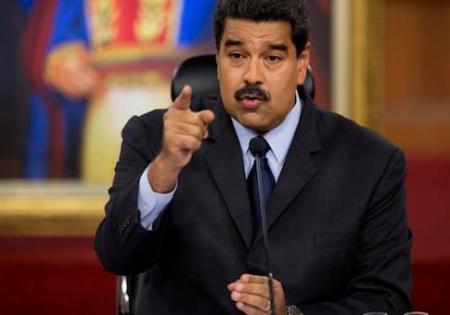
Venezuela's President Nicolas Maduro, speaks during a press conference with international and national press at Miraflores presidential palace in Caracas, Venezuela, Wednesday, Jan. 18, 2017. Maduro speaks about the economic war his government have faced and measures to stabilize economy. (AP Photo/Ariana Cubillos)

Venezuela’s President Nicolas Maduro, speaks during a press conference with international and national press at Miraflores presidential palace in Caracas, Venezuela, Wednesday, Jan. 18, 2017. (AP Photo/Ariana Cubillos)

A bipartisan team of lawmakers is calling on President Donald Trump to immediately sanction Venezuela for its ongoing human rights violations and ties to terrorist organizations that reach the highest levels of government, according to a new congressional communication sent to the White House.

Sen. Bob Menendez (D., N.J.) and Rep. Ileana Ros-Lehtinen (R., Fla.) petitioned the White House this week to take action against Venezuela and sanction leading government officials, including the country’s second-in-command, Tareck El Aissami, who is believed to have ties to radical terror organizations.

Venezuela has been devolving into further chaos in recent months as the oppressive socialist regime of Nicolas Maduro continues its crackdown on dissident voices and other reformists.

Maduro caused an outrage in the United States earlier this year when he appointed former regional governor El Aissami to a high-level post that puts him next in line to assume control from Maduro. Aissami has long been accused of having ties to drug kingpins and radical terrorist organizations.

Rogue nations such as Iran have made overtures to anti-Western nations such as Venezuela in an effort to boost the number of rogue nations thriving in America’s backyard. Numerous experts have claimed Hezbollah, an Iranian proxy group, and other terrorist forces have been spotted moving across Latin America.

The call for sanctions by these lawmakers comes as the Trump administration considers ratcheting up international pressure on a range of bad actors, including Iran, North Korea, and others. Many GOP leaders in Congress have been urging the White House to be more aggressive when it comes to dealing with rogue nations across the globe.

“We are writing to request that your administration take immediate action to sanction regime officials responsible for the ongoing dire humanitarian situation, oppressive human rights conditions, and unconscionable corruption taking place in Venezuela,” write Menendez and Ros-Lehtinen, according to a copy of the letter obtained by the Washington Free Beacon.

“Moreover, Maduro’s recent appointment of Tareck El Aissami puts him next in line to possibly become the next leader of Venezuela, which is extremely troubling given his alleged ties to drug trafficking and terrorist organizations,” the lawmakers write.

“It is extremely concerning that the Maduro regime continues to undertake increasingly authoritative measures against innocent people in Venezuela,” according to the letter, which accuses the Venezuelan leader of committing mass human rights atrocities in an effort to retain power.

“The opposition has been subjected to intense persecution, being vilified on state media by Maduro regime officials, routinely accused of false crimes, and arbitrarily imprisoned,” the lawmakers write, adding that there are more than 100 political prisoners, including U.S. citizens, being held captive in the country.

“We believe that all of them must be freed,” the lawmakers write. “Maduro has also relied on corrupted branches of his regime, such as the Supreme Court and the National Electoral Council, to invalidate actions undertaken by the National Assembly, including an amnesty bill for the country’s political prisoners and a motion for a constitutionally enshrined recall referendum on the presidency.”

The United States must take aggressive action against Venezuela in order to further isolate Maduro’s government and spark regime change, according to Menendez and Ros-Lehtinen.

U.S. business interests also are at stake, according to the lawmakers, who make the case that corruption in Venezuela is harming American interests. Many companies, they say, have been forced to pay millions in bribes to Venezuelan officials in order to complete business transactions in the country.

“We are concerned that over payments of food contracts could likewise represent a potential liability for U.S. companies,” according to the letter. “Thus, we believe that the Office of Foreign Assets Control [OFAC] should issue clarifying regulations to ensure that U.S. companies do not inadvertently engage in business directly with any corrupt regime entity in Venezuela that would violate the Foreign Corrupt Practices Act of 1977.”

The appointment of El Aissami is particularly concerning to Menendez, Ros-Lehtinen, and others in Congress.

El Aissami has been suspected of issuing passports to members of the Hamas and Hezbollah terror groups during his tenure overseeing the country’s immigration bureau.

El Aissami also has been alleged to have played a role in the recruitment of radicalized individuals to Hezbollah.

“The nexus between corruption, drug trafficking, and the influence of extremist terrorist organizations in Venezuela is well documented, many of these nefarious and illicit activities are associated with El Aissami,” the lawmakers write.

America is addicted, sleepy and becoming comatose.

October 18, 2016

America is addicted, sleepy and becoming comatose, Dan Miller’s Blog, October 18, 2016

(The opinions expressed in this article are mine and do not necessarily reflect those of Warsclerotic or its other editors. — DM)

Hillary and her media titillate us with their sexual fantasies and put us to sleep with heroin for the body and heroin for the mind. Trump yells “Wake up and Fix our open borders!” Hillary mumbles “America is already great and that’s not who we are.” Is “H” for Hillary or Heroin?

hillbutton

Sources of America’s Hard Drugs

Most heroin consumed in America enters across our southern border.

According to the DEA, the majority of the heroin consumed in the United States comes from Mexico (50%) and Colombia (43-45%) via Mexican criminal cartels such as Sinaloa Cartel.[90] However, these statistics may be significantly unreliable, the DEA’s 50/50 split between Colombia and Mexico is contradicted by the amount of hectares cultivated in each country and in 2014, the DEA claimed most of the heroin in the US came from Colombia.[91] As of 2015, the Sinaloa Cartel is the most active drug cartel involved in smuggling illicit drugs such as heroin into the United States and trafficking them throughout the United States.[92]

That’s the border that Trump wants to close and Hillary wants to keep open for the Mexican criminal cartels, rapists, other criminals and potential Democrat voters; U.S. citizen or non-U.S. citizen? What difference it make now? Just play Catch and Release.

Heroin is not the only “recreational” drug transiting our southern border.

Venezuela, Iran, USA and Narco-Terrorism

[D]eeper and more alarming than the Venezuelan homicide toll, there appears to be an imminent threat to the entire Western hemisphere from partnerships between Venezuelan drug traffickers and terrorist networks like Hamas and Hezbollah, two groups that act a proxies for Iran.

Together, terrorism and illegal drugs represent a significant export for Venezuela. Iran and Venezuela partner together to move terrorist cells and drugs to hubs in the United States and throughout North America.

. . . .

Hezbollah’s annual budget of more than 100 million dollars is provided by the Iranian government directly and through a complex system of finance cells scattered around the world, from Bangkok and Paraguay to Michigan and North Carolina.

Far from being the passive beneficiaries of drug-trafficking expats and sympathizers, Hezbollah has high-level officials directly involved in the South American cocaine trade and its most violent cartels, including the Mexican crime syndicate Los Zetas. Hezbollah’s increasing foothold in the cocaine trade is facilitated by an enormous Lebanese diaspora.

. . . .

Alongside their efforts to battle their own serious homegrown drug problems in Iran, the Revolutionary Guards are also reportedly working to harness the strategic and tactical potential of the international drug trade in order to advance Iran’s expansion. [Emphasis added.]

. . . .

At the same time, the U.S. administration continues to purchase 10% of its oil (roughly 300 million barrels per year) from Venezuela, the same entity that it sanctioned in 2011 for shipping gasoline to Iran.

This is all happening while terrorist groups are regularly connecting to drug cartels in the region, and forging a deepening narco-terror machine that in turn is funding terrorist activities. [Emphasis added.]

Miami: Three Hizballah operatives busted for laundering $500,000 of cocaine money for Colombian cartel:

Hizballah is a wholly owned and operated subsidiary of the Islamic Republic of Iran. Iran has repeatedly declared its intention to destroy the United States, as you can read about in detail in my book The Complete Infidel’s Guide to Iran (Regnery). Hizballah working with the drug cartel kills two birds with one stone: drugs weaken and destroy Americans, and sap American resources in largely futile anti-drug efforts, and the cash Hizballah earns in working with the drug cartel goes for more jihad against the U.S. [Emphasis added.]

How do the drugs get to America and elsewhere?

Drug ‘mule’ aged 12

Police in New York said the boy, a U.S. citizen who had been living with grandparents in Nigeria, is one of the youngest drug ‘mules’ they have ever seen.

He was only caught because his body began to pass the condoms the drug was hidden in while he was in a taxi.

Doctors who removed the remaining ‘packages’ from his colon said he would have died if one had burst. [Emphasis added.]

Police said the boy, Prince Nnaedozie Umegbolu, made the dangerous journey because he wanted to see his mother, who lives in Atlanta, Georgia. He was to be paid £1,200.

His father, Chukwunwieke Umegbolu, is in prison in Virginia for drugsmuggling.

The boy’s journey began in Nigeria where drug smugglers gave him the condoms to swallow.

He then travelled alone to London by Air Nigeria before flying on to New York by British Airways.

Please see also,  Here’s What It Feels Like to Smuggle 700 Grams of Cocaine in Your Stomach and The Down And Dirty Of Vagina Smuggling.

(Update — This new Project video was just posted. It’s about vote fraud and how to engage in it without being caught.)

(Update — This new Project video was just posted. It’s about vote fraud and how to engage in it without being caught.)

Heroin for the mind

Don’t look behind the curtain; you might see how the witch wizards are feeding us heroin for the mind.

Conclusions

America has a substantial drug problem; most hard drugs, such as heroin and cocaine, come across our southern border with help from Iran and its proxies. Trump wants to close the border to “undocumented aliens” and Hillary wants to keep it open to all, regardless of why they are coming and regardless of the consequences to Americans (as well as to young drug mules). Trump has the first endorsements ever by the Border Patrol Employees’ Union and the Immigration and Customs Enforcement Employees’ Union because they are not being permitted to do their jobs.

Aside from her hopes for votes from new Democrat voters, why does Hillary support open borders? I don’t know because (unlike Abraham Lincon) she often lies about what she thinks and wants. But is it possible that she favors a continuous and copious supply of hard drugs for many of her supporters in large, Democrat controlled, American cities? Because she believes that America should share the disasters the “third world” continues to face? Because has sees no problem with this?

an imminent threat to the entire Western hemisphere from partnerships between Venezuelan drug traffickers and terrorist networks like Hamas and Hezbollah, two groups that act a proxies for Iran.

Together, terrorism and illegal drugs represent a significant export for Venezuela. Iran and Venezuela partner together to move terrorist cells and drugs to hubs in the United States and throughout North America.

Perhaps she is uncomfortable with the notions that, despite the Iran Scam, Iran continues to be our enemy and that Iranian proxies Hezbollah and Hamas are terrorist organizations.

If Hillary becomes our next president, will America’s already serious problems with Iran and drugs worsen? I think so.

Iran Expanding Terror Network in Latin America

August 23, 2016

Iran Expanding Terror Network in Latin America, Washington Free Beacon, August 23, 2016

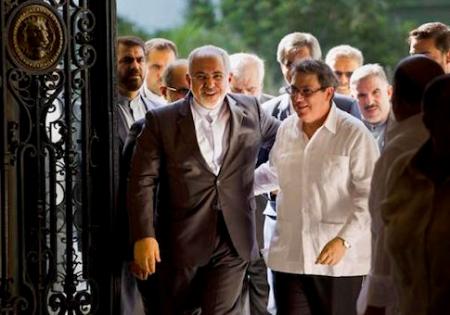
Iranian Foreign Minister Mohammad Javad Zarif, left, is welcomed by Cuban Foreign Minister Bruno Rodriguez, in Havana, Cuba, Monday, Aug. 22, 2016. Iran’s foreign minister begun a Latin American tour in Cuba, declaring Iran and Cuba united by their histories of resisting what he called U.S. atrocities. Zarif also plans to visit Nicaragua, Ecuador, Chile, Bolivia and Venezuela. (AP Photo/Ramon Espinosa)

Iranian Foreign Minister Mohammad Javad Zarif, left, is welcomed by Cuban Foreign Minister Bruno Rodriguez, in Havana, Cuba, Monday, Aug. 22, 2016.  (AP Photo/Ramon Espinosa)

Iran is solidifying its foothold in Latin America, sparking concerns among U.S. officials that the Islamic Republic will enlist these regional allies in its push to launch terror attacks on U.S. soil, according to conversations with congressional sources.

Iranian Foreign Minister Javad Zarif has been on a diplomatic tour through key Latin American countries known for hostility towards the United States, including Cuba, Venezuela, and a host of other countries believed to be providing shelter to Iranian terrorist proxies such as Hezbollah.

As Iranian-ally Russia boosts its spy operation in the region, sources have raised concerns about the rogue nations working together to foster anti-U.S. unrest.

Zarif’s trip through the region has raised red flags among some senior congressional sources familiar with the region. For example, Zarif took aim at the United States and touted the regime’s desire to align with anti-American countries during his stay in Cuba.

One senior congressional source who works on the issue said to the Washington Free Beacon that Iran is seeking to recruit “potential terrorists who want to cause the U.S. harm.”

Increased ties between Iran and these Latin American nations are setting the stage for terrorists to penetrate close to U.S. soil with little detection.

These individuals “can travel easily to Venezuela, and once there, they can get to Nicaragua or Cuba without passports or visas, which poses a national security risk for our nation,” the source explained.

Iran has also reopened its embassy in Chile, a move that has only added fuel to speculation among U.S. officials that the Islamic Republic is making moves to position its global terror network on America’s doorstep.

“The threat to U.S. national security interests and our allies should be setting off alarm bells,” Rep. Ileana Ros-Lehtinen (R., Fla.), chair of the House Subcommittee on the Middle East and North Africa, said in a statement about Zarif’s Latin American tour.

“The Obama administration has failed to prevent Russia and China from expanding in our Hemisphere, and now Iran is once again stepping up its efforts to gain a greater presence to carry out its nefarious activities,” Ros-Lehtinen said. “I urge the White House to stop downplaying the Iranian threat and take immediate action to prevent the world’s leading state sponsor of terrorism from establishing a regional safe haven in the Americas.”

Asked to comment on Zarif’s trip and the potential repercussions on Monday, a State Department official said to the Free Beacon that the administration had no comment.

Ros-Lehtinen said the high-profile trip by Zarif should serve as a warning.

“The timing of Zarif’s trip is significant as Iran could use many of these rogue regimes to circumvent remaining sanctions, undermine U.S. interests, and expand the drug trafficking network that helps finance its illicit activities,” she said. “Tehran’s classic playbook is to use cultural centers, new embassies or consulates, or cooperative agreements on various areas to act as façades aimed at expanding Iran’s radical extremist network.”

The renewed concerns about Iran’s footprint in Latin America comes nearly two years after the State Department said Tehran’s influence in the region was “waning.”

“The timing of Zarif’s trip speaks volumes,” said the senior congressional aide who would discuss the issue only on background. It “is worrisome that as we just celebrated the 22nd year of the horrific terrorist attack against the AMIA Jewish community center in Argentina, Iran can now have personnel nearby in a new embassy in Chile.”

“Just recently, a Hezbollah member was picked up in Brazil, an explosive device was found near the Israeli embassy in Uruguay, and Hezbollah members are reportedly traveling on Venezuelan passports,” the source added. “It was not too long ago that Venezuela offered flights to Iran and Syria, and as of last week, Hezbollah cells were found in the West Bank where Venezuela lifted its visa requirements for Palestinians.”

Zarif slammed the United States on Monday during a speech in Havana.

“Iran and Cuba could prove to the U.S. that it cannot proceed with its policies through exerting pressure on other countries,” Zarif said, according to Iran’s state-controlled media.

“Now the time is ripe for realizing our common goals together and implement the resistance economy in Iran and materialize [Cuban dictator Fidel] Castro’s goals of reconstruction of the Cuban economy,” Zarif added.

Zarif went on to note that Iran “has age-old and strong relations with the American continent and the Latin American countries.”

Zarif is reported to have brought along at least 60 Iranian officials and executives working in the country’s state-controlled economic sector.

Behnam Ben Taleblu, senior Iran analyst at the Foundation for Defense of Democracies, told the Free Beacon that Iran has boosted efforts to engage Latin America in the wake of last summer’s nuclear agreement.

“Iran’s Foreign Minister Mohammad-Javad Zarif is aggressively continuing Iran’s diplomatic outreach, a policy which began early in the Rouhani administration and was kicked into high gear in the aftermath of the JCPOA—last summer’s nuclear deal,” he said. “Zarif’s sojourn into the Western hemisphere follows on the heels of his May visit to the region. Zarif’s trip symbolically commences in Havana, Cuba, where the Iranian foreign minister harped on themes of steadfastness and resistance to American legal and economic pressure.”

The Iranian leader’s goal is to “build on this experience to help promote an anti-American and anti-capitalist world order,” he added. “What’s most clear however, is that in addition to seeking to solidify the anti-American political orientation of these states, Iran aims to capitalize on the increasingly detached stigma of doing business with it in the aftermath of the nuclear accord. Therefore, we can expect to see trade deals or memorandums of understanding inked. In short, Iran will be looking to deepen to its footprint in Latin America.”

Socialist Dictator of Starving Country Vows to Repress Opposition Even Harder

August 21, 2016

Socialist Dictator of Starving Country Vows to Repress Opposition Even Harder, Front Page Magazine, Daniel Greenfield, August 21, 2016

(I have fond memories of Venezuela from the late 1990’s, when my wife and I visited on our sailboat. That was about when Chavez came to power.  He moved slowly, at first, to foul up everything. Crime was not then a big problem, even in Caracas. Food and medicine were plentiful and it was rare to see someone who seemed unhappy. The then new subway system was excellent, as was bus transportation. Distant from Caracas, the city of Merida had an excellent university; we attended a concert there (it cost about 25 cents each) to listen to a conductor from Julliard conduct a German orchestra. What’s going in Venezuela now makes me very sad. If you would like to learn what’s happening there now, the best site, Venezuela News and Views, is run by a French chap named Daniel who still lives there. The situation keeps getting worse and worse. — DM)

mussolini_1

“If the opposition crosses the line, they will find out that Erdogan is a nursing infant next to me and I don’t give a damn about what the OAS says,” Maduro said during a live televised speech.

**********************

Venezuela, a country with oil wealth and a Socialist dictator, has food riots. The left lost the last election. But it just rigged the court system and is now operating as a brutal dictatorship with big plans.

In a replay of one of the ugliest chapters in the two-decade rule of the socialist party in Venezuela, a top government official said Thursday that a list of those who signed a petition seeking to recall President Nicolas Maduro will be handed over to government ministries and state-run companies.

“In a revolution, revolutionaries must be in charge of state institutions, not political opponents,” Diosdado Cabello, a top official in the ruling Socialist Party and a lawmaker, said at a rally. “This is not a violation of the right to work.”

Funny how “revolutionaries” became the repressive government busy putting down a revolution.

Cabello has made similar threats earlier this year, but Thursday’s comments brought back memories of the so-called Tascon List which was used by the government under then President Hugo Chavez to fire state workers and bar others from everything from jobs to loans for having signed a petition for a recall referendum in 2004 that Chavez eventually survived. The list was compiled by then lawmaker Luis Tascon and electronic versions of the list circulated throughout Venezuela even being sold by sidewalk vendors. Some Venezuelans even attempted to pay officials to be removed from the list.

A former army captain, Cabello aided Chavez launch a failed coup in 1992 that would eventually help propel the late socialist leader to the presidency.

And Maduro is promising purges and more purges.

Embattled Venezuelan President Nicolas Maduro warned the opposition asking for his recall that he is “prepared” to outperform Turkey’s Recep Erdogan when it comes to violent repression.

“If the opposition crosses the line, they will find out that Erdogan is a nursing infant next to me and I don’t give a damn about what the OAS says,” Maduro said during a live televised speech.

Also on Thursday, two journalists were detained and released after five hours for taking pictures of what authorities are now calling “the Presidential Corridor”: A portion of Caracas’ Sucre avenue that leads to the Miraflores Presidential Palace.

The opposition has called for a nationwide march on September 1st, asking that the recall against Maduro moves forward more rapidly, setting the stage for an almost certain confrontation between the anti-Maduro forces and the “colectivos”, a paramilitary faction of chavismo that uses handguns and motorcycles to enforce chavista rule in Venezuela.

Maduro riffed on the Erdogan theme for several minutes: “Let’s hope the right wing does not make that mistake, Erdogan is just wearing diapers, where I am already prepared,” he said.

Maduro might want to learn from Mussolini instead.

Is Russia Plotting To Bring Down OPEC?

October 11, 2015

Is Russia Plotting To Bring Down OPEC?

By
Posted on Sun, 04 October 2015 00:00

Source: Is Russia Plotting To Bring Down OPEC? | OilPrice.com

President Putin’s recent moves in the Middle East—to shore up Bashar al-Assad’s regime in Syria through deployment of combat aircraft, equipment, and manpower and build-out of air-, naval-, and ground-force bases, and the agreement in the last week with Iran, Iraq, and Syria on intelligence and security cooperation—could contribute to Russian efforts to combat the myriad negative pressures on Russia’s vital energy industry.

Live by Energy…

Energy is the foundation of Russia, its economy, its government, and its political system. Putin has highlighted on various occasions the contribution Russia’s mineral wealth, in particular oil and natural gas, must make for Russia to be able to sustain economic growth, promote industrial development, catch up with the developed economies, and modernize Russia’s military and military industry.

Even a casual glance at the IMF’s World Economic Outlook statistics for Russia shows the tight correlation since 1992 between GDP growth on the one hand and oil and gas output, exports, and prices on the other (economic series available here). According to the IMF’s 2015 Article Iv Consultation-Press Release and Staff Report, published August 3, oil and natural gas exports comprised 65 percent of exports, 52 percent of the Federal government budget, and 14.5 percent of GDP in 2014. Including their domestic contribution, hydrocarbons represent ~30 percent of GDP.

While oil and natural gas are crucial to Russia, Russia’s crude and natural gas are crucial to its neighbors on the Eurasian landmass. Russia supplied about 30 percent (146.6 bcm) of Europe’s natural gas in 2014, and about 25 percent of its crude (3.5 mmbbl/day) in 2013. Russia’s oil and natural gas are also important to its Asian and Central Asian neighbors.

It is not only the commodities that make Russia crucial, but its massive land-based infrastructure for their distribution throughout the Eurasian landmass. As Tatiana Mitrova, head of the oil and gas department, Energy Research Institute, Russian Academy of Sciences, pointed out regarding natural gas in The Geopolitics of Russian Natural Gas:

“Russia has a unique transcontinental infrastructure in the heart of Eurasia (150,000 km of trunk pipelines), which also makes it a backbone of the evolving, huge Eurasian gas market (which could include Europe, North Africa, the Commonwealth of Independent States (CIS), Caspian Sea region, and Northeast Asia). Control over the transportation assets in this region together with vast gas reserves make Russia the key element of this new market.”

The land-based oil distribution network is smaller, but also important. The 4,000 km Druzhba pipeline delivers about 1 mmbbl/day of crude to Europe—about 30 percent of total shipments to Europe. In the Far East, Rosneft shipped 22.6 million tons of crude to China in 2014 through the East Siberian Pacific Ocean (ESPO) pipeline.

The Russian government continues to seek to extend and expand the natural gas distribution infrastructure—into Europe, with various proposed pipeline projects (Nord Stream 2, Turkish Stream 2, 3, and 4, South European Pipeline), and into China, with two large pipeline projects, Power of Siberia Pipeline (to supply China from East Siberia), and the proposed Altai pipeline (to supply China from West Siberia).

…Death by Energy

In the last few years, the threats to Russia’s energy industry have multiplied and intensified. They pose an existential threat to the industry and therefore to the Russian economy:

– The revenues Russia can earn from its crude and natural gas exports face intense pressure. The Saudi decision to let the market set prices and to pursue market share, has led to steep declines in crude and petroleum product prices. The decision also has impacted natural gas export prices negatively, since, for Russia’s long-term supply agreements, they wholly or partially are indexed to oil prices. The transition in Europe to hybrid natural gas pricing models (which take European spot hub prices into account) also has pressured natural gas pricing. (Natural gas data from Gazprom).

Adding to the revenue pain, natural gas export volumes have been falling, according to Gazprom (which has a monopoly on pipeline exports), as have domestic volumes within Russia:

It is therefore not surprising that the aforementioned IMF Article Iv Consultation-Press Release and Staff Report projected sharp declines in 2015 and 2016 from 2014 levels for oil export revenues ($109.8 billion and $96 billion respectively) and natural gas export revenues ($12 billion and $14.3 billion respectively).

– The U.S. and European Union’s decisions to impose—and maintain—sanctions on Russia after its invasion and annexation of Crimea and invasion and informal annexation eastern Ukraine will pile more pressure on the Russian energy industry. They include bans on financing for and the supply of critical equipment and technology to important Russian energy projects. Novatek and its partners Total and Chinese National Petroleum Company still lack $15 billion of the $27 billion needed to finance the Yamal LNG plant. Denis Khramov, Russia’s deputy Minister of Natural Resources, said September 28 at a conference in Russia’s Far East that Rosneft and Gazprom are delaying some offshore drilling by two to three years because of sanctions and low oil prices. The sanctions are also impeding Gazprom’s ability to develop the Chayandinskoye and Kovyktinskoye fields in eastern Siberia, from which it plans to supply natural gas to China under the bilateral $400 billion, thirty year deal signed in 2014.

– Following the Russian invasion of Crimea and eastern Ukraine, The European Union is now even more determined to reduce its dependence on Russia for natural gas and to force Gazprom submit to EU competition rules. Europe has sought and continues to seek alternatives Russian natural gas (among them, U.S. LNG and Iranian pipeline and/or LNG). The European Commission, the European Union’s executive body, has refused to bless Gazprom’s proposed 55 bcm/year Nord Stream 2 natural gas pipeline project, citing existing surplus Gazprom pipeline capacity into Europe and insufficient future demand for Russian natural gas. Also, the EU Commission in April charged Gazprom with violating the EU’s anti-trust laws for anti-competitive practices and unfair pricing in Central and Eastern Europe. If found guilty, Gazprom could face substantial fines of around $1 billion. Even if Gazprom avoids fines and manages to reach a settlement with the EU, as it hopes to do, its European market share and pricing will remain under pressure into the future.

– The emergence of the U.S., along with Canada, as powerful crude, NGL, and natural gas producers is also a major concern for the Russian economy. This has transformed the U.S. from a market for Russian crude and natural gas (via LNG) to a global competitor. If, as seems increasingly likely, the ban on crude exports is lifted, U.S. crude will compete with Russian crude in several key markets. It would also force foreign suppliers to seek other markets for all or part of the exports they previously sent to the U.S. This in turn would intensify competition among these crude exporting countries for share in those markets. In regard to natural gas, its explosive output growth in the U.S. undercut Gazprom’s rationale for its Baltic LNG project (10 mtpa), turned the U.S. into a major (potential) LNG competitor in global LNG import markets, and, via the U.S. toll- and Henry Hub- pricing model, weakened Gazprom’s ability to insist on oil-indexed, long-term contracts.

Saving Russian Energy (and Russia) through the Middle East?

Putin’s moves in the Middle East could help Russia address the impact of these threats to the Russian energy industry. They potentially enhance the attractiveness of Russian crude and natural gas supplies compared to those from Saudi Arabia and its Gulf Arab allies.

In the selection of crude and natural gas suppliers, security is a key consideration for importers. Wary of U.S. naval power, the Chinese, for example, prefer pipeline natural gas supplies over seaborne LNG supplies. Importers therefore must take into consideration the potential threats to transport. In this critical area, Russia enjoys a decided advantage over Saudi Arabia and the Gulf Arab producers, which depend on sea transport through the Persian Gulf and the Red Sea to ship their oil and LNG.

Each of the three routes from these two bodies of water passes through a “choke point” (from the Red Sea, through the Suez Canal to Europe and through the Mandeb Strait to Asia, from the Persian Gulf through the Strait of Hormuz). By adding an airbase to their military presence in Syria, the Russians—coordinating with Iran, Syrian President Assad, and eventually possibly Iraq—would have the capability to disrupt shipments from Persian Gulf and Red Sea terminals.

Russia’s export channels are less susceptible to disruption. With the exception of LNG exports to Asia from Sakhalin, Russia sends natural gas to its customers via pipeline. About 70 percent of Russia’s seaborne oil exports are susceptible to choke points (shipments from two ports on the Gulf of Finland through the Baltic Sea to the Atlantic and one port on the Black Sea through the Turkish Strait/Bosporus to the Mediterranean), while 30 percent are not (pipeline shipments to Europe and ESPO pipeline shipments to the port of Primorsk near Vladivostok).

Putin’s moves also are strengthening Russia’s influence with OPEC. Russia already has extensive and close ties with Iran and Venezuela, and is now laying the basis for such ties with Iraq. Putin has aligned Russia with OPEC’s have nots–the members lacking financial resources to withstand low crude prices for an extended period and that have objected to Saudi policies (Iran, Iraq, Angola, Nigeria, Libya, Algeria, Ecuador, and Venezuela)—against the haves (Saudi Arabia, Kuwait, the UAE, and Qatar). He has continually supported Venezuelan President Maduro’s calls for an emergency OPEC meeting on prices and his efforts to persuade Saudi Arabia to reverse its policy. Most recently, in the beginning of September, Putin told Maduro that the two countries “must team up to shore up oil prices”.

In addition, Russia’s deputy prime minister in charge of energy policy, Arkady Dvorkovich, in the beginning of September made comments that, in tone and substance, mocked Saudi policy, saying that “OPEC producers are suffering the ricochet effects of their attempt to flush out rivals by flooding the world with excess output,” expressing doubt that OPEC members “really want to live with low oil prices for a long time,” and implying that Saudi policy is irrational.

Indeed, Russia can be seen as maneuvering to split OPEC into two blocs, with Russia, although not a member, persuading the “Russian bloc” to isolate Saudi Arabia and the Gulf Arab OPEC members within OPEC. This might persuade the Saudis to seek a compromise with the have nots.

A strategic alliance with Iran and Iraq offers Putin two more potential avenues to pressure the Saudis. They can test Saudi determination to defend their market share at any price and its wherewithal financially to do so. Iran claims it can raise crude output by one million barrels within six or so months of the lifting of sanctions. The Saudis may be calculating that Iran must first rehabilitate its oil fields and that Iran, cash poor, cannot do so quickly. If this is the case, Russia could step in, offer Iran financing, and force the Saudis to contemplate prices staying lower longer than they anticipated and therefore continuing pressure on their economy.

Russia also could cooperate with Iran and Iraq to take market share from Saudi Arabia in the vital Chinese market. As a recent Bloomberg article pointed out, Saudi Arabia, Iran, Russia, Iraq and other countries are vying intensely for sales to China, the second largest import market and the major source of demand growth in coming years. Coordinating their pricing and consistently offering the Chinese prices below the Saudi price, they could seek to win market share. Such a price war would pressure the competitors’ currencies.

Since the Russians allow the Ruble to float, Iran maintains an informal and unofficial peg for its Rial to the US$, and Iraq has indicated it is willing to adjust its peg if necessary, while the Saudis are committed to the Riyal’s peg to the US$, Russia, Iran, and Iraq would have any advantage over Saudi Arabia. To the extent that Iran and Iraq allowed their currencies to adjust, Russian, Iranian, and Iraqi revenues in local currency terms would not decline as much as Saudi revenues fixed in US$ (and might even increase) as their currencies depreciated.

Results

Each of these opportunities offers the possibility to address the pressures on the Russian energy industry. However, Putin will have to play his cards carefully. Played heavy-handedly, he could intensify fears in Europe of excessive dependence on Russian energy supplies and awaken such fears in China. This could lead the Europeans and Chinese to search for other suppliers. In addition, mismanaged confrontation with the U.S. and Europe in and over Syria could lead to broadening and strengthening of economic and financial sanctions. Moreover, neither Iran nor Iraq will want to become overly dependent on Russia, which lacks the resources they need develop their energy industries.

Finally, the opportunities assume Putin’s gambits in Syria and with Syria, Iran, and Iraq in intelligence and security cooperation will succeed. And this, given the Soviet experience in Afghanistan and Putin’s experience in eastern Ukraine, is far from certain.