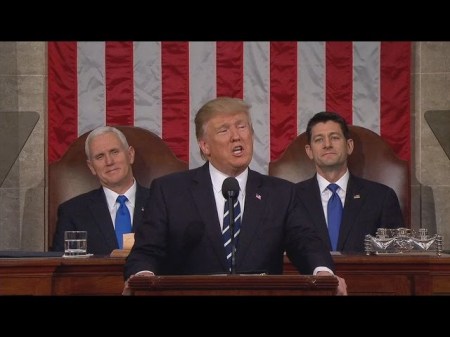
Posted tagged ‘Trump and Israel’

Why Is the US Still Funding Palestinian Terrorism?

April 19, 2017

Why Is the US Still Funding Palestinian Terrorism? Gatestone Institute, Shoshana Bryen, April 19, 2017

(Please see also, Towards the pending Abbas visit to Washington D.C. — DM)

Jamil Tamimi, 57, knew that if he committed an act of terror, he would be lionized by the Palestinian Authority (PA) and — perhaps more importantly — that, if he were killed or sent to prison, his family would be taken care of financially.

“The PLO Commission was new only in name. The PLO body would have the ‎same responsibilities and pay the exact same amounts of salaries to prisoners… PA Chairman Mahmoud Abbas retained overall supervision of ‎the PLO Commission.” — Palestinian Media Watch.

In 2016 Bashar Masalha, who murdered U.S. Army veteran Taylor Force and wounded several others, was hailed on official PA media outlets as a “martyr.” A few months later, Abbas said on PA TV, “We welcome every drop of blood spilled in Jerusalem…. With the help of Allah, every martyr will be in heaven, and every wounded will get his reward.”

The U.S. government should let the PLO and PA know that we are onto their game. Disincentivizing terrorism by closing the PLO office in Washington would be a good first step.

British exchange student Hannah Bladon was stabbed to death on a Jerusalem light rail train last Friday. Her murderer was identified as an East Jerusalem resident who had previously been convicted of molesting his daughter and had tried to commit suicide. Failing at that, he apparently opted for terrorism, on the assumption that the police would kill him. They didn’t. “This,” the Shin Bet said in a statement, “is another case, out of many, where a Palestinian who is suffering from personal, mental or moral issues chooses to carry out a terror attack in order to find a way out of their problems.”

“Suicide by cop” is not unheard of, but the real incentives need to be spelled out.

Jamil Tamimi, 57, knew that if he committed an act of terror, he would be lionized by the Palestinian Authority (PA) and — perhaps more importantly — that, if he were killed or sent to prison, his family would be taken care of financially.

To take the PA leader, Mahmoud Abbas, at his word, the PA itself does not pay salaries or pensions to terrorists in Israeli jails or to their families; the money — instead! — comes from the Palestine Liberation Organization (PLO). That sleight-of-hand would make this a perfect time for the United States, an ally of the UK and properly appalled by terrorism, to take a step it has been avoiding for more than 25 years: to close the PLO office in Washington — preferably before the planned visit by Abbas in May.

The PLO was once understood to be a terrorist organization and a terror umbrella. It hijacked airplanes and threw an elderly disabled man in a wheelchair overboard from a cruise ship. Black September, an arm of the PLO, murdered 11 Israeli Olympic athletes in Munich. The PLO has committed acts of horrific terror in Israel — including massacring bus drivers and their families on holiday. Twenty-five adults and 13 children were killed and 71 others wounded. The PLO has also committed acts of war against the United States by killing American diplomats in Sudan.

In the 1970s and 80s, the U.S. generally knew what it was looking at.

During the Reagan-to-Bush “41”-transition, however, the U.S. dropped its ban on officially talking to then-PLO Chairman Yasser Arafat. (Full disclosure: Colin Powell, then national security advisor, gave this author a “heads up”: “Everyone has something to say,” he said. “The U.S. government already knows what Arafat has to say,” I said, and it is unacceptable.” He was not interested.)

Talking was not the same as opening an office; that move was still prohibited by the Anti-Terrorism Act of 1987. However, in the post-Oslo Accords euphoria, Senate legislation permitted the PLO an official mission in Washington “to implement the accords,” and it allowed President Clinton to waive the law barring U.S. funds to international organizations that gave money to the PLO. The House passed similar legislation. Rep. Howard L. Berman (D-CA) said at the time:

“This legislation provides a limited, temporary and conditional waiver of restrictions in United States law that would seriously impede the ability of Israel and the PLO to proceed with negotiating and implementing their landmark peace agreement.”

It was “conditional” on the PLO meeting its Oslo Accords obligations, including refraining from terrorism and renouncing international moves that would impede bilateral agreement on final status issues. While the legislation was, as Berman said, “temporary,” it came with the usual waiver provision, ultimately allowing Presidents to do as they wished.

Presidents, therefore, beginning with President Clinton, did exactly that, even as the Palestinian Authority supplanted the PLO as the “peace partner” and ignored the Oslo Accords at will.

In 2003, the height of the so-called “second intifada,” the Palestinian terror war against Israel, Colin Powell, by then Secretary of State, waffled through a statement suggesting that the Palestinians kindly refrain from not killing so many Jews. “We need to see a more concerted effort against the capacity for terrorist activity on the Palestinian side… It’s not enough just to have a cease-fire.” He then noted “progress in reducing attacks against Israelis” — but without mentioning that the IDF and Shin Bet had reduced them; not the PA. Nevertheless, President Bush exercised the waiver.

A 2011, a Palestinian bid for recognition as a full member of the UN failed, but the waiver remained. Over U.S. objections, “Palestine” joined the International Criminal Court in 2015. President Barack Obama waived the sanctions every six months — right through two Hamas wars against Israel.

Largely through the work of Palestinian Media Watch (PMW), the question of payments to terrorists and their families has come to the fore. Worried about foreign aid payments from the U.S. and the EU, in 2014 the Palestinian Authority claimed it stopped paying salaries and that future money would come from a new PLO Commission of Prisoner Affairs. However, PMW reported from Palestinian sources:

The PLO Commission was new only in name. The PLO body would have the ‎same responsibilities and pay the exact same amounts of salaries to prisoners; the ‎former PA Minister of Prisoners’ Affairs, Issa Karake, became the Director of the new ‎PLO Commission and PA Chairman Mahmoud Abbas retained overall supervision of ‎the PLO Commission.

Tower Magazine reported that in 2015, a year after the PA “officially” transferred authority over Palestinian prisoners to the PLO, it also transferred an extra 444 million shekels (more than $116 million) to the PLO — nearly the same amount that the PA had allocated in the previous years to its now-defunct Ministry of Prisoners’ Affairs.

Citing PMW, Tower wrote that the transfer to the PLO was meant to evade pressure from Western governments that demanded an end to terrorist salaries — specifically the United States and the UK, which froze payments to the PA in 2016 over the problem.

In the end, perhaps, it does not matter whose bank account transfers the money to whose bank account:

In 2016 Bashar Masalha, who murdered U.S. Army veteran Taylor Force and wounded several others, was hailed on official PA media outlets as a “martyr.” A few months later, Abbas said on PA TV, “We welcome every drop of blood spilled in Jerusalem. This is pure blood, clean blood, blood on its way to Allah. With the help of Allah, every martyr will be in heaven, and every wounded will get his reward.”
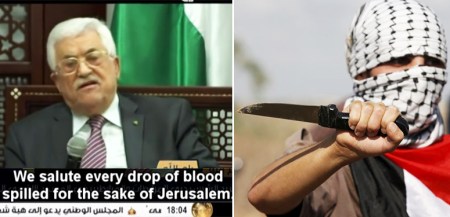
 

Abbas has not said much about Jamil Tamimi, last Friday’s murderer, and it is time to stop encouraging, threatening or demanding that he do so. Rather, the U.S. government should let the PLO and PA know that we are onto their game. Disincentivizing terrorism by closing the PLO office in Washington would be a good first step.
Towards the pending Abbas visit to Washington D.C.

April 19, 2017

Towards the pending Abbas visit to Washington D.C., Israel National News, David Bedein, April 17, 2017

(Please see also, UNRWA Won’t Be Changing School Textbooks and Curriculum. — DM)

With President Donald Trump set to greet Mahmoud Abbas, head of the Palestinian Authority, at the White House on May 3rd, the time has come to examine how the US allowed the PLO to  trample upon ten US government PLO policy guidelines, and to examine what the current US administration can do to see to it that the PLO does not trample on Trump.

The US recognized the PLO during  the final month of the Reagan administration December 1988, on the condition that the PLO would recognize UN resolution 242, which required the PLO to  recognize the right of every nation to secure boundaries  – especially Israel . The PLO immediately ignored this requirements for US recognition.

It is not too late for the US to ask the PLO, under the aegis of the Palestinian Authority, to recognize UN resolution 242, which it has yet to do.

The US acted as  a witness and guarantor of the PLO/Israel Oslo Accords, signed on the White House lawn on September 13, 1993. Known as the DOP, “The Declaration of Principles”, it spelled out mutual recognition of Israel and the PLO, and the formal denunciation of violence and terror. The DOP was premised on its ratification by the Israeli Knesset and by the central committee of the PLO. The Israeli Knesset ratified the DOP on Sept, 26, 1993, by a vote of 61 to 50, with nine abstentions. The PLO central committee was set to meet in Tunis to ratify the DOP on October 6, 1993. However, the one Israeli correspondent dispatched to Tunis to witness the PLO ratification, Pinhas Inbari, on the staff of the left wing newspaper Al HaMishmar, reported from Tunis that the PLO chairman announced that he could not get a quorum of the PLO to attend, so the PLO Central Committee did not convene to ratify the DOP.

It is not too late for the US, as witness and guarantor of the Oslo Accord, to insist the PLO, through the aegis of the PA, ratify the DOP.  Otherwise, the agreement between Israel and the PLO does not hold water.

US law allowed the PLO, all of whose components were designated by the US law as FTOs, Foreign Terrorist Organizations, to open an embassy in D.C. and allowed the PLO to dispatch representatives to the USA, but only if PLO would cancel the PLO Covenant, the document which defined the purpose of the PLO:  To replace and destroy the State of Israel. The PNC, the PLO National Council, met in special session on April 24, 1996, with the stated purpose that this session would renounce and cancel the PLO Covenant. The PLO, at that session, filmed by the Institute for Peace Education Ltd, only announced the formation of a committee to consider changes in the PLO Covenant.

A video and protocol of the session was sent to the US embassy in Tel Aviv, and to the US Congress. Prof. Yehoshua Porat, expert on the PLO and a candidate of  the left wing Meretz party for the Knesset, reviewed the video and protocols of the PNC session, and affirmed that the PLO had not cancelled the PLO Covenant.  The US embassy in Tel Aviv, however, ignored what had actually transpired at the PNC, and instead reported to the White House and to the US Congress that the PLO had fulfilled the requirements of US law with the cancellation of the PLO Covenant, allowing the US to roll out a red carpet to welcome PLO chairman Yassir Arafat as a dignitary in Washington one week later. The PLO was allowed to open an official embassy , which has functioned ever since, conditional on the US President signing a waiver every six months which extends the non- terror status of the PLO.

It is not too late for the US to insist the head of the PLO and the Palestinian Authority call the PNC into a special session to cancel the PLO covenant, as required by US law, before Abbas enters the White House on May 3rd, 2017.  Otherwise, the entry of Abbas to the US represents a challenge to US law.

As an integral part of the US Aid package to the Palestinian Authority, the US funds PA schools which instituted a war education curriculum, despite US objections. That PA curriculum does not prepare Palestinian Arab children to live in state alongside Israel. That curriculum indoctrinates all Palestinian Arab children to conduct a Jihad to liberate Palestine, all of what they considere Palestine, with no attempt to train the next generation for peace with Israel.

It is not too late for the US to demand an overhaul of PA education to prepare the next generation for peace.

US law forbids any agency that receives funds from the US from placing members of a designate FTO  – a foreign terrorist organization — on the payroll of  a US government funded entity. Yet the US funded UNRWA schools, which openly employ members and even leaders of HAMAS, putting them on the payroll. UNRWA, which now receives $400 million of its 1.2 billion dollar budget from the US, has ignored US directives to remove Hamas from the UNRWA  payroll.  And when UNRWA has removed some Hamas leaders from the UNRWA payroll, they simple return as senior employees  of UNRWA.

It is not too late for the US, as the leading donor of UNRWA, to insist that UNRWA fire members and leaders of Hamas who receive salaries from UNWRA – especially Hamas teachers, who dominate the Gaza UNRWA teachers union. Elections are imminent.

It is not too late for the US to reverse its decision to force Hamas into the PA electoral process.

The US helped to create the  PSF, the Palestinian Security Force of the Palestinian Authority. However, the US embassy and US State department have ignored all inquiries challenging the PSF inclusion of Palestinian terror organizations which have never demonstrated any peaceful intentions, to say the least.

It is not too late for the US to ask the PSF to remove  Palestinian terror groups from its ranks.

The US enacted the  Koby Mandell act which requires the US to pursue and prosecute thoe who maim or kill US citizens abroad. Until the inauguration of President Trump, the US would not enforce the act concerning American citizens attacked  in Israel by terrorists. The new Trump administration has begun to file indictments of terrorists who murdered US citizens in Israel.

It is not too late, Trump has demonstrated, for the US government to enforce the Koby Mandell act.

The US established an office in the US State Department to monitor anti Semitism in 2008. However, that office has  refused to examine PA anti-Semitism. While there are rumors that Trump will not renew funding for the US office that tracks anti-Semitism, it is not too late for the US to examine the tentacles of official Palestinian Authority ant-Semitism which can be tracked world- wide.

The US created a special commission to form a Palestinian Authority constitution. However, the Papal Nuncio, Archbishop Pietro Sambi , the late Vatican official who examined the draft of the proposed PA constitution, and reported to the US, wrote  that the current PA constitution, which would form the basis of PA law in a Palestinian Arab state, does not allow for any  juridical status of  any religion other than Islam. Futhermore,  the Papal Nuncio  warned that the proposed US-funded PA constitution was  based on the strict Sharia law used in Saudi Arabia, and not on a more tolerant Sharia law that Archbishop Sambi had witnessed in  his earlier postings in Indonesia and Bangladesh.

It is not too late for the US government to reconsider the nature of jurisprudence that would exist in any kind of future Palestinian Arab entity.

Did the Obama Administration’s Abuse of Foreign-Intelligence Collection Start Before Trump?

April 5, 2017

Did the Obama Administration’s Abuse of Foreign-Intelligence Collection Start Before Trump?, Tablet MagazineLee Smith, April 5, 2017

The accusation that the Obama administration used information gleaned from classified foreign surveillance to smear and blackmail its political opponents at home has gained new traction in recent days, after reports that former National Security Adviser Susan Rice may have been rifling through classified transcripts for over a year that could have included information about Donald Trump and his associates. While using resources that are supposed to keep Americans safe from terrorism for other purposes may be a dereliction of duty, it is no more of a crime than spending all day on Twitter instead of doing your job. The crime here would be if she leaked the names of U.S. citizens to reporters. In the end, the seriousness of the accusation against Rice and other former administration officials who will be caught up in the “unmasking” scandal will rise or fall based on whether or not Donald Trump was actively engaged in a conspiracy to turn over the keys of the White House to the Kremlin. For true believers in the Trump-Kremlin conspiracy theories, the Obama “spying and lying” scandal isn’t a scandal at all; just public officials taking prudent steps to guard against an imminent threat to the republic.

But what if Donald Trump wasn’t the first or only target of an Obama White House campaign of spying and illegal leaks directed at domestic political opponents?

In a December 29, 2015 article, The Wall Street Journal described how the Obama administration had conducted surveillance on Israeli officials to understand how Prime Minister Benjamin Netanyahu and other Israeli officials, like Ambassador Ron Dermer, intended to fight the Iran Deal. The Journal reported that the targeting “also swept up the contents of some of their private conversations with U.S. lawmakers and American-Jewish groups.”

Despite this reporting, it seemed inconceivable at the time that—given myriad legal, ethical, political, and historical concerns, as well as strict National Security Agency protocols that protect the identity of American names caught in intercepts—the Obama White House would have actually spied on American citizens. In a December 31, 2016, Tablet article on the controversy, “Why the White House Wanted Congress to Think It Was Being Spied on By the NSA,” I argued that the Obama administration had merely used the appearance of spying on American lawmakers to corner opponents of the Iran Deal. Spying on U.S. citizens would be a clear abuse of the foreign-intelligence surveillance system. It would be a felony offense to leak the names of U.S. citizens to the press.

Increasingly, I believe that my conclusion in that piece was wrong. I believe the spying was real and that it was done not in an effort to keep the country safe from threats—but in order to help the White House fight their domestic political opponents.

“At some point, the administration weaponized the NSA’s legitimate monitoring of communications of foreign officials to stay one step ahead of domestic political opponents,” says a pro-Israel political operative who was deeply involved in the day-to-day fight over the Iran Deal. “The NSA’s collections of foreigners became a means of gathering real-time intelligence on Americans engaged in perfectly legitimate political activism—activism, due to the nature of the issue, that naturally involved conversations with foreigners. We began to notice the White House was responding immediately, sometimes within 24 hours, to specific conversations we were having. At first, we thought it was a coincidence being amplified by our own paranoia. After a while, it simply became our working assumption that we were being spied on.”

This is what systematic abuse of foreign-intelligence collection for domestic political purposes looks like: Intelligence collected on Americans, lawmakers, and figures in the pro-Israel community was fed back to the Obama White House as part of its political operations. The administration got the drop on its opponents by using classified information, which it then used to draw up its own game plan to block and freeze those on the other side. And—with the help of certain journalists whose stories (and thus careers) depend on high-level access—terrorize them.

Once you understand how this may have worked, it becomes easier to comprehend why and how we keep being fed daily treats of Trump’s nefarious Russia ties. The issue this time isn’t Israel, but Russia, yet the basic contours may very well be the same.

***

Two inquiries now underway on Capitol Hill, conducted by the Senate intelligence committee and the House intelligence committee, may discover the extent to which Obama administration officials unmasked the identities of Trump team members caught in foreign-intelligence intercepts. What we know so far is that Obama administration officials unmasked the identity of one Trump team member, Michael Flynn, and leaked his name to the Washington Post’s David Ignatius.

“According to a senior U.S. government official,” Ignatius wrote in his Jan. 12 column, “Flynn phoned Russian Ambassador Sergey Kislyak several times on Dec. 29, the day the Obama administration announced the expulsion of 35 Russian officials as well as other measures in retaliation for the hacking. What did Flynn say, and did it undercut the U.S. sanctions?”

Nothing, the Times and the Post later reported. But exposing Flynn’s name in the intercept for political purposes was an abuse of the national-security apparatus, and leaking it to the press is a crime.

This is familiar territory. In spying on the representatives of the American people and members of the pro-Israel community, the Obama administration learned how far it could go in manipulating the foreign-intelligence surveillance apparatus for its own domestic political advantage. In both instances, the ostensible targets—Israel and Russia—were simply instruments used to go after the real targets at home.

In order to spy on U.S. congressmen before the Iran Deal vote, the Obama administration exploited a loophole, which is described in the original Journal article. The U.S. intelligence community is supposed to keep tabs on foreign officials, even those representing allies. Hence, everyone in Washington knows that Israeli Ambassador Ron Dermer is under surveillance. But it’s different for his American interlocutors, especially U.S. lawmakers, whose identities are, according to NSA protocol, supposed to be, at the very least, redacted. But the standard for collecting and disseminating “intercepted communications involving U.S. lawmakers” is much less strict if it is swept up through “foreign-foreign” intercepts, for instance between a foreign ambassador and his capital. Washington, i.e. the seat of the American government, is where foreign ambassadors are supposed to meet with American officials. The Obama administration turned an ancient diplomatic convention inside out—foreign ambassadors were so dangerous that meeting them signaled betrayal of your own country.

During the long and contentious lead-up to the Iran Deal the Israeli ambassador was regularly briefing senior officials in Jerusalem, including the prime minister, about the situation, including his meetings with American lawmakers and Jewish community leaders. The Obama administration would be less interested in what the Israelis were doing than in the actions of those who actually had the ability to block the deal—namely, Senate and House members. The administration then fed this information to members of the press, who were happy to relay thinly veiled anti-Semitic conceits by accusing deal opponents of dual loyalty and being in the pay of foreign interests.

It didn’t take much imagination for members of Congress to imagine their names being inserted in the Iran deal echo chamber’s boilerplate—that they were beholden to “donors” and “foreign lobbies.” What would happen if the White House leaked your phone call with the Israeli ambassador to a friendly reporter, and you were then profiled as betraying the interests of your constituents and the security of your nation to a foreign power? What if the fact of your phone call appeared under the byline of a famous columnist friendly to the Obama administration, say, in a major national publication?

To make its case for the Iran Deal, the Obama administration redefined America’s pro-Israel community as agents of Israel. They did something similar with Trump and the Russians—whereby every Russian with money was defined as an agent of the state. Where the Israeli ambassador once was poison, now the Russian ambassador is the kiss of death—a phone call with him led to Flynn’s departure from the White House and a meeting with him landed Attorney General Jeff Sessions in hot water.

Did Trump really have dealings with FSB officers? Thanks to the administration’s whisper campaigns, the facts don’t matter; that kind of contact is no longer needed to justify surveillance, whose spoils could then be weaponized and leaked. There are oligarchs who live in Trump Tower, and they all know Putin—ergo, talking to them is tantamount to dealing with the Russian state.

Yet there is one key difference between the two information operations that abused the foreign-intelligence surveillance apparatus for political purposes. The campaign to sell the Iran deal was waged while the Obama administration was in office. The campaign to tie down Trump with the false Russia narrative was put together as the Obama team was on its way out.

The intelligence gathered from Iran Deal surveillance was shared with the fewest people possible inside the administration. It was leaked to only a few top-shelf reporters, like the authors of The Wall Street Journal article, who showed how the administration exploited a loophole to spy on Congress. Congressmen and their staffs certainly noticed, as did the Jewish organizations that were being spied on. But the campaign was mostly conducted sotto voce, through whispers and leaks that made it clear what the price of opposition might be.

The reason the prior abuse of the foreign-intelligence surveillance apparatus is clear only now is because the Russia campaign has illuminated it. As The New York Timesreported last month, the administration distributed the intelligence gathered on the Trump transition team widely throughout government agencies, after it had changed the rules on distributing intercepted communications. The point of distributing the information so widely was to “preserve it,” the administration and its friends in the press explained—“preserve” being a euphemism for “leak.” The Obama team seems not to have understood that in proliferating that material they have exposed themselves to risk, by creating a potential criminal trail that may expose systematic abuse of foreign-intelligence collection.

A new age of diplomacy

April 5, 2017

A new age of diplomacy, Israel Hayom, Prof. Abraham Ben-Zv, April 5, 2017

The character of the new American diplomacy is slowly becoming clear, both in terms of style and essence, and especially as it pertains to the Middle East. We are being given the impression that U.S. President Donald Trump is trying to adopt the management style of late U.S. President Franklin D. Roosevelt, who tended to bypass his secretary of state.

Preliminary signs indicate that Trump sees his current wandering adviser and envoy, Jared Kushner, as a confidant and trustworthy emissary for sensitive diplomatic missions. This is clear from his mission to Baghdad at the beginning of the week and in his ongoing involvement in advancing the peace process in the Palestinian arena. Kushner is also expected to take part in the U.S.-China summit (set to take place in Florida this week), reflecting his role as moderating figure in the charged relationship between Trump and the Chinese leadership and indicating his growing power.

While a young and energetic Kushner hops between continents as the president’s representative, U.S. Secretary of State Rex Tillerson lags behind him, excluded and disconnected from the big decision-makers.

This gives a good idea of style. As for the essence — when it comes to the Middle East in particular, we are seeing a sort of diplomacy that is radically different than former U.S. President Barack Obama’s approach. This is especially true regarding the Trump administration’s efforts to establish a Sunni anti-Iranian axis led by Cairo and Riyadh. While the Obama administration abandoned the United States’ traditional partners on this front, and instead, worked tirelessly to reconcile with Iran, the current White House is signalling unequivocally that it is determined to at least turn over a new leaf in its relationship with these regional powers and to upgrade strategic cooperation with them in order to uproot terrorism.

While Obama’s relationship with Egyptian President Abdel-Fattah el-Sissi was characterized by coldness (in contrast to the warmth he showed to Egypt’s previous leader, Muslim Brotherhood member and sworn Hamas supporter Mohammed Morsi), Trump’s approach is quite different. El-Sissi’s state visit to Washington this week was marked by extraordinary warmth and cordiality on the part of the American president. This was an effort to erase the remnants of the recent past — especially the memory of punitive and alienating policy led by Obama against the Egyptian leader — from the Egyptian consciousness.

A similarly dramatic improvement can be seen in U.S.-Saudi relations, wherein strategic cooperation has also been upgraded recently, especially (but not only) regarding fighting on the Syrian front and in the struggle against the Houthi militias operating in Yemen with Iran’s help and support (against al-Qaida forces in the field). This follows the deep ebb in their relationship due to Obama’s tireless efforts to appease the Ayatollah regime in Iran, the sworn enemy of the Saudi royalty. Regarding Syria, in 2013, Obama abandoned the civilian population there to its fate, remaining, despite his declarations, completely passive even after Syrian President Bashar Assad crossed all the red lines by using murderous chemical weapons against masses of civilians. On Tuesday, too, Assad’s forces carried out a major chemical attack, harming many civilians, in the country’s destroyed and divided north. Based on the growing military involvement and the Trump administration’s determination to deal with the “axis of evil” there too, we can assume that the White House will have a different response to this war crime.

Finally, regarding U.S.-Israeli relations, we are witnessing the expression of exceptional support and identification, reminiscent of the golden age of late U.S. President Lyndon B. Johnson (during which time then-U.S. Ambassador to the U.N. Arthur Goldberg’s speeches reflected the strength and resilience of the “special relationship”). While the Obama administration focused on efforts to settle the conflict, which it defined as a core issue of utmost local and regional importance, the Trump administration is demonstrating a much more relaxed and relevant approach to the complex situation. On this front too, there is real change in the form and style of American diplomacy in the Trump era.

Sisi as key to Arab anti-ISIS pact with Israel

April 3, 2017

Sisi as key to Arab anti-ISIS pact with Israel, DEBKAfile, April 3, 2017

(Please see also, Restore the U.S.-Egyptian Strategic Alliance, Designate the Muslim Brothers as Terrorists. — DM)

Our Washington sources report that President Trump aims to complete his plan for bringing together Egypt, Saudi Arabia, Jordan and Israel on a new footing by September.

*********************************

US President Donald Trump’s first face to face with Egyptian President Abdel-Fatteh El-Sisi at the White House Monday, April 3, focuses on four main topics, DEBKAfile reports: The fight against Islamist State terror rampant in Egyptian Sinai and neighboring Libya; topping up US military assistance to Cairo, aid for easing Egypt’s dire economic straits and, finally, the effort to bolster normal relations between the Arab world (including the Palestinians) and Israel.

From the moment he assumed the Egyptian presidency in June 2014, El-Sisi has waged a never-ending war on Islamist terror against Ansar Beit-al Maqdis, which later pledged alliance to the Islamic State’s leader Abu Bakr Al-Baghdadi. The Egyptian army has so far been worsted.  The Egyptian president is not deaf to the criticism of the Second and Third Armies’ failure to overcome a few thousand armed men, even though they can at a moment’s notice raise several thousand more fighters from the Bedouin tribes of Sinai. US intelligence has rated the Egyptian forces as slow-moving and unwieldy; but for limited forays, its contingents preferring to sit safely in their barracks rather than risk going out and pursuing the enemy across the Peninsula.

Shortly before President El-Sisi’s trip to Washington, the Egyptian air force conducted intense bombardments of ISIS concentrations around the northern town of El Arish, killing at least 14 terrorists, nabbing 22 and seizing large caches of roadside bombs. But they too long delayed bearding the Islamists in their main stronghold atop Mount Jabal Hala in central Sinai. ISIS is therefore free to move around the territory and strike at will, the while expanding its operations into Egypt proper.

The weekend air strikes came after months in which ISIS overran sections of El Arish, Sinai’s biggest town (pop: 100,000). Their grip is such that Egyptian forces no longer dared venture into those lawless neighborhoods, especially at night. Earlier this year, terrible persecution including executions forced the few thousand indigenous Christians, most of them Copts, to flee their homes in El Arish. Egyptian forces proved unequal to safeguarding the US-led international observer force (MFO) monitoring the 1972 Egyptian-Israel peace treaty at a nearby station.

American military aid to Egypt stands today at $1.3bn a year. Even though the US president means to slash foreign aid programs, he may make an exception in this case and expand military assistance -, possibly in the coin of advanced military hardware, given the country’s unending frontline battle against Islamist terror.

Its presence in El Arish, 130km from the Egyptian-Israeli border, plants the peril on the doorsteps of Egypt’s neighbors as well: Northern Sinai borders on Israel, its northwestern district shares a border with the Gaza Strip, abutting in the east on Jordan and in the southwest on Libya. The cities of western Sinai sit on the banks of the Suez Canal.

The Islamic State’s Sinai affiliate is closely allied with Salafi organizations in the Gaza Strip and works hand in glove with its Palestinian Hamas rulers, especially in the lucrative arms-smuggling business.

Al-Baghdadi last year posted a group of Iraqi officers in his service to the Sinai contingent. They travelled through southern Jordan to reach the peninsula. The Islamist cells in Libya have moreover made ISIS-held turf in Sinai their safe highway for traveling undetected to their other strongholds across the Middle East.

To stamp out this sprawling, multi-branched menace, the Trump administration needs to bring Egypt, Jordan and Israel into a coalition for a sustained, common campaign.

The Obama administration, which boycotted President El-Sisi for persecuting Egypt’s Muslim Brotherhood, tried unsuccessfully to build Turkey, Egypt and Israel into a counterterrorism pact. The Trump administration, for which the Brotherhood is anathema, has a better chance. But first, relations between the Arab world and Israel need to be placed on a regular footing. Some groundwork already exists in the informal bilateral military ties Egypt and Jordan maintain with Israel. DEBKAfile’s military sources have revealed in past reports the limited give-and-take relations for fighting terror Saudi Arabia and Abu Dhabi maintain with Israel.

The US President’s advisers recognize that before a broad, effective front against ISIS and Al Qaeda can be put together from these partial, often covert ties, progress is necessary towards normalizing relations between the Arab governments and the Jewish state, including the Israeli-Palestinian track.

Trump will certainly want to hear what role his Egyptian guest is willing to take for bringing this process forward. He will ask his next Middle East visitor, Jordan’s Abdullah II, the same question, when he arrives in Washington Tuesday. As for the Palestinian leader Mahmoud Abbas, he was promised an invitation to the White House this month, but not yet been given a date. He is clearly being left to wait until the senior players in the region have had their say. Our Washington sources report that President Trump aims to complete his plan for bringing together Egypt, Saudi Arabia, Jordan and Israel on a new footing by September.

Think-tank offers Trump policy recommendations on Israel

March 29, 2017

Think-tank offers Trump policy recommendations on Israel, Israel National News, Mordechai Sones, March 29, 2017

Aerial view of Capitol HillUS gov’t / public domain)

Heritage recently released a report authored by James Phillips, Heritage’s Senior Research Fellow for Middle Eastern Affairs, and a latest volume of Mandate, outlining specific policy recommendations for the Trump Administration. Four topics treated are Iran, the defeat of Islamist terrorist groups, the Israeli–Palestinian conflict, and President Trump’s promise to move the U.S. embassy to Jerusalem.

**************************

Weeks after President Ronald Reagan’s first election victory, the U.S. was engulfed in problems and the new President was confronting challenges unparalleled in nearly a half-century. At that time, the prominent conservative Heritage Foundation produced a detailed road map designed to help the fledgling administration steer the nation into a sound future, guided by conservative principles, called Mandate for Leadership. By the end of President Reagan’s first year in office, nearly two-thirds of Mandate’s more than 2,000 specific recommendations had been or were being transformed into policy.

Since then, Heritage has produced the Mandate series for incoming administrations, marshaling the talents of scores of experts.

Heritage recently released a report authored by James Phillips, Heritage’s Senior Research Fellow for Middle Eastern Affairs, and a latest volume of Mandate, outlining specific policy recommendations for the Trump Administration. Four topics treated are Iran, the defeat of Islamist terrorist groups, the Israeli–Palestinian conflict, and President Trump’s promise to move the U.S. embassy to Jerusalem.

Regarding Iran, the report finds Iran to be “the chief long-term regional threat to the U.S. and Israel. While the Obama Administration turned a blind eye to many of Iran’s malign activities to avoid jeopardizing its flawed nuclear agreement with Tehran, the Trump Administration is committed to confronting and pushing back against Iran.”

Findings regarding Iran state that “Cooperation on missile defense should be an especially important agenda item. Iran’s medium-range missiles already can reach Israel with a 1,000-pound payload. On February 4, Mojtaba Zonour, a member of Iran’s National Security and Foreign Policy Commission, helpfully reminded the world that ‘only seven minutes are needed for an Iranian missile to hit Tel Aviv’ and that 36 U.S. military bases in the Middle East are within range of Iranian missiles. Israel is now deploying the Arrow-3 interceptor, developed jointly with the United States, and the two leaders should agree to support cooperation in further enhancing missile defenses.”

Heritage recommends: “President Trump should discuss plans to hold Iran accountable for its hostile regional policies and roll back its influence, outlining the Administration’s strategy for ratcheting up sanctions on Iran and particularly on the IRGC, which controls Iran’s ballistic missile program and efforts to export terrorism. President Trump and Prime Minister Netanyahu should also coordinate on interdicting the flow of Iranian arms to Hezbollah, Hamas, and other terrorist groups.”

On the Islamic State (ISIS) and the war in Syria, Heritage concludes, “Both the U.S. and Israel seek the rapid destruction of ISIS in Syria, but Israel is concerned that President Trump’s intention to cooperate with Russia in Syria could strengthen the influence of Iran and Hezbollah there.” Explaining Israel’s needs, Heritage councils the Trump Administration that “Netanyahu will want to gain an understanding of U.S. plans for Syria, efforts to split Russia from Iran, and the implications for Israeli security. At a minimum, Jerusalem wants to prevent Iran and Hezbollah from establishing a military presence near the Israeli–Syrian border.”

Recommendations: “Israel has legitimate concerns about the increasing role that Iran and Hezbollah are playing in Syria. Trump needs to ensure that U.S. policies in regard to Syria will not inadvertently harm Israel’s security.

“Islamist terrorist groups pose a significant threat to the U.S. and Israel. Both countries can benefit from better coordination. Trump and Netanyahu should coordinate policies on fighting ISIS in Syria and explore ways to reduce the ISIS threat to Jordan and Egypt. Jordan needs intelligence and counterterrorism help in uncovering terrorist plots and economic support to lighten the burden of more than 600,000 Syrian refugees. Egypt has sustained heavy losses fighting ISIS in the Sinai Peninsula, and the group claimed responsibility on February 9 for a cross-border rocket attack on the Israeli city of Eilat. Cairo needs quiet help in defeating the ISIS insurgency, which has received extensive aid from Hamas and other Islamist extremist groups in Gaza.”

The Israel-Palestinian conflict is summed up thus: “In contrast to the Obama Administration—which allowed the passage of U.N. Security Council Resolution 2234 condemning Israel and added insult to injury with a blistering anti-Israel speech from Secretary of State John Kerry—the Trump Administration will be much more supportive of Israel at the U.N. and elsewhere. Trump should publicly underscore that the U.S. will veto any one-sided U.N. Security Council resolutions and assert that only direct bilateral negotiations, not the U.N., can produce a peace agreement.

“President Trump should also stress that Palestinian terrorist attacks, not Israeli settlements, are the chief obstacles to peace. Although the Administration has not taken an official position on settlements, it did release a statement saying that new settlements “may not be helpful” in achieving a peace agreement. A senior Administration official later told The Jerusalem Post that new settlements could undermine Trump’s plans to engineer a final status agreement.

“Trump has described an Israeli–Palestinian peace agreement as ‘the ultimate deal,’ but the situation is not ripe for such a deal. The Palestinian Authority is unwilling to make the necessary concessions and too weak to enforce any agreement in the face of Hamas’s implacable opposition to Israel.”

Recommendations include: “The Administration should focus on managing rather than resolving the conflict, which is impossible for the immediate future. Trump should consult with Netanyahu about how to restore calm, undermine Hamas and other Islamist extremist groups, and create a more stable environment for future step-by-step negotiations.” However, Phillips adds, “Refraining from establishing new settlements would be helpful in this context.”

Regarding the embassy move, Heritage says, “President Trump’s commitment to move the U.S. embassy from Tel Aviv to Jerusalem would correct a historic anomaly: The United States has never recognized any part of Jerusalem as Israel’s capital. However, moving the embassy could ignite protests, riots, and anti-American backlashes among Palestinians, Arabs, and Muslims.”

Therefore, Heritage recommends to “Ensure that certain standards are met before moving the U.S. embassy to Jerusalem. To mitigate the risks of the move, Trump should consult with Netanyahu on the timing; pick a site in West Jerusalem, which has been controlled by Israel since 1948; and explain that the move does not change other aspects of U.S. policy. The U.S. should make it clear that the borders and final status of Jerusalem should be determined through negotiations; that the embassy move would not preclude a Palestinian state; that the U.S. consulate-general in Jerusalem would continue to function as the U.S. representative to the Palestinian Authority; and that no changes would be made in the status of Muslim holy sites, which would continue to be administered by Jordan.”

In conclusion, the Heritage report says that “Israel is America’s foremost ally in the Middle East. Both countries are democracies, value free-market economies, and uphold human rights at a time when many other countries in the Middle East reject those values.” It says recent developments represent “a promising opportunity to reassert American leadership in the Middle East and strengthen U.S.–Israel strategic cooperation on foreign policy, defense, and counterterrorism issues.”

David M. Friedman is the New US Ambassador to Israel

March 23, 2017

David M. Friedman is the New US Ambassador to Israel, The Jewish PressLori Lowenthal Marcus, March 23, 2017

David Friedman

David Melech Friedman is the new U.S. Ambassador to Israel, following a close 52-46 vote in the Senate on Thursday afternoon. The only Democrats to vote in favor were Sen. Bob Menendez (NJ) and Sen. Joe Manchin (WV).

Friedman, nominated by President Donald J. Trump on his first day in office, was forced to patiently tap his foot before a hearing was scheduled, and then to endure a hostile, at times brutal, grilling during the confirmation hearing process. Nonetheless, the intensely partisan Washington vapors which have infiltrated even previously bipartisan issues such as support for Israel was overcome, and Friedman was confirmed thanks to the Republican majority in the Senate.

Friedman now prepares to head to Jerusalem, where he will attempt to continue dismantling the Obama legacy of hostility towards the Jewish State and, especially, towards Benjamin Netanyahu, Israel’s Prime Minister.

The first signal people will be watching for is whether Friedman sets up shop in Jerusalem, as he has promised. The U.S. Embassy has been in Tel Aviv which is not the capital of Israel, a sore point between the two strong allies.

Friedman’s nomination hearing in the Senate Foreign Relations Committee took place on March 9. That hearing was contentious, with the nominee forced to repeatedly apologize for strongly Zionist statements he had made in writing and public speeches.

A particular focus of the Democrats on the committee was Friedman’s contempt for the “Two State Solution” as the only goal of the peace process, as well as his support for Jewish communities beyond the 1949 Armistice Line. In addition, Friedman was castigated for his bald criticisms of those whose pro-Israel bona fides are strongly suspect, including J Street members and Jonathan Greenblatt, the new head of the Anti-Defamation League.

It is expected that Friedman will quickly leave for Israel where he has long maintained a residence in Jerusalem.

Trump Admin To Boycott U.N. Council Over Anti-Israel Agenda

March 20, 2017

Trump Admin To Boycott U.N. Council Over Anti-Israel Agenda, Washington Free Beacon, March 20, 2017

UN PHOTO / Jess Hoffman via Wiki Commons

“The argument that the U.S. has to participate in bodies like the United Nations Human Rights Council or risk losing our influence over it is ridiculous,” said one senior administration official familiar with the boycott. “The UNHRC is, like its predecessor, morally bankrupt and the only good news is that its actions have little practical effect in the real world. We’ve wasted enough time and money on it.”

The declaration signals a vast departure from the Obama administration, which, in its final days in office, helped craft and garner support for a fiercely anti-Israel resolution. The Obama administration’s efforts, which were widely condemned by Israel and U.S. pro-Israel groups, broke with decades of U.S. policy when it promoted this effort.

*********************************

The Trump administration will boycott the United Nation’s Human Rights Council, or UNHRC, due to its efforts to advance an anti-Israel agenda, according to senior administration officials familiar with the effort who spoke to the Washington Free Beacon.

The UNHRC, which includes member countries cited for mass human rights abuses, is poised on Monday to adopt at least five anti-Israel resolutions, prompting outrage in the Trump administration over what officials described as the council’s unjust bias against the Jewish state.

The action on these items has prompted the Trump administration to boycott the council and refuse to attend the Monday meeting, according to administration officials apprised of the situation who spoke with the Free Beacon.

The boycott comes on the heels of the resignation of a Jordanian U.N. official who had sought to advance an anti-Israel agenda opposed by the United Statesand other nations.

Trump administration officials said the increased pressure on the U.N. is part of a larger effort by U.S. Ambassador Nikki Haley to significantly reform the international organization and root out those who use it as a platform to push anti-Israel initiatives.

On Monday, the UNHRC is set to consider an agenda known as the “human rights situation in Palestine and other occupied Arab territories.” It is said to include several anti-Israel declarations that the Trump administration fiercely objects to.

Senior Trump administration officials who spoke to the Free Beacon said the upcoming resolutions affirm the U.N.’s unacceptable bias against Israel, which remains the only member nation that has specific agenda items aimed against it.

The efforts to criticize Israel threaten the council’s credibility and are said to have motivated the Trump administration to boycott Monday’s meeting.

Haley and other senior administration officials have determined that this anti-Israel bias must be addressed before the U.S. rejoins the council and gives it legitimacy, according to sources.

The Trump administration told the Free Beacon it is fully committed to voting against “every resolution” targeting Israel and that it will encourage allies to do the same.

“The argument that the U.S. has to participate in bodies like the United Nations Human Rights Council or risk losing our influence over it is ridiculous,” said one senior administration official familiar with the boycott. “The UNHRC is, like its predecessor, morally bankrupt and the only good news is that its actions have little practical effect in the real world. We’ve wasted enough time and money on it.”

The declaration signals a vast departure from the Obama administration, which, in its final days in office, helped craft and garner support for a fiercely anti-Israel resolution. The Obama administration’s efforts, which were widely condemned by Israel and U.S. pro-Israel groups, broke with decades of U.S. policy when it promoted this effort.

Newly installed Secretary of State Rex Tillerson stated recently that the United States intends boycott the UNHRC until it implements much needed reforms, chiefly its anti-Israel bias.

The latest move is meant to bolster this policy and send a message that the UNHRC’s bias against Israel must cease before the U.S. considers the group legitimate.

The Trump administration intends to vote against every U.N. resolution against Israel and will urge other nations to do the same, according to officials.

The administration also is pushing other nations to criticize the UNHCR’s anti-Israel bias and promote significant reforms.

US is back

March 19, 2017

US is back, Israel Hayom, Prof. Eyal Zisser, March 19, 2017

(Please see, for example, A new foundation for Saudi-US relations. — DM

The Trump administration is not even 100 days old, but the Middle East is already feeling the change. The United States is once again taking an active role in the region, and more importantly, Washington is once again standing by the allies and friends it had abandoned. It is now abundantly clear that America can differentiate between the good guys and the bad guys in the region, and that it plans to act for the former and against the latter.

It is an open secret that the election of President Donald Trump, despite being portrayed as an enemy of Islam who gobbles up Muslims, was greeted with a sigh of relief in the region, and in some cases with overt jubilation. America’s allies were fed up with former President Barack Obama and his administration, which turned its back on them during tough times and did not hesitate to criticize them and even question their legitimacy.

The Obama administration was obviously biased in favor of pro-Islamic elements in the region, such as the Muslim Brotherhood in Egypt. It also courted Iran and tried to appease it, in the hope of dissuading it from pursuing its nuclear ambitions and maybe scaling back its destabilizing activities in the region. This all created an unbridgeable gulf between Washington and its old friends, who came to conclusion that even the minimal understanding Washington had of the region’s complexities was no longer there, and that perhaps the Obama administration had lost touch with reality.

Trump is not committed to the former administration’s value system, which was used to pass judgment and essentially sacrifice his allies and friends. For all of Obama’s high-minded values, he essentially let Syria falter and allowed its fate to be decided by the impulses of President Bashar Assad and his friends in Moscow and Teheran.

Many have assumed that Trump would prefer to wait before taking action in the Middle East, a region with which he is not familiar and which does not require immediate American intervention, especially since Obama left him almost no wiggle room. But, surprisingly, the American efforts in the region under his leadership have been the most intense in recent memory.

Last week, Trump hosted Crown Prince Mohammed bin Nayef, Saudi Arabia’s interior minister, whose associates were quick to declare that the meeting was a historic turning point in the countries’ bilateral relations, because the two leaders saw eye-to-eye on the Iranian threat and on the need to counter its efforts to destabilize the region. Similar voices have been heard in Cairo and in Ankara.

Trump is also sending additional forces to Syria to strengthen the American hold on its eastern part. This is designed to help deal a crushing blow to Islamic State and provide a counterweight to the Russian presence, and even more importantly, to the Iranian presence there. Trump has also tried to have the Israelis and the Palestinians resume direct talks without accepting the prerequisites set by Palestinian Authority President Mahmoud Abbas.

Trump’s actions regarding the Palestinian-Israeli conflict are part of a more comprehensive effort to advance regional cooperation in the region, an effort Egyptian President Abdel-Fattah el-Sissi has been pushing for months. Trump hopes this effort will usher in new arrangements between Israel and its Arab neighbor and the Palestinian Authority.

Trump may not have a deep understanding of the region, but he has the instincts of a businessman who wants to win. He may very well prove that one does not have to be impartial to reach a deal, as President Vladimir Putin has proved in Syria. Trump may be able to make Israel and the Palestinian reach certain understandings even while showing his support for Israel. Most importantly, the deal that Trump promotes will not be bound by the value system of Obama or the Europeans, nor will Trump say amen to every request made by the Palestinians. Trump will only make sure the deal advances both sides’ interests.

Only time will tell whether Trump can effect the change he desires in the region.

American Jews and the Trump Administration

March 12, 2017

American Jews and the Trump Administration, The Jewish PressAviel Sheyin-Stevens, March 12, 2017


President Trump speaking to a joint session of Congress, Feb. 28, 2017

After the election of perhaps the most pro-Israel U.S. administration in history, American Jews seem to have lost the plot. When Donald Trump was elected president of the U.S., many Jews sat shiva to mourn Hillary Clinton’s defeat as if it was a death in the family, making religion out of politics. A number of Conservative and Reform synagogues held special mourning services to bewail the advent of fascism in America. One prominent Conservative rabbi in New York compared the Trump victory to the rise of Nazism prior to the Holocaust. The essence of politics is persuasion; not hysterics.

Trump repeatedly praises Israel and refers to Israel as America’s greatest ally. He has been closely associated with Jews in business and politics. His daughter observes an Orthodox religious lifestyle, after converting to Judaism. Apart from his family, his senior appointments include many Jews and staunch friends of Israel. He endorsed Israel’s position on defensible borders and stated that he has no objection to construction in the major settlement blocs and Jerusalem. He called on the Palestinians to recognize Israel as a Jewish state and stated that the only way to peace is by direct negotiations between both parties. He repudiated Obama’s criticism of Israel for failing to make progress in peace talks, and Obama’s application of moral equivalence between Israelis and Palestinians. He has begun to pressure the Iranians to adhere to their commitments to the treaty of catastrophe, and would terminate it for any violation by the Iranian terrorist regime.

One of the negative repercussions of the Trump victory is the growing influence of the radical anti-Israel wing of the Democratic Party. The anti-Israel Muslim Congressman Keith Ellison, who was initially funded by the Hamas-linked Council on American-Islamic Relations, is the deputy chairman of the Democratic National Committee; supported by leading Jewish Senator Chuck Schumer. While, anti-Israel Jewish Senator Bernie Sanders emerged as a powerful force in the defeated radicalized Democratic Party.

The Jewish establishment ignored and pretended away the Democratic anti-Semites, even when they were burning Israeli flags at the Democratic convention. They condemned legitimate criticisms of anti-Israel financier George Soros as anti-Semitic while leaving unaddressed truly anti-Semitic assaults by Hillary backers on Trump donor Sheldon Adelson. Moreover, significant sectors of the Jewish community are falsely accusing the Trump administration of promoting anti-Semitism. It is noteworthy that the Zionist Organization of America protested against this partisan defamatory campaign.

The Anti-Defamation League (ADL) launched a scornful assault against Trump’s chief strategist, former Breitbart CEO Steve Bannon accusing him of being an anti-Semite, while ignoring Ellison’s record of anti-Semitism and support for Israel’s enemies, as well as Ellison’s ties to unindicted co-conspirators in funding Hamas. The accusation that Bannon is anti-Semitic is appalling on its face. Bannon is surrounded by Jews in his media company, Breitbart News, and is known for his fervent support for Israel, opposition to anti-Semitism, disapproval of anti-Israel activism on campuses, and condemnations of the boycott, divestment and sanctions (BDS) movement. Jonathan Greenblatt, the CEO of ADL, accused Bannon of being an anti-Semite who would pave the way for a return to anti-Semitism and white supremacy. In alleging that a friend of the Jews is a Jew hater while ignoring the actual anti-Semitism of another man, the ADL appears to be giving cover to the rising forces of anti-Semitism in the Democratic Party.

Greenblatt did not call for Jews to boycott the Black Lives Matter (BLM) movement despite its anti-Semitism and promotion of BDS against Israel, and he referred approvingly to the “positive” aspects of its work. The use of the ADL, created to combat anti-Semitism, to promote Greenblatt’s partisan political agenda is scandalous.

Greenblatt had earlier used the ADL to condemn Republicans as “anti-Zionist” because they excluded a two-state solution in their Middle East policy platform. When Trump declined to dignify David Duke and the Ku Klux Klan by responding to their expressions of support for him, Greenblatt condemned him for “tolerating” anti-Semites. This contrasted with the muted response by Jewish liberals to Barack Obama’s relationship with various radical anti-Semites.

Obama has long-held close alliances with Bill Ayers, Jeremiah Wright, Louis Farrakhan, Rashid Khalidi, etc. Obama’s political career was launched in the house of the anti-Semite Ayers, a former leader of the Weather Underground, a left-wing terrorist organization that issued a “Declaration of a State of War” against the U.S. government. Obama attended Wright’s sermons with his family, and he officiated at Obama’s wedding and was appointed by him in 2007 to the African American Religious Leadership Committee. He only dissociated himself from Wright’s views after media exposure but refused to disown him personally, relating to him as “an old uncle.” No critic of Trump could suggest any comparable relationship with any identifiable anti-Semite.

Establishment anger over Trump’s weeks-old administration is growing. The mainstream global media, progressive activists, Democratic Party leaders, and many Republicans are essentially at war with him. New York Times columnist Thomas Friedman recently compared his victory to disasters in American history that killed and wounded thousands like the Pearl Harbor bombing and the 9/11 terrorist attacks. Some op-ed writers and pundits have openly hoped for his violent death. The progressive “Resistance” talks of removing the new president through impeachment, or even military coup. About one-third of House Democrats boycotted the Inauguration. Congressional Republicans ignore the Constitution, ignore the balance of powers, and ignore written law, while relinquishing their own constitutional authority allowing the courts to run American foreign policy, just to be a part of the establishment’s ‘Stop Trump’ movement.

After Trump had secured the Republican nomination, prominent Jewish conservative editors, like Bill Kristol and Jonah Goldberg, led the “Never Trump” movement. They betrayed the Republican Party, the American people, and Jews when they set out to undermine Trump, which could have elected the criminally challenged Hillary.

The sympathies of Hillary and Obama lie with the Muslim Brotherhood, the organization that launched the Arab drive to destroy Israel and push its Jews into the sea. If Hillary and Obama had their way, Egypt’s leader al-Sisi would be overthrown, the Brotherhood would be back in power, and Israel could be facing a threat from the biggest military power in the Middle East and war with Islamic terrorists who openly call for the extermination of the Jews.

Elements of the U.S. government have been actively opposing the duly elected U.S. president. Employees of the Environmental Protection Agency have been disrupting Trump administration reforms. U.S. government employees recorded Trump’s private calls to the president of Mexico and the Australian prime minister, and leaked selected segments to suggest that Trump was either a buffoon or trigger-happy. The Wall Street Journal reported in February 2017 that career intelligence officers have decided to withhold information from Trump, because in their view he is unfit to receive it. Kristol suggested in a tweet that if he faced a choice between the constitutionally, democratically elected president and career government officials’ efforts to thwart or remove him, he would come down on the side of the revolutionary, anti-democratic “deep state.”

American voters elected Trump because they regarded him as the only opportunity to break with the status quo, a revolt against the postmodernism that has undermined the moral fiber of the West and its willingness to defend itself, facilitating the emergence of brutal Islamic terror. The refusal of Trump’s opponents to accept the outcome of the election was despicable and unprecedented, and contrasts with the acquiescence of the defeated Republicans when Obama won both of his elections. An aspect of the election result is the hysterical reaction by liberal segments of the Jewish community. It is not surprising that 70% of Jews supported Hillary Clinton. This is consistent with their long-standing obsession with liberalism. But the manipulation of Jewish issues as a political vehicle by some American Jewish leaders to oppose Trump could be an act of infamy.

After Israel, the U.S. has the largest Jewish population in the world. Despite credible evidence that Islamic terrorists infiltrate migrants from Muslim conflict zones, American Jews have been at the forefront of the opposition to the Trump administration’s plan to pause immigration for a few months from six Muslim countries with vetting challenges. In America, anti-Semitic attacks are generally by Muslims or radical liberals; however, American Jews supported the presidential candidacy of Hillary Clinton that promised significant increase in immigration from Muslim conflict zones. During the recent migration crisis in Europe, British Jews repeatedly clamored for massive immigration from Muslim conflict zones; however, in March 2017, the British Home Secretary issued a warning of ‘significant’ radical Islamic terrorist threat to British Jews. From Bombay to Toulouse and beyond, Jews suffer disproportionately from Muslim attackers.

Some Democratic Party Muslim Americans with records of anti-Semitism condemned the recent anti-Semitic attacks against Jewish cemeteries. The Democratic Party is becoming more open in its embrace of anti-Semitism. Terrorist murderers of Jews (Ramsea Odeh, etc.) and supporters of terrorist murderers of Jews (Keith Ellison, Linda Sarsour, etc.) have prominent positions in the party. Odeh is a terrorist that participated in a PLO attack at a Jerusalem supermarket in 1970 that murdered two Jews. Ellison is an anti-Semite that also defends cop killers. He was a long standing member of the anti-Semitic Nation of Islam. Sarsour calls for Israel’s destruction and she supports Palestinian mass murderers of Jews. Malcolm Hoenlein, the head of the Conference of Presidents of Major American Jewish Organizations, pretends that even anti-Semites oppose anti-Semitism, stating that “we can’t afford a split” on Israel among the Democrats and the Republicans. The fight against anti-Semitism is compromised if Jew hating Democrats are viewed as legitimate partners in fighting anti-Semitism, when they aid and abet anti-Semitism.

There are no Christian states striving to wipe Israel off the map, and there no groups in Hinduism or Buddhism seeking to push Jews into the sea; however, Iran repeatedly states its desire to wipe Israel off the map, and large sections of the Muslim world have become a cesspit of Jewish hatred. Polls of Muslims from various countries indicate significant percentages of Muslims have rabid hatred of Jews.

American Jews undermining Trump because of hurt feelings, irrational fear or lust for power will do more to put Israel and Jews in jeopardy than any Trump administration official or travel ban on foreign nationals from hostile regions ever could. Whatever tensions exist between Trump and both Republican-controlled houses of Congress, they share one thing in common: support of Israel. This should not be interpreted that the Trump administration will favor annexation or a one-state policy. Trump has made it clear that he endorses a two-state policy but, in contrast to Obama, he stipulates that it cannot be imposed without providing Israel with defensible borders and all of the security guarantees it requires. Presently, this objective is unattainable.

During the Obama administration, leaders of the American Jewish community demanded increased Muslim immigration, and supported the lawlessness promoted by BLM. Now, like Captain Renault in Casablanca, they are shocked, shocked that there are increased anti-Semitic attacks and increasing bomb threats to Jewish Centers in the U.S. Unfettered immigration from many Muslim countries pose a problem for Jews more than most. If Jews cannot remove leaders that put their party before their community, they should form new organizations to defend their interests. Moreover, American Jews should wish President Trump well. May his triumphs be many.